

The DOI matches its Crossref record; 87 of the 88 references it cites were found in a registry or an index.
Systematic Literature Review of E-Learning Capabilities to Enhance Organizational Learning
Open accessAbstract
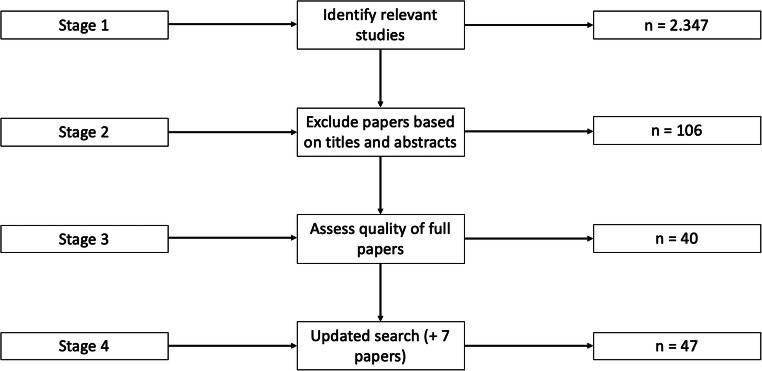
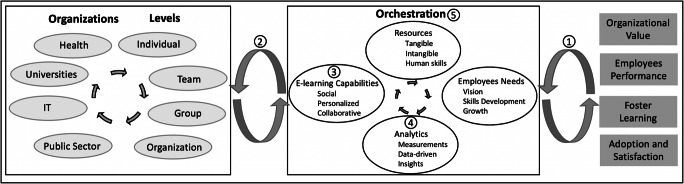
E-learning systems are receiving ever increasing attention in academia, business and public administration. Major crises, like the pandemic, highlight the tremendous importance of the appropriate development of e-learning systems and its adoption and processes in organizations. Managers and employees who need efficient forms of training and learning flow within organizations do not have to gather in one place at the same time or to travel far away to attend courses. Contemporary affordances of e-learning systems allow users to perform different jobs or tasks for training courses according to their own scheduling, as well as to collaborate and share knowledge and experiences that result in rich learning flows within organizations. The purpose of this article is to provide a systematic review of empirical studies at the intersection of e-learning and organizational learning in order to summarize the current findings and guide future research. Forty-seven peer-reviewed articles were collected from a systematic literature search and analyzed based on a categorization of their main elements. This survey identifies five major directions of the research on the confluence of e-learning and organizational learning during the last decade. Future research should leverage big data produced from the platforms and investigate how the incorporation of advanced learning technologies (e.g., learning analytics, personalized learning) can help increase organizational value.
Overview
The claims and statistics of this paper haven’t been checked yet.
Run the check — free, no account needed. It reads the open-access text and checks the sources it cites.
Integrity signals
Registry
Cites
Statistics
Figures
Verification
Claims the paper makes
The claims and statistics of this paper haven’t been checked yet.
Run the check — free, no account needed. It reads the open-access text and checks the sources it cites.
Claims other papers make about this one
Each is checked against this paper’s own text: does it say what the citing paper says it does?
In the citing paper
“Such personalized adaptation can help optimize learning because training does not become too easy or too overwhelming, thus enhancing the rate at which skills are learned and improving their retention, according to [215].”
From Leveraging AI in E-Learning: Personalized Learning and Adaptive Assessment through Cognitive Neuropsychology—A Systematic Analysis (2024) · cites this paper as [215]
Self-check
Percentages, sums and reported differences re-computed from the paper’s own numbers.
The self-check needs the paper’s full text.
Citations
Cites
Content Analysis: An Introduction to its Methodology.
Shelley, M., & Krippendorff, K. (1984) · Journal of the American Statistical Association · doi:10.2307/2288384 · Cited by 24,351
Exploration and Exploitation in Organizational Learning
March, J. G. (1991) · Organization Science · doi:10.1287/orsc.2.1.71 · Cited by 21,942 · cited 1×
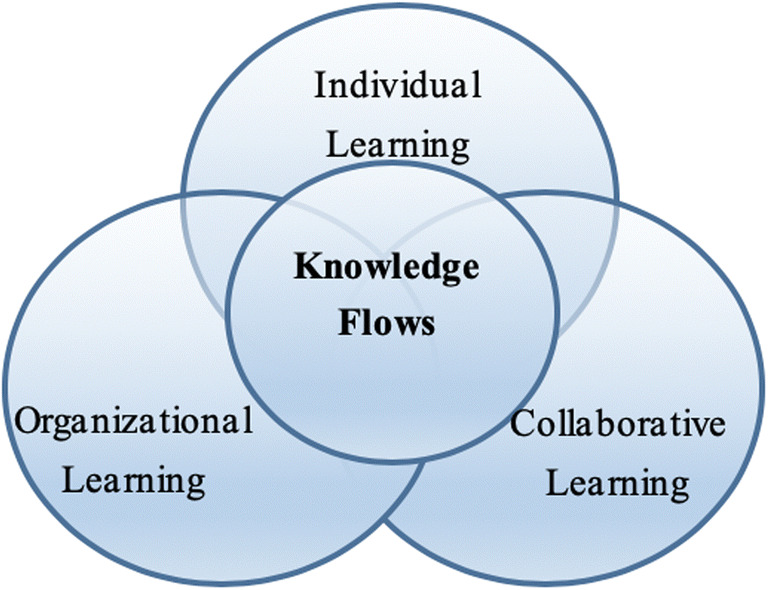
“Flow of knowledge or learning flow is the way in which new knowledge flows from the individual to the organizational level (i.e., feed forward) and vice versa (i.e., feedback) (Crossan et al. 1999;March 1991).”
BackgroundContent Analysis: An Introduction to Its Methodology
Krippendorff, K. (2019) · doi:10.4135/9781071878781 · Cited by 15,448
An organizational learning framework: From intuition to institution
Crossan, M. M., Lane, H. W., & White, R. E. (1999) · The Academy of Management Review · doi:10.2307/259140 · Cited by 4,544
Empirical studies of agile software development: A systematic review
Dybå, T., & Dingsøyr, T. (2008) · Information and Software Technology · doi:10.1016/j.infsof.2008.01.006 · Cited by 2,668
E-learning: Strategies for delivering knowledge in the digital age
Rosenberg, M. J., & Foshay, R. (2002) · Performance Improvement Journal · doi:10.1002/pfi.4140410512 · Cited by 2,079
A Guide to Conducting a Systematic Literature Review of Information Systems Research
Okoli, C., & Schabram, K. (2011) · doi:10.2139/ssrn.1954824 · Cited by 1,849
Penetrating the Fog: Analytics in Learning and Education.
Siemens, G., & Long, P. (2011) · Adelaide Research & Scholarship (AR&S) (University of Adelaide) · Cited by 1,752
Evaluating E-learning systems success: An empirical study
Al-Fraihat, D., Joy, M., Masa'deh, R., & Sinclair, J. (2020) · Computers in Human Behavior · doi:10.1016/j.chb.2019.08.004 · Cited by 1,350
McDonald, N., Schoenebeck, S., & Forte, A. (2019) · Proceedings of the ACM on Human-Computer Interaction · doi:10.1145/3359174 · Cited by 1,206
Research works printed but not linked: 1
- Marshall, S. (2006). New Zealand Tertiary Institution E-learning Capability: Informing and Guiding eLearning Architectural Change and Development. Report to the ministry of education. NZ: Victoria University of Wellington.
Cited by
Sorted by citations
Halkiopoulos, C., & Gkintoni, E. (2024) · Electronics · doi:10.3390/electronics13183762 · Cited by 328
“Such personalized adaptation can help optimize learning because training does not become too easy or too overwhelming, thus enhancing the rate at which skills are learned and improving their retention, according to [215].”
Kerimbayev, N., Umirzakova, Z., Shadiev, R., & Jotsov, V. (2023) · Smart Learning Environments · doi:10.1186/s40561-023-00280-8 · Cited by 346
Al-Omoush, K. S., Navarré, C. L., & Navarrete, S. R. (2023) · International Journal of Emerging Markets · doi:10.1108/ijoem-12-2022-1937 · Cited by 132
The Dark Side of Mobile Learning via Social Media: How Bad Can It Get?
Loh, X.-K., Lee, V., Loh, X.-M., Tan, G. W., Ooi, K., & Dwivedi, Y. K. (2021) · Information Systems Frontiers · doi:10.1007/s10796-021-10202-z · Cited by 91
Data Fusion for Smart Civil Infrastructure Management: A Conceptual Digital Twin Framework
Hakimi, O., Liu, H., Abudayyeh, O. Y., Houshyar, A., Almatared, M., & Alhawiti, A. (2023) · Buildings · doi:10.3390/buildings13112725 · Cited by 99
The role of training in implementing corporate sustainability: A systematic literature review
Sult, A., Wobst, J., & Lueg, R. (2023) · Corporate Social Responsibility and Environmental Management · doi:10.1002/csr.2560 · Cited by 112
What do growing early-stage digital start-ups look like? A mixed-methods approach
Griva, A., Kotsopoulos, D., Karagiannaki, A., & Zamani, E. D. (2021) · International Journal of Information Management · doi:10.1016/j.ijinfomgt.2021.102427 · Cited by 101
Chasing Metaverses: Reflecting on Existing Literature to Understand the Business Value of Metaverses
Polyviou, A., & Pappas, I. O. (2022) · Information Systems Frontiers · doi:10.1007/s10796-022-10364-4 · Cited by 58
Human emotion recognition for enhanced performance evaluation in e-learning
Du, Y., Crespo, R. A. G., & Martínez, Ó. S. (2022) · Progress in Artificial Intelligence · doi:10.1007/s13748-022-00278-2 · Cited by 49
Digital twin technology for road pavement
Talaghat, M. A., Golroo, A., Kharbouch, A., Rasti, M., Heikkilä, R., & Jurva, R. (2024) · Automation in Construction · doi:10.1016/j.autcon.2024.105826 · Cited by 60
Shehata, B., Tlili, A., Huang, R., Adarkwah, M. A., Liu, M., & Chang, T. (2023) · Education and Information Technologies · doi:10.1007/s10639-023-12112-w · Cited by 54
The Influence E-Learning Platforms of Undergraduate Education in Iraq
ALRikabi, H. T. S., Al-Mallah, D., Majeed, B. H., & Abass, A. Z. (2021) · International Journal of Recent Contributions from Engineering Science & IT (iJES) · doi:10.3991/ijes.v9i4.26995 · Cited by 31
Digital Transformation in the Higher Education Sector: A Systematic Literature Review
Mabotha, P. A. P., & Ngcamu, B. S. (2025) · Administrative Sciences · doi:10.3390/admsci16010001 · Cited by 68
Teaching Primary School Students through Local Cultural Games for Improving Positive Characters
Universitas Jambi, I., Syahrial, S., Asrial, A., Universitas Jambi, I., Kurniawan, D. A., Universitas Jambi, I., Kiska, N. D., Universitas Jambi, I., Damayanti, L., & Universitas Jambi, I. (2022) · International Journal of Instruction · doi:10.29333/iji.2022.15356a · Cited by 30
The role of virtual training in implementing Sustainable Development Goals globally
Bilderback, S., Movahed, M., & McCarthy, V. (2024) · European journal of training and development · doi:10.1108/ejtd-02-2024-0019 · Cited by 33
Behera, R. K., Bala, P. K., Rana, N. P., & Kizgin, H. (2022) · Information Systems Frontiers · doi:10.1007/s10796-021-10231-8 · Cited by 28
A Novel Hybrid Machine Learning Model for Analyzing E-Learning Users’ Satisfaction
Sandiwarno, S., Niu, Z., & Nyamawe, A. S. (2023) · International Journal of Human-Computer Interaction · doi:10.1080/10447318.2023.2209986 · Cited by 26
Tan, X., Lin, X., & Zhuang, R. (2024) · Smart Learning Environments · doi:10.1186/s40561-024-00325-6 · Cited by 25
El-Sharkawy, S. A., Nafea, M. S., & Hassan, E. E.-D. (2023) · Future Business Journal · doi:10.1186/s43093-023-00188-2 · Cited by 24
Sharan, K., Dhayanithy, D., & Sethi, D. (2023) · Journal of Knowledge Management · doi:10.1108/jkm-09-2022-0706 · Cited by 15
Attenborough, J., Abbott, S., Brook, J., & Knight, R. (2023) · Journal of integrative nursing and palliative care · doi:10.51847/qqr0gnues7 · Cited by 14
Gupta, S., Kumar, P., & Tekchandani, R. (2023) · International Journal of Cognitive Computing in Engineering · doi:10.1016/j.ijcce.2023.11.001 · Cited by 13
Malik, I. A., Mehraj, D., Nissa, V. U., & Wani, A. K. (2025) · Business Strategy & Development · doi:10.1002/bsd2.70060 · Cited by 11
Dutta, D., & Poyil, A. K. (2025) · Behaviour and Information Technology · doi:10.1080/0144929x.2025.2496722 · Cited by 14
Alshar’e, M., Al-Badi, A. H., Jawarneh, M. M. M., Tahir, N., & Amri, M. A. (2022) · Advances in Human-Computer Interaction · doi:10.1155/2022/9427405 · Cited by 11
The Impact of Human and Computer Interaction on eLearning Quality
Alebeisat, F., Altarawneh, H., Alhalhouli, Z. T., Qatawneh, A., & Almahasne, M. (2022) · International Journal of Interactive Mobile Technologies (iJIM) · doi:10.3991/ijim.v16i04.27309 · Cited by 11
Emon, M. M. H. (2025) · IGI Global eBooks · doi:10.4018/979-8-3373-2434-0.ch007 · Cited by 10
Use of Technological Equipment for E-learning in Peruvian University Students in Times of Covid-19
Huamán-Romaní, Y.-L., Estrada-Pantía, J. L., Olivares-Rivera, O., Rodas-Guizado, E., & Fuentes-Bernedo, F. E. (2021) · International Journal of Emerging Technologies in Learning (iJET) · doi:10.3991/ijet.v16i20.24661 · Cited by 10
E-training impact on trainee experience and self-assessment
Kumar, S., & Kumar, A. D. (2023) · Journal of Workplace Learning · doi:10.1108/jwl-02-2022-0023 · Cited by 10
Strategies for Enhancing Assessment Information Integrity in Mobile Learning
Kaisara, G., & Bwalya, K. J. (2023) · Informatics · doi:10.3390/informatics10010029 · Cited by 13
Cross-Disciplinary Collaborations and Partnerships for Sustainability Education
Singha, S., & Singha, R. (2024) · Practice, progress, and proficiency in sustainability · doi:10.4018/978-1-6684-9859-0.ch002 · Cited by 9
Sandiwarno, S., Niu, Z., & Nyamawe, A. S. (2024) · International Journal of Human-Computer Interaction · doi:10.1080/10447318.2024.2356356 · Cited by 14
Heidemann, G., Schmidt, S. L., von der Gracht, H. A., & Beiderbeck, D. (2024) · Technological Forecasting and Social Change · doi:10.1016/j.techfore.2024.123573 · Cited by 11
Exploring Semantic Web Tools in Education to Boost Learning and Improve Organizational Efficiency
Wang, L., Han, W., & Xi, Z. (2025) · International Journal on Semantic Web and Information Systems · doi:10.4018/ijswis.370315 · Cited by 8
Bogale, A. T., Birbirsa, Z. A., & Abegaz, M. B. (2025) · Discover Sustainability · doi:10.1007/s43621-025-01277-8 · Cited by 7
Rathnasekara, K., Suraweera, N., & Yatigammana, K. (2023) · AAOU Journal/AAOU journal · doi:10.1108/aaouj-12-2022-0177 · Cited by 7
Using Simulation to Leverage Digital Transformation of SMEs: A European Perspective
Ramos, I. M. P., North, K., Thalmann, S., Aramburu, N., Hermann, A., Gräslund, K., & Barros, V. (2022) · Hawaii International Conference on System Sciences (HICSS) · doi:10.24251/hicss.2022.595 · Cited by 8
The role of AI-enabled knowledge integration in sustainable innovations: a sociomaterial perspective
Wang, J., Khan, M., Alshaghdali, N. O., Dash, S., Fontana, S., & Fierro, P. (2026) · Journal of Knowledge Management · doi:10.1108/jkm-05-2025-0684 · Cited by 7
Metaverses and Business Transformation
Polyviou, A., & Pappas, I. O. (2022) · IFIP advances in information and communication technology · doi:10.1007/978-3-031-17968-6_25 · Cited by 6
Tsai, C.-Y., & Li, D. (2024) · Sustainability · doi:10.3390/su16041679 · Cited by 9
Showkat, S., Ahmad, S., & Sindakis, S. (2023) · Journal of the Knowledge Economy · doi:10.1007/s13132-023-01580-7 · Cited by 5
RetractedSultana, R., Chowdhury, M. A. H., Chowdhury, T. A., Tazminur, S., Ahmed, I., Ahmed, N., Baky, A. A., Shahriar, A., & Kafy, A. ‐. A. (2025) · Business Strategy & Development · doi:10.1002/bsd2.70098 · Cited by 5
Žmuk, B., Qureshi, F. H., & Khawaja, S. (2023) · Interdisciplinary Description of Complex Systems · doi:10.7906/indecs.21.5.2 · Cited by 5
Bilušić, M. R., & Vokić, N. P. (2024) · Strategic Management · doi:10.5937/straman2400011b · Cited by 4
Barriers to the Adoption of E-Learning in Higher Education Institutes (HEI)
Satvik, S., & Naik, B. K. (2024) · International Journal of E-Services and Mobile Applications · doi:10.4018/ijesma.365667 · Cited by 4
Organisational learning in family firms: a systematic review
Moser, T., Scheepers, M. D. V., & de Klerk, S. (2024) · Journal of Family Business Management · doi:10.1108/jfbm-06-2024-0131 · Cited by 4
The Role of Artificial Intelegensia Technology in Improving the Quality of Education
Susanti, W., Widi, R., Nasution, T., Johan, J., & Verawardina, U. (2025) · Journal of Applied Business and Technology · doi:10.35145/jabt.v6i1.178 · Cited by 8
Bridging the Gap Between Informal Learning Pedagogy and Multimodal Learning Analytics
Hammad, R., Bahja, M., & Kuhail, M. A. (2022) · Springer eBooks · doi:10.1007/978-3-031-08076-0_7 · Cited by 4
(2023) · Journal of System and Management Sciences · doi:10.33168/jsms.2023.0125 · Cited by 4
USING E-LEARNING TO PREVENT INFORMATIONAL STRESS OF EMPLOYEES WORKING REMOTELY
Pinchuk, O. I., Pinchuk, N. I., Бондарчук, О. І., Balakhtar, V., & Pavlenok, K. S. (2023) · Information Technologies and Learning Tools · doi:10.33407/itlt.v98i6.4689 · Cited by 4
Recognition of Student Emotions in Classroom Learning Based on Image Processing
Wang, P., Li, P., & Cuntapay, M. C. (2022) · Traitement du signal · doi:10.18280/ts.390426 · Cited by 4
Dorgham, M. J. M., Kayvanfar, V., & Baldacci, R. (2026) · IEEE Access · doi:10.1109/access.2026.3651544 · Cited by 3
Important but not urgent: exploring e-learning at work
Schönian, K. (2026) · Journal of Workplace Learning · doi:10.1108/jwl-06-2025-0203 · Cited by 5
Scott, J. L., Knezek, G., Poirot, J. L., & Lin-Lipsmeyer, L. (2022) · TechTrends · doi:10.1007/s11528-022-00773-2 · Cited by 3
Wambua, R. N. (2023) · International Journal of Research Publications · doi:10.47119/ijrp1001171120234446 · Cited by 3
Guo, J., Chen, Y.-H., Wang, T., & Zhang, Z. (2024) · International Journal of Web-Based Learning and Teaching Technologies · doi:10.4018/ijwltt.349236 · Cited by 3
Çelikbilek, Y. (2025) · European Journal of Education · doi:10.1111/ejed.70017 · Cited by 2
Ressources de connaissances dans les ateliers de fabrication: objectifs et défis
Rigaud, C., Bailly, G., & Jansen, Y. (2023) · Conference on l'Interaction Homme-Machine (IHM) · doi:10.1145/3583961.3583974 · Cited by 2
Assessing Digitized Self-Regulation Strategies In Workplace E-Learning
Vapiwala, F., & Pandita, D. (2023) · International Conference on Information & Communication Technology and System (ICTS) · doi:10.1109/icts58770.2023.10330876 · Cited by 2
Enhancing English Vocabulary through Game-Based Learning: A Case Study of the Scramword Application
Palandi, J. F., Pudyastuti, Z. E., & Molewe, K. (2024) · International Journal in Information Technology in Governance Education and Business · doi:10.32664/ijitgeb.v6i1.141 · Cited by 2
Joudeh, J. M. M., Omeish, F. Y., Haddad, N. A. I., Badran, O. N., Zamil, A. M. A., & Al-Gasawneh, J. A. (2024) · Journal of Infrastructure Policy and Development · doi:10.24294/jipd.v8i8.6218 · Cited by 4
Solutions and trends of recommendation systems for massive open online courses
Campos, R., dos Santos, R. P., & Oliveira, J. (2025) · Technological Forecasting and Social Change · doi:10.1016/j.techfore.2025.124118 · Cited by 6
Developing the Blueprint of Knowledge Management based E-learning for SMEs and Community
Wimpertiwi, D., Indriana, I., Nadira, Christanti, Y., & Widyastuti, I. T. (2022) · International Conference on Business and Industrial Research (ICBIR) · doi:10.1109/icbir54589.2022.9786436 · Cited by 2
Younis, J. A., Al-Tulaibawi, F. A., Al-Tameemi, A. A., Massoud, M. F., Hejase, H., & Hejase, A. J. (2023) · International Journal of Professional Business Review · doi:10.26668/businessreview/2023.v8i5.2057 · Cited by 2
E-Learning Success Factors from Business Perspective
Mohamed, E., Alzaabi, H., Alshehhi, N., Alshehhi, M., & Hamid, A. (2023) · International Journal of Automation and Digital Transformation · doi:10.54878/h5xpje28 · Cited by 2
Taylor, H., Mearkle, R., Huyton, R., & Ashiru-Oredope, D. A. I. (2024) · European Journal of Public Health · doi:10.1093/eurpub/ckae086 · Cited by 2
Yudiana, F. E., Famularsih, S., & Rosyidha, A. (2024) · IJORER International Journal of Recent Educational Research · doi:10.46245/ijorer.v5i5.694 · Cited by 2
Needs Assessment of Alternative Learning Management Systems in Online Learning with Massive Users
Mihardi, S., Derlina, D., Siregar, A. M., & Abd Hakim, S. (2022) · International Conference on Innovation in Education, Science and Culture (ICIESC) · doi:10.4108/eai.11-10-2022.2325475 · Cited by 1
Shahriar, F., Tonmoy, M. S. B., & Yeasmin, F. (2024) · Journal of Current Social and Political Issues · doi:10.15575/jcspi.v2i1.693 · Cited by 1
Unveiling emotional reaction and satisfaction in e-learning with face tracking
Giraldi, L., Giovannetti, M., & Cedrola, E. (2025) · Educational Research and Evaluation · doi:10.1080/13803611.2025.2501530 · Cited by 1
Pérez-Manzano, A., Almela-Baeza, J., & Bonache-Ibáñez, A. (2025) · Sustainability · doi:10.3390/su17177947
Rezaeinejad, S., Rayman, K., Sauser, B. J., & Ojha, D. (2025) · Information Systems Frontiers · doi:10.1007/s10796-025-10651-w · Cited by 1
Kamdjoug, J., Wamba, S., Wamba-Taguimdje, S.-L., & Bashengezi, P. K. (2025) · Decision Support Systems · doi:10.1016/j.dss.2025.114593
Thomas, A. (2025) · Emerald Group Publishing Limited eBooks · doi:10.1108/978-1-83662-330-420251007 · Cited by 1
Bogale, A. T., Birbirsa, Z. A., & Abegaz, M. B. (2026) · Sustainable Futures · doi:10.1016/j.sftr.2026.101716 · Cited by 1
The Digital Transformation of Work
Shree, K. C. R., Gigi, G. S., & Kumar, P. P. (2026) · Advances in computational intelligence and robotics book series · doi:10.4018/979-8-3373-3922-1.ch010 · Cited by 1
Nie, Y., Wu, Z., Xing, Z., & Luo, M. (2026) · Sustainability · doi:10.3390/su18063080 · Cited by 1
Affective algorithmic composition of music: A systematic review
Wiafe, A., & Fränti, P. (2023) · Applied Computing and Intelligence · doi:10.3934/aci.2023003 · Cited by 3
Enhancing Student Performance Evaluation Through Optimized Fuzzy Rule Techniques
Hussein, M. K., Ali, A. A., Subhi, M. A., & Mohammed, S. M. (2024) · Baghdad Science Journal · doi:10.21123/bsj.2024.10319 · Cited by 1
APPLICATION OF E-LEARNING AT THE UNIVERSITY OF EDUCONS
Supić, D. (2024) · International Journal of Management Trends Key Concepts and Research · doi:10.58898/ijmt.v3i2.21-40 · Cited by 1
Durodolu, O. O., Enakrire, R. T., Chisita, C. T., & Tsabedze, V. W. (2022) · International Journal of e-Collaboration · doi:10.4018/ijec.315785 · Cited by 1
Formative assessment methods for intelligent learning systems
Meleško, J. (2022) · doi:10.20334/2022-032-m · Cited by 1
A Preliminary Review of E-Learning Program of King Abdulaziz University of Saudi Arabia
Alqithmi, A. A., & Yamin, M. (2022) · International Conference on Computing for Sustainable Global Development · doi:10.23919/indiacom54597.2022.9763141
Eunaicy, J. I. C., Sundaravadivelu, V., & Suguna, S. (2022) · Lecture notes in electrical engineering · doi:10.1007/978-981-19-4831-2_28
Drivers and Barriers to eLearning Adoption by Academic Staff in Bayero University, Kano, Nigeria
Awwal, L. M., Haruna, I., & Yusuf, I. (2022) · Bayero Journal of Nursing and Health Care · doi:10.4314/bjnhc.v3i2.10 · Cited by 1
Information Frameworks and Business Patterns in Smart Cities
Jain, V., Sethi, P., Rawat, G., Singh, V. A., Kumar, A. R., Chawla, C., & Bansal, B. (2023) · Advances in data mining and database management book series · doi:10.4018/978-1-6684-6408-3.ch012
Banholzer, V. M., Maciel, N. K., & Weber, R. (2023) · Europäische Kulturen in der Wirtschaftskommunikation · doi:10.1007/978-3-658-38937-6_17
Osallistumisaktiivisuus ja vuorovaikutukseen osallistuminen verkko-oppimisyhteisössä
Toivanen, M., Gluschkoff, K., Yli-Kaitala, K., & Koskela, I. (2023) · Prologi · doi:10.33352/prlg.116526 · Cited by 1
The Model of E-learning Education Development in Iranian Higher Education System
Sarahi, J. H., Moazzami, M., & Bagheri, M. M. (2023) · ̒Ulūm va funūn-i marzī · doi:10.61186/ieepj.5.2.105
REPENSER LA COMMUNICATION SOCIO-PÉDAGOGIQUE DANS L'ÈRE POST-COVID
Khajjou, I. B. (2023) · Conhecimento & Diversidade · doi:10.18316/rcd.v15i39.11136
Innovative Approaches to Bridging the Digital Divide
Thomas, J. V., & Mallika Sankar, M. (2024) · Advances in logistics, operations, and management science book series · doi:10.4018/978-1-6684-9833-0.ch007
Enhanced Virtual Classroom for Better Interaction
Shinde, P. A. (2024) · INTERANTIONAL JOURNAL OF SCIENTIFIC RESEARCH IN ENGINEERING AND MANAGEMENT · doi:10.55041/ijsrem29153
Fjernundervisningsrutiner på Maskinmesterskolen
Olesen, N., & Kiær, K. (2024) · Tidsskriftet Læring og Medier (LOM) · doi:10.7146/lom.v17i29.140698
The Role of E-Learning in the Evolution of Professions: A Moroccan Contextualization
Boulahoual, A., & Rafik, M. (2024) · Global Journal of Management and Business Research · doi:10.34257/gjmbrgvol24is1pg1
Development of Assessment Indicators for an Online Lecture Process
Mytra, P., Upu, H., & Djadir (2024) · Asian Journal of Education and Social Studies · doi:10.9734/ajess/2024/v50i81526
E-learning in the Workplace: What Can Higher Education Institutions Learn from Industry Practices?
Jakšić, D., Toic, A., & Poščić, P. (2024) · Lecture notes in networks and systems · doi:10.1007/978-3-031-72430-5_22
Ramaila, S. M. (2024) · Education and human development · doi:10.5772/intechopen.1006160
Factors Affecting the e-Learning Implementation in UAE Public Sector Organizations
Kamali, A. (2024) · European Conference on e-Learning · doi:10.34190/ecel.23.1.3123
Metadata
- Authors
- Giannakos, M. N., Mikalef, P., & Pappas, I. O.
- Affiliations
- Norwegian University of Science and Technology (NO)
- University of Agder (NO)
- Corresponding author
- Pappas, Ilias O.
- Venue
- Information Systems Frontiers
- Published
- 2021-02-01
- Volume
- 24
- Issue
- 2
- Pages
- 619-635
- ISSN
- 1387-3326 (ISSN-L)
- 1572-9419
- PMC
- PMC7850520
- OpenAlex
- W3128678085
- Cited by
- 141
- References
- 88
- Citations by year
- 2026: 25 · 2025: 30 · 2024: 31 · 2023: 31 · 2022: 20 · 2021: 4
- FWCI
- 3.70
- Type
- journal article
- Language
- en
- Open access
- hybrid
- doi.org
- Locations
- Information Systems Frontiers (publishedVersion, cc-by)
- PubMed Central (publishedVersion, cc-by)
- PubMed (publishedVersion)
- RePEc: Research Papers in Economics (acceptedVersion)
- NORA - Norwegian Open Research Archives (submittedVersion, cc-by)
- Funders
- NTNU Norwegian University of Science and Technology
- Topics
- Physical Sciences › Computer Science › Computer Science Applications › E-Learning and Knowledge Management
- Social Sciences › Business, Management and Accounting › Organizational Behavior and Human Resource Management › Organizational Learning and Leadership
- Social Sciences › Education › Innovative Education and Learning Practices
- Keywords
- online learning, organizational learning, employee training, knowledge sharing, learning analytics, personalized learning, organizational values, COVID-19 pandemic
About these checks
Registry, retraction, Cites and statistics results are computed, not judged, with one exception: a printed reference that no index lists is read once by a model before it counts as a citation error. Claims are extracted by a model and kept only when their quote appears verbatim in the text; each cited source is then checked, with a model’s help, for whether it says what the claim relies on. Those verdicts can be wrong — read the claim’s quote and the cited source before relying on one.
Statistics and arithmetic are recomputed, not judged.
Confidence bands are shown only for fields calibrated on our annotated test set. None is calibrated yet, so no band is shown.
What counts as a claim ›How we measure confidence ›How we check this ›
Are you an author, or do you see a problem with this page? Request a review
