

The DOI matches its Crossref record; 87 of the 88 references it cites were found in a registry or an index.
Systematic Literature Review of E-Learning Capabilities to Enhance Organizational Learning
Open accessAbstract
E-learning systems are receiving ever increasing attention in academia, business and public administration. Major crises, like the pandemic, highlight the tremendous importance of the appropriate development of e-learning systems and its adoption and processes in organizations. Managers and employees who need efficient forms of training and learning flow within organizations do not have to gather in one place at the same time or to travel far away to attend courses. Contemporary affordances of e-learning systems allow users to perform different jobs or tasks for training courses according to their own scheduling, as well as to collaborate and share knowledge and experiences that result in rich learning flows within organizations. The purpose of this article is to provide a systematic review of empirical studies at the intersection of e-learning and organizational learning in order to summarize the current findings and guide future research. Forty-seven peer-reviewed articles were collected from a systematic literature search and analyzed based on a categorization of their main elements. This survey identifies five major directions of the research on the confluence of e-learning and organizational learning during the last decade. Future research should leverage big data produced from the platforms and investigate how the incorporation of advanced learning technologies (e.g., learning analytics, personalized learning) can help increase organizational value.
Overview
The claims and statistics of this paper haven’t been checked yet.
Run the check — free, no account needed. It reads the open-access text and checks the sources it cites.
Integrity signals
Registry
Cites
Statistics
Figures
Verification
Claims the paper makes
The claims and statistics of this paper haven’t been checked yet.
Run the check — free, no account needed. It reads the open-access text and checks the sources it cites.
Claims other papers make about this one
Each is checked against this paper’s own text: does it say what the citing paper says it does?
In the citing paper
“Such personalized adaptation can help optimize learning because training does not become too easy or too overwhelming, thus enhancing the rate at which skills are learned and improving their retention, according to [215].”
From Leveraging AI in E-Learning: Personalized Learning and Adaptive Assessment through Cognitive Neuropsychology—A Systematic Analysis (2024) · cites this paper as [215]
Self-check
Percentages, sums and reported differences re-computed from the paper’s own numbers.
The self-check needs the paper’s full text.
Citations
Cites
Content Analysis: An Introduction to its Methodology.
Shelley, M., & Krippendorff, K. (1984) · Journal of the American Statistical Association · doi:10.2307/2288384 · Cited by 24,351
Exploration and Exploitation in Organizational Learning
March, J. G. (1991) · Organization Science · doi:10.1287/orsc.2.1.71 · Cited by 21,942 · cited 1×
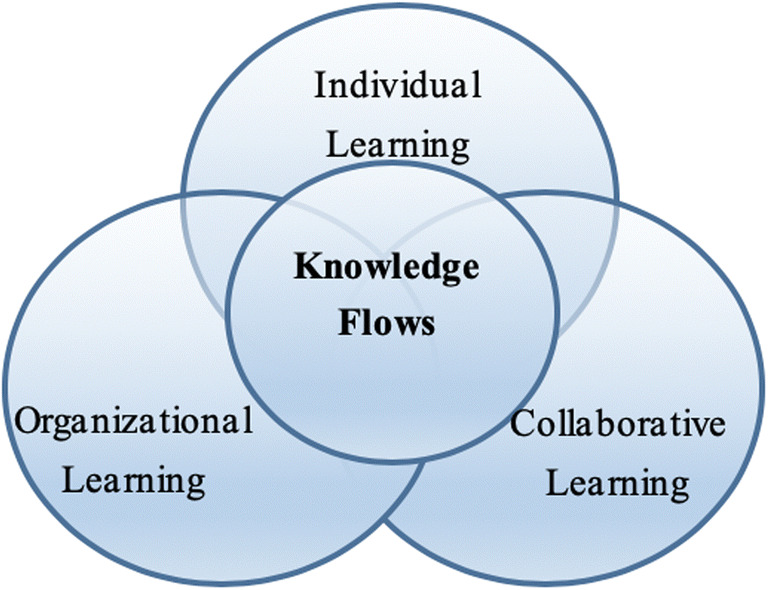
“Flow of knowledge or learning flow is the way in which new knowledge flows from the individual to the organizational level (i.e., feed forward) and vice versa (i.e., feedback) (Crossan et al. 1999;March 1991).”
BackgroundContent Analysis: An Introduction to Its Methodology
Krippendorff, K. (2019) · doi:10.4135/9781071878781 · Cited by 15,448
An organizational learning framework: From intuition to institution
Crossan, M. M., Lane, H. W., & White, R. E. (1999) · The Academy of Management Review · doi:10.2307/259140 · Cited by 4,544
Empirical studies of agile software development: A systematic review
Dybå, T., & Dingsøyr, T. (2008) · Information and Software Technology · doi:10.1016/j.infsof.2008.01.006 · Cited by 2,668
E-learning: Strategies for delivering knowledge in the digital age
Rosenberg, M. J., & Foshay, R. (2002) · Performance Improvement Journal · doi:10.1002/pfi.4140410512 · Cited by 2,079
A Guide to Conducting a Systematic Literature Review of Information Systems Research
Okoli, C., & Schabram, K. (2011) · doi:10.2139/ssrn.1954824 · Cited by 1,849
Penetrating the Fog: Analytics in Learning and Education.
Siemens, G., & Long, P. (2011) · Adelaide Research & Scholarship (AR&S) (University of Adelaide) · Cited by 1,752
Evaluating E-learning systems success: An empirical study
Al-Fraihat, D., Joy, M., Masa'deh, R., & Sinclair, J. (2020) · Computers in Human Behavior · doi:10.1016/j.chb.2019.08.004 · Cited by 1,350
McDonald, N., Schoenebeck, S., & Forte, A. (2019) · Proceedings of the ACM on Human-Computer Interaction · doi:10.1145/3359174 · Cited by 1,206
Research works printed but not linked: 1
- Marshall, S. (2006). New Zealand Tertiary Institution E-learning Capability: Informing and Guiding eLearning Architectural Change and Development. Report to the ministry of education. NZ: Victoria University of Wellington.
Cited by
Sorted by citations
Halkiopoulos, C., & Gkintoni, E. (2024) · Electronics · doi:10.3390/electronics13183762 · Cited by 328
“Such personalized adaptation can help optimize learning because training does not become too easy or too overwhelming, thus enhancing the rate at which skills are learned and improving their retention, according to [215].”
Kerimbayev, N., Umirzakova, Z., Shadiev, R., & Jotsov, V. (2023) · Smart Learning Environments · doi:10.1186/s40561-023-00280-8 · Cited by 346
Al-Omoush, K. S., Navarré, C. L., & Navarrete, S. R. (2023) · International Journal of Emerging Markets · doi:10.1108/ijoem-12-2022-1937 · Cited by 132
The Dark Side of Mobile Learning via Social Media: How Bad Can It Get?
Loh, X.-K., Lee, V., Loh, X.-M., Tan, G. W., Ooi, K., & Dwivedi, Y. K. (2021) · Information Systems Frontiers · doi:10.1007/s10796-021-10202-z · Cited by 91
Data Fusion for Smart Civil Infrastructure Management: A Conceptual Digital Twin Framework
Hakimi, O., Liu, H., Abudayyeh, O. Y., Houshyar, A., Almatared, M., & Alhawiti, A. (2023) · Buildings · doi:10.3390/buildings13112725 · Cited by 99
Metadata
- Authors
- Giannakos, M. N., Mikalef, P., & Pappas, I. O.
- Affiliations
- Norwegian University of Science and Technology (NO)
- University of Agder (NO)
- Corresponding author
- Pappas, Ilias O.
- Venue
- Information Systems Frontiers
- Published
- 2021-02-01
- Volume
- 24
- Issue
- 2
- Pages
- 619-635
- ISSN
- 1387-3326 (ISSN-L)
- 1572-9419
- PMC
- PMC7850520
- OpenAlex
- W3128678085
- Cited by
- 141
- References
- 88
- Citations by year
- 2026: 25 · 2025: 30 · 2024: 31 · 2023: 31 · 2022: 20 · 2021: 4
- FWCI
- 3.70
- Type
- journal article
- Language
- en
- Open access
- hybrid
- doi.org
- Locations
- Information Systems Frontiers (publishedVersion, cc-by)
- PubMed Central (publishedVersion, cc-by)
- PubMed (publishedVersion)
- RePEc: Research Papers in Economics (acceptedVersion)
- NORA - Norwegian Open Research Archives (submittedVersion, cc-by)
- Funders
- NTNU Norwegian University of Science and Technology
- Topics
- Physical Sciences › Computer Science › Computer Science Applications › E-Learning and Knowledge Management
- Social Sciences › Business, Management and Accounting › Organizational Behavior and Human Resource Management › Organizational Learning and Leadership
- Social Sciences › Education › Innovative Education and Learning Practices
- Keywords
- online learning, organizational learning, employee training, knowledge sharing, learning analytics, personalized learning, organizational values, COVID-19 pandemic
About these checks
Registry, retraction, Cites and statistics results are computed, not judged, with one exception: a printed reference that no index lists is read once by a model before it counts as a citation error. Claims are extracted by a model and kept only when their quote appears verbatim in the text; each cited source is then checked, with a model’s help, for whether it says what the claim relies on. Those verdicts can be wrong — read the claim’s quote and the cited source before relying on one.
Statistics and arithmetic are recomputed, not judged.
Confidence bands are shown only for fields calibrated on our annotated test set. None is calibrated yet, so no band is shown.
What counts as a claim ›How we measure confidence ›How we check this ›
Are you an author, or do you see a problem with this page? Request a review
