

The DOI matches its Crossref record; 87 of the 88 references it cites were found in a registry or an index.
Systematic Literature Review of E-Learning Capabilities to Enhance Organizational Learning
Open accessAbstract
E-learning systems are receiving ever increasing attention in academia, business and public administration. Major crises, like the pandemic, highlight the tremendous importance of the appropriate development of e-learning systems and its adoption and processes in organizations. Managers and employees who need efficient forms of training and learning flow within organizations do not have to gather in one place at the same time or to travel far away to attend courses. Contemporary affordances of e-learning systems allow users to perform different jobs or tasks for training courses according to their own scheduling, as well as to collaborate and share knowledge and experiences that result in rich learning flows within organizations. The purpose of this article is to provide a systematic review of empirical studies at the intersection of e-learning and organizational learning in order to summarize the current findings and guide future research. Forty-seven peer-reviewed articles were collected from a systematic literature search and analyzed based on a categorization of their main elements. This survey identifies five major directions of the research on the confluence of e-learning and organizational learning during the last decade. Future research should leverage big data produced from the platforms and investigate how the incorporation of advanced learning technologies (e.g., learning analytics, personalized learning) can help increase organizational value.
Overview
The claims and statistics of this paper haven’t been checked yet.
Run the check — free, no account needed. It reads the open-access text and checks the sources it cites.
Integrity signals
Registry
Cites
Statistics
Figures
Verification
Claims the paper makes
The claims and statistics of this paper haven’t been checked yet.
Run the check — free, no account needed. It reads the open-access text and checks the sources it cites.
Claims other papers make about this one
Each is checked against this paper’s own text: does it say what the citing paper says it does?
In the citing paper
“Such personalized adaptation can help optimize learning because training does not become too easy or too overwhelming, thus enhancing the rate at which skills are learned and improving their retention, according to [215].”
From Leveraging AI in E-Learning: Personalized Learning and Adaptive Assessment through Cognitive Neuropsychology—A Systematic Analysis (2024) · cites this paper as [215]
Self-check
Percentages, sums and reported differences re-computed from the paper’s own numbers.
The self-check needs the paper’s full text.
Citations
Cites
Content Analysis: An Introduction to its Methodology.
Shelley, M., & Krippendorff, K. (1984) · Journal of the American Statistical Association · doi:10.2307/2288384 · Cited by 24,351
Exploration and Exploitation in Organizational Learning
March, J. G. (1991) · Organization Science · doi:10.1287/orsc.2.1.71 · Cited by 21,942 · cited 1×
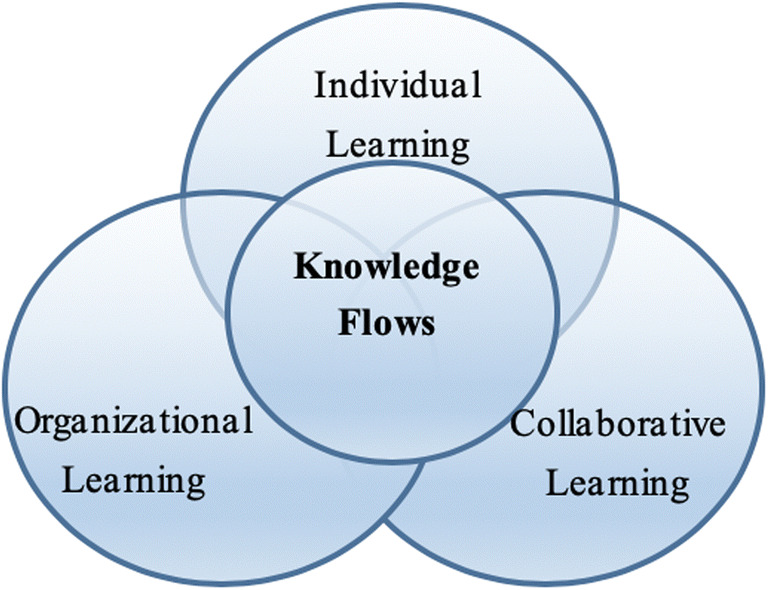
“Flow of knowledge or learning flow is the way in which new knowledge flows from the individual to the organizational level (i.e., feed forward) and vice versa (i.e., feedback) (Crossan et al. 1999;March 1991).”
BackgroundContent Analysis: An Introduction to Its Methodology
Krippendorff, K. (2019) · doi:10.4135/9781071878781 · Cited by 15,448
An organizational learning framework: From intuition to institution
Crossan, M. M., Lane, H. W., & White, R. E. (1999) · The Academy of Management Review · doi:10.2307/259140 · Cited by 4,544
Empirical studies of agile software development: A systematic review
Dybå, T., & Dingsøyr, T. (2008) · Information and Software Technology · doi:10.1016/j.infsof.2008.01.006 · Cited by 2,668
E-learning: Strategies for delivering knowledge in the digital age
Rosenberg, M. J., & Foshay, R. (2002) · Performance Improvement Journal · doi:10.1002/pfi.4140410512 · Cited by 2,079
A Guide to Conducting a Systematic Literature Review of Information Systems Research
Okoli, C., & Schabram, K. (2011) · doi:10.2139/ssrn.1954824 · Cited by 1,849
Penetrating the Fog: Analytics in Learning and Education.
Siemens, G., & Long, P. (2011) · Adelaide Research & Scholarship (AR&S) (University of Adelaide) · Cited by 1,752
Evaluating E-learning systems success: An empirical study
Al-Fraihat, D., Joy, M., Masa'deh, R., & Sinclair, J. (2020) · Computers in Human Behavior · doi:10.1016/j.chb.2019.08.004 · Cited by 1,350
McDonald, N., Schoenebeck, S., & Forte, A. (2019) · Proceedings of the ACM on Human-Computer Interaction · doi:10.1145/3359174 · Cited by 1,206
Big data analytics capabilities: A systematic literature review and research agenda
Mikalef, P., Pappas, I. O., Krogstie, J., & Giannakos, M. (2018) · Information Systems and e-Business Management · doi:10.1007/s10257-017-0362-y · Cited by 888
A Hermeneutic Approach for Conducting Literature Reviews and Literature Searches
Boell, S. K., & Ćećez-Kecmanović, D. (2014) · Communications of the Association for Information Systems · doi:10.17705/1cais.03412 · Cited by 727
Comparing online and blended learner's self-regulated learning strategies and academic performance
Broadbent, J. (2017) · The Internet and Higher Education · doi:10.1016/j.iheduc.2017.01.004 · Cited by 679
Formal and informal learning in the workplace: a research review
Manuti, A., Pastore, S., Scardigno, A. F., Giancaspro, M. L., & Morciano, D. (2015) · International Journal of Training and Development · doi:10.1111/ijtd.12044 · Cited by 596
Strategic knowledge management, innovation and performance
López‐Nicolás, C., & Meroño‐Cerdán, A. L. (2011) · International Journal of Information Management · doi:10.1016/j.ijinfomgt.2011.02.003 · Cited by 561
Pappas, I. O., Mikalef, P., Giannakos, M. N., Krogstie, J., & Lekakos, G. D. (2018) · Information Systems and e-Business Management · doi:10.1007/s10257-018-0377-z · Cited by 487
Wang, N., Liang, H., Zhong, W., Xue, Y., & Xiao, J. (2012) · Journal of Management Information Systems · doi:10.2753/mis0742-1222290211 · Cited by 303
Strategic Knowledge Management, Innovation, and Performance
Maroofi, F. (2014) · Advances in information quality and management · doi:10.4018/978-1-4666-5888-2.ch462 · Cited by 293
Reflections on The 2009AMRDecade Award: Do We Have A Theory of Organizational Learning?
Crossan, M. M., Maurer, C. C., & White, R. E. (2011) · Academy of Management Review · doi:10.5465/amr.2010.0544 · Cited by 230
A model for assessing the impact of e-learning systems on employees’ satisfaction
Navimipour, N. J., & Zareie, B. (2015) · Computers in Human Behavior · doi:10.1016/j.chb.2015.07.026 · Cited by 218
Current trends on ICT technologies for enterprise information systems
Kadiri, S. E., Grabot, B., Thoben, K., Hribernik, K., Emmanouilidis, C., von Cieminski, G., & Kiritsis, D. (2015) · Computers in Industry · doi:10.1016/j.compind.2015.06.008 · Cited by 168
The Social Complexity of Organizational Learning: The Dynamics of Learning and Organizing
Antonacopoulou, E. P., & Chiva, R. (2007) · Management Learning · doi:10.1177/1350507607079029 · Cited by 163
European Journal of Training and Development
(2023) · European journal of training and development · doi:10.1108/ejtd · Cited by 162
The effects of organizational learning environment factors on e-learning acceptance
Cheng, B. H., Wang, M., Moormann, J., Olaniran, B. A., & Chen, N. (2011) · Computers & Education · doi:10.1016/j.compedu.2011.10.014 · Cited by 155
IT infrastructure services as a requirement for e-learning system success
Alsabawy, A. Y., Cater‐Steel, A., & Soar, J. (2013) · Computers & Education · doi:10.1016/j.compedu.2013.07.035 · Cited by 154
Wang, M. (2009) · Information Systems Frontiers · doi:10.1007/s10796-009-9191-y · Cited by 143
Cheng, B., Wang, M., Yang, S. J. H., Kinshuk, K., & Peng, J. (2011) · Computers & Education · doi:10.1016/j.compedu.2011.01.018 · Cited by 135
How virtual reality affects perceived learning effectiveness: a task–technology fit perspective
Zhang, X., Jiang, S., de Pablos, P. O., Lytras, M. D., & Sun, Y. (2017) · Behaviour and Information Technology · doi:10.1080/0144929x.2016.1268647 · Cited by 135
The Meaning of Organizational Learning
Popova-Nowak, I. V., & Cseh, M. (2015) · Human Resource Development Review · doi:10.1177/1534484315596856 · Cited by 130
Virtual worlds as knowledge management platform – a practice‐perspective
Mueller, J., Hutter, K., Fueller, J., & Matzler, K. (2011) · Information Systems Journal · doi:10.1111/j.1365-2575.2010.00366.x · Cited by 129
Learning analytics in collaborative learning supported by Slack: From the perspective of engagement
Zhang, X., Meng, Y., de Pablos, P. O., & Sun, Y. (2017) · Computers in Human Behavior · doi:10.1016/j.chb.2017.08.012 · Cited by 125
Oh, S. Y. (2018) · Journal of Knowledge Management · doi:10.1108/jkm-02-2018-0087 · Cited by 118
A performance-oriented approach to e-learning in the workplace
Wang, M., Ran, W., Liao, J., & Yang, S. J. H. (2010) · Cited by 113
Smart learning adoption in employees and HRD managers
Lee, J., Zo, H., & Lee, H. (2014) · British Journal of Educational Technology · doi:10.1111/bjet.12210 · Cited by 110
Explaining Discontinuity in Organizational Learning: A Process Analysis
Berends, H., & Lammers, I. (2010) · Organization Studies · doi:10.1177/0170840610376140 · Cited by 110
Beyond Discontinuity: Expansive Organizational Learning Remembered
Engeström, Y., Kerosuo, H., & Kajamaa, A. (2007) · Management Learning · doi:10.1177/1350507607079032 · Cited by 96
HRM and innovation: a multi‐level organisational learning perspective
Lin, C.-H. V., & Sanders, K. (2017) · Human Resource Management Journal · doi:10.1111/1748-8583.12127 · Cited by 92
Weinhardt, J. M., & Sitzmann, T. (2018) · Human Resource Management Review · doi:10.1016/j.hrmr.2018.06.004 · Cited by 92
Knowledge sharing and organizational change in higher education
Dee, J. R., & Leišytė, L. (2017) · The Learning Organization · doi:10.1108/tlo-04-2017-0034 · Cited by 85
Creating a performance-oriented e-learning environment: A design science approach
Wang, M., Vogel, D., & Ran, W. (2011) · Information & Management · doi:10.1016/j.im.2011.06.003 · Cited by 83
Sustainability requirements for eLearning systems: a systematic literature review and analysis
Alharthi, A. D., Spichkova, M., & Hamilton, M. (2018) · Requirements Engineering · doi:10.1007/s00766-018-0299-9 · Cited by 80
Design of a performance-oriented workplace e-learning system using ontology
Jia, H., Wang, M., Ran, W., Yang, S. J. H., Liao, J., & Chiu, D. K. W. (2010) · Expert Systems with Applications · doi:10.1016/j.eswa.2010.08.122 · Cited by 75
Lin, C.-Y., Huang, C.-K., & Zhang, H. (2018) · International Journal of Human-Computer Interaction · doi:10.1080/10447318.2018.1480694 · Cited by 69
Joo, Y. J., Lim, K. Y., & Park, S. Y. (2010) · British Journal of Educational Technology · doi:10.1111/j.1467-8535.2010.01116.x · Cited by 66
Mitić, S., Nikolić, M., Jankov, J., Vukonjanski, J., & Terek, E. (2017) · Computers in Human Behavior · doi:10.1016/j.chb.2017.07.012 · Cited by 59
Intra-organizational learning networks within knowledge-intensive learning environments
Škerlavaj, M., Dimovski, V., Mrvar, A., & Pahor, M. (2008) · Interactive Learning Environments · doi:10.1080/10494820802190374 · Cited by 54
A framework to improve evaluation in educational games
Serrano, Á., Marchiori, E. J., del Blanco, Á., Torrente, J., & Fernández‐Manjón, B. (2012) · IEEE Global Engineering Education Conference (EDUCON) · doi:10.1109/educon.2012.6201154 · Cited by 48
Tsai, C.-H., Zhu, D., Ho, B. C., & Wu, D. D. (2010) · Technological Forecasting and Social Change · doi:10.1016/j.techfore.2010.01.011 · Cited by 47
Liu, Y.-C., Huang, Y.-A., & Lin, C. (2012) · The International Review of Research in Open and Distributed Learning · doi:10.19173/irrodl.v13i4.1203 · Cited by 44
Computer-Supported Collaborative Learning at the Workplace
Goggins, S., Jahnke, I., & Wulf, V. (2013) · Springer eBooks · doi:10.1007/978-1-4614-1740-8 · Cited by 40
Wei, K., & Ram, J. (2016) · Computers in Human Behavior · doi:10.1016/j.chb.2016.08.003 · Cited by 39
Lai, H.-J. (2016) · Interactive Learning Environments · doi:10.1080/10494820.2015.1121879 · Cited by 37
L&D professionals in organisations: much ambition, unfilled promise
Garavan, T. N., Heneghan, S., O’Brien, F., Gubbins, C., Lai, Y., Carbery, R., Duggan, J., Lannon, R., Sheehan, M., & Grant, K. (2019) · European journal of training and development · doi:10.1108/ejtd-09-2019-0166 · Cited by 36
Smith, P. J., & Sadler‐Smith, E. (2006) · Routledge eBooks · doi:10.4324/9780203002476 · Cited by 36
Barriers to open e-learning in public administrations
Stoffregen, J., Pawlowski, J. Μ., Ras, E., Tobias, E., Šćepanović, S., Fitzpatrick, D., Mehigan, T. J., Steffens, P., Przygoda, C., Schilling, P. E., et al. (2016) · Technological Forecasting and Social Change · doi:10.1016/j.techfore.2016.06.030 · Cited by 35
Learning in Organizations - Complexities and Diversities
Smith, P. J. (2007) · Development in Learning Organizations An International Journal · doi:10.1108/dlo.2007.08121dae.001 · Cited by 34
Computer-supported reflective learning: how apps can foster reflection at work
Renner, B., Wesiak, G., Pammer‐Schindler, V., Prilla, M., Müller, L., Morosini, D., Mora, S., Faltin, N., & Creß, U. (2019) · Behaviour and Information Technology · doi:10.1080/0144929x.2019.1595726 · Cited by 33
E-Learning technologies: A key to Dynamic Capabilities
Reychav, I., & Vikas, A. (2011) · Computers in Human Behavior · doi:10.1016/j.chb.2011.04.010 · Cited by 32
Leveraging electronic collaboration to promote interorganizational learning
Choi, S., & Ko, I. (2012) · International Journal of Information Management · doi:10.1016/j.ijinfomgt.2012.03.002 · Cited by 32
Yanson, R., & Johnson, R. D. (2016) · Computers & Education · doi:10.1016/j.compedu.2016.05.010 · Cited by 31
Factors affecting smart learning adoption in workplaces: comparing large enterprises and SMEs
Lee, J., Choi, M., & Lee, H. (2014) · Information Technology and Management · doi:10.1007/s10799-014-0201-5 · Cited by 30
Symbolic meanings and e-learning in the workplace: The case of an intranet-based training tool
Michalski, M. (2013) · Management Learning · doi:10.1177/1350507612468419 · Cited by 29
Impact of the cognitive learning factors on sustainable organizational development
Turi, J. A., Sorooshian, S., & Javed, Y. (2019) · Heliyon · doi:10.1016/j.heliyon.2019.e02398 · Cited by 29
SlideWiki: Elicitation and Sharing of Corporate Knowledge Using Presentations
Khalili, A., Auer, S., Tarasowa, D., & Ermilov, I. (2012) · Lecture notes in computer science · doi:10.1007/978-3-642-33876-2_27 · Cited by 27
Yoo, S., & Huang, W. (2016) · British Journal of Educational Technology · doi:10.1111/bjet.12240 · Cited by 26
Relationship between human resource management practices and informal workplace learning
Khandakar, M. S. A., & Pangil, F. B. (2019) · Journal of Workplace Learning · doi:10.1108/jwl-04-2019-0049 · Cited by 26
Bologa, R., & Bologa, A.-R. (2013) · Expert Systems with Applications · doi:10.1016/j.eswa.2013.07.016 · Cited by 23
Organizational schemata of e-portfolios for fostering higher-order thinking
Wang, S., & Wang, H. (2010) · Information Systems Frontiers · doi:10.1007/s10796-010-9262-0 · Cited by 23
Web 2.0 and Transfer: Trainers' Use of Technology to Support Employees' Learning Transfer on the Job
Hester, A. J., Hutchins, H. M., & Burke‐Smalley, L. A. (2016) · Performance Improvement Quarterly · doi:10.1002/piq.21225 · Cited by 22
AN EMPIRICAL STUDY OF THE EFFECT OF ENTERPRISE SOCIAL MEDIA USAGE ON ORGANIZATIONAL LEARNING
Qi, C., & Chau, P. Y. K. (2016) · PolyU Institutional Research Archive (Hong Kong Polytechnic University) · Cited by 19
Xiang, Q., Zhang, J., & Liu, H. (2020) · Innovation · doi:10.1080/14479338.2020.1713001 · Cited by 19
Organizational learning goes virtual?
Lau, K. W. (2015) · The Learning Organization · doi:10.1108/tlo-11-2014-0063 · Cited by 18
Kaschig, A., Maier, R. K., Sandow, A., Lazoi, M., Barnes, S.-A., Bimrose, J., Bradley, C., Brown, A. J., Kunzmann, C., Mazarakis, A., et al. (2010) · Lecture notes in computer science · doi:10.1007/978-3-642-16020-2_11 · Cited by 17
Integrating a dynamic capabilities framework into workplace e‐learning process evaluations
Costello, J., & McNaughton, R. B. (2018) · Knowledge and Process Management · doi:10.1002/kpm.1565 · Cited by 17
Immersive Virtual Environments in Corporate Education and Training.
Queiroz, A. C. M., Nascimento, A., Tori, R., Brashear, T. G., de Melo, V. V., Meirelles, F. D. S., & Leme, M. I. D. S. (2018) · Americas Conference on Information Systems · Cited by 16
Leveraging Semantic Technologies for Harmonization of Individual and Organizational Learning
Siadaty, M., Jovanović, J., Gašević, D., Jeremić, Z., & Holocher-Ertl, T. (2010) · Lecture notes in computer science · doi:10.1007/978-3-642-16020-2_23 · Cited by 15
Gal, E., & Nachmias, R. (2011) · Performance Improvement Journal · doi:10.1002/pfi.20238 · Cited by 12
Menolli, A., Tirone, H., Reinehr, S., & Malucelli, A. (2019) · Behaviour and Information Technology · doi:10.1080/0144929x.2019.1653372 · Cited by 11
Lee, J., Kim, D., & Zo, H. (2015) · Telematics and Informatics · doi:10.1016/j.tele.2015.04.010 · Cited by 10
Developing a dynamic inference expert system to support individual learning at work
Hung, Y. H., Lin, C. F., & Chang, R.-I. (2014) · British Journal of Educational Technology · doi:10.1111/bjet.12214 · Cited by 10
Capturing Knowledge via an "Intrapedia": A Case Study
Rober, M. B., & Cooper, L. P. (2011) · Proceedings of the ... Annual Hawaii International Conference on System Sciences/Proceedings of the Annual Hawaii International Conference on System Sciences · doi:10.1109/hicss.2011.94 · Cited by 10
Wang, M. (2017) · Springer eBooks · doi:10.1007/978-3-319-64532-2_13 · Cited by 8
Impact of Corporate E-Learning Systems in Enhancing the Team Performance in Virtual Software Teams
Subramaniam, R., & Nakkeeran, S. (2019) · Advances in Science, Technology & Innovation/Advances in science, technology & innovation · doi:10.1007/978-3-030-01659-3_22 · Cited by 7
Kim, M. K., Kim, S. M., & Bilir, M. K. (2014) · Performance Improvement Quarterly · doi:10.1002/piq.21170 · Cited by 5
Learning and Development in the Organizations of the Future
Dignen, B., & Burmeister, T. (2019) · Future of business and finance · doi:10.1007/978-3-030-23227-6_22 · Cited by 4
Wei, K., Sun, H., & Li, H. (2013) · Pacific Asia Conference on Information Systems · Cited by 2
ELCMM: An e-learning capability maturity model
Hammad, R., Odeh, M., & Khan, Z. (2017) · UWE Research Repository (UWE Bristol) · Cited by 2
Research works printed but not linked: 1
- Marshall, S. (2006). New Zealand Tertiary Institution E-learning Capability: Informing and Guiding eLearning Architectural Change and Development. Report to the ministry of education. NZ: Victoria University of Wellington.
Cited by
Sorted by citations
Halkiopoulos, C., & Gkintoni, E. (2024) · Electronics · doi:10.3390/electronics13183762 · Cited by 328
“Such personalized adaptation can help optimize learning because training does not become too easy or too overwhelming, thus enhancing the rate at which skills are learned and improving their retention, according to [215].”
Kerimbayev, N., Umirzakova, Z., Shadiev, R., & Jotsov, V. (2023) · Smart Learning Environments · doi:10.1186/s40561-023-00280-8 · Cited by 346
Al-Omoush, K. S., Navarré, C. L., & Navarrete, S. R. (2023) · International Journal of Emerging Markets · doi:10.1108/ijoem-12-2022-1937 · Cited by 132
The Dark Side of Mobile Learning via Social Media: How Bad Can It Get?
Loh, X.-K., Lee, V., Loh, X.-M., Tan, G. W., Ooi, K., & Dwivedi, Y. K. (2021) · Information Systems Frontiers · doi:10.1007/s10796-021-10202-z · Cited by 91
Data Fusion for Smart Civil Infrastructure Management: A Conceptual Digital Twin Framework
Hakimi, O., Liu, H., Abudayyeh, O. Y., Houshyar, A., Almatared, M., & Alhawiti, A. (2023) · Buildings · doi:10.3390/buildings13112725 · Cited by 99
Metadata
- Authors
- Giannakos, M. N., Mikalef, P., & Pappas, I. O.
- Affiliations
- Norwegian University of Science and Technology (NO)
- University of Agder (NO)
- Corresponding author
- Pappas, Ilias O.
- Venue
- Information Systems Frontiers
- Published
- 2021-02-01
- Volume
- 24
- Issue
- 2
- Pages
- 619-635
- ISSN
- 1387-3326 (ISSN-L)
- 1572-9419
- PMC
- PMC7850520
- OpenAlex
- W3128678085
- Cited by
- 141
- References
- 88
- Citations by year
- 2026: 25 · 2025: 30 · 2024: 31 · 2023: 31 · 2022: 20 · 2021: 4
- FWCI
- 3.70
- Type
- journal article
- Language
- en
- Open access
- hybrid
- doi.org
- Locations
- Information Systems Frontiers (publishedVersion, cc-by)
- PubMed Central (publishedVersion, cc-by)
- PubMed (publishedVersion)
- RePEc: Research Papers in Economics (acceptedVersion)
- NORA - Norwegian Open Research Archives (submittedVersion, cc-by)
- Funders
- NTNU Norwegian University of Science and Technology
- Topics
- Physical Sciences › Computer Science › Computer Science Applications › E-Learning and Knowledge Management
- Social Sciences › Business, Management and Accounting › Organizational Behavior and Human Resource Management › Organizational Learning and Leadership
- Social Sciences › Education › Innovative Education and Learning Practices
- Keywords
- online learning, organizational learning, employee training, knowledge sharing, learning analytics, personalized learning, organizational values, COVID-19 pandemic
About these checks
Registry, retraction, Cites and statistics results are computed, not judged, with one exception: a printed reference that no index lists is read once by a model before it counts as a citation error. Claims are extracted by a model and kept only when their quote appears verbatim in the text; each cited source is then checked, with a model’s help, for whether it says what the claim relies on. Those verdicts can be wrong — read the claim’s quote and the cited source before relying on one.
Statistics and arithmetic are recomputed, not judged.
Confidence bands are shown only for fields calibrated on our annotated test set. None is calibrated yet, so no band is shown.
What counts as a claim ›How we measure confidence ›How we check this ›
Are you an author, or do you see a problem with this page? Request a review
