

Response strategies for curriculum change in engineering
Open accessThe DOI matches its Crossref record; 66 of the 68 references it cites were found in a registry or an index.
Abstract
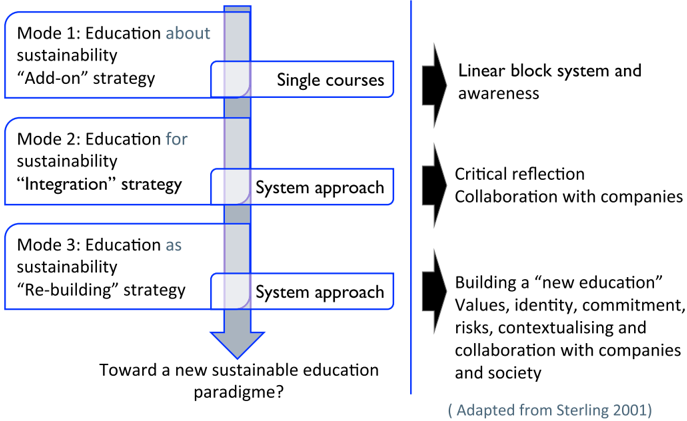
During the last 25 years, there have been many calls for new engineering competencies and a corresponding gradual change in both curriculum and pedagogy in engineering education. This has been a global trend, in the US, Europe, Australia and now emerging in the rest of the world. Basically, there have been two main types of societal challenges that many engineering institutions have responded to: the employability skills of graduates and the need for a sustainability approach to engineering. These are two very different challenges and societal needs; however, the ways engineering institutions have responded form a consistent pattern across many of the content aspects. No matter the specific character of change, three very different curriculum strategies seem to have evolved: an add-on strategy, an integration strategy or a re-building strategy; the latter involves substantial curriculum re-design. The add-on strategy and integration strategy are the ones most commonly used, whereas the re-building strategy is at an emerging stage in most engineering education communities. Most engineering schools find it very challenging to re-build an entire curriculum, so smaller changes are generally preferred. The purpose of this article is to conceptualise these institutional response strategies in a wider literature and present examples of curriculum change within both employability and sustainability. We will maintain that all these strategies are based on management decisions as well as academic faculty decisions; however the implications for using the various strategies are very different in terms of system change, role of disciplines, leader interventions and faculty development strategies. Furthermore, institutions might use all types of response strategies in different programs and in different semesters. The conceptual framework presented here can provide analytical anchors, hopefully creating more awareness of the complexity of systemic change.
Overview
The claims and statistics of this paper haven’t been checked yet.
Free: it reads the open-access text and checks the first 5 claims that cite a source we can check. Create a free account to check every claim.
Integrity signals
Registry
Cites
Statistics
Figures

Verification
Claims the paper makes
The claims and statistics of this paper haven’t been checked yet.
Free: it reads the open-access text and checks the first 5 claims that cite a source we can check. Create a free account to check every claim.
Claims other papers make about this one
Each is checked against this paper’s own text: does it say what the citing paper says it does?
The source backs part of the claim, not all of it — or backs it for a different population, condition or comparison.
In the citing paper
“However, in many civil and environmental engineering curricula, sustainability and ethics are still treated as supplementary topics rather than being systematically embedded in core technical courses.”
From Integrating Sustainability and Ethical Responsibility into Building Water Supply and Drainage Engineering Education: A CDIO-Based Curriculum Reform (2026) · cites this paper as [20]
Experimental — accuracy not yet measuredThe source backs part of the claim, not all of it — or backs it for a different population, condition or comparison.
In the citing paper
“While prior studies on EESD, CDIO-oriented curriculum reform, and project-based learning have reported positive outcomes in enhancing sustainability-related competencies [11,16,19,20,24], empirical evidence from disciplinespecific technical courses-particularly those directly related to public health and building safety-remains limited.”
From Integrating Sustainability and Ethical Responsibility into Building Water Supply and Drainage Engineering Education: A CDIO-Based Curriculum Reform (2026) · cites this paper as [20]
Experimental — accuracy not yet measuredThe source backs part of the claim, not all of it — or backs it for a different population, condition or comparison.
In the citing paper
“Globally, there are also increasing calls for curricula that focus on sustainability and the SDGs (Kolmos et al., 2016),”
From Global challenges, local responses: Exploring curriculum reform in South African engineering education (2025) · cites this paper as Kolmos et al., 2016
Experimental — accuracy not yet measuredThe cited source says what the claim attributes to it.
In the citing paper
“As Kolmos et al. (2016, p. 391) point out, engineering curriculum reform is a response to ' two main types of societal challenges … : the employability skills of graduates and the need for a sustainability approach to engineering. '”
From Global challenges, local responses: Exploring curriculum reform in South African engineering education (2025) · cites this paper as Kolmos et al., 2016
The cited source says what the claim attributes to it.
In the citing paper
“Employability is a recurring theme in global studies (Kolmos et al., 2016; Yates & Young, 2010).”
From Global challenges, local responses: Exploring curriculum reform in South African engineering education (2025) · cites this paper as Kolmos et al., 2016
Self-check
Percentages, sums and reported differences re-computed from the paper’s own numbers.
The self-check needs the paper’s full text.
Citations
Cites
(1994) · Journal of the American Dietetic Association · doi:10.1016/0002-8223(94)92216-0 · Cited by 45,910
The New Meaning of Educational Change
(2013) · Routledge eBooks · doi:10.4324/9780203609071 · Cited by 8,220 · cited 3×
“Within the framework of Fullan (2007a), de Graaff and Kolmos (2006) present a model for systemic change with four elements: (1) identify the core elements in the curriculum that have to undergo change and should be aligned, (2) identify the organisation and culture of the teaching unit, to address…”
BackgroundThe New Meaning of Educational Change
Fullan, M. (2001) · doi:10.4324/9780203986561 · Cited by 4,373
Leading change: why transformation efforts fail
Kotter, J. P. (2009) · IEEE Engineering Management Review · doi:10.1109/emr.2009.5235501 · Cited by 3,566 · cited 1×
“Kotter is often referred to as one of the core systemic theorists in the field (de Graaff and Kolmos 2006; Kotter 1995; Reidsema et al. 2013).”
BackgroundLeading in a Culture of Change
Fullan, M. J. (2001) · Cited by 3,489
Creating entrepreneurial universities : organizational pathways of transformation
Clark, B. R. (1998) · Cited by 2,867
(1980) · Cited by 2,480
Problem-Based Learning: An Approach to Medical Education
Engle, K. K. (1981) · The American Journal of Occupational Therapy · doi:10.5014/ajot.35.8.539b · Cited by 2,140
Sustainable Education: Re-Visioning Learning and Change. Schumacher Briefings.
Sterling, S. (2001) · Cited by 1,915
The Challenge of Problem-based Learning
Boud, D., & Feletti, G. (2013) · Routledge eBooks · doi:10.4324/9781315042039 · Cited by 1,754 · cited 2×
“No matter if the focus is on problem-based learning, (Barrows and Tamblyn 1980; Felletti and Boud 1997; Savin-Baden 2003), project-based learning (Edström and Kolmos 2014), or merging PBL models (Kolmos and Graaff 2014), the degree of implementation of PBL will depend on the degree of systemic…”
Background
Research works printed but not linked: 5
- 15. Dahlgren, M. A. (2002). Portraits of PBL: A cross-faculty comparison of students' experiences of problem- based learning. Linko ¨ping: Linko ¨pings universitet, Department of Behavioural Sciences.
- 16. de Graaff, E., & Kolmos, A. (2006). Management of change. Rotterdam: Sense Publishers.
- European Commission. (2009). Communiqué of the conference of European ministers responsible for higher education, Leuven and Louvain-la-Neuve, 28–29 April 2009. http://europa.eu/rapid/press-release_IP-09-675_en.htm . Accessed 6 February 2015.
- 38. Holgaard, J. E., de Graaff, E., & Kolmos, A. (2010). Sustainability in the practice, mindset and heart of engineering. Presented at the ESRSCP-EMSU Conference. http://vbn.aau.dk/da/publications/ sustainability-in-the-practise-mindset-and-heart-of-engineering(73d7bba8-f7b5-43ac-948b-49223159 267a).html. Accessed 15 October 2014.
- 61. Seidel, J., Hadgraft, R. G., & Eley, M. (1994). Student contractors bid for soils engineering jobs. Presented at the 6th Australasian Association for Engineering Education Conference, Sydney.
Cited by
Brassler, M., & Dettmers, J. (2017) · Interdisciplinary Journal of Problem-Based Learning · doi:10.7771/1541-5015.1686 · Cited by 214
Integration of sustainability in engineering education: Why is PBL an answer?
Guerra, A. (2017) · International Journal of Sustainability in Higher Education · doi:10.1108/ijshe-02-2016-0022 · Cited by 177
Preparing engineering students for the challenges of the SDGs: what competences are required?
Beagon, Ú., Kövesi, K., Tabas, B., Nørgaard, B., Lehtinen, R., Bowe, B. W., Gillet, C., & Spliid, C. C. M. (2022) · European Journal of Engineering Education · doi:10.1080/03043797.2022.2033955 · Cited by 165
Holst, J., Singer‐Brodowski, M., Brock, A., & de Haan, G. (2024) · Sustainable Development · doi:10.1002/sd.2865 · Cited by 164
Engineering education and the development of competencies for sustainability
Quelhas, O. L. G., Lima, G. B. A., Ludolf, N. V.-E., Meiriño, M. J., Abreu, C., Anholon, R., Vieira Neto, J., & Rodrigues, L. S. G. (2019) · International Journal of Sustainability in Higher Education · doi:10.1108/ijshe-07-2018-0125 · Cited by 106
Faculty wide curriculum reform: The integrated engineering programme
Mitchell, J. E., Nyamapfene, A., Roach, K., & Tilley, E. (2021) · European Journal of Engineering Education · doi:10.1080/03043797.2019.1593324 · Cited by 69
Cabedo, L., Royo, M., Miravet, L. M., & Guraya, T. (2018) · Sustainability · doi:10.3390/su10061823 · Cited by 134
“[17], the required changes to adapt engineering studies to these new circumstances were complex, since engineering studies maintain a traditional culture where the introduction of methodological changes is not spontaneously accepted by some teachers.”
BackgroundBraßler, M., & Sprenger, S. (2021) · Sustainability · doi:10.3390/su13063494 · Cited by 113
“Several opportunities are aligned with the implementation of interdisciplinary learning in higher education, addressing three major teaching modes at the university level: academic mode, market-driven innovation mode, and hybrid learning and responsibility mode [67,68].”
BackgroundA Review of Curriculum Change and Innovation for Higher Education
Law, M. Y. (2022) · Journal of Education and Training Studies · doi:10.11114/jets.v10i2.5448 · Cited by 77
“Planning ensures that all players know the market needs and the strategies for achieving the desired needs (Kolmos et al., 2015).”
BackgroundPBL in Engineering Education: International Perspectives on Curriculum Change
Guerra, A., Ulseth, R., & Kolmos, A. (2017) · SensePublishers eBooks · doi:10.1007/978-94-6300-905-8 · Cited by 69
Self-citationCase-based flipped classroom approach to teach sustainable infrastructure and decision-making
McWhirter, N., & Shealy, T. (2018) · International Journal of Construction Education and Research · doi:10.1080/15578771.2018.1487892 · Cited by 67
“curriculum is far more difficult than an add-on approach (Kolmos et al., 2016).”
BackgroundA bibliometric review of research on employability: dataset from Scopus between 1972 and 2019
Dinh, N. T., Luong, D., & Pham, H. (2022) · Higher Education Skills and Work-based Learning · doi:10.1108/heswbl-02-2022-0031 · Cited by 72
Servant-Miklos, V. F. C., & Kolmos, A. (2022) · Journal of Engineering Education · doi:10.1002/jee.20478 · Cited by 64
“At the institutional level, generating widespread motivation for change among academic staff remains a challenge (Kolmos et al., 2016; Voogt & Roblin, 2012).”
BackgroundSelf-citationAprendizaje basado en proyectos: método para el diseño de actividades
Martín, J. G., & Pérez, J. (2018) · Revista Tecnología Ciencia y Educación · doi:10.51302/tce.2018.194 · Cited by 62
Sigahi, T. F. A. C., Rampasso, I. S., Anholon, R., & Sznelwar, L. I. (2022) · International Journal of Sustainability in Higher Education · doi:10.1108/ijshe-11-2021-0472 · Cited by 64
Desha, C., Rowe, D., & Hargreaves, D. (2019) · Australasian journal of engineering education · doi:10.1080/22054952.2019.1696652 · Cited by 58
Sundman, J., Feng, X., Shrestha, A., Johri, A., Varis, O., & Taka, M. (2025) · European Journal of Engineering Education · doi:10.1080/03043797.2025.2532591 · Cited by 61
“Nevertheless, both sustainability and employability orientations are needed in engineering education to meet societal needs and professional demands (Jamison, Kolmos, and Holgaard 2014; Kolmos, Hadgraft, and Holgaard 2016).”
Reshaping Engineering Education: Addressing Complex Human Challenges
Habbal, F., Kolmos, A., Hadgraft, R. G., Holgaard, J. E., & Reda, K. (2023) · Springer eBooks · doi:10.1007/978-981-99-5873-3 · Cited by 59
Self-citationNarong, D. K., & Hallinger, P. (2024) · Sustainability · doi:10.3390/su16020641 · Cited by 45
Sigahi, T. F. A. C., & Sznelwar, L. I. (2021) · Journal of Engineering Education · doi:10.1002/jee.20438 · Cited by 43
Vehmaa, A., Karvinen, M., & Keskinen, M. (2018) · Sustainability · doi:10.3390/su10082605 · Cited by 41
Sigahi, T. F. A. C., & Sznelwar, L. I. (2022) · Journal of Cleaner Production · doi:10.1016/j.jclepro.2022.135659 · Cited by 39
Sánchez, D. O., & Eguizábal, J. A. J. (2019) · Sustainability · doi:10.3390/su11226370 · Cited by 36
“As an add-on strategy [56] to the study plan of the Degree in Infant Education (Infant School Teacher) and a project approach by disciplines, the trainee teacher responsible for the study module presented the problematic social issues during the first teaching sessions, with which they would have to work for 51 practi…”
MethodA framework for mapping sustainability within tertiary curriculum
Sloan, T. (2019) · International Journal of Sustainability in Higher Education · doi:10.1108/ijshe-09-2018-0151 · Cited by 42
Hassan, M. U., Alaliyat, S., Sarwar, R., Nawaz, R., & Hameed, I. A. (2023) · Heliyon · doi:10.1016/j.heliyon.2023.e15407 · Cited by 40
“The traditional curricula in higher education institutes constitutes of the expertise of the professors, lecturers, and domain-specific experts [39].”
BackgroundCurriculum Agility principles for transformative innovation in engineering education
Hallenga-Brink, S. C., Hei, M. S. A. D., Sjoer, E., Carlsson, C. J., Georgsson, F., Keller, E., McCartan, C., Enelund, M., Lyng, R., & Admiraal, W. (2024) · European Journal of Engineering Education · doi:10.1080/03043797.2024.2398165 · Cited by 34
“…the resulting tension between the nineteenth-century design of Higher Engineering driven) one, have to move beyond the individual incremental course-based improvement based on student evaluations (Kolmos, Hadgraft, and Egelund Holgaard 2016), and need different stakeholders around the table.”
InfluentialFeng, X., Sundman, J., Aarnio, H., Taka, M., Keskinen, M., & Varis, O. (2024) · European Journal of Engineering Education · doi:10.1080/03043797.2024.2424197 · Cited by 41
“…as interdisciplinary problem-based learning, to facilitate students’ learning through diverse perspectives and to support critical thinking and constructive approaches to complex problem-solving (Kolmos, Hadgraft, and Holgaard 2016; Quelhas et al. 2019; Tejedor, Segalàs, and Rosas-Casals 2018).”
Scholkmann, A. (2020) · Interdisciplinary Journal of Problem-based Learning · doi:10.14434/ijpbl.v14i2.28800 · Cited by 31
“For example, Müller (2011) has systematized “institutional requirements and conditions” for that; Chen et al. (2020) and Kolmos et al. (2016) have identified different levels of PBL implementation, and Kolmos and de Graaff (2006), much in line with the assumptions of translation theory, argue that…”
BackgroundBraßler, M. (2020) · Interdisciplinary Journal of Problem-based Learning · doi:10.14434/ijpbl.v14i2.28799 · Cited by 26
Thomas-Seale, L. E. J., Kanagalingam, S., Kirkman‐Brown, J., Attallah, M. M., Espino, D. M., & Shepherd, D. E. T. (2022) · International Journal of Technology and Design Education · doi:10.1007/s10798-022-09741-6 · Cited by 28
Delaney, E., & Liu, W. (2023) · Frontiers in Sustainability · doi:10.3389/frsus.2023.1148685 · Cited by 24
“The sustainability education level system used throughout this study (Bateson, 2000; Sterling, 2003, 2004; Hay et al., 2010; Jamison et al., 2014; Kolmos et al., 2016) enabled reflection and insight into the current state of available design masters courses available, their limitations, as well as suggestions on how t…”
BackgroundMethodInfluentialNyoni, C. N., & Botma, Y. (2020) · International Journal of Africa Nursing Sciences · doi:10.1016/j.ijans.2020.100208 · Cited by 24
Castellanos, P. M. A., & Queiruga‐Dios, A. (2022) · Sustainability · doi:10.3390/su14169866 · Cited by 25
Learning and Assessing Problem‐Based Learning at Aalborg University
Kolmos, A., Bøgelund, P., & Spliid, C. C. M. (2019) · Wiley eBooks · doi:10.1002/9781119173243.ch19 · Cited by 22
Self-citationTriyono, M. B., Rafiq, A. A., Djatmiko, I. W., & Kulanthaivel, G. (2023) · International Journal of Evaluation and Research in Education (IJERE) · doi:10.11591/ijere.v12i4.26001 · Cited by 22
“It is anticipated that a greater awareness of the intricacies of systemic change will be created because of the conceptual framework offered here, which can provide an analytical anchor [96].”
BackgroundQuantitative validation of a proposed technical sustainability competency model: A PLS-SEM approach
Mukhtar, N., Kamin, Y., & Saud, M. S. (2022) · Frontiers in Sustainability · doi:10.3389/frsus.2022.841643 · Cited by 25
A system-based framework for engineering education as sustainable development
Narong, D. K. (2024) · European Journal of Engineering Education · doi:10.1080/03043797.2024.2374481 · Cited by 18
“…level encourages early adopter faculty members to take leadership roles as change agents (Kolmos, Hadgraft, and Holgaard 2016) and create, disseminate, appropriate, and codify new knowledge in organisational processes and systems (Hannah and Lester 2009; Kolmos, Hadgraft, and Holgaard 2016).”
InfluentialSustainable Development Principles for Engineering Educator
Quadrado, J. C., Galikhanov, M. F., & Zaitseva, K. K. (2020) · Высшее образование в России · doi:10.31992/0869-3617-2020-29-6-75-82 · Cited by 18
Construcción de conocimiento sobre el medio ambiente con base en el método de proyectos
Granados, N. R. P., González, L., Cristancho, M. A. P., & Perico-Martínez, C. A. (2022) · Formación universitaria · doi:10.4067/s0718-50062022000200011 · Cited by 17
A conceptual model for knowledge dimensions and processes in design and technology projects
Alamäki, A. V. (2017) · International Journal of Technology and Design Education · doi:10.1007/s10798-017-9410-7 · Cited by 17
Guidelines to enhance stakeholder management in higher education institutions
Anholon, R., Rampasso, I. S., Ávila, L. V., Sigahi, T. F. A. C., de Moraes, G. H. S. M., Serafim, M. P., & Filho, W. L. (2024) · International Journal of Sustainability in Higher Education · doi:10.1108/ijshe-02-2024-0153 · Cited by 16
Gardelle, L. (2025) · European Journal of Engineering Education · doi:10.1080/03043797.2025.2474044 · Cited by 18
“To follow the typology proposed by Sterling (2004) and Kolmos, Hadgraft, and Holgaard (2016), as reiterated by Rosén et al. (2023) in the call for the special issue, we can identify three levels of response: an add-on of sustainability elements to courses or in a program, an integration that…”
Method to guide the design of project based learning activities based on educational theories
Martín, J. G., & Martínez, J. E. P. (2017) · International Journal of Engineering · Cited by 25
Schleiß, J., Johri, A., & Stober, S. (2024) · arXiv (Cornell University) · doi:10.5281/zenodo.14256877 · Cited by 21
Theoretical Foundations of Project Based Curricula in Higher Education
Korkmaz, G., & Kalaycı, N. (2019) · Cukurova University Faculty of Education Journal · doi:10.14812/cuefd.479322 · Cited by 19
Ncube, B., Yeboah, G., & Pandey, P. (2026) · International Journal of Sustainability in Higher Education · doi:10.1108/ijshe-08-2025-0945 · Cited by 13
Stimulating Engineering Students’ Potential for Sustainable Development
Nakad, M., Gardelle, L., & Abboud, R. (2025) · Sustainability · doi:10.3390/su17031073 · Cited by 13
Work in Progress: Fostering Soft-Skills of Engineering Students Within Scrum Projects
Lutsenko, G. V., & Lucenko, G. (2020) · IEEE Global Engineering Education Conference (EDUCON) · doi:10.1109/educon45650.2020.9125390 · Cited by 13
“The use of the integration strategy for curriculum change in engineering provides the mapping and coordination of different courses and integrating employability aspects such as teamwork and project management skills [2,3].”
MethodXavier, P., Wint, N., & White, G. O. (2022) · Philosophy of engineering and technology · doi:10.1007/978-3-031-11601-8_4 · Cited by 13
Calvo, I., Carrascal, E., González, J. M., Armentia, A., Gil-García, J. M., Barambones, Ó., Basogain, X., Tazo-Herran, I., & Apiñaniz, E. (2024) · Education Sciences · doi:10.3390/educsci14060583 · Cited by 13
On the Content of higher technical education curricula abroad: Current Trends (Review)
TOPORKOVA, O. V. (2020) · Высшее образование в России · doi:10.31992/0869-3617-2020-29-3-153-167 · Cited by 14
Martin, D. A. (2020) · Arrow - TU Dublin (Technological University Dublin) · doi:10.21427/7m6v-cc71 · Cited by 25
Education for Sustainable Development: Glocal Implications for Universities
Raitskaya, L., & Тихонова, Е. В. (2021) · Journal of language and Education · doi:10.17323/jle.2021.12215 · Cited by 12
Educational responses to sustainability in engineering programs: practices and prospects
Gutierrez-Bucheli, L. A., Reid, A. D., Kidman, G., & Lamborn, J. (2025) · European Journal of Engineering Education · doi:10.1080/03043797.2025.2519594 · Cited by 11
“Still, the study did not delve into the departmental and faculty/staff capacities necessary for this transition (e.g. Kolmos, Hadgraft, and Holgaard 2016).”
InfluentialPBL Intervention for Fostering Creativity in First-Year Engineering Students
Martínez, Ó. I. H., Fernandez-Samacá, L., & Fajardo, A. C. A. (2023) · IEEE Transactions on Education · doi:10.1109/te.2023.3292997 · Cited by 11
“…typical to find interdisciplinary projects or integration of skills or competencies derived from several courses; or 3) philosophy/institution level, a rebuilding strategy where all courses support the project work, and the projects could be interdisciplinary and transdisciplinary [28], [29], [30].”
BackgroundAlarcon-Pereira, G., Rampasso, I. S., Tapia-Ubeda, F. J., Rojas-Aguilar, K., & Rojas-Córdova, C. (2023) · International Journal of Sustainability in Higher Education · doi:10.1108/ijshe-03-2022-0073 · Cited by 10
Boelt, A. M., Kolmos, A., & Bertel, L. B. (2020) · Journal of Problem Based Learning in Higher Education · doi:10.5278/ojs.jpblhe.v9i1.6354 · Cited by 10
Self-citationThelma, D., & Phylis, M. (2020) · Journal of African Studies and Development · doi:10.5897/jasd2019.0566 · Cited by 11
“Author(s) agree that this article remain permanently open access under the terms of the Creative Commons Attribution License 4.0 International License Kolmos et al., 2016).”
BackgroundInfluentialWolff, K., Hattingh, T., & Smith, L. (2025) · Journal of Engineering Education · doi:10.1002/jee.70006 · Cited by 9
“As Kolmos et al. (2016, p. 391) point out, engineering curriculum reform is a response to “ two main types of societal challenges … : the employability skills of graduates and the need for a sustainability approach to engineering.”
InfluentialFerrari, E., Whitmarsh, L. E., Haggar, P. C., Mitev, K., & Lowe, A. (2025) · International Journal of Sustainability in Higher Education · doi:10.1108/ijshe-08-2023-0392 · Cited by 9
“Engineering students are more likely to address CC in their careers (Kim et al. , 2016; Shealy et al. , 2021) because institutions have incorporated sustainability into their curricula to meet societal challenges and job market demands (Kolmos et al. , 2016).”
Methodology for training engineers teamwork skills
Dorado-Vicente, R., Torres-Jiménez, E., Jiménez-González, J. I., Bolaños-Jiménez, R., & Gutiérrez-Montes, C. (2020) · IEEE Global Engineering Education Conference (EDUCON) · doi:10.1109/educon45650.2020.9125240 · Cited by 9
“In the look for a more comprehensive, complementary learning process, and following current modification of the existing national accreditation criteria for engineering degrees, in the last years, new and complementary learning approaches have been proposed [10], e.g. Challenge-Based Learning or CaseBased Learning (CB…”
BackgroundProcess for Faculty-Driven, Data-Informed Curriculum Continuity Review in Biomedical Engineering
Patrick, C., Machek, J., Avazmohammadi, R., Alge, D. L., Peak, C. W., & McShane, M. J. (2022) · Biomedical Engineering Education · doi:10.1007/s43683-021-00063-y · Cited by 10
Magnell, M., & Kolmos, A. (2016) · Tertiary Education and Management · doi:10.1080/13583883.2016.1257649 · Cited by 14
Self-citationINTERDISCIPLINARY TEACHING AND LEARNING – THEORY, EMPIRICAL RESULTS, AND PRACTICAL IMPLICATIONS
Braßler, M. (2020) · ICERI proceedings · doi:10.21125/iceri.2020.2072 · Cited by 12
ALIGNING INDUSTRIAL ENGINEERING EDUCATION WITH INDUSTRY THROUGH ATOMIC CURRICULUM MANIPULATION
Chikasha, P., Ramdass, K. R., Mokgokloa, K., & Maladzhi, R. W. (2020) · The South African Journal of Industrial Engineering · doi:10.7166/31-4-2393 · Cited by 9
“Kolmos, Hadgraft and Holgaard [6] reveal that engineering students graduate into a work environment that is steered by such factors as technology advancements and various social, environmental, political, and economic factors, all collectively introducing dynamics to the requirements for skills, knowledge, or expertis…”
BackgroundJollands, M. C., Stupans, I., & O’Connell, B. (2022) · Higher Education Research & Development · doi:10.1080/07294360.2022.2040448 · Cited by 9
Disrupting Engineering Education
Lindsay, E. D., Hadgraft, R. G., Boyle, F., & Ulseth, R. (2023) · Routledge eBooks · doi:10.4324/9781003287483-7 · Cited by 9
Self-citationde Lima, J., Isaac, S., & Kovacs, H. (2024) · European Journal of Engineering Education · doi:10.1080/03043797.2024.2346332 · Cited by 9
“This shutting down or shutting out of diverse voices is detrimental to sustainability (Ihsen and Buschmeyer 2007; Male et al. 2018) and the integrated, interdisciplinary, contextualised, and systemic thinking it requires (Kolmos, Hadgraft, and Holgaard 2016).”
Smith, E., Pardo, A., Mills, J. E., & Birbeck, D. (2024) · Australasian journal of engineering education · doi:10.1080/22054952.2024.2384144 · Cited by 10
“The add-on strategy ‘adds or modifies components without disturbing the existing structure’ (Kolmos, Hadgraft, and Holgaard 2016, 396).”
Bolstad, T., Verhulst, E., & Henriksen, R. B. (2025) · European Journal of Engineering Education · doi:10.1080/03043797.2025.2486192 · Cited by 9
“Sterling (2004) and Kolmos, Hadgraft, and Holgaard (2016) describe four levels of integration of sustainability in a study programme.”
Rise of Machines: Time to Change the Petroleum Engineering Curriculum
Samuel, R. (2020) · SPE Annual Technical Conference and Exhibition · doi:10.2118/201755-ms · Cited by 8
Building Climate Adaptation Capacity: A Pedagogical Model for Training Civil Engineers
Dupuis, S. T., Gagnon, S., & LeBlanc, C. E. (2025) · Sustainability · doi:10.3390/su172210200 · Cited by 7
Computer-aided curriculum analysis and design: existing challenges and open research directions
Teixeira, A. M. H., Guerra, A. O. P. D. C., Knorn, S., Staffas, K., & Varagnolo, D. (2020) · IEEE Frontiers in Education Conference (FIE) · doi:10.1109/fie44824.2020.9274292 · Cited by 7
“Reflecting on the framework in [28], our manuscript may be seen as a promoter for a systemic change of curriculum, embedded within a strategy for re-building the curriculum.”
BackgroundExploring response levels to sustainability in engineering curricula: a cross-case analysis
Gutierrez-Bucheli, L. A., Reid, A. D., Kidman, G., & Lamborn, J. (2025) · International Journal of Sustainability in Higher Education · doi:10.1108/ijshe-02-2024-0070 · Cited by 7
Pietikäinen, J., Södervik, I., Tuononen, T., & Ratvio, R. (2024) · Strategies for sustainability · doi:10.1007/978-3-031-54026-4_13 · Cited by 6
Magarian, J. N., & Olechowski, A. (2020) · ASEE Annual Conference & Exposition · doi:10.18260/1-2--30417 · Cited by 6
“While literature indicates that EL programming is more effective when integrated into the core curriculum rather than distributed in optional activities [13], other studies reveal that changing the engineering core curriculum can be quite difficult [6, 14, 15].”
BackgroundNarong, D. K., & Wattanaphak, N. (2024) · International STEM Education Conference (iSTEM-Ed) · doi:10.1109/istem-ed62750.2024.10663141 · Cited by 6
“As a consequence, there is an increasingly acknowledged imperative to nurture sustainability competencies within the engineering discipline [7],[8].”
BackgroundLicenciaturas en filosofía: disputas y articulaciones entre lo disciplinar y lo pedagógico
Agustiniana, U., Leongómez, M. V., Lara, L. A. M., Agustiniana, U., Farieta, A., Agustiniana, U., Vela, L. M., & Javeriana, P. U. (2019) · Editorial Uniagustiniana eBooks · doi:10.28970/9789585498273.02 · Cited by 6
Brosens, L., Octavia, J., Raes, A., & Emmanouil, M. (2021) · LearnXDesign Conference · doi:10.21606/drs_lxd2021.01.222 · Cited by 5
“Kolmos and colleagues refer to a similar approach as they claim that new scenarios for education should go beyond an add-on approach on a single course dimension (micro), but also entail collaborations within the university (meso), and with companies and society (macro) (Kolmos et al., 2016).”
BackgroundSimpson-Smith, C. (2023) · Australasian journal of engineering education · doi:10.1080/22054952.2023.2287297 · Cited by 5
“Kolmos, Hadgraft and Holgaard (2015) describe global trends towards reforming curriculum and pedagogy in engineering education as having taken different forms, including adding on, integrating and rebuilding.”
DESIGNERLY WAYS OF TRANSFORMING DESIGN EDUCATION: A REVIEW OF DESIGN CURRICULA REFORMS WORLDWIDE
Brosens, L., Raes, A., Octavia, J. R., & Emmanouil, M. (2021) · International Conference on Engineering and Product Design Education (EPDE) · doi:10.35199/epde.2021.38 · Cited by 4
Veeman, D., Partheeban, P., Raguraman, D., Shree, M. V., & Sai, M. (2020) · International Conference on Advanced Computing and Communication Systems (ICACCS) · doi:10.1109/icaccs48705.2020.9074449 · Cited by 4
“The idea of ESD arose mainly from environmental learning and development, and its main position was verified at the Johannesburg World Forum on "Sustainable Development" in 2002.”
BackgroundInfluentialEngineering the Unexpected: Faculty Strategies for Navigating Academic Disruptions
Raju, G. M., Balart, T., Ligler, G. T., Shryock, K. J., & Brumbelow, K. (2025) · IEEE Frontiers in Education Conference (FIE) · doi:10.1109/fie63693.2025.11328131 · Cited by 3
“Additionally, student mental health concerns exacerbated by the pandemic highlight the importance of mentorship programs and structured academic support [32].”
Student personas and their learner journeys in co-creative curriculum innovation
Hallenga-Brink, S. C., Wikberg-Nilsson, Å., Hei, M. S. A. D., Sjoer, E., & Admiraal, W. (2025) · Discover Education · doi:10.1007/s44217-025-00980-y · Cited by 3
“Higher education institutions (HEIs) tend to rely mostly on student evaluations for incremental, course-based improvements [19].”
PBL in the space-time continuum for engineering education
Martínez, Ó. I. H., Corazza, G. E., & Fernandez-Samacá, L. (2022) · European Journal of Engineering Education · doi:10.1080/03043797.2022.2149388 · Cited by 3
Do not listen to students’ voices: give them the power to transform!
Nießner, S., & Rosén, A. (2025) · European Journal of Engineering Education · doi:10.1080/03043797.2025.2513431 · Cited by 3
“While this may be true for sustainability-1066 oriented study programmes, there is evidence that engineering education, in general, faces challenges to progress beyond the first level of change (Kolmos, Hadgraft, and Holgaard 2016; Rosén et al. 2021; Thürer et al. 2018).”
InfluentialAprendizaje Basado en Problemas (ABP), competencias y la enseñanza de química para Ingenieros
Cano, M. F. C. (2018) · LACCEI International Multi-Conference for Engineering, Education and Technology (LACCEI) · doi:10.18687/laccei2018.1.1.66 · Cited by 3
Lock, D. (2019) · Springer eBooks · doi:10.1007/978-3-030-26342-3_24 · Cited by 3
Waly, M. I. (2020) · International Journal of Emerging Technologies in Learning (iJET) · doi:10.3991/ijet.v15i04.11792 · Cited by 3
Fuentes, S. C., Kri, F., Mayol, E. M., López, M. L., & Cerda, L. G. (2020) · Pensamiento Educativo Revista de Investigación Educacional Latinoamericana · doi:10.7764/pel.57.2.2020.10 · Cited by 3
University Alliances as Learning Networks: Towards Responsible European Engineering Universities?
Fuchs, L., Cuevas-García, C., Bombaerts, G. J. T., & Mottl, P. (2022) · IEEE Frontiers in Education Conference (FIE) · doi:10.1109/fie56618.2022.9962496 · Cited by 3
“Technical universities adapt their curricula to specific pedagogical approaches to address societal challenges, such as project based [24] or challenge based ([25]-[27]) learning.”
BackgroundMartín, J. G. (2016) · UPM Digital Archive (Technical University of Madrid) · doi:10.20868/upm.thesis.48852 · Cited by 3
Ngobeni, N. C. (2025) · E-Journal of Humanities Arts and Social Sciences · doi:10.38159/ehass.202561032 · Cited by 2
Karvinen, M., Sundman, J., Kaikko, A., & Keskinen, M. (2026) · European Journal of Engineering Education · doi:10.1080/03043797.2026.2629871 · Cited by 2
“In this respect, the employability agenda has received greater attention in engineering education than the sustainability agenda (Graham 2018; Jamison, Christensen, and Botin 2011; Kolmos, Hadgraft, and Holgaard 2016a).”
InfluentialDas, R. P., Moratti, T., Gasper, S., Singh, A., Baby, M., & Morkos, B. W. (2026) · Journal for STEM Education Research · doi:10.1007/s41979-026-00189-0 · Cited by 3
Koromyslova, E., & Koromyslov, A. (2020) · ASEE Annual Conference & Exposition · doi:10.18260/1-2--32053 · Cited by 2
“Several studies investigated curriculum integration where soft skills teaching is included in most of the academic program courses.(27,28,29)”
BackgroundLi, H., & Howell, S. (2019) · Griffith Research Online · Cited by 2
Project-based STEM-courses for engineering students
Lutsenko, G. V., Подолян, О. М., & Ozhyndovych, L. (2020) · Engineering and Educational Technologies · doi:10.30929/2307-9770.2020.08.02.05 · Cited by 2
Plotless actions with nevertheless a plot: the assemblage of a hybrid learning environment
Simon, F., & Vreuls, J. (2021) · SN Social Sciences · doi:10.1007/s43545-021-00268-6 · Cited by 4
Habbal, F., Kolmos, A., Hadgraft, R. G., Holgaard, J. E., & Reda, K. (2023) · Springer eBooks · doi:10.1007/978-981-99-5873-3_8 · Cited by 2
Self-citation
Metadata
- Authors
- Kolmos, A., Hadgraft, R. G., & Holgaard, J. E.
- Affiliations
- Aalborg University (DK)
- Central Queensland University (AU)
- Corresponding author
- Kolmos, Anette
- Venue
- International Journal of Technology and Design Education
- Published
- 2015-06-18
- Volume
- 26
- Issue
- 3
- Pages
- 391-411
- ISSN
- 0957-7572 (ISSN-L)
- 1573-1804
- OpenAlex
- W1839564221
- Semantic Scholar
- 67038ce20f5a85b805f9cbc10ffadb63af8a8eba
- Cited by
- 171
- References
- 68
- Citations by year
- 2026: 21 · 2025: 31 · 2024: 27 · 2023: 10 · 2022: 21 · 2021: 8 · 2020: 28 · 2019: 12 · 2018: 4 · 2017: 7 · 2016: 2
- FWCI
- 6.95
- Type
- journal article
- Language
- en
- Open access
- hybrid
- doi.org
- Locations
- International Journal of Technology and Design Education (publishedVersion, cc-by)
- Acquire (CQUniversity) (submittedVersion, cc-by)
- Figshare (submittedVersion, cc-by)
- UTS ePRESS (University of Technology Sydney) (submittedVersion)
- VBN Forskningsportal (Aalborg Universitet) (submittedVersion, cc-by)
- Topics
- Social Sciences › Education › Engineering Education and Curriculum Development
- Social Sciences › Development › Engineering Education and Global Impact
- Social Sciences › Education › Engineering Education and Pedagogy
- Keywords
- curriculum change, engineering education, employability skills, sustainability in engineering, curriculum redesign, integration strategies, systemic change, faculty development, leadership interventions, engineering competencies
About these checks
Registry, retraction, Cites and statistics results are computed, not judged, with one exception: a printed reference that no index lists is read once by a model before it counts as a citation error. Claims are extracted by a model and kept only when their quote appears verbatim in the text; each cited source is then checked, with a model’s help, for whether it says what the claim relies on. Those verdicts can be wrong — read the claim’s quote and the cited source before relying on one.
Statistics and arithmetic are recomputed, not judged.
Confidence bands are shown only for fields calibrated on our annotated test set. None is calibrated yet, so no band is shown.
What counts as a claim ›How we measure confidence ›How we check this ›
Are you an author, or do you see a problem with this page? Request a review
Data sources
Bibliographic data: Semantic Scholar, OpenAlex, Crossref.
Contains information from the Semantic Scholar Academic Graph Datasets, made available under the ODC Attribution License (ODC-BY 1.0).
Semantic Scholar’s data is described in: Kinney, R., et al. (2023). The Semantic Scholar Open Data Platform. arXiv:2301.10140.
