

The DOI matches its Crossref record; 67 of the 67 references it cites were found in a registry or an index.
Anxiety Disorders and Sensory Over-Responsivity in Children with Autism Spectrum Disorders: Is There a Causal Relationship?
Open accessAbstract
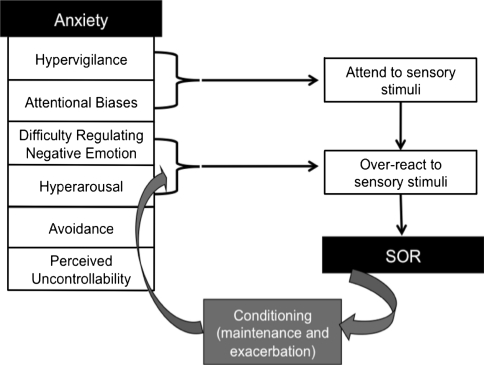
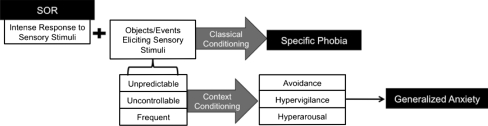
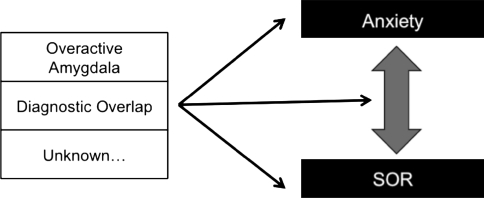
Anxiety disorders and sensory over-responsivity (SOR) are common in children with autism spectrum disorders (ASD), and there is evidence for an association between these two conditions. Currently, it is unclear what causal mechanisms may exist between SOR and anxiety. We propose three possible theories to explain the association between anxiety and SOR: (a) SOR is caused by anxiety; (b) Anxiety is caused by SOR; or (c) SOR and anxiety are causally unrelated but are associated through a common risk factor or diagnostic overlap. In this paper, we examine support for each theory in the existing anxiety, autism, and neuroscience literature, and discuss how each theory informs choice of interventions and implications for future studies.
Overview
The claims and statistics of this paper haven’t been checked yet.
Run the check — free, no account needed. It reads the open-access text and checks the sources it cites.
Integrity signals
Registry
Cites
Statistics
Figures
Verification
Claims the paper makes
The claims and statistics of this paper haven’t been checked yet.
Run the check — free, no account needed. It reads the open-access text and checks the sources it cites.
Claims other papers make about this one
Each is checked against this paper’s own text: does it say what the citing paper says it does?
The source backs part of the claim, not all of it — or backs it for a different population, condition or comparison.
In the citing paper
“Rather than considering SPD as a contributing cause of anxiety, the authors show that anxiety can also be considered a mediator of the relationship between IU and SPD on the basis that anxiety resulting from IU might lead to hypervigilance and, thus, hypersensitivity to the sensory environment”
From Examining a model of anxiety in autistic adults (2024) · cites this paper as Green & Ben-Sasson (2010)
Experimental — accuracy not yet measuredThe source backs part of the claim, not all of it — or backs it for a different population, condition or comparison.
In the citing paper
“Sensory function in ASD samples may be marked by both over-responsivity (e.g., experiencing various sounds as painful) and under-responsivity (e.g., repeated touching of objects). Both extremes may occur in the same children (Green and Ben-Sasson, 2010; Wigham et al., 2015; Watts et al., 2016).”
From Sensory, emotional and cognitive contributions to anxiety in autism spectrum disorders (2017) · cites this paper as Green and Ben-Sasson, 2010
Experimental — accuracy not yet measuredIn the citing paper
“Another factor which is thought to play an important role in anxiety in autism is sensory sensitivities (Green and Ben-Sasson 2010).”
From Experiences of autism acceptance and mental health in autistic adults (2018) · cites this paper as Green and Ben-Sasson 2010
Self-check
Percentages, sums and reported differences re-computed from the paper’s own numbers.
The self-check needs the paper’s full text.
Citations
Cites
The role of the amygdala in fear and anxiety
Davis, M. (1992) · Annual Review of Neuroscience · doi:10.1146/annurev.ne.15.030192.002033 · Cited by 2,357 · cited 2×
“The amygdala has been implicated in anxiety disorders, mainly due to its central role in fear conditioning (e.g., Davis 1992; Garakani et al. 2006; Rauch et al. 2003).”
BackgroundA cognitive-motivational analysis of anxiety.
Mogg, K., & Bradley, B. P. (1998) · Behaviour Research and Therapy · doi:10.1016/s0005-7967(98)00063-1 · Cited by 1,642 · cited 1×
“However, Mogg and Bradley (1998) describe anxiety as a preattentive bias towards threat, and theorize that the automatic encoding of threat without elaborative processing leads to anxiety.”
BackgroundBehavioral manifestations of autism in the first year of life
Zwaigenbaum, L., Bryson, S., Rogers, T., Roberts, W., Brian, J., & Szatmari, P. (2005) · International Journal of Developmental Neuroscience · doi:10.1016/j.ijdevneu.2004.05.001 · Cited by 1,602 · cited 1×
“Currently, SOR can be identified in infants later diagnosed with ASD (Zwaigenbaum et al. 2005), which is much earlier than anxiety is usually diagnosed.”
BackgroundAmaral, D. G., Schumann, C. M., & Nordahl, C. W. (2008) · Trends in Neurosciences · doi:10.1016/j.tins.2007.12.005 · Cited by 1,492 · cited 2×
“There is evidence that children with ASD have increased amygdala volumes compared to typically developing children, and that amygdala size is positively correlated with anxiety and severity of social-communication symptoms in these children (Amaral et al. 2008; Juranek et al. 2006).”
BackgroundAnxiety in children and adolescents with autism spectrum disorders
White, S. W., Oswald, D., Ollendick, T., & Scahill, L. (2009) · Clinical Psychology Review · doi:10.1016/j.cpr.2009.01.003 · Cited by 1,427 · cited 4×
“Anxiety disorders are very common in children with autism spectrum disorders (ASD), and can increase the functional impairment of these children (Lainhart 1999; White et al. 2009 ).”
BackgroundInfluentialMacLeod, C., Rutherford, E., Campbell, L., Ebsworthy, G., & Holker, L. (2002) · Journal of Abnormal Psychology · doi:10.1037/0021-843x.111.1.107 · Cited by 1,334 · cited 2×
“In particular, MacLeod et al. (2002) demonstrated that training individuals to have an attentional bias towards threat-relevant words subsequently increased their negative response to stress.”
BackgroundAn information processing model of anxiety: Automatic and strategic processes
Beck, A. T., & Clark, D. A. (1997) · Behaviour Research and Therapy · doi:10.1016/s0005-7967(96)00069-1 · Cited by 1,317 · cited 2×
“It is also important to ask whether, theoretically, a preverbal child with low cognitive ability can be anxious, as some theories of anxiety relate anxiety to conscious cognitive processing and anticipation of future events (e.g., Beck and Clark 1997 ).”
BackgroundThe human amygdala and the emotional evaluation of sensory stimuli
Zald, D. H. (2003) · Brain Research Reviews · doi:10.1016/s0165-0173(02)00248-5 · Cited by 1,062 · cited 3×
“The amount of enhancement in the sensory response is correlated with the amount of amygdala activation, which suggests that children with SOR may have over-active amygdalas (Zald 2003).”
BackgroundInfluentialBaranek, G. T., David, F. J., Poe, M. D., Stone, W. L., & Watson, L. R. (2006) · Journal of Child Psychology and Psychiatry · doi:10.1111/j.1469-7610.2005.01546.x · Cited by 975 · cited 1×
“Reports of SOR rates of 56–70% in children with ASD (Baranek et al. 2006; Ben-Sasson et al. 2007b) indicate elevated levels of SOR relative to rates of 10–17% in the general population (Ben-Sasson et al. 2009; Ben-Sasson et al. 2007b).”
BackgroundConcept Evolution in Sensory Integration: A Proposed Nosology for Diagnosis
Miller, L. J., Anzalone, M. E., Lane, S. J., Cermak, S. A., & Osten, E. T. (2007) · American Journal of Occupational Therapy · doi:10.5014/ajot.61.2.135 · Cited by 953 · cited 4×
“This may be an indicator of poor modulation of vestibularproprioceptive input, which is often observed in children with SOR ( Miller et al. 2007 ).”
BackgroundInfluential
Cited by
Sorted by citations
Items 201–300 of 327
Gigliotti, F., Martelli, M. E., Giovannone, F., & Sogos, C. (2025) · Children · doi:10.3390/children12070958 · Cited by 6
“Emotion regulation may act as a protective factor, mitigating the adverse effects of sensory difficulties on behavioral and social outcomes, independently of diagnostic status [56,57].”
Chen, C., Tsai, S., Tahamata, V. M., Chuang, Y.-H., Cheng, Y., & Fan, Y. (2025) · NeuroImage · doi:10.1016/j.neuroimage.2025.121470 · Cited by 4
Infant sensory gating and a developmental cascade to autistic traits and anxiety
Schwarzlose, R. F. (2025) · Neuropsychopharmacology · doi:10.1038/s41386-025-02253-6 · Cited by 6
“Alternately, some conceptual frameworks have posited a direct relationship between them [43, 44].”
Beneytez, C. (2023) · Research in Autism · doi:10.1016/j.rasd.2023.102116 · Cited by 5
Beyond Common Reassurances of “It’s OK”—The Reality of Anxiety in Autism
Srinivasan, H. (2025) · Autism in Adulthood · doi:10.1177/25739581251366856 · Cited by 5
Ben‐Sasson, A., & Stephenson, K. G. (2021) · Autism and child psychopathology series · doi:10.1007/978-3-030-66445-9_11 · Cited by 6
Self-citationPossible Neural Mechanisms Underlying Sensory Over-Responsivity in Individuals with ASD
Yuan, H.-L., Lai, C. Y. Y., Wong, M. N.-K., Kwong, T. C., Choy, Y. S., Mung, S. W. Y., & Chan, C. C. H. (2022) · Current Developmental Disorders Reports · doi:10.1007/s40474-022-00257-1 · Cited by 5
Butler, E., Spirtos, M., O’Keeffe, L. M., & Clarke, M. C. (2024) · Early Human Development · doi:10.1016/j.earlhumdev.2024.106166 · Cited by 4
Measuring habituation to stimuli: The Italian version of the Sensory Habituation Questionnaire
Tarantino, V., Passerello, N., Ben‐Sasson, A., Podoly, T. Y., Santostefano, A., Oliveri, M., Mandolesi, L., & Turriziani, P. (2024) · PLoS ONE · doi:10.1371/journal.pone.0309030 · Cited by 4
Self-citationPrata, J., Coelho, R. C., & Lawson, W. B. (2018) · Journal of Intellectual Disability - Diagnosis and Treatment · doi:10.6000/2292-2598.2018.06.01.3 · Cited by 6
“In such a hypervigilant state, individuals could be more likely to notice and respond to aversive sensory stimuli, and less likely to successfully separate from potentially threatening sensory stimuli [63].”
BackgroundHyde, J., & García‐Rill, E. (2019) · Elsevier eBooks · doi:10.1016/b978-0-12-817992-5.00006-4 · Cited by 4
Detection and Tracking of Anxiety Related Diseases for Autism Spectrum Disorder Using ECG
Abhirami, A., & G, S. P. (2019) · International Conference on Communication and Electronics Systems (ICCES) · doi:10.1109/icces45898.2019.9002160 · Cited by 4
Rossow, T., Marco, E. J., Gerdes, M. R., & Tavassoli, T. (2021) · OBM Neurobiology · doi:10.21926/obm.neurobiol.2104110 · Cited by 4
Development and Validation of the Glasgow Sensory Questionnaire Short (GSQ-14)Preprint
Millington, E., & Simmons, D. R. (2023) · doi:10.31234/osf.io/84kgt · Cited by 4
A Systematic Review of Autistic Adults' Experiences of Anxiety From a Qualitative Perspective.
Silva, A. B. D., Berry, E., Craig, S., & Doumas, M. (2025) · Journal of Autism and Developmental Disorders · doi:10.1007/s10803-025-07025-1 · Cited by 2
Ben‐Sasson, A., Podoly, T. Y., & Lebowitz, E. R. (2023) · Child Psychiatry & Human Development · doi:10.1007/s10578-023-01547-4 · Cited by 3
“Alternatively, SOR and anxiety may be linked bi-directionally [ 27 ].”
Self-citationSensory hyperacusis as a predictor of anxiety in adolescence
Tseliou, F., Collishaw, S., Price, A., & Sumner, P. (2025) · Journal of Child Psychology and Psychiatry · doi:10.1111/jcpp.70027 · Cited by 3
“Sensory sensitivity is sometimes considered a consequence of anxiety, emotional dysregulation or trauma (e.g. Fleming, Harnett, & Ressler, 2024; Green & Ben-Sasson, 2010).”
Adaptación al español de la Anxiety Scale for Children with ASD (ASC ASD-P)
Beneytez, C., Armentia, A. D. P., García-Villamisar, D. A., & Rodgers, J. (2020) · Acción Psicológica · doi:10.5944/ap.17.2.28066 · Cited by 3
Zoltowski, A. R., Failla, M. D., Quinde-Zlibut, J. M., Dunham-Carr, K., Moana-Filho, E. J., Essick, G. K., Baranek, G. T., Rogers, B. P., & Cascio, C. J. (2023) · Somatosensory & Motor Research · doi:10.1080/08990220.2023.2294715 · Cited by 3
Langdon, P. E., Apanasionok, M. M., Scripps, E., Bunning, K., Filipczuk, M., Gillespie, D., Hastings, R. P., Jahoda, A. J., McNamara, R. L., Rai, D., et al. (2024) · Health Technology Assessment · doi:10.3310/mwtq5721 · Cited by 3
Okada, S., Chida, W., English, M. C. W., Shibata, J., Onsen, M., Tsutsui, J., & Nakamura‐Taira, N. (2024) · Psychological Test Adaptation and Development · doi:10.1027/2698-1866/a000090 · Cited by 3
Head-Toes for Neurodiverse Learners: Adapting an Existing Behavioral Self-regulation Assessment
Cameron, C. E., Priore, M., Kenny, S. A., Cook‐Cottone, C. P., McClelland, M. M., & Gigante, V. (2025) · Child & Youth Care Forum · doi:10.1007/s10566-025-09894-0 · Cited by 2
“A heightened response to sensory input may trigger fear or anxiety in children, hindering their capacity to demonstrate behaviors that society typically considers thoughtful and well-regulated (Dellapiazza et al., 2021; Green & Ben-Sasson, 2010; Lane & Reynolds, 2019 ).”
‘I feel trapped in my safe clothes’: The impact of tactile hyper-sensitivity on autistic adults
Knight, A. F., & Birtles, D. (2025) · Autism · doi:10.1177/13623613251366882 · Cited by 2
“…with anxiety in autistic adults (Hwang et al., 2020; Syu et al., 2020; Verhulst et al., 2022), as well as mental health difficulties, somatisation and sleep difficulties in autistic children (Green & Ben-Sasson, 2010; MacLennan et al., 2021; Mazurek & Petroski, 2014; Rossow et al., 2021).”
Shimono, K., Kashida, N., Nishigori, K., Iwasaki, T., Mizui, R., Yamamuro, K., Ishida, R., Toritsuka, M., Takeda, T., Tanakoshi, H., et al. (2025) · Molecular Psychiatry · doi:10.1038/s41380-025-03335-z · Cited by 2
Hanna, M. R., & Rosenthal, M. Z. (2026) · Clinical Psychology & Psychotherapy · doi:10.1002/cpp.70291 · Cited by 2
Gajre, M. P., Shah, M., Pradhan, S. V., & Aseri, H. (2024) · Cureus · doi:10.7759/cureus.53376 · Cited by 2
Autism Severity and its Relationship to Disability
Waizbard‐Bartov, E., FEIN, D. A., Lord, C., & Amaral, D. G. (2024) · FOCUS The Journal of Lifelong Learning in Psychiatry · doi:10.1176/appi.focus.24022007 · Cited by 2
Autism Spectrum Disorder and Attachment
Perry, E. P., & Flood, A. (2016) · doi:10.1002/9781118938119.ch5 · Cited by 2
Autism Acceptance and Mental Health
Cage, E. (2019) · Springer eBooks · doi:10.1007/978-1-4614-6435-8_102427-1 · Cited by 5
Hare, C. (2020) · Brock University Digital Repository (Brock University) · Cited by 2
Fein, R. H., Venta, A. C., Meinert, A. C., Mire, S. S., & Bergez, K. C. (2021) · Wiley eBooks · doi:10.1002/9781118686089.ch6 · Cited by 2
Autism Acceptance and Mental Health
Cage, E. (2021) · Springer eBooks · doi:10.1007/978-3-319-91280-6_102427 · Cited by 1
Roberts-Davis, R. J., Happé, F. G., & Lau-Zhu, A. (2026) · Autism · doi:10.1177/13623613261455375 · Cited by 1
“Sensory hyperreactivity, a highly prevalent co-occurring difference in autistic individuals (Liss et al., 2006), was linked to anxiety in line with existing models (Green & Ben-Sasson, 2010; South & Rodgers, 2017).”
Ansiedad y trastornos del espectro del autismo: notas para la intervención psicoeducativa
Sánchez-Cueva, M. S., Alcantud Marín, F., & Alonso-Esteban, Y. (2022) · Siglo Cero: Revista Española sobre Discapacidad Intelectual · doi:10.14201/scero2022534930 · Cited by 1
Autism and Migraine: A Narrative Review
Alsaad, A. J. (2024) · Cureus · doi:10.7759/cureus.70060 · Cited by 2
“As mentioned before, also both disorders have been found to have increased thalamocortical connectivity [16,19,21,24,31].”
BackgroundPupillometry reveals hyper-arousal in response to auditory stimuli in autistic children
Song, C., Ma, R., Ni, W., Peng, X., Li, X., Shi, R., Zhang, Y., & Yi, L. (2024) · Journal of Zhejiang University SCIENCE B · doi:10.1631/jzus.b2300462 · Cited by 3
“Sensory over-responsivity has been considered to relate to elevated functional diffi‐ culties in autistic individuals, including social diffi‐ culties, maladaptive behaviors, depression, and anxi‐ ety (Pfeiffer et al., 2005; Ben-Sasson et al., 2008; Green and Ben-Sasson, 2010).”
Sensory Interventions: Evidence and Appropriate Use
Dumont, R. L., Williams, K. L., Barrett, A. L., Schiano, N. R., & Schaaf, R. C. (2025) · Springer eBooks · doi:10.1007/978-3-031-78143-8_13 · Cited by 1
Gutiérrez, B., Hudson, B. O., So, F. K., & Conn, B. M. (2025) · Cognitive and Behavioral Practice · doi:10.1016/j.cbpra.2025.05.003 · Cited by 1
Auditory discomfort and visual sensitivity
Haigh, S. M., Haggerty, J. A., & Delgado, A. (2025) · Vision Research · doi:10.1016/j.visres.2025.108655 · Cited by 1
MySensory: a Novel Solution for Sound Hyper-Reactivity in Autism
Player, O. R., Kelly, M. A., & Cho, Y. (2025) · Designing Interactive Systems Conference · doi:10.1145/3715668.3736366 · Cited by 1
“It has also been linked with anxiety disorders for autistic individuals [23] with evidence suggesting that SPD causes increased anxiety, particularly during social interactions [13].”
Özcan, Ö. Ö., Çevreli, B., Kamalı, M., Erguzel, T. T., & Metin, B. (2025) · Journal of Autism and Developmental Disorders · doi:10.1007/s10803-025-07172-5 · Cited by 1
Goel, A., Razak, K. A., Chubykin, A. A., & Antoine, M. W. (2025) · Journal of Neurodevelopmental Disorders · doi:10.1186/s11689-025-09634-4 · Cited by 1
“These sensory abnormalities can be debilitating, contributing to anxiety, social deficits, attention difficulties, and delayed/impaired learning [14–18].”
Bernhard, F. B., Skubik-Peplaski, C., & Dorich, J. M. (2026) · Occupational Therapy In Health Care · doi:10.1080/07380577.2026.2623230 · Cited by 1
Noriyama, Y., Ishida, R., Yamamuro, K., Kashida, N., Okumura, K., Okuda, M., Ikehara, M., Toritsuka, M., Saito, Y., Okada, T., et al. (2026) · Translational Psychiatry · doi:10.1038/s41398-026-04053-y · Cited by 1
Layton, C., & Bennetto, L. (2026) · Research in Autism · doi:10.1016/j.reia.2026.202941 · Cited by 1
Angststoornissen bij kinderen met autismespectrumstoornissen
van Steensel, F. J. A., Bögels, S. M., de Bruin, E. I., & Dirksen, C. D. (2013) · Kind & Adolescent Praktijk · doi:10.1007/s12454-013-0036-y · Cited by 1
SENSORY-BASED SUBTYPING IN CHILDREN WITH AUTISM SPECTRUM DISORDER
DeBoth, K. K. (2016) · VCU Scholars Compass (Virginia Commonwealth University) · doi:10.25772/g61x-7008 · Cited by 1
“Further, patterns of sensory hyperresponsivity in ASD may be closely associated with the presence of anxiety (Green & Ben-Sasson, 2010; Hazen et al., 2014).”
BackgroundThe Lived Experiences of Students with High Functioning Autism in Higher Education
Miles, A. G. (2019) · Cited by 1
Exploring the Benefits of the Evenness Virtual Reality-based Sensory Room
Mills, C., & Tracey, D. (2021) · doi:10.26183/zxmb-fy52 · Cited by 1
Shah, F., & Dwivedi, M. (2022) · Springer eBooks · doi:10.1007/978-981-16-6760-2_4 · Cited by 1
Wafa, H. A. E., Ghobashy, S. A. E. L., & Zakaria, A. K. (2022) · Egyptian Journal of Psychiatry · doi:10.4103/ejpsy.ejpsy_15_21 · Cited by 1
Are behavioral and psychological symptoms of dementia related to sensory processing?
Değerli, M. N. Ö., & Altuntaş, O. (2023) · Applied Neuropsychology Adult · doi:10.1080/23279095.2023.2232067 · Cited by 1
“…the relationship between sensory processing skills and behavioral and psychological symptoms in conditions with various sensory processing disorders such as autism and schizophrenia has been investigated, but this relationship has not been investigated in AD patients (Green & Ben-Sasson, 2010).”
Jaicks, Ç. C. D. (2024) · Cureus · doi:10.7759/cureus.64012 · Cited by 1
“Studies such as those by Ting & Weiss and Green & Ben-Sasson have highlighted the importance of accurate assessment methods and the positive impact of sensory integration education on motor skills and daily life activities in children with autism [18,19].”
BackgroundNieto, C., Gandía-Abellán, H., Sorrel, M. A., & Garrido-Salcedo, M. (2025) · Journal of Intellectual & Developmental Disability · doi:10.3109/13668250.2025.2546162 · Cited by 2
“The sub-scale that includes the 8 physiological items, along with the hypervigilance item, which reflects autonomic hyperactivation at rest (Green & Ben-Sasson, 2010), and the change subscale, which includes the 9 behavioural items.”
Liyew, W. A., Moges, A., Girma, F., Abebe, W., & Afework, M. (2025) · Child and Adolescent Psychiatry and Mental Health · doi:10.1186/s13034-025-00967-5 · Cited by 1
Headache in Autism Spectrum Disorders
Canitano, R., & Schroder, C. M. (2017) · Headache · doi:10.1007/978-3-319-54726-8_14 · Cited by 1
Parenting an Adult with High-Functioning Autism Spectrum Disorder
Lowinger, S., & Weidberg, S. (2019) · Autism and child psychopathology series · doi:10.1007/978-3-030-28833-4_13 · Cited by 1
Integración sensorial para reducir la ansiedad en trastornos del espectro autista
Navarrete, M. A. G. A. (2021) · Inventio, la génesis de la cultura universitaria en Morelos · doi:10.30973/inventio/2021.17.41/1 · Cited by 1
Bodison, S. C., Duker, L. I. S., Nakasuji, B., Gabriele, M., & Blanche, E. I. (2022) · Autism and child psychopathology series · doi:10.1007/978-3-031-06120-2_21 · Cited by 1
Promoting Recreational Engagement in Children With Autism Spectrum Disorder
Potvin, M., Prelock, P., Snider, L., & Savard, L. (2014) · Wiley eBooks · doi:10.1002/9781118911389.hautc36 · Cited by 1
Stockley, C. (2020) · UEL Research Repository (University of East London) · doi:10.15123/uel.892xq · Cited by 1
Williams, K. L. (2020) · Carolina Digital Repository (University of North Carolina at Chapel Hill) · doi:10.17615/hkvq-vm79 · Cited by 1
Sensory Overresponsivity as a Predictor of Amplitude Discrimination Performance in Youth with ASD
McKernan, E. P., Cascio, C. J., & Russo, N. N. (2021) · Springer eBooks · doi:10.1007/978-3-319-91280-6_102476 · Cited by 1
Saneh, N. A., Ghorbani, S., Farahani, H., Abedi, Z., Asadi, D. M., & Ashouri, A. (2023) · doi:10.22541/au.168802206.60400270/v1 · Cited by 1
Belle, J. E. L., Condro, M. C., Cepeda, C., Oikonomou, K. D., Tessema, K. K., Dudley, L., Schoenfield, J., Kawaguchi, R., Geschwind, D. H., Silva, A. J., et al. (2024) · bioRxiv (Cold Spring Harbor Laboratory) · doi:10.1101/2024.07.08.602602 · Cited by 1
Meehan, L. (2011) · University of Birmingham Institutional Research Archive (University of Birmingham) · Cited by 1
Quality of Life and Physical Well-Being in People with ASDs
Nieto, C., & Ventoso, R. (2011) · InTech eBooks · doi:10.5772/22121
Sensory Processing in Children with ADHD: A Classroom Study and Rational Item Analysis
Mathison, J. (2012) · Digital Commons - PCOM (Philadelphia College of Osteopathic Medicine)
Crawford, N. A. (2013) · doi:10.18297/etd/2280
“Green and Ben-Sasson (2010) proposed an explanatory”
BackgroundPouw, L. B. C. (2014) · Leiden Repository (Leiden University)
More than Shyness: Selective Mutism and its Link to Sensory Processing Disorder
Brimo, K. (2018) · Dialogues in Social Justice: An Adult Education Journal (The University of North Carolina at Charlotte)
Anxiety Guide: A Guide for Parents
Waite, J., Crawford, H., Royston, R., & Oliver, C. (2015) · Coventry University Open Collections (Coventry university)
An Evolving Understanding of a Spectrum “Disorder”
Eads, S. C. (2018) · Scholarly and Creative Works from DePauw University (DePauw University)
Rhodus, E. K. (2019) · UKnowledge (University of Kentucky) · doi:10.13023/etd.2019.165
“Recent evidence supports significant improvements of sensorybased problems in children with severe autism through implementation of sensory diets (Fazlioğlu & Baran, 2008; Green & Ben-Sasson, 2010).”
BackgroundAn Anecdote of Investor Anxiety and Momentum in China
Lin, H.-W., Lin, K.-B., Huang, J., & Cao, J. (2020) · Complexity · doi:10.1155/2020/6564731
علاقة سلوکات التحدی بکل من اضطرابات القلق والنوم لدى الأطفال ذوی اضطراب طیف التوحد
منصور, ا. ک. ا., & فيصل, ض. أ. ع. (2019) · مجلة کلیة التربیة بالإسماعیلیة · doi:10.21608/jfes.2019.87519
Autistic Dreaming: a phenomenological study of dreaming and well-being
Pindar, S.-A. (2019) · Sheffield Hallam University · doi:10.7190/shu-thesis-00319 · Cited by 1
Conceptualization of comorbid anxiety in autism spectrum disorder: An integrative literature review
Behzadpour, S., Pouretemad, H., & Akbarizardkhaneh, S. (2021) · Koomesh journal · doi:10.29252/koomesh.23.1.11
Tactile sensitivity in typical and atypical development
Clapperton, T. (2020)
Review of Dejian Mind-Body Intervention Used to Children with Autism Spectrum Disorder
Zhao, M., Li, C., Zhao, N., & Huang, S. (2021) · Advances in Social Science, Education and Humanities Research/Advances in social science, education and humanities research · doi:10.2991/assehr.k.210617.046
Does training on inhibitory tasks influence alcohol consumption and attitudes
Hegarty, B. D., Rushby, J. A., Johnstone, S. J., Kelly, P. J., & Smith, J. L. (2012) · Research Online (University of Wollongong)
Barros, V. D. M., & Barba, P. C. D. S. D. (2021) · Revista Chilena de Terapia Ocupacional · doi:10.5354/0719-5346.2021.56325
Cognitive Behavioral Therapy for Children and Adults with Autism
Langdon, P. E. (2021) · Cambridge University Press eBooks · doi:10.1017/9781108355605.031
Specialist Applications of Cognitive Behavioral Therapy for Anxiety Disorders and Depression
Todd, G., & Branch, R. (2021) · Cambridge University Press eBooks · doi:10.1017/9781108355605.029
Sensory Overresponsivity as a Predictor of Amplitude Discrimination Performance in Youth with ASD
McKernan, E. P., Cascio, C. J., & Russo, N. N. (2020) · Springer eBooks · doi:10.1007/978-1-4614-6435-8_102476-1
Qian, X. J. (2022) · Advances in Social Science, Education and Humanities Research/Advances in social science, education and humanities research · doi:10.2991/assehr.k.220704.029
“Anxiety Spectrum Disorders problems are common in children and adolescents with ASD, and anxiety emotion has worsened the severity of impairment [9-11].”
BackgroundMisophonie im Kindes- und Jugendalter: Eine narrative Übersichtsarbeit
Pfeiffer, E., Allroggen, M., & Sachser, C. (2022) · Zeitschrift für Kinder- und Jugendpsychiatrie und Psychotherapie · doi:10.1024/1422-4917/a000885 · Cited by 1
Le Cube sensoriel, un dispositif d’immersion
Falempin, L., Claire, R., Gillet, P., & Gargot, T. (2023) · Contraste · doi:10.3917/cont.057.0205
Update in Autism Spectrum Disorder
Smith, R. G., Samdup, D. Z., & Akberzai, S. (2023) · Springer eBooks · doi:10.1007/978-3-031-41542-5_7
Dysfunctional Circuit Mechanisms of Sensory Processing in FXS and ASD: Insights from Mouse Models
Goel, A. (2023) · Springer eBooks · doi:10.1007/978-3-031-42383-3_1
Understanding the Neurobiological Components of Neurodevelopmental Disorders
Thompson, B. L. (2024) · Contemporary clinical neuroscience · doi:10.1007/978-3-031-66932-3_6
Sensory Processing and Anxiety: Within and Beyond the Autism Spectrum
Zoltowski, A. R., Convery, C. A., Eyoh, E. E., Plump, E., Sullivan, M., Arumalla, E. R., Quinde-Zlibut, J. M., Keçeli-Kaysılı, B., Lewis, B. J., & Cascio, C. J. (2024) · Current topics in behavioral neurosciences · doi:10.1007/7854_2024_557
Su, A., Shen, J., & Koyama, S. (2025) · F1000Research · doi:10.12688/f1000research.161090.1
Conversations on echolalia: Seven music therapists discuss their experience with autistic echolalia
Marom, M. K., Gilboa, A., & Bodner, E. (2025) · The Arts in Psychotherapy · doi:10.1016/j.aip.2025.102295
Riga, V. D., Makhortykh, A. E., Galstyan, D. S., de Abreu, M. S., & Kalueff, A. V. (2025) · Behavioural Brain Research · doi:10.1016/j.bbr.2025.115677
Mei, Q., Yang, R., Guo, Z., Zeb, S., Liew, B. X. W., Fernandez, J., & Yu, L. (2025) · Human Movement Science · doi:10.1016/j.humov.2025.103384
McLean, M. A., Weinberg, J., Synnes, A. R., Miller, S. P., & GRUNAU, R. E. (2025) · Developmental Psychobiology · doi:10.1002/dev.70064
Metadata
- Authors
- Green, S. A., & Ben-Sasson, A.
- Affiliations
- University of California, Los Angeles (US)
- Corresponding author
- Green, Shulamite A.
- ORCID
- Green, Shulamite A.
- Venue
- Journal of Autism and Developmental Disorders
- Published
- 2010-04-10
- Volume
- 40
- Issue
- 12
- Pages
- 1495-1504
- ISSN
- 0162-3257 (ISSN-L)
- 1573-3432
- PMC
- PMC2980623
- OpenAlex
- W2097949702
- Cited by
- 327
- References
- 67
- Citations by year
- 2026: 28 · 2025: 32 · 2024: 25 · 2023: 28 · 2022: 19 · 2021: 32 · 2020: 25 · 2019: 24 · 2018: 17 · 2017: 13 · 2016: 17 · 2015: 12 · 2014: 19 · 2013: 17 · 2012: 11
- FWCI
- 0.84
- Type
- journal article
- Language
- en
- Open access
- hybrid
- doi.org
- Licence
- cc-by-nc
- Locations
- Journal of Autism and Developmental Disorders (publishedVersion, cc-by-nc)
- PubMed Central (publishedVersion, cc-by-nc)
- PubMed (publishedVersion)
- eScholarship (California Digital Library) (submittedVersion)
- Funders
- National Institute of Child Health and Human Development (34879-1459)
- Eunice Kennedy Shriver National Institute of Child Health and Human Development (HD34879-1459, 34879‐1459, R01HD034879)
- Topics
- Life Sciences › Neuroscience › Cognitive Neuroscience › Autism Spectrum Disorder Research
- Health Sciences › Medicine › Psychiatry and Mental health › Child Nutrition and Feeding Issues
- Social Sciences › Psychology › Clinical Psychology › Child and Adolescent Psychosocial and Emotional Development
- Keywords
- autism spectrum disorder, anxiety disorders, sensory hypersensitivity, sensory processing, causal relationship, children, comorbidities, diagnostic overlap, risk factors, intervention
- MeSH terms
- Anxiety Disorders, Arousal, Child, Child Development Disorders, Pervasive, Humans, Risk Factors, Sensation Disorders
About these checks
Registry, retraction, Cites and statistics results are computed, not judged, with one exception: a printed reference that no index lists is read once by a model before it counts as a citation error. Claims are extracted by a model and kept only when their quote appears verbatim in the text; each cited source is then checked, with a model’s help, for whether it says what the claim relies on. Those verdicts can be wrong — read the claim’s quote and the cited source before relying on one.
Statistics and arithmetic are recomputed, not judged.
Confidence bands are shown only for fields calibrated on our annotated test set. None is calibrated yet, so no band is shown.
What counts as a claim ›How we measure confidence ›How we check this ›
Are you an author, or do you see a problem with this page? Request a review
