

The DOI matches its Crossref record; 67 of the 67 references it cites were found in a registry or an index.
Anxiety Disorders and Sensory Over-Responsivity in Children with Autism Spectrum Disorders: Is There a Causal Relationship?
Open accessAbstract
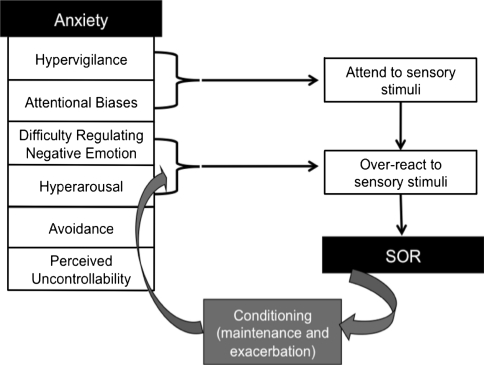
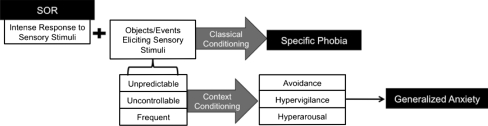
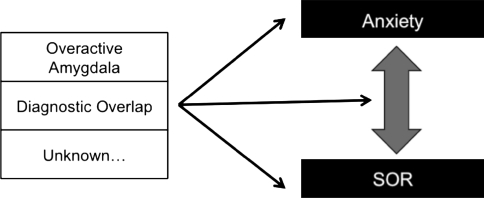
Anxiety disorders and sensory over-responsivity (SOR) are common in children with autism spectrum disorders (ASD), and there is evidence for an association between these two conditions. Currently, it is unclear what causal mechanisms may exist between SOR and anxiety. We propose three possible theories to explain the association between anxiety and SOR: (a) SOR is caused by anxiety; (b) Anxiety is caused by SOR; or (c) SOR and anxiety are causally unrelated but are associated through a common risk factor or diagnostic overlap. In this paper, we examine support for each theory in the existing anxiety, autism, and neuroscience literature, and discuss how each theory informs choice of interventions and implications for future studies.
Overview
The claims and statistics of this paper haven’t been checked yet.
Run the check — free, no account needed. It reads the open-access text and checks the sources it cites.
Integrity signals
Registry
Cites
Statistics
Figures
Verification
Claims the paper makes
The claims and statistics of this paper haven’t been checked yet.
Run the check — free, no account needed. It reads the open-access text and checks the sources it cites.
Claims other papers make about this one
Each is checked against this paper’s own text: does it say what the citing paper says it does?
The source backs part of the claim, not all of it — or backs it for a different population, condition or comparison.
In the citing paper
“Rather than considering SPD as a contributing cause of anxiety, the authors show that anxiety can also be considered a mediator of the relationship between IU and SPD on the basis that anxiety resulting from IU might lead to hypervigilance and, thus, hypersensitivity to the sensory environment”
From Examining a model of anxiety in autistic adults (2024) · cites this paper as Green & Ben-Sasson (2010)
Experimental — accuracy not yet measuredThe source backs part of the claim, not all of it — or backs it for a different population, condition or comparison.
In the citing paper
“Sensory function in ASD samples may be marked by both over-responsivity (e.g., experiencing various sounds as painful) and under-responsivity (e.g., repeated touching of objects). Both extremes may occur in the same children (Green and Ben-Sasson, 2010; Wigham et al., 2015; Watts et al., 2016).”
From Sensory, emotional and cognitive contributions to anxiety in autism spectrum disorders (2017) · cites this paper as Green and Ben-Sasson, 2010
Experimental — accuracy not yet measuredIn the citing paper
“Another factor which is thought to play an important role in anxiety in autism is sensory sensitivities (Green and Ben-Sasson 2010).”
From Experiences of autism acceptance and mental health in autistic adults (2018) · cites this paper as Green and Ben-Sasson 2010
Self-check
Percentages, sums and reported differences re-computed from the paper’s own numbers.
The self-check needs the paper’s full text.
Citations
Cites
The role of the amygdala in fear and anxiety
Davis, M. (1992) · Annual Review of Neuroscience · doi:10.1146/annurev.ne.15.030192.002033 · Cited by 2,357 · cited 2×
“The amygdala has been implicated in anxiety disorders, mainly due to its central role in fear conditioning (e.g., Davis 1992; Garakani et al. 2006; Rauch et al. 2003).”
BackgroundA cognitive-motivational analysis of anxiety.
Mogg, K., & Bradley, B. P. (1998) · Behaviour Research and Therapy · doi:10.1016/s0005-7967(98)00063-1 · Cited by 1,642 · cited 1×
“However, Mogg and Bradley (1998) describe anxiety as a preattentive bias towards threat, and theorize that the automatic encoding of threat without elaborative processing leads to anxiety.”
BackgroundBehavioral manifestations of autism in the first year of life
Zwaigenbaum, L., Bryson, S., Rogers, T., Roberts, W., Brian, J., & Szatmari, P. (2005) · International Journal of Developmental Neuroscience · doi:10.1016/j.ijdevneu.2004.05.001 · Cited by 1,602 · cited 1×
“Currently, SOR can be identified in infants later diagnosed with ASD (Zwaigenbaum et al. 2005), which is much earlier than anxiety is usually diagnosed.”
BackgroundAmaral, D. G., Schumann, C. M., & Nordahl, C. W. (2008) · Trends in Neurosciences · doi:10.1016/j.tins.2007.12.005 · Cited by 1,492 · cited 2×
“There is evidence that children with ASD have increased amygdala volumes compared to typically developing children, and that amygdala size is positively correlated with anxiety and severity of social-communication symptoms in these children (Amaral et al. 2008; Juranek et al. 2006).”
BackgroundAnxiety in children and adolescents with autism spectrum disorders
White, S. W., Oswald, D., Ollendick, T., & Scahill, L. (2009) · Clinical Psychology Review · doi:10.1016/j.cpr.2009.01.003 · Cited by 1,427 · cited 4×
“Anxiety disorders are very common in children with autism spectrum disorders (ASD), and can increase the functional impairment of these children (Lainhart 1999; White et al. 2009 ).”
BackgroundInfluentialMacLeod, C., Rutherford, E., Campbell, L., Ebsworthy, G., & Holker, L. (2002) · Journal of Abnormal Psychology · doi:10.1037/0021-843x.111.1.107 · Cited by 1,334 · cited 2×
“In particular, MacLeod et al. (2002) demonstrated that training individuals to have an attentional bias towards threat-relevant words subsequently increased their negative response to stress.”
BackgroundAn information processing model of anxiety: Automatic and strategic processes
Beck, A. T., & Clark, D. A. (1997) · Behaviour Research and Therapy · doi:10.1016/s0005-7967(96)00069-1 · Cited by 1,317 · cited 2×
“It is also important to ask whether, theoretically, a preverbal child with low cognitive ability can be anxious, as some theories of anxiety relate anxiety to conscious cognitive processing and anticipation of future events (e.g., Beck and Clark 1997 ).”
BackgroundThe human amygdala and the emotional evaluation of sensory stimuli
Zald, D. H. (2003) · Brain Research Reviews · doi:10.1016/s0165-0173(02)00248-5 · Cited by 1,062 · cited 3×
“The amount of enhancement in the sensory response is correlated with the amount of amygdala activation, which suggests that children with SOR may have over-active amygdalas (Zald 2003).”
BackgroundInfluentialBaranek, G. T., David, F. J., Poe, M. D., Stone, W. L., & Watson, L. R. (2006) · Journal of Child Psychology and Psychiatry · doi:10.1111/j.1469-7610.2005.01546.x · Cited by 975 · cited 1×
“Reports of SOR rates of 56–70% in children with ASD (Baranek et al. 2006; Ben-Sasson et al. 2007b) indicate elevated levels of SOR relative to rates of 10–17% in the general population (Ben-Sasson et al. 2009; Ben-Sasson et al. 2007b).”
BackgroundConcept Evolution in Sensory Integration: A Proposed Nosology for Diagnosis
Miller, L. J., Anzalone, M. E., Lane, S. J., Cermak, S. A., & Osten, E. T. (2007) · American Journal of Occupational Therapy · doi:10.5014/ajot.61.2.135 · Cited by 953 · cited 4×
“This may be an indicator of poor modulation of vestibularproprioceptive input, which is often observed in children with SOR ( Miller et al. 2007 ).”
BackgroundInfluential
Cited by
Sorted by citations
Items 301–327 of 327
Hirota, S., Gotoh, L., Hayashi, R., Kitai, Y., Matsuoka, H., Masuda, M., Kawasaki, H., & Hori, H. (2025) · Psychiatry and Clinical Neurosciences Reports · doi:10.1002/pcn5.70229
“[Epi], dopamine [DA], and serotonin [5 ‐ HT]) were quantified.”
Yürümez, E., Uytun, M. Ç., Efendi, G. Y., Ünlü, H. K., Aktaş, S., & Öztop, D. B. (2025) · Journal of Developmental & Behavioral Pediatrics · doi:10.1097/dbp.0000000000001443
Auditory Discomfort and Visual SensitivityPreprint
Haigh, S. M. (2024) · OSF Preprints (OSF Preprints) · doi:10.17605/osf.io/s9eyv
Osório, J. M. A., Rodríguez‐Herreros, B., Romascano, D., Junod, V., Habegger, A., Pain, A., Richetin, S., Yu, P., Isidor, B., Maldergem, L. V., et al. (2021) · Figshare · doi:10.6084/m9.figshare.13725299
Liu, H., Xu, C., Xiao, Y., Tian, L., Li, Y., Zhang, X., & Gao, L. H. (2026) · Frontiers in Psychiatry · doi:10.3389/fpsyt.2025.1665031
“Even, anxiety was taken as a cause of SOR, according to the Primary Anxiety Model (38, 39).”
Henríquez, M. D., Martínez‐Molina, A., Sotillo, M., & Carmona, M. B. (2026) · Research in Autism · doi:10.1016/j.reia.2026.202822
Reduced Habituation: A Key to Understanding Sensory Sensitivity in Autism
Tarantino, V., Santostefano, A., Catania, A., Giordano, S., Montalto, G., Calistro, F., Oliveri, M., & Turriziani, P. (2026) · Journal of Autism and Developmental Disorders · doi:10.1007/s10803-026-07241-3
Sensory Over-Responsivity in Autism: A Bidirectional Brain–Gut–Microbiome Model
Ringold, S. M., Cermak, S. A., Labus, J. S., Mayer, E. A., & Aziz‐Zadeh, L. (2026) · Journal of Autism and Developmental Disorders · doi:10.1007/s10803-026-07279-3
van der Wal, M., Hesse, D., van Steensel, F. J. A., & Bonifácio, C. C. (2026) · Journal of Developmental and Physical Disabilities · doi:10.1007/s10882-026-10061-z
Alateeq, F. A. (2026) · International Medical Case Reports Journal · doi:10.2147/imcrj.s592710
“21 They also demonstrate heightened baseline autonomic arousal and reduced parasympathetic tone.”
Sadek, S. J., Trent, E. S., Dailey, M. M., Avery, J. E., Nwankwo, G. N. A., Clinger, J. W., Kook, M., Rast, C. E., Shepherd, W. S., Guzick, A. G., et al. (2026) · Journal of Psychiatric Practice · doi:10.1097/pra.0000000000000923
Mavhunga, T., Sutton, D., & Foster, M. (2026) · Journal of Child and Adolescent Psychiatric Nursing · doi:10.1111/jcap.70055
Cangi, A. F., & Çelebi, S. B. (2026) · Journal of Autism and Developmental Disorders · doi:10.1007/s10803-026-07369-2
Knott, C. E., Roberts, J. E., & Will, E. (2026) · Autism · doi:10.1177/13623613261445633
“These associations are largely consistent with prior research in autism showing links between hyper-responsivity and internalizing behavior (Ben-Sasson et al., 2008; Feldman et al., 2020; Green & Ben-Sasson, 2010; MacLennan et al., 2021; Mazurek et al., 2013; Rossow et al., 2021).”
Asher, M., Hochner, H., Bar-Shalita, T., & Agmon, M. (2026) · Frontiers in Psychology · doi:10.3389/fpsyg.2026.1779854
Selective mutism and autism spectrum disorder: a bidirectional and self-reinforcing relationship
Ganem, N. M. (2026) · Journal of Neurology & Stroke · doi:10.15406/jnsk.2026.16.00651
Cognitive reappraisal modulates neural responses to aversive sensory stimulation in autistic youth
Shah, U. T., Evans, K., Banchik, M., Chaturvedi, A., Ramappa, S., Wong, K., Silvers, J. A., & Green, S. A. (2026) · Journal of Child Psychology and Psychiatry · doi:10.1111/jcpp.70202
“Anxiety symptoms were measured using the Screen for Child Anxiety-Related Emotional Disorders (SCARED), Parent Version (Birmaher et al., 1999) to control for the co-occurrence of anxiety and SOR (Green & Ben-Sasson, 2010).”
Self-citationWang, S. Y., You, C., Xue, L., Zhang, L., Xing, Y., Liu, L., Li, Y. M., Lv, S., Ye, Q., Zou, Y., et al. (2026) · BMC Psychiatry · doi:10.1186/s12888-026-08388-0
“Consistent with theoretical models linking sensory hyper-responsivity and anxiety [45], autistic adults perceive sensory hyper-responsivity as a cause rather than an effect of anxiety [46].”
Belle, J. E. L., Condro, M. C., Cepeda, C., Oikonomou, K. D., Tessema, K. K., Dudley, L., Schoenfield, J., Kawaguchi, R., Geschwind, D. H., Silva, A. J., et al. (2026) · Nature Communications · doi:10.1038/s41467-026-74958-1 · Cited by 2
“MIR offspring also displayed SOR, a common ASD phenotype 44 .”
A Virtual Pet for Detecting and Mitigating Autism Spectrum Disorder Stress
Hull, B. E., & Agah, A. (2026) · Computers and electronics in medicine. · doi:10.69882/adba.cem.2026073
“…with elevated levels of stress and has been linked to comorbid conditions such as anxiety and obsessive-compulsive disorder, particularly among autistic children (Amos et al. 2018; Carpenter et al. 2018; Green and Ben-Sasson 2010; van Hulle et al. 2019; Vasa et al. 2020; Yuan et al. 2022).”
Cakar, M. E., Cummings, K. K., Bookheimer, S. Y., Dapretto, M., & Green, S. A. (2026) · Autism Research · doi:10.1002/aur.70313
Self-citationPantazakos, T. (2026) · Psychopathology · doi:10.1159/psp/aelag003
Dubuisson-Keller, S., Quillet, N., Cap, G., Prince, M., Germain, M., & Klein, C. (2026) · Cahiers de la Puéricultrice · doi:10.1016/j.cahpu.2026.07.011
Layton, C., Keith, J. M., & Bennetto, L. (2026) · Research in Autism · doi:10.1016/j.reia.2026.203047
Network analysis of anxiety and related factors in preschool children with autism spectrum disorder
Lu, M., Zou, Q., Duan, T., Zhao, J., & He, H. (2026) · Research in Developmental Disabilities · doi:10.1016/j.ridd.2026.105412
Khodarahimi, S., Moradi, S., Bougar, M. R., Bahadivand, A. H., Farhadi, R., Boogar, S. Z. M., & Rasti, A. (2026) · International Journal of Developmental Disabilities · doi:10.1080/20473869.2026.2754190
Metadata
- Authors
- Green, S. A., & Ben-Sasson, A.
- Affiliations
- University of California, Los Angeles (US)
- Corresponding author
- Green, Shulamite A.
- ORCID
- Green, Shulamite A.
- Venue
- Journal of Autism and Developmental Disorders
- Published
- 2010-04-10
- Volume
- 40
- Issue
- 12
- Pages
- 1495-1504
- ISSN
- 0162-3257 (ISSN-L)
- 1573-3432
- PMC
- PMC2980623
- OpenAlex
- W2097949702
- Cited by
- 327
- References
- 67
- Citations by year
- 2026: 28 · 2025: 32 · 2024: 25 · 2023: 28 · 2022: 19 · 2021: 32 · 2020: 25 · 2019: 24 · 2018: 17 · 2017: 13 · 2016: 17 · 2015: 12 · 2014: 19 · 2013: 17 · 2012: 11
- FWCI
- 0.84
- Type
- journal article
- Language
- en
- Open access
- hybrid
- doi.org
- Licence
- cc-by-nc
- Locations
- Journal of Autism and Developmental Disorders (publishedVersion, cc-by-nc)
- PubMed Central (publishedVersion, cc-by-nc)
- PubMed (publishedVersion)
- eScholarship (California Digital Library) (submittedVersion)
- Funders
- National Institute of Child Health and Human Development (34879-1459)
- Eunice Kennedy Shriver National Institute of Child Health and Human Development (HD34879-1459, 34879‐1459, R01HD034879)
- Topics
- Life Sciences › Neuroscience › Cognitive Neuroscience › Autism Spectrum Disorder Research
- Health Sciences › Medicine › Psychiatry and Mental health › Child Nutrition and Feeding Issues
- Social Sciences › Psychology › Clinical Psychology › Child and Adolescent Psychosocial and Emotional Development
- Keywords
- autism spectrum disorder, anxiety disorders, sensory hypersensitivity, sensory processing, causal relationship, children, comorbidities, diagnostic overlap, risk factors, intervention
- MeSH terms
- Anxiety Disorders, Arousal, Child, Child Development Disorders, Pervasive, Humans, Risk Factors, Sensation Disorders
About these checks
Registry, retraction, Cites and statistics results are computed, not judged, with one exception: a printed reference that no index lists is read once by a model before it counts as a citation error. Claims are extracted by a model and kept only when their quote appears verbatim in the text; each cited source is then checked, with a model’s help, for whether it says what the claim relies on. Those verdicts can be wrong — read the claim’s quote and the cited source before relying on one.
Statistics and arithmetic are recomputed, not judged.
Confidence bands are shown only for fields calibrated on our annotated test set. None is calibrated yet, so no band is shown.
What counts as a claim ›How we measure confidence ›How we check this ›
Are you an author, or do you see a problem with this page? Request a review
