

Psychiatric Co-occurring Symptoms and Disorders in Young, Middle-Aged, and Older Adults with Autism Spectrum Disorder
Open accessThe DOI matches its Crossref record; 88 of the 93 references it cites were found in a registry or an index.
Abstract
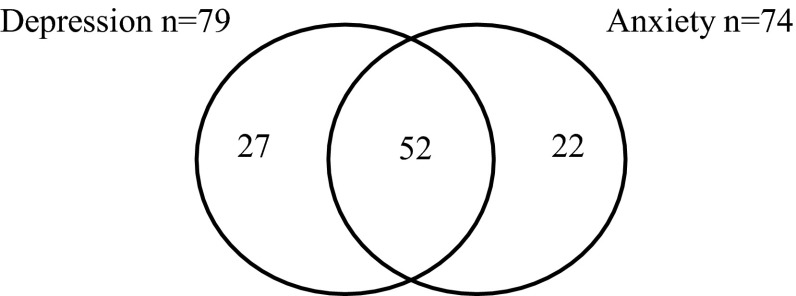
Although psychiatric problems are less prevalent in old age within the general population, it is largely unknown whether this extends to individuals with autism spectrum disorders (ASD). We examined psychiatric symptoms and disorders in young, middle-aged, and older adults with and without ASD (Nmax = 344, age 19-79 years, IQ > 80). Albeit comparable to other psychiatric patients, levels of symptoms and psychological distress were high over the adult lifespan; 79 % met criteria for a psychiatric disorder at least once in their lives. Depression and anxiety were most common. However, older adults less often met criteria for any psychiatric diagnosis and, specifically, social phobia than younger adults. Hence, despite marked psychological distress, psychiatric problems are also less prevalent in older aged individuals with ASD.
Overview
The claims and statistics of this paper haven’t been checked yet.
Free: it reads the open-access text and checks the first 5 claims that cite a source we can check. Create a free account to check every claim.
Integrity signals
Registry
Cites
Statistics
Figures
Verification
Claims the paper makes
The claims and statistics of this paper haven’t been checked yet.
Free: it reads the open-access text and checks the first 5 claims that cite a source we can check. Create a free account to check every claim.
Claims other papers make about this one
Each is checked against this paper’s own text: does it say what the citing paper says it does?
The cited source doesn’t support the claim as written.
In the citing paper
“However, lifetime experience of depression in the general population (44.9%) and ASC group (80%) were much higher than previous estimates [2, 22, 54], despite participants not being recruited because of experience with mental health problems.”
From Risk markers for suicidality in autistic adults (2018) · cites this paper as [22]
Checked by a reasoning model — may be wrong.
Experimental — accuracy not yet measuredThe cited source says what the claim attributes to it.
In the citing paper
“Anxiety in social situations (Spain et al., 2018) and phobias/situation specific anxiety (Lever & Geurts, 2016) are particularly common for autistic people”
In the citing paper
“given the high rates of co-occurring mental health difficulties found amongst autistic adults (Lever & Geurst, 2016).”
From Camouflaging in autism: A systematic review (2021) · cites this paper as Lever & Geurst, 2016
Self-check
Percentages, sums and reported differences re-computed from the paper’s own numbers.
The self-check needs the paper’s full text.
Citations
Cites
1 retracted
Tureck, K., Matson, J. L., Cervantes, P. E., & Konst, M. J. (2014) · Research in Developmental Disabilities · doi:10.1016/j.ridd.2014.02.013 · Cited by 48 · cited 1×
“…et al. 2010; Garcı ´ a-Vil-lamisar and Rojahn 2015; Gotham et al. 2015; Holtmann et al. 2007; Jang and Matson 2015; Lai et al. 2011; Lugnega˚rd et al. 2011; Moss et al. 2015; Simonoff et al. 2008, 2013; Sterling et al. 2008; Tureck et al. 2014; van Steensel et al. 2012; Verheij et al. 2015).”
RetractedDiagnostic and Statistical Manual of Mental Disorders
American Psychiatric Association (2013) · doi:10.1176/appi.books.9780890425596 · Cited by 116,369
Diagnostic and Statistical Manual of Mental Disorders
Williams, J. B. W., & First, M. (2013) · Encyclopedia of Social Work · doi:10.1093/acrefore/9780199975839.013.104 · Cited by 109,519
Folstein, M. F., Folstein, S. E., & McHugh, P. R. (1975) · Journal of Psychiatric Research · doi:10.1016/0022-3956(75)90026-6 · Cited by 88,282 · cited 1×
“All individuals had a Mini Mental State Examination score above 26 (Folstein et al. 1975).”
Hirono, N., Mori, E., Ikejiri, Y., Imamura, T., Shimomura, T., Hashimoto, M., Yamashita, H., & Ikeda, M. (1997) · Brain and nerve · Cited by 21,038
Kok, J. S., Berg, I. J., & Scherder, E. J. A. (2013) · Dementia and Geriatric Cognitive Disorders Extra · doi:10.1159/000353441 · Cited by 20,589
Kessler, R. C., Berglund, P., Demler, O., Jin, R., Merikangas, K. R., & Walters, E. E. (2005) · Archives of General Psychiatry · doi:10.1001/archpsyc.62.6.593 · Cited by 20,391 · cited 6×
“Nevertheless, lifetime diagnoses for any psychiatric disorder were less often present in older than in younger adults with ASD, suggesting reduced psychopathology in late adulthood, a pattern that has been commonly observed in large typical aging studies (Bijl et al. 1998; Kessler et al. 2005).”
InfluentialDiagnostic and Statistical Manual of Mental Disorders.
Widiger, T. A. (2000) · Encyclopedia of Psychology, Vol. 3. · doi:10.1037/10518-009 · Cited by 19,744
Older Adults' Reasons for Using Technology while Aging in Place
Peek, S. T. M., Luijkx, K. G., Rijnaard, M. D., Nieboer, M. E., van der Voort, C. S., Aarts, S., van Hoof, J., Vrijhoef, H. J. M., & Wouters, E. J. M. (2016) · Gerontology · doi:10.1159/000430949 · Cited by 19,690
(1998) · The Journal of Clinical Psychiatry · Cited by 19,139
Research works printed but not linked: 6
- Arrindell WA Ettema JHM SCL-90 Handleiding bij een multidimensionale psychopathologie-indicator [SCL-90: Manual for a multidimensional indicator of psychopathology] 2005 Amsterdam Pearson
- de Bildt A de Jonge MV Autisme diagnostisch observatie schema 2008 Amsterdam Hogrefe
- Derogatis LR Administration, scoring, and procedures manual for the SCL-90-R 1977 Baltimore, MD Clinical Psychometrics Research
- IBM Corp IBM SPSS statistics for windows (Version 22.0) 2013 Armonk, NY IBM Corp
- Uterwijk J WAIS-III nederlandstalige bewerking. Technische handleiding 2000 Lisse Swets & Zeitlinger
- van Vliet IM Leroy H van Megen HJGM De MINI internationaal neuropsychiatrisch interview, nederlandse versie 5.0.0 2000 Leiden Leiden University Medical Center, Department of Psychiatry
Cited by
Items 501–571 of 571
The potential for successful autistic aging: Proposing a lifespan developmental psychology approachPreprint
Ommensen, B., Sofronoff, K., Attwood, T., & Pachana, N. A. (2024) · OSF Preprints (OSF Preprints) · doi:10.31219/osf.io/tpq49
The relation between family familiarity with autism and developmental outcomes
Morris, I. F., Mansolf, M. A., Sherlock, P., Calub, C. A., Camargo, C. A., Kelly, R. S., Lyall, K., McEvoy, C. T., Northrup, J. B., Wilkening, G. N., et al. (2024) · Neurodiversity · doi:10.1177/27546330241280701 · Cited by 1
“Additionally, up to 80% of autistic 1 people develop mental health conditions as they get older (Bakken et al., 2016; Lever & Geurts, 2016).”
USO DE CONTRACEPÇÃO EM MULHERES AUTISTAS
Passarini, E. M. C., Sanches, T. F., Damaso, Ê. L., & de Nadai, M. N. (2024) · Revista Contemporânea · doi:10.56083/rcv4n10-101
Okewole, A., Bourque, V.-R., Koko, M., Huguet, G., Børglum, A. D., Grove, J., Jacquemont, S., Baron‐Cohen, S., & Warrier, V. (2024) · medRxiv · doi:10.1101/2024.11.11.24317097
“To understand if common genetic variants are associated with co-occurring mental health conditions and factors, we calculated SNP heritabilities on the liability scale using GREML-SC and LDSC ( Supplementary Table 3 and Figure 1C and 1D ).”
InfluentialOtizm Spektrum Bozukluğu (OSB) ve Sosyal Anksiyete: Komorbidite mi İlişkili bir Semptom mu?
Aslan, S. D. (2024) · Mevzu – Sosyal Bilimler Dergisi · doi:10.56720/mevzu.1586050
Wykształcone osoby w spektrum autyzmu na rynku pracy. Status quo i perspektywy
Perkowski, M., Oksztulski, M., Zoń, W., & Kaczyńska, I. (2024) · doi:10.15290/wosarp.2024 · Cited by 7
Educated Persons on the Autism Spectrum in the Labour Market: Status Quo and Prospects
Perkowski, M., Oksztulski, M., Zoń, W., & Kaczyńska, I. (2024) · doi:10.15290/epaslm.2024 · Cited by 1
Zhu, G., Malhotra, R., Xiong, S., Chen, X., Gong, E., Wang, Z., Østbye, T., & Yan, L. L. (2025) · Stress and Health · doi:10.1002/smi.70007
Grant, S., Norton, S., & Hoekstra, R. A. (2025) · Autism in Adulthood · doi:10.1089/aut.2024.0186
Prescribing in Children and Adolescents
(2025) · Wiley eBooks · doi:10.1002/9781119870203.mpg005.pub2
Waite-Jones, J. M., & Rodriguez, A. (2025) · Springer eBooks · doi:10.1007/978-3-031-88177-0_8 · Cited by 1
Cannabis Use and Psychiatric Symptoms in Adolescence
Costello, M. A., Schuster, R. M., Gilman, J. M., & Evins, A. E. (2025) · Springer eBooks · doi:10.1007/978-3-031-87990-6_16
CBT for depression for an autistic older adult in an inpatient mental health setting
Badaoui, A., & Kustner, C. (2025) · FPOP Bulletin Psychology of Older People · doi:10.53841/bpsfpop.2025.1.171.71
Later life autism diagnosis: Addressing the data deficit and diagnostic divide
Thorn, T., & Tang, T. T. (2025) · FPOP Bulletin Psychology of Older People · doi:10.53841/bpsfpop.2025.1.171.36
The dynamic trajectory of autistic life and its changing challenges: a scoping review
Mokhwelepa, L. W., Sumbane, G. O., & Ngwenya, M. W. (2025) · BMC Psychiatry · doi:10.1186/s12888-025-07212-5 · Cited by 1
“When compared to neurotypical individuals, several clinical and population-based studies have shown that adults with autism face higher rates of nearly all mental health issues [23–25].”
Exposure Therapy for Anxiety or Obsessive-Compulsive Disorders Adapted for Autism Spectrum Disorder
D’Souza, J. M., Townsend, A. N., Erps, K. H., Berry, L. N., Schneider, S. C., Guzick, A. G., & Storch, E. A. (2025) · Oxford University Press eBooks · doi:10.1093/oso/9780197635841.003.0020
Held, L. K., Goris, J., & Braem, S. (2026) · Journal of Cognition · doi:10.5334/joc.511 · Cited by 1
“…with autism traits, in line with the literature that autism is often co-occurring with symptoms such as compulsivity, alexithymia and depressive symptoms (Bloch et al., 2021; Ghaziuddin et al., 2002; Kinnaird et al., 2019; Lever & Geurts, 2016; O’Loghlen et al., 2025; Poquérusse et al., 2018).”
Rothe, J., Thiel, T., Roessner, V., & Ring, M. (2025) · BMC Psychiatry · doi:10.1186/s12888-025-07430-x · Cited by 1
“In line with pre-pandemic evidence, autistic adults reported higher levels of IoU [43] and sensory sensitivity [44, 45], as well as global psychopathological symptom severity [46] compared to non-autistic adults during the COVID-19 pandemic.”
Exploring Open Dialogue and autism: A qualitative client-perspective study
Lorenz-Artz, K., Bierbooms, J. J. P. A., Kneepkens, M., & Bongers, I. M. B. (2025) · PLOS mental health. · doi:10.1371/journal.pmen.0000449
“They have an increased risk of developing psychological issues [32,33], including suicidal feelings and behaviors [34–36].”
Rehmer, L., Rehmer, T., Caruana, N., & Trier, M. (2025) · HMD Praxis der Wirtschaftsinformatik · doi:10.1365/s40702-025-01219-y · Cited by 1
Ge, Y., Pretzsch, C. M., Fenn‐Moltu, S., Dimitrov, M., Voinescu, B., Ivin, G., Lythgoe, D. J., Puts, N. A. J., Daly, E., Murphy, D., et al. (2025) · Research Square · doi:10.21203/rs.3.rs-7723564/v1
Weir, E. M., White, S. R., Matthews, F. E., Procyshyn, T. L., Allison, C. L., & Baron‐Cohen, S. (2025) · Research Square · doi:10.21203/rs.3.rs-7905433/v1
Endorsement of the Neurodiversity Framework and Self-Esteem Among Autistic and Non-Autistic Adults
VanDaalen, R. A., & Liu, S. Y. (2025) · Autism in Adulthood · doi:10.1177/25739581251398955 · Cited by 1
van Essen, J., Teunisse, J., & Brouwer, R. M. (2025) · doi:10.1007/978-90-368-3192-5_4
Stroth, S., Tauscher, J., Wolff, N., Küpper, C. S., Poustka, L., Roepke, S., Roessner, V., Heider, D., & Kamp-Becker, I. (2022) · Figshare · doi:10.6084/m9.figshare.19321432
Oshima, F., Takahashi, T., Tamura, M., Guan, S., Seto, M., Hull, L., Mandy, W., Tsuchiya, K., & Shimizu, E. (2024) · Figshare · doi:10.6084/m9.figshare.26660942
Oshima, F., Murata, T., Ohtani, T., Seto, M., & Shimizu, E. (2021) · Figshare · doi:10.6084/m9.figshare.14516602
Oshima, F., Murata, T., Ohtani, T., Seto, M., & Shimizu, E. (2021) · Figshare · doi:10.6084/m9.figshare.14516608
Oshima, F., Murata, T., Ohtani, T., Seto, M., & Shimizu, E. (2021) · Figshare · doi:10.6084/m9.figshare.14516605
Hull, L., Levy, L., Lai, M., Petrides, K. V., Baron‐Cohen, S., Allison, C. L., Smith, P. L., & Mandy, W. (2021) · Figshare · doi:10.6084/m9.figshare.14052675
Ghanouni, P., Raphael, R., Seaker, L., & Casey, A. (2024) · Figshare · doi:10.6084/m9.figshare.26461787
Newell, V., Phillips, L., Jones, C. A., Townsend, E., Richards, C., & Cassidy, S. (2023) · Figshare · doi:10.6084/m9.figshare.22625015
Oshima, F., Murata, T., Ohtani, T., Seto, M., & Shimizu, E. (2021) · Figshare · doi:10.6084/m9.figshare.14516611
Oshima, F., Takahashi, T., Tamura, M., Guan, S., Seto, M., Hull, L., Mandy, W., Tsuchiya, K., & Shimizu, E. (2024) · Figshare · doi:10.6084/m9.figshare.26660939
Lebeña, A., Faresjö, Å., Faresjö, T., & Ludvigsson, J. (2024) · Figshare · doi:10.6084/m9.figshare.26641339
Strzelecki, D. D. (2025) · Journal for Perspectives of Economic Political and Social Integration · doi:10.18290/pepsi-2025-0010 · Cited by 1
“Among the most common comorbidities in individuals with ASD are depression and anxiety disorders (Lever & Geurts, 2016).”
Diagnoza różnicowa zaburzeń ze spektrum autyzmu i zaburzeń osobowości
Danielewicz, D. (2025) · Man – Disability – Society · doi:10.71358/cns.2785
In Times of Need: Psychiatric Emergency Department Presentations in Autistic Adults
Courchesne, V., Frayne, M., Castelino, C., Luk, V., Man, L. L. Y., Lee, C.-H. J., Baharikhoob, P., Pace-Tonna, C., Jachyra, P., Ameis, S. H., et al. (2026) · Autism in Adulthood · doi:10.1177/25739581251415125
Williams, R. (2026) · Autism · doi:10.1177/13623613251412722 · Cited by 2
“Within the autistic community, mental health difficulties are more prevalent when compared to the neurotypical population (Lake et al., 2014), with 70% to 80% of autistic individuals reporting co-occurring mental health difficulties such as depression and anxiety (Lever & Geurts, 2016).”
The Role of Demographic and Autism Specific Factors on the Level of Depression in Autistic Adults
Sicimoğlu, A., de Wit, L. M., & Begeer, S. (2026) · Journal of Autism and Developmental Disorders · doi:10.1007/s10803-026-07225-3 · Cited by 1
The potential for successful autistic ageing: Proposing a lifespan developmental psychology approach
Ommensen, B., Attwood, T., Pachana, N. A., & Sofronoff, K. (2026) · Autism · doi:10.1177/13623613261418468
“While still more prevalent than in non-autistic adults, mental health difficulties in older autistic adults seem to abate (Lever & Geurts, 2016), a finding that has been described as perhaps a result of the ‘healthy survivor effect’ (Tse et al., 2021).”
Yamamuro, K., Kashida, N., Ishida, R., Toritsuka, M., Takeda, T., & Makinodan, M. (2026) · Frontiers in Psychiatry · doi:10.3389/fpsyt.2026.1747061
Piccolo, G. M. (2026) · Revista Multidisciplinar do Nordeste Mineiro · doi:10.66104/7z5tz036 · Cited by 1
Adapting Measures of Anxiety and Mood Disorders for Use with Autistic Adults: A Systematic Review
Wilkinson, E. H., Brewe, A. M., Hastings, R. P., Jahoda, A. J., White, S. W., & Bal, V. H. (2026) · Current Developmental Disorders Reports · doi:10.1007/s40474-026-00348-3
Guerra, A. D. J. G., Cortes, E. D. R. M., Rocha, G. H. A., & Mancias, A. C. M. (2026) · Cureus · doi:10.7759/cureus.106337
“…Relatively stable, often with high adaptive cost [4,6,10] Full return to baseline functioning [1] Frequent progressive functional decline [4,6,10] Comorbidity and stress response High psychiatric comorbidity; stress-related dysregulation [9,10,17] Usually linked to acute stressors [1] High…”
InfluentialNo-One Left behind: Adulthood, Autism, and Applied Behaviour Analysis
Booth, N., Pickersgill, G., & Dillenburger, K. (2026) · Springer eBooks · doi:10.1007/978-981-95-2889-9_3
Raichura, P., & Hadjikhani, N. K. (2026) · doi:10.2196/preprints.97884
Low, Z. X. B. (2026) · Progress in Neuro-Psychopharmacology and Biological Psychiatry · doi:10.1016/j.pnpbp.2026.111717 · Cited by 2
Dawthorne, N., Fogle, A., Goldsmith, L., Lunsky, Y., & Lake, J. K. (2026) · Journal of Patient Experience · doi:10.1177/23743735261449930
Exploring Patterns of Self-Harm in Autistic Adults Using the Card Sort Task for Self-Harm
Pelton, M., Newell, V., French, B., Wadman, R., Townsend, E., & Cassidy, S. (2026) · Autism · doi:10.1177/13623613261447926 · Cited by 1
“These are perhaps unsurprising, given that among autistic people, depression is one of the most frequently diagnosed mental health difficulties (Lever & Geurts, 2016), and agitation and self-hatred have previously been associated with self-harm and suicidal ideation (Camm-Crosbie et al., 2019;…”
Self-reported cognitive inflexibility mediates autistic traits and anxietyPreprint
Callejo, L. T., & Nieto, M. Á. P. (2026) · Research Square · doi:10.21203/rs.3.rs-9724887/v1
Kalandadze, T., Gabunia, M., Javakhishvili, N., Kobuladze, T., & Tchintcharauli, T. (2026) · Journal of Autism and Developmental Disorders · doi:10.1007/s10803-026-07422-0
Bokor, L. J., Happe, F. G. E., Weir, E. M., Lu, D., Stewart, G. R., Martini, M. I., & Taylor, M. J. (2026) · Women s Health · doi:10.1177/17455057261465645
Neurodivergent Researchers in Autism Research: A Survey within the AIMS-2-TRIALS Consortium
Bianco, T. D., Estrin, G. L., Lautarescu, A., Oakley, B. F. M., Eaton, E., Terčon, J., Douglas, S., Plas, J. R. D., Belton, D., Loth, E., et al. (2026) · Open Research Europe · doi:10.12688/openreseurope.19394.2 · Cited by 4
Egwu, E. O., Chukwuemeka, E. K., Napoleon, T., Oyedele, T. J., Ogheneruona, D. O., Christopher, U. N., Solomon, A. O., Onwurah, C. B., Obodoeze, A. E., Ogungbemi, E. F., et al. (2026) · Journal of Autism and Developmental Disorders · doi:10.1007/s10803-026-07435-9
Brice, S., Petrou, A., Hamilton, J., McConachie, H., Couteur, A. S. L., Ingham, B., Wilson, C., Hardy, R., Berney, T., Mason, D., et al. (2026) · Research in Autism · doi:10.1016/j.reia.2026.202963
Xiao, G., Li, X., Qin, Y., Zhao, W., Li, X., Qian, Y., Tian, J., Chen, X., Li, W., & Wang, L. (2026) · Frontiers in Neuroscience · doi:10.3389/fnins.2026.1795744
“…in comprehensive reviews and diagnostic guidelines, adult ASD research faces persistent bottlenecks in recruitment and diagnostic characterization due to complex co-occurring psychiatric conditions and varied intervention backgrounds (Lai et al., 2014; Lever and Geurts, 2016; Lord et al., 2020).”
Greenstein, E., Lee, N., McQuaid, G. A., & Wallace, G. L. (2026) · Autism · doi:10.1177/13623613261466302
“Finally, Lever and Geurts (2016) found that over half of autistic adults without ID met the criteria for a lifetime mood (57”
Psychiatric Hospitalizations Among Autistic and Non-Autistic Older Adults
Deitsch, A., Nikahd, M., Hyer, J. M., Wolf, B., Patterson, B. W., Bishop, L., & Hand, B. N. (2026) · Autism in Adulthood · doi:10.1177/25739581261467375
The monthly spectrum: Premenstrual symptoms across ADHD and autism
Groenman, A. P., Welling, L. E., & Pieters, S. (2026) · Women s Health · doi:10.1177/17455057261476912
Subtle and unseen: Understanding the nuanced autism profiles in female individuals
Lacroix, A., & Lai, M. (2026) · Annales Médico-psychologiques revue psychiatrique · doi:10.1016/j.amp.2026.07.014
Pantazakos, T. (2026) · Psychopathology · doi:10.1159/psp/aelag003
Psychometric Validation of the Children's Response Styles Questionnaire in UK Adolescents
Adams, O., Smith, P. A., Loe, B. S., Waite, F., & Leigh, E. (2026) · Child Psychiatry & Human Development · doi:10.1007/s10578-026-02084-6
Sörnyei, D., Kovács, F. M., Benedek, T., Őri, D., & Farkas, K. (2026) · medRxiv · doi:10.64898/2026.09.01.26361970
Amiri, D., Shah, S. J., Briziarelli, L., Amiri, S., & Karlsson, B. (2026) · Journal of Personalized Medicine · doi:10.3390/jpm16090468
“Structured diagnostic instruments may support the assessment but should not replace a comprehensive clinical evaluation based on developmental history and current functional impairment [10,27–29 Recognition of ASD has important implications for clinical management.”
Palacios-Muñoz, A. (2026) · International Journal of Molecular Sciences · doi:10.3390/ijms27188129
Xiao, Q., Ochi, R., Yamazawa, Y., Saitoh, S., & Midorikawa, A. (2026) · Research in Neurodiversity · doi:10.1016/j.rin.2026.100076
Wilkinson, E. H., Pai, K., Jahoda, A. J., Hastings, R. P., & Bal, V. H. (2026) · Autism · doi:10.1177/13623613261480395 · Cited by 1
“This may reflect overlap in constructs (i.e., social avoidance may reflect social withdrawal often associated with mood-related conditions), as well as the common co-occurrence of anxiety with depression (Lever & Geurts, 2016).”
Castaldo, R., Capiotto, F., Bari, S., & Keller, R. (2026) · Research in Autism · doi:10.1016/j.reia.2026.203026
Layton, C., Keith, J. M., & Bennetto, L. (2026) · Research in Autism · doi:10.1016/j.reia.2026.203047
Metadata
- Authors
- Lever, A. G., & Geurts, H. M.
- Affiliations
- University of Amsterdam (NL)
- Corresponding author
- Lever, Anne G.
- Venue
- Journal of Autism and Developmental Disorders
- Published
- 2016-02-09
- Volume
- 46
- Issue
- 6
- Pages
- 1916-1930
- ISSN
- 0162-3257 (ISSN-L)
- 1573-3432
- PMC
- PMC4860203
- OpenAlex
- W2272786625
- Cited by
- 572
- References
- 93
- Citations by year
- 2026: 47 · 2025: 68 · 2024: 74 · 2023: 61 · 2022: 58 · 2021: 96 · 2020: 54 · 2019: 53 · 2018: 31 · 2017: 23 · 2016: 7
- FWCI
- 24.18
- Type
- journal article
- Language
- en
- Open access
- hybrid
- doi.org
- Locations
- Journal of Autism and Developmental Disorders (publishedVersion, cc-by)
- PubMed Central (publishedVersion, cc-by)
- PubMed (publishedVersion)
- UvA-DARE (University of Amsterdam) (publishedVersion, cc-by)
- Data Archiving and Networked Services (DANS) (submittedVersion, other-oa)
- Funders
- NWO MagW (452-10-003)
- Topics
- Life Sciences › Neuroscience › Cognitive Neuroscience › Autism Spectrum Disorder Research
- Social Sciences › Psychology › Clinical Psychology › Family and Disability Support Research
- Health Sciences › Medicine › Psychiatry and Mental health › Child Nutrition and Feeding Issues
- Keywords
- autism spectrum disorder, psychiatric comorbidity, depression, anxiety, social anxiety disorder, psychological distress, aging, older adults, lifespan differences, prevalence of mental disorders
- MeSH terms
- Autism Spectrum Disorder, Adult, Age Factors, Aged, Anxiety, Anxiety Disorders, Depression, Depressive Disorder, Female, Humans, Male, Middle Aged, Comorbidity, Prevalence, Young Adult
About these checks
Registry, retraction, Cites and statistics results are computed, not judged, with one exception: a printed reference that no index lists is read once by a model before it counts as a citation error. Claims are extracted by a model and kept only when their quote appears verbatim in the text; each cited source is then checked, with a model’s help, for whether it says what the claim relies on. Those verdicts can be wrong — read the claim’s quote and the cited source before relying on one.
Statistics and arithmetic are recomputed, not judged.
Confidence bands are shown only for fields calibrated on our annotated test set. None is calibrated yet, so no band is shown.
What counts as a claim ›How we measure confidence ›How we check this ›
Are you an author, or do you see a problem with this page? Request a review
Data sources
Bibliographic data: Semantic Scholar, OpenAlex, Crossref.
Contains information from the Semantic Scholar Academic Graph Datasets, made available under the ODC Attribution License (ODC-BY 1.0).
Semantic Scholar’s data is described in: Kinney, R., et al. (2023). The Semantic Scholar Open Data Platform. arXiv:2301.10140.
