

Understanding the Reasons, Contexts and Costs of Camouflaging for Autistic Adults
Open accessThe DOI matches its Crossref record; 61 of the 64 references it cites were found in a registry or an index.
Abstract
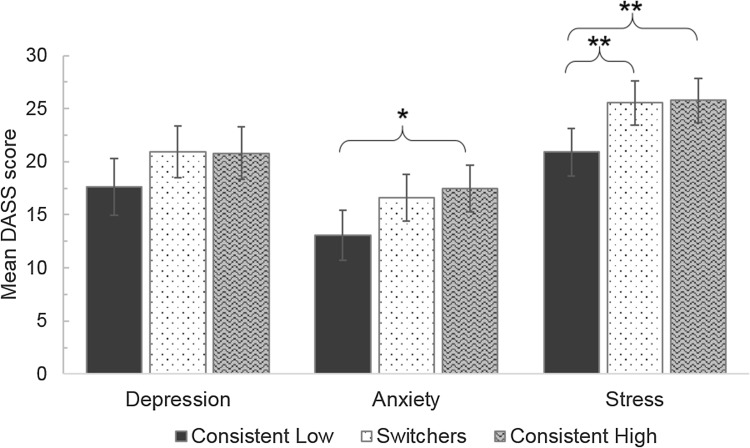
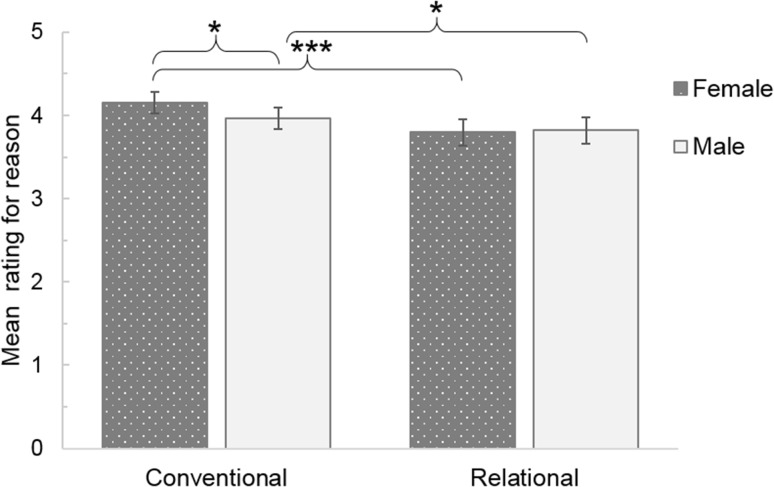
Camouflaging entails 'masking' in or 'passing' social situations. Research suggests camouflaging behaviours are common in autistic people, and may negatively impact mental health. To enhance understanding of camouflaging, this study examined reasons, contexts and costs of camouflaging. 262 autistic people completed measures of camouflaging behaviours, camouflaging contexts (e.g. work vs. family), camouflaging reasons (e.g. to make friends) and mental health symptoms. Findings indicated a gender difference in reasons for camouflaging, with autistic women more likely to endorse "conventional" reasons (e.g. getting by in formal settings such as work). Both camouflaging highly across contexts and 'switching' between camouflaging in some contexts but not in others, related to poorer mental health. These findings have implications for understanding camouflaging in autistic adults.
Overview
The claims and statistics of this paper haven’t been checked yet.
Free: it reads the open-access text and checks the first 5 claims that cite a source we can check. Create a free account to check every claim.
Integrity signals
Registry
Cites
Statistics
Figures
Verification
Claims the paper makes
The claims and statistics of this paper haven’t been checked yet.
Free: it reads the open-access text and checks the first 5 claims that cite a source we can check. Create a free account to check every claim.
Claims other papers make about this one
Each is checked against this paper’s own text: does it say what the citing paper says it does?
The source backs part of the claim, not all of it — or backs it for a different population, condition or comparison.
In the citing paper
“In this way, camouflaging may be thought of as a form of stigma management that is available to autistic individuals with more ‘concealable’ autism (Cage & Troxell-Whitman, 2019).”
From Camouflaging in an everyday social context: An interpersonal recall study (2021) · cites this paper as Cage & Troxell-Whitman, 2019
Experimental — accuracy not yet measuredThe source backs part of the claim, not all of it — or backs it for a different population, condition or comparison.
In the citing paper
“Furthermore , evidence remains inconclusive on whether the wellbeing of autistic individuals is directly related to the severity of their core traits.Instead, well-being appears to depend more significantly on the extent to which autistic individuals feel understood, accepted, and supported within an inclusive social environment (Cage & Troxell-Whitman, 2019; Pantazakos, 2023).”
From Rethinking psychological interventions in autism: Toward a neurodiversity‐affirming approach. (2025) · cites this paper as Cage & Troxell-Whitman, 2019
Experimental — accuracy not yet measuredThe cited source says what the claim attributes to it.
In the citing paper
“Cage and Troxel-Whitman (2019) found no gender differences on the Total CAT-Q score between autistic men or women.”
From Camouflaging in autism: A systematic review (2021) · cites this paper as Cage and Troxel-Whitman, 2019
The cited source says what the claim attributes to it.
In the citing paper
“Additionally, many Autistic adults report negative subjective outcomes as a result of having to meet inappropriate and unrealistic benchmarks, such as feeling they have to “pass” as neurotypical and mask or “camouflage” their Autistic behaviors (Bargiela et al., 2016; Cage & Troxell-Whitman, 2019; Cook et al., 2021; Hull et al., 2017; Livingston et al., 2019).”
From Neurodiversity and Autism Intervention: Reconciling Perspectives Through a Naturalistic Developmental Behavioral Intervention Framework (2022) · cites this paper as Cage & Troxell-Whitman, 2019
The cited source says what the claim attributes to it.
In the citing paper
“Emerging quantitative research examining associations between camouflaging and anxiety (e.g. Cage & Troxell-Whitman, 2019; Lai et al., 2017; Schuck et al., 2019) have yielded inconsistent results.”
From Camouflaging in an everyday social context: An interpersonal recall study (2021) · cites this paper as Cage & Troxell-Whitman, 2019
5 more claims about this paper
Create a free account to see every claim other papers make about this one.
Self-check
Percentages, sums and reported differences re-computed from the paper’s own numbers.
The self-check needs the paper’s full text.
Citations
Cites
Diagnostic and Statistical Manual of Mental Disorders
American Psychiatric Association (2013) · doi:10.1176/appi.books.9780890425596 · Cited by 116,369
Diagnostic and Statistical Manual of Mental Disorders
Williams, J. B. W., & First, M. (2013) · Encyclopedia of Social Work · doi:10.1093/acrefore/9780199975839.013.104 · Cited by 109,519
(2017) · Cited by 16,319
Lovibond, P. F., & Lovibond, S. H. (1995) · Behaviour Research and Therapy · doi:10.1016/0005-7967(94)00075-u · Cited by 14,523
(1943) · The Nervous child · Cited by 8,870
Lord, C., Risi, S., Lambrecht, L., Cook, E. H., Leventhal, B. L., DiLavore, P. C., Pickles, A., & Rutter, M. (2000) · Journal of Autism and Developmental Disorders · doi:10.1023/a:1005592401947 · Cited by 7,520
(1995) · Cited by 6,909
Henry, J. D., & Crawford, J. R. (2005) · British Journal of Clinical Psychology · doi:10.1348/014466505x29657 · Cited by 5,801
Autistic disturbances of affective contact.
Kanner, L. (1968) · PubMed · Cited by 3,130
What Is the Male-to-Female Ratio in Autism Spectrum Disorder? A Systematic Review and Meta-Analysis
Loomes, R., Hull, L., & Mandy, W. P. L. (2017) · Journal of the American Academy of Child & Adolescent Psychiatry · doi:10.1016/j.jaac.2017.03.013 · Cited by 2,804
Davis, K. (2008) · Feminist Theory · doi:10.1177/1464700108086364 · Cited by 2,539 · cited 2×
“Intersectionality is often used within feminist theory to deepen understanding of women’s experiences beyond gender—focusing on the intersection between gender and an individual’s other identities, such as race, sexuality or disability (Davis 2008).”
BackgroundOn the ontological status of autism: the ‘double empathy problem’
Milton, D. E. M. (2012) · Disability & Society · doi:10.1080/09687599.2012.710008 · Cited by 2,082
Which terms should be used to describe autism? Perspectives from the UK autism community
Kenny, L., Hattersley, C., Molins, B., Buckley, C., Povey, C., & Pellicano, E. (2016) · Autism · doi:10.1177/1362361315588200 · Cited by 1,941
“Putting on My Best Normal”: Social Camouflaging in Adults with Autism Spectrum Conditions
Hull, L., Petrides, K. V., Allison, C., Smith, P., Baron-Cohen, S., Lai, M.-C., & Mandy, W. (2017) · Journal of Autism and Developmental Disorders · doi:10.1007/s10803-017-3166-5 · Cited by 1,365
Sex/Gender Differences and Autism: Setting the Scene for Future Research
Lai, M.-C., Lombardo, M. V., Auyeung, B., Chakrabarti, B., & Baron-Cohen, S. (2015) · Journal of the American Academy of Child & Adolescent Psychiatry · doi:10.1016/j.jaac.2014.10.003 · Cited by 1,120
Bargiela, S., Steward, R., & Mandy, W. (2016) · Journal of Autism and Developmental Disorders · doi:10.1007/s10803-016-2872-8 · Cited by 1,087
Premature mortality in autism spectrum disorder
Hirvikoski, T., Mittendorfer-Rutz, E., Boman, M., Larsson, H., Lichtenstein, P., & Bölte, S. (2016) · British Journal of Psychiatry · doi:10.1192/bjp.bp.114.160192 · Cited by 1,011
Chaudoir, S. R., & Fisher, J. D. (2010) · Psychological Bulletin · doi:10.1037/a0018193 · Cited by 926
What should autism research focus upon? Community views and priorities from the United Kingdom
Pellicano, E., Dinsmore, A., & Charman, T. (2014) · Autism · doi:10.1177/1362361314529627 · Cited by 800
Quantifying and exploring camouflaging in men and women with autism
Lai, M.-C., Lombardo, M. V., Ruigrok, A. N., Chakrabarti, B., Auyeung, B., Szatmari, P., Happé, F., Baron-Cohen, S., & MRC AIMS Consortium (2017) · Autism · doi:10.1177/1362361316671012 · Cited by 705
Ragins, B. R. (2008) · Academy of Management Review · doi:10.5465/amr.2008.27752724 · Cited by 666
Botha, M., & Frost, D. M. (2020) · Society and Mental Health · doi:10.1177/2156869318804297 · Cited by 651
Making the invisible visible: fear and disclosure of sexual orientation at work
Ragins, B. R., Singh, R., & Cornwell, J. M. (2007) · Journal of Applied Psychology · doi:10.1037/0021-9010.92.4.1103 · Cited by 632
Risk markers for suicidality in autistic adults
Cassidy, S., Bradley, L., Shaw, R., & Baron-Cohen, S. (2018) · Molecular Autism · doi:10.1186/s13229-018-0226-4 · Cited by 621
Neurotypical Peers are Less Willing to Interact with Those with Autism based on Thin Slice Judgments
Sasson, N. J., Faso, D. J., Nugent, J., Lovell, S., Kennedy, D. P., & Grossman, R. B. (2017) · Scientific Reports · doi:10.1038/srep40700 · Cited by 584
Lever, A. G., & Geurts, H. M. (2016) · Journal of Autism and Developmental Disorders · doi:10.1007/s10803-016-2722-8 · Cited by 572
Spirals of Silence: The Dynamic Effects of Diversity on Organizational Voice*
Bowen, F., & Blackmon, K. (2003) · Journal of Management Studies · doi:10.1111/1467-6486.00385 · Cited by 564
Experiences of autism acceptance and mental health in autistic adults
Cage, E., Di Monaco, J., & Newell, V. (2018) · Journal of Autism and Developmental Disorders · doi:10.1007/s10803-017-3342-7 · Cited by 538
Self-citationPresentation of depression in autism and Asperger syndrome: A review
Stewart, M. E., Barnard, L., Pearson, J., Hasan, R., & O’Brien, G. (2006) · Autism · doi:10.1177/1362361306062013 · Cited by 515
Development and validation of the camouflaging autistic traits questionnaire (CAT-Q)
Hull, L., Mandy, W., Lai, M.-C., Baron-Cohen, S., Allison, C., Smith, P., & Petrides, K. V. (2019) · Journal of Autism and Developmental Disorders · doi:10.1007/s10803-018-3792-6 · Cited by 496
Cassidy, S., Bradley, P., Robinson, J., Allison, C., McHugh, M., & Baron-Cohen, S. (2014) · The Lancet Psychiatry · doi:10.1016/s2215-0366(14)70248-2 · Cited by 432
Journal of Autism and Developmental Disorders
Schopler, E., & Toplis, R. (2008) · Encyclopedia of Special Education · doi:10.1002/9780470373699.speced1156 · Cited by 432
Gillespie-Lynch, K., Brooks, P. J., Someki, F., Obeid, R., Shane-Simpson, C., Kapp, S. K., Daou, N., & Smith, D. S. (2015) · Journal of Autism and Developmental Disorders · doi:10.1007/s10803-015-2422-9 · Cited by 363
Levels of anxiety and sources of stress in adults with autism
Gillott, A., & Standen, P. J. (2007) · Journal of Intellectual Disabilities · doi:10.1177/1744629507083585 · Cited by 359
Looking behind the mask: Social coping strategies of girls on the autistic spectrum
Tierney, S., Burns, J., & Kilbey, E. (2016) · Research in Autism Spectrum Disorders · doi:10.1016/j.rasd.2015.11.013 · Cited by 316
Definitions, Models, Classifications, Schemes, and Applications
Altman, B. M. (2001) · Handbook of Disability Studies · doi:10.4135/9781412976251.n4 · Cited by 312
Social anxiety in autism spectrum disorder: A systematic review
Spain, D., Sin, J., Linder, K. B., McMahon, J., & Happé, F. (2018) · Research in Autism Spectrum Disorders · doi:10.1016/j.rasd.2018.04.007 · Cited by 302
Services for Adults with an Autism Spectrum Disorder
Shattuck, P. T., Roux, A. M., Hudson, L. E., Taylor, J. L., Maenner, M. J., & Trani, J.-F. (2012) · The Canadian Journal of Psychiatry · doi:10.1177/070674371205700503 · Cited by 289
Autism Diagnosis in the United Kingdom: Perspectives of Autistic Adults, Parents and Professionals
Crane, L., Batty, R., Adeyinka, H., Goddard, L., Henry, L. A., & Hill, E. L. (2018) · Journal of Autism and Developmental Disorders · doi:10.1007/s10803-018-3639-1 · Cited by 275
Schroeder, J. H., Cappadocia, M. C., Bebko, J. M., Pepler, D. J., & Weiss, J. A. (2014) · Journal of Autism and Developmental Disorders · doi:10.1007/s10803-013-2011-8 · Cited by 266
Autism spectrum disorder in adults: diagnosis, management, and health services development
Murphy, C., Wilson, C. E., Robertson, D. M., Ecker, C., Daly, E. M., Hammond, N., Galanopoulos, A., Dud, I., Murphy, D., & McAlonan, G. M. (2016) · Neuropsychiatric Disease and Treatment · doi:10.2147/ndt.s65455 · Cited by 261
Sterzing, P. R., Shattuck, P. T., Narendorf, S. C., Wagner, M., & Cooper, B. P. (2012) · Archives of Pediatrics & Adolescent Medicine · doi:10.1001/archpediatrics.2012.790 · Cited by 254
Eriksson, J. M., Andersen, L. M., & Bejerot, S. (2013) · Molecular Autism · doi:10.1186/2040-2392-4-49 · Cited by 224
Comorbid Social Anxiety Disorder in Adults with Autism Spectrum Disorder
Maddox, B. B., & White, S. W. (2015) · Journal of Autism and Developmental Disorders · doi:10.1007/s10803-015-2531-5 · Cited by 223
Jones, L., Goddard, L., Hill, E. L., Henry, L. A., & Crane, L. (2014) · Journal of Autism and Developmental Disorders · doi:10.1007/s10803-014-2161-3 · Cited by 204
College Students’ Openness Toward Autism Spectrum Disorders: Improving Peer Acceptance
Nevill, R. E. A., & White, S. W. (2011) · Journal of Autism and Developmental Disorders · doi:10.1007/s10803-011-1189-x · Cited by 199
‘Coming out’ on the spectrum: autism, identity and disclosure
Davidson, J., & Henderson, V. L. (2010) · Social & Cultural Geography · doi:10.1080/14649360903525240 · Cited by 192
College Students’ Knowledge and Attitudes Towards Students on the Autism Spectrum
White, D. M., Hillier, A. J., Frye, A. A., & Makrez, E. (2016) · Journal of Autism and Developmental Disorders · doi:10.1007/s10803-016-2818-1 · Cited by 174
Service Needs Across the Lifespan for Individuals with Autism
Turcotte, P., Mathew, M., Shea, L. L., Brusilovskiy, E., & Nonnemacher, S. L. (2016) · Journal of Autism and Developmental Disorders · doi:10.1007/s10803-016-2787-4 · Cited by 167
Heasman, B., & Gillespie, A. (2018) · Autism · doi:10.1177/1362361317708287 · Cited by 163
Understanding, attitudes and dehumanisation towards autistic people
Cage, E., Di Monaco, J., & Newell, V. (2019) · Autism · doi:10.1177/1362361318811290 · Cited by 148
Self-citationVoos, A. C., Pelphrey, K. A., Tirrell, J., Bolling, D. Z., Wyk, B. V., Kaiser, M. D., McPartland, J. C., Volkmar, F. R., & Ventola, P. (2013) · Journal of Autism and Developmental Disorders · doi:10.1007/s10803-012-1683-9 · Cited by 115
Ranson, N. J., & Byrne, M. K. (2014) · Journal of Autism and Developmental Disorders · doi:10.1007/s10803-014-2139-1 · Cited by 99
The Theory of Intersectionality: A New Lens for Understanding the Barriers Faced by Autistic Women
Saxe, A. (2017) · Canadian Journal of Disability Studies · doi:10.15353/cjds.v6i4.386 · Cited by 92
Autism spectrum disorders and coexisting disorders in a nationwide Swedish twin study
Lundström, S., Reichenberg, A., Melke, J., Råstam, M., Kerekes, N., Lichtenstein, P., Gillberg, C., & Anckarsäter, H. (2015) · Journal of Child Psychology and Psychiatry · doi:10.1111/jcpp.12329 · Cited by 90
Shtayermman, O. (2009) · Journal of Human Behavior in the Social Environment · doi:10.1080/10911350902790720 · Cited by 85 · cited 1×
“Indeed, previous studies have explored how autistic individuals often report experiences of stigma (Shtayermman 2009), misunderstandings and underestimation of their abilities (Heasman and Gillespie 2017) as well as neurotypical people generating more negative judgements in first impressions…”
BackgroundCount us in: Addressing gender disparities in autism research
Shefcyk, A. (2015) · Autism · doi:10.1177/1362361314566585 · Cited by 78
Reputation Management: Evidence for Ability But Reduced Propensity in Autism
Cage, E., Pellicano, E., Shah, P., & Bird, G. (2013) · Autism Research · doi:10.1002/aur.1313 · Cited by 67
Self-citationLeff, S., & LEFF, V. (1965) · Elsevier eBooks · doi:10.1016/b978-0-08-010960-2.50005-4 · Cited by 54
Brown, E. A., Lautz, J. D., Davis, T. R., Gniffke, E. P., VanSchoiack, A. A. W., Neier, S. C., Tashbook, N., Nicolini, C., Fahnestock, M., Schrum, A. G., et al. (2018) · Molecular Autism · doi:10.1186/s13229-018-0229-1 · Cited by 39
Scheeren, A. M., Banerjee, R., Koot, H. M., & Begeer, S. (2016) · Journal of Autism and Developmental Disorders · doi:10.1007/s10803-015-2610-7 · Cited by 26
Research works printed but not linked: 2
- Hudson, R. L. (2013). The effect of disability disclosure on the graduation rates of college students with disabilities (Unpublished doctoral dissertation). Virginia Tech, VA. Retrieved from https://vtechworks.lib.vt.edu/handle/10919/24072 . Accessed Jan 18 2019.
- Smart, J. (2006). Challenges to the biomedical model of disability. Advances in Medical Psychotherapy & Psychodiagnosis, 12, 1–4.
Cited by
The Neurodiversity Approach(es): What Are They and What Do They Mean for Researchers?
Dwyer, P. (2022) · Human Development · doi:10.1159/000523723 · Cited by 672
“…“camouflage” or “mask” their autism and appear more neurotypical are associated with exhaustion, burnout, anxiety, depression, stress, reduced well-being, and suicidality (Cage & Troxell-Whitman, 2019; Cassidy et al., 2018; Hull et al., 2017, 2019; Livingston et al., 2019; Raymaker et al., 2020).”
BackgroundThe Female Autism Phenotype and Camouflaging: a Narrative Review
Hull, L., Petrides, K. V., & Mandy, W. (2020) · Review Journal of Autism and Developmental Disorders · doi:10.1007/s40489-020-00197-9 · Cited by 614
Pearson, A., & Rose, K. (2021) · Autism in Adulthood · doi:10.1089/aut.2020.0043 · Cited by 596
“Although much of the current research into masking does not state that masking is limited to females, 9,34,64 others do suggest that females may be more likely to mask.”
InfluentialCamouflaging in autism: A systematic review
Cook, J., Hull, L., Crane, L., & Mandy, W. (2021) · Clinical Psychology Review · doi:10.1016/j.cpr.2021.102080 · Cited by 554
Raymaker, D. M., Teo, A. R., Steckler, N. A., Lentz, B., Scharer, M., Delos Santos, A., Kapp, S. K., Hunter, M., Joyce, A., & Nicolaidis, C. (2020) · Autism in Adulthood · doi:10.1089/aut.2019.0079 · Cited by 445
Metadata
- Authors
- Cage, E., & Troxell-Whitman, Z.
- Affiliations
- Royal Holloway University of London (GB)
- Corresponding author
- Cage, Eilidh
- ORCID
- Cage, Eilidh
- Venue
- Journal of Autism and Developmental Disorders
- Published
- 2019-01-09
- Volume
- 49
- Issue
- 5
- Pages
- 1899-1911
- ISSN
- 0162-3257 (ISSN-L)
- 1573-3432
- PMC
- PMC6483965
- OpenAlex
- W2909219349
- Cited by
- 661
- References
- 64
- Citations by year
- 2026: 184 · 2025: 111 · 2024: 104 · 2023: 84 · 2022: 67 · 2021: 64 · 2020: 29 · 2019: 18
- FWCI
- 25.87
- Type
- journal article
- Language
- en
- Open access
- hybrid
- doi.org
- Licence
- cc-by
- creativecommons.org/licenses/by/4.0 (tdm)
- Locations
- Journal of Autism and Developmental Disorders (publishedVersion, cc-by)
- PubMed Central (publishedVersion, cc-by)
- PubMed (publishedVersion)
- Stirling Online Research Repository (University of Stirling) (submittedVersion, cc-by)
- Topics
- Life Sciences › Neuroscience › Cognitive Neuroscience › Autism Spectrum Disorder Research
- Social Sciences › Psychology › Clinical Psychology › Family and Disability Support Research
- Social Sciences › Psychology › Social Psychology › Social Robot Interaction and HRI
- Keywords
- camouflaging, autistic adults, masking, mental health, gender differences
- MeSH terms
- Adult, Autistic Disorder, Female, Humans, Male, Mental Health, Middle Aged, Sex Factors, Social Behavior
About these checks
Registry, retraction, Cites and statistics results are computed, not judged, with one exception: a printed reference that no index lists is read once by a model before it counts as a citation error. Claims are extracted by a model and kept only when their quote appears verbatim in the text; each cited source is then checked, with a model’s help, for whether it says what the claim relies on. Those verdicts can be wrong — read the claim’s quote and the cited source before relying on one.
Statistics and arithmetic are recomputed, not judged.
Confidence bands are shown only for fields calibrated on our annotated test set. None is calibrated yet, so no band is shown.
What counts as a claim ›How we measure confidence ›How we check this ›
Are you an author, or do you see a problem with this page? Request a review
Data sources
Bibliographic data: Semantic Scholar, OpenAlex, Crossref.
Contains information from the Semantic Scholar Academic Graph Datasets, made available under the ODC Attribution License (ODC-BY 1.0).
Semantic Scholar’s data is described in: Kinney, R., et al. (2023). The Semantic Scholar Open Data Platform. arXiv:2301.10140.
