

Adolescents’ Social Network Site Use, Peer Appearance-Related Feedback, and Body Dissatisfaction: Testing a Mediation Model
Open accessThe DOI matches its Crossref record; 57 of the 57 references it cites were found in a registry or an index.
Abstract
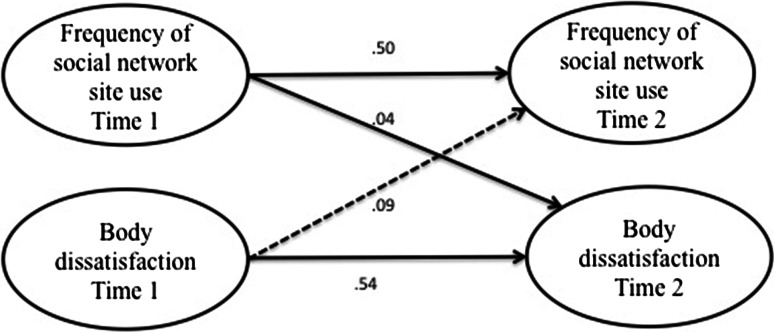
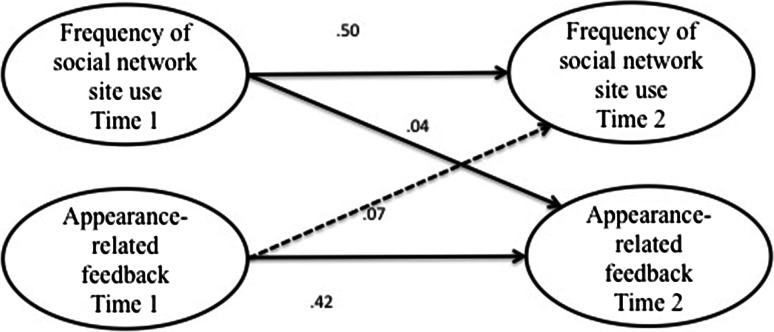
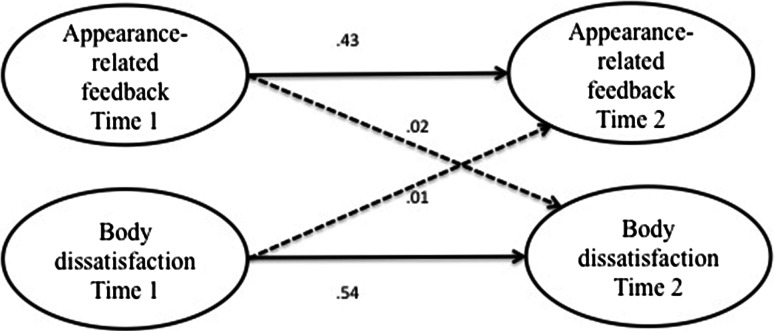
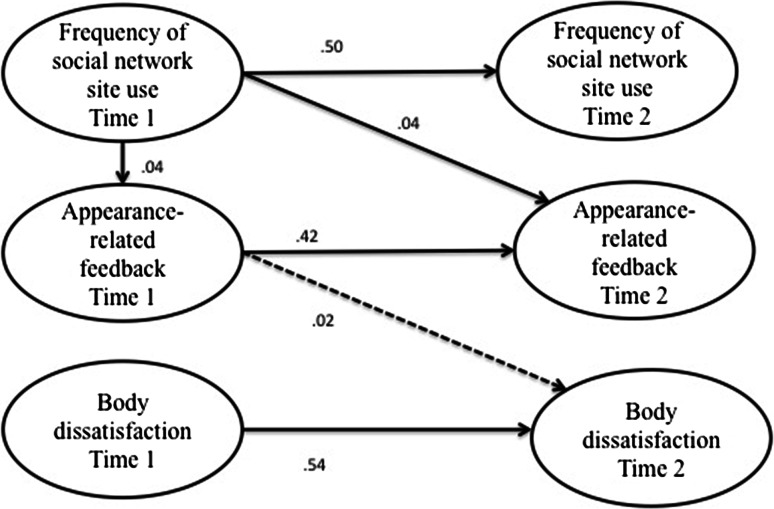
Previous correlational research indicates that adolescent girls who use social network sites more frequently are more dissatisfied with their bodies. However, we know little about the causal direction of this relationship, the mechanisms underlying this relationship, and whether this relationship also occurs among boys to the same extent. The present two-wave panel study (18 month time lag) among 604 Dutch adolescents (aged 11-18; 50.7% female; 97.7% native Dutch) aimed to fill these gaps in knowledge. Structural equation modeling showed that social network site use predicted increased body dissatisfaction and increased peer influence on body image in the form of receiving peer appearance-related feedback. Peer appearance-related feedback did not predict body dissatisfaction and thus did not mediate the effect of social network site use on body dissatisfaction. Gender did not moderate the findings. Hence, social network sites can play an adverse role in the body image of both adolescent boys and girls.
Overview
The claims and statistics of this paper haven’t been checked yet.
Free: it reads the open-access text and checks the first 5 claims that cite a source we can check. Create a free account to check every claim.
Integrity signals
Registry
Cites
Statistics
Figures
Verification
Claims the paper makes
The claims and statistics of this paper haven’t been checked yet.
Free: it reads the open-access text and checks the first 5 claims that cite a source we can check. Create a free account to check every claim.
Claims other papers make about this one
Each is checked against this paper’s own text: does it say what the citing paper says it does?
The source backs part of the claim, not all of it — or backs it for a different population, condition or comparison.
In the citing paper
“Adolescence is an important period for shaping of esthetic preferences and the internalization of appearance norms, as well the development of eating patterns (de Vries et al., 2016;Rodgers & Melioli, 2016).”
From Relation Between Social Media Use and Body Image Concerns and Disordered Eating in Adolescence: A Systematic Review and Meta-Analysis (2026) · cites this paper as de Vries et al., 2016
Experimental — accuracy not yet measuredThe source backs part of the claim, not all of it — or backs it for a different population, condition or comparison.
In the citing paper
“and thereby poses a significant risk for adolescents in terms of body and weight dissatisfaction [2,11,12].”
From Effects of Social Media and Smartphone Use on Body Esteem in Female Adolescents: Testing a Cognitive and Affective Model (2020) · cites this paper as [11]
Experimental — accuracy not yet measuredThe source backs part of the claim, not all of it — or backs it for a different population, condition or comparison.
In the citing paper
“An additional study with adolescents found social media to be a source of appearance pressure that contributed to body dissatisfaction; authors argued that social media may be an additional source of appearance pressure that resembled the original three sources in the model (de Vries et al., 2016).”
From Incorporating social media and muscular ideal internalization into the tripartite influence model of body image: Towards a modern understanding of adolescent girls’ body dissatisfaction (2022) · cites this paper as de Vries et al., 2016
Experimental — accuracy not yet measuredThe cited source says what the claim attributes to it.
In the citing paper
“An emerging body of work has documented associations between adolescents' use of SM and heightened body image concerns (e.g., de Vries et al., 2016; Marengo et al., 2018; Rodgers et al., 2020)”
From The Perfect Storm: A Developmental-Sociocultural Framework for the Role of Social Media in Adolescent Girls' Body Image Concerns and Mental Health. (2022) · cites this paper as de Vries et al., 2016
In the citing paper
“On the other hand, other studies suggest that gender plays no significant role in the relationships between media use, social comparison, and body dissatisfaction (de Vries, Peter, de Graaf, & Nikken, 2016; Steers, Wickham, & Acitelli, 2014).”
From The reciprocal and indirect relationships between passive Facebook use, comparison on Facebook, and adolescents' body dissatisfaction (2017) · cites this paper as de Vries et al., 2016
1 more claim about this paper
Create a free account to see every claim other papers make about this one.
Self-check
Percentages, sums and reported differences re-computed from the paper’s own numbers.
The self-check needs the paper’s full text.
Citations
Cites
An Introduction to the Bootstrap
Efron, B., & Tibshirani, R. J. (1994) · doi:10.1201/9780429246593 · Cited by 40,500
An Introduction to the Bootstrap
Efron, B., & Tibshirani, R. J. (1993) · doi:10.1007/978-1-4899-4541-9 · Cited by 21,230
(2010) · Intellectum (Universidad de La Sabana) · doi:10.1111/j.1467- · Cited by 16,131
To parcel or not to parcel: Exploring the question, weighing the merits
Little, T. D., Cunningham, W. A., Shahar, G., & Widaman, K. F. (2002) · Structural Equation Modeling: A Multidisciplinary Journal · doi:10.1207/s15328007sem0902_1 · Cited by 6,552 · cited 3×
“In the structural equation models, the eight items of the body dissatisfaction scale were combined into three parcels using the item-to-construct balanced procedure suggested by Little et al. (2002).”
BackgroundMethodInfluentialCole, D. A., & Maxwell, S. E. (2003) · Journal of Abnormal Psychology · doi:10.1037/0021-843x.112.4.558 · Cited by 3,605 · cited 2×
“In the set-up of the models, we followed recommendations by Cole and Maxwell (2003). All analyses therefore included previous levels of the variables of interest.”
MethodThe Predictive Validity of Multiple-Item versus Single-Item Measures of the Same Constructs
Bergkvist, L., & Rossiter, J. R. (2007) · Journal of Marketing Research · doi:10.1509/jmkr.44.2.175 · Cited by 3,107 · cited 1×
“A single item was used as recommended for constructs that are concrete and singular (Bergkvist and Rossiter 2007).”
MethodExacting beauty: Theory, assessment, and treatment of body image disturbance.
Thompson, J. K., Heinberg, L. J., Altabe, M., & Tantleff-Dunn, S. (1999) · doi:10.1037/10312-000 · Cited by 3,100
The Impact of Social Media on Children, Adolescents, and Families
O'Keeffe, G. S., Clarke-Pearson, K., & Council on Communications and Media (2011) · Pediatrics · doi:10.1542/peds.2011-0054 · Cited by 2,943 · cited 1×
“The effect of social network sites on the lives and the development of adolescents is important to investigate given the role social network sites currently play in adolescents’ lives (O’Keeffe and Clarke-Pearson 2011).”
BackgroundCollege students' social networking experiences on Facebook
Pempek, T. A., Yermolayeva, Y. A., & Calvert, S. L. (2009) · Journal of Applied Developmental Psychology · doi:10.1016/j.appdev.2008.12.010 · Cited by 2,081 · cited 2×
“Users present oneself to others on these profiles through text and pictures, they view and comment on the selfpresentations of other users, and they read others’ comments on the own self-presentations (Espinoza and Juvonen 2011; Pempek et al. 2009).”
BackgroundGroesz, L. M., Levine, M. P., & Murnen, S. K. (2002) · International Journal of Eating Disorders · doi:10.1002/eat.10005 · Cited by 1,772 · cited 4×
“…the effects of media, such as TV and magazines, have typically focused on the effects of exposure to highly idealized images of physically attractive people and appearance-focused content on body dissatisfaction [for meta-analyses see Bartlett et al. 2008 (males); Groesz et al. 2002 (females)].”
BackgroundInfluential
Cited by
Items 101–200 of 321
Seo, J.-Y., Lee, C.-S., Lee, Y.-J., Bhang, S., & Lee, D. (2021) · Psychiatry Investigation · doi:10.30773/pi.2020.0060 · Cited by 36
Delgado-Rodríguez, R., Linares, R., & Padilla, M. M. (2022) · Journal of Eating Disorders · doi:10.1186/s40337-022-00643-5 · Cited by 47
Šević, S., Ciprić, A., Buško, V., & Štulhofer, A. (2019) · Journal of Youth and Adolescence · doi:10.1007/s10964-019-01172-2 · Cited by 30
Body dissatisfaction and smartphone addiction among Chinese adolescents: A moderated mediation model
Liu, Q., Sun, J., Li, Q., & Zhou, Z. (2019) · Children and Youth Services Review · doi:10.1016/j.childyouth.2019.104613 · Cited by 31
Modrzejewska, A., Czepczor‐Bernat, K., Modrzejewska, J., Roszkowska, A., Zembura, M., & Matusik, P. (2022) · Frontiers in Pediatrics · doi:10.3389/fped.2022.993460 · Cited by 39
“Interestingly, the feedback received did not predict body dissatisfaction (43).”
BackgroundDahlgren, C. L., Reneflot, A., Brunborg, C., Wennersberg, A. L., & Wisting, L. (2023) · International Journal of Eating Disorders · doi:10.1002/eat.24032 · Cited by 28
Shannen, T., Kang, S. R., & Kim, S. (2020) · Child Health Nursing Research · doi:10.4094/chnr.2020.26.1.121 · Cited by 30
“Other studies have reported that the use of SM and negative eating attitudes that lead to abnormal eating behavior are interrelated, and that SM use is a stronger predictor of dieting behavior than exposure to other traditional media, such as TV and magazines [20].”
BackgroundInfluentialRuiz, M. J., Sáez, G., Villanueva‐Moya, L., & Expósito, F. (2021) · Cyberpsychology Behavior and Social Networking · doi:10.1089/cyber.2020.0719 · Cited by 30
Lenzi, M., Elgar, F. J., Marino, C., Canale, N., Vieno, A., Berchialla, P., Stevens, G. W. J. M., Boniel‐Nissim, M., van den Eijnden, R. J. J. M., & Lyyra, N. (2022) · Information Communication & Society · doi:10.1080/1369118x.2022.2109981 · Cited by 31
“The potential to share visual images is attractive, especially for adolescents, who tend to engage in appearance-based social comparisons (de Vries et al., 2016).”
BackgroundHooper, R., Guest, E., Ramsey‐Wade, C. E., & Slater, A. (2024) · Body Image · doi:10.1016/j.bodyim.2024.101702 · Cited by 35
Anabolic steroid misuse and male infertility: management and strategies to improve patient awareness
Whitaker, D. L., Geyer-Kim, G., & Kim, E. D. (2021) · Expert Review of Endocrinology & Metabolism · doi:10.1080/17446651.2021.1921574 · Cited by 28
“faction and eating disorders through various mechanisms, including physical appearance comparisons and selfobjectification [35,36].”
BackgroundThe impact of Facebook use on self-reported eating disorders during the COVID-19 lockdown
Mannino, G., Salerno, L., Bonfanti, R. C., Albano, G., & Lo Coco, G. (2021) · BMC Psychiatry · doi:10.1186/s12888-021-03628-x · Cited by 21
“One of the few longitudinal studies on this issue showed that more frequent SNS use predicted increased body dissatisfaction among adolescents 18 months later, but body dissatisfaction did not predict SNS use [31].”
BackgroundSun, M., Jiang, L., & Huang, G. (2022) · Health Communication · doi:10.1080/10410236.2022.2054099 · Cited by 22
Zeeni, N., Kharma, J. A., Malli, D., Khoury-Malhame, M. E., & Mattar, L. (2024) · Appetite · doi:10.1016/j.appet.2024.107209 · Cited by 29
Concern about appearance on Instagram and Facebook: Measurement and links with eating disorders
González‐Nuevo, C., Cuesta, M., & Muñiz, J. (2021) · Cyberpsychology Journal of Psychosocial Research on Cyberspace · doi:10.5817/cp2021-2-9 · Cited by 24
“In addition, no men were included in the sample, however, it would be useful to include them in future research, as there are already data indicating that men’s use of SNs is also related to ED risk (De Vries et al., 2016).”
BackgroundHe, Z., Li, M., Liu, C., & Ma, X. (2022) · Frontiers in Psychology · doi:10.3389/fpsyg.2021.647126 · Cited by 19
Stapleton, J. L., Hillhouse, J., Coups, E. J., & Pagoto, S. (2016) · Journal of the American Academy of Dermatology · doi:10.1016/j.jaad.2016.01.043 · Cited by 21
Scott, G., Pinkosova, Z., Jardine, E., & Hand, C. (2022) · Computers in Human Behavior · doi:10.1016/j.chb.2022.107464 · Cited by 18
Matheson, E. L., Smith, H. G., Lewis‐Smith, H., Arbon, R. E., & Diedrichs, P. C. (2021) · New Media & Society · doi:10.1177/1461444821993800 · Cited by 23
“Furthermore, adolescents are among the highest users of digital media (e.g. Barry et al., 2017; Ofcom, 2019), with this content shown to increase body dissatisfaction among this demographic (e.g. de Vries et al., 2014, 2016).”
BackgroundSocial Media and Eating and Body Image Concerns Among Men and Boys
Lonergan, A. R., Mitchison, D., Bussey, K., & Fardouly, J. (2021) · Springer eBooks · doi:10.1007/978-3-030-67127-3_20 · Cited by 30
Young men’s body dissatisfaction: A qualitative analysis of anonymous online accounts
Whitaker, C., Gough, B., Fawkner, H. J., & Deighton-Smith, N. (2019) · Journal of Health Psychology · doi:10.1177/1359105319832352 · Cited by 24
“…in the development of BI-related issues (e.g. Dryer et al., 2016; Girard et al., 2018; Kenny et al., 2017; Stratton et al., 2015; Tylka, 2011; Vries et al., 2016), but also of the continuation of appearance-related concerns throughout adulthood, for both men and women (Halliwell and Dittmar,…”
BackgroundZimmer‐Gembeck, M. J., & Webb, H. J. (2017) · Journal of Adolescence · doi:10.1016/j.adolescence.2017.10.002 · Cited by 26
The Impact of Social Media Platforms on Self-Injurious Behavior in Adolescents
Polskaya, N. A., & Yakubovskaya, D. K. (2019) · Counseling Psychology and Psychotherapy · doi:10.17759/cpp.2019270310 · Cited by 23
Kirkpatrick, C. E., & Lee, S. (2021) · Health Communication · doi:10.1080/10410236.2021.2010902 · Cited by 25
“…Facebook) have shown a consistent pattern of an association between social media use and body image concerns among both men and women, and the results of the longitudinal studies have illustrated that a social mediabody image relationship may become stronger over time (e.g., De Vries et al., 2015).”
Leggett‐James, M. P., & Laursen, B. P. (2022) · The Journal of Early Adolescence · doi:10.1177/02724316221136043 · Cited by 34
Negative comments and social media: How cognitive biases relate to body image concerns
Dent, E., & Martin, A. K. (2023) · Body Image · doi:10.1016/j.bodyim.2023.01.008 · Cited by 22
Vuković, M. B., Lučić, M., & Štulhofer, A. (2017) · Sexuality & Culture · doi:10.1007/s12119-017-9480-4 · Cited by 23
Bacevičienė, M., Jankauskienė, R., & Balčiūnienė, V. (2020) · International Journal of Environmental Research and Public Health · doi:10.3390/ijerph17030932 · Cited by 22
Coco, G. L., Salerno, L., Giordano, C., Blasi, M. D., & Rodgers, R. F. (2020) · Current Psychology · doi:10.1007/s12144-020-00847-5 · Cited by 21
Digital Hazards for Feeding and Eating: What We Know and What We Don't
Ioannidis, K., & Chamberlain, S. R. (2021) · Current Psychiatry Reports · doi:10.1007/s11920-021-01271-7 · Cited by 26
Boursier, V., & Manna, V. (2019) · Advances in Human and Social Aspects of Technology · doi:10.4018/978-1-5225-4047-2.ch003 · Cited by 14
Mishina, K. E., Kronström, K., Heinonen, E., & Sourander, A. (2024) · European Child & Adolescent Psychiatry · doi:10.1007/s00787-023-02327-0 · Cited by 25
“Body dissatisfaction is common and increases linearly when children reach adolescence [5], just when outside pressures and peer influences grow [6].”
BackgroundTimler, A., McIntyre, F., Rose, E., & Hands, B. P. (2019) · PLoS ONE · doi:10.1371/journal.pone.0224653 · Cited by 20
Creating a Social Media Assessment Tool for Family Nursing
Risling, T., Risling, D., & Holtslander, L. F. (2016) · Journal of Family Nursing · doi:10.1177/1074840716681071 · Cited by 14
“This research (de Vries et al., 2015; McLean et al., 2015) exposes health outcomes associated with what are now commonplace practices for many adolescents and is only one component of an expanding field of study by health care professionals from a variety of disciplines and settings on SM use.”
BackgroundCultivating the Community: Inferring Influence within Eating Disorder Networks on Twitter
Nova, F. F., Coupe, A., Mynatt, E. D., Guha, S., & Pater, J. A. (2022) · Proceedings of the ACM on Human-Computer Interaction · doi:10.1145/3492826 · Cited by 23
Body Dissatisfaction and Restricted Diet in Chinese Adolescents: A Longitudinal Analysis
Zhang, T., Wang, K., Gu, T., Zhang, Y., & Zhang, X. (2023) · Psychology Research and Behavior Management · doi:10.2147/prbm.s423196 · Cited by 19
COVID-19-Related distress, body image, and eating behaviors: a cross-sectional explanatory model
Rodrigue, C., Rodgers, R. F., Carbonneau, N., Bégin, C., & Dion, J. (2024) · BMC Psychology · doi:10.1186/s40359-024-01613-z · Cited by 18
Gugliandolo, M. C., Costa, S., Cuzzocrea, F., Larcan, R., & Martino, G. (2020) · Journal of Child and Family Studies · doi:10.1007/s10826-020-01779-1 · Cited by 33
“…and Experimental Medicine, University of Messina, Messina, Italy 12 34 56 78 90 () ;,: 12 34 56 78 90 (); ,: body uneasiness, though in a smaller percentage and with different characteristics in comparison with female peers (Barcaccia et al. 2018; Bearman et al. 2006; de Vries et al. 2016).”
BackgroundGallinat, C., Keuthen, N. J., Stefini, A., & Backenstraß, M. (2016) · Nordic Journal of Psychiatry · doi:10.1080/08039488.2016.1259427 · Cited by 13
“Imperfect skin can pose a threat to selfesteem for adolescents, who are concerned with peers’ perceptions of their changing bodies (6,7).”
BackgroundXian, X., Niu, T., Zhang, Y., Zhou, X., Wang, X., Du, X., Qu, L., Mao, B., He, Y., Chen, X., et al. (2024) · PeerJ · doi:10.7717/peerj.17090 · Cited by 18
Hock, K., Vanderlee, L., White, C. M., & Hammond, D. G. (2024) · Journal of the Academy of Nutrition and Dietetics · doi:10.1016/j.jand.2024.06.223 · Cited by 22
“18,65 Responses were collapsed to determine the degree of dissatisfaction: moderately-severely dissatis fi ed for being thinner than ideal ( e 2 to e 7), mildly dissatis fi ed for being thinner than ideal ( e 1), mildly dissatis fi ed for being larger than ideal (1), and moderately-severely dissatis fi…”
Bermejo‐Cantarero, A., Velázquez‐Ruiz, L., Romero, C., González, R. E., Zafra, M. D. O., Rodríguez‐Almagro, J., & Sánchez‐López, M. (2025) · Nursing Open · doi:10.1002/nop2.70205 · Cited by 25
Entrepreneurial doctors and consumerist patients: #plasticsurgery on Instagram
Joa, C. Y., & Park, S. (2021) · International Journal of Pharmaceutical and Healthcare Marketing · doi:10.1108/ijphm-01-2020-0002 · Cited by 13
Nutley, S. B., Burén, J., & Thorell, L. B. (2023) · International Journal of Environmental Research and Public Health · doi:10.3390/ijerph20166583 · Cited by 15
Kvardová, N., Macháčková, H., & Güleç, H. (2023) · Body Image · doi:10.1016/j.bodyim.2023.101630 · Cited by 19
Digennaro, S., & Tescione, A. (2024) · Frontiers in Education · doi:10.3389/feduc.2024.1390583 · Cited by 37
Gustafsson, J., Jasinskaja‐Lahti, I., Konttinen, H. M., Simonsen, N., Löfstedt, P., & Lyyra, N. (2025) · Journal of Research on Adolescence · doi:10.1111/jora.13058 · Cited by 18
Flannery, O., Harris, K., & Kenny, U. (2020) · The Journal of Men s Studies · doi:10.1177/1060826520913264 · Cited by 15
“To date, research examining the influence of SNSs on males’ BI and EB has been largely centered on adolescent boys (de Vries et al., 2016; Marengo et al., 2018; Rousseau et al., 2017); thus, the current study focused on a less studied population group: young men aged between 21 and 30, who have…”
BackgroundBodroža, B., Obradović, V., & Ivanović, S. (2022) · Cyberpsychology Journal of Psychosocial Research on Cyberspace · doi:10.5817/cp2022-2-3 · Cited by 30
“On the other hand, de Vries showed that it is body dissatisfaction that shapes SNS use and not SNS use that induces body dissatisfaction (de Vries et al., 2016).”
BackgroundDaniels, S. R., & Willard, V. W. (2023) · Journal of Psychosocial Oncology · doi:10.1080/07347332.2023.2249876 · Cited by 13
Praet, N., Stevens, J., Casteels, K., & Toelen, J. (2024) · Children · doi:10.3390/children11070822 · Cited by 16
The beauty complex: social media trends, effects, and opportunities
Mwangi, Z. M., & Buvár, Á. (2024) · Cogent Social Sciences · doi:10.1080/23311886.2024.2427350 · Cited by 28
“…for individuals to compare themselves with other people. thus, online interactions with beauty content could be detrimental to women and girls, as it leads to sexual objectification, appearance comparison, and body dissatisfaction (Kim & Chock, 2015; Meier & Gray, 2014; vries et al., 2016).”
Vangeel, L., Trekels, J., Eggermont, S., & Vandenbosch, L. (2020) · Journalism & Mass Communication Quarterly · doi:10.1177/1077699020959723 · Cited by 10
“In line with studies on the relation between media use and offline appearance conversations (Clark & Tiggemann, 2006), a longitudinal study suggested an association between social media use and online appearance-focused conversations (de Vries et al., 2016).”
ResultShi, P., Huang, Y., Kou, H., Wang, T., & Chen, H. (2019) · Frontiers in Psychology · doi:10.3389/fpsyg.2019.02775 · Cited by 12
Murray, M. A., Obeid, N., Gunnell, K. E., Buchholz, A., Flament, M. F., & Goldfield, G. S. (2022) · Child and Adolescent Mental Health · doi:10.1111/camh.12576 · Cited by 13
Co-Designing a Social Media Health Promotion for Young Women: A Study Protocol
Malloy, J. A., Partridge, S. R., Kemper, J. A., & Roy, R. (2024) · International Journal of Qualitative Methods · doi:10.1177/16094069241230413 · Cited by 10
Vizcaíno-Verdú, A., Feijóo, B., & Sádaba, C. (2025) · Atlantic Journal of Communication · doi:10.1080/15456870.2025.2470737 · Cited by 15
“This pattern reflects rising self-consciousness and social comparison, which becomes more prevalent in middle to late adolescence (de Vries et al., 2019).”
InfluentialThe Effects of Self-Esteem and Influence of Friends via Social Media on Body Image Amongst Children
Ahmad, A. H., Idris, I., & Jing, R. M. L. (2019) · International Journal of Financial Research · doi:10.5430/ijfr.v10n5p40 · Cited by 15
“Among other impacts, such as violence and sexual harassment (Haseeb, Abidin, Hye & Hartani, 2018; Strasburger et al., 2010), which impacts both genders (de Vries et al., 2016).”
BackgroundDiferencias de edad y género en el uso y consumo de medios sociales entre los adolescentes
Jiménez, A. G., Catalina-García, B., & Tur‐Viñes, V. (2021) · adComunica revista científica de estrategias tendencias e innovación en comunicación · doi:10.6035/2174-0992.2021.22.12 · Cited by 15
Silva, A. S., & da Costa, M. F. (2021) · ReMark - Revista Brasileira de Marketing · doi:10.5585/remark.v20i1.17309 · Cited by 34
Li, Y., Chen, H., Zou, Y., Guo, Y., Gao, L., & Xu, X. (2025) · PLOS ONE · doi:10.1371/journal.pone.0318245 · Cited by 8
Coco, G. L., & Rodgers, R. F. (2025) · Addictive Behaviors Reports · doi:10.1016/j.abrep.2025.100623 · Cited by 10
Marciano, A., David, Y., & Antebi‐Gruszka, N. (2023) · Computers in Human Behavior · doi:10.1016/j.chb.2023.107729 · Cited by 8
Wang, T., Mentzakis, E., Brede, M., & Ianni, A. (2019) · Journal of Medical Internet Research · doi:10.2196/10942 · Cited by 12
“Further, prior studies have shown that social media use is associated with increased depression [55], social anxiety [49] and body dissatisfaction [56, 57], implying an effect of online participation on individuals’ emotions (i.”
Flynn, M. A., Cotchett, E., & Lin, L. (2020) · Journal of Social and Personal Relationships · doi:10.1177/0265407520903387 · Cited by 12
“Also, on SNSs, in contrast to the findings for traditional media (Levine & Harrison, 2009), there may not be as pronounced gender-based differences in users’ body image outcomes (De Vries et al., 2015; Holland & Tiggemann, 2016; Vannucci et al., 2017).”
ResultLin, S., Li, L., & Jiang, L. (2022) · Behavioral Sciences · doi:10.3390/bs12070210 · Cited by 13
“For example, females often perceive the requirement to post or send selfies or photos because others are highly interested in how they look, and they frequently encounter appearance-related feedback [20,21].”
BackgroundBedmar, M. V. D. S., & Ayensa, J. I. B. (2023) · Revista Tecnología Ciencia y Educación · doi:10.51302/tce.2023.743 · Cited by 20
Body Image and Lifestyle Behaviors in High School Adolescents
Bordeleau, M., Alméras, N., Panahi, S., & Drapeau, V. (2023) · Children · doi:10.3390/children10071263 · Cited by 12
Social Media and Mental Health
Alghamdi, Y. A. (2024) · Journal of Arts, Literature, Humanities and Social Sciences · doi:10.33193/jalhss.115.2024.1308 · Cited by 8
Artigues-Barberà, E., Tort‐Nasarre, G., Pollina-Pocallet, M., Suquet, Y. F., Pallés, A. A., Niubó, O. G., Ortega, M., & García‐Martínez, E. (2025) · PLoS ONE · doi:10.1371/journal.pone.0318989 · Cited by 21
Gesto, C. D., Benucci, S. B., Policardo, G. R., & Maheux, A. (2025) · Body image · doi:10.1016/j.bodyim.2025.101969 · Cited by 9
Lewis‐Smith, H., Pegram, G., White, P., Ward, L. M., & Diedrichs, P. C. (2023) · Body Image · doi:10.1016/j.bodyim.2023.08.002 · Cited by 10
Importância dos enfermeiros na identificação do cyberbullying: Revisão sistemática
Mendes, J., Queirós, S., Pedro, M., & Oliveira, M. (2019) · Revista Portuguesa de Investigação Comportamental e Social · doi:10.31211/rpics.2019.5.1.105 · Cited by 10
Burychka, D., Miragall, M., & Baños, R. (2024) · Psicothema · doi:10.7334/psicothema2023.48 · Cited by 7
“…perception of one’s appearance inferiority has been associated with adverse self-evaluating emotional states (i.e., body shame) (Avalos et al., 2005; de Vries et al., 2016), the practice of body appreciation could promote the selection of more adaptive coping strategies ( Wood-Barcalow et al.,…”
BackgroundAn Overview of the Mechanism of Social Networking Addiction and Its Negative Consequences
王, 维. (2018) · Advances in Psychology · doi:10.12677/ap.2018.88127 · Cited by 9
O'Connor, S. M., Mikhail, M. E., Anaya, C., Haller, L. L., Burt, S., McGue, M., Iacono, W., & Klump, K. (2022) · Development and Psychopathology · doi:10.1017/s0954579422000608 · Cited by 6
“For example, greater social media use has been linked to higher levels of body dissatisfaction, internalization of appearance ideals, drive for thinness, and dietary restraint in adolescent girls (De Vries et al., 2016; McLean et al., 2015; Tiggemann & Slater, 2016).”
BackgroundAlmenara, C. A., Macháčková, H., & Šmahel, D. (2016) · Cyberpsychology Behavior and Social Networking · doi:10.1089/cyber.2016.0098 · Cited by 11
“2 In general, new media provides adolescents with the opportunity to create their own content online, to have their own spectators, and to drive online discussion and get feedback on their own content.”
Dewey, C. (2020) · Pragmatic Case Studies in Psychotherapy · doi:10.14713/pcsp.v16i3.2077 · Cited by 6
Social Media's Influence on Eating Disorders
Gao, M. (2023) · Modern Economics & Management Forum · doi:10.32629/memf.v4i4.1489 · Cited by 12
Plumb, M. S., Hands, B. P., McIntyre, F., & Timler, A. (2020) · Research Quarterly for Exercise and Sport · doi:10.1080/02701367.2020.1739606 · Cited by 10
Prediction factors of weight control intention in Chinese young adults
Lin, S. W., Tsay, S. L., & Lin, K. P. (2021) · International Journal of Nursing Practice · doi:10.1111/ijn.12927 · Cited by 7
The influence of selfie related behavior in social media on body image
Gu, X. M., Wang, Y., & Lei, L. (2021) · Advances in Psychological Science · doi:10.3724/sp.j.1042.2021.01497 · Cited by 14
“…2016)。 “假想观众”是青少年突出的心理特点,社交媒体情境中潜在的大量观众更增强了 青少年这方面的认知。Zheng等人(2018)发现假想观众水平程度越高的青少年, 自拍行为和自我客体化的水平正相关程度越高。此外,由于那些对身体和饮食问 题高度关注的青春期少女为了获得对自己身体吸引力的确认,会更频繁地参与自 拍这种注重外表的活动(Perloff,2014),所以未来研究要更关注本就有消极身体 映像的青少年。 媒体素养是指个体抵抗媒体影响和压力而防止内化瘦的理想形象和外貌比 较的能力。以往研究发现,媒体素养能够缓冲传统媒体信息对身体映像带来的干 扰(McLean et al.,…”
InfluentialHUBUNGAN CITRA TUBUH DENGAN GANGGUAN PERILAKU MAKAN PADA REMAJA PUTRI PENGGUNA INSTAGRAM
Ariani, N. K., Swedarma, K. E., & Saputra, I. K. (2021) · Coping Community of Publishing in Nursing · doi:10.24843/coping.2021.v09.i05.p09 · Cited by 6
Waqar, L., Mazhar, A. F., Rafique, M., & Rehman, M. (2022) · Journal of Pakistan Psychiatric Society · doi:10.63050/jpps.19.04.184 · Cited by 5
Vijayan, D. P., Ghuhato, T., Rajkumar, E., George, A. J., Romate, J., & Abraham, J. (2024) · International Journal of Mental Health Promotion · doi:10.32604/ijmhp.2024.023032 · Cited by 8
Instagram Use and Endorsement of a Voluptuous Body Ideal: A Serial Mediation Model
Belmonte, A., Hopper, K. M., & Aubrey, J. S. (2024) · Sex Roles · doi:10.1007/s11199-024-01442-9 · Cited by 12
ENGİN, D., Bükün, M. F., KUNDO, R., TEKİN, D., & ÇETİN, M. (2023) · Psikiyatride Guncel Yaklasimlar - Current Approaches in Psychiatry · doi:10.18863/pgy.1349780 · Cited by 7
The Role of Digital Media in Adolescents’ Body Image and Disordered Eating
Roberts, S. R., Maheux, A. J., Ladd, B. A., & Choukas‐Bradley, S. (2022) · Cambridge University Press eBooks · doi:10.1017/9781108976237.014 · Cited by 16
Jankauskiene, R., & Bacevičienė, M. (2022) · Eating and Weight Disorders · doi:10.1007/s40519-022-01459-7 · Cited by 8
Mindel, C., Mainstone-Cotton, L., García, S. D. O., Sefi, A., Sugarman, G., Salhi, L., Brick, H., Jackson, K., & Hanley, T. (2022) · Frontiers in Digital Health · doi:10.3389/fdgth.2022.872404 · Cited by 7
“predict an increase in body dissatisfaction (11).”
Digennaro, S., & Iannaccone, A. (2025) · SAGE Open · doi:10.1177/21582440251321364 · Cited by 12
“The onset of body image disorders can be influenced by various precipitating factors, such as specific personality traits, traumatic life experiences, and other complex factors (de Vries et al., 2016).”
Fortunato, L., Gullo, S., Muscolino, A., La Tona, A., Rodgers, R. F., & Lo Coco, G. (2026) · Adolescent Research Review · doi:10.1007/s40894-026-00285-7 · Cited by 7
Coyne, S. M., Alfen, M. V., James, P., Hirschi, T., Densley, R. L., Christensen-Duerden, C., Shawcroft, J. E., Cingel, D. P., & Olsen, J. A. (2025) · Computers in Human Behavior Reports · doi:10.1016/j.chbr.2025.100737 · Cited by 6
Moffitt, L., & Thomas, M. S. (2025) · International Journal of Nutrition and Food Sciences · doi:10.11648/j.ijnfs.20251404.14 · Cited by 13
Cala, P., Velázquez, L. P. F., Koester, D., & Marcus, R. (2025) · Gender and Education · doi:10.1080/09540253.2025.2568414 · Cited by 9
Donnarumma, L., & Mingoia, J. (2024) · New Media & Society · doi:10.1177/14614448241281827 · Cited by 7
Liu, L., Zhang, X., Xue, J., Zhao, L., Tang, P., Tian, Y., Fan, H., Hao, M., Zhao, X., Geng, F., et al. (2025) · Frontiers in Psychiatry · doi:10.3389/fpsyt.2025.1583060 · Cited by 6
“Such anxiety may stem from the internalization of societal aesthetic standards, comparisons with peers, and in fl uences from family and media (30).”
Kelly, N., Kosty, D. B., Williamson, G., Guidinger, C., & Cotter, E. W. (2023) · Eating Behaviors · doi:10.1016/j.eatbeh.2023.101735 · Cited by 3
Alburkani, B. S. S., Yousef, F. M., Arab, A. H., & Qutub, A. (2024) · Middle East Current Psychiatry · doi:10.1186/s43045-024-00474-x · Cited by 10
Chu, Sánchez, C., He, Z., Dorn, R., Murray, S. B., & Lerman, K. (2026) · Body Image · doi:10.1016/j.bodyim.2026.102043 · Cited by 12
“Engagement in such spaces is associated with increased body dissatisfaction (De Vries, Peter, De Graaf, & Nikken, 2016; Pedalino & Camerini, 2022) and disordered eating (Griffiths et al., 2024); however, it can also provide social support and belonging for those who feel stigmatized or…”
Metadata
- Authors
- de Vries, D. A., Peter, J., de Graaf, H., & Nikken, P.
- Affiliations
- University of Amsterdam (NL)
- Netherlands Youth Institute (NL)
- Venue
- Journal of Youth and Adolescence
- Published
- 2015-03-19
- Volume
- 45
- Issue
- 1
- Pages
- 211-224
- ISSN
- 0047-2891 (ISSN-L)
- 1573-6601
- PMC
- PMC4698286
- OpenAlex
- W2085912670
- Semantic Scholar
- ab212fc2506b0e18059a9dba010639e3519d1217
- Cited by
- 320
- References
- 56
- Citations by year
- 2026: 20 · 2025: 37 · 2024: 34 · 2023: 26 · 2022: 43 · 2021: 45 · 2020: 45 · 2019: 25 · 2018: 16 · 2017: 16 · 2016: 11 · 2015: 2
- FWCI
- 18.60
- Type
- journal article
- Language
- en
- Open access
- hybrid
- doi.org
- Locations
- Journal of Youth and Adolescence (publishedVersion, cc-by)
- Europe PMC (PubMed Central) (publishedVersion, cc-by)
- PubMed Central (publishedVersion, cc-by)
- PubMed (publishedVersion)
- EUR Research Repository (Erasmus University Rotterdam) (publishedVersion)
- EUR Research Repository (Erasmus University Rotterdam) (submittedVersion)
- UvA-DARE (University of Amsterdam) (submittedVersion)
- Data Archiving and Networked Services (DANS) (submittedVersion, other-oa)
- Topics
- Social Sciences › Psychology › Clinical Psychology › Eating Disorders and Behaviors
- Social Sciences › Psychology › Clinical Psychology › Body Image and Dysmorphia Studies
- Social Sciences › Sociology and Political Science › Impact of Technology on Adolescents
- Keywords
- social network sites, body dissatisfaction, body image, peer influence, adolescents, gender differences, mediation, adolescent boys, adolescent girls
- MeSH terms
- Adolescent, Adolescent Behavior, Body Image, Child, Female, Humans, Longitudinal Studies, Male, Models, Psychological, Netherlands, Peer Group, Personal Satisfaction, Surveys and Questionnaires, Social Support, Social Media
About these checks
Registry, retraction, Cites and statistics results are computed, not judged, with one exception: a printed reference that no index lists is read once by a model before it counts as a citation error. Claims are extracted by a model and kept only when their quote appears verbatim in the text; each cited source is then checked, with a model’s help, for whether it says what the claim relies on. Those verdicts can be wrong — read the claim’s quote and the cited source before relying on one.
Statistics and arithmetic are recomputed, not judged.
Confidence bands are shown only for fields calibrated on our annotated test set. None is calibrated yet, so no band is shown.
What counts as a claim ›How we measure confidence ›How we check this ›
Are you an author, or do you see a problem with this page? Request a review
Data sources
Bibliographic data: Semantic Scholar, OpenAlex, Crossref.
Contains information from the Semantic Scholar Academic Graph Datasets, made available under the ODC Attribution License (ODC-BY 1.0).
Semantic Scholar’s data is described in: Kinney, R., et al. (2023). The Semantic Scholar Open Data Platform. arXiv:2301.10140.
