

Adolescents’ Social Network Site Use, Peer Appearance-Related Feedback, and Body Dissatisfaction: Testing a Mediation Model
Open accessThe DOI matches its Crossref record; 57 of the 57 references it cites were found in a registry or an index.
Abstract
Previous correlational research indicates that adolescent girls who use social network sites more frequently are more dissatisfied with their bodies. However, we know little about the causal direction of this relationship, the mechanisms underlying this relationship, and whether this relationship also occurs among boys to the same extent. The present two-wave panel study (18 month time lag) among 604 Dutch adolescents (aged 11-18; 50.7% female; 97.7% native Dutch) aimed to fill these gaps in knowledge. Structural equation modeling showed that social network site use predicted increased body dissatisfaction and increased peer influence on body image in the form of receiving peer appearance-related feedback. Peer appearance-related feedback did not predict body dissatisfaction and thus did not mediate the effect of social network site use on body dissatisfaction. Gender did not moderate the findings. Hence, social network sites can play an adverse role in the body image of both adolescent boys and girls.
Overview
The claims and statistics of this paper haven’t been checked yet.
Free: it reads the open-access text and checks the first 5 claims that cite a source we can check. Create a free account to check every claim.
Integrity signals
Registry
Cites
Statistics
Figures
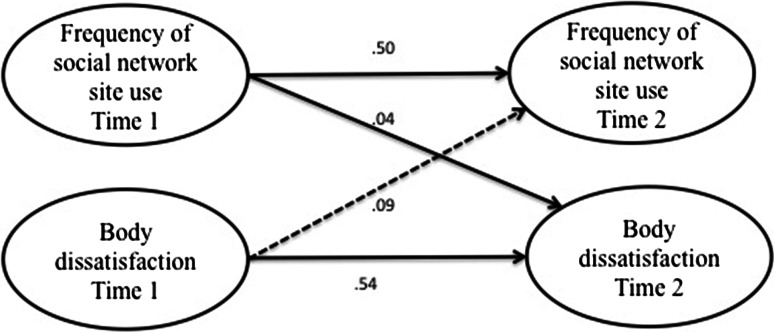
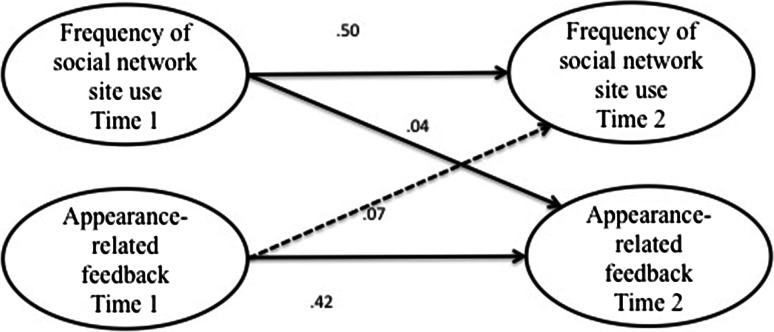
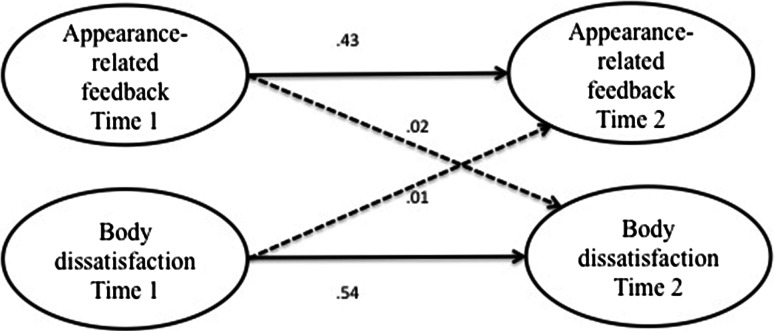
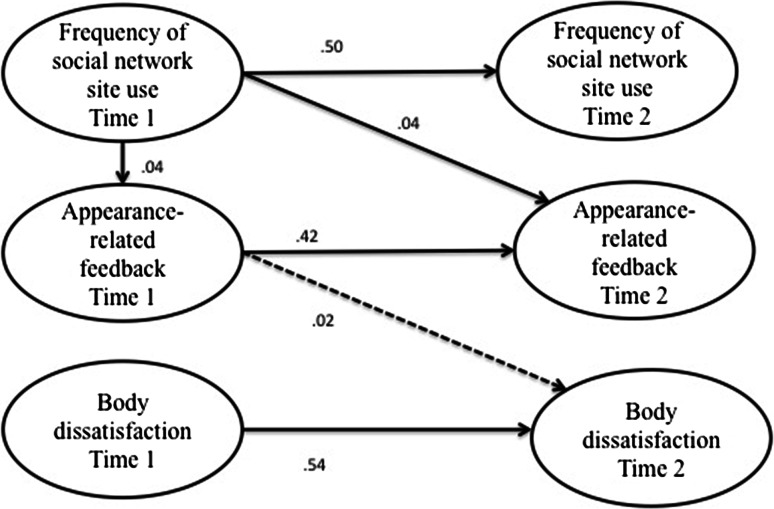
Verification
Claims the paper makes
The claims and statistics of this paper haven’t been checked yet.
Free: it reads the open-access text and checks the first 5 claims that cite a source we can check. Create a free account to check every claim.
Claims other papers make about this one
Each is checked against this paper’s own text: does it say what the citing paper says it does?
The source backs part of the claim, not all of it — or backs it for a different population, condition or comparison.
In the citing paper
“Adolescence is an important period for shaping of esthetic preferences and the internalization of appearance norms, as well the development of eating patterns (de Vries et al., 2016;Rodgers & Melioli, 2016).”
From Relation Between Social Media Use and Body Image Concerns and Disordered Eating in Adolescence: A Systematic Review and Meta-Analysis (2026) · cites this paper as de Vries et al., 2016
Experimental — accuracy not yet measuredThe source backs part of the claim, not all of it — or backs it for a different population, condition or comparison.
In the citing paper
“and thereby poses a significant risk for adolescents in terms of body and weight dissatisfaction [2,11,12].”
From Effects of Social Media and Smartphone Use on Body Esteem in Female Adolescents: Testing a Cognitive and Affective Model (2020) · cites this paper as [11]
Experimental — accuracy not yet measuredThe source backs part of the claim, not all of it — or backs it for a different population, condition or comparison.
In the citing paper
“An additional study with adolescents found social media to be a source of appearance pressure that contributed to body dissatisfaction; authors argued that social media may be an additional source of appearance pressure that resembled the original three sources in the model (de Vries et al., 2016).”
From Incorporating social media and muscular ideal internalization into the tripartite influence model of body image: Towards a modern understanding of adolescent girls’ body dissatisfaction (2022) · cites this paper as de Vries et al., 2016
Experimental — accuracy not yet measuredThe cited source says what the claim attributes to it.
In the citing paper
“An emerging body of work has documented associations between adolescents' use of SM and heightened body image concerns (e.g., de Vries et al., 2016; Marengo et al., 2018; Rodgers et al., 2020)”
From The Perfect Storm: A Developmental-Sociocultural Framework for the Role of Social Media in Adolescent Girls' Body Image Concerns and Mental Health. (2022) · cites this paper as de Vries et al., 2016
In the citing paper
“On the other hand, other studies suggest that gender plays no significant role in the relationships between media use, social comparison, and body dissatisfaction (de Vries, Peter, de Graaf, & Nikken, 2016; Steers, Wickham, & Acitelli, 2014).”
From The reciprocal and indirect relationships between passive Facebook use, comparison on Facebook, and adolescents' body dissatisfaction (2017) · cites this paper as de Vries et al., 2016
1 more claim about this paper
Create a free account to see every claim other papers make about this one.
Self-check
Percentages, sums and reported differences re-computed from the paper’s own numbers.
The self-check needs the paper’s full text.
Citations
Cites
An Introduction to the Bootstrap
Efron, B., & Tibshirani, R. J. (1994) · doi:10.1201/9780429246593 · Cited by 40,500
An Introduction to the Bootstrap
Efron, B., & Tibshirani, R. J. (1993) · doi:10.1007/978-1-4899-4541-9 · Cited by 21,230
(2010) · Intellectum (Universidad de La Sabana) · doi:10.1111/j.1467- · Cited by 16,131
To parcel or not to parcel: Exploring the question, weighing the merits
Little, T. D., Cunningham, W. A., Shahar, G., & Widaman, K. F. (2002) · Structural Equation Modeling: A Multidisciplinary Journal · doi:10.1207/s15328007sem0902_1 · Cited by 6,552 · cited 3×
“In the structural equation models, the eight items of the body dissatisfaction scale were combined into three parcels using the item-to-construct balanced procedure suggested by Little et al. (2002).”
BackgroundMethodInfluentialCole, D. A., & Maxwell, S. E. (2003) · Journal of Abnormal Psychology · doi:10.1037/0021-843x.112.4.558 · Cited by 3,605 · cited 2×
“In the set-up of the models, we followed recommendations by Cole and Maxwell (2003). All analyses therefore included previous levels of the variables of interest.”
MethodThe Predictive Validity of Multiple-Item versus Single-Item Measures of the Same Constructs
Bergkvist, L., & Rossiter, J. R. (2007) · Journal of Marketing Research · doi:10.1509/jmkr.44.2.175 · Cited by 3,107 · cited 1×
“A single item was used as recommended for constructs that are concrete and singular (Bergkvist and Rossiter 2007).”
MethodExacting beauty: Theory, assessment, and treatment of body image disturbance.
Thompson, J. K., Heinberg, L. J., Altabe, M., & Tantleff-Dunn, S. (1999) · doi:10.1037/10312-000 · Cited by 3,100
The Impact of Social Media on Children, Adolescents, and Families
O'Keeffe, G. S., Clarke-Pearson, K., & Council on Communications and Media (2011) · Pediatrics · doi:10.1542/peds.2011-0054 · Cited by 2,943 · cited 1×
“The effect of social network sites on the lives and the development of adolescents is important to investigate given the role social network sites currently play in adolescents’ lives (O’Keeffe and Clarke-Pearson 2011).”
BackgroundCollege students' social networking experiences on Facebook
Pempek, T. A., Yermolayeva, Y. A., & Calvert, S. L. (2009) · Journal of Applied Developmental Psychology · doi:10.1016/j.appdev.2008.12.010 · Cited by 2,081 · cited 2×
“Users present oneself to others on these profiles through text and pictures, they view and comment on the selfpresentations of other users, and they read others’ comments on the own self-presentations (Espinoza and Juvonen 2011; Pempek et al. 2009).”
BackgroundGroesz, L. M., Levine, M. P., & Murnen, S. K. (2002) · International Journal of Eating Disorders · doi:10.1002/eat.10005 · Cited by 1,772 · cited 4×
“…the effects of media, such as TV and magazines, have typically focused on the effects of exposure to highly idealized images of physically attractive people and appearance-focused content on body dissatisfaction [for meta-analyses see Bartlett et al. 2008 (males); Groesz et al. 2002 (females)].”
BackgroundInfluential
Cited by
Holland, G., & Tiggemann, M. (2016) · Body Image · doi:10.1016/j.bodyim.2016.02.008 · Cited by 1,395
“Parallel to this, De Vries et al. (2016) found that SNS use was related to men and women’s body image in the same manner and to the same extent.”
BackgroundSocial Media and Body Image Concerns: Current Research and Future Directions
Fardouly, J., & Vartanian, L. R. (2016) · Current Opinion in Psychology · doi:10.1016/j.copsyc.2015.09.005 · Cited by 801
“media usage [29 ,30 ,31,32,33], but one study on male and female high school students found that greater social media usage (specifically Hyves.”
BackgroundSocial media use and adolescent mental health: Findings from the UK Millennium Cohort Study
Kelly, Y., Zilanawala, A., Booker, C., & Sacker, A. (2018) · EClinicalMedicine · doi:10.1016/j.eclinm.2018.12.005 · Cited by 740
“Our findings are consistent with prior research which has typically investigated one or two potential mechanisms at a time, for instance online harassment [12–14], sleep [18–20], self-esteem [22] and body image [24,25].”
BackgroundResultNesi, J., Choukas-Bradley, S., & Prinstein, M. J. (2018) · Clinical Child and Family Psychology Review · doi:10.1007/s10567-018-0261-x · Cited by 712
A meta-analytic review of the relationship between social media use and body image disturbance
Saiphoo, A. N., & Vahedi, Z. (2019) · Computers in Human Behavior · doi:10.1016/j.chb.2019.07.028 · Cited by 539
Jiotsa, B., Naccache, B., Duval, M., Rocher, B., & Grall-Bronnec, M. (2021) · International Journal of Environmental Research and Public Health · doi:10.3390/ijerph18062880 · Cited by 337
“Several studies have suggested that social media exposure could foster body dissatisfaction and result in risky eating behaviors by broadcasting thinness ideals individuals thus long for [18,24,25].”
BackgroundChoukas-Bradley, S., Roberts, S. R., Maheux, A. J., & Nesi, J. (2021) · doi:10.31234/osf.io/ju92a · Cited by 331
Choukas-Bradley, S., Roberts, S. R., Maheux, A. J., & Nesi, J. (2022) · Clinical Child and Family Psychology Review · doi:10.1007/s10567-022-00404-5 · Cited by 333
Selective Self-Presentation and Social Comparison Through Photographs on Social Networking Sites
Fox, J., & Vendemia, M. A. (2016) · Cyberpsychology, Behavior, and Social Networking · doi:10.1089/cyber.2016.0248 · Cited by 310
“58 Emerging studies have shown that the frequency of site use, 6,52,59 and particularly the use of these sites for purposes likely to promote appearance concerns, 7,8,60 is associated with troubling outcomes such as body dissatisfaction and disordered eating.”
Rodgers, R. F., Slater, A., Gordon, C. S., McLean, S. A., Jarman, H. K., & Paxton, S. J. (2020) · Journal of Youth and Adolescence · doi:10.1007/s10964-019-01190-0 · Cited by 296
Social media use and mental health and well-being among adolescents: a scoping review
Schønning, V., Hjetland, G. J., Aarø, L. E., & Skogen, J. C. (2020) · Frontiers in Psychology · doi:10.3389/fpsyg.2020.01949 · Cited by 288
The relationship between social media use and disordered eating in young adolescents.
Wilksch, S. M., O'Shea, A., Ho, P., Byrne, S., & Wade, T. D. (2020) · International Journal of Eating Disorders · doi:10.1002/eat.23198 · Cited by 267
Mingoia, J., Hutchinson, A. D., Wilson, C., & Gleaves, D. H. (2017) · Frontiers in Psychology · doi:10.3389/fpsyg.2017.01351 · Cited by 253
“Research exploring SNS use and body dissatisfaction also supports this conclusion by identifying that more SNS use is associated with higher body dissatisfaction across males and females (e.g., Stronge et al., 2015; de Vries et al., 2016).”
BackgroundResultInfluentialNot all screen time is created equal: associations with mental health vary by activity and gender
Twenge, J. M., & Farley, E. (2021) · Social Psychiatry and Psychiatric Epidemiology · doi:10.1007/s00127-020-01906-9 · Cited by 252
Steinsbekk, S., Wichstrøm, L., Stenseng, F., Nesi, J., Hygen, B. W., & Skalická, V. (2021) · Computers in Human Behavior · doi:10.1016/j.chb.2020.106528 · Cited by 221
de Valle, M. K., Gallego-García, M., Williamson, P., & Wade, T. D. (2021) · Body Image · doi:10.1016/j.bodyim.2021.10.001 · Cited by 221
Jarman, H. K., Marques, M. D., McLean, S. A., Slater, A., & Paxton, S. J. (2021) · Body Image · doi:10.1016/j.bodyim.2020.11.005 · Cited by 214
Lonergan, A. R., Bussey, K., Mond, J., Brown, O., Griffiths, S., Murray, S. B., & Mitchison, D. (2019) · Body Image · doi:10.1016/j.bodyim.2018.12.001 · Cited by 209
Griffiths, S., Murray, S. B., Krug, I., & McLean, S. A. (2018) · Cyberpsychology, Behavior, and Social Networking · doi:10.1089/cyber.2017.0375 · Cited by 209
Tamplin, N. C., McLean, S. A., & Paxton, S. J. (2018) · Body Image · doi:10.1016/j.bodyim.2018.05.003 · Cited by 194
McLean, S. A., Wertheim, E. H., Masters, J., & Paxton, S. J. (2017) · International Journal of Eating Disorders · doi:10.1002/eat.22708 · Cited by 186
“factors for eating disorders in adolescent girls, including body dissatisfaction, internalisation of appearance ideals, drive for thinness, and dietary restraint (2-4).”
The Appearance-Related Social Media Consciousness Scale: Development and validation with adolescents
Choukas-Bradley, S., Nesi, J., Widman, L., & Galla, B. M. (2020) · Body Image · doi:10.1016/j.bodyim.2020.02.017 · Cited by 160
Scully, M., Swords, L., & Nixon, E. (2023) · Irish Journal of Psychological Medicine · doi:10.1017/ipm.2020.93 · Cited by 156
“While the literature has reported that time spent on SNSs is significantly related to body image concerns (Fardouly & Vartanian, 2015; de Vries et al. 2016) and depressive symptoms (e.g. Kelly et al. 2019), it appears that the type of activity engaged in while online is worth further consideration…”
BackgroundRoberts, S. R., Maheux, A. J., Hunt, R. A., Ladd, B. A., & Choukas-Bradley, S. (2022) · Body Image · doi:10.1016/j.bodyim.2022.03.002 · Cited by 223
Chang, L., Li, P., Loh, R. S. M., & Chua, T. H. H. (2019) · Body Image · doi:10.1016/j.bodyim.2019.03.005 · Cited by 151
Association Between Social Networks and Subjective Well-Being in Adolescents: A Systematic Review
Webster, D., Dunne, L., & Hunter, R. (2021) · Youth & Society · doi:10.1177/0044118x20919589 · Cited by 148
“With the use of social networking sites ubiquitous in the lives of young people (de Vries et al., 2016), concerns have arisen over the negative impact this can be having on a person’s subjective well-being.”
BackgroundResultde Vries, D. A., Vossen, H. G. M., & van der Kolk – van der Boom, P. (2019) · Journal of Youth and Adolescence · doi:10.1007/s10964-018-0956-9 · Cited by 141
Bonfanti, R. C., Melchiori, F., Teti, A., Albano, G., Raffard, S., Rodgers, R., & Lo Coco, G. (2025) · Body Image · doi:10.1016/j.bodyim.2024.101841 · Cited by 154
Psychological Risk Factors that Predict Social Networking and Internet Addiction in Adolescents
Peris, M., de la Barrera, U., Schoeps, K., & Montoya-Castilla, I. (2020) · International Journal of Environmental Research and Public Health · doi:10.3390/ijerph17124598 · Cited by 136
Body Image Dissatisfaction and Anxiety Trajectories During Adolescence
Vannucci, A., & Ohannessian, C. M. (2017) · Journal of Clinical Child & Adolescent Psychology · doi:10.1080/15374416.2017.1390755 · Cited by 175
Vuong, A. T., Jarman, H. K., Doley, J. R., & McLean, S. A. (2021) · International Journal of Environmental Research and Public Health · doi:10.3390/ijerph182413222 · Cited by 229
“An emerging factor relevant to body dissatisfaction in adolescence is social media use, which has been found to predict increases in body dissatisfaction among girls and boys [3].”
BackgroundJarman, H. K., Marques, M. D., McLean, S. A., Slater, A., & Paxton, S. J. (2021) · Journal of Youth and Adolescence · doi:10.1007/s10964-020-01390-z · Cited by 121
Rodgers, R. F. (2016) · Adolescent Research Review · doi:10.1007/s40894-015-0017-5 · Cited by 112
“…this, an increasing body of research has documented the relationship between Internet exposure and use, and body image concerns and eating pathology (e.g. Brown and Bobkowski 2011; de Vries et al. 2015; Rodgers et al. 2013; Tao and Liu 2009; Tiggemann and Miller 2010; Tiggemann and Slater 2013).”
BackgroundRousseau, A., Eggermont, S., & Frison, E. (2017) · Computers in Human Behavior · doi:10.1016/j.chb.2017.03.056 · Cited by 104
The use of social media by Australian preadolescents and its links with mental health.
Fardouly, J., Magson, N. R., Rapee, R. M., Johnco, C. J., & Oar, E. L. (2020) · Journal of Clinical Psychology · doi:10.1002/jclp.22936 · Cited by 102
Anixiadis, F., Wertheim, E. H., Rodgers, R., & Caruana, B. (2019) · Body Image · doi:10.1016/j.bodyim.2019.10.005 · Cited by 100
TikTok use and body dissatisfaction: Examining direct, indirect, and moderated relations
Mink, D. B., & Szymanski, D. M. (2022) · Body Image · doi:10.1016/j.bodyim.2022.09.006 · Cited by 147
Social media use and adolescent well-being: a narrative review of longitudinal studies
Course-Choi, J., & Hammond, L. (2021) · Cyberpsychology, Behavior, and Social Networking · doi:10.1089/cyber.2020.0020 · Cited by 93
“38,40 Using the same sample, these studies found that FSMU positively predicted appearance investment, and indirectly impacted desire for cosmetic surgery through appearance investment.”
Ioannidis, K., Taylor, C., Holt, L., Brown, K., Löchner, C., Fineberg, N. A., Corazza, O., Chamberlain, S. R., Román-Urrestarazu, A., & Czabanowska, K. (2021) · Neuroscience & Biobehavioral Reviews · doi:10.1016/j.neubiorev.2021.03.005 · Cited by 114
“Pooled estimates are reported together (all studies; n = 15494) (Bair et al., 2012; Butkowski et al., 2019; Cohen and Blaszczynski, 2015; de Vries et al., 2019, 2016; Eckler et al., 2017; Hendrickse et al., 2017; Hummel and Smith, 2015; Levinson et al., 2017; McLean et al., 2015; Olenik-Shemesh and…”
BackgroundMethodNormative body image development: A longitudinal meta-analysis of mean-level change
Lacroix, E., Smith, A. J., Incé A. Husain, Orth, U., & von Ranson, K. M. (2023) · Body Image · doi:10.1016/j.bodyim.2023.03.003 · Cited by 125
Wang, Y., Fardouly, J., Vartanian, L. R., & Lei, L. (2019) · Body Image · doi:10.1016/j.bodyim.2019.05.001 · Cited by 87
Gordon, C. S., Jarman, H. K., Rodgers, R. F., McLean, S. A., Slater, A., Fuller-Tyszkiewicz, M., & Paxton, S. J. (2021) · Nutrients · doi:10.3390/nu13113825 · Cited by 89
“In addition, longitudinal evidence suggests a direct effect from social media use to body dissatisfaction [33] as well as the existence of indirect effects through appearance comparisons [34,35].”
BackgroundYang, H., Wang, J. J., Tng, G. Y. Q., & Yang, S. (2020) · Children · doi:10.3390/children7090148 · Cited by 81
“Further, a recent longitudinal study ascertained the directionality of this association by showing that more frequent social media use escalated body dissatisfaction in Dutch adolescents at 18-month follow-up, but not vice versa [11].”
BackgroundResultGordon, C. S., Rodgers, R. F., Slater, A. E., McLean, S. A., Jarman, H. K., & Paxton, S. J. (2020) · Body Image · doi:10.1016/j.bodyim.2020.02.003 · Cited by 79
Jung, J., Barron, D. S., Lee, Y., & Swami, V. (2022) · Computers in Human Behavior · doi:10.1016/j.chb.2022.107357 · Cited by 118
Beauty, Body Image, and the Media
Mills, J. S., Shannon, A., & Hogue, J. V. (2017) · InTech eBooks · doi:10.5772/intechopen.68944 · Cited by 121
Lai, F., Wang, L., Zhang, J., Shan, S., Chen, J., & Tian, L. (2023) · International Journal of Environmental Research and Public Health · doi:10.3390/ijerph20043657 · Cited by 138
Casale, S., Gemelli, G., Calosi, C., Giangrasso, B., & Fioravanti, G. (2019) · Current Psychology · doi:10.1007/s12144-019-00229-6 · Cited by 87
Mento, C., Silvestri, M. C., Muscatello, M. R. A., Rizzo, A., Celebre, L., Praticò, M., Zoccali, R. A., & Bruno, A. (2021) · International Journal of Environmental Research and Public Health · doi:10.3390/ijerph18042186 · Cited by 72
“Results have shown that mainly young women feel uncomfortable and often dissatisfied with their body image, and have consequently reduced their self-esteem and have difficulty in relational and social activities [41,42].”
BackgroundCouture Bue, A. C. (2020) · Computers in Human Behavior · doi:10.1016/j.chb.2020.106329 · Cited by 72
A Factorial Validation of Parental Mediation Strategies with Regard to Internet Use
Symons, K., Ponnet, K. S., Emmery, K., Walrave, M., & Heirman, W. (2017) · Psychologica Belgica · doi:10.5334/pb.372 · Cited by 90
Barron, A. M., Krumrei-Mancuso, E. J., & Harriger, J. A. (2021) · Body Image · doi:10.1016/j.bodyim.2021.01.003 · Cited by 72
Body Shaming: an Exploratory Study on its Definition and Classification
Schlüter, C., Kraag, G., & Schmidt, J. (2021) · International Journal of Bullying Prevention · doi:10.1007/s42380-021-00109-3 · Cited by 132
Niu, G., Sun, L., Liu, Q., Chai, H., Sun, X., & Zhou, Z. (2019) · Sex Roles · doi:10.1007/s11199-019-01045-9 · Cited by 84
Yang, J., Fardouly, J., Wang, Y., & Shi, W. (2020) · International Journal of Environmental Research and Public Health · doi:10.3390/ijerph17020672 · Cited by 69
“Previous research found that there was no gender difference in the experience of body dissatisfaction after being exposed to idealised images on social media [47], and in the relationship between social media use and body dissatisfaction [48].”
BackgroundMougharbel, F., & Goldfield, G. S. (2020) · Current Obesity Reports · doi:10.1007/s13679-020-00401-1 · Cited by 67
Calancie, O., Ewing, L., Narducci, L. D., Horgan, S., & Khalid-Khan, S. (2017) · Cyberpsychology: Journal of Psychosocial Research on Cyberspace · doi:10.5817/cp2017-4-2 · Cited by 59
Seekis, V., & Barker, G. (2022) · Body Image · doi:10.1016/j.bodyim.2022.06.013 · Cited by 83
Posting edited photos of the self: Increasing eating disorder risk or harmless behavior?
Wick, M. R., & Keel, P. K. (2020) · International Journal of Eating Disorders · doi:10.1002/eat.23263 · Cited by 59
Luo, Y., Niu, G., Kong, F., & Chen, H. (2019) · Eating Behaviors · doi:10.1016/j.eatbeh.2019.03.004 · Cited by 68
Dahlgren, C. L., Sundgot‐Borgen, J., Kvalem, I. L., Wennersberg, A. L., & Wisting, L. (2024) · Journal of Eating Disorders · doi:10.1186/s40337-024-00992-3 · Cited by 106
“Although most existing studies are cross-sectional precluding causal inferences, a longitudinal study in adolescents [21] showed that SM use does in fact lead to body dissatisfaction, rather than those with body image concerns seeking increased SM use.”
BackgroundResultTrekels, J., Ward, L. M., & Eggermont, S. (2018) · Computers in Human Behavior · doi:10.1016/j.chb.2017.12.020 · Cited by 56
Marques, M. D., Paxton, S. J., McLean, S. A., Jarman, H. K., & Sibley, C. G. (2021) · Body Image · doi:10.1016/j.bodyim.2021.10.008 · Cited by 68
Jovens Insatisfeitos com a Imagem Corporal: Estresse, Autoestima e Problemas Alimentares
da Silva, A. M. B., Machado, W. D. L., Bellodi, A. C., da Cunha, K. S., & Enumo, S. R. F. (2018) · Psico-USF · doi:10.1590/1413-82712018230308 · Cited by 85
Jarman, H. K., McLean, S. A., Slater, A., Marques, M. D., & Paxton, S. J. (2024) · New Media & Society · doi:10.1177/14614448211058468 · Cited by 53
Gioia, F., McLean, S., Griffiths, M. D., & Boursier, V. (2023) · Current Psychology · doi:10.1007/s12144-021-01702-x · Cited by 52
“…a pivotal role in adolescent development and wellbeing and, during adolescence, boys and girls are typically required to face with physical changes, “new” body mentalization, and identity construction processes (de Vries et al., 2016; Franchina & LoCoco, 2018; Markey, 2010; Rudd & Lennon, 2000).”
Backgroundvan Oosten, J. M. F., Vandenbosch, L., & Peter, J. (2017) · Journal of Children and Media · doi:10.1080/17482798.2017.1304970 · Cited by 51
“…on the impact of SNSs on outcomes, such as sexual experience (van Oosten et al., 2015a) and appearance investment and body satisfaction (e.g., de Vries, Peter, de Graaf, & Nikken, 2016; de Vries, Peter, Nikken, & de Graaf, 2014), did not find any differences between adolescent boys and girls.”
Self-citationAboody, D., Siev, J., & Doron, G. (2020) · Behaviour Research and Therapy · doi:10.1016/j.brat.2020.103723 · Cited by 58
Chen, X., Luo, Y., & Chen, H. (2020) · Sex Roles · doi:10.1007/s11199-020-01122-4 · Cited by 61
“Last but not least, given that physical appearance plays a key role in social network site activities (Vries et al. 2016), increasing evidence indicates the importance of social media as a context for appearance-based feedback and comments (e.g., Chua and Chang 2016; Vries et al. 2016; Luo et al.…”
Embodied well-being through two media technologies: Virtual reality and social media
Kruzan, K. P., & Won, A. S. (2019) · New Media & Society · doi:10.1177/1461444819829873 · Cited by 56
Social media use and body image issues among adolescents in a vulnerable Louisiana community
Sagrera, C. E., Magner, J., Temple, J., Lawrence, R., Magner, T. J., Avila-Quintero, V. J., McPherson, P., Alderman, L. L., Bhuiyan, M. A. N., Patterson, J. C., et al. (2022) · Frontiers in Psychiatry · doi:10.3389/fpsyt.2022.1001336 · Cited by 42
“This dose-response relationship is also validated by several studies that found body dissatisfaction increases with total time spent on SM (83, 84).”
BackgroundMingoia, J., Hutchinson, A. D., Gleaves, D. H., & Wilson, C. (2019) · Social Media + Society · doi:10.1177/2056305118820419 · Cited by 42
Luo, J., Yeung, P., & Li, H. (2020) · Children and Youth Services Review · doi:10.1016/j.childyouth.2020.105308 · Cited by 55
Photo manipulation as a predictor of facial dissatisfaction and cosmetic procedure attitudes
Beos, N., Kemps, E., & Prichard, I. J. (2021) · Body Image · doi:10.1016/j.bodyim.2021.08.008 · Cited by 56
Couture Bue, A. C., & Harrison, K. (2020) · Body Image · doi:10.1016/j.bodyim.2020.02.014 · Cited by 39
Impact of social media on Youth: Comprehensive Analysis
Sumadevi, S. (2023) · Shodh Sari-An International Multidisciplinary Journal · doi:10.59231/sari7640 · Cited by 71
The Relationship Between Social Media Dependence and Psychological Disorders in Adolescents
Bilgin, M. (2018) · The Journal of International Scientific Researches · doi:10.23834/isrjournal.452045 · Cited by 47
Influence of sociocultural factors on body image from the perspective of adolescent girls
Cortez, D., Gallegos, M., Jiménez, T., Martínez, P., Saravia, S., Cruzat‐Mandich, C., Díaz־Castrillón, F., Behar, R., & Marcelo Arancibia, M. (2016) · Revista Mexicana de Trastornos Alimentarios/Mexican Journal of Eating Disorders · doi:10.1016/j.rmta.2016.05.001 · Cited by 37
Exposure to body diversity images as a buffer against the thin-ideal: An experimental study
Ogden, J., Gosling, C., Hazelwood, M., & Atkins, E. (2020) · Psychology, Health & Medicine · doi:10.1080/13548506.2020.1734219 · Cited by 36
Revranche, M., Biscond, M., & Husky, M. M. (2021) · L Encéphale · doi:10.1016/j.encep.2021.08.006 · Cited by 69
Rück, C., Mataix-Cols, D., Feusner, J. D., Shavitt, R. G., Veale, D., Krebs, G., & Fernández de la Cruz, L. (2024) · Nature Reviews Disease Primers · doi:10.1038/s41572-024-00577-z · Cited by 35
Facebooking Alone? Millennials’ Use of Social Network Sites and Volunteering
Lee, Y. (2019) · Nonprofit and Voluntary Sector Quarterly · doi:10.1177/0899764019868844 · Cited by 45
Schreurs, L., & Vandenbosch, L. (2022) · Computers in Human Behavior · doi:10.1016/j.chb.2022.107364 · Cited by 32
The effect of social media use on mental health of college students during the pandemic
Fruehwirth, J. C., Weng, A. X., & Perreira, K. M. (2024) · Health Economics · doi:10.1002/hec.4871 · Cited by 67
Rohrich, R. J., & Cho, M. (2018) · Plastic & Reconstructive Surgery · doi:10.1097/prs.0000000000004630 · Cited by 33
Möri, M., Mongillo, F., & Fahr, A. (2022) · Frontiers in Psychology · doi:10.3389/fpsyg.2022.1009792 · Cited by 58
Craike, M. J., Young, J. A., Symons, C. M., Pain, M. D., Harvey, J. T., Eime, R., & Payne, W. R. (2016) · BMC Public Health · doi:10.1186/s12889-016-3815-1 · Cited by 41
Female bodybuilders on Instagram: Negotiating an empowered femininity
Marshall, K., Chamberlain, K., & Hodgetts, D. (2018) · Feminism & Psychology · doi:10.1177/0959353518808319 · Cited by 50
The dark side of Instagram: Predictor model of dysmorphic concerns
Senín-Calderón, C., Perona-Garcelán, S., & Rodríguez-Testal, J. F. (2020) · International Journal of Clinical and Health Psychology · doi:10.1016/j.ijchp.2020.06.005 · Cited by 31
Nesi, J., Choukas-Bradley, S., Maheux, A. J., Roberts, S. R., Sanzari, C. M., Widman, L., & Prinstein, M. J. (2021) · Psychology of Popular Media · doi:10.1037/ppm0000342 · Cited by 30
Knebel, M. T. G., da Costa, B. G. G., dos Santos, P. C., de Sousa, A. C. F. C., & da Silva, K. S. (2021) · Jornal de Pediatria · doi:10.1016/j.jped.2021.05.004 · Cited by 59
Prince, T., Mulgrew, K. E., Driver, C., Mills, L., Loza, J., & Hermens, D. F. (2024) · Journal of Eating Disorders · doi:10.1186/s40337-024-01083-z · Cited by 48
Perspectives on Social Media from Adolescents and Young Adults with Cancer
Daniels, S. R., Yang, C., Toohey, S. J., & Willard, V. W. (2021) · Journal of Pediatric Oncology Nursing · doi:10.1177/1043454221992319 · Cited by 35
Ghali, S., Afifi, S., Suryadevara, V., Habab, Y., Hutcheson, A., Panjiyar, B. K., Davydov, G. G., Nashat, H., & Nath, T. S. (2023) · Cureus · doi:10.7759/cureus.43835 · Cited by 50
“The use of messaging applications like Snapchat, which allow for image modification and filtering, was found to contribute significantly to body image issues and increased emphasis on appearance and peer comparison [35-36].”
BackgroundLuijten, C. C., van de Bongardt, D., & Nieboer, A. P. (2023) · Journal of Adolescence · doi:10.1002/jad.12175 · Cited by 44
The hazards and benefits of social media use in adolescents
Rajamohan, S., Bennett, E., & Tedone, D. (2019) · Nursing · doi:10.1097/01.nurse.0000585908.13109.24 · Cited by 36
Ioannidis, K., Hook, R. W., Grant, J. E., Czabanowska, K., Román-Urrestarazu, A., & Chamberlain, S. R. (2020) · Journal of Psychiatric Research · doi:10.1016/j.jpsychires.2020.11.004 · Cited by 35
Skowronski, M., Busching, R., & Krahé, B. (2021) · Sex Roles · doi:10.1007/s11199-020-01187-1 · Cited by 27
Psychological risk indicators of disordered eating in athletes
Stoyel, H., Shanmuganathan-Felton, V., Meyer, C., & Serpell, L. (2020) · PLoS ONE · doi:10.1371/journal.pone.0232979 · Cited by 46
“Societal pressures can stem from family, teammates, the media, and more recently, from social media and the internet [29, 30, 21, 31].”
BackgroundRepercussions of Social Networks on Their Users’ Body Image: Integrative Review
Silva, A. F. D. S., Japúr, C. C., & Penaforte, F. R. D. O. (2020) · Psicologia Teoria e Pesquisa · doi:10.1590/0102.3772e36510 · Cited by 52
Metadata
- Authors
- de Vries, D. A., Peter, J., de Graaf, H., & Nikken, P.
- Affiliations
- University of Amsterdam (NL)
- Netherlands Youth Institute (NL)
- Venue
- Journal of Youth and Adolescence
- Published
- 2015-03-19
- Volume
- 45
- Issue
- 1
- Pages
- 211-224
- ISSN
- 0047-2891 (ISSN-L)
- 1573-6601
- PMC
- PMC4698286
- OpenAlex
- W2085912670
- Semantic Scholar
- ab212fc2506b0e18059a9dba010639e3519d1217
- Cited by
- 320
- References
- 56
- Citations by year
- 2026: 20 · 2025: 37 · 2024: 34 · 2023: 26 · 2022: 43 · 2021: 45 · 2020: 45 · 2019: 25 · 2018: 16 · 2017: 16 · 2016: 11 · 2015: 2
- FWCI
- 18.60
- Type
- journal article
- Language
- en
- Open access
- hybrid
- doi.org
- Locations
- Journal of Youth and Adolescence (publishedVersion, cc-by)
- Europe PMC (PubMed Central) (publishedVersion, cc-by)
- PubMed Central (publishedVersion, cc-by)
- PubMed (publishedVersion)
- EUR Research Repository (Erasmus University Rotterdam) (publishedVersion)
- EUR Research Repository (Erasmus University Rotterdam) (submittedVersion)
- UvA-DARE (University of Amsterdam) (submittedVersion)
- Data Archiving and Networked Services (DANS) (submittedVersion, other-oa)
- Topics
- Social Sciences › Psychology › Clinical Psychology › Eating Disorders and Behaviors
- Social Sciences › Psychology › Clinical Psychology › Body Image and Dysmorphia Studies
- Social Sciences › Sociology and Political Science › Impact of Technology on Adolescents
- Keywords
- social network sites, body dissatisfaction, body image, peer influence, adolescents, gender differences, mediation, adolescent boys, adolescent girls
- MeSH terms
- Adolescent, Adolescent Behavior, Body Image, Child, Female, Humans, Longitudinal Studies, Male, Models, Psychological, Netherlands, Peer Group, Personal Satisfaction, Surveys and Questionnaires, Social Support, Social Media
About these checks
Registry, retraction, Cites and statistics results are computed, not judged, with one exception: a printed reference that no index lists is read once by a model before it counts as a citation error. Claims are extracted by a model and kept only when their quote appears verbatim in the text; each cited source is then checked, with a model’s help, for whether it says what the claim relies on. Those verdicts can be wrong — read the claim’s quote and the cited source before relying on one.
Statistics and arithmetic are recomputed, not judged.
Confidence bands are shown only for fields calibrated on our annotated test set. None is calibrated yet, so no band is shown.
What counts as a claim ›How we measure confidence ›How we check this ›
Are you an author, or do you see a problem with this page? Request a review
Data sources
Bibliographic data: Semantic Scholar, OpenAlex, Crossref.
Contains information from the Semantic Scholar Academic Graph Datasets, made available under the ODC Attribution License (ODC-BY 1.0).
Semantic Scholar’s data is described in: Kinney, R., et al. (2023). The Semantic Scholar Open Data Platform. arXiv:2301.10140.
