

Reciprocal Relationships between Trajectories of Depressive Symptoms and Screen Media Use during Adolescence
Open accessThe DOI matches its Crossref record; 60 of the 61 references it cites were found in a registry or an index.
Abstract
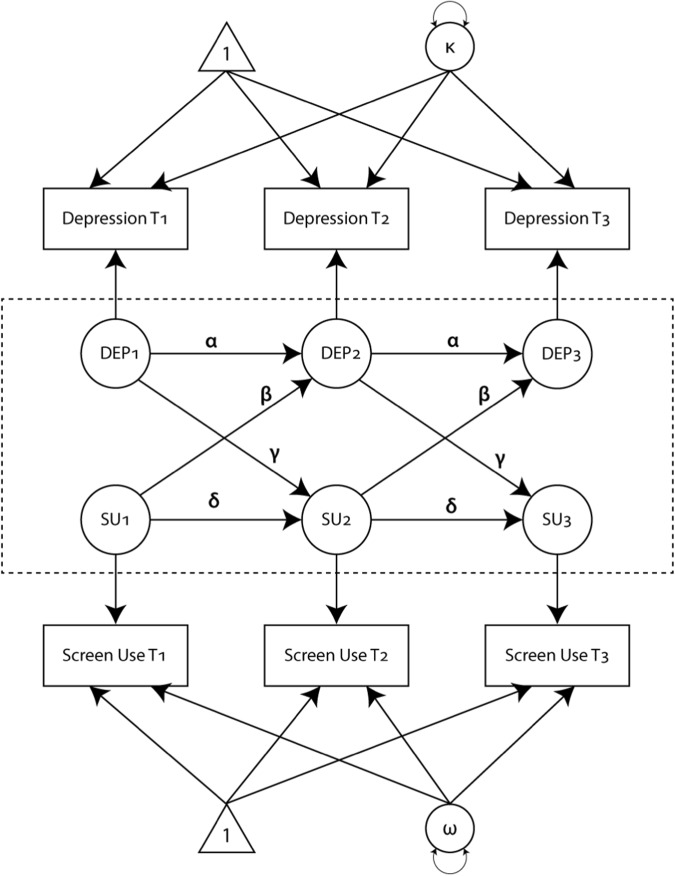
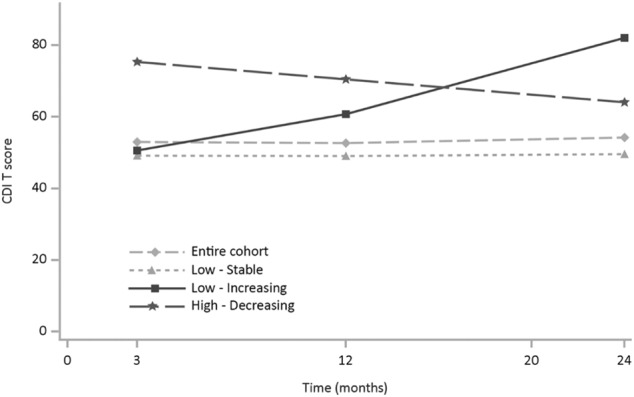
Adolescents are constantly connected with each other and the digital landscape through a myriad of screen media devices. Unprecedented access to the wider world and hence a variety of activities, particularly since the introduction of mobile technology, has given rise to questions regarding the impact of this changing media environment on the mental health of young people. Depressive symptoms are one of the most common disabling health issues in adolescence and although research has examined associations between screen use and symptoms of depression, longitudinal investigations are rare and fewer still consider trajectories of change in symptoms. Given the plethora of devices and normalisation of their use, understanding potential longitudinal associations with mental health is crucial. A sample of 1,749 (47% female) adolescents (10-17 years) participated in six waves of data collection over two years. Symptoms of depression, time spent on screens, and on separate screen activities (social networking, gaming, web browsing, TV/passive) were self-reported. Latent growth curve modelling revealed three trajectories of depressive symptoms (low-stable, high-decreasing, and low-increasing) and there were important differences across these groups on screen use. Some small, positive associations were evident between depressive symptoms and later screen use, and between screen use and later depressive symptoms. However, a Random Intercept Cross Lagged Panel Model revealed no consistent support for a longitudinal association. The study highlights the importance of considering differential trajectories of depressive symptoms and specific forms of screen activity to understand these relationships.
Overview
The claims and statistics of this paper haven’t been checked yet.
Free: it reads the open-access text and checks the first 5 claims that cite a source we can check. Create a free account to check every claim.
Integrity signals
Registry
Cites
Statistics
Figures
Verification
Claims the paper makes
The claims and statistics of this paper haven’t been checked yet.
Free: it reads the open-access text and checks the first 5 claims that cite a source we can check. Create a free account to check every claim.
Claims other papers make about this one
Each is checked against this paper’s own text: does it say what the citing paper says it does?
The source backs part of the claim, not all of it — or backs it for a different population, condition or comparison.
In the citing paper
“Several studies have found that children/adolescents with decreased sleep quality/quantity (Magee et al., 2014), lowered self-regulation/overall executive functioning (Cliff, Howard, Radesky, McNeill, & Vella, 2018), symptoms of depression, anxiety (Houghton et al., 2018), and loneliness (Kim et al., 2009), decreased self-esteem (Ehrenberg et al., 2008), interpersonal skills (Poulain et al., 2018)”
From Screen Media Overuse and Associated Physical, Cognitive, and Emotional/Behavioral Outcomes in Children and Adolescents: An Integrative Review (2022) · cites this paper as Houghton et al., 2018
Experimental — accuracy not yet measuredThe source backs part of the claim, not all of it — or backs it for a different population, condition or comparison.
In the citing paper
“Previous longitudinal studies have found bi-directional associations between screen-based sedentary behaviors, anxiety, and depression in adolescents (Gunnell et al., 2016; Houghton et al., 2018; Raudsepp, 2016).”
From Reciprocal associations between screen time and emotional disorder symptoms during adolescence (2019) · cites this paper as Houghton et al., 2018
Experimental — accuracy not yet measuredThe source backs part of the claim, not all of it — or backs it for a different population, condition or comparison.
In the citing paper
“A study that applied the RI-CLPM also found minimal effect sizes and no evidence for longitudinal associations between social media use and depressive symptoms [20].”
From Social Media and Mental Health Among Early Adolescents in Sweden: A Longitudinal Study With 2-Year Follow-Up (KUPOL Study). (2021) · cites this paper as [20]
Experimental — accuracy not yet measuredThe source backs part of the claim, not all of it — or backs it for a different population, condition or comparison.
In the citing paper
“Thus, there is increasing evidence that engaging in high SMU intensity by itself does not impose a risk to adolescents' mental health.”
From Social media use intensity, social media use problems, and mental health among adolescents: Investigating directionality and mediating processes (2021) · cites this paper as Houghton et al., 2018
Experimental — accuracy not yet measuredThe cited source says what the claim attributes to it.
In the citing paper
“A handful of studies that have approached questions around screen time using longitudinal methods observe either no or very small effects for the impact of screen time on experiences such as depressive symptoms [21,45]. This holds when exploring specific forms of screen activities such as video games [46], social media [5,6,47,48], and passive screen use [21].”
From The Conceptual and Methodological Mayhem of “Screen Time” (2020) · cites this paper as [21]
5 more claims about this paper
Create a free account to see every claim other papers make about this one.
Self-check
Percentages, sums and reported differences re-computed from the paper’s own numbers.
The self-check needs the paper’s full text.
Citations
Cites
Statistical Analysis With Missing Data
Lahiff, M., Little, R. J. A., & Rubin, D. B. (1989) · Journal of the American Statistical Association · doi:10.2307/2289883 · Cited by 17,265
Threshold effects in non-dynamic panels: Estimation, testing, and inference
Hansen, B. E. (1999) · Journal of Econometrics · doi:10.1016/s0304-4076(99)00025-1 · Cited by 5,260 · cited 2×
“Hansen (1999) proposes fitting this model by testing a large range of possible values for the threshold, and choosing the value that produces the best model fit.”
BackgroundMethodInternet paradox: A social technology that reduces social involvement and psychological well-being?
Kraut, R., Patterson, M., Lundmark, V., Kiesler, S., Mukophadhyay, T., & Scherlis, W. (1998) · American Psychologist · doi:10.1037/0003-066x.53.9.1017 · Cited by 4,793
Testing the number of components in a normal mixture
Lo, Y. (2001) · Biometrika · doi:10.1093/biomet/88.3.767 · Cited by 4,640
A critique of the cross-lagged panel model
Hamaker, E. L., Kuiper, R. M., & Grasman, R. P. P. P. (2015) · Psychological Methods · doi:10.1037/a0038889 · Cited by 4,005
Muthén, B., & Muthén, L. K. (2000) · Alcoholism: Clinical and Experimental Research · doi:10.1111/j.1530-0277.2000.tb02070.x · Cited by 3,149 · cited 1×
“Latent growth curve models allow for the dependence in measurements of the same person over time (Muthén and Muthén 2000).”
BackgroundTwenge, J. M., Joiner, T. E., Rogers, M. L., & Martin, G. N. (2018) · Clinical Psychological Science · doi:10.1177/2167702617723376 · Cited by 1,705 · cited 2×
“Since depression is a significant cause of morbidity in adolescents, and screen media use is highly pervasive, any longitudinal relationship would be significant in terms of widespread health risk (Jelenchick et al. 2013; Twenge et al. 2018).”
BackgroundResultWoods, H. C., & Scott, H. (2016) · Journal of Adolescence · doi:10.1016/j.adolescence.2016.05.008 · Cited by 1,302
Epidemiology of mental disorders in children and adolescents
Merikangas, K. R., Nakamura, E. F., & Kessler, R. C. (2009) · Dialogues in Clinical Neuroscience · doi:10.31887/dcns.2009.11.1/krmerikangas · Cited by 1,246
Is there an epidemic of child or adolescent depression?
Jane Costello, E., Erkanli, A., & Angold, A. (2006) · Journal of Child Psychology and Psychiatry · doi:10.1111/j.1469-7610.2006.01682.x · Cited by 983 · cited 4×
“12 34 56 78 90 () ;,: 12 34 56 78 90 (); ,: A meta-analysis of epidemiological studies (Costello et al. 2006) estimated the point prevalence rate of major depression among 13–18-years as 5.6%, while Bertha and Balázs (2013) reported 9–16% of 14–16 year olds experience sub-clinical levels of…”
BackgroundInfluential
Research works printed but not linked: 1
- Muthén LK Muthén BO Mplus User’s Guide 1998 Seventh Edition Los Angeles, CA Muthén & Muthén
Cited by
Items 101–159 of 159
Integrated TiO2 nanoparticle for electronic polymeric contact lenses
Shaker, L. M., Al‐Amiery, A. A., Takriff, M. S., & Isahak, W. N. R. W. (2023) · Journal of Optics · doi:10.1007/s12596-023-01195-w · Cited by 7
Mun, I. B. (2024) · Internet Research · doi:10.1108/intr-02-2023-0110 · Cited by 7
Vidal, C., Philippe, F. L., Geoffroy, M., & Paquin, V. (2024) · International Journal of Mental Health and Addiction · doi:10.1007/s11469-024-01313-0 · Cited by 13
“Other studies, however, have found minimal or no association at the within-person level, leading to uncertainty about the true magnitude of effects of digital media use on youth mental health (Houghton et al., 2018; Orben et al., 2019; Steinsbekk et al., 2023).”
The Effects of Social Media on Adolescent Mental Health
Walton, B., & Rizzolo, D. (2022) · Pediatrics and Neonatal Nursing - Open Journal · doi:10.17140/pnnoj-8-138 · Cited by 11
Chen, J., Wei, X., Xiong, Y., & Ren, P. (2025) · Addictive Behaviors · doi:10.1016/j.addbeh.2025.108321 · Cited by 6
Chowdhury, N., Rabel, E. J., Ferraz, D., & Carral, M. D. R. (2025) · Psychology and Health · doi:10.1080/08870446.2025.2474011 · Cited by 8
“…focus on the potentially negative effects of use per se , e.g. the ‘addictiveness’ of video streaming platforms like TikTok (hawi & Samaha, 2017; houghton et al., 2018) or sleep disturbances arising from screen time just before bed (hale & guan, 2015; Nagata et al., 2023), or explore how the…”
Ledel, Å., Låftman, S. B., & Landberg, J. (2025) · BMC Public Health · doi:10.1186/s12889-025-22927-6 · Cited by 10
“While PSMU may contribute to poor SRH, it is also plausible that some individuals engage in excessive social media use as a coping mechanism for existing physical or mental health challenges [37].”
Neves, A. B. C. S., da Rocha, A. G., Neves, I. C. S., & de Melo, A. M. D. (2020) · ID on line REVISTA DE PSICOLOGIA · doi:10.14295/idonline.v14i51.2622 · Cited by 11
Vijayakumar, N., Dashti, S. G., Canterford, L. D., Ellul, S., Parissi, A. J. A., Goddings, A., Viner, R., Moran, P., Borschmann, R., Mundy, L. K., et al. (2026) · The Medical Journal of Australia · doi:10.5694/mja2.70220 · Cited by 3
“Studies have also primarily focussed on the effects of social media in adolescents as a homogenous group [5, 7], but age and sex differences may contribute to improved understanding of its impact on mental health [17, 24, 25].”
Qi, Q., Hu, J., Chen, X., Guo, W., Yang, Q., Wang, Z., Liu, Z., Zhang, Y., & Li, Q. (2025) · Frontiers in Public Health · doi:10.3389/fpubh.2025.1606947 · Cited by 6
Chen, Y. (2025) · Applied Psychology Health and Well-Being · doi:10.1111/aphw.70088 · Cited by 4
Parker, M. A., Harton, M. R., Mattey-Mora, P. P., & Streck, J. M. (2025) · BMC Public Health · doi:10.1186/s12889-025-25956-3 · Cited by 4
“…the fact that clear differences in adolescent screen time behavior and anxiety/depression have been documented between the sexes, the interaction of sex with the association between screen time and anxiety/depression remains inconclusive, which aligns with the results found in our study [49, 50].”
Hou, C., Foscht, T., Duffek, B., Arigayota, A., & Eisingerich, A. B. (2025) · JMIR Formative Research · doi:10.2196/76770 · Cited by 4
“In addition, previous research has shown the effects of various online content on young people’s feelings of hopelessness [12,13,40].”
Chen, H.-J., Lee, T. S., & Wu, W. (2025) · Psychology Health & Medicine · doi:10.1080/13548506.2025.2490223 · Cited by 3
“Most studies exploring the relationship between depression and IA have focused on adolescents (e.g. Bai et al., 2020; Cheung et al., 2018; Houghton et al., 2018; Raudsepp & Kais, 2019; Zhao et al., 2023, 2024; Zhen et al., 2020) or adults (e.g. S. K. Chen & Lin, 2016; Jasso-Medrano & López-Rosales,…”
Video Gaming and Its Effects on Children and Adolescents: Research Priorities and Recommendations
King, D. L., Galanis, C. R., Delfabbro, P., Billieux, J., Király, O., Canale, N., Rehbein, F., Gainsbury, S., & Potenza, M. N. (2024) · Springer eBooks · doi:10.1007/978-3-031-69362-5_78 · Cited by 4
Gugushvili, N., Täht, K., Ruiter, R. A. C., & Verduyn, P. (2025) · Behaviour and Information Technology · doi:10.1080/0144929x.2025.2506661 · Cited by 3
“First evidence is available that the relationships between smartphone use, SNS use and mental health may be di ff erent at the within-person versus between-person level (e.g. Beyens et al. 2024; Bradley and Howard 2023; Houghton et al. 2018; Stavrova & Denissen 2021; Verduyn et al. 2021).”
Risk factors of adolescent psychological distress: A study based on latent class analysis
Yang, Z., Yang, Y., Gao, Y., Hu, Y., Lai, X., Zhao, L., Zhang, Z., Sui, W., Ma, S., & Zhang, S. (2025) · Journal of Affective Disorders · doi:10.1016/j.jad.2025.120460 · Cited by 4
Ranjit, K., Ntlantsana, V., Tomita, A. M., & Paruk, S. (2022) · The Journal of Nervous and Mental Disease · doi:10.1097/nmd.0000000000001509 · Cited by 7
Gezgin, U. B. (2018) · AI & Society · doi:10.1007/s00146-018-0868-y · Cited by 4
Michaelson, V. E., & Steeves, V. (2020) · Canadian Journal of Public Health · doi:10.17269/s41997-020-00347-w · Cited by 4
“…spent with electronic screens can displace time spent engaging in other activities (Neuman 1988), including sleep (Exelmans and Van den Bulck 2017; Przybylski 2019) and going outside (Subrahmanyam and Šmahel 2011; Gray et al. 2015), and result in a negative impact on health (Houghton et al. 2018).”
BackgroundPersonality and Individual Differences
Ellis, D. A. (2020) · Cambridge University Press eBooks · doi:10.1017/9781108671408.006 · Cited by 5
Ellis, D. A. (2020) · Cambridge University Press eBooks · doi:10.1017/9781108671408.003 · Cited by 2
Pöyskö, E., Hylkilä, K., Männikkö, N., Männistö, M., & Kääriäinen, M. (2024) · Finnish Journal of eHealth and eWelfare · doi:10.23996/fjhw.146718 · Cited by 1
Modica, C. A., & Bailey, K. (2025) · International Journal of Human-Computer Interaction · doi:10.1080/10447318.2025.2594151 · Cited by 1
“…findings, though the majority of these studies have been conducted in adolescents, only examined depression and anxiety, and examined general internet use, rather than smartphone use (George et al., 2018; Grøntved et al., 2015; Gunnell et al., 2016; Houghton et al., 2018; Tang et al., 2021).”
Guan, D., Wang, J., Yang, Q., & Qiao, Z. (2026) · Mental health and physical activity · doi:10.1016/j.mhpa.2026.100766 · Cited by 1
Abdalla, A. A., Fahmy, M., Anwar, K., Hendi, A. E., Cullen, K. R., & Ibrahim, O. (2026) · Annals of General Psychiatry · doi:10.1186/s12991-026-00646-5 · Cited by 1
“…associational model (IA → impulsivity → depression → NSSI) based on theoretical frameworks positioning IA as an environmental exposure that may activate latent vulnerabilities [46] and longitudinal evidence showing screen time is associated with subsequent increases in depression symptoms [64, 65].”
Shi, H., Zhang, T., Wang, Z., Yang, X., Shao, Z., & Ma, X. (2026) · Journal of Affective Disorders · doi:10.1016/j.jad.2026.122428 · Cited by 1
Pastorino, G. M. G., Aquino, A., Suriano, R., Buonaiuto, R., Diaspro, G., Olivieri, M., Mungo, N., & Operto, F. F. (2026) · Frontiers in Psychiatry · doi:10.3389/fpsyt.2026.1926710 · Cited by 2
Exploring Problematic Social Media Use among Adolescents: A Comprehensive Study
Naaz, F., & Parveen, A. (2025) · The Review of Contemporary Scientific and Academic Studies · doi:10.55454/rcsas.5.05.2025.002
Social Interaction and Interpersonal Relationships
Ellis, D. A. (2020) · Cambridge University Press eBooks · doi:10.1017/9781108671408.005 · Cited by 1
#ConnectedTeens: Social media use and adolescent wellbeing
Boer, M. (2022) · Utrecht University Repository (Utrecht University) · doi:10.33540/1272 · Cited by 2
Mishra, C. (2024) · SSRN Electronic Journal · doi:10.2139/ssrn.4757955 · Cited by 1
Ellis, D. A. (2020) · Cambridge University Press eBooks · doi:10.1017/9781108671408.008
Ellis, D. A. (2020) · Cambridge University Press eBooks · doi:10.1017/9781108671408.001
Ellis, D. A. (2020) · Cambridge University Press eBooks · doi:10.1017/9781108671408.004
Ellis, D. A. (2020) · Cambridge University Press eBooks · doi:10.1017/9781108671408.002
Ellis, D. A. (2020) · Cambridge University Press eBooks · doi:10.1017/9781108671408.009
Ellis, D. A. (2020) · Cambridge University Press eBooks · doi:10.1017/9781108671408.007
Ellis, D. A. (2020) · Cambridge University Press eBooks · doi:10.1017/9781108671408.010
Yu, J., Liu, W., She, X., Wang, H., Wang, M., Abbey, C., Singh, M. K., Rozelle, S., & Tong, L. (2023) · Research Square · doi:10.21203/rs.3.rs-3232916/v1 · Cited by 1
Πληκτρολογώ και Σχετίζομαι: Sexting και εκφοβισμός στον κυβερνοχώρο
Lampropoulou, A., & Γαζή, Α. (2023) · Αυτόματον Περιοδικό Ψηφιακών Μέσων και Πολιτισμού · doi:10.12681/automaton.35476
Moses, E. F., & Ravichandran, D. K. (2023) · MIGRATION LETTERS · doi:10.59670/ml.v20is13.6468
“Research has demonstrated that such interventions can be effective in raising awareness and encouraging positive changes in social media habits (Houghton et al., 2020).”
BackgroundRISCO DE SUICÍDIO EM JOVENS COM TRANSTORNO DE ANSIEDADE DEVIDO AO USO EXACERBADO DAS REDES SOCIAIS
Maia, G. C. R., Resende, C. F. C. D. M., Costa, A. D. D., de souza, S. B. C., & de Araújo, G. B. C. (2024) · doi:10.29327/1385685.2-2
Social Media and Clinical Practice: What Stays the Same, What Changes, and How to Plan Ahead?
Hilty, D. M., Myint, M. T., Strauss, K. C., Hoffman, P. E., & Stubbe, D. E. (2024) · Springer eBooks · doi:10.1007/978-3-031-59936-1_11 · Cited by 1
Chen, Y. (2025) · Basic and Applied Social Psychology · doi:10.1080/01973533.2025.2590144
“Additionally, the finding that academic performance negatively predicts media use across multiple time points suggests that promoting academic competence and time-management skills could indirectly curb excessive digital engagement (Houghton et al., 2018; Peiró-Velert et al., 2014).”
Liang, Y., Jin, Q., Miao, J., Ni, X., Qian, X., Xiong, Y., Liu, Z., & Xue, H. (2024) · Figshare · doi:10.6084/m9.figshare.26671107
Screen time, social support, and depression among international university students
Sadeghiyan, M., Hasbini, W., Viljoen, S. J., Turner, A., & James-Keating, C. (2025) · Revista Estudios Psicológicos · doi:10.35622/j.rep.2025.03.003 · Cited by 2
Addressing the Problems in Smartphone Addiction Research
James, R., & Hitcham, L. (2026) · Palgrave Studies in Cyberpsychology. · doi:10.1007/978-3-031-96188-5_6
Pastorino, G. M. G., Aquino, A., Buonaiuto, R., Diaspro, G., Olivieri, M., & Operto, F. F. (2026) · Research Square · doi:10.21203/rs.3.rs-9064743/v1
Ibáñez, D. B., Castaño, L. C., Garcés-Prettel, M., Arroyave, J., Merchán-Clavellino, A., Saldaña, S. M. V., & Santoya-Montes, Y. (2026) · Media International Australia · doi:10.1177/1329878x261434608
“Research into the impact of social media on the mental health of children and youth is a growing concern, given the omnipresence of these digital environments in their socialization processes (Boyd, 2015; Houghton et al., 2018).”
Haag, A., Dimitrijevic, O., Nayyar, T., Tutus, D., Schwab, J., Kestler, H., & Fegert, J. M. (2026) · Research Square · doi:10.21203/rs.3.rs-9018980/v1
Tuck, A. B., Thompson, R. J., Grasso, G., Tillman, R., Barch, D. M., Luby, J. L., & Hennefield, L. (2026) · The Journal of Early Adolescence · doi:10.1177/02724316261445569
Lissens, M., Vandenbosch, L., Beullens, K., Geusens, F., Eggermont, S., Fahr, A., Maes, C., Vanhoffelen, G., Vranken, I., & Schreurs, L. (2026) · Research Square · doi:10.21203/rs.3.rs-9428222/v1
Turkova, M. V., Zemlyanoy, D. A., Vasilyeva, I. V., & Potapova, E. A. (2026) · Sanitarnyj vrač (Sanitary Doctor) · doi:10.33920/med-08-2606-04
Mobile phone addiction and depression among adolescents: the moderation effect of family environment
Bai, Y., Xu, X. J., Jiang, W. W., Yang, Y., Li, Q., Li, X., Zhu, Q., Meng, Y., & Qiu, C. (2026) · Frontiers in Public Health · doi:10.3389/fpubh.2026.1863623
Du, L., Qiao, K., Liu, Q., Feng, L., Zheng, Y. A., Zhang, R.-L., Zhang, L., Li, W., & Gong, G. (2026) · Frontiers in Pediatrics · doi:10.3389/fped.2026.1854377
“However, prolonged home-based learning may increase risks of social isolation, reduced school connectedness, and changes in friendship quality, particularly when screen time is high, potentially contributing to anxiety and depressive symptoms (19, 20).”
Haag, A., Dimitrijevic, O., Nayyar, T., Tutus, D., Schwab, J., Kestler, H. A., & Fegert, J. M. (2026) · Research Square · doi:10.21203/rs.3.rs-10665803/v1
Tang, A., Leung, C., Prasad, R., Busso, C., & Warren, S. L. (2026) · Journal of Adolescent Health · doi:10.1016/j.jadohealth.2026.07.025 · Cited by 2
Metadata
- Authors
- Houghton, S., Lawrence, D., Hunter, S. C., Rosenberg, M., Zadow, C., Wood, L., & Shilton, T.
- Affiliations
- The University of Western Australia (AU)
- University of Strathclyde (GB)
- Corresponding author
- Houghton, Stephen
- Venue
- Journal of Youth and Adolescence
- Published
- 2018-07-25
- Volume
- 47
- Issue
- 11
- Pages
- 2453-2467
- ISSN
- 0047-2891 (ISSN-L)
- 1573-6601
- PMC
- PMC6208639
- OpenAlex
- W2884597901
- Cited by
- 162
- References
- 61
- Citations by year
- 2026: 16 · 2025: 21 · 2024: 19 · 2023: 19 · 2022: 17 · 2021: 18 · 2020: 42 · 2019: 8 · 2018: 2
- FWCI
- 39.81
- Type
- journal article
- Language
- en
- Open access
- hybrid
- doi.org
- Licence
- cc-by
- creativecommons.org/licenses/by/4.0 (tdm)
- Locations
- Journal of Youth and Adolescence (publishedVersion, cc-by)
- Europe PMC (PubMed Central) (publishedVersion, cc-by)
- PubMed Central (publishedVersion, cc-by)
- PubMed (publishedVersion)
- ResearchOnline (acceptedVersion, cc-by)
- Strathprints: The University of Strathclyde institutional repository (University of Strathclyde) (acceptedVersion, cc-by)
- ResearchOnline (Glasgow Caledonian University) (acceptedVersion, cc-by)
- UWA Profiles and Research Repository (UWA) (submittedVersion, cc-by)
- eSpace (Curtin University) (submittedVersion)
- Funders
- The Western Australian Health Promotion Foundation (22951)
- Topics
- Social Sciences › Sociology and Political Science › Impact of Technology on Adolescents
- Social Sciences › Education › Child Development and Digital Technology
- Social Sciences › Psychology › Clinical Psychology › Child and Adolescent Psychosocial and Emotional Development
- Keywords
- depressive symptoms, screen media use, adolescents, longitudinal trajectories, social networking, video gaming, web browsing, television viewing, mobile technology, adolescent mental health, bidirectional relationship
- MeSH terms
- Screen Time, Adolescent, Adolescent Behavior, Child, Communications Media, Depression, Female, Humans, Longitudinal Studies, Male, Mental Health
About these checks
Registry, retraction, Cites and statistics results are computed, not judged, with one exception: a printed reference that no index lists is read once by a model before it counts as a citation error. Claims are extracted by a model and kept only when their quote appears verbatim in the text; each cited source is then checked, with a model’s help, for whether it says what the claim relies on. Those verdicts can be wrong — read the claim’s quote and the cited source before relying on one.
Statistics and arithmetic are recomputed, not judged.
Confidence bands are shown only for fields calibrated on our annotated test set. None is calibrated yet, so no band is shown.
What counts as a claim ›How we measure confidence ›How we check this ›
Are you an author, or do you see a problem with this page? Request a review
Data sources
Bibliographic data: Semantic Scholar, OpenAlex, Crossref.
Contains information from the Semantic Scholar Academic Graph Datasets, made available under the ODC Attribution License (ODC-BY 1.0).
Semantic Scholar’s data is described in: Kinney, R., et al. (2023). The Semantic Scholar Open Data Platform. arXiv:2301.10140.
