

Reciprocal Relationships between Trajectories of Depressive Symptoms and Screen Media Use during Adolescence
Open accessThe DOI matches its Crossref record; 60 of the 61 references it cites were found in a registry or an index.
Abstract
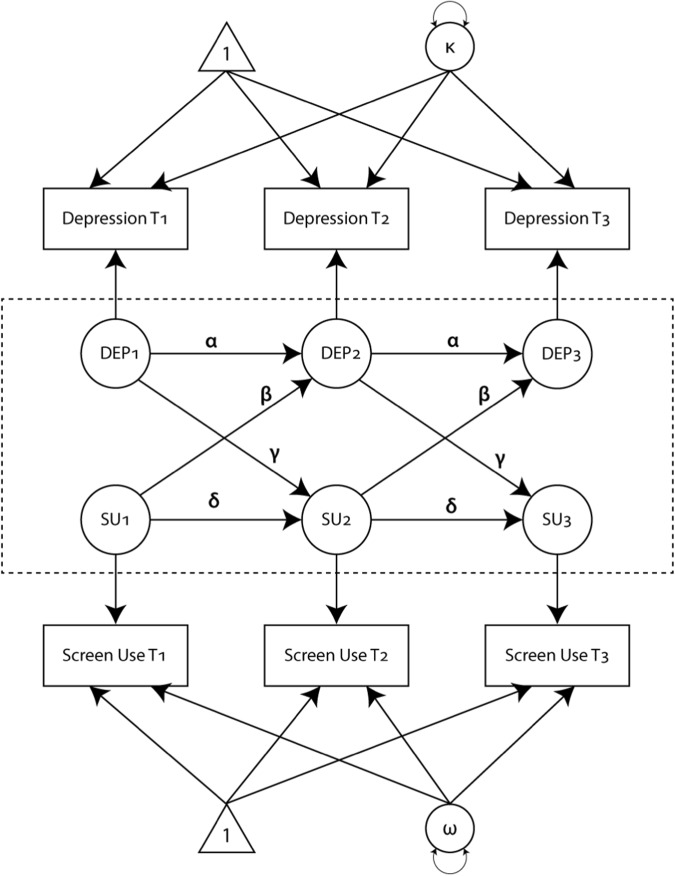
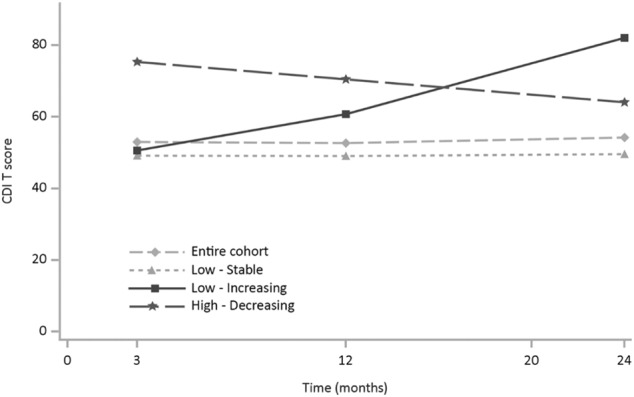
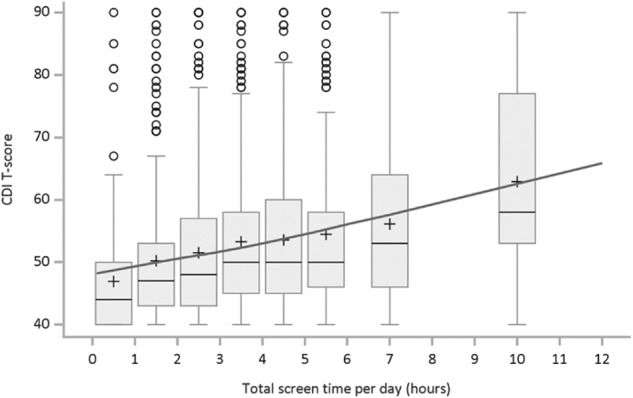
Adolescents are constantly connected with each other and the digital landscape through a myriad of screen media devices. Unprecedented access to the wider world and hence a variety of activities, particularly since the introduction of mobile technology, has given rise to questions regarding the impact of this changing media environment on the mental health of young people. Depressive symptoms are one of the most common disabling health issues in adolescence and although research has examined associations between screen use and symptoms of depression, longitudinal investigations are rare and fewer still consider trajectories of change in symptoms. Given the plethora of devices and normalisation of their use, understanding potential longitudinal associations with mental health is crucial. A sample of 1,749 (47% female) adolescents (10-17 years) participated in six waves of data collection over two years. Symptoms of depression, time spent on screens, and on separate screen activities (social networking, gaming, web browsing, TV/passive) were self-reported. Latent growth curve modelling revealed three trajectories of depressive symptoms (low-stable, high-decreasing, and low-increasing) and there were important differences across these groups on screen use. Some small, positive associations were evident between depressive symptoms and later screen use, and between screen use and later depressive symptoms. However, a Random Intercept Cross Lagged Panel Model revealed no consistent support for a longitudinal association. The study highlights the importance of considering differential trajectories of depressive symptoms and specific forms of screen activity to understand these relationships.
Overview
The claims and statistics of this paper haven’t been checked yet.
Free: it reads the open-access text and checks the first 5 claims that cite a source we can check. Create a free account to check every claim.
Integrity signals
Registry
Cites
Statistics
Figures
Verification
Claims the paper makes
The claims and statistics of this paper haven’t been checked yet.
Free: it reads the open-access text and checks the first 5 claims that cite a source we can check. Create a free account to check every claim.
Claims other papers make about this one
Each is checked against this paper’s own text: does it say what the citing paper says it does?
The source backs part of the claim, not all of it — or backs it for a different population, condition or comparison.
In the citing paper
“Several studies have found that children/adolescents with decreased sleep quality/quantity (Magee et al., 2014), lowered self-regulation/overall executive functioning (Cliff, Howard, Radesky, McNeill, & Vella, 2018), symptoms of depression, anxiety (Houghton et al., 2018), and loneliness (Kim et al., 2009), decreased self-esteem (Ehrenberg et al., 2008), interpersonal skills (Poulain et al., 2018)”
From Screen Media Overuse and Associated Physical, Cognitive, and Emotional/Behavioral Outcomes in Children and Adolescents: An Integrative Review (2022) · cites this paper as Houghton et al., 2018
Experimental — accuracy not yet measuredThe source backs part of the claim, not all of it — or backs it for a different population, condition or comparison.
In the citing paper
“Previous longitudinal studies have found bi-directional associations between screen-based sedentary behaviors, anxiety, and depression in adolescents (Gunnell et al., 2016; Houghton et al., 2018; Raudsepp, 2016).”
From Reciprocal associations between screen time and emotional disorder symptoms during adolescence (2019) · cites this paper as Houghton et al., 2018
Experimental — accuracy not yet measuredThe source backs part of the claim, not all of it — or backs it for a different population, condition or comparison.
In the citing paper
“A study that applied the RI-CLPM also found minimal effect sizes and no evidence for longitudinal associations between social media use and depressive symptoms [20].”
From Social Media and Mental Health Among Early Adolescents in Sweden: A Longitudinal Study With 2-Year Follow-Up (KUPOL Study). (2021) · cites this paper as [20]
Experimental — accuracy not yet measuredThe source backs part of the claim, not all of it — or backs it for a different population, condition or comparison.
In the citing paper
“Thus, there is increasing evidence that engaging in high SMU intensity by itself does not impose a risk to adolescents' mental health.”
From Social media use intensity, social media use problems, and mental health among adolescents: Investigating directionality and mediating processes (2021) · cites this paper as Houghton et al., 2018
Experimental — accuracy not yet measuredThe cited source says what the claim attributes to it.
In the citing paper
“A handful of studies that have approached questions around screen time using longitudinal methods observe either no or very small effects for the impact of screen time on experiences such as depressive symptoms [21,45]. This holds when exploring specific forms of screen activities such as video games [46], social media [5,6,47,48], and passive screen use [21].”
From The Conceptual and Methodological Mayhem of “Screen Time” (2020) · cites this paper as [21]
5 more claims about this paper
Create a free account to see every claim other papers make about this one.
Self-check
Percentages, sums and reported differences re-computed from the paper’s own numbers.
The self-check needs the paper’s full text.
Citations
Cites
Statistical Analysis With Missing Data
Lahiff, M., Little, R. J. A., & Rubin, D. B. (1989) · Journal of the American Statistical Association · doi:10.2307/2289883 · Cited by 17,265
Threshold effects in non-dynamic panels: Estimation, testing, and inference
Hansen, B. E. (1999) · Journal of Econometrics · doi:10.1016/s0304-4076(99)00025-1 · Cited by 5,260 · cited 2×
“Hansen (1999) proposes fitting this model by testing a large range of possible values for the threshold, and choosing the value that produces the best model fit.”
BackgroundMethodInternet paradox: A social technology that reduces social involvement and psychological well-being?
Kraut, R., Patterson, M., Lundmark, V., Kiesler, S., Mukophadhyay, T., & Scherlis, W. (1998) · American Psychologist · doi:10.1037/0003-066x.53.9.1017 · Cited by 4,793
Testing the number of components in a normal mixture
Lo, Y. (2001) · Biometrika · doi:10.1093/biomet/88.3.767 · Cited by 4,640
A critique of the cross-lagged panel model
Hamaker, E. L., Kuiper, R. M., & Grasman, R. P. P. P. (2015) · Psychological Methods · doi:10.1037/a0038889 · Cited by 4,005
Muthén, B., & Muthén, L. K. (2000) · Alcoholism: Clinical and Experimental Research · doi:10.1111/j.1530-0277.2000.tb02070.x · Cited by 3,149 · cited 1×
“Latent growth curve models allow for the dependence in measurements of the same person over time (Muthén and Muthén 2000).”
BackgroundTwenge, J. M., Joiner, T. E., Rogers, M. L., & Martin, G. N. (2018) · Clinical Psychological Science · doi:10.1177/2167702617723376 · Cited by 1,705 · cited 2×
“Since depression is a significant cause of morbidity in adolescents, and screen media use is highly pervasive, any longitudinal relationship would be significant in terms of widespread health risk (Jelenchick et al. 2013; Twenge et al. 2018).”
BackgroundResultWoods, H. C., & Scott, H. (2016) · Journal of Adolescence · doi:10.1016/j.adolescence.2016.05.008 · Cited by 1,302
Epidemiology of mental disorders in children and adolescents
Merikangas, K. R., Nakamura, E. F., & Kessler, R. C. (2009) · Dialogues in Clinical Neuroscience · doi:10.31887/dcns.2009.11.1/krmerikangas · Cited by 1,246
Is there an epidemic of child or adolescent depression?
Jane Costello, E., Erkanli, A., & Angold, A. (2006) · Journal of Child Psychology and Psychiatry · doi:10.1111/j.1469-7610.2006.01682.x · Cited by 983 · cited 4×
“12 34 56 78 90 () ;,: 12 34 56 78 90 (); ,: A meta-analysis of epidemiological studies (Costello et al. 2006) estimated the point prevalence rate of major depression among 13–18-years as 5.6%, while Bertha and Balázs (2013) reported 9–16% of 14–16 year olds experience sub-clinical levels of…”
BackgroundInfluentialPrzybylski, A. K., & Weinstein, N. (2017) · Psychological Science · doi:10.1177/0956797616678438 · Cited by 890 · cited 7×
“Non-linear effects would be consistent with the digital Goldilocks Hypothesis (Przybylski and Weinstein 2017) which posits that moderate screen use can be positive and adaptive in societies where screen use is common and normative.”
BackgroundResultInfluentialSex Differences in Adolescent Depression: Stress Exposure and Reactivity Models
Hankin, B. L., Mermelstein, R., & Roesch, L. (2007) · Child Development · doi:10.1111/j.1467-8624.2007.00997.x · Cited by 810
Loneliness and Social Internet Use: Pathways to Reconnection in a Digital World?
Nowland, R., Necka, E. A., & Cacioppo, J. T. (2018) · Perspectives on Psychological Science · doi:10.1177/1745691617713052 · Cited by 783 · cited 1×
“In contrast, social media use is more likely to bring benefits at moderate levels of use because it offers opportunities to develop new friendships and to maintain existing ones; however, when online friendships displace those that also exist offline, social media use may become problematic (Nowland et al. 2018).”
BackgroundWerner-Seidler, A., Perry, Y., Calear, A. L., Newby, J. M., & Christensen, H. (2017) · Clinical Psychology Review · doi:10.1016/j.cpr.2016.10.005 · Cited by 773 · cited 1×
“These data are of major concern given that earlier onset of depression in youth is associated with drug and alcohol abuse, risky sexual behaviour and a poorer clinical course over the lifespan (see Werner-Seidler et al. 2017).”
BackgroundMedia Use in School-Aged Children and Adolescents
COUNCIL ON COMMUNICATIONS AND MEDIA, Hill, D., Ameenuddin, N., Chassiakos, Y. (. R., Cross, C., Radesky, J., Hutchinson, J., Levine, A., Boyd, R., Mendelson, R., et al. (2016) · Pediatrics · doi:10.1542/peds.2016-2592 · Cited by 622
Balázs, J., Miklósi, M., Keresztény, Á., Hoven, C. W., Carli, V., Wasserman, C., Apter, A., Bobes, J., Brunner, R., Cosman, D., et al. (2013) · Journal of Child Psychology and Psychiatry · doi:10.1111/jcpp.12016 · Cited by 555 · cited 4×
“Depression is one of the most prevalent mental health problems that adolescents experience (Merikangas et al. 2009; see Patel 2017), and even sub-clinical levels increase the risk of later psychopathologies (Balázs et al. 2013; Bertha and Balázs 2013).”
BackgroundInfluential“Facebook Depression?” Social Networking Site Use and Depression in Older Adolescents
Jelenchick, L. A., Eickhoff, J. C., & Moreno, M. A. (2013) · Journal of Adolescent Health · doi:10.1016/j.jadohealth.2012.05.008 · Cited by 445
Not so doomed: computer game play and positive adolescent development
Durkin, K., & Barber, B. (2002) · Journal of Applied Developmental Psychology · doi:10.1016/s0193-3973(02)00124-7 · Cited by 443
Screen time is associated with depression and anxiety in Canadian youth
Maras, D., Flament, M. F., Murray, M., Buchholz, A., Henderson, K. A., Obeid, N., & Goldfield, G. S. (2015) · Preventive Medicine · doi:10.1016/j.ypmed.2015.01.029 · Cited by 406
Subthreshold depression in adolescence: a systematic review
Bertha, E. A., & Balázs, J. (2013) · European Child & Adolescent Psychiatry · doi:10.1007/s00787-013-0411-0 · Cited by 398
Selfhout, M. H. W., Branje, S. J. T., Delsing, M., ter Bogt, T. F. M., & Meeus, W. H. J. (2009) · Journal of Adolescence · doi:10.1016/j.adolescence.2008.10.011 · Cited by 375
Liu, M., Wu, L., & Yao, S. (2016) · British Journal of Sports Medicine · doi:10.1136/bjsports-2015-095084 · Cited by 364
Suchert, V., Hanewinkel, R., & Isensee, B. (2015) · Preventive Medicine · doi:10.1016/j.ypmed.2015.03.026 · Cited by 329
Generation M[superscript 2]: Media in the Lives of 8- to 18-Year-Olds.
Rideout, V. J., Foehr, U. G., & Roberts, D. F. (2010) · Cited by 321
Studies in Classification Data Analysis and knowledge Organization
Vichi, M. (2008) · IRIS Research product catalog (Sapienza University of Rome) · Cited by 301
Touitou, Y., Touitou, D., & Reinberg, A. (2016) · Journal of Physiology-Paris · doi:10.1016/j.jphysparis.2017.05.001 · Cited by 290
Children's Depression Inventory (CDI)
Lani, J. A. (2010) · Cited by 273
Understanding geocaching practices and motivations
O'Hara, K. (2008) · Proceedings of the SIGCHI Conference on Human Factors in Computing Systems · doi:10.1145/1357054.1357239 · Cited by 205 · cited 1×
“connected to friends and be creative (see Przybylski and Weinstein 2017), while others can motivate young people to engage in physical activity (O’Hara 2008).”
BackgroundGunnell, K. E., Flament, M. F., Buchholz, A., Henderson, K. A., Obeid, N., Schubert, N., & Goldfield, G. S. (2016) · Preventive Medicine · doi:10.1016/j.ypmed.2016.04.002 · Cited by 196
Hodges, K. (1990) · Psychological Assessment · doi:10.1037//1040-3590.2.4.376 · Cited by 191 · cited 1×
“The CDI 2 has demonstrated good reliability, and discriminant and convergent validity (Hodges 1990).”
BackgroundStoolmiller, M., Kim, H. K., & Capaldi, D. M. (2005) · Journal of Abnormal Psychology · doi:10.1037/0021-843x.114.3.331 · Cited by 183
George, M. J., Russell, M. A., Piontak, J. R., & Odgers, C. L. (2018) · Child Development · doi:10.1111/cdev.12819 · Cited by 174
Do, Y. K., Shin, E., Bautista, M. A., & Foo, K. (2013) · Sleep Medicine · doi:10.1016/j.sleep.2012.09.004 · Cited by 167
Wickrama, K. A. S., Conger, R. D., Lorenz, F. O., & Jung, T. (2008) · Journal of Health and Social Behavior · doi:10.1177/002214650804900407 · Cited by 158
Virtually impossible: limiting Australian children and adolescents daily screen based media use
Houghton, S., Hunter, S. C., Rosenberg, M., Wood, L., Zadow, C., Martin, K., & Shilton, T. (2015) · BMC Public Health · doi:10.1186/1471-2458-15-5 · Cited by 154
Self-citationHeterogeneous trajectories of depressive symptoms: Adolescent predictors and adult outcomes
Yaroslavsky, I., Pettit, J. W., Lewinsohn, P. M., Seeley, J. R., & Roberts, R. E. (2013) · Journal of Affective Disorders · doi:10.1016/j.jad.2012.06.028 · Cited by 131
Ellis, R., Seal, M. L., Simmons, J. G., Whittle, S., Schwartz, O., Byrne, M. L., & Allen, N. B. (2016) · Child Psychiatry & Human Development · doi:10.1007/s10578-016-0682-z · Cited by 123
Rice, F., Harold, G. T., & Thapar, A. (2003) · Journal of Child Psychology and Psychiatry · doi:10.1111/1469-7610.00182 · Cited by 116
Intergenerational transmission of depression: A launch and grow model of change across adolescence
Garber, J., & Cole, D. A. (2010) · Development and Psychopathology · doi:10.1017/s0954579410000489 · Cited by 108
Similarity in depressive symptoms in adolescents' friendship dyads: Selection or socialization?
Giletta, M., Scholte, R. H. J., Burk, W. J., Engels, R. C. M. E., Larsen, J. K., Prinstein, M. J., & Ciairano, S. (2011) · Developmental Psychology · doi:10.1037/a0023872 · Cited by 102
Epidemiology of Mood and Anxiety Disorders in Children and Adolescents
Merikangas, K. R., & Avenevoli, S. (2002) · Textbook in Psychiatric Epidemiology · doi:10.1002/0471234311.ch24 · Cited by 93 · cited 1×
“increases risk for comorbid health problems (see Vannucci and Ohannessian 2017) and is a central risk factor for suicide (Merikangas and Avenevoli 2002), which is the second leading cause of death in youth.”
BackgroundReinke, W. M., Eddy, J. M., Dishion, T. J., & Reid, J. B. (2012) · Journal of Abnormal Child Psychology · doi:10.1007/s10802-012-9630-y · Cited by 90
Diamantopoulou, S., Verhulst, F. C., & van der Ende, J. (2011) · Journal of Abnormal Psychology · doi:10.1037/a0023669 · Cited by 89 · cited 4×
“Ellis et al. (2017) reviewed 18 studies and found that multiple trajectories of depressive symptoms, primarily three (e.g., Chaiton et al. 2013; Diamantopoulou et al. 2011; Mezulis et al. 2014; Yaroslavsky et al. 2013) or four (e.g., Ellis et al. 2017; Reinke et al. 2012; Stoolmiller et al. 2005;…”
BackgroundResultInfluentialTalking sensibly about depression
Patel, V. (2017) · PLOS Medicine · doi:10.1371/journal.pmed.1002257 · Cited by 80 · cited 2×
“Depression is one of the most prevalent mental health problems that adolescents experience (Merikangas et al. 2009; see Patel 2017), and even sub-clinical levels increase the risk of later psychopathologies (Balázs et al. 2013; Bertha and Balázs 2013).”
BackgroundHoughton, S. J., Hunter, S. C., & Crow, J. (2012) · Journal of Psychopathology and Behavioral Assessment · doi:10.1007/s10862-012-9324-3 · Cited by 78
Self-citationAffective, Biological, and Cognitive Predictors of Depressive Symptom Trajectories in Adolescence
Mezulis, A., Salk, R. H., Hyde, J. S., Priess-Groben, H. A., & Simonson, J. L. (2014) · Journal of Abnormal Child Psychology · doi:10.1007/s10802-013-9812-2 · Cited by 76
Chaiton, M., Contreras, G. A., Brunet, J., Sabiston, C. M., O’Loughlin, E. K., Low, N. C. P., Karp, I., Barnett, T. A., & O’Loughlin, J. L. (2013) · Europe PMC (PubMed Central) · Cited by 60
A Six-Year Longitudinal Study of Texting Trajectories During Adolescence
Coyne, S. M., Padilla-Walker, L. M., & Holmgren, H. G. (2018) · Child Development · doi:10.1111/cdev.12823 · Cited by 58
Screen time is associated with depressive symptomatology among obese adolescents: a HEARTY study
Goldfield, G. S., Murray, M., Maras, D., Wilson, A. L., Phillips, P., Kenny, G. P., Hadjiyannakis, S., Alberga, A., Cameron, J. D., Tulluch, H., et al. (2016) · European Journal of Pediatrics · doi:10.1007/s00431-016-2720-z · Cited by 55
Kim, J. Y. (2012) · Journal of Preventive Medicine & Public Health · doi:10.3961/jpmph.2012.45.1.37 · Cited by 43 · cited 1×
“In addition, three studies (Do et al. 2013; Durkin and Barber 2002; Kim 2012) have reported a curvilinear relationship between specific screen activities (i.e., internet use or video game playing) and depressive symptoms where moderate screen use was associated with the lowest rates of depressive…”
BackgroundHoare, E., Millar, L., Fuller-Tyszkiewicz, M., Skouteris, H., Nichols, M., Malakellis, M., Swinburn, B., & Allender, S. (2016) · BMJ Open · doi:10.1136/bmjopen-2015-010072 · Cited by 39
Gomez‐Baya, D., Mendoza, R., Paino, S., & Gillham, J. E. (2017) · Journal of Adolescence · doi:10.1016/j.adolescence.2017.01.005 · Cited by 36
Self-Competence and Depressive Symptom Trajectories during Adolescence
Vannucci, A., & Ohannessian, C. M. (2017) · Research on Child and Adolescent Psychopathology · doi:10.1007/s10802-017-0340-3 · Cited by 35
Sonuga-Barke, E. J. S. (2010) · Journal of Child Psychology and Psychiatry · doi:10.1111/j.1469-7610.2009.02213.x · Cited by 34 · cited 1×
“This variation may be attributable to the complex interactions between biological, psycho-social, and environmental causes that lead to depressive symptomatology (see e.g., Rice et al. 2003; Sonuga-Barke 2010).”
BackgroundSampasa‐Kanyinga, H., & Chaput, J. (2015) · Journal of Physical Activity and Health · doi:10.1123/jpah.2015-0343 · Cited by 23
On Clustering by Mixture Models
McLachlan, G. J., Ng, S., & Peel, D. A. (2003) · Studies in classification, data analysis, and knowledge organization · doi:10.1007/978-3-642-55721-7_16 · Cited by 18 · cited 2×
“2001) and the bootstrapped parametric likelihood ratio test (McLachlan et al. 2003).”
MethodDevelopment of the Adolescent Preoccupation with Screens Scale
Hunter, S. C., Houghton, S. J., Zadow, C., Rosenberg, M., Wood, L. J., Shilton, T., & Lawrence, D. (2017) · BMC Public Health · doi:10.1186/s12889-017-4657-1 · Cited by 17
Self-citationNonignorable Missing‐Data Models
Little, R. J. A., & Rubin, D. B. (2002) · Wiley series in probability and statistics · doi:10.1002/9781119013563.ch15 · Cited by 16
Parent and Teacher Rating Scales
Frick, P. J., Barry, C. T., & Kamphaus, R. W. (2009) · Springer eBooks · doi:10.1007/978-1-4419-0641-0_7 · Cited by 14
Children’s Depression Inventory (CDI)
(2011) · Encyclopedia of Child Behavior and Development · doi:10.1007/978-0-387-79061-9_4285 · Cited by 5 · cited 2×
“Cronbach’s alpha has been reported as follows: for the overall total sample .82; the values among individual age and sex groupings ranging from .77 to .85; and test-retest reliability ranging from .76 to .92, indicating excellent temporal stability (see Kovacs 2004).”
Background
Research works printed but not linked: 1
- Muthén LK Muthén BO Mplus User’s Guide 1998 Seventh Edition Los Angeles, CA Muthén & Muthén
Cited by
Does time spent using social media impact mental health?: An eight year longitudinal study
Coyne, S. M., Rogers, A. A., Zurcher, J. D., Stockdale, L., & Booth, M. (2020) · Computers in Human Behavior · doi:10.1016/j.chb.2019.106160 · Cited by 701
“Additionally, a number of studies have found bi-directional longitudinal relationships between social media and mental health (Frison & Eggermont, 2017; Houghton et al., 2018; Nesi, Miller, & Prinstein, 2017).”
The impact of digital technology use on adolescent well-being
Dienlin, T., & Johannes, N. (2020) · Dialogues in Clinical Neuroscience · doi:10.31887/dcns.2020.22.2/tdienlin · Cited by 393
Boer, M., Stevens, G. W. J. M., Finkenauer, C., de Looze, M. E., & van den Eijnden, R. J. J. M. (2021) · Computers in Human Behavior · doi:10.1016/j.chb.2020.106645 · Cited by 335
Viner, R. M., Gireesh, A., Stiglic, N., Hudson, L. D., Goddings, A.-L., Ward, J. L., & Nicholls, D. E. (2019) · The Lancet Child & Adolescent Health · doi:10.1016/s2352-4642(19)30186-5 · Cited by 295
The Conceptual and Methodological Mayhem of “Screen Time”
K. Kaye, L., Orben, A., A. Ellis, D., C. Hunter, S., & Houghton, S. (2020) · International Journal of Environmental Research and Public Health · doi:10.3390/ijerph17103661 · Cited by 304
“This holds when exploring specific forms of screen activities such as video games [46], social media [5,6,47,48], and passive screen use [21].”
BackgroundSelf-citation
Metadata
- Authors
- Houghton, S., Lawrence, D., Hunter, S. C., Rosenberg, M., Zadow, C., Wood, L., & Shilton, T.
- Affiliations
- The University of Western Australia (AU)
- University of Strathclyde (GB)
- Corresponding author
- Houghton, Stephen
- Venue
- Journal of Youth and Adolescence
- Published
- 2018-07-25
- Volume
- 47
- Issue
- 11
- Pages
- 2453-2467
- ISSN
- 0047-2891 (ISSN-L)
- 1573-6601
- PMC
- PMC6208639
- OpenAlex
- W2884597901
- Cited by
- 162
- References
- 61
- Citations by year
- 2026: 16 · 2025: 21 · 2024: 19 · 2023: 19 · 2022: 17 · 2021: 18 · 2020: 42 · 2019: 8 · 2018: 2
- FWCI
- 39.81
- Type
- journal article
- Language
- en
- Open access
- hybrid
- doi.org
- Licence
- cc-by
- creativecommons.org/licenses/by/4.0 (tdm)
- Locations
- Journal of Youth and Adolescence (publishedVersion, cc-by)
- Europe PMC (PubMed Central) (publishedVersion, cc-by)
- PubMed Central (publishedVersion, cc-by)
- PubMed (publishedVersion)
- ResearchOnline (acceptedVersion, cc-by)
- Strathprints: The University of Strathclyde institutional repository (University of Strathclyde) (acceptedVersion, cc-by)
- ResearchOnline (Glasgow Caledonian University) (acceptedVersion, cc-by)
- UWA Profiles and Research Repository (UWA) (submittedVersion, cc-by)
- eSpace (Curtin University) (submittedVersion)
- Funders
- The Western Australian Health Promotion Foundation (22951)
- Topics
- Social Sciences › Sociology and Political Science › Impact of Technology on Adolescents
- Social Sciences › Education › Child Development and Digital Technology
- Social Sciences › Psychology › Clinical Psychology › Child and Adolescent Psychosocial and Emotional Development
- Keywords
- depressive symptoms, screen media use, adolescents, longitudinal trajectories, social networking, video gaming, web browsing, television viewing, mobile technology, adolescent mental health, bidirectional relationship
- MeSH terms
- Screen Time, Adolescent, Adolescent Behavior, Child, Communications Media, Depression, Female, Humans, Longitudinal Studies, Male, Mental Health
About these checks
Registry, retraction, Cites and statistics results are computed, not judged, with one exception: a printed reference that no index lists is read once by a model before it counts as a citation error. Claims are extracted by a model and kept only when their quote appears verbatim in the text; each cited source is then checked, with a model’s help, for whether it says what the claim relies on. Those verdicts can be wrong — read the claim’s quote and the cited source before relying on one.
Statistics and arithmetic are recomputed, not judged.
Confidence bands are shown only for fields calibrated on our annotated test set. None is calibrated yet, so no band is shown.
What counts as a claim ›How we measure confidence ›How we check this ›
Are you an author, or do you see a problem with this page? Request a review
Data sources
Bibliographic data: Semantic Scholar, OpenAlex, Crossref.
Contains information from the Semantic Scholar Academic Graph Datasets, made available under the ODC Attribution License (ODC-BY 1.0).
Semantic Scholar’s data is described in: Kinney, R., et al. (2023). The Semantic Scholar Open Data Platform. arXiv:2301.10140.
