

Efficacy of a unique omega-3 formulation on the correction of nutritional deficiency and its effects on cardiovascular disease risk factors in a randomized controlled VASCAZEN® REVEAL Trial
Open accessThe DOI matches its Crossref record; 55 of the 55 references it cites were found in a registry or an index.
Abstract
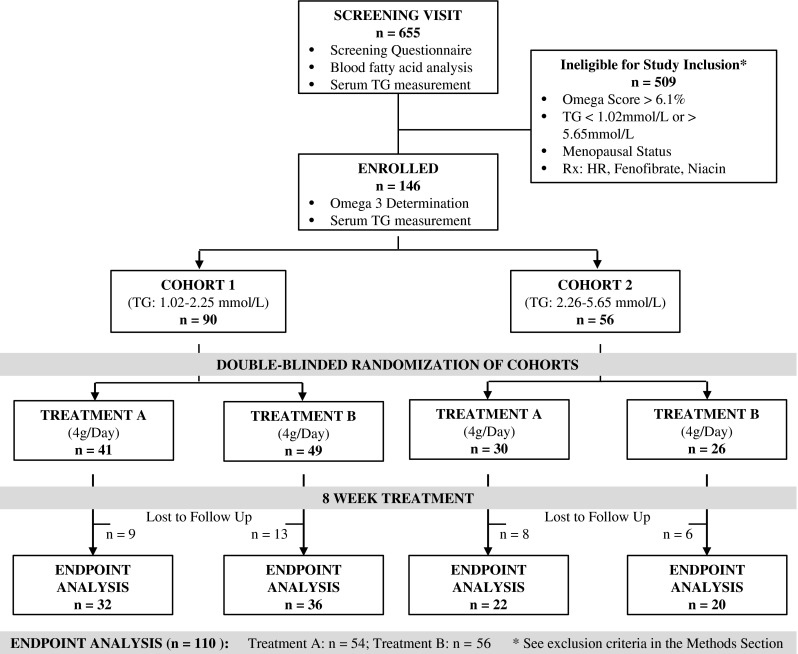
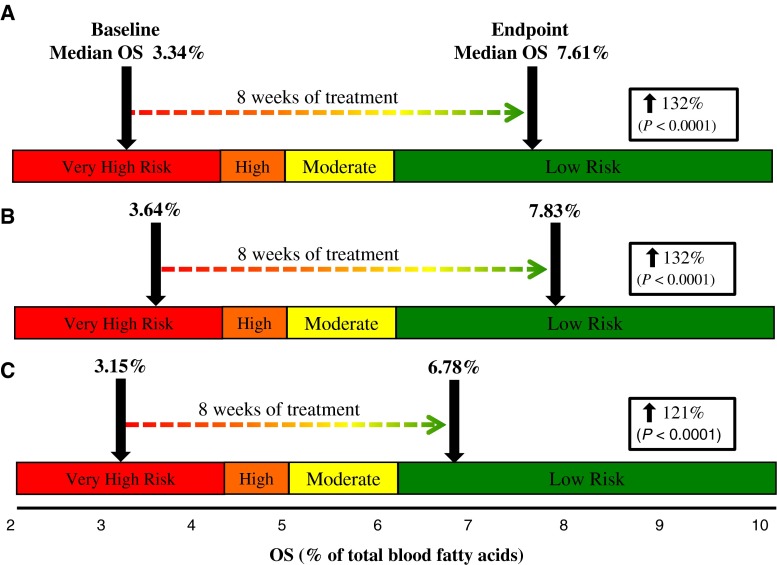
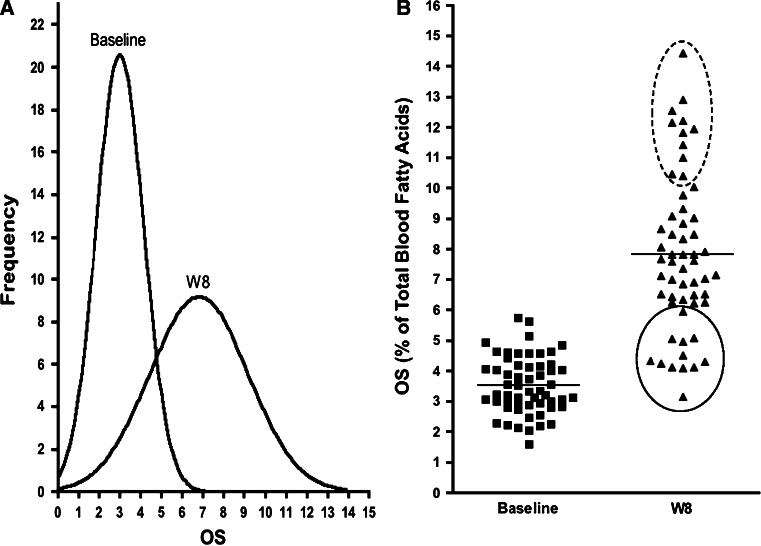
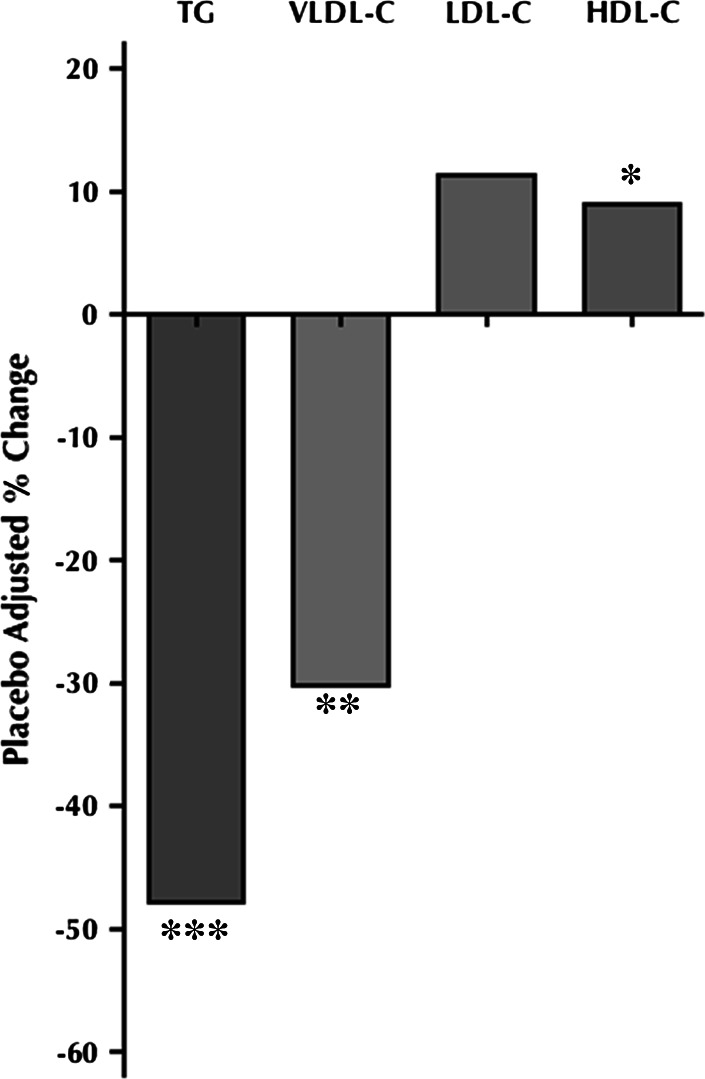
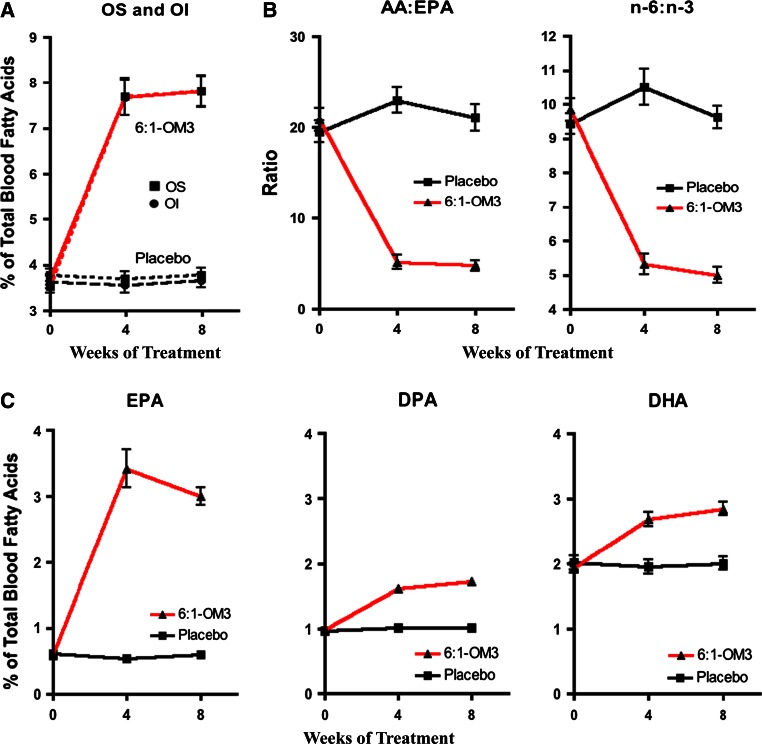
Low blood levels of long chain omega-3 polyunsaturated fatty acids (LC n-3 PUFA) have been reported to be associated with increased risk for cardiovascular disease (CVD) deaths. Systematic studies measuring LC n-3 PUFA blood levels (pre and post-treatment) in defined subjects, and monitoring the correction of nutritional deficiency with a pure LC n-3 PUFA formulation in sufficient doses, while monitoring CVD risk factors are lacking. We tested the efficacy of a novel LC n-3 PUFA Medical Food formulation (VASCAZEN(®), > 90 % pure with a 6:1 eicosapentaenoic acid-(EPA):docosahexaenoic acid-(DHA) ratio; 6:1-OM3), to correct such deficiency and determine the concomitant effects on lipid profiles. Of 655 subjects screened, 89 % were LC n-3 PUFA deficient (Omega-Score, (OS) = blood EPA + DHA + Docosapentaenoic acid < 6.1 %). From these, a study was conducted on 110 ambulatory cardiovascular subjects. Placebo: corn oil. Primary endpoint: change in OS. Secondary endpoint: changes in blood lipid profiles. At 8 weeks of treatment with 6:1-OM3 (4 g/day), placebo-adjusted median OS levels (n = 56) significantly improved (132 %, P < 0.0001) with a decrease in AA (arachidonic acid): EPA ratio (82 %, P < 0.0001). In hypertriglyceridemic subjects (TG 2.26-5.65 mmol/L), HDL-C improved (9 %, P = 0.0069), TG-reduced (48 %, P < 0.0001), and VLDL-C reduced (30 %, P = 0.0023), without significantly affecting LDL-C levels. This study confirms that LC n-3 PUFA deficiency is prevalent in the US population, and its correction with 6:1-OM3 in CVD subjects improves lipid profiles. The purity, EPA:DHA ratio and dose are determinant factors for optimal efficacy of a formulation in reducing CVD risk factors.
Overview
The claims and statistics of this paper haven’t been checked yet.
Free: it reads the open-access text and checks the first 5 claims that cite a source we can check. Create a free account to check every claim.
Integrity signals
Registry
Cites
Statistics
Figures
Verification
Claims the paper makes
The claims and statistics of this paper haven’t been checked yet.
Free: it reads the open-access text and checks the first 5 claims that cite a source we can check. Create a free account to check every claim.
Self-check
Percentages, sums and reported differences re-computed from the paper’s own numbers.
The self-check needs the paper’s full text.
Citations
Cites
A RAPID METHOD OF TOTAL LIPID EXTRACTION AND PURIFICATION
Bligh, E. G., & Dyer, W. J. (1959) · Canadian Journal of Biochemistry and Physiology · doi:10.1139/o59-099 · Cited by 54,751
Simopoulos, A. P. (2008) · Experimental Biology and Medicine · doi:10.3181/0711-mr-311 · Cited by 2,915
Danaei, G., Ding, E. L., Mozaffarian, D., Taylor, B., Rehm, J., Murray, C. J. L., & Ezzati, M. (2009) · PLoS Medicine · doi:10.1371/journal.pmed.1000058 · Cited by 2,860 · cited 2×
“Although cut-off levels for OS or OI have yet to be defined, LC n-3 PUFA dietary deficiency or insufficiency has been identified as a risk factor attributable to 84,000 all cause deaths per year in the US [9].”
BackgroundYokoyama, M., Origasa, H., Matsuzaki, M., Matsuzawa, Y., Saito, Y., Ishikawa, Y., Oikawa, S., Sasaki, J., Hishida, H., Itakura, H., et al. (2007) · The Lancet · doi:10.1016/s0140-6736(07)60527-3 · Cited by 2,516
(1999) · PubMed · Cited by 2,062
EICOSAPENTAENOIC ACID AND PREVENTION OF THROMBOSIS AND ATHEROSCLEROSIS?
DYERBERG, J. (1978) · The Lancet · doi:10.1016/s0140-6736(78)91505-2 · Cited by 1,688
GISSI-HF investigators (2008) · The Lancet · doi:10.1016/s0140-6736(08)61239-8 · Cited by 1,350
Blood Levels of Long-Chain n–3 Fatty Acids and the Risk of Sudden Death
Albert, C. M., Campos, H., Stampfer, M. J., Ridker, P. M., Manson, J. E., Willett, W. C., & Ma, J. (2002) · New England Journal of Medicine · doi:10.1056/nejmoa012918 · Cited by 1,146 · cited 6×
“for sudden death by 45 % as described previously [10].”
BackgroundMethodInfluentialThe Omega-3 Index: A new risk factor for death from coronary heart disease?
Harris, W. S., & von Schacky, C. (2004) · Preventive Medicine · doi:10.1016/j.ypmed.2004.02.030 · Cited by 1,111
Polyunsaturated fatty acids in the food chain in the United States
Kris-Etherton, P., Taylor, D. S., Yu-Poth, S., Huth, P., Moriarty, K., Fishell, V., Hargrove, R. L., Zhao, G., & Etherton, T. D. (2000) · The American Journal of Clinical Nutrition · doi:10.1093/ajcn/71.1.179s · Cited by 1,023 · cited 1×
“The typical Western Diet is relatively deficient in LC n-3 PUFA but enriched in saturated fat and n-6 PUFA [5], leading to chronic LC n-3 PUFA deficiency in the US population.”
BackgroundRizos, E. C., Ntzani, E. E., Bika, E., Kostapanos, M. S., & Elisaf, M. S. (2012) · JAMA · doi:10.1001/2012.jama.11374 · Cited by 960
Siscovick, D. S. (1995) · JAMA: The Journal of the American Medical Association · doi:10.1001/jama.1995.03530170043030 · Cited by 920 · cited 1×
“0 % [8, 11] reduce CVD-related risk to the greatest extent, and these ‘‘target values’’ could be considered as optimal for CVD patient health.”
BackgroundCancer Research: Some Forward Steps
(1965) · The Lancet · doi:10.1016/s0140-6736(65)92229-4 · Cited by 731
PLASMA LIPID AND LIPOPROTEIN PATTERN IN GREENLANDIC WEST-COAST ESKIMOS
Bang, H. O., Dyerberg, J., & Nielsen, A. B. (1971) · The Lancet · doi:10.1016/s0140-6736(71)91658-8 · Cited by 690
Hooper, L., Thompson, R. L., Harrison, R. A., Summerbell, C. D., Ness, A. R., Moore, H. J., Worthington, H. V., Durrington, P. N., Higgins, J. P. T., Capps, N. E., et al. (2006) · BMJ · doi:10.1136/bmj.38755.366331.2f · Cited by 676 · cited 3×
“As mentioned by others [27, 28], the present study also highlights the need to consider LC n-3 PUFA dose and EPA:DHA ratio in the treatment formulation, patient selection, as well as the importance of pre- and post-treatment measurement of OS and/or OI.”
BackgroundMethodResultRauch, B., Schiele, R., Schneider, S., Diller, F., Victor, N., Gohlke, H., Gottwik, M., Steinbeck, G., Del Castillo, U., Sack, R., et al. (2010) · Circulation · doi:10.1161/circulationaha.110.948562 · Cited by 607
PLASMA LIPID AND LIPOPROTEIN PATTERN IN GREENLANDIC WEST-COAST ESKIMOS
Bang, H. O., Dyerberg, J., & Nielsen, A. B. (2009) · Nutrition Reviews · doi:10.1111/j.1753-4887.1986.tb07607.x · Cited by 603
n–3 Fatty Acids in Cardiovascular Disease
De Caterina, R. (2011) · New England Journal of Medicine · doi:10.1056/nejmra1008153 · Cited by 568
n–3 Fatty Acids in Patients with Multiple Cardiovascular Risk Factors
The Risk and Prevention Study Collaborative Group (2013) · New England Journal of Medicine · doi:10.1056/nejmoa1205409 · Cited by 510
QUARTAN MALARIAL NEPHROTIC SYNDROME
Hendrickse, R. G., Adeniyi, A., Edington, G. M., Glasgow, E. F., White, R. H. R., & Houba, V. (1972) · The Lancet · doi:10.1016/s0140-6736(72)91373-6 · Cited by 447
Mori, T. A., Bao, D. Q., Burke, V., Puddey, I. B., & Beilin, L. J. (1999) · Hypertension · doi:10.1161/01.hyp.34.2.253 · Cited by 407
Kwak (2012) · doi:10.1001/archinternmed.2012.262 · Cited by 368
(n-3) Fatty Acids and Cardiovascular Health: Are Effects of EPA and DHA Shared or Complementary?
Mozaffarian, D., & Wu, J. H. Y. (2012) · The Journal of Nutrition · doi:10.3945/jn.111.149633 · Cited by 368 · cited 6×
“LC n-3 PUFA Long chain omega-3 polyunsaturated fatty acids n-3 & n-6 fatty acids Omega-3 & omega 6 fatty acids AA Arachidonic acid EPA Eicosapentaenoic fatty acid DHA Docosahexaenoic acid FAME Fatty acid methyl-esters 6:1-OM3 LC n-3 PUFA formulation of [90 % purity with a 6:1 EPA and DHA ratio OI Omega-3 Index, combin…”
BackgroundInfluentialBays, H. E., Ballantyne, C. M., Kastelein, J. J., Isaacsohn, J. L., Braeckman, R. A., & Soni, P. N. (2011) · The American Journal of Cardiology · doi:10.1016/j.amjcard.2011.04.015 · Cited by 358
Towards establishing dietary reference intakes for eicosapentaenoic and docosahexaenoic acids
Harris, W. S., Mozaffarian, D., Lefevre, M., Toner, C. D., Colombo, J., Cunnane, S. C., Holden, J. M., Klurfeld, D. M., Morris, M. C., & Whelan, J. (2009) · The Journal of Nutrition · doi:10.3945/jn.108.101329 · Cited by 356 · cited 1×
“[13, 40] elegantly discussed the need for establishing ‘‘dietary reference intakes’’ for EPA and DHA Fig.”
BackgroundBallantyne, C. M., Bays, H. E., Kastelein, J. J., Stein, E., Isaacsohn, J. L., Braeckman, R. A., & Soni, P. N. (2012) · The American Journal of Cardiology · doi:10.1016/j.amjcard.2012.05.031 · Cited by 342 · cited 1×
“65 mmol/L), treatment with an EPA-only formulation resulted in a less efficacious reduction in TG (21 %), and VLDL-C (24 %), over a longer treatment period [46] than the present study.”
ResultSafety and Efficacy of Omacor in Severe Hypertriglyceridemia
Harris, W. S., Ginsberg, H. N., Arunakul, N., Shachter, N. S., Windsor, S. L., Adams, M., Berglund, L., & Osmundsen, K. (1997) · European Journal of Cardiovascular Prevention & Rehabilitation · doi:10.1177/174182679700400511 · Cited by 306
Grimsgaard, S., Bonaa, K., Hansen, J., & Nordøy, A. (1997) · The American Journal of Clinical Nutrition · doi:10.1093/ajcn/66.3.649 · Cited by 300 · cited 1×
“Earlier randomized placebo-controlled studies have indicated that the administration of EPA or DHA therapy over a 6 to 7 week time period can result in an increase in blood LC n-3 PUFA levels of at least 47 % and a decrease in blood TG levels of 18–21 % [35, 36].”
Mozaffarian, D., Lemaitre, R. N., King, I. B., Song, X., Huang, H., Sacks, F. M., Rimm, E. B., Wang, M., & Siscovick, D. S. (2013) · Annals of Internal Medicine · doi:10.7326/0003-4819-158-7-201304020-00003 · Cited by 283
Omega-3 fatty acids and cardiovascular disease: A case for omega-3 index as a new risk factor
HARRIS, W. (2007) · Pharmacological Research · doi:10.1016/j.phrs.2007.01.013 · Cited by 277
Lovegrove, J. A., Lovegrove, S. S., Lesauvage, S. V., Brady, L. M., Saini, N., Minihane, A. M., & Williams, C. M. (2004) · American Journal of Clinical Nutrition · doi:10.1093/ajcn/79.6.974 · Cited by 277
Calder, P. C. (2012) · Molecular Nutrition & Food Research · doi:10.1002/mnfr.201100710 · Cited by 255 · cited 1×
“Since inflammation plays a significant role in the pathogenesis of CVD [44], and the presence of a low AA:EPA ratio has been described to prevent the onset or progression of CVD [45], significant decreases in both AA:EPA and n-6:n-3 in the present study are indicative of an improvement in the inflammatory status of th…”
BackgroundSafety and efficacy of Omacor in severe hypertriglyceridemia
Harris, W. S., Ginsberg, H. N., Arunakul, N., Shachter, N. S., Windsor, S. L., Adams, M., Berglund, L., & Osmundsen, K. (1997) · Journal of Cardiovascular Risk · doi:10.1097/00043798-199710000-00011 · Cited by 252
DEFICIENCY OF ESSENTIAL FATTY ACIDS AND ATHEROSCLEROSIS, ETCETERA
(1956) · The Lancet · doi:10.1016/s0140-6736(56)90126-x · Cited by 246
Fish oil and omega-3 fatty acids in cardiovascular disease: do they really work?
Kromhout, D., Yasuda, S., Geleijnse, J. M., & Shimokawa, H. (2012) · European Heart Journal · doi:10.1093/eurheartj/ehr362 · Cited by 222
The Omega-3 Index: Clinical Utility for Therapeutic Intervention
Harris, W. S. (2010) · Current Cardiology Reports · doi:10.1007/s11886-010-0141-6 · Cited by 158
Casula, M., Soranna, D., Catapano, A. L., & Corrao, G. (2013) · Atherosclerosis Supplements · doi:10.1016/s1567-5688(13)70005-9 · Cited by 152
The omega-3 index: From biomarker to risk marker to risk factor
Harris, W. S. (2009) · Current Atherosclerosis Reports · doi:10.1007/s11883-009-0062-2 · Cited by 143
Wu, J. H. Y., Lemaitre, R. N., King, I. B., Song, X., Sacks, F. M., Rimm, E. B., Heckbert, S. R., Siscovick, D. S., & Mozaffarian, D. (2012) · Circulation · doi:10.1161/circulationaha.111.062653 · Cited by 143
Dyerberg, J., & Bang, H. O. (1978) · The Lancet · doi:10.1016/s0140-6736(78)90448-8 · Cited by 136
Quantification of cholesterol in all lipoprotein classes by the VAP-II method.
Kulkarni, K. R., Garber, D. W., Marcovina, S. M., & Segrest, J. P. (1994) · Journal of Lipid Research · doi:10.1016/s0022-2275(20)40123-3 · Cited by 136
Mariani, J., Doval, H. C., Nul, D., Varini, S., Grancelli, H., Ferrante, D., Tognoni, G., & Macchia, A. (2013) · Journal of the American Heart Association · doi:10.1161/jaha.112.005033 · Cited by 109
Bays, H. E., Braeckman, R. A., Ballantyne, C. M., Kastelein, J. J., Otvos, J. D., Stirtan, W. G., & Soni, P. N. (2012) · Journal of clinical lipidology · doi:10.1016/j.jacl.2012.07.001 · Cited by 94
Amano, T., Matsubara, T., Uetani, T., Kato, M., Kato, B., Yoshida, T., Harada, K., Kumagai, S., Kunimura, A., Shinbo, Y., et al. (2011) · Atherosclerosis · doi:10.1016/j.atherosclerosis.2011.05.030 · Cited by 91
Ohnishi, H., & Saito, Y. (2013) · Journal of Atherosclerosis and Thrombosis · doi:10.5551/jat.18002 · Cited by 88
Shaikh, N., Downar, E., & BUTANY, J. W. (1987) · Molecular and Cellular Biochemistry · doi:10.1007/bf00223481 · Cited by 76
Self-citationAltered fatty acid metabolism in patients with angiographically documented coronary artery disease
Siguel, E. N., & Lerman, R. H. (1994) · Metabolism · doi:10.1016/0026-0495(94)90178-3 · Cited by 64
Cardiovascular risk and the omega-3 index
von Schacky, C., & Harris, W. S. (2007) · Journal of Cardiovascular Medicine · doi:10.2459/01.jcm.0000289273.87803.87 · Cited by 56
Braeckman, R. A., Manku, M. S., Bays, H. E., Stirtan, W. G., & Soni, P. N. (2013) · Prostaglandins Leukotrienes and Essential Fatty Acids · doi:10.1016/j.plefa.2013.07.005 · Cited by 54
Kwak, S. M., & Myung, S.-K. (2012) · Archives of Internal Medicine · doi:10.1001/archinternmed.2012.4300 · Cited by 43
The Significance of cis, cis, cis 5,8,11 Eicosatrienoic Acid in Essential Fatty Acid Deficiency
Lundberg, W. O. (2009) · Nutrition Reviews · doi:10.1111/j.1753-4887.1980.tb05910.x · Cited by 35
The ω-3 fatty acids for Prevention of Post-Operative Atrial Fibrillation trial—rationale and design
Mozaffarian, D., Marchioli, R., Gardner, T., Ferrazzi, P., O’Gara, P. T., Latini, R., Libby, P., Lombardi, F., Macchia, A., Page, R. L., et al. (2011) · American Heart Journal · doi:10.1016/j.ahj.2011.03.035 · Cited by 34
Juanatey, J. R. G., Sampedro, F. G., Roub?n, S. R., Bermejo, R. M. A., Otero, D. L., Álvarez, A. B. C., Nouche, R. T., Souto-Castro, P., Alvarez, M. S., & S?nchez, R. O. (2012) · European Heart Journal · doi:10.1093/eurheartj/ehs282 · Cited by 11
Shaikh, N., Ali, A., Yantha, J., Shaikh, S., & Jackowski, G. (2013) · Arteriosclerosis Thrombosis and Vascular Biology · doi:10.1161/atvb.33.suppl_1.a447 · Cited by 1
Self-citation
Research works printed but not linked: 1
- Zgheel F Alhosin M Auger C Schini-Kerth VB The highly purified EPA:DHA 6:1 product evokes potent endothelium-dependent relaxations of porcine coronary artery rings via the redox-sensitive PI3-kinase/Akt-dependent phosphorylation of eNOS Eur Heart J 2012 33 suppl 1 P512
Cited by
Skulas-Ray, A. C., Wilson, P. W. F., Harris, W. S., Brinton, E. A., Kris-Etherton, P. M., Richter, C. K., Jacobson, T. A., Engler, M. B., Miller, M., Robinson, J. G., et al. (2019) · Circulation · doi:10.1161/cir.0000000000000709 · Cited by 512
Jackowski, S. A., Alvi, A. Z., Mirajkar, A., Imani, Z., Gamalevych, Y., Shaikh, N. A., & Jackowski, G. (2015) · Journal of Nutritional Science · doi:10.1017/jns.2015.21 · Cited by 77
Self-citationThe stability of blood fatty acids during storage and potential mechanisms of degradation: A review
Metherel, A. H., & Stark, K. D. (2015) · Prostaglandins Leukotrienes and Essential Fatty Acids · doi:10.1016/j.plefa.2015.12.003 · Cited by 70
Ellulu, M. S., Khaza’ai, H., Patimah, I., Rahmat, A. B., & Abed, Y. A. (2016) · Food & Nutrition Research · doi:10.3402/fnr.v60.29268 · Cited by 48
Rangel-Huerta, Ó. D., & Gil, Á. (2017) · Clinical Nutrition · doi:10.1016/j.clnu.2017.05.015 · Cited by 43
Metadata
- Authors
- Shaikh, N. A., Yantha, J., Shaikh, S., Rowe, W., Laidlaw, M., Cockerline, C., Ali, A., Holub, B., & Jackowski, G.
- Affiliations
- University of Toronto (CA)
- Pivotal (Canada) (CA)
- Nutrasource (CA)
- Corresponding author
- Shaikh, Nisar A.
- Venue
- Molecular and Cellular Biochemistry
- Published
- 2014-09-04
- Volume
- 396
- Issue
- 1-2
- Pages
- 9-22
- ISSN
- 0300-8177 (ISSN-L)
- 1573-4919
- PMC
- PMC4176569
- OpenAlex
- W2025159021
- Cited by
- 16
- References
- 55
- Citations by year
- 2025: 1 · 2023: 1 · 2022: 1 · 2020: 3 · 2019: 4 · 2017: 1 · 2016: 2 · 2015: 3
- FWCI
- 1.86
- Type
- journal article
- Language
- en
- Open access
- hybrid
- doi.org
- Locations
- Molecular and Cellular Biochemistry (publishedVersion, cc-by)
- PubMed Central (publishedVersion, cc-by)
- PubMed (publishedVersion)
- Topics
- Health Sciences › Nursing › Nutrition and Dietetics › Fatty Acid Research and Health
- Life Sciences › Agricultural and Biological Sciences › Aquatic Science › Aquaculture Nutrition and Growth
- Health Sciences › Medicine › Public Health, Environmental and Occupational Health › Nutritional Studies and Diet
- Keywords
- n-3 long-chain polyunsaturated fatty acids, medical foods, nutritional deficiency, cardiovascular risk factors, lipid profile, hypertriglyceridemia, HDL cholesterol, EPA/DHA ratio, docosapentaenoic acid
- MeSH terms
- Adult, Aged, Cardiovascular Diseases, Deficiency Diseases, Docosahexaenoic Acids, Fatty Acids, Unsaturated, Female, Humans, Male, Middle Aged, Risk Factors, Triglycerides, Eicosapentaenoic Acid, Fatty Acids, Omega-3, Arachidonic Acid, Treatment Outcome, Dietary Supplements
About these checks
Registry, retraction, Cites and statistics results are computed, not judged, with one exception: a printed reference that no index lists is read once by a model before it counts as a citation error. Claims are extracted by a model and kept only when their quote appears verbatim in the text; each cited source is then checked, with a model’s help, for whether it says what the claim relies on. Those verdicts can be wrong — read the claim’s quote and the cited source before relying on one.
Statistics and arithmetic are recomputed, not judged.
Confidence bands are shown only for fields calibrated on our annotated test set. None is calibrated yet, so no band is shown.
What counts as a claim ›How we measure confidence ›How we check this ›
Are you an author, or do you see a problem with this page? Request a review
Data sources
Bibliographic data: Semantic Scholar, OpenAlex, Crossref.
Contains information from the Semantic Scholar Academic Graph Datasets, made available under the ODC Attribution License (ODC-BY 1.0).
Semantic Scholar’s data is described in: Kinney, R., et al. (2023). The Semantic Scholar Open Data Platform. arXiv:2301.10140.
