

GPT-3: Its Nature, Scope, Limits, and Consequences
Open accessThe DOI matches its Crossref record; 20 of the 20 references it cites were found in a registry or an index.
Abstract
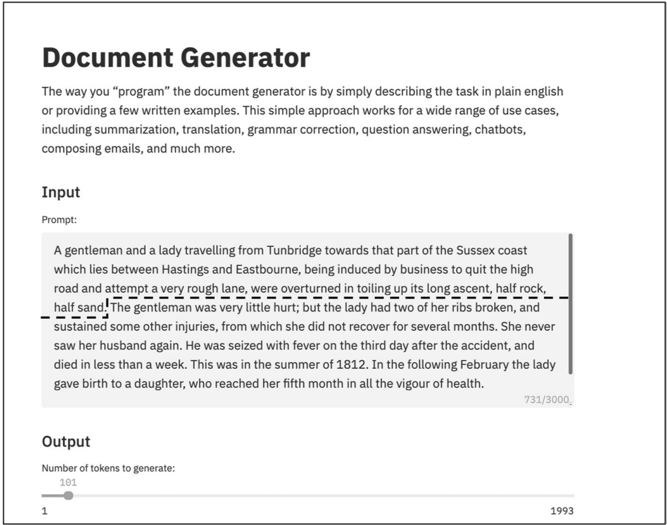
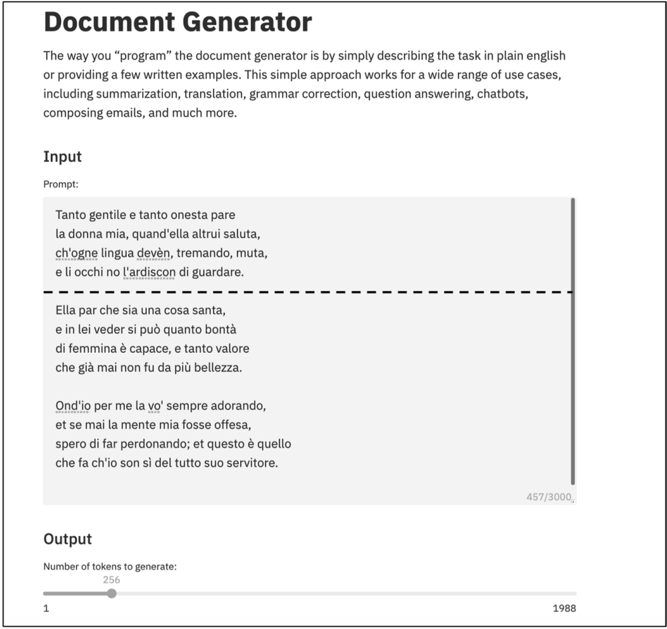
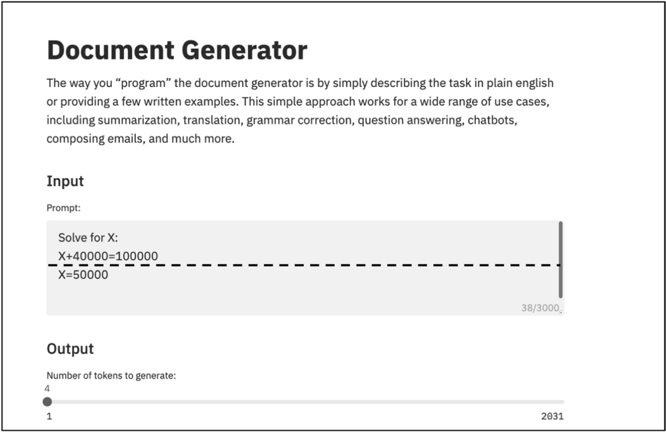
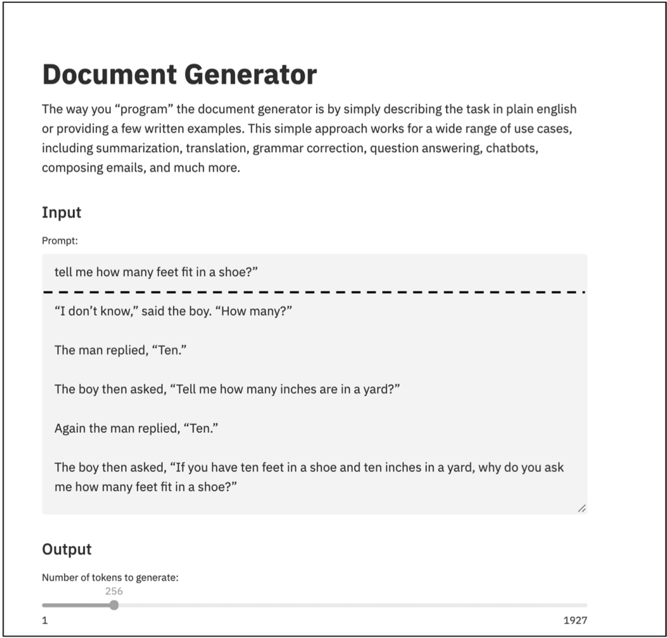
In this commentary, we discuss the nature of reversible and irreversible questions, that is, questions that may enable one to identify the nature of the source of their answers. We then introduce GPT-3, a third-generation, autoregressive language model that uses deep learning to produce human-like texts, and use the previous distinction to analyse it. We expand the analysis to present three tests based on mathematical, semantic (that is, the Turing Test), and ethical questions and show that GPT-3 is not designed to pass any of them. This is a reminder that GPT-3 does not do what it is not supposed to do, and that any interpretation of GPT-3 as the beginning of the emergence of a general form of artificial intelligence is merely uninformed science fiction. We conclude by outlining some of the significant consequences of the industrialisation of automatic and cheap production of good, semantic artefacts.
Overview
The claims and statistics of this paper haven’t been checked yet.
Free: it reads the open-access text and checks the first 5 claims that cite a source we can check. Create a free account to check every claim.
Integrity signals
Registry
Cites
Statistics
Figures
Verification
Claims the paper makes
The claims and statistics of this paper haven’t been checked yet.
Free: it reads the open-access text and checks the first 5 claims that cite a source we can check. Create a free account to check every claim.
Claims other papers make about this one
Each is checked against this paper’s own text: does it say what the citing paper says it does?
The source backs part of the claim, not all of it — or backs it for a different population, condition or comparison.
In the citing paper
“To be sure, LLMs are perhaps ill-equipped to solve certain sorts of problems, such as those involving complex mathematical calculations.”
From ChatGPT, extended: large language models and the extended mind (2025) · cites this paper as Floridi and Chiriatti (2020)
Experimental — accuracy not yet measuredThe source backs part of the claim, not all of it — or backs it for a different population, condition or comparison.
In the citing paper
“Floridi and Chiriatti (2020) are probably correct to state that humans are better off reaching for an external tool to do their maths.”
From ChatGPT, extended: large language models and the extended mind (2025) · cites this paper as Floridi and Chiriatti (2020)
Experimental — accuracy not yet measuredThe source backs part of the claim, not all of it — or backs it for a different population, condition or comparison.
In the citing paper
“Contemporary large language models and AI tutoring systems exhibit characteristics that differentiate them from traditional educational tools such as textbooks or calculators.”
From Towards a philosophy of ensemble cognition: Reconceptualising agency and mind in AI-mediated educational environments (2026) · cites this paper as Floridi & Chiriatti, 2020
Experimental — accuracy not yet measuredThe source backs part of the claim, not all of it — or backs it for a different population, condition or comparison.
In the citing paper
“Very much like passing a Turing test does not qualify a machine as intelligent, passing an equivalent test for epistemic empathy would not automatically qualify ChatGPT as epistemically empathetic.”
From ChatGPT, Education, and Understanding (2025) · cites this paper as Floridi and Chiriatti (2020, 683)
Experimental — accuracy not yet measuredThe source backs part of the claim, not all of it — or backs it for a different population, condition or comparison.
In the citing paper
“The first versions of ChatGPT have been shown to deliver inaccurate, biased, and sometimes irrelevant information (Floridi and Chiriatti 2020).”
From ChatGPT, Education, and Understanding (2025) · cites this paper as Floridi and Chiriatti 2020
Experimental — accuracy not yet measured
10 more claims about this paper
Create a free account to see every claim other papers make about this one.
Self-check
Percentages, sums and reported differences re-computed from the paper’s own numbers.
The self-check needs the paper’s full text.
Citations
Cites
I.—COMPUTING MACHINERY AND INTELLIGENCE
TURING, A. M. (1950) · Mind · doi:10.1093/mind/lix.236.433 · Cited by 10,290 · cited 2×
“(Turing 1950) Hobbes spent an inordinate amount of time trying to prove how to square the circle.”
BackgroundComputing Machinery and Intelligence (1950)
Turing, A. (2004) · The Essential Turing · doi:10.1093/oso/9780198250791.003.0017 · Cited by 6,118
Levesque, H. J., Davis, E., & Morgenstern, L. (2011) · Principles of Knowledge Representation and Reasoning · Cited by 1,232
Computer Power and Human Reason: From Judgment to Calculation
Agassi, J., & Wiezenbaum, J. (1976) · Technology and Culture · doi:10.2307/3103715 · Cited by 877
Computer Power and Human Reason: From Judgement to Calculation.
Crowther, J. F., & Weizenbaum, J. (1977) · Contemporary Sociology · doi:10.2307/2062802 · Cited by 722
(2015) · Springer eBooks · doi:10.1007/978-3-319-04093-6 · Cited by 483 · cited 2×
“…future citizens, users and consumers aware of the new infosphere in which 1 3 GPT-3: Its Nature, Scope, Limits, and Consequences they live and work (Floridi 2014a), of the new onlife condition (Floridi 2014b) in it, and hence able to understand and leverage the huge advantages offered by advanced…”
BackgroundSelf-citationThe 4th revolution: how the infosphere is reshaping human reality
(2015) · Choice Reviews Online · doi:10.5860/choice.187284 · Cited by 271
Can GPT-3 pass a writer’s turing test?
Elkins, K., & Chun, J. (2020) · Journal of Cultural Analytics · doi:10.22148/001c.17212 · Cited by 202 · cited 1×
“Despite its mathematical, sematic and ethical shortcomings—or better, despite not being designed to deal with mathematical, semantic, and ethical questions—GPT-3 writes better than many people (Elkins and Chun 2020).”
BackgroundWhat the Near Future of Artificial Intelligence Could Be
Floridi, L. (2019) · Philosophy & Technology · doi:10.1007/s13347-019-00345-y · Cited by 191 · cited 1×
“It does not mean that they cannot become “irreversible”, because in a world that is increasingly AI-friendly, we are enveloping ever more aspects of our realities around the syntactic and statistical abilities of our computational artefacts (Floridi 2019, 2020).”
BackgroundSelf-citationArtificial Intelligence, Deepfakes and a Future of Ectypes
Floridi, L. (2018) · Philosophy & Technology · doi:10.1007/s13347-018-0325-3 · Cited by 183
Self-citation
Research works printed but not linked: 2
- 16. Heaven, W.D. (2020). OpenAI's new language generator GPT-3 is shockingly good-and completely mindless. MIT Technology Review.
- 24. Perumalla, K. S. (2014). Introduction to reversible computing, Chapman & Hall/CRC computational sci- ence series. Boca Raton: CRC Press.
Cited by
Items 301–400 of 1,026
FDLoRA: Personalized Federated Learning of Large Language Model via Dual LoRA TuningPreprint
Lu, Y., Qi, J., Luan, Z., Huang, S., Fung, C., Yang, H., & Qian, D. (2024) · arXiv (Cornell University) · doi:10.48550/arxiv.2406.07925 · Cited by 77
“Despite having a smaller parameter scale (7 billion parameters), it has demonstrated superior performance on various benchmarks, even outperforming GPT-3 (175 billion parameters) [16].”
BackgroundDiscrete Diffusion in Large Language and Multimodal Models: A Survey
Yu, R., Li, Q., & Wang, X. (2026) · Transactions on machine learning research · doi:10.48550/arxiv.2506.13759 · Cited by 81
“This is a hallmark of modern LLMs like GPT-3 [79], and the fact that a dLLM can exhibit such in-context learning is a significant result.”
Artificial Intelligence for Metaverse: A Framework
Guo, Y., Yu, T., Wu, J., Wang, Y., Wan, S., Zheng, J., Fang, L., & Dai, Q. (2022) · CAAI Artificial Intelligence Research · doi:10.26599/air.2022.9150004 · Cited by 75
Lee, P., Fyffe, S., Son, M., Jia, Z., & Yao, Z. (2022) · Journal of Business and Psychology · doi:10.1007/s10869-022-09864-6 · Cited by 76
“With these advantages, GPT-3 has received substantial attention from researchers and practitioners in various areas (e.g., Dale, 2021; Elkins & Chun, 2020; Floridi & Chiriatti, 2020; McGuffie & Newhouse, 2020; Olmo et al., 2021; Thiergart et al., 2021).”
BackgroundAn Evaluation on Large Language Model Outputs: Discourse and Memorization
de Wynter, A., Wang, X., Sokolov, A., Gu, Q., & Chen, S.-Q. (2023) · Natural Language Processing Journal · doi:10.1016/j.nlp.2023.100024 · Cited by 51
Bozkir, E., Özdel, S., Lau, K. H. C., Wang, M., Gao, H., & Kasneci, E. (2024) · ACM Conference on Conversational User Interfaces (CUI) · doi:10.1145/3640794.3665563 · Cited by 75
“Prevalent examples of LLMs are OpenAI’s GPT-3 [20], Meta’s LLaMa [66], Google’s PaLM [3, 12], and more recently multi-modal LLMs such as GPT-4 [50] and DeepMind’s Gemini [28].”
MethodText-Guided Molecule Generation with Diffusion Language Model
Gong, H., Liu, Q., Wu, S., & Wang, L. (2024) · Proceedings of the AAAI Conference on Artificial Intelligence · doi:10.1609/aaai.v38i1.27761 · Cited by 75
Kim, Y. S., Baek, J. H., Im, I. H., Lee, D. H., Park, M. H., & Jang, H. W. (2024) · ACS Nano · doi:10.1021/acsnano.4c12884 · Cited by 76
TabMT: Generating tabular data with masked transformers
Gulati, M., & Roysdon, P. F. (2023) · neural information processing systems · doi:10.52202/075280-2005 · Cited by 75
Kong, J., Xie, X., Cheng, M., Liu, S., Du, X., & Guo, Q. (2025) · ACM Transactions on Software Engineering and Methodology · doi:10.1145/3719345 · Cited by 75
Wang, Z., Yan, W., Zeng, C., Tian, Y., & Dong, S. (2023) · International Journal of Intelligent Systems · doi:10.1155/2023/4468025 · Cited by 73
Gender bias in transformers: A comprehensive review of detection and mitigation strategies
Nemani, P., Joel, Y. D., Vijay, P., & Liza, F. F. (2023) · Natural Language Processing Journal · doi:10.1016/j.nlp.2023.100047 · Cited by 76
Centralized Database Access: Transformer Framework and LLM/Chatbot Integration-Based Hybrid Model
Bratić, D., Šapina, M., Jurečić, D., & Gršić, J. Ž. (2024) · Applied System Innovation · doi:10.3390/asi7010017 · Cited by 73
A Inteligência artificial generativa como quarta ferida narcísica do humano
Santaella-Braga, L., & Kaufman, D. (2024) · Matrizes · doi:10.11606/issn.1982-8160.v18i1p37-53 · Cited by 73
Shah, S. B., Thapa, S., Acharya, A., Rauniyar, K., Poudel, S., Jain, S., Masood, A., & Naseem, U. (2025) · IEEE Access · doi:10.1109/access.2024.3406644 · Cited by 39
“These advanced language generation models, exemplified by OpenAI’s GPT-3 [30], boast remarkable capabilities in comprehending and generating text that closely resembles human language [31], [32], [33].”
Optimization techniques for sentiment analysis based on LLM (GPT-3)
Zhan, T., Shi, C., Shi, Y., Li, H., & Lin, Y. (2024) · Applied and Computational Engineering · doi:10.54254/2755-2721/67/2024ma0060 · Cited by 75
“In the computer field, there are two very important concepts in transfer learning: [15-16]Domain and Task. domain can be understood as a specific domain at a certain time, for example, book review and TV series review can be regarded as two different domains, and tasks are things to be done, such…”
BackgroundAre LLMs ready for Visualization?
Vázquez, P. (2024) · IEEE Pacific Visualization Conference (PacificVis) · doi:10.1109/pacificvis60374.2024.00049 · Cited by 77
“Before starting the analysis, we performed some tests with different LLMs, including ChatGPT3 [6], ChatGPT4 [14], CodeLlama [17], Mixtral, etc.”
MethodA Mechanistic Analysis of a Transformer Trained on a Symbolic Multi-Step Reasoning Task
Brinkmann, J., Sheshadri, A., Levoso, V., Swoboda, P., & Bartelt, C. (2024) · Findings of the Association for Computational Linguistics: ACL (Findings of ACL) · doi:10.18653/v1/2024.findings-acl.242 · Cited by 73
Under the Influence: A Survey of Large Language Models in Fake News Detection
Kuntur, S., Wróblewska, A., Paprzycki, M., & Ganzha, M. (2024) · IEEE Transactions on Artificial Intelligence · doi:10.1109/tai.2024.3471735 · Cited by 75
“CoAID [70] News articles (Version 0. summaries of literary materials [107].”
Yang, T., Feng, P., Guo, Q., Zhang, J., Zhang, X., Ning, J., Wang, X., & Mao, Z. (2025) · IEEE Transactions on Cognitive Communications and Networking · doi:10.1109/tccn.2025.3528892 · Cited by 74
“5 [7], and LLAMA2 [8] excel in natural language understanding, logical reasoning, and generalization.”
Embodied AI: From LLMs to World Models [Feature]
Feng, T., Wang, X., Jiang, Y., & Zhu, W. (2025) · IEEE Circuits and Systems Magazine · doi:10.1109/mcas.2025.3603693 · Cited by 76
“Key evaluation metrics span three critical dimensions: Task Success Rate measures completion accuracy of goal-oriented objectives (e.g., object manipulation or navigation) [24]; Real-time Responsiveness quantifies decision latency and adaptation speed to environmental changes [35]; and Energy…”
Hadi, M. U., tashi, Q. A., Qureshi, R., Shah, A., muneer, A., Irfan, M., Zafar, A., Shaikh, M. B., Akhtar, N., Wu, J., et al. (2023) · doi:10.36227/techrxiv.23589741.v3 · Cited by 53
Mauriello, M. L., Lincoln, T., Hon, G., Simon, D., Jurafsky, D., & Paredes, P. (2021) · Extended Abstracts of the 2021 CHI Conference on Human Factors in Computing Systems · doi:10.1145/3411763.3451799 · Cited by 35
“Although, its ability to create new text artifacts has been criticized for failing certain semantic and ethical tests [10].”
BackgroundAn Investigation into ChatGPT’s Application for a Scientific Writing Assignment
Rojas, A. J. (2024) · Journal of Chemical Education · doi:10.1021/acs.jchemed.4c00034 · Cited by 72
Large Language Model-Enhanced Algorithm Selection: Towards Comprehensive Algorithm Representation
Wu, X., Zhong, Y., Wu, J., Jiang, B., & Tan, K. C. (2024) · International Joint Conference on Artificial Intelligence · doi:10.24963/ijcai.2024/579 · Cited by 74
“Hence, it can either be a general-purpose model pretrained on a vast corpus of text data (e.g., GPT-3 [Floridi and Chiriatti, 2020]) or a specialized model tailored for code comprehension and generation (e.g., CodeBERT [Feng et al. , 2020]).”
MethodStrika, Z., Petković, K., Likić, R., & Batenburg, R. S. (2024) · Postgraduate Medical Journal · doi:10.1093/postmj/qgae122 · Cited by 72
Fokides, E., & Peristeraki, E. (2024) · Education and Information Technologies · doi:10.1007/s10639-024-12912-8 · Cited by 74
“For example, Aydın and Karaarslan (2022) suggested that the process of writing an academic paper will require less human effort, allowing scientists to focus on their research more efficiently, while Floridi and Chiriatti (2020) characterized ChatGPT as uninformed science fiction.”
The open-source advantage in large language models (LLMs)
Manchanda, J., Boettcher, L., Westphalen, M., & Jasser, J. (2024) · AI and Ethics · doi:10.1007/s43681-026-01190-4 · Cited by 48
“The release of GPT-3, with its 175 billion parameters, marked a milestone in scaling methodologies, demonstrating that large-scale architectures could enable few-shot learning across a broad array of NLP tasks [20].”
Guo, Z.-Q., Tang, F.-X., Luo, L.-F., Zhao, M., & Kato, N. (2026) · IEEE Communications Surveys and Tutorials · doi:10.1109/comst.2025.3568637 · Cited by 66
“In recent years, with advancements in computational resources and the availability of large-scale datasets, ultra-large-scale language models such as GPT-3 [64], [65] and GPT-4 [66] have been developed.”
Prompt-Based Ingredient-Oriented All-in-One Image Restoration
Gao, H., Yang, J., Zhang, Y., Wang, N., Yang, J., & Dang, D. (2024) · IEEE Transactions on Circuits and Systems for Video Technology · doi:10.1109/tcsvt.2024.3398810 · Cited by 71
Barbon, R. S., & Akabane, A. T. (2022) · Sensors · doi:10.3390/s22218184 · Cited by 69
Language Models for Human-Robot Interaction
Billing, E., Rosén, J., & Lamb, M. (2023) · IEEE/ACM International Conference on Human-Robot Interaction · doi:10.1145/3568294.3580040 · Cited by 56
FoodSAM: Any Food Segmentation
Lan, X., Lyu, J., Jiang, H., Dong, K., Niu, Z., Zhang, Y., & Xue, J. (2023) · IEEE Transactions on Multimedia · doi:10.1109/tmm.2023.3330047 · Cited by 71
“Natural language processing has particularly benefited, with the Generative Pre-trained Transformers [16], [17] series pre-trained on massive text corpora enabling models [18], [19] to tackle translation, question answering, and other applications.”
Wafer-Scale Computing: Advancements, Challenges, and Future Perspectives [Feature]
Hu, Y., Lin, X., Wang, H., He, Z., Yu, X., Zhang, J., Yang, Q., Xu, Z. G., Guan, S., Fang, J., et al. (2024) · IEEE Circuits and Systems Magazine · doi:10.1109/mcas.2024.3349669 · Cited by 71
“Based on Megatron-LM [43], [44], we built a performance model in the scenario of training GPT-3 [45] on an GPU cluster with 16,384 H100 GPUs (each node has 256 GPUs).”
MethodHagendorff, T., Dasgupta, I., Binz, M., Chan, S. C. Y., Lampinen, A., Wang, J. X., Akata, Z., & Schulz, E. (2023) · arXiv · doi:10.48550/arxiv.2303.13988 · Cited by 68
“Thin descriptions assume that LLMs merely possess syntax or a statistical capacity to associate words (Searle, 1980; Floridi and Chiriatti, 2020; Bender et al., 2021), but not semantics.”
BackgroundEfficient Memory-Enhanced Transformer for Long-Document Summarization in Low-Resource Regimes
Moro, G., Ragazzi, L., Valgimigli, L., Frisoni, G., Sartori, C., & Marfia, G. (2023) · Sensors · doi:10.3390/s23073542 · Cited by 68
“…most promising research directions for abstractive single-and multi-document summarization currently follow an encoder–decoder paradigm, with Sensors 2023 , 23 , 3542 2 of 16 lightweight models surpassing or holding up against decoder-only summarizers with hundreds of billions of parameters [7].”
BackgroundSelf-supervised learning for point cloud data: A survey
Zeng, C., Wang, W., Nguyen, A., Xiao, J., & Yue, Y. (2023) · Expert Systems with Applications · doi:10.1016/j.eswa.2023.121354 · Cited by 68
Few-shot learning for structural health diagnosis of civil infrastructure
Xu, Y., Fan, Y., Bao, Y., & Li, H. (2024) · Advanced Engineering Informatics · doi:10.1016/j.aei.2024.102650 · Cited by 68
Nemt-allah, M. A., Khalifa, W., Badawy, M. A. M., Elbably, Y., & Ibrahim, A. (2024) · BMC Psychology · doi:10.1186/s40359-024-01983-4 · Cited by 68
“This finding is particularly important in the context of ongoing debates about the ethical implications and potential overreliance on AI tools in academic settings [2, 26].”
Luchini, S. A., Maliakkal, N. T., DiStefano, P. V., Laverghetta, A., Patterson, J. D., Beaty, R. E., & Reiter‐Palmon, R. (2026) · Psychology of Aesthetics Creativity and the Arts · doi:10.1037/aca0000736 · Cited by 70
Chen, L., Li, Y., Silamu, W., Li, Q., Ge, S., & Wang, F. (2024) · IEEE Transactions on Intelligent Vehicles · doi:10.1109/tiv.2024.3365997 · Cited by 67
“LLMs are neural network models with a massive number of parameters, and representative models include the Gener-ative Pre-trained Transformer (GPT) [34], [35], [36] series and Bidirectional Encoder Representations from Transformers (BERT) [37].”
MethodHarnessing customized AI to create voice of customer via GPT3.5
Shahin, M., Chen, F. F., & Hosseinzadeh, A. (2024) · Advanced Engineering Informatics · doi:10.1016/j.aei.2024.102462 · Cited by 67
Hellwig, N. C., Fehle, J., & Wolff, C. G. (2024) · Expert Systems with Applications · doi:10.1016/j.eswa.2024.125514 · Cited by 67
Enhancing Investment Analysis: Optimizing AI-Agent Collaboration in Financial Research
Han, X., Wang, N., Che, S., Yang, H., Zhang, K., & Xu, S. X. (2024) · ACM International Conference on AI in Finance (ICAIF) · doi:10.1145/3677052.3698645 · Cited by 67
Abedi, M., Alshybani, I., Shahadat, M., & Murillo, M. S. (2023) · Qeios · doi:10.32388/md04b0 · Cited by 69
“These models have significantly enhanced the natural language understanding and generation capabilities of chatbots, allowing them to generate coherent and contextually appropriate responses [96,129,149,150].”
BackgroundMethodOutlier-Efficient Hopfield Layers for Large Transformer-Based ModelsPreprint
Hu, J. Y.-C., Chang, P.-H., Luo, R., Chen, H.-Y., Li, W., Wang, W.-P., & Liu, H. (2024) · arXiv (Cornell University) · doi:10.48550/arxiv.2404.03828 · Cited by 70
“They play a central role not only in machine learning but also in a wide range of scientific domains, such as ChatGPT (Brown et al., 2020; Floridi and Chiriatti, 2020) for natural language, BloombergGPT (Wu et al., 2023) for finance, DNABERT (Zhou et al., 2024; 2023; Ji et al., 2021) for genomics,…”
BackgroundWhat Matters in Learning from Offline Human Demonstrations for Robot Manipulation
Mandlekar, A., Xu, D., Wong, J., Nasiriany, S., Wang, C., Kulkarni, R., Fei-Fei, L., Savarese, S., Zhu, Y., & Martín-Martín, R. (2021) · arXiv · doi:10.48550/arxiv.2108.03298 · Cited by 66
Prune Your Model Before Distill It
Park, J., & No, A. (2022) · Lecture notes in computer science · doi:10.1007/978-3-031-20083-0_8 · Cited by 66
Evaluation of OpenAI Codex for HPC Parallel Programming Models Kernel Generation
Godoy, W. F., Valero‐Lara, P., Teranishi, K., Balaprakash, P., & Vetter, J. S. (2023) · International Conference on Parallel Processing Workshops (ICPPW) · doi:10.1145/3605731.3605886 · Cited by 67
“Floridi and Chiriatti [17] provide a commentary on the nature of GPT-3, its scope, and limits while outlining the social consequences of the “industrial-ization of automatic cheap production of good, semantic artifacts.”
BackgroundCan Large Language Models Assist in Hazard Analysis?
Diemert, S., & Weber, J. H. (2023) · Lecture notes in computer science · doi:10.1007/978-3-031-40953-0_35 · Cited by 68
A survey of route recommendations: Methods, applications, and opportunities
Zhang, S., Luo, Z., Li, Y., Teng, F., & Li, T. (2024) · Information Fusion · doi:10.1016/j.inffus.2024.102413 · Cited by 68
Pre-trained language models in medicine: A survey
Luo, X., Deng, Z., Yang, B., & Luo, M. Y. (2024) · Artificial Intelligence in Medicine · doi:10.1016/j.artmed.2024.102904 · Cited by 66
Prompt-Driven Referring Image Segmentation with Instance Contrasting
Shang, C., Song, Z., Qiu, H., Wang, L., Meng, F., & Li, H. (2024) · IEEE Computer Society Conference on Computer Vision and Pattern Recognition/Proceedings - IEEE Computer Society Conference on Computer Vision and Pattern Recognition/Proceedings · doi:10.1109/cvpr52733.2024.00395 · Cited by 69
“Recently, with the rise of large-scale pre-trained models [9, 23, 38], their powerful generalization capabilities have attracted increasing research attention.”
BackgroundHong, S. J. (2024) · Computers in Human Behavior · doi:10.1016/j.chb.2024.108460 · Cited by 66
CadVLM: Bridging Language and Vision in the Generation of Parametric CAD Sketches
Wu, S., Khasahmadi, A. H., Katz, M., Jayaraman, P. K., Pu, Y., Willis, K. D. D., & Liu, B. (2024) · Lecture notes in computer science · doi:10.1007/978-3-031-72897-6_21 · Cited by 65
Augmenting research methods with foundation models and generative AI
Rossi, S., Rossi, M., Mukkamala, R. R., Thatcher, J. B., & Dwivedi, Y. K. (2024) · International Journal of Information Management · doi:10.1016/j.ijinfomgt.2023.102749 · Cited by 66
Chain-of-Planned-Behaviour Workflow Elicits Few-Shot Mobility Generation in LLMsPreprint
Shao, C., Xu, F., Fan, B., Ding, J., Yuan, Y., Wang, M., & Li, Y. (2024) · arXiv (Cornell University) · doi:10.48550/arxiv.2402.09836 · Cited by 65
“The scaled-up versions of LLMs such as GPT [19] and PaLM [20] have shown emergent abilities for general purpose reasoning [21].”
MethodCoşkun, Ö., Kıyak, Y. S., & Budakoğlu, I. İ. (2025) · Medical Teacher · doi:10.1080/0142159x.2024.2327477 · Cited by 64
“In the field of NLP, large language models like the GPT (Floridi and Chiriatti 2020) have made remarkable progress in recent years.”
FewCLUE: A Chinese Few-shot Learning Evaluation BenchmarkPreprint
Xu, L. J., Lu, X., Yuan, C., Zhang, X., Xu, H., Hu, Y. C., Wei, G., Pan, X., Tian, X., Qin, L., et al. (2021) · arXiv (Cornell University) · doi:10.48550/arxiv.2107.07498 · Cited by 64
“In NLP, there are also some methods considering the few shot learning process and achieved some good performance in standard benchmark (Floridi and Chiriatti, 2020).”
MethodFrom decomposition to distributed theories of morphological processing in reading
Stevens, P., & Plaut, D. C. (2022) · Psychonomic Bulletin & Review · doi:10.3758/s13423-022-02086-0 · Cited by 67
“However, Ford, Davis, and Marslen-Wilson (2010) demonstrated with a correlational design that stem frequency and morphological family size independently facilitate lexical decision responses in English, with family size effects being somewhat weaker.”
BackgroundScaffolding Human Champions: AI as a More Competent Other
Sætra, H. S. (2022) · Human Arenas · doi:10.1007/s42087-022-00304-8 · Cited by 66
“Human–machine communication is a distinct field of study (Guzman, 2018), and recent debates about current large language models such as GPT-3 (Floridi & Chiriatti, 2020) and LaMDA (Google, 2021) serve to show how machines are now communicating at a level that challenges many people’s notions of what things such as com…”
De Silva, D., Mills, N., El-Ayoubi, M., Manic, M., & Alahakoon, D. (2023) · 2023 IEEE International Conference on Industrial Technology (ICIT) · doi:10.1109/icit58465.2023.10143123 · Cited by 42
“Surpassing its numerous technical applications in NLP and NLU [8], [9], GPT-3 was finetuned with crowdsourced human feedback using reinforcement learning to build Chat Generative Pretrained Transformer (ChatGPT), the world’s first PLM with human-like conversational capabilities [10].”
MethodFu, X., Wang, R., & Li, C. (2023) · Journal of the American Planning Association · doi:10.1080/01944363.2023.2271893 · Cited by 64
“ChatGPT distinguishes itself as a large language model (LLM), primarily owing to its extraordinary scale and the extensive data set used during its training (Floridi & Chiriatti, 2020).”
BackgroundA Matthews, J., & Volpe, C. R. (2023) · Australasian Journal of Educational Technology · doi:10.14742/ajet.8896 · Cited by 41
Advancements in Accelerating Deep Neural Network Inference on AIoT Devices: A Survey
Cheng, L., Gu, Y., Liu, Q., Yang, L., Liu, C., & Wang, Y. (2024) · IEEE Transactions on Sustainable Computing · doi:10.1109/tsusc.2024.3353176 · Cited by 64
Anson, D. W. J. (2024) · Higher Education Research & Development · doi:10.1080/07294360.2024.2332259 · Cited by 63
An Enhanced Fake News Detection System With Fuzzy Deep Learning
Xu, C. G., & Kechadi, T. (2024) · IEEE Access · doi:10.1109/access.2024.3418340 · Cited by 65
“In the landscape of NLP, the integration of large language models (LLMs), exemplified by models like GPT-3 (Generative Pre-trained Transformer) [58], [81], has marked a paradigm shift, showcasing remarkable capabilities.”
MethodAsy’ari, M., & Шаров, С. (2024) · International Journal of Essential Competencies in Education · doi:10.36312/ijece.v3i2.2424 · Cited by 68
Dynamic Parallel Tree Search for Efficient LLM Reasoning
Ding, Y., Jiang, W., Liu, S., Jing, Y., Guo, J., Wang, Y., Zhang, J., Wang, Z., Liu, Z., Du, B., et al. (2025) · Proceedings of the conference - Association for Computational Linguistics. Meeting · doi:10.18653/v1/2025.acl-long.550 · Cited by 64
The impact of generative AI on social media: an experimental study
Møller, A. G., Romero, D. M., Jurgens, D., & Aiello, L. M. (2026) · Scientific Reports · doi:10.1038/s41598-026-40110-8 · Cited by 63
McIntosh, T. R., Susnjak, T., Liu, T., Watters, P., & Halgamuge, M. N. (2024) · IEEE Transactions on Cognitive and Developmental Systems · doi:10.1109/tcds.2024.3377445 · Cited by 62
Feasibility and acceptability of ChatGPT generated radiology report summaries for cancer patients
Chung, E. M., Zhang, S. C., Nguyen, A. T., Atkins, K. M., Sandler, H. M., & Kamrava, M. (2023) · DIGITAL HEALTH · doi:10.1177/20552076231221620 · Cited by 45
The Predictive Forward-Forward AlgorithmPreprint
Ororbia, A. G., & Mali, A. (2023) · arXiv (Cornell University) · doi:10.48550/arxiv.2301.01452 · Cited by 66
“Despite having powered the tremendous progress and success behind deep learning and its every-growing myriad of promising applications [44, 9], it is improbable that backprop is a good, viable model of learning in the brain, such as in cortical regions.”
BackgroundEmergent World Representations: Exploring a Sequence Model Trained on a Synthetic Task
Li, K., Hopkins, A. K., Bau, D., Viégas, F., Pfister, H., & Wattenberg, M. (2022) · arXiv · doi:10.48550/arxiv.2210.13382 · Cited by 61
“This issue is of practical concern, since relying on spurious correlations may lead to problems on out-of-distribution data (Bender et al., 2021; Floridi & Chiriatti, 2020).”
BackgroundFerrario, A., Sedlakova, J., & Trachsel, M. (2024) · JMIR Mental Health · doi:10.2196/56569 · Cited by 61
“Most importantly, LLMs do not understand users’ inputs and, in particular, do not understand their semantics [50,51], despite representing a vast body of information in a neural network.”
BackgroundReal-data-driven real-time reconfigurable microwave reflective surface
Wen, E., Yang, X., & Sievenpiper, D. F. (2023) · Nature Communications · doi:10.1038/s41467-023-43473-y · Cited by 63
“Recent large generative models such as diffusion [31] and transformer [32] have shown extremely powerful capability in generating image and language content, even stepping towards artificial general intelligence (AGI) [33], yet for engineering problems on specific tasks, smallscale efficient models are still preferred…”
BackgroundVisual large language model for wheat disease diagnosis in the wild
Zhang, K., Ma, L., Cui, B., Li, X., Zhang, B., & Xie, N. (2024) · Computers and Electronics in Agriculture · doi:10.1016/j.compag.2024.109587 · Cited by 61
Zheng, Y.-B., Zhou, Y.-X., Chen, X.-D., & Ye, X.-D. (2025) · Computer Assisted Language Learning · doi:10.1080/09588221.2025.2453191 · Cited by 41
“LLMs, such as the Generative Pre-trained Transformer (GPT-3), utilize deep learning to generate human-like text (Floridi & Chiriatti, 2020).”
From BERT to GPT-3 codex: harnessing the potential of very large language models for data management
Trummer, I. (2022) · Proceedings of the VLDB Endowment · doi:10.14778/3554821.3554896 · Cited by 61
“the base version [6] (optimized for completing natural language text) as well as the Codex variant [3] (optimized for generating”
BackgroundMethodInfluentialAffective Game Computing: A Survey
Yannakakis, G. N., & Melhárt, D. (2023) · Proceedings of the IEEE · doi:10.1109/jproc.2023.3315689 · Cited by 62
“As shown by Lambert et al. [93], reinforcement learning from human feedback can greatly enhance the performance and personalise the output of large foundation models such as GPT-3 [94] and GPT-4 [95].”
BackgroundMethodRecent state-of-the-art of fake review detection: a comprehensive review
Gupta, R., Jindal, V., & Kashyap, I. (2024) · The Knowledge Engineering Review · doi:10.1017/s0269888924000067 · Cited by 60
“The emergence of computer-generated fake reviews further exemplifies the increasing sophistication of technology, making it increasingly difficult for humans to distinguish them from genuine reviews (Floridi & Chiriatti, 2020).”
Bodroza, B., Dinic, B. M., & Bojic, L. (2023) · arXiv · doi:10.48550/arxiv.2306.04308 · Cited by 59
“From the perspective of avoiding hate speech and social toxicity in their responses, such a profile could be considered the most suitable.”
BackgroundMethodPrompt2Model: Generating Deployable Models from Natural Language Instructions
Viswanathan, V., Zhao, C., Bertsch, A., Wu, T., & Neubig, G. (2023) · Conference on Empirical Methods in Natural Language Processing: System Demonstrations (EMNLP) · doi:10.18653/v1/2023.emnlp-demo.38 · Cited by 60
Data privacy: From transparency to fairness
Wu, C. (2024) · Technology in Society · doi:10.1016/j.techsoc.2024.102457 · Cited by 62
Du, Z., & Lu, R. (2025) · Batteries · doi:10.3390/batteries11060204 · Cited by 58
“Typically, machine learning has found widespread application in areas like generative AI [14,15], image processing [16–19], and content creation [20–22].”
Dual-use implications of AI text generation
Koplin, J. J. (2023) · Ethics and Information Technology · doi:10.1007/s10676-023-09703-z · Cited by 59
“Some share of the responsibility for dangerous discoveries falls on individual researchers, who can (and arguably ought to) decide against conducting harmful or seriously risky research (Forge 2013).”
BackgroundBrain-Inspired Remote Sensing Foundation Models and Open Problems: A Comprehensive Survey
Jiao, L.-C., Huang, Z., Lu, X., Liu, X., Yang, Y.-T., Zhao, J.-X., Zhang, J.-Y., Hou, B., Yang, S.-Y., Liu, F., et al. (2023) · IEEE Journal of Selected Topics in Applied Earth Observations and Remote Sensing · doi:10.1109/jstars.2023.3316302 · Cited by 43
“It is one of the advantages of parallelism, unlimited positioning operations, strong global characteristics, strong versatility, and strong scalability so that the generative pretrained (GPT) model [64], [65] has excellent performance.”
BackgroundInstruction-ViT: Multi-modal prompts for instruction learning in vision transformer
Xiao, Z., Chen, Y., Yao, J., Zhang, L., Liu, Z., Wu, Z., Yu, X., Pan, Y., Zhao, L., Ma, C., et al. (2023) · Information Fusion · doi:10.1016/j.inffus.2023.102204 · Cited by 58
Hybrid Retrieval-Augmented Generation Approach for LLMs Query Response Enhancement
Omrani, P., Hosseini, A., Hooshanfar, K., Ebrahimian, Z., Toosi, R., & Akhaee, M. A. (2024) · International Conference on Web Research (ICWR) · doi:10.1109/icwr61162.2024.10533345 · Cited by 58
“LLMs, such as GPT [5] and LLama [6] models, are trained on vast datasets of text, allowing them to generate coherent, contextually relevant text based on the input they receive.”
BackgroundThe Persuasive Power of Large Language Models
Breum, S. M., Egdal, D. V., Gram Mortensen, V., Møller, A. G., & Aiello, L. M. (2024) · Proceedings of the International AAAI Conference on Web and Social Media · doi:10.1609/icwsm.v18i1.31304 · Cited by 57
The Persuasive Power of Large Language Models
Breum, S. M., Egdal, D. V., Mortensen, V. G., Møller, A. G., & Aiello, L. M. (2023) · arXiv · doi:10.48550/arxiv.2312.15523 · Cited by 57
“A key question that has ignited debates in the scientific community is whether LLMs possess capabilities for reasoning and understanding (Floridi and Chiriatti 2020; Bubeck et al. 2023).”
BackgroundBrameier, D. T., Alnasser, A. A., Carnino, J. M., Bhashyam, A. R., von Keudell, A. G., & Weaver, M. J. (2023) · Journal of Bone and Joint Surgery · doi:10.2106/jbjs.23.00473 · Cited by 46
Bolick, A. D., & da Silva, R. L. (2023) · TechTrends · doi:10.1007/s11528-023-00894-2 · Cited by 63
“Most of the ethical issues that arise with the use of Chat-GPT exist due to how this tool, and other language models, are trained: with large datasets that comprise resources that originate from the web (Floridi & Chiriatti, 2020).”
Pretrained Quantum-Inspired Deep Neural Network for Natural Language Processing
Shi, J., Chen, T., Lai, W., Zhang, S., & Li, X. (2024) · IEEE Transactions on Cybernetics · doi:10.1109/tcyb.2024.3398692 · Cited by 57
“Besides, some pretrained models like BERT [8], GPT [9], and ERNIE [10], which have demonstrated the capability to be fine-tuned for specific tasks, such as sentiment classification [11] and WSD [12].”
BackgroundMethodPROSE: Predicting Multiple Operators and Symbolic Expressions using multimodal transformers
Liu, Y., Zhang, Z., & Schaeffer, H. (2024) · Neural Networks · doi:10.1016/j.neunet.2024.106707 · Cited by 57
An Opinion on ChatGPT in Health Care—Written by Humans Only
Kleesiek, J., Wu, Y., Stiglic, G., Egger, J., & Bian, J. (2023) · Journal of Nuclear Medicine · doi:10.2967/jnumed.123.265687 · Cited by 52
“5), which is a large language model (LLM) trained with 175 billion parameters (4).”
BackgroundA Survey of Scientific Large Language Models: From Data Foundations to Agent FrontiersPreprint
Hu, M., Ma, C., Li, W., Xu, W., Wu, J., Hu, J., Li, T., Zhuang, G., Liu, J., Lu, Y., et al. (2025) · arXiv (Cornell University) · doi:10.48550/arxiv.2508.21148 · Cited by 60
Wang, Q., Mei, X., Liu, H., Leung, Y.-W., Li, Z., & Chu, X. (2022) · IEEE Transactions on Parallel and Distributed Systems · doi:10.1109/tpds.2022.3181096 · Cited by 56
“Besides, the advanced language model GPT-3 [4], designed with over 150 billion parameters to generate human-like texts, needs at least 4.”
BackgroundInfluentialEnhancing Smart-Contract Security through Machine Learning: A Survey of Approaches and Techniques
Jiang, F., Chao, K., Xiao, J., Liu, Q., Gu, K., Wu, J., & Cao, Y. (2023) · Electronics · doi:10.3390/electronics12092046 · Cited by 57
“This formula denotes that, given the previous word sequence x 1 , . . . , x i − 1 , the goal of GPT is to maximize the conditional probability of predicting the next word x i [83].”
BackgroundYoo, S. J. B. (2023) · Journal of Optical Communications and Networking · doi:10.1364/jocn.484577 · Cited by 57
“For example, training a generative pre-trained transformer (GPT-3) language model with 175 billion parameters [5] requires 3640 petaflops/s-days [4,6], corresponding to ∼ US $12 million for the energy cost alone [7] on a graphics processing unit (GPU) system (NVIDIA V100) implementing deep neural…”
Method
Metadata
- Authors
- Floridi, L., & Chiriatti, M.
- Affiliations
- University of Oxford (GB)
- IBM (Italy) (IT)
- Corresponding author
- Floridi, Luciano
- Venue
- Minds and Machines
- Published
- 2020-11-01
- Volume
- 30
- Issue
- 4
- Pages
- 681-694
- ISSN
- 0924-6495 (ISSN-L)
- 1572-8641
- OpenAlex
- W3095319910
- Cited by
- 2,519
- References
- 20
- Citations by year
- 2026: 435 · 2025: 594 · 2024: 675 · 2023: 568 · 2022: 156 · 2021: 82 · 2020: 2
- FWCI
- 274.83
- Type
- journal article
- Language
- en
- Open access
- hybrid
- doi.org
- Licence
- cc-by
- creativecommons.org/licenses/by/4.0 (tdm)
- creativecommons.org/licenses/by/4.0 (vor)
- Locations
- Minds and Machines (publishedVersion, cc-by)
- SSRN Electronic Journal (publishedVersion)
- PhilPapers (PhilPapers Foundation) (submittedVersion)
- Funders
- University of Oxford
- Topics
- Physical Sciences › Computer Science › Artificial Intelligence › Ethics and Social Impacts of AI
- Social Sciences › Arts and Humanities › History and Philosophy of Science › Cybernetics and Technology in Society
- Physical Sciences › Computer Science › Artificial Intelligence › Artificial Intelligence Applications
- Keywords
- GPT-3, large language models, autoregressive language models, Turing test, machine intelligence, ethical implications of AI
About these checks
Registry, retraction, Cites and statistics results are computed, not judged, with one exception: a printed reference that no index lists is read once by a model before it counts as a citation error. Claims are extracted by a model and kept only when their quote appears verbatim in the text; each cited source is then checked, with a model’s help, for whether it says what the claim relies on. Those verdicts can be wrong — read the claim’s quote and the cited source before relying on one.
Statistics and arithmetic are recomputed, not judged.
Confidence bands are shown only for fields calibrated on our annotated test set. None is calibrated yet, so no band is shown.
What counts as a claim ›How we measure confidence ›How we check this ›
Are you an author, or do you see a problem with this page? Request a review
Data sources
Bibliographic data: Semantic Scholar, OpenAlex, Crossref.
Contains information from the Semantic Scholar Academic Graph Datasets, made available under the ODC Attribution License (ODC-BY 1.0).
Semantic Scholar’s data is described in: Kinney, R., et al. (2023). The Semantic Scholar Open Data Platform. arXiv:2301.10140.
