

GPT-3: Its Nature, Scope, Limits, and Consequences
Open accessThe DOI matches its Crossref record; 20 of the 20 references it cites were found in a registry or an index.
Abstract
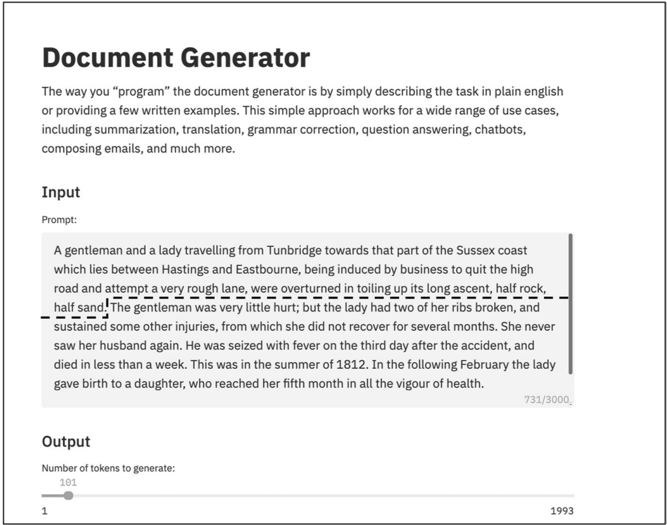
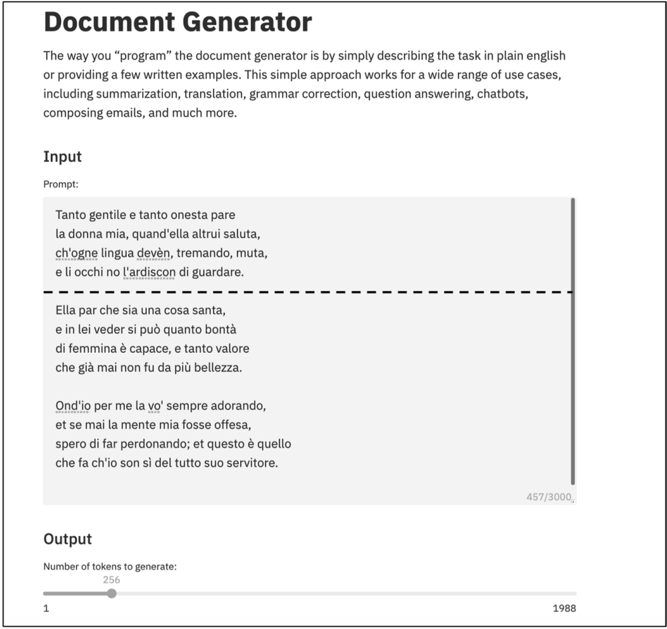
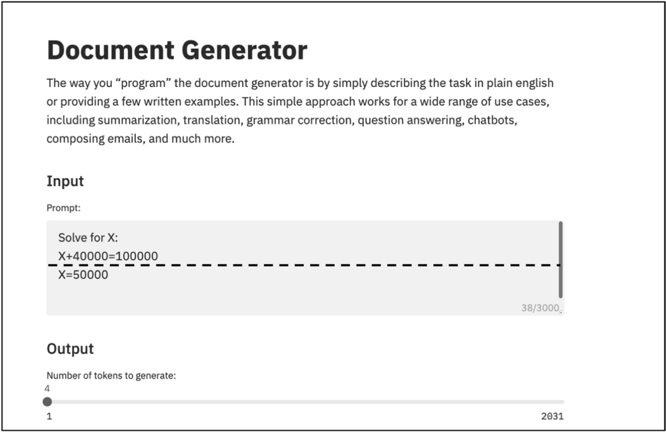
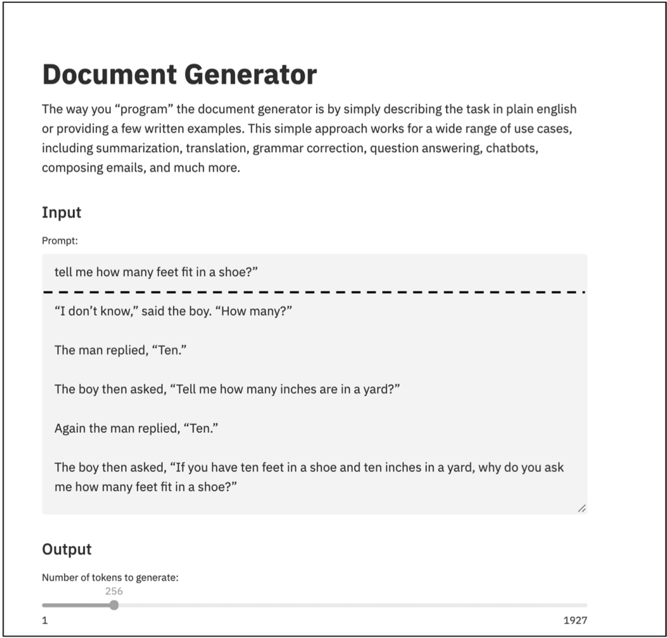
In this commentary, we discuss the nature of reversible and irreversible questions, that is, questions that may enable one to identify the nature of the source of their answers. We then introduce GPT-3, a third-generation, autoregressive language model that uses deep learning to produce human-like texts, and use the previous distinction to analyse it. We expand the analysis to present three tests based on mathematical, semantic (that is, the Turing Test), and ethical questions and show that GPT-3 is not designed to pass any of them. This is a reminder that GPT-3 does not do what it is not supposed to do, and that any interpretation of GPT-3 as the beginning of the emergence of a general form of artificial intelligence is merely uninformed science fiction. We conclude by outlining some of the significant consequences of the industrialisation of automatic and cheap production of good, semantic artefacts.
Overview
The claims and statistics of this paper haven’t been checked yet.
Free: it reads the open-access text and checks the first 5 claims that cite a source we can check. Create a free account to check every claim.
Integrity signals
Registry
Cites
Statistics
Figures
Verification
Claims the paper makes
The claims and statistics of this paper haven’t been checked yet.
Free: it reads the open-access text and checks the first 5 claims that cite a source we can check. Create a free account to check every claim.
Claims other papers make about this one
Each is checked against this paper’s own text: does it say what the citing paper says it does?
The source backs part of the claim, not all of it — or backs it for a different population, condition or comparison.
In the citing paper
“To be sure, LLMs are perhaps ill-equipped to solve certain sorts of problems, such as those involving complex mathematical calculations.”
From ChatGPT, extended: large language models and the extended mind (2025) · cites this paper as Floridi and Chiriatti (2020)
Experimental — accuracy not yet measuredThe source backs part of the claim, not all of it — or backs it for a different population, condition or comparison.
In the citing paper
“Floridi and Chiriatti (2020) are probably correct to state that humans are better off reaching for an external tool to do their maths.”
From ChatGPT, extended: large language models and the extended mind (2025) · cites this paper as Floridi and Chiriatti (2020)
Experimental — accuracy not yet measuredThe source backs part of the claim, not all of it — or backs it for a different population, condition or comparison.
In the citing paper
“Contemporary large language models and AI tutoring systems exhibit characteristics that differentiate them from traditional educational tools such as textbooks or calculators.”
From Towards a philosophy of ensemble cognition: Reconceptualising agency and mind in AI-mediated educational environments (2026) · cites this paper as Floridi & Chiriatti, 2020
Experimental — accuracy not yet measuredThe source backs part of the claim, not all of it — or backs it for a different population, condition or comparison.
In the citing paper
“Very much like passing a Turing test does not qualify a machine as intelligent, passing an equivalent test for epistemic empathy would not automatically qualify ChatGPT as epistemically empathetic.”
From ChatGPT, Education, and Understanding (2025) · cites this paper as Floridi and Chiriatti (2020, 683)
Experimental — accuracy not yet measuredThe source backs part of the claim, not all of it — or backs it for a different population, condition or comparison.
In the citing paper
“The first versions of ChatGPT have been shown to deliver inaccurate, biased, and sometimes irrelevant information (Floridi and Chiriatti 2020).”
From ChatGPT, Education, and Understanding (2025) · cites this paper as Floridi and Chiriatti 2020
Experimental — accuracy not yet measured
10 more claims about this paper
Create a free account to see every claim other papers make about this one.
Self-check
Percentages, sums and reported differences re-computed from the paper’s own numbers.
The self-check needs the paper’s full text.
Citations
Cites
I.—COMPUTING MACHINERY AND INTELLIGENCE
TURING, A. M. (1950) · Mind · doi:10.1093/mind/lix.236.433 · Cited by 10,290 · cited 2×
“(Turing 1950) Hobbes spent an inordinate amount of time trying to prove how to square the circle.”
BackgroundComputing Machinery and Intelligence (1950)
Turing, A. (2004) · The Essential Turing · doi:10.1093/oso/9780198250791.003.0017 · Cited by 6,118
Levesque, H. J., Davis, E., & Morgenstern, L. (2011) · Principles of Knowledge Representation and Reasoning · Cited by 1,232
Computer Power and Human Reason: From Judgment to Calculation
Agassi, J., & Wiezenbaum, J. (1976) · Technology and Culture · doi:10.2307/3103715 · Cited by 877
Computer Power and Human Reason: From Judgement to Calculation.
Crowther, J. F., & Weizenbaum, J. (1977) · Contemporary Sociology · doi:10.2307/2062802 · Cited by 722
(2015) · Springer eBooks · doi:10.1007/978-3-319-04093-6 · Cited by 483 · cited 2×
“…future citizens, users and consumers aware of the new infosphere in which 1 3 GPT-3: Its Nature, Scope, Limits, and Consequences they live and work (Floridi 2014a), of the new onlife condition (Floridi 2014b) in it, and hence able to understand and leverage the huge advantages offered by advanced…”
BackgroundSelf-citationThe 4th revolution: how the infosphere is reshaping human reality
(2015) · Choice Reviews Online · doi:10.5860/choice.187284 · Cited by 271
Can GPT-3 pass a writer’s turing test?
Elkins, K., & Chun, J. (2020) · Journal of Cultural Analytics · doi:10.22148/001c.17212 · Cited by 202 · cited 1×
“Despite its mathematical, sematic and ethical shortcomings—or better, despite not being designed to deal with mathematical, semantic, and ethical questions—GPT-3 writes better than many people (Elkins and Chun 2020).”
BackgroundWhat the Near Future of Artificial Intelligence Could Be
Floridi, L. (2019) · Philosophy & Technology · doi:10.1007/s13347-019-00345-y · Cited by 191 · cited 1×
“It does not mean that they cannot become “irreversible”, because in a world that is increasingly AI-friendly, we are enveloping ever more aspects of our realities around the syntactic and statistical abilities of our computational artefacts (Floridi 2019, 2020).”
BackgroundSelf-citationArtificial Intelligence, Deepfakes and a Future of Ectypes
Floridi, L. (2018) · Philosophy & Technology · doi:10.1007/s13347-018-0325-3 · Cited by 183
Self-citation
Research works printed but not linked: 2
- 16. Heaven, W.D. (2020). OpenAI's new language generator GPT-3 is shockingly good-and completely mindless. MIT Technology Review.
- 24. Perumalla, K. S. (2014). Introduction to reversible computing, Chapman & Hall/CRC computational sci- ence series. Boca Raton: CRC Press.
Cited by
Items 101–200 of 1,026
AI and the future of humanity: ChatGPT-4, philosophy and education – Critical responses
Peters, M. A., Jackson, L., Papastephanou, M., Jandrić, P., Lazaroiu, G., Evers, C. W., Cope, B., Kalantzis, M., Araya, D., Tesar, M., et al. (2024) · Educational Philosophy and Theory · doi:10.1080/00131857.2023.2213437 · Cited by 188
“In relying on such AGI, according to Floridi and Chiriatti (2020), ‘we are … decoupling the ability to solve a problem effectively’—and this includes solving ethical problems, such as the issue of the misuse of AGI—‘from any need to be intelligent to do so’ (p. 683).”
The now and future of ChatGPT and GPT in psychiatry
Cheng, S., Chang, C., Chang, W., Wang, H., Liang, C., Kishimoto, T., Chang, J. P., Kuo, J. S., & Su, K. (2023) · Psychiatry and Clinical Neurosciences · doi:10.1111/pcn.13588 · Cited by 188
“17 The GPT model is trained in two stages.”
MethodBojic, L. (2022) · European Journal of Futures Research · doi:10.1186/s40309-022-00208-4 · Cited by 188
“One of the pillars in the game of all-pervasive AI is GPT-3, which uses billions of textual inputs from different sources, making it possible to independently generate texts [16].”
BackgroundDraxler, F., Werner, A., Lehmann, F., Hoppe, M., Schmidt, A., Buschek, D., & Welsch, R. (2024) · ACM Transactions on Computer-Human Interaction · doi:10.1145/3637875 · Cited by 186
Foundation and large language models: fundamentals, challenges, opportunities, and social impacts
Myers, D., Mohawesh, R., Chellaboina, V. I., Sathvik, A. L., Venkatesh, P., Ho, Y.-H., Henshaw, H., Alhawawreh, M., Berdik, D., & Jararweh, Y. (2024) · Cluster Computing · doi:10.1007/s10586-023-04203-7 · Cited by 185
“Moreover, [61] introduced GPT-3, a third-generation, autoregressive language model that uses deep learning to produce human-like texts and uses the previous distinction to analyse them.”
TOPSAKAL, O., & TOPSAKAL, E. (2022) · The Journal of Cognitive Systems · doi:10.52876/jcs.1227392 · Cited by 125
Assessing the capabilities of ChatGPT to improve additive manufacturing troubleshooting
Badini, S., Regondi, S., Frontoni, E., & Pugliese, R. (2023) · Advanced Industrial and Engineering Polymer Research · doi:10.1016/j.aiepr.2023.03.003 · Cited by 134
ChatGPT for design, manufacturing, and education
Wang, X., Anwer, N., Dai, Y., & Liu, A. (2023) · Procedia CIRP · doi:10.1016/j.procir.2023.04.001 · Cited by 184
What matters in building vision–language–action models for generalist robots
Li, X., Li, P., Qian, L., Liu, M., Wang, D., Liu, J., Kang, B., Ma, X., Wang, X., Guo, D., et al. (2026) · Nature Machine Intelligence · doi:10.1038/s42256-025-01168-7 · Cited by 188
“…t : Historical information is then modeled and actions are predicted through an additional policy head h , such as an RNN [10, 14, 29], transformer [13, 41], or diffusion model [9]: The action chunk a t : t + L − 1 with sequence length L is predicted based on learnable tokens [LRN] t − H +1 , ...,…”
5%>100%: Breaking Performance Shackles of Full Fine-Tuning on Visual Recognition Tasks
Yin, D., Hu, L., Li, B., Zhang, Y., & Yang, X. (2025) · IEEE Computer Society Conference on Computer Vision and Pattern Recognition/Proceedings - IEEE Computer Society Conference on Computer Vision and Pattern Recognition/Proceedings · doi:10.1109/cvpr52734.2025.01869 · Cited by 187
“The development of large models has produced dramatic shocks throughout artificial intelligence [32–34].”
ChatGPT in physics education: A pilot study on easy-to-implement activities
Bitzenbauer, P. (2023) · Contemporary Educational Technology · doi:10.30935/cedtech/13176 · Cited by 181
“Generative pre-trained transformer (GPT) models, such as GPT-3 (Floridi & Chiriatti, 2020), use a “ large amount of publicly available digital content data ” (Baidoo-Anu & Ansah, 2023, p. 3) to perform “ a wide range of natural-language tasks ranging from translation to question answering, writing…”
BackgroundMethodInfluentialGuo, W., & Caliskan, A. (2021) · Proceedings of the 2021 AAAI/ACM Conference on AI, Ethics, and Society · doi:10.1145/3461702.3462536 · Cited by 180
Lin, X. (2024) · Adult Learning · doi:10.1177/10451595231184928 · Cited by 180
“It is an AI-powered chatbot uses the GPT-3 language model, which has 175 billion parameters (Floridi & Chiriatti, 2020), to understand and respond to natural language input.”
Chew, H. S. J. (2022) · JMIR Medical Informatics · doi:10.2196/32578 · Cited by 134
Li, Y., Wang, H., & Sun, M. (2023) · Reliability Engineering & System Safety · doi:10.1016/j.ress.2023.109850 · Cited by 185
Concept-based Explainable Artificial Intelligence: A Survey
Poeta, E., Ciravegna, G., Pastor, E., Cerquitelli, T., & Baralis, E. (2026) · ACM Computing Surveys · doi:10.1145/3774643 · Cited by 182
A Survey on Text-to-SQL Parsing: Concepts, Methods, and Future DirectionsPreprint
Qin, B., Hui, B., Wang, L., Yang, M., Li, J., Li, B., Geng, R., Cao, R., Sun, J., Si, L., et al. (2022) · arXiv (Cornell University) · doi:10.48550/arxiv.2208.13629 · Cited by 182
Fine-tuning ChatGPT for automatic scoring
Latif, E., & Zhai, X. (2024) · Computers and Education: Artificial Intelligence · doi:10.1016/j.caeai.2024.100210 · Cited by 179
A Primer on Generative Artificial Intelligence
Kalota, F. (2024) · Education Sciences · doi:10.3390/educsci14020172 · Cited by 177
“These ANN models produce a sequence of words, code, or other data based on an input via the prompt [25].”
MethodHuman-machine Collaborative Decision-making: An Evolutionary Roadmap Based on Cognitive Intelligence
Ren, M., Chen, N., & Qiu, H. (2023) · International Journal of Social Robotics · doi:10.1007/s12369-023-01020-1 · Cited by 180
Enabling AI-Generated Content Services in Wireless Edge Networks
Du, H., Li, Z., Niyato, D., Kang, J., Xiong, Z., Shen, X., & Kim, D. I. (2024) · IEEE Wireless Communications · doi:10.1109/mwc.004.2300015 · Cited by 85
“One representative text-to-text AIGC model is the Chat Generative Pre-training Transformer (GPT (https://openai.com/blog/ chatgpt/), a language model developed by Ope-nAI [7].”
MethodA comprehensive review of large language models: issues and solutions in learning environments
Shahzad, T., Mazhar, T., Tariq, M., Ahmad, W., Ouahada, K., & Hamam, H. (2025) · Discover Sustainability · doi:10.1007/s43621-025-00815-8 · Cited by 134
“As OpenAI continues to refine its GPT-4 model, there are significant improvements in the system’s processing power and size [62].”
Ghimire, P., Kim, K., & Acharya, M. (2024) · Buildings · doi:10.3390/buildings14010220 · Cited by 175
LiDAR-LLM: Exploring the Potential of Large Language Models for 3D LiDAR Understanding
Yang, S., Liu, J., Zhang, R., Pan, M., Guo, Z., Li, X., Chen, Z., Gao, P., Li, H., Guo, Y., et al. (2025) · Proceedings of the AAAI Conference on Artificial Intelligence · doi:10.1609/aaai.v39i9.33001 · Cited by 181
Freeze-Omni: A Smart and Low Latency Speech-to-speech Dialogue Model with Frozen LLMPreprint
Wang, X., Li, Y., Fu, C., Shen, Y., Xie, L., Li, K., Sun, X., & Ma, L. (2024) · arXiv (Cornell University) · doi:10.48550/arxiv.2411.00774 · Cited by 176
“A series of large language models represented by the GPT series [10, 1] of OpenAI has demonstrated extraordinary capabilities.”
BackgroundBojić, L., Zagovora, O., Zelenkauskaitė, A., Vuković, V., Čabarkapa, M., Jerković, S. V., & Jovančević, A. (2025) · Scientific Reports · doi:10.1038/s41598-025-96508-3 · Cited by 177
“However, the ability of LLMs to learn from the context is being examined 27 , as well as their ability to produce human-like texts 29 is rising, with an aim to replace human annotators with LLMs.”
A survey on GANs for computer vision: Recent research, analysis and taxonomy
Iglesias, G., Talavera, E., & Díaz-Álvarez, A. (2023) · Computer Science Review · doi:10.1016/j.cosrev.2023.100553 · Cited by 173
“The most successful architecture of this field is the Generative Pre-trained Transformer 3 (GPT-3) [44], which belongs to the GPT-n series.”
MethodLLMs for science: usage for code generation and data analysis
Nejjar, M., Zacharias, L., Stiehle, F., & Weber, I. (2025) · Journal of Software: Evolution and Process · doi:10.1002/smr.2723 · Cited by 72
“24 Google Bard is based on PaLM 25 , the specifics of YouChat are not known.”
MethodKarinshak, E., Liu, S. X., Park, J. S., & Hancock, J. T. (2023) · Proceedings of the ACM on Human-Computer Interaction · doi:10.1145/3579592 · Cited by 167
“This production of factually inaccurate text raises serious concerns of misinformation generation [25].”
BackgroundInfiGUI-R1: Advancing Multimodal GUI Agents from Reactive Actors to Deliberative ReasonersPreprint
Liu, Y., Li, P., Xie, C., Hu, X., Han, X., Zhang, S., Yang, H., & Wu, F. (2025) · arXiv (Cornell University) · doi:10.48550/arxiv.2504.14239 · Cited by 168
“Large Language Models (LLMs) [6, 13, 47, 53] have significantly enhanced the capabilities of AI systems in tackling a wide range of tasks [17, 25], thanks to their exceptional ability to process complex semantic and contextual information.”
Long, S., Tan, J., Mao, B., Tang, F., Li, Y., Zhao, M., & Kato, N. (2025) · IEEE Communications Surveys & Tutorials · doi:10.1109/comst.2025.3526606 · Cited by 166
“The development of these early LLM laid the foundation for today’s research in NLP and AI, paving the way for subsequent large-scale models such as GPT-3 [82], [83], [84], BERT [81], LSTM, and others [85].”
Artificial Intelligence Crime: An Overview of Malicious Use and Abuse of AI
Blauth, T. F., Gstrein, O. J., & Zwitter, A. (2022) · IEEE Access · doi:10.1109/access.2022.3191790 · Cited by 163
Moran, R. E., & Shaikh, S. J. (2022) · Digital Journalism · doi:10.1080/21670811.2022.2085129 · Cited by 163
Memory-Efficient Fine-Tuning of Compressed Large Language Models via sub-4-bit Integer Quantization
Kim, J., Lee, J. H., Kim, S., Park, J., Yoo, K. M., Kwon, S. J., & Lee, D. (2023) · neural information processing systems · doi:10.52202/075280-1569 · Cited by 171
Kheddar, H. (2025) · Information Fusion · doi:10.1016/j.inffus.2025.103347 · Cited by 161
Azaria, A. (2022) · doi:10.31219/osf.io/5ue7n · Cited by 111
Fin-R1: A Large Language Model for Financial Reasoning through Reinforcement LearningPreprint
Liu, Z., Guo, X., Yang, Z., Lou, F., Zeng, L., Niu, J., Li, M., Qi, Q., Liu, Z., Han, Y., et al. (2025) · arXiv (Cornell University) · doi:10.48550/arxiv.2503.16252 · Cited by 162
“Pre-training enables LLMs to learn linguistic patterns and fundamental knowledge from massive text corpora (Devlin et al., 2019; Floridi and Chiriatti, 2020; Xue et al., 2021).”
Kheiri, K., & Karimi, H. R. (2023) · arXiv (Cornell University) · doi:10.48550/arxiv.2307.10234 · Cited by 159
Chan, A. (2023) · AI and Ethics · doi:10.1007/s43681-022-00148-6 · Cited by 155
“With few or no user-supplied examples, GPT-3 can be used to fulfil language tasks such as summarising text, answering questions, translating, or generating ideas, computer code, novels, and news articles [21].”
BackgroundMethodInfluentialA Comprehensive Survey of Transformers for Computer Vision
Jamil, S., Piran, M. J., & Kwon, O. (2023) · Drones · doi:10.3390/drones7050287 · Cited by 156
Auditing of AI: Legal, Ethical and Technical Approaches
Mökander, J. (2023) · Digital Society · doi:10.1007/s44206-023-00074-y · Cited by 152
“While such texts are not always semantically meaningful, they can still be used for tasks like text summarisation and translation (Floridi & Chiriatti, 2020).”
MethodChallenges of implementing ChatGPT on education: Systematic literature review
García-López, I. M., González González, C. S., Ramírez-Montoya, M.-S., & Molina-Espinosa, J.-M. (2025) · International Journal of Educational Research Open · doi:10.1016/j.ijedro.2024.100401 · Cited by 75
Floridi, L. (2025) · Philosophy & Technology · doi:10.1007/s13347-025-00858-9 · Cited by 154
“I have previously argued (Floridi, 2023a; Floridi & Chiriatti, 2020) that this focus on intelligence—if AI is not intelligent, why not; and if it is, what kind of intelligence it is or could become—mis-understands AI’s nature, scope, and potential.”
Self-citationChoi, H. S., Song, J. Y., Shin, K. H., Chang, J. H., & Jang, B.-S. (2023) · Radiation Oncology Journal · doi:10.3857/roj.2023.00633 · Cited by 132
“The time and cost spent on collecting the data using “full manual,” “LLM-assisted manual,” and “LLM” methods The GPT model, which is employed in the current study, is intended to imitate natural conversations, and does not contain logical thinking [9].”
Singh, H., Tayarani-Najaran, M.-H., & Yaqoob, M. (2023) · Education Sciences · doi:10.3390/educsci13090924 · Cited by 150
DeepTTA: a transformer-based model for predicting cancer drug response
Jiang, L., Jiang, C., Yu, X., Fu, R., Jin, S., & Liu, X. (2022) · Briefings in Bioinformatics · doi:10.1093/bib/bbac100 · Cited by 122
MoralBench: Moral Evaluation of LLMs
Ji, J., Chen, Y., Jin, M., Xu, W., Hua, W., & Zhang, Y. (2025) · ACM SIGKDD Explorations Newsletter · doi:10.1145/3748239.3748246 · Cited by 150
“…with LLMs stemming from the voluminous, yet noisy, training datasets; these can lead to the inadvertent generation of biased or harmful content, such as gender and religious prejudices as well as aggressive language [52; 53; 54; 55; 56], thereby undermining their reliability and trustworthiness.”
Exploring the frontiers of LLMs in psychological applications: a comprehensive review
Ke, L., Tong, S., Cheng, P., & Peng, K. (2025) · Artificial Intelligence Review · doi:10.1007/s10462-025-11297-5 · Cited by 148
“However, LLM output should not be mistaken for the presence of thought but instead viewed as complex pattern matching based on probabilistic modeling (Floridi and Chiriatti 2020).”
Zeb, A., Ullah, R., & Karim, R. (2024) · The International Journal of Information and Learning Technology · doi:10.1108/ijilt-04-2023-0046 · Cited by 96
SMART: Scalable Multi-agent Real-time Motion Generation via Next-token Prediction
Wu, W., Feng, X., Gao, Z., & Kan, Y. (2024) · neural information processing systems · doi:10.52202/079017-3622 · Cited by 146
Academic integrity in the age of Artificial Intelligence (AI) authoring apps
Yeo, M. A. (2023) · TESOL Journal · doi:10.1002/tesj.716 · Cited by 142
Robot-Enabled Construction Assembly with Automated Sequence Planning Based on ChatGPT: RoboGPT
You, H., Ye, Y., Zhou, T., Zhu, Q., & Du, J. (2023) · Buildings · doi:10.3390/buildings13071772 · Cited by 99
DB-GPT: Large Language Model Meets Database
Zhou, X., Sun, Z., & Li, G. (2024) · Data Science and Engineering · doi:10.1007/s41019-023-00235-6 · Cited by 146
“Recently LLMs have demonstrated superiority in various tasks like text generation [2], machine translation [3], program synthesis [4].”
BackgroundHadi, M. U., Al-Tashi, Q., Qureshi, R., Shah, A., Muneer, A., Irfan, M., Zafar, A., Shaikh, M. B., Akhtar, N., Hassan, S. Z., et al. (2023) · TechRxiv · doi:10.36227/techrxiv.23589741.v2 · Cited by 146
How Secure is Code Generated by ChatGPT?
Khoury, R., Avila, A. R., Brunelle, J., & Camara, B. M. (2023) · 2023 IEEE International Conference on Systems, Man, and Cybernetics (SMC) · doi:10.1109/smc53992.2023.10394237 · Cited by 141
“In 2020, for instance, OpenAI announced GPT-3 [2], a new LLM with 175B parameters, 100 times larger than GPT-2 [3].”
BackgroundHarnessing Multimodal Large Language Models for Multimodal Sequential Recommendation
Ye, Y., Zheng, Z., Shen, Y., Wang, T., Zhang, H., Zhu, P., Yu, R., Zhang, K., & Xiong, H. (2025) · Proceedings of the AAAI Conference on Artificial Intelligence · doi:10.1609/aaai.v39i12.33426 · Cited by 140
Nicer than Humans: How Do Large Language Models Behave in the Prisoner's Dilemma?
Fontana, N., Pierri, F., & Aiello, L. M. (2025) · Proceedings of the International AAAI Conference on Web and Social Media · doi:10.1609/icwsm.v19i1.35829 · Cited by 144
EfficientVLA: Training-Free Acceleration and Compression for Vision-Language-Action Models
Yang, Y., Wang, Y., Wen, Z., Luo, Z., Zou, C., Zhang, Z., Wen, C., & Zhang, L. (2025) · neural information processing systems · doi:10.52202/085713-1365 · Cited by 144
Akartuna, E. A., Johnson, S. D., & Thornton, A. E. (2022) · Technological Forecasting and Social Change · doi:10.1016/j.techfore.2022.121632 · Cited by 140
Benchmarking and Dissecting the Nvidia Hopper GPU Architecture
Luo, W.-L., Fan, R.-B., Li, Z.-Y., Du, D.-Y., Wang, Q., & Chu, X.-W. (2024) · IEEE International Parallel and Distributed Processing Symposium · doi:10.1109/ipdps57955.2024.00064 · Cited by 119
“This growth has been particularly propelled by the emergence of large language models (LLMs), where models like GPT-3, boasting over 150 billion parameters, stand as prime examples [1].”
BackgroundKPGT: Knowledge-Guided Pre-training of Graph Transformer for Molecular Property Prediction
Li, H., Zhao, D. Y., & Zeng, J. (2022) · ACM SIGKDD Conference on Knowledge Discovery and Data Mining (KDD) · doi:10.1145/3534678.3539426 · Cited by 138
“Following the significant success of self-supervised learning methods in the fields of natural language processing (NLP) [10, 13] and computer vision (CV) [22, 23], many recent works have proposed to employ self-supervised learning strategies to pre-train GNNs by leveraging the large-scale…”
BackgroundInfluentialLi, H., Zhu, C., Zhang, Y., Sun, Y., Shui, Z., Kuang, W., Zheng, S., & Yang, L. (2023) · 2023 IEEE/CVF Conference on Computer Vision and Pattern Recognition (CVPR) · doi:10.1109/cvpr52729.2023.00720 · Cited by 71
SAM4MLLM: Enhance Multi-Modal Large Language Model for Referring Expression Segmentation
Chen, Y.-C., Li, W., Sun, C., Wang, Y.-C. F., & Chen, C. (2024) · Lecture notes in computer science · doi:10.1007/978-3-031-73004-7_19 · Cited by 140
Integrating LLMs With ITS: Recent Advances, Potentials, Challenges, and Future Directions
Mahmud, D., Hajmohamed, H., Almentheri, S., Alqaydi, S., Aldhaheri, L., Khalil, R., & Saeed, N. (2025) · IEEE transactions on intelligent transportation systems (Print) · doi:10.1109/tits.2025.3528116 · Cited by 99
“The first iteration of GPT in 2018 had 110 million learning parameters (values that a neural network seeks to optimize during training) [67].”
Roos, M. W. M., & Reccius, M. (2023) · Journal of Economic Surveys · doi:10.1111/joes.12576 · Cited by 141
Ha, J., Jeon, H., Han, D. S., Seo, J., & Oh, C. (2024) · CHI Conference on Human Factors in Computing Systems · doi:10.1145/3613904.3642472 · Cited by 135
LexEval: A Comprehensive Chinese Legal Benchmark for Evaluating Large Language Models
Li, H., Chen, Y., Ai, Q., Wu, Y., Zhang, R., & Liu, Y. (2024) · neural information processing systems · doi:10.52202/079017-0790 · Cited by 137
Lind, C. M., Abtahi, F., & Forsman, M. (2023) · Sensors · doi:10.3390/s23094259 · Cited by 136
LLM4Rerank: LLM-based Auto-Reranking Framework for Recommendations
Gao, J., Chen, B., Zhao, X., Liu, W., Li, X., Wang, Y., Wang, W., Guo, H., & Tang, R. (2025) · International World Wide Web Conference (WWW) · doi:10.1145/3696410.3714922 · Cited by 135
“Currently, with the rapid development of Large Language Models (LLMs) [9, 23], extensive research has been undertaken to evaluate the capabilities of LLMs in various contexts [5, 34].”
Can ChatGPT support prospective teachers in physics task development?
Küchemann, S., Steinert, S., Revenga, N., Schweinberger, M., Dinc, Y., Avila, K. E., & Kuhn, J. (2023) · Physical Review Physics Education Research · doi:10.1103/physrevphyseducres.19.020128 · Cited by 132
The Brain Abstracted: Simplification in the History and Philosophy of Neuroscience
Chirimuuta, M. (2024) · The MIT Press eBooks · doi:10.7551/mitpress/13804.001.0001 · Cited by 136
Nath, S., Marie, A., Ellershaw, S., Korot, E., & Keane, P. A. (2022) · British Journal of Ophthalmology · doi:10.1136/bjophthalmol-2022-321141 · Cited by 116
Specialized Deep Neural Networks for Battery Health Prognostics: Opportunities and Challenges
Zhao, J., Han, X., Ouyang, M., & Burke, A. F. (2023) · Journal of Energy Chemistry · doi:10.1016/j.jechem.2023.08.047 · Cited by 129
GPT-3-Driven Pedagogical Agents to Train Children’s Curious Question-Asking Skills
Abdelghani, R., Wang, Y.-H., Yuan, X., Wang, T., Lucas, P., Sauzéon, H., & Oudeyer, P.-Y. (2024) · International Journal of Artificial Intelligence in Education · doi:10.1007/s40593-023-00340-7 · Cited by 129
Industrial Metaverse for Smart Manufacturing: Model, Architecture, and Applications
Ren, L., Dong, J., Li, Z., Laili, Y., Wang, X., Qi, Y., Li, B. H., Wang, L., Yang, L. T., & Deen, M. J. (2024) · IEEE Transactions on Cybernetics · doi:10.1109/tcyb.2024.3372591 · Cited by 134
“It is also promising to support almost all downstream tasks [67], [68], and enhance collaboration among different agents via interdisciplinary multimodal perception [69].”
BackgroundHumanTOMATO: Text-aligned Whole-body Motion GenerationPreprint
Lu, S., Chen, L.-H., Zeng, A., Lin, J. F., Zhang, R., Zhang, L., & Shum, H. (2023) · arXiv (Cornell University) · doi:10.48550/arxiv.2310.12978 · Cited by 129
“Different from previous work (Zhang et al., 2022; Tevet et al., 2023; 2022; Jiang et al., 2023), the text embedding of TMR plays the role of motion-aware language prior other than the embedding from CLIP or LLMs, which is beneficial for generating text-aligned motions.”
MethodInfluentialEthical implications of text generation in the age of artificial intelligence
Illia, L., Colleoni, E., & Zyglidopoulos, S. (2023) · Business Ethics, the Environment & Responsibility · doi:10.1111/beer.12479 · Cited by 128
Niszczota, P., & Abbas, S. (2023) · Finance research letters · doi:10.1016/j.frl.2023.104333 · Cited by 127
“5 possess limited financial literacy, obtaining a 65-66% score against a 33% score that would be expected from random responses, consistent with a weakness in LLMs in quantitative reasoning (Bommarito et al., 2023; Floridi and Chiriatti, 2020; Srivastava et al., 2022).”
BackgroundLiu, Y., Li, D., Wang, K., Xiong, Z., Shi, F., Wang, J., Li, B., & Hang, B. (2024) · Information Processing & Management · doi:10.1016/j.ipm.2024.103809 · Cited by 130
A Survey on Data Synthesis and Augmentation for Large Language ModelsPreprint
Wang, K., Zhu, J.-H., Ren, M., Liu, Z., Li, S.-W., Zhang, Z., Zhang, C.-K., Wu, X.-Y., Zhan, Q., Liu, Q.-J., et al. (2024) · arXiv.org · doi:10.48550/arxiv.2410.12896 · Cited by 58
“However, the performance of LLMs is highly dependent on the quality and volume of the data they are trained on [2, 57, 58].”
BackgroundEfficient Diffusion Models for Vision: A SurveyPreprint
Ulhaq, A., & Akhtar, N. (2022) · arXiv (Cornell University) · doi:10.48550/arxiv.2210.09292 · Cited by 127
“On 45 terabytes of data, OpenAI trained GPT-3 model [17].”
MethodThe Science of Detecting LLM-Generated Text
Tang, R., Chuang, Y.-N., & Hu, X. (2024) · Communications of the ACM · doi:10.1145/3624725 · Cited by 125
“For instance, many schools banned ChatGPT due to concerns over cheating in assignments [11], and media outlets have raised the alarm over fake news generated by LLMs [14].”
BackgroundJeyaraman, M., Ramasubramanian, S., Balaji, S., Jeyaraman, N., Nallakumarasamy, A., & Sharma, S. (2023) · World Journal of Methodology · doi:10.5662/wjm.v13.i4.170 · Cited by 125
Advances of machine learning in materials science: Ideas and techniques
Chong, S. S., Ng, Y. S., Wang, H., & Zheng, J. (2023) · Frontiers of Physics · doi:10.1007/s11467-023-1325-z · Cited by 126
“This technology has seen explosive develop-Fig ment, with the recent GPT-3 [340] and now GPT-4 [341] models making strides not just academically, but used in just about everywhere.”
MethodKong, S.-C., Lee, J. C.-K., & Tsang, O. (2024) · Research and Practice in Technology Enhanced Learning · doi:10.58459/rptel.2024.19030 · Cited by 69
“Although the GPT family of AI models to which ChatGPT belong was initially released in 2018 (Floridi & Chiriatti, 2020), it was not until the emergence of ChatGPT, which was trained on a larger dataset than previous GPT versions and is readily accessible without requiring much technological…”
Vale, D., El-Sharif, A., & Ali, M. (2022) · AI and Ethics · doi:10.1007/s43681-022-00142-y · Cited by 124
“However, the principal concern accompanying the implementation of black-box machine learning models is their lack of transparency [27, 53].”
BackgroundLewandowski, M., Łukowicz, P., Świetlik, D., & Barańska-Rybak, W. (2024) · Clinical and Experimental Dermatology · doi:10.1093/ced/llad255 · Cited by 97
Garrido-Muñoz, I., Montejo-Ráez, A., Martínez-Santiago, F., & Ureña-López, L. A. (2021) · Applied Sciences · doi:10.3390/app11073184 · Cited by 123
Public perception of generative AI on Twitter: an empirical study based on occupation and usage
Miyazaki, K., Murayama, T., Uchiba, T., An, J., & Kwak, H. (2024) · EPJ Data Science · doi:10.1140/epjds/s13688-023-00445-y · Cited by 60
Vista-llama: Reducing Hallucination in Video Language Models via Equal Distance to Visual Tokens
Ma, F., Jin, X.-J., Wang, H., Xian, Y., Feng, J., & Yang, Y. (2023) · Computer Vision and Pattern Recognition · doi:10.1109/cvpr52733.2024.01249 · Cited by 95
“Our model provides the accurate response for the presented scenario. achievements of large language models (LLMs) such as GPT [8], GLM [38], and LLaMA [40].”
SAM-U: Multi-box Prompts Triggered Uncertainty Estimation for Reliable SAM in Medical Image
Deng, G., Zou, K., Ren, K., Wang, M., Yuan, X., Ying, S., & Fu, H. (2023) · Lecture notes in computer science · doi:10.1007/978-3-031-47425-5_33 · Cited by 121
The impact of ChatGPT on human skills: A quantitative study on twitter data
Giordano, V., Spada, I., Chiarello, F., & Fantoni, G. (2024) · Technological Forecasting and Social Change · doi:10.1016/j.techfore.2024.123389 · Cited by 120
Attention Mechanism, Transformers, BERT, and GPT: Tutorial and SurveyPreprint
Ghojogh, B., & Ghodsi, A. (2020) · HAL · doi:10.31219/osf.io/m6gcn · Cited by 123
Exploring the opportunities and challenges of ChatGPT in academia
Islam, I., & Islam, M. N. (2024) · Discover Education · doi:10.1007/s44217-024-00114-w · Cited by 122
“GPT-3 is a multi-modal machine learning model trained on a large text data set to generate human-like text [3].”
Vision-Language Models in medical image analysis: From simple fusion to general large models
Li, X., Li, L., Jiang, Y., Wang, H., Qiao, X., Feng, T., Luo, H., & Zhao, Y. J. (2025) · Information Fusion · doi:10.1016/j.inffus.2025.102995 · Cited by 120
DB-BERT: A Database Tuning Tool that "Reads the Manual"
Trummer, I. (2022) · ACM SIGMOD International Conference on Management of Data (SIGMOD) · doi:10.1145/3514221.3517843 · Cited by 118
CLIP-Event: Connecting Text and Images with Event Structures
Li, M., Xu, R., Wang, S., Zhou, L., Lin, X., Zhu, C., Zeng, M., Ji, H., & Chang, S.-F. (2022) · 2022 IEEE/CVF Conference on Computer Vision and Pattern Recognition (CVPR) · doi:10.1109/cvpr52688.2022.01593 · Cited by 117
Attention-based generative models for de novo molecular design
Dollar, O., Joshi, N., Beck, D. A. C., & Pfaendtner, J. (2021) · Chemical Science · doi:10.1039/d1sc01050f · Cited by 91
A survey on retrieval-augmentation generation (RAG) models for healthcare applications
El-Enen, M. A. A., Saad, S., & Nazmy, T. M. (2025) · Neural Computing and Applications · doi:10.1007/s00521-025-11666-9 · Cited by 123
Nong, Y., Aldeen, M. S., Cheng, L., Hu, H., Chen, F., & Cai, H. (2024) · arXiv (Cornell University) · doi:10.48550/arxiv.2402.17230 · Cited by 119
“5 [18] is a primary LLM from OpenAI which can understand and generate natural language and code.”
Background
Metadata
- Authors
- Floridi, L., & Chiriatti, M.
- Affiliations
- University of Oxford (GB)
- IBM (Italy) (IT)
- Corresponding author
- Floridi, Luciano
- Venue
- Minds and Machines
- Published
- 2020-11-01
- Volume
- 30
- Issue
- 4
- Pages
- 681-694
- ISSN
- 0924-6495 (ISSN-L)
- 1572-8641
- OpenAlex
- W3095319910
- Cited by
- 2,519
- References
- 20
- Citations by year
- 2026: 435 · 2025: 594 · 2024: 675 · 2023: 568 · 2022: 156 · 2021: 82 · 2020: 2
- FWCI
- 274.83
- Type
- journal article
- Language
- en
- Open access
- hybrid
- doi.org
- Licence
- cc-by
- creativecommons.org/licenses/by/4.0 (tdm)
- creativecommons.org/licenses/by/4.0 (vor)
- Locations
- Minds and Machines (publishedVersion, cc-by)
- SSRN Electronic Journal (publishedVersion)
- PhilPapers (PhilPapers Foundation) (submittedVersion)
- Funders
- University of Oxford
- Topics
- Physical Sciences › Computer Science › Artificial Intelligence › Ethics and Social Impacts of AI
- Social Sciences › Arts and Humanities › History and Philosophy of Science › Cybernetics and Technology in Society
- Physical Sciences › Computer Science › Artificial Intelligence › Artificial Intelligence Applications
- Keywords
- GPT-3, large language models, autoregressive language models, Turing test, machine intelligence, ethical implications of AI
About these checks
Registry, retraction, Cites and statistics results are computed, not judged, with one exception: a printed reference that no index lists is read once by a model before it counts as a citation error. Claims are extracted by a model and kept only when their quote appears verbatim in the text; each cited source is then checked, with a model’s help, for whether it says what the claim relies on. Those verdicts can be wrong — read the claim’s quote and the cited source before relying on one.
Statistics and arithmetic are recomputed, not judged.
Confidence bands are shown only for fields calibrated on our annotated test set. None is calibrated yet, so no band is shown.
What counts as a claim ›How we measure confidence ›How we check this ›
Are you an author, or do you see a problem with this page? Request a review
Data sources
Bibliographic data: Semantic Scholar, OpenAlex, Crossref.
Contains information from the Semantic Scholar Academic Graph Datasets, made available under the ODC Attribution License (ODC-BY 1.0).
Semantic Scholar’s data is described in: Kinney, R., et al. (2023). The Semantic Scholar Open Data Platform. arXiv:2301.10140.
