

GPT-3: Its Nature, Scope, Limits, and Consequences
Open accessThe DOI matches its Crossref record; 20 of the 20 references it cites were found in a registry or an index.
Abstract
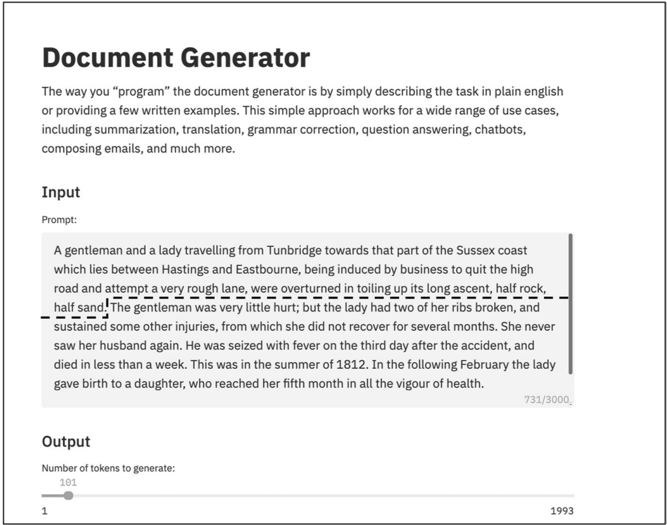
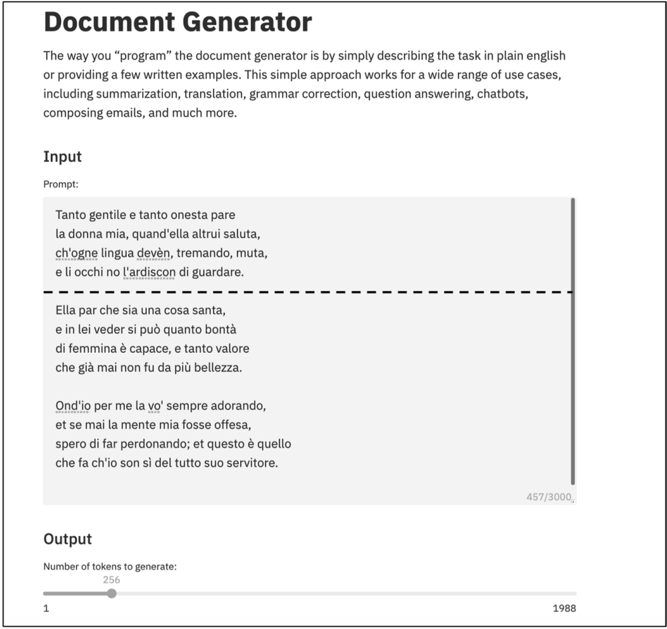
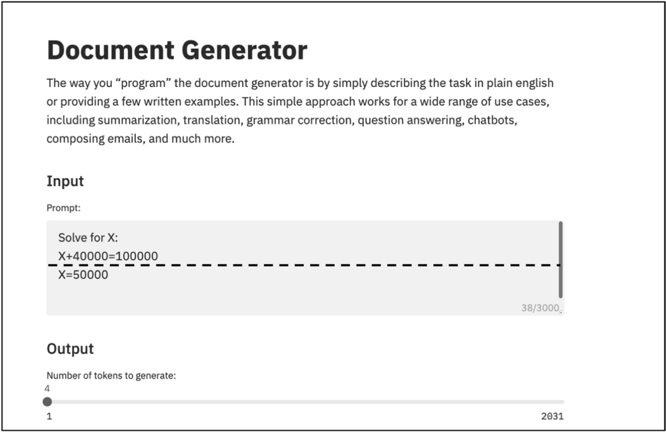
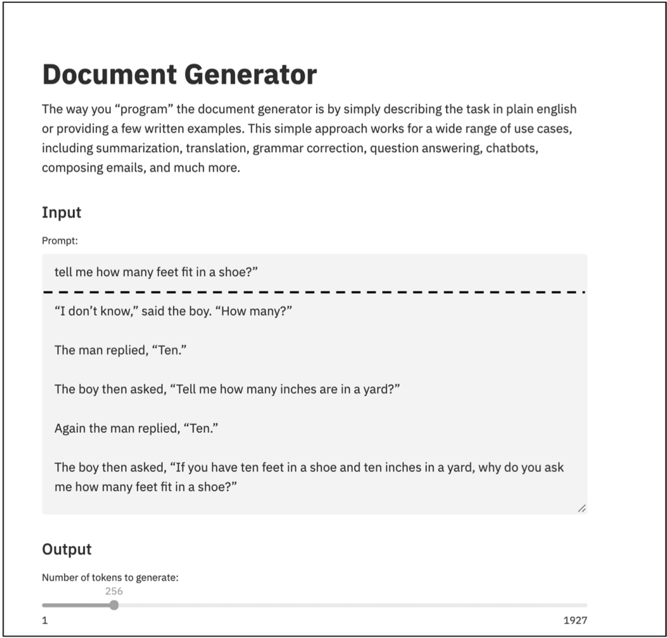
In this commentary, we discuss the nature of reversible and irreversible questions, that is, questions that may enable one to identify the nature of the source of their answers. We then introduce GPT-3, a third-generation, autoregressive language model that uses deep learning to produce human-like texts, and use the previous distinction to analyse it. We expand the analysis to present three tests based on mathematical, semantic (that is, the Turing Test), and ethical questions and show that GPT-3 is not designed to pass any of them. This is a reminder that GPT-3 does not do what it is not supposed to do, and that any interpretation of GPT-3 as the beginning of the emergence of a general form of artificial intelligence is merely uninformed science fiction. We conclude by outlining some of the significant consequences of the industrialisation of automatic and cheap production of good, semantic artefacts.
Overview
The claims and statistics of this paper haven’t been checked yet.
Free: it reads the open-access text and checks the first 5 claims that cite a source we can check. Create a free account to check every claim.
Integrity signals
Registry
Cites
Statistics
Figures
Verification
Claims the paper makes
The claims and statistics of this paper haven’t been checked yet.
Free: it reads the open-access text and checks the first 5 claims that cite a source we can check. Create a free account to check every claim.
Claims other papers make about this one
Each is checked against this paper’s own text: does it say what the citing paper says it does?
The source backs part of the claim, not all of it — or backs it for a different population, condition or comparison.
In the citing paper
“To be sure, LLMs are perhaps ill-equipped to solve certain sorts of problems, such as those involving complex mathematical calculations.”
From ChatGPT, extended: large language models and the extended mind (2025) · cites this paper as Floridi and Chiriatti (2020)
Experimental — accuracy not yet measuredThe source backs part of the claim, not all of it — or backs it for a different population, condition or comparison.
In the citing paper
“Floridi and Chiriatti (2020) are probably correct to state that humans are better off reaching for an external tool to do their maths.”
From ChatGPT, extended: large language models and the extended mind (2025) · cites this paper as Floridi and Chiriatti (2020)
Experimental — accuracy not yet measuredThe source backs part of the claim, not all of it — or backs it for a different population, condition or comparison.
In the citing paper
“Contemporary large language models and AI tutoring systems exhibit characteristics that differentiate them from traditional educational tools such as textbooks or calculators.”
From Towards a philosophy of ensemble cognition: Reconceptualising agency and mind in AI-mediated educational environments (2026) · cites this paper as Floridi & Chiriatti, 2020
Experimental — accuracy not yet measuredThe source backs part of the claim, not all of it — or backs it for a different population, condition or comparison.
In the citing paper
“Very much like passing a Turing test does not qualify a machine as intelligent, passing an equivalent test for epistemic empathy would not automatically qualify ChatGPT as epistemically empathetic.”
From ChatGPT, Education, and Understanding (2025) · cites this paper as Floridi and Chiriatti (2020, 683)
Experimental — accuracy not yet measuredThe source backs part of the claim, not all of it — or backs it for a different population, condition or comparison.
In the citing paper
“The first versions of ChatGPT have been shown to deliver inaccurate, biased, and sometimes irrelevant information (Floridi and Chiriatti 2020).”
From ChatGPT, Education, and Understanding (2025) · cites this paper as Floridi and Chiriatti 2020
Experimental — accuracy not yet measured
10 more claims about this paper
Create a free account to see every claim other papers make about this one.
Self-check
Percentages, sums and reported differences re-computed from the paper’s own numbers.
The self-check needs the paper’s full text.
Citations
Cites
I.—COMPUTING MACHINERY AND INTELLIGENCE
TURING, A. M. (1950) · Mind · doi:10.1093/mind/lix.236.433 · Cited by 10,290 · cited 2×
“(Turing 1950) Hobbes spent an inordinate amount of time trying to prove how to square the circle.”
BackgroundComputing Machinery and Intelligence (1950)
Turing, A. (2004) · The Essential Turing · doi:10.1093/oso/9780198250791.003.0017 · Cited by 6,118
Levesque, H. J., Davis, E., & Morgenstern, L. (2011) · Principles of Knowledge Representation and Reasoning · Cited by 1,232
Computer Power and Human Reason: From Judgment to Calculation
Agassi, J., & Wiezenbaum, J. (1976) · Technology and Culture · doi:10.2307/3103715 · Cited by 877
Computer Power and Human Reason: From Judgement to Calculation.
Crowther, J. F., & Weizenbaum, J. (1977) · Contemporary Sociology · doi:10.2307/2062802 · Cited by 722
(2015) · Springer eBooks · doi:10.1007/978-3-319-04093-6 · Cited by 483 · cited 2×
“…future citizens, users and consumers aware of the new infosphere in which 1 3 GPT-3: Its Nature, Scope, Limits, and Consequences they live and work (Floridi 2014a), of the new onlife condition (Floridi 2014b) in it, and hence able to understand and leverage the huge advantages offered by advanced…”
BackgroundSelf-citationThe 4th revolution: how the infosphere is reshaping human reality
(2015) · Choice Reviews Online · doi:10.5860/choice.187284 · Cited by 271
Can GPT-3 pass a writer’s turing test?
Elkins, K., & Chun, J. (2020) · Journal of Cultural Analytics · doi:10.22148/001c.17212 · Cited by 202 · cited 1×
“Despite its mathematical, sematic and ethical shortcomings—or better, despite not being designed to deal with mathematical, semantic, and ethical questions—GPT-3 writes better than many people (Elkins and Chun 2020).”
BackgroundWhat the Near Future of Artificial Intelligence Could Be
Floridi, L. (2019) · Philosophy & Technology · doi:10.1007/s13347-019-00345-y · Cited by 191 · cited 1×
“It does not mean that they cannot become “irreversible”, because in a world that is increasingly AI-friendly, we are enveloping ever more aspects of our realities around the syntactic and statistical abilities of our computational artefacts (Floridi 2019, 2020).”
BackgroundSelf-citationArtificial Intelligence, Deepfakes and a Future of Ectypes
Floridi, L. (2018) · Philosophy & Technology · doi:10.1007/s13347-018-0325-3 · Cited by 183
Self-citation
Research works printed but not linked: 2
- 16. Heaven, W.D. (2020). OpenAI's new language generator GPT-3 is shockingly good-and completely mindless. MIT Technology Review.
- 24. Perumalla, K. S. (2014). Introduction to reversible computing, Chapman & Hall/CRC computational sci- ence series. Boca Raton: CRC Press.
Cited by
Items 401–500 of 1,026
CoTDet: Affordance Knowledge Prompting for Task Driven Object Detection
Tang, J., Zheng, G., Yu, J., & Yang, S. (2023) · IEEE/CVF International Conference on Computer Vision (ICCV) · doi:10.1109/iccv51070.2023.00285 · Cited by 57
Promising the future, encoding the past: AI hype and public media imagery
Dežman, D. V. (2024) · AI and Ethics · doi:10.1007/s43681-024-00474-x · Cited by 57
“The images generated by DALL·E 2, and stock images, might both be recalled by “the industrialisation of automatic and cheap production of good, semantic artefacts” [53].”
Investigating Why Contrastive Learning Benefits Robustness Against Label NoisePreprint
Xue, Y., Whitecross, K., & Mirzasoleiman, B. (2022) · arXiv (Cornell University) · doi:10.48550/arxiv.2201.12498 · Cited by 60
“Floridi & Chiriatti, 2020).”
Survey of Social Bias in Vision-Language ModelsPreprint
Lee, N., Bang, Y., Lovenia, H., Cahyawijaya, S., Dai, W., & Fung, P. (2023) · arXiv.org · doi:10.48550/arxiv.2309.14381 · Cited by 39
“The former is commonly done pre-trained language models such as BERT [47] and GPT [59, 135], while the latter is often done in word embeddings by modifying the word or sentence representations of pre-trained word embeddings.”
MethodChatGPT in higher education—a student's perspective
Shuhaiber, A., Kuhail, M. A., & Salman, S. (2025) · Computers in Human Behavior Reports · doi:10.1016/j.chbr.2024.100565 · Cited by 55
Chalvatzaki, G., Younes, A., Nandha, D., Le, A. T., Ribeiro, L. F. R., & Gurevych, I. (2023) · Frontiers in Robotics and AI · doi:10.3389/frobt.2023.1221739 · Cited by 55
The next generation of machine learning for tracking adaptation texts
Sietsma, A. J., Ford, J. D., & Minx, J. C. (2023) · Nature Climate Change · doi:10.1038/s41558-023-01890-3 · Cited by 55
“This is particularly true for text-based analyses, where the full effects of the recent LLM revolution defy prediction 88,89 .”
An Approach for Rapid Source Code Development Based on ChatGPT and Prompt Engineering
Li, Y., Shi, J., & Zhang, Z. (2024) · IEEE Access · doi:10.1109/access.2024.3385682 · Cited by 56
“It demonstrates high performance across various classification and generation tasks [17], [18], [19], [20].”
BackgroundDefending Jailbreak Prompts via In-Context Adversarial Game
Zhou, Y., Han, Y., Zhuang, H., Guo, K., Liang, Z., Bao, H., & Zhang, X. (2024) · Conference on Empirical Methods in Natural Language Processing (EMNLP) · doi:10.18653/v1/2024.emnlp-main.1121 · Cited by 59
Radtke, A., & Rummel, N. (2024) · Computers and Education Artificial Intelligence · doi:10.1016/j.caeai.2024.100350 · Cited by 57
Fire-Flyer AI-HPC: A Cost-Effective Software-Hardware Co-Design for Deep Learning
An, W., Bi, X., Chen, G.-T., Chen, S., Deng, C., Ding, H., Dong, K., Du, Q., Gao, W., Guan, K., et al. (2024) · International Conference for High Performance Computing, Networking, Storage and Analysis (SC) · doi:10.1109/sc41406.2024.00089 · Cited by 56
“Research indicates that an upscale in the number of language model parameters and computational budget Pioneering examples include GPT-3 [26] and PaLM [27], which occupy close to 1TB of GPU Memory.”
Industrial Foundation Models (IFMs) for intelligent manufacturing: A systematic review
Zhao, S., Liu, S., Jiang, Y., Zhao, B. M., Lv, Y., Zhang, J., Wang, L., & Zhong, R. Y. (2025) · Journal of Manufacturing Systems · doi:10.1016/j.jmsy.2025.06.011 · Cited by 55
A Redhead Walks into a Bar: Experiences of Writing Fiction with Artificial Intelligence
Ghajargar, M., Bardzell, J., & Lagerkvist, L. (2022) · Proceedings of the 25th International Academic Mindtrek Conference · doi:10.1145/3569219.3569418 · Cited by 54
“OpenAI’s GPT-3, has made the press for its ability to generate non-fictional work nearly indistinguishable from human work [28].”
BackgroundCassinadri, G. (2024) · Philosophy & Technology · doi:10.1007/s13347-024-00701-7 · Cited by 54
“More generally, it can be defined as a computational system designed to generate sequences of words, code, or other data, starting from a source input called ‘the prompt’ (Floridi & Chiriatti, 2020).”
BackgroundGubelmann, R. (2023) · Grazer Philosophische Studien · doi:10.1163/18756735-00000182 · Cited by 56
Beyond Generating Code: Evaluating GPT on a Data Visualization Course
Chen, Z., Zhang, C., Wang, Q., Troidl, J., Warchol, S., Beyer, J., Gehlenborg, N., & Pfister, H. (2023) · IEEE VIS Workshop on Visualization Education, Literacy, and Activities (EduVis) · doi:10.1109/eduvis60792.2023.00009 · Cited by 54
Jyothy, S. N., Kolil, V. K., Raman, R., & Achuthan, K. (2024) · Cogent Engineering · doi:10.1080/23311916.2024.2353494 · Cited by 54
“Recently, Generative Pre-trained Transformers (GPT, (Floridi & Chiriatti, 2020)), which are examples of Large Language Models (LLMs), gained immense popularity and acceptance.”
Giuggioli, G., Pellegrini, M. M., & Giannone, G. (2024) · Management Decision · doi:10.1108/md-10-2023-1926 · Cited by 56
“Generative AI has been receiving growing consensus with regards to the positive impact it can have on organizational decision-making (Floridi and Chiriatti, 2020; Kar et al. , 2023).”
BackgroundEvaluating GPT models for clinical note de-identification
Altalla’, B., Abdalla, S., Altamimi, A. M., Bitar, L., Al‐Omari, A., Kardan, R., & Sultan, I. Y. (2025) · Scientific Reports · doi:10.1038/s41598-025-86890-3 · Cited by 55
Theoretical Benefit and Limitation of Diffusion Language Model
Feng, G., Geng, Y., Guan, J., Wu, W., Wang, L., & He, D. (2025) · neural information processing systems · doi:10.52202/085713-0825 · Cited by 54
Papagni, G., & Koeszegi, S. T. (2021) · Minds and Machines · doi:10.1007/s11023-021-09567-6 · Cited by 56
“Consequently, we agree with (Floridi & Chiriatti, 2020)’s conclusions that people should be able (i.e., put in the conditions) to discern what is what.”
BackgroundVAR-CLIP: Text-to-Image Generator with Visual Auto-Regressive ModelingPreprint
Zhang, Q., Dai, X., Yang, N., An, X., Feng, Z., & Ren, X. (2024) · arXiv (Cornell University) · doi:10.48550/arxiv.2408.01181 · Cited by 54
“Auto-regressive methods generate images by predicting the next token from a codebook, utilize architectures of Large Language Models (LLMs) like GPT [13], BERT [6], and LLaMA [47,47].”
MethodUsing rhetorical strategies to design prompts: A human-in-the-loop approach to make AI useful
Ranade, N., Saravia, M., & Johri, A. (2025) · AI & SOCIETY · doi:10.1007/s00146-024-01905-3 · Cited by 53
“This hasn’t changed much since Floridi and Chiriatti (2020) conducted experiments to test AI’s mathematical, semantic and ethical capabilities.”
Editorial: Generative artificial intelligence as a plagiarism problem
Dien, J. (2023) · Biological Psychology · doi:10.1016/j.biopsycho.2023.108621 · Cited by 53
A Comprehensive Overview and Analysis of Large Language Models: Trends and Challenges
Mohammed, A., & Kora, R. (2025) · IEEE Access · doi:10.1109/access.2025.3573955 · Cited by 41
“GPT-3 [74], released in 2020, marked a significant leap with 175 billion parameters, excelling in tasks such as summarization, translation, chatbot development, and code generation [169].”
A Self-Correcting Vision-Language-Action Model for Fast and Slow System ManipulationPreprint
Li, C., Liu, J., Wang, G., Li, X., Chen, S., Heng, L., Xiong, C., Ge, J., Zhang, R., Zhou, K., et al. (2024) · arXiv (Cornell University) · doi:10.48550/arxiv.2405.17418 · Cited by 54
“Large language models (LLMs) have shown impressive reasoning capabilities across downstream tasks [11, 53].”
Zhang, Y., Pan, Y., Zhong, T., Dong, P., Xie, K., Liu, Y., Jiang, H., Wu, Z., Liu, Z., Zhao, W., et al. (2024) · Meta-Radiology · doi:10.1016/j.metrad.2024.100103 · Cited by 52
Budhiraja, R., Joshi, I., Challa, J. S., Akolekar, H. D., & Kumar, D. (2024) · Proceedings of the 26th Australasian Computing Education Conference · doi:10.1145/3636243.3636257 · Cited by 52
“Large Language Models (LLMs) [23] have garnered significant attention recently due to their remarkable capacity to perform complex tasks.”
BackgroundZhou, X. Y., Zhao, L., Yan, C., Zhen, W., Lin, Y., Li, L., Du, G., Lu, L., Zhang, S., Lu, Z., et al. (2023) · Nature Communications · doi:10.1038/s41467-023-39033-z · Cited by 52
The Plausibility of Sampling as an Algorithmic Theory of Sentence Processing
Hoover, J. L., Sonderegger, M., Piantadosi, S. T., & O’Donnell, T. J. (2023) · Open Mind · doi:10.1162/opmi_a_00086 · Cited by 55
“Modern pre-trained LMs allow unprecedentedly accurate prediction of words in context (see e.g., Brown et al., 2020; Floridi & Chiriatti, 2020).”
BackgroundDriving the dual learning process of management knowledge: A social cognitive theory perspective
Lee, K., & Tseng, Y.-F. (2024) · The International Journal of Management Education · doi:10.1016/j.ijme.2024.100940 · Cited by 54
Assessing GPT-4’s Performance in Delivering Medical Advice: Comparative Analysis With Human Experts
Jo, E., Song, S., Kim, J.-H., Lim, S., Kim, J. H., Cha, J.-J., Kim, Y.-M., & Joo, H. J. (2024) · JMIR Medical Education · doi:10.2196/51282 · Cited by 39
“As a large language model (LLM), the GPT developed by OpenAI generates human-like text [1-3], distinguishing it from other specialized deep learning models that are limited to solving specific problems within predetermined domains [4].”
MethodEnhancing Human-Robot Collaborative Assembly in Manufacturing Systems Using Large Language Models
Lim, J., Patel, S., Evans, A., Pimley, J., Li, Y., & Kovalenko, I. (2024) · IEEE International Conference on Automation Science and Engineering (CASE) · doi:10.1109/case59546.2024.10711843 · Cited by 52
“However, there is limited research on human-robot collaborative assembly that effectively integrates natural language capabilities for context-aware communication and handling language variations.”
BackgroundAutonomous Agents in Software Development: A Vision Paper
Rasheed, Z., Waseem, M., Sami, M., Kemell, K., Ahmad, A., Nguyen‐Duc, A., Systä, K., & Abrahamsson, P. (2025) · Lecture notes in business information processing · doi:10.1007/978-3-031-72781-8_2 · Cited by 53
“They have been trained on large code repositories, which enables them to generate code snippets or even entire programs based on natural language prompts [14].”
Zhang, L., Song, K., Lee, Y. Q., Guo, W., Wang, H., Li, Y., Guo, H., Liu, Y., Lian, D., & Chen, E. (2025) · International ACM SIGIR Conference on Research and Development in Information Retrieval (SIGIR) · doi:10.1145/3726302.3730017 · Cited by 52
“Meta’s HSTU [47] introduces pointwise aggregated attention and the M-FALCON algorithm, expanding model dimensions to GPT-3 [6] levels.”
Customer reactions to generative AI vs. real images in high-involvement and hedonic services
Belanche, D., Ibáñez‐Sánchez, S., Jordán, P., & Matas, S. (2025) · International Journal of Information Management · doi:10.1016/j.ijinfomgt.2025.102954 · Cited by 54
On Statistical Rates and Provably Efficient Criteria of Latent Diffusion Transformers (DiTs)
Hu, J. Y.-C., Wu, W., Liu, H., Pi, S., Song, Z., & Liu, H. (2024) · neural information processing systems · doi:10.52202/079017-0992 · Cited by 52
Sector-level sentiment analysis with deep learning
Almalis, I., Kouloumpris, E., & Vlahavas, I. P. (2022) · Knowledge-Based Systems · doi:10.1016/j.knosys.2022.109954 · Cited by 52
CLONE: Customizing LLMs for Efficient Latency-Aware Inference at the EdgePreprint
Tian, C., Qin, X., Tam, K., Li, L., Wang, Z., Zhao, Y., Zhang, M., & Xu, C. (2025) · arXiv · doi:10.48550/arxiv.2506.02847 · Cited by 51
“For instance, GPT-3 [31] consumes 300 J/response [20] on an NVIDIA A100 GPU, which is 400 × the 0.75 J/response required by ResNet-50 [72].”
InfluentialSome models are useful, but how do we know which ones? Towards a unified Bayesian model taxonomy
Bürkner, P., Scholz, M. M., & Radev, S. T. (2023) · Statistics Surveys · doi:10.1214/23-ss145 · Cited by 51
Alomari, E. A. (2024) · Computer Modeling in Engineering & Sciences · doi:10.32604/cmes.2024.052256 · Cited by 52
Generative Expressive Conversational Speech Synthesis
Liu, R., Hu, Y., Ren, Y., Yin, X., & Li, H. (2024) · ACM International Conference on Multimedia (ACM MM) · doi:10.1145/3664647.3681697 · Cited by 52
“We have noticed that the Generative Pre-training Transformer (GPT) possesses concise and powerful context modeling capabilities [14] and has demonstrated impressive performance in capturing fine-and coarse-grained dependencies in tasks such as dialogue generation [58] and understanding [32, 33, 56].”
Mei, T., Zi, Y., Cheng, X., Gao, Z., Wang, Q., & Yang, H. (2024) · IEEE International Conference on Sensors, Electronics and Computer Engineering (ICSECE) · doi:10.1109/icsece61636.2024.10729518 · Cited by 51
“Especially, the advent of extensive, language models like BERT[1] and the successive iterations within the GPT[2] series has sparked a substantial leap forward.”
BackgroundA review of university chatbots for student support: FAQs and beyond
Peyton, K., Unnikrishnan, S., & Mulligan, B. (2025) · Discover Education · doi:10.1007/s44217-025-00397-7 · Cited by 56
“GPT-4 reputedly uses 1.7 trillion parameters, far surpassing the first iteration of the initial model in 2018 which had 110 million parameters [69].”
InfluentialSymbiotic evolution of photonics and artificial intelligence: a comprehensive review
Feng, F., Huo, D., Zhang, Z., Lou, Y., Wang, S., Gu, Z., Liu, D., Duan, X., Wang, D., Liu, X., et al. (2025) · Advanced Photonics · doi:10.1117/1.ap.7.2.024001 · Cited by 51
PrefillOnly: An Inference Engine for Prefill-only Workloads in Large Language Model Applications
Du, K., Wang, B., Zhang, C., Cheng, Y., Lan, Q., Sang, H., Cheng, Y., Yao, J., Liu, X., Qiao, Y., et al. (2025) · ACM SIGOPS Symposium on Operating Systems Principles (SOSP) · doi:10.1145/3731569.3764834 · Cited by 53
“In contrast, LLMs can directly process raw data and are general enough to obviate frequent fine-tuning [17, 18, 49], allowing developers to interactively debug and improve quality simply by modifying prompts.”
VisRL: Intention-Driven Visual Perception via Reinforced Reasoning
Chen, Z., Luo, X., & Li, D. (2025) · IEEE/CVF International Conference on Computer Vision (ICCV) · doi:10.1109/iccv51701.2025.00245 · Cited by 53
“Multi-modal Large Language Models With the advancement of large language models (LLMs) [1, 2, 4, 6, 7, 17, 19, 24, 42, 43, 52, 54, 55, 65, 71], multi-modal large language models which integrate vision and language modalities have also experienced rapid development.”
Architecting Trustworthy LLMs: A Unified TRUST Framework for Mitigating AI Hallucination
Meng, L. (2025) · Journal of Computer Science and Frontier Technologies · doi:10.63313/jcsft.9019 · Cited by 51
The Ghost in the Machine has an American accent: value conflict in GPT-3
Johnson, R. L., Pistilli, G., Menédez-González, N., Duran, L. D. D., Panai, E., Kalpokiene, J., & Bertulfo, D. J. (2022) · arXiv · doi:10.48550/arxiv.2203.07785 · Cited by 50
“Despite the impressive capabilities of this language model, multiple sources[1-3] have shown the model to be capable of generating toxic or harmful outputs in many areas linked to human values such as gender, race, and ideology.”
BackgroundUser Retention-oriented Recommendation with Decision Transformer
Zhao, K., Zou, L., Zhao, X., Wang, M., & Yin, D. (2023) · International World Wide Web Conference (WWW) · doi:10.1145/3543507.3583418 · Cited by 50
KARAKOÇ, E. (2016) · Electronic Journal of New Media · doi:10.17932/iau.ejnm.25480200.2023/ejnm_v7i2003 · Cited by 55
Applications of Natural Language Processing to Geoscience Text Data and Prospectivity Modeling
Lawley, C. J. M., Gadd, M. G., Parsa, M., Lederer, G. W., Graham, G. E., & Ford, A. (2023) · Natural Resources Research · doi:10.1007/s11053-023-10216-1 · Cited by 50
“…open-source tools developed by the artificial intelligence community, improved access to high-performance cloud computing, and the increased availability of internet text-data for training state-of-the-art language models (e.g., Open AI (cid:2) s GPT-3 and -4; Floridi & Chiriatti, 2020; Dale, 2021).”
BackgroundWu, H., Li, G., & Ivanov, D. (2025) · Frontiers of Engineering Management · doi:10.1007/s42524-025-4240-x · Cited by 50
“Powered by advanced algorithms such as transformer models, GAI can synthesize new data, generate human-like responses, and model complex scenarios (Floridi and Chiriatti, 2020; Dubey et al., 2024; Li et al., 2024b).”
BLADE: Enhancing Black-Box Large Language Models with Small Domain-Specific Models
Li, H., Ai, Q., Chen, J., Dong, Q., Wu, Z., & Liu, Y. (2025) · Proceedings of the AAAI Conference on Artificial Intelligence · doi:10.1609/aaai.v39i23.34620 · Cited by 49
Overview of Distributed Machine Learning Techniques for 6G Networks
Muscinelli, E., Shinde, S. S., & Tarchi, D. (2022) · Algorithms · doi:10.3390/a15060210 · Cited by 52
“A significant number of parameters are frequently used in modern DNN architectures (e.g., the GPT-3 model [66,67] is the latest architecture for language processing operations, and has 175 billion parameters, which corresponds to about 350 GB) [68,69].”
BackgroundOn Computational Limits of Modern Hopfield Models: A Fine-Grained Complexity Analysis
Hu, J. Y.-C., Lin, T. W., Song, Z., & Liu, H. (2024) · International Conference on Machine Learning · doi:10.48550/arxiv.2402.04520 · Cited by 54
Impacts of generative artificial intelligence on the future of labor market: a systematic review
Salari, N., Beiromvand, M., Hosseinian-Far, A., Habibi, J., Babajani, F., & Mohammadi, M. (2025) · Computers in Human Behavior Reports · doi:10.1016/j.chbr.2025.100652 · Cited by 49
“…songs, reports, forms, scripts, guides, creating codeless automated programs for businesses, and enhancing relationships between stakeholders and businesses through dialogue and service (Basic et al., 2023; Floridi & Chiriatti, 2020; Singh & Singh, 2023; Wang & Demszky, 2023; Zhang & Li, 2021).”
Lim, S. J., Son, M., Ki, S. J., Suh, S.-I., & Chung, J. (2022) · Bioresource Technology · doi:10.1016/j.biortech.2022.128518 · Cited by 49
Controllable AI - An Alternative to Trustworthiness in Complex AI Systems?
Kieseberg, P., Weippl, E. R., Tjoa, A. M., Cabitza, F., Campagner, A., & Holzinger, A. (2023) · Lecture notes in computer science · doi:10.1007/978-3-031-40837-3_1 · Cited by 49
Škobo, M., & Petričević, V. (2023) · Društvene i humanističke studije · doi:10.51558/2490-3647.2023.8.2.317 · Cited by 49
ChatGPT: Literate or intelligent about UN sustainable development goals?
Raman, R., Lathabai, H. H., Mandal, S., Das, P., Kaur, T., & Nedungadi, P. (2024) · PLoS ONE · doi:10.1371/journal.pone.0297521 · Cited by 53
Jimenez-Gutierrez, D. M., Anagnostopoulos, A., Chatzigiannakis, I., & Vitaletti, A. (2024) · IEEE Access · doi:10.1109/access.2024.3410026 · Cited by 49
“GPT-3’s model [7] was trained using a vast amount of text available on the internet collected by OpenAI (i.e., centralized ML – in the sequel CL).”
MethodHaag, D., Kumar, D., Gruber, S., Hofer, D. P., Sareban, M., Treff, G., Niebauer, J., Bull, C. N., Schmidt, A., & Smeddinck, J. D. (2025) · CHI Conference on Human Factors in Computing Systems · doi:10.1145/3706598.3713307 · Cited by 49
“Such qualities might be offered by GenAI, including large-language models (LLMs) [17, 63, 83].”
Dual Consolidation for Pre-Trained Model-Based Domain-Incremental Learning
Zhou, D., Cai, Z.-W., Ye, H.-J., Zhang, L., & Zhan, D. (2025) · IEEE Computer Society Conference on Computer Vision and Pattern Recognition/Proceedings - IEEE Computer Society Conference on Computer Vision and Pattern Recognition/Proceedings · doi:10.1109/cvpr52734.2025.01913 · Cited by 49
“• Section II presents detailed experimental results, including the running time comparison, detailed performance on different task orders, and results with other pre-trained weights.”
Türk, N., Batuk, B., Kaya, A., & YILDIRIM, O. (2025) · BMC Psychology · doi:10.1186/s40359-025-03559-2 · Cited by 50
Machine Learning and the Digital Measurement of Psychological Health
Galatzer‐Levy, I. R., & Onnela, J.-P. “. (2023) · Annual Review of Clinical Psychology · doi:10.1146/annurev-clinpsy-080921-073212 · Cited by 48
Moro, G., Ragazzi, L., & Valgimigli, L. (2023) · Proceedings of the AAAI Conference on Artificial Intelligence · doi:10.1609/aaai.v37i12.26686 · Cited by 48
Gulati, V., Roy, S. G., Moawad, A. W., Garcia, D., Babu, A. S., Poot, J. D., & Teytelboym, O. M. (2024) · Journal of the American College of Radiology · doi:10.1016/j.jacr.2024.05.009 · Cited by 48
From Optimism to Concern: Unveiling Sentiments and Perceptions Surrounding ChatGPT on Twitter
Demirel, S., Kahraman-Gokalp, E., & Gündüz, U. (2024) · International Journal of Human-Computer Interaction · doi:10.1080/10447318.2024.2392964 · Cited by 48
“These applications range from music composition to news article generation, coding assistance, and content creation (Floridi & Chiriatti, 2020).”
Meyer, S., & Elsweiler, D. (2025) · International Journal of Human-Computer Studies · doi:10.1016/j.ijhcs.2025.103514 · Cited by 50
Karim, M. M., Shi, Y., Zhang, S., Wang, B., Nasri, M., & Wang, Y. (2025) · Artificial Intelligence for Transportation · doi:10.1016/j.ait.2025.100004 · Cited by 50
AutoIOT: LLM-Driven Automated Natural Language Programming for AIoT Applications
Shen, L., Yang, Q., Zheng, Y., & Li, M. (2025) · ACM Annual International Conference on Mobile Computing and Networking (MobiCom) · doi:10.1145/3680207.3723486 · Cited by 50
“They can produce functionally correct code across various programming languages and input compiler output into LLMs for debugging and program refining [29, 88].”
Introducing ‘Neuromorphic Computing and Engineering’
Indiveri, G. (2021) · Neuromorphic Computing and Engineering · doi:10.1088/2634-4386/ac0a5b · Cited by 48
Mumuni, A., & Mumuni, F. (2025) · arXiv (Cornell University) · doi:10.48550/arxiv.2501.03151 · Cited by 48
Padmanabhan, B., Fang, X., Sahoo, N., & Burton‐Jones, A. (2022) · MIS Quarterly · doi:10.25300/misq/2022/461e1 · Cited by 49
Investigation of YOLOv5 Efficiency in iPhone Supported Systems
Dlužnevskij, D., Stefanovič, P., & Ramanauskaitė, S. (2021) · Baltic Journal of Modern Computing · doi:10.22364/bjmc.2021.9.3.07 · Cited by 48
Progress and challenges in exploring aquatic microbial communities using non-targeted metabolomics
Thukral, M., Allen, A. E., & Petras, D. (2023) · The ISME Journal · doi:10.1038/s41396-023-01532-8 · Cited by 47
“Meanwhile, LLMs, like OpenAI ’ s GPT-4, are being used to analyze large amounts of biomedical literature, making it possible to quickly identify new hypotheses and connections between metabolites and organisms [156].”
BackgroundOn Designing Low-Risk Honeypots Using Generative Pre-Trained Transformer Models With Curated Inputs
Ragsdale, J., & Boppana, R. V. (2023) · IEEE Access · doi:10.1109/access.2023.3326104 · Cited by 48
“5-turbo is made up of 175 billion features trained on Internet data [30]. gpt-4 is an improvement in knowledge and implementation of gpt-3.”
BackgroundEvaluating human resources management literacy: A performance analysis of ChatGPT and bard
Raman, R., Venugopalan, M., & Kamal, A. (2024) · Heliyon · doi:10.1016/j.heliyon.2024.e27026 · Cited by 48
“In Cosine Similarity Analysis, we find that for six questions, Bard was unable to generate a response, rendering the computation of a similarity score unfeasible, denoting the weakness in the tool ’ s quantitative reasoning ability [96 – 98].”
BackgroundNashaat, M., & Miller, J. (2024) · IEEE Transactions on Software Engineering · doi:10.1109/tse.2024.3428324 · Cited by 48
“The emergence of pre-trained models like BERT [42], RoBERTa [43], and GPT [44] have substantially elevated performance in downstream tasks like code generation [45], [46], code summarization [47], [48], and code review [15], [49].”
MethodEvaluating the Reliability of ChatGPT for Health-Related Questions: A Systematic Review
Beheshti, M., Toubal, I. E., Alaboud, K., Almalaysha, M., Ogundele, O. B., Turabieh, H., Abdalnabi, N., Boren, S. A., Scott, G. J., & Dahu, B. M. (2025) · Informatics · doi:10.3390/informatics12010009 · Cited by 47
“Among these models, ChatGPT [1,2] has emerged as a prominent example, capturing widespread attention and adoption due to its ability to engage in coherent and contextually relevant conversations.”
Automating Question Generation From Educational Text
Bhowmick, A. K., Jagmohan, A., Vempaty, A., Dey, P., Hall, L., Hartman, J., Kokku, R., & Maheshwari, H. (2023) · Lecture notes in computer science · doi:10.1007/978-3-031-47994-6_38 · Cited by 46
AI in Dental Radiology—Improving the Efficiency of Reporting With ChatGPT: Comparative Study
Stephan, D., Bertsch, A., Burwinkel, M., Vinayahalingam, S., Al‐Nawas, B., Kämmerer, P. W., & Thiem, D. G. E. (2024) · Journal of Medical Internet Research · doi:10.2196/60684 · Cited by 49
“First introduced by OpenAI in 2018, (GPT—a specific large language model developed by OpenAI) has continuously evolved and trained on extensive text data [7].”
Generating TRIZ-inspired guidelines for eco-design using Generative Artificial Intelligence
Lee, C. K. M., Liang, J., Yung, K. L., & Keung, K. L. (2024) · Advanced Engineering Informatics · doi:10.1016/j.aei.2024.102846 · Cited by 46
Massive data language models and conversational artificial intelligence: Emerging issues
O’Leary, D. E. (2022) · Intelligent Systems in Accounting, Finance and Management · doi:10.1002/isaf.1522 · Cited by 29
Moral Foundations of Large Language Models
Abdulhai, M., Serapio-García, G., Crepy, C., Valter, D., Canny, J., & Jaques, N. (2024) · Proceedings of the 2024 Conference on Empirical Methods in Natural Language Processing · doi:10.18653/v1/2024.emnlp-main.982 · Cited by 45
Teferra, B. G., & Rose, J. (2023) · JMIR Mental Health · doi:10.2196/44325 · Cited by 47
“These so-called so-called large language models are trained There now exist many such large language models that have already been fully “pretrained” on massive corpora of text gathered from a number of sources on the internet and elsewhere [10,12,30].”
The Future of Work: Augmentation or Stunting?
Furendal, M., & Jebari, K. (2023) · Philosophy & Technology · doi:10.1007/s13347-023-00631-w · Cited by 47
“Instead of merely cutting and pasting, an increasingly important skill among human workers is likely to be prompting, collecting, and combining AI-produced text (cf. Floridi & Chiriatti, 2020).”
BackgroundEthical Implications of Generative AI in Art and the Media
Vyas, B. (2022) · International Journal For Multidisciplinary Research · doi:10.36948/ijfmr.2022.v04i04.9392 · Cited by 46
A bibliometric analysis of publications on ChatGPT in education: Research patterns and topics
ZHELTUKHINA, M. R., Sergeeva, O. V., Masalimova, A. R., Budkevich, R. L., Kosarenko, N. N., & Nesterov, G. V. (2024) · Online Journal of Communication and Media Technologies · doi:10.30935/ojcmt/14103 · Cited by 47
Zhang, Z., Chen, R., & Ma, J. (2024) · Remote Sensing · doi:10.3390/rs16050922 · Cited by 49
“In summary, seismic analysis needs a universally applicable pre-trained model akin to ImageNet [46] in computer vision or the GPT [47] series in natural language processing.”
Transformative Applications of ChatGPT: A Comprehensive Review of Its Impact across Industries
Samad, A., & Jamal, A. (2024) · Global Journal of Multidisciplinary Sciences and Arts · doi:10.70445/gjmdsa.1.1.2024.26-48 · Cited by 45
Lu, Y., Liu, D., Liang, Z., Liu, R., Chen, P., Liu, Y., Li, J., Feng, Z., Li, L. M., Sheng, B., et al. (2025) · National Science Review · doi:10.1093/nsr/nwaf039 · Cited by 46
“In addition, the concept of a foundation model has revolutionized fields such as natural language understanding for example BERT [14 ], GPT [15 –17 ], PaLM [18 ,19 ], and LlaMA [20 ] and computer vision such as DALL-E [21 ,22 ], Flamingo [23 ], RETFound [24 ], DeepDR [25 ], DeepDR Plus [26 ].”
Yang, H., li, J., Zhang, C., Pazos, A., & Shen, B. (2025) · Journal of Medical Internet Research · doi:10.2196/65537 · Cited by 46
“Hu et al [11] assessed ChatGPT’s ability to perform zero-shot clinical NER as defined by the 2010 i2b2 challenge and compared it to models based on GPT-3 [15] and Bio-Clinical BERT (Bidirectional Encoder Representations from Transformers) [16].”
Large Language Models for Power Scheduling: A User-Centric ApproachPreprint
Mongaillard, T., Lasaulce, S., Hicheur, O., Zhang, C., Bariah, L., Varma, V. S., Zou, H., Zhao, Q., & Debbah, M. A. (2024) · arXiv (Cornell University) · doi:10.48550/arxiv.2407.00476 · Cited by 45
“Therefore, the implemented deep learning schemes do not try to model mathematically or interpret the physical problem at hand, and thus they do not attempt to solve it by exploiting the interpretation, reasoning, and planning capabilities that LLMs-at least partially-have (see, e.g., [6] [7]).”
Large Model Empowered Embodied AI: A Survey on Decision-Making and Embodied LearningPreprint
Liang, W., Zhou, R., Ma, Y., Zhang, B., Li, S.-L., Liao, Y.-J., & Kuang, P. (2025) · arXiv.org · doi:10.48550/arxiv.2508.10399 · Cited by 26
“In 2020, GPT-3[54] set a milestone with its vast model capacity and diverse training data, excelling in text generation, question answering, and translation.”
Leiser, F., Eckhardt, S., Knaeble, M., Maedche, A., Schwabe, G., & Sunyaev, A. (2023) · Mensch und Computer 2023 · doi:10.1145/3603555.3603565 · Cited by 44
“LLMs are AI solutions as a service [28] enabling everyday users to interact with generative transformers via conversational user interfaces [16].”
BackgroundOn the Multilingual Capabilities of Very Large-Scale English Language Models
Armengol-Estapé, J., Bonet, O. D. G., & Melero, M. (2022) · Language Resources and Evaluation Conference (LREC) · doi:10.63317/4swrjz4r87aw · Cited by 44
Integrating Generative Artificial Intelligence in Intelligent Vehicle Systems
Stappen, L., Dillmann, J., Striegel, S., Vögel, H.-J., Flores-Herr, N., & Schuller, B. W. (2023) · IEEE International Conference on Intelligent Transportation Systems (ITSC) · doi:10.1109/itsc57777.2023.10422003 · Cited by 44
“Hereby, they are predicting parts of the input from the rest of the input, such as the next word in a sentence, making them advantageous when seeking to generate coherent and contextually relevant output [9].”
Backgroundde Oliveira, V. A., Nogueira, G., Faleiros, T. D. P., & Marcacini, R. M. (2024) · Artificial Intelligence and Law · doi:10.1007/s10506-023-09388-1 · Cited by 46
“The article by Floridi and Chiriatti (2020) expands a thorough analysis of GPT-3’s scope and nature, specifically focusing on experimenting with its mathematical, semantic, and ethical aspects.”
Metadata
- Authors
- Floridi, L., & Chiriatti, M.
- Affiliations
- University of Oxford (GB)
- IBM (Italy) (IT)
- Corresponding author
- Floridi, Luciano
- Venue
- Minds and Machines
- Published
- 2020-11-01
- Volume
- 30
- Issue
- 4
- Pages
- 681-694
- ISSN
- 0924-6495 (ISSN-L)
- 1572-8641
- OpenAlex
- W3095319910
- Cited by
- 2,519
- References
- 20
- Citations by year
- 2026: 435 · 2025: 594 · 2024: 675 · 2023: 568 · 2022: 156 · 2021: 82 · 2020: 2
- FWCI
- 274.83
- Type
- journal article
- Language
- en
- Open access
- hybrid
- doi.org
- Licence
- cc-by
- creativecommons.org/licenses/by/4.0 (tdm)
- creativecommons.org/licenses/by/4.0 (vor)
- Locations
- Minds and Machines (publishedVersion, cc-by)
- SSRN Electronic Journal (publishedVersion)
- PhilPapers (PhilPapers Foundation) (submittedVersion)
- Funders
- University of Oxford
- Topics
- Physical Sciences › Computer Science › Artificial Intelligence › Ethics and Social Impacts of AI
- Social Sciences › Arts and Humanities › History and Philosophy of Science › Cybernetics and Technology in Society
- Physical Sciences › Computer Science › Artificial Intelligence › Artificial Intelligence Applications
- Keywords
- GPT-3, large language models, autoregressive language models, Turing test, machine intelligence, ethical implications of AI
About these checks
Registry, retraction, Cites and statistics results are computed, not judged, with one exception: a printed reference that no index lists is read once by a model before it counts as a citation error. Claims are extracted by a model and kept only when their quote appears verbatim in the text; each cited source is then checked, with a model’s help, for whether it says what the claim relies on. Those verdicts can be wrong — read the claim’s quote and the cited source before relying on one.
Statistics and arithmetic are recomputed, not judged.
Confidence bands are shown only for fields calibrated on our annotated test set. None is calibrated yet, so no band is shown.
What counts as a claim ›How we measure confidence ›How we check this ›
Are you an author, or do you see a problem with this page? Request a review
Data sources
Bibliographic data: Semantic Scholar, OpenAlex, Crossref.
Contains information from the Semantic Scholar Academic Graph Datasets, made available under the ODC Attribution License (ODC-BY 1.0).
Semantic Scholar’s data is described in: Kinney, R., et al. (2023). The Semantic Scholar Open Data Platform. arXiv:2301.10140.
