

GPT-3: Its Nature, Scope, Limits, and Consequences
Open accessThe DOI matches its Crossref record; 20 of the 20 references it cites were found in a registry or an index.
Abstract
In this commentary, we discuss the nature of reversible and irreversible questions, that is, questions that may enable one to identify the nature of the source of their answers. We then introduce GPT-3, a third-generation, autoregressive language model that uses deep learning to produce human-like texts, and use the previous distinction to analyse it. We expand the analysis to present three tests based on mathematical, semantic (that is, the Turing Test), and ethical questions and show that GPT-3 is not designed to pass any of them. This is a reminder that GPT-3 does not do what it is not supposed to do, and that any interpretation of GPT-3 as the beginning of the emergence of a general form of artificial intelligence is merely uninformed science fiction. We conclude by outlining some of the significant consequences of the industrialisation of automatic and cheap production of good, semantic artefacts.
Overview
The claims and statistics of this paper haven’t been checked yet.
Free: it reads the open-access text and checks the first 5 claims that cite a source we can check. Create a free account to check every claim.
Integrity signals
Registry
Cites
Statistics
Figures
Verification
Claims the paper makes
The claims and statistics of this paper haven’t been checked yet.
Free: it reads the open-access text and checks the first 5 claims that cite a source we can check. Create a free account to check every claim.
Claims other papers make about this one
Each is checked against this paper’s own text: does it say what the citing paper says it does?
The source backs part of the claim, not all of it — or backs it for a different population, condition or comparison.
In the citing paper
“To be sure, LLMs are perhaps ill-equipped to solve certain sorts of problems, such as those involving complex mathematical calculations.”
From ChatGPT, extended: large language models and the extended mind (2025) · cites this paper as Floridi and Chiriatti (2020)
Experimental — accuracy not yet measuredThe source backs part of the claim, not all of it — or backs it for a different population, condition or comparison.
In the citing paper
“Floridi and Chiriatti (2020) are probably correct to state that humans are better off reaching for an external tool to do their maths.”
From ChatGPT, extended: large language models and the extended mind (2025) · cites this paper as Floridi and Chiriatti (2020)
Experimental — accuracy not yet measuredThe source backs part of the claim, not all of it — or backs it for a different population, condition or comparison.
In the citing paper
“Contemporary large language models and AI tutoring systems exhibit characteristics that differentiate them from traditional educational tools such as textbooks or calculators.”
From Towards a philosophy of ensemble cognition: Reconceptualising agency and mind in AI-mediated educational environments (2026) · cites this paper as Floridi & Chiriatti, 2020
Experimental — accuracy not yet measuredThe source backs part of the claim, not all of it — or backs it for a different population, condition or comparison.
In the citing paper
“Very much like passing a Turing test does not qualify a machine as intelligent, passing an equivalent test for epistemic empathy would not automatically qualify ChatGPT as epistemically empathetic.”
From ChatGPT, Education, and Understanding (2025) · cites this paper as Floridi and Chiriatti (2020, 683)
Experimental — accuracy not yet measuredThe source backs part of the claim, not all of it — or backs it for a different population, condition or comparison.
In the citing paper
“The first versions of ChatGPT have been shown to deliver inaccurate, biased, and sometimes irrelevant information (Floridi and Chiriatti 2020).”
From ChatGPT, Education, and Understanding (2025) · cites this paper as Floridi and Chiriatti 2020
Experimental — accuracy not yet measured
10 more claims about this paper
Create a free account to see every claim other papers make about this one.
Self-check
Percentages, sums and reported differences re-computed from the paper’s own numbers.
The self-check needs the paper’s full text.
Citations
Cites
I.—COMPUTING MACHINERY AND INTELLIGENCE
TURING, A. M. (1950) · Mind · doi:10.1093/mind/lix.236.433 · Cited by 10,290 · cited 2×
“(Turing 1950) Hobbes spent an inordinate amount of time trying to prove how to square the circle.”
BackgroundComputing Machinery and Intelligence (1950)
Turing, A. (2004) · The Essential Turing · doi:10.1093/oso/9780198250791.003.0017 · Cited by 6,118
Levesque, H. J., Davis, E., & Morgenstern, L. (2011) · Principles of Knowledge Representation and Reasoning · Cited by 1,232
Computer Power and Human Reason: From Judgment to Calculation
Agassi, J., & Wiezenbaum, J. (1976) · Technology and Culture · doi:10.2307/3103715 · Cited by 877
Computer Power and Human Reason: From Judgement to Calculation.
Crowther, J. F., & Weizenbaum, J. (1977) · Contemporary Sociology · doi:10.2307/2062802 · Cited by 722
(2015) · Springer eBooks · doi:10.1007/978-3-319-04093-6 · Cited by 483 · cited 2×
“…future citizens, users and consumers aware of the new infosphere in which 1 3 GPT-3: Its Nature, Scope, Limits, and Consequences they live and work (Floridi 2014a), of the new onlife condition (Floridi 2014b) in it, and hence able to understand and leverage the huge advantages offered by advanced…”
BackgroundSelf-citationThe 4th revolution: how the infosphere is reshaping human reality
(2015) · Choice Reviews Online · doi:10.5860/choice.187284 · Cited by 271
Can GPT-3 pass a writer’s turing test?
Elkins, K., & Chun, J. (2020) · Journal of Cultural Analytics · doi:10.22148/001c.17212 · Cited by 202 · cited 1×
“Despite its mathematical, sematic and ethical shortcomings—or better, despite not being designed to deal with mathematical, semantic, and ethical questions—GPT-3 writes better than many people (Elkins and Chun 2020).”
BackgroundWhat the Near Future of Artificial Intelligence Could Be
Floridi, L. (2019) · Philosophy & Technology · doi:10.1007/s13347-019-00345-y · Cited by 191 · cited 1×
“It does not mean that they cannot become “irreversible”, because in a world that is increasingly AI-friendly, we are enveloping ever more aspects of our realities around the syntactic and statistical abilities of our computational artefacts (Floridi 2019, 2020).”
BackgroundSelf-citationArtificial Intelligence, Deepfakes and a Future of Ectypes
Floridi, L. (2018) · Philosophy & Technology · doi:10.1007/s13347-018-0325-3 · Cited by 183
Self-citation
Research works printed but not linked: 2
- 16. Heaven, W.D. (2020). OpenAI's new language generator GPT-3 is shockingly good-and completely mindless. MIT Technology Review.
- 24. Perumalla, K. S. (2014). Introduction to reversible computing, Chapman & Hall/CRC computational sci- ence series. Boca Raton: CRC Press.
Cited by
ChatGPT for Good? On Opportunities and Challenges of Large Language Models for Education
Kasneci, E., Seßler, K., Küchemann, S., Bannert, M., Dementieva, D., Fischer, F., Gasser, U., Groh, G., Günnemann, S., Hüllermeier, E., et al. (2023) · doi:10.35542/osf.io/5er8f · Cited by 7,552
ChatGPT for good? On opportunities and challenges of large language models for education
Kasneci, E., Sessler, K., Küchemann, S., Bannert, M., Dementieva, D., Fischer, F., Gasser, U., Groh, G., Günnemann, S., Hüllermeier, E., et al. (2023) · Learning and Individual Differences · doi:10.1016/j.lindif.2023.102274 · Cited by 15,365
“Large language models, such as GPT-3 [1], have made significant advancements in natural language processing (NLP) in recent years.”
BackgroundDwivedi, Y. K., Kshetri, N., Hughes, L., Slade, E. L., Jeyaraj, A., Kar, A. K., Baabdullah, A. M., Koohang, A., Raghavan, V., Ahuja, M., et al. (2023) · International Journal of Information Management · doi:10.1016/j.ijinfomgt.2023.102642 · Cited by 4,584
A Survey on Evaluation of Large Language Models
Chang, Y., Wang, X., Wang, J., Wu, Y., Yang, L., Zhu, K., Chen, H., Yi, X., Wang, C., Wang, Y., et al. (2024) · ACM Transactions on Intelligent Systems and Technology · doi:10.1145/3641289 · Cited by 4,254
A Survey on Evaluation of Large Language Models
Chang, Y., Wang, X., Wang, J., Wu, Y., Yang, L., Zhu, K., Chen, H., Yi, X., Wang, C., Wang, Y., et al. (2023) · arXiv · doi:10.48550/arxiv.2307.03109 · Cited by 3,159
Chatting and cheating: Ensuring academic integrity in the era of ChatGPT
Cotton, D. R. E., Cotton, P. A., & Shipway, J. R. (2024) · Innovations in Education and Teaching International · doi:10.1080/14703297.2023.2190148 · Cited by 3,087
“This has led to concerns about the potential for GPT-3 to be used to create ‘fake news’ or to manipulate public opinion (Floridi & Chiriatti, 2020).”
BackgroundChatting and Cheating. Ensuring academic integrity in the era of ChatGPT
Cotton, D., Cotton, P., & Shipway, J. R. (2023) · doi:10.35542/osf.io/mrz8h · Cited by 3,079
Ray, P. P. (2023) · Internet of Things and Cyber-Physical Systems · doi:10.1016/j.iotcps.2023.04.003 · Cited by 2,463
Grounded SAM: Assembling Open-World Models for Diverse Visual TasksPreprint
Ren, T., Liu, S., Zeng, A., Lin, J., Li, K., Cao, H., Chen, J., Huang, X., Chen, Y., Yan, F., et al. (2024) · arXiv (Cornell University) · doi:10.48550/arxiv.2401.14159 · Cited by 1,906
“In the language field, Large language models (LLMs) such as GPT-3 [13], LaMDA [57], and PaLM [11] are examples of general-purpose unified models, which handle language tasks through an auto-regressive and generative approach.”
BackgroundChatGPT: Bullshit spewer or the end of traditional assessments in higher education?
(2023) · Journal of Applied Learning & Teaching · doi:10.37074/jalt.2023.6.1.9 · Cited by 1,806
Chatting about ChatGPT: how may AI and GPT impact academia and libraries?
Lund, B. D., & Wang, T. (2023) · Library Hi Tech News · doi:10.1108/lhtn-01-2023-0009 · Cited by 1,355
Cascella, M., Montomoli, J., Bellini, V., & Bignami, E. (2023) · Journal of Medical Systems · doi:10.1007/s10916-023-01925-4 · Cited by 1,120
ChatGPT for Education and Research: Opportunities, Threats, and Strategies
Rahman, M. M., & Watanobe, Y. (2023) · doi:10.20944/preprints202303.0473.v1 · Cited by 1,080
ChatGPT for Education and Research: Opportunities, Threats, and Strategies
Rahman, M. M., & Watanobe, Y. (2023) · Applied Sciences · doi:10.3390/app13095783 · Cited by 1,080
(2024) · doi:10.1109/access.2024.3365742 · Cited by 934
“GPT-3 : GPT-3 uses Nvidia A100 GPUs to pre-train on a large 300 billion token set, generating around 175 billion parameters [65].”
BackgroundMethodLund, B. D., Wang, T., Mannuru, N. R., Nie, B., Shimray, S., & Wang, Z. (2023) · Journal of the Association for Information Science and Technology · doi:10.1002/asi.24750 · Cited by 919
“The algorithm underlying GPT has access to the entire Internet, which means that it is built upon billions of data sources, making it one of the largest language models in the world (Floridi & Chiriatti, 2020).”
BackgroundA large language model for electronic health records
Yang, X., Chen, A., PourNejatian, N., Shin, H. C., Smith, K. E., Parisien, C., Compas, C., Martin, C., Costa, A. B., Flores, M. G., et al. (2022) · npj Digital Medicine · doi:10.1038/s41746-022-00742-2 · Cited by 847
Yenduri, G., Ramalingam, M., Selvi, G. C., Supriya, Y., Srivastava, G., Maddikunta, P. K. R., Raj, G. D., Jhaveri, R. H., Prabadevi, B., Wang, W., et al. (2024) · IEEE Access · doi:10.1109/access.2024.3389497 · Cited by 596
“Moreover, GPTs [118] can generate personalized content based on customer data, such as search history and past purchases.”
BackgroundInfluentialKhan, A. A., Chaudhari, O., & Chandra, R. (2024) · Expert Systems with Applications · doi:10.1016/j.eswa.2023.122778 · Cited by 530
The Ethics of Artificial Intelligence: Principles, Challenges, and Opportunities
Floridi, L. (2023) · doi:10.1093/oso/9780198883098.001.0001 · Cited by 507
Self-citationMy AI Friend: How Users of a Social Chatbot Understand Their Human–AI Friendship
Brandtzaeg, P. B., Skjuve, M., & Følstad, A. (2022) · Human Communication Research · doi:10.1093/hcr/hqac008 · Cited by 490
“What Can ChatGPT Do?” Analyzing Early Reactions to the Innovative AI Chatbot on Twitter
Taecharungroj, V. (2023) · Big Data and Cognitive Computing · doi:10.3390/bdcc7010035 · Cited by 489
Wu, T., Terry, M., & Cai, C. J. (2022) · CHI Conference on Human Factors in Computing Systems · doi:10.1145/3491102.3517582 · Cited by 483
“Because LLMs are designed to grasp the form of language, rather than the meaning [8], they can struggle on tasks like sequential arithmetic problems, multi-hop question answering, recognizing and comparing sentences, or those that require branching logic [10, 12, 28, 70, 71].”
BackgroundThe Robots Are Coming: Exploring the Implications of OpenAI Codex on Introductory Programming
Finnie-Ansley, J., Denny, P., Becker, B. A., Luxton-Reilly, A., & Prather, J. (2022) · Proceedings of the 24th Australasian Computing Education Conference · doi:10.1145/3511861.3511863 · Cited by 463
“It is considered a competitor to Alphabet’s DeepMind [11].”
BackgroundCrossFuse: A novel cross attention mechanism based infrared and visible image fusion approach
Li, H., & Wu, X.-J. (2024) · Information Fusion · doi:10.1016/j.inffus.2023.102147 · Cited by 460
“Transformer is a deep learning architecture originally developed for natural language processing tasks [38][47], it has also been successfully applied to computer vision fields [39][41][46].”
MethodSecurity and Privacy Challenges of Large Language Models: A Survey
Das, B. C., Amini, M. H., & Wu, Y. (2025) · ACM Computing Surveys · doi:10.1145/3712001 · Cited by 445
“The foundational component shared by numerous LLMs, including GPT-3 [36], InstructGPT [37], and GPT-4 [9], is a self-attention module present in the Transformer architecture.”
Jackson, I., Ivanov, D., Dolgui, A., & Namdar, J. (2024) · International Journal of Production Research · doi:10.1080/00207543.2024.2309309 · Cited by 441
“Their ability to capture the complexity of language semantics and syntax showcases an exceptional capacity to perceive and comprehend complex patterns, akin to human language understanding (Floridi and Chiriatti 2020).”
Mariani, M., & Dwivedi, Y. K. (2024) · Journal of Business Research · doi:10.1016/j.jbusres.2024.114542 · Cited by 409
“…marketers and even criminals for the purpose of influencing public opinion (Lobschat et al., 2021; Wirtz et al., 2023); on the other hand, the biased learning that could stem from GenAI systems interacting with users that display toxic or undesirable behaviors (Floridi & Chiriatti, 2020).”
BackgroundA study of generative large language model for medical research and healthcare
Peng, C., Yang, X., Chen, A., Smith, K. E., PourNejatian, N., Costa, A. B., Martin, C., Flores, M. G., Zhang, Y., Magoc, T., et al. (2023) · npj Digital Medicine · doi:10.1038/s41746-023-00958-w · Cited by 408
“We inherited the GPT-3 architecture implemented in the MegaTron-LM 40 and trained GatorTronGPT models from scratch with the default GPT-3 loss function 13 .”
InfluentialAI as Agency Without Intelligence: on ChatGPT, Large Language Models, and Other Generative Models
Floridi, L. (2023) · Philosophy & Technology · doi:10.1007/s13347-023-00621-y · Cited by 404
“…logical inferences or struggle with simple mathematics, 4 including the numbers in crochet instructions 5 ; or have strange linguistic blind spots where they get stuck (Arkoudas, 2023; Christian, 2023; Rumbelow, 2023; Floridi & Chiriatti, 2020; Borji, 2023; Cobbe et al., 2021; Perez et al., 2022).”
BackgroundSelf-citationDetectLLM: Leveraging Log Rank Information for Zero-Shot Detection of Machine-Generated Text
Su, J., Zhuo, T., Wang, D., & Nakov, P. (2023) · Findings of the Association for Computational Linguistics: EMNLP 2023 · doi:10.18653/v1/2023.findings-emnlp.827 · Cited by 75
A Comprehensive Survey on Automatic Knowledge Graph Construction
Zhong, L., Wu, J., Li, Q., Peng, H., & Wu, X. (2024) · ACM Computing Surveys · doi:10.1145/3618295 · Cited by 382
Hadi, M. U., tashi, Q. A., Qureshi, R., Shah, A., muneer, A., Irfan, M., Zafar, A., Shaikh, M. B., Akhtar, N., Wu, J., et al. (2023) · doi:10.36227/techrxiv.23589741.v4 · Cited by 103
Class-Incremental Learning: A Survey
Zhou, D.-W., Wang, Q.-W., Qi, Z.-H., Ye, H.-J., Zhan, D.-C., & Liu, Z. (2024) · IEEE Transactions on Pattern Analysis and Machine Intelligence · doi:10.1109/tpami.2024.3429383 · Cited by 376
A Survey on Large Language Models: Applications, Challenges, Limitations, and Practical Usage
Hadi, M. U., tashi, Q. A., Qureshi, R., Shah, A., muneer, A., Irfan, M., Zafar, A., Shaikh, M. B., Akhtar, N., Wu, J., et al. (2023) · doi:10.36227/techrxiv.23589741.v1 · Cited by 370
AI literacy and its implications for prompt engineering strategies
Knoth, N., Tolzin, A., Janson, A., & Leimeister, J. M. (2024) · Computers and Education: Artificial Intelligence · doi:10.1016/j.caeai.2024.100225 · Cited by 368
“In addition, LLMs also sometimes produce inaccurate or nonsensical outputs (known as hallucinations), and at the moment often lack common sense and comprehension of reality (Floridi & Chiriatti, 2020; Ji et al., 2023).”
BackgroundFrom LLMs to LLM-based Agents for Software Engineering: A Survey of Current, Challenges and FuturePreprint
Jin, H., Huang, L., Cai, H., Yan, J., Li, B., & Chen, H. (2024) · arXiv (Cornell University) · doi:10.48550/arxiv.2408.02479 · Cited by 371
“Over the next two years, OpenAI released GPT-2 and GPT-3 which increased the parameter count to 175 billions and also demonstrated strong capabilities in context understanding and text generation [32].”
Teaching English in the Age of AI: Embracing ChatGPT to Optimize EFL Materials and Assessment
Koraishi, O. (2023) · Language Education and Technology Journal · Cited by 365
Human heuristics for AI-generated language are flawed
Jakesch, M., Hancock, J. T., & Naaman, M. (2023) · Proceedings of the National Academy of Sciences · doi:10.1073/pnas.2208839120 · Cited by 342
“In addition, human-like AI-generated self-presentations complicate questions about personhood and blur the line between human and machine intelligence (6, 15).”
BackgroundAli, O., Murray, P. A., Momin, M., Dwivedi, Y. K., & Malik, T. (2024) · Technological Forecasting and Social Change · doi:10.1016/j.techfore.2023.123076 · Cited by 317
AI and the Future of Skills, Volume 1: Capabilities and Assessments
OECD (2021) · Educational research and innovation · doi:10.1787/5ee71f34-en · Cited by 316
Creating and detecting fake reviews of online products
Salminen, J., Kandpal, C., Kamel, A. M., Jung, S.-G., & Jansen, B. J. (2022) · Journal of Retailing and Consumer Services · doi:10.1016/j.jretconser.2021.102771 · Cited by 306
PMC-LLaMA: toward building open-source language models for medicine
Wu, C., Lin, W., Zhang, X., Zhang, Y., Xie, W., & Wang, Y. (2024) · Journal of the American Medical Informatics Association · doi:10.1093/jamia/ocae045 · Cited by 300
On-Device Language Models: A Comprehensive ReviewPreprint
Xu, J., Li, Z., Chen, W., Wang, Q., Gao, X., Cai, Q., & Ling, Z. (2024) · arXiv (Cornell University) · doi:10.48550/arxiv.2409.00088 · Cited by 311
“The GPT model also applies layer normalization after each sub-layer (Floridi & Chiriatti, 2020).”
MethodRecent advancements and challenges of NLP-based sentiment analysis: A state-of-the-art review
Jim, J. R., Talukder, M. A. R., Malakar, P., Kabir, M. M., Nur, K., & Mridha, M. F. (2024) · Natural Language Processing Journal · doi:10.1016/j.nlp.2024.100059 · Cited by 297
Reconceptualizing ChatGPT and generative AI as a student-driven innovation in higher education
Dai, Y., Liu, A., & Lim, C. P. (2023) · Procedia CIRP · doi:10.1016/j.procir.2023.05.002 · Cited by 294
Auditing Large Language Models: A Three-Layered Approach
Mökander, J., Schuett, J., Kirk, H. R., & Floridi, L. (2023) · doi:10.2139/ssrn.4361607 · Cited by 292
Self-citationAuditing large language models: a three-layered approach
Mökander, J., Schuett, J., Kirk, H. R., & Floridi, L. (2023) · arXiv · doi:10.48550/arxiv.2302.08500 · Cited by 292
“Language models start from a source input, called the prompt, to generate the most likely sequences of words, code, or other data [26].”
BackgroundSelf-citationAuditing large language models: a three-layered approach
Mökander, J., Schuett, J., Kirk, H. R., & Floridi, L. (2024) · AI and Ethics · doi:10.1007/s43681-023-00289-2 · Cited by 289
“Language models start from a source input, called the prompt, to generate the most likely sequences of words, code, or other data [26].”
BackgroundSelf-citationAI in the Foreign Language Classroom: A Pedagogical Overview of Automated Writing Assistance Tools
Alharbi, W. (2023) · Education Research International · doi:10.1155/2023/4253331 · Cited by 286
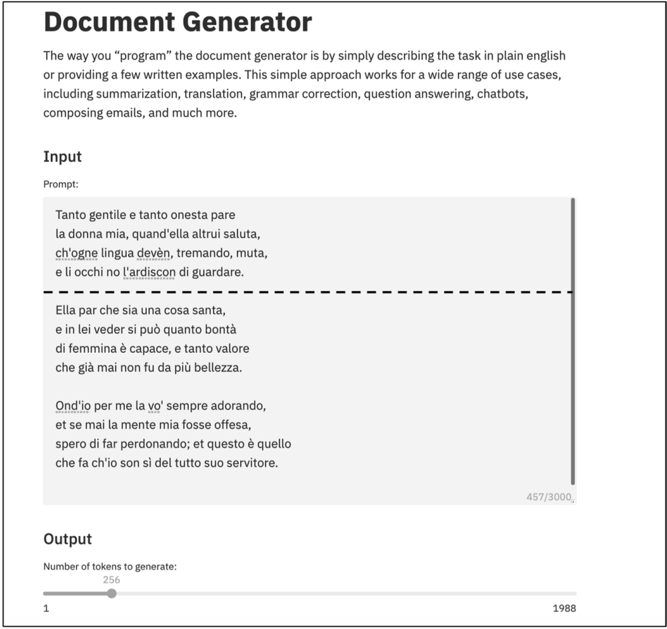
“In an attempt to see if OpenAI ’ s GPT-3 model is able to generate creative writing, the system successfully completed the poem using the right sonnet format and with stanzas in Italian [61].”
BackgroundMethodPartnering with AI: Intelligent writing assistance and instructed language learning
Godwin-Jones, R. (2022) · Language Learning & Technology · doi:10.64152/10125/73474 · Cited by 285
“Intelligent text generators herald perhaps the “biggest transformation of writing since word processors” (Floridi & Chiriatti, 2020, p. 691).”
BackgroundMethodSchiavo, G., Businaro, S., & Zancanaro, M. (2024) · Technology in Society · doi:10.1016/j.techsoc.2024.102537 · Cited by 284
ManipLLM: Embodied Multimodal Large Language Model for Object-Centric Robotic Manipulation
Li, X., Zhang, M., Geng, Y., Geng, H., Long, Y., Shen, Y. F., Zhang, R., Liu, J., & Dong, H. (2024) · IEEE Computer Society Conference on Computer Vision and Pattern Recognition/Proceedings - IEEE Computer Society Conference on Computer Vision and Pattern Recognition/Proceedings · doi:10.1109/cvpr52733.2024.01710 · Cited by 291
“Extensive language models, i.e. , LLaMa [26], GPT3 [7] exhibit proficiency in a variety of language tasks given their powerful reasoning ability.”
BackgroundDraxler, F., Werner, A., Lehmann, F., Hoppe, M., Schmidt, A., Buschek, D., & Welsch, R. (2023) · arXiv · doi:10.48550/arxiv.2303.03283 · Cited by 284
GPTeach: Interactive TA Training with GPT-based Students
Markel, J. M., Opferman, S. G., Landay, J. A., & Piech, C. (2023) · Proceedings of the Tenth ACM Conference on Learning @ Scale · doi:10.1145/3573051.3593393 · Cited by 147
“Despite the detrimental effects GPT and similar LLMs have had and will continue to have on academic integrity and the stability of the education system, we believe that educators should lean into this exciting new technology, thinking of ways to leverage it rather than yield to it [5, 13].”
BackgroundSneakyPrompt: Jailbreaking Text-to-image Generative Models
Yang, Y., Hui, B., Yuan, H., Gong, N., & Cao, Y. (2024) · 2024 IEEE Symposium on Security and Privacy (SP) · doi:10.1109/sp54263.2024.00123 · Cited by 90
“Text-to-image generative models (or called text-to-image models for short)—e.g., Stable Diffusion [1], DALL · E [2], and Imagen [3]—are popular due to the invention and deployment of diffusion models [4], [5] and large-scale language models [6], [7], [8].”
BackgroundSai, S., Gaur, A., Sai, R., Chamola, V., Guizani, M., & Rodrigues, J. J. P. C. (2024) · IEEE Access · doi:10.1109/access.2024.3367715 · Cited by 268
“It is built upon a transformer model and is one of the most popular GAI models [1].”
MethodContinual Learning with Pre-Trained Models: A Survey
Zhou, D.-W., Sun, H.-L., Ning, J., Ye, H.-J., & Zhan, D. (2024) · International Joint Conference on Artificial Intelligence · doi:10.24963/ijcai.2024/924 · Cited by 272
Shahriar, S., Lund, B. D., Mannuru, N. R., Arshad, M. A., Hayawi, K., Bevara, R. V. K., Mannuru, A., & Batool, L. (2024) · Applied Sciences · doi:10.3390/app14177782 · Cited by 156
Korngiebel, D. M., & Mooney, S. D. (2021) · npj Digital Medicine · doi:10.1038/s41746-021-00464-x · Cited by 259
A Survey of Quantum Computing for FinancePreprint
Herman, D., Googin, C., Liu, X., Galda, A., Safro, I., Sun, Y., Pistoia, M., & Alexeev, Y. (2022) · RePEc: Research Papers in Economics · doi:10.48550/arxiv.2201.02773 · Cited by 262
Peláez-Sánchez, I. C., Velarde-Camaqui, D., & Glasserman-Morales, L. D. (2024) · Frontiers in Education · doi:10.3389/feduc.2024.1392091 · Cited by 146
Leveraging ChatGPT for Enhancing Critical Thinking Skills
Guo, Y., & Lee, D. (2023) · Journal of Chemical Education · doi:10.1021/acs.jchemed.3c00505 · Cited by 250
Future directions for chatbot research: An interdisciplinary research agenda
Følstad, A., Araujo, T., Law, E. L.-C., Brandtzaeg, P. B., Papadopoulos, S., Reis, L., Baez, M., Laban, G., McAllister, P., Ischen, C., et al. (2021) · Computing · doi:10.1007/s00607-021-01016-7 · Cited by 247
“In this regard, large-scale generative models are becoming increasingly impactful, enabling a wide range of tasks that can benefit chatbot development [36].”
BackgroundYang, X., Chen, A., PourNejatian, N., Shin, H. C., Smith, K. E., Parisien, C., Compas, C. B., Martin, C. E., Flores, M. G., Zhang, Y., et al. (2022) · arXiv (Cornell University) · doi:10.48550/arxiv.2203.03540 · Cited by 53
MegaScale: Scaling Large Language Model Training to More Than 10, 000 GPUsPreprint
Jiang, Z.-H., Lin, H.-B., Zhong, Y.-M., Huang, Q., Chen, Y.-R., Zhang, Z., Peng, Y.-H., Li, X., Xie, C., Nong, S.-B., et al. (2024) · Symposium on Networked Systems Design and Implementation · doi:10.48550/arxiv.2402.15627 · Cited by 447
“For example, GPT-3 [4] has 175 billion parameters and PaLM [5] has 540 billion parameters.”
BackgroundChatGPT in education: global reactions to AI innovations
Fütterer, T., Fischer, C., Alekseeva, A., Chen, X., Tate, T., Warschauer, M., & Gerjets, P. (2023) · Scientific Reports · doi:10.1038/s41598-023-42227-6 · Cited by 242
ChatGPT in Education: Global Reactions to AI Innovations
(2023) · doi:10.21203/rs.3.rs-2840105/v1 · Cited by 242
The technology acceptance model and adopter type analysis in the context of artificial intelligence
Ibrahim, F., Münscher, J., Daseking, M., & Telle, N.-T. (2025) · Frontiers in Artificial Intelligence · doi:10.3389/frai.2024.1496518 · Cited by 243
Empowering learners for the age of artificial intelligence
Gašević, D., Siemens, G., & Sadiq, S. (2023) · Computers and Education: Artificial Intelligence · doi:10.1016/j.caeai.2023.100130 · Cited by 234
Generative AI and ChatGPT in School Children’s Education: Evidence from a School Lesson
Jauhiainen, J. S., & Guerra, A. G. (2023) · Sustainability · doi:10.3390/su151814025 · Cited by 234
“5 is considered an LLM due to its extensive training on vast amounts of text data [22–24].”
BackgroundBeyond Efficiency: A Systematic Survey of Resource-Efficient Large Language Models
Bai, G., Chai, Z., Ling, C., Wang, S., Lu, J.-Y., Zhang, N., Shi, T.-W., Yu, Z.-Y., Zhu, M.-D., Zhang, Y., et al. (2024) · ACM Computing Surveys · doi:10.1145/3845797 · Cited by 123
Investigating the Use of ChatGPT for the Scheduling of Construction Projects
Prieto, S. A., Mengiste, E. T., & García de Soto, B. (2023) · Buildings · doi:10.3390/buildings13040857 · Cited by 229
DriveLM: Driving with Graph Visual Question Answering
Sima, C., Renz, K., Chitta, K., Chen, L., Zhang, H., Xie, C., Beißwenger, J., Luo, P., Geiger, A., & Li, H. (2025) · Lecture Notes in Computer Science · doi:10.1007/978-3-031-72943-0_15 · Cited by 229
Edge-Cloud Polarization and Collaboration: A Comprehensive Survey for AI
Yao, J., Zhang, S., Yao, Y., Wang, F., Ma, J., Zhang, J., Chu, Y., Ji, L., Jia, K., Shen, T., et al. (2022) · IEEE Transactions on Knowledge and Data Engineering · doi:10.1109/tkde.2022.3178211 · Cited by 232
Gao, Y., Li, R., Croxford, E., Caskey, J., Patterson, B. W., Churpek, M., Miller, T., Dligach, D., & Afshar, M. (2025) · JMIR AI · doi:10.2196/58670 · Cited by 114
“5-Turbo, which features 154 billion parameters [13].”
Ethical ChatGPT: Concerns, Challenges, and Commandments
Zhou, J., Müller, H., Holzinger, A., & Chen, F. (2024) · Electronics · doi:10.3390/electronics13173417 · Cited by 128
“LLMs such as ChatGPT can be used to fulfil typical language tasks such as summarising text paragraphs and writing news articles, answering difficult questions, generating ideas, programming computer code, writing interesting novels, as well as others [5].”
BackgroundMethodConcepts and applications of digital twins in healthcare and medicine
Zhang, K., Zhou, H.-Y., Baptista‐Hon, D. T., Gao, Y., Liu, X., Oermann, E. K., Xu, S. H., Jin, S., Zhang, J., Sun, Z., et al. (2024) · Patterns · doi:10.1016/j.patter.2024.101028 · Cited by 225
“Deep generative models, including the Generative Pre-trained Transformer, 63 DALL-E (released by OpenAI), 64 as well as the booming diffusion model, 65 have been used to create dynamic metaverse environments.”
MethodLee, U., Jung, H., Jeon, Y., Sohn, Y., Hwang, W., Moon, J., & Kim, H. (2024) · Education and Information Technologies · doi:10.1007/s10639-023-12249-8 · Cited by 217
“We honed in on effective prompt generation strategies, such as designing specialized templates for categorized problems (Shin et al., 2020) and maximizing outcomes from limited data sets (Floridi & Chiriatti, 2020).”
A Survey on Employing Large Language Models for Text-to-SQL Tasks
Shi, L., Tang, Z., Zhang, N., Zhang, X., & Yang, Z. (2025) · ACM Computing Surveys · doi:10.1145/3737873 · Cited by 222
“The work in [89] assesses Codex [14] and GPT-3 [29] models of different sizes using different prompt configurations on Text-to-SQL benchmarks.”
Who is GPT-3? An exploration of personality, values and demographics
Miotto, M., Rossberg, N., & Kleinberg, B. (2022) · Proceedings of the Fifth Workshop on Natural Language Processing and Computational Social Science (NLP+CSS) · doi:10.18653/v1/2022.nlpcss-1.24 · Cited by 87
Generative artificial intelligence (ChatGPT): Implications for management educators
Ratten, V., & Jones, P. (2023) · The International Journal of Management Education · doi:10.1016/j.ijme.2023.100857 · Cited by 214
Alawida, M., Mejri, S., Mehmood, A., Chikhaoui, B., & Isaac Abiodun, O. (2023) · Information · doi:10.3390/info14080462 · Cited by 210
“It also calls into question the propriety of substituting it for activities that demand human connection, including customer service support or even therapeutic counselling [4].”
BackgroundSegment Anything Is Not Always Perfect: An Investigation of SAM on Different Real-world Applications
Ji, W., Li, J., Bi, Q., Liu, T., Li, W., & Cheng, L. (2024) · Machine Intelligence Research · doi:10.1007/s11633-023-1385-0 · Cited by 209
“In natural language processing (NLP), the foundation model Generative Pre-trained Transformer (GPT [13]) from OpenAI has demonstrated great generalization ability on many language generative tasks.”
MethodDatasetDM: Synthesizing Data with Perception Annotations Using Diffusion Models
Wu, W., Zhao, Y., Chen, H., Gu, Y., Zhao, R., He, Y., Zhou, H., Shou, M. Z., & Shen, C. (2023) · neural information processing systems · doi:10.52202/075280-2383 · Cited by 210
GPT4AIGChip: Towards Next-Generation AI Accelerator Design Automation via Large Language Models
Fu, Y., Zhang, Y., Yu, Z., Li, S., Ye, Z., Li, C., Wan, C., & Lin, Y. (2023) · doi:10.1109/iccad57390.2023.10323953 · Cited by 209
“LLMs, e.g., GPT-4 [24] and Al-paca [16], have demonstrated outstanding performance across various tasks, attributed to extensive pretraining, high-quality datasets, and effective tuning methods [8], [9], [16], [24], [28]–[30], [48].”
Artificial Intelligence and Biosensors in Healthcare and Its Clinical Relevance: A Review
(2023) · doi:10.1109/access.2023.3285596 · Cited by 205
“Google reported the GLaM model with more than 1 trillion parameters (GPT-3 model had 175 billion parameters) [117].”
MethodShahzad, M. F., Xu, S., & Zahid, H. (2025) · Education and Information Technologies · doi:10.1007/s10639-024-12949-9 · Cited by 204
“…a wide range of innovative technologies with sophisticated capacities for both understanding and producing language akin to that of humans, such as GPT 3.5, GPT-4, RoBERTa, XLNet, BERT and Llama 2, and has been rising in popularity in recent times (Floridi & Chiriatti, 2020 ; Jeon & Lee, 2023 ).”
InfluentialAI and 6G Into the Metaverse: Fundamentals, Challenges and Future Research Trends
Zawish, M., Dharejo, F. A., Khowaja, S. A., Raza, S., Davy, S., Dev, K., & Bellavista, P. (2024) · IEEE Open Journal of the Communications Society · doi:10.1109/ojcoms.2024.3349465 · Cited by 203
“Unique stories can be generated using models such as GPT-3 [112], [113], while realistic unique art can be generated from a single line of text using DALL-E [114], [115] and GauGAN2 [116].”
MethodHow understanding large language models can inform the use of ChatGPT in physics education
Polverini, G., & Gregorcic, B. (2024) · European Journal of Physics · doi:10.1088/1361-6404/ad1420 · Cited by 107
“It merely “produces the text that is a statistically good fit, given the starting text” [33 p.684].”
BackgroundGIT-Mol: A multi-modal large language model for molecular science with graph, image, and text
Liu, P., Ren, Y., Tao, J., & Ren, Z. (2024) · Computers in Biology and Medicine · doi:10.1016/j.compbiomed.2024.108073 · Cited by 89
“Lastly, the Cross-modal Learning paradigm, as seen in models like MiniGPT-4 (Zhu et al., 2023), emphasizes modality fusion and alignment using techniques like the Q-Former in BLIP2 (Li et al., 2023a) or adapter, promoting the modality integration.”
BackgroundInfluentialKlein, L., Krämer, A., & Noé, F. (2023) · neural information processing systems · doi:10.52202/075280-2617 · Cited by 209
Human-AI Ensembles: When Can They Work?
Choudhary, V., Marchetti, A., Shrestha, Y. R., & Puranam, P. (2025) · Journal of Management · doi:10.1177/01492063231194968 · Cited by 194
“…in nature — we believe that the H-AI ensembling con fi guration may also bene fi t qualitative managerial tasks such as the ones currently solvable by generative AI models — in particular, Large Language Models such as ChatGPT and DALL-E2 (Bommasani et al., 2022; Floridi & Chiriatti, 2020).”
Effects of Generative Chatbots in Higher Education
Ilieva, G., Yankova, T., Klisarova-Belcheva, S., Dimitrov, A., Bratkov, M., & Angelov, D. (2023) · Information · doi:10.3390/info14090492 · Cited by 194
“The models have demonstrated high performance in various language-related tasks, such as language translation, question answering, and text generation [20,21].”
BackgroundA Review on Bayesian Deep Learning in Healthcare: Applications and Challenges
Abdullah, A. A., Hassan, M. M., & Mustafa, Y. T. (2022) · IEEE Access · doi:10.1109/access.2022.3163384 · Cited by 196
“Current state-of-the-art deep learning models have hundreds of these hidden layers such as in the GPT-3 model [24].”
BackgroundKar, A. K., Varsha, P. S., & Rajan, S. (2023) · Global Journal of Flexible Systems Management · doi:10.1007/s40171-023-00356-x · Cited by 192
“In recent years, generative AI (GAI) models like GPT-3 have made significant progress in NLP (Floridi & Chiriatti, 2020).”
BackgroundA Scoping Survey of ChatGPT in Mathematics Education
Pepin, B., Buchholtz, N. F., & Salinas-Hernández, U. (2025) · Digital Experiences in Mathematics Education · doi:10.1007/s40751-025-00172-1 · Cited by 205
“These models are trained on large datasets to generate human-like text and perform a variety of tasks, such as text summarization, translation, and dialog management (Floridi & Chiriatti, 2020).”
Compressing Large-Scale Transformer-Based Models: A Case Study on BERT
Ganesh, P., Chen, Y., Lou, X., Khan, M. A., Yang, Y., Sajjad, H., Nakov, P., Chen, D., & Winslett, M. (2021) · Transactions of the Association for Computational Linguistics · doi:10.1162/tacl_a_00413 · Cited by 190
“To put things in perspective, a single training run for GPT-3 (Brown et al., 2020), one of the most powerful and heaviest Transformer-based models, trained on a total of 300 billion tokens, costs well above 12 million USD (Floridi and Chiriatti, 2020).”
The great Transformer: Examining the role of large language models in the political economy of AI
Luitse, D., & Denkena, W. (2021) · Big Data & Society · doi:10.1177/20539517211047734 · Cited by 190
“Instead of releasing the model as open-source like its predecessors, OpenAI introduced an API through which accepted users can access it as a running system to generate textual output such as translations or summaries (Floridi and Chiriatti, 2020).”
BackgroundMethodInfluentialRight to be forgotten in the Era of large language models: implications, challenges, and solutions
Zhang, D.-W., Finckenberg-Broman, P., Hoàng, T., Pan, S.-D., Xing, Z.-C., Staples, M., & Xu, X.-W. (2023) · AI and Ethics · doi:10.1007/s43681-024-00573-9 · Cited by 119
“For example, GPT-3 [13] popularized the paradigm of prompting, in which users input a carefully crafted text prompt, and by completing the text, GPT-3 may be able to output useful information for certain tasks.”
Metadata
- Authors
- Floridi, L., & Chiriatti, M.
- Affiliations
- University of Oxford (GB)
- IBM (Italy) (IT)
- Corresponding author
- Floridi, Luciano
- Venue
- Minds and Machines
- Published
- 2020-11-01
- Volume
- 30
- Issue
- 4
- Pages
- 681-694
- ISSN
- 0924-6495 (ISSN-L)
- 1572-8641
- OpenAlex
- W3095319910
- Cited by
- 2,519
- References
- 20
- Citations by year
- 2026: 435 · 2025: 594 · 2024: 675 · 2023: 568 · 2022: 156 · 2021: 82 · 2020: 2
- FWCI
- 274.83
- Type
- journal article
- Language
- en
- Open access
- hybrid
- doi.org
- Licence
- cc-by
- creativecommons.org/licenses/by/4.0 (tdm)
- creativecommons.org/licenses/by/4.0 (vor)
- Locations
- Minds and Machines (publishedVersion, cc-by)
- SSRN Electronic Journal (publishedVersion)
- PhilPapers (PhilPapers Foundation) (submittedVersion)
- Funders
- University of Oxford
- Topics
- Physical Sciences › Computer Science › Artificial Intelligence › Ethics and Social Impacts of AI
- Social Sciences › Arts and Humanities › History and Philosophy of Science › Cybernetics and Technology in Society
- Physical Sciences › Computer Science › Artificial Intelligence › Artificial Intelligence Applications
- Keywords
- GPT-3, large language models, autoregressive language models, Turing test, machine intelligence, ethical implications of AI
About these checks
Registry, retraction, Cites and statistics results are computed, not judged, with one exception: a printed reference that no index lists is read once by a model before it counts as a citation error. Claims are extracted by a model and kept only when their quote appears verbatim in the text; each cited source is then checked, with a model’s help, for whether it says what the claim relies on. Those verdicts can be wrong — read the claim’s quote and the cited source before relying on one.
Statistics and arithmetic are recomputed, not judged.
Confidence bands are shown only for fields calibrated on our annotated test set. None is calibrated yet, so no band is shown.
What counts as a claim ›How we measure confidence ›How we check this ›
Are you an author, or do you see a problem with this page? Request a review
Data sources
Bibliographic data: Semantic Scholar, OpenAlex, Crossref.
Contains information from the Semantic Scholar Academic Graph Datasets, made available under the ODC Attribution License (ODC-BY 1.0).
Semantic Scholar’s data is described in: Kinney, R., et al. (2023). The Semantic Scholar Open Data Platform. arXiv:2301.10140.
