

Intranasal Treatment of Central Nervous System Dysfunction in Humans
Open accessThe DOI matches its Crossref record; 100 of the 103 references it cites were found in a registry or an index.
Abstract
One of the most challenging problems facing modern medicine is how to deliver a given drug to a specific target at the exclusion of other regions. For example, a variety of compounds have beneficial effects within the central nervous system (CNS), but unwanted side effects in the periphery. For such compounds, traditional oral or intravenous drug delivery fails to provide benefit without cost. However, intranasal delivery is emerging as a noninvasive option for delivering drugs to the CNS with minimal peripheral exposure. Additionally, this method facilitates the delivery of large and/or charged therapeutics, which fail to effectively cross the blood-brain barrier (BBB). Thus, for a variety of growth factors, hormones, neuropeptides and therapeutics including insulin, oxytocin, orexin, and even stem cells, intranasal delivery is emerging as an efficient method of administration, and represents a promising therapeutic strategy for the treatment of diseases with CNS involvement, such as obesity, Alzheimer's disease, Parkinson's disease, Huntington's disease, depression, anxiety, autism spectrum disorders, seizures, drug addiction, eating disorders, and stroke.
Overview
The claims and statistics of this paper haven’t been checked yet.
Free: it reads the open-access text and checks the first 5 claims that cite a source we can check. Create a free account to check every claim.
Integrity signals
Registry
Cites
Statistics
Figures
Verification
Claims the paper makes
The claims and statistics of this paper haven’t been checked yet.
Free: it reads the open-access text and checks the first 5 claims that cite a source we can check. Create a free account to check every claim.
Claims other papers make about this one
Each is checked against this paper’s own text: does it say what the citing paper says it does?
The source backs part of the claim, not all of it — or backs it for a different population, condition or comparison.
In the citing paper
“It is non-invasive, painless, non-stressful, and relatively easy to perform without requiring a medical specialist [246,247,248].”
From Alzheimer's Disease: Treatment Strategies and Their Limitations. (2022) · cites this paper as [246]
Experimental — accuracy not yet measuredIn the citing paper
“Similarly, a recent systematic review reported that intranasal oxytocin may be effective in combating anxiety and stress in disorder characterised by dysfunction of the central nervous system (Chapman et al., 2013).”
From Meta-analytic review of the effects of a single dose of intranasal oxytocin on threat processing in humans (2018) · cites this paper as Chapman et al., 2013
Self-check
Percentages, sums and reported differences re-computed from the paper’s own numbers.
The self-check needs the paper’s full text.
Citations
Cites
Central nervous system control of food intake
Schwartz, M. W., Woods, S. C., Porte, D., Seeley, R. J., & Baskin, D. G. (2000) · Nature · doi:10.1038/35007534 · Cited by 6,451
Oxytocin increases trust in humans
Kosfeld, M., Heinrichs, M., Zak, P. J., Fischbacher, U., & Fehr, E. (2005) · Nature · doi:10.1038/nature03701 · Cited by 3,690 · cited 1×
“coworkers who revealed that oxytocin increases trust in humans, thereby demonstrating its pro-social potential (53).”
BackgroundCassidy, S. B., Schwartz, S., Miller, J. L., & Driscoll, D. J. (2012) · Genetics in Medicine · doi:10.1038/gim.0b013e31822bead0 · Cited by 1,452
Sniffing neuropeptides: A transnasal approach to the human brain
Born, J., Lange, T., Kern, W., McGregor, G. P., Bickel, U., & Fehm, H. L. (2002) · Nature Neuroscience · doi:10.1038/nn0602-849 · Cited by 1,356 · cited 3×
“In contrast to the intranasal administration of hydrophilic compounds, which typically results in low or no systemic exposure while targeting the brain (10), it can be difficult to avoid systemic exposure with an intranasally delivered small lipophilic molecule.”
BackgroundInfluentialOxytocin improves “mind-reading” in humans
Domes, G., Heinrichs, M., Michel, A., Berger, C., & Herpertz, S. C. (2007) · Biological Psychiatry · doi:10.1016/j.biopsych.2006.07.015 · Cited by 1,298
Craft, S. (2012) · Archives of Neurology · doi:10.1001/archneurol.2011.233 · Cited by 1,253
Self-citationIntranasal delivery to the central nervous system: Mechanisms and experimental considerations
Dhuria, S. V., Hanson, L. R., & Frey, W. H. (2010) · Journal of Pharmaceutical Sciences · doi:10.1002/jps.21924 · Cited by 1,239 · cited 2×
“Extracellular transport, on the other hand, is rapid and likely accounts for much of the rapid delivery and onset of action observed with intranasal CNS therapeutics (8,21).”
BackgroundSelf-citationLeptin enters the brain by a saturable system independent of insulin
Banks, W. A., Kastin, A. J., Huang, W., Jaspan, J. B., & Maness, L. M. (1996) · Peptides · doi:10.1016/0196-9781(96)00025-3 · Cited by 1,224 · cited 6×
“centrations in CSF, suggesting that the problem, at least in part, involves the quantities of leptin able to pass the BBB (48).”
BackgroundInfluentialIntranasal delivery of biologics to the central nervous system
Lochhead, J. J., & Thorne, R. G. (2012) · Advanced Drug Delivery Reviews · doi:10.1016/j.addr.2011.11.002 · Cited by 1,214 · cited 6×
“olfactory and trigeminal nerves—accounts for a significant portion of intranasal delivery to the CNS (9).”
BackgroundInfluentialThe human amygdala in social judgment
Adolphs, R., Tranel, D., & Damasio, A. R. (1998) · Nature · doi:10.1038/30982 · Cited by 1,125 · cited 2×
“Perhaps most surprisingly, central oxytocin also improves schizophrenia-induced social deficits (58), including performance on the Brüne Theory of Mind Picture Stories Task (59) and the Trustworthiness Task (60).”
Background
Research works printed but not linked: 2
- 15. Hanson LR, Martinez PM, Taheri S, Kamsheh L, Mignot E, Frey II WH. Intranasal administration of hypocretin 1 (orexin A) bypasses the blood-brain barrier & targets the brain: A new strategy for the treatment of narcolepsy. Drug Del Tech. 2004;4:66-70.
- 91. Yu SP, Wei N, Chau TC, Deveau L, Wei L. Distribution and therapeutic benefits of intranasally administered hypoxia- preconditioned bone marrow stem cells after barrel cortex stroke. 25th International Symposium on Cerebral Blood Flow, Metab- olism, and Function. Barcelona, Spain. 2011, Available at: http://kenes.com/brain2011/abstracts/pdf/1257.pdf.
Cited by
Items 201–300 of 309
Diabetes and associated cognitive disorders: Role of the Hypothalamic-Pituitary Adrenal axis
Marissal‐Arvy, N., & Moisan, M. (2022) · Metabolism Open · doi:10.1016/j.metop.2022.100202 · Cited by 15
Role of Olfaction for Eating Behavior
Fadool, D. A., & Kolling, L. J. (2019) · Elsevier eBooks · doi:10.1016/b978-0-12-809324-5.23770-x · Cited by 16
Levy, S., & Weiss, J. (2016) · Clinical Trials in Degenerative Diseases · doi:10.4103/2468-5658.196984 · Cited by 10
Pharmacokinetics of intranasal amiloride in healthy volunteers
Yellepeddi, V., Battaglia, M., Davies, S., Alt, J. A., Ashby, S., Shipman, P. A., Anderson, D. J., Rower, J. E., Reilly, C. A., Voight, M., et al. (2023) · Clinical and Translational Science · doi:10.1111/cts.13514 · Cited by 9
Derad, I., Sayk, F., Lehnert, H., Marshall, L., Born, J., & Nitschke, M. (2014) · Hypertension · doi:10.1161/hypertensionaha.113.02860 · Cited by 10
Zinc gluconate toxicity in wild-type vs. MT1/2-deficient mice
Hsieh, H., Horwath, M. C., & Genter, M. B. (2016) · NeuroToxicology · doi:10.1016/j.neuro.2016.12.003 · Cited by 10
“MT proteins clearly also have a role in wound healing and neuroprotection (Pedersen et al., 2009; Morellini et al., 2008; Chung and West, 2004; Chung et al., 2003; Penkowa et al., 2003).”
de Carvalho, M. C., de Figueiredo, R. M., Coimbra, N. C., Leite‐Panissi, C. R. A., Silva, M. A. D. S., Huston, J. P., Mattern, C., & Brandão, M. L. (2019) · Journal of Psychopharmacology · doi:10.1177/0269881119862527 · Cited by 9
“The administration of drugs through upper nasal passages has become an important alternative route of medication in laboratory animals and human patients (Chapman et al., 2013; Lochhead and Thorne, 2012).”
BackgroundLipid nanocapsules: A Novel Strategy for Brain Targeting via Nasal Administration
Ibrahim, M. M., Basalious, E. B., Nabarawi, M. E., & Makhlouf, A. I. A. (2024) · Journal of Research in Pharmacy · doi:10.29228/jrp.717 · Cited by 9
Ye, E., Park, E., Kim, E., Lee, J. E., Yang, S.-H., & Park, S. (2023) · Biomedical Engineering Letters · doi:10.1007/s13534-023-00272-0 · Cited by 8
Akintola, A. A., van den Berg, A., van Buchem, M. A., Jansen, S. W. M., Slagboom, P. E., Westendorp, R. G. J., van der Grond, J., & van Heemst, D. (2015) · Frontiers in Aging Neuroscience · doi:10.3389/fnagi.2015.00092 · Cited by 10
“The native individual MTR maps were then nonlinearly re-registered to this template, divided by the Jacobian of the warp field and smoothed with an isotropic Gaussian kernel with a sigma of 3mm.”
Messer, L., Zoabi, A., Arancibia, R. Y., Natsheh, H., Touítou, E., & Margulis, K. (2023) · International Journal of Pharmaceutics · doi:10.1016/j.ijpharm.2023.123664 · Cited by 7
Advanced intranasal peptide delivery systems for improved management of Alzheimer's disease
Majie, A., Karmakar, V., Ghosh, A., Chakraborty, S., Apurva, A., Layek, B., & Gorain, B. (2025) · Biomaterials Advances · doi:10.1016/j.bioadv.2025.214474 · Cited by 8
Favorov, O. V., Kurşun, O., & Tommerdahl, M. (2017) · Springer series in cognitive and neural systems · doi:10.1007/978-3-319-29674-6_17 · Cited by 8
“…with PTSD (Egede and Dismuke 2012) and some success has been demonstrated with intranasal insulin treatment of acute psychological stress (Bohringer et al. 2008) as well as a variety of other neurocognitive disorders such as Alzheimer’s disease (Chapman et al. 2013; de la Monte et al. 2013).”
BackgroundGendron, W. A. C., Fertan, E., Roddick, K. M., Wong, A. A., Maliougina, M., Hiani, Y. E., Anini, Y., & Brown, R. E. (2024) · Physiology & Behavior · doi:10.1016/j.physbeh.2024.114583 · Cited by 7
Intranasal Methylprednisolone Ameliorates Neuroinflammation Induced by Chronic Toluene Exposure
Giraldo-Velásquez, M. F., Pérez‐Osorio, I. N., Espinosa, A., Bárcena, B., Calderón-Gallegos, A., Fragoso, G., Torres-Ramos, M., Páez-Martínez, N., & Sciutto, E. (2022) · Pharmaceutics · doi:10.3390/pharmaceutics14061195 · Cited by 7
Could the Olfactory System Be a Target for Homeopathic Remedies as Nanomedicines?
Courtens, F., Demangeat, J.-L., & Benabdallah, M. (2018) · The Journal of Alternative and Complementary Medicine · doi:10.1089/acm.2018.0039 · Cited by 8
“Nasal Pathway to Cure Diseases The main interest of the nasal pathway is to be noninvasive, and thus has been investigated in numerous studies.20,31,68,71–78 For instance, this way is used for desmopressine and sumatriptan that are smelled to treat central diabetes insipidus and migrainous crises, respectively.79 In t…”
BackgroundVinukonda, G., & Gamma, E. F. L. (2022) · Seminars in Perinatology · doi:10.1016/j.semperi.2022.151598 · Cited by 7
Lavania, K., & Garg, A. (2023) · Recent Advances in Drug Delivery and Formulation · doi:10.2174/0126673878279656231204103855 · Cited by 9
Витальевич, Л. И., Uvarova, A., Mochalova, M., & Menshutina, N. V. (2022) · Computation · doi:10.3390/computation10080139 · Cited by 6
Dose-dependent delivery of genes to the cerebral cortex via the nasal route
Fatani, A. S., Petkova, A., Schätzlein, A. G., & Uchegbu, I. F. (2023) · International Journal of Pharmaceutics · doi:10.1016/j.ijpharm.2023.123343 · Cited by 7
Li, X., Su, Z., Wang, C., Wu, W., Zhang, Y., & Wang, C. (2023) · Drug Discovery Today · doi:10.1016/j.drudis.2023.103864 · Cited by 8
Quantitative analysis of recombinant glucocerebrosidase brain delivery via lipid nanoparticles
Goldsmith, M., Abramovitz, L., Braunstein, H., Horowitz, M., & Peer, D. (2018) · Nano Futures · doi:10.1088/2399-1984/aadd34 · Cited by 6
The Possible Effect of Oxytocin in Postpartum Recovery From a Stroke: A Case Report
Seo, H. G., Lee, H. H., & Oh, B. (2018) · PM&R · doi:10.1016/j.pmrj.2018.04.005 · Cited by 6
“Although there has been no study on the use of oxytocin for neuroprotection or restoration in stroke patients, several studies have investigated the effect of intranasal oxytocin on central nervous system dysfunction in humans [9].”
BackgroundNanomedicine breakthroughs in cancer and neurodegenerative disease therapy
Haque, A., Khan, T., Islam, R. U., & Naseem, S. (2025) · Next Nanotechnology · doi:10.1016/j.nxnano.2025.100233 · Cited by 6
Sadiq, A. H., Alam, M. J., Begum, F., Hasan, M., Krištof, J., Mamun, M. A., Maniruzzaman, M., Shimizu, K., Kanazawa, T., Kahyo, T., et al. (2025) · International Journal of Molecular Sciences · doi:10.3390/ijms26041710 · Cited by 6
“AD is a common cause of dementia, leading to memory loss and the patient’s inability to think and perform daily tasks [4].”
Dzirkale, Z., Nakurte, I., Jēkabsons, K., Muceniece, R., & Kluša, V. (2019) · Medicina · doi:10.3390/medicina55070393 · Cited by 8
“Recent data showed that intra-nasally administered peptides may cross the blood-brain barrier and this type of administration is considered to be the preferred target of the brain [2].”
BackgroundBrain Gene Silencing with Cationic Amino-Capped Poly(ethylene glycol) Polyplexes
Uchegbu, I. F., Alamoudi, A. A., Workman, D. G., Workman, D. G., Schätzlein, A. G., & Uchegbu, I. F. (2022) · Biomedicines · doi:10.3390/biomedicines10092182 · Cited by 6
“Nose to brain drug delivery is possible in humans, as evidenced by the use of insulin and oxytocin solutions [9,10] and the intranasal delivery of peptide nanoparticles to rats produces a centrally mediated therapeutic response [11].”
BackgroundEmerging Selenium Nanoparticles for CNS Intervention
Malik, J. A., AjgarAnsari, J., Ahmed, S., Rani, A., Ansari, S. Y., & Anwar, S. (2023) · Biomedical engineering · doi:10.5772/intechopen.109418 · Cited by 11
Utility of a Novel Micro-Spraying Device for Intranasal Administration of Drug Solutions to Mice
Suzuki, N., Tanigawa, H., Nagatomo, T., Miyagishi, H., Kanazawa, T., Suzuki, T., & Kosuge, Y. (2023) · Pharmaceutics · doi:10.3390/pharmaceutics15112553 · Cited by 5
Effects of haloperidol inhalation on MK-801- and memantine-induced locomotion in mice
Ueno, H., Suemitsu, S., Murakami, S., Kitamura, N., Wani, K., Takahashi, Y., Matsumoto, Y., Okamoto, M., & Ishihara, T. (2020) · Libyan Journal of Medicine · doi:10.1080/19932820.2020.1808361 · Cited by 5
“such method, which has the potential to avoid systemic circulation and deliver drugs directly to the brain [5,8].”
BackgroundLitvinova, M. V., Бычков, Э. Р., Aa, L., Arseniev, N. A., & Shabanov, P. D. (2022) · Reviews on Clinical Pharmacology and Drug Therapy · doi:10.17816/rcf203281-288 · Cited by 5
SipNose-topiramate: a potential novel approach to binge eating management
Kobo-Greenhut, A., Zohar-Beja, A., Hadar, L., Itzhaki, L., Karasik, A., Caraco, Y., Frankenthal, H., Shahaf, D., Ekstein, D., Shichor, I., et al. (2023) · Journal of Eating Disorders · doi:10.1186/s40337-023-00825-9 · Cited by 7
“In fact, due to its direct CNS tissue delivery, lower doses are needed when compared with systemic delivery [33, 34].”
BackgroundWinterdahl, M., Nielsen, E. N., Hansen, S. B., Dias, A. H., Vendelbo, M. H., Jakobsen, S., & Yeomans, D. C. (2025) · EJNMMI Research · doi:10.1186/s13550-025-01329-0 · Cited by 5
“Studies suggest that oxytocin administered via the intranasal route can be absorbed through the nasal mucosa and transported to the brain via the trigeminal nerve pathways, effectively bypassing the blood–brain barrier [5].”
Reversal of diet-induced obesity by central insulin sensitizer FSTL1
Li, K., Dai, H., Li, L., Qiu, S., Liu, D., Wang, C., Li, S., Yang, G., Li, L., Li, M., et al. (2025) · Neuron · doi:10.1016/j.neuron.2025.09.036 · Cited by 6
Trushina, D. B., Borodina, T. N., Sulyanov, S. N., Moiseeva, J. V., Gulyaeva, N. V., & Букреева, Т. В. (2018) · Crystallography Reports · doi:10.1134/s1063774518060305 · Cited by 4
Gómez‐Guijarro, M. D., Cavero‐Redondo, I., Saz‐Lara, A., Pascual‐Morena, C., Álvarez-Bueno, C., & Martínez‐García, I. (2024) · Cognitive Neurodynamics · doi:10.1007/s11571-024-10138-5 · Cited by 5
“Intranasal insulin has been shown to increase BDNF levels in the hippocampus, a brain region closely associated with memory formation (Chapman et al. 2013 ).”
Wang, L., Lu, Y., Li, H., Lin, J., Li, G., Sun, Y., Cui, N., Zhu, Q., & Wang, A. (2024) · ChemistrySelect · doi:10.1002/slct.202403414 · Cited by 4
Naderi, S., Vousooghi, N., Sadighii, N., Batouli, S. A. H., Mirzaii, F., & Razaghi, E. M. (2020) · Iranian Journal of Psychiatry and Behavioral Sciences · doi:10.5812/ijpbs.104627 · Cited by 5
“We, therefore, would like to suggest studying the findings of this study in other disorders where oxytocin is found to play a role such as depression (27, 44), anxiety disorders (26, 27, 29), attention deficit hyperactivity disorder (27, 48), autism (26, 27), and eating disorders (25-27).”
BackgroundIntranasal insulin enhances resting-state functional connectivity in Type 2 Diabetes
Zhang, Z., Novak, V., Novák, P., Mantzoros, C. S., Ngo, L. H., Lioutas, V., & Dai, W. (2025) · PLoS ONE · doi:10.1371/journal.pone.0324029 · Cited by 3
“Therefore, intranasal insulin (INI) delivery is a promising tool for delivering drugs to brain tissue [19].”
Xie, R., Liu, Z., Zheng, J., Tan, Q., Wu, H., & Liang, Y. (2025) · Drug Delivery and Translational Research · doi:10.1007/s13346-025-01975-w · Cited by 3
Wang, Y., Chen, Z., Wei, Y., Bai, L., Hu, C., & Wang, Y. (2025) · Chemical Engineering Journal · doi:10.1016/j.cej.2025.170779 · Cited by 3
Intranasal drug delivery in pediatric emergency departments: brief review and future outlook
McClean, C., Alsabri, M. H., TAHIR, S., Song, R., & Chin, C. (2023) · Pediatric Emergency Medicine Journal · doi:10.22470/pemj.2023.00745 · Cited by 3
Brain distribution study of [14C]-Riluzole following intranasal administration in mice
Baker, R. S., Wang, J. T.-W., Rouatbi, N., Lü, Y., Al‐Adhami, T., Asker, D. S., Rahman, K. M., Al‐Chalabi, A., Forbes, B., Bansal, S., et al. (2025) · International Journal of Pharmaceutics · doi:10.1016/j.ijpharm.2025.125195 · Cited by 3
Polyphenols as Potential Therapeutic Drugs in Neurodegeneration
de Laureto, P. P., Palazzi, L., & Acquasaliente, L. (2020) · IntechOpen eBooks · doi:10.5772/intechopen.89575 · Cited by 4
“In most of the clinical studies, the oral administration is the preferred way, but recently the nasal delivery is taken into consideration for the easiness to bypass the BBB [163], the increased bioavailability, the decreased metabolism, and peripheral side effects [164, 165].”
Patil, S. B. (2021) · Elsevier eBooks · doi:10.1016/b978-0-12-822522-6.00012-6 · Cited by 3
Nose to Brain Drug Delivery System
Patil, G. D., Nikam, A. R., Patil, P. A., & Sonar, A. D. (2021) · Research Journal of Pharmaceutical Dosage Forms and Technology · doi:10.52711/0975-4377.2021.00054 · Cited by 3
Gao, W., Deng, Z., Cai, X., Zhang, D., Xiao, H., & Zhang, X. (2023) · Frontiers in Endocrinology · doi:10.3389/fendo.2023.1102670 · Cited by 4
“Insulin also produces antidepressant effects by reducing visceral fat (36).”
BackgroundStem Cells for Traumatic Brain Injury
Schneider, C. M., Jackson, M. L., Bedi, S. S., & Cox, C. S. (2018) · Elsevier eBooks · doi:10.1016/b978-0-12-809880-6.00023-0 · Cited by 5
Treatment of cognitive dysfunction in adults with major depressive disorder
McIntyre, R. S., Syeda, K., & Cha, D. S. (2015) · Cambridge University Press eBooks · doi:10.1017/cbo9781139860567.020 · Cited by 3
Kakono, C., Witika, B. A., Makoni, P. A., & Walker, R. B. (2025) · Pharmaceutical Development and Technology · doi:10.1080/10837450.2025.2516237 · Cited by 4
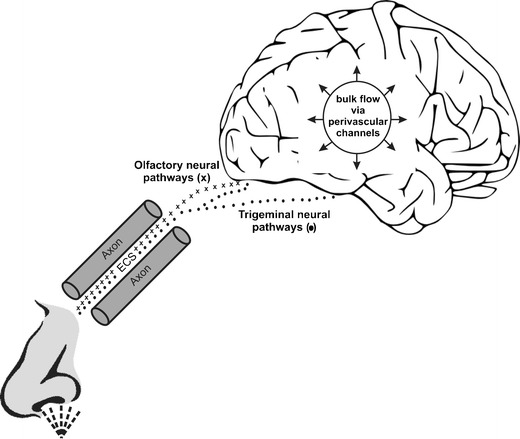
“The nose has two pathways for the transport of drugs to the brain, viz ., the trigeminal and/or the olfactory nerve pathways (Chapman et al. 2013), suggesting intranasal delivery is a promising route for the administration of L-dopa.”
Yokoyama, H., Takeda, R., Kawai, E., Ota, A., Morita, E., Imai, D., Suzuki, Y., Morioka, T., Emoto, M., Inaba, M., et al. (2018) · Journal of Clinical Medicine · doi:10.3390/jcm7100308 · Cited by 2
“Substances that are intranasally administered are directly delivered to CNS through uptake into olfactory sensory neurons followed by axonal transport or extracellular transport along the olfactory nerves without substantial absorption into the blood stream [12].”
BackgroundShevela, Е. Y., Loginova, T. A., Munkuev, A. S., Volskaya, T. E., Sergeeva, S. A., Ращупкин, И. М., Kafanova, M. Y., Degtyareva, V. G., Sosnovskaya, A. V., Ostanin, A. A., et al. (2024) · Journal of Clinical Medicine · doi:10.3390/jcm13113079 · Cited by 2
“Neurological improvements with intranasally administered cytokines in various models of neuropathology open up broad prospects for the translation of this approach into clinical settings [45,46].”
BackgroundBelenichev, I. F., Aliyeva, O. G., Бурлака, Б. С., Burlaka, K., KUCHKOVSKYI, O., Savchenko, D., Oksenych, V., & Kamyshnyi, O. (2024) · Pharmaceuticals · doi:10.3390/ph17080990 · Cited by 7
Exploring the effects of an insulin challenge on neuroimaging outcomes: A scoping review
Stogios, N., Wu, S., Hahn, M., Emami, Z., Navagnanavel, J., Korann, V., Prasannakumar, A., Remington, G. J., Graff‐Guerrero, A., & Agarwal, S. M. (2025) · Frontiers in Neuroendocrinology · doi:10.1016/j.yfrne.2025.101187 · Cited by 3
Wang, P., Zhang, C., Meng, L., Xu, S., Zhang, J., Wang, H., Liang, H., Wang, W., Liu, J., & Zhu, X. (2025) · Small · doi:10.1002/smll.202505141 · Cited by 2
Treatment opportunities for ameliorating cognitive dysfunction in major depressive disorder
Cha, D. S. (2015) · Cambridge University Press eBooks · doi:10.1017/cbo9781139860567.019 · Cited by 2
Oxytocin-Cholinergic Central Interaction: Implications for Non-Social Memory Formation
Medina, C., Krawczyk, M. C., Millan, J., Blake, M. G., & Boccia, M. M. (2022) · Neuroscience · doi:10.1016/j.neuroscience.2022.06.028 · Cited by 2
The metabolic status and olfactory function
Baly, C., Kuczewski, N., Badonnel, K., & Duchamp‐Viret, P. (2022) · Elsevier eBooks · doi:10.1016/b978-0-323-89903-1.00008-6 · Cited by 4
Ranjan, R., Kumar, D., Singh, M. R., & Singh, D. (2024) · Elsevier eBooks · doi:10.1016/b978-0-443-13474-6.00009-3 · Cited by 1
Sonvico, F., Bazzo, G. C., & Stulzer, H. K. (2025) · Neuromethods · doi:10.1007/978-1-0716-4474-4_9 · Cited by 1
Mehanny, M., Sabry, N. C., Ihab, H., Ashraf, Z., MOSTAFA, M. D. N. E. S. M., Hamed, R., Wael, N., Abdelkarim, F., Younis, A., Ismail, A., et al. (2025) · Journal of Drug Delivery Science and Technology · doi:10.1016/j.jddst.2025.107313 · Cited by 4
Intranasal Drug Delivery: Exploiting Nasal Anatomy for Enhanced Therapeutic Outcomes
Kumar, A., Rajpoot, K., & Jain, S. K. (2025) · Current Pharmaceutical Design · doi:10.2174/0113816128392902250916114510 · Cited by 1
Baumann, M. H., Glatfelter, G. C., Walton, S. E., Krotulski, A. J., Witowski, C. G., & von Salm, J. L. (2025) · Psychopharmacology · doi:10.1007/s00213-025-06879-8 · Cited by 2
“The anatomical location of the intranasal cavity facilitates direct access to the vasculature of the brain, increasing the bioavailability of CNS drugs with diverse chemical structures and indications (Chapman et al. 2012).”
Advances in Nose-to-Brain Delivery Systems for Effective Alzheimer's Disease Management
sahu, A., -, K., Patle, K., Jain, P., & ., A. (2026) · Current Alzheimer Research · doi:10.2174/0115672050395356251106100427 · Cited by 2
Progress and challenges in drug delivery for the treatment of Alzheimer’s disease
Haghighi, F. H., Xie, J., Ebert, E., & Siahaan, T. J. (2026) · Expert Opinion on Drug Delivery · doi:10.1080/17425247.2026.2663114 · Cited by 1
FGF17 synergistically targets neuronal survival and oligodendrogenesis to restore stroke deficits
Li, Y., Jiang, X., Chen, Q. W., Li, W., Li, Y., Xu, K., & Li, L. (2026) · Neurotherapeutics · doi:10.1016/j.neurot.2026.e00954 · Cited by 1
“This noninvasive route offers several potential advantages for clinical translation, including bypassing the BBB, facilitating broad distribution of therapeutic agents to the ischemic penumbra, and enabling repeated administration during recovery [37,38].”
Séguy, L., Guyon, L., Corvaisier, S., Maurel, M., Verdié, P., Herbinet, R., Pluart, L. L., Dehouck, L., Sevin, E., Fénart, L., et al. (2026) · International Journal of Pharmaceutics · doi:10.1016/j.ijpharm.2026.127181 · Cited by 1
Chan, A. S., & Han, Y. M. Y. (2016) · Journal of Pharmacognosy & Natural Products · doi:10.4172/2472-0992.1000114
“Furthermore, evidence increasingly suggests that intranasal administration is safe and effective [1,17,18].”
BackgroundMethodNanoengineering of stem cells for neural regenerative medicine
Altuntaş, E., Gözütok, K., & Özkan, B. (2020) · Elsevier eBooks · doi:10.1016/b978-0-12-820223-4.00006-1 · Cited by 1
Methods of Drug Delivery to the Nervous System and DIND
Jain, K. K. (2021) · Springer eBooks · doi:10.1007/978-3-030-73503-6_7 · Cited by 1
NANOTECHNOLOGY-DRIVEN THERAPEUTICS: ENHANCING BRAIN DRUG DELIVERY VIA NASAL PATHWAYS
Kumar, P., Verma, S., Singh, A., & Parashar, T. (2025) · International Journal of Applied Pharmaceutics · doi:10.22159/ijap.2025v17i2.52879 · Cited by 4
“Conventional oral delivery for Alzheimer’s disease has some drawbacks, such as low bioavailability, rapid metabolism, limited brain exposure, and even some adverse effects, making it difficult to identify a highly effective therapy [20].”
Khokhlov, P. P., Tsikunov, S. G., Tissen, I. Y., Aa, L., Бычков, Э. Р., & Shabanov, P. D. (2017) · Reviews on Clinical Pharmacology and Drug Therapy · doi:10.17816/rcf15322-27 · Cited by 1
“Эффективность интраназального введения нейротропных средств была также показана для ряда других препаратов [6, 14].”
Intranasal Drug Delivery After Intracerebral Hemorrhage
Chen‐Roetling, J., & Regan, R. F. (2019) · Springer series in translational stroke research · doi:10.1007/978-3-030-16715-8_4 · Cited by 1
Vinogradov, P. M., Tissen, I. Y., Khokhlov, P. P., Бычков, Э. Р., Aa, L., & Shabanov, P. D. (2015) · Reviews on Clinical Pharmacology and Drug Therapy · doi:10.17816/rcf13214-19
Effects of insulin gene dosage on body weight and glucose homeostasis
Mehran, A. E. (2015) · cIRcle (University of British Columbia) · doi:10.14288/1.0167270
Dando, M. (2015) · Palgrave Macmillan UK eBooks · doi:10.1057/9781137381828_8
Metabolic status and olfactory function
Lacroix, M.-C., Kuszewski, N., Baly, C., & Duchamp‐Viret, P. (2016) · Elsevier eBooks · doi:10.1016/b978-0-08-100295-7.00015-3
Yazdankhah, M., & Barough, S. E. (2016) · Journal of Neurology and Neuroscience · doi:10.21767/2171-6625.1000105
“Interestingly, many proteins such as neurotrophic factors have been demonstrated to be delivered to the CSF via intranasal administration [36].”
BackgroundTechnologies for controlling ultrasound targeted drug delivery in brain using animal models
Dias, A. C. P. (2016) · Portuguese National Funding Agency for Science, Research and Technology (RCAAP Project by FCT)
Ocitocina, um “medicamento” ainda em potencial terapêutico para distúrbios psiquiátricos
de Deus, D. M. V., & de Freitas, P. S. (2017) · REVISTA HUM@NAE
Samiotaki, G. (2015) · doi:10.7916/d8sn07vt · Cited by 1
Intranasal Delivery of Drugs for Ischemic Stroke Treatment: Targeting IL-17A
Lin, Y., Zhang, J., & Wang, J. (2019) · Springer series in translational stroke research · doi:10.1007/978-3-030-16715-8_8
Intranasal Treatment in Subarachnoid Hemorrhage
Caner, B. (2019) · Springer series in translational stroke research · doi:10.1007/978-3-030-16715-8_5
Obulesu, M. (2020) · Elsevier eBooks · doi:10.1016/b978-0-12-819882-7.00008-8
TARGETABLE MULTI-DRUG NANOPARTICLES FOR TREATMENT OF GLIOBLASTOMA WITH NEUROIMAGING ASSESSMENT
Smiley, S. B. (2020) · Purdue e-Pubs (Purdue University System) · doi:10.25394/pgs.12221780.v1
de Figueiredo, R. M. (2021) · Digital Library of Theses and Dissertations (Universidade de São Paulo) · doi:10.11606/t.17.2021.tde-11062021-092634
Insulinwirkung im menschlichen Gehirn
Heni, M., Kullmann, S., Preissl, H. T., & Häring, H. (2013) · Der Diabetologe · doi:10.1007/s11428-013-1060-0
Brain Gene Silencing with Cationic Amino-Capped Poly(Ethylene Glycol) PolyplexesPreprint
Uchegbu, I. F., Alamoudi, A. A., Méndez, P. A., Workman, D. G., Schätzlein, A. G., & Uchegbu, I. F. (2022) · SSRN Electronic Journal · doi:10.2139/ssrn.4113946
Towairqi, H. A., Alshanqiti, A., Alsaadi, R., & Alhindi, Y. Z. (2022) · Pakistan Journal of Medical and Health Sciences · doi:10.53350/pjmhs221651355
Nasal Oxytocin’s Anticonvulsant Effects on Pentylenetetrazol- induced Convulsions in Rats
Bora, E. S., Erdoğan, M. A., Karaali, R., Çakır, A., & Erbaş, O. (2023) · International Journal of Pharmacology · doi:10.3923/ijp.2023.178.184
NASAL DRUG DELIVERY SYSTEM: PRINCIPLE AND PRACTICES
(2023) · International Journal of Biology Pharmacy and Allied Sciences · doi:10.31032/ijbpas/2023/12.4.7022
An overview of current drug delivery strategies for glioblastoma treatment and barriers to progress
Duskey, J. T., Cook, A. B., Costabile, G., Tosi, G., & Schlich, M. (2023) · Elsevier eBooks · doi:10.1016/b978-0-323-99873-4.00029-3
Application of ionic liquids to intranasal formulation targeting the brain
Suzuki, N. (2023) · Drug Delivery System · doi:10.2745/dds.38.239
Uchegbu, I. F. (2024) · Springer eBooks · doi:10.1007/978-3-031-59478-6_7
Mitochondrial dysfunction post cardiac arrest and neurodegeneration
Payal, N., Dewangan, A., Singh, N., Sharma, A., & Sharma, L. K. (2025) · Elsevier eBooks · doi:10.1016/b978-0-443-22300-6.00004-8
Ohta, A., Terashima, Y., Matsuura, K., Fujizuka, R., Hayashi, T., Nagai, K., Shirakura, S., Yamauchi, T., Yamada, D., Kinoshita, H., et al. (2025) · Advances in Pharmacological and Pharmaceutical Sciences · doi:10.1155/adpp/5585693
“Intranasal administration is a simple and minimally invasive route of administration, and as it is known as nose-to-brain, it is characterized by the ability to deliver compounds directly into the brain without frst-pass efects in the liver [11, 12].”
Pharmacokinetic Considerations for Drugs Targeting the Central Nervous System (CNS)
Jiménez, E. M., Rosas, M., Pérez, M. E. M., Romero‐Nava, R., Aguayo-Cerón, K. A., & Rodríguez, M. H. (2025) · Pharmaceutical science. · doi:10.5772/intechopen.1012435
Li, K. (2014) · RMIT Research Repository (RMIT University Library) · doi:10.25439/rmt.27340191
Additional file 2 of Therapeutic effects of orexin-A in sepsis-associated encephalopathy in mice
Guo, J., Kong, Z., Yang, S., 达静静, Chu, L., Han, G., Liu, J., Tan, Y., & Zhang, J. (2024) · Figshare · doi:10.6084/m9.figshare.26722239
Additional file 1 of SipNose-topiramate: a potential novel approach to binge eating management
Kobo-Greenhut, A., Zohar-Beja, A., Hadar, L., Itzhaki, L., Karasik, A., Caraco, Y., Frankenthal, H., Shahaf, D., Ekstein, D., Shichor, I., et al. (2024) · Figshare · doi:10.6084/m9.figshare.26600059
Metadata
- Authors
- Chapman, C. D., Frey, W. H., Craft, S., Danielyan, L., Hallschmid, M., Schiöth, H. B., & Benedict, C.
- Affiliations
- Uppsala University (SE)
- Regions Hospital (US)
- Wake Forest University Health Sciences (US)
- Universitätsklinikum Tübingen (DE)
- University of Tübingen (DE)
- Corresponding author
- Chapman, Colin D.
- ORCID
- Venue
- Pharmaceutical Research
- Published
- 2012-11-08
- Volume
- 30
- Issue
- 10
- Pages
- 2475-2484
- ISSN
- 0724-8741 (ISSN-L)
- 1573-904X
- PMC
- PMC3761088
- OpenAlex
- W1982760076
- Cited by
- 310
- References
- 103
- Citations by year
- 2026: 9 · 2025: 22 · 2024: 23 · 2023: 27 · 2022: 27 · 2021: 21 · 2020: 28 · 2019: 22 · 2018: 30 · 2017: 26 · 2016: 17 · 2015: 27 · 2014: 18 · 2013: 13
- FWCI
- 2.30
- Type
- journal article
- Language
- en
- Open access
- hybrid
- doi.org
- Licence
- cc-by
- creativecommons.org/licenses/by/2.0 (tdm)
- Locations
- Pharmaceutical Research (publishedVersion, cc-by)
- Europe PMC (PubMed Central) (publishedVersion, cc-by)
- PubMed Central (publishedVersion, cc-by)
- PubMed (publishedVersion)
- Funders
- Åke Wiberg Stiftelse
- Deutsche Forschungsgemeinschaft
- Vetenskapsrådet
- National Institutes of Health
- Topics
- Life Sciences › Pharmacology, Toxicology and Pharmaceutics › Pharmaceutical Science › Advanced Drug Delivery Systems
- Health Sciences › Medicine › Pulmonary and Respiratory Medicine › Inhalation and Respiratory Drug Delivery
- Life Sciences › Neuroscience › Neurology › Barrier Structure and Function Studies
- Keywords
- intranasal drug delivery, central nervous system disorders, blood-brain barrier, targeted drug delivery, growth factors, neuropeptides, insulin, oxytocin, orexin, stem cell delivery, obesity, Alzheimer's disease, Parkinson's disease, Huntington's disease, depression, anxiety, autism spectrum disorder, seizures, drug addiction, eating disorders, stroke
- MeSH terms
- Administration, Intranasal, Animals, Central Nervous System Diseases, Pharmaceutical Preparations, Humans, Drug Delivery Systems
About these checks
Registry, retraction, Cites and statistics results are computed, not judged, with one exception: a printed reference that no index lists is read once by a model before it counts as a citation error. Claims are extracted by a model and kept only when their quote appears verbatim in the text; each cited source is then checked, with a model’s help, for whether it says what the claim relies on. Those verdicts can be wrong — read the claim’s quote and the cited source before relying on one.
Statistics and arithmetic are recomputed, not judged.
Confidence bands are shown only for fields calibrated on our annotated test set. None is calibrated yet, so no band is shown.
What counts as a claim ›How we measure confidence ›How we check this ›
Are you an author, or do you see a problem with this page? Request a review
Data sources
Bibliographic data: Semantic Scholar, OpenAlex, Crossref.
Contains information from the Semantic Scholar Academic Graph Datasets, made available under the ODC Attribution License (ODC-BY 1.0).
Semantic Scholar’s data is described in: Kinney, R., et al. (2023). The Semantic Scholar Open Data Platform. arXiv:2301.10140.
