

Intranasal Treatment of Central Nervous System Dysfunction in Humans
Open accessThe DOI matches its Crossref record; 100 of the 103 references it cites were found in a registry or an index.
Abstract
One of the most challenging problems facing modern medicine is how to deliver a given drug to a specific target at the exclusion of other regions. For example, a variety of compounds have beneficial effects within the central nervous system (CNS), but unwanted side effects in the periphery. For such compounds, traditional oral or intravenous drug delivery fails to provide benefit without cost. However, intranasal delivery is emerging as a noninvasive option for delivering drugs to the CNS with minimal peripheral exposure. Additionally, this method facilitates the delivery of large and/or charged therapeutics, which fail to effectively cross the blood-brain barrier (BBB). Thus, for a variety of growth factors, hormones, neuropeptides and therapeutics including insulin, oxytocin, orexin, and even stem cells, intranasal delivery is emerging as an efficient method of administration, and represents a promising therapeutic strategy for the treatment of diseases with CNS involvement, such as obesity, Alzheimer's disease, Parkinson's disease, Huntington's disease, depression, anxiety, autism spectrum disorders, seizures, drug addiction, eating disorders, and stroke.
Overview
The claims and statistics of this paper haven’t been checked yet.
Free: it reads the open-access text and checks the first 5 claims that cite a source we can check. Create a free account to check every claim.
Integrity signals
Registry
Cites
Statistics
Figures
Verification
Claims the paper makes
The claims and statistics of this paper haven’t been checked yet.
Free: it reads the open-access text and checks the first 5 claims that cite a source we can check. Create a free account to check every claim.
Claims other papers make about this one
Each is checked against this paper’s own text: does it say what the citing paper says it does?
The source backs part of the claim, not all of it — or backs it for a different population, condition or comparison.
In the citing paper
“It is non-invasive, painless, non-stressful, and relatively easy to perform without requiring a medical specialist [246,247,248].”
From Alzheimer's Disease: Treatment Strategies and Their Limitations. (2022) · cites this paper as [246]
Experimental — accuracy not yet measuredIn the citing paper
“Similarly, a recent systematic review reported that intranasal oxytocin may be effective in combating anxiety and stress in disorder characterised by dysfunction of the central nervous system (Chapman et al., 2013).”
From Meta-analytic review of the effects of a single dose of intranasal oxytocin on threat processing in humans (2018) · cites this paper as Chapman et al., 2013
Self-check
Percentages, sums and reported differences re-computed from the paper’s own numbers.
The self-check needs the paper’s full text.
Citations
Cites
Central nervous system control of food intake
Schwartz, M. W., Woods, S. C., Porte, D., Seeley, R. J., & Baskin, D. G. (2000) · Nature · doi:10.1038/35007534 · Cited by 6,451
Oxytocin increases trust in humans
Kosfeld, M., Heinrichs, M., Zak, P. J., Fischbacher, U., & Fehr, E. (2005) · Nature · doi:10.1038/nature03701 · Cited by 3,690 · cited 1×
“coworkers who revealed that oxytocin increases trust in humans, thereby demonstrating its pro-social potential (53).”
BackgroundCassidy, S. B., Schwartz, S., Miller, J. L., & Driscoll, D. J. (2012) · Genetics in Medicine · doi:10.1038/gim.0b013e31822bead0 · Cited by 1,452
Sniffing neuropeptides: A transnasal approach to the human brain
Born, J., Lange, T., Kern, W., McGregor, G. P., Bickel, U., & Fehm, H. L. (2002) · Nature Neuroscience · doi:10.1038/nn0602-849 · Cited by 1,356 · cited 3×
“In contrast to the intranasal administration of hydrophilic compounds, which typically results in low or no systemic exposure while targeting the brain (10), it can be difficult to avoid systemic exposure with an intranasally delivered small lipophilic molecule.”
BackgroundInfluentialOxytocin improves “mind-reading” in humans
Domes, G., Heinrichs, M., Michel, A., Berger, C., & Herpertz, S. C. (2007) · Biological Psychiatry · doi:10.1016/j.biopsych.2006.07.015 · Cited by 1,298
Craft, S. (2012) · Archives of Neurology · doi:10.1001/archneurol.2011.233 · Cited by 1,253
Self-citationIntranasal delivery to the central nervous system: Mechanisms and experimental considerations
Dhuria, S. V., Hanson, L. R., & Frey, W. H. (2010) · Journal of Pharmaceutical Sciences · doi:10.1002/jps.21924 · Cited by 1,239 · cited 2×
“Extracellular transport, on the other hand, is rapid and likely accounts for much of the rapid delivery and onset of action observed with intranasal CNS therapeutics (8,21).”
BackgroundSelf-citationLeptin enters the brain by a saturable system independent of insulin
Banks, W. A., Kastin, A. J., Huang, W., Jaspan, J. B., & Maness, L. M. (1996) · Peptides · doi:10.1016/0196-9781(96)00025-3 · Cited by 1,224 · cited 6×
“centrations in CSF, suggesting that the problem, at least in part, involves the quantities of leptin able to pass the BBB (48).”
BackgroundInfluentialIntranasal delivery of biologics to the central nervous system
Lochhead, J. J., & Thorne, R. G. (2012) · Advanced Drug Delivery Reviews · doi:10.1016/j.addr.2011.11.002 · Cited by 1,214 · cited 6×
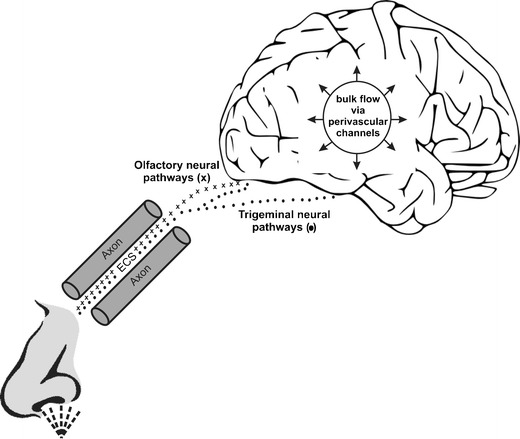
“olfactory and trigeminal nerves—accounts for a significant portion of intranasal delivery to the CNS (9).”
BackgroundInfluentialThe human amygdala in social judgment
Adolphs, R., Tranel, D., & Damasio, A. R. (1998) · Nature · doi:10.1038/30982 · Cited by 1,125 · cited 2×
“Perhaps most surprisingly, central oxytocin also improves schizophrenia-induced social deficits (58), including performance on the Brüne Theory of Mind Picture Stories Task (59) and the Trustworthiness Task (60).”
Background
Research works printed but not linked: 2
- 15. Hanson LR, Martinez PM, Taheri S, Kamsheh L, Mignot E, Frey II WH. Intranasal administration of hypocretin 1 (orexin A) bypasses the blood-brain barrier & targets the brain: A new strategy for the treatment of narcolepsy. Drug Del Tech. 2004;4:66-70.
- 91. Yu SP, Wei N, Chau TC, Deveau L, Wei L. Distribution and therapeutic benefits of intranasally administered hypoxia- preconditioned bone marrow stem cells after barrel cortex stroke. 25th International Symposium on Cerebral Blood Flow, Metab- olism, and Function. Barcelona, Spain. 2011, Available at: http://kenes.com/brain2011/abstracts/pdf/1257.pdf.
Cited by
Blood-Brain Barrier: From Physiology to Disease and Back
Sweeney, M. D., Zhao, Z., Montagne, A., Nelson, A. R., & Zlokovic, B. V. (2019) · Physiological Reviews · doi:10.1152/physrev.00050.2017 · Cited by 2,312
Evaluation of intranasal delivery route of drug administration for brain targeting
Erdő, F., Bors, L. A., Farkas, D., Bajza, Á., & Gizurarson, S. (2018) · Brain Research Bulletin · doi:10.1016/j.brainresbull.2018.10.009 · Cited by 744
Alzheimer's Disease: Treatment Strategies and Their Limitations.
Passeri, E., Elkhoury, K., Morsink, M., Broersen, K., Linder, M., Tamayol, A., Malaplate, C., Yen, F. T., & Arab-Tehrany, E. (2022) · International Journal of Molecular Sciences · doi:10.3390/ijms232213954 · Cited by 689
Agrawal, M., Saraf, S., Saraf, S., Antimisiaris, S. G., Chougule, M. B., Shoyele, S. A., & Alexander, A. (2018) · Journal of Controlled Release · doi:10.1016/j.jconrel.2018.05.011 · Cited by 630
Brain-Derived Neurotrophic Factor in Alzheimer’s Disease and Its Pharmaceutical Potential
Gao, L., Zhang, Y., Sterling, K., & Song, W. (2022) · Translational Neurodegeneration · doi:10.1186/s40035-022-00279-0 · Cited by 606
Neuropeptide Y: a stressful review
Reichmann, F., & Holzer, P. (2016) · Neuropeptides · doi:10.1016/j.npep.2015.09.008 · Cited by 490
Freiherr, J., Hallschmid, M., Frey, W. H., Brünner, Y. F., Chapman, C. D., Hölscher, C., Craft, S., De Felice, F. G., & Benedict, C. (2013) · CNS Drugs · doi:10.1007/s40263-013-0076-8 · Cited by 468
“Another proposed transport mechanisms is via the rostral migratory stream [90].”
BackgroundSelf-citationProgress in brain targeting drug delivery system by nasal route
Khan, A. R., Liu, M., Khan, M. W., & Zhai, G. (2017) · Journal of Controlled Release · doi:10.1016/j.jconrel.2017.09.001 · Cited by 402
“, with title of “Nasal drug delivery device” for nose to brain delivery of drug [127].”
BackgroundExogenous and evoked oxytocin restores social behavior in the Cntnap2 mouse model of autism
Peñagarikano, O., Lázaro, M. T., Lu, X.-H., Gordon, A., Dong, H., Lam, H. A., Peles, E., Maidment, N. T., Murphy, N. P., Yang, X. W., et al. (2015) · Science Translational Medicine · doi:10.1126/scitranslmed.3010257 · Cited by 378
Singh, M. (2014) · Frontiers in Psychology · doi:10.3389/fpsyg.2014.00925 · Cited by 337
“The pathway is unknown Coppen and Bolander-Gouaille, 2005; Young, 2007 Ghrelin Linked to stress mediated food reward behavior, depression, and anxiety via ghrelin receptor signaling pathway Schanze et al., 2008; Barim et al., 2009; Kluge et al., 2009, 2011; Perello et al., 2010; Chuang et al., 2011; Diz-Chaves, 2011;…”
BackgroundInfluentialMetabolic disturbances connecting obesity and depression
Hryhorczuk, C., Sharma, S., & Fulton, S. E. (2013) · Frontiers in Neuroscience · doi:10.3389/fnins.2013.00177 · Cited by 322
“Other clinical studies show that intranasal insulin reduces cortisol levels and thus may have antidepressant actions by lessening visceral obesity (Chapman et al., 2013).”
BackgroundSurface-Modified Nanocarriers for Nose-To-Brain Delivery: From Bioadhesion to Targeting
Sonvico, F., Clementino, A. R., Buttini, F., Colombo, G., Pescina, S., Stanisçuaski Guterres, S., Raffin Pohlmann, A., & Nicoli, S. (2018) · doi:10.20944/preprints201802.0077.v1 · Cited by 306
“In addition, the trigeminal nerve appears notably involved in the nose-tobrain (N2B) delivery of certain substances, especially towards the posterior region of the brain [10,11].”
BackgroundDjupesland, P. G., Messina, J. C., & Mahmoud, R. A. (2014) · Therapeutic Delivery · doi:10.4155/tde.14.41 · Cited by 295
Wang, Z., Xiong, G., Tsang, W. C., Schätzlein, A. G., & Uchegbu, I. F. (2019) · The Journal of Pharmacology and Experimental Therapeutics · doi:10.1124/jpet.119.258152 · Cited by 231
“This breakthrough study has paved the way for a variety of clinical studies using the nose-to-brain route (Chapman et al., 2013) for various disease indications.”
BackgroundBrain insulin signalling in metabolic homeostasis and disease
Scherer, T., Sakamoto, K., & Buettner, C. (2021) · Nature Reviews Endocrinology · doi:10.1038/s41574-021-00498-x · Cited by 205
MacDonald, K., & Feifel, D. (2013) · Frontiers in Neuroscience · doi:10.3389/fnins.2013.00035 · Cited by 181
“…into the brain; and (2) extraneuronal passive diffusion into the CSF through perineural clefts in the nasal epithelium which provide a gap in BBB (Illum, 2004; Thorne et al., 2004; Renner et al., 2012a,b) and (Dhuria et al., 2010; Chapman et al., 2012; Zhu et al., 2012 for references and details).”
BackgroundNose-to-brain peptide delivery – The potential of nanotechnology
Samaridou, E., & Alonso, M. J. (2018) · Bioorganic & Medicinal Chemistry · doi:10.1016/j.bmc.2017.11.001 · Cited by 178
Insulin in the nervous system and the mind: Functions in metabolism, memory, and mood
Lee, S.-H., Zabolotny, J. M., Huang, H., Lee, H., & Kim, Y.-B. (2016) · Molecular Metabolism · doi:10.1016/j.molmet.2016.06.011 · Cited by 176
“Although the efficiency of intranasal delivery by insufflations seems to be restricted, it is considered a novel and promising strategy for the treatment of diseases with CNS involvement [26].”
BackgroundZhang, H., Hao, Y., Manor, B., Novak, P., Milberg, W., Zhang, J., Fang, J., & Novak, V. (2015) · Diabetes · doi:10.2337/db14-1000 · Cited by 176
“Intranasal insulin administration delivers insulin directly to the brain (8), and therefore intranasal insulin administration is emerging as a promising tool to deliver therapeutics to the brain tissue (9).”
BackgroundA review of intranasal formulations for the treatment of seizure emergencies
Kapoor, M., Cloyd, J. C., & Siegel, R. A. (2016) · Journal of Controlled Release · doi:10.1016/j.jconrel.2016.07.001 · Cited by 167
Reglodi, D., Renaud, J., Tamas, A., Tizabi, Y., Socías, S. B., Del-Bel, E., & Raisman-Vozari, R. (2017) · Progress in Neurobiology · doi:10.1016/j.pneurobio.2015.10.004 · Cited by 162
Age-Related Olfactory Dysfunction: Epidemiology, Pathophysiology, and Clinical Management
Kondo, K., Kikuta, S., Ueha, R., Suzukawa, K., & Yamasoba, T. (2020) · Frontiers in Aging Neuroscience · doi:10.3389/fnagi.2020.00208 · Cited by 184
Danielyan, L., Beer-Hammer, S., Stolzing, A., Schäfer, R., Siegel, G., Fabian, C., Kahle, P., Biedermann, T., Lourhmati, A., Buadze, M., et al. (2014) · Cell Transplantation · doi:10.3727/096368914x684970 · Cited by 151
“Besides our previously published data on INA of MSCs in the 6-OHDA model of PD, therapeutically efficient intranasal delivery of different types of cells (MSCs, T-regulatory cells, neural stem/progenitor cells) was successfully shown in a variety of disease models [for review, see (12)], such as neonatal ischemia (71)…”
BackgroundSelf-citationAwad, R., Avital, A., & Sosnik, A. (2022) · Acta Pharmaceutica Sinica B · doi:10.1016/j.apsb.2022.07.003 · Cited by 160
Brain insulin resistance: A treatment target for cognitive impairment and anhedonia in depression
Hamer, J. A., Testani, D., Mansur, R. B., Lee, Y., Subramaniapillai, M., & McIntyre, R. S. (2019) · Experimental Neurology · doi:10.1016/j.expneurol.2019.01.016 · Cited by 136
Sun, J., Wei, Z. Z., Gu, X., Zhang, J. Y., Zhang, Y., Li, J., & Wei, L. (2015) · Experimental Neurology · doi:10.1016/j.expneurol.2015.03.011 · Cited by 138
Precision Nanomedicine in Neurodegenerative Diseases
Goldsmith, M., Abramovitz, L., & Peer, D. (2014) · ACS Nano · doi:10.1021/nn501292z · Cited by 124
“Once the drug passes through the olfactory epithelium, it enters the olfactory bulb and diffuses through the olfactory and trigeminal nerve, effectively distributing the drug throughout the brain.(17)”
BackgroundRoles of Neuropeptide Y in Neurodegenerative and Neuroimmune Diseases
Li, C., Wu, X., Liu, S., Zhao, Y., Zhu, J., & Liu, K. (2019) · Frontiers in Neuroscience · doi:10.3389/fnins.2019.00869 · Cited by 123
Ruigrok, M. J. R., & de Lange, E. C. M. (2015) · The AAPS Journal · doi:10.1208/s12248-015-9724-x · Cited by 120
“In many studies, IN administration of the peptide oxytocin has been investigated (62).”
BackgroundConsiderations for the Use of Polyphenols as Therapies in Neurodegenerative Diseases
Renaud, J., & Martinoli, M.-G. (2019) · International Journal of Molecular Sciences · doi:10.3390/ijms20081883 · Cited by 120
“The most promising of these is intranasal administration, usually paired with one of the previously described encapsulation techniques, which has proved successful for brain-targeted drugs in humans, at least for increased bioavailability and the avoidance peripheral side effects [222,223].”
BackgroundAnimal models in translational studies of PTSD
Daskalakis, N. P., Yehuda, R., & Diamond, D. M. (2013) · Psychoneuroendocrinology · doi:10.1016/j.psyneuen.2013.06.006 · Cited by 138
“In the context of the neuropeptides as novel therapeutics, intranasal drug administration has huge potentials since it can facilitate the successful delivery of large molecules to the brain bypassing the blood—brain-barrier (Chapman et al., 2012).”
Bruinsmann, F. A., Richter Vaz, G., de Cristo Soares Alves, A., Aguirre, T., Raffin Pohlmann, A., Stanisçuaski Guterres, S., & Sonvico, F. (2019) · Molecules · doi:10.3390/molecules24234312 · Cited by 118
Picone, P., Ditta, L. A., Sabatino, M. A., Militello, V., San Biagio, P. L., Di Giacinto, M. L., Cristaldi, L., Nuzzo, D., Dispenza, C., Giacomazza, D., et al. (2016) · Biomaterials · doi:10.1016/j.biomaterials.2015.11.057 · Cited by 118
Structure and Fate of Nanoparticles Designed for the Nasal Delivery of Poorly Soluble Drugs
Clementino, A. R., Pellegrini, G., Banella, S., Colombo, G., Cantù, L., Sonvico, F., & Del Favero, E. (2021) · Molecular Pharmaceutics · doi:10.1021/acs.molpharmaceut.1c00366 · Cited by 116
Novel Central Nervous System Drug Delivery Systems
Stockwell, J., Abdi, N., Lu, X., Maheshwari, O., & Taghibiglou, C. (2014) · Chemical Biology & Drug Design · doi:10.1111/cbdd.12268 · Cited by 114
“Intranasal drug delivery (IDD) overcomes some of the important challenges regarding drug delivery to the CNS by bypassing the BBB (68).”
BackgroundInfluentialKovac, S., & Walker, M. C. (2013) · Neuropeptides · doi:10.1016/j.npep.2013.10.015 · Cited by 127
Intranasal insulin in Alzheimer's disease: Food for thought
Chapman, C. D., Schiöth, H. B., Grillo, C. A., & Benedict, C. (2017) · Neuropharmacology · doi:10.1016/j.neuropharm.2017.11.037 · Cited by 121
“Transport of substances along the olfactory and trigeminal nerve pathways is thought to occur through both intracellular and extracellular mechanisms (Chapman et al., 2013).”
Self-citationPolymeric Nanoparticles for the Treatment of Malignant Gliomas
Mahmoud, B. S., Alamri, A. H., & McConville, C. (2020) · Cancers · doi:10.3390/cancers12010175 · Cited by 110
“Therefore, the use of nanoparticles for delivery to the brain has the potential to increase the percentage of drug that crosses the BBB while reducing non-specific accumulation in other tissues [107,108].”
BackgroundIslam, N., Wang, H., Maqbool, F., & Ferro, V. (2019) · Molecules · doi:10.3390/molecules24071271 · Cited by 97
Bonaccorso, A., Musumeci, T., Serapide, M. F., Pellitteri, R., Uchegbu, I. F., & Puglisi, G. (2017) · Colloids and Surfaces B Biointerfaces · doi:10.1016/j.colsurfb.2017.03.035 · Cited by 101
“BBB- Blood Brain Barrier CNS- Central Nervous System CS- Chitosan CSF-Cerebral spinal fluid DSC- Differential Scanning Calorimetry %DTE- drug targeting efficiency percentage %DTP- direct transport percentage E.E. - Encapsulation Efficiency FDA- Food and Drug Administration GRAS- Generally Recognized As Safe IN- IntraN…”
BackgroundInfluentialBenedict, C., & Grillo, C. A. (2018) · Frontiers in Neuroscience · doi:10.3389/fnins.2018.00215 · Cited by 96
“This finding is supported by studies in rodent models in which low levels of brain insulin and impaired insulin signaling preceded Aβ aggregation in a mouse model of AD (Chua et al., 2012).”
ResultSelf-citationStem Cell Therapy: A Promising Therapeutic Method for Intracerebral Hemorrhage
Gao, L., Xu, W., Li, T., Chen, J., Shao, A., Yan, F., & Chen, G. (2018) · Cell Transplantation · doi:10.1177/0963689718773363 · Cited by 104
Nanomedicine as a non-invasive strategy for drug delivery across the blood brain barrier
Tam, V. H., Sosa, C. L., Liu, R., Yao, N., & Priestley, R. D. (2016) · International Journal of Pharmaceutics · doi:10.1016/j.ijpharm.2016.10.031 · Cited by 115
“Not only is this inefficient as very little of the drug actually bypasses the BBB, it also results in harmful side effects to tissues in unaffected areas (Chapman et al., 2013).”
BackgroundIntranasal drug delivery for treatment of Alzheimer’s disease
Fonseca, L., Lopes, J. A., Vieira, J., Viegas, C., Oliveira, C. S., Hartmann, R. P., & Fonte, P. (2021) · Drug Delivery and Translational Research · doi:10.1007/s13346-021-00940-7 · Cited by 100
Shpakov, A. O., Derkach, K. V., & Berstein, L. M. (2015) · Future Science OA · doi:10.4155/fso.15.23 · Cited by 100
Neuropeptide Y, resilience, and PTSD therapeutics
Kautz, M. M., Charney, D. S., & Murrough, J. W. (2016) · Neuroscience Letters · doi:10.1016/j.neulet.2016.11.061 · Cited by 103
Potential of neuropeptide Y for preventing or treating post-traumatic stress disorder
Sabban, E. L., Alaluf, L. G., & Serova, L. I. (2015) · Neuropeptides · doi:10.1016/j.npep.2015.11.004 · Cited by 92
The Route by Which Intranasally Delivered Stem Cells Enter the Central Nervous System
Galeano, C., Qiu, Z., Mishra, A., Farnsworth, S. L., Hemmi, J. J., Moreira, A. G., Edenhoffer, P., & Hornsby, P. J. (2018) · Cell Transplantation · doi:10.1177/0963689718754561 · Cited by 95
Herradón, G., & Pérez‐García, C. (2014) · British Journal of Pharmacology · doi:10.1111/bph.12312 · Cited by 88
“Non-invasive ultrasound delivered to the brain through the intact skull combined with preformed microbubbles, can safely induce transient, localized and reversible disruption of the BBB, allowing therapeutics to be delivered into the CNS; this has recently been demonstrated in rodent models of Alzheimer’s disease and…”
MethodInfluentialIntranasal insulin therapy for cognitive impairment and neurodegeneration: current state of the art
de la Monte, S. M. (2013) · Expert Opinion on Drug Delivery · doi:10.1517/17425247.2013.856877 · Cited by 87
“For example, intranasal insulin administration increases CSF levels of insulin [58,70], is safe in humans [58,85], and avoids repeated injections.”
Biliverdin Reductase-A Mediates the Beneficial Effects of Intranasal Insulin in Alzheimer Disease
Barone, E., Tramutola, A., Triani, F., Calcagnini, S., Di Domenico, F., Ripoli, C., Gaetani, S., Grassi, C., Butterfield, D. A., Cassano, T., et al. (2019) · Molecular Neurobiology · doi:10.1007/s12035-018-1231-5 · Cited by 86
Intranasal Nanoparticulate Systems as Alternative Route of Drug Delivery
Alshweiat, A., Ambrus, R., & Csóka, I. (2019) · Current Medicinal Chemistry · doi:10.2174/0929867326666190827151741 · Cited by 90
Laukova, M., Alaluf, L. G., Serova, L. I., Arango, V., & Sabban, E. L. (2014) · Endocrinology · doi:10.1210/en.2014-1192 · Cited by 83
Nanoparticulate peptide delivery exclusively to the brain produces tolerance free analgesia
Godfrey, L., Iannitelli, A., Garrett, N., Moger, J., Imbert, I., King, T. E., Porreca, F., Soundararajan, R., Lalatsa, A., Schätzlein, A. G., et al. (2017) · Journal of Controlled Release · doi:10.1016/j.jconrel.2017.11.041 · Cited by 90
Cai, Q., Feng, L., & Yap, K. Z. (2018) · Psychiatry and Clinical Neurosciences · doi:10.1111/pcn.12627 · Cited by 78
Imaging of intranasal drug delivery to the brain.
Veronesi, M. C., Alhamami, M., Miedema, S. B., Yun, Y., Ruiz-Cardozo, M. A., & Vannier, M. W. (2020) · PubMed Central · Cited by 114
In vivo assessment of cerebrospinal fluid efflux to nasal mucosa in humans
Melin, E., Eide, P. K., & Ringstad, G. (2020) · Scientific Reports · doi:10.1038/s41598-020-72031-5 · Cited by 77
Role of Insulin in Neurotrauma and Neurodegeneration: A Review
Shaughness, M., Acs, D., Brabazon, F., Hockenbury, N., & Byrnes, K. R. (2020) · Frontiers in Neuroscience · doi:10.3389/fnins.2020.547175 · Cited by 73
Qu, Y., Li, A., Ma, L., Iqbal, S., Sun, X., Ma, W., Li, C., Zheng, D., Xu, Z., Zhao, Z., et al. (2021) · International Journal of Pharmaceutics · doi:10.1016/j.ijpharm.2021.120250 · Cited by 73
Evolving new-age strategies to transport therapeutics across the blood-brain-barrier
Choudhari, M., Hejmady, S., Narayan Saha, R., Damle, S., Singhvi, G., Alexander, A., Kesharwani, P., & Kumar Dubey, S. (2021) · International Journal of Pharmaceutics · doi:10.1016/j.ijpharm.2021.120351 · Cited by 74
Melatonin: A potential nighttime guardian against Alzheimer’s
Zhang, Z., Xue, P., Bendlin, B. B., Zetterberg, H., Felice, F. G. D., Tan, X. W., & Benedict, C. (2024) · Molecular Psychiatry · doi:10.1038/s41380-024-02691-6 · Cited by 82
Self-citationWang, P., Wang, S. C., Yang, H., Lv, C., Jia, S., Liu, X., Wang, X., Meng, D., Qin, D., Zhu, H., et al. (2019) · Frontiers in Neuroscience · doi:10.3389/fnins.2019.00454 · Cited by 72
Derkach, K. V., Бондарева, В. М., Chistyakova, O. V., Berstein, L. M., & Shpakov, A. O. (2015) · International Journal of Endocrinology · doi:10.1155/2015/245459 · Cited by 76
“The intranasal delivery of a variety of hormones, neuropeptides, and drugs is an efficient method of their administration into CNS and a promising therapeutic strategy in the treatment of metabolic disorders and neurodegenerative and neurological diseases [29].”
BackgroundSalatin, S., Barar, J., Barzegar-Jalali, M., Adibkia, K., & Jelvehgari, M. (2017) · Colloids and Surfaces B Biointerfaces · doi:10.1016/j.colsurfb.2017.08.031 · Cited by 71
Kovacs‐Balint, Z., Tu, T., Sundby, M., Qureshi, F. M., Lewis, B. K., Jikaria, N. R., Burks, S. R., & Frank, J. A. (2018) · Theranostics · doi:10.7150/thno.24512 · Cited by 76
“The BBB maintains homeostasis and various approaches have been developed to safely and effectively open or bypass it [7-16].”
BackgroundSepsis: developing new alternatives to reduce neuroinflammation and attenuate brain injury
Meneses, G., Cárdenas, G., Espinosa, A., Rassy, D., Pérez‐Osorio, I. N., Bárcena, B., Fleury, A., Besedovsky, H. O., Fragoso, G., & Sciutto, E. (2018) · Annals of the New York Academy of Sciences · doi:10.1111/nyas.13985 · Cited by 80
Rebholz, H., Braun, R. J., Ladage, D., Knoll, W., Kleber, C., & Hassel, A. W. (2020) · Frontiers in Neurology · doi:10.3389/fneur.2020.569333 · Cited by 80
“Viruses pass from the nose directly to the cerebrospinal fluid (CSF) since the nose is connected to the CSF (50).”
BackgroundStem cell therapies in age-related neurodegenerative diseases and stroke
Wang, Y., Ji, X., Leak, R. K., Chen, F., & Cao, G. (2016) · Ageing Research Reviews · doi:10.1016/j.arr.2016.11.002 · Cited by 79
Montegiove, N., Calzoni, E., Emiliani, C., & Cesaretti, A. (2022) · Journal of Functional Biomaterials · doi:10.3390/jfb13030125 · Cited by 78
“This pathway involves the olfactory and trigeminal nerve systems that originate in the brain and end in the nasal cavity, namely in the olfactory neuroepithelium and the respiratory epithelium, respectively [11,85,89,90].”
BackgroundLinares, G. R., Chiu, C., Scheuing, L., Leng, Y., Liao, H., Maric, D., & Chuang, D. (2016) · Experimental Neurology · doi:10.1016/j.expneurol.2016.04.003 · Cited by 75
“A range of therapeutics including macromolecules, drugs, or cells can be delivered, and are distributed throughout the entire brain (Chapman et al., 2013; Lochhead and Thorne, 2012; Mittal et al., 2014).”
BackgroundYoung, A. T., Cornwell, N., & Daniele, M. A.-A. (2017) · Advanced Functional Materials · doi:10.1002/adfm.201700239 · Cited by 79
Central Insulin Administration Improves Odor-Cued Reactivation of Spatial Memory in Young Men
Brünner, Y. F., Kofoet, A., Benedict, C., & Freiherr, J. (2015) · The Journal of Clinical Endocrinology & Metabolism · doi:10.1210/jc.2014-3018 · Cited by 68
“thenasal cavity toanteriorandposterior sitesof thebrain (4),”
Self-citationGhasemi, R., Zarifkar, A., Rastegar, K., Maghsoudi, N., & Moosavi, M. (2014) · Neuropharmacology · doi:10.1016/j.neuropharm.2014.01.036 · Cited by 76
A New Brain Drug Delivery Strategy: Focused Ultrasound-Enhanced Intranasal Drug Delivery
Chen, H., Chen, C., Acosta, C., Wu, S.-Y., Sun, T., & Konofagou, E. E. (2014) · PLoS ONE · doi:10.1371/journal.pone.0108880 · Cited by 78
“IN delivery of such therapeutics, such as neurotrophic factors, neuropeptides, and hormones, have been shown promise in the treatment of CNS diseases and injuries, including Alzheimer’s disease, stroke, Parkinson’s disease, motor neuron diseases, demyelinating diseases and traumatic brain injury [6,8,22].”
Oxytocin - A Multifunctional Analgesic for Chronic Deep Tissue Pain
Goodin, B., Ness, T., & Robbins, M. (2014) · Current Pharmaceutical Design · doi:10.2174/1381612820666141027111843 · Cited by 66
“Clinically, OXY has been used in the treatment of autism [35], sexual dysfunction [36], migraine [37], schizophrenia [38], drug addiction [39] and other CNS dysfunctions [40].”
BackgroundNeurotherapeutic applications of nanomedicine for treating Alzheimer's disease
Wilson, B., & Geetha, K. M. (2020) · Journal of Controlled Release · doi:10.1016/j.jconrel.2020.05.044 · Cited by 64
Borisova, Т. (2018) · Frontiers in Physiology · doi:10.3389/fphys.2018.00728 · Cited by 66
Kanazawa, T., Kaneko, M., Niide, T., Akiyama, F., Kakizaki, S., Ibaraki, H., Shiraishi, S., Takashima, Y., Suzuki, T., & Seta, Y. (2017) · International Journal of Pharmaceutics · doi:10.1016/j.ijpharm.2017.07.077 · Cited by 69
A Key Role of Insulin Receptors in Memory
Felice, F. G. D., & Benedict, C. (2015) · Diabetes · doi:10.2337/dbi15-0011 · Cited by 63
“In harmony with the proposed role of insulin signaling in cognition, intranasal insulin treatment—a method achieving direct CNS delivery of insulin without invasiveness or major complications (7)—improves memory in healthy adults, without changing blood levels of insulin or glucose (reviewed in [8]).”
MethodSelf-citationDey, M., Yu, D., Kanojia, D., Li, G., SUKHANOVA, M. J., Spencer, D. A., Pituch, K. C., Zhang, L., Han, Y., Ahmed, A. U., et al. (2016) · Stem Cell Reports · doi:10.1016/j.stemcr.2016.07.024 · Cited by 58
“Although this modality has been successfully utilized for delivering a variety of growth factors, hormones, and neuropeptides (Chapman et al., 2013) to the CNS, the efficacy of this route to deliver cell-based carriers is still in its early phase of exploration.”
MethodMathé, A. A., Michaneck, M., Berg, E., Charney, D. S., & Murrough, J. W. (2020) · The International Journal of Neuropsychopharmacology · doi:10.1093/ijnp/pyaa054 · Cited by 68
“Thus entry into brain of, for example, angiotensin, arginine-vasopressin, IGF-1, insulin, leptin, melatonin, NPY, oxytocin, rhNGF, and vasointestinal polypeptide has been demonstrated (for reviews, see Alam et al., 2010; Dhuria et al., 2010; Illum, 2012; Lochhead and Thorne, 2012; Chapman et al., 2013).”
BackgroundThe Potential Benefits of Nanotechnology in Treating Alzheimer’s Disease
Ling, T. S., Chandrasegaran, S., Low, Z. X., Suan, T. L., Elaine, E., Nathan, D. V., Chai, Y. H., Gunasekaran, B., & Salvamani, S. (2021) · BioMed Research International · doi:10.1155/2021/5550938 · Cited by 69
Dong, J., Shang, Y., Inthavong, K., Chan, H., & Tu, J. Y. (2017) · Pharmaceutical Research · doi:10.1007/s11095-017-2280-6 · Cited by 59
Exercise mimetics: a novel strategy to combat neuroinflammation and Alzheimer’s disease
Zhao, R. (2024) · Journal of Neuroinflammation · doi:10.1186/s12974-024-03031-9 · Cited by 67
“Moreover, novel exogenous delivery methods for transporting large molecules, such as the intranasal route and nanoencapsulation technologies, have been extensively studied to overcome the drawbacks of oral or intravenous drug delivery [226, 242–244].”
BackgroundIntranasal breast milk for premature infants with severe intraventricular hemorrhage—an observation
Keller, T., Körber, F., Oberthuer, A., Schafmeyer, L., Mehler, K., Kuhr, K., & Kribs, A. (2018) · European Journal of Pediatrics · doi:10.1007/s00431-018-3279-7 · Cited by 67
Kanazawa, T. (2015) · Medical Devices: Evidence and Research · doi:10.2147/mder.s70856 · Cited by 54
“In order to achieve therapeutic effectiveness, novel drug delivery systems capable of reaching target tissues are needed, in addition to new drugs.”
Modulation of Glucose Metabolism in Hippocampal Neurons by Adiponectin and Resistin
Cisternas, P., Martínez, M., Ahima, R. S., Wong, G. W., & Inestrosa, N. C. (2018) · Molecular Neurobiology · doi:10.1007/s12035-018-1271-x · Cited by 63
Novel approaches for the delivery of therapeutics in ischemic stroke
Nozohouri, S., Sifat, A. E., Vaidya, B., & Abbruscato, T. J. (2020) · Drug Discovery Today · doi:10.1016/j.drudis.2020.01.007 · Cited by 65
“Moreover, a large amount of intact drug can be delivered into the brain through nasal administration compared with the intravenous route because it eliminates plasma protein binding [91].”
BackgroundInsulin and leptin as potential cognitive enhancers in metabolic disorders and Alzheimer's disease
Mejido, D. C. P., Peny, J. A., Vieira, M. N. N., Ferreira, S. T., & Felice, F. G. D. (2020) · Neuropharmacology · doi:10.1016/j.neuropharm.2020.108115 · Cited by 55
Convolutions in the rendition of nose to brain therapeutics from bench to bedside: Feats & fallacies
Goel, H., Kalra, V., Verma, S. K., Dubey, S. K., & Tiwary, A. K. (2021) · Journal of Controlled Release · doi:10.1016/j.jconrel.2021.12.009 · Cited by 64
Oya, K., Matsuda, Y., Matsunaga, S., Kishi, T., & Iwata, N. (2015) · European Archives of Psychiatry and Clinical Neuroscience · doi:10.1007/s00406-015-0634-9 · Cited by 54
“However, several studies reported that intranasal oxytocin administration might cause central nervous system and demonstrate psychoactive properties [6, 23].”
BackgroundRepair of neonatal brain injury: bringing stem cell‐based therapy into clinical practice
Wagenaar, N., Nijboer, C. H. A., & van Bel, F. (2017) · Developmental Medicine & Child Neurology · doi:10.1111/dmcn.13528 · Cited by 58
“29 Intranasal application might provide improvement over systemic routes as MSCs are targeted directly to the brain, preventing loss of MSCs in peripheral organs.”
Wang, Q., Li, K., Gao, L., Zhang, Y., Lin, K., & Cui, Y.-L. (2020) · Biomaterials Science · doi:10.1039/c9bm02006c · Cited by 56
Role of Nanomedicine-Based Therapeutics in the Treatment of CNS Disorders
Guo, Z.-H., Khattak, S., Rauf, M. A., Ansari, M. A., Alomary, M. N., Razak, S., Yang, C., Wu, D., & Ji, X. (2023) · Molecules · doi:10.3390/molecules28031283 · Cited by 60
Raghav, M., Gupta, V., Awasthi, R., Singh, A. K., & Kulkarni, G. T. (2023) · Journal of Drug Delivery Science and Technology · doi:10.1016/j.jddst.2023.104756 · Cited by 63
The role of exercise-induced peripheral factors in sleep regulation
Tan, X. W., van Egmond, L. T., Cedernaes, J., & Benedict, C. (2020) · Molecular Metabolism · doi:10.1016/j.molmet.2020.101096 · Cited by 59
“By utilizing the intranasal drug delivery method (a noninvasive option for delivering drugs from the nasal cavity to the brain with minimal peripheral exposure, [77]), IL-6 was shown to enhance the depth of late episodes of SWS at night (i.”
MethodSelf-citationPharmacokinetics of Intranasal versus Subcutaneous Insulin in the Mouse
Nedelcovych, M. T., Gadiano, A. J., Wu, Y., Manning, A. A., Thomas, A. G., Khuder, S. S., Yoo, S.-W., Xu, J., McArthur, J. C., Haughey, N. J., et al. (2018) · ACS Chemical Neuroscience · doi:10.1021/acschemneuro.7b00434 · Cited by 45
“Repeated IN insulin administration resulted in increased concentrations of brain glucose [t(18) = 2.”
BackgroundCisternas, P., Oliva, C. A., Torres, V. I., Barrera, D. P., & Inestrosa, N. C. (2019) · Frontiers in Cellular Neuroscience · doi:10.3389/fncel.2019.00295 · Cited by 45
Kawai, E., Takeda, R., Ota, A., Morita, E., Imai, D., Suzuki, Y., Yokoyama, H., Ueda, S.-Y., Nakahara, H., Miyamoto, T., et al. (2020) · The Journal of Physiological Sciences · doi:10.1186/s12576-020-00733-6 · Cited by 51
“via axonal or extracellular transport of the olfactory nerve takes at least 5–10 min after administration [37, 38].”
BackgroundHippocampal calcium dysregulation at the nexus of diabetes and brain aging
Thibault, O., Anderson, K. L., DeMoll, C., Brewer, L. D., Landfield, P. W., & Porter, N. M. (2013) · European Journal of Pharmacology · doi:10.1016/j.ejphar.2013.07.024 · Cited by 46
“Consequently, it is not fully clear whether Ca2+-dependent aging biomarkers are widely induced/accelerated by deficient insulin signaling or whether, conversely, such brain aging markers can be countered or prevented by insulin treatment (Chapman et al., 2012) or insulin-sensitizing agents.”
Metadata
- Authors
- Chapman, C. D., Frey, W. H., Craft, S., Danielyan, L., Hallschmid, M., Schiöth, H. B., & Benedict, C.
- Affiliations
- Uppsala University (SE)
- Regions Hospital (US)
- Wake Forest University Health Sciences (US)
- Universitätsklinikum Tübingen (DE)
- University of Tübingen (DE)
- Corresponding author
- Chapman, Colin D.
- ORCID
- Venue
- Pharmaceutical Research
- Published
- 2012-11-08
- Volume
- 30
- Issue
- 10
- Pages
- 2475-2484
- ISSN
- 0724-8741 (ISSN-L)
- 1573-904X
- PMC
- PMC3761088
- OpenAlex
- W1982760076
- Cited by
- 310
- References
- 103
- Citations by year
- 2026: 9 · 2025: 22 · 2024: 23 · 2023: 27 · 2022: 27 · 2021: 21 · 2020: 28 · 2019: 22 · 2018: 30 · 2017: 26 · 2016: 17 · 2015: 27 · 2014: 18 · 2013: 13
- FWCI
- 2.30
- Type
- journal article
- Language
- en
- Open access
- hybrid
- doi.org
- Licence
- cc-by
- creativecommons.org/licenses/by/2.0 (tdm)
- Locations
- Pharmaceutical Research (publishedVersion, cc-by)
- Europe PMC (PubMed Central) (publishedVersion, cc-by)
- PubMed Central (publishedVersion, cc-by)
- PubMed (publishedVersion)
- Funders
- Åke Wiberg Stiftelse
- Deutsche Forschungsgemeinschaft
- Vetenskapsrådet
- National Institutes of Health
- Topics
- Life Sciences › Pharmacology, Toxicology and Pharmaceutics › Pharmaceutical Science › Advanced Drug Delivery Systems
- Health Sciences › Medicine › Pulmonary and Respiratory Medicine › Inhalation and Respiratory Drug Delivery
- Life Sciences › Neuroscience › Neurology › Barrier Structure and Function Studies
- Keywords
- intranasal drug delivery, central nervous system disorders, blood-brain barrier, targeted drug delivery, growth factors, neuropeptides, insulin, oxytocin, orexin, stem cell delivery, obesity, Alzheimer's disease, Parkinson's disease, Huntington's disease, depression, anxiety, autism spectrum disorder, seizures, drug addiction, eating disorders, stroke
- MeSH terms
- Administration, Intranasal, Animals, Central Nervous System Diseases, Pharmaceutical Preparations, Humans, Drug Delivery Systems
About these checks
Registry, retraction, Cites and statistics results are computed, not judged, with one exception: a printed reference that no index lists is read once by a model before it counts as a citation error. Claims are extracted by a model and kept only when their quote appears verbatim in the text; each cited source is then checked, with a model’s help, for whether it says what the claim relies on. Those verdicts can be wrong — read the claim’s quote and the cited source before relying on one.
Statistics and arithmetic are recomputed, not judged.
Confidence bands are shown only for fields calibrated on our annotated test set. None is calibrated yet, so no band is shown.
What counts as a claim ›How we measure confidence ›How we check this ›
Are you an author, or do you see a problem with this page? Request a review
Data sources
Bibliographic data: Semantic Scholar, OpenAlex, Crossref.
Contains information from the Semantic Scholar Academic Graph Datasets, made available under the ODC Attribution License (ODC-BY 1.0).
Semantic Scholar’s data is described in: Kinney, R., et al. (2023). The Semantic Scholar Open Data Platform. arXiv:2301.10140.
