

Intranasal Treatment of Central Nervous System Dysfunction in Humans
Open accessThe DOI matches its Crossref record; 100 of the 103 references it cites were found in a registry or an index.
Abstract
One of the most challenging problems facing modern medicine is how to deliver a given drug to a specific target at the exclusion of other regions. For example, a variety of compounds have beneficial effects within the central nervous system (CNS), but unwanted side effects in the periphery. For such compounds, traditional oral or intravenous drug delivery fails to provide benefit without cost. However, intranasal delivery is emerging as a noninvasive option for delivering drugs to the CNS with minimal peripheral exposure. Additionally, this method facilitates the delivery of large and/or charged therapeutics, which fail to effectively cross the blood-brain barrier (BBB). Thus, for a variety of growth factors, hormones, neuropeptides and therapeutics including insulin, oxytocin, orexin, and even stem cells, intranasal delivery is emerging as an efficient method of administration, and represents a promising therapeutic strategy for the treatment of diseases with CNS involvement, such as obesity, Alzheimer's disease, Parkinson's disease, Huntington's disease, depression, anxiety, autism spectrum disorders, seizures, drug addiction, eating disorders, and stroke.
Overview
The claims and statistics of this paper haven’t been checked yet.
Free: it reads the open-access text and checks the first 5 claims that cite a source we can check. Create a free account to check every claim.
Integrity signals
Registry
Cites
Statistics
Figures
Verification
Claims the paper makes
The claims and statistics of this paper haven’t been checked yet.
Free: it reads the open-access text and checks the first 5 claims that cite a source we can check. Create a free account to check every claim.
Claims other papers make about this one
Each is checked against this paper’s own text: does it say what the citing paper says it does?
The source backs part of the claim, not all of it — or backs it for a different population, condition or comparison.
In the citing paper
“It is non-invasive, painless, non-stressful, and relatively easy to perform without requiring a medical specialist [246,247,248].”
From Alzheimer's Disease: Treatment Strategies and Their Limitations. (2022) · cites this paper as [246]
Experimental — accuracy not yet measuredIn the citing paper
“Similarly, a recent systematic review reported that intranasal oxytocin may be effective in combating anxiety and stress in disorder characterised by dysfunction of the central nervous system (Chapman et al., 2013).”
From Meta-analytic review of the effects of a single dose of intranasal oxytocin on threat processing in humans (2018) · cites this paper as Chapman et al., 2013
Self-check
Percentages, sums and reported differences re-computed from the paper’s own numbers.
The self-check needs the paper’s full text.
Citations
Cites
Central nervous system control of food intake
Schwartz, M. W., Woods, S. C., Porte, D., Seeley, R. J., & Baskin, D. G. (2000) · Nature · doi:10.1038/35007534 · Cited by 6,451
Oxytocin increases trust in humans
Kosfeld, M., Heinrichs, M., Zak, P. J., Fischbacher, U., & Fehr, E. (2005) · Nature · doi:10.1038/nature03701 · Cited by 3,690 · cited 1×
“coworkers who revealed that oxytocin increases trust in humans, thereby demonstrating its pro-social potential (53).”
BackgroundCassidy, S. B., Schwartz, S., Miller, J. L., & Driscoll, D. J. (2012) · Genetics in Medicine · doi:10.1038/gim.0b013e31822bead0 · Cited by 1,452
Sniffing neuropeptides: A transnasal approach to the human brain
Born, J., Lange, T., Kern, W., McGregor, G. P., Bickel, U., & Fehm, H. L. (2002) · Nature Neuroscience · doi:10.1038/nn0602-849 · Cited by 1,356 · cited 3×
“In contrast to the intranasal administration of hydrophilic compounds, which typically results in low or no systemic exposure while targeting the brain (10), it can be difficult to avoid systemic exposure with an intranasally delivered small lipophilic molecule.”
BackgroundInfluentialOxytocin improves “mind-reading” in humans
Domes, G., Heinrichs, M., Michel, A., Berger, C., & Herpertz, S. C. (2007) · Biological Psychiatry · doi:10.1016/j.biopsych.2006.07.015 · Cited by 1,298
Craft, S. (2012) · Archives of Neurology · doi:10.1001/archneurol.2011.233 · Cited by 1,253
Self-citationIntranasal delivery to the central nervous system: Mechanisms and experimental considerations
Dhuria, S. V., Hanson, L. R., & Frey, W. H. (2010) · Journal of Pharmaceutical Sciences · doi:10.1002/jps.21924 · Cited by 1,239 · cited 2×
“Extracellular transport, on the other hand, is rapid and likely accounts for much of the rapid delivery and onset of action observed with intranasal CNS therapeutics (8,21).”
BackgroundSelf-citationLeptin enters the brain by a saturable system independent of insulin
Banks, W. A., Kastin, A. J., Huang, W., Jaspan, J. B., & Maness, L. M. (1996) · Peptides · doi:10.1016/0196-9781(96)00025-3 · Cited by 1,224 · cited 6×
“centrations in CSF, suggesting that the problem, at least in part, involves the quantities of leptin able to pass the BBB (48).”
BackgroundInfluentialIntranasal delivery of biologics to the central nervous system
Lochhead, J. J., & Thorne, R. G. (2012) · Advanced Drug Delivery Reviews · doi:10.1016/j.addr.2011.11.002 · Cited by 1,214 · cited 6×
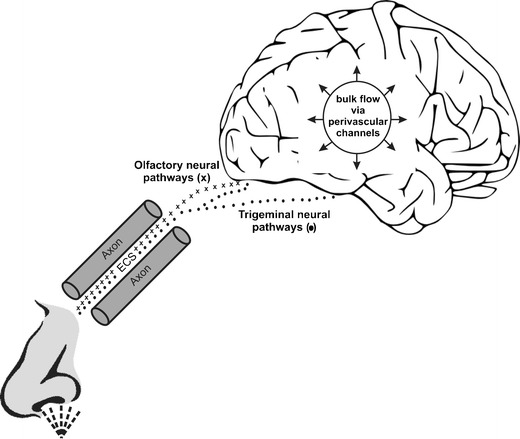
“olfactory and trigeminal nerves—accounts for a significant portion of intranasal delivery to the CNS (9).”
BackgroundInfluentialThe human amygdala in social judgment
Adolphs, R., Tranel, D., & Damasio, A. R. (1998) · Nature · doi:10.1038/30982 · Cited by 1,125 · cited 2×
“Perhaps most surprisingly, central oxytocin also improves schizophrenia-induced social deficits (58), including performance on the Brüne Theory of Mind Picture Stories Task (59) and the Trustworthiness Task (60).”
BackgroundPhysiological response to long-term peripheral and central leptin infusion in lean and obese mice.
Halaas, J. L., Boozer, C., Blair-West, J., Fidahusein, N., Denton, D. A., & Friedman, J. M. (1997) · Proceedings of the National Academy of Sciences · doi:10.1073/pnas.94.16.8878 · Cited by 1,033 · cited 1×
“leptin has failed to provide any substantial benefits for weight decrease or appetite reduction in obesity (46,47).”
BackgroundIntranasal oxytocin improves emotion recognition for youth with autism spectrum disorders.
Guastella, A. J., Einfeld, S. L., Gray, K. M., Rinehart, N. J., Tonge, B. J., Lambert, T. J., & Hickie, I. B. (2010) · Biological Psychiatry · doi:10.1016/j.biopsych.2009.09.020 · Cited by 962 · cited 1×
“12 to 19) with autism spectrum disorders, demonstrating a clear application of oxytocin’s pro-social effects (55).”
BackgroundThorne, R. G., Pronk, G. J., Padmanabhan, V., & Frey, W. H. (2004) · Neuroscience · doi:10.1016/j.neuroscience.2004.05.029 · Cited by 958
Self-citationAlldredge, B. K., Gelb, A. M., Isaacs, S. M., Corry, M. D., Allen, F., Ulrich, S., Gottwald, M. D., O'Neil, N., Neuhaus, J. M., Segal, M. R., et al. (2001) · New England Journal of Medicine · doi:10.1056/nejmoa002141 · Cited by 888 · cited 1×
“Early intervention in a patient who is seizing reduces the chances of both morbidity and mortality (70,71).”
BackgroundThe Human Amygdala in Social Judgment
Adolphs, R., Tranel, D., & Damasio, A. R. (2002) · Foundations in Social Neuroscience · doi:10.7551/mitpress/3077.003.0027 · Cited by 875
Intranasal insulin improves cognition and modulates β-amyloid in early AD
Reger, M. A., Watson, G. S., Green, P. S., Wilkinson, C. W., Baker, L. D., Cholerton, B., Fishel, M. A., Plymate, S. R., Breitner, J. C. S., DeGroodt, W., et al. (2008) · Neurology · doi:10.1212/01.wnl.0000265401.62434.36 · Cited by 830
Self-citationIntranasal insulin improves memory in humans
Benedict, C., Hallschmid, M., Hatke, A., Schultes, B., Fehm, H. L., Born, J., & Kern, W. (2004) · Psychoneuroendocrinology · doi:10.1016/j.psyneuen.2004.04.003 · Cited by 699 · cited 1×
“hypothalamo–pituitary–adrenal (HPA) secretory activity (27).”
Self-citationHanson, L. R., & Frey, W. H. (2008) · BMC Neuroscience · doi:10.1186/1471-2202-9-s3-s5 · Cited by 697
Self-citationReger, M. A., Watson, G. S., Frey, W. H., Baker, L. D., Cholerton, B., Keeling, M. L., Belongia, D. A., Fishel, M. A., Plymate, S. R., Schellenberg, G. D., et al. (2006) · Neurobiology of Aging · doi:10.1016/j.neurobiolaging.2005.03.016 · Cited by 621 · cited 1×
“trast to those without this allele (29).”
Self-citationReger, M. A., Watson, G. S., Green, P. S., Baker, L. D., Cholerton, B., Fishel, M. A., Plymate, S. R., Cherrier, M. M., Schellenberg, G. D., Frey II, W. H., et al. (2008) · Journal of Alzheimer's Disease · doi:10.3233/jad-2008-13309 · Cited by 521
Self-citationMesenchymal stem cells for the treatment of neurodegenerative disease
Joyce, N., Annett, G., Wirthlin, L., Olson, S., Bauer, G., & Nolta, J. A. (2010) · Regenerative Medicine · doi:10.2217/rme.10.72 · Cited by 501
Delivery of Neurotrophic Factors to the Central Nervous System: Pharmacokinetic Considerations
Thorne, R. G., & Frey, W. H. (2001) · Clinical Pharmacokinetics · doi:10.2165/00003088-200140120-00003 · Cited by 487 · cited 2×
“Extracellular transport, on the other hand, is rapid and likely accounts for much of the rapid delivery and onset of action observed with intranasal CNS therapeutics (8,21).”
BackgroundSelf-citationGuastella, A. J., Howard, A. L., Dadds, M. R., Mitchell, P., & Carson, D. S. (2009) · Psychoneuroendocrinology · doi:10.1016/j.psyneuen.2009.01.005 · Cited by 366
A review of safety, side-effects and subjective reactions to intranasal oxytocin in human research
MacDonald, E., Dadds, M. R., Brennan, J. L., Williams, K., Levy, F., & Cauchi, A. J. (2011) · Psychoneuroendocrinology · doi:10.1016/j.psyneuen.2011.02.015 · Cited by 359
Balin, B. J., Broadwell, R. D., Salcman, M., & El‐Kalliny, M. (1986) · Journal of Comparative Neurology · doi:10.1002/cne.902510209 · Cited by 358
Intranasal delivery of cells to the brain
Danielyan, L., Schäfer, R., von Ameln-Mayerhofer, A., Buadze, M., Geisler, J., Klopfer, T., Burkhardt, U., Proksch, B., Verleysdonk, S., Ayturan, M., et al. (2009) · European Journal of Cell Biology · doi:10.1016/j.ejcb.2009.02.001 · Cited by 355 · cited 2×
“(86,92), EGFP (88) or PKH-26 labeling (a lipophilic dye that stably integrates into the cell membrane, without disturbing its”
BackgroundSelf-citationQuantitative analysis of the olfactory pathway for drug delivery to the brain
Thorne, R. G., Emory, C. R., Ala, T. A., & Frey, W. H. (1995) · Brain Research · doi:10.1016/0006-8993(95)00637-6 · Cited by 352 · cited 1×
“However, intracellular transport is a slow process, requiring at best several hours and at worst several days (17,20).”
BackgroundSelf-citationInsulin and the Blood-Brain Barrier
Woods, S., Seeley, R., Baskin, D., & Schwartz, M. (2003) · Current Pharmaceutical Design · doi:10.2174/1381612033455323 · Cited by 320 · cited 1×
“For instance, although an intravenous infusion of insulin yields to increased brain insulin levels (97), it has also been linked to”
BackgroundPedersen, C. A., Gibson, C. M., Rau, S. W., Salimi, K., Smedley, K. L., Casey, R. L., Leserman, J., Jarskog, L. F., & Penn, D. L. (2011) · Schizophrenia Research · doi:10.1016/j.schres.2011.07.027 · Cited by 305 · cited 1×
“Perhaps most surprisingly, central oxytocin also improves schizophrenia-induced social deficits (58), including performance on the Brüne Theory of Mind”
BackgroundIntranasal Insulin Improves Memory in Humans: Superiority of Insulin Aspart
Benedict, C., Hallschmid, M., Schmitz, K., Schultes, B., Ratter, F., Fehm, H. L., Born, J., & Kern, W. (2007) · Neuropsychopharmacology · doi:10.1038/sj.npp.1301193 · Cited by 302
Self-citationBenedict, C., Kern, W., Schultes, B., Born, J., & Hallschmid, M. (2008) · The Journal of Clinical Endocrinology & Metabolism · doi:10.1210/jc.2007-2606 · Cited by 296 · cited 2×
“This conclusion is reinforced by other studies demonstrating the same pattern of results in the acute setting, with men eating less following intranasal insulin administration, while women received a memory boost (39).”
BackgroundResultSelf-citationOxytocin and an oxytocin agonist administered centrally decrease food intake in rats
Olson, B. R., Drutarosky, M. D., Chow, M.-S., Hruby, V. J., Stricker, E. M., & Verbalis, J. G. (1991) · Peptides · doi:10.1016/0196-9781(91)90176-p · Cited by 283 · cited 1×
“In rats, centrally administered oxytocin has been shown to reduce food intake and body weight (61,62).”
BackgroundIntranasal Insulin Reduces Body Fat in Men but not in Women
Hallschmid, M., Benedict, C., Schultes, B., Fehm, H.-L., Born, J., & Kern, W. (2004) · Diabetes · doi:10.2337/diabetes.53.11.3024 · Cited by 281
Self-citationDeadwyler, S. A., Porrino, L., Siegel, J. M., & Hampson, R. E. (2007) · The Journal of Neuroscience · doi:10.1523/jneurosci.3878-07.2007 · Cited by 265
Danielyan, L., Schäfer, R., von Ameln-Mayerhofer, A., Bernhard, F., Verleysdonk, S., Buadze, M., Lourhmati, A., Klopfer, T., Schaumann, F., Schmid, B., et al. (2011) · Rejuvenation Research · doi:10.1089/rej.2010.1130 · Cited by 261 · cited 5×
“Two reports failed to show fluorescently labeled cells (enhanced green fluorescent protein (EGFP) or Hoechst 33258) after intranasal delivery of cells in rats and mice (90,91), while 4 other studies did show successful detection of cells using Hoechst 33342 (86,92), EGFP (88) or PKH-26 labeling (a lipophilic dye that…”
BackgroundInfluentialSelf-citationTheory of mind and the role of IQ in chronic disorganized schizophrenia
Brüne, M. (2003) · Schizophrenia Research · doi:10.1016/s0920-9964(02)00162-7 · Cited by 256 · cited 2×
“Perhaps most surprisingly, central oxytocin also improves schizophrenia-induced social deficits (58), including performance on the Brüne Theory of Mind Picture Stories Task (59) and the Trustworthiness Task (60).”
BackgroundOxytocin inhibits food and fluid intake in rats
Arletti, R., Benelli, A., & Bertolini, A. (1990) · Physiology & Behavior · doi:10.1016/0031-9384(90)90234-u · Cited by 248 · cited 1×
“In rats, centrally administered oxytocin has been shown to reduce food intake and body weight (61,62).”
BackgroundDelivery of Nerve Growth Factor to the Brain via the Olfactory Pathway
Chen, X.-Q., Fawcett, J. R., Rahman, Y.-E., Ala, T. A., & Frey II, W. H. (1998) · Journal of Alzheimer's Disease · doi:10.3233/jad-1998-1102 · Cited by 247
Self-citationDelivery of interferon-β to the monkey nervous system following intranasal administration
Thorne, R. G., Hanson, L. R., Ross, T. M., Tung, D., & Frey, W. H. (2008) · Neuroscience · doi:10.1016/j.neuroscience.2008.01.013 · Cited by 242 · cited 1×
“in significant levels of radioactivity in the trigeminal nerve branches, trigeminal ganglion, and the pons, strongly suggesting the involvement of trigeminal nerves in intranasal delivery to the CNS (9,13,15).”
BackgroundSelf-citationPeripheral oxytocin suppresses food intake and causes weight loss in diet-induced obese rats
Morton, G. J., Thatcher, B. S., Reidelberger, R. D., Ogimoto, K., Wolden-Hanson, T., Baskin, D. G., Schwartz, M. W., & Blevins, J. E. (2012) · American Journal of Physiology-Endocrinology and Metabolism · doi:10.1152/ajpendo.00296.2011 · Cited by 213 · cited 1×
“Recent follow up research demonstrated that this effect is particularly pronounced in diet-induced obese rats (63).”
BackgroundDelivery of125I-NGF to the Brain via the Olfactory Route
Frey, W. H., Liu, J., Chen, X., Thorne, R. G., Fawcett, J. R., Ala, T. A., & Rahman, Y.-E. (1997) · Drug Delivery · doi:10.3109/10717549709051878 · Cited by 210
Self-citationBitter, C., Suter-Zimmermann, K., & Surber, C. (2011) · Current Problems in Dermatology · doi:10.1159/000321044 · Cited by 198 · cited 1×
“Additionally, first-pass metabolism can greatly reduce the bioavailability of any drug taken orally, to the point where only a small amount of active drug actually reaches the circulatory system and ultimately the brain (2).”
BackgroundWei, N., Yu, S. P., Gu, X., Taylor, T. M., Song, D., Liu, X.-F., & Wei, L. (2013) · Cell Transplantation · doi:10.3727/096368912x657251 · Cited by 186 · cited 1×
“(86,92), EGFP (88) or PKH-26 labeling (a lipophilic dye that stably integrates into the cell membrane, without disturbing its”
BackgroundHallschmid, M., Higgs, S., Thienel, M., Ott, V., & Lehnert, H. (2012) · Diabetes · doi:10.2337/db11-1390 · Cited by 181
Self-citationBroadwell, R. D., & Balin, B. J. (1985) · Journal of Comparative Neurology · doi:10.1002/cne.902420410 · Cited by 179 · cited 1×
“However, intracellular transport is a slow process, requiring at best several hours and at worst several days (17,20).”
BackgroundKerr, D., Kelly, A., Dietze, P., Jolley, D., & Barger, B. (2009) · Addiction · doi:10.1111/j.1360-0443.2009.02724.x · Cited by 175 · cited 1×
“it the risk of needlestick injury in a population that is at higher risk for blood-borne viruses (78).”
BackgroundNasal administration of stem cells: a promising novel route to treat neonatal ischemic brain damage
van Velthoven, C. T. J., Kavelaars, A., van Bel, F., & Heijnen, C. J. (2010) · Pediatric Research · doi:10.1203/pdr.0b013e3181f1c289 · Cited by 174 · cited 1×
“proved sensorimotor function in the cylinder rearing test (87).”
BackgroundIntranasal Insulin to Improve Memory Function in Humans
Benedict, C., Hallschmid, M., Schultes, B., Born, J., & Kern, W. (2007) · Neuroendocrinology · doi:10.1159/000106378 · Cited by 171
Self-citationBrain Insulin Signaling and Alzheimer's Disease: Current Evidence and Future Directions
Schiöth, H. B., Craft, S., Brooks, S. J., Frey, W. H., & Benedict, C. (2012) · Molecular Neurobiology · doi:10.1007/s12035-011-8229-6 · Cited by 168
Self-citationSimeon, D., Bartz, J., Hamilton, H., Crystal, S., Braun, A., Ketay, S., & Hollander, E. (2011) · Psychoneuroendocrinology · doi:10.1016/j.psyneuen.2011.03.013 · Cited by 167 · cited 2×
“For example, a recent study utilizing the Tier Social Stress Test (TSST) found that intranasal insulin attenuates both plasma and saliva cortisol release in response to social challenges, demonstrating its role in regulating the hypothalamic-pituitary adrenal (HPA) axis stress responses (44).”
BackgroundEffect of Intranasal Insulin on Cognitive Function: A Systematic Review
Shemesh, E., Rudich, A., Harman-Boehm, I., & Cukierman-Yaffe, T. (2012) · The Journal of Clinical Endocrinology & Metabolism · doi:10.1210/jc.2011-1802 · Cited by 162
Intranasal insulin as a therapeutic option in the treatment of cognitive impairments
Benedict, C., Frey, W. H., Schiöth, H. B., Schultes, B., Born, J., & Hallschmid, M. (2011) · Experimental Gerontology · doi:10.1016/j.exger.2010.08.026 · Cited by 159
Self-citationBrain Uptake of the Glucagon-Like Peptide-1 Antagonist Exendin(9-39) after Intranasal Administration
Banks, W. A., During, M. J., & Niehoff, M. L. (2004) · Journal of Pharmacology and Experimental Therapeutics · doi:10.1124/jpet.103.063222 · Cited by 157
Insulin Modulates Food-Related Activity in the Central Nervous System
Guthoff, M., Grichisch, Y., Canova, C., Tschritter, O., Veit, R., Hallschmid, M., Häring, H.-U., Preissl, H., Hennige, A. M., & Fritsche, A. (2010) · The Journal of Clinical Endocrinology & Metabolism · doi:10.1210/jc.2009-1677 · Cited by 157 · cited 1×
“brain, such as the hippocampus, in response to food images (43).”
BackgroundSelf-citationHolsti, M., Dudley, N., Schunk, J., Adelgais, K., Greenberg, R., Olsen, C., Healy, A., Firth, S., & Filloux, F. (2010) · Archives of Pediatrics & Adolescent Medicine · doi:10.1001/archpediatrics.2010.130 · Cited by 154 · cited 1×
“randomly assigned one treatment or the other, there was no detectable difference in efficacy between intranasal midazolam and rectal diazepam (76).”
BackgroundBaker, H. A., & Spencer, R. F. (1986) · Experimental Brain Research · doi:10.1007/bf00237470 · Cited by 149
Intranasal drug targeting of hypocretin-1 (orexin-A) to the central nervous system
Dhuria, S. V., Hanson, L. R., & Frey, W. H. (2008) · Journal of Pharmaceutical Sciences · doi:10.1002/jps.21604 · Cited by 146 · cited 1×
“drug targeting to the brain and spinal cord 5- to 8-fold (69).”
BackgroundSelf-citationFişgin, T., Gurer, Y., Tezic, T., Senbil, N., Zorlu, P., Okuyaz, C., & Akgün, D. (2002) · Journal of Child Neurology · doi:10.1177/088307380201700206 · Cited by 138 · cited 1×
“to be effective in 87% of patients with prolonged seizures, while rectally delivered diazepam was only effective in 60% (75).”
BackgroundInsulin resistance and AD—extending the translational path
Craft, S. (2012) · Nature Reviews Neurology · doi:10.1038/nrneurol.2012.112 · Cited by 130
Self-citationBenedict, C., Brede, S., Schiöth, H. B., Lehnert, H., Schultes, B., Born, J., & Hallschmid, M. (2011) · Diabetes · doi:10.2337/db10-0329 · Cited by 129
Self-citationDelivery of Galanin-Like Peptide to the Brain: Targeting with Intranasal Delivery and Cyclodextrins
Nonaka, N., Farr, S. A., Kageyama, H., Shioda, S., & Banks, W. A. (2008) · Journal of Pharmacology and Experimental Therapeutics · doi:10.1124/jpet.107.132381 · Cited by 124
Uptake of exogenous proteins in mouse olfactory cells
Kristensson, K., & Olsson, Y. (1971) · Acta Neuropathologica · doi:10.1007/bf00688493 · Cited by 121
Intranasal delivery of insulin via the olfactory nerve pathway
Renner, D. B., Svitak, A. L., Gallus, N. J., Ericson, M. E., Frey, W. H., & Hanson, L. R. (2012) · Journal of Pharmacy and Pharmacology · doi:10.1111/j.2042-7158.2012.01555.x · Cited by 116 · cited 2×
“pons and the cribriform plate, which allows for drug delivery to both the anterior and posterior regions of the brain (9,12).”
BackgroundSelf-citationDhuria, S. V., Hanson, L. R., & Frey, W. H. (2008) · Journal of Pharmacology and Experimental Therapeutics · doi:10.1124/jpet.108.145565 · Cited by 115 · cited 1×
“Using a vasoconstrictor formulation may help reduce systemic exposure of lipophilic molecule (26), but studies on the efficacy of this approach are lacking.”
BackgroundSelf-citationIntranasal Delivery of Antiepileptic Medications for Treatment of Seizures
Wermeling, D. P. (2009) · Neurotherapeutics · doi:10.1016/j.nurt.2009.01.002 · Cited by 114
Clinical pharmacology: plasma protein binding of drugs.
LINDUP, W. E., & Orme, M. (1981) · BMJ · doi:10.1136/bmj.282.6259.212 · Cited by 112 · cited 6×
“In addition, peripheral administration of leptin fails to increase leptin concentrations in CSF, suggesting that the problem, at least in part, involves the quantities of leptin able to pass the BBB (48).”
BackgroundInfluentialDefense at the Border: The Blood–Brain Barrier Versus Bacterial Foreigners
van Sorge, N. M., & Doran, K. S. (2012) · Future Microbiology · doi:10.2217/fmb.12.1 · Cited by 112 · cited 1×
“Most significantly, it is difficult to impossible for many molecules, particularly large and/or charged ones, to enter the brain from the bloodstream due to the blood-brainbarrier (BBB), which keeps foreign materials out (1).”
BackgroundRecent Patents Review on Intranasal Administration for CNS Drug Delivery
Misra, A., Jogani, V., Jinturkar, K., & Vyas, T. (2008) · Recent Patents on Drug Delivery & Formulation · doi:10.2174/187221108783331429 · Cited by 112
Effects of intranasal hypocretin-1 (orexin A) on sleep in narcolepsy with cataplexy
Baier, P. C., Hallschmid, M., Seeck-Hirschner, M., Weinhold, S. L., Burkert, S., Diessner, N., Göder, R., Aldenhoff, J., & Hinze‐Selch, D. (2011) · Sleep Medicine · doi:10.1016/j.sleep.2011.06.015 · Cited by 110
Self-citationRobertson, T. M., Hendey, G. W., Stroh, G., & Shalit, M. (2009) · Prehospital Emergency Care · doi:10.1080/10903120903144866 · Cited by 105 · cited 1×
“Agency, found that there was no significant difference in the likelyhood of clinical response between intranasal (66% response) and intravenous (56% response) administration of naloxone (79).”
BackgroundPeptide therapeutics for CNS indications
McGonigle, P. (2012) · Biochemical Pharmacology · doi:10.1016/j.bcp.2011.10.014 · Cited by 95 · cited 1×
“to administer it via the periphery, as it does not seem to pass the BBB in significant quantities (52).”
BackgroundDe Haan, G., Van Der Geest, P., Doelman, G., Bertram, E., & Edelbroek, P. (2010) · Epilepsia · doi:10.1111/j.1528-1167.2009.02333.x · Cited by 95 · cited 1×
“nasal midazolam is markedly cheaper than rectal treatments (77).”
BackgroundSchmidt, H., Kern, W., Giese, R., Hallschmid, M., & Enders, A. (2009) · Journal of Medical Genetics · doi:10.1136/jmg.2008.062141 · Cited by 94 · cited 1×
“generalized hypotonia and autistic behavior (38).”
Self-citationStem cells for cell therapy in Parkinson's disease
Lindvall, O. (2003) · Pharmacological Research · doi:10.1016/s1043-6618(03)00037-9 · Cited by 92
Bohringer, A., Schwabe, L., Richter, S., & Schachinger, H. (2008) · Psychoneuroendocrinology · doi:10.1016/j.psyneuen.2008.08.002 · Cited by 89
Clinical review: status epilepticus.
Bassin, S. L., Smith, T. L., & Bleck, T. P. (2002) · Critical Care · doi:10.1186/cc1472 · Cited by 88 · cited 1×
“Early intervention in a patient who is seizing reduces the chances of both morbidity and mortality (70,71).”
BackgroundIntranasal delivery of stem cells to the brain
Jiang, Y., Zhu, J., Xu, G., & Liu, X. (2011) · Expert Opinion on Drug Delivery · doi:10.1517/17425247.2011.566267 · Cited by 88
Baier, P. C., Weinhold, S. L., Huth, V., Gottwald, B., Ferstl, R., & Hinze-Selch, D. (2008) · Brain · doi:10.1093/brain/awn193 · Cited by 85 · cited 1×
“Olfactory dysfunction, a well-known aspect of narcolepsy, is also improved by intranasal hypocretin-1 (67).”
BackgroundBrain Uptake of Intranasally Applied Radioiodinated Leptin in Wistar Rats
Fliedner, S., Schulz, C., & Lehnert, H. (2006) · Endocrinology · doi:10.1210/en.2005-1016 · Cited by 81 · cited 1×
“In trials using both lean and diet-induced obese (DIO) rats, intranasal leptin has been demonstrated to reduce appetite and induce weight loss (49,50).”
BackgroundIntranasal Leptin Reduces Appetite and Induces Weight Loss in Rats with Diet-Induced Obesity (DIO)
Schulz, C., Paulus, K., Jöhren, O., & Lehnert, H. (2012) · Endocrinology · doi:10.1210/en.2011-1586 · Cited by 75
Charlton, S. T., Whetstone, J., Fayinka, S. T., Read, K. D., Illum, L., & Davis, S. S. (2008) · Pharmaceutical Research · doi:10.1007/s11095-008-9550-2 · Cited by 74
Intranasal midazolam therapy for pediatric status epilepticus
Wolfe, T. R., & Macfarlane, T. C. (2006) · The American Journal of Emergency Medicine · doi:10.1016/j.ajem.2005.11.004 · Cited by 72
Home and hospital treatment of acute seizures in children with nasal midazolam
Jeannet, P., Roulet, E., Maeder‐Ingvar, M., Gehri, M., Jutzi, A., & Deonna, T. W. (1999) · European Journal of Paediatric Neurology · doi:10.1016/s1090-3798(99)80016-6 · Cited by 64 · cited 1×
“and sometimes decisions not to treat—is currently the preferred method of administration (74).”
MethodHyperinsulinemia causes activation of the hypothalamus-pituitary-adrenal axis in humans
Fruehwald‐Schultes, B., Kern, W., Born, J., Fehm, H., & Peters, A. (2001) · International Journal of Obesity · doi:10.1038/sj.ijo.0801695 · Cited by 60
Transplanted Bone Marrow Mesenchymal Stem Cells Improve Memory in Rat Models of Alzheimer's Disease
Babaei, P., Tehrani, B. S., & Alizadeh, A. (2012) · Stem Cells International · doi:10.1155/2012/369417 · Cited by 59
Changes in blood pressure and plasma catecholamine levels during prolonged hyperinsulinemia
Kern, W., Peters, A., Born, J., Fehm, H. L., & Schultes, B. (2005) · Metabolism · doi:10.1016/j.metabol.2004.10.005 · Cited by 56
The Rostral Migratory Stream Plays a Key Role in Intranasal Delivery of Drugs into the CNS
Scranton, R. A., Fletcher, L., Sprague, S., Jimenez, D. F., & Digicaylioglu, M. (2011) · PLoS ONE · doi:10.1371/journal.pone.0018711 · Cited by 49 · cited 1×
“Additionally, in a recent experiment in mice, the rostral migratory stream has been identified as another potential access path for the CNS delivery of intranasally administered agents (16).”
BackgroundIntranasal naloxone in suspected opioid overdose
Ashton, H. (2006) · Emergency Medicine Journal · doi:10.1136/emj.2005.034322 · Cited by 45 · cited 1×
“Intranasal administration thus presents a safe and effective alternative pre-hospital intervention for reversing the effects of opioid overdose (80).”
BackgroundRamsey, J. J., Kemnitz, J. W., Colman, R. J., Cunningham, D., & Swick, A. G. (1998) · The Journal of Clinical Endocrinology & Metabolism · doi:10.1210/jcem.83.9.5073 · Cited by 43 · cited 1×
“leptin has failed to provide any substantial benefits for weight decrease or appetite reduction in obesity (46,47).”
BackgroundBenedict, C., Dodt, C., Hallschmid, M., Lepiorz, M., Fehm, H. L., Born, J., & Kern, W. (2005) · Metabolism · doi:10.1016/j.metabol.2005.04.026 · Cited by 41
Self-citationTreatment of convulsive and nonconvulsive status epilepticus
Pang, T. D., & Hirsch, L. J. (2005) · Current Treatment Options in Neurology · doi:10.1007/s11940-005-0035-x · Cited by 37 · cited 1×
“Benzodiazepines, such as diazepam, lorazepam, clonazepam andmidazolam, are currently the most popular compounds for acutely treating seizures (72,73).”
BackgroundRamsey, J. J. (1998) · The Journal of Clinical Endocrinology & Metabolism · doi:10.1210/jc.83.9.3230 · Cited by 34
Pharmacokinetics of Substrate Uptake and Distribution in Murine Brain After Nasal Instillation
Graff, C. L., Zhao, R., & Pollack, G. M. (2005) · Pharmaceutical Research · doi:10.1007/s11095-004-1191-5 · Cited by 33
Armentero, M., Bossolasco, P., Cova, L., Levandis, Cerri, S., Diana, V., Blandini, F., Polli, & Silani, V. (2012) · International Journal of Nanomedicine · doi:10.2147/ijn.s27537 · Cited by 31 · cited 1×
“and different method (near-infrared live imaging) for detecting cells in the brain (89).”
MethodStem Cells in Stroke Treatment: The Promise and the Challenges
Sinden, J. D., & Muir, K. W. (2012) · International Journal of Stroke · doi:10.1111/j.1747-4949.2012.00840.x · Cited by 28
Insulin to treat Alzheimer’s disease: just follow your nose?
Schiöth, H. B., Frey, W. H., Brooks, S. J., & Benedict, C. (2012) · Expert Review of Clinical Pharmacology · doi:10.1586/ecp.11.70 · Cited by 28
Self-citationChartoff, E. H., Damez-Werno, D. M., Sonntag, K., Hassinger, L. C., Kaufmann, D., Peterson, J. N., McPhie, D. L., Cataldo, A. M., & Cohen, B. M. (2011) · Stem Cells International · doi:10.4061/2011/586586 · Cited by 21 · cited 1×
“fluorescent protein (EGFP) or Hoechst 33258) after intranasal delivery of cells in rats and mice (90,91), while 4 other studies”
BackgroundIntranasal Steroids in the Treatment of Allergy-Induced Rhinorrhea
Nathan, R. A. (2010) · Clinical Reviews in Allergy & Immunology · doi:10.1007/s12016-010-8206-2 · Cited by 13
Prader—Willi syndrome and the hypothalamus
Swaab, D. (1997) · Acta Paediatrica · doi:10.1111/j.1651-2227.1997.tb18369.x · Cited by 10 · cited 1×
“cally involved in body weight homeostasis (65).”
Baier, P. C., Hallschmid, M., Seeck-Hirschner, M., Burkert, S., Diessner, N., Göder, R., Aldenhoff, J., & Hinze‐Selch, D. (2009) · Pharmacopsychiatry · doi:10.1055/s-0029-1240077 · Cited by 6
Self-citationAcceleration and Augmentation of Labour
MacVicar, J. (1973) · Scottish Medical Journal · doi:10.1177/003693307301800605 · Cited by 3 · cited 1×
“nasal oxytocin has been useful for the acceleration and augmentation of contractions during childbirth (51).”
Background
Research works printed but not linked: 2
- 15. Hanson LR, Martinez PM, Taheri S, Kamsheh L, Mignot E, Frey II WH. Intranasal administration of hypocretin 1 (orexin A) bypasses the blood-brain barrier & targets the brain: A new strategy for the treatment of narcolepsy. Drug Del Tech. 2004;4:66-70.
- 91. Yu SP, Wei N, Chau TC, Deveau L, Wei L. Distribution and therapeutic benefits of intranasally administered hypoxia- preconditioned bone marrow stem cells after barrel cortex stroke. 25th International Symposium on Cerebral Blood Flow, Metab- olism, and Function. Barcelona, Spain. 2011, Available at: http://kenes.com/brain2011/abstracts/pdf/1257.pdf.
Cited by
Blood-Brain Barrier: From Physiology to Disease and Back
Sweeney, M. D., Zhao, Z., Montagne, A., Nelson, A. R., & Zlokovic, B. V. (2019) · Physiological Reviews · doi:10.1152/physrev.00050.2017 · Cited by 2,312
Evaluation of intranasal delivery route of drug administration for brain targeting
Erdő, F., Bors, L. A., Farkas, D., Bajza, Á., & Gizurarson, S. (2018) · Brain Research Bulletin · doi:10.1016/j.brainresbull.2018.10.009 · Cited by 744
Alzheimer's Disease: Treatment Strategies and Their Limitations.
Passeri, E., Elkhoury, K., Morsink, M., Broersen, K., Linder, M., Tamayol, A., Malaplate, C., Yen, F. T., & Arab-Tehrany, E. (2022) · International Journal of Molecular Sciences · doi:10.3390/ijms232213954 · Cited by 689
Agrawal, M., Saraf, S., Saraf, S., Antimisiaris, S. G., Chougule, M. B., Shoyele, S. A., & Alexander, A. (2018) · Journal of Controlled Release · doi:10.1016/j.jconrel.2018.05.011 · Cited by 630
Brain-Derived Neurotrophic Factor in Alzheimer’s Disease and Its Pharmaceutical Potential
Gao, L., Zhang, Y., Sterling, K., & Song, W. (2022) · Translational Neurodegeneration · doi:10.1186/s40035-022-00279-0 · Cited by 606
Metadata
- Authors
- Chapman, C. D., Frey, W. H., Craft, S., Danielyan, L., Hallschmid, M., Schiöth, H. B., & Benedict, C.
- Affiliations
- Uppsala University (SE)
- Regions Hospital (US)
- Wake Forest University Health Sciences (US)
- Universitätsklinikum Tübingen (DE)
- University of Tübingen (DE)
- Corresponding author
- Chapman, Colin D.
- ORCID
- Venue
- Pharmaceutical Research
- Published
- 2012-11-08
- Volume
- 30
- Issue
- 10
- Pages
- 2475-2484
- ISSN
- 0724-8741 (ISSN-L)
- 1573-904X
- PMC
- PMC3761088
- OpenAlex
- W1982760076
- Cited by
- 310
- References
- 103
- Citations by year
- 2026: 9 · 2025: 22 · 2024: 23 · 2023: 27 · 2022: 27 · 2021: 21 · 2020: 28 · 2019: 22 · 2018: 30 · 2017: 26 · 2016: 17 · 2015: 27 · 2014: 18 · 2013: 13
- FWCI
- 2.30
- Type
- journal article
- Language
- en
- Open access
- hybrid
- doi.org
- Licence
- cc-by
- creativecommons.org/licenses/by/2.0 (tdm)
- Locations
- Pharmaceutical Research (publishedVersion, cc-by)
- Europe PMC (PubMed Central) (publishedVersion, cc-by)
- PubMed Central (publishedVersion, cc-by)
- PubMed (publishedVersion)
- Funders
- Åke Wiberg Stiftelse
- Deutsche Forschungsgemeinschaft
- Vetenskapsrådet
- National Institutes of Health
- Topics
- Life Sciences › Pharmacology, Toxicology and Pharmaceutics › Pharmaceutical Science › Advanced Drug Delivery Systems
- Health Sciences › Medicine › Pulmonary and Respiratory Medicine › Inhalation and Respiratory Drug Delivery
- Life Sciences › Neuroscience › Neurology › Barrier Structure and Function Studies
- Keywords
- intranasal drug delivery, central nervous system disorders, blood-brain barrier, targeted drug delivery, growth factors, neuropeptides, insulin, oxytocin, orexin, stem cell delivery, obesity, Alzheimer's disease, Parkinson's disease, Huntington's disease, depression, anxiety, autism spectrum disorder, seizures, drug addiction, eating disorders, stroke
- MeSH terms
- Administration, Intranasal, Animals, Central Nervous System Diseases, Pharmaceutical Preparations, Humans, Drug Delivery Systems
About these checks
Registry, retraction, Cites and statistics results are computed, not judged, with one exception: a printed reference that no index lists is read once by a model before it counts as a citation error. Claims are extracted by a model and kept only when their quote appears verbatim in the text; each cited source is then checked, with a model’s help, for whether it says what the claim relies on. Those verdicts can be wrong — read the claim’s quote and the cited source before relying on one.
Statistics and arithmetic are recomputed, not judged.
Confidence bands are shown only for fields calibrated on our annotated test set. None is calibrated yet, so no band is shown.
What counts as a claim ›How we measure confidence ›How we check this ›
Are you an author, or do you see a problem with this page? Request a review
Data sources
Bibliographic data: Semantic Scholar, OpenAlex, Crossref.
Contains information from the Semantic Scholar Academic Graph Datasets, made available under the ODC Attribution License (ODC-BY 1.0).
Semantic Scholar’s data is described in: Kinney, R., et al. (2023). The Semantic Scholar Open Data Platform. arXiv:2301.10140.
