

Climate change and non-migration—Exploring the role of place relations in rural and coastal Bangladesh
Open accessThe DOI matches its Crossref record; 95 of the 97 references it cites were found in a registry or an index.
Abstract
Of growing research and policy interest are the experiences of people living under conditions of climate change–induced environmental stress, which either are unable to migrate (sometimes described as a ‘trapped population’) or are seemingly unwilling to do so (sometimes described as the ‘voluntarily immobile’). This paper problematises and expands upon these binary categories: examining the complex dimensionality of non-migration as a form of place relations, explored through qualitative study of rural and coastal Bangladeshi communities. Through 60 semi-structured interviews of individuals from four communities in the Kalapara region, the analysis proffers four qualitatively derived and inter-related dimensions of voluntary and involuntary non-migration framed as a form of place relations. These four dimensions concern the following: (1) livelihood opportunities, (2) place obduracy, (3) risk perceptions, and (4) social-structural constraints, with the interplay between these elements explaining diverse non-migratory experiences. In our analysis, ‘place obduracy’ is introduced as a concept to describe the differential speed of environmental change and socio-cultural adaptation responses to explain non-migratory experiences. Our discussion provides insight into how to best support non-migrant people’s adaptive capacity in the face of growing climate emergency.
Overview
The claims and statistics of this paper haven’t been checked yet.
Free: it reads the open-access text and checks the first 5 claims that cite a source we can check. Create a free account to check every claim.
Integrity signals
Registry
Cites
Statistics
Figures
Verification
Claims the paper makes
The claims and statistics of this paper haven’t been checked yet.
Free: it reads the open-access text and checks the first 5 claims that cite a source we can check. Create a free account to check every claim.
Claims other papers make about this one
Each is checked against this paper’s own text: does it say what the citing paper says it does?
The cited source says what the claim attributes to it.
In the citing paper
“It is this complexity and multiplicity of factors that compel some scholars to argue that differentiating climate-related migration drivers from other socio-economic and political factors is difficult (Rabbani et al., 2022 [57]).”
From A Systematic Review of International and Internal Climate-Induced Migration in Africa (2023) · cites this paper as Rabbani et al., 2022 [57]
Self-check
Percentages, sums and reported differences re-computed from the paper’s own numbers.
The self-check needs the paper’s full text.
Citations
Cites
Using thematic analysis in psychology
Braun, V., & Clarke, V. (2006) · Qualitative Research in Psychology · doi:10.1191/1478088706qp063oa · Cited by 194,414 · cited 1×
“…the context and production processes of broader themes, subsequently followed by a more detailed examination of utterances to better understand the psychological, socio-cultural, and political-economic context and to produce an interpretive framework (Baxter & Eyles, 1997; Braun & Clarke, 2006).”
BackgroundLee, E. S. (1966) · Demography · doi:10.2307/2060063 · Cited by 4,535 · cited 1×
“However, this process is complex and differentially distributed across age, gender, community status, education, household demographics, and class structures (Clar, 2019; Lee, 1966).”
BackgroundMigration and Development: A Theoretical Perspective
de Haas, H. (2010) · International Migration Review · doi:10.1111/j.1747-7379.2009.00804.x · Cited by 2,245 · cited 1×
“…and so, migratory/non-migratory decisions can be understood as outcomes from complex livelihood strategies that households adopt in order to increase their coping capacity with change and uncertainty (De Haas, 2010; Logan et al., 2016; Maxmillan, 2016; Aniah et al., 2019; Biswas & Mallick, 2020).”
BackgroundThe Measurement of Place Attachment: Validity and Generalizability of a Psychometric Approach
Williams, D. R., & Vaske, J. J. (2003) · Forest Science · doi:10.1093/forestscience/49.6.830 · Cited by 1,725 · cited 1×
“Place dependence – the functional provision of particular resources that support human activities (Williams & Vaske, 2003).”
BackgroundTheory and Practice in Assessing Vulnerability to Climate Change andFacilitating Adaptation
Kelly, P. M., & Adger, W. N. (2000) · Climatic Change · doi:10.1023/a:1005627828199 · Cited by 1,630
Predictors of public climate change awareness and risk perception around the world
Lee, T. M., Markowitz, E. M., Howe, P. D., Ko, C.-Y., & Leiserowitz, A. A. (2015) · Nature Climate Change · doi:10.1038/nclimate2728 · Cited by 1,356
Australian Journal of Emergency Management
(2021) · Australian Journal of Emergency Management · doi:10.47389/13241540 · Cited by 1,308
Evaluating Qualitative Research in Social Geography: Establishing ‘Rigour’ in Interview Analysis
Baxter, J., & Eyles, J. (1997) · Transactions of the Institute of British Geographers · doi:10.1111/j.0020-2754.1997.00505.x · Cited by 1,170 · cited 1×
“…the context and production processes of broader themes, subsequently followed by a more detailed examination of utterances to better understand the psychological, socio-cultural, and political-economic context and to produce an interpretive framework (Baxter & Eyles, 1997; Braun & Clarke, 2006).”
BackgroundPlace Attachment and Environmentally Responsible Behavior
Vaske, J. J., & Kobrin, K. C. (2001) · The Journal of Environmental Education · doi:10.1080/00958960109598658 · Cited by 1,113 · cited 2×
“…precipitation changes (Hugo, 1996; Hunter, 2005; McLeman, 2009; Black et al., 2011; Kniveton et al., 2011; Chen & Mueller, 2019), fire (Paton et al., 2008), biodiversity loss, flood, and disruption to ecosystem services (Adams & Adger, 2013; Adie, 2020; Bonaiuto et al., 2016; Vaske & Kobrin, 2001).”
BackgroundBlack, R., Bennett, S. R. G., Thomas, S. M., & Beddington, J. R. (2011) · Nature · doi:10.1038/478477a · Cited by 1,043
Rigaud, K. K., de Sherbinin, A., Jones, B., Bergmann, J., Clement, V., Ober, K., Schewe, J., Adamo, S., McCusker, B., Heuser, S., et al. (2018) · doi:10.1596/29461 · Cited by 664
Kirezci, E., Young, I. R., Ranasinghe, R., Muis, S., Nicholls, R. J., Lincke, D., & Hinkel, J. (2020) · Scientific Reports · doi:10.1038/s41598-020-67736-6 · Cited by 628 · cited 1×
“Sadly, multihazard maps for coastal Bangladesh warn that the existing vulnerabilities of coastal communities are likely to increase by 2050 and beyond (Jahan et al., 2016; Ministry of Foreign Affairs of the Netherlands, 2018; Kirezci et al., 2020).”
BackgroundStaying Secure, Staying Poor: The “Faustian Bargain”
Wood, G. (2003) · World Development · doi:10.1016/s0305-750x(02)00213-9 · Cited by 551 · cited 3×
“Debt then creates indentured servitude, severely limiting their agency in many aspects of social life, including migratory decision-making and the effective marketing of personal skills (the indentured personal may not have fishing skills, for example), in a “Faustian Bargain” (Wood, 2003).”
BackgroundInfluentialSome Reflections on Structure and Agency in Migration Theory
Bakewell, O. (2010) · Journal of Ethnic and Migration Studies · doi:10.1080/1369183x.2010.489382 · Cited by 495 · cited 1×
“We assess these elements as forms of social-structural constraint (Bakewell, 2010) that limit the decision-making capacity of the individual or household.”
BackgroundDevine-Wright, P. (2013) · Global Environmental Change · doi:10.1016/j.gloenvcha.2012.08.003 · Cited by 427 · cited 1×
“Place attachment – a psychological process (Adams, 2016; De Dominicis et al., 2015; Devine-Wright, 2013; Vaske & Kobrin, 2001) that posits an emotional place-bond between individuals and their environment (Adie, 2020; Tuan, 1974).”
BackgroundLechowska, E. (2018) · Natural Hazards · doi:10.1007/s11069-018-3480-z · Cited by 424 · cited 1×
“Responses to environmental hazards are mediated through the nature of the risk (Lechowska, 2018) and its influences (Satter & Cheung, 2019).”
BackgroundMigration and Environmental Hazards
Hunter, L. M. (2005) · Population and Environment · doi:10.1007/s11111-005-3343-x · Cited by 411 · cited 2×
“It behoves policy authorities to respond to migratory pressures driven by environmental stress, including those that arise as a result of sea level rise, encroaching salination, extreme weather events, temperature and precipitation changes (Hugo, 1996; Hunter, 2005; McLeman, 2009; Black et al., 2011; Kniveton et al.,…”
BackgroundEnvironmental change and out-migration: evidence from Nepal
Massey, D. S., Axinn, W. G., & Ghimire, D. J. (2010) · Population and Environment · doi:10.1007/s11111-010-0119-8 · Cited by 353
Gemenne, F. (2011) · Global Environmental Change · doi:10.1016/j.gloenvcha.2011.09.005 · Cited by 340 · cited 1×
“As such, predictions and population estimates have become contentious issues in debates over environmental migration (Gemenne, 2011).”
BackgroundWhy populations persist: mobility, place attachment and climate change
Adams, H. (2016) · Population and Environment · doi:10.1007/s11111-015-0246-3 · Cited by 333 · cited 3×
“Place attachment – a psychological process (Adams, 2016; De Dominicis et al., 2015; Devine-Wright, 2013; Vaske & Kobrin, 2001) that posits an emotional place-bond between individuals and their environment (Adie, 2020; Tuan, 1974).”
BackgroundHommels, A. (2005) · Science, Technology, & Human Values · doi:10.1177/0162243904271759 · Cited by 306 · cited 1×
“In a similar manner to sociotechnical obduracy discussed in other fields of urban geography (Cresswell & Hoskins, 2008; Hommels, 2005), place obduracy describes the conditions under which human-place relations adapt too slowly to meet the (new and emerging) needs and circumstances of a community.”
BackgroundPlace attachment and natural hazard risk: Research review and agenda
Bonaiuto, M., Alves, S., De Dominicis, S., & Petruccelli, I. (2016) · Journal of Environmental Psychology · doi:10.1016/j.jenvp.2016.07.007 · Cited by 301
Uddin, M. N., Saiful Islam, A. K. M., Bala, S. K., Islam, G. M. T., Adhikary, S., Saha, D., Haque, S., Fahad, M. G. R., & Akter, R. (2019) · Applied Geography · doi:10.1016/j.apgeog.2018.12.011 · Cited by 278 · cited 1×
“For fishers, staying longer onshore due to the increased frequency and magnitudes of extreme weather events reduces their earning capacity and increases reliance upon local money lenders (Uddin et al., 2019), compounding the financial vulnerability of small-scale food producers while deepening their dependence on expl…”
BackgroundDe Dominicis, S., Fornara, F., Ganucci Cancellieri, U., Twigger-Ross, C., & Bonaiuto, M. (2015) · Journal of Environmental Psychology · doi:10.1016/j.jenvp.2015.05.010 · Cited by 268
Matin, N., Forrester, J., & Ensor, J. (2018) · World Development · doi:10.1016/j.worlddev.2018.04.020 · Cited by 263
Environmental Concern: Examining the Role of Place Meaning and Place Attachment
Brehm, J. M., Eisenhauer, B. W., & Stedman, R. C. (2013) · Society & Natural Resources · doi:10.1080/08941920.2012.715726 · Cited by 236 · cited 1×
“Place and place-making are therefore essential socio-material conditions of migratory/ non-migratory outcomes (Brehm et al., 2013; Simoni & Floress, 2015).”
BackgroundCultures of Migration: The Global Nature of Contemporary Mobility
Cohen, J. H., & Sirkeci, İ. (2011) · University of Texas Press eBooks · doi:10.7560/726840 · Cited by 222
Risk Perception Research: An Introduction
Rohrmann, B., & Renn, O. (2000) · Cross-Cultural Risk Perception · doi:10.1007/978-1-4757-4891-8_1 · Cited by 220
Agent-based model simulations of future changes in migration flows for Burkina Faso
Kniveton, D., Smith, C., & Wood, S. (2011) · Global Environmental Change · doi:10.1016/j.gloenvcha.2011.09.006 · Cited by 215
Farnum, J., Hall, T., & Kruger, L. E. (2005) · doi:10.2737/pnw-gtr-660 · Cited by 212 · cited 1×
“Place identity – an affective counterpart to place dependence, through which sentiments around self-identification are formed (Farnum et al., 2005).”
BackgroundMajor Climate risks and Adaptation Strategies of Smallholder Farmers in Coastal Bangladesh
Aryal, J. P., Sapkota, T. B., Rahut, D. B., Krupnik, T. J., Shahrin, S., Jat, M. L., & Stirling, C. M. (2020) · Environmental Management · doi:10.1007/s00267-020-01291-8 · Cited by 186 · cited 1×
“It is estimated that 80% of farmers reported that crop and livestock production are suffering from unseasonable rain, limited availability of surface water, and depletion of groundwater (Aryal et al., 2020).”
BackgroundMonirul Alam, G. M., Alam, K., Mushtaq, S., & Clarke, M. L. (2017) · Ecological Indicators · doi:10.1016/j.ecolind.2016.06.045 · Cited by 185
Putting trapped populations into place: climate change and inter-district migration flows in Zambia
Nawrotzki, R. J., & DeWaard, J. (2018) · Regional Environmental Change · doi:10.1007/s10113-017-1224-3 · Cited by 172
Aniah, P., Kaunza-Nu-Dem, M. K., & Ayembilla, J. A. (2019) · Heliyon · doi:10.1016/j.heliyon.2019.e01492 · Cited by 170 · cited 1×
“Environmental push factors interact with social structures and relations, and so, migratory/non-migratory decisions can be understood as outcomes from complex livelihood strategies that households adopt in order to increase their coping capacity with change and uncertainty (De Haas, 2010; Logan et al., 2016; Maxmillan…”
BackgroundIntegrating Household Risk Mitigation Behavior in Flood Risk Analysis: An Agent‐Based Model Approach
Haer, T., Botzen, W. J. W., de Moel, H., & Aerts, J. C. J. H. (2017) · Risk Analysis · doi:10.1111/risa.12740 · Cited by 168
Singh, C., & Basu, R. (2019) · Geographical Journal · doi:10.1111/geoj.12328 · Cited by 151
Voluntary immobility and existential security in a changing climate in the Pacific
Farbotko, C., & McMichael, C. (2019) · Asia Pacific Viewpoint · doi:10.1111/apv.12231 · Cited by 143 · cited 1×
“…have argued that reducing migration/non-migration to decision-making as a form of rational choice obscures the broader social-structural, cultural, aspirational, and adaptive capacity factors that influence migratory outcomes and experiences (Diener & Hagen, 2020; Farbotko & McMichael, 2019).”
BackgroundBernzen, A., Jenkins, J. C., & Braun, B. (2019) · Geosciences · doi:10.3390/geosciences9010051 · Cited by 139 · cited 1×
“Recent regional evaluation also shows the growing number of environmentally induced displaced people living there (Shamsuddoha et al., 2012; Bernzen et al., 2019).”
BackgroundArdoin, N. M., Schuh, J. S., & Gould, R. K. (2012) · Environmental Education Research · doi:10.1080/13504622.2011.640930 · Cited by 137 · cited 1×
“…this framework to synthesise new insight into the combination of environmental, social, economic, psychological, and place-based components of non-migratory decision-making under conditions of escalating environmental risks from climate change (Staller, 2008; Ardoin et al., 2012; O’Donnell, 2019).”
BackgroundAyeb-Karlsson, S., Smith, C. D., & Kniveton, D. (2018) · Ambio · doi:10.1007/s13280-017-1007-6 · Cited by 136 · cited 3×
“There is an emergent research agenda exploring the experiences of those that are labelled as either voluntarily immobile (Wiegel et al., 2021) or involuntarily immobile in response to climate-induced risks (Zickgraf, 2019; Ayeb-Karlsson et al., 2018; Mallick & Schanze, 2020).”
BackgroundKeeping People in Place: Political Factors of (Im)mobility and Climate Change
Zickgraf, C. (2019) · Social Sciences · doi:10.3390/socsci8080228 · Cited by 133 · cited 3×
“…factors including cultural conditions, economic structures, and livelihood opportunities (Adams, 2016; Logan et al., 2016; Ayeb-Karlsson et al., 2018; Zickgraf, 2019; Mallick & Schanze, 2020); community histories and oral traditions (Nunn & Campbell, 2020); religious and spiritual beliefs and…”
BackgroundIslandness within climate change narratives of small island developing states (SIDS)
Kelman, I. (2018) · Island Studies Journal · doi:10.24043/isj.52 · Cited by 131 · cited 1×
“The differential economic and environmental risk experiences of urban and rural/ coastal Bangladeshi peoples make the country a critical case of early observable evidence of forced climate-induced migration and non-migration (Kelman, 2018).”
BackgroundUnderstanding the Relationship Between Direct Experience and Risk Perception of Natural Hazards
Bronfman, N. C., Cisternas, P. C., Repetto, P. B., Castañeda, J. V., & Guic, E. (2020) · Risk Analysis · doi:10.1111/risa.13526 · Cited by 111 · cited 1×
“It is a combination of the physical and emotional experience of these two factors that play an essential role in the formation of risk perceptions (Bronfman et al., 2020).”
BackgroundTrapped or Voluntary? Non-Migration Despite Climate Risks
Mallick, B., & Schanze, J. (2020) · Sustainability · doi:10.3390/su12114718 · Cited by 107 · cited 1×
“There is an emergent research agenda exploring the experiences of those that are labelled as either voluntarily immobile (Wiegel et al., 2021) or involuntarily immobile in response to climate-induced risks (Zickgraf, 2019; Ayeb-Karlsson et al., 2018; Mallick & Schanze, 2020).”
BackgroundLiving with Bushfire Risk: Social and Environmental Influences on Preparedness
Paton, D., Buergelt, P. T., & Prior, T. (2008) · eCite Digital Repository (University of Tasmania) · Cited by 106
The ‘Stayers’: Dynamics of Lifelong Sedentary Behaviour in an Urban Context
Hjälm, A. (2014) · Population, Space and Place · doi:10.1002/psp.1796 · Cited by 103 · cited 1×
“The so-called stayers (non-migrants) require much greater research scrutiny (Hjälm, 2013).”
BackgroundClimate migrants and new identities? The geopolitics of embracing or rejecting mobility
Farbotko, C., Stratford, E., & Lazrus, H. (2016) · Social & Cultural Geography · doi:10.1080/14649365.2015.1089589 · Cited by 99
Trapped in Place? Segmented Resilience to Hurricanes in the Gulf Coast, 1970–2005
Logan, J. R., Issar, S., & Xu, Z. (2016) · Demography · doi:10.1007/s13524-016-0496-4 · Cited by 93 · cited 3×
“…and so, migratory/non-migratory decisions can be understood as outcomes from complex livelihood strategies that households adopt in order to increase their coping capacity with change and uncertainty (De Haas, 2010; Logan et al., 2016; Maxmillan, 2016; Aniah et al., 2019; Biswas & Mallick, 2020).”
BackgroundClimate change-induced challenges to sustainable development in Bangladesh
Mojid, M. A. (2020) · IOP Conference Series Earth and Environmental Science · doi:10.1088/1755-1315/423/1/012001 · Cited by 82 · cited 1×
“Summer temperatures are also rising above levels for productive rice cultivation (Ministry of Foreign Affairs of the Netherlands, 2018; Mojid, 2020).”
BackgroundCresswell, T., & Hoskins, G. (2008) · Annals of the Association of American Geographers · doi:10.1080/00045600701879409 · Cited by 80 · cited 1×
“In a similar manner to sociotechnical obduracy discussed in other fields of urban geography (Cresswell & Hoskins, 2008; Hommels, 2005), place obduracy describes the conditions under which human-place relations adapt too slowly to meet the (new and emerging) needs and circumstances of a community.”
BackgroundEngagement with climate change and the environment: a review of the role of relationships to place
Nicolosi, E., & Corbett, J. B. (2017) · Local Environment · doi:10.1080/13549839.2017.1385002 · Cited by 80
Sattar, A., & Cheung, K. K. W. (2019) · International Journal of Disaster Risk Reduction · doi:10.1016/j.ijdrr.2019.101283 · Cited by 78
Climate Change Interactions with Agriculture, Forestry Sequestration, and Food Security
Peña-Lévano, L. M., Taheripour, F., & Tyner, W. E. (2019) · Environmental and Resource Economics · doi:10.1007/s10640-019-00339-6 · Cited by 77
Adeola, F. O. (2007) · ScholarWorks @ The University of New Orleans (The University of New Orleans) · Cited by 76
Khatun, M. N., Mitra, S., & Sarker, M. N. I. (2021) · Green Finance · doi:10.3934/gf.2021013 · Cited by 70 · cited 1×
“Exports of ready-made garments, remittances, and agricultural produce, alongside digital technology growth (including internet access and mobile banking), have accelerated Bangladeshi citizen access to financial markets and global investment (Khatun et al., 2021).”
BackgroundSen, L. T. H., Bond, J., Winkels, A., Linh, N. H. K., & Dũng, N. T. (2020) · NJAS - Wageningen Journal of Life Sciences · doi:10.1016/j.njas.2020.100324 · Cited by 69
GEOGRAPHIES OF PLACE ATTACHMENT: A PLACE-BASED MODEL OF MATERIALITY, PERFORMANCE, AND NARRATION
Diener, A. C., & Hagen, J. (2020) · Geographical Review · doi:10.1080/00167428.2020.1839899 · Cited by 69 · cited 1×
“…have argued that reducing migration/non-migration to decision-making as a form of rational choice obscures the broader social-structural, cultural, aspirational, and adaptive capacity factors that influence migratory outcomes and experiences (Diener & Hagen, 2020; Farbotko & McMichael, 2019).”
BackgroundRahman, M. M., Haque, S. M., Galib, S. M., Islam, M. A., Parvez, M. T., Hoque, M. N., Wahab, M. A., Egna, H. S., & Brown, C. L. (2020) · Aquaculture International · doi:10.1007/s10499-020-00523-2 · Cited by 63
Hoogendoorn, G., Sütterlin, B., & Siegrist, M. (2020) · Journal of Risk Research · doi:10.1080/13669877.2020.1749114 · Cited by 63
Laughing it off? Humour, affect and emotion work in communities living with nuclear risk1
Parkhill, K. A., Henwood, K. L., Pidgeon, N. F., & Simmons, P. (2011) · British Journal of Sociology · doi:10.1111/j.1468-4446.2011.01367.x · Cited by 61
Does climate change influence people’s migration decisions in Maldives?
Kelman, I., Orlowska, J., Upadhyay, H., Stojanov, R., Webersik, C., Simonelli, A. C., Procházka, D., & Němec, D. (2019) · Climatic Change · doi:10.1007/s10584-019-02376-y · Cited by 61 · cited 1×
“, 2021), attachments to family and work (Kelman et al., 2019), and how these translate into migratory and non-migratory conditions for at-risk communities (Farbotko et al.”
BackgroundAdams, H., & Neil Adger, W. (2013) · Environmental Research Letters · doi:10.1088/1748-9326/8/1/015006 · Cited by 60
Wiegel, H., Warner, J., Boas, I., & Lamers, M. (2021) · Regional Environmental Change · doi:10.1007/s10113-021-01765-3 · Cited by 60 · cited 3×
“Non-migration is a complex area of social research, embedded within a matrix of socio-cultural values, expectations, and place relations that inform individual, household, and community-scale migratory decisions (Wiegel et al., 2021).”
BackgroundOwain, E. L., & Maslin, M. A. (2018) · Palgrave Communications · doi:10.1057/s41599-018-0096-6 · Cited by 59 · cited 1×
“…— climate change, migration, and non‑migration Of growing concern for migration scholars and adaptation practitioners are the intensifying challenges of forced migration resulting from global conflict, social unrest, and environmental change (Miller, 2019; Owain & Maslin, 2018; UNFCCC, 2017).”
BackgroundA Guide to Mary Douglas's Three Versions of Grid/Group Theory
Spickard, J. V. (1989) · Sociological Analysis · doi:10.2307/3710986 · Cited by 57 · cited 2×
“These statements speak to fatalistic responses to risk management, to use the terminology of ‘grid-group’ theory (Douglas & Wildavsky, 1982; Spickard, 1989), familiar to social contexts in which religious belief mediates local place-based knowledge and experience (Jahan et al.”
BackgroundDas, I., Lauria, V., Kay, S., Cazcarro, I., Arto, I., Fernandes, J. A., & Hazra, S. (2020) · The Science of The Total Environment · doi:10.1016/j.scitotenv.2020.138082 · Cited by 55 · cited 1×
“These collective factors lead to estimated economic losses of 1.7 billion USD by 2050 (Das et al., 2020).”
BackgroundInfluentialIn harm’s way: Non-migration decisions of people at risk of slow-onset coastal hazards in Bangladesh
Mallick, B., Rogers, K. G., & Sultana, Z. (2022) · Ambio · doi:10.1007/s13280-021-01552-8 · Cited by 53
Livelihood diversification as key to long-term non-migration: evidence from coastal Bangladesh
Biswas, B., & Mallick, B. (2021) · Environment, Development and Sustainability · doi:10.1007/s10668-020-01005-4 · Cited by 51 · cited 1×
“…and so, migratory/non-migratory decisions can be understood as outcomes from complex livelihood strategies that households adopt in order to increase their coping capacity with change and uncertainty (De Haas, 2010; Logan et al., 2016; Maxmillan, 2016; Aniah et al., 2019; Biswas & Mallick, 2020).”
BackgroundPlace attachment and post-disaster decision-making in a second home context: a conceptual framework
Adie, B. A. (2019) · Current Issues in Tourism · doi:10.1080/13683500.2019.1600475 · Cited by 48 · cited 2×
“, 2015; Devine-Wright, 2013; Vaske & Kobrin, 2001) that posits an emotional place-bond between individuals and their environment (Adie, 2020; Tuan, 1974).”
BackgroundExploring the consequences of climate-related displacement for just resilience in Vietnam
Miller, F. P. (2019) · Urban Studies · doi:10.1177/0042098019830239 · Cited by 47 · cited 1×
“…— climate change, migration, and non‑migration Of growing concern for migration scholars and adaptation practitioners are the intensifying challenges of forced migration resulting from global conflict, social unrest, and environmental change (Miller, 2019; Owain & Maslin, 2018; UNFCCC, 2017).”
BackgroundStaller, J. E. (2008) · Springer eBooks · doi:10.1007/978-0-387-76910-3_9 · Cited by 42 · cited 2×
“Place relations form the primary conceptual framework within this paper and our empirical study uses this framework to synthesise new insight into the combination of environmental, social, economic, psychological, and place-based components of non-migratory decision-making under conditions of escalating environmental…”
BackgroundMethod“System of hunger”: Understanding causal disaster vulnerability of indigenous food systems
Jackson, G., McNamara, K. E., & Witt, B. (2019) · Journal of Rural Studies · doi:10.1016/j.jrurstud.2019.10.042 · Cited by 42 · cited 1×
“Multiple environmental factors influence this capacity (Rustad et al., 2019; Jackson et al., 2020), but the deeper dynamics between concurrent environmental, economic, demographic, political, and social changes are necessarily place-based, temporal, and”
BackgroundTapsuwan, S., Leviston, Z., & Tucker, D. L. (2010) · Landscape and Urban Planning · doi:10.1016/j.landurbplan.2010.09.006 · Cited by 40 · cited 1×
“Sense of place (Tapsuwan et al., 2011) is a spatial and subjective phenomenon that encompasses the emotional and spiritual aspects of human-place relations.”
BackgroundSTRUCTURE AND AGENCY: CONTESTED CONCEPTS IN HUMAN GEOGRAPHY
Chouinard, V. (1997) · Canadian Geographies / Géographies canadiennes · doi:10.1111/j.1541-0064.1997.tb01321.x · Cited by 39 · cited 1×
“Through inductive qualitative analysis, we identify four themes across a continuum of place relations dialectically linking issues of structure and agency, migratory, and non-migratory conditions (Chouinard, 1997) discussed below: 1.”
BackgroundBlack, R. (2018) · Humanitarian Crises and Migration · doi:10.4324/9780203797860-14 · Cited by 36
Fischer, H. W., & Chhatre, A. (2015) · Environment and Planning A Economy and Space · doi:10.1177/0308518x15623278 · Cited by 35 · cited 1×
“However, it is important to note that though extreme weather events affect the whole community, not all participants across each livelihood category experience these events in the same way; each has a different adaptive capacity in the face of such threats (Fischer & Chhatre, 2016).”
BackgroundBioeconomics of Commercial Marine Fisheries of Bay of Bengal: Status and Direction
Habib, A., Ullah, M. H., & Duy, N. N. (2014) · Economics Research International · doi:10.1155/2014/538074 · Cited by 34
Reducing Cyclone Impacts in the Coastal Areas of Bangladesh: A Case Study of Kalapara Upazila
Ahamed, S., Rahman, M. M., & Faisal, M. A. (2012) · Journal of Bangladesh Institute of Planners · doi:10.3329/jbip.v5i1.77044 · Cited by 34 · cited 1×
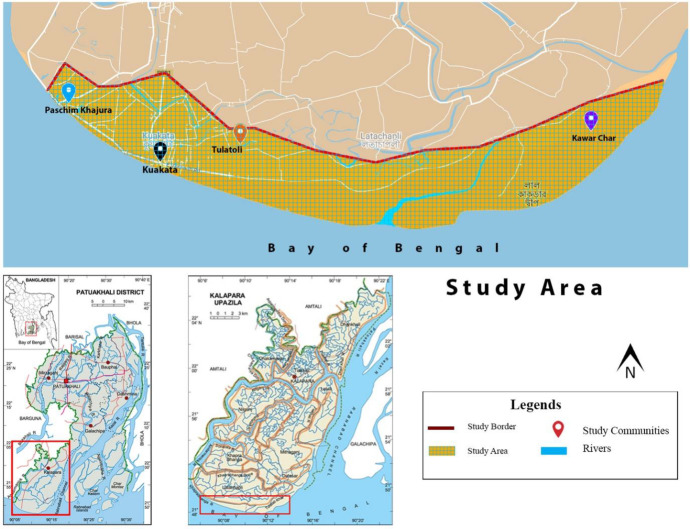
“Kalapara Upazila was selected as a case region due to its diverse coastal economy, including farming paddy, fishing, and tourism-based businesses, combined with growing environmental stress related to cyclones, storm surges, fluvial-tide flooding, coastal erosion, and encroaching salinity (Ahamed et al., 2012; CEGIS &…”
BackgroundNunn, P. D., & Campbell, J. R. (2020) · Environmental Development · doi:10.1016/j.envdev.2020.100546 · Cited by 34 · cited 1×
“…(Adams, 2016; Logan et al., 2016; Ayeb-Karlsson et al., 2018; Zickgraf, 2019; Mallick & Schanze, 2020); community histories and oral traditions (Nunn & Campbell, 2020); religious and spiritual beliefs and practices, economic opportunities, family ties, and social responsibilities (Cohen &…”
BackgroundClar, C. (2019) · Wiley Interdisciplinary Reviews Water · doi:10.1002/wat2.1378 · Cited by 28 · cited 1×
“However, this process is complex and differentially distributed across age, gender, community status, education, household demographics, and class structures (Clar, 2019; Lee, 1966).”
BackgroundClimate-induced cross-border migration and change in demographic structure
Chen, J., & Mueller, V. (2019) · Population and Environment · doi:10.1007/s11111-019-00328-3 · Cited by 25 · cited 1×
“…extreme weather events, temperature and precipitation changes (Hugo, 1996; Hunter, 2005; McLeman, 2009; Black et al., 2011; Kniveton et al., 2011; Chen & Mueller, 2019), fire (Paton et al., 2008), biodiversity loss, flood, and disruption to ecosystem services (Adams & Adger, 2013; Adie, 2020;…”
Development Aid, Drought, and Coping Capacity
Rustad, S. A., Rosvold, E. L., & Buhaug, H. (2019) · The Journal of Development Studies · doi:10.1080/00220388.2019.1696958 · Cited by 25 · cited 1×
“Multiple environmental factors influence this capacity (Rustad et al., 2019; Jackson et al., 2020), but the deeper dynamics between concurrent environmental, economic, demographic, political, and social changes are necessarily place-based, temporal, and”
BackgroundDon't get too attached: Property–place relations on contested coastlines
O’Donnell, T. (2020) · Transactions of the Institute of British Geographers · doi:10.1111/tran.12368 · Cited by 23 · cited 1×
“Place relations form the primary conceptual framework within this paper and our empirical study uses this framework to synthesise new insight into the combination of environmental, social, economic, psychological, and place-based components of non-migratory decision-making under conditions of escalating environmental…”
MethodMulvaney, K. K., Merrill, N., & Mazzotta, M. J. (2020) · IntechOpen eBooks · doi:10.5772/intechopen.91480 · Cited by 23 · cited 1×
“We examine the features and processes of local sense-making that occur towards climate-induced threats and migratory opportunities (Nawrotzki & DeWaard, 2018), including locally specific social representations of nature and human-nature relations (Wiegel et al., 2021), attachments to family and…”
BackgroundBaker, R. G. V. (1982) · Geographical Analysis · doi:10.1111/j.1538-4632.1982.tb00051.x · Cited by 16 · cited 2×
“Place utility (Adams & Adger, 2013; Baker, 1982) which in a migration context focuses on satisfaction/dissatisfaction as a component of migration decisionmaking processes (Baker, 1982; Haer et al.”
BackgroundAn exploration of place meanings among residents in central Wisconsin
Simoni, J., & Floress, K. M. (2014) · Lake and Reservoir Management · doi:10.1080/10402381.2014.963755 · Cited by 15
The Role of Fatalism in Resilience to Food Price Volatility in Bangladesh
Jahan, F., Mamun-ur-Rashid, & Wahab, S. A. (2015) · IDS Bulletin · doi:10.1111/1759-5436.12187 · Cited by 15 · cited 2×
“These statements speak to fatalistic responses to risk management, to use the terminology of ‘grid-group’ theory (Douglas & Wildavsky, 1982; Spickard, 1989), familiar to social contexts in which religious belief mediates local place-based knowledge and experience (Jahan et al., 2015).”
BackgroundSilver, G. A., Douglas, M., & Wíldavsky, A. (1983) · Journal of Policy Analysis and Management · doi:10.2307/3323308 · Cited by 11
Do Natural Disasters Change Savings and Employment Choices? Evidence from Bangladesh and PakistanPreprint
Eskander, S., Fankhauser, S., & Jha, S. (2016) · SSRN Electronic Journal · doi:10.2139/ssrn.2894791 · Cited by 9 · cited 1×
“Disaster-affected farmers and fishers move towards non-farm employment as a coping strategy to tackle short-term reductions in total household income (Eskander et al., 2016).”
BackgroundMartin, M. (2016) · Sussex Research Online (University of Sussex) · Cited by 7
Hasan, M. K., Ur-Rashid, M. K., & Akter, R. (2019) · Agriculture and Forestry Journal · doi:10.5281/zenodo.3239244 · Cited by 6
Islam, M. T. (2021) · The Indonesian Journal of Social Studies · doi:10.26740/ijss.v4n1.p53-66 · Cited by 5
Environmental Concerns and Housing
Parrott, K. R. (1997) · Housing and Society · doi:10.1080/08882746.1997.11430277 · Cited by 3
Khanam, R. (2017) · IOP Conference Series Earth and Environmental Science · doi:10.1088/1755-1315/70/1/012044 · Cited by 2 · cited 2×
“Coastal fisheries in Bangladesh are also affected (Khanam, 2017; Rahman et al., 2020).”
BackgroundComparison of Present-day and End-Century Multi-hazard Maps for Bangladesh Coast
Jahan, M., Kabir, R. A., & Chowdhury (2016) · doi:10.13140/rg.2.2.10474.57288 · Cited by 1
Research works printed but not linked: 6
- Hossain, B. M. R., Hassan, S. M. K., Islam, S., & Nabi, F. D. (2017). Empowering the vulnerable women in disaster prone areas: A case study of southern and northern region of Bangladesh. IOSR Journal Of Humanities And Social Science, 22(9), 14–21. [Online]. Available at: 10.9790/0837-2209151421 · doi:10.9790/0837-2209151421
- McLeman R On the origins of environmental migration Fordham Environmental Law Review 2009 20 2 403 425
- Miah, M. Y., Zia, M., Kamal, U., Salam, M. A., & Islam, M. S. (2020). Impact of salinity intrusion on agriculture of Southwest Bangladesh-A review. International Journal of Agricultural Policy and Research, 8(2), 40–47. [Online]. Available at: 10.15739/IJAPR.20.005 · doi:10.15739/ijapr.20.005
- Sakdapolrak, P., Naruchaikusol, S., Ober, K., Peth, S., Porst, L., Rockenbauch, T., & Tolo, V. (2016). Migration in a changing climate. Towards a translocal social resilience approach. Journal of the Geographical Society of Berlin, 147(2), 81–94
- Tuan, Y.-F. (1974). A study of environmental perception, attitudes and values. New Jersey: Prentice Hall: Englewood Cliffs
- UNHCR. (2020). Trends at a glance: Global trends forced displacement in 2019. UNHCR The UN Refugee Agency, pp.1–84. [Online]. Available at: https://www.unhcr.org/5ee200e37.pdf
Cited by
Climate change and migration: A review and new framework for analysis
Daoust, G. D., & Selby, J. (2024) · Wiley Interdisciplinary Reviews Climate Change · doi:10.1002/wcc.886 · Cited by 77
“…often take precedence over perceived climate change impacts and concerns about future climate change (Adams, 2016; Amin et al., 2021; Bhusal et al., 2021; Farbotko, 2022; Kelman et al., 2017; Khanian et al., 2019; McMichael et al., 2021; Piggott-McKellar & McMichael, 2021; Rabbani et al., 2022).”
A Systematic Review of International and Internal Climate-Induced Migration in Africa
Ofori, D. O., Bandauko, E., Kutor, S. K., Odoi, A., Asare, A. B., Akyea, T., & Arku, G. (2023) · Sustainability · doi:10.3390/su152216105 · Cited by 23
“It is this complexity and multiplicity of factors that compel some scholars to argue that differentiating climate-related migration drivers from other socio-economic and political factors is difficult (Rabbani et al., 2022 [57]).”
Impacts of Climate Change on Rural Communities: Vulnerability and Adaptation in the Global South
Atkinson, C. L., & Atkinson, A. M. (2023) · Encyclopedia · doi:10.3390/encyclopedia3020052 · Cited by 22
“Migration is a key concern in many rural places and such phenomena will continue to be affected by climate change [31].”
BackgroundHossain, M. Z., Rahman, M. A. U., Rahaman, K. R., Ha-Mim, N. M., & Haque, S. F. (2023) · Environment Development and Sustainability · doi:10.1007/s10668-023-03857-y · Cited by 23
“Furthermore, in their study, Rabbani et al. (2022) have recognized the concept of ‘place obduracy’ as a significant component within the specific context of coastal Bangladesh.”
Environmental migration and non-migration: Learning through an intergenerational lens
Mallick, B., & Hunter, L. M. (2024) · Migration Studies · doi:10.1093/migration/mnae031 · Cited by 21
Metadata
- Authors
- Rabbani, M. M. G., Cotton, M., & Friend, R.
- Affiliations
- University of York (GB)
- Teesside University (GB)
- Corresponding author
- Rabbani, M. M. Golam
- Venue
- Population and Environment
- Published
- 2022-05-21
- Volume
- 44
- Issue
- 1-2
- Pages
- 99-122
- ISSN
- 0199-0039 (ISSN-L)
- 1573-7810
- PMC
- PMC9123852
- OpenAlex
- W4281257932
- Cited by
- 44
- References
- 97
- Citations by year
- 2026: 13 · 2025: 13 · 2024: 10 · 2023: 7 · 2022: 1
- FWCI
- 11.15
- Type
- journal article
- Language
- en
- Open access
- hybrid
- doi.org
- Licence
- cc-by
- creativecommons.org/licenses/by/4.0 (tdm)
- creativecommons.org/licenses/by/4.0 (vor)
- Locations
- Population and Environment (publishedVersion, cc-by)
- PubMed Central (publishedVersion, cc-by)
- PubMed (publishedVersion)
- TeesRep (Teesside University) (publishedVersion, cc-by)
- White Rose Research Online (University of Leeds, The University of Sheffield, University of York) (acceptedVersion)
- Teesside University Research Portal (Teesside University) (submittedVersion, cc-by)
- Topics
- Social Sciences › Sociology and Political Science › Climate Change, Adaptation, Migration
- Social Sciences › Sociology and Political Science › Climate Change Communication and Perception
- Social Sciences › Sociology and Political Science › Hydropower, Displacement, Environmental Impact
- Keywords
- non-migration, climate change, place relations, trapped populations, livelihood opportunities, risk perception, sociocultural adaptation, adaptive capacity, rural communities, coastal communities, Bangladesh
About these checks
Registry, retraction, Cites and statistics results are computed, not judged, with one exception: a printed reference that no index lists is read once by a model before it counts as a citation error. Claims are extracted by a model and kept only when their quote appears verbatim in the text; each cited source is then checked, with a model’s help, for whether it says what the claim relies on. Those verdicts can be wrong — read the claim’s quote and the cited source before relying on one.
Statistics and arithmetic are recomputed, not judged.
Confidence bands are shown only for fields calibrated on our annotated test set. None is calibrated yet, so no band is shown.
What counts as a claim ›How we measure confidence ›How we check this ›
Are you an author, or do you see a problem with this page? Request a review
Data sources
Bibliographic data: Semantic Scholar, OpenAlex, Crossref.
Contains information from the Semantic Scholar Academic Graph Datasets, made available under the ODC Attribution License (ODC-BY 1.0).
Semantic Scholar’s data is described in: Kinney, R., et al. (2023). The Semantic Scholar Open Data Platform. arXiv:2301.10140.
