

The COSMIN checklist for assessing the methodological quality of studies on measurement properties of health status measurement instruments: an international Delphi study
Open accessThe DOI matches its Crossref record; 20 of the 21 references it cites were found in a registry or an index.
Abstract
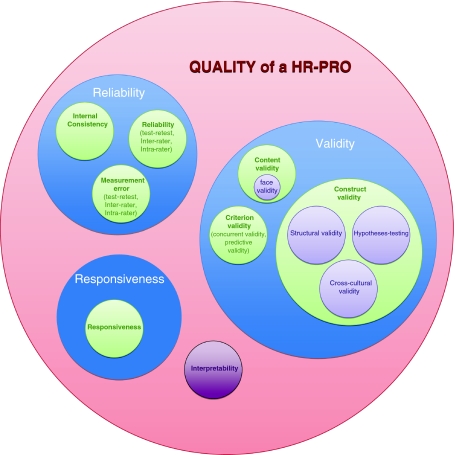
BACKGROUND: Aim of the COSMIN study (COnsensus-based Standards for the selection of health status Measurement INstruments) was to develop a consensus-based checklist to evaluate the methodological quality of studies on measurement properties. We present the COSMIN checklist and the agreement of the panel on the items of the checklist. METHODS: A four-round Delphi study was performed with international experts (psychologists, epidemiologists, statisticians and clinicians). Of the 91 invited experts, 57 agreed to participate (63%). Panel members were asked to rate their (dis)agreement with each proposal on a five-point scale. Consensus was considered to be reached when at least 67% of the panel members indicated 'agree' or 'strongly agree'. RESULTS: Consensus was reached on the inclusion of the following measurement properties: internal consistency, reliability, measurement error, content validity (including face validity), construct validity (including structural validity, hypotheses testing and cross-cultural validity), criterion validity, responsiveness, and interpretability. The latter was not considered a measurement property. The panel also reached consensus on how these properties should be assessed. CONCLUSIONS: The resulting COSMIN checklist could be useful when selecting a measurement instrument, peer-reviewing a manuscript, designing or reporting a study on measurement properties, or for educational purposes.
Overview
The claims and statistics of this paper haven’t been checked yet.
Free: it reads the open-access text and checks the first 5 claims that cite a source we can check. Create a free account to check every claim.
Integrity signals
Registry
Cites
Statistics
Figures
Verification
Claims the paper makes
The claims and statistics of this paper haven’t been checked yet.
Free: it reads the open-access text and checks the first 5 claims that cite a source we can check. Create a free account to check every claim.
Claims other papers make about this one
Each is checked against this paper’s own text: does it say what the citing paper says it does?
The cited source says what the claim attributes to it.
In the citing paper
“published guidelines provide clear recommendations for the development and evaluation of self-report measures-the most prominent example is the consensus-based standards for the selection of health measurement instruments (COSMIN) guidelines (Mokkink et al., 2010), including recent COSMIN guidelines developed for evaluating content validity (Terwee et al., 2018).”
From Acceptance and Commitment Therapy Processes and Mediation: Challenges and How to Address Them (2023) · cites this paper as Mokkink et al., 2010
The cited source says what the claim attributes to it.
In the citing paper
“Similarly, the COSMIN checklist, which assesses the methodological quality of studies on measurement properties of PROMs,21 barely mentions patient involvement. It only asks to check whether the items are relevant to the study population and whether the questionnaire was pre‐tested, for example using cognitive interviews.”
From Patient involvement in the development of patient‐reported outcome measures: a scoping review (2017) · cites this paper as [21]
The check wasn’t confident either way, so it gives no verdict — never disputed.
In the citing paper
“Face validity will be evaluated using qualitative and quantitative methods. Qualitatively, cognitive interviews with a sample of 10 target women will assess comprehension, wording clarity and item relevance. Quantitatively, the Item Impact Score will be calculated using a 5-point importance Likert scale.”
From Determinants of the choice of delivery mode in pregnant women: a convergent parallel mixed-methods study protocol (2026) · cites this paper as [51]
Experimental — accuracy not yet measuredIn the citing paper
“Reliability and validity of the Italian culturally adapted PEMS was assessed following the consensus-based standards for the selection of health status measurement instruments (COSMIN) checklist30.”
Self-check
Percentages, sums and reported differences re-computed from the paper’s own numbers.
The self-check needs the paper’s full text.
Citations
Cites
STATISTICAL METHODS FOR ASSESSING AGREEMENT BETWEEN TWO METHODS OF CLINICAL MEASUREMENT
Martin Bland, J., & Altman, D. (1986) · The Lancet · doi:10.1016/s0140-6736(86)90837-8 · Cited by 47,965
(1965) · The Lancet · doi:10.1016/s0140-6736(65)91037-8 · Cited by 16,856
Quality criteria were proposed for measurement properties of health status questionnaires
Terwee, C. B., Bot, S. D. M., de Boer, M. R., van der Windt, D. A. W. M., Knol, D. L., Dekker, J., Bouter, L. M., & de Vet, H. C. W. (2007) · Journal of Clinical Epidemiology · doi:10.1016/j.jclinepi.2006.03.012 · Cited by 10,764 · cited 1×
“Examples of such criteria were previously published by members of our group [6].”
BackgroundSelf-citationMokkink, L. B., Terwee, C. B., Patrick, D. L., Alonso, J., Stratford, P. W., Knol, D. L., Bouter, L. M., & de Vet, H. C. W. (2010) · Journal of Clinical Epidemiology · doi:10.1016/j.jclinepi.2010.02.006 · Cited by 4,465
Self-citationU.S. Department of Health and Human Services FDA Center for Drug Evaluation and Research, U.S. Department of Health and Human Services FDA Center for Biologics Evaluation and Research, & U.S. Department of Health and Human Services FDA Center for Devices and Radiological Health (2006) · Health and Quality of Life Outcomes · doi:10.1186/1477-7525-4-79 · Cited by 2,856
The Delphi technique: myths and realities
Powell, C. (2003) · Journal of Advanced Nursing · doi:10.1046/j.1365-2648.2003.02537.x · Cited by 2,584 · cited 1×
“In the literature, cut-offs between 55 and 100% are used [20].”
Verhagen, A. P., de Vet, H. C. W., de Bie, R. A., Kessels, A. G. H., Boers, M., Bouter, L. M., & Knipschild, P. G. (1998) · Journal of Clinical Epidemiology · doi:10.1016/s0895-4356(98)00131-0 · Cited by 2,379 · cited 1×
“Based on previous experiences with Delphi studies [10, 11], we expected that 70% of the people invited would agree to participate, and of these people 65% would complete the first list.”
MethodSelf-citationMokkink, L. B., Terwee, C. B., Knol, D. L., Stratford, P. W., Alonso, J., Patrick, D. L., Bouter, L. M., & de Vet, H. C. (2010) · BMC Medical Research Methodology · doi:10.1186/1471-2288-10-22 · Cited by 1,834 · cited 1×
“To help future users of the COSMIN checklist, we described some of the discussions we have had in the Delphi rounds about the standards elsewhere [ 21 ].”
Self-citationWhen to use agreement versus reliability measures
de Vet, H. C. W., Terwee, C. B., Knol, D. L., & Bouter, L. M. (2006) · Journal of Clinical Epidemiology · doi:10.1016/j.jclinepi.2005.10.015 · Cited by 1,786 · cited 5×
“In round 3, SEM was chosen as the preferred method for measuring measurement error (76% agreement).”
MethodInfluentialSelf-citationA methodological framework for assessing health indices
Kirshner, B., & Guyatt, G. (1985) · Journal of Chronic Diseases · doi:10.1016/0021-9681(85)90005-0 · Cited by 1,538 · cited 1×
“The specification of evaluative is necessary, because the requirements for measurement properties vary with the application of the instrument [ 8 ].”
Background
Cited by
Items 601–700 of 1,012
Harris‐Hayes, M., McDonough, C. M., Leunig, M., Lee, C. B., Callaghan, J. J., & Roos, E. M. (2013) · Journal of the American Academy of Orthopaedic Surgeons · doi:10.5435/00124635-201300001-00009 · Cited by 47
Health‐related quality of life in Guillain‐Barré syndrome patients: a systematic review
Darweesh, S. K. L., Polinder, S., Mulder, M. J. H. L., Baena, C. P., van Leeuwen, N., Franco, O. H., Jacobs, B. C., & van Doorn, P. A. (2014) · Journal of the Peripheral Nervous System · doi:10.1111/jns5.12051 · Cited by 47
“Methodological quality To evaluate the quality of the methods in the included articles, we created a standardized checklist of 13 items, which were adapted from item lists used in systematic reviews evaluating HRQL and neurological diseases (Gill and Feinstein, 1994; Mols et al., 2005; Den Oudsten et al., 2007; Mokkin…”
MethodReporting outcomes of back pain trials: A modified Delphi study
Froud, R., Eldridge, S., Kovacs, F., Breen, A., Bolton, J., Dunn, K., Fritz, J., Keller, A., Kent, P., Lauridsen, H. H., et al. (2011) · European Journal of Pain · doi:10.1016/j.ejpain.2011.04.015 · Cited by 47
Gagnon, C., Meola, G., Hébert, L. J., Laberge, L., Leone, M., & Heatwole, C. R. (2015) · Neuromuscular Disorders · doi:10.1016/j.nmd.2015.01.008 · Cited by 50
“None of the activity rating scales were deemed to meet all criteria of the COSMIN group [7] for use in adult muscle disease generally let alone specifically for DM1.”
MethodHiemstra, L. A., Kerslake, S., Lafave, M. R., & Mohtadi, N. G. H. (2016) · Orthopaedic Journal of Sports Medicine · doi:10.1177/2325967116646085 · Cited by 49
“The initial validity and reliability of the BPII was established in keeping with the COSMIN guidelines.(11,12) Face, content, criterion, and construct validity were reported in the original publication.”
BackgroundMethodQuestionnaires for Measuring Refractive Surgery Outcomes
Kandel, H., Khadka, J., Lundström, M., Goggin, M., & Pesudovs, K. (2017) · Journal of Refractive Surgery · doi:10.3928/1081597x-20170310-01 · Cited by 47
Using PROMs to guide patients and practitioners through the head and neck cancer journey
Rogers, S. N., & Barber, B. R. (2017) · Patient Related Outcome Measures · doi:10.2147/prom.s129012 · Cited by 47
“PROMs can be used as screening tools to identify specific problem issues and facilitate targeted interventions.(31) PROMs are commonly utilized in a self-report questionnaire format, which is predominantly quantitative, to facilitate a defined threshold for intervention.”
MethodRosenkoetter, U., & Tate, R. L. (2017) · Brain Impairment · doi:10.1017/brimp.2017.29 · Cited by 55
van Lankveld, W., Jones, A., Brunnekreef, J. J., Seeger, J. P. H., & Staal, J. B. (2017) · BMC Medical Education · doi:10.1186/s12909-017-1094-x · Cited by 47
“Measurement properties of the cross-cultural adapted PSE were assessed in accordance with the Consensusbased Standards for the selection of health Measurement Instruments (COSMIN) [21].”
MethodInfluentialCrellin, D., Harrison, D. M., Santamaria, N., & Babl, F. E. (2021) · Journal of Pain Research · doi:10.2147/jpr.s267839 · Cited by 47
A Systematic Review of Measures of Child Neglect
Haworth, S., Schaub, J., Kidney, E., & Montgomery, P. (2022) · Research on Social Work Practice · doi:10.1177/10497315221138066 · Cited by 50
“We used the de fi nitions used in the COSMIN framework for key characteristics of good measures (Mokkink et al., 2010).”
MethodMeasurement Properties of Outcome Measures for Vitiligo: A Systematic Review
Vrijman, C., Linthorst Homan, M. W., Limpens, J., van der Veen, W., Wolkerstorfer, A., Terwee, C. B., & Spuls, P. I. (2012) · Archives of Dermatology · doi:10.1001/archdermatol.2012.3065 · Cited by 46
Self-citationMeasuring quality of life in muscular dystrophy
Bann, C., Abresch, R. T., Biesecker, B. B., Conway, K. M. C., Heatwole, C. R., Peay, H. L., Scal, P. B., Strober, J. B., Uzark, K. C., Wolff, J. M., et al. (2015) · Neurology · doi:10.1212/wnl.0000000000001336 · Cited by 46
“We reviewed the identified measures using the ConsensusBased Standards for the Selection of Health Measurement Instruments (COSMIN) checklist, a rigorous, standardized tool for assessing psychometric properties of patient-reported outcomes.(7) The checklist includes 10 broad categories of psychometric properties: inte…”
MethodAbma, F. I., van der Klink, J. J., Terwee, C. B., Amick, B. C., & Bültmann, U. (2011) · Scandinavian Journal of Work Environment & Health · doi:10.5271/sjweh.3190 · Cited by 53
“The COSMIN taxonomy was developed to provide an overview of the relevant measurement properties for health-related patient-reported outcomes and is based on international consensus (21, 23).”
InfluentialSelf-citationSlagers, A., van den Akker‐Scheek, I., Geertzen, J. H. B., Zwerver, J., & Reininga, I. H. F. (2019) · Journal of Sports Sciences · doi:10.1080/02640414.2019.1646023 · Cited by 49
“Responsiveness is defined as the ability of a questionnaire to detect clinically important changes over time (Guyatt, Deyo, Charlson, Levine, & Mitchell, 1989; Mokkink et al., 2010; Terwee et al., 2007).”
BackgroundWilliams, B. A., & Beovich, B. (2019) · Journal of Evaluation in Clinical Practice · doi:10.1111/jep.13293 · Cited by 46
Measurement Properties of the Craniocervical Flexion Test: A Systematic Review
de Araujo, F. X., Ferreira, G. E., Schell, M. S., de Castro, M. P., Ribeiro, D. C., & Silva, M. F. (2020) · Physical Therapy · doi:10.1093/ptj/pzaa072 · Cited by 47
Keglovits, M., Clemson, L. M., Hu, Y., Nguyen, A., Neff, A. J., Mandelbaum, C., Hudson, M., Williams, R., Silianoff, T. J., & Stark, S. L. (2020) · Australian Occupational Therapy Journal · doi:10.1111/1440-1630.12682 · Cited by 50
Sinclair, S., Kondejewski, J., Hack, T. F., Boss, H., & MacInnis, C. C. (2022) · Patient · doi:10.1007/s40271-022-00571-1 · Cited by 52
“With the exception of the SCQ, none of the patient-reported compassion measures strictly adhered to measure development guidelines [59, 63, 68], adequately established initial construct validity by first defining the concept of interest, or engaged patients across all stages of development, and each of them, to varyin…”
BackgroundMethodYoshino, K., Yoh, T., Taura, K., Seo, S., Ciria, R., & Briceño‐Delgado, J. (2021) · HPB · doi:10.1016/j.hpb.2021.05.002 · Cited by 47
Knebel, M. T. G., da Costa, B. G. G., dos Santos, P. C., de Sousa, A. C. F. C., & da Silva, K. S. (2021) · Jornal de Pediatria · doi:10.1016/j.jped.2021.05.004 · Cited by 59
“The authors used a methodological design for reporting the measurement properties of a novel self-administered instrument.(14) The Questionnaire for Screen Time of Adolescents (QueST) aims at assessing habitual volumes of screen time in different constructs in adolescents.”
MethodTowers, A., Smith, N., Allan, S., Vãdean, F. P., Collins, G., Rand, S. E., Bostock, J., Ramsbottom, H., Forder, J., Lanza, S., et al. (2021) · Health Services and Delivery Research · doi:10.3310/hsdr09190 · Cited by 52
Low, D. C., & Walsh, G. S. (2022) · Age and Ageing · doi:10.1093/ageing/afac284 · Cited by 46
“When the anchor was considered the gold standard and the comparison is aimed at evaluating the predictive quality of the outcome variable in relation to this standard, criterion responsiveness approach was used [16].”
BackgroundMethodInfluentialDefinitions of occupational balance and their coverage by instruments
Dür, M., Unger, J., Stoffer, M. A., Dragoi, R. G., Kautzky‐Willer, A., Fialka‐Moser, V., Smolen, J. S., & Stamm, T. (2015) · British Journal of Occupational Therapy · doi:10.1177/0308022614561235 · Cited by 54
“If occupational therapists want to select an instrument to evaluate their interventions, they need to know which dimensions are or are not covered by an instrument and about their psychometric properties (Mokkink et al., 2010a, 2010b).”
BackgroundNieuwenhuizen, M. G., de Groot, S., Janssen, T. W. J., van der Maas, L. C. C., & Beckerman, H. (2014) · The Journal of Rehabilitation Research and Development · doi:10.1682/jrrd.2012.12.0221 · Cited by 49
“[60–61], we considered responsiveness to be a measure of longitudinal validity that should be assessed by testing predefined hypotheses.”
BackgroundAmmann‐Reiffer, C., Bastiaenen, C. H. G., de Bie, R. A., & van Hedel, H. J. A. (2014) · Physical Therapy · doi:10.2522/ptj.20130299 · Cited by 53
Validity and reliability of a Dutch version of the Foot and Ankle Ability Measure
Weel, H., Zwiers, R., Azim, D., Sierevelt, I. N., Haverkamp, D., van Dijk, C. N., & Kerkhoffs, G. M. M. J. (2014) · Knee Surgery Sports Traumatology Arthroscopy · doi:10.1007/s00167-014-3480-9 · Cited by 45
A systematic review of measurements of physical function in critically ill adults
Tipping, C. J., Young, P. J., Romero, L., Saxena, M. K., Dulhunty, J. M., & Hodgson, C. L. (2012) · Critical Care and Resuscitation · doi:10.1016/s1441-2772(23)01772-6 · Cited by 54
Cöster, M. C., Nilsdotter, A., Brudin, L. H., & Bremander, A. (2017) · Acta Orthopaedica · doi:10.1080/17453674.2017.1293445 · Cited by 49
Clinical Outcome Measures for Lateropulsion Poststroke: An Updated Systematic Review
Koter, R., Regan, S. E., Clark, C., Huang, V., Mosley, M., Wyant, E., Cook, C. E., & Hoder, J. M. (2017) · Neurology Report · doi:10.1097/npt.0000000000000194 · Cited by 45
Sitnikova, K., Dijkstra-Kersten, S. M. A., Mokkink, L. B., Terluin, B., van Marwijk, H. W. J., Leone, S. S., van der Horst, H. E., & van der Wouden, J. C. (2017) · Journal of Psychosomatic Research · doi:10.1016/j.jpsychores.2017.10.005 · Cited by 42
“However, the SEM was estimated based on the Cronbach’s alpha, which is a method of poor quality according to the COSMIN checklist (12), and consequently, no conclusions about the measurement error could be”
MethodInfluentialSelf-citationAbou, L., de Freitas, G. R., Palandi, J., & Ilha, J. (2018) · Topics in Spinal Cord Injury Rehabilitation · doi:10.1310/sci17-00027 · Cited by 48
“”(20) Responsiveness Responsiveness is the ability of an instrument to detect change over time in the construct to be measured.(17) This property is particularly important for instruments applied in clinical trials.”
BackgroundMartino, S. D., Napoli, I. D., Esposito, C., Prilleltensky, I., & Arcidiacono, C. (2018) · Health and Quality of Life Outcomes · doi:10.1186/s12955-018-0916-9 · Cited by 48
“Following the COSMIN’s guideline [31] on cross-cultural validity, we selected four people to form the translation team (two in charge of the translations, one who oversaw the process, and the original developer).”
Reddy, R. S., Alahmari, K. A., Samuel, P. S., Tedla, J. S., Kakaraparthi, V. N., & Rengaramanujam, K. (2020) · Journal of Back and Musculoskeletal Rehabilitation · doi:10.3233/bmr-200010 · Cited by 45
“The study adopted recommendations made by the consensus-based standards for the selection of health measurement instruments (COSMIN) checklist [34].”
InfluentialFalls efficacy instruments for community-dwelling older adults: a COSMIN-based systematic review
Soh, S. L.-H., Lane, J. V., Xu, T., Gleeson, N., & Tan, C.-W. (2021) · BMC Geriatrics · doi:10.1186/s12877-020-01960-7 · Cited by 46
Griffiths, P., Terluin, B., Trigg, A., Schuller, W., & Bjørner, J. B. (2021) · Journal of Clinical Epidemiology · doi:10.1016/j.jclinepi.2021.08.029 · Cited by 45
Monticone, M., Nava, C., Leggero, V., Rocca, B., Salvaderi, S., Ferrante, S., & Ambrosini, E. (2015) · Quality of Life Research · doi:10.1007/s11136-015-0935-5 · Cited by 44
“The studies were assessed using the COSMIN checklist, which is a standardized and validated scoring tool developed in an international and multidisciplinary Delphi study [8–11].”
MethodLinhares, D., Fonseca, J., Borrego, L. M., Matos, Á., Pereira, A. M., Sá‐Sousa, A., Gáspár, A., Mendes, C., Moreira, C., Gomes, E. R., et al. (2014) · Pediatric Allergy and Immunology · doi:10.1111/pai.12218 · Cited by 51
“COSMIN checklist (9): (i) reliability (internal consistency, using Cronbach’s a; test–retest reliability, using intraclass correlation coefficient (ICC)), (ii) responsiveness (withinpatient change in CARATKids score; Guyatt’s responsiveness index (GRI)), (iii) discriminative properties and validity – (iii.”
MethodSkare, Ø., Liavaag, S., Reikerås, O., Mowinckel, P., & Brox, J. I. (2013) · BMC Research Notes · doi:10.1186/1756-0500-6-273 · Cited by 44
“The COSMIN (COnsensusbased Standards for the selection of health status Measurement INstruments) group have recommended to use hypotheses testing to assess various aspects of validity which include construct, convergent, divergent, and known group validity of an instrument [18].”
BackgroundMethodInfluentialDanish translation and linguistic validation of the BODY-Q: a description of the process
Poulsen, L., Rose, M., Klassen, A. F., Roessler, K. K., & Sørensen, J. A. (2016) · European Journal of Plastic Surgery · doi:10.1007/s00238-016-1247-x · Cited by 47
Pain and pain assessment in stroke patients with aphasia: a systematic review
de Vries, N. J., Sloot, P. H., & Achterberg, W. P. (2016) · Aphasiology · doi:10.1080/02687038.2016.1254150 · Cited by 44
“The Consensus-based Standards for the selection of health status Measurement Instruments (COSMIN) checklist was used to critically evaluate and compare the measurement properties of the measurement instruments used and the methodological quality of the studies reporting use of those tools (Mokkink et al., 2010).”
MethodKlußmann, A., Liebers, F., Gebhardt, H., Rieger, M. A., Latza, U., & Steinberg, U. (2017) · BMC Musculoskeletal Disorders · doi:10.1186/s12891-017-1542-0 · Cited by 45
“For the analysis of criterion validity, the recommendations of the COSMIN checklist (COnsensus-based Standards for the selection of health Measurement INstruments) are taken into account [31].”
MethodOhno, S., Takahashi, K., Inoue, A., Takada, K., Ishihara, Y., Tanigawa, M., & Hirao, K. (2017) · Journal of Evaluation in Clinical Practice · doi:10.1111/jep.12795 · Cited by 44
“This study followed the COnsensus‐based Standards for the selection of health Measurement INstruments (COSMIN) initiative.(23,24) The following scales were administered: CES‐D,(2) GSES,(10) GHQ‐12,(3) and PGIC.”
MethodPatient-Reported Outcome Measures in Pruritus: A Systematic Review of Measurement Properties
Schoch, D., Sommer, R., Augustin, M., Ständer, S., & Blome, C. (2017) · Journal of Investigative Dermatology · doi:10.1016/j.jid.2017.05.020 · Cited by 47
Garratt, A., Naumann, M. G., Sigurdsen, U., Utvåg, S. E., & Stavem, K. (2018) · BMC Musculoskeletal Disorders · doi:10.1186/s12891-018-2051-5 · Cited by 49
Christalle, E., Zeh, S., Hahlweg, P., Kriston, L., Härter, M. C., & Scholl, I. (2018) · BMJ Open · doi:10.1136/bmjopen-2018-025896 · Cited by 46
“This allows to establish content validity by ensuring that all items are relevant as well as that they are reflecting PC comprehensively.(51) Items rated as not relevant or less relevant will be dropped.”
BackgroundParai, C., Hägg, O., Lind, B. I., & Brisby, H. (2019) · European Spine Journal · doi:10.1007/s00586-019-05989-0 · Cited by 44
Repo, J. P., Rosqvist, E., Lauritsalo, S., & Paloneva, J. (2019) · BMC Medical Education · doi:10.1186/s12909-019-1474-5 · Cited by 48
Wormald, J. C. R., Geoghegan, L., Sierakowski, K. L., Price, A. J., Peters, M., Jain, A., & Rodrigues, J. N. (2019) · Plastic & Reconstructive Surgery Global Open · doi:10.1097/gox.0000000000002256 · Cited by 44
Yoon, S., Speyer, R., Cordier, R., Aunio, P., & Hakkarainen, A. M. (2020) · Trauma Violence & Abuse · doi:10.1177/1524838020915591 · Cited by 49
Fridberg, H., Wallin, L., Wallengren, C., Kottorp, A., Forsman, H., & Tistad, M. (2020) · BMC Health Services Research · doi:10.1186/s12913-020-05770-w · Cited by 48
“The study was carried out in three phases, each following on from the other in line with recommendations for questionnaire development [33, 34].”
BackgroundRater Agreement on Gait Assessment during Neurologic Examination of Horses
Olsen, E., Dunkel, B., Barker, W. H. J., Finding, E., PERKINS, J. D., Witte, T. H., Yates, L. J., Andersen, P. H., Baiker, K., & Piercy, R. J. (2014) · Journal of Veterinary Internal Medicine · doi:10.1111/jvim.12320 · Cited by 49
“4, with the number of principal components determined from a scree plot.(32,33) ORs”
BackgroundGallagher, J., Ashley, P. F., & Needleman, I. G. (2020) · BMJ Open Sport & Exercise Medicine · doi:10.1136/bmjsem-2020-000759 · Cited by 48
“%) were from Olympic training squads.”
Meta-analysis of Reliability and Validity of the Bergen Social Media Addiction Scale (BSMAS)
Bottaro, R., Griffiths, M. D., & Faraci, P. (2025) · International Journal of Mental Health and Addiction · doi:10.1007/s11469-025-01461-x · Cited by 51
Paalman, C. H., Terwee, C. B., Jansma, E. P., & Jansen, L. M. C. (2013) · PLoS ONE · doi:10.1371/journal.pone.0063109 · Cited by 47
“the quality assessment of studies on measurement properties [39,41].”
BackgroundSelf-citationQuality-of-life assessment in dementia: the use of DEMQOL and DEMQOL-Proxy total scores
Chua, K., Brown, A., Little, R., Matthews, D., Morton, L., Loftus, V., Watchurst, C., Tait, R., Romeo, R., & Banerjee, S. (2016) · Quality of Life Research · doi:10.1007/s11136-016-1343-1 · Cited by 49
“This question is primarily informed by investigations of content and face validity [15, 16].”
BackgroundHind, D., Kaklamanou, D., Beever, D., Webster, R., Lee, E. C., Barkham, M., & Cooper, C. L. (2016) · BMC Psychiatry · doi:10.1186/s12888-016-0931-5 · Cited by 47
“In that particular case we reported the discriminant and convergent validity according to the COSMIN checklist and therefore were reported under 'Hypotheses Testing'.”
InfluentialThe minimal important difference of the Australian Pelvic Floor Questionnaire
Baeßler, K., Mowat, A., & Maher, C. (2018) · International Urogynecology Journal · doi:10.1007/s00192-018-3724-1 · Cited by 45
Systematic review of the psychometric properties of instruments to measure sexual desire
Cartagena-Ramos, D., Fuentealba-Torres, M., Rebustini, F., Leite, A. C. A. B., Alvarenga, W. D. A., Arcêncio, R. A., Dantas, R. A. S., & Nascimento, L. C. (2018) · BMC Medical Research Methodology · doi:10.1186/s12874-018-0570-2 · Cited by 43
Shunmugasundaram, C., Rutherford, C., Butow, P. N., Sundaresan, P., & Dhillon, H. M. (2019) · Psycho-Oncology · doi:10.1002/pon.5257 · Cited by 45
Miller, T., Ying, M. T. C., Tsang, C. S. L., Huang, M., & Pang, M. Y. C. (2020) · Physical Therapy · doi:10.1093/ptj/pzaa188 · Cited by 43
Martín-Delgado, J., Guilabert, M., & Mira, J. J. (2021) · Patient · doi:10.1007/s40271-021-00526-y · Cited by 49
“The Consensus-based Standards for the Selection of Health Measurement Instruments (COSMIN) checklist was employed to evaluate the studies’ methodological rigor [17].”
MethodIngelsrud, L. H., Wilkinson, J. M., Overgaard, S., Rolfson, O., Hallstrom, B. R., Navarro, R. A., Terner, M., Karmakar-Hore, S., Webster, G., Slawomirski, L., et al. (2022) · Clinical Orthopaedics and Related Research · doi:10.1097/corr.0000000000002306 · Cited by 46
What do Anxiety Scales Really Measure? An Item Content Analysis of Self-Report Measures of Anxiety
Wall, A. D., & Lee, E. B. (2022) · Journal of Psychopathology and Behavioral Assessment · doi:10.1007/s10862-022-09973-9 · Cited by 48
Dow, J., Robinson, J., Robalino, S., Finch, T. L., McColl, E., & Robinson, L. A. (2018) · PLoS ONE · doi:10.1371/journal.pone.0193398 · Cited by 48
Neilson, L. J., Sharp, L., Patterson, J. M., von Wagner, C., Hewitson, P., McGregor, L., & Rees, C. J. (2021) · BMJ Open Gastroenterology · doi:10.1136/bmjgast-2021-000653 · Cited by 42
“30 Phase 1: concept elicitation This phase provided in-depth and detailed identification and description of the experiences of patients who had undergone oesophagogastroduodenoscopy (OGD), colonoscopy or CTC and has been reported in detail elsewhere.”
Adın, R. M., Ceren, A. N., Salcı, Y., Balkan, A. F., Armutlu, K., & Ayhan, Ç. (2022) · Health and Quality of Life Outcomes · doi:10.1186/s12955-022-02074-x · Cited by 47
“In the second phase, the psychometric properties of the CFS -Turkish were evaluated in healthy adults according to the COSMIN criteria (COnsensus-based Standards for the selection of health Measurement INstruments) [25].”
MethodPuljak, L., Bała, M. M., Mathes, T., Peričić, T. P., Wegewitz, U. E., Faggion, C. M., Matthias, K., Storman, D., Zając, J., Rombey, T., et al. (2023) · Journal of Clinical Epidemiology · doi:10.1016/j.jclinepi.2023.08.021 · Cited by 42
Valentin, G., & Maribo, T. (2014) · Osteoporosis International · doi:10.1007/s00198-014-2743-0 · Cited by 42
Valentim, D. P., Sato, T. D. O., Comper, M. L. C., da Silva, A. M., Bôas, C. C. V., & Padula, R. S. (2017) · Brazilian Journal of Physical Therapy · doi:10.1016/j.bjpt.2017.08.003 · Cited by 42
“and Mokkink et al.(13,23) (COSMIN -- Consensus-based Standards for the selection of health Measurement Instruments).”
BackgroundMethodInfluentialde Jong, M., Tamminga, S. J., van Es, R. J. J., Frings‐Dresen, M. H. W., & de Boer, A. G. E. M. (2018) · BMC Cancer · doi:10.1186/s12885-017-3966-1 · Cited by 42
“To guarantee a high level of methodological quality in evaluating the measurement properties of the instrument, the COSMIN checklist [27] was used.”
MethodBeemster, T. T., van Bennekom, C. A. M., van Velzen, J. M., Reneman, M. F., & Frings‐Dresen, M. H. W. (2018) · Health and Quality of Life Outcomes · doi:10.1186/s12955-018-1000-1 · Cited by 42
Lemeunier, N., da Silva-Oolup, S., Olesen, K., Shearer, H. M., Carroll, L., Brady, O., Côté, E., Stern, P. J., Tuff, T., Suri-Chilana, M., et al. (2019) · European Spine Journal · doi:10.1007/s00586-019-05949-8 · Cited by 42
The Odom Criteria: Validated at Last
Broekema, A. E. H., Molenberg, R., Kuijlen, J. M. A., Groen, R. J. M., Reneman, M. F., & Soer, R. (2019) · Journal of Bone and Joint Surgery · doi:10.2106/jbjs.18.00370 · Cited by 44
Levels of Cognitive Functioning Assessment Scale: Italian cross-cultural adaptation and validation.
Galeoto, G., Turriziani, S., Berardi, A., Sansoni, J., Santilli, V., Mascio, M., & Paoloni, M. (2020) · PubMed · doi:10.7416/ai.2020.2326 · Cited by 44
“The reliability and validity of the culturally adapted scale were assessed by using the COSMIN checklist (27).”
Antunes, B., & Ferreira, P. L. (2020) · BMC Palliative Care · doi:10.1186/s12904-020-00685-z · Cited by 43
Balachandran, A. T., Vigotsky, A. D., Quiles, N. N., Mokkink, L. B., Belio, M., & Glenn, J. M. (2020) · Experimental Gerontology · doi:10.1016/j.exger.2020.111202 · Cited by 49
Self-citationAn overview & critical review of the Sensory Profile – second edition
Licciardi, L., & Brown, T. (2021) · Scandinavian Journal of Occupational Therapy · doi:10.1080/11038128.2021.1930148 · Cited by 42
“national Delphi consensus-based process [41,42].”
MethodBerg, R. C., Solberg, B., Glavin, K., & Olsvold, N. (2022) · American Journal of Men s Health · doi:10.1177/15579883221114984 · Cited by 53
“Importantly, we extracted data on the following measurement properties, based on the COSMIN definitions of measurement properties (Mokkink et al., 2010; Terwee et al., 2007): reliability (internal consistency, reliability, measurement error), validity (content, construct and criterion validity),…”
MethodPoku, E. N., Duncan, R., Keetharuth, A. D., Essat, M., Phillips, P., Woods, H. B., Palfreyman, S. J., Jones, G. L., Kaltenthaler, E., & Michaels, J. A. (2016) · Health and Quality of Life Outcomes · doi:10.1186/s12955-016-0563-y · Cited by 46
“The methodological quality of studies was assessed using the COSMIN checklist [12].”
MethodPsychometric testing of the 10-item perceived stress scale for Chinese nurses
Du, X., Liu, X., Zhao, Y., & Wang, S. (2023) · BMC Nursing · doi:10.1186/s12912-023-01602-4 · Cited by 43
“The present study was conducted in line with the COnsensus-based Standards for the selection of health status Measurement INstruments (COSMIN) guidelines for scale validation [39] (the details: see Supplemental Material ).”
MethodBalemans, A. C. J., Fragala-Pinkham, M. A., Lennon, N., Thorpe, D. E., Boyd, R. N., O’Neil, M. E., Bjornson, K. F., Becher, J. G., & Dallmeijer, A. J. (2012) · Archives of Physical Medicine and Rehabilitation · doi:10.1016/j.apmr.2012.09.012 · Cited by 41
Systematic review of patient-reported outcome measures for functional performance in the lower limb
Ashford, S. A., Brown, S., & Turner‐Stokes, L. F. (2015) · Journal of Rehabilitation Medicine · doi:10.2340/16501977-1889 · Cited by 45
Patient-reported outcome measures (PROMs) in paediatric ophthalmology: a systematic review
Tadić, V., Hogan, A., Sobti, N., Knowles, R. L., & Rahi, J. S. (2013) · British Journal of Ophthalmology · doi:10.1136/bjophthalmol-2013-303350 · Cited by 45
Juul, T., Søgaard, K., Davis, A. M., & Roos, E. M. (2016) · Journal of Clinical Epidemiology · doi:10.1016/j.jclinepi.2016.03.015 · Cited by 46
Kwan, Y. H., Fong, W. W. S., Lui, N. L., Yong, S. T., Cheung, Y. B., Malhotra, R., Østbye, T., & Thumboo, J. (2016) · Rheumatology International · doi:10.1007/s00296-016-3567-3 · Cited by 42
The Effect of Alignment Changes on Unilateral Transtibial Amputee’s Gait: A Systematic Review
Jonkergouw, N., Prins, M. R., Buis, A. W. P., & van der Wurff, P. (2016) · PLoS ONE · doi:10.1371/journal.pone.0167466 · Cited by 41
“Instead, we utilized the COSMIN system box F: ‘Hypothesis testing’, to evaluate the risk of bias per studied measurement property [15,16].”
MethodResultLarge variation in use of patient-reported outcome measures: A survey of 188 foot and ankle surgeons
Zwiers, R., Weel, H., Mallee, W. H., Kerkhoffs, G. M. M. J., van Dijk, C. N., Ramos, A., Ajis, A., Toom, A., Ortolani, A., Russo, A., et al. (2017) · Foot and Ankle Surgery · doi:10.1016/j.fas.2017.02.013 · Cited by 41
Inter-rater reliability of AMSTAR is dependent on the pair of reviewers
Pieper, D., Jacobs, A., Weikert, B., Fishta, A., & Wegewitz, U. E. (2017) · BMC Medical Research Methodology · doi:10.1186/s12874-017-0380-y · Cited by 45
“According to the COnsensus-based Standards for the selection of health Measurement INstruments (COSMIN) initiative, reliability is defined as “the degree to which the measurement is free from measurement error”, and validity is defined as “the degree to which an instrument truly measures the construct(s) it purports t…”
MethodDars, S., Uden, H., Kumar, S., & Banwell, H. A. (2018) · PeerJ · doi:10.7717/peerj.4667 · Cited by 43
Krantz, E., Wide, U., Trimpou, P., Bryman, I., & Landin‐Wilhelmsen, K. (2019) · BMJ Open · doi:10.1136/bmjopen-2018-024454 · Cited by 44
Savona, A., Ferralis, L., Saffioti, M., Tofani, M., Nobilia, M., Culicchia, G., Berardi, A., Servadio, A., & Galeoto, G. (2019) · Hand Therapy · doi:10.1177/1758998319843554 · Cited by 41
Eiger, B., Errebo, M., Straszek, C. L., & Vægter, H. B. (2022) · Scandinavian Journal of Pain · doi:10.1515/sjpain-2021-0200 · Cited by 48
Operationalising treatment success in aphasia rehabilitation
Breitenstein, C., Hilari, K., Menahemi-Falkov, M., Rose, M. L., Wallace, S. J., Brady, M., Hillis, A. E., Kiran, S., Szaflarski, J. P., Tippett, D. C., et al. (2022) · Aphasiology · doi:10.1080/02687038.2021.2016594 · Cited by 41
“However, most fail to meet all the psychometric standards recommended by the COnsensus-based Standards for the selection of health Measurement INstruments (COSMIN) guidelines, particularly with respect to content and structural validity (Mokkink et al., 2010, 2016).”
BackgroundStorheim, K., Brox, J. I., Løchting, I., Werner, E. L., & Grotle, M. (2012) · European Spine Journal · doi:10.1007/s00586-012-2393-x · Cited by 41
“Several measures exist and the number and types of generic and disease-specific measures are growing [10, 22, 28].”
BackgroundXiong, Y.-C. (2015) · Pain Physician · doi:10.36076/ppj.2015/18/e1059 · Cited by 41
Gallagher, J., Needleman, I. G., Ashley, P. F., Sánchez, R. G., & Lumsden, R. (2016) · Sports Medicine · doi:10.1007/s40279-016-0651-5 · Cited by 47
“[23, 24] for evaluation of measurement properties of health status questionnaires.”
BackgroundMethodSlavin, V., Gamble, J. A., Creedy, D. K., Fenwick, J., & Pallant, J. (2019) · BMC Pregnancy and Childbirth · doi:10.1186/s12884-019-2546-6 · Cited by 46
Haslam, D., Filus, A., & Finch, J. (2020) · Journal of Child and Family Studies · doi:10.1007/s10826-019-01565-8 · Cited by 40
Mörch, C., Gupta, A., & Mishara, B. L. (2020) · Artificial Intelligence in Medicine · doi:10.1016/j.artmed.2020.101934 · Cited by 44
Metadata
- Authors
- Mokkink, L. B., Terwee, C. B., Patrick, D. L., Alonso, J., Stratford, P. W., Knol, D. L., Bouter, L. M., & de Vet, H. C. W.
- Affiliations
- Amsterdam Public Health (NL)
- University of Washington (US)
- Municipal Institute for Medical Research (ES)
- McMaster University (CA)
- Corresponding author
- Mokkink, Lidwine B.
- ORCID
- Venue
- Quality of Life Research
- Published
- 2010-02-19
- Volume
- 19
- Issue
- 4
- Pages
- 539-549
- ISSN
- 0962-9343 (ISSN-L)
- 1573-2649
- PMC
- PMC2852520
- OpenAlex
- W2157427387
- Semantic Scholar
- 1d001fad324cadb878ac15175b0bdd7a47a7b70b
- Cited by
- 4,260
- References
- 21
- Citations by year
- 2026: 399 · 2025: 432 · 2024: 396 · 2023: 349 · 2022: 375 · 2021: 398 · 2020: 417 · 2019: 294 · 2018: 289 · 2017: 248 · 2016: 185 · 2015: 136 · 2014: 135 · 2013: 90 · 2012: 59
- FWCI
- 209.45
- Type
- journal article
- Language
- en
- Open access
- hybrid
- doi.org
- Licence
- cc-by-nc
- creativecommons.org/licenses/by-nc/2.0 (tdm)
- Locations
- Quality of Life Research (publishedVersion, cc-by-nc)
- PubMed Central (publishedVersion, cc-by-nc)
- PubMed (publishedVersion)
- Amsterdam UMC (VU Amsterdam) - Institutional Repository (publishedVersion)
- VU Research Portal (publishedVersion, other-oa)
- Pure Amsterdam UMC (submittedVersion)
- Digital Academic REpository of VU University Amsterdam (Vrije Universiteit Amsterdam) (submittedVersion)
- Repositori digital de la UPF (Universitat Pompeu Fabra) (submittedVersion, other-oa)
- Data Archiving and Networked Services (DANS) (submittedVersion, other-oa)
- Funders
- Vrije Universiteit Amsterdam
- Topics
- Social Sciences › Sociology and Political Science › Delphi Technique in Research
- Health Sciences › Nursing › Research and Theory › Health Education and Validation
- Social Sciences › Economics, Econometrics and Finance › Economics and Econometrics › Health Systems, Economic Evaluations, Quality of Life
- Keywords
- COSMIN checklist, measurement properties, methodological quality assessment, measurement validity, reliability statistics, content validity, construct validity, criterion validity, responsiveness, interpretability, measurement error, cross-cultural validity, expert consensus
- MeSH terms
- Delphi Technique, Health Status Indicators, Humans, Psychometrics, Quality of Life, Surveys and Questionnaires, Research Design, Statistics as Topic, Reproducibility of Results, Outcome Assessment, Health Care, Sickness Impact Profile, Internationality
About these checks
Registry, retraction, Cites and statistics results are computed, not judged, with one exception: a printed reference that no index lists is read once by a model before it counts as a citation error. Claims are extracted by a model and kept only when their quote appears verbatim in the text; each cited source is then checked, with a model’s help, for whether it says what the claim relies on. Those verdicts can be wrong — read the claim’s quote and the cited source before relying on one.
Statistics and arithmetic are recomputed, not judged.
Confidence bands are shown only for fields calibrated on our annotated test set. None is calibrated yet, so no band is shown.
What counts as a claim ›How we measure confidence ›How we check this ›
Are you an author, or do you see a problem with this page? Request a review
Data sources
Bibliographic data: Semantic Scholar, OpenAlex, Crossref.
Contains information from the Semantic Scholar Academic Graph Datasets, made available under the ODC Attribution License (ODC-BY 1.0).
Semantic Scholar’s data is described in: Kinney, R., et al. (2023). The Semantic Scholar Open Data Platform. arXiv:2301.10140.
