

The COSMIN checklist for assessing the methodological quality of studies on measurement properties of health status measurement instruments: an international Delphi study
Open accessThe DOI matches its Crossref record; 20 of the 21 references it cites were found in a registry or an index.
Abstract
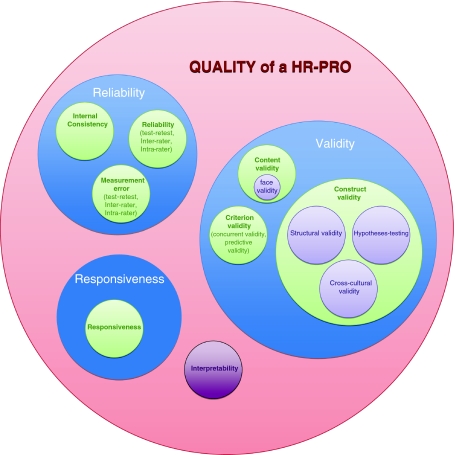
BACKGROUND: Aim of the COSMIN study (COnsensus-based Standards for the selection of health status Measurement INstruments) was to develop a consensus-based checklist to evaluate the methodological quality of studies on measurement properties. We present the COSMIN checklist and the agreement of the panel on the items of the checklist. METHODS: A four-round Delphi study was performed with international experts (psychologists, epidemiologists, statisticians and clinicians). Of the 91 invited experts, 57 agreed to participate (63%). Panel members were asked to rate their (dis)agreement with each proposal on a five-point scale. Consensus was considered to be reached when at least 67% of the panel members indicated 'agree' or 'strongly agree'. RESULTS: Consensus was reached on the inclusion of the following measurement properties: internal consistency, reliability, measurement error, content validity (including face validity), construct validity (including structural validity, hypotheses testing and cross-cultural validity), criterion validity, responsiveness, and interpretability. The latter was not considered a measurement property. The panel also reached consensus on how these properties should be assessed. CONCLUSIONS: The resulting COSMIN checklist could be useful when selecting a measurement instrument, peer-reviewing a manuscript, designing or reporting a study on measurement properties, or for educational purposes.
Overview
The claims and statistics of this paper haven’t been checked yet.
Free: it reads the open-access text and checks the first 5 claims that cite a source we can check. Create a free account to check every claim.
Integrity signals
Registry
Cites
Statistics
Figures
Verification
Claims the paper makes
The claims and statistics of this paper haven’t been checked yet.
Free: it reads the open-access text and checks the first 5 claims that cite a source we can check. Create a free account to check every claim.
Claims other papers make about this one
Each is checked against this paper’s own text: does it say what the citing paper says it does?
The cited source says what the claim attributes to it.
In the citing paper
“published guidelines provide clear recommendations for the development and evaluation of self-report measures-the most prominent example is the consensus-based standards for the selection of health measurement instruments (COSMIN) guidelines (Mokkink et al., 2010), including recent COSMIN guidelines developed for evaluating content validity (Terwee et al., 2018).”
From Acceptance and Commitment Therapy Processes and Mediation: Challenges and How to Address Them (2023) · cites this paper as Mokkink et al., 2010
The cited source says what the claim attributes to it.
In the citing paper
“Similarly, the COSMIN checklist, which assesses the methodological quality of studies on measurement properties of PROMs,21 barely mentions patient involvement. It only asks to check whether the items are relevant to the study population and whether the questionnaire was pre‐tested, for example using cognitive interviews.”
From Patient involvement in the development of patient‐reported outcome measures: a scoping review (2017) · cites this paper as [21]
The check wasn’t confident either way, so it gives no verdict — never disputed.
In the citing paper
“Face validity will be evaluated using qualitative and quantitative methods. Qualitatively, cognitive interviews with a sample of 10 target women will assess comprehension, wording clarity and item relevance. Quantitatively, the Item Impact Score will be calculated using a 5-point importance Likert scale.”
From Determinants of the choice of delivery mode in pregnant women: a convergent parallel mixed-methods study protocol (2026) · cites this paper as [51]
Experimental — accuracy not yet measuredIn the citing paper
“Reliability and validity of the Italian culturally adapted PEMS was assessed following the consensus-based standards for the selection of health status measurement instruments (COSMIN) checklist30.”
Self-check
Percentages, sums and reported differences re-computed from the paper’s own numbers.
The self-check needs the paper’s full text.
Citations
Cites
STATISTICAL METHODS FOR ASSESSING AGREEMENT BETWEEN TWO METHODS OF CLINICAL MEASUREMENT
Martin Bland, J., & Altman, D. (1986) · The Lancet · doi:10.1016/s0140-6736(86)90837-8 · Cited by 47,965
(1965) · The Lancet · doi:10.1016/s0140-6736(65)91037-8 · Cited by 16,856
Quality criteria were proposed for measurement properties of health status questionnaires
Terwee, C. B., Bot, S. D. M., de Boer, M. R., van der Windt, D. A. W. M., Knol, D. L., Dekker, J., Bouter, L. M., & de Vet, H. C. W. (2007) · Journal of Clinical Epidemiology · doi:10.1016/j.jclinepi.2006.03.012 · Cited by 10,764 · cited 1×
“Examples of such criteria were previously published by members of our group [6].”
BackgroundSelf-citationMokkink, L. B., Terwee, C. B., Patrick, D. L., Alonso, J., Stratford, P. W., Knol, D. L., Bouter, L. M., & de Vet, H. C. W. (2010) · Journal of Clinical Epidemiology · doi:10.1016/j.jclinepi.2010.02.006 · Cited by 4,465
Self-citationU.S. Department of Health and Human Services FDA Center for Drug Evaluation and Research, U.S. Department of Health and Human Services FDA Center for Biologics Evaluation and Research, & U.S. Department of Health and Human Services FDA Center for Devices and Radiological Health (2006) · Health and Quality of Life Outcomes · doi:10.1186/1477-7525-4-79 · Cited by 2,856
The Delphi technique: myths and realities
Powell, C. (2003) · Journal of Advanced Nursing · doi:10.1046/j.1365-2648.2003.02537.x · Cited by 2,584 · cited 1×
“In the literature, cut-offs between 55 and 100% are used [20].”
Verhagen, A. P., de Vet, H. C. W., de Bie, R. A., Kessels, A. G. H., Boers, M., Bouter, L. M., & Knipschild, P. G. (1998) · Journal of Clinical Epidemiology · doi:10.1016/s0895-4356(98)00131-0 · Cited by 2,379 · cited 1×
“Based on previous experiences with Delphi studies [10, 11], we expected that 70% of the people invited would agree to participate, and of these people 65% would complete the first list.”
MethodSelf-citationMokkink, L. B., Terwee, C. B., Knol, D. L., Stratford, P. W., Alonso, J., Patrick, D. L., Bouter, L. M., & de Vet, H. C. (2010) · BMC Medical Research Methodology · doi:10.1186/1471-2288-10-22 · Cited by 1,834 · cited 1×
“To help future users of the COSMIN checklist, we described some of the discussions we have had in the Delphi rounds about the standards elsewhere [ 21 ].”
Self-citationWhen to use agreement versus reliability measures
de Vet, H. C. W., Terwee, C. B., Knol, D. L., & Bouter, L. M. (2006) · Journal of Clinical Epidemiology · doi:10.1016/j.jclinepi.2005.10.015 · Cited by 1,786 · cited 5×
“In round 3, SEM was chosen as the preferred method for measuring measurement error (76% agreement).”
MethodInfluentialSelf-citationA methodological framework for assessing health indices
Kirshner, B., & Guyatt, G. (1985) · Journal of Chronic Diseases · doi:10.1016/0021-9681(85)90005-0 · Cited by 1,538 · cited 1×
“The specification of evaluative is necessary, because the requirements for measurement properties vary with the application of the instrument [ 8 ].”
Background
Cited by
Items 101–200 of 1,012
The quality of instruments to assess the process of shared decision making: A systematic review
Gärtner, F. R., Bomhof-Roordink, H., Smith, I. P., Scholl, I., Stiggelbout, A. M., & Pieterse, A. H. (2018) · PLOS ONE · doi:10.1371/journal.pone.0191747 · Cited by 191
A systematic review of head and neck cancer quality of life assessment instruments
Ojo, B., Genden, E. M., Teng, M. S., Milbury, K., Misiukiewicz, K. J., & Badr, H. (2012) · Oral Oncology · doi:10.1016/j.oraloncology.2012.03.025 · Cited by 193
Lee, A. C., Driban, J. B., Price, L. L., Harvey, W. F., Rodday, A. M., & Wang, C. (2017) · The Journal of Pain · doi:10.1016/j.jpain.2017.05.001 · Cited by 197
Cömert, M., Zill, J. M., Christalle, E., Dirmaier, J., Härter, M., & Scholl, I. (2016) · PLOS ONE · doi:10.1371/journal.pone.0152717 · Cited by 183
“The COSMIN checklist was developed in a multidisciplinary, international Delphi study and serves as a standardized tool for assessing the methodological quality of studies on measurement properties [24,25].”
MethodPatient and Public Involvement in Patient-Reported Outcome Measures: Evolution Not Revolution
Staniszewska, S., Haywood, K. L., Brett, J., & Tutton, L. (2012) · The Patient: Patient-Centered Outcomes Research · doi:10.2165/11597150-000000000-00000 · Cited by 196
“Compared with the progress made in PPI in other areas of health research,[17] there has been little exploration of the potential for PPI in contributing to enhanced quality, relevance, and acceptability of PROMs.”
BackgroundMethodInfluentialNilvér, H., Begley, C., & Berg, M. (2017) · BMC Pregnancy and Childbirth · doi:10.1186/s12884-017-1356-y · Cited by 196
Parry, S. M., Granger, C. L., Berney, S., Jones, J., Beach, L., El-Ansary, D., Koopman, R., & Denehy, L. (2015) · Intensive Care Medicine · doi:10.1007/s00134-015-3672-x · Cited by 183
Outcome measurement in functional neurological disorder: a systematic review and recommendations
Pick, S., Anderson, D. G., Asadi-Pooya, A. A., Aybek, S., Baslet, G., Bloem, B. R., Bradley-Westguard, A., Brown, R. J., Carson, A. J., Chalder, T., et al. (2020) · Journal of Neurology, Neurosurgery & Psychiatry · doi:10.1136/jnnp-2019-322180 · Cited by 171
“37 Similarly, none of the measures were validated cross-culturally, and there was limited evidence relating to ecological 38–45 (S1 and S2) (Fobian NCT02801136).”
Cacioppo, M., Bouvier, S., Bailly, R., Houx, L., Lempereur, M., Mensah-Gourmel, J., Kandalaft, C., Varengue, R., Chatelin, A., Vagnoni, J., et al. (2021) · Annals of Physical and Rehabilitation Medicine · doi:10.1016/j.rehab.2020.08.001 · Cited by 184
“To ensure face and content validity [9], the survey was developed by a national multidisciplinary group that included 7 parents of children with physical disabilities, representatives of 3 family organizations and 3 learned societies, researchers, medical and rehabilitation professionals who were all experienced in di…”
Spuls, P. I., Gerbens, L. A. A., Simpson, E., Apfelbacher, C. J., Chalmers, J. R., Thomas, K. S., Prinsen, C. A. C., von Kobyletzki, L. B., Singh, J. A., Williams, H. C., et al. (2017) · British Journal of Dermatology · doi:10.1111/bjd.15179 · Cited by 189
Modarresi, S., Lukacs, M. J., Ghodrati, M., Salim, S., MacDermid, J. C., & Walton, D. M. (2022) · The Clinical Journal of Pain · doi:10.1097/ajp.0000000000000999 · Cited by 164
Kennedy, C. A., Beaton, D. E., Smith, P., Van Eerd, D., Tang, K., Inrig, T., Hogg-Johnson, S., Linton, D., & Couban, R. (2013) · Quality of Life Research · doi:10.1007/s11136-013-0362-4 · Cited by 182
Blome, C., Baade, K., Sebastian Debus, E., Price, P., & Augustin, M. (2014) · Wound Repair and Regeneration · doi:10.1111/wrr.12193 · Cited by 179
“Validity refers to the degree to which an instrument measures the construct it purports to measure.(13)”
BackgroundMethodInfluentialElbers, R. G., Rietberg, M. B., van Wegen, E. E. H., Verhoef, J., Kramer, S. F., Terwee, C. B., & Kwakkel, G. (2012) · Quality of Life Research · doi:10.1007/s11136-011-0009-2 · Cited by 183
“In addition, two boxes contain requirements for studies in which Item Response Theory (IRT) methods are applied, and requirements for the generalizability of the results, respectively [14].”
MethodInfluentialSelf-citationPsychometric properties of burnout measures: a systematic review
Shoman, Y., Marca, S. C., Bianchi, R., Godderis, L., van der Molen, H. F., & Guseva Canu, I. (2021) · Epidemiology and Psychiatric Sciences · doi:10.1017/s2045796020001134 · Cited by 187
“Risk of bias assessment We assessed the risk of bias of each PROM validation study according to the COnsensus-based Standards for the selection of health Measurement INstruments (COSMIN) checklist (Mokkink et al., 2010).”
An Updated Systematic Review of Childhood Physical Activity Questionnaires
Hidding, L. M., Chinapaw, M. J. M., van Poppel, M. N. M., Mokkink, L. B., & Altenburg, T. M. (2018) · Sports Medicine · doi:10.1007/s40279-018-0987-0 · Cited by 167
Self-citationGiordano, V., Edobor, J., Deindl, P., Wildner, B., Goeral, K., Steinbauer, P., Werther, T., Berger, A., & Olischar, M. (2019) · JAMA Pediatrics · doi:10.1001/jamapediatrics.2019.3351 · Cited by 167
Gandek, B. (2015) · Arthritis Care & Research · doi:10.1002/acr.22415 · Cited by 167
Systematic review of empowerment measures in health promotion
Cyril, S., Smith, B. J., & Renzaho, A. M. N. (2015) · Health Promotion International · doi:10.1093/heapro/dav059 · Cited by 158
Responsiveness of the Canadian Occupational Performance Measure
Eyssen, I. C. J. M., Steultjens, M. P. M., Oud, T. A. M., Bolt, E. M., Maasdam, A., & Dekker, J. (2011) · The Journal of Rehabilitation Research and Development · doi:10.1682/jrrd.2010.06.0110 · Cited by 166
“We then used receiver operating characteristic (ROC) curves [32] to assess the responsiveness of the COPM.”
Husebo, B. S., Achterberg, W., & Flo, E. (2016) · CNS Drugs · doi:10.1007/s40263-016-0342-7 · Cited by 162
“Responsiveness is the ‘‘ability of an instrument to detect change over time in the construct to be measured’’ [41].”
BackgroundMethodInfluentialAssessment of Limb Muscle Strength in Critically Ill Patients: A Systematic Review
Vanpee, G., Hermans, G., Segers, J., & Gosselink, R. (2014) · Critical Care Medicine · doi:10.1097/ccm.0000000000000030 · Cited by 174
“Quality Assessment Assessment of methodological quality was performed using the COnsensus-based Standards for the selection of health Measurement Instruments (COSMIN) checklist with 4-point scale (14).”
BackgroundMethodInfluentialClinimetric Criteria for Patient-Reported Outcome Measures
Carrozzino, D., Patierno, C., Guidi, J., Berrocal Montiel, C., Cao, J., Charlson, M. E., Christensen, K. S., Concato, J., De las Cuevas, C., de Leon, J., et al. (2021) · Psychotherapy and Psychosomatics · doi:10.1159/000516599 · Cited by 177
Tipping, C. J., Bailey, M. J., Bellomo, R., Berney, S., Buhr, H., Denehy, L., Harrold, M., Holland, A., Higgins, A. M., Iwashyna, T. J., et al. (2016) · Annals of the American Thoracic Society · doi:10.1513/annalsats.201510-717oc · Cited by 162
Rudmik, L., Hopkins, C., Peters, A., Smith, T. L., Schlosser, R. J., & Soler, Z. M. (2015) · Journal of Allergy and Clinical Immunology · doi:10.1016/j.jaci.2015.10.012 · Cited by 176
Ho, A. L., Scott, A. M., Klassen, A. F., Cano, S. J., Pusic, A. L., & Van Laeken, N. (2012) · Plastic & Reconstructive Surgery · doi:10.1097/prs.0b013e318254b08d · Cited by 168
de Vries, S. T., Keers, J. C., Visser, R., de Zeeuw, D., Haaijer-Ruskamp, F. M., Voorham, J., & Denig, P. (2014) · Journal of Psychosomatic Research · doi:10.1016/j.jpsychores.2013.11.003 · Cited by 168
“Overview def nitions of differ nt aspec s of quality assessment of patient-reported outcome (PRO) instru nts ( dapted from: [3,60-63]).”
BackgroundRamsey, D., Scoto, M., Mayhew, A., Main, M., Mazzone, E. S., Montes, J., de Sanctis, R., Dunaway Young, S., Salazar, R., Glanzman, A. M., et al. (2017) · PLOS ONE · doi:10.1371/journal.pone.0172346 · Cited by 165
The problem with health measurement
Cano, S., Cano, S., & Hobart (2011) · Patient Preference and Adherence · doi:10.2147/ppa.s14399 · Cited by 170
“15 During our working careers, we have witnessed great progress relating to the application of psychometrics to the development of rating scales, and the development of documents containing key guidelines 16,17 and high-level requirements.”
Lin, C., Jin, Y. Q., Zhao, Q., Yu, S.-W., & Su, Y.-S. (2021) · The Asia-Pacific Education Researcher · doi:10.1007/s40299-021-00570-0 · Cited by 195
Thorborg, K., Tijssen, M., Habets, B., Bartels, E. M., Roos, E. M., Kemp, J., Crossley, K. M., & Hölmich, P. (2015) · British Journal of Sports Medicine · doi:10.1136/bjsports-2014-094224 · Cited by 163
Tijssen, M., van Cingel, R., van Melick, N., & de Visser, E. (2011) · BMC Musculoskeletal Disorders · doi:10.1186/1471-2474-12-117 · Cited by 167
“Mokkink LB, Terwee CB, Patrick DL, Alonso J, Stratford PW, Knol DL, Bouter LM, de Vet HC: The COSMIN study reached international consensus on taxonomy, terminology, and definitions of measurement properties for health-related patient-reported outcomes.”
BackgroundMethodInfluentialvan Geel, N., Lommerts, J., Bekkenk, M., Wolkerstorfer, A., Prinsen, C. A. C., Eleftheriadou, V., Taïeb, A., Picardo, M., Ezzedine, K., & Speeckaert, R. (2016) · Journal of Investigative Dermatology · doi:10.1016/j.jid.2015.12.040 · Cited by 166
“The measurement properties (e.g., validity, reliability, and responsiveness) of the available instruments were critically appraised using the Consensus-based Standards for the selection of health Measurement INstruments (COSMIN) checklist (Mokkink et al., 2010a, 2010b).”
MethodOmaña, H., Bezaire, K., Brady, K., Davies, J., Louwagie, N., Power, S., Santin, S., & Hunter, S. W. (2021) · Physical Therapy · doi:10.1093/ptj/pzab173 · Cited by 181
The HOME Core outcome set for clinical trials of atopic dermatitis
Williams, H. C., Schmitt, J., Thomas, K. S., Spuls, P. I., Simpson, E. L., Apfelbacher, C. J., Chalmers, J. R., Furue, M., Katoh, N., Gerbens, L. A. A., et al. (2022) · Journal of Allergy and Clinical Immunology · doi:10.1016/j.jaci.2022.03.017 · Cited by 159
A systematic review evaluating the psychometric properties of measures of social inclusion
Cordier, R., Milbourn, B., Martin, R., Buchanan, A., Chung, D., & Speyer, R. (2017) · PLOS ONE · doi:10.1371/journal.pone.0179109 · Cited by 135
Construccin y validacin de escalasde medicin en salud: revisin depropiedades psicomtricas
Luján-Tangarife, J. A., & Cardona‐Arias, J. A. (2015) · Archivos de Medicina · doi:10.3823/1251 · Cited by 239
Paiva, C. E., Barroso, E. M., Carneseca, E. C., Souza, C. D. P., dos Santos, F. T., López, R. V. M., & Paiva, S. B. R. (2014) · BMC Medical Research Methodology · doi:10.1186/1471-2288-14-8 · Cited by 185
“The COSMIN (COnsensus-based Standards for selection of health Measurement INstruments) checklist [7] was used to rate the methodological quality of the study designs.”
MethodSystematic review found AMSTAR, but not R(evised)-AMSTAR, to have good measurement properties
Pieper, D., Buechter, R. B., Li, L., Prediger, B., & Eikermann, M. (2015) · Journal of Clinical Epidemiology · doi:10.1016/j.jclinepi.2014.12.009 · Cited by 161
“We followed the Consensus-based Standards for the selection of health Measurement Instruments initiative where reliability is defined as ‘‘the degree to which the measurement is free from measurement error’’ and validity is defined as ‘‘the degree to which an instrument truly measures the construct(s) it purports to m…”
MethodChalmers, J. R., Thomas, K. S., Apfelbacher, C., Williams, H. C., Prinsen, C. A., Spuls, P. I., Simpson, E., Gerbens, L. A. A., Boers, M., Barbarot, S., et al. (2018) · British Journal of Dermatology · doi:10.1111/bjd.16543 · Cited by 159
Quality of life as patient-reported outcomes: principles of assessment
Bullinger, M., & Quitmann, J. (2014) · Dialogues in Clinical Neuroscience · doi:10.31887/dcns.2014.16.2/mbullinger · Cited by 158
Clinical Measures of Bulbar Dysfunction in ALS
Yunusova, Y., Plowman, E. K., Green, J. R., Barnett, C., & Bede, P. (2019) · Frontiers in Neurology · doi:10.3389/fneur.2019.00106 · Cited by 171
Avoiding Theoretical Stagnation: A Systematic Review and Framework for Measuring Public Value
Faulkner, N., & Kaufman, S. (2017) · Australian Journal of Public Administration · doi:10.1111/1467-8500.12251 · Cited by 189
Systematic review of quality of life measures in patients with endometriosis
Bourdel, N., Chauvet, P., Billone, V., Douridas, G., Fauconnier, A., Gerbaud, L., & Canis, M. (2019) · PLOS ONE · doi:10.1371/journal.pone.0208464 · Cited by 135
The International Index of Erectile Function (IIEF)—A Systematic Review of Measurement Properties
Neijenhuijs, K. I., Holtmaat, K., Aaronson, N. K., Holzner, B., Terwee, C. B., Cuijpers, P. J., & Leeuw, I. M. V. (2019) · The Journal of Sexual Medicine · doi:10.1016/j.jsxm.2019.04.010 · Cited by 166
Self-citationAiyegbusi, O. L., Kyte, D. G., Cockwell, P., Marshall, T. P., Gheorghe, A., Keeley, T., Slade, A. L., & Calvert, M. (2017) · PLoS ONE · doi:10.1371/journal.pone.0179733 · Cited by 157
“Following the selection process, the quality of the included papers was assessed by two reviewers (OLA/AS) using a validated critical appraisal tool for studies of health measurement instruments: the COnsensus-based Standards for the selection of health Measurement INstruments (COSMIN) checklist [20, 22].”
InfluentialThe Psychometric Properties of the FLACC Scale Used to Assess Procedural Pain
Crellin, D., Harrison, D. M., Santamaria, N., Huque, M. H., & Babl, F. E. (2018) · Journal of Pain · doi:10.1016/j.jpain.2018.02.013 · Cited by 152
Kvist, J., Österberg, A., Gauffin, H., Tagesson, S., Webster, K., & Ardern, C. (2013) · Scandinavian Journal of Medicine & Science in Sports · doi:10.1111/j.1600-0838.2011.01438.x · Cited by 150
“The COnsensusbased Standards for the selection of health Measurement INstruments (COSMIN) guidelines were followed for the evaluation of the measurement properties of the ACL-RSI (Terwee et al., 2007; Mokkink et al., 2010).”
MethodMeasurement of Physician-Patient Communication—A Systematic Review
Zill, J. M., Christalle, E., Müller, E., Härter, M. C., Dirmaier, J., & Scholl, I. (2014) · PLoS ONE · doi:10.1371/journal.pone.0112637 · Cited by 166
“To our knowledge, no systematic review on physician-patient communication to date provides an elaborated judgment on the methodical quality of the studies and their final results on the psychometric properties following the recommendation of Mokkink and colleagues [17].”
BackgroundMethodScale validation in applied health research: tutorial for a 6-step R-based psychometrics protocol
Dima, A. L. (2018) · Health Psychology and Behavioral Medicine · doi:10.1080/21642850.2018.1472602 · Cited by 157
“I will use here the term reliability to refer to internal consistency reliability; other forms of reliability (interrater, test-retest) are also relevant for scale validation (Mokkink et al., 2010) but not included in this protocol.”
BackgroundMethodvan de Water, A. T. M., & Benjamin, D. R. (2015) · Manual Therapy · doi:10.1016/j.math.2015.09.013 · Cited by 175
Leung, K., Trevena, L. J., & Waters, D. (2014) · Journal of Advanced Nursing · doi:10.1111/jan.12454 · Cited by 165
The Validity and Reliability of the Neurogenic Bladder Symptom Score
Welk, B. K., Morrow, S. A., Madarasz, W., Baverstock, R., Macnab, J. J., & Sequeira, K. (2014) · The Journal of Urology · doi:10.1016/j.juro.2014.01.027 · Cited by 149
“surement reporting, specifically internal consistency, reliability and construct validity, were used to guide analysis and reporting.(11)”
MethodHamilton, D. F., Loth, F. L. C., Giesinger, J. M., Giesinger, K., MacDonald, D. J., Patton, J. T., Simpson, H., & HOWIE, C. R. (2017) · The Bone & Joint Journal · doi:10.1302/0301-620x.99b2.bjj-2016-0606.r1 · Cited by 146
Thomsen, M. G., Latifi, R., Kallemose, T., Barfod, K. W., Husted, H., & Troelsen, A. (2016) · Acta Orthopaedica · doi:10.3109/17453674.2016.1156934 · Cited by 145
Cassidy, S. A., Bradley, L., Bowen, E., Wigham, S., & Rodgers, J. (2018) · Autism Research · doi:10.1002/aur.1922 · Cited by 144
“Once articles were identified from the search, the methodological quality of each article was assessed using the COSMIN checklist (Consensus based Standards for the selection of health based measurement Instruments) [Mokkink et al., 2012].”
BackgroundMethodDevelopment of the Parent-Rated Anxiety Scale for Youth With Autism Spectrum Disorder
Scahill, L., Lecavalier, L., Schultz, R. T., Evans, A. N., Maddox, B., Pritchett, J., Herrington, J., Gillespie, S., Miller, J., Amoss, R. T., et al. (2019) · Journal of the American Academy of Child & Adolescent Psychiatry · doi:10.1016/j.jaac.2018.10.016 · Cited by 143
Jin, Y. Q., Lin, C., Zhao, Q., Yu, S.-W., & Su, Y.-S. (2021) · Frontiers in Psychology · doi:10.3389/fpsyg.2021.632787 · Cited by 159
Whittaker, J. L., Culvenor, A. G., Juhl, C. B., Berg, B., Bricca, A., Filbay, S. R., Holm, P. M., Macri, E. M., Urhausen, A. P., Ardern, C. L., et al. (2022) · British Journal of Sports Medicine · doi:10.1136/bjsports-2022-106299 · Cited by 148
Assessment of Trust in Physician: A Systematic Review of Measures
Müller, E., Zill, J. M., Dirmaier, J., Härter, M. C., & Scholl, I. (2014) · PLoS ONE · doi:10.1371/journal.pone.0106844 · Cited by 152
“This combination has been recommended to use for the separate evaluation of the methodological quality of studies and the quality of their results [17].”
MethodEl‐Den, S., Schneider, C. R., Mirzaei, A., & Carter, S. (2020) · International Journal of Pharmacy Practice · doi:10.1111/ijpp.12600 · Cited by 168
“Commonly, Cronbach’s alpha or coefficient alpha is used to measure internal consistency;([27]) however, the mathematical basis for Cronbach’s alpha assumes tau equivalence, which, in real-world settings, is unlikely to be met.”
BackgroundMethodLi, H., Ding, N., Zhang, Y., Liu, Y., & Wen, D. (2017) · PLoS ONE · doi:10.1371/journal.pone.0177321 · Cited by 174
Klassen, A. F., Kaur, M. N., Johnson, N., Kreukels, B. P. C., McEvenue, G., Morrison, S. D., Mullender, M. G., Poulsen, L., Özer, M., Rowe, W., et al. (2018) · BMJ Open · doi:10.1136/bmjopen-2018-025435 · Cited by 145
Systematic review and critical appraisal of child abuse measurement instruments
Saini, S. M., Hoffmann, C. R., Pantelis, C., Everall, I. P., & Bousman, C. A. (2019) · Psychiatry Research · doi:10.1016/j.psychres.2018.12.068 · Cited by 130
Ramisetty, N., Kwon, Y., & Mohtadi, N. (2015) · Journal of Hip Preservation Surgery · doi:10.1093/jhps/hnv002 · Cited by 136
“There are two separate recognized assessment methods described in the literature for assessing the PRO questionnaires [7, 14].”
BackgroundMethodMcRackan, T. R., Hand, B. N., Velozo, C. A., & Dubno, J. R. (2019) · Journal of Speech Language and Hearing Research · doi:10.1044/2019_jslhr-h-19-0142 · Cited by 141
“Such stakeholder engagement is now considered a standard procedure for PROM development (Mokkink et al., 2010; PROMIS, 2013).”
MethodTreanor, C., & Donnelly, M. (2014) · Quality of Life Research · doi:10.1007/s11136-014-0785-6 · Cited by 151
“The checklist addresses the general requirements of psychometric studies, followed by separate sections on individual psychometric properties [6, 7].”
BackgroundFrancis, D. O., Daniero, J. J., Hovis, K. L., Sathe, N., Jacobson, B., Penson, D. F., Feurer, I. D., & McPheeters, M. L. (2017) · Journal of Speech, Language, and Hearing Research · doi:10.1044/2016_jslhr-s-16-0022 · Cited by 125
“…by a Univ Of Newcastle User on 01/01/ f Use: http://pubs.asha.org/ss/rights_and_permissions.aspx purpose that differs from its use can have significant implications and lead to distorted, inaccurate, or equivocal findings (Mokkink et al., 2009, 2010; Regnault, Hamel, & Patrick, 2015).”
BackgroundMeasurement of Quality of Life in Keratoconus
Kandel, H., Pesudovs, K., & Watson, S. L. (2019) · Cornea · doi:10.1097/ico.0000000000002170 · Cited by 132
Parry, S. M., Berney, S., Granger, C. L., Dunlop, D. L., Murphy, L., El-Ansary, D., Koopman, R., & Denehy, L. (2015) · Critical Care · doi:10.1186/s13054-015-0780-5 · Cited by 123
“The CONsensus-based Standards for the selection of health Measurement INstruments (COSMIN) guidelines [17] were followed in the reporting of the evaluation of the reliability and validity of measures.”
MethodKwan, Y. H., Weng, S. D., Loh, D. H. F., Phang, J. K., Oo, L. J. Y., Blalock, D. V., Chew, E., Yap, K. Z., Tan, C. Y. K., Yoon, S., et al. (2020) · Journal of Medical Internet Research · doi:10.2196/19179 · Cited by 137
“The measurement properties of each PROM were evaluated based on the COnsensus-based Standards for the selection of health Measurement Instruments(COSMIN) guidelines [20,21].”
MethodFayed, N., de Camargo, O. K., Kerr, E. N., Rosenbaum, P., Dubey, A., Bostan, C. M., Faulhaber, M., Raina, P. S., & Cieza, A. (2012) · Developmental Medicine & Child Neurology · doi:10.1111/j.1469-8749.2012.04393.x · Cited by 145
Nigg, C. R., Fuchs, R., Gerber, M., Jekauc, D., Koch, T., Krell‐Roesch, J., Lippke, S., Nigg, C., Novak, B., Ju, Q., et al. (2020) · Psychology of sport and exercise · doi:10.1016/j.psychsport.2020.101715 · Cited by 146
Dikken, J., van den Hoven, R. F. M., van Staalduinen, W. H., Hulsebosch-Janssen, L. M. T., & van Hoof, J. (2020) · International Journal of Environmental Research and Public Health · doi:10.3390/ijerph17186867 · Cited by 140
“The COSMIN initiative aims to reach consensus about which measurement properties are considered to be important, their most adequate terms and definitions, and how they should be assessed in terms of study design and statistics [28].”
BackgroundChiarotto, A., Vanti, C., Cedraschi, C., Ferrari, S., de Lima e Sà Resende, F., Ostelo, R. W., & Pillastrini, P. (2016) · The Journal of Pain · doi:10.1016/j.jpain.2016.02.012 · Cited by 128
Reference values for standardized tests of walking speed and distance: A systematic review
Salbach, N. M., O’Brien, K. K., Brooks, D., Irvin, E., Martino, R., Takhar, P., Chan, S., & Howe, J.-A. (2014) · Gait & Posture · doi:10.1016/j.gaitpost.2014.10.002 · Cited by 149
“The methodological quality of included studies was assessed using a modified 4- and 5-item version of the Interpretability and Generalizability checklists, respectively, of the COnsensus-based Standards for the selection of health Measurements INstruments (COSMIN) critical appraisal tool [40].”
Methodde Castro, J. A. C., de Lima, T. R., & Silva, D. A. S. (2017) · Journal of Bodywork and Movement Therapies · doi:10.1016/j.jbmt.2017.04.010 · Cited by 143
Eddy, L. H., Bingham, D. D., Crossley, K. L., Shahid, N. F., Ellingham-Khan, M., Otteslev, A., Figueredo, N. S., Mon-Williams, M. A., & Hill, L. J. B. (2020) · PLoS ONE · doi:10.1371/journal.pone.0237919 · Cited by 144
“When an IRT method was used, a second quality percentage was calculated, based on the COSMIN guidelines for IRT models [25].”
BackgroundMethodInfluentialElsman, E. B. M., Mokkink, L. B., Terwee, C. B., Beaton, D., Gagnier, J. J., Tricco, A. C., Baba, A., Butcher, N. J., Smith, M., Hofstetter, C., et al. (2024) · Journal of Clinical Epidemiology · doi:10.1016/j.jclinepi.2024.111422 · Cited by 126
Self-citationIbrahim, S. M., & Lobel, M. (2019) · Journal of Behavioral Medicine · doi:10.1007/s10865-019-00068-7 · Cited by 140
Chalmers, J. R., Simpson, E., Apfelbacher, C. J., Thomas, K. S., Kobyletzki, L., Schmitt, J., Singh, J. A., Svensson, Å., Williams, H. C., Abuabara, K., et al. (2016) · British Journal of Dermatology · doi:10.1111/bjd.14773 · Cited by 125
Rørvik, H. D., Styr, K., Ilum, L., McKinstry, G. K., Dragesund, T., Campos, A. H., Brandstrup, B., & Olaison, G. (2018) · Diseases of the Colon & Rectum · doi:10.1097/dcr.0000000000001234 · Cited by 125
Life impact of ankle fractures: Qualitative analysis of patient and clinician experiences
McPhail, S., Dunstan, J., Canning, J., & Haines, T. P. (2012) · BMC Musculoskeletal Disorders · doi:10.1186/1471-2474-13-224 · Cited by 131
“There is also a marked lack of empirical evidence reporting favourable psychometric and clinimetric properties for this scale [47,55,63,64].”
BackgroundEvaluating the Psychometric Quality of Social Skills Measures: A Systematic Review
Cordier, R., Speyer, R., Chen, Y.-W. R., Wilkes‐Gillan, S., Brown, T., Bourke‐Taylor, H. M., Doma, K., & Leicht, A. S. (2015) · PLoS ONE · doi:10.1371/journal.pone.0132299 · Cited by 131
“To both capture the data and assess the methodological quality of the data the COSMIN was used [55].”
InfluentialSantaguida, P., Dolovich, L., Oliver, D., Lamarche, L., Gilsing, A., Griffith, L. E., Richardson, J., Mangin, D., Kastner, M., & Raina, P. (2018) · BMC Family Practice · doi:10.1186/s12875-018-0831-5 · Cited by 116
Patient-Reported Outcome Measures in Routine Pediatric Clinical Care: A Systematic Review
Bele, S., Chugh, A., Mohamed, B., Teela, L., Haverman, L., & Santana, M. (2020) · Frontiers in Pediatrics · doi:10.3389/fped.2020.00364 · Cited by 132
“Methodological Quality of Studies Originally, we had anticipated identifying unvalidated PROMs, so we had planned to assess the risk of bias and methodological quality of included studies using the COnsensus-based Standards for the selection of health status Measurement INstruments (COSMIN) checklist (37).”
MethodChan, E. K. H. (2014) · Social indicators research series · doi:10.1007/978-3-319-07794-9_2 · Cited by 153
Riff, K. W. Y. W., Tsangaris, E., Goodacre, T., Forrest, C. R., Pusic, A. L., Cano, S., & Klassen, A. F. (2017) · BMJ Open · doi:10.1136/bmjopen-2016-015467 · Cited by 132
Systematic review of quality of life in the management of vestibular schwannoma
Gauden, A. J., Weir, P., Hawthorne, G., & Kaye, A. H. (2011) · Journal of Clinical Neuroscience · doi:10.1016/j.jocn.2011.05.009 · Cited by 126
Weigert, R., Frison, É., Sessiecq, Q., Mutairi, K. A., & Casoli, V. (2013) · Plastic & Reconstructive Surgery · doi:10.1097/01.prs.0000434415.70711.49 · Cited by 122
“(%)§ Significant improvement 34 (97) 30 (85) 23 (86) 6 (17) Nonsignificant improvement 1 (3) 2 (6) 2 (7) 6 (17) No change 0 (0) 2 (6) 0 (0) 4 (11) Nonsignificant worsening 0 (0) 0 (0) 2 (7) 2 (6) Significant worsening 0 (0) 1 (3) 0 (0) 17 (49)”
BackgroundHolloway, L., Humphrey, L., Heron, L., Pilling, C., Kitchen, H., Højbjerre, L., Strandberg-Larsen, M., & Hansen, B. B. (2014) · Health and Quality of Life Outcomes · doi:10.1186/s12955-014-0116-1 · Cited by 127
“The psychometric properties (validity, reliability and ability to detect change) of each PRO for an SLE population were also assessed in line with FDA regulatory guidance for the development and validation of PROs [11,23].”
BackgroundMethodThe development and exploratory analysis of the Back Pain Attitudes Questionnaire (Back-PAQ)
Darlow, B. J. S., Perry, M., Mathieson, F. M., Stanley, J., Melloh, M., Marsh, R. W., Baxter, D. G., & Dowell, A. C. (2014) · BMJ Open · doi:10.1136/bmjopen-2014-005251 · Cited by 131
“Finally, the predictive ability of the Back-PAQ on clinical outcomes needs to be examined for people with back pain and people who are painfree, as well as examining the influence of health professionals’ beliefs (as measured by the Back-PAQ) on their patients’ clinical outcomes.(48)”
MethodPons, C., Borotikar, B. S., Garétier, M., Burdin, V., Salem, D. B., Lempereur, M., & Brochard, S. (2018) · PLoS ONE · doi:10.1371/journal.pone.0207847 · Cited by 129
Bernstein, C. N., Zhang, L., Lix, L. M., Graff, L. A., Walker, J. R., Fisk, J. D., Patten, S. B., Hitchon, C. A., Bolton, J. M., Sareen, J., et al. (2018) · Inflammatory Bowel Diseases · doi:10.1093/ibd/izy068 · Cited by 119
Hitchon, C. A., Zhang, L., Peschken, C. A., Lix, L. M., Graff, L. A., Fisk, J. D., Patten, S. B., Bolton, J., Sareen, J., El‐Gabalawy, R., et al. (2020) · Arthritis Care & Research · doi:10.1002/acr.24011 · Cited by 110
“According to the taxonomy proposed by the Consensus- Based Standards for the Selection of Health Measurement Instruments (32), we assessed criterion validity, construct validity (through hypothesis testing), content validity, internal consistency reliability, and test–retest reliability of the selected screening instr…”
InfluentialCheng, L. J., Tan, R. L.-Y., & Luo, N. (2021) · Value in Health · doi:10.1016/j.jval.2021.02.003 · Cited by 123
European Respiratory Society statement on airway clearance techniques in adults with bronchiectasis
Herrero‐Cortina, B., Lee, A. L., Oliveira, A., O'Neill, B. M., Jácome, C. I. O., Corso, S. D., Poncin, W., Muñoz, G., Inal-Ince, D., Alcaraz-Serrano, V., et al. (2023) · European Respiratory Journal · doi:10.1183/13993003.02053-2022 · Cited by 122
Piscitelli, D., Ferrarello, F., Ugolini, A., Verola, S., & Pellicciari, L. (2021) · Developmental Medicine & Child Neurology · doi:10.1111/dmcn.14910 · Cited by 143
“This could be because the three tools were developed before the development of the COSMIN guidelines.(9,12) Their content validity should be investigated further in light of this to better understand if the GMFCS, GMFCS-E&R, and MACS represent relevant aspects of the construct they intend to measure in children with C…”
BackgroundMethodInfluentialHuang, H., Grant, J. A., Miller, B. S., Mirza, F. M., & Gagnier, J. J. (2015) · The American Journal of Sports Medicine · doi:10.1177/0363546514565096 · Cited by 126
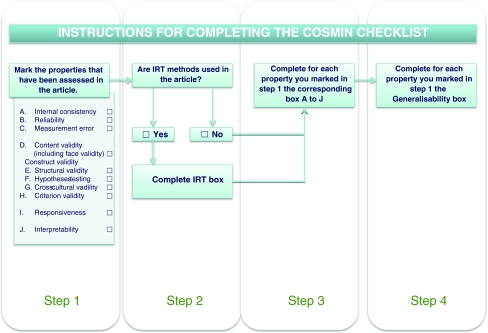
“Two reviewers assessed the methodological quality of the articles separately and independently using the COSMIN checklist.(51) Figure 1 outlines the instructions for completing the COSMIN checklist, and Table 1 includes a definition of each psychometric property.”
MethodRankin, A., Cadogan, C. A., Ryan, C. A., Clyne, B., Smith, S. M., & Hughes, C. M. (2018) · Journal of the American Geriatrics Society · doi:10.1111/jgs.15245 · Cited by 117
Metadata
- Authors
- Mokkink, L. B., Terwee, C. B., Patrick, D. L., Alonso, J., Stratford, P. W., Knol, D. L., Bouter, L. M., & de Vet, H. C. W.
- Affiliations
- Amsterdam Public Health (NL)
- University of Washington (US)
- Municipal Institute for Medical Research (ES)
- McMaster University (CA)
- Corresponding author
- Mokkink, Lidwine B.
- ORCID
- Venue
- Quality of Life Research
- Published
- 2010-02-19
- Volume
- 19
- Issue
- 4
- Pages
- 539-549
- ISSN
- 0962-9343 (ISSN-L)
- 1573-2649
- PMC
- PMC2852520
- OpenAlex
- W2157427387
- Semantic Scholar
- 1d001fad324cadb878ac15175b0bdd7a47a7b70b
- Cited by
- 4,260
- References
- 21
- Citations by year
- 2026: 399 · 2025: 432 · 2024: 396 · 2023: 349 · 2022: 375 · 2021: 398 · 2020: 417 · 2019: 294 · 2018: 289 · 2017: 248 · 2016: 185 · 2015: 136 · 2014: 135 · 2013: 90 · 2012: 59
- FWCI
- 209.45
- Type
- journal article
- Language
- en
- Open access
- hybrid
- doi.org
- Licence
- cc-by-nc
- creativecommons.org/licenses/by-nc/2.0 (tdm)
- Locations
- Quality of Life Research (publishedVersion, cc-by-nc)
- PubMed Central (publishedVersion, cc-by-nc)
- PubMed (publishedVersion)
- Amsterdam UMC (VU Amsterdam) - Institutional Repository (publishedVersion)
- VU Research Portal (publishedVersion, other-oa)
- Pure Amsterdam UMC (submittedVersion)
- Digital Academic REpository of VU University Amsterdam (Vrije Universiteit Amsterdam) (submittedVersion)
- Repositori digital de la UPF (Universitat Pompeu Fabra) (submittedVersion, other-oa)
- Data Archiving and Networked Services (DANS) (submittedVersion, other-oa)
- Funders
- Vrije Universiteit Amsterdam
- Topics
- Social Sciences › Sociology and Political Science › Delphi Technique in Research
- Health Sciences › Nursing › Research and Theory › Health Education and Validation
- Social Sciences › Economics, Econometrics and Finance › Economics and Econometrics › Health Systems, Economic Evaluations, Quality of Life
- Keywords
- COSMIN checklist, measurement properties, methodological quality assessment, measurement validity, reliability statistics, content validity, construct validity, criterion validity, responsiveness, interpretability, measurement error, cross-cultural validity, expert consensus
- MeSH terms
- Delphi Technique, Health Status Indicators, Humans, Psychometrics, Quality of Life, Surveys and Questionnaires, Research Design, Statistics as Topic, Reproducibility of Results, Outcome Assessment, Health Care, Sickness Impact Profile, Internationality
About these checks
Registry, retraction, Cites and statistics results are computed, not judged, with one exception: a printed reference that no index lists is read once by a model before it counts as a citation error. Claims are extracted by a model and kept only when their quote appears verbatim in the text; each cited source is then checked, with a model’s help, for whether it says what the claim relies on. Those verdicts can be wrong — read the claim’s quote and the cited source before relying on one.
Statistics and arithmetic are recomputed, not judged.
Confidence bands are shown only for fields calibrated on our annotated test set. None is calibrated yet, so no band is shown.
What counts as a claim ›How we measure confidence ›How we check this ›
Are you an author, or do you see a problem with this page? Request a review
Data sources
Bibliographic data: Semantic Scholar, OpenAlex, Crossref.
Contains information from the Semantic Scholar Academic Graph Datasets, made available under the ODC Attribution License (ODC-BY 1.0).
Semantic Scholar’s data is described in: Kinney, R., et al. (2023). The Semantic Scholar Open Data Platform. arXiv:2301.10140.
