

The COSMIN checklist for assessing the methodological quality of studies on measurement properties of health status measurement instruments: an international Delphi study
Open accessThe DOI matches its Crossref record; 20 of the 21 references it cites were found in a registry or an index.
Abstract
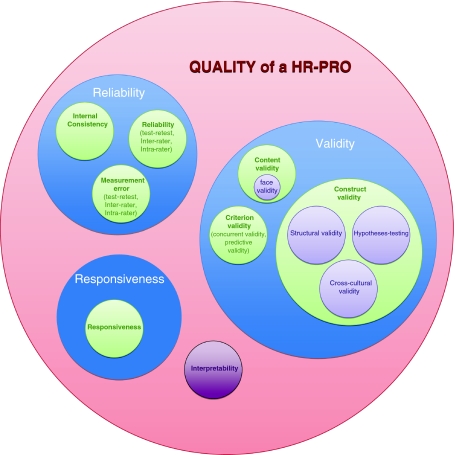
BACKGROUND: Aim of the COSMIN study (COnsensus-based Standards for the selection of health status Measurement INstruments) was to develop a consensus-based checklist to evaluate the methodological quality of studies on measurement properties. We present the COSMIN checklist and the agreement of the panel on the items of the checklist. METHODS: A four-round Delphi study was performed with international experts (psychologists, epidemiologists, statisticians and clinicians). Of the 91 invited experts, 57 agreed to participate (63%). Panel members were asked to rate their (dis)agreement with each proposal on a five-point scale. Consensus was considered to be reached when at least 67% of the panel members indicated 'agree' or 'strongly agree'. RESULTS: Consensus was reached on the inclusion of the following measurement properties: internal consistency, reliability, measurement error, content validity (including face validity), construct validity (including structural validity, hypotheses testing and cross-cultural validity), criterion validity, responsiveness, and interpretability. The latter was not considered a measurement property. The panel also reached consensus on how these properties should be assessed. CONCLUSIONS: The resulting COSMIN checklist could be useful when selecting a measurement instrument, peer-reviewing a manuscript, designing or reporting a study on measurement properties, or for educational purposes.
Overview
The claims and statistics of this paper haven’t been checked yet.
Free: it reads the open-access text and checks the first 5 claims that cite a source we can check. Create a free account to check every claim.
Integrity signals
Registry
Cites
Statistics
Figures
Verification
Claims the paper makes
The claims and statistics of this paper haven’t been checked yet.
Free: it reads the open-access text and checks the first 5 claims that cite a source we can check. Create a free account to check every claim.
Claims other papers make about this one
Each is checked against this paper’s own text: does it say what the citing paper says it does?
The cited source says what the claim attributes to it.
In the citing paper
“published guidelines provide clear recommendations for the development and evaluation of self-report measures-the most prominent example is the consensus-based standards for the selection of health measurement instruments (COSMIN) guidelines (Mokkink et al., 2010), including recent COSMIN guidelines developed for evaluating content validity (Terwee et al., 2018).”
From Acceptance and Commitment Therapy Processes and Mediation: Challenges and How to Address Them (2023) · cites this paper as Mokkink et al., 2010
The cited source says what the claim attributes to it.
In the citing paper
“Similarly, the COSMIN checklist, which assesses the methodological quality of studies on measurement properties of PROMs,21 barely mentions patient involvement. It only asks to check whether the items are relevant to the study population and whether the questionnaire was pre‐tested, for example using cognitive interviews.”
From Patient involvement in the development of patient‐reported outcome measures: a scoping review (2017) · cites this paper as [21]
The check wasn’t confident either way, so it gives no verdict — never disputed.
In the citing paper
“Face validity will be evaluated using qualitative and quantitative methods. Qualitatively, cognitive interviews with a sample of 10 target women will assess comprehension, wording clarity and item relevance. Quantitatively, the Item Impact Score will be calculated using a 5-point importance Likert scale.”
From Determinants of the choice of delivery mode in pregnant women: a convergent parallel mixed-methods study protocol (2026) · cites this paper as [51]
Experimental — accuracy not yet measuredIn the citing paper
“Reliability and validity of the Italian culturally adapted PEMS was assessed following the consensus-based standards for the selection of health status measurement instruments (COSMIN) checklist30.”
Self-check
Percentages, sums and reported differences re-computed from the paper’s own numbers.
The self-check needs the paper’s full text.
Citations
Cites
STATISTICAL METHODS FOR ASSESSING AGREEMENT BETWEEN TWO METHODS OF CLINICAL MEASUREMENT
Martin Bland, J., & Altman, D. (1986) · The Lancet · doi:10.1016/s0140-6736(86)90837-8 · Cited by 47,965
(1965) · The Lancet · doi:10.1016/s0140-6736(65)91037-8 · Cited by 16,856
Quality criteria were proposed for measurement properties of health status questionnaires
Terwee, C. B., Bot, S. D. M., de Boer, M. R., van der Windt, D. A. W. M., Knol, D. L., Dekker, J., Bouter, L. M., & de Vet, H. C. W. (2007) · Journal of Clinical Epidemiology · doi:10.1016/j.jclinepi.2006.03.012 · Cited by 10,764 · cited 1×
“Examples of such criteria were previously published by members of our group [6].”
BackgroundSelf-citationMokkink, L. B., Terwee, C. B., Patrick, D. L., Alonso, J., Stratford, P. W., Knol, D. L., Bouter, L. M., & de Vet, H. C. W. (2010) · Journal of Clinical Epidemiology · doi:10.1016/j.jclinepi.2010.02.006 · Cited by 4,465
Self-citationU.S. Department of Health and Human Services FDA Center for Drug Evaluation and Research, U.S. Department of Health and Human Services FDA Center for Biologics Evaluation and Research, & U.S. Department of Health and Human Services FDA Center for Devices and Radiological Health (2006) · Health and Quality of Life Outcomes · doi:10.1186/1477-7525-4-79 · Cited by 2,856
The Delphi technique: myths and realities
Powell, C. (2003) · Journal of Advanced Nursing · doi:10.1046/j.1365-2648.2003.02537.x · Cited by 2,584 · cited 1×
“In the literature, cut-offs between 55 and 100% are used [20].”
Verhagen, A. P., de Vet, H. C. W., de Bie, R. A., Kessels, A. G. H., Boers, M., Bouter, L. M., & Knipschild, P. G. (1998) · Journal of Clinical Epidemiology · doi:10.1016/s0895-4356(98)00131-0 · Cited by 2,379 · cited 1×
“Based on previous experiences with Delphi studies [10, 11], we expected that 70% of the people invited would agree to participate, and of these people 65% would complete the first list.”
MethodSelf-citationMokkink, L. B., Terwee, C. B., Knol, D. L., Stratford, P. W., Alonso, J., Patrick, D. L., Bouter, L. M., & de Vet, H. C. (2010) · BMC Medical Research Methodology · doi:10.1186/1471-2288-10-22 · Cited by 1,834 · cited 1×
“To help future users of the COSMIN checklist, we described some of the discussions we have had in the Delphi rounds about the standards elsewhere [ 21 ].”
Self-citationWhen to use agreement versus reliability measures
de Vet, H. C. W., Terwee, C. B., Knol, D. L., & Bouter, L. M. (2006) · Journal of Clinical Epidemiology · doi:10.1016/j.jclinepi.2005.10.015 · Cited by 1,786 · cited 5×
“In round 3, SEM was chosen as the preferred method for measuring measurement error (76% agreement).”
MethodInfluentialSelf-citationA methodological framework for assessing health indices
Kirshner, B., & Guyatt, G. (1985) · Journal of Chronic Diseases · doi:10.1016/0021-9681(85)90005-0 · Cited by 1,538 · cited 1×
“The specification of evaluative is necessary, because the requirements for measurement properties vary with the application of the instrument [ 8 ].”
Background
Cited by
Items 701–800 of 1,012
Measurement properties of continuous text reading performance tests
Brussee, T., van Nispen, R. M. A., & van Rens, G. H. M. B. (2014) · Ophthalmic and Physiological Optics · doi:10.1111/opo.12158 · Cited by 45
“General and reading card specific measurement properties General measurement properties that should apply to reading tests were obtained from the Consensus-based standards for the selection of health measurement instruments (COSMIN) checklist.(45) Since COSMIN generally focuses on questionnaires and less on performanc…”
Measurement properties and feasibility of the Loughborough soccer passing test: A systematic review
Wen, D., Robertson, S. J., Hu, G., Song, B., & Chen, H. (2017) · Journal of Sports Sciences · doi:10.1080/02640414.2017.1409611 · Cited by 45
“With respect to feasibility, we primarily focused on the interpretability (Mokkink et al., 2010) of the SWC or MDC (when MDC > SWC) for use in discriminating the performers of different constructs (such as playing levels), and detecting a change in performance caused by an external intervention.”
Torre, M., Luzi, I., Mirabella, F., Manso, M. D., Zanoli, G. A., Tucci, G., & Romanini, E. (2018) · Health and Quality of Life Outcomes · doi:10.1186/s12955-018-0935-6 · Cited by 40
Hjorth, S., Bromley, R., Ystrøm, E., Lupattelli, A., Spigset, O., & Nordeng, H. (2019) · PLoS ONE · doi:10.1371/journal.pone.0219778 · Cited by 44
“The psychometric properties of the outcome measures in the included studies were assessed on the domains internal consistency, inter-rater and test-retest reliability, construct, content and criterion validity (umbrella term for concurrent and predictive validity) as defined by the COnsensus-based Standards for the se…”
MethodSimons, M., Kimble, R. M., McPhail, S., & Tyack, Z. F. (2019) · Burns · doi:10.1016/j.burns.2019.07.012 · Cited by 43
Serafin, L. I., Sak‐Dankosky, N., & Czarkowska‐Pączek, B. (2020) · Journal of Advanced Nursing · doi:10.1111/jan.14331 · Cited by 46
Validity and reliability of EQ-5D-5L among patients with axial spondyloarthritis in Singapore
Seng, J. J. B., Kwan, Y. H., Fong, W. W. S., Phang, J. K., Lui, N. L., Thumboo, J., & Leung, Y. Y. (2020) · European Journal of Rheumatology · doi:10.5152/eurjrheum.2020.19043 · Cited by 44
“The COnsensus-based Standards for the selection of health Measurement Instrument (COSMIN) guidelines were followed and adhered to during the assessment (12).”
MethodGhaffari, M., Rakhshanderou, S., Ramezankhani, A., Mehrabi, Y., & Safari‐Moradabadi, A. (2020) · BMC Oral Health · doi:10.1186/s12903-020-01170-y · Cited by 48
“To evaluate the psychometric section, the COSMIN checklist (the consensus-based standards for the selection of health measurement instruments) was used [29].”
BackgroundMethodInfluentialSharma, S., Jha, J., Pathak, A., & Neblett, R. (2020) · BMC Neurology · doi:10.1186/s12883-020-01867-1 · Cited by 40
Reynaud, V., Verdilos, A., Pereira, B., Boisgard, S., Costes, F., & Coudeyre, E. (2020) · Journal of Clinical Medicine · doi:10.3390/jcm9082439 · Cited by 46
“Psychometric qualities (validity, reproducibility, responsiveness, and interpretability) were assessed for each instrument in this specific population, namely knee OA, and more precisely TKA according to the COnsensus-based Standards for the selection of health status Measurement Instruments (COSMIN) recommendations […”
Oliveira, A., Rebelo, P. F. S., Paixão, C., Jácome, C. I. O., Cruz, J., Martins, V., Simão, P., Brooks, D., & Marques, A. S. P. D. D. (2021) · COPD Journal of Chronic Obstructive Pulmonary Disease · doi:10.1080/15412555.2021.1874897 · Cited by 42
“initiative [14] and the Strengthening the Reporting of”
BackgroundDomain Experts on Dementia-Care Technologies: Mitigating Risk in Design and Implementation
Berridge, C. W., Demiris, G., & Kaye, J. A. (2021) · Science and Engineering Ethics · doi:10.1007/s11948-021-00286-w · Cited by 44
Measurement Properties of the Canadian Occupational Performance Measure: A Systematic Review
Ohno, K., Tomori, K., Sawada, T., Seike, Y., Yaguchi, A., & Kobayashi, R. (2021) · American Journal of Occupational Therapy · doi:10.5014/ajot.2021.041699 · Cited by 40
Drooling outcome measures in paediatric disability: a systematic review
Sforza, E., Onesimo, R., Leoni, C., Giorgio, V., Proli, F., Notaro, F., Kuczynska, E. M., Cerchiari, A., Selicorni, A., Rigante, D., et al. (2022) · European Journal of Pediatrics · doi:10.1007/s00431-022-04460-5 · Cited by 45
“The COSMIN checklist was developed by authors based on previous COSMIN checklist versions [13, 14] and on the COSMIN Risk of Bias checklist for PROMs [15, 16].”
MethodA Systematic Review of Cross-Cultural Adaptation of the Neck Disability Index
Yao, M., Sun, Y., Cao, Z.-Y., Dun, R.-L., Yang, L., Zhang, B.-M., Jiang, H., Wang, Y., & Cui, X. (2015) · Spine · doi:10.1097/brs.0000000000000788 · Cited by 41
Kwon, J., Smith, S. C., Raghunandan, R., Howell, M., Huynh, E. K., Kim, S. W., Bentley, T., Roberts, N. W., Lancsar, E., Howard, K., et al. (2023) · Applied Health Economics and Health Policy · doi:10.1007/s40258-023-00806-8 · Cited by 40
“Thereafter, considerations for the appropriate assessment design and methods differed by psychometric property [30].”
BackgroundMethodInfluentialSargento, P., Perea, V., Ladera, V., Lopes, P., & Oliveira, J. (2014) · Sleep And Breathing · doi:10.1007/s11325-014-1078-6 · Cited by 40
Maratia, S., Cedillo, S., & Rejas, J. (2016) · Quality of Life Research · doi:10.1007/s11136-016-1284-8 · Cited by 40
“At present, only few studies have used the EMPRO tool to evaluate the psychometric properties of questionnaires [23–25] in comparison with a most extended similar one like COSMIN (COnsensus-based Standards for the selection of health status Measurement INstruments) checklist [28].”
MethodGeneral Sleep Disturbance Scale (GSDS-IT) in people with spinal cord injury: a psychometric study
Panuccio, F., Galeoto, G., Márquez, M. A., Grassi, M. L., Scialpi, A., Tofani, M., & Berardi, A. (2020) · Spinal Cord · doi:10.1038/s41393-020-0500-0 · Cited by 39
“The reliability and validity of the GSDS-IT were assessed according to the Consensus-Based Standards for the Selection of Health Status Measurement Instruments (COSMIN) checklist [30].”
MethodEiben‐Nielson, C., & Kerscher, M. J. (2021) · Journal of Cosmetic Dermatology · doi:10.1111/jocd.14058 · Cited by 39
Giurgiu, M., Kolb, S., Nigg, C., Burchartz, A., Timm, I., Becker, M. L., Rulf, E., Doster, A.-K., Koch, E. D., Bussmann, J. B. J., et al. (2022) · BMJ Open Sport & Exercise Medicine · doi:10.1136/bmjsem-2021-001267 · Cited by 43
Guidance to best tools and practices for systematic reviews1
Kolaski, K., Logan, L. R., & Ioannidis, J. P. A. (2023) · Journal of Pediatric Rehabilitation Medicine · doi:10.3233/prm-230019 · Cited by 52
“[67, 68] What is the most suitable instrument to measure a construct of interest in a specific study population?”
Down, M. J. A., Picknoll, D., Edwards, T., FARRINGDON, F. H., Hoyne, G. F., Piggott, B., & Murphy, M. (2024) · Journal of Adventure Education & Outdoor Learning · doi:10.1080/14729679.2024.2386350 · Cited by 49
“None of the current self-reported outcome measures used to assess the different domains in this review were validated to the standards of the COSMIN recommendations, but several examples exist in the literature which could be used for guidance in future studies (e.g. Beelen et al., 2021; Rezai et al., 2020; Sultan et…”
Saccomanno, M. F., Cazzato, G., Fodale, M., Sircana, G., & Milano, G. (2015) · Knee Surgery Sports Traumatology Arthroscopy · doi:10.1007/s00167-014-3486-3 · Cited by 42
Validity and reliability of the Persian version of the dizziness handicap inventory.
Jafarzadeh, S., Bahrami, E., Pourbakht, A., Jalaie, S., & Daneshi, A. (2014) · PubMed Central · Cited by 49
Janssens, A. I. W. A., Rogers, M., Gumm, R., Jenkinson, C., Tennant, A., Logan, S., & Morris, C. (2015) · Developmental Medicine & Child Neurology · doi:10.1111/dmcn.12982 · Cited by 42
“The COSMIN checklist uses a ‘worst score counts’ rating of methodological quality as excellent, good, fair, or poor based on factors such as adequate sample size and appropriate statistical methods used.(16) The checklist was administered by two reviewers (AJ and CM); discrepancies were resolved by discussion.”
MethodBaumann, F., Popp, D., Müller, K., Müller, M., Schmitz, P. G., Nerlich, M. L., & Fickert, S. (2016) · Health and Quality of Life Outcomes · doi:10.1186/s12955-016-0407-9 · Cited by 39
“The validation was carried out following the complete COSMIN checklist [13, 24].”
MethodYoussof, S., Romero‐Clark, C., Warner, T. D., & Plowman, E. K. (2016) · Muscle & Nerve · doi:10.1002/mus.25441 · Cited by 40
“Instruments used in research or clinical practice should have sound measurement properties, including reliability and validity, in the population to which they are applied.(13) The SWAL-QOL’s psychometric properties in a purely OPMD population have not been described.”
MethodLeonardsen, A. L., Grøndahl, V. A., Ghanima, W., Storeheier, E., Schönbeck, A., Løken, T.-A., Bakken, N. C. M., Letting, G. S., Holst, R., & Jelsness‐Jørgensen, L. (2017) · BMC Health Services Research · doi:10.1186/s12913-017-2614-4 · Cited by 47
“The PPE-15 has not been translated into Norwegian, and forwards and backwards translation were consequently performed according to recommendations in the literature [29, 30]: Two professional bilingual translators with Norwegian as their mother tongue performed two independent translations into Norwegian.”
MethodAn Instrument to Measure Maturity of Integrated Care: A First Validation Study
Grooten, L., Borgermans, L. A. D., & Vrijhoef, H. J. (2018) · International Journal of Integrated Care · doi:10.5334/ijic.3063 · Cited by 46
“This assessment was based on the criteria of the COSMIN checklist [28] using the four-point scale in the COSMIN checklist.”
BackgroundMethodInfluentialBrocklehurst, P. R., McKenna, G., Schimmel, M., Kossioni, A., Jerković-Ćosić, K., Hayes, M., da Mata, C., & Müller, F. (2018) · BMC Oral Health · doi:10.1186/s12903-018-0513-7 · Cited by 35
“To facilitate this, the COSMIN (COnsensus-based Standards for the selection of health Measurement INstruments) checklist can be used as a tool for developing studies of the validity and reliability of the proposed measurement instruments [46].”
Morgan, C., Honan, I., Allsop, A., Novak, I., & Badawi, N. A. (2018) · Journal of Pediatric Psychology · doi:10.1093/jpepsy/jsy068 · Cited by 41
Abedi, A., Mokkink, L. B., Zadegan, S. A., Paholpak, P., Tamai, K., Wang, J. C., & Buser, Z. (2018) · Global Spine Journal · doi:10.1177/2192568218806847 · Cited by 39
“Therefore, COSMIN checklist(14) was selected as the most appropriate tool, as it includes the most comprehensive, systematic and transparent methodology for assessment of the methodological quality of studies on reliability, validity, and responsiveness.(14) However, since COSMIN was developed for patient-reported out…”
BackgroundMethodSelf-citationYoon, S., Speyer, R., Cordier, R., Aunio, P., & Hakkarainen, A. M. (2020) · Trauma Violence & Abuse · doi:10.1177/1524838019898456 · Cited by 41
“…construct validity (i.e., the extent to which the scores are consistent with hypotheses on differences between relevant groups and relations to scores of other instruments), and criterion validity (i.e., the extent to which the scores adequately reflect a “gold standard”; Mokkink et al., 2010b).”
BackgroundMethodInfluentialStasi, S., Papathanasiou, G., Diochnou, A., Polikreti, B., Chalimourdas, A., & Macheras, G. A. (2020) · Hip International · doi:10.1177/1120700020901682 · Cited by 39
Preliminary validation of the insomnia severity index in Danish outpatients with a medical condition
Dieperink, K. B., Elnegaard, C. M., Winther, B., Lohman, A., Zerlang, I., Möller, S., & Zangger, G. (2020) · Journal of Patient-Reported Outcomes · doi:10.1186/s41687-020-0182-6 · Cited by 40
Bezerra, M. C., Bittencourt, J. V., dos Reis, F. J. J., de Almeida, R. S., Meziat‐Filho, N., & Nogueira, L. A. C. (2021) · Joint Bone Spine · doi:10.1016/j.jbspin.2020.105127 · Cited by 39
Useche, S. A., Alonso, F., Cendales, B., Montoro, L. V., & Llamazares, F. J. (2021) · BMC Public Health · doi:10.1186/s12889-021-11575-1 · Cited by 40
“However, the survey was not excessively long; it had a total of 106 items, so that respondents did not get tired nor lost motivation during its completion, as suggested in key health research guidelines [35, 36].”
BackgroundBeischer, S., Senorski, E. H., Thomeé, P., & Thomeé, R. (2021) · Journal of Experimental Orthopaedics · doi:10.1186/s40634-021-00414-2 · Cited by 40
“Even though floor and ceiling effects may indicate a lack of content validity [23, 24], it is our belief that ceiling effects are not as important when it comes to self-efficacy beliefs as measured with the K-SES18.”
BackgroundMethodInfluentialElders Health Empowerment Scale. Spanish adaptation and psychometric analysis
Azcurra, D. S. (2014) · Colombia medica · doi:10.25100/cm.v45i4.1518 · Cited by 53
Winters, Z., Afzal, M., Rutherford, C., Holzner, B., Rumpold, G., Vieira, R. A. D. C., Hartup, S. M., Flitcroft, K. L., Bjelic‐Radisic, V., Oberguggenberger, A., et al. (2017) · British journal of surgery · doi:10.1002/bjs.10656 · Cited by 39
Jespersen, A. B., & Gustafsson, M. E. A. K. (2018) · European Spine Journal · doi:10.1007/s00586-018-5520-5 · Cited by 39
The impact of mobile applications on medication adherence: a systematic review
Ng, R., Carter, S. R., & El-Den, S. (2019) · Translational Behavioral Medicine · doi:10.1093/tbm/ibz125 · Cited by 31
Weerasekara, I., Hall, M., Shaw, L., & Kiegaldie, D. (2023) · Nurse Education in Practice · doi:10.1016/j.nepr.2023.103732 · Cited by 38
Connor-Davidson Resilience Scale: a systematic review psychometrics properties using the COSMIN
Nia, H. S., Sánchez‐Teruel, D., Froelicher, E. S., Hejazi, S. S., Hosseini, L., Fomani, F. K., Moshtagh, M., Mollaei, F., Goudarzian, A. H., & Babaei, A. (2024) · Annals of Medicine and Surgery · doi:10.1097/ms9.0000000000001968 · Cited by 41
“The more hypotheses that are being tried on whether the information compares to previously formulated hypotheses, the more proof is assembled to build construct validity [120] .”
Outcomes reported in randomised trials of surgical prehabilitation: a scoping review
Fleurent-Grégoire, C., Burgess, N., Denehy, L., Edbrooke, L., Engel, D. A., Testa, G. D., Fiore, J. F., McIsaac, D. I., Chevalier, S., Moore, J., et al. (2024) · British Journal of Anaesthesia · doi:10.1016/j.bja.2024.01.046 · Cited by 40
“125,127 Finally,high-qualityhealthcareshouldbesafe, effective,and improve the patient experience.”
Christie, A., Dagfinrud, H. S., Garratt, A., Ringen, H. O., & Hagen, K. B. (2011) · Journal of Hand Therapy · doi:10.1016/j.jht.2010.10.006 · Cited by 40
Gupta, N., Jensen, B., Søgaard, K., Carneiro, I. G., Christiansen, C. S., Hanisch, C., & Holtermann, A. (2014) · International Journal of Environmental Research and Public Health · doi:10.3390/ijerph110505333 · Cited by 39
“, the face validity) [13].”
Watson, E. D., Micklesfield, L. K., van Poppel, M. N. M., Norris, S. A., Sattler, M. C., & Dietz, P. (2017) · PLoS ONE · doi:10.1371/journal.pone.0177996 · Cited by 41
Validity, reliability and Norwegian adaptation of the Stroke-Specific Quality of Life (SS-QOL) scale
Pedersen, S. G., Heiberg, G. A., Nielsen, J. F., Friborg, O., Stabel, H. H., Anke, A., & Arntzen, C. (2018) · SAGE Open Medicine · doi:10.1177/2050312117752031 · Cited by 46
Ferreira, M. V. N., de Moraes, A. C. F., Toazza-Oliveira, P. V., Rendo‐Urteaga, T., Gracia‐Marco, L., Forjaz, C. L. M., Moreno, L. A., & Carvalho, H. B. (2018) · Obesity Reviews · doi:10.1111/obr.12676 · Cited by 43
“into four categories(30)) as the independent variable and the year of publication, geographic location, study population, subjective method, objective method and physical activity parameter as potential confounders.”
MethodMokhtarinia, H. R., Hosseini, A., Maleki-Ghahfarokhi, A., Gabel, C. P., & Zohrabi, M. (2018) · Health and Quality of Life Outcomes · doi:10.1186/s12955-018-0928-5 · Cited by 39
“The only available questionnaires for evaluation of the entire spine are the Bournemouth Questionnaire [35, 36], the FRI [37] and SFI [9] with all being reported as suitable one-factor tools under EFA that ensures each can provide a single summated score [38, 39].”
MethodHoti, K., Atee, M., & Hughes, J. (2018) · Journal of Pain Research · doi:10.2147/jpr.s158793 · Cited by 38
“22 The optimal cutoff score where there was a balance of sensitivity and specificity was 7.”
BackgroundAssessing outcome measures used after rib fracture: A COSMIN systematic review
Craxford, S., Deacon, C., Myint, Y., & Ollivere, B. J. (2019) · Injury · doi:10.1016/j.injury.2019.07.002 · Cited by 39
Eyles, J. P., Ferreira, M. L., Mills, K. A. G., Lucas, B. R., Robbins, S. R., Williams, M. J. A., Lee, H., Appleton, S., & Hunter, D. J. (2020) · Health and Quality of Life Outcomes · doi:10.1186/s12955-020-01364-6 · Cited by 40
Charette, M., McKenna, L., Maheu‐Cadotte, M., Deschênes, M., Ha, L., & Merisier, S. (2020) · International Journal of Nursing Studies · doi:10.1016/j.ijnurstu.2020.103734 · Cited by 43
Lodhi, F. S., Elsous, A., Irum, S., Khan, A. A., & Rabbani, U. (2020) · General Psychiatry · doi:10.1136/gpsych-2020-100276 · Cited by 38
Paterson, R., Kenardy, J. A., Dow, B. L., Young, A. D., Pearson, K., Aitken, L. M., & Long, D. A. (2020) · Australian Critical Care · doi:10.1016/j.aucc.2020.07.012 · Cited by 41
Mohammed, W., Alanzi, T. M., Alanezi, F., Alhodaib, H. I., & AlShammari, M. M. (2021) · Informatics in Medicine Unlocked · doi:10.1016/j.imu.2021.100553 · Cited by 44
Multilingual validation of the short form of the Unesp-Botucatu Feline Pain Scale (UFEPS-SF)
Luna, S. P. L., Trindade, P. H. E., Monteiro, B. P., Crosignani, N., Rocca, G. D., Ruel, H., YAMASHITA, K., Kronen, P., Tseng, C. T., Teixeira, L. R., et al. (2022) · PeerJ · doi:10.7717/peerj.13134 · Cited by 42
Hill, B. E., Williams, G. P., & Bialocerkowski, A. (2011) · Archives of Physical Medicine and Rehabilitation · doi:10.1016/j.apmr.2011.07.188 · Cited by 42
Malliaropoulos, N., Korakakis, V., Christodoulou, D., Padhiar, N., Pyne, D., Giakas, G., Nauck, T., Malliaras, P., & Lohrer, H. (2014) · British Journal of Sports Medicine · doi:10.1136/bjsports-2014-094021 · Cited by 39
Park, J. E., Han, K., Sung, Y. S., Chung, M. S., Koo, H. J., Yoon, H. M., Choi, Y. J., Lee, S. S., Kim, K. W., Shin, Y., et al. (2017) · Korean Journal of Radiology · doi:10.3348/kjr.2017.18.6.888 · Cited by 38
“For those investigators who are not familiar with the statistical methods, the table of suggested methods we made for this study (Table 1) could be a useful reference as it succinctly summarizes the well-thoughtout methodological guides by the RSNA-QIBA and COSMIN initiative (4, 6, 107, 108).”
MethodBerardi, A., Biondillo, A., Márquez, M. A., Santis, R. D., Fabbrini, G., Tofani, M., Valente, D., & Galeoto, G. (2018) · Spinal Cord · doi:10.1038/s41393-018-0226-4 · Cited by 37
Banda, S., Nkungula, N., Chiumia, I. K., Rylance, J., & Limbani, F. (2023) · BMC Health Services Research · doi:10.1186/s12913-023-09129-9 · Cited by 48
“The new COSMIN guidelines confront traditional concepts of responsiveness.”
MethodInfluentialZheng, W., Li, J., Zhao, J., Liu, D., & Xu, W. (2013) · Clinical Orthopaedics and Related Research · doi:10.1007/s11999-013-3403-y · Cited by 37
“The responsiveness [4, 13, 19] of the OHS-C was obtained by comparing the preoperative scores and 6-month postoperative scores.”
MethodHaeyen, S., van Hooren, S., van der Veld, W. M., & Hutschemaekers, G. J. M. (2017) · Personality and Mental Health · doi:10.1002/pmh.1379 · Cited by 44
“Internal structural validity was analysed by exploring the factor structure as described in the consensus-based standards for the selection of health-measurement instruments.(19) In a second analysis, we tried to confirm this structure.”
Methodvan Andel, E. M., Koopmann, B. D. M., Crouwel, F., Noomen, C. G., de Boer, N. K. H., van Asseldonk, D. P., & Mokkink, L. B. (2020) · Journal of Crohn s and Colitis · doi:10.1093/ecco-jcc/jjaa057 · Cited by 42
Self-citationvan der Hout, A., Neijenhuijs, K. I., Jansen, F., van Uden‐Kraan, C. F., Aaronson, N. K., Grøenvold, M., Holzner, B., Terwee, C. B., van de Poll-Franse, L. V., Cuijpers, P. J., et al. (2019) · Supportive Care in Cancer · doi:10.1007/s00520-019-04764-7 · Cited by 41
Self-citationPennings, J. S., Devin, C. J., Khan, I., Bydon, M., Asher, A. L., & Archer, K. R. (2019) · Quality of Life Research · doi:10.1007/s11136-019-02223-8 · Cited by 38
Buranasirin, P., Pongpirul, K., & Meephansan, J. (2019) · BMC Research Notes · doi:10.1186/s13104-019-4404-z · Cited by 40
McCaffrey, N., Bucholc, J., Rand, S. E., Hoefman, R., Ugalde, A., Muldowney, A., Mihalopoulos, C., & Engel, L. (2020) · Value in Health · doi:10.1016/j.jval.2020.07.005 · Cited by 37
Igwesi-Chidobe, C. N., Kitchen, S. S., Sorinola, I. O., & Godfrey, E. L. (2020) · BMC Musculoskeletal Disorders · doi:10.1186/s12891-020-03763-8 · Cited by 42
Application of agile methods in traditional logistics companies and logistics startups
Zielske, M., & Held, T. (2021) · Journal of Systems and Software · doi:10.1016/j.jss.2021.110950 · Cited by 44
Essiet, I. A., Lander, N., Salmon, J., Duncan, M. J., Eyre, E. L. J., Ma, J., & Barnett, L. M. (2021) · International Journal of Behavioral Nutrition and Physical Activity · doi:10.1186/s12966-021-01162-3 · Cited by 39
“Lastly, within the PL research area, this is the first systematic review performed in accordance with PRISMA guidance [34] and COSMIN’s latest 2018 guidance [35–37], which is more detailed than its 2010 guidance [103, 104].”
MethodPsychometric Properties of the Berger HIV Stigma Scale: A Systematic Review
Wanjala, S. W., Too, E. K., Luchters, S. M. F., & Abubakar, A. A. (2021) · International Journal of Environmental Research and Public Health · doi:10.3390/ijerph182413074 · Cited by 37
Penpokai, S., Vuthisopon, S., & Saengnoree, A. (2023) · International Journal of Professional Business Review · doi:10.26668/businessreview/2023.v8i3.971 · Cited by 40
Stolwijk, C., van Tubergen, A. M., Ramiro, S., Essers, I., Blaauw, M. J. T., van der Heijde, D. M. F. M., Landewé, R., den Bosch, F. E. V., Dougados, M., & Boonen, A. E. R. C. H. (2013) · Rheumatology · doi:10.1093/rheumatology/ket354 · Cited by 39
Baumann, F., Weber, J., Zeman, F., Müller, M., Lahner, M., Nerlich, M. L., & Fickert, S. (2015) · Archives of Orthopaedic and Trauma Surgery · doi:10.1007/s00402-015-2336-1 · Cited by 37
“The validation was carried out following the complete COSMIN checklist [10, 22].”
MethodZafar, W., Hafeez, H., Jamshed, A., Shah, M. A., Quader, A. U., & Yusuf, M. A. (2016) · Palliative Medicine · doi:10.1177/0269216315625810 · Cited by 42
Reliability and Validity of Transcranial Magnetic Stimulation–Electroencephalography Biomarkers
Parmigiani, S., Ross, J. M., Cline, C. C., Minasi, C. B., Gogulski, J., & Keller, C. J. (2022) · Biological Psychiatry Cognitive Neuroscience and Neuroimaging · doi:10.1016/j.bpsc.2022.12.005 · Cited by 43
Agasi-Idenburg, C. S., Velthuis, M. J., & Wittink, H. M. (2010) · Journal of Clinical Epidemiology · doi:10.1016/j.jclinepi.2009.08.027 · Cited by 37
Selman, L. E., Siegert, R. J., Higginson, I. J., Agupio, G., Dinat, N., Downing, J. D., Gwyther, L., Mashao, T., Mmoledi, K., Moll, T., et al. (2012) · Journal of Clinical Epidemiology · doi:10.1016/j.jclinepi.2011.09.014 · Cited by 36
Khanna, P. P., Agarwal, N., Khanna, D., Hays, R. D., Chang, L., Bolus, R. R., Melmed, G., Whitman, C. B., Kaplan, R. M., Ogawa, R. S., et al. (2013) · The American Journal of Gastroenterology · doi:10.1038/ajg.2013.401 · Cited by 37
Development and validation of the Diagnostic Interview Adjustment Disorder (DIAD)
Cornelius, L. R., Brouwer, S., de Boer, M. R., Groothoff, J. W., & van der Klink, J. J. L. (2014) · International Journal of Methods in Psychiatric Research · doi:10.1002/mpr.1418 · Cited by 39
“Guidance for this validation process is provided by the consensus based standards for the selection of health status measurement instruments, i.e. the COSMIN checklist (Mokkink et al., 2010).”
MethodValidity and reliability of elastic resistance bands for measuring shoulder muscle strength
Andersen, L. L., Vinstrup, J., Jakobsen, M. D., & Sundstrup, E. (2016) · Scandinavian Journal of Medicine and Science in Sports · doi:10.1111/sms.12695 · Cited by 39
“Finally, responsiveness reflects whether a test is able to detect actual change over time (Mokkink et al., 2010; Kottner et al., 2011).”
BackgroundMethodInfluentialHall, D. A., Mehta, R. L., & Fackrell, K. (2017) · American Journal of Audiology · doi:10.1044/2017_aja-16-0129 · Cited by 36
“relevant; reliability and measurement error (Mokkink et al., 2010; Terwee et al., 2007).”
MethodInfluentialChen, T., Zhang, P., Li, Y., Webster, K. E., Zhang, J., Yao, W., Yin, Y., Ai, C., & Chen, S. (2017) · PLoS ONE · doi:10.1371/journal.pone.0183095 · Cited by 38
Bautista, M., Whittingham, K., Edwards, P., & Boyd, R. N. (2017) · Developmental Medicine & Child Neurology · doi:10.1111/dmcn.13609 · Cited by 40
“From all the papers using the same sleep measure, psychometric properties were extracted and rated on methodological quality using the COnsensus-based Standards for the selection of health Measurement INstruments (COSMIN) checklist with 4-point scale.(17,18) These are classified as excellent, good, fair, or poor based…”
MethodGarcia, A. N., Costa, L. D. C. M., de Souza, F. S., de Almeida, M. O., Araújo, A. C., Hancock, M. J., & Costa, L. O. P. (2018) · Journal of Orthopaedic and Sports Physical Therapy · doi:10.2519/jospt.2018.7876 · Cited by 38
Siriwardhana, D. D., Walters, K. R., Rait, G., Bazo‐Alvarez, J. C., & Weerasinghe, M. C. (2018) · PLoS ONE · doi:10.1371/journal.pone.0199820 · Cited by 40
Smith, M. E., Cochrane, I. L., Donnelly, N. P., Axon, P., & Tysome, J. R. (2018) · Otology & Neurotology · doi:10.1097/mao.0000000000001931 · Cited by 39
Measures for social support in raising a child with a disability: A scoping review
Langeveldt, A. M., Dada, S., & Boshoff, K. (2019) · Child Care Health and Development · doi:10.1111/cch.12646 · Cited by 39
Ibrahim, A. A., Akindele, M. O., Bello, B., & Kaka, B. (2019) · Spine · doi:10.1097/brs.0000000000003306 · Cited by 39
“The strength of our study was that the findings are supported by appropriate methodology in linewith the COSMIN guidelines.(25) Of note, studies into psychometric testing of the GRCS appear to be somewhat sparse for the reason that the scale is frequently used as a criterion measure for psychometric testing of other P…”
Methodvan Raath, M. I., Chohan, S., Wolkerstorfer, A., van der Horst, C. M. A. M., Limpens, J., Huang, X., Ding, B., Storm, G., van der Hulst, R. R. W. J., & Heger, M. (2020) · PLoS ONE · doi:10.1371/journal.pone.0235657 · Cited by 36
Klaufus, L. H., Luijten, M. A. J., Verlinden, E., van der Wal, M. F., Haverman, L., Cuijpers, P. J., Chinapaw, M. J. M., & Terwee, C. B. (2021) · Quality of Life Research · doi:10.1007/s11136-021-02852-y · Cited by 38
“We tested predefined hypotheses (following the internationally consensus-based COSMIN checklist [45]).”
MethodSelf-citationA systematic review of questionnaires assessing the psychological impact of COVID-19
Voitsidis, P., Kerasidou, M. D., Nikopoulou, V. A., Tsalikidis, P., Parlapani, E., Holeva, V., & Diakogiannis, I. (2021) · Psychiatry Research · doi:10.1016/j.psychres.2021.114183 · Cited by 36
Furlong, W. J., Rae, C. S., Feeny, D. H., Ghotra, S., Breakey, V. R., Carter, T., Pai, N., Pullenayegum, E., Xie, F., & Barr, R. D. (2022) · Value in Health · doi:10.1016/j.jval.2022.07.015 · Cited by 36
Saccomanno, M. F., Maggini, E., Vaisitti, N., Pianelli, A., Grava, G., Cattaneo, S., & Milano, G. (2022) · Arthroscopy The Journal of Arthroscopic and Related Surgery · doi:10.1016/j.arthro.2022.08.039 · Cited by 36
Hoglund, L. T., Scalzitti, D. A., Bolgla, L. A., Jayaseelan, D. J., & Wainwright, S. F. (2022) · Journal of Orthopaedic and Sports Physical Therapy · doi:10.2519/jospt.2022.11317 · Cited by 37
Metadata
- Authors
- Mokkink, L. B., Terwee, C. B., Patrick, D. L., Alonso, J., Stratford, P. W., Knol, D. L., Bouter, L. M., & de Vet, H. C. W.
- Affiliations
- Amsterdam Public Health (NL)
- University of Washington (US)
- Municipal Institute for Medical Research (ES)
- McMaster University (CA)
- Corresponding author
- Mokkink, Lidwine B.
- ORCID
- Venue
- Quality of Life Research
- Published
- 2010-02-19
- Volume
- 19
- Issue
- 4
- Pages
- 539-549
- ISSN
- 0962-9343 (ISSN-L)
- 1573-2649
- PMC
- PMC2852520
- OpenAlex
- W2157427387
- Semantic Scholar
- 1d001fad324cadb878ac15175b0bdd7a47a7b70b
- Cited by
- 4,260
- References
- 21
- Citations by year
- 2026: 399 · 2025: 432 · 2024: 396 · 2023: 349 · 2022: 375 · 2021: 398 · 2020: 417 · 2019: 294 · 2018: 289 · 2017: 248 · 2016: 185 · 2015: 136 · 2014: 135 · 2013: 90 · 2012: 59
- FWCI
- 209.45
- Type
- journal article
- Language
- en
- Open access
- hybrid
- doi.org
- Licence
- cc-by-nc
- creativecommons.org/licenses/by-nc/2.0 (tdm)
- Locations
- Quality of Life Research (publishedVersion, cc-by-nc)
- PubMed Central (publishedVersion, cc-by-nc)
- PubMed (publishedVersion)
- Amsterdam UMC (VU Amsterdam) - Institutional Repository (publishedVersion)
- VU Research Portal (publishedVersion, other-oa)
- Pure Amsterdam UMC (submittedVersion)
- Digital Academic REpository of VU University Amsterdam (Vrije Universiteit Amsterdam) (submittedVersion)
- Repositori digital de la UPF (Universitat Pompeu Fabra) (submittedVersion, other-oa)
- Data Archiving and Networked Services (DANS) (submittedVersion, other-oa)
- Funders
- Vrije Universiteit Amsterdam
- Topics
- Social Sciences › Sociology and Political Science › Delphi Technique in Research
- Health Sciences › Nursing › Research and Theory › Health Education and Validation
- Social Sciences › Economics, Econometrics and Finance › Economics and Econometrics › Health Systems, Economic Evaluations, Quality of Life
- Keywords
- COSMIN checklist, measurement properties, methodological quality assessment, measurement validity, reliability statistics, content validity, construct validity, criterion validity, responsiveness, interpretability, measurement error, cross-cultural validity, expert consensus
- MeSH terms
- Delphi Technique, Health Status Indicators, Humans, Psychometrics, Quality of Life, Surveys and Questionnaires, Research Design, Statistics as Topic, Reproducibility of Results, Outcome Assessment, Health Care, Sickness Impact Profile, Internationality
About these checks
Registry, retraction, Cites and statistics results are computed, not judged, with one exception: a printed reference that no index lists is read once by a model before it counts as a citation error. Claims are extracted by a model and kept only when their quote appears verbatim in the text; each cited source is then checked, with a model’s help, for whether it says what the claim relies on. Those verdicts can be wrong — read the claim’s quote and the cited source before relying on one.
Statistics and arithmetic are recomputed, not judged.
Confidence bands are shown only for fields calibrated on our annotated test set. None is calibrated yet, so no band is shown.
What counts as a claim ›How we measure confidence ›How we check this ›
Are you an author, or do you see a problem with this page? Request a review
Data sources
Bibliographic data: Semantic Scholar, OpenAlex, Crossref.
Contains information from the Semantic Scholar Academic Graph Datasets, made available under the ODC Attribution License (ODC-BY 1.0).
Semantic Scholar’s data is described in: Kinney, R., et al. (2023). The Semantic Scholar Open Data Platform. arXiv:2301.10140.
