

Biochar physicochemical properties: pyrolysis temperature and feedstock kind effects
Open accessThe DOI matches its Crossref record; 223 of the 225 references it cites were found in a registry or an index, and 1 are not checked yet; 31 of the 174 sources its claims cite were checked for support.
Abstract
Abstract Biochar is a pyrogenous, organic material synthesized through pyrolysis of different biomass (plant or animal waste). The potential biochar applications include: (1) pollution remediation due to high CEC and specific surface area; (2) soil fertility improvement on the way of liming effect, enrichment in volatile matter and increase of pore volume, (3) carbon sequestration due to carbon and ash content, etc. Biochar properties are affected by several technological parameters, mainly pyrolysis temperature and feedstock kind, which differentiation can lead to products with a wide range of values of pH, specific surface area, pore volume, CEC, volatile matter, ash and carbon content. High pyrolysis temperature promotes the production of biochar with a strongly developed specific surface area, high porosity, pH as well as content of ash and carbon, but with low values of CEC and content of volatile matter. This is most likely due to significant degree of organic matter decomposition. Biochars produced from animal litter and solid waste feedstocks exhibit lower surface areas, carbon content, volatile matter and high CEC compared to biochars produced from crop residue and wood biomass, even at higher pyrolysis temperatures. The reason for this difference is considerable variation in lignin and cellulose content as well as in moisture content of biomass. The physicochemical properties of biochar determine application of this biomaterial as an additive to improve soil quality. This review succinctly presents the impact of pyrolysis temperature and the type of biomass on the physicochemical characteristics of biochar and its impact on soil fertility.
Verified 2026-11-25 · 1 reference not checked yet
Overview
CoChat Summary
TL;DR
This is a review of how pyrolysis temperature and feedstock type shape biochar physicochemical properties and, in turn, its usefulness for soil amendment and contaminant removal. The paper’s main message is that higher pyrolysis temperatures generally increase pH, specific surface area, ash and carbon content, while decreasing CEC, volatile matter, and acidic functional groups.
Key findings
- Increasing pyrolysis temperature was reported to increase biochar pH, with values ranging from 6.5 to 10.8, and pH becoming roughly constant around 600 °C when alkali salts are fully released.
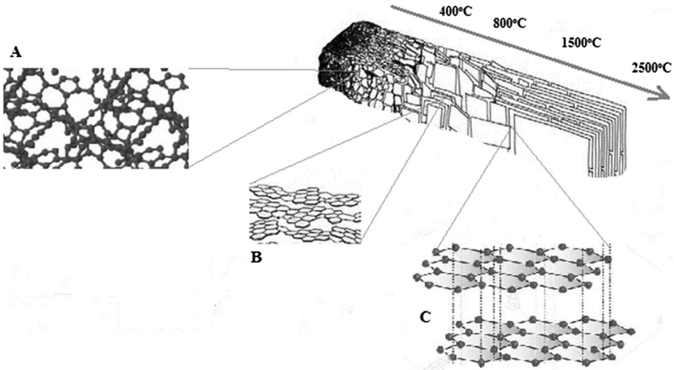
- The review states that higher pyrolysis temperature increases specific surface area and porosity, while decreasing CEC and volatile matter; it also notes that biochar produced at 600–700 °C is highly aromatic with well-organized C layers.
- Feedstock type strongly affects properties: biochars from animal litter and solid waste tend to have lower surface area, carbon content, and volatile matter, but higher CEC than those from crop residue and wood biomass.
- The paper reports several example values showing feedstock differences, e.g. wood biochar surface area 127.0 m²/g versus straw biochar 22.0 m²/g, green waste 46.0 m²/g, and algae 19.0 m²/g; and CEC 57.5 cmol/kg for algal biochar and 48.4 cmol/kg for poultry litter biochar at 500 °C.
Methods
- Review article synthesizing prior studies on biochar production and properties; no new experimental dataset was collected.
- The paper compares literature on the effects of pyrolysis temperature and feedstock kind on biochar physicochemical characteristics, and on resulting effects in soil.
- It draws on reported values from earlier studies and tables summarizing prior experiments and observed property ranges.
Limitations
- The paper does not report a systematic search strategy, study selection criteria, or meta-analytic methods; this is evident from the text, which presents a narrative review rather than a formal systematic review.
- The paper repeatedly notes that results vary by biomass and pyrolysis conditions, so many conclusions are broad generalizations across heterogeneous studies; this is evident from the text.
- Not stated in the paper.
Model-written summary. Check it against the paper before relying on it.
Integrity signals
Registry
Cites
Statistics
Figures

Verification
Claims the paper makes
28 Valid · 5 Not valid · 100 Not checked · 23 Own results and interpretations
At least one cited source doesn’t support this claim or points to a different paper, and none confirmed it — see the verdicts below.
In the paper
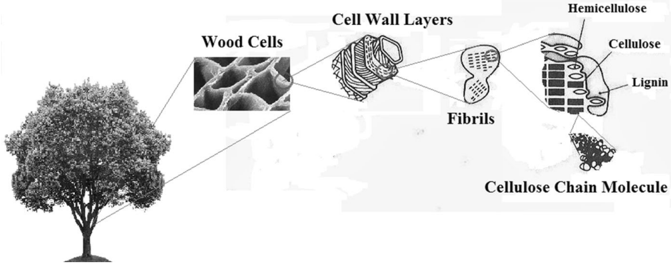
“Woody biomass often has higher cellulose, hemicellulose and lignin contents (Fig. 4) than biomass from herbaceous or grass species”
§ Biochar physicochemical properties: pyrolysis temperature and feedstock kind effects > 3.1 Volatile matter, carbon content and ash content
What the sources say
- Disputedcites Keiluweit et al. 2010 matched to “Dynamic Molecular Structure of Plant Biomass-Derived Black Carbon (Biochar)” (2010) sourceExperimental — accuracy not yet measured
The NEXAFS section attributes higher lignin content to woody material, but the Comparison of Precursor Materials section suggests grass has higher hemicellulose content—the opposite of the claim for that component. The cited passages do not establish that woody biomass has higher cellulose content. (LLM, conf=0.88)
Checked by a reasoning model — may be wrong.
- Not checked — no full text of the sourcecites Lupoi and Smith 2012 matched to “Characterization of Woody and Herbaceous Biomasses Lignin Composition with 1064 nm Dispersive Multichannel Raman Spectroscopy” (2012) source
hedgedstates an association- Asserted: passes — The authors put it forward as true.
- Checkable: passes — It can be checked against evidence.
- Load-bearing: unclear — It is unclear whether the paper’s conclusions depend on it.
- Based: passes — The paper gives a reason why it holds.
- Disputed
The cited sources support only part of this claim — read each source’s verdict below.
In the paper
“Numerous studies have proven that biochar increases the ability of soil to adsorb heavy metals and other contaminants, which is important for environmental protection and management”
- Also stated in: § 4.2 Inorganic and organic contaminates in soil · boosted
“Numerous studies have proven that biochar increases the ability of soil to adsorb heavy metals and other contaminants, which is important for environmental protection and management (Tomczyk et al. 2019;Wei et al. 2018).”
What the sources say
- Partly supportedcites Tomczyk et al. 2019 matched to “Biochar efficiency in copper removal from Haplic soils” (2019) sourceExperimental — accuracy not yet measured
The section ‘Amount of Cu adsorption on the soils as a function of biochar dose and pH value’ reports that adding biochar increased copper adsorption in the soils tested. The Conclusion limits the finding to copper in sandy and loess Haplic soils, with effective immobilization at acidic pH; it does not establish increased soil adsorption of other contaminants generally. (LLM, conf=0.86)
- Not checked — no full text of the sourcecites Wei et al. 2018 matched to “Biochar-based functional materials in the purification of agricultural wastewater: Fabrication, application and future research needs” (2018) source
boostedstates a cause- Asserted: passes — The authors put it forward as true.
- Checkable: passes — It can be checked against evidence.
- Load-bearing: passes — The paper’s conclusions depend on it.
- Based: passes — The paper gives a reason why it holds.
- Also stated in: § 4.2 Inorganic and organic contaminates in soil · boosted
The sources with a verdict support this claim; the rest weren’t checked yet, have no full text we could read, or their verdicts aren’t rated yet.
In the paper
“The pyrolysis temperature is strongly correlated with changes in the structure and physicochemical properties of biochar”
§ Biochar physicochemical properties: pyrolysis temperature and feedstock kind effects > 2 Effects of pyrolysis temperature
What the sources say
- Not checked — no full text of the sourcecites Asadullah et al. 2007 matched to “Production of bio-oil from fixed bed pyrolysis of bagasse” (2007) source
- Not checked — no full text of the sourcecites Chen et al. 2008 matched to “Transitional Adsorption and Partition of Nonpolar and Polar Aromatic Contaminants by Biochars of Pine Needles with Different Pyrolytic Temperatures” (2008) source
- Supportedcites Jindo et al. 2014 matched to “Physical and chemical characterization of biochars derived from different agricultural residues” (2014) source
The Conclusions state that pyrolysis temperature strongly influences biochar physicochemical properties. Section 3.4 also describes temperature-dependent changes in chemical composition and structure, supporting the structural part of the claim. (LLM, conf=0.93)
boostedstates an association- Asserted: passes — The authors put it forward as true.
- Checkable: passes — It can be checked against evidence.
- Load-bearing: passes — The paper’s conclusions depend on it.
- Based: passes — The paper gives a reason why it holds.
The cited sources support only part of this claim — read each source’s verdict below.
In the paper
“This was observed because the increasing temperature resulted in further cracking of the volatile fractions into low-molecular-weight liquids and gases instead of biochar”
§ Biochar physicochemical properties: pyrolysis temperature and feedstock kind effects > 2.3 Volatile matter
What the sources say
- Partly supportedcites Ronsse et al. 2012 matched to “Production and characterization of slow pyrolysis biochar: influence of feedstock type and pyrolysis conditions” (2013) sourceExperimental — accuracy not yet measured
The Discussion (page unavailable in our copy) reports that biochar’s volatile matter content declined as pyrolysis severity increased. The Proximate analysis section describes progressive devolatilization, and the Introduction identifies liquid and gaseous pyrolysis products. The paper does not establish the more specific explanation that volatile fractions underwent further cracking into low-molecular-weight liquids and gases instead of biochar. (LLM, conf=0.86)
plainstates a cause- Asserted: passes — The authors put it forward as true.
- Checkable: passes — It can be checked against evidence.
- Load-bearing: unclear — It is unclear whether the paper’s conclusions depend on it.
- Based: passes — The paper gives a reason why it holds.
- Partly supported
Every source the paper cites for this claim was checked and supports it.
In the paper
“increased pyrolysis temperature caused an increase of 5.7-18.7% in ash content”
§ Biochar physicochemical properties: pyrolysis temperature and feedstock kind effects > 2.4 Carbon content and ash content
What the sources say
- Supportedcites Rafiq et al. 2016 matched to “Influence of Pyrolysis Temperature on Physico-Chemical Properties of Corn Stover (Zea mays L.) Biochar and Feasibility for Carbon Capture and Energy Balance” (2016) source
Table 2 in Results and Discussion §4.1 reports ash content of 5.7%, 12.5%, and 18.7% at pyrolysis temperatures of 300°C, 400°C, and 500°C, respectively. The figures describe ash content rising from 5.7% to 18.7%, rather than a percentage increase of that magnitude. (LLM, conf=0.91)
plainstates a cause- Asserted: passes — The authors put it forward as true.
- Checkable: passes — It can be checked against evidence.
- Load-bearing: unclear — It is unclear whether the paper’s conclusions depend on it.
- Based: passes — The paper gives a reason why it holds.
- Supported
82 more claims · 15 with their cited sources checked
Create a free account to see all 156 claims and to verify the 11 references still open.
- It may state two separate claims as one. 60
- Probably not a substantial claim. 13
Claims other papers make about this one
Each is checked against this paper’s own text: does it say what the citing paper says it does?
The source backs part of the claim, not all of it — or backs it for a different population, condition or comparison.
In the citing paper
“For example, biochar with a high CEC retains more nutrients in soil by reducing nutrient loss through leaching (Tomczyk et al. 2020).”
From Biochar and its importance on nutrient dynamics in soil and plant (2020) · cites this paper as Tomczyk et al. 2020
Experimental — accuracy not yet measuredThe cited source says what the claim attributes to it.
In the citing paper
“the P and K contents increase due to an increase in ash content (Christel et al. 2016;Tomczyk et al. 2020;Wang et al. 2013).”
From Biochar and its importance on nutrient dynamics in soil and plant (2020) · cites this paper as Tomczyk et al. 2020
The cited source says what the claim attributes to it.
In the citing paper
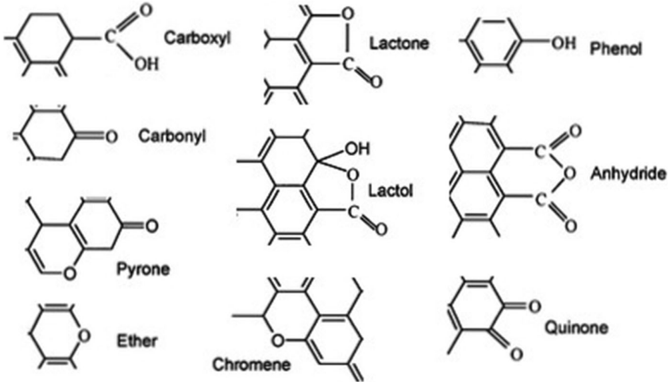
“The CEC of biochar is attributed to the generation of various functional groups, such as carboxyl and hydroxyl groups, during the pyrolysis of biomass (Tomczyk et al. 2020).”
From Biochar and its importance on nutrient dynamics in soil and plant (2020) · cites this paper as Tomczyk et al. 2020
In the citing paper
“Biochar also showed a positive impact on surface area of soil (Anawar et al. 2015), which varied with biochar types (Tomczyk et al. 2020).”
From Biochar and its importance on nutrient dynamics in soil and plant (2020) · cites this paper as Tomczyk et al. 2020
Citations
Cites
Pyrolysis of Wood/Biomass for Bio-oil: A Critical Review
Mohan, D., Pittman, C. U., & Steele, P. H. (2006) · Energy & Fuels · doi:10.1021/ef0502397 · Cited by 5,663
Biochar effects on soil biota – A review
Lehmann, J., Rillig, M. C., Thies, J., Masiello, C. A., Hockaday, W. C., & Crowley, D. (2011) · Soil Biology and Biochemistry · doi:10.1016/j.soilbio.2011.04.022 · Cited by 5,074
Biochar as a sorbent for contaminant management in soil and water: A review
Ahmad, M., Rajapaksha, A. U., Lim, J. E., Zhang, M., Bolan, N., Mohan, D., Vithanage, M., Lee, S. S., & Ok, Y. S. (2014) · Chemosphere · doi:10.1016/j.chemosphere.2013.10.071 · Cited by 4,662 · cited 4×
“As a result, the structure of biochar appears to have more organized C layers (like graphene structure) and less content of surface functional groups when pyrolysis temperature increases (Ahmad et al. 2014b).”
BackgroundInfluentialDynamic Molecular Structure of Plant Biomass-Derived Black Carbon (Biochar)
Keiluweit, M., Nico, P. S., Johnson, M. G., & Kleber, M. (2010) · Environmental Science & Technology · doi:10.1021/es9031419 · Cited by 3,230
Bio-char Sequestration in Terrestrial Ecosystems – A Review
Lehmann, J., Gaunt, J., & Rondon, M. (2006) · Mitigation and Adaptation Strategies for Global Change · doi:10.1007/s11027-005-9006-5 · Cited by 3,053
Structure Determination of Organic Compounds
Pretsch, E., Bühlmann, P., & Affolter, C. (2000) · Springer eBooks · doi:10.1007/978-3-662-04201-4 · Cited by 3,026
Biochar for environmental management: science and technology
(2009) · Choice Reviews Online · doi:10.5860/choice.47-0296 · Cited by 2,949
Glaser, B., Lehmann, J., & Zech, W. (2002) · Biology and Fertility of Soils · doi:10.1007/s00374-002-0466-4 · Cited by 2,890 · cited 3×
“However, Glaser et al. (2002) reported that Amazonian charcoal-rich anthrosols had a field water retention capacity 18.0% higher than that of surrounding soil without charcoal.”
BackgroundInfluentialSustainable biochar to mitigate global climate change
Woolf, D., Amonette, J. E., Street-Perrott, F. A., Lehmann, J., & Joseph, S. (2010) · Nature Communications · doi:10.1038/ncomms1053 · Cited by 2,680
Compant, S., Clément, C., & Sessitsch, A. (2010) · Soil Biology and Biochemistry · doi:10.1016/j.soilbio.2009.11.024 · Cited by 2,318
Research works printed but not linked: 10
- 39. Chen T, Zhang Y, Wang H, Lu W, Zhou Z, Zhang Y, Ren L (2015) Influence of pyrolysis temperature on characteristic and heavy metal adsorptive performance of biochar derived from municipal sewage sludge. Bioresour Technol 164:47-54 · DOI · Paper page
- 51. Denyes MJ, Parisien MA, Rutter A, Zeeb BA (2014) Physical, chemical and biological characterization of six biochar produced for the remediation of contamined soils. J Vis Exp 93:52183
- 56. Duong VT, Khanh NM, Nguyen NH, Phi NN, Nquyen T-C, Xo DH (2017) Impact of biochar on the water holding capacity and moisture of basalt and grey soil. J Sci Ho Chi Minh City Open Univers 7:36-43
- 58. El-Gamal E, Saleh M, Elsokkary I, Rashad M, Abd El-Latif MM (2017) Comparison between properties of biochar pro- duced by traditional and controlled pyrolysis. J Alex Sci Exch 38:413-424
- 66. Gerlach H (2014) Biochar in poultry farming. The Biochar Journal, Arbaz, Switzerland, www.biocharjournal.org/en/ ct/10
- 71. Guo M, Shen Y, He Z (2012) Poultry litter-based biochar: preparation, characterization, and utilization. In: He Z (ed) Applied research in animal manure management: chal- lenges and opportunities beyond the adverse environmental impacts. Nova Science Publishers, Hauppauge, NY, pp 171-202
- 114. Lewandowski W, Radziemska M, Ryms E, Ostrowski P (2010) Nowoczesne metody termochemiczne konwersji biomasy w paliwa gazowe, ciekłe i stałe. Proceedings of ECOpole 4 (2) (in Polish)
- 128. Malin ´ska K (2012) Biowe ˛giel odpowiedzia ˛na aktualne problem ochrony s ´rodowiska. In_ zynieria i ochrona s ´rodowiska 15:387-403 (in Polish)
- 203. Woolf D (2008) Biochar as a soil amendment: a review of the environmental implications. Swansea University, School of the Environment and Society. http://orgprints.org/13268
- 215. Yu H, Zhang Z, Li Z, Chen D (2014) Characteristic of tar for- mation during cellulose, hemicellulose and lignin gasifi- cation. Fuel 118:25-256
Cited by
Items 2,501–2,600 of 2,909
Prasad, N., Prabhakar, M. R., Liu, C., et al. (2025) · Environmental Science Water Research & Technology · doi:10.1039/d5ew00768b
Straw Ash-Derived Black Charcoal Particles: Insights into Potassium Release and Transport MechanismsPreprint
Su, L., Peng, Y., Tan, Y., Chen, Y., Xiang, B., Xie, K., Zhang, F., & Zhou, N. (2025) · SSRN Electronic Journal · doi:10.2139/ssrn.5653611
Food waste management by pyrolysis
Chilakamarry, C. R., Khilji, I. A., & Satyavolu, J. V. (2025) · Elsevier eBooks · doi:10.1016/b978-0-443-36302-3.00016-9
Kim, S.-W., Hong, Y., & Kim, J.-S. (2025) · SSRN Electronic Journal · doi:10.2139/ssrn.5659262
Hidalgo, M. C., Alcalá, M. D., Navío, J. A., et al. (2025) · International Journal of Molecular Sciences · doi:10.3390/ijms262110451
“However, at higher pyrolysis temperatures, the internal structure breaks down and the surface area decreases [15].”
Agricultural Waste Biomass-Derived Biochar for Water Purification Application: A Review
合日班·麦麦提, 米. (2024) · Hans Journal of Soil Science · doi:10.12677/hjss.2024.122005
Biochar: a journey from waste valorization to microplastic decontamination
Chourasia, A., Das, A., & Mitra, S. (2025) · Elsevier eBooks · doi:10.1016/b978-0-443-29078-7.00017-4
Management of water, energy, and food nexus for cleaner production in arable lands
Sebastian, A., Hussain, A., Martin, E. M., et al. (2025) · Elsevier eBooks · doi:10.1016/b978-0-443-22320-4.00026-8
Tantavoranart, S., Saricheewin, K., Siriratsakul, K., & Khum-in, V. (2025) · Environmental Science and Pollution Research · doi:10.1007/s11356-025-37175-9
“The unique characteristics of BC, such as its porous structure, surface functional groups, and large specific surface area, significantly contribute to its exceptional pollutant removal capabilities (Qiu et al. 2022; Tomczyk et al. 2020).”
Thanvisitthpon, N. T., Thanasiratheerachai, P., & Homhuan, S. (2025) · SSRN Electronic Journal · doi:10.2139/ssrn.5766178
Nyam, T. T., Ayeleru, O. O., Ramatsa, I. M., & Olubambi, P. A. (2025) · Energy 360. · doi:10.1016/j.energ.2025.100049 · Cited by 2
Biochar assessment through integration of heuristic Bayesian with chemical simulator
Dhaundiyal, A., Madár, V., Tewari, P. C., & Toth, L. (2025) · Results in Engineering · doi:10.1016/j.rineng.2025.108287 · Cited by 1
Innovation ecosystem in agriculture economy
Suberi, H. K. (2025) · Energy Nexus · doi:10.1016/j.nexus.2025.100603 · Cited by 1
Sustainability Trade-offs in Biochar Production
Kosteviča, V., Kubule, A., Vamža, I., Irbe, T., Rošā, M., & Blumberga, D. (2025) · Environmental and Climate Technologies · doi:10.2478/rtuect-2025-0057 · Cited by 1
“When biochar is produced from sewage sludge or the organic matter of urban waste, it must be considered that this biomass can saturate high concentrations of heavy metals or other toxic chemicals, which limit biochar use as soil amendment technology [14], [15].”
InfluentialBianasari, A. A., Bakar, M. S. A., Khaled, M. S., Saepurahman, S., Mansur, D., & Азад, А. К. (2025) · International Journal of Renewable Energy Development · doi:10.61435/ijred.2026.61234 · Cited by 1
“Furthermore, the capacity to decrease the amount of volatile matter and enhance the concentration of fixed carbon leads to an elevated energy content in the bio-char (Hendrix et al., 2024; Tomczyk et al., 2020).”
La Terra Preta de Índio: una reflexión ancestral para la enseñanza contemporánea de la química
Villarreal, A., Villarreal, R. B., Ortiz-Moreno, H., & Cuevas, R. (2025) · Educación Química · doi:10.22201/fq.18708404e.2025.4.91836e
Shafizadeh, A., Kargaran, E., Madadi, M., Najafi, N., & Elsayed, M. (2025) · SSRN Electronic Journal · doi:10.2139/ssrn.5827741
Thanvisitthpon, N. T., & Thanasiratheerachai, P. (2025) · SSRN Electronic Journal · doi:10.2139/ssrn.5828030
Carmona, I. N., de Carvalho, F. A. N., Manjate, M. J., da Silva, K. C. A., Pereira, A. K. S., & Júnior, A. F. D. (2025) · Next research. · doi:10.1016/j.nexres.2025.101190
Baars, T. F., Abels, H. A., Dieudonné, A.-C., Hanssler, J. B., & Geiger, S. (2025) · International journal of greenhouse gas control · doi:10.1016/j.ijggc.2025.104539 · Cited by 1
Emerging applications of biochar in wastewater treatment and anaerobic digestion
Jadhav, S., Bot, A., Pattnaik, F., Das, B., Nanda, S., & Dalai, A. K. (2025) · Elsevier eBooks · doi:10.1016/b978-0-443-27564-7.00006-5
Biochar for carbon sequestration and greenhouse gas mitigation
Sivaramakrishnan, S., & Shrinithivihahshini, N. D. (2025) · Elsevier eBooks · doi:10.1016/b978-0-443-43794-6.00011-3
Opportunities, challenges, and future thrust areas
Sivaramakrishnan, S., & Shrinithivihahshini, N. D. (2025) · Elsevier eBooks · doi:10.1016/b978-0-443-43794-6.00012-5
Practical guidelines for biochar implementation
Sivaramakrishnan, S., & Shrinithivihahshini, N. D. (2025) · Elsevier eBooks · doi:10.1016/b978-0-443-43794-6.00003-4
Tackling nitrogen pollution in water streams using chemically modified biochar
Samberger, C. (2025) · Elsevier eBooks · doi:10.1016/b978-0-443-27352-0.00012-4
Scaling up nitrogen management using biochar to mitigate soil pollution
Kaushal, S., Sharma, R., Thakur, N., & Kumar, K. (2025) · Elsevier eBooks · doi:10.1016/b978-0-443-27352-0.00002-1
Zhou, Q. F., Wang, T., & Hu, Q. (2025) · World Journal of Microbiology and Biotechnology · doi:10.1007/s11274-025-04729-5
“Biochar (BC) is a porous carbonaceous material produced by high-temperature pyrolysis of biomass under anaerobic or anoxic conditions, with high specific surface area, rich functional groups, and good structural stability (Tomczyk et al. 2020).”
Yang, Y., Ahmed, W., Wang, G., et al. (2024) · Figshare · doi:10.6084/m9.figshare.26241190
Wang, C., Fang, Z., Chen, H., Chen, J., Han, Q., LIU, J., Leng, Y., Guo, Y., Gao, Y., & Wang, H. (2025) · SSRN Electronic Journal · doi:10.2139/ssrn.5536909
Mahapatra, B., Kar, A. K., Pattanaik, A., Nayak, R. R., Mahanty, A., Munda, S., Pandit, E., Bhattacharyya, P., Mohapatra, S. D., & Adak, T. (2025) · SSRN Electronic Journal · doi:10.2139/ssrn.5537514
Date palm waste biochar: Production techniques and their effects on soil properties and plant growth
Isukapalli, M., Hodson, M. E., & Matharu, A. S. (2025) · Elsevier eBooks · doi:10.1016/b978-0-443-29023-7.00012-4
Adsorption of Lead (Pb2+) Using Biochar Derived from Bamboo Waste Pyrolysis
Mufandi, I., Kholis, M. N., Hamawi, M., Ar, M. T., & Kusuma, H. A. (2025) · Jurnal Ilmu Lingkungan · doi:10.14710/jil.23.5.1205-1212
Biogeoquímica de arsênio e chumbo em sedimento e água condicionado com biocarvão
Soares, M. B. (2023) · LA Referencia (Red Federada de Repositorios Institucionales de Publicaciones Científicas)
Coral Skeleton-Alginate-Biochar Bead: A Modified Adsorbent for Cu(II) RemovalPreprint
Wijaya, A. R., Roiniah, U. N., Zainul, R., et al. (2025) · SSRN Electronic Journal · doi:10.2139/ssrn.5779311
Wei, J., Jiang, J., Zeng, Q., Jiang, Y., & Yu, H. (2025) · Acta Horticulturae · doi:10.17660/actahortic.2025.1440.67
Gholamahmadi, B., Bastos, A. C., Jongen, M., Simões, L., Jelinčić, A., Caetano, A. L., Domingos, T., & VERHEIJEN, F. G. A. (2025) · SSRN Electronic Journal · doi:10.2139/ssrn.5884816
БІОВУГІЛЛЯ З АГРОВІДХОДІВ: ТЕХНОЛОГІЇ СТАЛОГО РОЗВИТКУ
Мазурак, О., Мазурак, І., Разанова, А., & Ковалів, Ю. (2025) · Bulletin of Lviv National Environmental University Agronomy · doi:10.31734/agronomy2025.29.037 · Cited by 1
Mutamima, A., Sunarno, S., Bahri, S., et al. (2025) · E3S Web of Conferences · doi:10.1051/e3sconf/202567802002
Hong, S.-Y., Kim, M.-G., Kim, D.-M., Hong, S.-Y., Kim, H.-Y., Heo, S.-J., Kim, K.-S., & Kim, H.-S. (2025) · Korean Journal of Environmental Agriculture · doi:10.5338/kjea.2025.44.47
“목질계 바이오차는 비표면적과 기공 부피가 커 수분 유지와 양분 흡착에 유리하고 [3], 가축분 바이오차는 양분 함량이 높아 질소와 인을 공급하며 토양 비옥도를 향상시킨다 [4].”
Nutrient conversion during the fertilization of rice straw: Pyrolysis versus fermentation
Liu, L., Luo, Q., Wen, Y., Wei, S., Zhang, S., Sun, N., Qin, R., Yang, W., Xiang, Z., Hu, L., et al. (2025) · Journal of Analytical and Applied Pyrolysis · doi:10.1016/j.jaap.2025.107556
Biochar-assisted nitrogen reduction improves resource efficiency at the expense of rice yield
Lipi, N. J., RASHID, M. H., Samanta, S. C., et al. (2025) · Sains Tanah - Journal of Soil Science and Agroclimatology · doi:10.20961/stjssa.v22i2.102413
“However, the physicochemical properties of biochar vary significantly based on production conditions and the feedstock used in its production (Baquy et al., 2022; Septiana et al., 2018; Tomczyk et al., 2020).”
Elaigwu, S. E., Adimula, V. O., & Awode, A. U. (2025) · Solid Fuel Chemistry · doi:10.3103/s0361521925600051
Study of the Pyrolysis Process of Spent Coffee Grounds Using Thermogravimetric Analysis
Pudova, Y. D., & Крысанова, К. О. (2025) · Solid Fuel Chemistry · doi:10.3103/s0361521925700326
de Almeida, Y. A., dos Santos, M. V. Q., Granja, H. S., Eguiluz, K. I. B., Sussuchi, E. M., Salazar-Banda, G. R., & Gimenez, I. F. (2025) · Chemosphere · doi:10.1016/j.chemosphere.2025.144817
Mondal, G., Banerjee, S., Chakraborty, S., Charan, K., & Bhattacharyya, P. (2026) · Environmental Science Nano · doi:10.1039/d5en00790a
Optimized In-Situ transesterification of spirogyra using KOH-activated wheat straw biochar catalyst
Jain, S. (2025) · Results in Engineering · doi:10.1016/j.rineng.2025.108896 · Cited by 3
Impact of Carbon-Based Biochar Application on Red Pepper Yield and Soil Carbon Sequestration
Yun, Y., Cho, Y.-G., Lee, J. S., Choi, S.-H., Kim, S., Ju, J., Lee, J.-H., & Lee, K. (2025) · Agronomy · doi:10.3390/agronomy16010084
О возможности применения биоугля с микробным компонентом для рекультивации нефтезагрязнённых почв
Вячеславовна, К. А., Богатыренко, Е. А., Dunkai, T. I., & Nesterova, О. (2025) · Известия Дальневосточного федерального университета. Экономика и управление · doi:10.24866/2311-2271/2025-3/2098
Solekhah, B. A., Priyadarshini, R., & Maroeto, M. (2026) · Journal of Degraded and Mining Lands Management · doi:10.15243/jdmlm.2026.131.9645
Biochar-Based Fertilizers: A New Approach to Sustainable Soil Management
Botirova, D., Zakirova, S., Soipova, M., & Egamberdieva, D. (2026) · Microorganisms for sustainability · doi:10.1007/978-981-95-3989-5_1
A study on the products from co-pyrolysis of fruit waste with high density polyethylenePreprint
Nooh, A., Gautam, R., Giri, S., Guevara, E., & Sarathy, S. M. (2026) · SSRN Electronic Journal · doi:10.2139/ssrn.6016660
Vukićević, E., Gajica, G., Isailović, J., Jakšić, S., Antić, V., Schwarzbauer, J., & Jovančićević, B. (2026) · Waste Management & Research The Journal for a Sustainable Circular Economy · doi:10.1177/0734242x251405969 · Cited by 1
“These differences are primarily attributed to the composition of biomass, particularly the content of lignin and cellulose (Tomczyk et al., 2020).”
David, A. O., Mellem, J. J., Paul, V., Naidoo, K., & Gounden, A. (2026) · Cogent Food & Agriculture · doi:10.1080/23311932.2025.2611192
Durability concerns of biochar in low-carbon concrete
Xu, W., Zhu, X., & Tsang, D. C. W. (2026) · Elsevier eBooks · doi:10.1016/b978-0-443-22037-1.00018-5
Biochar-carried bacteria for self-healing concrete
Su, Y., Qu, F., Zhang, C., Zhu, X., & Tsang, D. C. W. (2026) · Elsevier eBooks · doi:10.1016/b978-0-443-22037-1.00001-x
Zhu, Y., Yang, W., Ren, Y., Li, J., Zhao, Y., Wang, D. G., & Chen, G. (2026) · SSRN Electronic Journal · doi:10.2139/ssrn.6048889
Sefatlhi, K. L., Kgakishi, N. B., Ultra, V. U., Majoni, S., Oleszek, S., Trust Manyiwa, Ishmael, G., & Gaothobogwe, K. (2026) · International Journal of Environmental Research · doi:10.1007/s41742-025-01024-x
“Choosing appropriate feedstock assures good adsorption mechanisms and efficancy of the subse - quent biochars (Tomczyk et al. 2020).”
Song, J., Wang, X., Liu, X., et al. (2026) · SSRN Electronic Journal · doi:10.2139/ssrn.6056744
Mandumbu, R., Parwada, C., Matema, E., Gadzirayi, C. T., & Mafuse, N. (2026) · Sustainability Sciences in Asia and Africa · doi:10.1007/978-981-95-6009-7_13
Rex, P., Rahiman, M. K., & Meenakshisundaram, N. (2026) · Elsevier eBooks · doi:10.1016/b978-0-443-40447-4.00003-7
Manore, D., Gizachew, S., & Ayalew, T. (2026) · Air Soil and Water Research · doi:10.1177/11786221261417562 · Cited by 1
Jianghai, W. A. N. G., Ngaba, M. J. Y., Rennenberg, H., & Hu, B. (2026) · Pedosphere · doi:10.1016/j.pedsph.2026.01.019
Carbonate-functionalized biochar: Transforming self-captured CO2 into mortar innovation
Sultana, R., Zhang, S., & Poon, C. S. (2026) · Cement and Concrete Composites · doi:10.1016/j.cemconcomp.2026.106504
Biochar Application in Metal Contaminated Soil Enhances Soil Biological Properties and Rice Yield
Mukherjee, S., Singh, S. K., Patra, A., Jatav, H. S., & Chatterjee, D. (2026) · Water Air & Soil Pollution · doi:10.1007/s11270-026-09133-9
“The reason behind the enhancement of surface area of biochar with modification might be due to the gradual degeneration and removal of pore-blocking volatile organic compounds (Zhang et al., 2021), forming vesicular amorphous carbon structures and expanding microporosity (Tomczyk et al., 2020).”
Valorization of Grape Waste for Sustainable Mushroom Cultivation
Ghosh, S., Nongmaithem, B. D., Arivazhagan, S., & Kalpna, C. A. (2026) · Food science and nutrition · doi:10.5772/intechopen.1014087 · Cited by 1
Herbal honey, uses, and future perspectives
Jaryal, R. K., & Thakur, A. (2026) · Elsevier eBooks · doi:10.1016/b978-0-443-34147-2.00018-8
A critical review on carbon materials from oil sludges: Activation, application and future prospects
Hu, H., Han, L., Qu, C., Ma, Y., Yu, T., & Ma, L. (2026) · Environmental Progress & Sustainable Energy · doi:10.1002/ep.70304
Straw ash-derived black carbon particles: Insights into potassium release and transport mechanisms
Su, L., Peng, Y., Tan, Y., Chen, Y., Xiang, B., Xie, K., Zhang, F., & Zhou, N. (2026) · Waste Management · doi:10.1016/j.wasman.2026.115375
Choukoud, A., Farissi, H. E., Abdelouahed, L., Tahani, A., & Talhaoui, A. (2026) · Fuel Processing Technology · doi:10.1016/j.fuproc.2026.108410 · Cited by 1
Obakanure, S. O., Agboola, E., Tayo, B. A., Faloye, O. T., & Ajayi, A. E. (2026) · Engineering innovations · doi:10.4028/p-4ehwuu
“Biochar from slow pyrolysis also holds potential as a biofuel and soil enhancer [8].”
Research Progress of Biochar Removal of Heavy Metal Ions from Wastewater
苏, 锦. (2026) · International Journal of Ecology · doi:10.12677/ije.2026.151003
Suriadi, A., Hadiawati, L., Khaerana, Wiguna, G., Sumarsono, J., Arifin, Z., Fahrudin, & Syarifinnur (2026) · IOP Conference Series Earth and Environmental Science · doi:10.1088/1755-1315/1584/1/012005
Beyond salt stress: Unlocking the potential of sugar beet in saline environments
Assaf, T., & Alrosan, M. (2025) · Advances in Horticultural Science · doi:10.36253/ahsc-18253
“…ti cularly compost, biochar, and humic substances have recently garnered considerable a tt en ti on as eco friendly strategies for sustaining soil quality through the improvement of physicochemical proper ti es (Tomczyk et al ., 2020; Su et al ., 2022; Abdou et al ., 2023; Abdou et al. , 2024).”
Carbon from Methane Plasmalysis in Agriculture: from Low-emission Hydrogen to Soil-health
Prohaska, T., Zahra, N. A., Obenaus-Emler, R., & Wagner, S. (2026) · BHM Berg- und Hüttenmännische Monatshefte · doi:10.1007/s00501-026-01712-x
DONKOR, N., & Gupta, R. (2026) · SSRN Electronic Journal · doi:10.2139/ssrn.6233359
Lavanya, R., & Kumar, D. V. (2026) · Results in Engineering · doi:10.1016/j.rineng.2026.109615
Derbilova, D. S., Delarue, F., Thiesson, J., Aubertin, M., Malou, O. P., Anquetil, C., Oslisly, R., Braun, J., & de Saulieu, G. (2026) · Organic Geochemistry · doi:10.1016/j.orggeochem.2026.105157
Kurniawan, I. S., Rizaldi, T., Nainggolan, I. M., et al. (2026) · IOP Conference Series Earth and Environmental Science · doi:10.1088/1755-1315/1583/1/012030
Wang, M., Zhang, J., Zhang, J., Wu, S., Ou, S., Shen, C., Li, Z., Zhang, C., & Zhang, J. (2026) · Molecules · doi:10.3390/molecules31050765 · Cited by 2
Sheng, M., Tian, T., Cheng, Z., Zi, S., Li, P., Zhu, W., Li, Y., & Guo, H. (2026) · Journal of Environmental Management · doi:10.1016/j.jenvman.2026.129101 · Cited by 2
Billa, S. F., Yemo, Y. N., Mesame, N. L., Levai, L. D., Efombagn, I. B. M., Ngome, F. A., & Ayongwa, G. C. (2026) · Greener Journal of Agricultural Sciences · doi:10.15580/gjas.2026.1.020226020
“Studies such as Tomczyk et al. (2020) confirm that biochar’s high specific surface area readily adsorbs organic molecules.”
InfluentialFrom waste to growth: unveiling the untapped potential of biochar in aquafeeds
Lima, P. C., Mahmoudi, N., Bivareh, M., Emerenciano, M. G. C., & Rombenso, A. (2026) · Critical Insights in Aquaculture · doi:10.1080/29932181.2025.2607790
Sruthi, V. S., Kumar, J. A., & Sahith, V. N. (2026) · Asian Journal of Chemistry · doi:10.14233/ajchem.2026.35248
A., D. X., M., T. B., & D., U. (2026) · Advances in Science and Sustainability · doi:10.70728/susta.v02.i04.001
Graphene and related nanomaterials in EMW shielding
Syrgiannis, Z., Gkikas, I. N., Tariq, N., Spanopoulos, I., Khan, Z. I., & Jovanović, S. (2026) · Elsevier eBooks · doi:10.1016/b978-0-443-36630-7.00002-8 · Cited by 1
Thanvisitthpon, N. T., & Thanasiratheerachai, P. (2026) · Journal of Hazardous Materials Advances · doi:10.1016/j.hazadv.2026.101113 · Cited by 1
Gao, J., Wu, Y. Z., Lv, G., et al. (2026) · ChemNanoMat · doi:10.1002/cnma.202500634
Mollick, M., Cortazar, M., Santamaria, L., et al. (2026) · SSRN Electronic Journal · doi:10.2139/ssrn.6379685
Biochar for Soil Acidity Mitigation and Agricultural Sustainability: A Review
Khan, Z., Hassan, J., Jaafar, A. A. K., Ali, A., Farid, L., Faheem, J., Tabassum, A., & Rahimi, M. (2026) · Eurasian Soil Science · doi:10.1134/s1064229325603099 · Cited by 1
Santiago, P. Q., da Silva, L. C., de Sousa, E. F., Sousa, J. P., Medeiros, S. L. S., Rios, M. A. D. S., & Nogueira, R. E. F. Q. (2026) · Processes · doi:10.3390/pr14060905
Performance and Environmental Assessment of a Continuous Biochar Pyrolysis SystemPreprint
Nguyen, P. M., Li, H., & Chang, C.-L. (2026) · SSRN Electronic Journal · doi:10.2139/ssrn.6410087
Zaharioiu, A. M., Tanislav, O. M., Constantinescu, M., Roman, A., Bucura, F., Niculescu, V.-C., Oancea, S., & Marin, F. (2026) · Agriculture · doi:10.3390/agriculture16060659
Eremed, W. B. (2026) · Trees Forests and People · doi:10.1016/j.tfp.2026.101229 · Cited by 3
Jadhav, S. K., Khura, T. K., Parray, R. A., Sahoo, P. K., Meena, M. C., Lande, S. D., Kumar, S., Sarkar, S., & Nigam, S. (2026) · Journal of Agricultural Engineering (India) · doi:10.52151/jae2026631.1992
Design of Functionalized Biochars for Dual Wastewater Treatment and Fertilizer Production
Pantoja, F., Beszédes, S., Gyulavári, T., Illés, E., Kozma, G., & László, Z. (2026) · Water · doi:10.3390/w18060717
Shi, E., Tang, J., Chu, M., et al. (2026) · SSRN Electronic Journal · doi:10.2139/ssrn.6459671
Mustaffa, M. R. A. F., Pandian, K., Vijayakumar, S., Govindaraj, S., Gajendiran, M., Varanasi, S. T., & Prince, A. J. (2026) · Journal of soil science and plant nutrition · doi:10.1007/s42729-026-03183-y · Cited by 1
Pawar, A., Panwar, N. L., Wakchaure, G. C., & Singh, D. (2026) · SSRN Electronic Journal · doi:10.2139/ssrn.6459426
Sustainable remediation of antibiotic contaminants using engineered biochar and composite materials
Kumar, A., Sunar, P., Ramamoorthy, D., Dutta, S., Verma, R., Jaiswal, K. S., Jaiswal, K. K., Kumar, V., Jaiswal, A. K., & Kurkuri, M. D. (2026) · Journal of Hazardous Materials Advances · doi:10.1016/j.hazadv.2026.101129 · Cited by 3
Margreiter, C., Klotz, J., Mullaymeri, A., Mossauer, A. S., Hofmann, A., & Wagner, A. O. (2026) · SSRN Electronic Journal · doi:10.2139/ssrn.6468181
Metadata
- Authors
- Tomczyk, A., Sokołowska, Z., & Boguta, P.
- Affiliations
- Institute of Agrophysics, Polish Academy of Sciences (PL)
- Corresponding author
- Tomczyk, Agnieszka
- Venue
- Reviews in Environmental Science and Bio/Technology
- Published
- 2020-02-05
- Volume
- 19
- Issue
- 1
- Pages
- 191-215
- ISSN
- 1569-1705 (ISSN-L)
- 1572-9826
- OpenAlex
- W3004850069
- Semantic Scholar
- 6c053f4f737e2b53804c4d5aa53f4b80224a386d
- Cited by
- 2,948
- References
- 217
- Citations by year
- 2026: 613 · 2025: 679 · 2024: 573 · 2023: 435 · 2022: 355 · 2021: 216 · 2020: 76
- FWCI
- 84.93
- Type
- journal article
- Language
- en
- Open access
- hybrid
- doi.org
- Licence
- cc-by
- creativecommons.org/licenses/by/4.0 (tdm)
- creativecommons.org/licenses/by/4.0 (vor)
- Locations
- Reviews in Environmental Science and Bio/Technology (publishedVersion, cc-by)
- Funders
- Narodowe Centrum Badań i Rozwoju (BIOSTRATEG3/345940/7/NCBR/2017)
- Topics
- Physical Sciences › Energy › Fuel Technology › Thermochemical Biomass Conversion Processes
- Life Sciences › Agricultural and Biological Sciences › Soil Science › Soil Carbon and Nitrogen Dynamics
- Physical Sciences › Environmental Science › Water Science and Technology › Adsorption and biosorption for pollutant removal
- Keywords
- biochar, pyrolysis temperature, biomass feedstock, physicochemical properties, cation exchange capacity, specific surface area, pore volume, ash content, carbon content, volatile matter, soil fertility, liming, carbon sequestration, pollution remediation, crop residues, woody biomass
About these checks
Registry, retraction, Cites and statistics results are computed, not judged, with one exception: a printed reference that no index lists is read once by a model before it counts as a citation error. Claims are extracted by a model and kept only when their quote appears verbatim in the text; each cited source is then checked, with a model’s help, for whether it says what the claim relies on. Those verdicts can be wrong — read the claim’s quote and the cited source before relying on one.
The claim verdicts this report counts are experimental: their accuracy is not yet measured.
A language model drew the claims from the paper on 2026-10-11, under version 3 of the claim definition (model deepseek-v4.1-flash, prompt extract-v3).
A second model labelled each claim on 2026-10-11 (model jev-1.13-20260917, definition revision gold-guideline-v0.2).
Cited sources are checked with a language model’s help (gpt-6-sol).
Statistics and arithmetic are recomputed, not judged.
Confidence bands are shown only for fields calibrated on our annotated test set. None is calibrated yet, so no band is shown.
What counts as a claim ›How we measure confidence ›How we check this ›
Are you an author, or do you see a problem with this page? Request a review
Data sources
Bibliographic data: Semantic Scholar, OpenAlex, Crossref.
Contains information from the Semantic Scholar Academic Graph Datasets, made available under the ODC Attribution License (ODC-BY 1.0).
Semantic Scholar’s data is described in: Kinney, R., et al. (2023). The Semantic Scholar Open Data Platform. arXiv:2301.10140.
