

Biochar physicochemical properties: pyrolysis temperature and feedstock kind effects
Open accessThe DOI matches its Crossref record; 223 of the 225 references it cites were found in a registry or an index, and 1 are not checked yet; 31 of the 174 sources its claims cite were checked for support.
Abstract
Abstract Biochar is a pyrogenous, organic material synthesized through pyrolysis of different biomass (plant or animal waste). The potential biochar applications include: (1) pollution remediation due to high CEC and specific surface area; (2) soil fertility improvement on the way of liming effect, enrichment in volatile matter and increase of pore volume, (3) carbon sequestration due to carbon and ash content, etc. Biochar properties are affected by several technological parameters, mainly pyrolysis temperature and feedstock kind, which differentiation can lead to products with a wide range of values of pH, specific surface area, pore volume, CEC, volatile matter, ash and carbon content. High pyrolysis temperature promotes the production of biochar with a strongly developed specific surface area, high porosity, pH as well as content of ash and carbon, but with low values of CEC and content of volatile matter. This is most likely due to significant degree of organic matter decomposition. Biochars produced from animal litter and solid waste feedstocks exhibit lower surface areas, carbon content, volatile matter and high CEC compared to biochars produced from crop residue and wood biomass, even at higher pyrolysis temperatures. The reason for this difference is considerable variation in lignin and cellulose content as well as in moisture content of biomass. The physicochemical properties of biochar determine application of this biomaterial as an additive to improve soil quality. This review succinctly presents the impact of pyrolysis temperature and the type of biomass on the physicochemical characteristics of biochar and its impact on soil fertility.
Verified 2026-11-25 · 1 reference not checked yet
Overview
CoChat Summary
TL;DR
This is a review of how pyrolysis temperature and feedstock type shape biochar physicochemical properties and, in turn, its usefulness for soil amendment and contaminant removal. The paper’s main message is that higher pyrolysis temperatures generally increase pH, specific surface area, ash and carbon content, while decreasing CEC, volatile matter, and acidic functional groups.
Key findings
- Increasing pyrolysis temperature was reported to increase biochar pH, with values ranging from 6.5 to 10.8, and pH becoming roughly constant around 600 °C when alkali salts are fully released.
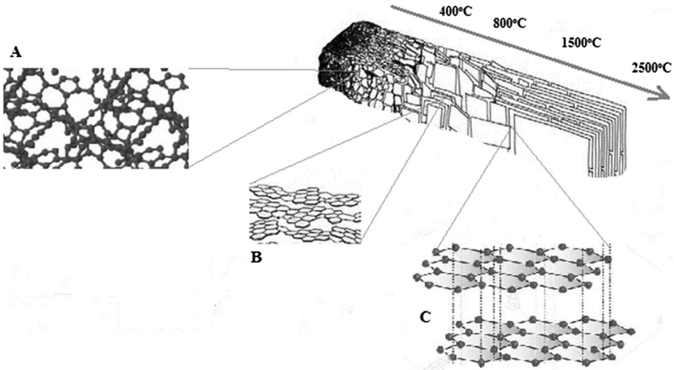
- The review states that higher pyrolysis temperature increases specific surface area and porosity, while decreasing CEC and volatile matter; it also notes that biochar produced at 600–700 °C is highly aromatic with well-organized C layers.
- Feedstock type strongly affects properties: biochars from animal litter and solid waste tend to have lower surface area, carbon content, and volatile matter, but higher CEC than those from crop residue and wood biomass.
- The paper reports several example values showing feedstock differences, e.g. wood biochar surface area 127.0 m²/g versus straw biochar 22.0 m²/g, green waste 46.0 m²/g, and algae 19.0 m²/g; and CEC 57.5 cmol/kg for algal biochar and 48.4 cmol/kg for poultry litter biochar at 500 °C.
Methods
- Review article synthesizing prior studies on biochar production and properties; no new experimental dataset was collected.
- The paper compares literature on the effects of pyrolysis temperature and feedstock kind on biochar physicochemical characteristics, and on resulting effects in soil.
- It draws on reported values from earlier studies and tables summarizing prior experiments and observed property ranges.
Limitations
- The paper does not report a systematic search strategy, study selection criteria, or meta-analytic methods; this is evident from the text, which presents a narrative review rather than a formal systematic review.
- The paper repeatedly notes that results vary by biomass and pyrolysis conditions, so many conclusions are broad generalizations across heterogeneous studies; this is evident from the text.
- Not stated in the paper.
Model-written summary. Check it against the paper before relying on it.
Integrity signals
Registry
Cites
Statistics
Figures

Verification
Claims the paper makes
28 Valid · 5 Not valid · 100 Not checked · 23 Own results and interpretations
At least one cited source doesn’t support this claim or points to a different paper, and none confirmed it — see the verdicts below.
In the paper
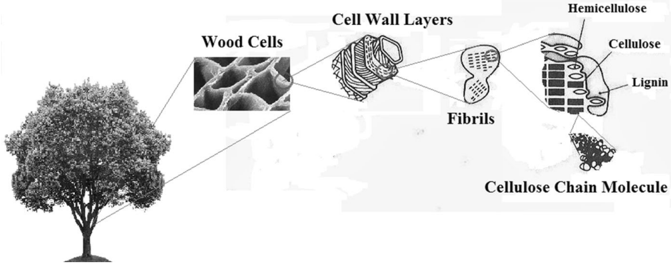
“Woody biomass often has higher cellulose, hemicellulose and lignin contents (Fig. 4) than biomass from herbaceous or grass species”
§ Biochar physicochemical properties: pyrolysis temperature and feedstock kind effects > 3.1 Volatile matter, carbon content and ash content
What the sources say
- Disputedcites Keiluweit et al. 2010 matched to “Dynamic Molecular Structure of Plant Biomass-Derived Black Carbon (Biochar)” (2010) sourceExperimental — accuracy not yet measured
The NEXAFS section attributes higher lignin content to woody material, but the Comparison of Precursor Materials section suggests grass has higher hemicellulose content—the opposite of the claim for that component. The cited passages do not establish that woody biomass has higher cellulose content. (LLM, conf=0.88)
Checked by a reasoning model — may be wrong.
- Not checked — no full text of the sourcecites Lupoi and Smith 2012 matched to “Characterization of Woody and Herbaceous Biomasses Lignin Composition with 1064 nm Dispersive Multichannel Raman Spectroscopy” (2012) source
hedgedstates an association- Asserted: passes — The authors put it forward as true.
- Checkable: passes — It can be checked against evidence.
- Load-bearing: unclear — It is unclear whether the paper’s conclusions depend on it.
- Based: passes — The paper gives a reason why it holds.
- Disputed
The cited sources support only part of this claim — read each source’s verdict below.
In the paper
“Numerous studies have proven that biochar increases the ability of soil to adsorb heavy metals and other contaminants, which is important for environmental protection and management”
- Also stated in: § 4.2 Inorganic and organic contaminates in soil · boosted
“Numerous studies have proven that biochar increases the ability of soil to adsorb heavy metals and other contaminants, which is important for environmental protection and management (Tomczyk et al. 2019;Wei et al. 2018).”
What the sources say
- Partly supportedcites Tomczyk et al. 2019 matched to “Biochar efficiency in copper removal from Haplic soils” (2019) sourceExperimental — accuracy not yet measured
The section ‘Amount of Cu adsorption on the soils as a function of biochar dose and pH value’ reports that adding biochar increased copper adsorption in the soils tested. The Conclusion limits the finding to copper in sandy and loess Haplic soils, with effective immobilization at acidic pH; it does not establish increased soil adsorption of other contaminants generally. (LLM, conf=0.86)
- Not checked — no full text of the sourcecites Wei et al. 2018 matched to “Biochar-based functional materials in the purification of agricultural wastewater: Fabrication, application and future research needs” (2018) source
boostedstates a cause- Asserted: passes — The authors put it forward as true.
- Checkable: passes — It can be checked against evidence.
- Load-bearing: passes — The paper’s conclusions depend on it.
- Based: passes — The paper gives a reason why it holds.
- Also stated in: § 4.2 Inorganic and organic contaminates in soil · boosted
The sources with a verdict support this claim; the rest weren’t checked yet, have no full text we could read, or their verdicts aren’t rated yet.
In the paper
“The pyrolysis temperature is strongly correlated with changes in the structure and physicochemical properties of biochar”
§ Biochar physicochemical properties: pyrolysis temperature and feedstock kind effects > 2 Effects of pyrolysis temperature
What the sources say
- Not checked — no full text of the sourcecites Asadullah et al. 2007 matched to “Production of bio-oil from fixed bed pyrolysis of bagasse” (2007) source
- Not checked — no full text of the sourcecites Chen et al. 2008 matched to “Transitional Adsorption and Partition of Nonpolar and Polar Aromatic Contaminants by Biochars of Pine Needles with Different Pyrolytic Temperatures” (2008) source
- Supportedcites Jindo et al. 2014 matched to “Physical and chemical characterization of biochars derived from different agricultural residues” (2014) source
The Conclusions state that pyrolysis temperature strongly influences biochar physicochemical properties. Section 3.4 also describes temperature-dependent changes in chemical composition and structure, supporting the structural part of the claim. (LLM, conf=0.93)
boostedstates an association- Asserted: passes — The authors put it forward as true.
- Checkable: passes — It can be checked against evidence.
- Load-bearing: passes — The paper’s conclusions depend on it.
- Based: passes — The paper gives a reason why it holds.
The cited sources support only part of this claim — read each source’s verdict below.
In the paper
“This was observed because the increasing temperature resulted in further cracking of the volatile fractions into low-molecular-weight liquids and gases instead of biochar”
§ Biochar physicochemical properties: pyrolysis temperature and feedstock kind effects > 2.3 Volatile matter
What the sources say
- Partly supportedcites Ronsse et al. 2012 matched to “Production and characterization of slow pyrolysis biochar: influence of feedstock type and pyrolysis conditions” (2013) sourceExperimental — accuracy not yet measured
The Discussion (page unavailable in our copy) reports that biochar’s volatile matter content declined as pyrolysis severity increased. The Proximate analysis section describes progressive devolatilization, and the Introduction identifies liquid and gaseous pyrolysis products. The paper does not establish the more specific explanation that volatile fractions underwent further cracking into low-molecular-weight liquids and gases instead of biochar. (LLM, conf=0.86)
plainstates a cause- Asserted: passes — The authors put it forward as true.
- Checkable: passes — It can be checked against evidence.
- Load-bearing: unclear — It is unclear whether the paper’s conclusions depend on it.
- Based: passes — The paper gives a reason why it holds.
- Partly supported
Every source the paper cites for this claim was checked and supports it.
In the paper
“increased pyrolysis temperature caused an increase of 5.7-18.7% in ash content”
§ Biochar physicochemical properties: pyrolysis temperature and feedstock kind effects > 2.4 Carbon content and ash content
What the sources say
- Supportedcites Rafiq et al. 2016 matched to “Influence of Pyrolysis Temperature on Physico-Chemical Properties of Corn Stover (Zea mays L.) Biochar and Feasibility for Carbon Capture and Energy Balance” (2016) source
Table 2 in Results and Discussion §4.1 reports ash content of 5.7%, 12.5%, and 18.7% at pyrolysis temperatures of 300°C, 400°C, and 500°C, respectively. The figures describe ash content rising from 5.7% to 18.7%, rather than a percentage increase of that magnitude. (LLM, conf=0.91)
plainstates a cause- Asserted: passes — The authors put it forward as true.
- Checkable: passes — It can be checked against evidence.
- Load-bearing: unclear — It is unclear whether the paper’s conclusions depend on it.
- Based: passes — The paper gives a reason why it holds.
- Supported
82 more claims · 15 with their cited sources checked
Create a free account to see all 156 claims and to verify the 11 references still open.
- It may state two separate claims as one. 60
- Probably not a substantial claim. 13
Claims other papers make about this one
Each is checked against this paper’s own text: does it say what the citing paper says it does?
The source backs part of the claim, not all of it — or backs it for a different population, condition or comparison.
In the citing paper
“For example, biochar with a high CEC retains more nutrients in soil by reducing nutrient loss through leaching (Tomczyk et al. 2020).”
From Biochar and its importance on nutrient dynamics in soil and plant (2020) · cites this paper as Tomczyk et al. 2020
Experimental — accuracy not yet measuredThe cited source says what the claim attributes to it.
In the citing paper
“the P and K contents increase due to an increase in ash content (Christel et al. 2016;Tomczyk et al. 2020;Wang et al. 2013).”
From Biochar and its importance on nutrient dynamics in soil and plant (2020) · cites this paper as Tomczyk et al. 2020
The cited source says what the claim attributes to it.
In the citing paper
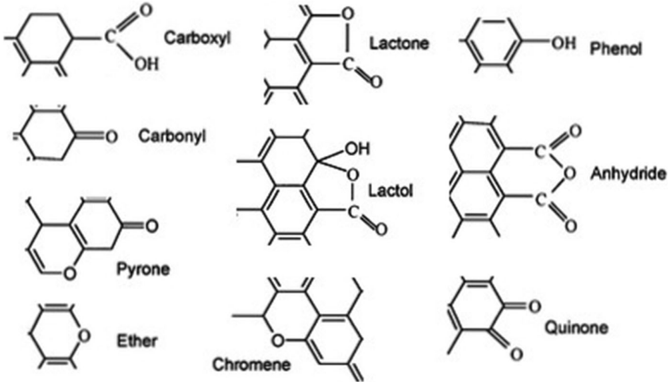
“The CEC of biochar is attributed to the generation of various functional groups, such as carboxyl and hydroxyl groups, during the pyrolysis of biomass (Tomczyk et al. 2020).”
From Biochar and its importance on nutrient dynamics in soil and plant (2020) · cites this paper as Tomczyk et al. 2020
In the citing paper
“Biochar also showed a positive impact on surface area of soil (Anawar et al. 2015), which varied with biochar types (Tomczyk et al. 2020).”
From Biochar and its importance on nutrient dynamics in soil and plant (2020) · cites this paper as Tomczyk et al. 2020
Citations
Cites
Pyrolysis of Wood/Biomass for Bio-oil: A Critical Review
Mohan, D., Pittman, C. U., & Steele, P. H. (2006) · Energy & Fuels · doi:10.1021/ef0502397 · Cited by 5,663
Biochar effects on soil biota – A review
Lehmann, J., Rillig, M. C., Thies, J., Masiello, C. A., Hockaday, W. C., & Crowley, D. (2011) · Soil Biology and Biochemistry · doi:10.1016/j.soilbio.2011.04.022 · Cited by 5,074
Biochar as a sorbent for contaminant management in soil and water: A review
Ahmad, M., Rajapaksha, A. U., Lim, J. E., Zhang, M., Bolan, N., Mohan, D., Vithanage, M., Lee, S. S., & Ok, Y. S. (2014) · Chemosphere · doi:10.1016/j.chemosphere.2013.10.071 · Cited by 4,662 · cited 4×
“As a result, the structure of biochar appears to have more organized C layers (like graphene structure) and less content of surface functional groups when pyrolysis temperature increases (Ahmad et al. 2014b).”
BackgroundInfluentialDynamic Molecular Structure of Plant Biomass-Derived Black Carbon (Biochar)
Keiluweit, M., Nico, P. S., Johnson, M. G., & Kleber, M. (2010) · Environmental Science & Technology · doi:10.1021/es9031419 · Cited by 3,230
Bio-char Sequestration in Terrestrial Ecosystems – A Review
Lehmann, J., Gaunt, J., & Rondon, M. (2006) · Mitigation and Adaptation Strategies for Global Change · doi:10.1007/s11027-005-9006-5 · Cited by 3,053
Structure Determination of Organic Compounds
Pretsch, E., Bühlmann, P., & Affolter, C. (2000) · Springer eBooks · doi:10.1007/978-3-662-04201-4 · Cited by 3,026
Biochar for environmental management: science and technology
(2009) · Choice Reviews Online · doi:10.5860/choice.47-0296 · Cited by 2,949
Glaser, B., Lehmann, J., & Zech, W. (2002) · Biology and Fertility of Soils · doi:10.1007/s00374-002-0466-4 · Cited by 2,890 · cited 3×
“However, Glaser et al. (2002) reported that Amazonian charcoal-rich anthrosols had a field water retention capacity 18.0% higher than that of surrounding soil without charcoal.”
BackgroundInfluentialSustainable biochar to mitigate global climate change
Woolf, D., Amonette, J. E., Street-Perrott, F. A., Lehmann, J., & Joseph, S. (2010) · Nature Communications · doi:10.1038/ncomms1053 · Cited by 2,680
Compant, S., Clément, C., & Sessitsch, A. (2010) · Soil Biology and Biochemistry · doi:10.1016/j.soilbio.2009.11.024 · Cited by 2,318
Research works printed but not linked: 10
- 39. Chen T, Zhang Y, Wang H, Lu W, Zhou Z, Zhang Y, Ren L (2015) Influence of pyrolysis temperature on characteristic and heavy metal adsorptive performance of biochar derived from municipal sewage sludge. Bioresour Technol 164:47-54 · DOI · Paper page
- 51. Denyes MJ, Parisien MA, Rutter A, Zeeb BA (2014) Physical, chemical and biological characterization of six biochar produced for the remediation of contamined soils. J Vis Exp 93:52183
- 56. Duong VT, Khanh NM, Nguyen NH, Phi NN, Nquyen T-C, Xo DH (2017) Impact of biochar on the water holding capacity and moisture of basalt and grey soil. J Sci Ho Chi Minh City Open Univers 7:36-43
- 58. El-Gamal E, Saleh M, Elsokkary I, Rashad M, Abd El-Latif MM (2017) Comparison between properties of biochar pro- duced by traditional and controlled pyrolysis. J Alex Sci Exch 38:413-424
- 66. Gerlach H (2014) Biochar in poultry farming. The Biochar Journal, Arbaz, Switzerland, www.biocharjournal.org/en/ ct/10
- 71. Guo M, Shen Y, He Z (2012) Poultry litter-based biochar: preparation, characterization, and utilization. In: He Z (ed) Applied research in animal manure management: chal- lenges and opportunities beyond the adverse environmental impacts. Nova Science Publishers, Hauppauge, NY, pp 171-202
- 114. Lewandowski W, Radziemska M, Ryms E, Ostrowski P (2010) Nowoczesne metody termochemiczne konwersji biomasy w paliwa gazowe, ciekłe i stałe. Proceedings of ECOpole 4 (2) (in Polish)
- 128. Malin ´ska K (2012) Biowe ˛giel odpowiedzia ˛na aktualne problem ochrony s ´rodowiska. In_ zynieria i ochrona s ´rodowiska 15:387-403 (in Polish)
- 203. Woolf D (2008) Biochar as a soil amendment: a review of the environmental implications. Swansea University, School of the Environment and Society. http://orgprints.org/13268
- 215. Yu H, Zhang Z, Li Z, Chen D (2014) Characteristic of tar for- mation during cellulose, hemicellulose and lignin gasifi- cation. Fuel 118:25-256
Cited by
Items 2,601–2,700 of 2,909
Can hydrochar mitigate the effects of irrigation with brackish water to improve cowpea growth?
da Silva, D. G. G., do Nascimento, Í. V., do Amaral, R. V., Costa, M. C. G., Ferreira, O. P., Filho, A. G. S., Fregolente, L. G., da Silva, F. G., Pereira, A. P. D. A., Mota, J. C. A., et al. (2026) · Discover Soil. · doi:10.1007/s44378-026-00189-x
Roha, B., Yao, J., Ma, B., Liu, B., Zhu, J., Wang, N., Khan, A. Q., Hameed, R., El–Saadani, Z., Hawari, J. A.-A., et al. (2026) · SSRN Electronic Journal · doi:10.2139/ssrn.6482012
Rahees, M., Saraswathy, R., & Prabhakaran, K. (2026) · Materials Today Communications · doi:10.1016/j.mtcomm.2026.115084 · Cited by 1
Physico-chemical characterization of biochar for heavy metal absorption research
Mulyanto, D., Umami, A., Afany, M. R., & Munawar, A. (2026) · AIP conference proceedings · doi:10.1063/5.0317133
Ahamad, F., Bhutiani, R., Keerthi, M. M., Chauhan, A., Chauhan, P. K., & Benjouid, Z. (2026) · Springer eBooks · doi:10.1007/978-3-032-16746-0_2
Salata, A. A. H., Borisova, G., & Maleva, M. (2026) · EURASIAN JOURNAL OF SOIL SCIENCE (EJSS) · doi:10.18393/ejss.1885879
Challenges in the Realm of Biochar Applications
Sharma, S., Sharma, S., Kulkarni, H., Giri, A., & Kumar, P. (2026) · Springer eBooks · doi:10.1007/978-3-032-16746-0_10
Bardhan, S., Kumar, R., & Chanda, D. K. (2026) · Springer eBooks · doi:10.1007/978-3-032-16746-0_15 · Cited by 1
Murtaza, G., Usman, M., Azam, M., Ahmed, Z., Ali, S., Alwutayd, K. M., & Iqbal, R. (2026) · Environmental Geochemistry and Health · doi:10.1007/s10653-026-03176-x
Tao, Q., Zhang, Y., Zhang, H., & Zhao, C. (2026) · Scientific Reports · doi:10.1038/s41598-026-45933-z
Etude des procédés de sorption des métaux lourds par le biochar
Mannaï, I. (2021) · theses.fr (ABES) · doi:10.70675/0b8ca984zc9bdz437azac8az6a9b4fd1a43e
Study of biomass-derived hard carbons for Sodium-ion battery application.
Rios, C. D. M. S. (2020) · theses.fr (ABES) · doi:10.70675/5458dfdezf04az498bza4b7z1a21c63088fe · Cited by 3
Zangeneh, A. N., Abbasi, M., & Ghorbannezhad, P. (2026) · Biomass and Bioenergy · doi:10.1016/j.biombioe.2026.109383 · Cited by 1
“The composition of the feedstock holds significant importance as it plays a vital role in the quantity, quality, and characteristics of the biochar produced from pyrolysis [32].”
Stratégies de séquestration de polluants organiques organochlorés par des matrices carbonées
Wanny, N. E. (2021) · theses.fr (ABES) · doi:10.70675/926ada50z126az404cz9a9czafc1f533ebb5
Huang, L., Dong, C., Wang, D., Wang, G., Guo, Z., Zhang, F., Ma, W., Xu, Y., Lu, X., & Sun, X. (2026) · SSRN Electronic Journal · doi:10.2139/ssrn.6538285
Lead ion removal from aqueous solutions using biochar materials from different wood species
Li, R., Keyser, T. L., Elder, T., Yan, Q., Cai, Z., & Peng, Y. (2026) · Biomass Futures · doi:10.1016/j.bmf.2026.100042
Production of biocarbon catalysts for NOx decomposition, WGS and RWGS
Graul, T. (2023) · theses.fr (ABES) · doi:10.70675/558e20bezf28dz456bz8fd7z08d65ef0004c · Cited by 1
Dahlbom, S., Quant, M., Sokoti, H., et al. (2026) · SSRN Electronic Journal · doi:10.2139/ssrn.6544749
Abdou, N. M., Gyushi, M. A. H., Abdel-Moatamed, B. R., & El-Tawwab, A. R. A. (2026) · Journal of soil science and plant nutrition · doi:10.1007/s42729-026-03206-8 · Cited by 1
“…high surface area and existence of functional groups on biochar sub-stances, that leads to significant increase in soil CEC and enhances its capacity to retain nutrients, by limiting their leaching, consequently increasing their availability to plants (Adhikari et al., 2024; Tomczyk et al., 2020).”
da Silva, L. C., Santiago, P. Q., de Sousa, E. F., Sousa, J. P., Medeiros, S. L. S., Nogueira, R. E. F. Q., & Rios, M. A. D. S. (2026) · ACS Omega · doi:10.1021/acsomega.6c00684 · Cited by 1
Conversion of Biomass into Quantum Catalysts for Wastewater Treatment
Singh, C. J., Ghosh, K., Srivastava, M., & Jaiswal, V. (2026) · Sustainable materials and technology · doi:10.1007/978-981-95-6047-9_11 · Cited by 1
Dominchin, M. F., Verdenelli, R. A., Barbero, F. M., Bigattón, E. D., Faggioli, V., & Meriles, J. M. (2026) · Annals of Applied Biology · doi:10.1111/aab.70123
Hadiyane, A., Sembada, A. A., Rumidatul, A., Sumardi, D., Pari, G., Insanimuna, A., Putri, A. C., & Nuraisyah, A. J. D. (2026) · BioEnergy Research · doi:10.1007/s12155-026-10997-2 · Cited by 1
Aup-Ngoen, K. K., Noipitak, M., Kaowphong, S., et al. (2026) · SSRN Electronic Journal · doi:10.2139/ssrn.6590601
Tang, Y., Su, Y., Wu, Y., Yu, Z., Xu, M., Tian, M., & Li, J. (2026) · Building and Environment · doi:10.1016/j.buildenv.2026.114640
Margreiter, C., Klotz, J., Mullaymeri, A., Mossauer, A. S., Hofmann, A., & Wagner, A. O. (2026) · Bioresource Technology Reports · doi:10.2139/ssrn.6613519
Tunklová, B., Velebil, J., Malaťák, J., & Aniszewska, M. (2026) · Plants · doi:10.3390/plants15091292 · Cited by 1
“Among these compounds, limonene is particularly abundant and has been identified as a potent phytotoxic agent capable of inhibiting seed germination and early seedling development [10–12].”
Xue, J., Li, M., Chen, W., Pan, L., Zhang, C., Tan, L., Tang, Q., & Tang, D. (2026) · Beverage Plant Research · doi:10.48130/bpr-0025-0046 · Cited by 1
Garofalo, E. E. N., de Freitas, J. G., Shinzato, M. C., & Hirata, R. (2026) · Elsevier eBooks · doi:10.1016/b978-0-443-36731-1.00014-5
Testing a Biochar Filter for Removal of 128 Pesticides in Surface WaterPreprint
Koch, A., Jonsson, O., Dürebrandt, G., & Cederlund, H. (2026) · SSRN Electronic Journal · doi:10.2139/ssrn.6641763
Morinda citrifolia (Noni) seed based activated carbon as adsorbent and catalyst support
Muhammad, M., Mulyawan, R., Ginting, Z., Anshar, K., Fadhli, F., Nur, M. F. H., & Fauziah, I. A. (2026) · AIP conference proceedings · doi:10.1063/5.0334380
Activation of blueberry pruning waste biochar for enhanced removal of cadmium from aqueous systems
Suazo-Hernández, J., Muñoz, C., la Fuente, I. D., Paredes, C., Celi, L., & Sarkar, B. (2026) · Frontiers in Environmental Science · doi:10.3389/fenvs.2026.1731992
Ecotoxicological assessment and agricultural potential of nanobiochar
Roy, H., Sayem, S. S., Sarker, D., Banhi, T. S., Bhuiyan, M. M. K., Paul, S., Sarkar, D., & Islam, M. S. (2026) · Elsevier eBooks · doi:10.1016/b978-0-443-29865-3.00002-9
Renuka, P., Sukantha, T. A., Senthamaraikannan, P., & S., S. S. (2026) · Renewable and Sustainable Energy Reviews · doi:10.1016/j.rser.2026.117016
Environmental benefits/impacts of emerging biochar compounds
Ntuli, F., Kandjou, V., & Lekgoba, T. (2026) · Elsevier eBooks · doi:10.1016/b978-0-443-29865-3.00018-2
Biochar production: Recent developments, applications, and challenges
Sahu, P., Panda, T., Goyal, A., Yadav, V., Anshu, Das, S., Shakya, A., Anupam, K., & Singh, R. (2026) · Elsevier eBooks · doi:10.1016/b978-0-443-29865-3.00015-7
Biomass-based biochar for wastewater treatment and management
Chen, Z., Nasr, M., Ighalo, J. O., Osman, A. I., Wang, L., Aziz, F., Kurniawan, T. A., & Yap, P. (2026) · Elsevier eBooks · doi:10.1016/b978-0-443-29865-3.00010-8
Sustainable biochar management to achieve carbon neutrality
Mahari, W. A. W., & Lam, S. S. (2026) · Elsevier eBooks · doi:10.1016/b978-0-443-29865-3.00013-3
Physicochemical interaction between biochar and adsorbate in solutions
Ntuli, F., Lekgoba, T., & Kandjou, V. (2026) · Elsevier eBooks · doi:10.1016/b978-0-443-29865-3.00004-2
Bibliometric and text mining insights into agricultural application of biochar as soil amendment
Anupam, K., Anshu, Aggrawal, R., Bhattacharya, I., Sahu, P., Anupriya, Goley, P. K., Yadav, V., Das, S., & Shakya, A. (2026) · Elsevier eBooks · doi:10.1016/b978-0-443-29865-3.00009-1
Biochar sustainable aspects in agriculture and environment
Sahoo, D. K., Satish, M., Nampoothiri, N. K., & Maity, S. (2026) · Elsevier eBooks · doi:10.1016/b978-0-443-29865-3.00012-1
Staroń, P., Gaik, G., & Chwastowski, J. (2026) · Materials · doi:10.3390/ma19091894
“This choice is justified by the completion of the main stage of lignocellulosic fraction decomposition, which ensures obtaining a material with high chemical stability while maintaining a sufficient number of functional groups necessary for biosorption processes [54].”
Gaur, V. K., Raheja, Y., Falaque, T., Gupta, P., Gaur, P., Bhardwaj, K., Shang, W., & Varjani, S. (2026) · Waste Management · doi:10.1016/j.wasman.2026.115557
Shi, E., Tang, J., Chu, M., & Tian, H. (2026) · Journal of environmental chemical engineering · doi:10.1016/j.jece.2026.122987
Vuong, T. X., Nguyen, H. N., Pham, T. H. A., Trương, T. T., Khieu, T. T., Phan, T. P., Pham, T. T. H., Nguyen, T. T. T., & Thắng, Đ. X. (2026) · RSC Advances · doi:10.1039/d6ra01444e · Cited by 1
“SEM-EDS analysis identi ed Ca, Mg, and P in the biochar matrix, particularly in TB. 51,52 FT-IR spectra further indicated phosphate-related functional groups.”
Ani, M. O., Oyati, E. N., Aniagor, C. O., Abonyi, M. N., & Oluwasegun, A. O. (2026) · Next Chemical Engineering · doi:10.1016/j.nxcen.2026.100047
Transport Pathways of Biochar Enhanced Phosphorus Uptake to Root Surface: A Review
Arwenyo, B., Nyeko, M., Malinga, G. M., Varco, J. J., & Mlsna, T. (2026) · Journal of Agricultural Chemistry and Environment · doi:10.4236/jacen.2026.152009
Roy, H., Asif, M. N., Kwak, J. H., Chang, S. X., & Islam, M. M. (2026) · International Journal of Environmental Science and Technology · doi:10.1007/s13762-026-07243-9 · Cited by 1
“However, increasing temperatures can also lead to the degradation of oxygen-containing functional groups in biochar surfaces, which are important for electrostatic interactions with dye molecules (Tomczyk et al. 2020).”
Enhanced HF adsorption and deactivation mechanism over alkali metal-modified bamboo biochar
He, B., Gao, P., Zeng, Z., et al. (2026) · Separation and Purification Technology · doi:10.1016/j.seppur.2026.138439
Upcycling neem branch residues into biochar: Role of moisture content in carbonization performance
Unsomsri, N., Koedthong, P., Wiriyasart, S., et al. (2026) · Case Studies in Chemical and Environmental Engineering · doi:10.1016/j.cscee.2026.101404
Show, S., Mondal, B. K., Mondal, S., et al. (2026) · Solar Energy · doi:10.1016/j.solener.2026.114699
MgO Nanoparticles-Functionalized Palm Leaf Biochar for Efficient and Sustainable Congo Red Removal
Alfajri, B., Daffalla, S. B., Alzouraiq, H., et al. (2026) · Journal of Composites Science · doi:10.3390/jcs10050270
Mollick, M., Cortazar, M., Santamaria, L., Artetxe, M., Olazar, M., & López, G. (2026) · Journal of environmental chemical engineering · doi:10.1016/j.jece.2026.123214 · Cited by 1
Fatima, S., Riaz, M., Djalovic, I., & Prasad, P. V. V. (2026) · PeerJ · doi:10.7717/peerj.21100
“However, the extent of these benefits depends on the characteristics of BC (pyrolysis temperature, duration and feedstock nature) and soil type ( Xiao et al., 2018 ), suggesting the higher variations in results reported by different studies ( Tomczyk, Sokołowska & Boguta, 2020 ; Cai et al., 2021 ).”
Reassessing biochar in the organic agriculture paradigm: Carbon-rich paths to sustainability
Ramisetty, N. B. C., Deoranto, P., Inthasan, J., & Bhuyar, P. (2026) · Next research. · doi:10.1016/j.nexres.2026.101920
Tan, W., Liu, K., Yang, P., Tang, K. W., Yang, H., Tong, C., Liu, W., Sun, D., Wang, J., Lin, Y., et al. (2026) · Journal of environmental chemical engineering · doi:10.1016/j.jece.2026.123268 · Cited by 1
A Review on Carbon Sequestration by Organic and Conventional Farming
Soni, A., Murudkar, A., & Kumar, D. (2026) · Water science and technology library · doi:10.1007/978-3-032-10879-1_8
Chu, Z., Endo, T., Masunaga, T., Nishihara, E., & Yamamoto, S. (2026) · C – Journal of Carbon Research · doi:10.3390/c12020045 · Cited by 1
“In gramineae straw-derived charred materials, water-soluble Ca 2+ and Mg 2+ decreased significantly with increasing pyrolysis severity, indicating their transformation into exchangeable or sparingly soluble mineral forms, such as carbonates or silicates [36].”
Biochar Modulates the Dynamics of Legacy Nutrients in Enhancing Soil Health and Crop Productivity
Kumar, M., Bolan, S., Kumar, R., Gupta, J., Chen, D., Wu, H., Stackpoole, S. M., Chandel, N., Mukherjee, S., Garg, M. C., et al. (2026) · Land · doi:10.3390/land15060896 · Cited by 3
“Biochar serves as a nutrient reservoir because it can store macronutrients such as N, P, and K both inside its structure and on its surface before releasing them gradually to extend their availability in soil [55,56].”
Al-Sodani, K. A. A. (2026) · European Journal of Environmental and Civil engineering · doi:10.1080/19648189.2026.2672746
Aup-Ngoen, K. K., Noipitak, M., Kaowphong, S., & Srithundon, S. (2026) · Carbon Trends · doi:10.1016/j.cartre.2026.100657 · Cited by 1
Vidyanto, R. A., Permanasari, A. A., Puspitasari, P., Sukarni, S., Pramono, D. D., & Ibrahim, A. (2026) · Energy Storage · doi:10.1002/est2.70434
“…to obtain a more highly carbonized carbon framework suitable for conductive heat-transfer enhancement in PCM composites, because previous studies have shown that feedstock type and pyrolysis temperature strongly influence biochar structure, surface properties, and thermal behavior [12, 13].”
Agricultural pollution mitigation using iron-enriched biochar
Islam, S. (2026) · Journal of Hazardous Materials Advances · doi:10.1016/j.hazadv.2026.101258 · Cited by 5
Mondal, D., Yeasin, M., Paul, R. K., Roy, S., Haritwal, M., Khadda, V., Saikia, J., Maiti, C. S., Sarkar, A., Laskar, D., et al. (2026) · SSRN Electronic Journal · doi:10.2139/ssrn.6844820
Dahlbom, S., Quant, M., Sokoti, H., & Wadsö, L. (2026) · Fuel · doi:10.1016/j.fuel.2026.140073
Biochar for augmenting bacterial growth
John, N., Shirin, A., Fathima Safa, K. S., Sajan, S., Thomas, S. P., & Swathy, T. (2026) · Elsevier eBooks · doi:10.1016/b978-0-443-27763-4.00017-9
Biochar modifications for environmental applications
Mwizerwa, I. T., Hasan, I. M. U., Husein, M., & Kateita, J. (2026) · Elsevier eBooks · doi:10.1016/b978-0-443-27763-4.00001-5
Biochar and microbes as biofertilizer: An synergistic approach for sustainable agriculture
Daimary, M., Panda, J., Mohapatra, S., Rajput, V. D., Mohanta, Y. K., & Sarma, H. (2026) · Elsevier eBooks · doi:10.1016/b978-0-443-27763-4.00006-4
Biochar and microbes as biopesticide
Sanyal, M., Bhandary, S., & Ghosh, A. (2026) · Elsevier eBooks · doi:10.1016/b978-0-443-27763-4.00014-3
Biochar production systems: Impact on soil health and agricultural productivity
Shende, A., Bhargavi, G., & Pandit, B. (2026) · Elsevier eBooks · doi:10.1016/b978-0-443-27763-4.00005-2
Biochar-based silver composites for methylene blue dye remediation: A review
Stuvart, A., Arun, T. R., Rekha, D., Sudhani, H. P. K., & Rajendran, A. (2026) · Next research. · doi:10.1016/j.nexres.2026.101950
Arenas‐Sánchez, E., Loredo-Loredo, O., Ruiz-Castillo, A. L., et al. (2026) · MRS Communications · doi:10.1557/s43579-026-00988-x
Jiang, Z., Liu, B., Chen, R., LianKai, Z., & Chen, G. (2026) · Bioresources and Bioprocessing · doi:10.1186/s40643-026-01070-z · Cited by 1
“…temperature enhances biochar pH, electrical conductivity (EC), C/N ratio, ash content, Zeta potential, and specific surface area, while reducing the O/C and H/C ratios and the abundance of oxygen-containing groups (Ippolito et al. 2020; Ortiz et al. 2020; Tomczyk et al. 2020; Zhu et al. 2026).”
Alves, K. S., Guimarães, T., Carneiro, A. D. C. O., Carvalho, A. M. M. L., Valverde, S. R., & COSTA, M. M. D. (2026) · Bioresources and Bioproducts · doi:10.3390/bioresourbioprod2020010
“However, it is important to note that the market viability of biochar (price of US$120/ton) and other operational costs may influence profits, depending on price fluctuations and expenses associated with production and commercialization [92].”
Technoeconomic and life cycle assessment of biochar applications for wastewater treatment
Manga, M., Muoghalu, C., Ekyalimpa, R., Patrick, J., & Kaboggoza, H. C. (2026) · Elsevier eBooks · doi:10.1016/b978-0-443-44581-1.00003-x
Advanced oxidation and photocatalytic processes utilising biochar for wastewater treatment
Costa, L. G. A., de Queiroz, J. L. A., do Vale‐Júnior, E., Gomes, H. S. S., Loor-Úrgilés, L. D., dos Santos, E. G. G., & Martínez-Huitle, C. A. (2026) · Elsevier eBooks · doi:10.1016/b978-0-443-44581-1.00016-8
Suleiman, M. A. (2026) · Elsevier eBooks · doi:10.1016/b978-0-443-44581-1.00004-1
Application of biochar in crop production
Ahmed, Z., Dongwei, G. U. I., Murtaza, G., Tariq, A., Aslam, T., Yang, Z., & Ali, A. (2026) · Elsevier eBooks · doi:10.1016/b978-0-443-44581-1.00018-1
Antia, U. E., Etim, G. H., Okon, O. G., & Okon, J. E. (2026) · Elsevier eBooks · doi:10.1016/b978-0-443-44581-1.00013-2
YUCETURK, G. D., Pekdemir, T., Çelik, E., & Doğru, M. (2026) · Environmental Research and Technology · doi:10.35208/ert.1647233 · Cited by 1
“The biochar’s surface area is increased due to the rapid release of volatile matter at elevated temperatures, which creates numerous pores [58].”
Synthesis, modification, characterisation, and properties of biochar for environmental applications
Javanmard, A., & Patah, M. F. A. (2026) · Elsevier eBooks · doi:10.1016/b978-0-443-44581-1.00010-7
Application of biochar in composting
Karamova, K., Galitskaya, P., & Selivanovskaya, S. Y. (2026) · Učënye zapiski Kazanskogo universiteta. Seriâ Estestvennye nauki/Učënye zapiski Kazanskogo universiteta. Seriâ Estestvennye nauki/Učenye zapiski Kazanskogo gosudarstvennogo universiteta. Seriâ Estestvennye nauki · doi:10.26907/2542-064x.2026.2.249-284
Meliana, C., Xu, J., Wu, X., Chai, W. S., Pang, C. H., & Low, S. S. (2026) · Bioresource Technology · doi:10.1016/j.biortech.2026.135132
Faria, M. D. S. L., Prediger, P., & Vieira, M. G. A. (2026) · Biomass and Bioenergy · doi:10.1016/j.biombioe.2026.109675
Wang, Z., Li, J., Xie, H., et al. (2026) · Colloids and Surfaces A Physicochemical and Engineering Aspects · doi:10.1016/j.colsurfa.2026.141034
Singh, R. K., Soni, B., Pawar, A., & Kumari, G. (2026) · Biomass Conversion and Biorefinery · doi:10.1007/s13399-026-07173-z
Paksok, D., Kalita, A., & Ravi, K. (2026) · Discover Civil Engineering · doi:10.1007/s44290-026-00530-x · Cited by 1
“Lignin-rich feedstocks yield highly carbonized biochars, while cellulose-rich materials produce mineral-rich biochars; higher pyrolysis temperatures increase SSA and carbon ordering but reduce functional groups and cation-exchange capacity (CEC) [19–22].”
Amponsah, E., Addison, E. C. K., Owusu-Mensah, M., Commeh, M. K., & Kukubor, S. (2026) · Research Square · doi:10.21203/rs.3.rs-9460513/v1
Kim, A. V., Богатыренко, Е. А., Dunkai, T. I., Nesterova, О., & Brikmans, A. V. (2026) · Environments · doi:10.3390/environments13060334
“An increase in temperature from 600–700 ◦ C and above leads to the destruction of the carbon skeleton and blockage of pores by ash particles, which also reduces the adsorption capacity [18,20,31].”
Emerging Contaminants: Challenges and Opportunities
Singhal, P., Awasthi, A., Sharma, A., Anurag, A., Chawla, R., & Sahani, V. (2026) · Elsevier eBooks · doi:10.1016/b978-0-443-45507-0.00010-6
Leca, M.-A., Lallement, A., Drané, M., Sambusiti, C., Robles, E., Marías, F., Beigbeder, J., & Monlau, F. (2026) · Biomass and Bioenergy · doi:10.1016/j.biombioe.2026.109524 · Cited by 1
Machine learning for the prediction of higher heating values of biomass, biochar, and bio-oils
Igwegbe, C. A., & Białowiec, A. (2026) · Elsevier eBooks · doi:10.1016/b978-0-443-33372-9.00004-7
Gunn, P. F. E., Liu, Y., Liu, J., Gu, L., & Zhuge, Y. (2026) · Cleaner Materials · doi:10.1016/j.clema.2026.100417
Novotný, M., Šipka, M., Vlček, V., Miino, M. C., Raček, J., Hlavínek, P., Tošić, I., & Marković, M. (2026) · SSRN Electronic Journal · doi:10.2139/ssrn.6947524
Metadata
- Authors
- Tomczyk, A., Sokołowska, Z., & Boguta, P.
- Affiliations
- Institute of Agrophysics, Polish Academy of Sciences (PL)
- Corresponding author
- Tomczyk, Agnieszka
- Venue
- Reviews in Environmental Science and Bio/Technology
- Published
- 2020-02-05
- Volume
- 19
- Issue
- 1
- Pages
- 191-215
- ISSN
- 1569-1705 (ISSN-L)
- 1572-9826
- OpenAlex
- W3004850069
- Semantic Scholar
- 6c053f4f737e2b53804c4d5aa53f4b80224a386d
- Cited by
- 2,948
- References
- 217
- Citations by year
- 2026: 613 · 2025: 679 · 2024: 573 · 2023: 435 · 2022: 355 · 2021: 216 · 2020: 76
- FWCI
- 84.93
- Type
- journal article
- Language
- en
- Open access
- hybrid
- doi.org
- Licence
- cc-by
- creativecommons.org/licenses/by/4.0 (tdm)
- creativecommons.org/licenses/by/4.0 (vor)
- Locations
- Reviews in Environmental Science and Bio/Technology (publishedVersion, cc-by)
- Funders
- Narodowe Centrum Badań i Rozwoju (BIOSTRATEG3/345940/7/NCBR/2017)
- Topics
- Physical Sciences › Energy › Fuel Technology › Thermochemical Biomass Conversion Processes
- Life Sciences › Agricultural and Biological Sciences › Soil Science › Soil Carbon and Nitrogen Dynamics
- Physical Sciences › Environmental Science › Water Science and Technology › Adsorption and biosorption for pollutant removal
- Keywords
- biochar, pyrolysis temperature, biomass feedstock, physicochemical properties, cation exchange capacity, specific surface area, pore volume, ash content, carbon content, volatile matter, soil fertility, liming, carbon sequestration, pollution remediation, crop residues, woody biomass
About these checks
Registry, retraction, Cites and statistics results are computed, not judged, with one exception: a printed reference that no index lists is read once by a model before it counts as a citation error. Claims are extracted by a model and kept only when their quote appears verbatim in the text; each cited source is then checked, with a model’s help, for whether it says what the claim relies on. Those verdicts can be wrong — read the claim’s quote and the cited source before relying on one.
The claim verdicts this report counts are experimental: their accuracy is not yet measured.
A language model drew the claims from the paper on 2026-10-11, under version 3 of the claim definition (model deepseek-v4.1-flash, prompt extract-v3).
A second model labelled each claim on 2026-10-11 (model jev-1.13-20260917, definition revision gold-guideline-v0.2).
Cited sources are checked with a language model’s help (gpt-6-sol).
Statistics and arithmetic are recomputed, not judged.
Confidence bands are shown only for fields calibrated on our annotated test set. None is calibrated yet, so no band is shown.
What counts as a claim ›How we measure confidence ›How we check this ›
Are you an author, or do you see a problem with this page? Request a review
Data sources
Bibliographic data: Semantic Scholar, OpenAlex, Crossref.
Contains information from the Semantic Scholar Academic Graph Datasets, made available under the ODC Attribution License (ODC-BY 1.0).
Semantic Scholar’s data is described in: Kinney, R., et al. (2023). The Semantic Scholar Open Data Platform. arXiv:2301.10140.
