

Unrestricted permutation forces extrapolation: variable importance requires at least one more model, or there is no free variable importance
Open accessThe DOI matches its Crossref record; 49 of the 52 references it cites were found in a registry or an index.
Abstract
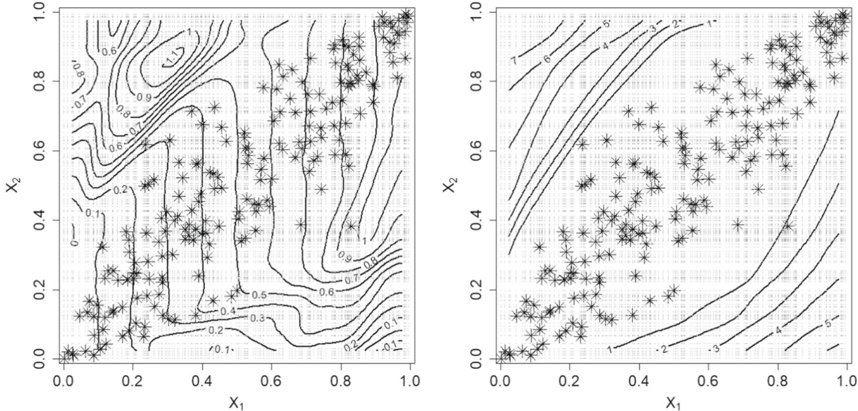
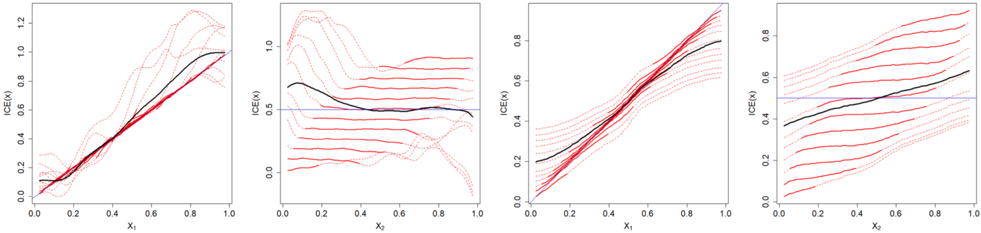
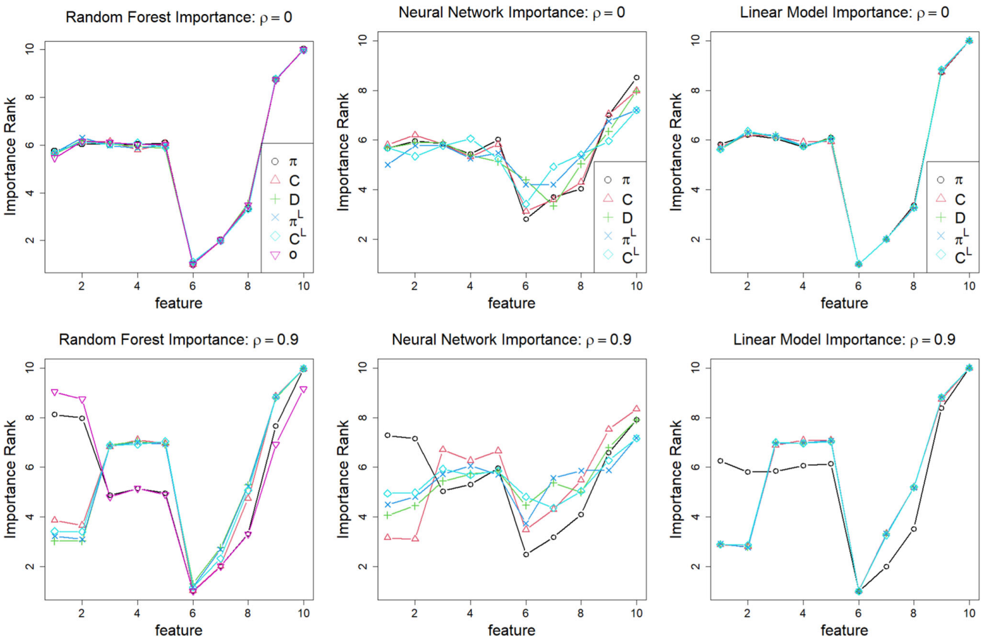
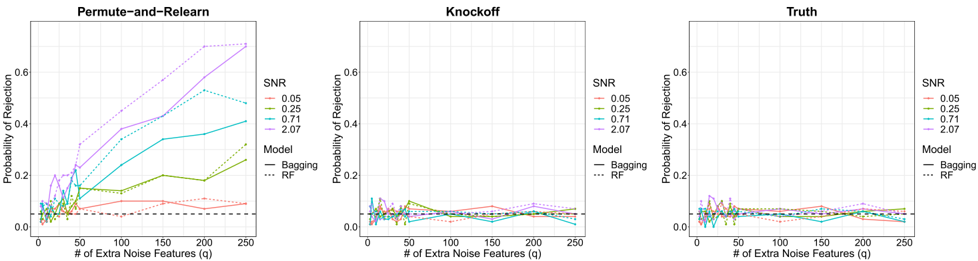
This paper reviews and advocates against the use of permute-and-predict (PaP) methods for interpreting black box functions. Methods such as the variable importance measures proposed for random forests, partial dependence plots, and individual conditional expectation plots remain popular because they are both model-agnostic and depend only on the pre-trained model output, making them computationally efficient and widely available in software. However, numerous studies have found that these tools can produce diagnostics that are highly misleading, particularly when there is strong dependence among features. The purpose of our work here is to (i) review this growing body of literature, (ii) provide further demonstrations of these drawbacks along with a detailed explanation as to why they occur, and (iii) advocate for alternative measures that involve additional modeling. In particular, we describe how breaking dependencies between features in hold-out data places undue emphasis on sparse regions of the feature space by forcing the original model to extrapolate to regions where there is little to no data. We explore these effects across various model setups and find support for previous claims in the literature that PaP metrics can vastly over-emphasize correlated features in both variable importance measures and partial dependence plots. As an alternative, we discuss and recommend more direct approaches that involve measuring the change in model performance after muting the effects of the features under investigation.
Overview
The claims and statistics of this paper haven’t been checked yet.
Free: it reads the open-access text and checks the first 5 claims that cite a source we can check. Create a free account to check every claim.
Integrity signals
Registry
Cites
Statistics
Figures
Verification
Claims the paper makes
The claims and statistics of this paper haven’t been checked yet.
Free: it reads the open-access text and checks the first 5 claims that cite a source we can check. Create a free account to check every claim.
Claims other papers make about this one
Each is checked against this paper’s own text: does it say what the citing paper says it does?
The cited source says what the claim attributes to it.
In the citing paper
“However, these methods can be misleading when correlations exist between input variables 107,109 .”
From Machine learning in concrete science: applications, challenges, and best practices (2022) · cites this paper as [107]
Self-check
Percentages, sums and reported differences re-computed from the paper’s own numbers.
The self-check needs the paper’s full text.
Citations
Cites
Breiman, L. (2001) · Machine Learning · doi:10.1023/a:1010933404324 · Cited by 133,538 · cited 3×
“Breiman (2001) designed the method specifically for use with random forests and considered out-of-bag (OOB) loss in which variable importance is averaged over trees, measured with that part of the data not used to construct the corresponding tree.”
MethodGreedy function approximation: A gradient boosting machine
Friedman, J. H. (2001) · The Annals of Statistics · doi:10.1214/aos/1013203451 · Cited by 30,731
A Unified Approach to Interpreting Model Predictions
Lundberg, S., & Lee, S.-I. (2017) · arXiv · doi:10.48550/arxiv.1705.07874 · Cited by 23,707 · cited 3×
“Saliency (Simonyan et al., 2013) obtains derivatives with respect to x , while LIME (Ribeiro et al., 2016) approximates this with a LASSO method localized to the point of interest by a kernel; Shapley values can also be used for individual predictions (Lundberg and Lee, 2017).”
BackgroundMethod"Why Should I Trust You?": Explaining the Predictions of Any Classifier
Ribeiro, M. T., Singh, S., & Guestrin, C. (2016) · Proceedings of the 22nd ACM SIGKDD International Conference on Knowledge Discovery and Data Mining · doi:10.1145/2939672.2939778 · Cited by 17,555
Generalized Additive Models: An Introduction with R
Wood, S. N. (2017) · doi:10.1201/9781315370279 · Cited by 13,852
Rudin, C. (2019) · Nature Machine Intelligence · doi:10.1038/s42256-019-0048-x · Cited by 10,561 · cited 1×
“As a consequence, many researchers have suggested methods to “X-ray the black box” in order to provide insight into which input features are important and how they effect predictions; a task so precarious that others have advocated against the practice altogether (Rudin, 2019).”
BackgroundNelsen, R. B. (1999) · Lecture Notes in Statistics · doi:10.1007/978-1-4757-3076-0 · Cited by 7,744
Deep Inside Convolutional Networks: Visualising Image Classification Models and Saliency Maps
Simonyan, K., Vedaldi, A., & Zisserman, A. (2013) · arXiv · doi:10.48550/arxiv.1312.6034 · Cited by 5,370 · cited 1×
“Saliency (Simonyan et al., 2013) obtains derivatives with respect to x , while LIME (Ribeiro et al., 2016) approximates this with a LASSO method localized to the point of interest by a kernel; Shapley values can also be used for individual predictions (Lundberg and Lee, 2017).”
MethodTesting Statistical Hypotheses
(2021) · Wiley Series in Probability and Statistics · doi:10.1002/9781119243830.ch12 · Cited by 5,106
Wood, S. N. (2006) · doi:10.1201/9781420010404 · Cited by 4,953
Research works printed but not linked: 1
- Tan, S., Caruana, R., Hooker, G., Koch, P., Gordo, A.: Learning global additive explanations for neural nets using model distillation. arXiv preprint arXiv:1801.08640 (2018) · arXiv
Cited by
Items 101–200 of 511
Position Paper: Bridging the Gap Between Machine Learning and Sensitivity AnalysisPreprint
Scholbeck, C. A., Moosbauer, J., Casalicchio, G., Gupta, H. V., Bischl, B., & Heumann, C. (2023) · arXiv (Cornell University) · doi:10.48550/arxiv.2312.13234 · Cited by 24
“Several techniques have been developed to determine the importance of features in ML (Hooker et al., 2021; Casalicchio et al., 2019; Fisher et al., 2019; Mol-nar et al., 2024), but numerous advances in other fields to compute variable importances (Wei et al., 2015) are often overlooked.”
Wang, J., Deng, J., Rashwan, T. L., Liu, D., Ren, S., Qu, G., & Wang, C. (2026) · Energy · doi:10.1016/j.energy.2026.142304 · Cited by 23
Li, C., Xie, G., Li, J., Chen, X., Ma, H., & Wang, B. (2025) · Journal of Water Process Engineering · doi:10.1016/j.jwpe.2025.107026 · Cited by 22
Li, Y., Devenish, C., Tosa, M. I., Luo, M., Bell, D. M., Lesmeister, D. B., Greenfield, P. A., Pichler, M., Levi, T., & Yu, D. W. (2024) · Philosophical Transactions of the Royal Society B Biological Sciences · doi:10.1098/rstb.2023.0123 · Cited by 21
Preventing deception with explanation methods using focused sampling
Vreš, D., & Robnik-Šikonja, M. (2022) · Data mining and knowledge discovery · doi:10.1007/s10618-022-00900-w · Cited by 14
“Hooker et al. (2021) point out that permute-and-predict methods such as variable importance used with random forests, partial dependence plots, and individual conditional expectation can be misleading in case of strong dependencies between features due to out-of-distribution data (they refer to it…”
Conditional feature importance for mixed data
Blesch, K., Watson, D., & Wright, M. N. (2023) · AStA Advances in Statistical Analysis · doi:10.1007/s10182-023-00477-9 · Cited by 21
“To determine feature importance, the conditional subgroup approach evaluates the change in loss when the variable of interest is permuted within subgroups, which ensures lowered extrapolation to regions where data density is scarce, solving a common problem with permutation-based approaches (Hooker et al., 2021).”
Integer Programming Games: A Gentle Computational Overview
Carvalho, M., Dragotto, G., Lodi, A., & Sankaranarayanan, S. (2023) · doi:10.1287/educ.2023.0260 · Cited by 22
Marginal effects for non-linear prediction functions
Scholbeck, C. A., Casalicchio, G., Molnar, C., Bischl, B., & Heumann, C. (2024) · Data Mining and Knowledge Discovery · doi:10.1007/s10618-023-00993-x · Cited by 24
“Hooker et al. (2021) urge not to permute feature values to compute feature importance values.”
BackgroundBorgonovo, E. (2023) · doi:10.1287/educ.2023.0259 · Cited by 20
Feature importance measures for hydrological applications: insights from a virtual experiment
Cappelli, F., & Grimaldi, S. (2023) · Stochastic Environmental Research and Risk Assessment · doi:10.1007/s00477-023-02545-7 · Cited by 20
“In this work, we consider the permutation feature importance PFI of Breiman (2001) and Permute-and-Relearn feature importance VI p L of Hooker et al. (2021).”
MethodInfluentialThe Disagreement Problem in Faithfulness MetricsPreprint
Barr, B., Fatsi, N., Hancox-Li, L., Richter, P., Proano, D., & Mok, C. (2023) · arXiv (Cornell University) · doi:10.48550/arxiv.2311.07763 · Cited by 21
“Choice of perturbation method: This is known to have a large, and biasing impact, on these types of “permute and predict” metrics [14].”
BackgroundMethodStatistical Significance of Feature Importance RankingsPreprint
Goldwasser, J., & Hooker, G. (2024) · arXiv (Cornell University) · doi:10.48550/arxiv.2401.15800 · Cited by 20
“This technique retrains after imputing random values of a given feature from its marginal [Hooker et al., 2021] or conditional [Mentch and Hooker, 2016] distribution.”
InfluentialSelf-citationCausal SHAP: Feature Attribution with Dependency Awareness through Causal Discovery
Ng, W. Y., Wang, L. R., Liu, S., & Fan, X. (2025) · International Joint Conference on Neural Networks (IJCNN) · doi:10.1109/ijcnn64981.2025.11228295 · Cited by 19
Hamilton, L., Neill, C. L., & Lahne, J. (2023) · Food Quality and Preference · doi:10.1016/j.foodqual.2023.104892 · Cited by 19
Sax, D. R., Warton, E. M., Sofrygin, O., Mark, D. G., Ballard, D. W., Kene, M. V., Vinson, D. R., & Reed, M. E. (2023) · Journal of the American College of Emergency Physicians Open · doi:10.1002/emp2.13003 · Cited by 19
Belaid, M. K., Bornemann, R., Rabus, M., Krestel, R., & Hüllermeier, E. (2023) · Communications in computer and information science · doi:10.1007/978-3-031-44067-0_5 · Cited by 20
Variable Importance in High-Dimensional Settings Requires Grouping
Chamma, A., Thirion, B., & Engemann, D. A. (2024) · Proceedings of the AAAI Conference on Artificial Intelligence · doi:10.1609/aaai.v38i10.28997 · Cited by 19
Towards Explainability of Tree-Based Ensemble Models. A Critical Overview
Sepioło, D., & Ligęza, A. (2022) · Lecture notes in networks and systems · doi:10.1007/978-3-031-06746-4_28 · Cited by 19
The influence of correlated features on neural network attribution methods in geoscience
Krell, E., Mamalakis, A., King, S. A., Tissot, P. E., & Ebert‐Uphoff, I. (2025) · Environmental Data Science · doi:10.1017/eds.2025.19 · Cited by 18
“Also, XAI methods especially struggle when the input data exhibit a highly correlated structure (Hooker et al., 2021).”
Shelef, E., Griffore, M. P., Mark, S. Z., Coleman, T., Wondolowski, N. A., Lasher, G. E., & Abbott, M. B. (2022) · Earth s Future · doi:10.1029/2022ef002779 · Cited by 18
“The shift in the ranking of δ 18O between the Boruta procedure (Figure 4d) and the other procedures (Figures 4a–4c), may reflect a sensitivity of ranking methods based on permutation-importance to correlated predictors (Hooker et al., 2021).”
Pharmaceutical Supply Chains and Drug Shortages
Zhao, H. (2023) · doi:10.1287/educ.2023.0258 · Cited by 18
Online Classification of Unstructured Free-Living Exercise Sessions in People with Type 1 Diabetes
Fushimi, E., Aiello, E. M., Cho, S., Riddell, M. C., Gal, R. L., Martin, C. K., Patton, S. R., Rickels, M. R., & Doyle, F. J. (2024) · Diabetes Technology & Therapeutics · doi:10.1089/dia.2023.0528 · Cited by 18
“Based on permutation feature importance, 34 HR was the feature with the highest score, accounting for 33.8% of the overall importance.”
InfluentialSpeech-based recognition and estimating severity of PTSD using machine learning
Hu, J., Zhao, C., Shi, C., Zhao, Z., & Ren, Z. (2024) · Journal of Affective Disorders · doi:10.1016/j.jad.2024.07.015 · Cited by 19
T-Explainer: A Model-Agnostic Explainability Framework Based on Gradients
Ortigossa, E. S., Dias, F. F., Barr, B., Silva, C. T., & Nonato, L. G. (2025) · IEEE Intelligent Systems · doi:10.1109/mis.2025.3564330 · Cited by 18
“According to Lundberg and Lee [30], the Shapley-based explanation is the unique possible additive feature attribution model that (theoretically, see Hooker et al. [21]) satisfies Local Accuracy , Missingness , and Consistency properties.”
InfluentialVariable Importance Without Impossible Data
Mase, M., Owen, A. B., & Seiler, B. B. (2023) · Annual Review of Statistics and Its Application · doi:10.1146/annurev-statistics-040722-045325 · Cited by 18
Cohort Shapley value for algorithmic fairnessPreprint
Mase, M., Owen, A. B., & Seiler, B. B. (2021) · RePEc: Research Papers in Economics · doi:10.48550/arxiv.2105.07168 · Cited by 18
Can predictive models be used for causal inference?Preprint
Pichler, M., & Hartig, F. (2023) · arXiv (Cornell University) · doi:10.48550/arxiv.2306.10551 · Cited by 25
Feature importance measures for flood forecasting system design
Cappelli, F., Tauro, F., Apollonio, C., Petroselli, A., Borgonovo, E., Volpi, E., & Grimaldi, S. (2024) · Hydrological Sciences Journal · doi:10.1080/02626667.2024.2321332 · Cited by 18
“We use two classes of FIMs: ML model-agnostic tools (permute-and-relearn importance (Hooker et al .”
BackgroundMethodInfluentialSIDEs: Separating Idealization from Deceptive 'Explanations' in xAI
Sullivan, E. (2024) · ACM Conference on Fairness, Accountability, and Transparency (FAccT) · doi:10.1145/3630106.3658999 · Cited by 17
Stabilizing Estimates of Shapley Values with Control Variates
Goldwasser, J., & Hooker, G. (2024) · Communications in computer and information science · doi:10.1007/978-3-031-63797-1_21 · Cited by 17
Self-citationChavent, M., Lacaille, J., Mourer, A., & Olteanu, M. (2021) · European Symposium on Artificial Neural Networks, Computational Intelligence and Machine Learning (ESANN) · doi:10.14428/esann/2021.es2021-155 · Cited by 17
Kukkonen, M., Lähivaara, T., & Packalén, P. (2023) · IEEE Transactions on Geoscience and Remote Sensing · doi:10.1109/tgrs.2023.3345745 · Cited by 17
Hridoy, M. A. A. M., Ditthakit, P., Hosen, A., Rahman, M. S., Uddin, M., Hasan, K., Hossain, Y., Bordin, C., Goliatt, L., Mamun, M. A. A., et al. (2026) · iScience · doi:10.1016/j.isci.2026.116549 · Cited by 16
“33 Overall, these profiles indicate that controlling or closely monitoring pH, DO, and temperature will have the largest impact on predictive accuracy and management outcomes for As, Cu, Ni, Pb, and Zn, whereas effective prediction and mitigation for Hg (and partly Cd) benefit from multi-metal…”
Enhancing Survival Analysis Model Selection through XAI(t) in Healthcare
Berloco, F., Marvulli, P. M., Suglia, V., Colucci, S., Pagano, G., Palazzo, L., Aliani, M., Castellana, G., Guido, P., D’Addio, G., et al. (2024) · Applied Sciences · doi:10.3390/app14146084 · Cited by 16
Ferreira, R. O. G., Nag, R., Gowen, A., & Xu, J. (2024) · Environmental Pollution · doi:10.1016/j.envpol.2024.124971 · Cited by 16
DALE: Differential Accumulated Local Effects for efficient and accurate global explanations
Gkolemis, V., Dalamagas, T., & Diou, C. (2023) · Asian Conference on Machine Learning · doi:10.48550/arxiv.2210.04542 · Cited by 17
“Robustness to out-of-distribution sampling OOD sampling is the source of failure in many explainability methods that perturb features( Baniecki et al. (2021), Hooker et al. (2021)).”
BackgroundStatistically Valid Variable Importance Assessment through Conditional PermutationsPreprint
Chamma, A., Engemann, D. A., & Thirion, B. (2023) · arXiv (Cornell University) · doi:10.48550/arxiv.2309.07593 · Cited by 16
“Yet, statistical guarantees for permutation importance assessment do not hold in the presence of correlated variables, leading to selection of unimportant variables [Molnar et al., 2021, Hooker et al., 2021, Nicodemus et al., 2010, Stigler, 2005].”
BackgroundOn the Relationship Between Interpretability and Explainability in Machine LearningPreprint
Leblanc, B., & Germain, P. (2023) · arXiv (Cornell University) · doi:10.48550/arxiv.2311.11491 · Cited by 16
“A black-box is likely to be a truly complex function (especially in the era of deep learning [99]) and while many explanation techniques rely on extrapolating between training examples [90,62,12,25,27,28,38], this can easily lead to unreliable results [74,42,73].”
BackgroundEdwards, C. B., Ellner, S. P., & Agrawal, A. A. (2022) · Ecology · doi:10.1002/ecy.3915 · Cited by 15
Dolph, C. L., Cho, S. J., Finlay, J. C., Hansen, A. T., & Dalzell, B. J. (2023) · Biogeochemistry · doi:10.1007/s10533-023-01029-8 · Cited by 15
“When these conditions apply, as they do for predictors in our soil P dataset, alternative measures of importance such as conditional permutation importance (CPI) may be more appropriate, and less biased towards col-linear predictive variables (Debeer and Strobl 2020; Hooker et al. 2021).”
BackgroundSamadian, D., Muhit, I. B., Occhipinti, A., & Dawood, N. N. (2023) · Resilient Cities and Structures · doi:10.1016/j.rcns.2023.12.001 · Cited by 15
Bridging Breiman's Brook: From Algorithmic Modeling to Statistical Learning
Hooker, G., & Mentch, L. (2021) · Observational Studies · doi:10.1353/obs.2021.0027 · Cited by 15
Self-citationLearning from learning machines: a new generation of AI technology to meet the needs of science
Pion-Tonachini, L., Bouchard, K., Martin, H. G., Peisert, S., Holtz, W. B., Aswani, A., Dwivedi, D., Wainwright, H., Pilania, G., Nachman, B., et al. (2021) · arXiv · doi:10.48550/arxiv.2111.13786
Bladen, K. K., & Cutler, D. R. (2024) · Electronic Research Archive · doi:10.3934/era.2024203 · Cited by 14
Fiddes, S. L., Mallet, M. D., Protat, A., Woodhouse, M. T., Alexander, S. P., & Furtado, K. (2024) · Geoscientific model development · doi:10.5194/gmd-17-2641-2024 · Cited by 14
“…feature importance metrics have been considered misleading due to their inability to take into account dependencies between predictive features (Hooker et al., 2021) However, the recent advances in this space, including the development of the SHAP (SHapley Additive exPlanations) feature…”
BackgroundDual Interpretation of Machine Learning ForecastsPreprint
Coulombe, P. G., Göbel, M., & Klieber, K. (2024) · SSRN Electronic Journal · doi:10.2139/ssrn.5029492 · Cited by 14
Chang, H., Wang, X., Cristea, A. I., Meng, X., Hu, Z., & Pan, Z. (2025) · Information Fusion · doi:10.1016/j.inffus.2025.102976 · Cited by 13
Predictive and Explanatory Models Might Miss Informative Features in Educational Data
Young, N. T., & Caballero, M. D. (2021) · Journal of Educational Data Mining · doi:10.5281/zenodo.5806829 · Cited by 13
Explaining any black box model using real data
Björklund, A., Henelius, A., Oikarinen, E., Kallonen, K. T. S., & Puolamäki, K. (2023) · Frontiers in Computer Science · doi:10.3389/fcomp.2023.1143904 · Cited by 13
The Cohort Shapley value to measure fairness in financing small and medium enterprises in the UK
Lu, X., & Calabrese, R. (2023) · Finance research letters · doi:10.1016/j.frl.2023.104542 · Cited by 13
Unfooling SHAP and SAGE: Knockoff Imputation for Shapley Values
Blesch, K., Wright, M. N., & Watson, D. (2023) · Communications in computer and information science · doi:10.1007/978-3-031-44064-9_8 · Cited by 13
Seven challenges for harmonizing explainability requirementsPreprint
Chen, J., & Storchan, V. (2021) · arXiv (Cornell University) · doi:10.48550/arxiv.2108.05390 · Cited by 13
Using Individualized Treatment Effects to Assess Treatment Effect Heterogeneity
Sechidis, K., Zhang, C., Sun, S. B., Chen, Y., Spector, A., & Bornkamp, B. (2025) · Statistics in Medicine · doi:10.1002/sim.70324 · Cited by 12
“…this approach can be applied with any other method for deriving importance scores from pseudo-outcomes, such as those discussed by Hooker et al. [42] In the simulations (Section 3.3.2), we compare against SHAP (SHapley Additive exPlanations) values, which is another state-of-the-art method…”
InfluentialOn the co-occurrence of refactoring of test and source code
Nagy, N. A., & Abdalkareem, R. (2022) · International Conference on Mining Software Repositories (MSR) · doi:10.1145/3524842.3528529 · Cited by 12
“For this, we used sci-kit’s feature importance based on the mean decrease in impurity since our dataset does not have any categorical features and therefore does not have any high cardinality features, but may have correlated features, which has a negative impact on the alternative feature permutation-based importance…”
MethodSimulation Optimization in the New Era of AI
Peng, Y., Chen, C., & Fu, M. C. (2023) · doi:10.1287/educ.2023.0264 · Cited by 13
The ‘Airbnbisation’ of European cities: legislation for collaborative accommodations
Ballesta, S. H. (2024) · Journal of Policy Research in Tourism Leisure and Events · doi:10.1080/19407963.2024.2400087 · Cited by 13
“15 This determination was based on the observation that both traditional models and machine learning models tend to perform better when there is reduced correlation between variables, a finding supported by previous literature (Hooker et al., 2021).”
Explanation Hacking: The Perils of Algorithmic Recourse
Sullivan, E., & Kasirzadeh, A. (2025) · Synthese Library/Synthese library · doi:10.1007/978-3-032-03083-2_10 · Cited by 12
Jones, D. Z. E., & Chandrasekharan, E. (2024) · Proceedings of the ACM on Human-Computer Interaction · doi:10.1145/3687001 · Cited by 11
“We compute importances using a permute-and-relearn method: first, permute any given feature, re-train the model, and compute the difference in objective function (for more discussion, see [38, 58]).”
Naseem, Z., Qadir, M. B., Bentalib, A. S., Khaliq, Z., Zahid, M., Ahmad, F., Nadeem, N., & Javaid, A. (2025) · Ultrasonics Sonochemistry · doi:10.1016/j.ultsonch.2025.107300 · Cited by 11
“The permutation feature ’ s importance distribution [65] and the model features importance distribution methods used to investigate the effects of predictors, including time, microwave power, and biomass, on the response variable.”
Philosophy of Science for Machine Learning: Core Issues and New Perspectives
Durán, J. M., & Pozzi, G. (2025) · Synthese Library/Synthese library · doi:10.1007/978-3-032-03083-2 · Cited by 11
Grangeon, T., Gracianne, C., Favreau, Y., Vandromme, R., Dupeux, G., Cerdan, O., Rohmer, J., Evrard, O., & Salvador‐Blanes, S. (2023) · Journal of Soils and Sediments · doi:10.1007/s11368-023-03496-w · Cited by 11
“Several studies have indicated that variable importance measures may exhibit different flaws in the case of correlated features in a dataset (Hooker 2007; Hooker et al. 2021).”
BackgroundAlgorithm-Agnostic Feature Attributions for Clustering
Scholbeck, C. A., Funk, H., & Casalicchio, G. (2023) · Communications in computer and information science · doi:10.1007/978-3-031-44064-9_13 · Cited by 11
Explainable Authorship Identification in Cultural Heritage Applications
Setzu, M., Corbara, S., Monreale, A., Moreo, A., & Sebastiani, F. (2024) · Journal on Computing and Cultural Heritage · doi:10.1145/3654675 · Cited by 11
Combining production ecology principles with random forest to model potato yield in China
Huang, Q., Heuvelink, G. B. M., He, P., Leenaars, J. G. B., & SCHUT, A. G. T. (2024) · Field Crops Research · doi:10.1016/j.fcr.2024.109619 · Cited by 11
Assessing variable importance in survival analysis using machine learning
Wolock, C. J., Gilbert, P. B., Simon, N., & Carone, M. (2024) · Biometrika · doi:10.1093/biomet/asae061 · Cited by 11
Bond defaults in China: Using machine learning to make predictions
Cui, B., Ge, L., & Grecov, P. (2025) · International Review of Finance · doi:10.1111/irfi.70010 · Cited by 11
Understanding complex predictive models with ghost variables
Delicado, P., & Peña, D. (2022) · Test · doi:10.1007/s11749-022-00826-x · Cited by 11
“Both concepts, ghost variables are knockoffs, are related to the conditional distributions used by Hooker et al. (2021) when they are known.”
BackgroundMethodInfluentialCausal Inference in Data Analysis with Applications to Fairness and Explanations
Roy, S., & Salimi, B. (2023) · Lecture notes in computer science · doi:10.1007/978-3-031-31414-8_3 · Cited by 11
Disentangling Interactions and Dependencies in Feature AttributionPreprint
König, G., Günther, E., & von Luxburg, U. (2024) · arXiv (Cornell University) · doi:10.48550/arxiv.2410.23772 · Cited by 11
“…for the predictive power instead of a specific model’s mechanism; we avoid marginal sampling – crucial to enable insight into the data (Chen et al., 2020; Hooker et al., 2021; Freiesleben et al., 2024); and we explain the cooperative contributions of both interactions and dependencies .”
BackgroundResultFootNet v1.0: development of a machine learning emulator of atmospheric transport
He, T., Dadheech, N., Thompson, T. M., & Turner, A. J. (2025) · Geoscientific model development · doi:10.5194/gmd-18-1661-2025 · Cited by 10
“With FootNet, footprints could be generated”
Tzionis, G., Kougka, G., Gialampoukidis, I., Vrochidis, S., Kompatsiaris, I. Y., & Vlachopoulou, M. (2025) · Applied Artificial Intelligence · doi:10.1080/08839514.2025.2515062 · Cited by 10
“In industrial applications like the steel industry, data is often noisy, multi-faceted, and may contain strong feature interactions due to complex production pipelines (Hooker, Mentch, and Zhou 2021).”
Characterizing Data Scientists’ Mental Models of Local Feature Importance
Collaris, D., Weerts, H., Miedema, D., van Wijk, J. J., & Pechenizkiy, M. (2022) · Nordic Conference on Human-Computer Interaction · doi:10.1145/3546155.3546670 · Cited by 10
Extracting tactics learned from self-play in general games
Soemers, D. J. N. J., Samothrakis, S., Piette, É., & Stephenson, M. (2022) · Information Sciences · doi:10.1016/j.ins.2022.12.080 · Cited by 10
“This is the case in particular when directly inspecting the trained weights of a linear model without accounting for such correlations [14,15], but also when using more advanced methods, such as permute-and-predict methods, for estimating feature importance [16].”
Gholampour, S., Rosen, J. B., Pagan, M., Chen, S. D., Gomaa, I. A., Dehghan, A., & Waterstraat, M. G. (2024) · Neurosurgery · doi:10.1227/neu.0000000000003248 · Cited by 9
A unified approach to extract interpretable rules from tree ensembles via Integer Programming
Bonasera, L., & Carrizosa, E. (2025) · Computers & Operations Research · doi:10.1016/j.cor.2025.107283 · Cited by 9
“As extensively discussed in previous research [43, 67, 81], model diagnostics based on feature importance can be highly misleading and biased towards correlated features.”
Validity of Feature Importance in Low-Performing Machine Learning for Tabular Biomedical Data
Lee, Y., Baruzzo, G., Kim, J., Seo, J.-M., & Camillo, B. D. (2025) · IEEE Access · doi:10.1109/access.2025.3618851 · Cited by 9
“Discussions on factors affecting the validity of feature importance highlight issues such as high correlations between features, which can mislead interpretations [30, 11], and biases arising from feature properties (categorical or continuous) and the number of categories [28].”
Local MDI+: Local Feature Importances for Tree-Based Models
Liang, Z., Rewolinski, Z. T., Agarwal, A., Tang, T. M., & Yu, B. (2026) · Transactions on machine learning research · doi:10.48550/arxiv.2506.08928 · Cited by 9
Thinn, K. T., & Saeed, W. (2026) · Mathematics · doi:10.3390/math14020297 · Cited by 9
The Blame Problem in Evaluating Local Explanations and How to Tackle It
Rahnama, A. H. A. (2024) · Communications in computer and information science · doi:10.1007/978-3-031-50396-2_4 · Cited by 9
Nurdiati, S., Nugrahani, E. H., Bukhari, F., Najib, M. K., Sebastian, D. M., & Fallahi, P. A. N. (2024) · IAES International Journal of Artificial Intelligence · doi:10.11591/ijai.v13.i2.pp2212-2225 · Cited by 9
Characterizing climate pathways using feature importance on echo state networks
Goode, K., Ries, D., & McClernon, K. (2024) · Statistical Analysis and Data Mining The ASA Data Science Journal · doi:10.1002/sam.11706 · Cited by 9
“It has been suggested that permutation based FI methods produce biased results in the data when correlation is present and not accounted for [12].”
Variable Importance Measures for Multivariate Random Forests
Sikdar, S., Hooker, G., & Kadiyali, V. (2024) · Journal of Data Science · doi:10.6339/24-jds1152 · Cited by 9
Self-citationUsing feature importance as an exploratory data analysis tool on Earth system models
Ries, D., Goode, K., McClernon, K., & Hillman, B. (2025) · Geoscientific model development · doi:10.5194/gmd-18-1041-2025 · Cited by 9
“Note that the y -axis scale differs for the two rows.”
Random Forest Variable Importance-Based Selection Algorithm in Class Imbalance Problem
Nam, Y., & Han, S. (2025) · Journal of Classification · doi:10.1007/s00357-025-09512-7 · Cited by 9
“This permutation approach is generally applied for other models; however, they cannot leverage the use of OOB samples and require an independent test/validation data to evaluate the model prediction (Hooker et al., 2021).”
A Practitioner’s Guide to Digital Twin Development
Biller, B., Yi, J., & Biller, S. R. (2023) · doi:10.1287/educ.2023.0263 · Cited by 9
Ultra-marginal Feature Importance: Learning from Data with Causal GuaranteesPreprint
Janssen, J., Guan, V., & Robeva, E. (2022) · arXiv (Cornell University) · doi:10.48550/arxiv.2204.09938 · Cited by 9
“Thus, correlated features, which can alter the model assembly process, could be given artificially low importance if the goal is to explain the data (Hooker et al., 2021).”
BackgroundMoveFormer: a Transformer-based model for step-selection animal movement modellingPreprint
Cífka, O., Chamaillé‐Jammes, S., & Liutkus, A. (2023) · bioRxiv (Cold Spring Harbor Laboratory) · doi:10.1101/2023.03.05.531080 · Cited by 9
“414 While aware of the caveats related to using this technique with correlated fea415 tures [177], we employ it here to demonstrate the possibility of interpretation, 416 and leave more advanced techniques for future work.”
MethodInsurance analytics: prediction, explainability, and fairness
Aas, K., Charpentier, A., Huang, F., & Richman, R. (2024) · Annals of Actuarial Science · doi:10.1017/s1748499524000289 · Cited by 8
“While a range of interpretability tools have been developed to increase transparency in these black-box models, they have not been without criticism (Hooker et al., 2021; Rudin, 2019; Xin et al., 2024).”
Interpretable machine learning insights into wildfire damage drivers in California, USA
Jia, Y., & Opabola, E. A. (2025) · International Journal of Disaster Risk Reduction · doi:10.1016/j.ijdrr.2025.105610 · Cited by 8
Minimizing and quantifying uncertainty in AI-informed decisions: Applications in medicine
Curtis, S. D., Panda, S., Li, A., Xu, H., Bai, Y., Ogihara, I., O’Reilly, E., Wang, Y., Dobbyn, L., Popoli, M., et al. (2025) · Proceedings of the National Academy of Sciences · doi:10.1073/pnas.2424203122 · Cited by 8
“S2 F and G ) ( 77 ).”
Jia, B., Zeng, J., Zheng, Z., Ge, H., & Song, C. (2025) · Scientific Reports · doi:10.1038/s41598-025-22521-1 · Cited by 8
Helena, L., Ningthoujam, S., & Kumar, P. A. (2025) · Clean Technologies and Environmental Policy · doi:10.1007/s10098-025-03132-w · Cited by 8
“The influence of the model's output is clarified with this analysis and provides insights into the relative importance of the different parameters (Hooker et al. 2021).”
Designing a Data Science Simulation with ℳℰℛℐ𝒯𝒮: A Primer
Elliott, C. F., Duncan, J., Tang, T. M., Behr, M., Kumbier, K., & Yu, B. (2025) · Journal of Computational and Graphical Statistics · doi:10.1080/10618600.2025.2561905 · Cited by 8
“Take the following excerpt from Hooker, Mentch, and Zhou (2021), in which study the authors perform simple simulations to illustrate the limitations of existing variable-importance measures for interpreting black-box prediction algorithms: This paper reviews methods based on permuting feature…”
Total effects with constrained features
Borgonovo, E., Plischke, E., & Prieur, C. (2024) · Statistics and Computing · doi:10.1007/s11222-024-10398-5 · Cited by 8
“The assumption that in the limit lim n →+∞ m 1 + δ n n − δ / 2 → 0 holds does not seem too technical.”
InfluentialRothe, F., Berger, J., Welker, P., Fiebelkorn, R., Kupper, S., Kiesel, D., Gedat, E., & Ohrndorf, S. (2023) · Frontiers in Medicine · doi:10.3389/fmed.2023.1228833 · Cited by 8
Interpretable Models For ML-Based Classification of Obesity
Khater, T., Tawfik, H., Sowdagar, S., & Singh, B. (2023) · International Conference on Cloud and Big Data Computing (ICCBDC) · doi:10.1145/3616131.3616137 · Cited by 8
Rojo, D., Htun, N. N., & Verbert, K. (2020) · Lirias · doi:10.2312/evs.20201060 · Cited by 8
Dual interpretation of machine learning forecasts
Goulet Coulombe, P., Göbel, M., & Klieber, K. (2025) · Econstor (Econstor) · Cited by 8
Palar, P. S., Saves, P., Robani, M. D., Verstaevel, N., Garouani, M., Aligon, J., Shimoyama, K., Morlier, J., & Gaudou, B. (2026) · Archives of Computational Methods in Engineering · doi:10.1007/s11831-026-10600-z · Cited by 7
Interpretable prediction of heart disease based on random forest and SHAP
Wu, L. F. (2023) · International Conference on Electronic Technology and Information Science (ICETIS) · doi:10.1117/12.2682322 · Cited by 7
“However, in the study of Hooker et al. [6], it is shown that when there is strong correlation between features, the new feature space obtained by changing the ordering of these feature values will greatly deviate from the original feature space.”
Background
Metadata
- Authors
- Hooker, G., Mentch, L., & Zhou, S.
- Affiliations
- University of California, Berkeley (US)
- University of Pittsburgh (US)
- Corresponding author
- Hooker, Giles
- Venue
- Statistics and Computing
- Published
- 2021-10-29
- Volume
- 31
- Issue
- 6
- ISSN
- 0960-3174 (ISSN-L)
- 1573-1375
- OpenAlex
- W3209434414
- Cited by
- 264
- References
- 52
- Citations by year
- 2026: 73 · 2025: 51 · 2024: 49 · 2023: 61 · 2022: 28 · 2021: 2
- FWCI
- 12.32
- Type
- journal article
- Language
- en
- Open access
- hybrid
- doi.org
- Licence
- cc-by
- creativecommons.org/licenses/by/4.0 (tdm)
- creativecommons.org/licenses/by/4.0 (vor)
- Locations
- Statistics and Computing (publishedVersion, cc-by)
- arXiv (Cornell University) (submittedVersion)
- arXiv (Cornell University)
- Funders
- Directorate for Mathematical and Physical Sciences (1712554, 1712041, 2015400)
- Topics
- Physical Sciences › Computer Science › Artificial Intelligence › Explainable Artificial Intelligence (XAI)
- Physical Sciences › Mathematics › Statistics and Probability › Statistical Methods and Inference
- Physical Sciences › Computer Science › Artificial Intelligence › Machine Learning and Data Classification
- Keywords
- feature importance, partial dependence plots, individual conditional expectation, random forest, feature dependence, extrapolation, model interpretability, black-box models
About these checks
Registry, retraction, Cites and statistics results are computed, not judged, with one exception: a printed reference that no index lists is read once by a model before it counts as a citation error. Claims are extracted by a model and kept only when their quote appears verbatim in the text; each cited source is then checked, with a model’s help, for whether it says what the claim relies on. Those verdicts can be wrong — read the claim’s quote and the cited source before relying on one.
Statistics and arithmetic are recomputed, not judged.
Confidence bands are shown only for fields calibrated on our annotated test set. None is calibrated yet, so no band is shown.
What counts as a claim ›How we measure confidence ›How we check this ›
Are you an author, or do you see a problem with this page? Request a review
Data sources
Bibliographic data: Semantic Scholar, OpenAlex, Crossref.
Contains information from the Semantic Scholar Academic Graph Datasets, made available under the ODC Attribution License (ODC-BY 1.0).
Semantic Scholar’s data is described in: Kinney, R., et al. (2023). The Semantic Scholar Open Data Platform. arXiv:2301.10140.
