

Unrestricted permutation forces extrapolation: variable importance requires at least one more model, or there is no free variable importance
Open accessThe DOI matches its Crossref record; 49 of the 52 references it cites were found in a registry or an index.
Abstract
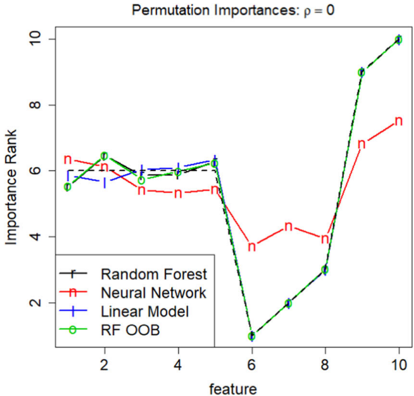
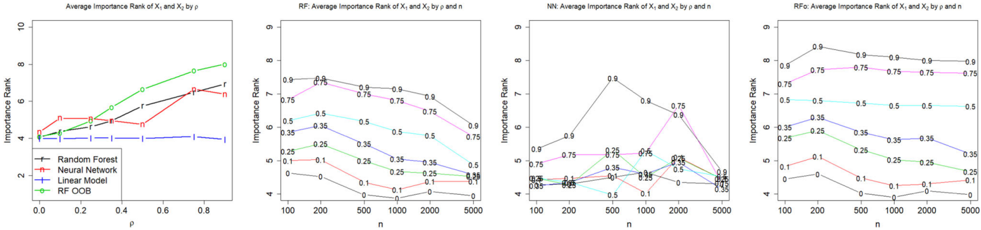
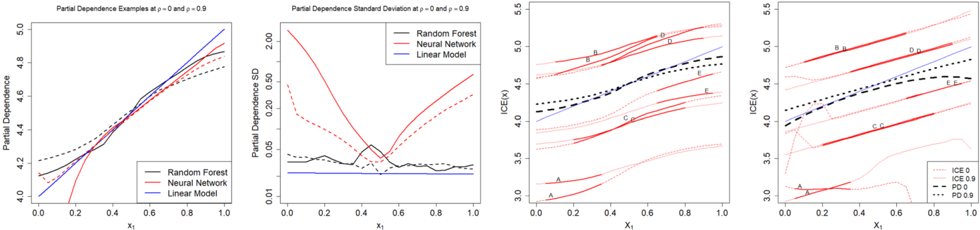
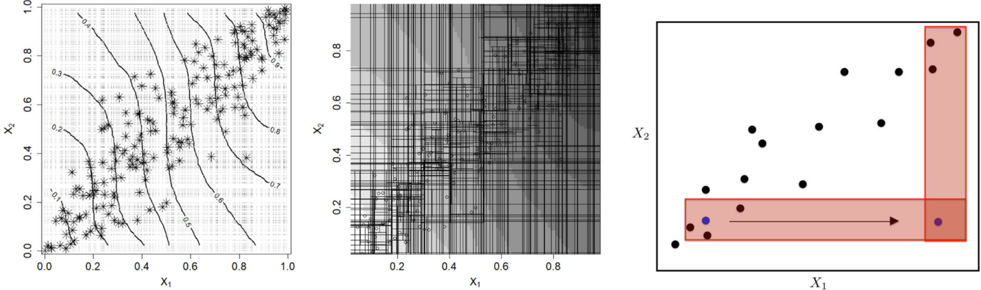
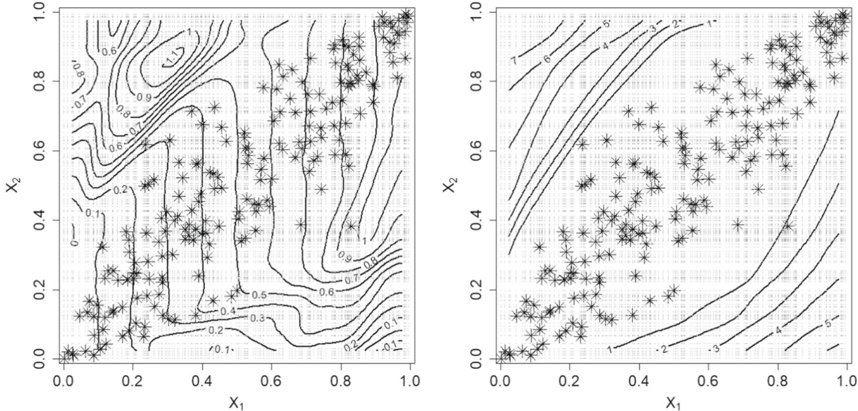
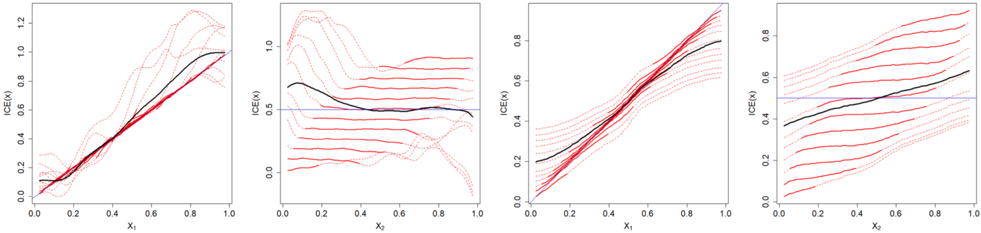
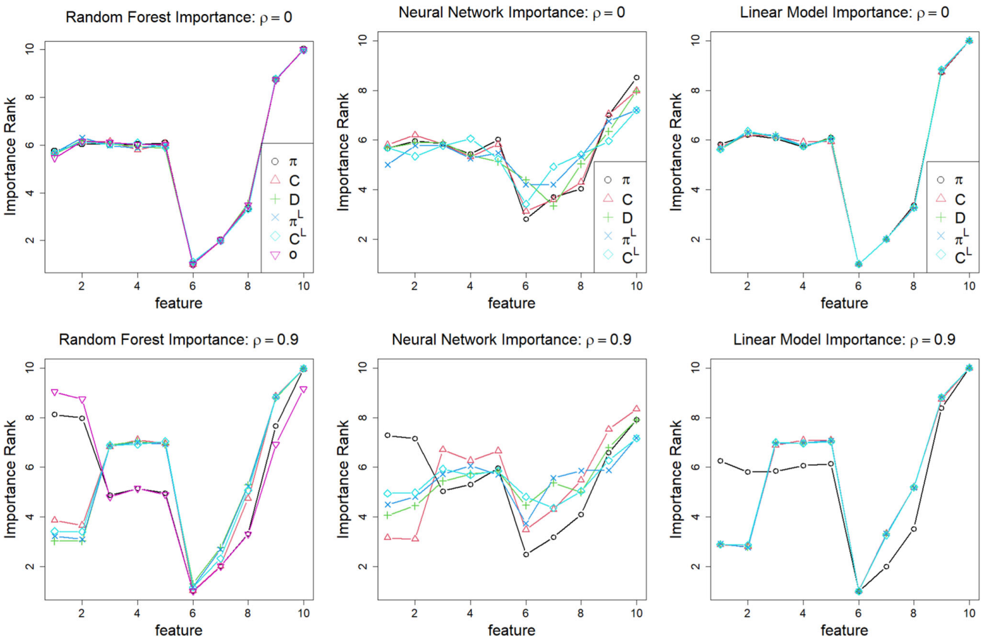
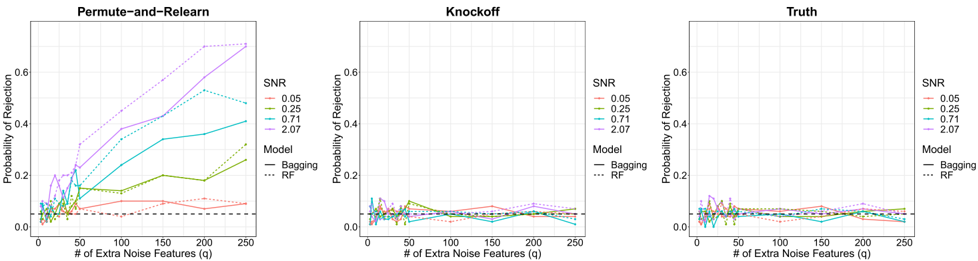
This paper reviews and advocates against the use of permute-and-predict (PaP) methods for interpreting black box functions. Methods such as the variable importance measures proposed for random forests, partial dependence plots, and individual conditional expectation plots remain popular because they are both model-agnostic and depend only on the pre-trained model output, making them computationally efficient and widely available in software. However, numerous studies have found that these tools can produce diagnostics that are highly misleading, particularly when there is strong dependence among features. The purpose of our work here is to (i) review this growing body of literature, (ii) provide further demonstrations of these drawbacks along with a detailed explanation as to why they occur, and (iii) advocate for alternative measures that involve additional modeling. In particular, we describe how breaking dependencies between features in hold-out data places undue emphasis on sparse regions of the feature space by forcing the original model to extrapolate to regions where there is little to no data. We explore these effects across various model setups and find support for previous claims in the literature that PaP metrics can vastly over-emphasize correlated features in both variable importance measures and partial dependence plots. As an alternative, we discuss and recommend more direct approaches that involve measuring the change in model performance after muting the effects of the features under investigation.
Overview
The claims and statistics of this paper haven’t been checked yet.
Free: it reads the open-access text and checks the first 5 claims that cite a source we can check. Create a free account to check every claim.
Integrity signals
Registry
Cites
Statistics
Figures
Verification
Claims the paper makes
The claims and statistics of this paper haven’t been checked yet.
Free: it reads the open-access text and checks the first 5 claims that cite a source we can check. Create a free account to check every claim.
Claims other papers make about this one
Each is checked against this paper’s own text: does it say what the citing paper says it does?
The cited source says what the claim attributes to it.
In the citing paper
“However, these methods can be misleading when correlations exist between input variables 107,109 .”
From Machine learning in concrete science: applications, challenges, and best practices (2022) · cites this paper as [107]
Self-check
Percentages, sums and reported differences re-computed from the paper’s own numbers.
The self-check needs the paper’s full text.
Citations
Cites
Breiman, L. (2001) · Machine Learning · doi:10.1023/a:1010933404324 · Cited by 133,538 · cited 3×
“Breiman (2001) designed the method specifically for use with random forests and considered out-of-bag (OOB) loss in which variable importance is averaged over trees, measured with that part of the data not used to construct the corresponding tree.”
MethodGreedy function approximation: A gradient boosting machine
Friedman, J. H. (2001) · The Annals of Statistics · doi:10.1214/aos/1013203451 · Cited by 30,731
A Unified Approach to Interpreting Model Predictions
Lundberg, S., & Lee, S.-I. (2017) · arXiv · doi:10.48550/arxiv.1705.07874 · Cited by 23,707 · cited 3×
“Saliency (Simonyan et al., 2013) obtains derivatives with respect to x , while LIME (Ribeiro et al., 2016) approximates this with a LASSO method localized to the point of interest by a kernel; Shapley values can also be used for individual predictions (Lundberg and Lee, 2017).”
BackgroundMethod"Why Should I Trust You?": Explaining the Predictions of Any Classifier
Ribeiro, M. T., Singh, S., & Guestrin, C. (2016) · Proceedings of the 22nd ACM SIGKDD International Conference on Knowledge Discovery and Data Mining · doi:10.1145/2939672.2939778 · Cited by 17,555
Generalized Additive Models: An Introduction with R
Wood, S. N. (2017) · doi:10.1201/9781315370279 · Cited by 13,852
Rudin, C. (2019) · Nature Machine Intelligence · doi:10.1038/s42256-019-0048-x · Cited by 10,561 · cited 1×
“As a consequence, many researchers have suggested methods to “X-ray the black box” in order to provide insight into which input features are important and how they effect predictions; a task so precarious that others have advocated against the practice altogether (Rudin, 2019).”
BackgroundNelsen, R. B. (1999) · Lecture Notes in Statistics · doi:10.1007/978-1-4757-3076-0 · Cited by 7,744
Deep Inside Convolutional Networks: Visualising Image Classification Models and Saliency Maps
Simonyan, K., Vedaldi, A., & Zisserman, A. (2013) · arXiv · doi:10.48550/arxiv.1312.6034 · Cited by 5,370 · cited 1×
“Saliency (Simonyan et al., 2013) obtains derivatives with respect to x , while LIME (Ribeiro et al., 2016) approximates this with a LASSO method localized to the point of interest by a kernel; Shapley values can also be used for individual predictions (Lundberg and Lee, 2017).”
MethodTesting Statistical Hypotheses
(2021) · Wiley Series in Probability and Statistics · doi:10.1002/9781119243830.ch12 · Cited by 5,106
Wood, S. N. (2006) · doi:10.1201/9781420010404 · Cited by 4,953
Research works printed but not linked: 1
- Tan, S., Caruana, R., Hooker, G., Koch, P., Gordo, A.: Learning global additive explanations for neural nets using model distillation. arXiv preprint arXiv:1801.08640 (2018) · arXiv
Cited by
Interpretable Machine Learning – A Brief History, State-of-the-Art and Challenges
Molnar, C., Casalicchio, G., & Bischl, B. (2020) · Communications in Computer and Information Science · doi:10.1007/978-3-030-65965-3_28 · Cited by 677
Explainable machine learning in deployment
Bhatt, U., Xiang, A., Sharma, S., Weller, A., Taly, A., Jia, Y., Ghosh, J., Puri, R., Moura, J. M. F., & Eckersley, P. (2020) · Proceedings of the 2020 Conference on Fairness, Accountability, and Transparency · doi:10.1145/3351095.3375624 · Cited by 633
Big-Data Science in Porous Materials: Materials Genomics and Machine Learning
Jablonka, K. M., Ongari, D., Moosavi, S. M., & Smit, B. (2020) · Chemical Reviews · doi:10.1021/acs.chemrev.0c00004 · Cited by 599
Explaining by Removing: A Unified Framework for Model Explanation
Covert, I., Lundberg, S., & Lee, S. (2020) · arXiv (Cornell University) · doi:10.48550/arxiv.2011.14878 · Cited by 116
Machine learning and deep learning—A review for ecologists
Pichler, M., & Hartig, F. (2023) · Methods in Ecology and Evolution · doi:10.1111/2041-210x.14061 · Cited by 454
Machine learning in concrete science: applications, challenges, and best practices
Li, Z., Yoon, J., Zhang, R., Rajabipour, F., Srubar III, W. V., Dabo, I., & Radlińska, A. (2022) · npj Computational Materials · doi:10.1038/s41524-022-00810-x · Cited by 388
Open Problems in Mechanistic Interpretability
Sharkey, L., Chughtai, B., Batson, J., Lindsey, J., Wu, J., Bushnaq, L., Goldowsky-Dill, N., Heimersheim, S., Ortega, A., Bloom, J., et al. (2025) · arXiv · doi:10.48550/arxiv.2501.16496 · Cited by 291
Tank, A., Covert, I., Foti, N., Shojaie, A., & Fox, E. B. (2021) · IEEE Transactions on Pattern Analysis and Machine Intelligence · doi:10.1109/tpami.2021.3065601 · Cited by 282
Molnar, C., Freiesleben, T., König, G., Herbinger, J., Reisinger, T., Casalicchio, G., Wright, M. N., & Bischl, B. (2023) · Communications in computer and information science · doi:10.1007/978-3-031-44064-9_24 · Cited by 237
Problems with Shapley-value-based explanations as feature importance measures
Kumar, I. E., Venkatasubramanian, S., Scheidegger, C., & Friedler, S. (2020) · arXiv · doi:10.48550/arxiv.2002.11097 · Cited by 228
Mienye, I. D., Obaido, G., Jere, N., Mienye, E., Aruleba, K., Emmanuel, I. D., & Ogbuokiri, B. (2024) · Informatics in Medicine Unlocked · doi:10.1016/j.imu.2024.101587 · Cited by 212
General Pitfalls of Model-Agnostic Interpretation Methods for Machine Learning Models
Molnar, C., König, G., Herbinger, J., Freiesleben, T., Dandl, S., Scholbeck, C. A., Casalicchio, G., Grosse-Wentrup, M., & Bischl, B. (2022) · Lecture Notes in Computer Science · doi:10.1007/978-3-031-04083-2_4 · Cited by 211
Molnar, C., König, G., Bischl, B., & Casalicchio, G. (2024) · Data Mining and Knowledge Discovery · doi:10.1007/s10618-022-00901-9 · Cited by 120
Understanding Global Feature Contributions With Additive Importance Measures
Covert, I., Lundberg, S., & Lee, S. (2020) · arXiv (Cornell University) · doi:10.48550/arxiv.2004.00668 · Cited by 191
S-LIME: Stabilized-LIME for Model Explanation
Zhou, Z., Hooker, G., & Wang, F. (2021) · ACM SIGKDD Conference on Knowledge Discovery and Data Mining (KDD) · doi:10.1145/3447548.3467274 · Cited by 189
Self-citationFusing GEDI with earth observation data for large area aboveground biomass mapping
Shendryk, Y. (2022) · International Journal of Applied Earth Observation and Geoinformation · doi:10.1016/j.jag.2022.103108 · Cited by 191
How Interpretable Machine Learning Can Benefit Process Understanding in the Geosciences
Jiang, S., Sweet, L., Blougouras, G., Brenning, A., Li, W., Reichstein, M., Denzler, J., Shangguan, W., Yu, G., Huang, F., et al. (2024) · Earth's Future · doi:10.1029/2024ef004540 · Cited by 182
“When features are highly correlated, these perturbations can extrapolate into “uncharted” regions within the feature space that lie outside the observed joint distribution of the variables, leading to biased assessments of feature importance (Hooker et al., 2021).”
Hatt, M., Krizsan, A. K., Rahmim, A., Bradshaw, T., Costa, P. F., Forgács, A., Seifert, R., Zwanenburg, A., Naqa, I. E., Kinahan, P. E., et al. (2022) · European Journal of Nuclear Medicine and Molecular Imaging · doi:10.1007/s00259-022-06001-6 · Cited by 177
Ayano, Y. M., Schwenker, F., Dufera, B. D., & Debelee, T. G. (2022) · Diagnostics · doi:10.3390/diagnostics13010111 · Cited by 168
“Likewise, in situations where strongly correlated features exist in a dataset, the result from PFI may be biased to the extent that less important features can take the highest importance value [89].”
BackgroundWallace, M. L., Mentch, L., Wheeler, B. J., Tapia, A. L., Richards, M., Zhou, S., Yi, L., Redline, S. S., & Buysse, D. J. (2023) · BMC Medical Research Methodology · doi:10.1186/s12874-023-01965-x · Cited by 153
“OOB VIMPs continue to be the default in most random forest software and are commonly used by applied researchers, despite serious drawbacks that are well-documented in the statistics community [3–6].”
BackgroundInfluentialSelf-citationExplaining Black-Box Algorithms Using Probabilistic Contrastive Counterfactuals
Galhotra, S., Pradhan, R., & Salimi, B. (2021) · ACM SIGMOD International Conference on Management of Data (SIGMOD) · doi:10.1145/3448016.3458455 · Cited by 140
Shapley explainability on the data manifoldPreprint
Frye, C., de Mijolla, D., Begley, T., Cowton, L. R., Stanley, M. J., & Feige, I. (2020) · arXiv (Cornell University) · doi:10.48550/arxiv.2006.01272 · Cited by 136
Unbiased Measurement of Feature Importance in Tree-Based Methods
Zhou, Z., & Hooker, G. (2021) · ACM Transactions on Knowledge Discovery from Data · doi:10.1145/3429445 · Cited by 133
Self-citationA map of global peatland extent created using machine learning (Peat-ML)
Melton, J. R., Chan, E., Millard, K., Fortier, M., Winton, R. S., Martín-López, J. M., Cadillo‐Quiroz, H., Kidd, D. B., & Verchot, L. V. (2022) · Geoscientific model development · doi:10.5194/gmd-15-4709-2022 · Cited by 133
Cross-Validation Strategy Impacts the Performance and Interpretation of Machine Learning Models
Sweet, L., Müller, C., Anand, M., & Zscheischler, J. (2023) · Artificial Intelligence for the Earth Systems · doi:10.1175/aies-d-23-0026.1 · Cited by 133
“Under these conditions, permuting generates arti fi cial datapoints that are far from the joint distribution (Hooker et al. 2021).”
BackgroundResultInfluentialMean decrease accuracy for random forests: inconsistency, and a practical solution via the Sobol-MDA
Bénard, C., da Veiga, S., & Scornet, E. (2022) · Biometrika · doi:10.1093/biomet/asac017 · Cited by 129
EXplainable Artificial Intelligence (XAI)—From Theory to Methods and Applications
Ortigossa, E. S., Gonçalves, T., & Nonato, L. G. (2024) · IEEE Access · doi:10.1109/access.2024.3409843 · Cited by 124
“Hooker and Mentch [225] showed explainability from feature importance methods that rely on permutation-based strategies, such as SHAP, can be highly misleading.”
MethodGrouped feature importance and combined features effect plot
Au, Q., Herbinger, J., Stachl, C., Bischl, B., & Casalicchio, G. (2022) · Data Mining and Knowledge Discovery · doi:10.1007/s10618-022-00840-5 · Cited by 116
Chieregato, M., Frangiamore, F., Morassi, M., Baresi, C., Nici, S., Bassetti, C., Bnà, C., & Galelli, M. (2022) · Scientific Reports · doi:10.1038/s41598-022-07890-1 · Cited by 117
Beyond prediction: methods for interpreting complex models of soil variation
Wadoux, A. M. J. ‐., & Molnar, C. (2022) · Geoderma · doi:10.1016/j.geoderma.2022.115953 · Cited by 115
Feature Importance: A Closer Look at Shapley Values and LOCO
Verdinelli, I., & Wasserman, L. (2024) · Statistical Science · doi:10.1214/24-sts937 · Cited by 95
Unlocking the full potential of Sentinel-1 for flood detection in arid regions
Garg, S., Dasgupta, A., Motagh, M., Martinis, S., & Selvakumaran, S. (2024) · Remote Sensing of Environment · doi:10.1016/j.rse.2024.114417 · Cited by 85
Freiesleben, T., König, G., Molnar, C., & Tejero-Cantero, Á. (2024) · Minds and Machines · doi:10.1007/s11023-024-09691-z · Cited by 83
“First works on this question (Verdinelli and Wasserman 2024, Hooker et al. 2021) indicate that targeted learning may be better suited for standard inferential tasks like estimating feature importance.”
InfluentialArunthavanathan, R., Khan, F. I., Ahmed, S., & Imtiaz, S. A. (2022) · Industrial & Engineering Chemistry Research · doi:10.1021/acs.iecr.1c02731 · Cited by 80
Incremental permutation feature importance (iPFI): towards online explanations on data streams
Fumagalli, F., Muschalik, M., Hüllermeier, E., & Hammer, B. (2023) · Machine Learning · doi:10.1007/s10994-023-06385-y · Cited by 81
“In scenarios where data does not fit into memory or computation time is strictly limited, like in progressive data science for big datasets (Turkay et al. 2018), or rapid online learning from data streams (Bahri et al. 2021), this assumption pro-hibits the use of traditional FI or XAI measures.”
BackgroundExplaining Predictive Uncertainty with Information Theoretic Shapley Values
Watson, D., O'Hara, J., Tax, N., Mudd, R., & Guy, I. (2023) · neural information processing systems · doi:10.52202/075280-0320 · Cited by 81
Supervised machine learning for theory building and testing: Opportunities in operations management
Chou, Y., Chuang, H. H., Chou, P., & Oliva, R. (2023) · Journal of Operations Management · doi:10.1002/joom.1228 · Cited by 78
Schiller, J., Stiller, S., & Ryo, M. (2025) · Artificial Intelligence Review · doi:10.1007/s10462-025-11165-2 · Cited by 80
“The permutation-based feature importance measure, for example, is known to be biased preferentially to select variables that are highly correlated with other predictors (Hooker et al. 2021).”
A Machine Learning Explainability Tutorial for Atmospheric Sciences
Flora, M. L., Potvin, C. K., McGovern, A., & Handler, S. L. (2023) · Artificial Intelligence for the Earth Systems · doi:10.1175/aies-d-23-0018.1 · Cited by 77
A Guide to Feature Importance Methods for Scientific Inference
Ewald, F. K., Bothmann, L., Wright, M. N., Bischl, B., Casalicchio, G., & König, G. (2024) · Communications in computer and information science · doi:10.1007/978-3-031-63797-1_22 · Cited by 79
“Hooker et al. [30] analyze FI methods whose calculations are based on the reduction in performance accuracy when the FOI is unknown.”
BackgroundRandomization as Regularization: A Degrees of Freedom Explanation for Random Forest SuccessPreprint
Mentch, L., & Zhou, S. (2019) · arXiv · doi:10.48550/arxiv.1911.00190 · Cited by 76
Self-citationInterpretable machine learning for psychological research: Opportunities and pitfalls.
Henninger, M., Debelak, R., Rothacher, Y., & Strobl, C. (2025) · Psychological Methods · doi:10.1037/met0000560 · Cited by 74
survex: an R package for explaining machine learning survival models
Spytek, M., Krzyziński, M., Langbein, S., Baniecki, H., Wright, M. N., & Biecek, P. (2023) · Bioinformatics · doi:10.1093/bioinformatics/btad723 · Cited by 71
“…be noted that methods using permute-and-predict mechanism have been criticized for producing misleading results when dealing with strongly correlated variables (Hooker et al. 2019), and there are alternative methods specifically designed to address these challenges (Delicado and Pe ~ na 2019).”
How Interpretable and Trustworthy are GAMs?
Chang, C.-H., Tan, S., Lengerich, B., Goldenberg, A., & Caruana, R. (2021) · Proceedings of the 27th ACM SIGKDD Conference on Knowledge Discovery & Data Mining · doi:10.1145/3447548.3467453 · Cited by 66
Examining nonlinear and interaction effects of multiple determinants on airline travel satisfaction
Gao, K., Yang, Y., & Qu, X. (2021) · Transportation Research Part D Transport and Environment · doi:10.1016/j.trd.2021.102957 · Cited by 65
Boosting Random Forests to Reduce Bias; One-Step Boosted Forest and Its Variance Estimate
Ghosal, I., & Hooker, G. (2020) · Journal of Computational and Graphical Statistics · doi:10.1080/10618600.2020.1820345 · Cited by 67
Self-citationEpistemic values in feature importance methods: Lessons from feminist epistemology
Hancox-Li, L., & Kumar, I. E. (2021) · Proceedings of the 2021 ACM Conference on Fairness, Accountability, and Transparency · doi:10.1145/3442188.3445943 · Cited by 35
Naser, M. Z. (2025) · Computers & Industrial Engineering · doi:10.1016/j.cie.2025.111704 · Cited by 63
Belfield, S. J., Cronin, M., Enoch, S. J., & Firman, J. W. (2023) · PLoS ONE · doi:10.1371/journal.pone.0282924 · Cited by 62
“It should further be noted that a report by Hooker and Mentch advocated against the use of traditional permutation importance methods, arguing that they may be liable to produce misleading results–particularly when handling collections of inter-correlated features [75].”
BackgroundKamran, F., Tang, S., Otles, E., McEvoy, D. S., Saleh, S. N., Gong, J., Li, B. Y., Dutta, S., Liu, X., Medford, R. J., et al. (2022) · BMJ · doi:10.1136/bmj-2021-068576 · Cited by 60
Neural Additive Vector Autoregression Models for Causal Discovery in Time Series
Bussmann, B., Nys, J., & Latré, S. (2021) · Lecture notes in computer science · doi:10.1007/978-3-030-88942-5_35 · Cited by 62
Frassek, M., Arjun, A., & Bolhuis, P. G. (2021) · The Journal of Chemical Physics · doi:10.1063/5.0058639 · Cited by 59
Enhancing credit scoring accuracy with a comprehensive evaluation of alternative data
Hlongwane, R., Ramaboa, K. K. K. M., & Mongwe, W. T. (2024) · PLoS ONE · doi:10.1371/journal.pone.0303566 · Cited by 57
Tideman, L. E. M., Migas, L. G., Djambazova, K. V., Patterson, N. H., Caprioli, R. M., Spraggins, J. M., & de Plas, R. V. (2021) · Analytica Chimica Acta · doi:10.1016/j.aca.2021.338522 · Cited by 54
Efficient permutation testing of variable importance measures by the example of random forests
Hapfelmeier, A., Hornung, R., & Haller, B. (2023) · Computational Statistics & Data Analysis · doi:10.1016/j.csda.2022.107689 · Cited by 49
Quantifying causality in data science with quasi-experiments
Liu, T., Ungar, L., & Kording, K. P. (2021) · Nature Computational Science · doi:10.1038/s43588-020-00005-8 · Cited by 47
BASED-XAI: Breaking Ablation Studies Down for Explainable Artificial IntelligencePreprint
Hameed, I., Sharpe, S., Barcklow, D., Au-Yeung, J. C., Verma, S., Huang, J., Barr, B., & Bruss, C. B. (2022) · arXiv (Cornell University) · doi:10.48550/arxiv.2207.05566 · Cited by 48
“[8] categorize these as "permuteand-predict (PaP)" methods.”
Moral decision making in human-agent teams: human control and the role of explanations
van der Waa, J., Verdult, S., van den Bosch, K., van Diggelen, J., Haije, T., van der Stigchel, B., & Cocu, I. (2021) · Frontiers in Robotics and AI · doi:10.3389/frobt.2021.640647 · Cited by 45
Scornet, E., & Hooker, G. (2026) · Annual Review of Statistics and Its Application · doi:10.1146/annurev-statistics-112723-034707 · Cited by 46
Self-citationExact Shapley values for local and model-true explanations of decision tree ensembles
Campbell, T. W., Röder, H., Georgantas, R. W., & Roder, J. (2022) · Machine Learning with Applications · doi:10.1016/j.mlwa.2022.100345 · Cited by 46
Feature Removal Is a Unifying Principle for Model Explanation MethodsPreprint
Covert, I., Lundberg, S., & Lee, S. (2020) · arXiv (Cornell University) · doi:10.48550/arxiv.2011.03623 · Cited by 44
Accelerated and Interpretable Oblique Random Survival Forests
Jaeger, B. C., Welden, S., Lenoir, K. M., Speiser, J. L., Segar, M. W., Pandey, A., & Pajewski, N. M. (2023) · Journal of Computational and Graphical Statistics · doi:10.1080/10618600.2023.2231048 · Cited by 44
“Moving data to unobserved or perhaps unobservable regions of the predictor space may cause extrapolation error, which Hooker, Mentch, and Zhou (2021) identified as a cause of bias in permutation importance.”
BackgroundFendrich, A. N., Eynde, E. V., Stasinopoulos, D., Rigby, R. A., Yunta, F., & Panagos, P. (2024) · Environment International · doi:10.1016/j.envint.2024.108544 · Cited by 42
Model-agnostic variable importance for predictive uncertainty: an entropy-based approach
Wood, D., Papamarkou, T., Benatan, M., & Allmendinger, R. (2024) · Data Mining and Knowledge Discovery · doi:10.1007/s10618-024-01070-7 · Cited by 42
“We note that Entropy-PFI does not completely mitigate the issues raised in (Hooker et al. 2021), and careful interpretation and understanding of the strengths and weaknesses of each method are required.”
InfluentialBadaoui, M., Buigues, P. J., Berta, D., Mandana, G. M., Gu, H., Földes, T., Dickson, C. J., Horn̆ák, V., Kato, M., Molteni, C., et al. (2022) · Journal of Chemical Theory and Computation · doi:10.1021/acs.jctc.1c00924 · Cited by 43
An ensemble nearest neighbor boosting technique for prediction of Parkinson’s disease
Shastry, K. A. (2023) · Healthcare Analytics · doi:10.1016/j.health.2023.100181 · Cited by 42
Sweet, L., Athanasiadis, I. N., van Bree, R., Castellano, A., Martre, P., Paudel, D., Ruane, A. C., & Zscheischler, J. (2025) · One Earth · doi:10.1016/j.oneear.2025.101233 · Cited by 41
Explainable artificial intelligence for investigating the effect of lifestyle factors on obesity
Khater, T., Tawfik, H., & Singh, B. B. (2024) · Intelligent Systems with Applications · doi:10.1016/j.iswa.2024.200427 · Cited by 39
Boosting the performance of anomalous diffusion classifiers with the proper choice of features
Kowalek, P., Loch-Olszewska, H., Łaszczuk, Ł., Opała, J., & Szwabiński, J. (2022) · Journal of Physics A Mathematical and Theoretical · doi:10.1088/1751-8121/ac6d2a · Cited by 39
Aldeia, G. S. I., & de França, F. O. (2022) · Genetic Programming and Evolvable Machines · doi:10.1007/s10710-022-09435-x · Cited by 38
Buch, J., Williams, P., Juang, C. S., Hansen, W. D., & Gentine, P. (2023) · Geoscientific model development · doi:10.5194/gmd-16-3407-2023 · Cited by 39
Esteghamati, M. Z., Bean, B., Burton, H. V., & Naser, M. Z. (2025) · Journal of Structural Engineering · doi:10.1061/jsendh.steng-13301 · Cited by 38
“…feature importance definitions become problematic for correlated features, particularly when permuted-based feature importance methods are used, causing misleading interpretations due to the shared information in several features (Hooker et al. 2021; Strobl et al. 2008; Molnar et al. 2023).”
Hlongwane, R., Ramaboa, K. K. K. M., & Mongwe, W. T. (2024) · PLoS ONE · doi:10.1371/journal.pone.0308718 · Cited by 36
Gorooh, V. A., Asanjan, A. A., Nguyen, P., Hsu, K., & Sorooshian, S. (2022) · Journal of Hydrometeorology · doi:10.1175/jhm-d-21-0194.1 · Cited by 37
König, G., Molnar, C., Bischl, B., & Grosse‐Wentrup, M. (2021) · Lecture notes in computer science · doi:10.1007/978-3-030-68787-8 · Cited by 36
Interpretable Machine Learning for Survival Analysis
Langbein, S., Krzyziński, M., Spytek, M., Baniecki, H., Biecek, P., & Wright, M. N. (2025) · Biometrical Journal · doi:10.1002/bimj.70089 · Cited by 36
“The distribution of the PFI values under Λ 0 is computed by permuting the target to break the association with the features and fitting a distribution to the PFI scores computed under Λ 0 .”
Zhang, K., Karanth, S. S., Patel, B., Murphy, R., & Jiang, X. (2022) · Journal of Biomedical Informatics · doi:10.1016/j.jbi.2022.104079 · Cited by 34
An Interpretable Machine Learning Strategy for Antimalarial Drug Discovery with LightGBM and SHAP
Noviandy, T. R., Idroes, G. M., & Hardi, I. (2024) · Journal of Future Artificial Intelligence and Technologies · doi:10.62411/faith.2024-16 · Cited by 34
“Permutation Feature Importance and PDP offer valuable insights but can be less robust in capturing feature interactions and may not be as effective in explaining complex models comprehensively [51], [52].”
BackgroundSpatial machine-learning model diagnostics: a model-agnostic distance-based approach
Brenning, A. (2023) · International Journal of Geographical Information Science · doi:10.1080/13658816.2022.2131789 · Cited by 33
Chou, A., Espin, A. T., Kyritsis, N., Huie, J. R., Khatry, S., Funk, J., Hay, J., Lofgreen, A., Shah, R. R., McCann, C., et al. (2022) · PLoS ONE · doi:10.1371/journal.pone.0265254 · Cited by 33
Voges, L. F., Jarren, L. C., & Seifert, S. (2023) · Bioinformatics · doi:10.1093/bioinformatics/btad471 · Cited by 33
“It is know that the frequently applied permutation importance overestimates the importance of correlated features because all dependencies, including those between variables, are broken by the permutation forcing the model to extrapolate to data regions with little to no data (Hooker et al. 2021).”
BackgroundDear XAI Community, We Need to Talk! Fundamental Misconceptions in Current XAI Research
Freiesleben, T., & König, G. (2023) · Communications in Computer and Information Science · doi:10.1007/978-3-031-44064-9_3 · Cited by 32
The promise of automated machine learning for the genetic analysis of complex traits
Manduchi, E., Romano, J. D., & Moore, J. H. (2021) · Human Genetics · doi:10.1007/s00439-021-02393-x · Cited by 31
“The effects of breaking feature dependencies in various model setups are explored in Hooker et al. (2021) and alternative approaches are discussed, which, however, require more computation.”
BackgroundMallet, M. D., Alexander, S. P., Protat, A., & Fiddes, S. L. (2023) · Artificial Intelligence for the Earth Systems · doi:10.1175/aies-d-22-0044.1 · Cited by 30
Decoupling Pixel Flipping and Occlusion Strategy for Consistent XAI Benchmarks
Blücher, S., Vielhaben, J., & Strodthoff, N. (2024) · Transactions on machine learning research · doi:10.48550/arxiv.2401.06654 · Cited by 30
“This is a common point of criticism, as the model needs to some extent extrapolate away from the original data manifold (Hooker and Mentch, 2019; Kumar et al., 2020).”
BackgroundWhy do explanations fail? A typology and discussion on failures in XAIPreprint
Bove, C., Laugel, T., Lesot, M., Tijus, C., & Detyniecki, M. (2024) · arXiv (Cornell University) · doi:10.48550/arxiv.2405.13474 · Cited by 30
“; Casalicchio, Molnar, and Bischl 2019; Hooker, Mentch, and Zhou 2021) A contradiction may thus appear between the semantic relationship of two notions, their actual correlation in the data used to train the model, and the explanation returned by the system.”
Incorporating Artificial Intelligence into Healthcare Workflows: Models and Insights
Dai, T., & Abràmoff, M. D. (2023) · Tutorials in Operations Research: Advancing the Frontiers of OR/MS: From Methodologies to Applications · doi:10.1287/educ.2023.0257 · Cited by 29
Shamsuddin, R., Tabrizi, H. B., & Gottimukkula, P. R. (2025) · AI Perspectives & Advances · doi:10.1186/s42467-024-00016-5 · Cited by 31
Ng, W. L., & Tan, J. S. (2025) · Food and Bioprocess Technology · doi:10.1007/s11947-025-03853-2 · Cited by 29
“…transparency, interpretability techniques such as Testing with Concept Activation Vectors (TCAV) and permutation feature importance analysis (Kim et al., 2018; Hooker et al., 2021; Lundberg and Lee 2017) can improve model trans-parency and build confidence among regulatory bodies and end-users.”
Filho, R. L. C. S., Brito, K. D. S., & Adeodato, P. J. L. (2023) · Expert Systems with Applications · doi:10.1016/j.eswa.2023.119729 · Cited by 28
Avoledo, E., Tognan, A., & Salvati, E. (2023) · Engineering Fracture Mechanics · doi:10.1016/j.engfracmech.2023.109595 · Cited by 27
Position: A Call to Action for a Human-Centered AutoML Paradigm
Lindauer, M., Karl, F., Klier, A., Moosbauer, J., Tornede, A., Mueller, A., Hutter, F., Feurer, M., & Bischl, B. (2024) · International Conference on Machine Learning · doi:10.48550/arxiv.2406.03348 · Cited by 29
“…(Friedman, 2001) or accumulated local effects plots (Apley & Zhu, 2020), methodologies for assessing feature importance (Casalicchio et al., 2019; Hooker et al., 2021; Ewald et al., 2024), and example-based explanations tailored to individual instances, such as Shapley values (Lundberg & Lee,…”
BackgroundBrenning, A. (2023) · Machine Learning · doi:10.1007/s10994-023-06327-8 · Cited by 26
Guerra-Manzanares, A., Bahşi, H., & Luckner, M. (2022) · Journal of Computer Virology and Hacking Techniques · doi:10.1007/s11416-022-00432-3 · Cited by 26
Khajavian, M., Jang, J.-H., Kwon, J.-Y., Lee, J.-M., Lee, S., Hwang, M.-H., Yang, E., Jang, J., & Chae, K. (2026) · Inorganic Chemistry Communications · doi:10.1016/j.inoche.2026.116269 · Cited by 27
How much do we see? On the explainability of partial dependence plots for credit risk scoring
Szepannaek, G., & Lübke, K. (2023) · Argumenta Oeconomica · doi:10.15611/aoe.2023.1.07 · Cited by 25
Lavelle-Hill, R. E., Smith, G., Deininger, H., & Murayama, K. (2025) · Psychological Methods · doi:10.1037/met0000772 · Cited by 25
Variable importance for causal forests: breaking down the heterogeneity of treatment effects
Bénard, C., & Josse, J. (2025) · Journal of Causal Inference · doi:10.1515/jci-2023-0062 · Cited by 24
“Ideally, all variables impacting the treatment e ff ect heterogeneity should be involved in the analysis, even if they are not confounding variables, to better estimate and interpret the treatment e ff ect.”
Ng, W. H., Fink, D., Sorte, F. A. L., Auer, T., Hochachka, W. M., Johnston, A., & Dokter, A. M. (2022) · Global Ecology and Biogeography · doi:10.1111/geb.13460 · Cited by 24
Belaid, M. K., Hüllermeier, E., Rabus, M., & Krestel, R. (2022) · arXiv (Cornell University) · doi:10.48550/arxiv.2207.14160 · Cited by 24
“The example was given in both [39] and [30].”
Method
Metadata
- Authors
- Hooker, G., Mentch, L., & Zhou, S.
- Affiliations
- University of California, Berkeley (US)
- University of Pittsburgh (US)
- Corresponding author
- Hooker, Giles
- Venue
- Statistics and Computing
- Published
- 2021-10-29
- Volume
- 31
- Issue
- 6
- ISSN
- 0960-3174 (ISSN-L)
- 1573-1375
- OpenAlex
- W3209434414
- Cited by
- 264
- References
- 52
- Citations by year
- 2026: 73 · 2025: 51 · 2024: 49 · 2023: 61 · 2022: 28 · 2021: 2
- FWCI
- 12.32
- Type
- journal article
- Language
- en
- Open access
- hybrid
- doi.org
- Licence
- cc-by
- creativecommons.org/licenses/by/4.0 (tdm)
- creativecommons.org/licenses/by/4.0 (vor)
- Locations
- Statistics and Computing (publishedVersion, cc-by)
- arXiv (Cornell University) (submittedVersion)
- arXiv (Cornell University)
- Funders
- Directorate for Mathematical and Physical Sciences (1712554, 1712041, 2015400)
- Topics
- Physical Sciences › Computer Science › Artificial Intelligence › Explainable Artificial Intelligence (XAI)
- Physical Sciences › Mathematics › Statistics and Probability › Statistical Methods and Inference
- Physical Sciences › Computer Science › Artificial Intelligence › Machine Learning and Data Classification
- Keywords
- feature importance, partial dependence plots, individual conditional expectation, random forest, feature dependence, extrapolation, model interpretability, black-box models
About these checks
Registry, retraction, Cites and statistics results are computed, not judged, with one exception: a printed reference that no index lists is read once by a model before it counts as a citation error. Claims are extracted by a model and kept only when their quote appears verbatim in the text; each cited source is then checked, with a model’s help, for whether it says what the claim relies on. Those verdicts can be wrong — read the claim’s quote and the cited source before relying on one.
Statistics and arithmetic are recomputed, not judged.
Confidence bands are shown only for fields calibrated on our annotated test set. None is calibrated yet, so no band is shown.
What counts as a claim ›How we measure confidence ›How we check this ›
Are you an author, or do you see a problem with this page? Request a review
Data sources
Bibliographic data: Semantic Scholar, OpenAlex, Crossref.
Contains information from the Semantic Scholar Academic Graph Datasets, made available under the ODC Attribution License (ODC-BY 1.0).
Semantic Scholar’s data is described in: Kinney, R., et al. (2023). The Semantic Scholar Open Data Platform. arXiv:2301.10140.
