

Unrestricted permutation forces extrapolation: variable importance requires at least one more model, or there is no free variable importance
Open accessThe DOI matches its Crossref record; 49 of the 52 references it cites were found in a registry or an index.
Abstract
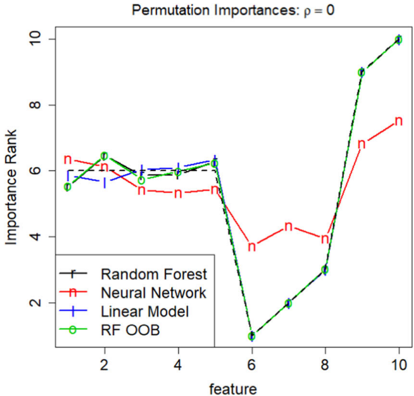
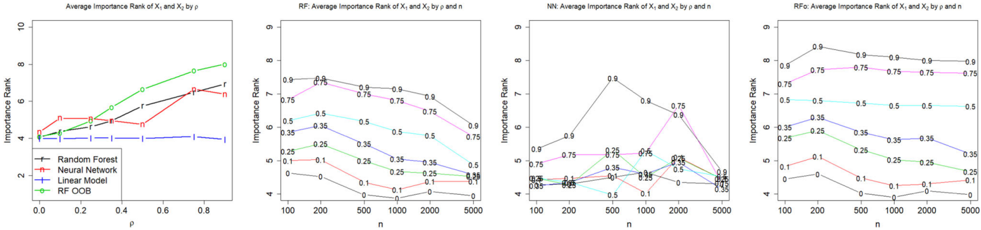
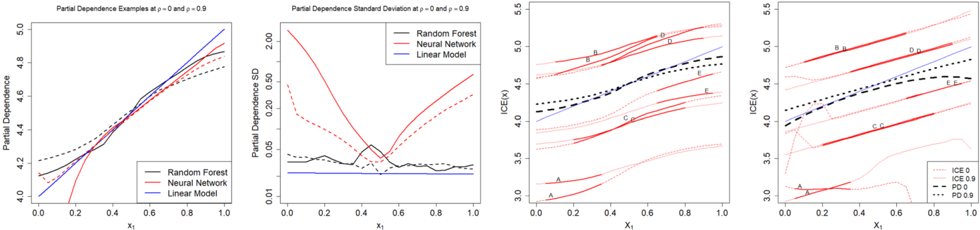
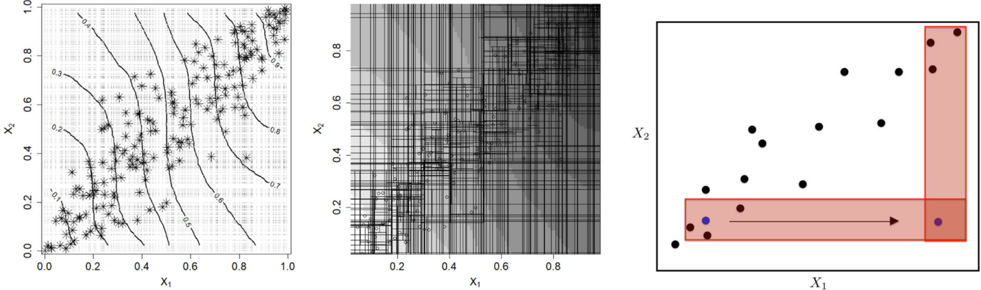
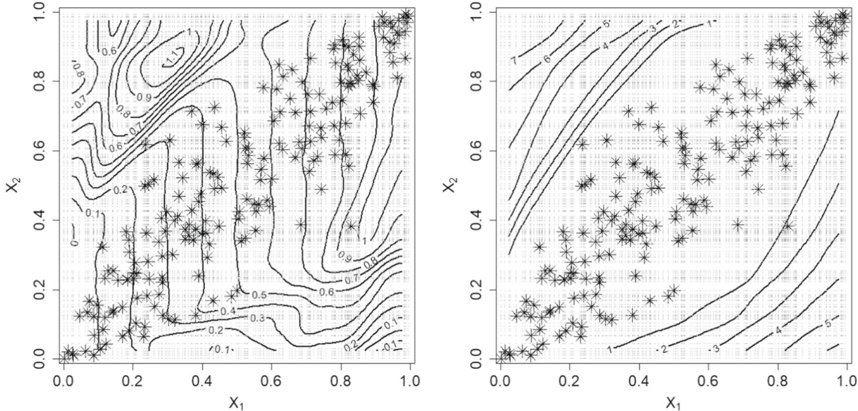
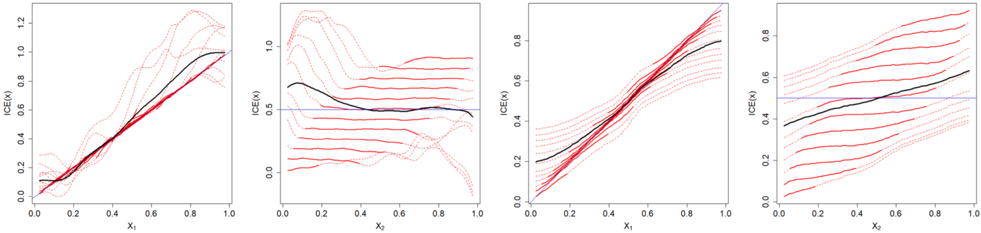
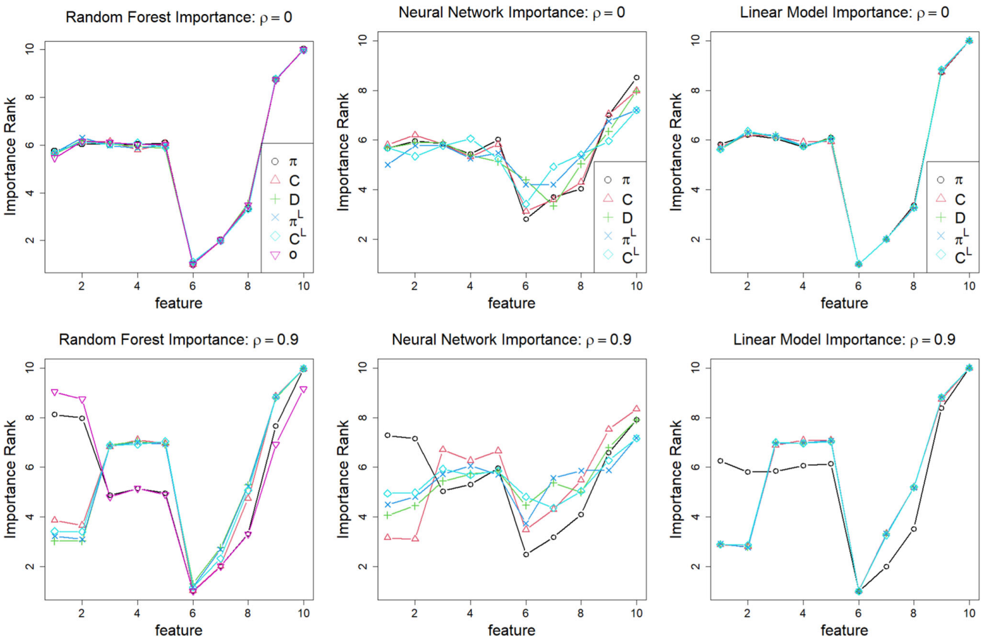
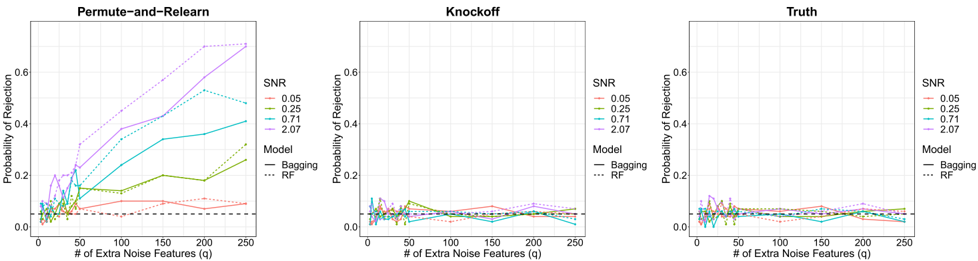
This paper reviews and advocates against the use of permute-and-predict (PaP) methods for interpreting black box functions. Methods such as the variable importance measures proposed for random forests, partial dependence plots, and individual conditional expectation plots remain popular because they are both model-agnostic and depend only on the pre-trained model output, making them computationally efficient and widely available in software. However, numerous studies have found that these tools can produce diagnostics that are highly misleading, particularly when there is strong dependence among features. The purpose of our work here is to (i) review this growing body of literature, (ii) provide further demonstrations of these drawbacks along with a detailed explanation as to why they occur, and (iii) advocate for alternative measures that involve additional modeling. In particular, we describe how breaking dependencies between features in hold-out data places undue emphasis on sparse regions of the feature space by forcing the original model to extrapolate to regions where there is little to no data. We explore these effects across various model setups and find support for previous claims in the literature that PaP metrics can vastly over-emphasize correlated features in both variable importance measures and partial dependence plots. As an alternative, we discuss and recommend more direct approaches that involve measuring the change in model performance after muting the effects of the features under investigation.
Overview
The claims and statistics of this paper haven’t been checked yet.
Free: it reads the open-access text and checks the first 5 claims that cite a source we can check. Create a free account to check every claim.
Integrity signals
Registry
Cites
Statistics
Figures
Verification
Claims the paper makes
The claims and statistics of this paper haven’t been checked yet.
Free: it reads the open-access text and checks the first 5 claims that cite a source we can check. Create a free account to check every claim.
Claims other papers make about this one
Each is checked against this paper’s own text: does it say what the citing paper says it does?
The cited source says what the claim attributes to it.
In the citing paper
“However, these methods can be misleading when correlations exist between input variables 107,109 .”
From Machine learning in concrete science: applications, challenges, and best practices (2022) · cites this paper as [107]
Self-check
Percentages, sums and reported differences re-computed from the paper’s own numbers.
The self-check needs the paper’s full text.
Citations
Cites
Breiman, L. (2001) · Machine Learning · doi:10.1023/a:1010933404324 · Cited by 133,538 · cited 3×
“Breiman (2001) designed the method specifically for use with random forests and considered out-of-bag (OOB) loss in which variable importance is averaged over trees, measured with that part of the data not used to construct the corresponding tree.”
MethodGreedy function approximation: A gradient boosting machine
Friedman, J. H. (2001) · The Annals of Statistics · doi:10.1214/aos/1013203451 · Cited by 30,731
A Unified Approach to Interpreting Model Predictions
Lundberg, S., & Lee, S.-I. (2017) · arXiv · doi:10.48550/arxiv.1705.07874 · Cited by 23,707 · cited 3×
“Saliency (Simonyan et al., 2013) obtains derivatives with respect to x , while LIME (Ribeiro et al., 2016) approximates this with a LASSO method localized to the point of interest by a kernel; Shapley values can also be used for individual predictions (Lundberg and Lee, 2017).”
BackgroundMethod"Why Should I Trust You?": Explaining the Predictions of Any Classifier
Ribeiro, M. T., Singh, S., & Guestrin, C. (2016) · Proceedings of the 22nd ACM SIGKDD International Conference on Knowledge Discovery and Data Mining · doi:10.1145/2939672.2939778 · Cited by 17,555
Generalized Additive Models: An Introduction with R
Wood, S. N. (2017) · doi:10.1201/9781315370279 · Cited by 13,852
Rudin, C. (2019) · Nature Machine Intelligence · doi:10.1038/s42256-019-0048-x · Cited by 10,561 · cited 1×
“As a consequence, many researchers have suggested methods to “X-ray the black box” in order to provide insight into which input features are important and how they effect predictions; a task so precarious that others have advocated against the practice altogether (Rudin, 2019).”
BackgroundNelsen, R. B. (1999) · Lecture Notes in Statistics · doi:10.1007/978-1-4757-3076-0 · Cited by 7,744
Deep Inside Convolutional Networks: Visualising Image Classification Models and Saliency Maps
Simonyan, K., Vedaldi, A., & Zisserman, A. (2013) · arXiv · doi:10.48550/arxiv.1312.6034 · Cited by 5,370 · cited 1×
“Saliency (Simonyan et al., 2013) obtains derivatives with respect to x , while LIME (Ribeiro et al., 2016) approximates this with a LASSO method localized to the point of interest by a kernel; Shapley values can also be used for individual predictions (Lundberg and Lee, 2017).”
MethodTesting Statistical Hypotheses
(2021) · Wiley Series in Probability and Statistics · doi:10.1002/9781119243830.ch12 · Cited by 5,106
Wood, S. N. (2006) · doi:10.1201/9781420010404 · Cited by 4,953
Research works printed but not linked: 1
- Tan, S., Caruana, R., Hooker, G., Koch, P., Gordo, A.: Learning global additive explanations for neural nets using model distillation. arXiv preprint arXiv:1801.08640 (2018) · arXiv
Cited by
Items 201–300 of 511
Mixed-Integer Programming Approaches to Generalized Submodular Optimization and Its Applications
Küçükyavuz, S., & Yu, Q. (2023) · doi:10.1287/educ.2023.0255 · Cited by 7
Young, N. T., Verboncoeur, N., Lam, D. C., & Caballero, M. D. (2023) · Physical Review Physics Education Research · doi:10.1103/physrevphyseducres.19.010134 · Cited by 7
Threading the Needle of On and Off-Manifold Value Functions for Shapley ExplanationsPreprint
Yeh, C., Lee, K.-Y., Liu, F., & Ravikumar, P. (2022) · arXiv (Cornell University) · doi:10.48550/arxiv.2202.11919 · Cited by 7
Donnelly, J. P., Katta, S., Rudin, C. D., & Browne, E. P. (2023) · arXiv (Cornell University) · doi:10.48550/arxiv.2309.13775 · Cited by 7
“Permutation model reliance, as discussed by [1, 15, 21], describes how much worse a model performs when the values of a given feature are permuted such that the feature becomes uninformative.”
BackgroundXin, X., Hooker, G., & Huang, F. (2025) · Insurance: Mathematics and Economics · doi:10.1016/j.insmatheco.2025.103135 · Cited by 6
Self-citationNaseem, Z., Qadir, M. B., Bentalib, A. S., Khaliq, Z., Ahmad, F., Zahid, M., Arshad, S. N., Akbar, A. R., & Afzal, R. (2025) · Microchemical Journal · doi:10.1016/j.microc.2025.113940 · Cited by 6
Factor Importance Ranking and Selection Using Total Indices
Huang, C., & Joseph, V. R. (2025) · Technometrics · doi:10.1080/00401706.2025.2483531 · Cited by 6
“…and accuracy for classification, when this factor is permuted (Breiman 2001; Strobl et al. 2007; Grömping 2009; Fisher, Rudin, and Dominici 2019; Hooker, Mentch, and Zhou 2021) or dropped (Gevrey, Dimopoulos, and Lek 2003; Williamson et al. 2021, 2023; Verdinelli and Wasserman 2023) while other…”
Koutroulis, G., Botler, L. H., Mutlu, B., Diwold, K., Römer, K., & Kern, R. (2021) · ACM Transactions on Intelligent Systems and Technology · doi:10.1145/3480971 · Cited by 6
Metrics for Evaluating Interface Explainability Models for Cyberattack Detection in IoT Data
Rida, A. A., Amhaz, R., & Parrend, P. (2023) · Lecture notes in computer science · doi:10.1007/978-3-031-44355-8_13 · Cited by 6
Feature selection for a continental-scale geospatial model of environmental sound levels
Pedersen, K., Transtrum, M. K., Gee, K. L., Lympany, S. V., James, M. M., & Salton, A. R. (2023) · The Journal of the Acoustical Society of America · doi:10.1121/10.0020659 · Cited by 7
Deep Learning-Based Estimation and Goodness-of-Fit for Large-Scale Confirmatory Item Factor AnalysisPreprint
Urban, C. J., & Bauer, D. J. (2021) · PsyArXiv (OSF Preprints) · doi:10.31234/osf.io/ake6j · Cited by 6
Direction of impact for explainable risk assessment modeling
Borgonovo, E., Baucells, M., Rosa, A. D., Plischke, E., Barr, J., & RABITZ, H. A. (2025) · Risk Analysis · doi:10.1111/risa.70003 · Cited by 5
“This difference has been analyzed from a numerical and data-driven perspective in works such as Apley and Zhu (2020) and Hooker et al. (2021) (We refer to Chapter 8 of Molnar, 2018, for additional details.)”
Chafe, O. E., & Fried, J. S. (2025) · Forest Ecology and Management · doi:10.1016/j.foreco.2025.123003 · Cited by 5
Tree Ensemble Explainability through the Hoeffding Functional Decomposition and TreeHFD Algorithm
Bénard, C. (2025) · neural information processing systems · doi:10.52202/085713-1882 · Cited by 5
AICO: Feature significance tests for supervised learning
Giesecke, K., Horel, E., & Jirachotkulthorn, C. (2026) · Proceedings of the National Academy of Sciences · doi:10.1073/pnas.2530045123 · Cited by 5
“Under Assumption 3.1, the CI [ 14 ] has coverage probability 1 − 𝛼 for 𝛼 ∈ ( 0, 1 ) .”
InfluentialInterpretable long-horizon air pollution forecasting using a transformer-based framework
Zhang, Z., Ma, X., Engardt, M., Schlesinger, D., & Johansson, C. (2026) · Expert Systems with Applications · doi:10.1016/j.eswa.2026.131719 · Cited by 5
Asymmetric feature interaction for interpreting model predictions
Lu, X., Ma, J., & Zhang, H. (2023) · Findings of the Association for Computational Linguistics: ACL (Findings of ACL) · doi:10.18653/v1/2023.findings-acl.286 · Cited by 5
Frank, B., Strunk, J. L., Fried, J. S., Wolken, K., & McKenzie, S. C. (2025) · Forest Ecology and Management · doi:10.1016/j.foreco.2025.123002 · Cited by 5
Rahimiaghdam, S., & Alemdar, H. O. (2025) · Neural Computing and Applications · doi:10.1007/s00521-025-11583-x · Cited by 5
“However, the stability of interpretative models is impacted due to LIME’s reliance on random perturbation [12].”
Data-driven Parametric Insurance Framework Using Bayesian Neural NetworksPreprint
Pang, S., & Choi, C. (2022) · arXiv (Cornell University) · doi:10.48550/arxiv.2209.05307 · Cited by 5
Challenges in Variable Importance Ranking Under CorrelationPreprint
Liang, A., Jemielita, T., Liaw, A. I., Svetnik, V., Huang, L., Baumgartner, R., & Klusowski, J. M. (2024) · arXiv (Cornell University) · doi:10.48550/arxiv.2402.03447 · Cited by 5
“For example, in [HMZ21] extrapolation bias that artificially inflates permutation-based variable importance under feature correlation has been investigated.”
BackgroundMethodInfluentialKanagarla, K. P. B. (2024) · SSRN Electronic Journal · doi:10.2139/ssrn.5012468 · Cited by 5
Integrated models for predicting start-ups evolution
Garkavenko, M. (2022) · theses.fr (ABES) · doi:10.70675/3440d1e9zd056z4868z9ac2z2e0f7a627835 · Cited by 5
Top-$k$ Feature Importance Ranking
Chen, Y., Tang, T., & Allen, G. I. (2025) · Transactions on machine learning research · doi:10.48550/arxiv.2509.15420 · Cited by 4
“This issue is further exacerbated in realistic settings with correlated and high-dimensional data (e.g., in genomics), where existing feature importance estimates are known to be highly unstable and unreliable [Nicodemus and Malley, 2009, Nicodemus, 2011, Hooker et al., 2021].”
Luo, Y., Zhang, Z., Lin, J., Owens, G., & Chen, Z. (2025) · Journal of environmental chemical engineering · doi:10.1016/j.jece.2025.119632 · Cited by 4
Izadpanah, M., Vaezi, A., Asgary, A., Ayanso, A., & Kusy, M. (2026) · Reliability Engineering & System Safety · doi:10.1016/j.ress.2026.112225 · Cited by 4
Machine learning identifies proteomic risk factors across 23 diseases
Meng, L., Li, M., Kong, X., Zhang, T., Álvez, M. B., Liao, X., Türkez, H., Altay, Ö., Zhang, C., Uhlén, M., et al. (2026) · iScience · doi:10.1016/j.isci.2026.114687 · Cited by 4
An Interpretable Machine Learning Approach to Prioritizing Factors Contributing to Clinician Burnout
Pillai, M., Adapa, K., Foster, M. L., Kratzke, I. M., Charguia, N., & Mazur, L. M. (2022) · Lecture notes in computer science · doi:10.1007/978-3-031-16564-1_15 · Cited by 4
Mining Nonlinear Dynamics in Operational Data for Process Improvement
Yang, H. Y. (2023) · doi:10.1287/educ.2023.0261 · Cited by 4
Abstract Interpretation-Based Feature Importance for Support Vector Machines
Pal, A., Ranzato, F., Urban, C., & Zanella, M. (2023) · Lecture notes in computer science · doi:10.1007/978-3-031-50524-9_2 · Cited by 4
“The downsides of PFI and SHAP are that their outcome may greatly vary depending on the dataset and may be misleading when features are correlated [25].”
BackgroundInterpretable Models via Pairwise Permutations Algorithm
Maasland, T., Pereira, J. P. B., Bastos, D., de Goffau, M. C., Nieuwdorp, M., Zwinderman, A. H., & Levin, E. (2021) · Communications in computer and information science · doi:10.1007/978-3-030-93736-2_2 · Cited by 4
Singh, M. M., & Geyer, P. (2020) · Lirias · Cited by 4
Decomposition of Global Feature Importance into Direct and Associative Components (DEDACT)Preprint
König, G., Freiesleben, T., Bischl, B., Casalicchio, G., & Grosse‐Wentrup, M. (2021) · arXiv (Cornell University) · doi:10.48550/arxiv.2106.08086 · Cited by 3
Learning state-action features for general game playing
Soemers, D. J. N. J. (2023) · Research Publications (Maastricht University) · doi:10.26481/dis.20230425ds · Cited by 4
Shapley Sets: Feature Attribution via Recursive Function DecompositionPreprint
Sivill, T., & Flach, P. A. (2023) · arXiv (Cornell University) · doi:10.48550/arxiv.2307.01777 · Cited by 4
“Off-manifold attributions in the presence of interaction in the data recover the ground truth attributions reliably when g is a linear model, however, that breaks down when non-linear models are used as the approximating function g [8].”
BackgroundMethodResultInfluentialBaptista, R., O’Reilly, E., & Xie, Y. (2024) · arXiv (Cornell University) · doi:10.48550/arxiv.2407.09964 · Cited by 4
“There has been significant effort to study and address these drawbacks (see recent work by Hooker et al. (2021); Agarwal et al. (2023); B´enard et al. (2022) and the references therein) and several alternative approaches for variable selection using random forests have also been proposed (Lundberg…”
BackgroundDisentangled Feature ImportancePreprint
Du, J., Roeder, K., & Wasserman, L. (2025) · arXiv (Cornell University) · doi:10.48550/arxiv.2507.00260 · Cited by 4
Explaining decision structures and data value for neural networks in crop yield prediction
von Bloh, M., Seiler, B. B., van der Smagt, P., & Asseng, S. (2024) · Environmental Research Letters · doi:10.1088/1748-9326/ad959f · Cited by 3
Deif, M. A., Attar, H. H., Alomoush, W., & Hafez, M. (2025) · Applied Computational Intelligence and Soft Computing · doi:10.1155/acis/9961816 · Cited by 3
“Permutation importance [57–59] is a model-agnostic technique to assess the importance of each feature for the concrete mixture strength prediction.”
Jain, S., Kathuria, D., Srinivasan, R., Schramm, M., Bawa, A., Ale, S., Jeong, J., & White, M. J. (2025) · Journal of Hydrology · doi:10.1016/j.jhydrol.2025.134687 · Cited by 3
Paneru, H., & Bhandary, N. P. (2026) · SOILS AND FOUNDATIONS · doi:10.1016/j.sandf.2025.101728 · Cited by 3
Interpretable machine learning for ambient air pollution modeling: A systemic review
Shao, Y., Liu, R., Huang, S., Fang, W., Yang, J., Liu, M., Bi, J., & Ma, Z. (2026) · Atmospheric Research · doi:10.1016/j.atmosres.2026.108869 · Cited by 3
Hahn, S., Allgaier, N. A., & Garavan, H. (2024) · Neuromethods · doi:10.1007/978-1-0716-4260-3_12 · Cited by 3
Svitelman, V. S., Saveleva, E. A., & Neuvazhaev, G. D. (2024) · Stochastic Environmental Research and Risk Assessment · doi:10.1007/s00477-024-02869-y · Cited by 3
Kiker, T. J., Steiner, J. F., Garraffo, C., Méndez, M., & Zhang, L. (2023) · Monthly Notices of the Royal Astronomical Society · doi:10.1093/mnras/stad1643 · Cited by 3
Explainable Machine Learning for Functional Data
Goode, K., Tucker, J. D., Ries, D., & Hofmann, H. (2025) · Journal of Data Science · doi:10.6339/25-jds1212 · Cited by 3
Prediction and simulation of PEEP setting effects with machine learning models
Strodthoff, C., Frerichs, I., Weiler, N., & Bergh, B. (2023) · Medicina Intensiva (English Edition) · doi:10.1016/j.medine.2023.09.005 · Cited by 3
Maitra, I., Lin, R., Chen, E. Y. H., Donnelly, J. P., Šćepanović, S., & Rudin, C. D. (2025) · Proceedings of the AAAI Conference on Artificial Intelligence · doi:10.1609/aaai.v39i27.35044 · Cited by 3
Distilling Black-Box Travel Mode Choice Model for Behavioral InterpretationPreprint
Zhao, X., Zhou, Z., Yan, X. “., & Hentenryck, P. V. (2019) · arXiv (Cornell University) · doi:10.48550/arxiv.1910.13930 · Cited by 3
Damiano, L. A., Johnson, M., Teixeira, J., Morris, M. D., & Niemi, J. (2022) · arXiv (Cornell University) · doi:10.48550/arxiv.2209.00044 · Cited by 3
“, 2021), a likely situation given the dependence between measurements within a functional profile, studies addressing this have so far considered nonfunctional features (Strobl et al., 2007, 2008; Nicodemus et al., 2010; Hooker et al., 2021).”
BackgroundInfluentialMMD-based Variable Importance for Distributional Random ForestPreprint
Bénard, C., Näf, J., & Josse, J. (2023) · arXiv (Cornell University) · doi:10.48550/arxiv.2310.12115 · Cited by 3
“In particular, the drop and relearn principle is often advocated as an efficient approach for variable importance, targeting well-defined theoretical quantities (Mentch and Hooker, 2016; Candes et al., 2018; Lei et al., 2018; Williamson et al., 2022; Hooker et al., 2021).”
BackgroundStatistical interpretation of high-dimensional complex prediction models for biomedical data
Chamma, A. (2024) · theses.fr (ABES) · doi:10.70675/6ea1a1ddz4846z496czbd68zc868183497a9 · Cited by 3
Multi forests: Variable importance for multi-class outcomesPreprint
Hornung, R., & Hapfelmeier, A. (2024) · arXiv (Cornell University) · doi:10.48550/arxiv.2409.08925 · Cited by 3
“This is because the permutation of covariates that are strongly correlated with others leads to extrapolations into areas of the covariate space with low data density, where the trees provide poor predictions [Hooker et al., 2021].”
BackgroundMethodKhan, M. K. A., Saarela, O., & Kustra, R. (2025) · arXiv (Cornell University) · doi:10.48550/arxiv.2501.16988 · Cited by 3
An Explainable AI Handbook for Psychologists: Methods, Opportunities, and ChallengesPreprint
Lavelle-Hill, R. E., Smith, G., Deininger, H., & Murayama, K. (2025) · OSF Preprints (OSF Preprints) · doi:10.31219/osf.io/wgx34_v3 · Cited by 3
Forêts aléatoires et interprétabilité des algorithmes d’apprentissage
Bénard, C. (2021) · theses.fr (ABES) · doi:10.70675/0d030d99z2eb4z4ea1zb83fz4861363fb8f5 · Cited by 3
Interpretability of machine learning with hydrological applications
CAPPELLI, F. (n.d.) · Archivio istituzionale della Ricerca - Bocconi · Cited by 3
Zuo, Y., Yang, S., & Zhao, W. (2026) · Frontiers in Physiology · doi:10.3389/fphys.2026.1830956 · Cited by 2
“By randomly permuting individual gene values, PFI inadvertently generates Out-of-Distribution (OOD) samples that violate these underlying biological correlation structures (Hooker et al., 2021; Molnar et al., 2024).”
Becker, J., José, E. S., Oladzad-Abbasabady, N., & Batta, R. (2023) · doi:10.1287/educ.2023.0262 · Cited by 2
Unveiling Brake Faults in Heavy Vehicles with Explainable AI
Khan, M. A., Khan, M., Khan, S., Farooq, A., Wei, L., Ahmad, Z., & Ahmad, F. (2025) · Lecture notes in networks and systems · doi:10.1007/978-981-96-3355-5_43 · Cited by 2
Database Views as Explanations for Relational Deep Learning
Rissaki, A., Fountalis, I., Gatterbauer, W., & Kimelfeld, B. (2026) · Proceedings of the VLDB Endowment · doi:10.14778/3801059.3801075 · Cited by 2
Explainable AI-based Android Malware Detection
Sharma, M. V. S., Tilak, M., Pareek, U., Sankaran, S., & Sharma, A. (2025) · SN Computer Science · doi:10.1007/s42979-025-04548-3 · Cited by 2
Kuti-Kreszács, M., Diosan, L., & Bodó, Z. (2026) · Acta Universitatis Sapientiae Informatica · doi:10.1007/s44427-026-00022-x · Cited by 2
Amiruddin, H. B., Arif, S., Assegaf, M. A. H., Sakka, S., & Fahruddin, F. (2026) · Ecological Engineering & Environmental Technology · doi:10.12912/27197050/220342 · Cited by 2
“Higher MDA values indicate greater variable importance in determining flood susceptibility (Debeer and Strobl, 2020; Hooker et al., 2021; Wies et al., 2023).”
Bridging the gap: Explainable AI for advancing Earth System Science
Huang, F., Jiang, S., Shangguan, W., Li, L., Zhang, Y., Zhang, R., Li, Q., Li, D., & Dai, Y. (2026) · Science China Earth Sciences · doi:10.1007/s11430-025-1898-3 · Cited by 2
“…introduces uncertainties: (1) overinterpreting post-hoc explanations by equating feature importance with physical causality (Aas et al., 2021; Hooker et al., 2021; Krell et al., 2025) or overlooking spatial auto-correlation artifacts (Chen et al., 2024; Ke et al., 2025); (2) generating…”
Gider, V., Ekinci, S., İzci, D., Gökalp, İ., Rashdan, M., & Salman, M. (2026) · Scientific Reports · doi:10.1038/s41598-026-55751-y · Cited by 2
“Although significance scores can be directly calculated in tree-based models, permutation feature importance analysis, which is a model-agnostic method, was preferred in this study in order to make a fair comparison between deep architectures 60 .”
How Many Trees in a Random Forest? A Revisited Approach With Plateau Search and Optuna Integration
Porvatov, V., Dukhovny, A. A., & Lange, A. (2026) · IEEE Access · doi:10.1109/access.2026.3705574 · Cited by 2
“…shuffling (often referred to as MDA in Random Forests; Breiman [2]), with well-documented sensitivity to correlations and other biases [35], [36]; Shapley-value explanations: SHAP [37], [38], which is typically local but can be aggregated into global importances; for tree ensembles,…”
Sadok, I., Douini, H., Faqih, S. A., & Aldallal, R. A. (2026) · AppliedMath · doi:10.3390/appliedmath6070106 · Cited by 2
Familywise Feature Importance Stability in Chemical and Materials Machine Learning
Lai, R., Liu, X., Wang, Y., Rignanese, G., & Li, W. (2026) · Journal of Chemical Information and Modeling · doi:10.1021/acs.jcim.6c00893 · Cited by 2
Kukkonen, M., Myllymäki, M., Räty, J., Varvia, P., Maltamo, M., Korhonen, L., & Packalén, P. (2024) · Annals of Forest Science · doi:10.1186/s13595-024-01251-w · Cited by 2
“Band importance was computed using ZOIB regression with a permute-and-relearn approach (Hooker et al. 2021) with tree species proportion assigned as the dependent variable and the average values of the bands at the plot-level assigned as predictor variables.”
MethodSelecting the most important variables for crime prediction based on machine learning approaches
Zhang, X., Weili, Z., & Liu, Y. (2025) · doi:10.1117/12.3047937 · Cited by 2
“Permutation variable Importance (PVIM) is a method to calculate the importance of model features 19 .”
Machine Learning-Based Identification of Root Causes for Defective Units in Manufacturing Processes
Rotter, D., Liebgott, F., Kessler, D., Liebgott, A., & Yang, B. (2023) · ARENA2036 · doi:10.1007/978-3-031-27933-1_16 · Cited by 2
Using slisemap to interpret physical data
Seppäläinen, L., Björklund, A., Besel, V., & Puolamäki, K. (2024) · PLoS ONE · doi:10.1371/journal.pone.0297714 · Cited by 2
“Evaluating black box models on data unlike the training data leads to unreliable predictions [16] and nonsensical explanations [13]. slisemap [17] is a recently introduced manifold visualisation method that finds local explanations for all data items and an embedding such that nearby data items…”
BackgroundJoint global and local interpretation method for CIN status classification in breast cancer
Liu, L., Zhang, P., Liu, Z., Sun, T., & Qiao, H. (2024) · Heliyon · doi:10.1016/j.heliyon.2024.e27054 · Cited by 2
Machine Learning and Multiple Imputation Methods
Teegavarapu, R. S. V. (2024) · Water science and technology library · doi:10.1007/978-3-031-60946-6_6 · Cited by 2
Mathematical Theory of Collinearity Effects on Machine Learning Variable Importance Measures
Bladen, K. K., Cutler, D. R., & Wisler, A. A. (2026) · Transactions on machine learning research · doi:10.48550/arxiv.2510.00557 · Cited by 2
“This independence can also be guaranteed when variables are standardized (S.T. Var( x vi ) = 1 , for all i ) [16].”
InfluentialEvaluating Interpretability Using Logical Relations: Do Saliency Maps Encode Relevant Information?
Schwenke, L., & Atzmueller, M. (2025) · IEEE International Conference on Data Science and Advanced Analytics (DSAA) · doi:10.1109/dsaa65442.2025.11248004 · Cited by 2
“While methods like SHAP and FeaturePermutation are model agnostic and mathematically well-founded, they still run into problems [10], [52]–[56].”
Interpretable Models via Pairwise permutations algorithmPreprint
Maaslandand, T., Pereira, J. P. B., Bastos, D., de Goffau, M. C., Nieuwdorp, M., Zwinderman, A. H., & Levin, E. (2021) · arXiv (Cornell University) · doi:10.48550/arxiv.2111.09145 · Cited by 2
Smithies, T. D., Campbell, M. J., Ramsbottom, N., & Toth, A. J. (2021) · Research Square · doi:10.21203/rs.3.rs-563685/v1 · Cited by 2
Sun, Q. (2022) · arXiv (Cornell University) · doi:10.48550/arxiv.2211.04409 · Cited by 2
“They also force the model to extrapolate to unrealistic samples when features are correlated (Hooker et al., 2021).”
BackgroundSome explainability methods for statistical learning models in actuarial science
Maillart, A. (2021) · theses.fr (ABES) · doi:10.70675/57ffd4e1z27f2z4434za21az31507d17aebf · Cited by 2
Cheng, S., Blanco, M. N., Sheppard, L. A., Shojaie, A., & Szpiro, A. A. (2024) · arXiv (Cornell University) · doi:10.48550/arxiv.2406.01982 · Cited by 2
“Hooker et al. (2021) summarized and described common challenges for different variable importance measures, most of which are intended for non-spatial models.”
Causal Analysis of Shapley Values: Conditional vs. MarginalPreprint
Rozenfeld, I. (2024) · arXiv (Cornell University) · doi:10.48550/arxiv.2409.06157 · Cited by 2
Functional relevance based on the continuous Shapley valuePreprint
Delicado, P., & Pachón-García, C. (2024) · arXiv (Cornell University) · doi:10.48550/arxiv.2411.18575 · Cited by 2
Beyond P-values: A Multi-Metric Framework for Robust Feature Selection and Predictive ModelingPreprint
Chen, R., Ghosh, A., Hu, J., Chen, Y., Moore, J. H., & Li, R. (2025) · bioRxiv (Cold Spring Harbor Laboratory) · doi:10.1101/2025.10.05.680380 · Cited by 2
“…machine learning-based variable importance metrics, such as permutation importance, Shapley values, and Gini impurity, offer alternative strategies that can capture complex interactions among variables [Lundberg and Lee, 2017, Breiman et al., 2017, Fisher et al., 2019, Hooker et al., 2021].”
A Principled Approach for Defining and Comparing Variable Importance MeasuresPreprint
Lobo, A. R., Neuvial, P., & Thirion, B. (2025) · arXiv (Cornell University) · doi:10.48550/arxiv.2507.17306 · Cited by 2
Feature Importance in Imbalanced Binary Classification with Ensemble Methods
Glamocak, S. (2024) · reposiTUm (TU Wien) · doi:10.34726/hss.2024.113905 · Cited by 2
Importance inversion transfer identifies shared principles for cross-domain learningPreprint
Caligiore, D. (2026) · arXiv (Cornell University) · doi:10.48550/arxiv.2602.09116 · Cited by 2
First-Mover Bias in Gradient Boosting Explanations: Mechanism, Detection, and ResolutionPreprint
Caraker, D., Arnold, B., & Rhoads, D. (2026) · arXiv (Cornell University) · doi:10.5281/zenodo.19060132 · Cited by 2
Kouvelis, P. (2023) · doi:10.1287/educ.2023.0265 · Cited by 1
Conditional Local Importance by Quantile Expectations
Bladen, K. K., Cutler, A., Cutler, D. R., & Moon, K. R. (2024) · Transactions on machine learning research · doi:10.48550/arxiv.2411.08821 · Cited by 1
“While not strictly required for all local importance methods, this property carries strong conceptual merit, since assigning nonzero importance to variables with no influence risks undermining interpretability (Fisher et al., 2019; Hooker et al., 2021).”
Novel Considerations in the ML/AI Modeling of Large-Scale Learning Loss
Elizondo, M., Yu, J., Payan, D., Feng, L., & Tešić, J. (2025) · IEEE Access · doi:10.1109/access.2025.3526412 · Cited by 1
Kropiunig, J., & Sørensen, Ø. (2025) · Neuroinformatics · doi:10.1007/s12021-025-09737-2 · Cited by 1
“However, if features are highly correlated, the model’s performance might not drop since the information is encoded in other features, leading to potentially underestimating important features and misleading explanations (Hooker et al., 2021).”
Goldberg, B., Pederson, E. N., & Ouyang, Z. (2025) · Cancer Informatics · doi:10.1177/11769351251393146 · Cited by 1
“19 Other feature importance metrics such as SHAP are computationally intensive but may be useful in related applications of URF.”
Chen, Y., & Ruan, H. (2025) · International Conference on Electrical Engineering and Mechatronics Technology (ICEEMT) · doi:10.1109/iceemt66565.2025.11280732 · Cited by 1
“To further enhance the reliability and interpretability of forecasting results, we incorporate explainable artificial intelligence (XAI) techniques, including Local Interpretable Model-agnostic Explanations (LIME)[5] and permutation importance[6].”
Machine Learning in Epidemiology
Wright, M. N., Burk, L., Golchian, P., Kapar, J., Koenen, N., & Langbein, S. (2024) · Springer eBooks · doi:10.1007/978-1-4614-6625-3_81-1 · Cited by 1
“This issue can be tackled by shrinking the domain of the feature of interest conditioned on the remaining features (Hooker et al, 2021).”
Multi-choice Solutions for Feature and Parameter Importance
Fryer, D., Lowing, D., Strümke, I., & Nguyen, H. D. (2026) · Communications in computer and information science · doi:10.1007/978-981-95-6888-8_4 · Cited by 1
Akor, E., Olorunnisola, D., Alfred, M. O., Ejeromedoghene, O., & Omorogie, M. O. (2026) · RSC Advances · doi:10.1039/d5ra09776b · Cited by 1
Class-Focused Variable Importance in Random Forests for Multi-Class Outcomes
Hornung, R., & Hapfelmeier, A. (2026) · Journal of Classification · doi:10.1007/s00357-026-09545-6 · Cited by 1
“This is because the permutation of covariates that are strongly correlated with others leads to extrapolations into areas of the covariate space with low data density, where the trees provide poor predictions (Hooker et al., 2021).”
Metadata
- Authors
- Hooker, G., Mentch, L., & Zhou, S.
- Affiliations
- University of California, Berkeley (US)
- University of Pittsburgh (US)
- Corresponding author
- Hooker, Giles
- Venue
- Statistics and Computing
- Published
- 2021-10-29
- Volume
- 31
- Issue
- 6
- ISSN
- 0960-3174 (ISSN-L)
- 1573-1375
- OpenAlex
- W3209434414
- Cited by
- 264
- References
- 52
- Citations by year
- 2026: 73 · 2025: 51 · 2024: 49 · 2023: 61 · 2022: 28 · 2021: 2
- FWCI
- 12.32
- Type
- journal article
- Language
- en
- Open access
- hybrid
- doi.org
- Licence
- cc-by
- creativecommons.org/licenses/by/4.0 (tdm)
- creativecommons.org/licenses/by/4.0 (vor)
- Locations
- Statistics and Computing (publishedVersion, cc-by)
- arXiv (Cornell University) (submittedVersion)
- arXiv (Cornell University)
- Funders
- Directorate for Mathematical and Physical Sciences (1712554, 1712041, 2015400)
- Topics
- Physical Sciences › Computer Science › Artificial Intelligence › Explainable Artificial Intelligence (XAI)
- Physical Sciences › Mathematics › Statistics and Probability › Statistical Methods and Inference
- Physical Sciences › Computer Science › Artificial Intelligence › Machine Learning and Data Classification
- Keywords
- feature importance, partial dependence plots, individual conditional expectation, random forest, feature dependence, extrapolation, model interpretability, black-box models
About these checks
Registry, retraction, Cites and statistics results are computed, not judged, with one exception: a printed reference that no index lists is read once by a model before it counts as a citation error. Claims are extracted by a model and kept only when their quote appears verbatim in the text; each cited source is then checked, with a model’s help, for whether it says what the claim relies on. Those verdicts can be wrong — read the claim’s quote and the cited source before relying on one.
Statistics and arithmetic are recomputed, not judged.
Confidence bands are shown only for fields calibrated on our annotated test set. None is calibrated yet, so no band is shown.
What counts as a claim ›How we measure confidence ›How we check this ›
Are you an author, or do you see a problem with this page? Request a review
Data sources
Bibliographic data: Semantic Scholar, OpenAlex, Crossref.
Contains information from the Semantic Scholar Academic Graph Datasets, made available under the ODC Attribution License (ODC-BY 1.0).
Semantic Scholar’s data is described in: Kinney, R., et al. (2023). The Semantic Scholar Open Data Platform. arXiv:2301.10140.
