

Unrestricted permutation forces extrapolation: variable importance requires at least one more model, or there is no free variable importance
Open accessThe DOI matches its Crossref record; 49 of the 52 references it cites were found in a registry or an index.
Abstract
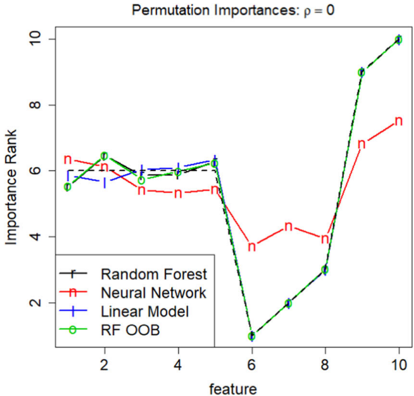
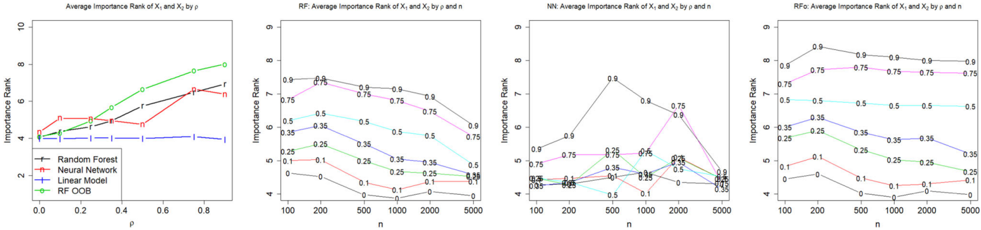
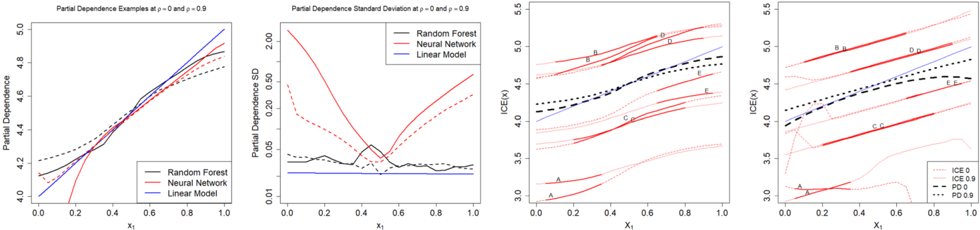
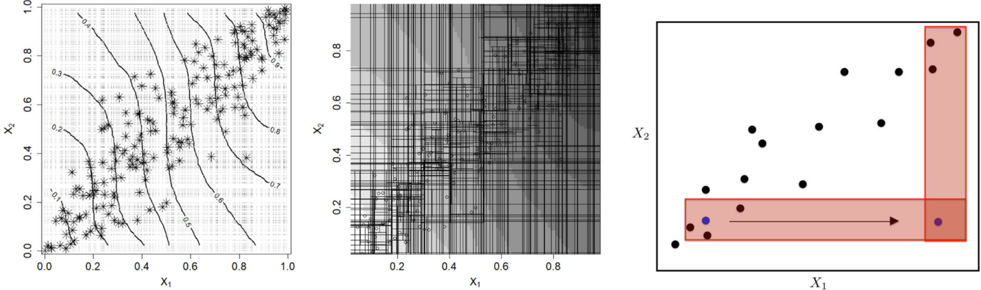
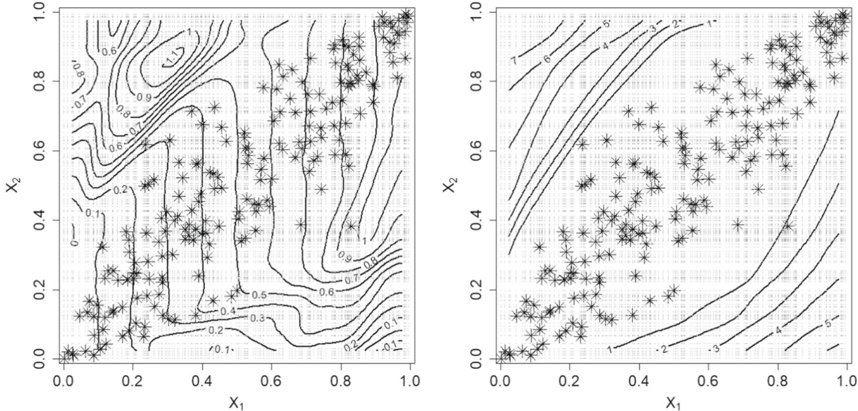
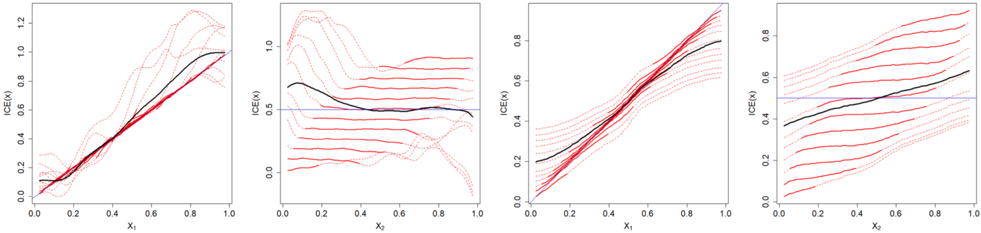
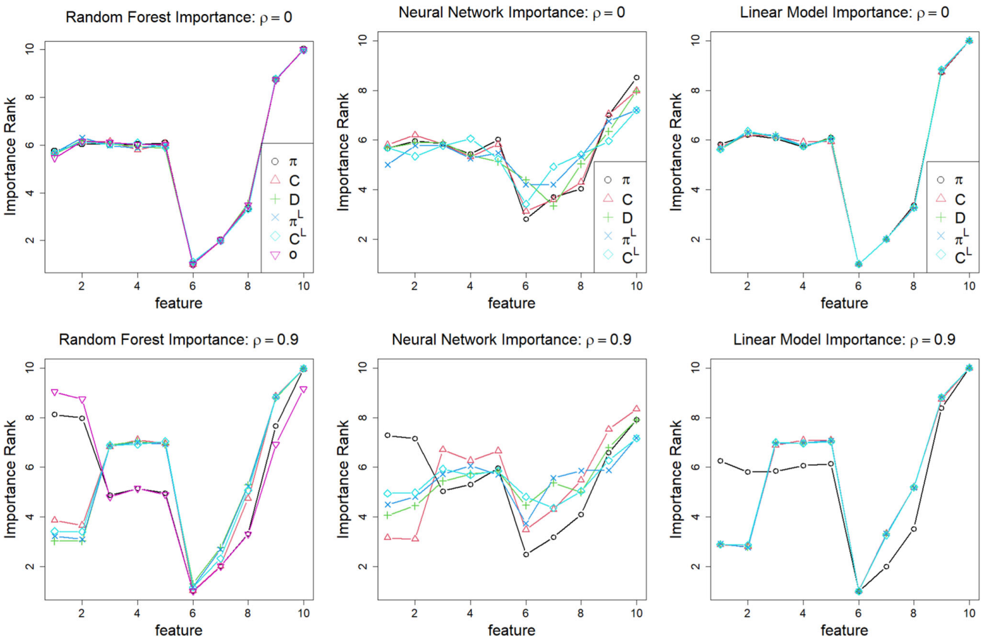
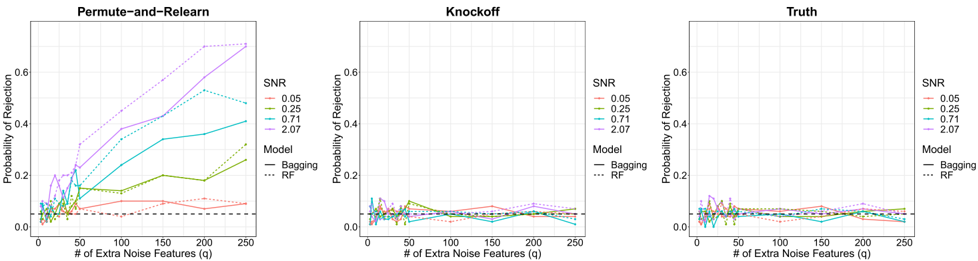
This paper reviews and advocates against the use of permute-and-predict (PaP) methods for interpreting black box functions. Methods such as the variable importance measures proposed for random forests, partial dependence plots, and individual conditional expectation plots remain popular because they are both model-agnostic and depend only on the pre-trained model output, making them computationally efficient and widely available in software. However, numerous studies have found that these tools can produce diagnostics that are highly misleading, particularly when there is strong dependence among features. The purpose of our work here is to (i) review this growing body of literature, (ii) provide further demonstrations of these drawbacks along with a detailed explanation as to why they occur, and (iii) advocate for alternative measures that involve additional modeling. In particular, we describe how breaking dependencies between features in hold-out data places undue emphasis on sparse regions of the feature space by forcing the original model to extrapolate to regions where there is little to no data. We explore these effects across various model setups and find support for previous claims in the literature that PaP metrics can vastly over-emphasize correlated features in both variable importance measures and partial dependence plots. As an alternative, we discuss and recommend more direct approaches that involve measuring the change in model performance after muting the effects of the features under investigation.
Overview
The claims and statistics of this paper haven’t been checked yet.
Free: it reads the open-access text and checks the first 5 claims that cite a source we can check. Create a free account to check every claim.
Integrity signals
Registry
Cites
Statistics
Figures
Verification
Claims the paper makes
The claims and statistics of this paper haven’t been checked yet.
Free: it reads the open-access text and checks the first 5 claims that cite a source we can check. Create a free account to check every claim.
Claims other papers make about this one
Each is checked against this paper’s own text: does it say what the citing paper says it does?
The cited source says what the claim attributes to it.
In the citing paper
“However, these methods can be misleading when correlations exist between input variables 107,109 .”
From Machine learning in concrete science: applications, challenges, and best practices (2022) · cites this paper as [107]
Self-check
Percentages, sums and reported differences re-computed from the paper’s own numbers.
The self-check needs the paper’s full text.
Citations
Cites
Breiman, L. (2001) · Machine Learning · doi:10.1023/a:1010933404324 · Cited by 133,538 · cited 3×
“Breiman (2001) designed the method specifically for use with random forests and considered out-of-bag (OOB) loss in which variable importance is averaged over trees, measured with that part of the data not used to construct the corresponding tree.”
MethodGreedy function approximation: A gradient boosting machine
Friedman, J. H. (2001) · The Annals of Statistics · doi:10.1214/aos/1013203451 · Cited by 30,731
A Unified Approach to Interpreting Model Predictions
Lundberg, S., & Lee, S.-I. (2017) · arXiv · doi:10.48550/arxiv.1705.07874 · Cited by 23,707 · cited 3×
“Saliency (Simonyan et al., 2013) obtains derivatives with respect to x , while LIME (Ribeiro et al., 2016) approximates this with a LASSO method localized to the point of interest by a kernel; Shapley values can also be used for individual predictions (Lundberg and Lee, 2017).”
BackgroundMethod"Why Should I Trust You?": Explaining the Predictions of Any Classifier
Ribeiro, M. T., Singh, S., & Guestrin, C. (2016) · Proceedings of the 22nd ACM SIGKDD International Conference on Knowledge Discovery and Data Mining · doi:10.1145/2939672.2939778 · Cited by 17,555
Generalized Additive Models: An Introduction with R
Wood, S. N. (2017) · doi:10.1201/9781315370279 · Cited by 13,852
Rudin, C. (2019) · Nature Machine Intelligence · doi:10.1038/s42256-019-0048-x · Cited by 10,561 · cited 1×
“As a consequence, many researchers have suggested methods to “X-ray the black box” in order to provide insight into which input features are important and how they effect predictions; a task so precarious that others have advocated against the practice altogether (Rudin, 2019).”
BackgroundNelsen, R. B. (1999) · Lecture Notes in Statistics · doi:10.1007/978-1-4757-3076-0 · Cited by 7,744
Deep Inside Convolutional Networks: Visualising Image Classification Models and Saliency Maps
Simonyan, K., Vedaldi, A., & Zisserman, A. (2013) · arXiv · doi:10.48550/arxiv.1312.6034 · Cited by 5,370 · cited 1×
“Saliency (Simonyan et al., 2013) obtains derivatives with respect to x , while LIME (Ribeiro et al., 2016) approximates this with a LASSO method localized to the point of interest by a kernel; Shapley values can also be used for individual predictions (Lundberg and Lee, 2017).”
MethodTesting Statistical Hypotheses
(2021) · Wiley Series in Probability and Statistics · doi:10.1002/9781119243830.ch12 · Cited by 5,106
Wood, S. N. (2006) · doi:10.1201/9781420010404 · Cited by 4,953
Research works printed but not linked: 1
- Tan, S., Caruana, R., Hooker, G., Koch, P., Gordo, A.: Learning global additive explanations for neural nets using model distillation. arXiv preprint arXiv:1801.08640 (2018) · arXiv
Cited by
Items 401–500 of 511
Gouveia, R. P., Silva, T. C., & Amancio, D. R. (2026) · arXiv (Cornell University) · doi:10.48550/arxiv.2604.09827
“Furthermore, Hooker et al. (2021) argues that permutation-based methods, by breaking dependence among correlated features, generate points from sparse and/or unrealistic regions of the feature space and give undue importance to them, which forces the model to extrapolate to regions with little to…”
Yuan, S., Zou, F., & Zou, B. (2026) · bioRxiv (Cold Spring Harbor Laboratory) · doi:10.64898/2026.04.13.718254
Birindwa, J., Karangwa, A., & Maheshe, E. (2026) · Plant Ecology and Evolution · doi:10.5091/plecevo.176900
Enhancing the interpretability of non-linear proportional hazard models introducing ghost variables
Isaza-Cadavid, S., Ortiz, S., Orozco, N., & Quiceno, H. R. (2026) · Computational Statistics · doi:10.1007/s00180-026-01744-4
“Hooker et al. ( 2021 ) show that unrestricted permutations push the model off the data manifold, biasing importance scores unless a conditional model is fitted first.”
Wahan, M. Y., Yuan, C., & Zahoor, H. (2026) · Buildings · doi:10.3390/buildings16101965
A Workflow for Evaluating Regional Treatment Effect Heterogeneity in Multi-Regional Clinical TrialsPreprint
Zhang, C., Long, M., Zheng, T., Sechidis, K., Liu, X., Sun, S., Chen, Y., Zhang, X., Kaneko, S., Bornkamp, B., et al. (2026) · arXiv (Cornell University) · doi:10.48550/arxiv.2605.16885
黄, 菲., 蒋, 世., 上官, 微., 李, 璐., 张, 叶., Zhang, R., Li, Q., 李, 丹., & 戴, 永. (2026) · SCIENTIA SINICA Terrae · doi:10.1360/n072025-0316
Wicaksono, T., Supriadi, O., Cakranegara, P. A., Zahirah, K. F., & Illés, C. B. (2026) · Cleaner and Responsible Consumption · doi:10.1016/j.clrc.2026.100450
Xin, J.-P., Li, X., Wang, L.-C., & Ma, Q. (2026) · Engineering Applications of Artificial Intelligence · doi:10.1016/j.engappai.2026.115244
Leogrande, A., Anobile, F., Costantiello, A., Drago, C., & Arnone, M. (2026) · International Journal of Financial Studies · doi:10.3390/ijfs14060150
“…of these importance measures increases confidence in their interpretation and suggests that the model’s predictions are not unduly driven by a single metric, an issue often highlighted in recent discussions on model interpretability and robustness (Hooker et al., 2021; Molnar et al., 2020).”
An innovative nonparametric ranking estimation method with multivariate binary variables
Bonnini, S., Borghesi, M., & Giacalone, M. (2026) · Statistics and Computing · doi:10.1007/s11222-026-10900-1
“Since the preliminary step of the ranking estimate is the MANOVA test, performed via the multiple pairwise comparisons, and a wrong rejection of the null hypothesis of the test leads to wrong ranking estimates, the correction of the p -values of the partial tests on the pairwise comparisons is crucial and must be perf…”
InfluentialXtrAIn: Training-Guided Occlusion for Feature AttributionPreprint
Lymperopoulos, T., Kakogeorgiou, I., & Kanellopoulou, D. (2026) · arXiv (Cornell University) · doi:10.48550/arxiv.2606.10877
“Another important issue is out-of-distribution (OoD) behavior, where an incautious selection of baseline values can move samples to regions outside the original distribution [23, 29, 30, 33, 34, 39].”
Machine Learning for Event Reconstruction in Imaging Atmospheric Cherenkov TelescopesPreprint
Pagliaro, A., & Barbera, A. L. (2026) · arXiv (Cornell University) · doi:10.48550/arxiv.2606.11741
Cummins, J. A., & Liu, F. (2026) · Digital Health · doi:10.1177/20552076261461355
Huang, Y., Jang, J. R., Wu, M., & Wu, J. M. (2026) · IEEE Access · doi:10.1109/access.2026.3705239
“…recent studies have raised concerns about feature selection based on importance measures: Wang et al. [33] and Khan et al. [34] compared different selection strategies, while Hooker et al. [35] cautioned that permutation-based methods can produce biased estimates when features are correlated.”
Interpretação de Modelos de Aprendizado de Máquina Aplicados à Saúde com SHAP
Raposo, L. M., & Stelet, V. N. (2026) · doi:10.5753/sbc.19670.4.2
Nayak, A., Surendran, U. P., Dam, U., Singh, R., Das, A., Mukhopadhyay, S., Ли, Б., Silva, S. H. G., Deb, S., Swain, D. K., et al. (2026) · Geoderma · doi:10.1016/j.geoderma.2026.117934
Impacts of Extreme Climate on NDVI in China—Response Patterns and Threshold Effects
Li, M., Li, R., Zhu, R., Shan, J., Zhao, Z., Chen, F., & Yin, Z. (2026) · Remote Sensing · doi:10.3390/rs18132180
Li, S. B., Huang, H., He, Y., Zhang, X., Li, X., Wang, L., He, W., Han, X., Huang, X., & Chen, G. (2026) · BMC Musculoskeletal Disorders · doi:10.1186/s12891-026-10544-2
“…SHAP for clinical variables, primarily because the dimensionality mismatch between high-dimensional imaging features and low-dimensional clinical variables may render traditional permutation importance analysis misleading [38]; more suitable quantitative methods should be introduced in future work.”
Regularized maximum mean discrepancy for variable importance measure
Huo, J., Huang, B., Liu, Y., & Peng, L. (2026) · Statistics and Computing · doi:10.1007/s11222-026-10927-4
Azevedo, A. P., Sousa, A., Evangelista, M., Veloso, A., & Pereira, M. G. (2026) · JMIR Pediatrics and Parenting · doi:10.2196/90041
“This surrogate-based approach was adopted because Tree Explainer yields exact Shapley values for gradient boosting’s additive ensemble of shallow trees, whereas application to a random forest requires approximations that degrade under correlated predictors [37,38].”
IMEX Interaction-Based Model ExplanationPreprint
Massi, E. (2026) · arXiv (Cornell University) · doi:10.48550/arxiv.2607.14096
Yuval, Levi, Y., Khain, P., & Broday, D. M. (2026) · Atmosphere · doi:10.3390/atmos17070704
“Our conditional permutation procedure, described in the Supplementary Material, prevents out-of-domain extrapolation [21,22].”
Process-informed deep learning for interpretable forested wetland mapping under dense canopy
Jing, L. V., Xiang, H., Xi, Y., Xing, X., Zhu, W., Mao, D., & Feng, K. (2026) · International Journal of Applied Earth Observation and Geoinformation · doi:10.1016/j.jag.2026.105672
Fan, Z., Gao, Y., Jiang, L., Jiang, X., Guo, W., Li, X., & Tu, S. (2026) · Energy · doi:10.1016/j.energy.2026.142038
Bounefla, Y., Matougui, Z., Kharchi, F., & Talah, A. (2026) · Engineering Applications of Artificial Intelligence · doi:10.1016/j.engappai.2026.115735
SiTe: A Statistical Significance-aware Framework for Robust XAIPreprint
Akintande, O. J., & Pokojovy, M. (2026) · SSRN Electronic Journal · doi:10.2139/ssrn.7101578
Customer Churn Prediction in Banking–Machine Learning Application
Hoang, H. T. T., Dang, T. V., & Do, L. T. D. (2026) · Applied Computational Intelligence and Soft Computing · doi:10.1155/acis/8889093
Cho, H., Chen, Y., & Wallraven, C. (2026) · PLoS ONE · doi:10.1371/journal.pone.0355193
“When features are correlated, permutation importance may underestimate individual contributions because correlated features partially preserve the permuted feature’s information [35,36]; this property is relevant to the 16PF, where inter-trait correlations are substantial.”
Liu, B.-X., Zhang, Y., Yan, C., Zhao, Z.-W., Zhang, N., Ma, L., Qiu, X.-B., & Dong, Y. (2026) · Marine Environmental Research · doi:10.1016/j.marenvres.2026.108337
Damandeh, M., & Saberi, M. (2026) · arXiv (Cornell University) · doi:10.48550/arxiv.2608.06934 · Cited by 1
Regmi, S., Furlanetto, R. H., Schumann, A. W., & Boyd, N. S. (2026) · Smart Agricultural Technology · doi:10.1016/j.atech.2026.102721
Themistokleous, G., Varvaris, I., Pittaki−Chrysodonta, Z., & Hadjimitsis, D. G. (2026) · Smart Agricultural Technology · doi:10.1016/j.atech.2026.102696
Oubaasri, A., Mskini, F. Z. E., Labyad, A., Hassikou, R., Madkour, A., Mehdad, S., & Benaich, S. (2026) · Biostatistics & Epidemiology · doi:10.1080/24709360.2026.2715243
Ningthoujam, A. S., Thiyagarajan, G., Vaishnav, P., & Haobam, B. (2026) · BMC Infectious Diseases · doi:10.1186/s12879-026-14164-y
Applied Machine Learning in Epidemiology: Feature Selection, Benchmarks, and Software
Burk, L. (2026) · Media (https://www.suub.uni-bremen.de/) · doi:10.26092/elib/6360
Ibáñez, J. S., & Garratón, M. C. (2026) · Applied Economics Letters · doi:10.1080/13504851.2026.2721550
Wu, Z., Zhou, Y., Ho, N. S. K., & Pang, J. H. L. (2026) · International Journal of Fatigue · doi:10.1016/j.ijfatigue.2026.109943
Jay, D., Ramachandran, R., & Kuruva, R. (2026) · SSRN Electronic Journal · doi:10.2139/ssrn.7333550
Ralinirina, R. E., Ralaivao, J. C., Ralaivao, N. M., Ratovondrahona, A. J., & Mahatody, T. (2026) · arXiv (Cornell University) · doi:10.48550/arxiv.2608.23817
“This risk of uninformative or misleading feature-importance measures aligns with (Hooker et al., 2021), who showed that permutation-based importance can force extrapolation into regions where the model was never trained.”
Ahmad, A., & Busair, E.-K. (2026) · bioRxiv (Cold Spring Harbor Laboratory) · doi:10.64898/2026.08.25.747089
Volatile-Based In-Field Screening of Xylella fastidiosa in Olive Plants Using a Smart E-Nose
Manganiello, R., Matere, A., Moscovini, L., Costa, C., Pallottino, F., Vasta, S., Figorilli, S., Pucci, N., Loreti, S., Violino, S., et al. (2026) · Agronomy · doi:10.3390/agronomy16171659
Rahman, M., Ahmmed, A., Rahman, S., Nusrat, S., Nag, A., & Hashem, M. (2026) · Meat Research | ISSN (Online Version) 2790-1971 · doi:10.55002/mr.6.1.135
“Retraining avoids the synthetic feature combinations created by independence-based perturbation methods, but it does not make attribution causal or eliminate ambiguity among correlated proxy blocks (Aas et al., 2021; Hooker et al., 2021).”
Orts, F. J. (2026) · Plant Breeding · doi:10.1111/pbr.70130
Chae, B., & Choi, N.-J. (2026) · Journal of Dairy Science · doi:10.3168/jds.2026-28792
Farhat, G., Allward, M., & Khandan, S. (2026) · BMJ Nutrition Prevention & Health · doi:10.1136/bmjnph-2026-001522
Bhuiyan, I., Mirza, R., Hoque, A., & Bhuiyan, T. (2026) · FinTech · doi:10.3390/fintech5030077
“Rather, it is positioned as an empirical audit in fraud detection: testing whether stable prediction-level SHAPs remain aligned with performance-based feature reliance under biased and distributionally shifted BAF variants [53–56].”
Why Is SHAP Not a Reliable Standalone Explanation Framework for Malware Detection?Preprint
Mohseni, S., Raff, E., & Gaur, M. (2026) · arXiv (Cornell University) · doi:10.13016/m2teaf-law3
XAI-Arena: Can LLMs Assess the Quality of XAI Explanations?Preprint
Fleischhauer, Y. H., Zharova, A., Klein, N., & Feuerriegel, S. (2026) · arXiv (Cornell University) · doi:10.48550/arxiv.2609.09428
“Data scientist [19, 31] Prompt: "You are a data scientist.”
Semiparametric Inference for Conditional Shapley Feature ImportancePreprint
Gnasso, A. (2026) · arXiv (Cornell University) · doi:10.48550/arxiv.2609.10313
“When features are dependent, this choice is known to evaluate the prediction function on out-of-distribution points and inflate the apparent importance of correlated variables (Hooker et al., 2021; Janzing et al., 2020; Sundararajan and Najmi, 2020).”
Staged financing beyond the venture record: Equity rounds in the accounts of Italian SMEsPreprint
Leogrande, A., Molfetta, M. D., Notarnicola, V., Trotta, M. G., & Plantamura, A. V. (2026) · SSRN Electronic Journal · doi:10.2139/ssrn.7469801
Best practices for sensitivity analysis: lessons learned from geologic disposal case studies
Plischke, E., Becker, D.-A., Spiessl, S. M., Brooks, D., Swiler, L. P., Govaerts, J., Koskinen, L., Kupiainen, P., Röhlig, K.-J., & Samper, J. (2026) · ESAIM Probability and Statistics · doi:10.1051/ps/2026018
Staged financing beyond the venture record: Equity rounds in the accounts of Italian SMEsPreprint
Leogrande, A., Molfetta, M. D., Notarnicola, V., Trotta, M. G., & Plantamura, A. V. (2026) · Research Square · doi:10.21203/rs.3.rs-11058114/v1
Torrigiani, E. G., Cianca, D., Gaetani, L., Nardi, G., Paoletti, F. P., Chiasserini, D., Parnetti, L., Gammaitoni, L., Neri, I., & Bellomo, G. (2026) · Frontiers in Aging Neuroscience · doi:10.3389/fnagi.2026.1922577
Teti, F. S. L., Keke, K. J.-B., Yao, K. S., Dongo, K. Y. S., Fionko, Y. B., & Haïdara, A. (2026) · International Journal of Scientific Research and Modern Technology. · doi:10.38124/ijsrmt.v5i9.1664
Hwangbo, S. (2026) · Chemometrics and Intelligent Laboratory Systems · doi:10.1016/j.chemolab.2026.105917
Individual Model Explanations Using Avatars
Rabitti, G. (2026) · North American Actuarial Journal · doi:10.1080/10920277.2026.2733106
Kim, G., Han, Y., Kim, D., & Choi, H.-S. (2026) · SSRN Electronic Journal · doi:10.2139/ssrn.7545930
Folded Hadamard A2D2E: Query-Efficient Main-Effect Estimation for High-Dimensional Black-Box ModelsPreprint
Zhao, Z. (2026) · SSRN Electronic Journal · doi:10.2139/ssrn.7548820
Yoon, H., Lee, S. R., Park, G., & Lee, K. (2026) · Journal of Marine Science and Engineering · doi:10.3390/jmse14191828
Earnest, O. U. (2026) · IJIREEICE · doi:10.17148/ijireeice.2026.14924
Xu, T. (2024) · Illinois Digital Environment for Access to Learning and Scholarship (University of Illinois at Urbana-Champaign)
Bowers, C. C., Smith, J. D., Essaid, H. I., & Hammond, J. C. (2026) · ESS Open Archive · doi:10.22541/essoar.15005506/v3
Zhu, J., Wu, J., Ding, B., Zhang, Q., & Zhang, X. (2026) · Agricultural Water Management · doi:10.1016/j.agwat.2026.110849
Lago, F. D., D’Alterio, R. A., Hafiz, F. M. F., Torre, D. L., & Lin, J. (2026) · Annals of Operations Research · doi:10.1007/s10479-026-07434-0
Arun, V., Obeng, A., Wang, T., Ren, Z., Sundararaman, M. N., Wang, H., Thukral, S., Wang, Z., Joshi, S. V., & Reger, D. (2026) · arXiv (Cornell University) · doi:10.48550/arxiv.2610.13806
Toward advancing QA automation with machine learning-based decision support
Huang, A. (2026) · Otago University Research Archive (University of Otago) · doi:10.82348/our-archive.00408
Nguyen, P. T., Doan, T. H., Nguyen, T. H., Nam, N. V., Zulhendri, F., Huynh, T. T., & Ly, Q. V. (2026) · Cleaner Water · doi:10.1016/j.clwat.2026.100331
You, M.-S., & Oh, C. (2026) · Fisheries Research · doi:10.1016/j.fishres.2026.107898
Sagna, D., Lguensat, R., & Diatta, S. (2026) · arXiv (Cornell University) · doi:10.48550/arxiv.2610.16816
“…be read with care: specific and relative humidity at the same level are strongly correlated, permuting one of them creates combinations of inputs that never occur (Hooker et al., 2021), and the importance of a predictor is partly shared with its correlated neighbours (McGovern et al., 2019).”
Milburn, S., Krochta, M., & Chang, H. (2026) · Hydrological Processes · doi:10.1002/hyp.70745
“…because ALE computes local, quantile-based neighbourhoods of observed data instead of substituting swept values into every observation regardless of whether that combination occurs in the data, avoiding extrapolating into predictor combinations with minimal real data support (Hooker et al. 2021).”
Kim, S., Jeon, K., Cho, H., Park, S., & Jeong, D. (2026) · Research Square · doi:10.21203/rs.3.rs-10915713/v1
How Stable Are Post-Hoc Explanations? A Robustness Study of Feature Attribution in Data Mining
Raj, R., & Mishra, R. K. (2025) · REST Journal on Data Analytics and Artificial Intelligence · doi:10.46632/jdaai/4/4/14
Овчинников, Г. П., & Суворов, С. В. (2026) · Вестник науки · doi:10.68367/33474
Huang, J., Liu, R., & Zhou, Y. (2026) · Journal of Forecasting · doi:10.1002/for.70231
Dalal, S., & Akbar, M. (2026) · Journal of Artificial Intelligence Machine Learning and Neural Network · doi:10.55529/jaimlnn.62.15.31
Urban climate regressions require representative monitoring networksPreprint
Bosch, M., Brandi, A., Bachofen, C., Hamel, P., Remme, R. P., Ramsay, E. E., Manoli, G., Schlaepfer, M. A., & Burger, M. (2026) · arXiv (Cornell University) · doi:10.48550/arxiv.2610.29423
“…RF predictions, reflect statistical associations internal to the model rather than physical mechanisms, and are sensitive to predictor correlation, model architecture, and choice of baseline [87–90] — concerns that are particularly relevant given the multi-scale, correlated predictors used here.”
Dalal, S., & Ather, D. (2026) · Journal of Artificial Intelligence Machine Learning and Neural Network · doi:10.55529/jaimlnn.62.98.105
Adegboye, O. R., Kusetoğulları, H., & Feda, A. K. (2026) · Information · doi:10.3390/info17111060
Beshti, A., Adegboye, O. R., & Alzubi, A. B. (2026) · Applied Sciences · doi:10.3390/app162110532
Random Jump ForestsPreprint
Bladt, M., & Lemvig, R. F. (2026) · arXiv (Cornell University) · doi:10.48550/arxiv.2610.32498
Luo, J., Dong, S., Yuan, M., Wen, W., Li, Y. A., Li, Y., & 赵仁鑫 (2026) · Journal of Hazardous Materials · doi:10.1016/j.jhazmat.2026.144040
Turgut, İ. A., & Gümüş, E. (2026) · arXiv (Cornell University) · doi:10.48550/arxiv.2610.33198
“Permuting or dropping a covariate is held not to measure its importance without at least one further model [33]; leave-one-covariate-out has a formal treatment and known limits [34]; and conditional and Shapley-based alternatives were developed precisely because marginal removal misleads under…”
Rajkishor, Das, A., Kumar, A., Ajeet, K., & Raj, A. (2025) · Waterlines · doi:10.64149/waterlines.v43i2.1318
Entrepreneurial cognition and psychological distance: knowledge, opportunity and displacement
Andrade-Valbuena, N. A., Santos, M. A. D., & Retamal-Saavedra, C. D. (2026) · Journal of Innovation & Knowledge · doi:10.1016/j.jik.2026.101188
Xu, B., Chen, B., & Li, J. (2026) · arXiv (Cornell University) · doi:10.48550/arxiv.2611.01666
Alshamrani, S. A. (2026) · Materials Today Communications · doi:10.1016/j.mtcomm.2026.116577
Adegboye, O. R., Kusetoğulları, H., Ojekemi, O. S., & Kırıkkaleli, D. (2026) · Economies · doi:10.3390/economies14110526
Entanglement entropy is not a faithful explanation: auditing a financial quantum feature map
Sindayigaya, J. M. V. (2026) · International Journal of Electronics and Telecommunications · doi:10.24425/ijet.2026.6337
Kang, B., & Chung, I.-M. (2026) · Water · doi:10.3390/w18212768
Karbasi, M., & Xu, C. (2026) · Food and Bioproducts Processing · doi:10.1016/j.fbp.2026.10.022
Alexandrescu, L., Alexandrescu, D. M., Șerbănescu, L., Twakor, A. N., Suliman, I. L., Rusu, E. E., Panculescu, F. G., Tofolean, I. T., Condur, L., Aftenie, C., et al. (2026) · Microorganisms · doi:10.3390/microorganisms14112592
Characterizing Scanpath Decoding Pipelines with Perturbation ProfilesPreprint
Mozaffari, S., & Nadi, A. (2026) · arXiv (Cornell University) · doi:10.48550/arxiv.2611.11632
Patil, B. M., Singh, S. G., Patil, S. B., & Ravande, K. (2026) · Acta Innovations · doi:10.62441/actainnovations.vi.3291
Metadata
- Authors
- Hooker, G., Mentch, L., & Zhou, S.
- Affiliations
- University of California, Berkeley (US)
- University of Pittsburgh (US)
- Corresponding author
- Hooker, Giles
- Venue
- Statistics and Computing
- Published
- 2021-10-29
- Volume
- 31
- Issue
- 6
- ISSN
- 0960-3174 (ISSN-L)
- 1573-1375
- OpenAlex
- W3209434414
- Cited by
- 264
- References
- 52
- Citations by year
- 2026: 73 · 2025: 51 · 2024: 49 · 2023: 61 · 2022: 28 · 2021: 2
- FWCI
- 12.32
- Type
- journal article
- Language
- en
- Open access
- hybrid
- doi.org
- Licence
- cc-by
- creativecommons.org/licenses/by/4.0 (tdm)
- creativecommons.org/licenses/by/4.0 (vor)
- Locations
- Statistics and Computing (publishedVersion, cc-by)
- arXiv (Cornell University) (submittedVersion)
- arXiv (Cornell University)
- Funders
- Directorate for Mathematical and Physical Sciences (1712554, 1712041, 2015400)
- Topics
- Physical Sciences › Computer Science › Artificial Intelligence › Explainable Artificial Intelligence (XAI)
- Physical Sciences › Mathematics › Statistics and Probability › Statistical Methods and Inference
- Physical Sciences › Computer Science › Artificial Intelligence › Machine Learning and Data Classification
- Keywords
- feature importance, partial dependence plots, individual conditional expectation, random forest, feature dependence, extrapolation, model interpretability, black-box models
About these checks
Registry, retraction, Cites and statistics results are computed, not judged, with one exception: a printed reference that no index lists is read once by a model before it counts as a citation error. Claims are extracted by a model and kept only when their quote appears verbatim in the text; each cited source is then checked, with a model’s help, for whether it says what the claim relies on. Those verdicts can be wrong — read the claim’s quote and the cited source before relying on one.
Statistics and arithmetic are recomputed, not judged.
Confidence bands are shown only for fields calibrated on our annotated test set. None is calibrated yet, so no band is shown.
What counts as a claim ›How we measure confidence ›How we check this ›
Are you an author, or do you see a problem with this page? Request a review
Data sources
Bibliographic data: Semantic Scholar, OpenAlex, Crossref.
Contains information from the Semantic Scholar Academic Graph Datasets, made available under the ODC Attribution License (ODC-BY 1.0).
Semantic Scholar’s data is described in: Kinney, R., et al. (2023). The Semantic Scholar Open Data Platform. arXiv:2301.10140.
