

Supporting online learners’ regulation skills with the help of learning analytics and generative artificial intelligence
Open accessThe DOI matches its Crossref record; 79 of the 79 references it cites were found in a registry or an index.
Abstract
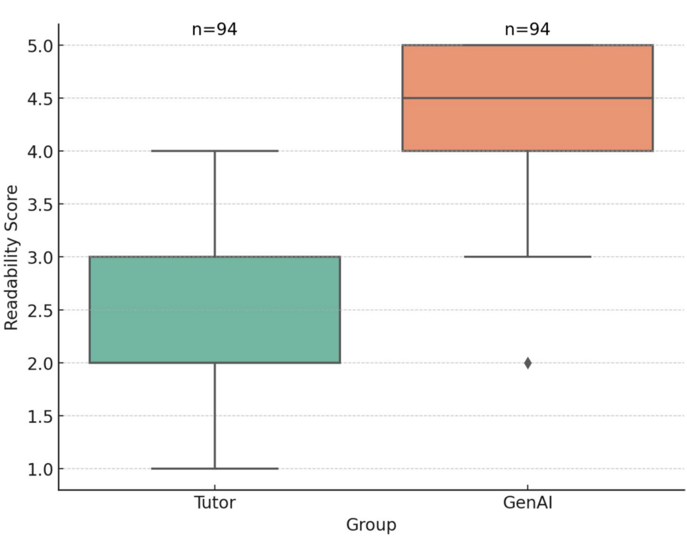
Students often struggle to stay engaged and effectively regulate their learning in online environments, which can negatively impact their learning experiences. Despite the established importance of self-regulation of learning skills (SRLs) in maintaining engagement, many students face significant challenges in developing and implementing these skills due to a lack of adequate feedback. This is primarily due to tutors' high workloads and the difficulties inherent in engaging students in online settings. This study examines the impact of Learning Analytics (LA)-driven interventions to improve students' SRLs in online learning environments. Specifically, it compares the impact of feedback from Generative Artificial Intelligence (GenAI) and human tutors in a nine-week statistics course delivered via MOODLE at a higher education institution, employing LA and clustering techniques to model SRLs based on Ye & Pennisi’s (2022) framework. In a quasi-experimental design, participants with varying SRLs were assigned to either a tutor-feedback or GenAI-feedback group. Feedback readability and reliability evaluations indicate that LA-driven GenAI-produced feedback was significantly more readable than human tutor feedback (p < 0.01) and demonstrated higher reliability than tutor-generated feedback. Results show that students in the low SRLs cluster receiving GenAI feedback exhibited statistically significant improvements in goal-setting skills (p < 0.05) and overall SRLs levels (p < 0.05) compared to the tutor-feedback group. In contrast, no significant differences were observed among high SRLs cluster students. This study underscores the potential of LA-driven GenAI feedback to be able to develop tailored, scalable feedback, improving SRLs performance of low SRLs students in online higher education contexts. Future research should explore these effects across diverse student groups and investigate the collaborative potential of semi-automated feedback systems that include tutors.
Overview
The claims and statistics of this paper haven’t been checked yet.
Free: it reads the open-access text and checks the first 5 claims that cite a source we can check. Create a free account to check every claim.
Integrity signals
Registry
Cites
Statistics
Figures
Verification
Claims the paper makes
The claims and statistics of this paper haven’t been checked yet.
Free: it reads the open-access text and checks the first 5 claims that cite a source we can check. Create a free account to check every claim.
Claims other papers make about this one
Each is checked against this paper’s own text: does it say what the citing paper says it does?
The cited source says what the claim attributes to it.
In the citing paper
“This mapping strategy is consistent with the approach taken in Yilmaz et al. (2026), in which log-based indicators were similarly interpreted within the same data collection framework.”
From Supporting self-regulated learning through generative AI feedback in online higher education: the importance of student perceptions of the source of feedback (2026) · cites this paper as Yilmaz et al. (2026)
Self-check
Percentages, sums and reported differences re-computed from the paper’s own numbers.
The self-check needs the paper’s full text.
Citations
Cites
Hattie, J., & Timperley, H. (2007) · Review of Educational Research · doi:10.3102/003465430298487 · Cited by 12,905
Assessment and Classroom Learning
Black, P., & Wiliam, D. (1998) · Assessment in Education: Principles, Policy & Practice · doi:10.1080/0969595980050102 · Cited by 8,152 · cited 1×
“Since providing readable feedback is critical for helping students understand their learning trajectories (Black & Wiliam, 1998), this research specifically focused on readability and reliability to evaluate the content quality of feedback interventions.”
Finding Groups in Data: An Introduction to Cluster Analysis
Kaufman, L., & Rousseeuw, P. J. (1990) · Wiley Series in Probability and Statistics · doi:10.1002/9780470316801 · Cited by 7,344 · cited 1×
“According to Kaufman and Rousseeuw (2009), a silhouette score of 0.5 or above suggests a reliable clustering solution.”
InfluentialChicco, D., & Jurman, G. (2020) · BMC Genomics · doi:10.1186/s12864-019-6413-7 · Cited by 6,143 · cited 1×
“These metrics are widely used to classify samples in multi-class cases (Chicco & Jurman, 2020).”
The Role of Goal Orientation in Self-Regulated Learning
Pintrich, P. R. (2000) · Handbook of Self-Regulation · doi:10.1016/b978-012109890-2/50043-3 · Cited by 5,173 · cited 1×
“These distinct SRL profiles are aligned with Pintrich’s SRL model (Pintrich, 2000), which suggests that disparities in how learners regulate their cognition, motivation, and behaviour, shaped by both contextual and individual factors, can lead to higher or lower levels of profiles.”
Shute, V. J. (2008) · Review of Educational Research · doi:10.3102/0034654307313795 · Cited by 4,631 · cited 1×
“This research suggests that delayed feedback is particularly beneficial for tasks that require deep reflection and the application of learning strategies (Shute, 2008; Van Der Kleij et al., 2015), like SRL (Butler & Winne, 1995).”
Zimmerman, B. J. (2008) · American Educational Research Journal · doi:10.3102/0002831207312909 · Cited by 3,735 · cited 1×
“LA can help monitor SRLs by tracking student behaviour and providing a basis for timely interventions (Schmitz & Wiese, 2006; Zimmerman, 2008).”
Feedback and Self-Regulated Learning: A Theoretical Synthesis
Butler, D. L., & Winne, P. H. (1995) · Review of Educational Research · doi:10.3102/00346543065003245 · Cited by 3,334 · cited 5×
“This research suggests that delayed feedback is particularly beneficial for tasks that require deep reflection and the application of learning strategies (Shute, 2008; Van Der Kleij et al., 2015), like SRL (Butler & Winne, 1995).”
InfluentialSelf-Regulated Learning: Beliefs, Techniques, and Illusions
Bjork, R. A., Dunlosky, J., & Kornell, N. (2013) · Annual Review of Psychology · doi:10.1146/annurev-psych-113011-143823 · Cited by 1,468 · cited 1×
“Given the challenges online learners face in developing and practising SRLs (Edisherash-vili et al., 2022), there is a critical need for external support (Bjork et al., 2013; Zheng et al., 2015).”
Chiu, T. K. F., Xia, Q., Zhou, X., Chai, C. S., & Cheng, M. (2023) · Computers and Education: Artificial Intelligence · doi:10.1016/j.caeai.2022.100118 · Cited by 1,181 · cited 1×
“Most studies to date are conceptual (Chiu et al., 2023) rather than experimental, leaving critical questions about GenAI’s effectiveness in supporting feedback interventions for the development of SRLs in online learning settings unanswered.”
Let’s not forget: Learning analytics are about learning
Gašević, D., Dawson, S., & Siemens, G. (2015) · TechTrends · doi:10.1007/s11528-014-0822-x · Cited by 1,049
Kizilcec, R. F., Pérez-Sanagustín, M., & Maldonado, J. J. (2017) · Computers & Education · doi:10.1016/j.compedu.2016.10.001 · Cited by 1,003 · cited 3×
“However, this autonomy is effective only when supported by strong self-regulated learning skills (SRLs) (Kizilcec et al., 2017).”
InfluentialOn evaluation metrics for medical applications of artificial intelligence
Hicks, S. A., Strümke, I., Thambawita, V., Hammou, M., Riegler, M. A., Halvorsen, P., & Parasa, S. (2022) · Scientific Reports · doi:10.1038/s41598-022-09954-8 · Cited by 934
Measuring self-regulation in online and blended learning environments
Barnard, L., Lan, W. Y., To, Y. M., Paton, V. O., & Lai, S.-L. (2009) · The Internet and Higher Education · doi:10.1016/j.iheduc.2008.10.005 · Cited by 913 · cited 2×
“…(TM), help-seeking (HS), and self-evaluation (SE) skills that have been both theoretically discussed and evidenced empirically as important for improving self-regulation and eventually contributing to a more efficacious learning experience in online learning contexts (Barnard et al., 2009).”
Self-Regulation and Academic Learning
Schunk, D. H., & Ertmer, P. A. (2000) · Handbook of Self-Regulation · doi:10.1016/b978-012109890-2/50048-2 · Cited by 793 · cited 1×
“In contrast, low-SRLs students demonstrate limited engagement and self-regulatory control (Schunk & Ertmer, 2000).”
Van der Kleij, F. M., Feskens, R. C. W., & Eggen, T. J. H. M. (2015) · Review of Educational Research · doi:10.3102/0034654314564881 · Cited by 714 · cited 2×
“As argued in this research, tutors often struggle to deliver high-quality feedback that aligns with students’ expectations (Nazaretsky et al., 2024; Van Der Kleij et al., 2015).”
AI-generated feedback on writing: insights into efficacy and ENL student preference
Escalante, J., Pack, A., & Barrett, A. (2023) · International Journal of Educational Technology in Higher Education · doi:10.1186/s41239-023-00425-2 · Cited by 589 · cited 2×
“Research has demonstrated that advancements in LLMs have significantly enhanced AI’s ability to provide educational written feedback, particularly in assessing student writing (Escalante et al., 2023; Meyer et al., 2024; Weber et al., 2024).”
Schmitz, B., & Wiese, B. S. (2006) · Contemporary Educational Psychology · doi:10.1016/j.cedpsych.2005.02.002 · Cited by 496 · cited 1×
“LA can help monitor SRLs by tracking student behaviour and providing a basis for timely interventions (Schmitz & Wiese, 2006; Zimmerman, 2008).”
A Survey on Text Classification: From Traditional to Deep Learning
Li, Q., Peng, H., Li, J., Xia, C., Yang, R., Sun, L., Yu, P. S., & He, L. (2022) · ACM Transactions on Intelligent Systems and Technology · doi:10.1145/3495162 · Cited by 494 · cited 1×
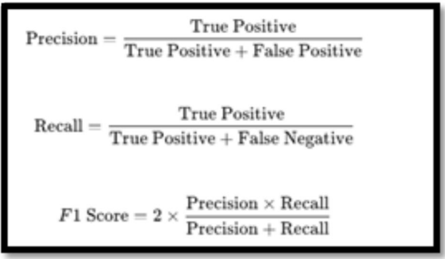
“Recall, on the other hand, calculates how effectively all true positive instances in the feedback are identified (Li et al., 2022).”
Student perceptions of quality feedback in teacher education
Ferguson, P. (2011) · Assessment & Evaluation in Higher Education · doi:10.1080/02602930903197883 · Cited by 427 · cited 1×
“Numerous studies indicate the limitations of data visualisations and show that students consider written feedback to be a particularly valuable method of receiving feedback (Ferguson, 2011; Taylor & Burke Da Silva, 2014; Voelkel et al., 2020).”
Using learning analytics to scale the provision of personalised feedback
Pardo, A., Jovanovic, J., Dawson, S., Gašević, D., & Mirriahi, N. (2019) · British Journal of Educational Technology · doi:10.1111/bjet.12592 · Cited by 425 · cited 2×
“Additionally, given that contemporary LA-based systems for providing feedback still rely heavily on tutors (Pardo et al., 2019), based on our findings, these limitations could be mitigated by integrating LLMs, empowered by LA, to assist tutors in providing feedback with consistent readability,…”
Can Large Language Models Provide Feedback to Students? A Case Study on ChatGPT
Dai, W., Lin, J., Jin, H., Li, T., Tsai, Y.-S., Gašević, D., & Chen, G. (2023) · 2023 IEEE International Conference on Advanced Learning Technologies (ICALT) · doi:10.1109/icalt58122.2023.00100 · Cited by 395 · cited 2×
“By doing so, it moved beyond static, one-size-fits-all outputs, producing personalised (Dai et al., 2023; Jansen et al., 2024), context-sensitive feedback tailored to each learner’s profile.”
Can Large Language Models Provide Feedback to Students? A Case Study on ChatGPT
Dai, W., Lin, J., Jin, F., Li, T., Tsai, Y.-S., Gasevic, D., & Chen, G. (2023) · doi:10.35542/osf.io/hcgzj · Cited by 395
Mangaroska, K., & Giannakos, M. (2019) · IEEE Transactions on Learning Technologies · doi:10.1109/tlt.2018.2868673 · Cited by 378 · cited 1×
“This limitation aligns with the view that LA studies often lack robust theoretical frameworks for data collection and analysis, underscoring the need for enhanced methodological rigour in future research (Fan et al., 2021; Mangaroska & Giannakos, 2019; Ye & Pennisi, 2022).”
Understanding Student Motivation, Behaviors and Perceptions in MOOCs
Zheng, S., Rosson, M. B., Shih, P. C., & Carroll, J. M. (2015) · Proceedings of the 18th ACM Conference on Computer Supported Cooperative Work & Social Computing · doi:10.1145/2675133.2675217 · Cited by 363 · cited 1×
“Given the challenges online learners face in developing and practising SRLs (Edisherash-vili et al., 2022), there is a critical need for external support (Bjork et al., 2013; Zheng et al., 2015).”
Ng, D. T. K., Tan, C. W., & Leung, J. K. L. (2024) · British Journal of Educational Technology · doi:10.1111/bjet.13454 · Cited by 362 · cited 2×
“Similarly, our results align with those of Ng et al. (2024), who reported statistically significant improvements in students’ SRL skills, even though the effect sizes varied.”
Meyer, J., Jansen, T., Schiller, R., Liebenow, L. W., Steinbach, M., Horbach, A., & Fleckenstein, J. (2024) · Computers and Education: Artificial Intelligence · doi:10.1016/j.caeai.2023.100199 · Cited by 311 · cited 5×
“Research has demonstrated that advancements in LLMs have significantly enhanced AI’s ability to provide educational written feedback, particularly in assessing student writing (Escalante et al., 2023; Meyer et al., 2024; Weber et al., 2024).”
InfluentialCukurova, M. (2025) · British Journal of Educational Technology · doi:10.1111/bjet.13514 · Cited by 302
Self-citationFeedback sources in essay writing: peer-generated or AI-generated feedback?
Banihashem, S. K., Kerman, N. T., Noroozi, O., Moon, J., & Drachsler, H. (2024) · International Journal of Educational Technology in Higher Education · doi:10.1186/s41239-024-00455-4 · Cited by 282 · cited 1×
“This result also aligns with Banihashem et al.’s (2024) implication on the promising future use of AI in writing feedback.”
Examining trace data to explore self-regulated learning
Hadwin, A. F., Nesbit, J. C., Jamieson-Noel, D., Code, J., & Winne, P. H. (2007) · Metacognition and Learning · doi:10.1007/s11409-007-9016-7 · Cited by 276 · cited 1×
“LMS logs capture only observable actions (Bergdahl et al., 2024) such as clicks, time on task, or engagement patterns (Maloney et al., 2022) and do not necessarily reflect learners’ internal cognitive or metacognitive processes (Hadwin et al., 2007; Gasevic et al., 2017).”
Lehmann, T., Hähnlein, I., & Ifenthaler, D. (2014) · Computers in Human Behavior · doi:10.1016/j.chb.2013.07.051 · Cited by 250 · cited 1×
“Online learning environments inherently provide learners with greater autonomy, requiring students to take more responsibility for managing their learning processes (Afacan Adanir & Gülbahar Güven, 2023; Lehmann et al., 2014).”
Bozkurt, A. (2023) · Zenodo · doi:10.5281/zenodo.7716416 · Cited by 224
Kosmyna, N., Hauptmann, E., Yuan, Y. T., Situ, J., Liao, X.-H., Beresnitzky, A. V., Braunstein, I., & Maes, P. (2025) · arXiv · doi:10.48550/arxiv.2506.08872 · Cited by 220 · cited 1×
“…continuation of a given input based Table 1 Matching map between the SRL phases, learning behavioural data in LMS, and OSLQ (Ye & Pen-nisi, 2022, p.3) on patterns learned from vast textual corpora, LLMs are able to produce contextually relevant and adaptive responses (Kosmyna et al., 2025).”
Gasevic, D., Jovanovic, J., Pardo, A., & Dawson, S. (2017) · Journal of Learning Analytics · doi:10.18608/jla.2017.42.10 · Cited by 218 · cited 1×
“LMS logs capture only observable actions (Bergdahl et al., 2024) such as clicks, time on task, or engagement patterns (Maloney et al., 2022) and do not necessarily reflect learners’ internal cognitive or metacognitive processes (Hadwin et al., 2007; Gasevic et al., 2017).”
Edisherashvili, N., Saks, K., Pedaste, M., & Leijen, Ä. (2022) · Frontiers in Psychology · doi:10.3389/fpsyg.2021.792422 · Cited by 218
University students' self-regulated learning using digital technologies
Yot-Domínguez, C., & Marcelo, C. (2017) · International Journal of Educational Technology in Higher Education · doi:10.1186/s41239-017-0076-8 · Cited by 213 · cited 2×
“Our clustering results, which categorised students into high and low SRL proficiency groups, align with previous research such as Yot-Domínguez and Marcelo (2017), who also identified two distinct SRL profiles operating a wide range of clustering methods, including K-means clustering.”
A qualitative systematic review on AI empowered self-regulated learning in higher education
Lan, M., & Zhou, X. (2025) · npj Science of Learning · doi:10.1038/s41539-025-00319-0 · Cited by 159 · cited 3×
“Despite this potential, there is a notable lack of empirical research exploring GenAI’s impact on student learning (Lan & Zhou, 2025), particularly within LA interventions.”
Du, J., Hew, K. F., & Liu, L. (2023) · Computers & Education · doi:10.1016/j.compedu.2023.104828 · Cited by 157 · cited 2×
“They often lack the sensitivity required to detect changes in students’ self-regulation over time (Du et al., 2023).”
Unpacking student engagement in higher education learning analytics: a systematic review
Bergdahl, N., Bond, M., Sjöberg, J., Dougherty, M., & Oxley, E. (2024) · International Journal of Educational Technology in Higher Education · doi:10.1186/s41239-024-00493-y · Cited by 138 · cited 2×
“To provide a more comprehensive understanding of learning, qualitative data should therefore complement behavioural measures (Bergdahl et al., 2024).”
Application of learning analytics using clustering data Mining for Students’ disposition analysis
Bharara, S., Sabitha, A. S., & Bansal, A. (2017) · Education and Information Technologies · doi:10.1007/s10639-017-9645-7 · Cited by 136 · cited 1×
“Clustering has become an essential tool in LA for processing trace data and addressing a wide range of research objectives (Bharara et al., 2018), specifically in the absence of standardised benchmarks for each criterion (Mojarad et al., 2018).”
A systematic meta-Review and analysis of learning analytics research
Du, X., Yang, J., Shelton, B. E., Hung, J.-L., & Zhang, M. (2019) · Behaviour and Information Technology · doi:10.1080/0144929x.2019.1669712 · Cited by 136 · cited 1×
“The K-means clustering approach, widely utilised in similar studies (Du et al., 2021), enables the formation of groups without prior knowledge of participant cluster membership.”
Ethical ChatGPT: Concerns, Challenges, and Commandments
Zhou, J., Müller, H., Holzinger, A., & Chen, F. (2024) · Electronics · doi:10.3390/electronics13173417 · Cited by 128 · cited 1×
“Recent advancements in Generative Artificial Intelligence (GenAI), particularly Large Language Models (LLMs) such as ChatGPT, offer the potential to augment feedback systems, making them more scalable and personalised (Bozkurt, 2023; Zhou et al., 2024).”
Sardi, J., Darmansyah, Candra, O., Yuliana, D. F., Habibullah, Yanto, D. T. P., & Eliza, F. (2025) · International Journal of Engineering Pedagogy (iJEP) · doi:10.3991/ijep.v15i1.53379 · Cited by 105 · cited 2×
“To address this limitation, the present study adopts a theory-based framework (please see Table 1 for details) proposed by Ye and Pennisi (2022), specifically tailored to SRL.”
Martin, H. G., Craigwell, R., & Ramjarrie, K. (2021) · European Journal of Engineering Education · doi:10.1080/03043797.2021.2021861 · Cited by 101 · cited 1×
“Research shows that students with low SRLs often struggle with course engagement (Tang, 2021) and academic performance (Lee et al., 2008; Martin et al., 2022).”
Learning Analytics to Reveal Links Between Learning Design and Self-Regulated Learning
Fan, Y., Matcha, W., Uzir, N. A., Wang, Q., & Gašević, D. (2021) · International Journal of Artificial Intelligence in Education · doi:10.1007/s40593-021-00249-z · Cited by 99 · cited 1×
“This limitation aligns with the view that LA studies often lack robust theoretical frameworks for data collection and analysis, underscoring the need for enhanced methodological rigour in future research (Fan et al., 2021; Mangaroska & Giannakos, 2019; Ye & Pennisi, 2022).”
Dai, W., Tsai, Y.-S., Lin, J., Aldino, A., Jin, H., Li, T., Gašević, D., & Chen, G. (2024) · Computers and Education: Artificial Intelligence · doi:10.1016/j.caeai.2024.100299 · Cited by 93 · cited 8×
“A subsequent study by Dai et al. (2024) indicated that GPT-4 outperformed both GPT-3.”
InfluentialFränti, P., & Mariescu-Istodor, R. (2023) · Pattern Recognition Letters · doi:10.1016/j.patrec.2023.02.005 · Cited by 87
Alhazbi, S., Al-Ali, A., Tabassum, A., Al-Ali, A. K., Al‐Emadi, A., Khattab, T. M., & Hasan, M. A. (2024) · Journal of Computer Assisted Learning · doi:10.1111/jcal.12982 · Cited by 80 · cited 1×
“The study conducted by Lim et al. (2021) highlights the need for fine-grained, processed data to provide a deeper understanding of learner behaviours and progress (Alhazbi et al., 2024).”
van Alten, D. C. D., Phielix, C., Janssen, J. J. H. M., & Kester, L. (2020) · Computers in Human Behavior · doi:10.1016/j.chb.2020.106676 · Cited by 79 · cited 1×
“This is expected, as some scholars argue that highly self-regulated learners already engage in more effective learning behaviours (Van Alten et al., 2021; Verstege et al., 2019).”
AI or Human? Evaluating Student Feedback Perceptions in Higher Education
Nazaretsky, T., Mejia-Domenzain, P., Swamy, V., Frej, J., & Käser, T. (2024) · Lecture Notes in Computer Science · doi:10.1007/978-3-031-72315-5_20 · Cited by 76 · cited 6×
“Additionally, Nazaretsky et al. (2024) investigated student perceptions of feedback generated by both tutors and GenAI, based on task-centred responses.”
InfluentialUsing trace data to enhance Students' self-regulation: A learning analytics perspective
Ye, D., & Pennisi, S. (2022) · The Internet and Higher Education · doi:10.1016/j.iheduc.2022.100855 · Cited by 69 · cited 6×
“Nevertheless, in agreement with Ye and Pennisi (2022), our findings suggest that students can indeed be categorised into two distinct SRL profiles.”
InfluentialLinking student self‐regulated learning profiles to achievement and engagement in mathematics
Cleary, T. J., Slemp, J., & Pawlo, E. R. (2020) · Psychology in the Schools · doi:10.1002/pits.22456 · Cited by 63 · cited 1×
“…and monitoring different SRLs clusters was crucial for providing appropriate support and ensuring equitable learning opportunities, especially for low SRLs who struggle to navigate online learning environments effectively, potentially hindering their academic success (Cleary et al., 2021).”
Verstege, S., Pijeira‐Díaz, H. J., Noroozi, O., Biemans, H. J. A., & Diederen, J. (2019) · Computers in Human Behavior · doi:10.1016/j.chb.2019.02.020 · Cited by 59 · cited 1×
“This is expected, as some scholars argue that highly self-regulated learners already engage in more effective learning behaviours (Van Alten et al., 2021; Verstege et al., 2019).”
Students tell us what good written feedback looks like
Voelkel, S., Varga‐Atkins, T., & Mello, L. V. (2020) · FEBS Open Bio · doi:10.1002/2211-5463.12841 · Cited by 59 · cited 1×
“Numerous studies indicate the limitations of data visualisations and show that students consider written feedback to be a particularly valuable method of receiving feedback (Ferguson, 2011; Taylor & Burke Da Silva, 2014; Voelkel et al., 2020).”
Educational Equity Through Combined Human-AI Personalization: A Propensity Matching Evaluation
Chine, D. R., Brentley, C., Thomas-Browne, C., Richey, J. E., Gül, A., Carvalho, P. F., Branstetter, L., & Koedinger, K. R. (2022) · Lecture notes in computer science · doi:10.1007/978-3-031-11644-5_30 · Cited by 56 · cited 1×
“This finding not only sheds light on GenAI’s practical potential but also resonates with the insights of Chine et al. (2022), who examined hybrid AI-and human-based interventions.”
Tracking Patterns in Self-Regulated Learning Using Students’ Self-Reports and Online Trace Data
van Halem, N., van Klaveren, C., Drachsler, H., Schmitz, M., & Cornelisz, I. (2020) · Frontline Learning Research · doi:10.14786/flr.v8i3.497 · Cited by 55 · cited 1×
“By leveraging LA, researchers can obtain representations of SRL in action (Bernacki, 2017; Saqr et al., 2023) and effectively track how students’ regulation skills evolve during task engagement (Van Halem et al., 2020).”
Math Education With Large Language Models: Peril or Promise?
Kumar, H., Rothschild, D. M., Goldstein, D. G., & Hofman, J. M. (2025) · Lecture Notes in Computer Science · doi:10.1007/978-3-031-98459-4_5 · Cited by 54
Math Education with Large Language Models: Peril or Promise?
Kumar, H., Rothschild, D. M., Goldstein, D. G., & Hofman, J. (2023) · doi:10.2139/ssrn.4641653 · Cited by 54 · cited 3×
“With the rapid advancement of GenAI, research on its educational applications has grown steadily, ranging from writing support (Meyer et al., 2024) to mathematics learning (Kumar et al., 2025).”
Mojarad, S., Essa, A., Mojarad, S., & Baker, R. S. (2018) · Lecture notes in computer science · doi:10.1007/978-3-319-91464-0_13 · Cited by 52 · cited 1×
“Clustering has become an essential tool in LA for processing trace data and addressing a wide range of research objectives (Bharara et al., 2018), specifically in the absence of standardised benchmarks for each criterion (Mojarad et al., 2018).”
Examining the Cyclical, Loosely Sequenced, and Contingent Features of Self-Regulated Learning
Bernacki, M. L. (2017) · Handbook of Self-Regulation of Learning and Performance · doi:10.4324/9781315697048-24 · Cited by 51 · cited 1×
“By leveraging LA, researchers can obtain representations of SRL in action (Bernacki, 2017; Saqr et al., 2023) and effectively track how students’ regulation skills evolve during task engagement (Van Halem et al., 2020).”
Jansen, T., Höft, L., Bahr, L., Fleckenstein, J., Möller, J., Köller, O., & Meyer, J. (2024) · Psychologie in Erziehung und Unterricht · doi:10.2378/peu2024.art08d · Cited by 50 · cited 1×
“By doing so, it moved beyond static, one-size-fits-all outputs, producing personalised (Dai et al., 2023; Jansen et al., 2024), context-sensitive feedback tailored to each learner’s profile.”
Reddy, B. H., & Karthikeyan, P. R. (2022) · International Conference on Mathematics, Actuarial Science, Computer Science and Statistics (MACS) · doi:10.1109/macs56771.2022.10022449 · Cited by 48 · cited 1×
“3 (Reddy & Karthikeyan, 2022).”
Lim, L.-A., Gasevic, D., Matcha, W., Ahmad Uzir, N., & Dawson, S. (2021) · LAK21: 11th International Learning Analytics and Knowledge Conference · doi:10.1145/3448139.3448174 · Cited by 47 · cited 4×
“For instance, Lim et al. (2021) explored the influence of LA-driven written feedback on students’ SRLs and academic performance within a cohort in a flipped classroom setting.”
InfluentialPerson-centered analysis of self-regulated learner profiles in MOOCs: a cultural perspective
Tang, H. (2021) · Educational Technology Research and Development · doi:10.1007/s11423-021-09939-w · Cited by 44 · cited 1×
“Research shows that students with low SRLs often struggle with course engagement (Tang, 2021) and academic performance (Lee et al., 2008; Martin et al., 2022).”
Weber, F., Wambsganss, T., & Söllner, M. (2025) · British Journal of Educational Technology · doi:10.1111/bjet.13529 · Cited by 42 · cited 2×
“Research has demonstrated that advancements in LLMs have significantly enhanced AI’s ability to provide educational written feedback, particularly in assessing student writing (Escalante et al., 2023; Meyer et al., 2024; Weber et al., 2024).”
Student appreciation of data-driven feedback: A pilot study on OnTask
Tsai, Y.-S., Mello, R. F., Jovanović, J., & Gašević, D. (2021) · LAK21: 11th International Learning Analytics and Knowledge Conference · doi:10.1145/3448139.3448212 · Cited by 41 · cited 2×
“Existing LA-based written feedback interventions, such as OnTask (Tsai et al., 2021), are rule-based, meaning they are pre-designed and limited in their ability to adapt dynamically to learners’ evolving needs (Garrison, 1995).”
Chen, K.-Z., & Li, S.-C. (2021) · Computers and Education Artificial Intelligence · doi:10.1016/j.caeai.2021.100024 · Cited by 41 · cited 1×
“High-regulated students actively employ strategic learning behaviours, such as engaging with course materials promptly after receiving external support (Chen & Li, 2021).”
Using LMS Log Data to Explore Student Engagement with Coursework Videos
Maloney, S., Axelsen, M., Galligan, L., Turner, J. F., Redmond, P., Brown, A., Basson, M., & Lawrence, J. (2022) · Online Learning · doi:10.24059/olj.v26i4.2998 · Cited by 41 · cited 1×
“LMS logs capture only observable actions (Bergdahl et al., 2024) such as clicks, time on task, or engagement patterns (Maloney et al., 2022) and do not necessarily reflect learners’ internal cognitive or metacognitive processes (Hadwin et al., 2007; Gasevic et al., 2017).”
An analysis of the effectiveness of feedback to students on assessed work
Taylor, C., & da Silva, K. B. (2013) · Higher Education Research & Development · doi:10.1080/07294360.2013.863840 · Cited by 36 · cited 1×
“Numerous studies indicate the limitations of data visualisations and show that students consider written feedback to be a particularly valuable method of receiving feedback (Ferguson, 2011; Taylor & Burke Da Silva, 2014; Voelkel et al., 2020).”
Chen, J. (2024) · System · doi:10.1016/j.system.2024.103388 · Cited by 33 · cited 2×
“For example, Lim et al. (2021) and Chen (2024) showed that delayed feedback can foster learners’ engagement in self-regulatory processes.”
Banihashem, S. K., Gašević, D., & Noroozi, O. (2025) · Journal of Computer Assisted Learning · doi:10.1111/jcal.70056 · Cited by 31 · cited 1×
“Studies on tutor-generated feedback often emphasise the challenges associated with the level of expertise required to formulate effective and meaningful feedback (Banihashem et al., 2025).”
The History and Development of Learning Analytics in Learning, Design, & Technology Field
Ye, D. (2022) · TechTrends · doi:10.1007/s11528-022-00720-1 · Cited by 26 · cited 1×
“This perspective has reshaped approaches to collecting and utilising educational data (Ye, 2022).”
Saqr, M., López-Pernas, S., & Vogelsmeier, L. V. D. E. (2023) · Computers & Education · doi:10.1016/j.compedu.2023.104934 · Cited by 26 · cited 1×
“By leveraging LA, researchers can obtain representations of SRL in action (Bernacki, 2017; Saqr et al., 2023) and effectively track how students’ regulation skills evolve during task engagement (Van Halem et al., 2020).”
Constructivism and the role of self‐instructional course materials: A reply
Garrison, D. R. (1995) · Distance Education · doi:10.1080/0158791950160110 · Cited by 19 · cited 1×
“Existing LA-based written feedback interventions, such as OnTask (Tsai et al., 2021), are rule-based, meaning they are pre-designed and limited in their ability to adapt dynamically to learners’ evolving needs (Garrison, 1995).”
AI or Human? Evaluating Student Feedback Perceptions in Higher EducationPreprint
Nazaretsky, T., Mejia‐Domenzain, P., Swamy, V., et al. (2024) · doi:10.31219/osf.io/6zm83 · Cited by 18
Barz, N., Benick, M., Dörrenbächer‐Ulrich, L., & Perels, F. (2024) · Frontiers in Education · doi:10.3389/feduc.2024.1445182 · Cited by 14 · cited 1×
“While traditional classroom settings, where instructors can provide immediate guidance, online environments require tailored strategies for fostering SRLs (Barz et al., 2024).”
Learner Autonomy in Online Learning: Development and Validation of a Scale
Adanır, G. A., & Gülbahar, Y. (2023) · Journal of Higher Education and Science · doi:10.5961/higheredusci.1152249 · Cited by 13
When LLMs Hallucinate: Examining the Effects of Erroneous Feedback in Math Tutoring Systems
Steinbach, M., Bhandari, S., Meyer, J., & Pardos, Z. A. (2025) · Proceedings of the Twelfth ACM Conference on Learning @ Scale · doi:10.1145/3698205.3729555 · Cited by 12 · cited 1×
“Additionally, as Steinbach et al. (2025) note, learners with initially low performance benefit most from targeted feedback and may struggle to remain engaged when feedback does not meet their evolving needs.”
WISEngineering: Achieving Scalability and Extensibility in Massive Online Learning
Fu, X., Befferman, T., Chiu, J. L., & Burghardt, M. D. (2015) · Lecture notes in computer science · doi:10.1007/978-3-319-26190-4_22 · Cited by 2 · cited 1×
“However, tutor-generated external supports, such as responses and feedback, face scalability issues due to the increased number of learners and the resource-intensive nature of such interventions (Dai et al., 2024; Fu et al., 2015; Nazaretsky et al., 2024; Wiley, 2006).”
Research works printed but not linked: 6
- 1. Ackerman-Barger, K., Valderama-Wallace, C., Latimore, D., & Drake, C. (2016). Stereotype threat suscep- tibility among minority health professions students. Journal of Best Practices in Health Professions Diversity, 9(2), 1232-1246.
- 44. Lajoie, S. P., & Azevedo, R. (2006). Teaching and learning in technology-rich environments. Handbook of Educational Psychology, 2, 803-821.
- 46. Lee, T. H., Shen, P. D., & Tsai, C. W. (2008). Applying web-enabled problem-based learning and self- regulated learning to add value to computing education in Taiwan's vocational schools. Journal of Educational Technology & Society, 11(3), 13-25.
- 52. Martin, E. L., & Martinez, D. A. (2023). The effect size in scientific publication. Educación XX1, 26(1), 9-17.
- 65. Schunk, D. H. (2001). Self-regulation through goal setting. The Handbook of Self-Regulation, 1, 545-570.
- 78. Wiley, D. A. (2006). Learning objects in public and higher education. Innovations in instructional technol- ogy (pp. 1-9). Routledge.
Cited by
Generative AI, Cognitive Offloading, and Learner Agency in Higher Education: A Scoping Review
Wang, G., Wang, W., Yang, D., & Ren, J. (2026) · Behavioral Sciences · doi:10.3390/bs16071150 · Cited by 20
“Yilmaz et al. (2026), for instance, found that GenAI-supported feedback helped improve online learners’ regulation skills, especially among students with initially lower levels of self-regulated learning.”
Yilmaz, M., Temur, H. B., Emmungil, L., Çelik, E., Gauthier, A., & Cukurova, M. (2026) · International Journal of Educational Technology in Higher Education · doi:10.1186/s41239-026-00592-y · Cited by 10
“This mapping strategy is consistent with the approach taken in Yilmaz et al. (2026), in which log-based indicators were similarly interpreted within the same data collection framework.”
Self-citationZhou, J., Zhao, N., Gao, X., & Han, X. (2026) · Thinking Skills and Creativity · doi:10.1016/j.tsc.2026.102236 · Cited by 4
Professional Development for Academicians in the Age of Artificial Intelligence
Seshoka, W. (2026) · Advances in computational intelligence and robotics book series · doi:10.4018/979-8-2600-3204-6.ch006
A systematic review of generative AI in higher education learning analytics and decision support
Razami, H. H., Singh, A. D., Sampedro, G. A. R., Kovilpillai, J. J. S., Raza, F. A., Anwar, R., Hamdan, A., & Konno, F. (2026) · Discover Artificial Intelligence · doi:10.1007/s44163-026-01888-8 · Cited by 2
“Yilmaz et al. [50] took a longitudinal perspective, tracking self-regulated learning (SRL) improvements in students receiving LLM-generated feedback over an entire online statistics course, finding statistically significant gains in regulation strategies compared to a control group.”
Metadata
- Authors
- Yilmaz, M., Gauthier, A., & Cukurova, M.
- Affiliations
- Ostim Technical University (TR)
- University College London (GB)
- Corresponding author
- Yilmaz, Mutluhan
- Gauthier, Andrea
- Cukurova, Mutlu
- Venue
- Educational technology research and development
- Published
- 2026-02-16
- Volume
- 74
- Issue
- 3
- Pages
- 1223-1252
- ISSN
- 1042-1629 (ISSN-L)
- 1556-6501
- OpenAlex
- W7129045430
- Cited by
- 9
- References
- 76
- Citations by year
- 2026: 9
- FWCI
- 73.72
- Type
- journal article
- Language
- en
- Open access
- hybrid
- doi.org
- Licence
- cc-by
- creativecommons.org/licenses/by/4.0 (tdm)
- creativecommons.org/licenses/by/4.0 (vor)
- Locations
- Educational Technology Research and Development (publishedVersion, cc-by)
- Topics
- Physical Sciences › Computer Science › Computer Science Applications › Online Learning and Analytics
- Physical Sciences › Computer Science › Artificial Intelligence › Intelligent Tutoring Systems and Adaptive Learning
- Social Sciences › Psychology › Developmental and Educational Psychology › Innovative Teaching and Learning Methods
- Keywords
- student self-regulation, learning analytics, generative AI, automated feedback, online learning, student engagement, feedback reliability, Moodle, statistics course, higher education
About these checks
Registry, retraction, Cites and statistics results are computed, not judged, with one exception: a printed reference that no index lists is read once by a model before it counts as a citation error. Claims are extracted by a model and kept only when their quote appears verbatim in the text; each cited source is then checked, with a model’s help, for whether it says what the claim relies on. Those verdicts can be wrong — read the claim’s quote and the cited source before relying on one.
Statistics and arithmetic are recomputed, not judged.
Confidence bands are shown only for fields calibrated on our annotated test set. None is calibrated yet, so no band is shown.
What counts as a claim ›How we measure confidence ›How we check this ›
Are you an author, or do you see a problem with this page? Request a review
Data sources
Bibliographic data: Semantic Scholar, OpenAlex, Crossref.
Contains information from the Semantic Scholar Academic Graph Datasets, made available under the ODC Attribution License (ODC-BY 1.0).
Semantic Scholar’s data is described in: Kinney, R., et al. (2023). The Semantic Scholar Open Data Platform. arXiv:2301.10140.
