

The DOI matches its Crossref record; 156 of the 156 references it cites were found in a registry or an index; 36 of the 86 sources its claims cite were checked for support.
Unpacking student engagement in higher education learning analytics: a systematic review
Open accessAbstract
The findings reveal that LA research overwhelmingly approaches engagement using observable behavioural engagement measures, such as clicks and task duration, with very few studies exploring multiple dimensions of engagement.
Overview
CoChat Summary
## TL;DR
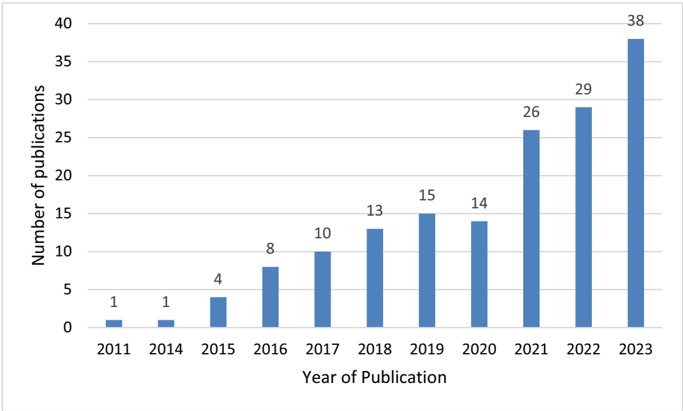
This systematic review synthesized 159 higher-education learning analytics studies on student engagement published between 2011 and 2023. It finds that HELA research overwhelmingly operationalizes engagement through behavioral log-data indicators, while cognitive, emotional, social, and disengagement dimensions are much less often measured.
## Key findings
- The review included 159 studies; 124 (78%) were journal articles and 35 (22%) were conference papers.
- Engagement measurement was dominated by behavioral engagement: 95.0% (n = 151) of studies measured it, and 56.0% (n = 89) operationalized engagement as behavioral only. By comparison, cognitive engagement appeared in 25.8% (n = 41), emotional engagement in 16.4% (n = 26), and social engagement in 16.4% (n = 26).
- The most common behavioral indicators were participation (86.2%, n = 137) and time on task (45.9%, n = 73). More than half of studies (50.9%, n = 81) combined log data with student assessments, and 33.3% (n = 53) used surveys.
- Theory use was uneven: 42 studies (26.4%) used an engagement framework to inform analysis, 71 (44.7%) used prior engagement research in their introduction/background and linked it to analysis, and 46 (28.9%) said they explored engagement but had an unclear link between data analysis and theory/frameworks.
## Methods
- The paper is a systematic review following PRISMA guidance as closely as possible; it was also checked against the Quality of Evidence Synthesis Tool.
- Searches were run in Web of Science, Scopus (including LAK proceedings), ProQuest (including ERIC), A+ Education, and SAGE Journals, plus OpenAlex snowballing; the search spans 2011–2023.
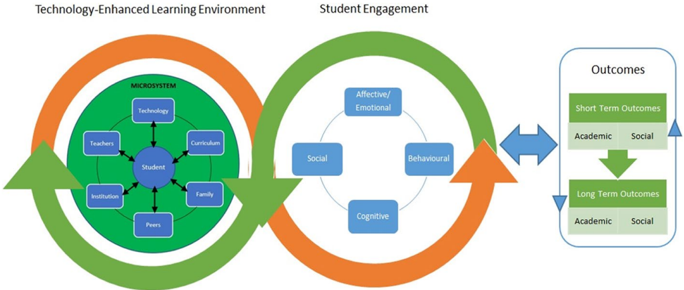
- 159 studies were included after screening and quality appraisal; quality was assessed with the Mixed Methods Appraisal Tool (MMAT). The review used manual data extraction and a narrative synthesis, coding studies against the Student Engagement in Digital Learning (SEDL) framework.
## Limitations
- The paper states that no protocol was registered prior to the review.
- It included English-language research only, which the authors say limits understanding of work in other languages.
- The authors note that requiring system log data as an inclusion criterion excluded HELA studies that might inform engagement through other methods.
- The search required studies to explicitly use “engagement” or “disengagement” in the title, abstract, or keywords, so studies of related sub-constructs that did not use those terms may have been missed; this is stated in the paper.
- The text also makes evident that some reporting is incomplete in the included literature: for example, 16 papers did not state the continent, 22 did not specify the country, and 14 did not specify whether participants were undergraduates or postgraduates; this is an evidence gap in the corpus, not a stated study design flaw.
Model-written summary. Check it against the paper before relying on it.
Integrity signals
Registry
Cites
Statistics
Figures



Verification
Claims the paper makes
26 Valid · 8 Not valid · 51 Not checked · 139 Own results and interpretations
The cited sources that could be checked couldn’t confirm or dispute this claim.
In the paper
“one arising problem relates to the emerging and disparate ways to convey what engagement is; for example, researchers may tend to either add variables that are not widely recognised as parts of engagement, supplement theory for research papers, or present vague conceptualisations (e.g., Masiello et al., 2024).”
§ Unpacking student engagement in higher education learning analytics: a systematic review > Student engagement theory
What the sources say
- Could not verifycites Masiello et al., 2024 sourceExperimental — accuracy not yet measured
Section 3.3 discusses theoretical frameworks used to design learning analytics dashboards, and Section 3.4 lists outcomes they track; neither addresses how engagement is conceptualised in research. Searches for engagement definitions, unrecognised variables, and vague conceptualisations found no passage making the attributed point. Page numbers were not available in our copy. (LLM, conf=0.73)
hedged- Asserted: passes — The authors put it forward as true.
- Checkable: passes — It can be checked against evidence.
- Load-bearing: passes — The paper’s conclusions depend on it.
- Based: passes — The paper gives a reason why it holds.
- Could not verify
The cited sources support only part of this claim — read each source’s verdict below.
In the paper
“While the unidimensional approach has potential, it has been criticised for using easy-to-count engagement indicators in LA research rather than considering differences in indicator value and distinguishing between meaningful and less meaningful ones (e.g., Johar et al., 2023).”
§ Unpacking student engagement in higher education learning analytics: a systematic review > Learning analytics and engagement
What the sources say
- Partly supportedcites Johar et al., 2023 sourceExperimental — accuracy not yet measured
Section 5.1 says that studying multiple types of engagement can yield more comprehensive measures, and Section 6 highlights the value of multifaceted engagement. The paper also describes measuring behavioural engagement through the frequency of LMS activity (Section 2.1). It does not, however, criticise unidimensional research for choosing indicators because they are easy to count or for failing to distinguish more meaningful indicators from less meaningful ones; no page numbers are available in our copy. (LLM, conf=0.83)
plain- Asserted: passes — The authors put it forward as true.
- Checkable: passes — It can be checked against evidence.
- Load-bearing: unclear — It is unclear whether the paper’s conclusions depend on it.
- Based: passes — The paper gives a reason why it holds.
- Partly supported
The cited sources support only part of this claim — read each source’s verdict below.
In the paper
“HELA research also focused heavily on undergraduate students, with only a small percentage of studies exploring postgraduate student engagement (Bergdahl et al., 2020;Bond et al., 2020), and a large proportion of participants (60%) were from a STEM discipline, which raises questions of wider study generalisability (Kaliisa et al., 2024).”
§ Unpacking student engagement in higher education learning analytics: a systematic review > Lack of diversity
What the sources say
- Could not verifycites Bergdahl et al., 2020 sourceExperimental — accuracy not yet measured
Section 4.4 discusses student learning behaviours and engagement, but does not compare the number of studies involving undergraduate and postgraduate students. Searches for “undergraduate” and “postgraduate” found an undergraduate cohort in a cited study’s title, but no review-level finding about the proportion of studies at either level. (LLM, conf=0.73)
- Partly supportedcites Bond et al., 2020 sourceExperimental — accuracy not yet measured
The Study population characteristics section reports that 60% of the mapped studies focused on undergraduates and 14% on postgraduates, supporting the imbalance described. However, the map covers student engagement and educational technology broadly; it does not establish that these proportions apply specifically to HELA research. (LLM, conf=0.85)
plain- Asserted: passes — The authors put it forward as true.
- Checkable: passes — It can be checked against evidence.
- Load-bearing: unclear — It is unclear whether the paper’s conclusions depend on it.
- Based: passes — The paper gives a reason why it holds.
- Could not verify
The cited sources that could be checked couldn’t confirm or dispute this claim.
In the paper
“However, these were rare, with relatively few studies using qualitative data collection and analysis methods (Banihashem et al., 2022;Foster & Francis, 2020).”
§ Unpacking student engagement in higher education learning analytics: a systematic review > Lack of diversity
What the sources say
- Could not verifycites Banihashem et al., 2022 sourceExperimental — accuracy not yet measured
The Conclusion says this study relied mostly on Moodle and survey data because it had limited access to qualitative data. Neither that passage nor the Introduction establishes that studies using qualitative data collection and analysis methods were rare across the field; searches for that prevalence claim found no such passage in our copy. (LLM, conf=0.76)
- Not checked — no full text of the sourcecites Foster & Francis, 2020 source
plain- Asserted: passes — The authors put it forward as true.
- Checkable: passes — It can be checked against evidence.
- Load-bearing: unclear — It is unclear whether the paper’s conclusions depend on it.
- Based: passes — The paper gives a reason why it holds.
- Could not verify
The sources with a verdict support this claim; the rest weren’t checked yet, have no full text we could read, or their verdicts aren’t rated yet.
In the paper
“At times, papers embraced both traditional and innovative approaches, including experiments, surveys, ethnography, and design-oriented research, alongside emerging computational methods, for example, combining survey, LMS data, and multimodal data (e.g., Wang et al., 2023) or longitudinal studies combining a design intervention, a survey, test results and LMS data (e.g., Zhou et al., 2023).”
§ Unpacking student engagement in higher education learning analytics: a systematic review > Lack of diversity
What the sources say
- Supportedcites Wang et al., 2023 source
The Research methodology > Instrument section describes a self-regulation questionnaire. Research methodology > Instrument and Research design and data describe online activity logs and discussion posts analyzed with machine-learning methods. Together, these support the citing sentence’s use of Wang et al. as an example combining survey, online-platform, and multimodal data; it does not attribute ethnography to Wang et al. The indexed copy provides no page numbers for these sections. (LLM, conf=0.90)
- Not checked — no full text of the sourcecites Zhou et al., 2023 source
hedged- Asserted: passes — The authors put it forward as true.
- Checkable: passes — It can be checked against evidence.
- Load-bearing: unclear — It is unclear whether the paper’s conclusions depend on it.
- Based: passes — The paper gives a reason why it holds.
- Supported
94 more claims · 4 with their cited sources checked
Create a free account to see all 224 claims and every source verdict.
- Probably not a substantial claim. 66
- It may state two separate claims as one. 82
Citations
Cites
The PRISMA 2020 statement: An updated guideline for reporting systematic reviews
Page, M. J., McKenzie, J. E., Bossuyt, P. M., Boutron, I., Hoffmann, T. C., Mulrow, C. D., Shamseer, L., Tetzlaff, J. M., Akl, E. A., Brennan, S. E., et al. (2021) · BMJ · doi:10.1136/bmj.n71 · Cited by 108,283
Self-efficacy: Toward a unifying theory of behavioral change
Bandura, A. (1977) · Psychological Review · doi:10.1037/0033-295x.84.2.191 · Cited by 43,925
A Coefficient of Agreement for Nominal Scales
Cohen, J. (1960) · Educational and Psychological Measurement · doi:10.1177/001316446002000104 · Cited by 42,398
School Engagement: Potential of the Concept, State of the Evidence
Fredricks, J. A., Blumenfeld, P. C., & Paris, A. H. (2004) · Review of Educational Research · doi:10.3102/00346543074001059 · Cited by 12,581
Critical Inquiry in a Text-Based Environment: Computer Conferencing in Higher Education
Garrison, D. R., Anderson, T., & Archer, W. (1999) · The Internet and Higher Education · doi:10.1016/s1096-7516(00)00016-6 · Cited by 6,619
Zimmerman, B. J. (2000) · Handbook of Self-Regulation · doi:10.1016/b978-012109890-2/50031-7 · Cited by 6,069
The PRISMA 2020 statement: an updated guideline for reporting systematic reviews
Page, M. J., McKenzie, J., Bossuyt, P., Boutron, I., Hoffmann, T., mulrow, C., Shamseer, L., Tetzlaff, J., Akl, E., Brennan, S. E., et al. (2020) · doi:10.31222/osf.io/v7gm2 · Cited by 5,177
The Role of Goal Orientation in Self-Regulated Learning
Pintrich, P. R. (2000) · Handbook of Self-Regulation · doi:10.1016/b978-012109890-2/50043-3 · Cited by 5,173
Cohen, D. (1998) · The Women's Review of Books · doi:10.2307/4022859 · Cited by 4,261
Systematic Reviews in the Social Sciences: A Practical Guide
Petticrew, M., & Roberts, H. (2006) · doi:10.1002/9780470754887 · Cited by 3,586
Research works printed but not linked: 3
- Bergdahl, N., Bond, M., & Brown, A. (Forthcoming). Cracking the engagement enigma: Decoding the multifaceted sociocultural influences on student engagement in digital learning. In G. Liem, J. Fredricks, & Z. Y. Wong (Eds.), Sociocultural perspectives on student engagement: Theory, research, and practice. Information Age Publishing.
- Fritz, J. (2013). Using analytics at UMBC: Encouraging student responsibility and identifying effective course designs. EDUCAUSE Center for Applied Research.
- * Wang, J.‑Y., Yang, C.‑H., Liao, W.‑C., Yang, K.‑C., Chang, I.‑W., Sheu, B.‑C., & Ni, Y.‑H. (2021). Highly engaged video-watching pattern in asynchronous online pharmacology course in pre-clinical 4th-year medical students was associated with a good self-expectation, understanding, and performance. Frontiers in Medicine, 8, 799412. https://doi.org/10.3389/fmed.2021.799412 · DOI
Cited by
Hoomanfard, M. H., & Shamsi, Y. (2025) · Journal of English for Academic Purposes · doi:10.1016/j.jeap.2025.101570 · Cited by 31
Evaluating the Use of 360-Degree Video in Education
Kavanagh, S., Luxton-Reilly, A., Wuensche, B. C., Plimmer, B., & Dunn, S. (2025) · Electronics · doi:10.3390/electronics14091830 · Cited by 11
Yilmaz, M., Gauthier, A., & Cukurova, M. (2026) · Educational technology research and development · doi:10.1007/s11423-026-10595-1 · Cited by 9
“To provide a more comprehensive understanding of learning, qualitative data should therefore complement behavioural measures (Bergdahl et al., 2024).”
Beyond Technology Tools: Supporting Student Engagement in Technology Enhanced Learning
Rotar, O. (2025) · Education Sciences · doi:10.3390/educsci15121617 · Cited by 37
The OpenAlex database in review: Evaluating its applications, capabilities, and limitations
Forchino, M. V., & Torres‐Salinas, D. (2026) · Journal of Informetrics · doi:10.1016/j.joi.2026.101800 · Cited by 20
Metadata
- Authors
- Bergdahl, N., Bond, M., Sjöberg, J., Dougherty, M., & Oxley, E.
- Affiliations
- Stockholm University (SE)
- University College London (GB)
- Halmstad University (SE)
- University of Glasgow (GB)
- Corresponding author
- Bond, Melissa
- Venue
- International Journal of Educational Technology in Higher Education
- Published
- 2024-12-20
- Volume
- 21
- Issue
- 1
- ISSN
- 2365-9440 (ISSN-L)
- OpenAlex
- W4405565085
- Semantic Scholar
- 536f08993b21fe7566324eba3bd21c1e248d1c5e
- Cited by
- 138
- References
- 152
- Citations by year
- 2026: 112 · 2025: 25 · 2024: 1
- FWCI
- 10.35
- Type
- journal article
- Language
- en
- Open access
- diamond
- doi.org
- Licence
- cc-by
- creativecommons.org/licenses/by/4.0 (tdm)
- creativecommons.org/licenses/by/4.0 (vor)
- Locations
- International Journal of Educational Technology in Higher Education (publishedVersion, cc-by)
- KTH Publication Database DiVA (KTH Royal Institute of Technology) (submittedVersion, other-oa)
- ENLIGHTEN (Jurnal Bimbingan dan Konseling Islam) (submittedVersion, cc-by-sa)
- UCL Discovery (University College London) (submittedVersion, cc-by)
- Theseus (Ammattikorkeakoulujen) (submittedVersion)
- DOAJ (DOAJ: Directory of Open Access Journals) (submittedVersion)
- Topics
- Physical Sciences › Computer Science › Computer Science Applications › Online Learning and Analytics
- Social Sciences › Education › Higher Education Research Studies
- Social Sciences › Education › Online and Blended Learning
- Keywords
- student engagement, learning analytics, higher education, engagement metrics, logs, disengagement, methodological reporting quality
About these checks
Registry, retraction, Cites and statistics results are computed, not judged, with one exception: a printed reference that no index lists is read once by a model before it counts as a citation error. Claims are extracted by a model and kept only when their quote appears verbatim in the text; each cited source is then checked, with a model’s help, for whether it says what the claim relies on. Those verdicts can be wrong — read the claim’s quote and the cited source before relying on one.
The claim verdicts this report counts are experimental: their accuracy is not yet measured.
A language model drew the claims from the paper on 2026-10-09, under version 3 of the claim definition (model deepseek-v4.1-flash, prompt extract-v3).
A second model labelled each claim on 2026-10-09 (model jev-1.13-20260917, definition revision gold-guideline-v0.2).
Cited sources are checked with a language model’s help (gpt-6-sol).
Statistics and arithmetic are recomputed, not judged.
Confidence bands are shown only for fields calibrated on our annotated test set. None is calibrated yet, so no band is shown.
What counts as a claim ›How we measure confidence ›How we check this ›
Are you an author, or do you see a problem with this page? Request a review
How to cite
Cite CoChat for the checks on this page, and the paper for its own findings.
- This page
- CoChat. (2026). Citation check: Unpacking student engagement in higher education learning analytics: a systematic review. https://app.cochat.ai/papers/10.1186/s41239-024-00493-y
- The paper
- Bergdahl, N., Bond, M., Sjöberg, J., Dougherty, M., & Oxley, E. (2024). Unpacking student engagement in higher education learning analytics: a systematic review. International Journal of Educational Technology in Higher Education. https://doi.org/10.1186/s41239-024-00493-y
Data sources
Bibliographic data: Semantic Scholar, OpenAlex, Crossref.
Contains information from the Semantic Scholar Academic Graph Datasets, made available under the ODC Attribution License (ODC-BY 1.0).
Semantic Scholar’s data is described in: Kinney, R., et al. (2023). The Semantic Scholar Open Data Platform. arXiv:2301.10140.
