

Joint Clinical Practice Guideline on Benzodiazepine Tapering: Considerations When Risks Outweigh Benefits
Open accessThe DOI matches its Crossref record; 206 of the 206 references it cites were found in a registry or an index; 124 of the 302 sources its claims cite were checked for support.
Abstract
Description: The American Society of Addiction Medicine (ASAM) has partnered with nine other medical societies and professional associations representing a wide range of clinical settings and patient populations to provide guidance on evidence-based strategies for tapering benzodiazepine (BZD) medication across a variety of settings. Methods: The guideline was developed following modified GRADE methodology and clinical consensus process. The process included a systematic literature review as well as several targeted supplemental searches. The clinical practice guideline was revised based on external stakeholder review. Recommendations: Key takeaways included the following: Clinicians should engage in ongoing risk–benefit assessment of BZD use/tapering, clinicians should utilize shared decision-making strategies in collaboration with patients, clinicians should not discontinue BZDs abruptly in patients who are likely to be physically dependent and at risk of withdrawal, clinicians should tailor tapering strategies to each patient and adjust tapering based on patient response, and clinicians should offer patients adjunctive psychosocial interventions to support successful tapering.
Overview
CoChat Summary
## TL;DR
This 2025 ASAM-led joint clinical practice guideline gives evidence-informed and consensus-based recommendations for tapering benzodiazepines when risks outweigh benefits. It emphasizes patient-centered, shared decision-making; gradual, individualized dose reductions; and special considerations for opioids, substance use disorders, psychiatric disorders, pregnancy, and older adults.
## Key findings
- The guideline’s systematic literature review identified 57 relevant articles, but few directly addressed the core questions; therefore, most recommendations are based on clinical consensus, and 3 recommendation statements are based on low-quality evidence from 10 studies.
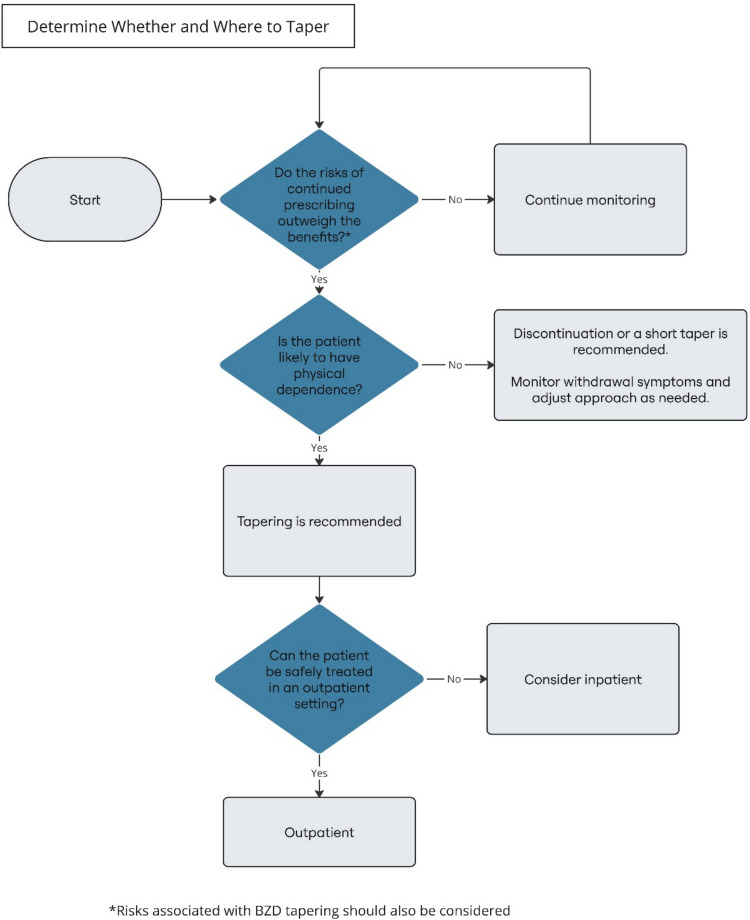
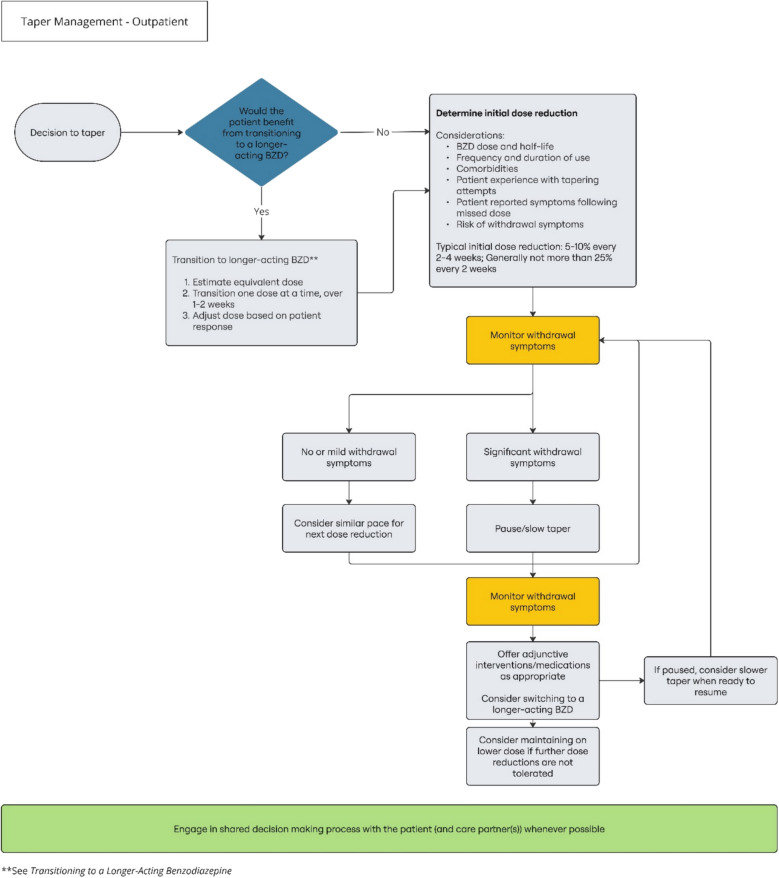
- For tapering, clinicians should generally start with 5% to 10% dose reductions, and the taper should typically not exceed 25% every 2 weeks; the guideline also notes that tapering may take a year or more for long-term users.
- In a retrospective cohort of 353,576 US commercial claims patients, discontinuing benzodiazepines over 6 months was associated with 1.6 times higher mortality risk than continued use, but the guideline cautions that the reason for discontinuation and taper speed were not measured.
- For adjunctive support, a Cochrane review found moderate-quality evidence that CBT during tapering improved discontinuation at 1 month and 3 months; a meta-analysis of brief primary-care interventions found higher discontinuation at 6 months (RR 2.73) and 12 months (RR 3.41).
- In inpatient phenobarbital protocols, one case series of 310 patients reported 27% sedation, 17% self-discharge, 1% delirium, and no falls or seizures; another chart review of 355 patients reported no seizures, falls, or sedation and 5% self-discharge.
## Methods
- Design: Joint clinical practice guideline developed by ASAM and partner societies using modified GRADE methodology, a clinical consensus process, a systematic literature review, targeted supplemental searches, and external stakeholder review.
- Sample/data: The review considered adults using one or more benzodiazepines for at least 2–4 weeks, including those with benzodiazepine use disorder; the systematic review identified 57 relevant articles.
- Analysis: The guideline used PICO-formulated clinical questions, GRADE for evidence-based recommendations, and a modified Delphi process for consensus statements when evidence was lacking.
## Limitations
- Stated in the paper: The paper repeatedly notes a paucity of evidence on benzodiazepine tapering; few studies directly answered the core questions, and many recommendations are consensus-based rather than evidence-based.
- Stated in the paper: There were no direct trials comparing tapering strategies for many key questions, and several recommendations rely on limited or low-quality evidence.
- Evident from the text: Much of the evidence comes from outpatient settings, retrospective studies, or heterogeneous interventions, so generalizability to all settings and patient groups appears limited (as indicated by the guideline’s emphasis on individualized care and uncertain evidence).
Model-written summary. Check it against the paper before relying on it.
Integrity signals
Registry
Cites
Statistics
Figures
Verification
Claims the paper makes
96 Valid · 7 Not valid · 82 Not checked · 113 Own results and interpretations
At least one cited source doesn’t support this claim or points to a different paper, and none confirmed it — see the verdicts below.
In the paper
“with data from 2014 to 2016 indicating over one-third of BZD prescriptions were co-prescribed with opioids.14,19”
§ Joint Clinical Practice Guideline on Benzodiazepine Tapering: Considerations When Risks Outweigh Benefits > INTRODUCTION > Background
What the sources say
- Not checked — no full text of the sourcecites [14] Santo L, Rui P, Ashman JJ. Physician office visits at which benzodiazepines were prescribed: findings from 2014-2016 National Ambulatory Medical Care Survey. Natl Health Stat Report. 2020;(137):1-16. 32510318
- Disputedcites [19] Agarwal SD, Landon BE. Patterns in outpatient benzodiazepine prescribing in the United States. JAMA Netw Open. 2019;2(1):e187399-e187399. 10.1001/jamanetworkopen.2018.7399 30681713 PMC6484578 sourceExperimental — accuracy not yet measured
The Results (Coprescribing and Predictors Associated With Use) report that opioids were coprescribed in 26.4% of 2015 visits involving a benzodiazepine, not over one-third. The Discussion says the study's data extend through 2015, not 2016. The paper measures visits rather than the share of benzodiazepine prescriptions. (LLM, conf=0.85)
Checked by a reasoning model — may be wrong.
hedgedstates an association- Asserted: passes — The authors put it forward as true.
- Checkable: passes — It can be checked against evidence.
- Load-bearing: unclear — It is unclear whether the paper’s conclusions depend on it.
- Based: passes — The paper gives a reason why it holds.
The sources with a verdict support this claim; the rest weren’t checked yet, have no full text we could read, or their verdicts aren’t rated yet.
In the paper
“Some older adults have taken BZDs continuously for decades.9,14,15”
§ Joint Clinical Practice Guideline on Benzodiazepine Tapering: Considerations When Risks Outweigh Benefits > INTRODUCTION > Background
What the sources say
- Not checked — no full text of the sourcecites [9] Olfson M, King M, Schoenbaum M. Benzodiazepine use in the United States. JAMA Psychiatry. 2015;72(2):136-142. 10.1001/jamapsychiatry.2014.1763 25517224 source
- Not checked — no full text of the sourcecites [14] Santo L, Rui P, Ashman JJ. Physician office visits at which benzodiazepines were prescribed: findings from 2014-2016 National Ambulatory Medical Care Survey. Natl Health Stat Report. 2020;(137):1-16. 32510318
- Supportedcites [15] Curran HV, Collins R, Fletcher S, Kee SC, Woods B, Iliffe S. Older adults and withdrawal from benzodiazepine hypnotics in general practice: effects on cognitive function, sleep, mood and quality of life. Psychol Med. 2003;33(7):1223-1237. 10.1017/s0033291703008213 14580077 source
The Abstract reports that 27% of the study’s older patients had taken BZDs continuously for more than 20 years. The Discussion likewise says 27% had taken them every night for more than 20 years, directly supporting “some older adults” and “for decades.” (LLM, conf=0.95)
plain- Asserted: passes — The authors put it forward as true.
- Checkable: passes — It can be checked against evidence.
- Load-bearing: unclear — It is unclear whether the paper’s conclusions depend on it.
- Based: passes — The paper gives a reason why it holds.
The cited sources support only part of this claim — read each source’s verdict below.
In the paper
“Despite potential harms, long-term use of BZDs (i.e., ≥ 120 days) is common.9,10”
§ Joint Clinical Practice Guideline on Benzodiazepine Tapering: Considerations When Risks Outweigh Benefits > INTRODUCTION > Background
What the sources say
- Not checked — no full text of the sourcecites [9] Olfson M, King M, Schoenbaum M. Benzodiazepine use in the United States. JAMA Psychiatry. 2015;72(2):136-142. 10.1001/jamapsychiatry.2014.1763 25517224 source
- Partly supportedcites [10] Gerlach LB, Maust DT, Leong SH, Mavandadi S, Oslin DW. Factors associated with long-term benzodiazepine use among older adults. JAMA Intern Med. 2018;178(11):1560-1562. 10.1001/jamainternmed.2018.2413 30208384 PMC6248198 sourceExperimental — accuracy not yet measured
The Results report that 26.4% of newly prescribed older adults met the paper’s definition of long-term benzodiazepine use. But the Methods define long-term use as a medication possession ratio greater than 30% over one year, not ≥120 days; the paper therefore does not establish how common use meeting the cited threshold is. The study is also limited to low-income older adults in Pennsylvania (Discussion). (LLM, conf=0.88)
plain- Asserted: passes — The authors put it forward as true.
- Checkable: passes — It can be checked against evidence.
- Load-bearing: passes — The paper’s conclusions depend on it.
- Based: passes — The paper gives a reason why it holds.
The cited sources support only part of this claim — read each source’s verdict below.
In the paper
“Given that both BZDs and opioids cause CNS depression, concomitant use increases the risk of adverse events, including fatal and nonfatal overdose.21–23”
§ Joint Clinical Practice Guideline on Benzodiazepine Tapering: Considerations When Risks Outweigh Benefits > INTRODUCTION > Background
What the sources say
- Partly supportedcites [21] Sun EC, Dixit A, Humphreys K, Darnall BD, Baker LC, Mackey S. Association between concurrent use of prescription opioids and benzodiazepines and overdose: retrospective analysis. BMJ. 2017;356:j760. 10.1136/bmj.j760 28292769 PMC5421443 sourceExperimental — accuracy not yet measured
The Results report an association between concurrent use and emergency visits or hospital admissions for opioid overdose; the Discussion also reports earlier studies linking concurrent use to fatal overdose. But this retrospective study does not establish that concurrent use causes the increased risk: its Abstract explicitly qualifies the proposed effect of eliminating concurrent use with “If this association is causal.” (LLM, conf=0.86)
- Partly supportedcites [22] Park TW, Saitz R, Ganoczy D, Ilgen MA, Bohnert AS. Benzodiazepine prescribing patterns and deaths from drug overdose among US veterans receiving opioid analgesics: case-cohort study. BMJ. 2015;350:h2698. 10.1136/bmj.h2698 26063215 PMC4462713 sourceExperimental — accuracy not yet measured
The Discussion reports an association between concurrent benzodiazepine and opioid receipt and fatal overdose among veterans receiving opioid analgesics. Its Findings in context section also reports another study's association with combined fatal and nonfatal overdoses. But the paper explicitly says its observational design cannot establish that concomitant use causes overdose deaths, so the claim's causal wording overstates the evidence. (LLM, conf=0.86)
- Not matchedcites [23] US Food and Drug Administration. FDA warns about serious risks and death when combining opioid pain or cough medicines with benzodiazepines; requires its strongest warning. 2016.
Its entry has no title and year that we can search by.
plainstates a cause- Asserted: passes — The authors put it forward as true.
- Checkable: passes — It can be checked against evidence.
- Load-bearing: passes — The paper’s conclusions depend on it.
- Based: passes — The paper gives a reason why it holds.
- Partly supported
The sources with a verdict support this claim; the rest weren’t checked yet, have no full text we could read, or their verdicts aren’t rated yet.
In the paper
“Co-prescribing of BZDs and opioids quadrupled between 2003 and 2015 in ambulatory care settings”
§ Joint Clinical Practice Guideline on Benzodiazepine Tapering: Considerations When Risks Outweigh Benefits > INTRODUCTION > Background
What the sources say
- Not checked — no full text of the sourcecites [14] Santo L, Rui P, Ashman JJ. Physician office visits at which benzodiazepines were prescribed: findings from 2014-2016 National Ambulatory Medical Care Survey. Natl Health Stat Report. 2020;(137):1-16. 32510318
- Supportedcites [19] Agarwal SD, Landon BE. Patterns in outpatient benzodiazepine prescribing in the United States. JAMA Netw Open. 2019;2(1):e187399-e187399. 10.1001/jamanetworkopen.2018.7399 30681713 PMC6484578 source
The Results section (“Coprescribing and Predictors Associated With Use”) reports that benzodiazepine and opioid prescriptions noted in a single ambulatory-care visit quadrupled, from 0.5% to 2.0%. The study covers 2003 through 2015. The measure is same-visit coprescribing, rather than all overlapping prescriptions. (LLM, conf=0.94)
plainstates an association- Asserted: passes — The authors put it forward as true.
- Checkable: passes — It can be checked against evidence.
- Load-bearing: passes — The paper’s conclusions depend on it.
- Based: passes — The paper gives a reason why it holds.
165 more claims · 59 with their cited sources checked
Create a free account to see all 298 claims and to verify the 11 references still open.
- It may state two separate claims as one. 62
- Probably not a substantial claim. 78
- The quote only partly states this claim. 1
Claims other papers make about this one
Each is checked against this paper’s own text: does it say what the citing paper says it does?
The source backs part of the claim, not all of it — or backs it for a different population, condition or comparison.
In the citing paper
“No medications are approved for benzodiazepine withdrawal, and the ASAM panel concluded ‘After carefully considering existing evidence on various pharmacological interventions…no single medication had enough data to support recommending it’ (p. 61) (Brunner et al., 2025), consistent with other analyses (Baandrup et al., 2018; Welsh et al., 2018).”
From Pharmacological principles for safe benzodiazepine and Z-drug dose reduction (2026) · cites this paper as Brunner et al., 2025
Experimental — accuracy not yet measuredThe source backs part of the claim, not all of it — or backs it for a different population, condition or comparison.
In the citing paper
“Guidelines universally recommend tapering benzodiazepines, yet there is no definitive method, and most advice is based on expert consensus rather than empirical evidence or pharmacological principles, resulting in conflicting advice (Brunner et al., 2025; Pollmann, Murphy, Bergman, & Gardner, 2015).”
From Pharmacological principles for safe benzodiazepine and Z-drug dose reduction (2026) · cites this paper as Brunner et al., 2025
Experimental — accuracy not yet measuredThe source backs part of the claim, not all of it — or backs it for a different population, condition or comparison.
In the citing paper
“In 2025, a joint clinical practice guideline on benzodiazepine tapering developed by the American Society of Addiction Medicine (ASAM), funded by the FDA, partnered with nine other medical societies including the American Psychiatric Association, recommended linear dose reductions as the preferred strategy (5%–10% of the daily dose every 2–4 weeks) (Brunner et al., 2025).”
From Pharmacological principles for safe benzodiazepine and Z-drug dose reduction (2026) · cites this paper as Brunner et al., 2025
Experimental — accuracy not yet measuredThe cited source says what the claim attributes to it.
In the citing paper
“Even short-term use of benzodiazepines may be problematic, because physiologic dependence on benzodiazepines can occur after two to four weeks of use [84–89].”
From Long-term neurological consequences following benzodiazepine exposure: A scoping review (2025) · cites this paper as [89]
4 more claims about this paper
Create a free account to see every claim other papers make about this one.
Self-check
Percentages, sums and reported differences re-computed from the paper’s own numbers.
Each contradiction between two passages listed here was confirmed by an independent check.
Rated minor: it would not touch a result — a value no result rests on, a p-value that stays on the same side of the significance level, or a conflict that is clerical, resolved elsewhere in the paper, or outside its own findings.
In the paper
§ Joint Clinical Practice Guideline on Benzodiazepine Tapering: Considerations When Risks Outweigh Benefits > SUMMARY OF RECOMMENDATIONS
“Recommendation for Older Adults 27.Clinicians should generally taper BZD medication in older adults unless there are compelling reasons for continuation (Clinical Consensus, Strong Recommendation).”
§ Joint Clinical Practice Guideline on Benzodiazepine Tapering: Considerations When Risks Outweigh Benefits > POPULATION-SPECIFIC CONSIDERATIONS > Older Adults
“Recommendation for Older Adults 29. Clinicians should generally taper BZD medication in older adults unless there are compelling reasons for continuation (Clinical Consensus, Strong Recommendation).”
Citations
Cites
Diagnostic and Statistical Manual of Mental Disorders
American Psychiatric Association (2022) · doi:10.1176/appi.books.9780890425787 · Cited by 23,476
Journal of Clinical Psychiatry
(2018) · Journal of Clinical Psychiatry · doi:10.5505/kpd · Cited by 13,651
Posner, K., Brown, G. K., Stanley, B., Brent, D. A., Yershova, K. V., Oquendo, M. A., Currier, G. W., Melvin, G. A., Greenhill, L., Shen, S., et al. (2011) · American Journal of Psychiatry · doi:10.1176/appi.ajp.2011.10111704 · Cited by 5,157 · cited 1×
“158,159 Clinicians should educate patients regarding potential rebound psychiatric symptoms and how they will be managed and offer or refer for appropriate mental health services.”
Shared decision making: A model for clinical practice
Elwyn, G., Frosch, D., Thomson, R., Joseph-Williams, N., Lloyd, A., Kinnersley, P., Cording, E., Tomson, D., Dodd, C., Rollnick, S., et al. (2012) · Journal of General Internal Medicine · doi:10.1007/s11606-012-2077-6 · Cited by 4,405
Clinical Guideline for the Evaluation and Management of Chronic Insomnia in Adults
Schutte-Rodin, S., Broch, L., Buysse, D., Dorsey, C., & Sateia, M. (2008) · Journal of Clinical Sleep Medicine · doi:10.5664/jcsm.27286 · Cited by 1,943
CDC Clinical Practice Guideline for Prescribing Opioids for Pain — United States, 2022
Dowell, D., Ragan, K. R., Jones, C. M., Baldwin, G. T., & Chou, R. (2022) · MMWR. Recommendations and Reports · doi:10.15585/mmwr.rr7103a1 · Cited by 1,886 · cited 6×
“139 This includes minimizing opioid doses where possible and optimizing non-opioid interventions for managing pain, such as nonpharmacological treatments for pain management, including exercise, mindfulness-based interventions, and CBT. 139 The CDC guideline, and the joint US Department of Veterans…”
InfluentialYatham, L. N., Kennedy, S. H., Parikh, S. V., Schaffer, A., Bond, D. J., Frey, B. N., Sharma, V., Goldstein, B. I., Rej, S., Beaulieu, S., et al. (2018) · Bipolar Disorders · doi:10.1111/bdi.12609 · Cited by 1,852 · cited 1×
“39–41 Long-term BZD use may also be appropriate for medical conditions such as complex seizure disorders, 42 spasticity, 43,44 sleep disorders involving abnormal movements (e.g., rapid eye movement (REM) sleep behavior disorder, restless leg syndrome), 45 and catatonia.”
By the 2023 American Geriatrics Society Beers Criteria® Update Expert Panel (2023) · Journal of the American Geriatrics Society · doi:10.1111/jgs.18372 · Cited by 1,597
Sateia, M. J., Buysse, D. J., Krystal, A. D., Neubauer, D. N., & Heald, J. L. (2017) · Journal of Clinical Sleep Medicine · doi:10.5664/jcsm.6470 · Cited by 1,519
Where Is the Evidence? A Systematic Review of Shared Decision Making and Patient Outcomes
Shay, L. A., & Lafata, J. E. (2015) · Medical Decision Making · doi:10.1177/0272989x14551638 · Cited by 1,214 · cited 2×
“64 When BZD tapering is indicated, clinicians should initiate a conversation with patients with a goal of shared decision-making.”
Sedative hypnotics in older people with insomnia: meta-analysis of risks and benefits
Glass, J., Lanctôt, K. L., Herrmann, N., Sproule, B. A., & Busto, U. E. (2005) · BMJ · doi:10.1136/bmj.38623.768588.47 · Cited by 1,161 · cited 2×
“35,36 However, therapeutic effects diminished within days to weeks due to changes in BZD receptor density and/or affinity resulting from chronic use, while risks remain present.”
InfluentialJoosten, E. A. G., DeFuentes-Merillas, L., de Weert, G. H., Sensky, T., van der Staak, C. P. F., & de Jong, C. A. J. (2008) · Psychotherapy and Psychosomatics · doi:10.1159/000126073 · Cited by 1,135 · cited 1×
“63,64 One systematic review of 39 studies of shared decision-making and patient outcomes demonstrated that patient-perceived shared decision-making was associated with improved positive affective/cognitive outcomes such as understanding, satisfaction, and trust.”
Dresser, G. K., Spence, J. D., & Bailey, D. G. (2000) · Clinical Pharmacokinetics · doi:10.2165/00003088-200038010-00003 · Cited by 908 · cited 1×
“53 Additionally, clinicians should explore patients’ use of nonprescribed opioids and sedatives, as well as their consumption of alcohol (a CNS depressant) and grapefruit juice (a strong CYP3 A4 inhibitor).”
Sleep disturbance and psychiatric disorders
Freeman, D., Sheaves, B., Waite, F., Harvey, A. G., & Harrison, P. J. (2020) · The Lancet Psychiatry · doi:10.1016/s2215-0366(20)30136-x · Cited by 843
Benzodiazepine Use in the United States
Olfson, M., King, M., & Schoenbaum, M. (2015) · JAMA Psychiatry · doi:10.1001/jamapsychiatry.2014.1763 · Cited by 786
Polydrug abuse: a review of opioid and benzodiazepine combination use
Jones, J. D., Mogali, S., & Comer, S. D. (2012) · Drug and Alcohol Dependence · doi:10.1016/j.drugalcdep.2012.07.004 · Cited by 703 · cited 2×
“7,23,52 Excessive sedation has been observed when BZDs have been used with CYP3 A4 inhibitors, such as antibiotics like clarithromycin and erythromycin.”
Tannenbaum, C., Martin, P., Tamblyn, R., Benedetti, A., & Ahmed, S. (2014) · JAMA Internal Medicine · doi:10.1001/jamainternmed.2014.949 · Cited by 665 · cited 2×
“In contrast, an RCT by Tannenbaum et al. 56 evaluating a patient educational intervention for BZD tapering did not observe any major adverse events in 303 patients, while an RCT by Vicens et al. 57 only reported one adverse event among 359 patients after initiating a primary care–based intervention…”
An update on the clinical consequences of polypharmacy in older adults: a narrative review
Wastesson, J. W., Morin, L., Tan, E. C. K., & Johnell, K. (2018) · Expert Opinion on Drug Safety · doi:10.1080/14740338.2018.1546841 · Cited by 617
Meta-analysis of benzodiazepine use in the treatment of insomnia.
(2000) · PubMed Central · Cited by 613
Kocherlakota, P. (2014) · Pediatrics · doi:10.1542/peds.2013-3524 · Cited by 612 · cited 1×
“190 The long-term effects of BZD exposure are unknown, but evidence has suggested that the amount of BZD transferred into breast milk is low.”
Park, T. W., Saitz, R., Ganoczy, D., Ilgen, M. A., & Bohnert, A. S. B. (2015) · BMJ · doi:10.1136/bmj.h2698 · Cited by 579
Benzodiazepines revisited—will we ever learn?
Lader, M. (2011) · Addiction · doi:10.1111/j.1360-0443.2011.03563.x · Cited by 573
Patient Barriers to and Enablers of Deprescribing: a Systematic Review
Reeve, E., To, J., Hendrix, I., Shakib, S., Roberts, M. S., & Wiese, M. D. (2013) · Drugs & Aging · doi:10.1007/s40266-013-0106-8 · Cited by 536 · cited 3×
“66,67 In addition to discussing the risks and benefits of BZD use, clinicians should acknowledge and discuss the risks and benefits associated with BZD tapering or discontinuation.”
Sun, E. C., Dixit, A., Humphreys, K., Darnall, B. D., Baker, L. C., & Mackey, S. (2017) · BMJ · doi:10.1136/bmj.j760 · Cited by 534
Increasing Benzodiazepine Prescriptions and Overdose Mortality in the United States, 1996–2013
Bachhuber, M. A., Hennessy, S., Cunningham, C. O., & Starrels, J. L. (2016) · American Journal of Public Health · doi:10.2105/ajph.2016.303061 · Cited by 531
Rathbone, A. L., & Prescott, J. (2017) · Journal of Medical Internet Research · doi:10.2196/jmir.7740 · Cited by 497
Treatment of Benzodiazepine Dependence
Soyka, M. (2017) · New England Journal of Medicine · doi:10.1056/nejmra1611832 · Cited by 465
The diagnosis and management of benzodiazepine dependence
Ashton, H. (2005) · Current Opinion in Psychiatry · doi:10.1097/01.yco.0000165594.60434.84 · Cited by 455
The ASAM National Practice Guideline for the Treatment of Opioid Use Disorder: 2020 Focused Update
(2020) · Journal of Addiction Medicine · doi:10.1097/adm.0000000000000633 · Cited by 412 · cited 3×
“145,146 Clinicians should provide psychosocial interventions (e.g., psychotherapy, counseling, psychoeducation) to treat underlying SUDs in parallel with pharmacotherapy.”
Emergency Department Visits and Overdose Deaths From Combined Use of Opioids and Benzodiazepines
Jones, C. M., & McAninch, J. K. (2015) · American Journal of Preventive Medicine · doi:10.1016/j.amepre.2015.03.040 · Cited by 376
Association between polypharmacy and death: A systematic review and meta-analysis
Leelakanok, N., Holcombe, A. L., Lund, B. C., Gu, X., & Schweizer, M. L. (2017) · Journal of the American Pharmacists Association · doi:10.1016/j.japh.2017.06.002 · Cited by 355 · cited 2×
“94,95 In a recent scoping review of several international CPGs for BZD tapering, 86 the two guidelines that did not recommend switching to a longer-acting BZD were focused on older adults.”
Morin, C. M., Bastien, C., Guay, B., Radouco-Thomas, M., Leblanc, J., & Vallières, A. (2004) · American Journal of Psychiatry · doi:10.1176/appi.ajp.161.2.332 · Cited by 348
Benzodiazepines for PTSD: A Systematic Review and Meta-Analysis
GUINA, J., ROSSETTER, S. R., DeRHODES, B. J., NAHHAS, R. W., & WELTON, R. S. (2015) · Journal of Psychiatric Practice · doi:10.1097/pra.0000000000000091 · Cited by 341 · cited 1×
“163 When tapering BZD in patients with PTSD, clinicians should consider that withdrawal from BZDs can worsen existing PTSD symptoms (e.g., increased anxiety, rage, increased nightmares, intrusive thoughts, hyperalertness).”
Benzodiazepines: Uses, Dangers, and Clinical Considerations
Edinoff, A. N., Nix, C. A., Hollier, J., Sagrera, C. E., Delacroix, B. M., Abubakar, T., Cornett, E. M., Kaye, A. M., & Kaye, A. D. (2021) · Neurology International · doi:10.3390/neurolint13040059 · Cited by 340
Nakao, M., Shirotsuki, K., & Sugaya, N. (2021) · BioPsychoSocial Medicine · doi:10.1186/s13030-021-00219-w · Cited by 339
Lingford-Hughes, A., Welch, S., Peters, L., Nutt, D., & With expert reviewers (in alphabetical order): Ball D, B. N. (2012) · Journal of Psychopharmacology · doi:10.1177/0269881112444324 · Cited by 332
Aurora, R. N., Kristo, D. A., Bista, S. R., Rowley, J. A., Zak, R. S., Casey, K. R., Lamm, C. I., Tracy, S. L., & Rosenberg, R. S. (2012) · Sleep · doi:10.5665/sleep.1986 · Cited by 328 · cited 1×
“39–41 Long-term BZD use may also be appropriate for medical conditions such as complex seizure disorders, 42 spasticity, 43,44 sleep disorders involving abnormal movements (e.g., rapid eye movement (REM) sleep behavior disorder, restless leg syndrome), 45 and catatonia.”
Patterns in Outpatient Benzodiazepine Prescribing in the United States
Agarwal, S. D., & Landon, B. E. (2019) · JAMA Network Open · doi:10.1001/jamanetworkopen.2018.7399 · Cited by 319
Benzodiazepine Use in Older Adults: Dangers, Management, and Alternative Therapies
Markota, M., Rummans, T. A., Bostwick, J. M., & Lapid, M. I. (2016) · Mayo Clinic Proceedings · doi:10.1016/j.mayocp.2016.07.024 · Cited by 307 · cited 1×
“92,171,172 Because older adults are often taking multiple medications from multiple providers, a full medication review and reconciliation should be conducted prior to attempting a BZD taper.”
Implicit bias in healthcare: clinical practice, research and decision making
Gopal, D. P., Chetty, U., O'Donnell, P., Gajria, C., & Blackadder-Weinstein, J. (2021) · Future Healthcare Journal · doi:10.7861/fhj.2020-0233 · Cited by 298 · cited 3×
“54 Consideration of Risks Associated with Tapering.”
Tinetti, M. E., Naik, A. D., Dindo, L., Costello, D. M., Esterson, J., Geda, M., Rosen, J., Hernandez-Bigos, K., Smith, C. D., Ouellet, G. M., et al. (2019) · JAMA Internal Medicine · doi:10.1001/jamainternmed.2019.4235 · Cited by 282 · cited 1×
“49 When determining the balance of risks and benefits, clinicians should consider the following: • How significant are the potential benefits?”
The role of sleep dysfunction in the occurrence of delusions and hallucinations: A systematic review
Reeve, S., Sheaves, B., & Freeman, D. (2015) · Clinical Psychology Review · doi:10.1016/j.cpr.2015.09.001 · Cited by 273 · cited 1×
“2,164,165 The CGC recommends that clinicians monitor sleep closely in these patients, particularly those with bipolar disorder because sleep disturbance can trigger episodes of mania.”
Abdel-Latif, M. E., Pinner, J., Clews, S., Cooke, F., Lui, K., & Oei, J. (2006) · Pediatrics · doi:10.1542/peds.2005-1561 · Cited by 266 · cited 1×
“193 Thus, the CGC recommends that clinicians encourage breastfeeding to help reduce potential symptoms of NAS in the infant.”
Hospital outcomes of older people with cognitive impairment: An integrative review
Fogg, C., Griffiths, P., Meredith, P., & Bridges, J. (2018) · International Journal of Geriatric Psychiatry · doi:10.1002/gps.4919 · Cited by 266 · cited 1×
“174 The CGC emphasized that clinicians should attempt to taper BZDs in older adult patients in outpatient settings unless there is a specific indication for inpatient tapering, such as an imminent safety concern that will not be rapidly mitigated by the initial BZD dose reduction.”
Acute and Persistent Withdrawal Syndromes Following Discontinuation of Psychotropic Medications
Cosci, F., & Chouinard, G. (2020) · Psychotherapy and Psychosomatics · doi:10.1159/000506868 · Cited by 265 · cited 2×
“78,130,132 Protracted withdrawal symptoms can adversely affect patients’ relationships, family life, careers, and mental health.”
The effects of benzodiazepine use during pregnancy and lactation
McElhatton, P. R. (1994) · Reproductive Toxicology · doi:10.1016/0890-6238(94)90029-9 · Cited by 265
(1993) · American Journal of Psychiatry · doi:10.1176/ajp.150.10.1485 · Cited by 263
Griffiths, R. R., & Weerts, E. M. (1997) · Psychopharmacology · doi:10.1007/s002130050422 · Cited by 260 · cited 1×
“31 Long-term BZD use is often associated with more risks than benefits.”
Management of benzodiazepine misuse and dependence
Brett, J., & Murnion, B. (2015) · Australian Prescriber · doi:10.18773/austprescr.2015.055 · Cited by 260 · cited 1×
“79,101,145 Harm Reduction.”
Weich, S., Pearce, H. L., Croft, P., Singh, S., Crome, I., Bashford, J., & Frisher, M. (2014) · BMJ · doi:10.1136/bmj.g1996 · Cited by 259
Komaromy, M., Duhigg, D., Metcalf, A., Carlson, C., Kalishman, S., Hayes, L., Burke, T., Thornton, K., & Arora, S. (2016) · Substance Abuse · doi:10.1080/08897077.2015.1129388 · Cited by 258
Smoking in Patients Receiving Psychotropic Medications: A Pharmacokinetic Perspective
Desai, H. D., Seabolt, J., & Jann, M. W. (2001) · CNS Drugs · doi:10.2165/00023210-200115060-00005 · Cited by 253 · cited 1×
“51 Furthermore, new health conditions and the medications used to treat them can also influence patients’ risks.”
Wikner, B. N., Stiller, C., Bergman, U., Asker, C., & Källén, B. (2007) · Pharmacoepidemiology and Drug Safety · doi:10.1002/pds.1457 · Cited by 253
ACOG Committee on Clinical Practice Guidelines–Obstetrics (2023) · Obstetrics & Gynecology · doi:10.1097/aog.0000000000005202 · Cited by 252 · cited 2×
“175,186 In general, existing clinical guidelines recommend optimizing alternative therapeutic approaches (e.g., CBT, CBT-I) and advise caution with BZD dosing during pregnancy.”
Deprescribing benzodiazepine receptor agonists: Evidence-based clinical practice guideline.
(2018) · Europe PMC (PubMed Central) · Cited by 250
The benzodiazepine withdrawal syndrome
PÉTURSSON, H. (1994) · Addiction · doi:10.1111/j.1360-0443.1994.tb03743.x · Cited by 246
(1990) · PubMed · Cited by 222
Kroenke, K., Alford, D. P., Argoff, C., Canlas, B., Covington, E., Frank, J. W., Haake, K. J., Hanling, S., Hooten, W. M., Kertesz, S. G., et al. (2019) · Pain Medicine · doi:10.1093/pm/pny307 · Cited by 214
Effectiveness of current treatment approaches for benzodiazepine discontinuation: a meta‐analysis
Parr, J. M., Kavanagh, D. J., Cahill, L., Mitchell, G., & Young, R. M. (2009) · Addiction · doi:10.1111/j.1360-0443.2008.02364.x · Cited by 212 · cited 2×
“153,154 155–157 Clinicians should also consider evidence-based suicide screening such as the Columbia Suicide Severity Rating Scale (C-SSRS) or Ask Suicide-Screening Questions (ASQ) tool for patients at risk.”
Vinkers, C. H., & Olivier, B. (2012) · Advances in Pharmacological Sciences · doi:10.1155/2012/416864 · Cited by 195 · cited 1×
“32,33 34 Meta-analyses of patients taking BZDs for insomnia demonstrated minor improvements in sleep onset, increased sleep duration, and decreased nighttime awakenings.”
A Review of Alprazolam Use, Misuse, and Withdrawal
Ait-Daoud, N., Hamby, A. S., Sharma, S., & Blevins, D. (2018) · Journal of Addiction Medicine · doi:10.1097/adm.0000000000000350 · Cited by 195 · cited 3×
“62 Therefore, a taper may be appropriate for patients taking this medication daily, even for a short duration (e.g., 2–4 weeks).”
InfluentialLong-term Therapeutic Use of Benzodiazepines: II. Effects of Gradual Taper
Schweizer, E. (1990) · Archives of General Psychiatry · doi:10.1001/archpsyc.1990.01810220024003 · Cited by 191 · cited 2×
“75–77 While no direct evidence was found comparing various tapering strategies, the CGC considered results of these studies, existing guidance, and their own experience in recommending these tapering strategies.”
CURRAN, H. V., COLLINS, R., FLETCHER, S., KEE, S. C. Y., WOODS, B., & ILIFFE, S. (2003) · Psychological Medicine · doi:10.1017/s0033291703008213 · Cited by 190 · cited 1×
“9,14,15 In some instances, use has been so prolonged that the original reason for the BZD prescription may be unclear.”
Lavonas, E. J., Akpunonu, P. D., Arens, A. M., Babu, K. M., Cao, D., Hoffman, R. S., Hoyte, C. O., Mazer-Amirshahi, M. E., Stolbach, A., St-Onge, M., et al. (2023) · Circulation · doi:10.1161/cir.0000000000001161 · Cited by 189 · cited 1×
“126 Therefore, the CGC agreed that flumazenil should not be utilized for the purposes of BZD tapering.”
Self-citationThe benzodiazepine withdrawal symptom questionnaire
Tyrer, P., Murphy, S., & Riley, P. (1990) · Journal of Affective Disorders · doi:10.1016/0165-0327(90)90009-w · Cited by 188 · cited 1×
“120 However, both these scales were developed with a small number of patients and little to no evidence of validation was found for either; as such, they are not used frequently in clinical practice.”
Appropriate Use of Drug Testing in Clinical Addiction Medicine
Jarvis, M., Williams, J., Hurford, M., Lindsay, D., Lincoln, P., Giles, L., Luongo, P., & Safarian, T. (2017) · Journal of Addiction Medicine · doi:10.1097/adm.0000000000000323 · Cited by 187
Self-citationDrugs in pregnancy: Pharmacologic and physiologic changes that affect clinical care
Pinheiro, E. A., & Stika, C. S. (2020) · Seminars in Perinatology · doi:10.1016/j.semperi.2020.151221 · Cited by 186
(2003) · Europe PMC (PubMed Central) · Cited by 176
Drug Metabolism in Older People--A Key Consideration in Achieving Optimal Outcomes With Medicines
McLachlan, A. J., & Pont, L. G. (2012) · The Journals of Gerontology Series A: Biological Sciences and Medical Sciences · doi:10.1093/gerona/glr118 · Cited by 172 · cited 2×
“171 As a result, the CGC cautioned against transitioning older adults to longer-acting BZDs prior to tapering.”
Drugs Used to Treat Spasticity
Kita, M., & Goodkin, D. E. (2000) · Drugs · doi:10.2165/00003495-200059030-00006 · Cited by 172
Protracted withdrawal syndromes from benzodiazepines
Ashton, H. (1991) · Journal of Substance Abuse Treatment · doi:10.1016/0740-5472(91)90023-4 · Cited by 170 · cited 1×
“78,130,132 Protracted withdrawal symptoms can adversely affect patients’ relationships, family life, careers, and mental health.”
Abrahamsson, T., Berge, J., Öjehagen, A., & Håkansson, A. (2017) · Drug and Alcohol Dependence · doi:10.1016/j.drugalcdep.2017.01.013 · Cited by 169
Neuroadaptive processes in GABAergic and glutamatergic systems in benzodiazepine dependence
Allison, C., & Pratt, J. A. (2003) · Pharmacology & Therapeutics · doi:10.1016/s0163-7258(03)00029-9 · Cited by 160 · cited 1×
“85 Clinicians should also conduct a thorough medication review, as medications that lower the seizure threshold can increase the risk of BZD withdrawal seizures.”
Bandelow, B., Allgulander, C., Baldwin, D. S., Costa, D. L. D. C., Denys, D., Dilbaz, N., Domschke, K., Eriksson, E., Fineberg, N. A., Hättenschwiler, J., et al. (2023) · The World Journal of Biological Psychiatry · doi:10.1080/15622975.2022.2086295 · Cited by 158
Voshaar, R. C. O., Gorgels, W. J. M. J., Mol, A. J. J., Van Balkom, A. J. L. M., Van De Lisdonk, E. H., Breteler, M. H. M., Van Den Hoogen, J. M., & Zitman, F. G. (2003) · British Journal of Psychiatry · doi:10.1192/bjp.182.6.498 · Cited by 154 · cited 2×
“Oude Voshaar et al. 76 evaluated the same pace and found that nearly a quarter of participants dropped out.”
Does Cognitive Behavior Therapy Assist Slow-Taper Alprazolam Discontinuation in Panic Disorder?
(1994) · American Journal of Psychiatry · doi:10.1176/ajp.151.6.876 · Cited by 153
Catatonia: Diagnosis, Classification, and Treatment
Francis, A. (2010) · Current Psychiatry Reports · doi:10.1007/s11920-010-0113-y · Cited by 146 · cited 1×
“46,47 Finally, BZDs have a role in palliative and end-of-life care.”
Prescribed Benzodiazepines and Suicide Risk: A Review of the Literature
Dodds, T. J. (2017) · The Primary Care Companion For CNS Disorders · doi:10.4088/pcc.16r02037 · Cited by 144 · cited 2×
“12,13 The risk–benefit balance for continued BZD use may shift over time, and stopping can be challenging because physical dependence develops with regular use.”
Psychosocial interventions for benzodiazepine harmful use, abuse or dependence
Darker, C. D., Sweeney, B. P., Barry, J. M., Farrell, M. F., & Donnelly-Swift, E. (2015) · Cochrane Database of Systematic Reviews · doi:10.1002/14651858.cd009652.pub2 · Cited by 142
Kienitz, R., Kay, L., Beuchat, I., Gelhard, S., von Brauchitsch, S., Mann, C., Lucaciu, A., Schäfer, J.-H., Siebenbrodt, K., Zöllner, J.-P., et al. (2022) · CNS Drugs · doi:10.1007/s40263-022-00940-2 · Cited by 139 · cited 1×
“39–41 Long-term BZD use may also be appropriate for medical conditions such as complex seizure disorders, 42 spasticity, 43,44 sleep disorders involving abnormal movements (e.g., rapid eye movement (REM) sleep behavior disorder, restless leg syndrome), 45 and catatonia.”
Zedler, B., Xie, L., Wang, L., Joyce, A., Vick, C., Brigham, J., Kariburyo, F., Baser, O., & Murrelle, L. (2015) · Pain Medicine · doi:10.1111/pme.12777 · Cited by 138
Schweizer, E. (1991) · Archives of General Psychiatry · doi:10.1001/archpsyc.1991.01810290060012 · Cited by 138
Michelini, S., Cassano, G., Frare, F., & Perugi, G. (2007) · Pharmacopsychiatry · doi:10.1055/s-2007-979558 · Cited by 135
Babu, K. M., Brent, J. A., & Juurlink, D. N. (2019) · New England Journal of Medicine · doi:10.1056/nejmra1807054 · Cited by 135 · cited 1×
“134 Additional risk factors may include but are not limited to having an SUD, a bipolar disorder, or schizophrenia and/or taking fentanyl, morphine, or methadone.”
Multiple DSM‐5 substance use disorders: A national study of US adults
McCabe, S. E., West, B. T., Jutkiewicz, E. M., & Boyd, C. J. (2017) · Human Psychopharmacology: Clinical and Experimental · doi:10.1002/hup.2625 · Cited by 133
Nielsen, S., Lintzeris, N., Bruno, R., Campbell, G., Larance, B., Hall, W., Hoban, B., Cohen, M. L., & Degenhardt, L. (2015) · Pain Medicine · doi:10.1111/pme.12594 · Cited by 131 · cited 2×
“138 Finally, these patients are at greater risk of nonmedical substance use and co-occurring psychiatric conditions compared to patients who are prescribed opioids but have never used BZDs.”
Pharmacological interventions for benzodiazepine discontinuation in chronic benzodiazepine users
Baandrup, L., Ebdrup, B. H., Rasmussen, J. Ø., Lindschou, J., Gluud, C., & Glenthøj, B. Y. (2018) · Cochrane Database of Systematic Reviews · doi:10.1002/14651858.cd011481.pub2 · Cited by 128 · cited 2×
“86 In a Cochrane review, Baandrup et al. 77 were unable to draw conclusions on the effectiveness and safety of various medications in facilitating BZD discontinuation because the quality of the evidence was low or very low and with a high risk of bias.”
A Clinical Scale to Assess Benzodiazepine Withdrawal
BUSTO, U. E., SYKORA, K., & SELLERS, E. M. (1989) · Journal of Clinical Psychopharmacology · doi:10.1097/00004714-198912000-00005 · Cited by 125 · cited 1×
“119 and the BZD Withdrawal Symptom Questionnaire (BWSQ).”
Gosselin, P., Ladouceur, R., Morin, C. M., Dugas, M. J., & Baillargeon, L. (2006) · Journal of Consulting and Clinical Psychology · doi:10.1037/0022-006x.74.5.908 · Cited by 122
Vicens, C., Bejarano, F., Sempere, E., Mateu, C., Fiol, F., Socias, I., Aragonès, E., Palop, V., Beltran, J. L., Piñol, J. L., et al. (2014) · British Journal of Psychiatry · doi:10.1192/bjp.bp.113.134650 · Cited by 122
Benzodiazepine exposure in pregnancy and risk of major malformations: a critical overview
Bellantuono, C., Tofani, S., Di Sciascio, G., & Santone, G. (2013) · General Hospital Psychiatry · doi:10.1016/j.genhosppsych.2012.09.003 · Cited by 122 · cited 1×
“175,178 183 Floppy infant syndrome (FIS)—which presents with hypotonia, lethargy, sucking difficulties, low Apgar score, hypothermia, apnea, cyanosis, hyperbilirubinemia, and CNS depression—has also been observed in newborns who have been exposed to BZDs in utero during the third trimester and may…”
Zedler, B. K., Saunders, W. B., Joyce, A. R., Vick, C. C., & Murrelle, E. L. (2018) · Pain Medicine · doi:10.1093/pm/pnx009 · Cited by 119 · cited 1×
“135,136 Rationale.”
Ng, B. J., Le Couteur, D. G., & Hilmer, S. N. (2018) · Drugs & Aging · doi:10.1007/s40266-018-0544-4 · Cited by 118 · cited 4×
“92,93 Older adults’ decreased hepatic metabolism changes how the body processes and responds to medications, causing them to stay in the body longer and increasing the risk of adverse effects.”
InfluentialBlanco, C., Han, B., Jones, C. M., Johnson, K., & Compton, W. M. (2018) · The Journal of Clinical Psychiatry · doi:10.4088/jcp.18m12174 · Cited by 117
Calderon-Margalit, R., Qiu, C., Ornoy, A., Siscovick, D. S., & Williams, M. A. (2009) · American Journal of Obstetrics and Gynecology · doi:10.1016/j.ajog.2009.06.061 · Cited by 115
Rickels, K., DeMartinis, N., García-España, F., Greenblatt, D. J., Mandos, L. A., & Rynn, M. (2000) · American Journal of Psychiatry · doi:10.1176/appi.ajp.157.12.1973 · Cited by 110
Horowitz, L. M., Snyder, D. J., Boudreaux, E. D., He, J.-P., Harrington, C. J., Cai, J., Claassen, C. A., Salhany, J. E., Dao, T., Chaves, J. F., et al. (2020) · Psychosomatics · doi:10.1016/j.psym.2020.04.008 · Cited by 110
Cates, M. E., Bishop, M. H., Davis, L. L., Lowe, J. S., & Woolley, T. W. (2004) · Annals of Pharmacotherapy · doi:10.1345/aph.1e043 · Cited by 105
Effect of maternal lorazepam on the neonate.
Whitelaw, A. G., Cummings, A. J., & McFadyen, I. R. (1981) · BMJ · doi:10.1136/bmj.282.6270.1106 · Cited by 104
Implications of Altered Drug Disposition in the Elderly: Studies of Benzodiazepines
Greenblatt, D. J., Shader, R. I., & Harmatz, J. S. (1989) · The Journal of Clinical Pharmacology · doi:10.1002/j.1552-4604.1989.tb03246.x · Cited by 102 · cited 2×
“92,93 Older adults’ decreased hepatic metabolism changes how the body processes and responds to medications, causing them to stay in the body longer and increasing the risk of adverse effects.”
Jackson, T. A., Wilson, D., Richardson, S., & Lord, J. M. (2016) · International Journal of Geriatric Psychiatry · doi:10.1002/gps.4344 · Cited by 100 · cited 1×
“73,74 These risks should be considered when determining the most appropriate treatment setting.”
The use of psychotropic medication during pregnancy: how about the newborn?
Kieviet, N., Honig, & Dolman (2013) · Neuropsychiatric Disease and Treatment · doi:10.2147/ndt.s36394 · Cited by 100 · cited 1×
“184,185 Both neonatal BZD withdrawal and FIS typically present within the first hours of life and continue for up to 14 days.”
Views of general practitioners and benzodiazepine users on benzodiazepines: A qualitative analysis
Parr, J. M., Kavanagh, D. J., Young, R. M., & McCafferty, K. (2006) · Social Science & Medicine · doi:10.1016/j.socscimed.2005.07.016 · Cited by 95 · cited 2×
“65,66 Appendix 7 includes resources on the management of conditions for which BZDs are commonly prescribed, including insomnia, anxiety, seizure disorders, and chronic pain, among others.”
Otto, M. W., McHugh, R. K., Simon, N. M., Farach, F. J., Worthington, J. J., & Pollack, M. H. (2010) · Behaviour Research and Therapy · doi:10.1016/j.brat.2010.04.002 · Cited by 95
Effect of hypnotic drugs on body balance and standing steadiness
Mets, M. A. J., Volkerts, E. R., Olivier, B., & Verster, J. C. (2010) · Sleep Medicine Reviews · doi:10.1016/j.smrv.2009.10.008 · Cited by 89 · cited 1×
“22,99 In some cases, maintaining patients at a lower BZD dose may be sufficient to reduce their current risk of harm such that risks no longer outweigh benefits.”
Gerra, G., Zaimovic, A., Giusti, F., Moi, G., & Brewer, C. (2002) · Addiction Biology · doi:10.1080/1355621021000005973 · Cited by 82
Kan, C. C., Hilberink, S. R., & Breteler, M. H. M. (2004) · Comprehensive Psychiatry · doi:10.1016/j.comppsych.2003.12.007 · Cited by 81
Sirdifield, C., Chipchase, S. Y., Owen, S., & Siriwardena, A. N. (2017) · The Patient - Patient-Centered Outcomes Research · doi:10.1007/s40271-016-0182-z · Cited by 81 · cited 1×
“66,151,152 As BZD tapering can lead to rebound psychiatric symptoms (e.g., anxiety, insomnia), clinicians should optimize evidence-based treatments for any co-occurring psychiatric disorders prior to initiating a BZD taper or concurrently if clinically indicated (e.g., due to significant imminent…”
A Comparison of Buspirone and Placebo in Relieving Benzodiazepine Withdrawal Symptoms
LADER, M., & OLAJIDE, D. (1987) · Journal of Clinical Psychopharmacology · doi:10.1097/00004714-198702000-00003 · Cited by 79
Power, K. G., Jerrom, D. W., Simpson, R. J., & Mitchell, M. (1985) · BMJ · doi:10.1136/bmj.290.6477.1246 · Cited by 78
Creeley, C. E., & Denton, L. K. (2019) · Brain Sciences · doi:10.3390/brainsci9090235 · Cited by 78 · cited 2×
“175,186 In general, existing clinical guidelines recommend optimizing alternative therapeutic approaches (e.g., CBT, CBT-I) and advise caution with BZD dosing during pregnancy.”
Guy, A., Brown, M., Lewis, S., & Horowitz, M. (2020) · Therapeutic Advances in Psychopharmacology · doi:10.1177/2045125320967183 · Cited by 77
Brandt, J., Bressi, J., Lê, M.-L., Neal, D., Cadogan, C., Witt-Doerring, J., Witt-Doerring, M., & Wright, S. (2024) · eClinicalMedicine · doi:10.1016/j.eclinm.2024.102507 · Cited by 77 · cited 8×
“33,69,86 Most existing clinical guidance documents emphasize the importance of gradual dose reductions to discontinue BZD use in these patients.”
InfluentialLynch, T., Ryan, C., Hughes, C. M., Presseau, J., van Allen, Z. M., Bradley, C. P., & Cadogan, C. A. (2020) · Addiction · doi:10.1111/add.14981 · Cited by 76
Richardson, K., Loke, Y. K., Fox, C., Maidment, I., Howard, R., Steel, N., Arthur, A., Boyd, P. J., Aldus, C., Ballard, C., et al. (2020) · BMC Medicine · doi:10.1186/s12916-020-01821-5 · Cited by 73
Illicit opioid use following changes in opioids prescribed for chronic non-cancer pain
Coffin, P. O., Rowe, C., Oman, N., Sinchek, K., Santos, G.-M., Faul, M., Bagnulo, R., Mohamed, D., & Vittinghoff, E. (2020) · PLOS ONE · doi:10.1371/journal.pone.0232538 · Cited by 71
Iliffe, S., Curran, H. V., Collins, R., Yuen Kee, S. C., Fletcher, S., & Woods, B. (2004) · Aging & Mental Health · doi:10.1080/13607860410001669778 · Cited by 67 · cited 1×
“66,151,152 As BZD tapering can lead to rebound psychiatric symptoms (e.g., anxiety, insomnia), clinicians should optimize evidence-based treatments for any co-occurring psychiatric disorders prior to initiating a BZD taper or concurrently if clinically indicated (e.g., due to significant imminent…”
Ashton, C. H., Rawlins, M. D., & Tyrer, S. P. (1990) · British Journal of Psychiatry · doi:10.1192/bjp.157.2.232 · Cited by 66 · cited 1×
“113–118 While the combined evidence suggested a slight benefit for buspirone on the outcome of BZD discontinuation, the CGC cited methodological issues that would limit applicability.”
Howard, P., Twycross, R., Shuster, J., Mihalyo, M., & Wilcock, A. (2014) · Journal of Pain and Symptom Management · doi:10.1016/j.jpainsymman.2014.03.001 · Cited by 64 · cited 1×
“48 In any of these patient populations, clinicians should consider consulting with an appropriate specialist to determine whether BZD tapering is indicated and manage the process when it is.”
Evrard, P., Pétein, C., Beuscart, J.-B., & Spinewine, A. (2022) · Implementation Science · doi:10.1186/s13012-022-01206-7 · Cited by 62 · cited 1×
“92,169,170 Although this situation may exist for any patients with multiple health-care providers, it is particularly common among older adults.”
Chapoutot, M., Peter-Derex, L., Bastuji, H., Leslie, W., Schoendorff, B., Heinzer, R., Siclari, F., Nicolas, A., Lemoine, P., Higgins, S., et al. (2021) · International Journal of Environmental Research and Public Health · doi:10.3390/ijerph181910222 · Cited by 59 · cited 1×
“157,166 Clinicians can also consider consulting with psychiatrists or sleep medicine specialists to help guide treatment plans.”
Takaesu, Y., Utsumi, T., Okajima, I., Shimura, A., Kotorii, N., Kuriyama, K., Yamashita, H., Suzuki, M., Watanabe, N., & Mishima, K. (2019) · Sleep Medicine Reviews · doi:10.1016/j.smrv.2019.101214 · Cited by 57 · cited 1×
“157,166 Clinicians can also consider consulting with psychiatrists or sleep medicine specialists to help guide treatment plans.”
Effect of the Baby-Friendly Initiative on Infant Abandonment in a Russian Hospital
Lvoff, N. M., Lvoff, V., & Klaus, M. H. (2000) · Archives of Pediatrics & Adolescent Medicine · doi:10.1001/archpedi.154.5.474 · Cited by 55 · cited 1×
“194”
Lähteenmäki, R., Puustinen, J., Vahlberg, T., Lyles, A., Neuvonen, P. J., Partinen, M., Räihä, I., & Kivelä, S.-L. (2014) · British Journal of Clinical Pharmacology · doi:10.1111/bcp.12294 · Cited by 54
Poly, T. N., Islam, M. M., Yang, H.-C., & Li, Y.-C. (. (2020) · Joint Bone Spine · doi:10.1016/j.jbspin.2019.11.003 · Cited by 53 · cited 1×
“37 In addition to its psychomotor effects, BZDs may increase the risk of orthostatic hypotension in older adults, which also contributes to fall risks.”
Peer specialist services: New frontiers and new roles.
Klee, A. S., Chinman, M., & Kearney, L. K. (2019) · Psychological Services · doi:10.1037/ser0000332 · Cited by 50 · cited 1×
“109 Peer specialist services can be delivered one-on-one or in group settings, as well as in-person or virtually.”
Pharmacotherapy for Anxiety Disorders: From First-Line Options to Treatment Resistance
Melaragno, A. J. (2021) · Focus · doi:10.1176/appi.focus.20200048 · Cited by 50
Considerations in Treating Insomnia During Pregnancy: A Literature Review
Chaudhry, S. K., & Susser, L. C. (2018) · Psychosomatics · doi:10.1016/j.psym.2018.03.009 · Cited by 47
Maust, D. T., Petzold, K., Strominger, J., Kim, H. M., & Bohnert, A. S. B. (2023) · JAMA Network Open · doi:10.1001/jamanetworkopen.2023.48557 · Cited by 47 · cited 5×
“55 A recent retrospective cohort study of a US commercial healthcare claims database ( n = 353,576 patients) by Maust et al. 55 indicated that the mortality risk among patients who discontinued BZD use over a 6-month period was 1.6 times higher compared to patients who continued use.”
InfluentialSelf-citationKawasaki, S. S., Jacapraro, J. S., & Rastegar, D. A. (2012) · Journal of Substance Abuse Treatment · doi:10.1016/j.jsat.2011.12.011 · Cited by 46
(2015) · PubMed Central · Cited by 45
Lu, S.-C., Xu, M., Wang, M., Hardi, A., Cheng, A. L., Chang, S.-H., & Yen, P.-Y. (2022) · JMIR Mental Health · doi:10.2196/39454 · Cited by 45
O'Connor, K., Marchand, A., Brousseau, L., Aardema, F., Mainguy, N., Landry, P., Savard, P., Léveillé, C., Lafrance, V., Boivin, S., et al. (2008) · Clinical Psychology & Psychotherapy · doi:10.1002/cpp.556 · Cited by 44
(1994) · American Journal of Psychiatry · doi:10.1176/ajp.151.12.1760 · Cited by 44
Freeman, M. P., Góez-Mogollón, L., McInerney, K. A., Davies, A. C., Church, T. R., Sosinsky, A. Z., Noe, O. B., Viguera, A. C., & Cohen, L. S. (2018) · General Hospital Psychiatry · doi:10.1016/j.genhosppsych.2018.05.010 · Cited by 44 · cited 1×
“177 However, antenatal exposure to BZDs is not associated with major congenital malformations.”
Schuman-Olivier, Z., Borodovsky, J. T., Steinkamp, J., Munir, Q., Butler, K., Greene, M. A., Goldblatt, J., Xie, H. Y., & Marsch, L. A. (2018) · Addiction Science & Clinical Practice · doi:10.1186/s13722-018-0122-4 · Cited by 44
Retentissement néonatal de l'exposition aux benzodiazépines en fin de grossesse
Swortfiguer, D., Cissoko, H., Giraudeau, B., Jonville-Béra, A. P., Bensouda, L., & Autret-Leca, E. (2005) · Archives de Pédiatrie · doi:10.1016/j.arcped.2005.03.055 · Cited by 43
Chouinard, G., Labonte, A., Fontaine, R., & Annable, L. (1983) · Progress in Neuro-Psychopharmacology and Biological Psychiatry · doi:10.1016/0278-5846(83)90043-x · Cited by 43
Factors Associated With Long-term Benzodiazepine Use Among Older Adults
Gerlach, L. B., Maust, D. T., Leong, S. H., Mavandadi, S., & Oslin, D. W. (2018) · JAMA Internal Medicine · doi:10.1001/jamainternmed.2018.2413 · Cited by 43
Self-citationFurugen, A., Nishimura, A., Kobayashi, M., Umazume, T., Narumi, K., & Iseki, K. (2019) · Journal of Pharmaceutical and Biomedical Analysis · doi:10.1016/j.jpba.2019.02.011 · Cited by 43 · cited 1×
“191,192 Although breastfeeding is unlikely to prevent neonatal abstinence syndrome (NAS), research has suggested breastfeeding can substantially delay the onset and reduce the severity of NAS, decrease the need for pharmacologic treatment, and lead to shorter hospitalization stays compared to…”
Petrovic, M., Pevernagie, D., Mariman, A., Van Maele, G., & Afschrift, M. (2002) · European Journal of Clinical Pharmacology · doi:10.1007/s00228-001-0387-4 · Cited by 42 · cited 1×
“60,61 Both RCTs had an unclear risk of bias.”
Palagini, L., Bramante, A., Baglioni, C., Tang, N., Grassi, L., Altena, E., Johann, A. F., Geoffroy, P. A., Biggio, G., Mencacci, C., et al. (2022) · Archives of Women's Mental Health · doi:10.1007/s00737-022-01226-8 · Cited by 42 · cited 1×
“187 The CGC suggests that clinicians prescribe BZDs sparingly at the lowest effective dose and with consideration of the pharmacokinetic changes that occur during pregnancy (see Appendix 6).”
Martin, P., & Tannenbaum, C. (2017) · BMC Geriatrics · doi:10.1186/s12877-017-0432-5 · Cited by 41
Effects of benzodiazepines on orthostatic blood pressure in older people
Rivasi, G., Kenny, R. A., Ungar, A., & Romero-Ortuno, R. (2020) · European Journal of Internal Medicine · doi:10.1016/j.ejim.2019.10.032 · Cited by 41 · cited 1×
“38 Although long-term BZD use should generally be avoided, exceptions do exist.”
Soni, A., Thiyagarajan, A., & Reeve, J. (2023) · Addiction · doi:10.1111/add.15997 · Cited by 41
Experiences with benzodiazepine use, tapering, and discontinuation: an Internet survey
Reid Finlayson, A. J., Macoubrie, J., Huff, C., Foster, D. E., & Martin, P. R. (2022) · Therapeutic Advances in Psychopharmacology · doi:10.1177/20451253221082386 · Cited by 40 · cited 3×
“…1,200 individuals recruited through several patient-facing internet and social media sites with content tailored to patients facing challenges with BZD discontinuation, Reid Finlayson et al. 128 found that 54% of respondents reported suicidal thoughts or attempted suicide after BZD discontinuation.”
Rasmussen, A. F., Poulsen, S. S., Oldenburg, L. I. K., & Vermehren, C. (2021) · Metabolites · doi:10.3390/metabo11040254 · Cited by 39 · cited 1×
“92,169,170 Although this situation may exist for any patients with multiple health-care providers, it is particularly common among older adults.”
Nishimura, A., Furugen, A., Umazume, T., Kitamura, S., Soma, M., Noshiro, K., Takekuma, Y., Sugawara, M., Iseki, K., & Kobayashi, M. (2021) · Breastfeeding Medicine · doi:10.1089/bfm.2020.0259 · Cited by 38 · cited 1×
“191,192 Although breastfeeding is unlikely to prevent neonatal abstinence syndrome (NAS), research has suggested breastfeeding can substantially delay the onset and reduce the severity of NAS, decrease the need for pharmacologic treatment, and lead to shorter hospitalization stays compared to…”
Long-term consequences of benzodiazepine-induced neurological dysfunction: A survey
Ritvo, A. D., Foster, D. E., Huff, C., Finlayson, A. J. R., Silvernail, B., & Martin, P. R. (2023) · PLOS ONE · doi:10.1371/journal.pone.0285584 · Cited by 38 · cited 1×
“133”
Benzodiazepine tapering: A prospective study
Vikander, B., Koechling, U. M., Borg, S., Tönne, U., & Hiltunen, A. J. (2010) · Nordic Journal of Psychiatry · doi:10.3109/08039481003624173 · Cited by 37 · cited 1×
“2,20,68 As such, it is important for clinicians to adopt a patient-centered approach when considering BZD tapering, acknowledging patient concerns and engaging in a shared decision-making process.”
Lorazepam in catatonia – Past, present and future of a clinical success story
Hirjak, D., Fricchione, G., Wolf, R. C., & Northoff, G. (2024) · Schizophrenia Research · doi:10.1016/j.schres.2023.02.015 · Cited by 36 · cited 1×
“46,47 Finally, BZDs have a role in palliative and end-of-life care.”
Excretion of oxazepam in breast milk
Wretlind, M. (1987) · European Journal of Clinical Pharmacology · doi:10.1007/bf00544570 · Cited by 35
Tournier, M., Bénard‐Laribière, A., Jollant, F., Hucteau, E., Diop, P., Jarne‐Munoz, A., Pariente, A., Oger, E., & Bezin, J. (2023) · Acta Psychiatrica Scandinavica · doi:10.1111/acps.13582 · Cited by 35 · cited 1×
“12,13 The risk–benefit balance for continued BZD use may shift over time, and stopping can be challenging because physical dependence develops with regular use.”
Racial Disparities in Access After Regulatory Surveillance of Benzodiazepines
Pearson, S.-A., Soumerai, S., Mah, C., Zhang, F., Simoni-Wastila, L., Salzman, C., Cosler, L. E., Fanning, T., Gallagher, P., & Ross-Degnan, D. (2006) · Archives of Internal Medicine · doi:10.1001/archinte.166.5.572 · Cited by 34
Stories of Hell and Healing: Internet Users’ Construction of Benzodiazepine Distress and Withdrawal
Fixsen, A. M., & Ridge, D. (2017) · Qualitative Health Research · doi:10.1177/1049732317728053 · Cited by 34 · cited 1×
“80,130,131 Protracted symptoms persist beyond the expected elimination of the BZD from a patient’s system after discontinuation (e.g., 4–6 weeks), with some patients experiencing these symptoms for months or years.”
Excretion of temazepam in breast milk [letter]
Lebedevs, T., Wojnar-Horton, R. E., Yapp, P., Roberts, M., Dusci, L. J., Hackett, L. P., & Ilett, K. (1992) · British Journal of Clinical Pharmacology · doi:10.1111/j.1365-2125.1992.tb04029.x · Cited by 32
Protracted Withdrawal From Benzodiazepines: The Post-Withdrawal Syndrome
Ashton, H. (1995) · Psychiatric Annals · doi:10.3928/0048-5713-19950301-11 · Cited by 32 · cited 1×
“129 Longer-term BZD use and use of high-dose, rapid-acting BZDs increase the risk of protracted withdrawal; however, these post-acute symptoms can also occur after discontinuation of low-dose BZDs.”
Convertino, I., Sansone, A. C., Marino, A., Galiulo, M. T., Mantarro, S., Antonioli, L., Fornai, M., Blandizzi, C., & Tuccori, M. (2016) · Drug Safety · doi:10.1007/s40264-016-0435-8 · Cited by 32 · cited 2×
“184,185 Both neonatal BZD withdrawal and FIS typically present within the first hours of life and continue for up to 14 days.”
Lee, J. Y., Farrell, B., & Holbrook, A. M. (2018) · Polish Archives of Internal Medicine · doi:10.20452/pamw.4391 · Cited by 32 · cited 1×
“32,33 34 Meta-analyses of patients taking BZDs for insomnia demonstrated minor improvements in sleep onset, increased sleep duration, and decreased nighttime awakenings.”
Benzodiazepine Use During Pregnancy and Risk of Miscarriage
Meng, L.-C., Lin, C.-W., Chuang, H.-M., Chen, L.-K., & Hsiao, F.-Y. (2024) · JAMA Psychiatry · doi:10.1001/jamapsychiatry.2023.4912 · Cited by 32
Review: Adjunctive pharmacologic approaches for benzodiazepine tapers
Welsh, J. W., Tretyak, V., McHugh, R. K., Weiss, R. D., & Bogunovic, O. (2018) · Drug and Alcohol Dependence · doi:10.1016/j.drugalcdep.2018.04.028 · Cited by 31 · cited 1×
“112 The CGC considered these findings and agreed there is no robust evidence that carbamazepine facilitates discontinuation and, thus, it is not recommended as an adjunct medication for BZD withdrawal management.”
Takeshima, M., Otsubo, T., Funada, D., Murakami, M., Usami, T., Maeda, Y., Yamamoto, T., Matsumoto, T., Shimane, T., Aoki, Y., et al. (2021) · Psychiatry and Clinical Neurosciences · doi:10.1111/pcn.13195 · Cited by 31
Excretion of Quazepam Into Human Breast Milk
Hilbert, J., Gural, R. P., Symchowicz, S., & ZAMPAGLIONE, N. G. (1984) · The Journal of Clinical Pharmacology · doi:10.1002/j.1552-4604.1984.tb01819.x · Cited by 30
Benzodiazepines for the Treatment of Seizure Clusters
Penovich, P. E., Rao, V. R., Long, L., Carrazana, E., & Rabinowicz, A. L. (2024) · CNS Drugs · doi:10.1007/s40263-023-01060-1 · Cited by 30
Electroacupuncture for tapering off long-term benzodiazepine use: A randomized controlled trial
Yeung, W., Chung, K., Zhang, Z.-J., Zhang, S., Chan, W. C., Ng, R. M.-K., Chan, C. L.-W., Ho, L., Yu, B. Y., Chau, J. C.-S., et al. (2018) · Journal of Psychiatric Research · doi:10.1016/j.jpsychires.2018.11.015 · Cited by 29
(2020) · PubMed · Cited by 29
Lukacena, K. M., Keck, J. W., Freeman, P. R., Harrington, N. G., Huffmyer, M. J., & Moga, D. C. (2022) · Therapeutic Advances in Drug Safety · doi:10.1177/20420986221116465 · Cited by 29 · cited 1×
“66,67 In addition to discussing the risks and benefits of BZD use, clinicians should acknowledge and discuss the risks and benefits associated with BZD tapering or discontinuation.”
Clinical management of withdrawal from benzodiazepine anxiolytic and hypnotic medications
Baldwin, D. S. (2022) · Addiction · doi:10.1111/add.15695 · Cited by 28 · cited 3×
“79,101,145 Harm Reduction.”
Rynn, M., García-España, F., Greenblatt, D. J., Mandos, L. A., Schweizer, E., & Rickels, K. (2003) · Journal of Clinical Psychopharmacology · doi:10.1097/01.jcp.0000088907.24613.3f · Cited by 23 · cited 1×
“113–118 While the combined evidence suggested a slight benefit for buspirone on the outcome of BZD discontinuation, the CGC cited methodological issues that would limit applicability.”
Peters, S. M., Knauf, K. Q., Derbidge, C. M., Kimmel, R., & Vannoy, S. (2015) · General Hospital Psychiatry · doi:10.1016/j.genhosppsych.2015.06.004 · Cited by 23 · cited 2×
“54,195 Biases, which may be positive or negative, can contribute to disparities in care, including in prescribing and discontinuing medications.”
Haines, A., Shadyab, A. H., Saquib, N., Kamensky, V., Stone, K. L., & Wassertheil-Smoller, S. W. (2021) · Sleep Medicine · doi:10.1016/j.sleep.2021.04.032 · Cited by 23
Predictors of benzodiazepine discontinuation in subjects manifesting complicated dependence
VORMA, H., NAUKKARINEN, H. H., SARNA, S. J., & KUOPPASALMI, K. I. (2005) · Substance Use & Misuse · doi:10.1081/ja-200052433 · Cited by 22
Coteur, K., Henrard, G., Schoenmakers, B., Laenen, A., den Broeck, K. V., Sutter, A. D., Anthierens, S., Devroey, D., Kacenelenbogen, N., Offermans, A.-M., et al. (2022) · SLEEP · doi:10.1093/sleep/zsac278 · Cited by 22
Risk factors for in-hospital mortality in patients with dementia
Golüke, N. M. S., van de Vorst, I. E., Vaartjes, I. H., Geerlings, M. I., de Jonghe, A., Bots, M. L., & Koek, H. L. (2019) · Maturitas · doi:10.1016/j.maturitas.2019.08.007 · Cited by 21 · cited 1×
“73,74 These risks should be considered when determining the most appropriate treatment setting.”
(1990) · PubMed · Cited by 19
Enhanced Adherence in Patients Using an Automated Home Medication Dispenser
Hoffmann, C., Schweighardt, A., Conn, K. M., Nelson, D., Barbano, R., Marshall, F., & Brown, J. (2018) · Journal for Healthcare Quality · doi:10.1097/jhq.0000000000000097 · Cited by 19
The efficacy of complaints management training in facilitating benzodiazepine withdrawal
Elsesser, K., Sartory, G., & Maurer, J. (1996) · Behaviour Research and Therapy · doi:10.1016/0005-7967(95)00051-8 · Cited by 18
Enduring neurological sequelae of benzodiazepine use: an Internet survey
Huff, C., Finlayson, A. J. R., Foster, D. E., & Martin, P. R. (2023) · Therapeutic Advances in Psychopharmacology · doi:10.1177/20451253221145561 · Cited by 18 · cited 1×
“78,130,132 Protracted withdrawal symptoms can adversely affect patients’ relationships, family life, careers, and mental health.”
Eleftheriou, G., Zandonella Callegher, R., Butera, R., De Santis, M., Cavaliere, A. F., Vecchio, S., Pistelli, A., Mangili, G., Bondi, E., Somaini, L., et al. (2023) · International Journal of Environmental Research and Public Health · doi:10.3390/ijerph20166565 · Cited by 17
Managing benzodiazepine withdrawal during pregnancy: case-based guidelines
Gopalan, P., Glance, J. B., & Azzam, P. N. (2014) · Archives of Women's Mental Health · doi:10.1007/s00737-013-0388-1 · Cited by 16 · cited 1×
“BZD tapering can be done safely in pregnancy 188,189 ; however, ACOG has noted that 186(1278) : [I]t is also critical to consider the risks of a taper for the pregnant individual and the fetus.”
de Barros, V. V., Opaleye, E. S., Demarzo, M., Curado, D. F., Bowen, S. W., Hachul, H., & Noto, A. R. (2021) · International Journal of Behavioral Medicine · doi:10.1007/s12529-021-10002-4 · Cited by 16
Vicens, C., Leiva, A., Bejarano, F., Sempere-Verdú, E., Rodríguez-Rincón, R. M., Fiol, F., Mengual, M., Ajenjo-Navarro, A., Do Pazo, F., Mateu, C., et al. (2022) · PLOS Medicine · doi:10.1371/journal.pmed.1003983 · Cited by 15
Garel, N., Greenway, K. T., Dinh-Williams, L.-A. L., Thibault-Levesque, J., Jutras-Aswad, D., Turecki, G., Rej, S., & Richard-Devantoy, S. (2023) · Neuropsychopharmacology · doi:10.1038/s41386-023-01689-y · Cited by 13 · cited 1×
“127 Both ketamine and propofol are associated with a significant risk of increased respiratory depression when combined with BZDs, and no evidence supports their use for routine BZD tapering.”
Patient-controlled benzodiazepine dose reduction in a community mental health service
Raju, B., & Meagher, D. J. (2005) · Irish Journal of Psychological Medicine · doi:10.1017/s0790966700008909 · Cited by 12 · cited 1×
“102 The CGC recognized that the tapering process may take a year or more for patients who have been taking BZDs for a long period of time (e.g., years).”
(2017) · PubMed · Cited by 12
Self-citationMacDonald, T., Gallo, A. T., Basso-Hulse, G., Bennett, K. S., & Hulse, G. K. (2022) · Drug and Alcohol Dependence · doi:10.1016/j.drugalcdep.2022.109501 · Cited by 12
Racial-Ethnic Disparities in Benzodiazepine Prescriptions for Anxiety in US Emergency Departments
Ribas Roca, J., Everett, T., Dongarwar, D., & Salihu, H. M. (2023) · Journal of Racial and Ethnic Health Disparities · doi:10.1007/s40615-021-01224-z · Cited by 11
Sartori, S., Crescioli, G., Brilli, V., Traversoni, S., Lanzi, C., Vannacci, A., Mannaioni, G., & Lombardi, N. (2022) · Internal and Emergency Medicine · doi:10.1007/s11739-022-02976-0 · Cited by 11 · cited 3×
“A more recent chart review by Sartori et al. 121 of 355 patients who underwent a 6-day phenobarbital protocol found that no patients experienced seizures, falls, or sedation, although 5% self-discharged from treatment.”
InfluentialBuspirone treatment as an aid to benzodiazepine withdrawal
Morton, S., & Lader, M. (1995) · Journal of Psychopharmacology · doi:10.1177/026988119500900407 · Cited by 10
Benzodiazepines in the treatment of sleep disorders: pharmacokinetic aspects
Dettli, L. (1986) · Acta Psychiatrica Scandinavica · doi:10.1111/j.1600-0447.1986.tb08975.x · Cited by 9
Lynch, T., Ryan, C. A., Bradley, C., Foster, D. E., Huff, C., Hutchinson, S. J., Lamberson, N., Lynch, L., & Cadogan, C. A. (2022) · Health Expectations · doi:10.1111/hex.13547 · Cited by 9
(2023) · PubMed · Cited by 9
Concomitant Use of Opioids and Benzodiazepines in the Outpatient Setting
Simon, J., Gehret, J., Stolzenberg, D., Beredjiklian, P. K., Teng, J., Paskey, T., & Raju, R. (2019) · PM&R · doi:10.1016/j.pmrj.2018.09.026 · Cited by 8 · cited 1×
“137 Patients prescribed this combination of medications tend to be on relatively higher doses of opioids and report higher levels of pain and lower self-efficacy for pain management.”
Clinical utility of smartphone applications for sleep physicians
Hathorn, T., Byun, Y. J., Rosen, R., & Sharma, A. (2023) · Sleep and Breathing · doi:10.1007/s11325-023-02851-y · Cited by 8
Deprescribing Benzodiazepine Receptor Agonists for Insomnia in Adults.
Croke, L. (2019) · PubMed · Cited by 7
Messinger, J. C., Hakimi, E., & Vercollone, L. W. (2022) · Journal of Addiction Medicine · doi:10.1097/adm.0000000000001071 · Cited by 7 · cited 1×
“122 Two retrospective studies that cumulatively evaluated outcomes from over 650 patients found phenobarbital-based protocols for tapering in inpatient settings to be safe and effective.”
Dore, S., Weleff, J., Anand, A., Thompson, N. R., & Barnett, B. S. (2023) · General Hospital Psychiatry · doi:10.1016/j.genhosppsych.2023.09.002 · Cited by 7 · cited 1×
“196,197 Middle-and lower-income individuals, especially lower-income Black men, are among the least likely to be prescribed BZDs.”
Gopalan, P., Moses-Kolko, E., Valpey, R., Shenai, N., & Smith, E. (2019) · General Hospital Psychiatry · doi:10.1016/j.genhosppsych.2018.12.005 · Cited by 5 · cited 1×
“BZD tapering can be done safely in pregnancy 188,189 ; however, ACOG has noted that 186(1278) : [I]t is also critical to consider the risks of a taper for the pregnant individual and the fetus.”
Clinical Handbook of Psychotropic Drugs
Procyshyn, R. M. 1., Bezchlibnyk-Butler, K. Z. 1., & Jeffries, J. J. 1. (2021) · Hogrefe Publishing eBooks · doi:10.1027/00593-000 · Cited by 5
El-Solh, A., Lawson, Y., & Wilding, G. E. (2023) · Sleep Health · doi:10.1016/j.sleh.2023.05.006 · Cited by 5 · cited 1×
“91 Alprazolam tends to be difficult to taper given that it is short-acting and has no active metabolites.”
Research works printed but not linked: 14
- National Institutes for Health and Care Excellence. Medicines associated with dependence or withdrawal symptoms: safe prescribing and withdrawal management for adults. 2022. 35609134
- Ashton CH. Benzodiazepines: How They Work and How to Withdraw (The Ashton Manual). Institute of Neuroscience, Newcastle University; 2002.
- Horowitz M, Taylor DM. Chapter 3: Safe Deprescribing of Benzodiazepines and Z-drugs. The Maudsley Deprescribing Guidelines: Antidepressants, Benzodiazepines, Gabapentinoids and Z-drugs. WILEY Blackwell; 2024.
- European Monitoring Centre for Drugs and Drug Addiction. New benzodiazepines in Europe - a review. Luxembourg: Publications Office of the European Union; 2021.
- Dikeos DG, Soldatos CR. The pharmacotherapy of insomnia: efficacy and rebound with hypnotic drugs. Prim Care Companion J Clin Psychiatry. 2002;4(Suppl 1):27-32.15014733
- Aronson JK ed. Meyler’s Side Effects of Drugs. The International Encyclopedia of Adverse Drug Reactions and Interactions. 16th ed. Elsevier; 2016.
- Ashton CH. Benzodiazepines: How They Work and How to Withdraw (The Ashton Manual). Institute of Neuroscience, Newcastle University; 2002.
- Oude Voshaar RC, Gorgels WJ, Mol AJ, et al. Tapering off long-term benzodiazepine use with or without group cognitive-behavioural therapy: three-condition, randomised controlled trial. Br J Psychiatry. 2003;182:498-504. 10.1192/bjp.182.6.498 12777340 · DOI · Paper page
- Pottie K, Thompson W, Davies S, et al. Deprescribing benzodiazepine receptor agonists: evidence-based clinical practice guideline. Can Fam Physician. 2018;64(5):339-351. 29760253 PMC5951648
- Lähteenmäki R, Puustinen J, Vahlberg T, et al. Melatonin for sedative withdrawal in older patients with primary insomnia: a randomized double-blind placebo-controlled trial. Br J Clin Pharmacol. 2014;77(6):975-985. 10.1111/bcp.12294 24286360 PMC4093923 · DOI · Paper page
- Ashton CH. Benzodiazepines: How They Work and How to Withdraw (The Ashton Manual). Institute of Neuroscience, Newcastle University; 2002.
- Barros VV, Opaleye ES, Demarzo M, et al. Effects of mindfulness-based relapse prevention on the chronic use of hypnotics in treatment-seeking women with insomnia: a randomized controlled trial. Int J Behav Med. 2022;29(3):266-277. 10.1007/s12529-021-10002-4 34013489 · DOI
- National Institutes for Health and Care Excellence. Medicines associated with dependence or withdrawal symptoms: safe prescribing and withdrawal management for adults. 2022. 35609134
- Nishimura A, Furugen A, Umazume T, et al. Benzodiazepine concentrations in the breast milk and plasma of nursing mothers: estimation of relative infant dose. Breastfeed Med. 2021;16(5):424-431. 10.1089/bfm.2020.0259 33449825 · DOI · Paper page
Cited by
Long-term neurological consequences following benzodiazepine exposure: A scoping review
Shade, K. N., Ritvo, A. D., Silvernail, B., Finlayson, A. J. R., Bressi, J. E., Foster, D. E., Martin, I. J., Piper, C., & Martin, P. R. (2025) · PLOS One · doi:10.1371/journal.pone.0330277 · Cited by 7
New Benzodiazepine Tapering Guide—Slow and Patient Centered
Brunner, E., Boyle, M. P., & Maust, D. T. (2025) · JAMA · doi:10.1001/jama.2025.6047 · Cited by 6
Self-citationOpioid use disorder and concurrent benzodiazepine use: clinical risks and management strategies
Fakhri, A., Ritvo, A. D., Casarella, J., & Tang, Y. (2025) · Journal of Addictive Diseases · doi:10.1080/10550887.2025.2593244 · Cited by 4
“30,38,39”
Gireesh, H., Shukla, L., Shivaprakash, P., Mukherjee, A., Chand, P., & Murthy, P. (2025) · Drug and Alcohol Review · doi:10.1111/dar.70059 · Cited by 6
Lenze, E. J., Karp, J. F., Gebara, M. A., Nicol, G. E., & Mulsant, B. H. (2026) · Neuropsychopharmacology · doi:10.1038/s41386-026-02338-w · Cited by 7
Metadata
- Authors
- Brunner, E., Chen, C.-Y. A., Klein, T., Maust, D., Mazer-Amirshahi, M., Mecca, M., Najera, D., Ogbonna, C., Rajneesh, K. F., Roll, E., Sanders, A. E., Snodgrass, B., VandenBerg, A., Wright, T., Boyle, M., Devoto, A., Framnes-DeBoer, S., Kleykamp, B., Norrington, J., Lindsay, D., Clinical Guideline Committee (CGC) Members, Brunner, E., Chen, C.-Y. A., Klein, T., Maust, D., Mazer-Amirshahi, M., Mecca, M., Najera, D., Ogbonna, C., Rajneesh, K. F., Roll, E., Sanders, A. E., Snodgrass, B., VandenBerg, A., Wright, T., Contractors, A. S. A., Boyle, M., Devoto, A., Framnes-DeBoer, S., Kleykamp, B., Norrington, J., & Lindsay, D.
- Venue
- Journal of General Internal Medicine
- Published
- 2025-06-17
- Volume
- 40
- Issue
- 12
- Pages
- 2814-2859
- ISSN
- 0884-8734 (ISSN-L)
- 1525-1497
- PMC
- PMC12463801
- OpenAlex
- W4411388475
- Cited by
- 51
- References
- 206
- Citations by year
- 2026: 41 · 2025: 10
- FWCI
- 30.53
- Type
- journal article
- Language
- en
- Open access
- hybrid
- doi.org
- Licence
- cc-by
- creativecommons.org/licenses/by/4.0 (tdm)
- creativecommons.org/licenses/by/4.0 (vor)
- Locations
- Journal of General Internal Medicine (publishedVersion, cc-by)
- Europe PMC (PubMed Central) (publishedVersion, cc-by)
- PubMed (publishedVersion)
- PubMed Central (publishedVersion, cc-by)
- Funders
- Food and Drug Administration (U01FD007804)
- Topics
- Health Sciences › Medicine › Geriatrics and Gerontology › Pharmaceutical Practices and Patient Outcomes
- Health Sciences › Medicine › Public Health, Environmental and Occupational Health › Opioid Use Disorder Treatment
- Health Sciences › Medicine › Epidemiology › Substance Abuse Treatment and Outcomes
- Keywords
- benzodiazepine tapering, benzodiazepine withdrawal, benzodiazepine dependence, risk-benefit assessment, shared decision-making, physical dependence, psychosocial interventions, drug discontinuation
- MeSH terms
- Drug Tapering, Benzodiazepines, Humans, Substance Withdrawal Syndrome, Risk Assessment, Substance-Related Disorders
About these checks
Registry, retraction, Cites and statistics results are computed, not judged, with one exception: a printed reference that no index lists is read once by a model before it counts as a citation error. Claims are extracted by a model and kept only when their quote appears verbatim in the text; each cited source is then checked, with a model’s help, for whether it says what the claim relies on. Those verdicts can be wrong — read the claim’s quote and the cited source before relying on one.
The claim verdicts this report counts are experimental: their accuracy is not yet measured.
A language model drew the claims from the paper on 2026-10-07, under version 3 of the claim definition (model deepseek-v4.1-flash, prompt extract-v3).
A second model labelled each claim on 2026-10-07 (model jev-1.13-20260917, definition revision gold-guideline-v0.2).
Cited sources are checked with a language model’s help (gpt-6-sol).
Statistics and arithmetic are recomputed, not judged.
Confidence bands are shown only for fields calibrated on our annotated test set. None is calibrated yet, so no band is shown.
What counts as a claim ›How we measure confidence ›How we check this ›
Are you an author, or do you see a problem with this page? Request a review
Data sources
Bibliographic data: Semantic Scholar, OpenAlex, Crossref.
Contains information from the Semantic Scholar Academic Graph Datasets, made available under the ODC Attribution License (ODC-BY 1.0).
Semantic Scholar’s data is described in: Kinney, R., et al. (2023). The Semantic Scholar Open Data Platform. arXiv:2301.10140.
