

Deep Industrial Image Anomaly Detection: A Survey
Open accessThe DOI matches its Crossref record; 198 of the 229 references it cites were found in a registry or an index, and 4 are not checked yet; 26 of the 64 sources its claims cite were checked for support.
Abstract
The recent rapid development of deep learning has laid a milestone in industrial image anomaly detection (IAD). In this paper, we provide a comprehensive review of deep learning-based image anomaly detection techniques, from the perspectives of neural network architectures, levels of supervision, loss functions, metrics and datasets. In addition, we extract the promising setting from industrial manufacturing and review the current IAD approaches under our proposed setting. Moreover, we highlight several opening challenges for image anomaly detection. The merits and downsides of representative network architectures under varying supervision are discussed. Finally, we summarize the research findings and point out future research directions.
Verified 2026-11-25 · 4 references not checked yet
Overview
CoChat Summary
TL;DR
This survey reviews deep learning-based industrial image anomaly detection (IAD) across network architectures, supervision levels, loss functions, metrics, and datasets, and proposes an industrial manufacturing setting for evaluation. It finds memory-bank methods strongest for image-level detection, reconstruction-based methods stronger for pixel-level segmentation, and highlights open challenges in datasets, metrics, efficiency, and real-line deployment.
Key findings
- The survey covers 20 IAD datasets and 6 metrics, compared with 9 datasets/3 metrics in Tao et al. and 7 datasets/1 metric in Cui et al. (Table 1); it also states that most deep learning IAD methods are more than 97% accurate.
- Memory bank-based approaches are the most effective neural network design for image-level anomaly detection, but they are inadequate at pixel-level anomalies; ensemble learning can dramatically improve state-of-the-art methods, and SSPCAB can be seamlessly integrated into cutting-edge methods to significantly enhance reconstruction-based methods.
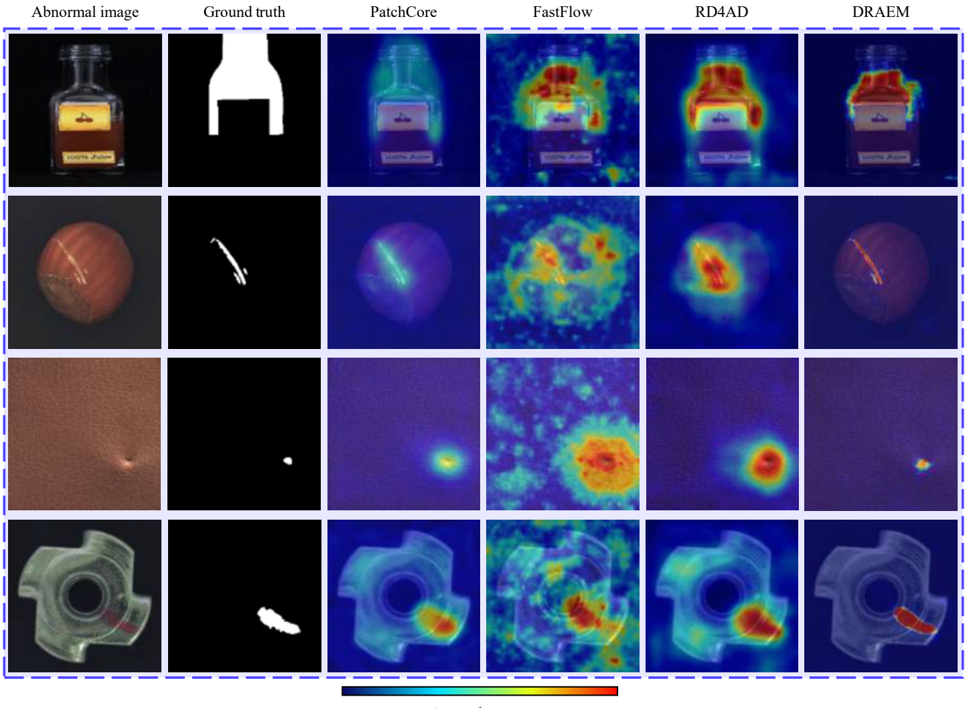
- Without ensemble learning, MemSeg achieved the SOTA result on image-level anomaly classification, attributed mainly to its U-Net framework; DRAEM also uses U-Net and outperformed other methods on pixel-level anomaly segmentation. AU-PR is more valuable than AU-ROC for segmentation tasks, and reconstruction-based methods outperform other methods on pixel AU-PR.
- The gap between few-shot IAD and vanilla IAD is narrowing; segmentation modules are beneficial for anomaly detection even when trained with artificially generated anomalies. Future directions include multi-modality IAD datasets, inference speed, industrial pretrained models, fully supervised pixel-level datasets, abnormal synthesis, lightweight models, and unifying industrial and medical IAD.
Methods
- Literature review/survey; no new primary experiments. It reviews deep learning IAD from the perspectives of neural network architectures, levels of supervision, loss functions, metrics, and datasets, and extracts a promising industrial manufacturing setting.
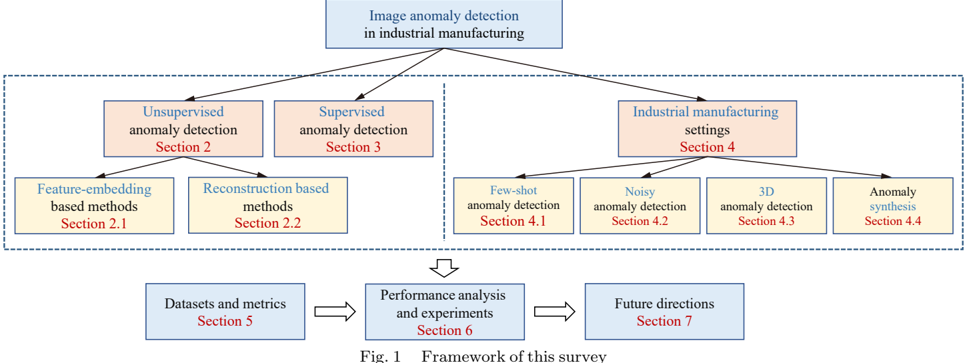
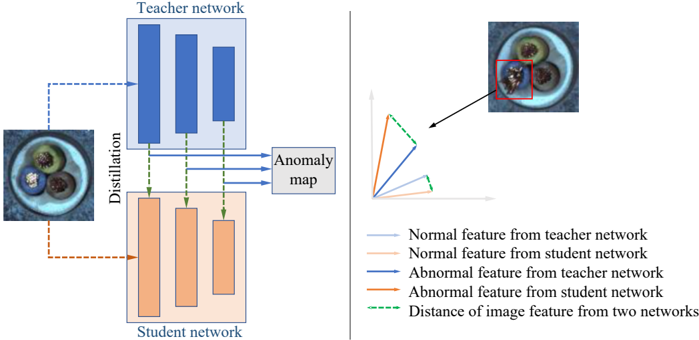
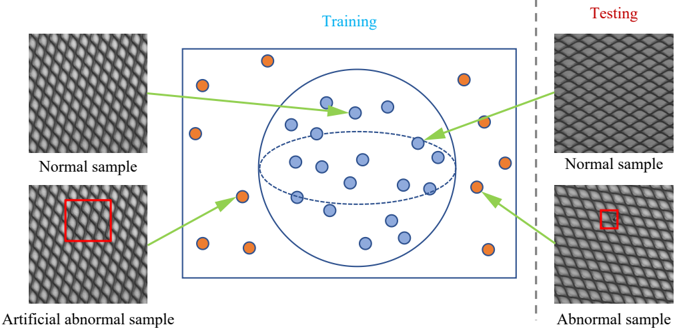
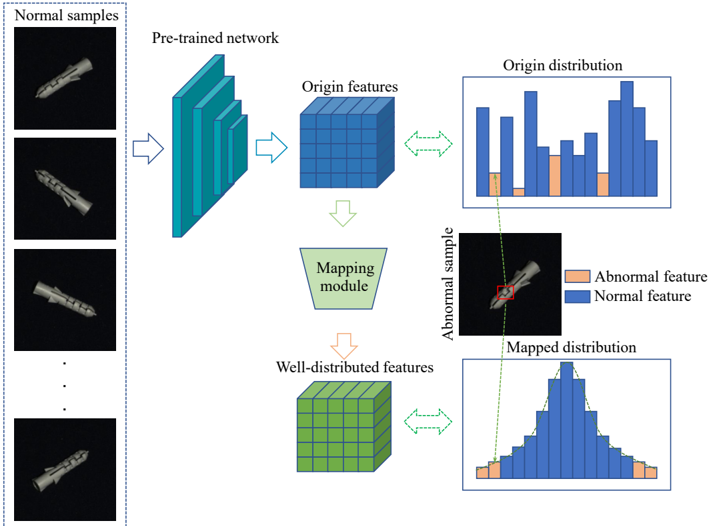
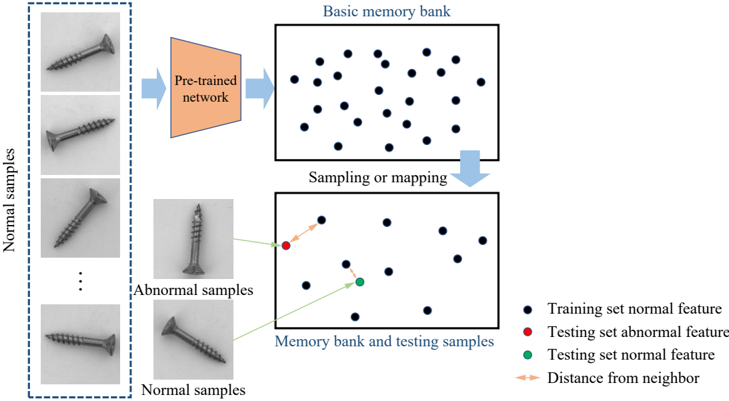
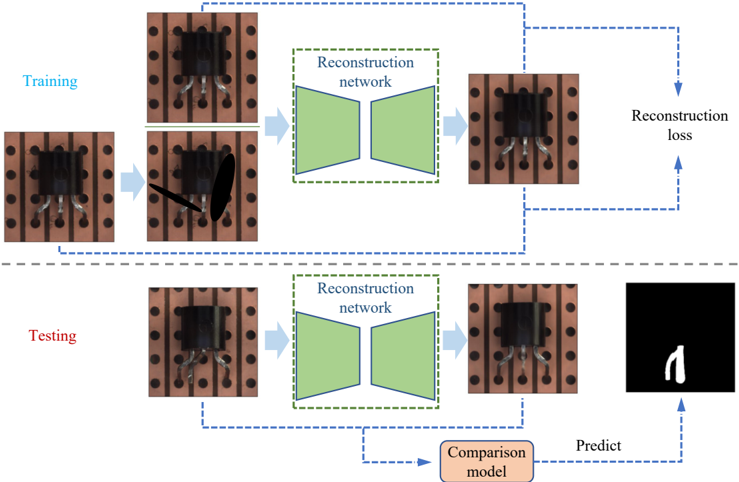
- Taxonomy: unsupervised anomaly detection is divided into feature-embedding methods (teacher-student, one-class classification, distribution map, memory bank) and reconstruction-based methods (autoencoder, GAN, transformer, diffusion); supervised anomaly detection is also reviewed. Industrial settings covered are few-shot anomaly detection, noisy anomaly detection, 3D anomaly detection, and anomaly synthesis.
- Performance analysis: statistical comparison of current IAD methods on MVTec AD using image AUROC and pixel AUROC/AUPR. Results are reported from original papers, with some reproduced by the authors and marked with *.
Limitations
- The paper states that the public cannot access real-world anomalous datasets due to privacy concerns; most open-source IAD datasets generate anomalies from anomaly-free products, so their abnormalities may not occur in actual production lines, and multiple-domain IAD datasets are lacking.
- The paper states that there is no uniform assessment for image-level and pixel-level IAD performance; most metrics shrink the anomalous mask to the feature-map size, reducing assessment precision, and the validity of common metrics for IAD remains to be explored. It also notes that most noisy anomaly detection methods have not been verified on real industrial image datasets, and most 3D IAD methods are specialized for RGB-D images while real-world 3D manufacturing data consists of point clouds.
- Evident from the text: the survey’s performance tables contain many missing entries and rely largely on reported results, with only some reproduced; no new benchmark experiments are conducted. The paper also states that current algorithms often focus on detection accuracy while ignoring storage size and efficiency.
Model-written summary. Check it against the paper before relying on it.
Integrity signals
Registry
Cites
Statistics
Figures







Verification
Claims the paper makes
18 Valid · 21 Not valid · 26 Not checked · 62 Own results and interpretations
Every source the paper cites for this claim was checked and supports it.
In the paper
“FCDD [35] is an unsupervised method that synthesizes abnormal samples for training the OCC model.”
What the sources say
- Supportedcites [35] [35] - T. Reiss, Y. Hoshen. Mean-shifted contrastive loss for anomaly detection, [Online], Available: https://arxiv.org/ abs/2106.03844, 2021. source
Section 4.2 (pp. 7–8) describes generating synthetic anomalies with confetti noise for FCDD and evaluates it in an unsupervised setting. Section 3 (p. 4) confirms that synthetic anomalies can be used for training when known anomalies are unavailable. Synthetic anomalies are an option, not a requirement of FCDD. (LLM, conf=0.87)
plainstates a cause- Asserted: passes — The authors put it forward as true.
- Checkable: passes — It can be checked against evidence.
- Load-bearing: unclear — It is unclear whether the paper’s conclusions depend on it.
- Based: passes — The paper gives a reason why it holds.
- Supported
The cited sources support only part of this claim — read each source’s verdict below.
In the paper
“PaDiM requires the batch-inverse of the multidimensional covariance tensor, which makes it challenging to scale up to larger CNNs due to the increased feature size.”
What the sources say
- Partly supportedcites [73] [73] - J. Jang, E. Hwang, S. H. Park. N-pad: Neighboring pixelbased industrial anomaly detection, [Online], Available: https://arxiv.org/abs/2210.08768, 2022. sourceExperimental — accuracy not yet measured
“Learning of the normality” (p. 3) says PaDiM estimates a covariance matrix for each patch and makes it invertible. “Ablative studies” (pp. 4–5) says larger embedding vectors increase computational and memory complexity. The copy does not say that PaDiM requires a batch-inverse operation or that this makes scaling to larger CNNs challenging; “Scalability gain” (p. 6) instead describes choosing the backbone and embedding size to fit resource limits. (LLM, conf=0.85)
plainstates a cause- Asserted: passes — The authors put it forward as true.
- Checkable: passes — It can be checked against evidence.
- Load-bearing: unclear — It is unclear whether the paper’s conclusions depend on it.
- Based: passes — The paper gives a reason why it holds.
- Partly supported
Every source the paper cites for this claim was checked and supports it.
In the paper
“Since the relative positions of the features of each image layer do not change during the convolution process, FCDD yields more interpretable results than alternative methods.”
What the sources say
- Supportedcites [35] [35] - T. Reiss, Y. Hoshen. Mean-shifted contrastive loss for anomaly detection, [Online], Available: https://arxiv.org/ abs/2106.03844, 2021. source
Section 3 (p. 3) says convolutional layers preserve the relative positions of receptive fields and that FCDD’s fully convolutional network preserves spatial information. The Introduction (p. 1) reports that FCDD’s anomaly heatmaps are less noisy and more structured than those of the baselines, while Section 4.2 (p. 8) reports better quantitative explanation performance than its competitors. (LLM, conf=0.90)
plainstates a cause- Asserted: passes — The authors put it forward as true.
- Checkable: passes — It can be checked against evidence.
- Load-bearing: unclear — It is unclear whether the paper’s conclusions depend on it.
- Based: passes — The paper gives a reason why it holds.
- Supported
Every source the paper cites for this claim was checked and supports it.
In the paper
“The performance of these methods is outstanding, but they depend on pre-trained models such as ResNet [7] VGG [8] and EfficientNet [9] .”
What the sources say
- Supportedcites [7] [7] - K. Simonyan. A. Zisserman. Very deep convolutional networks for large-scale image recognition. In Proceedings of the 3rd International Conference on Learning Representations, San Diego, USA, 2015. DOI: 10.48550/arXiv.1409. 1556. source
This is an identification citation: reference [7] marks 'ResNet', and our copy is the ResNet paper — Sec. 3.3 (Network Architectures) defines the residual nets (18/34-layer, and ResNet-50/101/152 in Table 1) and Sec. 4.1 reports their ImageNet 2012 pre-training on 1.28M images. The appendix 'A. Object Detection Baselines' further shows these ImageNet classification models being used as pre-trained initializations for downstream tasks, matching the claim's framing of ResNet as a pre-trained model. The claim's assertion about teacher-student methods is the citing authors' own, not attributed to this source. (LLM, conf=0.88)
- Supportedcites [8] [8] - M. X. Tan, Q. Le. EfficientNet: Rethinking model scaling for convolutional neural networks. In Proceedings of the 36th International conference on machine learning, Long Beach, USA, pp. 6105 -6114, 2019. source
The citation is attached to VGG as an example of a pre-trained model, not to the broader claim about teacher-student methods. In “Generalisation of Very Deep Features” (pp. 11–12), the paper identifies its method as VGG and describes using its ConvNets pre-trained on ILSVRC. (LLM, conf=0.92)
- Supportedcites [9] [9] - P. Bergmann, M. Fauser, D. Sattlegger, C. Steger. Uninformed students: Student-teacher anomaly detection with discriminative latent embeddings. In Proceedings of IEEE/CVF Conference on Computer Vision and Pattern Recognition, Seattle, USA, pp. 4182 -4191, 2020. DOI: 10. 1109/CVPR42600.2020.00424. source
Citation [9] is attached to EfficientNet as an example of a pre-trained model. Section 5.3 (p. 8) identifies the authors’ EfficientNet models and describes using ImageNet-pretrained checkpoints for transfer learning. (LLM, conf=0.90)
plainstates a cause- Asserted: passes — The authors put it forward as true.
- Checkable: passes — It can be checked against evidence.
- Load-bearing: unclear — It is unclear whether the paper’s conclusions depend on it.
- Based: passes — The paper gives a reason why it holds.
- Supported
The cited sources support only part of this claim — read each source’s verdict below.
In the paper
“Few-shot anomaly detection (FSAD) [139, 140] is still in its infancy.”
What the sources say
- Not checked — no full text of the sourcecites [139] [139] - A. M. Kamoona, A. K. Gostar, A. Bab-Hadiashar, R. Hoseinnezhad. Anomaly detection of defect using energy of point pattern features within random finite set framework, [Online], Available: https://arxiv.org/abs/2108. 12159, 2021. source
- Partly supportedcites [140] [140] - C. Q. Huang, H. Y. Guan, A. F. Jiang, Y. Zhang, M. Spratling, Y. F. Wang. Registration based few-shot anomaly detection. In Proceedings of the 17th European Conference on Computer Vision, Springer, Tel Aviv, Israel, pp. 303 -319, 2022. DOI: 10.1007/978-3-031-200533 \_ 18. sourceExperimental — accuracy not yet measured
The few-shots learning experiments (p. 9) show that this paper studies anomaly detection with limited normal samples, supporting its citation as an example of FSAD. That passage does not assess whether FSAD is still in its infancy, so the maturity claim is not supported by this source. (LLM, conf=0.82)
plain- Asserted: passes — The authors put it forward as true.
- Checkable: passes — It can be checked against evidence.
- Load-bearing: unclear — It is unclear whether the paper’s conclusions depend on it.
- Based: passes — The paper gives a reason why it holds.
46 more claims · 2 with their cited sources checked
Create a free account to see all 127 claims and to verify the 23 references still open.
- It may state two separate claims as one. 26
- Probably not a substantial claim. 64
Self-check
Percentages, sums and reported differences re-computed from the paper’s own numbers.
Each contradiction between two passages listed here was confirmed by an independent check.
Rated minor: it would not touch a result — a value no result rests on, a p-value that stays on the same side of the significance level, or a conflict that is clerical, resolved elsewhere in the paper, or outside its own findings.
In the paper
§ 2.1.4 Memory bank · p. 8
“Npad [74] allows for the possibility of marginal misalignment”
§ 2.1.4 Memory bank · p. 8
“| N-pad [71] | Mahalanobis distance, log- likelihood | ResNet | The paper allows for possible edge misalignment by estimating a nominal distribution for each pixel using the pixel ′ s neighborhood features. |”
Rated minor: it would not touch a result — a value no result rests on, a p-value that stays on the same side of the significance level, or a conflict that is clerical, resolved elsewhere in the paper, or outside its own findings.
In the paper
§ 2.1.4 Memory bank · p. 8
“The primary distinction between memory bank-based methods and OCC-based methods, is that memory-based methods, such as SVDD, require additional memory space to store image features.”
§ 2.1.2 One-class classification · p. 4
“SVDD [34] is a classic algorithm in the OCC problem”
Rated minor: it would not touch a result — a value no result rests on, a p-value that stays on the same side of the significance level, or a conflict that is clerical, resolved elsewhere in the paper, or outside its own findings.
In the paper
§ 4.3 3D anomaly detection · p. 15
“Since the release of MVTec 3D-AD [6] dataset”
§ 5 Datasets and metrics · p. 16
“| MVTec 3D-AD [174] | 10 | 2 904 | 948 | 3 852 | Segmentation mask | Real |”
Rated minor: it would not touch a result — a value no result rests on, a p-value that stays on the same side of the significance level, or a conflict that is clerical, resolved elsewhere in the paper, or outside its own findings.
In the paper
§ 2.1.2 One-class classification · p. 4
“with the exception of MemSeg [18] , the training of other methods relies on SVDD and cross-entropy loss.”
§ 2.1.2 One-class classification · p. 5
“| CPC-AD [33] | InfoNCE | - | The paper applies contrastive predictive coding (CPC) model to AD and gets an anomaly score through pixel-wise loss. |”
Citations
Cites
Deep Residual Learning for Image Recognition
He, K., Zhang, X., Ren, S., & Sun, J. (2016) · 2016 IEEE Conference on Computer Vision and Pattern Recognition (CVPR) · doi:10.1109/cvpr.2016.90 · Cited by 235,474 · cited 20×
“CFA [69] SVDD ResNet The paper improves PatchCore so that image features are distributed on a hypersphere.”
InfluentialVery Deep Convolutional Networks for Large-Scale Image Recognition
Simonyan, K., & Zisserman, A. (2014) · arXiv · doi:10.48550/arxiv.1409.1556 · Cited by 114,148 · cited 1×
“The performance of these methods is outstanding, but they depend on pre-trained models such as ResNet [7] VGG [8] and EfficientNet [ ?”
U-Net: Convolutional Networks for Biomedical Image SegmentationPreprint
Ronneberger, O., Fischer, P., & Brox, T. (2015) · International Conference on Medical Image Computing and Computer-Assisted Intervention · doi:10.48550/arxiv.1505.04597 · Cited by 105,821
U-Net: Convolutional Networks for Biomedical Image Segmentation
Ronneberger, O., Fischer, P., & Brox, T. (2015) · Lecture notes in computer science · doi:10.1007/978-3-319-24574-4_28 · Cited by 99,404 · cited 8×
“DREAM [91] L 2 , SSIM, Focal - ThepaperdesignsamethodtogenerateabnormalimagesandusesU-Net[92]todistinguishanomaliesafterreconstruction.”
InfluentialAn Image is Worth 16x16 Words: Transformers for Image Recognition at Scale
Dosovitskiy, A., Beyer, L., Kolesnikov, A., Weissenborn, D., Zhai, X., Unterthiner, T., Dehghani, M., Minderer, M., Heigold, G., Gelly, S., et al. (2020) · arXiv · doi:10.48550/arxiv.2010.11929 · Cited by 47,472
Squeeze-and-Excitation Networks
Hu, J., Shen, L., & Sun, G. (2018) · 2018 IEEE/CVF Conference on Computer Vision and Pattern Recognition · doi:10.1109/cvpr.2018.00745 · Cited by 35,667 · cited 3×
“This paper replaces the SE-layer in SSPCAB with transformer architecture.”
Swin Transformer: Hierarchical Vision Transformer using Shifted Windows
Liu, Z., Lin, Y., Cao, Y., Hu, H., Wei, Y., Zhang, Z., Lin, S., & Guo, B. (2021) · 2021 IEEE/CVF International Conference on Computer Vision (ICCV) · doi:10.1109/iccv48922.2021.00986 · Cited by 35,534 · cited 3×
“NF methods extract features from normal images from a pre-trained model, such as ResNet [59] or Swin Transformer [60], and transform the feature distribution as a Gaussian distribution during the training phase.”
CBAM: Convolutional Block Attention Module
Woo, S., Park, J., Lee, J.-Y., & Kweon, I. S. (2018) · Lecture Notes in Computer Science · doi:10.1007/978-3-030-01234-2_1 · Cited by 25,853
Grad-CAM: Visual Explanations from Deep Networks via Gradient-Based Localization
Selvaraju, R. R., Cogswell, M., Das, A., Vedantam, R., Parikh, D., & Batra, D. (2017) · 2017 IEEE International Conference on Computer Vision (ICCV) · doi:10.1109/iccv.2017.74 · Cited by 24,513
Unpaired image-to-image translation using cycle-consistent adversarial networks
Zhu, J.-Y., Park, T., Isola, P., & Efros, A. A. (2017) · 2017 IEEE International Conference on Computer Vision (ICCV) · doi:10.1109/iccv.2017.244 · Cited by 23,602
Research works printed but not linked: 4
- [11] - G. D. Wang, S. M. Han, E. R. Ding, D. Huang. Studentteacher feature pyramid matching for anomaly detection. In Proceedings of 32nd British Machine Vision Conference 2021, 2021.
- [85] - Z. Y. Li, N. Li, K. T. Jiang, Z. H. Ma, X. Wei, X. P. Hong, Y. H. Gong. Superpixel masking and inpainting for selfsupervised anomaly detection. In Proceedings of the 31st British Machine Vision Conference 2020, BMVC, 2020.
- [146] - J. Yoon, K. Sohn, C. L. Li, S. Ö . Arik, C. Y. Lee, T. Pfister. Self-supervise, refine, repeat: Improving unsupervised anomaly detection. Transactions on Machine Learning Research, to be published.
- [162] - M. Bi ń kowski, D. J. Sutherland, M. Arbel, A. Gretton. Demystifying MMD GANs. In Proceedings of the 6th International Conference on Learning Representations, Vancouver, Canada, 2018.
Cited by
A Diffusion-Based Framework for Multi-Class Anomaly Detection
He, H., Zhang, J., Chen, H., Chen, X., Li, Z., Chen, X., Wang, Y., Wang, C., & Xie, L. (2024) · Proceedings of the AAAI Conference on Artificial Intelligence · doi:10.1609/aaai.v38i8.28690 · Cited by 212
“Anomaly detection is a crucial task in computer vision and industrial applications (Tao et al. 2022; Salehi et al. 2022; Liu et al. 2023), which goal of visual anomaly detection is to determine anomalous images and locate the regions of anomaly accurately.”
BackgroundMethodSelf-citationReal-IAD: A Real-World Multi-View Dataset for Benchmarking Versatile Industrial Anomaly Detection
Wang, C., Zhu, W., Gao, B.-B., Gan, Z., Zhang, J., Gu, Z., Qian, S., Chen, M., & Ma, L. (2024) · IEEE Computer Society Conference on Computer Vision and Pattern Recognition/Proceedings - IEEE Computer Society Conference on Computer Vision and Pattern Recognition/Proceedings · doi:10.1109/cvpr52733.2024.02159 · Cited by 359
Self-citationA survey of deep learning for industrial visual anomaly detection
Li, Z., Yan, Y., Wang, X., Ge, Y., & Meng, L. (2025) · Artificial Intelligence Review · doi:10.1007/s10462-025-11287-7 · Cited by 200
IM-IAD: Industrial Image Anomaly Detection Benchmark in Manufacturing
Xie, G., Wang, J., Liu, J., Lyu, J., Liu, Y., Wang, C., Zheng, F., & Jin, Y. (2024) · IEEE Transactions on Cybernetics · doi:10.1109/tcyb.2024.3357213 · Cited by 164
“Unsupervised IAD: There are two streams methods on unsupervised IAD [50], namely, feature embedding-based methods [4], [14], [67], and reconstruction-based meth-ods [86], [95], [100].”
MethodSelf-citationChen, Q., Luo, H., Lv, C., & Zhang, Z. (2024) · Lecture notes in computer science · doi:10.1007/978-3-031-72855-6_3 · Cited by 230
InsPLAD: A Dataset and Benchmark for Power Line Asset Inspection in UAV Images
Vieira-e-Silva, A. L. B., Felix, H. D. C., Simões, F. P. M., Teichrieb, V., dos Santos, M., Santiago, H. D. C., Sgotti, V., & Neto, H. B. D. T. L. (2023) · International Journal of Remote Sensing · doi:10.1080/01431161.2023.2283900 · Cited by 127
“A promising way to deal with the less frequent and even unprecedented defects in the industry is to approach this problem as an unsupervised anomaly detection task, in which defects are treated as anomalies Liu et al. (2023).”
BackgroundQuantum machine learning algorithms for anomaly detection: A review
Corli, S., Moro, L., Dragoni, D., Dispenza, M., & Prati, E. (2024) · Future Generation Computer Systems · doi:10.1016/j.future.2024.107632 · Cited by 107
A comprehensive study of auto-encoders for anomaly detection: Efficiency and trade-offs
Neloy, A. A., & Turgeon, M. (2024) · Machine Learning with Applications · doi:10.1016/j.mlwa.2024.100572 · Cited by 142
Exploring plain ViT features for multi-class unsupervised visual anomaly detection
Zhang, J., Chen, X., Wang, Y., Wang, C., Liu, Y., Li, X., Yang, M., & Tao, D. (2025) · Computer Vision and Image Understanding · doi:10.1016/j.cviu.2025.104308 · Cited by 135
Self-citationUnsupervised Continual Anomaly Detection with Contrastively-Learned Prompt
Liu, J., Wu, K., Nie, Q., Chen, Y., Gao, B.-B., Liu, Y., Wang, J., Wang, C., & Zheng, F. (2024) · Proceedings of the AAAI Conference on Artificial Intelligence · doi:10.1609/aaai.v38i4.28153 · Cited by 98
Self-citationPathirannahalage, I., Jayasooriya, V., Samarabandu, J. K., & Akila Subasinghe, A. (2024) · Multimedia Tools and Applications · doi:10.1007/s11042-024-19204-w · Cited by 42
“…techniques, datasets, and evaluation metrics [77] 2023 Techniques for detecting abnormal events, datasets, pros and cons, and research gaps [46] 2024 Specifythedataset,metrics,networkarchitectures,super-vision levels, and industrial applications learning and representation learning,…”
InfluentialA survey on RGB, 3D, and multimodal approaches for unsupervised industrial image anomaly detection
Lin, Y., Chang, Y., Tong, X., Yu, J., Liotta, A., Huang, G., Song, W., Zeng, D., Wu, Z., Wang, Y., et al. (2025) · Information Fusion · doi:10.1016/j.inffus.2025.103139 · Cited by 86
Multi-Scale CNN-Transformer Hybrid Network for Rail Fastener Defect Detection
He, J., Wang, W., Lv, F., Luo, H., Zhang, G., & Chen, Z. (2025) · IEEE Transactions on Intelligent Transportation Systems · doi:10.1109/tits.2025.3540846 · Cited by 48
“Recently, numerous algorithms [28], [29], [30] have integrated CNN with Trans-former to construct feature complementary networks for various downstream tasks.”
Shukla, V., Shukla, A., K, S. P. S., & Shukla, S. (2025) · Frontiers in Robotics and AI · doi:10.3389/frobt.2025.1554196 · Cited by 52
“Anomaly detection has a wide range of significant industrial manufacturing applications (Xie et al., 2024), for instance Figure 5, highlights the detection of defects in depth images of composite carbon fiber surfaces in Automated Fiber Placement (AFP) industry.”
Hu, X., & Lin, S. (2024) · Complex & Intelligent Systems · doi:10.1007/s40747-024-01512-1 · Cited by 33
GeneralAD: Anomaly Detection Across Domains by Attending to Distorted Features
Sträter, L. P. J., Salehi, M., Gavves, E., Snoek, C. G. M., & Asano, Y. M. (2024) · Lecture notes in computer science · doi:10.1007/978-3-031-72913-3_25 · Cited by 65
Simple and effective Frequency-aware Image Restoration for industrial visual anomaly detection
Liu, T., Li, B., Du, X., Jiang, B., Geng, L., Wang, F., & Zhao, Z. (2024) · Advanced Engineering Informatics · doi:10.1016/j.aei.2024.103064 · Cited by 83
“Therefore, recently, it’s preferable to apply visual anomaly detection models [9, 15, 19, 30], which only necessitate normal samples for training and can theoretically detect any types of defects.”
Lian, X., Cao, C., Liu, Y., Xu, X., Zheng, Y., & Zhou, F. (2025) · International World Wide Web Conference (WWW) · doi:10.1145/3696410.3714621 · Cited by 44
Deep learning-based anomaly detection for precision field crop protection
Cheng, W., Shan, Y., & Zhen, M. (2025) · Frontiers in Plant Science · doi:10.3389/fpls.2025.1576756 · Cited by 36
Zhao, Q., Wang, Y., Wang, B., Lin, J., Yan, S., Song, W., Liotta, A., Yu, J., Gao, S., & Zhang, W. (2023) · IEEE Transactions on Industrial Informatics · doi:10.1109/tii.2023.3341259 · Cited by 26
“This section briefly defines six baseline models [23] for benchmarking MSC-AD including distribution map, one-class classification, teacher-student architecture, memory bank, au-toencoder, transformer, and unified model.”
BackgroundHeckler, L., König, R., & Bergmann, P. (2023) · IEEE/CVF Conference on Computer Vision and Pattern Recognition Workshops (CVPRW) · doi:10.1109/cvprw59228.2023.00293 · Cited by 44
“Liu et al. [21] and Pang et al. [28] give a comprehensive overview.”
BackgroundDefense and Security Mechanisms in the Internet of Things: A Review
Szymoniak, S., Piątkowski, J., & Kurkowski, M. (2025) · Applied Sciences · doi:10.3390/app15020499 · Cited by 40
Towards High-resolution 3D Anomaly Detection via Group-Level Feature Contrastive Learning
Zhu, H., Xie, G., Hou, C., Dai, T., Gao, C., Wang, J., & Shen, L. (2024) · ACM International Conference on Multimedia (ACM MM) · doi:10.1145/3664647.3680919 · Cited by 66
Self-citationAnomaly detection for industrial applications: challenges, solutions, and future directions
Alzarooni, A., Iqbal, E., Khan, S. U., Javed, S., Moyo, B., & Abdulrahman, Y. (2025) · International Journal of Computer Integrated Manufacturing · doi:10.1080/0951192x.2025.2599548 · Cited by 47
Cheng, Y., Cao, Y., Wang, D., Shen, W., & Li, W. (2025) · IEEE Transactions on Automation Science and Engineering · doi:10.1109/tase.2025.3544462 · Cited by 48
“Owing to the challenges in collecting anomaly samples compared to normal samples, unsupervised anomaly detection meth-ods [3], [4], which necessitate only normal data for training, have become the predominant solution.”
Synthetic Data for Defect Segmentation on Complex Metal Surfaces
Fulir, J., Bosnar, L., Hagen, H., & Gospodnetić, P. (2023) · IEEE/CVF Conference on Computer Vision and Pattern Recognition Workshops (CVPRW) · doi:10.1109/cvprw59228.2023.00465 · Cited by 31
“It has been employed for defect segmentation over a variety of objects as presented in [3, 28, 36, 37].”
MethodFoundation models and Transformers for anomaly detection: A survey
Ammar, M. B., Mendoza, A., Belkhir, N., Manzanera, A., & Franchi, G. (2025) · Information Fusion · doi:10.1016/j.inffus.2025.103517 · Cited by 36
“Zhang & Liu (2024) elaborated on this approach, us-ing the cluster-centroid of the teacher’s features as the student target to constrain it on a multi-layer basis.”
Roadmap on Artificial Intelligence‐Augmented Additive Manufacturing
Zolfagharian, A., Jin, L., Ge, Q., Liao, W., Lantada, A. D., Martínez, F. F., Zhang, T., Liu, T., Wang, C. C. L., Mosallanejad, M. H., et al. (2026) · Advanced Intelligent Systems · doi:10.1002/aisy.202500484 · Cited by 24
Self-citationKozamernik, N., & Bračun, D. (2024) · Computers in Industry · doi:10.1016/j.compind.2024.104198 · Cited by 18
Shangguan, W., Wu, H., Niu, Y., Yin, H., Yu, J., Chen, B., & Huang, B. (2025) · Advanced Engineering Informatics · doi:10.1016/j.aei.2025.103240 · Cited by 24
M3DM-NR: RGB-3D Noisy-Resistant Industrial Anomaly Detection via Multimodal Denoising
Wang, C., Zhu, H., Peng, J., Wang, Y., Yi, R., Wu, Y., Ma, L., & Zhang, J. (2025) · IEEE Transactions on Pattern Analysis and Machine Intelligence · doi:10.1109/tpami.2025.3592089 · Cited by 56
“Most existing industrial anomaly detection methods [1], [2] primarily focus on RGB images [3], [4] and use a vast number of normal examples for training.”
Self-citationReliable Anomaly Detection and Localization System: Implications on Manufacturing Industry
Tang, Q., & Jung, H. (2023) · IEEE Access · doi:10.1109/access.2023.3324314 · Cited by 22
“AI-based quality inspection system brings benefits to the manufacturing industry [1], [9], [10].”
BackgroundProduce Once, Utilize Twice for Anomaly Detection
Wang, S.-Y., Li, Q., Luo, H., Lv, C., & Zhang, Z.-T. (2024) · IEEE transactions on circuits and systems for video technology (Print) · doi:10.1109/tcsvt.2024.3420775 · Cited by 17
“Anomaly detection is an unsupervised detection task, where only the normal data is involved amid training [58].”
Unsupervised Wind Turbine Blade Damage Detection With Memory-Aided Denoising Reconstruction
Jia, X., & Chen, X. D. (2024) · IEEE Transactions on Industrial Informatics · doi:10.1109/tii.2024.3459612 · Cited by 24
“This article focuses on machine-vision-based blade damage detection, which also belongs to the field of industrial image anomaly detection [4].”
DiffUT: Diffusion-based augmentation for limited ultrasonic testing defects in high-speed rail
Zhang, Q., Tian, K., Zhang, F., Li, J., Yang, K., Luo, L., Gao, X., & Peng, J. (2025) · NDT & E International · doi:10.1016/j.ndteint.2025.103388 · Cited by 17
Kohli, M., & Chhabra, I. (2025) · Discover Applied Sciences · doi:10.1007/s42452-025-07312-7 · Cited by 35
“Approaches such as autoencoders, transformer models and GANs are widely used [113].”
A review of deep learning based anomaly detection
Shi, Y., Yang, G., Wang, X. J., Yu, Q., Feng, Y., & Liu, A. (2025) · Neurocomputing · doi:10.1016/j.neucom.2025.132383 · Cited by 31
MemFormer: A memory based unified model for anomaly detection on metro railway tracks
Liu, R., Liu, W., Duan, M., Xie, W., Dai, Y., & Liao, X. (2023) · Expert Systems with Applications · doi:10.1016/j.eswa.2023.121509 · Cited by 21
Dual-path Frequency Discriminators for few-shot anomaly detection
Bai, Y., Zhang, J., Chen, Z., Dong, Y., Cao, Y., & Tian, G. (2024) · Knowledge-Based Systems · doi:10.1016/j.knosys.2024.112397 · Cited by 22
“Industrial images anomaly detection entails precisely locating anomalies in addition to identifying anomalous samples [7,28].”
BackgroundAI-Enhanced Gas Flares Remote Sensing and Visual Inspection: Trends and Challenges
Radi, M. A., Li, P., Boumaraf, S., Dias, J. M. M., Werghi, N., Karki, H., & Javed, S. (2024) · IEEE Access · doi:10.1109/access.2024.3389979 · Cited by 26
Long-Tailed Anomaly Detection with Learnable Class Names
Ho, C.-H., Peng, K., & Vasconcelos, N. M. (2024) · IEEE Computer Society Conference on Computer Vision and Pattern Recognition/Proceedings - IEEE Computer Society Conference on Computer Vision and Pattern Recognition/Proceedings · doi:10.1109/cvpr52733.2024.01182 · Cited by 38
“Some other methods in category C 0 are discussed in the AD survey papers [11, 12, 47, 65].”
MethodToCoAD: Two-Stage Contrastive Learning for Industrial Anomaly Detection
Liang, Y., Hu, Z., Huang, J., Di, D., Su, A., & Fan, L. (2025) · IEEE Transactions on Instrumentation and Measurement · doi:10.1109/tim.2025.3545987 · Cited by 30
“Recently, interest in this field has surged due to the growing demands of industrial development [1], [2], [3].”
Wahid, J. A., Ayoub, M., Xu, M., Jiang, X., Shi, L., & Hussain, S. (2024) · Neurocomputing · doi:10.1016/j.neucom.2024.128845 · Cited by 20
A survey on industrial image anomaly detection: methods, benchmarks and rethinks
Yu, M., Chen, Z., Liu, Y., Dong, C., & Song, K. (2025) · Measurement · doi:10.1016/j.measurement.2025.118377 · Cited by 23
Vajda, D. L., Do, T. V., Bérczes, T. M., & Farkas, K. (2024) · Scientific Reports · doi:10.1038/s41598-024-72982-z · Cited by 31
Saufi, M. S. R. M., Talib, M. H. A., & Zain, M. Z. M. (2025) · Journal of Vibration Engineering & Technologies · doi:10.1007/s42417-025-01796-8 · Cited by 14
“However, the performance of deep learning models often comes at the cost of increased computational complexity, more extensive data requirements, and potential challenges in interpretability [170, 171].”
Unsupervised industrial anomaly detection using paired well-lit and low-light images
Hoang, D.-C., Tan, P. X., Nguyen, A.-N., Pham, M.-K., Duong, T. H. A., Huynh, T.-M., Bui, S.-A., Nguyen, D.-M., Ha, Q. P., Trinh, V.-A., et al. (2025) · Journal of Computational Design and Engineering · doi:10.1093/jcde/qwaf043 · Cited by 21
DetToolChain: A New Prompting Paradigm to Unleash Detection Ability of MLLM
Wu, Y., Wang, Y., Tang, S., Wu, W., He, T., Ouyang, W., Torr, P. H. S., & Wu, J. (2024) · Lecture notes in computer science · doi:10.1007/978-3-031-73411-3_10 · Cited by 73
Kohler, M., Mitsios, D., & Endisch, C. (2024) · Journal of Manufacturing Systems · doi:10.1016/j.jmsy.2024.12.005 · Cited by 12
Multi-Sensor Object Anomaly Detection: Unifying Appearance, Geometry, and Internal Properties
Li, W., Zheng, B., Xu, X., Gan, J., Lu, F., Li, X., Ni, N., Tian, Z., Huang, X., Gao, S., et al. (2025) · IEEE Computer Society Conference on Computer Vision and Pattern Recognition/Proceedings - IEEE Computer Society Conference on Computer Vision and Pattern Recognition/Proceedings · doi:10.1109/cvpr52734.2025.00933 · Cited by 56
“Object-level Anomaly Detection plays a pivotal role in this context, serving as the first line of defense against defective products entering the market [8, 19].”
High-Fidelity Zero-Shot Texture Anomaly Localization Using Feature Correspondence Analysis
Ardelean, A.-T., & Weyrich, T. (2024) · IEEE Winter Conference on Applications of Computer Vision · doi:10.1109/wacv57701.2024.00117 · Cited by 18
“In this section, we briefly address the most relevant methods and refer readers to a survey [27, 41] for a broader insight into anomaly localization literature.”
MethodVieira-e-Silva, A. L. B., Simões, F., Kowerko, D., Schlosser, T., Battisti, F., & Teichrieb, V. (2024) · IEEE Winter Conference on Applications of Computer Vision · doi:10.1109/wacv57701.2024.00806 · Cited by 32
“Those factors severely hamper the usage of fully supervised machine learning approaches while increasing the popularity of un-/semi-supervised anomaly detection methods [20].”
BackgroundDEU-Net: A Multi-Scale Fusion Staged Network for Magnetic Tile Defect Detection
Huang, Y., Huang, Z., & Tao, J. F. (2024) · Applied Sciences · doi:10.3390/app14114724 · Cited by 11
Wang, H., Zhang, Y., & Wu, W. (2025) · Measurement Science and Technology · doi:10.1088/1361-6501/adc1f3 · Cited by 16
Incomplete multimodal industrial anomaly detection via cross-modal distillation
Sui, W., Lichau, D., Lefèvre, J., & Phelippeau, H. (2025) · Information Fusion · doi:10.1016/j.inffus.2025.103572 · Cited by 35
“The rapid development of deep learning-based image IAD has led to more accurate and robust detection and moved away from handcrafted feature engineering to learn more complex patterns for variable issues [1,2].”
RAD: A Comprehensive Dataset for Benchmarking the Robustness of Image Anomaly Detection
Cheng, Y., Cao, Y., Chen, R., & Shen, W. (2024) · IEEE International Conference on Automation Science and Engineering (CASE) · doi:10.1109/case59546.2024.10711763 · Cited by 19
“Unlike the image-level results, RD++ and WinCLIP exhibit a significant decrease in pixel-level performance.”
ResultMultimodal fusion and knowledge distillation for improved anomaly detection
Lu, M., Chai, Y., Xu, K., Chen, W., Ao, F., & Ji, W. (2024) · The Visual Computer · doi:10.1007/s00371-024-03723-6 · Cited by 10
“The task of anomaly detection is to distinguish between normal and abnormal [1, 9].”
UniFlow: Unified Normalizing Flow for Unsupervised Multi-Class Anomaly Detection
Zhong, J., & Song, Y. (2024) · Information · doi:10.3390/info15120791 · Cited by 12
Anomaly detection in medical via multimodal foundation models
Tang, Z., Tang, Z. J., & Wu, J. (2025) · Frontiers in Bioengineering and Biotechnology · doi:10.3389/fbioe.2025.1644697 · Cited by 24
IAD-CLIP: Vision-Language Models for Zero-Shot Industrial Anomaly Detection
Li, Z., Ge, Y., Li, Q., & Meng, L. (2024) · International Conference on Advanced Mechatronic Systems · doi:10.1109/icamechs63130.2024.10818831 · Cited by 9
“Industrial anomaly detection (IAD) is the process of detecting and localization for industrial products, detecting whether a product is normal or anomalous, and localizing the anomalous region while detecting the anomalous product [1], [2].”
Cheng, Y., Chen, J., Wen, G., Tan, X., & Liu, X. (2025) · Neurocomputing · doi:10.1016/j.neucom.2025.129408 · Cited by 14
A computer vision system for recognition and defect detection for reusable containers
Wahyudi, V., Ziegler, C. C., Frieß, M., Schramm, S., Lang, C., Eberhardt, L., Freund, F., Dobhan, A., & Storath, M. (2025) · Machine Vision and Applications · doi:10.1007/s00138-024-01636-x · Cited by 13
“They perform worse in image-level anomaly detection as they cannot extract high-level semantic features; however, they excel in pixel-level anomaly detection [29].”
InfluentialTubishat, M., Tbaishat, D. M., Al-Zoubi, A. M., Hraiz, A.-E., & Habib, M. (2025) · Knowledge-Based Systems · doi:10.1016/j.knosys.2025.113436 · Cited by 14
Multi-View Attention Guided Feature Learning for Unsupervised Surface Defect Detection
Zhou, J., Liu, M., Ma, Y., Jiang, S., & Wang, Y. (2025) · IEEE/ASME Transactions on Mechatronics · doi:10.1109/tmech.2025.3566311 · Cited by 13
“detection play a critical role in smart manufacturing [1].”
Multi-modal contrastive causal consistency fusion for anomaly detection in additive manufacturing
Gu, J., Wang, Y., Chen, J., Zhang, M., Wang, Z., & Chen, J. (2025) · Additive manufacturing · doi:10.1016/j.addma.2025.104816 · Cited by 14
Han, C., Dong, Y., Qu, S., Dong, L., Zhao, C., Madan, A., Fu, Y., & Yang, Y. (2025) · IEEE Transactions on Intelligent Transportation Systems · doi:10.1109/tits.2025.3592117 · Cited by 8
“It should be noted that, in the field of anomaly detection, reconstruction-based unsupervised models are typically defined as models that are trained exclusively on normal samples, with no anomalous data introduced during training [29].”
Industrial Anomaly Detection Based on Improved Diffusion Model: A Review
Wang, J., Wang, Z., Wen, C., Liu, W., Liu, X., & Wang, D. (2025) · Cognitive Computation · doi:10.1007/s12559-025-10517-y · Cited by 13
“Liu et al. [77] investigated industrial image anomaly detection under various supervision levels, focusing on neural network architectures and providing a comprehensive overview of related algorithms.”
Self-citationHarnessing federated learning for anomaly detection in supercomputer nodes
Farooq, E., Milano, M., & Borghesi, A. (2024) · Future Generation Computer Systems · doi:10.1016/j.future.2024.07.052 · Cited by 10
An Overview of Methods of Industrial Anomaly Detection
Yang, S., Liu, S., Shang, P., & Wang, H. (2024) · International Conference on Robotics, Control and Automation Engineering (RCAE) · doi:10.1109/rcae62637.2024.10834253 · Cited by 10
“AnoDDPM[11], the initial instance of using the diffusion model for detecting anomalies in industrial images[3], can detect extensive anomaly areas without requiring extensive datasets by means of using simplex noise.”
Guo, L., Meng, J., Hao, W., & Jain, D. K. (2025) · PLoS ONE · doi:10.1371/journal.pone.0329945 · Cited by 11
“Traditional methods, such as statistical techniques, are limited in handling high-dimensional and nonlinear data [11].”
A swin transformer-based hybrid reconstruction discriminative network for image anomaly detection
Jin, J., Xu, Y., He, H., Gao, F., Zeng, W., Wang, W., Guo, B., & Xu, Z. (2025) · Scientific Reports · doi:10.1038/s41598-025-10303-8 · Cited by 10
Toward Zero-Shot Point Cloud Anomaly Detection: A Multiview Projection Framework
Cheng, Y., Cao, Y., Xie, G., Lu, Z., & Shen, W. (2025) · IEEE Transactions on Systems Man and Cybernetics Systems · doi:10.1109/tsmc.2025.3648581 · Cited by 40
“Specifically, unsupervised anomaly detection algorithms can be divided into five categories, including methods based on reconstruction [21], [22], [23], [24], one-class classification [25], [26], [27], teacher–student structure [28], [29], [30], normalizing flow [31] and memory bank [32].”
Self-citationA Comprehensive Library for Benchmarking Multi-Class Visual Anomaly Detection
Zhang, J., He, H., 甘振业, He, Q., Cai, Y., Xue, Z., Wang, Y., Wang, C., Xie, L., & Liu, Y. (2025) · IEEE International Conference on Computer Vision Workshops · doi:10.1109/iccvw69036.2025.00373 · Cited by 44
“In recent years, with the rapid advancement in model iteration and computational power, Visual Anomaly Detec-* tion (VAD) has made significant progress across various fields [7, 25].”
Self-citationTest Time Training for Industrial Anomaly Segmentation
Costanzino, A., Ramirez, P. Z., Moro, M. D., Aiezzo, A., Lisanti, G., Salti, S., & Stefano, L. D. (2024) · IEEE/CVF Conference on Computer Vision and Pattern Recognition Workshops (CVPRW) · doi:10.1109/cvprw63382.2024.00395 · Cited by 11
“In recent years, many unsupervised AD&S approaches [27] have been proposed.”
BackgroundMethodFOCT: Few-shot Industrial Anomaly Detection with Foreground-aware Online Conditional Transport
Tian, L., Zhao, H., Lu, R., Wang, R., Wu, Y., Wang, L., He, X.-P., & Liu, X.-Y. (2024) · ACM Multimedia · doi:10.1145/3664647.3680771 · Cited by 17
Yu, Q., Dai, S., Dong, R., & Ikuno, S. (2025) · Pattern Recognition · doi:10.1016/j.patcog.2025.111500 · Cited by 10
Diffusion-Scheduled Denoising Autoencoders for Anomaly Detection in Tabular Data
Sattarov, T., Schreyer, M., & Borth, D. (2025) · ACM SIGKDD Conference on Knowledge Discovery and Data Mining (KDD) · doi:10.1145/3711896.3736910 · Cited by 19
“The detection of anomalies is a fundamental challenge in data science with critical applications in cybersecurity [43, 63], manufacturing [26, 35], finance [2, 22], and healthcare [14].”
Nafez, M., Koochakian, A., Maleki, A., Habibi, J., & Rohban, M. H. (2025) · IEEE Computer Society Conference on Computer Vision and Pattern Recognition/Proceedings - IEEE Computer Society Conference on Computer Vision and Pattern Recognition/Proceedings · doi:10.1109/cvpr52734.2025.01898 · Cited by 15
“In recent years, Anomaly Detection (AD) and Anomaly Localization (AL) have become critical techniques across various fields, including medical imaging, fraud detection, and industrial monitoring [24, 38, 47, 53, 78, 80, 83].”
Bu, T.-X., Liu, X.-Y., Zhu, J., Ma, T., & Huang, X.-M. (2025) · Comput. Aided Civ. Infrastructure Eng. · doi:10.1111/mice.70099 · Cited by 7
“Unsupervised approaches typically fall into two main groups: those that rely on feature embeddings and those that use reconstruction (Liu et al., 2024).”
Tahir, H., Jabbarpour, M. R., Vo, Q. B., Kowalczyk, R., Barr, J., & Bessell, T. (2025) · IEEE Access · doi:10.1109/access.2025.3639551 · Cited by 7
Zhang, Y., Li, Z., Lai, T., Li, W., & Zheng, X. (2024) · IEEE Transactions on Instrumentation and Measurement · doi:10.1109/tim.2024.3370756 · Cited by 7
“To fulfill real-time defect detection requirements [47], we have employed a momentum updating method to compress the memory bank.”
MethodContext-aware Trajectory Anomaly Detection
Hu, H., Kim, J., Zhou, J., Kirsanova, S., Lee, J., & Chiang, Y. (2024) · doi:10.1145/3681765.3698465 · Cited by 6
“Existing trajectory anomaly detection borrows ideas from anomaly detection techniques developed for other types of data, such as time series data [2] and images [5].”
Cheng, Y., Wen, G., Luo, A., Mei, S., Dong, H., & Liu, X. (2025) · Measurement · doi:10.1016/j.measurement.2025.117443 · Cited by 9
Optical image processing and applications empowered by vision-language models
Xiao, J., Sun, Z., An, H., Zhao, H., Qiu, M., & Li, X. (2025) · iOptics · doi:10.1016/j.iopt.2025.100003 · Cited by 10
Spatiotemporal Anomaly Detection in Distributed Acoustic Sensing Using a GraphDiffusion Model
Jeong, S., Kim, H., Kim, Y. H., Park, C., Jung, H., & Kim, H. K. (2025) · Sensors · doi:10.3390/s25165157 · Cited by 7
“Anomaly detection via diffusion-based models has performed well in diverse fields (e.g., medical and industrial monitoring) because it detects subtle irregularities and remains robust even with noisy or complex data [21–23].”
Liu, T., Li, B., Jin, X., Shi, Y., Li, Q., & Wei, X. (2025) · Optics & Laser Technology · doi:10.1016/j.optlastec.2025.114078 · Cited by 14
ZSCIAD: a preliminary exploration of zero-shot class incremental anomaly detection method
Guo, Y., Gao, X., & Yin, J. (2025) · Journal of Intelligent Manufacturing · doi:10.1007/s10845-025-02682-6 · Cited by 7
“Motivated by (Xie et al. 2024) and (Ahmad et al. 2022), this paper adopts the class-incremental learning paradigm and makes the following assumption: tasks are divided based on data categories, with each category corresponding to a distinct task.”
Steel ball surface inspection using modified DRAEM and machine vision
Hsu, C.-C., Hsu, Y.-C., Shih, P.-C., Yang, Y., & Tien, F.-C. (2024) · Journal of Intelligent Manufacturing · doi:10.1007/s10845-024-02370-x · Cited by 6
Memoryless Multimodal Anomaly Detection via Student–Teacher Network and Signed Distance Learning
Sun, Z., Li, X., Li, Y., & Ma, Y. (2024) · Electronics · doi:10.3390/electronics13193914 · Cited by 5
“Therefore, unsupervised anomaly detection has been the subject of researcher interest, in which previous research has mainly focused on 2D anomaly detection with RGB images [12].”
BackgroundHierarchical Knowledge Transfer: Cross-Layer Distillation for Industrial Anomaly Detection
Xu, J., & Jiang, S. (2025) · Journal of Imaging · doi:10.3390/jimaging11040102 · Cited by 5
“With the successful application of deep learning models, particularly Convolutional Neural Networks (CNNs), in various computer vision fields, many deep learning-based anomaly detection methods [1] for industrial scenarios have emerged.”
AnomalousPatchCore: Exploring the Use of Anomalous Samples in Industrial Anomaly Detection
Koshil, M., Wegener, T., Mentrup, D., Frintrop, S., & Wilms, C. (2025) · Lecture notes in computer science · doi:10.1007/978-3-031-92805-5_19 · Cited by 11
An Improved YOLOv8 Method for PCB defect detection
Peng, Q., Gao, X., & Wang, S. (2024) · Chinese Control Conference (CCC) · doi:10.23919/ccc63176.2024.10661388 · Cited by 6
“Manual visual inspection suffers from several issues, such as false positives due to fatigue after long working hours and health problems like vision impairment induced by prolonged labor [1].”
BackgroundCFFDist: Cross-Scale Feature Fusion Distillation Network for Industrial Anomaly Localization
Zhi, H., Qin, H., Zhang, L., Guo, J., & Song, B. (2024) · IEEE Transactions on Instrumentation and Measurement · doi:10.1109/tim.2024.3502773 · Cited by 6
Frequency domain nuances guided parallel transformer model for industrial anomaly localization
Zhao, J., Yu, K., Miao, Y., Wang, Y., Ma, Y., Zhang, J., Zhao, J., Qiang, Y., & Pei, B. (2024) · Engineering Applications of Artificial Intelligence · doi:10.1016/j.engappai.2024.109852 · Cited by 10
Multiclass unsupervised anomaly detection with directional feature perturbation
Li, Z., Yang, L., Liu, J., & Huang, X. (2025) · Measurement Science and Technology · doi:10.1088/1361-6501/ae035c · Cited by 5
Self-citationLiu, C., Chi, M., Wei, Y.-D., Fang, Q., Tang, M., & Wang, L.-B. (2025) · Neurocomputing · doi:10.1016/j.neucom.2025.131432 · Cited by 6
Baitieva, A., Bouaouni, Y., Briot, A., Ameln, D., Khalfaoui, S., & Akçay, S. (2025) · IEEE/CVF Conference on Computer Vision and Pattern Recognition Workshops (CVPRW) · doi:10.1109/cvprw67362.2025.00386 · Cited by 14
“AD models are frequently characterized as unsupervised [30, 39, 54, 71].”
InfluentialLai, J., Wu, Z., Peng, L., & Liu, H. (2025) · Expert Systems with Applications · doi:10.1016/j.eswa.2025.129936 · Cited by 8
Wang, X., Luo, K., Liu, M., Zheng, R., & Li, Y. (2025) · Advanced Engineering Informatics · doi:10.1016/j.aei.2025.104011 · Cited by 6
Learning Multi-View Anomaly Detection With Efficient Adaptive Selection
He, H., Zhang, J., Tian, G., Wang, C., & Xie, L. (2026) · IEEE Transactions on Multimedia · doi:10.1109/tmm.2026.3660076 · Cited by 22
“This task is widely applicable in industrial [2], [3], medical [4], and video surveillance [5], [6], [7], [8], [9] AD.”
Self-citation
Metadata
- Authors
- Liu, J., Xie, G., Wang, J., Li, S., Wang, C., Zheng, F., & Jin, Y.
- Affiliations
- Southern University of Science and Technology (CN)
- University of Surrey (GB)
- Tencent (China) (CN)
- Bielefeld University (DE)
- Corresponding author
- Zheng, Feng
- Jin, Yaochu
- Venue
- Machine Intelligence Research
- Published
- 2024-01-15
- Volume
- 21
- Issue
- 1
- Pages
- 104-135
- ISSN
- 1476-8186 (ISSN-L)
- 2731-538X
- 2731-5398
- OpenAlex
- W4390875033
- Semantic Scholar
- 230c875f7563abf2e11bc79c0ae8855bfa52123c
- Cited by
- 463
- References
- 172
- Citations by year
- 2026: 193 · 2025: 178 · 2024: 81
- FWCI
- 92.07
- Type
- journal article
- Language
- en
- Open access
- hybrid
- doi.org
- Licence
- cc-by
- creativecommons.org/licenses/by/4.0 (tdm)
- creativecommons.org/licenses/by/4.0 (vor)
- Locations
- Machine Intelligence Research (publishedVersion, cc-by)
- arXiv (Cornell University) (submittedVersion, cc-by-nc-sa)
- PUB – Publications at Bielefeld University (Bielefeld University) (submittedVersion, cc-by)
- arXiv (Cornell University)
- Funders
- National Natural Science Foundation of China (62206122, 62122035)
- Bundesministerium für Bildung und Forschung
- Universität Bielefeld
- Topics
- Physical Sciences › Engineering › Industrial and Manufacturing Engineering › Industrial Vision Systems and Defect Detection
- Physical Sciences › Computer Science › Artificial Intelligence › Anomaly Detection Techniques and Applications
- Physical Sciences › Engineering › Civil and Structural Engineering › Infrastructure Maintenance and Monitoring
- Keywords
- deep learning, neural network architecture, supervised and unsupervised learning, loss functions, evaluation metrics, manufacturing industry, quality inspection
About these checks
Registry, retraction, Cites and statistics results are computed, not judged, with one exception: a printed reference that no index lists is read once by a model before it counts as a citation error. Claims are extracted by a model and kept only when their quote appears verbatim in the text; each cited source is then checked, with a model’s help, for whether it says what the claim relies on. Those verdicts can be wrong — read the claim’s quote and the cited source before relying on one.
The claim verdicts this report counts are experimental: their accuracy is not yet measured.
A language model drew the claims from the paper on 2026-10-10, under version 3 of the claim definition (model deepseek-v4.1-flash, prompt extract-v3).
A second model labelled each claim on 2026-10-10 (model jev-1.13-20260917, definition revision gold-guideline-v0.2).
Cited sources are checked with a language model’s help (gpt-6-sol and qwen3.8-omni-flash).
Statistics and arithmetic are recomputed, not judged.
Confidence bands are shown only for fields calibrated on our annotated test set. None is calibrated yet, so no band is shown.
What counts as a claim ›How we measure confidence ›How we check this ›
Are you an author, or do you see a problem with this page? Request a review
Data sources
Bibliographic data: Semantic Scholar, OpenAlex, Crossref.
Contains information from the Semantic Scholar Academic Graph Datasets, made available under the ODC Attribution License (ODC-BY 1.0).
Semantic Scholar’s data is described in: Kinney, R., et al. (2023). The Semantic Scholar Open Data Platform. arXiv:2301.10140.
