

Competencies for the artificial intelligence age: visualisation of the state of the art and future perspectives
Open accessThe DOI matches its Crossref record; 91 of the 92 references it cites were found in a registry or an index.
Abstract
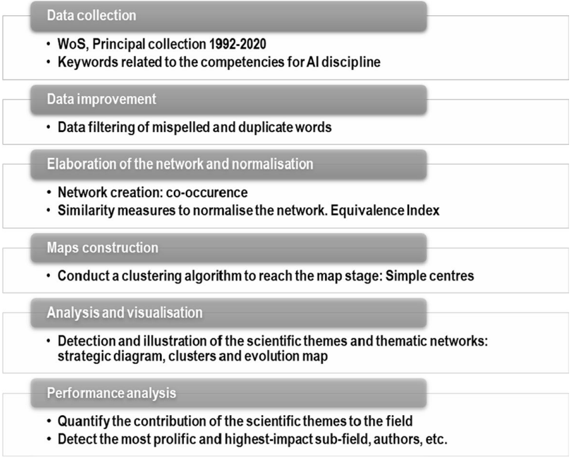
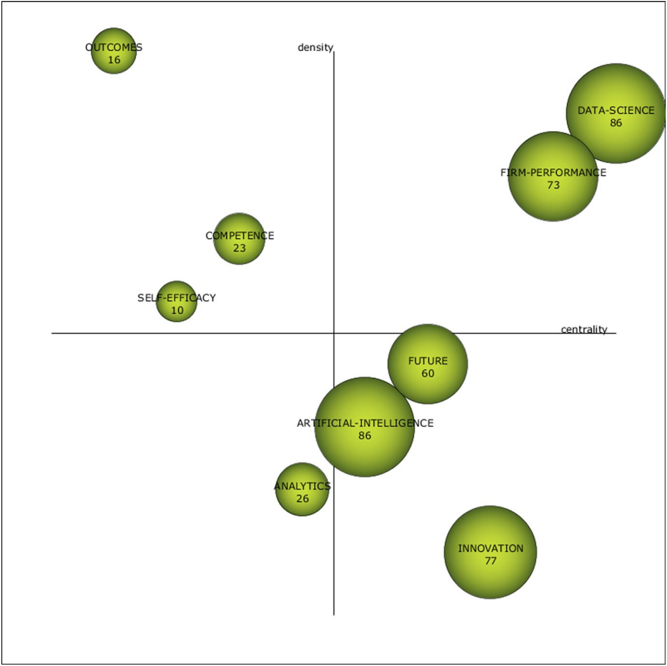
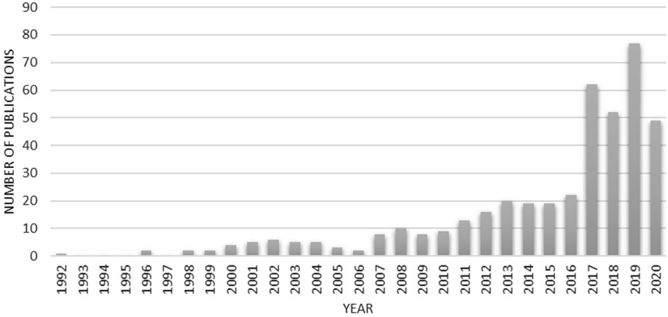
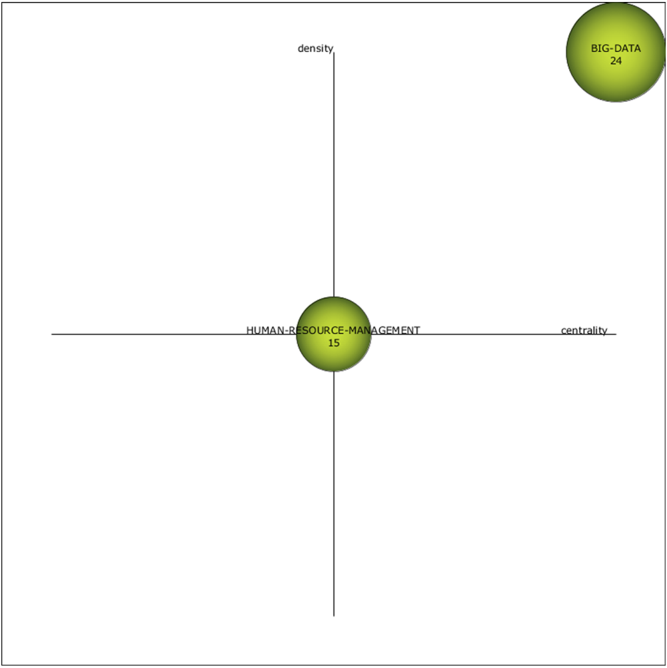
The objective of this paper is to perform an in-depth analysis of the literature on the competencies for implementing and leveraging artificial intelligence (AI) within organisations. From a bibliometric study using SciMat with articles from the Web of Science database, we identified 421 papers published between 1992 and 2020. This study offers a systematisation of the competencies and skills for AI, highlighting the most prominent, basic, specialised and emerging themes, and providing a performance measure analysis of this field. In addition, major challenges and a research agenda are discussed. The organisational challenge is to achieve a workforce with the necessary digital competencies, and to adapt human resource management practices to AI challenges.
Overview
The claims and statistics of this paper haven’t been checked yet.
Free: it reads the open-access text and checks the first 5 claims that cite a source we can check. Create a free account to check every claim.
Integrity signals
Registry
Cites
Statistics
Figures
Verification
Claims the paper makes
The claims and statistics of this paper haven’t been checked yet.
Free: it reads the open-access text and checks the first 5 claims that cite a source we can check. Create a free account to check every claim.
Claims other papers make about this one
Each is checked against this paper’s own text: does it say what the citing paper says it does?
The source backs part of the claim, not all of it — or backs it for a different population, condition or comparison.
In the citing paper
“Several potential frameworks for AI literacy and competency in education are beginning to emerge [46][47][48][49].”
From Generative Artificial Intelligence: Implications and Considerations for Higher Education Practice (2023) · cites this paper as [48]
Experimental — accuracy not yet measuredThe source backs part of the claim, not all of it — or backs it for a different population, condition or comparison.
In the citing paper
“Santana and Diaz-Fernandez [48] identified AI competencies for Human Resource Management professionals”
From Generative Artificial Intelligence: Implications and Considerations for Higher Education Practice (2023) · cites this paper as [48]
Experimental — accuracy not yet measured
Self-check
Percentages, sums and reported differences re-computed from the paper’s own numbers.
The self-check needs the paper’s full text.
Citations
Cites
Firm Resources and Sustained Competitive Advantage
Barney, J. (1991) · Journal of Management · doi:10.1177/014920639101700108 · Cited by 48,334 · cited 2×
“Under the RBV, human capital is identified as a key factor in the attainment of a sustainable competitive advantage (Barney 1991), since competencies explain the differences between competitive advantages in human resources (Hayton and McEvoy 2006).”
BackgroundAzuma, R. T. (1997) · Presence: Teleoperators and Virtual Environments · doi:10.1162/pres.1997.6.4.355 · Cited by 10,121 · cited 1×
“…and learning environments are critical for organisations to operationalise knowledge and skills, such as virtual learning environments (VLEs) (Richert et al. 2016), augmented reality (Azuma 1997) and collaborative environments between cobots (service robots) and humans (Calitz et al. 2017).”
BackgroundBibliometric Methods in Management and Organization
Zupic, I., & Čater, T. (2015) · Organizational Research Methods · doi:10.1177/1094428114562629 · Cited by 7,495 · cited 2×
“Co-citation analyses use co-authorship data to assess collaboration (Zupic and Čater 2014).”
BackgroundMethod(2011) · Cited by 5,203
Artificial intelligence in service
Huang, M.-H., & Rust, R. T. (2018) · Journal of Service Research · doi:10.1177/1094670517752459 · Cited by 3,978
Skills, Tasks and Technologies: Implications for Employment and Earnings
Acemoglu, D., & Autor, D. (2011) · Handbook of Labor Economics · doi:10.1016/s0169-7218(11)02410-5 · Cited by 3,799
Science mapping software tools: Review, analysis, and cooperative study among tools
Cobo, M. J., López-Herrera, A. G., Herrera-Viedma, E., & Herrera, F. (2011) · Journal of the American Society for Information Science and Technology · doi:10.1002/asi.21525 · Cited by 3,242 · cited 2×
“Bibliometric studies conducted by means of science mapping offer profound analyses, highlight the intellectual structure and detect relevant topics (Cobo et al. 2011b; Deng et al. 2020).”
BackgroundMethodKaplan, A., & Haenlein, M. (2019) · Business Horizons · doi:10.1016/j.bushor.2018.08.004 · Cited by 3,140
Intelligent Manufacturing in the Context of Industry 4.0: A Review
Zhong, R. Y., Xu, X., Klotz, E., & Newman, S. T. (2017) · Engineering · doi:10.1016/j.eng.2017.05.015 · Cited by 2,913 · cited 1×
“Revolu-tionary changes are emerging (Strandhagen et al. 2017) through the use of smart technologies that enable new and more efficient processes, products and services (Lee et al. 2018; Zhong et al. 2017).”
BackgroundCobo, M. J., López-Herrera, A. G., Herrera-Viedma, E., & Herrera, F. (2011) · Journal of Informetrics · doi:10.1016/j.joi.2010.10.002 · Cited by 2,733 · cited 2×
“Bibliometric studies conducted by means of science mapping offer profound analyses, highlight the intellectual structure and detect relevant topics (Cobo et al. 2011b; Deng et al. 2020).”
BackgroundMethod
Research works printed but not linked: 11
- Cantoni F, Mangia G, Mangia G (2018) Digital revolution equals digital competencies? What we expect for workers' competencies in Industry 4.0, pp 247-258. https:// doi. org/ 10. 4324/ 97804 29425 288-21 · doi:10.4324/9780429425288-21
- Dewhurst M, Willmott P (2014) Manager and machine: the new leadership equation. McKinsey Q. 4:76-86
- Fenech R, Baguant P, Ivanov D (2019) The changing role of human resource management in a era of digital transformation. J Manag Inf Decis Sci 22(2):166–175
- Garfield E (1994) Scientography mapping the tracks of science. Curr Contents Soc Behav Sci 7:5-10
- Gehrke L, Bonse R, Henke M (2016) Towards a management framework for the digital transformation of logistics and manufacturing. In: 23rd EurOMA conference, interaction
- Harkins AM (2008) Leapfrog principles and practices: core components of education 3.0 and 4.0. Futures Res Q 24(1):19-31
- Malik A, Budhwar P, Patel C, Srikanth NR (2020b) May the bots be with you! Delivering HR cost-effec- tiveness and individualised employee experiences in an MNE. Int J Hum Resour Manag. https:// doi. org/ 10. 1080/ 09585 192. 2020b. 18595 82 · doi:10.1080/09585192.2020b.1859582
- Nonaka I, Takeuchi H, Umemoto K (1996) A theory of organizational knowledge creation. Int J Technol Manag 11(7-8):833-845. https:// doi. org/ 10. 1504/ IJTM. 1996. 025472 · doi:10.1504/ijtm.1996.025472
- Rowley C, Warner M (2007) The management of human resources in the Asia pacific: into the 21st cen- tury. Manag Revue 18:374-391. https:// doi. org/ 10. 2307/ 41791 360 · doi:10.2307/41791360
- Ruël H, Bondarouk T, Looise JK (2004) E-HRM: innovation or irritation. An explorative empirical study in five large companies on web-based HRM. Manag Revue 15(3):364-380. https:// doi. org/ 10. 2307/ 41783 479 · doi:10.2307/41783479
- Wasserman T (2013) Oxford english dictionary adds "Crowdsourcing," "Big Data." Mashable. https:// masha ble. com/ 2013/ 06/ 13/ dicti onary-new-words-2013/? europe= true
Cited by
Kanbach, D. K., Heiduk, L., Blueher, G., Schreiter, M., & Lahmann, A. (2024) · Review of Managerial Science · doi:10.1007/s11846-023-00696-z · Cited by 454
“The use of AI is transforming the required skillset of employees (Santana and Díaz-Fernández 2022).”
Generative Artificial Intelligence: Implications and Considerations for Higher Education Practice
Farrelly, T., & Baker, N. (2023) · Education Sciences · doi:10.3390/educsci13111109 · Cited by 414
AI-driven business model innovation: A systematic review and research agenda
Jorzik, P., Klein, S. P., Kanbach, D. K., & Kraus, S. (2024) · Journal of Business Research · doi:10.1016/j.jbusres.2024.114764 · Cited by 176
Balanced scorecard: trends, developments, and future directions
Kumar, S., Lim, W. M., Sureka, R., Jabbour, C. J. C., & Bamel, U. K. (2023) · Review of Managerial Science · doi:10.1007/s11846-023-00700-6 · Cited by 253
Roppelt, J. S., Kanbach, D. K., & Kraus, S. (2024) · Technology in Society · doi:10.1016/j.techsoc.2023.102443 · Cited by 168
Metadata
- Authors
- Santana, M., & Díaz-Fernández, M.
- Affiliations
- Universidad Pablo de Olavide (ES)
- Corresponding author
- Santana, Mónica
- Venue
- Review of Managerial Science
- Published
- 2022-12-29
- Volume
- 17
- Issue
- 6
- Pages
- 1971-2004
- ISSN
- 1863-6683 (ISSN-L)
- 1863-6691
- OpenAlex
- W4313242364
- Cited by
- 105
- References
- 91
- Citations by year
- 2026: 26 · 2025: 40 · 2024: 23 · 2023: 16
- FWCI
- 18.65
- Type
- journal article
- Language
- en
- Open access
- hybrid
- doi.org
- Licence
- cc-by
- creativecommons.org/licenses/by/4.0 (tdm)
- creativecommons.org/licenses/by/4.0 (vor)
- Locations
- Review of Managerial Science (publishedVersion, cc-by)
- RIO (Universidad Pablo de Olavide) (submittedVersion, cc-by)
- RePEc: Research Papers in Economics (submittedVersion)
- Funders
- andalusian government (PAIDI SEJ602)
- Ministerio de Ciencia, Innovación y Universidades (MCI/AEI/10.13039/501100011033)
- Universidad Pablo de Olavide
- Topics
- Social Sciences › Business, Management and Accounting › Organizational Behavior and Human Resource Management › AI and HR Technologies
- Social Sciences › Business, Management and Accounting › Organizational Behavior and Human Resource Management › Competency Development and Evaluation
- Physical Sciences › Computer Science › Artificial Intelligence › Artificial Intelligence Applications
- Keywords
- artificial intelligence, AI competencies, digital skills, labor force, human resource management, emerging competencies, research agenda
About these checks
Registry, retraction, Cites and statistics results are computed, not judged, with one exception: a printed reference that no index lists is read once by a model before it counts as a citation error. Claims are extracted by a model and kept only when their quote appears verbatim in the text; each cited source is then checked, with a model’s help, for whether it says what the claim relies on. Those verdicts can be wrong — read the claim’s quote and the cited source before relying on one.
Statistics and arithmetic are recomputed, not judged.
Confidence bands are shown only for fields calibrated on our annotated test set. None is calibrated yet, so no band is shown.
What counts as a claim ›How we measure confidence ›How we check this ›
Are you an author, or do you see a problem with this page? Request a review
Data sources
Bibliographic data: Semantic Scholar, OpenAlex, Crossref.
Contains information from the Semantic Scholar Academic Graph Datasets, made available under the ODC Attribution License (ODC-BY 1.0).
Semantic Scholar’s data is described in: Kinney, R., et al. (2023). The Semantic Scholar Open Data Platform. arXiv:2301.10140.
