

Competencies for the artificial intelligence age: visualisation of the state of the art and future perspectives
Open accessThe DOI matches its Crossref record; 91 of the 91 references it cites were found in a registry or an index.
Abstract
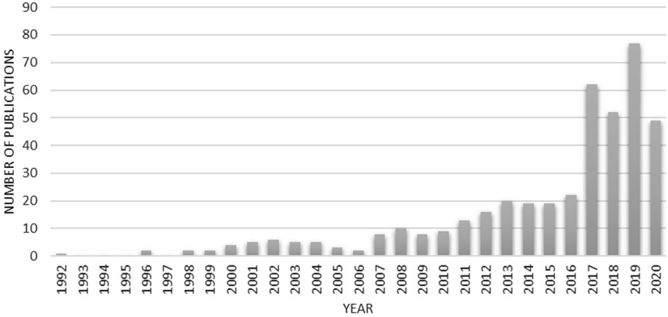
The objective of this paper is to perform an in-depth analysis of the literature on the competencies for implementing and leveraging artificial intelligence (AI) within organisations. From a bibliometric study using SciMat with articles from the Web of Science database, we identified 421 papers published between 1992 and 2020. This study offers a systematisation of the competencies and skills for AI, highlighting the most prominent, basic, specialised and emerging themes, and providing a performance measure analysis of this field. In addition, major challenges and a research agenda are discussed. The organisational challenge is to achieve a workforce with the necessary digital competencies, and to adapt human resource management practices to AI challenges.
Overview
The claims and statistics of this paper haven’t been checked yet.
Free: it reads the open-access text and checks the first 5 claims that cite a source we can check. Create a free account to check every claim.
Integrity signals
Registry
Cites
Statistics
Figures
Verification
Claims the paper makes
The claims and statistics of this paper haven’t been checked yet.
Free: it reads the open-access text and checks the first 5 claims that cite a source we can check. Create a free account to check every claim.
Claims other papers make about this one
Each is checked against this paper’s own text: does it say what the citing paper says it does?
The source backs part of the claim, not all of it — or backs it for a different population, condition or comparison.
In the citing paper
“Several potential frameworks for AI literacy and competency in education are beginning to emerge [46][47][48][49].”
From Generative Artificial Intelligence: Implications and Considerations for Higher Education Practice (2023) · cites this paper as [48]
Experimental — accuracy not yet measuredThe source backs part of the claim, not all of it — or backs it for a different population, condition or comparison.
In the citing paper
“Santana and Diaz-Fernandez [48] identified AI competencies for Human Resource Management professionals”
From Generative Artificial Intelligence: Implications and Considerations for Higher Education Practice (2023) · cites this paper as [48]
Experimental — accuracy not yet measured
Self-check
Percentages, sums and reported differences re-computed from the paper’s own numbers.
The self-check needs the paper’s full text.
Citations
Cites
Firm Resources and Sustained Competitive Advantage
Barney, J. (1991) · Journal of Management · doi:10.1177/014920639101700108 · Cited by 48,334 · cited 2×
“Under the RBV, human capital is identified as a key factor in the attainment of a sustainable competitive advantage (Barney 1991), since competencies explain the differences between competitive advantages in human resources (Hayton and McEvoy 2006).”
BackgroundAzuma, R. T. (1997) · Presence: Teleoperators and Virtual Environments · doi:10.1162/pres.1997.6.4.355 · Cited by 10,121 · cited 1×
“…and learning environments are critical for organisations to operationalise knowledge and skills, such as virtual learning environments (VLEs) (Richert et al. 2016), augmented reality (Azuma 1997) and collaborative environments between cobots (service robots) and humans (Calitz et al. 2017).”
BackgroundBibliometric Methods in Management and Organization
Zupic, I., & Čater, T. (2015) · Organizational Research Methods · doi:10.1177/1094428114562629 · Cited by 7,495 · cited 2×
“Co-citation analyses use co-authorship data to assess collaboration (Zupic and Čater 2014).”
BackgroundMethod(2011) · Cited by 5,203
Artificial intelligence in service
Huang, M.-H., & Rust, R. T. (2018) · Journal of Service Research · doi:10.1177/1094670517752459 · Cited by 3,978
Skills, Tasks and Technologies: Implications for Employment and Earnings
Acemoglu, D., & Autor, D. (2011) · Handbook of Labor Economics · doi:10.1016/s0169-7218(11)02410-5 · Cited by 3,799
Science mapping software tools: Review, analysis, and cooperative study among tools
Cobo, M. J., López-Herrera, A. G., Herrera-Viedma, E., & Herrera, F. (2011) · Journal of the American Society for Information Science and Technology · doi:10.1002/asi.21525 · Cited by 3,242 · cited 2×
“Bibliometric studies conducted by means of science mapping offer profound analyses, highlight the intellectual structure and detect relevant topics (Cobo et al. 2011b; Deng et al. 2020).”
BackgroundMethodKaplan, A., & Haenlein, M. (2019) · Business Horizons · doi:10.1016/j.bushor.2018.08.004 · Cited by 3,140
Intelligent Manufacturing in the Context of Industry 4.0: A Review
Zhong, R. Y., Xu, X., Klotz, E., & Newman, S. T. (2017) · Engineering · doi:10.1016/j.eng.2017.05.015 · Cited by 2,913 · cited 1×
“Revolu-tionary changes are emerging (Strandhagen et al. 2017) through the use of smart technologies that enable new and more efficient processes, products and services (Lee et al. 2018; Zhong et al. 2017).”
BackgroundCobo, M. J., López-Herrera, A. G., Herrera-Viedma, E., & Herrera, F. (2011) · Journal of Informetrics · doi:10.1016/j.joi.2010.10.002 · Cited by 2,733 · cited 2×
“Bibliometric studies conducted by means of science mapping offer profound analyses, highlight the intellectual structure and detect relevant topics (Cobo et al. 2011b; Deng et al. 2020).”
BackgroundMethodCitation Indexes for Science: A New Dimension in Documentation through Association of Ideas
Garfield, E. (1955) · Science · doi:10.1126/science.122.3159.108 · Cited by 2,334 · cited 1×
“Bibliometric methodology is the statistical study of scholarly documents (Garfield 1955) and enhances the comprehension of the intellectual architecture of a scientific field with objectivity (Garfield 1979).”
BackgroundCallon, M., Courtial, J. P., & Laville, F. (1991) · Scientometrics · doi:10.1007/bf02019280 · Cited by 2,090 · cited 2×
“Co-word analyses retrieve relationships among concepts that co-occur in document titles, keywords or abstracts (Callon et al. 1991; Martínez et al. 2015; Zupic and Čater 2014).”
BackgroundThe relation between 21st-century skills and digital skills: A systematic literature review
van Laar, E., van Deursen, A. J. A. M., van Dijk, J. A. G. M., & de Haan, J. (2017) · Computers in Human Behavior · doi:10.1016/j.chb.2017.03.010 · Cited by 2,006 · cited 3×
“Van Laar et al. (2017) make a significant contribution by highlighting the digital skills needed for the twenty-first century, namely: technical competencies, information management, communication, collaboration, creativity, critical thinking and problem solving.”
BackgroundArtificial Intelligence in Human Resources Management: Challenges and a Path Forward
Tambe, P., Cappelli, P., & Yakubovich, V. (2019) · California Management Review · doi:10.1177/0008125619867910 · Cited by 1,609 · cited 1×
“HRM is characterised by a high level of complexity (e.g., measuring employee performance), which has major consequences for both employees and the company (Tambe et al. 2019).”
BackgroundWaller, M. A., & Fawcett, S. E. (2013) · Journal of Business Logistics · doi:10.1111/jbl.12010 · Cited by 1,522 · cited 1×
“The most cited publication is by Waller and Fawcett (2013) about artificial intelligence and supply chain management, with 369 citations since 2013.”
BackgroundThe future of manufacturing industry: a strategic roadmap toward Industry 4.0
Ghobakhloo, M. (2018) · Journal of Manufacturing Technology Management · doi:10.1108/jmtm-02-2018-0057 · Cited by 1,381 · cited 4×
“Furthermore, these authors call on organisations to focus on the alignment of multiple stakeholders for the design of ‘digital’ curricula and the integration by HR departments of the construct of digital competences, e.g. for compensation matters and job requirements (Murawski and Bick 2017; p.721).”
BackgroundInfluentialSciMAT: A new science mapping analysis software tool
Cobo, M. J., López‐Herrera, A. G., Herrera‐Viedma, E., & Herrera, F. (2012) · Journal of the American Society for Information Science and Technology · doi:10.1002/asi.22688 · Cited by 1,213 · cited 4×
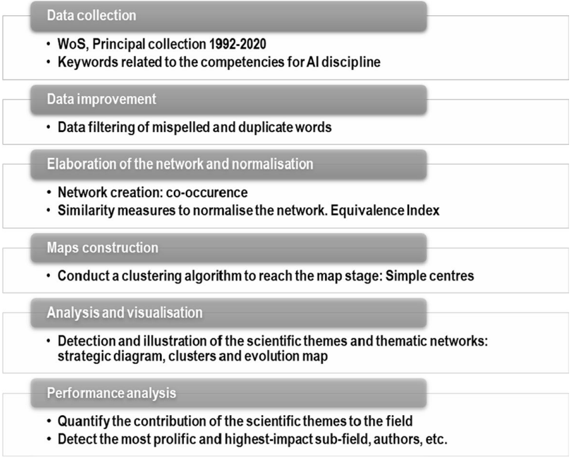
“According to Cobo et al. (2012), SciMAT allows researchers to visualise maps by using co-word analyses with a longitudinal perspective that provides information on the research themes in an academic field of study, as well as by tracking the evolution of the scientific work along different periods.”
BackgroundMethodInfluentialCompetencies in the 21st century
Boyatzis, R. E. (2008) · Journal of Management Development · doi:10.1108/02621710810840730 · Cited by 1,194 · cited 2×
“Boyatzis (2008, p.5) states that emotional, social and cognitive intelligence competencies predict effectiveness in leadership roles .”
BackgroundHolistic Approach for Human Resource Management in Industry 4.0
Hecklau, F., Galeitzke, M., Flachs, S., & Kohl, H. (2016) · Procedia CIRP · doi:10.1016/j.procir.2016.05.102 · Cited by 951 · cited 2×
“This new reality demands that companies seek to fill the gaps in their dynamic capacities (Eisenhardt and Martin 2000) to adapt and survive in the new competitive reality, combining real and virtual global information and IT management knowledge (Hecklau et al. 2016).”
BackgroundA Complex View of Industry 4.0
Roblek, V., Meško, M., & Krapež, A. (2016) · Sage Open · doi:10.1177/2158244016653987 · Cited by 926
An evidence-based review of HR Analytics
Marler, J. H., & Boudreau, J. W. (2017) · The International Journal of Human Resource Management · doi:10.1080/09585192.2016.1244699 · Cited by 913
Is citation analysis a legitimate evaluation tool?
Garfield, E. (1979) · Scientometrics · doi:10.1007/bf02019306 · Cited by 907 · cited 1×
“Bibliometric methodology is the statistical study of scholarly documents (Garfield 1955) and enhances the comprehension of the intellectual architecture of a scientific field with objectivity (Garfield 1979).”
BackgroundDubey, R., Gunasekaran, A., Childe, S. J., Blome, C., & Papadopoulos, T. (2019) · British Journal of Management · doi:10.1111/1467-8551.12355 · Cited by 881 · cited 3×
“Research line 1: AI-digital competencies and firm performance The study of variables related to digital competencies and firm performance is increasingly important (Dubey et al. 2019; Peeters et al. 2020; Rialti et al. 2019).”
BackgroundIndustrial artificial intelligence for industry 4.0-based manufacturing systems
Lee, J., Davari, H., Singh, J., & Pandhare, V. (2018) · Manufacturing Letters · doi:10.1016/j.mfglet.2018.09.002 · Cited by 870 · cited 1×
“Revolu-tionary changes are emerging (Strandhagen et al. 2017) through the use of smart technologies that enable new and more efficient processes, products and services (Lee et al. 2018; Zhong et al. 2017).”
BackgroundThe role of leadership in a digitalized world: a review
Cortellazzo, L., Bruni, E., & Zampieri, R. (2019) · Frontiers in Psychology · doi:10.3389/fpsyg.2019.01938 · Cited by 808 · cited 1×
“Similarly, Cortellazzo et al. (2019) identify the main competencies leaders need in the digital transformation era: communicating through digital media, high-speed decision making, managing disruptive change, managing connectivity, and the renaissance of technical competencies.”
BackgroundKautz, T., Heckman, J., Diris, R., ter Weel, B., & Borghans, L. (2014) · National Bureau of Economic Research · doi:10.3386/w20749 · Cited by 744 · cited 1×
“…and change, flexibility, curiosity, innovation, creativity, entrepreneurship, resilience, planning/organisation, responsibility, persistence, teamwork, communication, initiative, sociability, empathy, collaboration, emotional control and positivity (Gonzalez-Vazquez et al. 2019; Kautz et al. 2014).”
Requirements for Education and Qualification of People in Industry 4.0
Benešová, A., & Tupa, J. (2017) · Procedia Manufacturing · doi:10.1016/j.promfg.2017.07.366 · Cited by 650 · cited 2×
“This consideration does not only influence production, but also the occupational dimension, employment dynamics, working conditions, education systems and the demand for competencies and national policies (Benešová and Tupa 2017; Rajnai and Kocsis 2017).”
BackgroundHR and analytics: Why HR is set to fail the big data challenge
Angrave, D., Charlwood, A., Kirkpatrick, I., Lawrence, M., & Stuart, M. (2016) · Human Resource Management Journal · doi:10.1111/1748-8583.12090 · Cited by 633
The Feeling Economy: Managing in the Next Generation of Artificial Intelligence (AI)
Huang, M.-H., Rust, R., & Maksimovic, V. (2019) · California Management Review · doi:10.1177/0008125619863436 · Cited by 591 · cited 1×
“Huang et al. (2019) empirical study shows that, in the future, human employees will increase their presence in positions with feeling tasks, while thinking tasks will be performed by AI systems, similarly to how mechanical tasks were taken over by machines and robots.”
BackgroundBig Data Investment, Skills, and Firm Value
Tambe, P. (2014) · Management Science · doi:10.1287/mnsc.2014.1899 · Cited by 484
Virtual HR: Strategic human resource management in the 21st century
Lepak, D. P., & Snell, S. A. (1998) · Human Resource Management Review · doi:10.1016/s1053-4822(98)90003-1 · Cited by 454 · cited 3×
“Collaboration, flexibility and change management are underlying requi-site competencies detected in this period to cope with technological changes (Lepak and Snell 1998).”
BackgroundConceptualising the future of HRM and technology research
Bondarouk, T., & Brewster, C. (2016) · The International Journal of Human Resource Management · doi:10.1080/09585192.2016.1232296 · Cited by 438 · cited 2×
“Furthermore, Bondarouk and Brewster (2016) conceptualise the IT and HRM literature to clarify the pros and cons for different stakeholders of the intersection of these fields of study, HRM and technology, traditionally defined as e-HRM, i.e., the performance of HRM activities through the support of…”
BackgroundBig data analytics capabilities and performance: Evidence from a moderated multi-mediation model
Rialti, R., Zollo, L., Ferraris, A., & Alon, I. (2019) · Technological Forecasting and Social Change · doi:10.1016/j.techfore.2019.119781 · Cited by 420 · cited 4×
“Data analytics or big data competencies are essential to face AI challenges (Ghasemaghaei et al. 2018; Rialti et al. 2019), but human competencies (e.g., critical thinking, problem solving, communication and teamwork) to effectively work and cope with new technological developments are vital for…”
BackgroundInfluentialSkills for disruptive digital business
Sousa, M. J., & Rocha, Á. (2019) · Journal of Business Research · doi:10.1016/j.jbusres.2017.12.051 · Cited by 403 · cited 1×
“Sousa and Rocha (2019) conduct interviews to find out which skills managers require to cope with new disruptive technologies and list the following skills according to three dimensions: innovation, leadership and management.”
BackgroundDigital competencies: A review of the literature and applications in the workplace
Oberländer, M., Beinicke, A., & Bipp, T. (2020) · Computers & Education · doi:10.1016/j.compedu.2019.103752 · Cited by 382 · cited 4×
“In conclusion, competency mismatch is a fact (Acemoglu and Autor 2011; Cukier 2019; Oberländer et al. 2020), but work-integrated learning and technology-enabled talent matching platforms can reduce the effect of new technological developments, and efforts need to be made through specific training from educational inst…”
BackgroundInfluentialData analytics competency for improving firm decision making performance
Ghasemaghaei, M., Ebrahimi, S., & Hassanein, K. (2018) · The Journal of Strategic Information Systems · doi:10.1016/j.jsis.2017.10.001 · Cited by 360 · cited 4×
“Data analytics or big data competencies are essential to face AI challenges (Ghasemaghaei et al. 2018; Rialti et al. 2019), but human competencies (e.g., critical thinking, problem solving, communication and teamwork) to effectively work and cope with new technological developments are vital for…”
BackgroundInfluentialAnalyzing the Scientific Evolution of Social Work Using Science Mapping
Martínez, M. A., Cobo, M. J., Herrera, M., & Herrera-Viedma, E. (2015) · Research on Social Work Practice · doi:10.1177/1049731514522101 · Cited by 347 · cited 1×
“Co-word analyses retrieve relationships among concepts that co-occur in document titles, key-words or abstracts (Callon et al. 1991; Martínez et al. 2015; Zupic and Čater 2014).”
BackgroundManagement approaches for Industry 4.0: A human resource management perspective
Shamim, S., Cang, S., Yu, H., & Li, Y. (2016) · 2016 IEEE Congress on Evolutionary Computation (CEC) · doi:10.1109/cec.2016.7748365 · Cited by 347 · cited 2×
“…requi-site leadership competencies such as decisiveness, proactivity, innovative decision making and intelligent stewardship are aimed at obtaining agile, flexible and cross-cultural responses to lead effectively and ethically in a changing and globalised environment (Sheppard et al. 2013).”
BackgroundDigital orientation: Conceptualization and operationalization of a new strategic orientation
Kindermann, B., Beutel, S., Garcia de Lomana, G., Strese, S., Bendig, D., & Brettel, M. (2021) · European Management Journal · doi:10.1016/j.emj.2020.10.009 · Cited by 347 · cited 2×
“Klumpp (2018) calls for further investigation on how to increase/reduce levels of acceptance/resistance through information and training or experience from the human collaborator perspective.”
BackgroundAddressing barriers to big data
Alharthi, A., Krotov, V., & Bowman, M. (2017) · Business Horizons · doi:10.1016/j.bushor.2017.01.002 · Cited by 301 · cited 8×
“In turn, Alharthi et al. (2017) also consider that organisations are not ready to make use of the big data capabilities, listing a number of recommendations to address big data barriers.”
BackgroundInfluentialDigitization of industrial work: development paths and prospects
Hirsch-Kreinsen, H. (2016) · Journal for Labour Market Research · doi:10.1007/s12651-016-0200-6 · Cited by 270 · cited 1×
“This change presents risks, challenges and opportunities for industry stakeholders and for communities (Hirsch-Kreinsen 2016; Roblek et al. 2016; Shamim et al. 2016; Strandhagen et al. 2017).”
BackgroundRobot will take your job: Innovation for an era of artificial intelligence
Rampersad, G. (2020) · Journal of Business Research · doi:10.1016/j.jbusres.2020.05.019 · Cited by 240 · cited 7×
“Indeed, the arrival of Industry 4.0, or the fourth industrial revolution, focuses on technology such as artifical intelligence and advanced robotics, going beyond a mere technological challenge to also include a human challenge (Rampersad 2020; Santana and Cobo 2020).”
BackgroundInfluentialRobots, Industry 4.0 and Humans, or Why Assembly Work Is More than Routine Work
Pfeiffer, S. (2016) · Societies · doi:10.3390/soc6020016 · Cited by 221 · cited 1×
“…will be critical as companies are obliged to adapt to constant technological changes (Harkins 2008), making knowledge management (Nonaka et al. 1996) and knowledge of information technologies (IT) (Pfeiffer 2016) the keys to success for highly innovative companies (ITU 2016; Gehrke et al. 2016).”
BackgroundAnalysing the scientific evolution of e-Government using a science mapping approach
Muñoz, L. A., Bolívar, M. P. R., Cobo, M. J., & Herrera‐Viedma, E. (2017) · Government Information Quarterly · doi:10.1016/j.giq.2017.05.002 · Cited by 217 · cited 1×
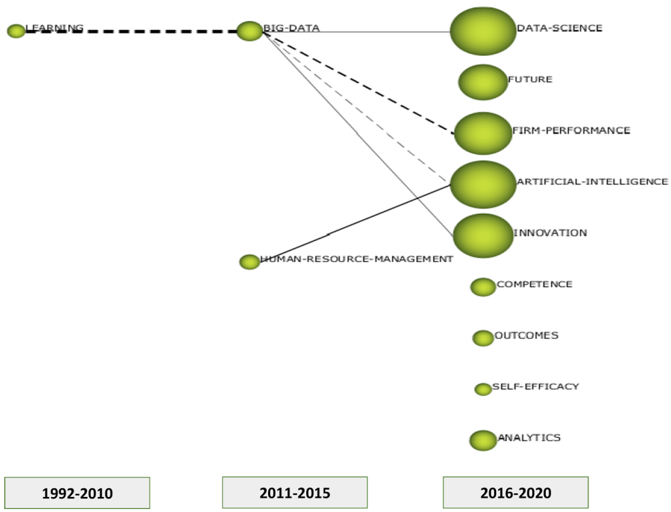
“1 3 of one topic is part of another, whereas the dashed lines show that the topics share characteristics other than the topic name (Alcaide-Muñoz et al. 2017).”
BackgroundKlumpp, M. (2018) · International Journal of Logistics Research and Applications · doi:10.1080/13675567.2017.1384451 · Cited by 211 · cited 2×
“Klumpp (2018) calls for further investigation on how to increase/reduce levels of acceptance/resistance through information and training or experience from the human collaborator perspective.”
BackgroundWhat is the future of work? A science mapping analysis
Santana, M., & Cobo, M. J. (2020) · European Management Journal · doi:10.1016/j.emj.2020.04.010 · Cited by 206 · cited 1×
“Indeed, the arrival of Industry 4.0, or the fourth industrial revolution, focuses on technology such as artifical intelligence and advanced robotics, going beyond a mere technological challenge to also include a human challenge (Rampersad 2020; Santana and Cobo 2020).”
BackgroundInfluentialSelf-citationIncorporating the macro view in global talent management
Khilji, S. E., Tarique, I., & Schuler, R. S. (2015) · Human Resource Management Review · doi:10.1016/j.hrmr.2015.04.001 · Cited by 187 · cited 2×
“In addition, training in organisations and educational institutions is needed to reduce competency mismatch (Acemoglu and Autor 2011; Alharthi et al. 2017); talent mobility in particular is a source of knowledge for employees that bolsters competencies (Khilji et al. 2015).”
BackgroundEnhancing supply chain practices through human resource management
Gowen, C. R., & Tallon, W. J. (2003) · Journal of Management Development · doi:10.1108/02621710310454842 · Cited by 183 · cited 1×
“In the case of companies, one of the main difficulties they face is to integrate AI and HRM management issues, due to the lack of employee competencies and skills to promote radical changes throughout the organisation (Gowen and Tallon 2003).”
BackgroundThe fit of Industry 4.0 applications in manufacturing logistics: a multiple case study
Strandhagen, J. W., Alfnes, E., Strandhagen, J. O., & Vallandingham, L. R. (2017) · Advances in Manufacturing · doi:10.1007/s40436-017-0200-y · Cited by 182 · cited 2×
“Revolu-tionary changes are emerging (Strandhagen et al. 2017) through the use of smart technologies that enable new and more efficient processes, products and services (Lee et al. 2018; Zhong et al. 2017).”
BackgroundPreparing nurse leaders for 2020
HUSTON, C. (2008) · Journal of Nursing Management · doi:10.1111/j.1365-2834.2008.00942.x · Cited by 179 · cited 2×
“Particularly, Huston (2008) highlights a set of requisite competencies for nurse leaders, such as having a global mindset in their field, technological skills, decision-making skills, ability to create organisation cultures, comprehension and intervention in political issues and ability to develop…”
BackgroundA bibliometric analysis of behavioural finance with mapping analysis tools
Paule-Vianez, J., Gómez-Martínez, R., & Román, C. P. (2020) · European Research on Management and Business Economics · doi:10.1016/j.iedeen.2020.01.001 · Cited by 179 · cited 3×
“Peeters et al. (2020) develop a people analytics effectiveness wheel, in which the people analytics team need to focus on four aspects: resources, products, stakeholder management and governance structure.”
BackgroundPromoting Work-based Learning through INDUSTRY 4.0
Schuh, G., Gartzen, T., Rodenhauser, T., & Marks, A. (2015) · Procedia CIRP · doi:10.1016/j.procir.2015.02.213 · Cited by 171
Science mapping: a bibliometric analysis of female entrepreneurship studies
Deng, W., Liang, Q., Li, J., & Wang, W. (2020) · Gender in Management An International Journal · doi:10.1108/gm-12-2019-0240 · Cited by 163 · cited 1×
“Bibliometric studies conducted by means of science mapping offer profound analyses, highlight the intellectual structure and detect relevant topics (Cobo et al. 2011b; Deng et al. 2020).”
BackgroundWang, Y., Kung, L., Gupta, S., & Ozdemir, S. (2019) · British Journal of Management · doi:10.1111/1467-8551.12332 · Cited by 157 · cited 2×
“Wang et al. (2019) examine the complexity of big data analytics within healthcare organisations, exploring how big data analytics act with firm resources and capabilities in diverse configurations to improve the quality of care.”
BackgroundDigital competences of the workforce – a research topic?
Murawski, M., & Bick, M. (2017) · Business Process Management Journal · doi:10.1108/bpmj-06-2016-0126 · Cited by 147 · cited 2×
“Furthermore, these authors call on organisations to focus on the alignment of multiple stakeholders for the design of ‘digital’ curricula and the integration by HR departments of the construct of digital competences, e.g. for compensation matters and job requirements (Murawski and Bick 2017; p.721).”
BackgroundEmployability skills for future marketing professionals
Gregorio, A. D., Maggioni, I., Mauri, C., & Mazzucchelli, A. (2019) · European Management Journal · doi:10.1016/j.emj.2019.03.004 · Cited by 146 · cited 2×
“In this line, Di Gregorio et al. (2019) propose an integrated model of employability competencies in the marketing field (e.g., soft competencies, analytical competencies, digital and technical competencies, core marketing competencies and customer insight competencies) to be implemented in…”
BackgroundMethodThe changing nature of work and skills in the digital age
Pabollet, E. A., Bacigalupo, M. M., Biagi, F., Giraldez, M. C., Caena, F., Munoz, J. C., Centeno Mediavilla, C., Edwards, J., Fernández‐Macías, E., Gutierrez, E. G., et al. (2019) · EUR · doi:10.2760/679150 · Cited by 144 · cited 2×
“…and change, flexibility, curiosity, innovation, creativity, entrepreneurship, resilience, planning/organisation, responsibility, persistence, teamwork, communication, initiative, sociability, empathy, collaboration, emotional control and positivity (Gonzalez-Vazquez et al. 2019; Kautz et al. 2014).”
BackgroundEngineering Students' Experiences in Studying Entrepreneurship
Täks, M., Tynjälä, P., Toding, M., Kukemelk, H., & Venesaar, U. (2014) · Journal of Engineering Education · doi:10.1002/jee.20056 · Cited by 141 · cited 1×
“…characterised by increased automation, advanced robotics, AI, rapid change and industry transformation, the next generation of employees must have not only the competency of problem solving, but also critical thinking, commucation, teamwork, innovation and entrepreneurship (Täks et al. 2014).”
BackgroundBerger, T., & Frey, C. B. (2015) · Regional Science and Urban Economics · doi:10.1016/j.regsciurbeco.2015.11.003 · Cited by 138 · cited 1×
“Outplacement activities, developing new business models, rein-vestments in new industrial products and equipment and new services also change the employment scenario (Berger and Frey 2016).”
BackgroundPeople analytics effectiveness: developing a framework
Peeters, T., Paauwe, J., & Van De Voorde, K. (2020) · Journal of Organizational Effectiveness: People and Performance · doi:10.1108/joepp-04-2020-0071 · Cited by 129 · cited 3×
“Peeters et al. (2020) develop a people analytics effectiveness wheel, in which the people analytics team need to focus on four aspects: resources, products, stakeholder management and governance structure.”
BackgroundMiles, R. E., Snow, C. C., & Miles, G. (2000) · Long Range Planning · doi:10.1016/s0024-6301(00)00032-7 · Cited by 128
Richert, A., Shehadeh, M. A., Plumanns, L., Gros, K., Schuster, K., & Jeschke, S. (2016) · IEEE Global Engineering Education Conference (EDUCON) · doi:10.1109/educon.2016.7474545 · Cited by 123 · cited 2×
“…and learning environments are critical for organisations to operationalise knowledge and skills, such as virtual learning environments (VLEs) (Richert et al. 2016), augmented reality (Azuma 1997) and collaborative environments between cobots (service robots) and humans (Calitz et al. 2017).”
BackgroundBig data contributions to human resource management: a systematic review
Garcia-Arroyo, J., & Osca, A. (2021) · The International Journal of Human Resource Management · doi:10.1080/09585192.2019.1674357 · Cited by 118
Kumar, M., Jauhari, H., Rastogi, A. K., & Sivakumar, S. (2018) · Journal of Organizational Change Management · doi:10.1108/jocm-06-2017-0232 · Cited by 113 · cited 2×
“2020a, b), together with areas such as competency development (Kumar et al. 2018).”
BackgroundHealthcare service evolution towards the Internet of Things: An end-user perspective
Martínez-Caro, E., Cegarra-Navarro, J. G., García-Pérez, A., & Fait, M. (2018) · Technological Forecasting and Social Change · doi:10.1016/j.techfore.2018.03.025 · Cited by 112 · cited 2×
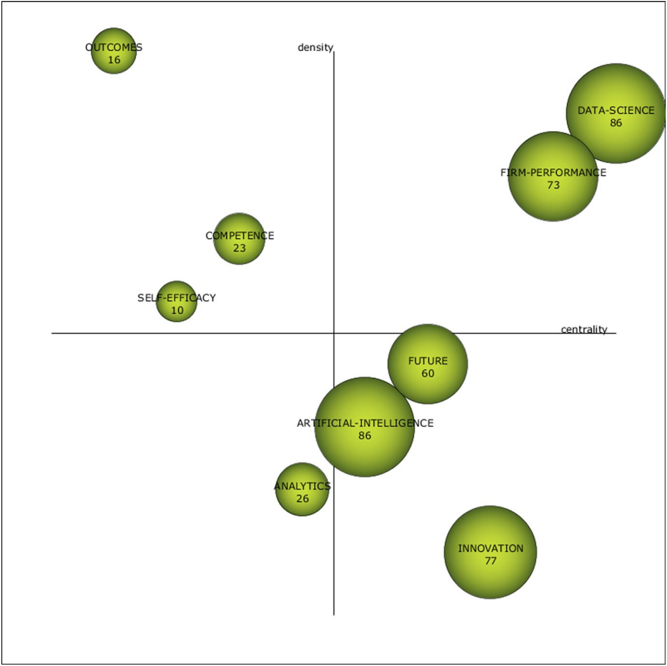
“These aspects are also related to the specialised research theme, self-efficacy, covering subthemes such as acceptance , which refers the acceptance of these new technologies by the organisations, but also by the end-users (Kaše et al. 2019; Martínez-Caro et al. 2018).”
BackgroundIntroduction to Artificial Intelligence
Akerkar, R. A. (2018) · SpringerBriefs in business · doi:10.1007/978-3-319-97436-1_1 · Cited by 112
Sustainable Skills for the World of Work in the Digital Age
Sousa, M. J., & Wilks, D. (2018) · Systems Research and Behavioral Science · doi:10.1002/sres.2540 · Cited by 107 · cited 3×
“In addition, Sousa and Wilks (2018) state that critical and technological disruptive competencies are needed to obtain sustainable employability.”
BackgroundInfluentialDigitally-Powered Human Resource Management: Skills and Roles in the Digital Era
Mazurchenko, A., & Maršíková, K. (2019) · Acta Informatica Pragensia · doi:10.18267/j.aip.125 · Cited by 106 · cited 1×
“People who use social media for recruitment need to know how a social network is used and what kind of data can be obtained, as well as understand the principles of the social network (Mazurchenko and Maršíková 2019).”
BackgroundSkill development in reverse mentoring: Motivational processes of mentors and learners
Kaše, R., Saksida, T., & Mihelič, K. K. (2018) · Human Resource Management · doi:10.1002/hrm.21932 · Cited by 103
Pedagogical learnings for management education: Developing creativity and innovation
Kerr, C., & Lloyd, C. (2008) · Journal of Management & Organization · doi:10.5172/jmo.837.14.5.486 · Cited by 101
The future African workplace: The use of collaborative robots in manufacturing
Calitz, A. P., Poisat, P., & Cullen, M. (2017) · SA Journal of Human Resource Management · doi:10.4102/sajhrm.v15i0.901 · Cited by 99 · cited 1×
“…and learning environments are critical for organisations to operationalise knowledge and skills, such as virtual learning environments (VLEs) (Richert et al. 2016), augmented reality (Azuma 1997) and collaborative environments between cobots (service robots) and humans (Calitz et al. 2017).”
BackgroundLabor market risks of industry 4.0, digitization, robots and AI
Rajnai, Z., & Kocsis, I. (2017) · 2017 IEEE 15th International Symposium on Intelligent Systems and Informatics (SISY) · doi:10.1109/sisy.2017.8080580 · Cited by 94 · cited 2×
“This consideration does not only influence production, but also the occupational dimension, employment dynamics, working conditions, education systems and the demand for competencies and national policies (Benešová and Tupa 2017; Rajnai and Kocsis 2017).”
BackgroundCollaborative Approaches Needed to Close the Big Data Skills Gap
Miller, S. (2014) · Journal of Organization Design · doi:10.7146/jod.9823 · Cited by 88 · cited 2×
“In addition, technical competencies are required, such as knowledge and advanced skills in mathematics and statistics, machine learning, predictive analytics, decision-making models and data visualisation, which must be incorporated into training programmes (Miller 2014).”
BackgroundReconsidering Boundaries: Human Resource Management in a Networked World
Swart, J., & Kinnie, N. (2014) · Human Resource Management · doi:10.1002/hrm.21551 · Cited by 84 · cited 1×
“Twenty-first century developments and challenges such as big data and network activities have major implications for HRM models beyond the mere single employer–employee relationship (Swart and Kinnie 2014).”
BackgroundA contingent approach to the role of human capital and competencies on firm strategy
Díaz-Fernández, M., Cabrales, Á. L., & Cabrera, R. V. (2014) · BRQ Business Research Quarterly · doi:10.1016/j.brq.2014.01.002 · Cited by 76 · cited 1×
“Innovation is carried out by people, so human capital becomes a key competitive factor (Díaz-Fernández et al. 2014; van Laar et al. 2017), according to the resource-based view (RBV) (Barney 1991).”
BackgroundSelf-citationArtificial Intelligence in HRM: An Experimental Study of an Expert System
LAWLER, J. J., & Elliot, R. (1996) · Journal of Management · doi:10.1016/s0149-2063(96)90013-6 · Cited by 74
Assessing the relevance of digital competences on business graduates’ suitability for a job
Cañadillas, I. P., Abando, J. C., & García, J. P. (2019) · Industrial and Commercial Training · doi:10.1108/ict-09-2018-0076 · Cited by 52 · cited 1×
“In this vein, Periáñez-Cañadillas et al. (2019) find that candidates’ digital competencies of communication, content creation, safety and problem solving are determinant in the selection decision.”
BackgroundIbata-Arens, K. C. (2012) · Administrative Sciences · doi:10.3390/admsci2010001 · Cited by 50 · cited 1×
“Preparing new generations with skills such as creativity and technical capabilities to compete in the twenty-first century is a significant concern for country innovation systems, so education policies must be integrated in the national innovation strategy (Ibata-Arens 2012).”
BackgroundAn Open and Data-driven Taxonomy of Skills Extracted from Online Job AdvertsPreprint
Djumalieva, J., & Sleeman, C. (n.d.) · RePEc: Research Papers in Economics · Cited by 44
A classification of resources for employee-based value creation and a future research agenda
Boukis, A., & Kabadayi, S. (2020) · European Management Journal · doi:10.1016/j.emj.2020.05.001 · Cited by 39 · cited 1×
“Indeed, organisations are trying to determine what role their resource types play in value creation in this new digital context (Boukis and Kabadayi 2020).”
BackgroundThe Historical Context of Talent Management
Cappelli, P. H., & Keller, J. (2017) · Oxford University Press eBooks · doi:10.1093/oxfordhb/9780198758273.013.21 · Cited by 35 · cited 2×
“Apple or Alphabet) are predominantly from these countries, and have traditionally focused on underlying competency sets in assessing their employees’ readiness (Cappelli and Keller 2017).”
BackgroundTwenty‐first century leadership: international imperatives
Sheppard, J., Sarros, J. C., & Santora, J. C. (2013) · Management Decision · doi:10.1108/00251741311301812 · Cited by 34 · cited 3×
“In addition, requisite leadership competencies such as decisiveness, proactivity, innovative decision making and intelligent stewardship are aimed at obtaining agile, flexible and crosscultural responses to lead effectively and ethically in a changing and globalised environment (Sheppard et al. 2013).”
BackgroundTraining human resource champions for the twenty-first century
Dyer, W. G. (1999) · Human Resource Management · doi:10.1002/(sici)1099-050x(199922)38:2<119::aid-hrm6>3.0.co;2-l · Cited by 33 · cited 1×
“This new reality demands that companies seek to fill the gaps in their dynamic capacities (Eisenhardt and Martin 2000) to adapt and survive in the new competitive reality, combining real and virtual global information and IT management knowledge (Hecklau et al. 2016).”
BackgroundTalent Management for the Future of Work
Gallardo-Gallardo, E., & Collings, D. G. (2021) · Emerald Group Publishing Limited eBooks · doi:10.1108/978-1-80071-298-020211006 · Cited by 33 · cited 3×
“In effect, according to Gallardo-Gallardo and Collings (2021), technological changes have reduced competency cycles; skills that were crucial a decade ago are no longer valuable, while many new competencies will emerge to meet the needs of tomorrow’s jobs, and talent needs will have to be forecast.”
BackgroundInfluentialCompetencies in practice: An interview with Hanneke C. Frese
Hayton, J. C., & McEvoy, G. M. (2006) · Human Resource Management · doi:10.1002/hrm.20126 · Cited by 28 · cited 2×
“A competency describes a combination of skills, attitudes and behaviours that an individual possesses or that the organisation expects of a particular employee (Hayton and McEvoy 2006).”
BackgroundHuman resource management, strategic and international perspectives
O’Sullivan, N. (2018) · Action Learning Research and Practice · doi:10.1080/14767333.2018.1464750 · Cited by 25 · cited 5×
“The human resource management practices most influenced by technology at the moment are: recruitment, training and development, resource allocation, internal communications and talent management (Malik et al. 2020a, b).”
BackgroundInfluentialCukier, W. (2019) · Journal of Global Responsibility · doi:10.1108/jgr-11-2018-0079 · Cited by 24
Customized executive learning: a business model for the twenty‐first century
Anderson, J., & van Wijk, G. (2010) · Journal of Management Development · doi:10.1108/02621711011046512 · Cited by 18 · cited 1×
“In addition, numerous studies published in this period are related to different education programmes addressing business management, health management and technology management, and emphasising value creation-learning (Anderson 2010; Huston 2008; Kerr and Lloyd 2008).”
BackgroundAnalyzing Social Media Data for Recruiting Purposes
Böhmová, L., & Chudán, D. (2018) · Acta Informatica Pragensia · doi:10.18267/j.aip.111 · Cited by 15 · cited 1×
“For example, recruiting (i.e. e-recruiting) through social networks is already an innovative and cost-efficient reality (Böhmová and Chudán 2018).”
BackgroundInformation interaction capabilities: conceptualisation and instrument development
Sun, L., Li, L., Yue, C., & Kong, Y. (2016) · Technology Analysis and Strategic Management · doi:10.1080/09537325.2016.1227065 · Cited by 9 · cited 1×
“Competence is seen for the first time as a separate topic, with a steadily increasing number of authors studying the requisite competencies needed to face the artificial intelligence era, such as analytics and information interaction (Marler and Boudreau 2017; Sun et al. 2017).”
BackgroundEisenhardt, K. M., & Martin, J. A. (2000) · Strategic Management Journal · doi:10.1002/1097-0266(200010/11)21:10/11
Research works printed but not linked: 11
- Cantoni F, Mangia G, Mangia G (2018) Digital revolution equals digital competencies? What we expect for workers' competencies in Industry 4.0, pp 247-258. https:// doi. org/ 10. 4324/ 97804 29425 288-21 · doi:10.4324/9780429425288-21
- Dewhurst M, Willmott P (2014) Manager and machine: the new leadership equation. McKinsey Q. 4:76-86
- Fenech R, Baguant P, Ivanov D (2019) The changing role of human resource management in a era of digital transformation. J Manag Inf Decis Sci 22(2):166–175
- Garfield E (1994) Scientography mapping the tracks of science. Curr Contents Soc Behav Sci 7:5-10
- Gehrke L, Bonse R, Henke M (2016) Towards a management framework for the digital transformation of logistics and manufacturing. In: 23rd EurOMA conference, interaction
- Harkins AM (2008) Leapfrog principles and practices: core components of education 3.0 and 4.0. Futures Res Q 24(1):19-31
- Malik A, Budhwar P, Patel C, Srikanth NR (2020b) May the bots be with you! Delivering HR cost-effec- tiveness and individualised employee experiences in an MNE. Int J Hum Resour Manag. https:// doi. org/ 10. 1080/ 09585 192. 2020b. 18595 82 · doi:10.1080/09585192.2020b.1859582
- Nonaka I, Takeuchi H, Umemoto K (1996) A theory of organizational knowledge creation. Int J Technol Manag 11(7-8):833-845. https:// doi. org/ 10. 1504/ IJTM. 1996. 025472 · doi:10.1504/ijtm.1996.025472
- Rowley C, Warner M (2007) The management of human resources in the Asia pacific: into the 21st cen- tury. Manag Revue 18:374-391. https:// doi. org/ 10. 2307/ 41791 360 · doi:10.2307/41791360
- Ruël H, Bondarouk T, Looise JK (2004) E-HRM: innovation or irritation. An explorative empirical study in five large companies on web-based HRM. Manag Revue 15(3):364-380. https:// doi. org/ 10. 2307/ 41783 479 · doi:10.2307/41783479
- Wasserman T (2013) Oxford english dictionary adds "Crowdsourcing," "Big Data." Mashable. https:// masha ble. com/ 2013/ 06/ 13/ dicti onary-new-words-2013/? europe= true
Cited by
Kanbach, D. K., Heiduk, L., Blueher, G., Schreiter, M., & Lahmann, A. (2024) · Review of Managerial Science · doi:10.1007/s11846-023-00696-z · Cited by 454
“The use of AI is transforming the required skillset of employees (Santana and Díaz-Fernández 2022).”
Generative Artificial Intelligence: Implications and Considerations for Higher Education Practice
Farrelly, T., & Baker, N. (2023) · Education Sciences · doi:10.3390/educsci13111109 · Cited by 414
AI-driven business model innovation: A systematic review and research agenda
Jorzik, P., Klein, S. P., Kanbach, D. K., & Kraus, S. (2024) · Journal of Business Research · doi:10.1016/j.jbusres.2024.114764 · Cited by 176
Balanced scorecard: trends, developments, and future directions
Kumar, S., Lim, W. M., Sureka, R., Jabbour, C. J. C., & Bamel, U. K. (2023) · Review of Managerial Science · doi:10.1007/s11846-023-00700-6 · Cited by 253
Roppelt, J. S., Kanbach, D. K., & Kraus, S. (2024) · Technology in Society · doi:10.1016/j.techsoc.2023.102443 · Cited by 168
Metadata
- Authors
- Santana, M., & Díaz-Fernández, M.
- Affiliations
- Universidad Pablo de Olavide (ES)
- Corresponding author
- Santana, Mónica
- Venue
- Review of Managerial Science
- Published
- 2022-12-29
- Volume
- 17
- Issue
- 6
- Pages
- 1971-2004
- ISSN
- 1863-6683 (ISSN-L)
- 1863-6691
- OpenAlex
- W4313242364
- Cited by
- 105
- References
- 91
- Citations by year
- 2026: 26 · 2025: 40 · 2024: 23 · 2023: 16
- FWCI
- 18.65
- Type
- journal article
- Language
- en
- Open access
- hybrid
- doi.org
- Licence
- cc-by
- creativecommons.org/licenses/by/4.0 (tdm)
- creativecommons.org/licenses/by/4.0 (vor)
- Locations
- Review of Managerial Science (publishedVersion, cc-by)
- RIO (Universidad Pablo de Olavide) (submittedVersion, cc-by)
- RePEc: Research Papers in Economics (submittedVersion)
- Funders
- andalusian government (PAIDI SEJ602)
- Ministerio de Ciencia, Innovación y Universidades (MCI/AEI/10.13039/501100011033)
- Universidad Pablo de Olavide
- Topics
- Social Sciences › Business, Management and Accounting › Organizational Behavior and Human Resource Management › AI and HR Technologies
- Social Sciences › Business, Management and Accounting › Organizational Behavior and Human Resource Management › Competency Development and Evaluation
- Physical Sciences › Computer Science › Artificial Intelligence › Artificial Intelligence Applications
- Keywords
- artificial intelligence, AI competencies, digital skills, labor force, human resource management, emerging competencies, research agenda
About these checks
Registry, retraction, Cites and statistics results are computed, not judged, with one exception: a printed reference that no index lists is read once by a model before it counts as a citation error. Claims are extracted by a model and kept only when their quote appears verbatim in the text; each cited source is then checked, with a model’s help, for whether it says what the claim relies on. Those verdicts can be wrong — read the claim’s quote and the cited source before relying on one.
Statistics and arithmetic are recomputed, not judged.
Confidence bands are shown only for fields calibrated on our annotated test set. None is calibrated yet, so no band is shown.
What counts as a claim ›How we measure confidence ›How we check this ›
Are you an author, or do you see a problem with this page? Request a review
Data sources
Bibliographic data: Semantic Scholar, OpenAlex, Crossref.
Contains information from the Semantic Scholar Academic Graph Datasets, made available under the ODC Attribution License (ODC-BY 1.0).
Semantic Scholar’s data is described in: Kinney, R., et al. (2023). The Semantic Scholar Open Data Platform. arXiv:2301.10140.
