

Revelations About Carotid Body Function Through its Pathological Role in Resistant Hypertension
Open accessThe DOI matches its Crossref record; 73 of the 73 references it cites were found in a registry or an index.
Abstract
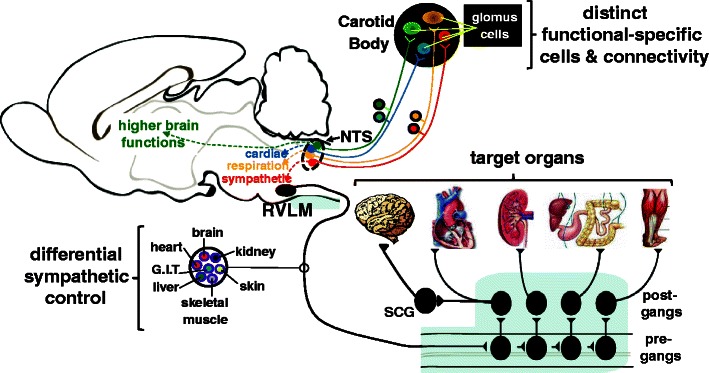
Much recent attention has been given to the carotid body because of its potential role in cardiovascular disease states. One disease, neurogenic hypertension, characterised by excessive sympathetic activity, appears dependent on carotid body activity that may or may not be accompanied by sleep-disordered breathing. Herein, we review recent literature suggesting that the carotid body acquires tonicity in hypertension. We predict that carotid glomectomy will be a powerful way to temper excessive sympathetic discharge in diseases such as hypertension. We propose a model to explain that signalling from the 'hypertensive' carotid body is tonic, and hypothesise that there will be a sub-population of glomus cells that channel separately into reflex pathways controlling sympathetic motor outflows.
Overview
The claims and statistics of this paper haven’t been checked yet.
Free: it reads the open-access text and checks the first 5 claims that cite a source we can check. Create a free account to check every claim.
Integrity signals
Registry
Cites
Statistics
Figures
Verification
Claims the paper makes
The claims and statistics of this paper haven’t been checked yet.
Free: it reads the open-access text and checks the first 5 claims that cite a source we can check. Create a free account to check every claim.
Claims other papers make about this one
Each is checked against this paper’s own text: does it say what the citing paper says it does?
The check wasn’t confident either way, so it gives no verdict — never disputed.
In the citing paper
“The downregulation of GLP-1R expression may represent a significant contributory factor to the co-occurrence of hypertension and hyperglycemia.466”
From Glucagon-like peptide-1 receptor: mechanisms and advances in therapy (2024) · cites this paper as [466]
Experimental — accuracy not yet measured
Self-check
Percentages, sums and reported differences re-computed from the paper’s own numbers.
The self-check needs the paper’s full text.
Citations
Cites
Global burden of hypertension: analysis of worldwide data
Kearney, P. M., Whelton, M., Reynolds, K., Muntner, P., Whelton, P. K., & He, J. (2005) · The Lancet · doi:10.1016/s0140-6736(05)17741-1 · Cited by 8,594
Calhoun, D. A., Jones, D., Textor, S., Goff, D. C., Murphy, T. P., Toto, R. D., White, A., Cushman, W. C., White, W., Sica, D., et al. (2008) · Circulation · doi:10.1161/circulationaha.108.189141 · Cited by 2,237
Krum, H., Schlaich, M., Whitbourn, R., Sobotka, P. A., Sadowski, J., Bartus, K., Kapelak, B., Walton, A., Sievert, H., Thambar, S., et al. (2009) · The Lancet · doi:10.1016/s0140-6736(09)60566-3 · Cited by 2,108
Self-citationSPLANCHNICECTOMY FOR ESSENTIAL HYPERTENSION: RESULTS IN 1,266 CASES
Smithwick, R. H. (1953) · Journal of the American Medical Association · doi:10.1001/jama.1953.03690160001001 · Cited by 478
Heusser, K., Tank, J., Engeli, S., Diedrich, A., Menne, J., Eckert, S., Peters, T., Sweep, F. C. G. J., Haller, H., Pichlmaier, A. M., et al. (2010) · Hypertension · doi:10.1161/hypertensionaha.109.140665 · Cited by 433
Carotid chemoreceptors, systemic blood pressure, and chronic episodic hypoxia mimicking sleep apnea
Fletcher, E. C., Lesske, J., Behm, R., Miller, C. C., Stauss, H., & Unger, T. (1992) · Journal of Applied Physiology · doi:10.1152/jappl.1992.72.5.1978 · Cited by 432
Narkiewicz, K., van de Borne, P. J. H., Montano, N., Dyken, M. E., Phillips, B. G., & Somers, V. K. (1998) · Circulation · doi:10.1161/01.cir.97.10.943 · Cited by 426
Self-citationPeripheral chemoreceptors and cardiovascular regulation
Marshall, J. M. (1994) · Physiological Reviews · doi:10.1152/physrev.1994.74.3.543 · Cited by 419
Sympathetic nerve activity in obstructive sleep apnoea
Narkiewicz, K., & Somers, V. K. (2003) · Acta Physiologica Scandinavica · doi:10.1046/j.1365-201x.2003.01091.x · Cited by 416
Self-citation
Research works printed but not linked: 1
- Przybylski J Trzebski A Czyzewski T Responses to hyperoxia, hypoxia, hypercapnia and almitrine in spontaneously hypertensive rats Bull Eur Physiopathol Respir Clin Respir Physiol 1982 18 145 54
Cited by
Glucagon-like peptide-1 receptor: mechanisms and advances in therapy
Zheng, Z., Zong, Y., Ma, Y., Tian, Y., Pang, Y., Zhang, C., & Gao, J. (2024) · Signal Transduction and Targeted Therapy · doi:10.1038/s41392-024-01931-z · Cited by 1,036
“466 One study proposed a novel mechanism wherein postprandial GLP-1 release, under normal physiological conditions, inhibits the activity of chemosensory cells in the carotid body, thereby counteracting sympathetic excitability mediated by elevated blood glucose or insulin levels.”
BackgroundCarotid body chemoreceptors: physiology, pathology, and implications for health and disease
Iturriaga, R., Alcayaga, J., Chapleau, M. W., & Somers, V. K. (2021) · Physiological Reviews · doi:10.1152/physrev.00039.2019 · Cited by 196
Translational neurocardiology: preclinical models and cardioneural integrative aspects
Ardell, J. L., Andresen, M. C., Armour, J. A., Billman, G. E., Chen, P. ‐., Foreman, R. D., Herring, N., O'Leary, D. S., Sabbah, H. N., Schultz, H. D., et al. (2016) · The Journal of Physiology · doi:10.1113/jp271869 · Cited by 170
“Recent studies have demonstrated that the peripheral chemoreceptors, particularly those located in the carotid bodies, play a key role in increasing sympathetic drive in both hypertension and HF (Paton et al. 2013; Schultz et al. 2015b).”
BackgroundTASK channels in arterial chemoreceptors and their role in oxygen and acid sensing
Buckler, K. J. (2015) · Pflügers Archiv - European Journal of Physiology · doi:10.1007/s00424-015-1689-1 · Cited by 115
“Carotid body dysfunction A number of clinical conditions have been associated with chemoreceptor dysfunction including sleep apnoea, sympathetic over activity in heart failure and hypertension [1, 77, 99, 100, 111, 116].”
BackgroundChronic interfacing with the autonomic nervous system using carbon nanotube (CNT) yarn electrodes
McCallum, G. A., Sui, X., Qiu, C., Marmerstein, J., Zheng, Y., Eggers, T. E., Hu, C., Dai, L., & Durand, D. M. (2017) · Scientific Reports · doi:10.1038/s41598-017-10639-w · Cited by 102
Intracranial mechanisms for preserving brain blood flow in health and disease
McBryde, F. D., Malpas, S. C., & Paton, J. F. R. (2016) · Acta Physiologica · doi:10.1111/apha.12706 · Cited by 100
“Ablation or blockade of the carotid body has recently been identified as a promising potential treatment target for hypertension (Paton et al. 2013a,b), producing substantial reductions in both sympathetic outflow and arterial pressure in spontaneously hypertensive rats (Abdala et al. 2012, McBryde…”
BackgroundSelf-citationSacramento, J. F., Ribeiro, M. J., Rodrigues, T., Olea, E., Melo, B. F., Guarino, M. P., Fonseca-Pinto, R., Ferreira, C. R., Coelho, J. C., Obeso, A., et al. (2016) · Diabetologia · doi:10.1007/s00125-016-4133-y · Cited by 63
“This is in accordance with a recent proposal that carotid glomectomy may represent a powerful way to prevent excessive sympathetic discharge in diseases such as hypertension [36, 37].”
ResultAccorsi‐Mendonça, D., Almado, C. E. L., Bonagamba, L. G. H., Castania, J. A., Moraes, D. J. A., & Machado, B. H. (2015) · Journal of Neuroscience · doi:10.1523/jneurosci.4598-14.2015 · Cited by 65
“, 2014), which can be induced by increased peripheral chemosensitivity or carotid body tonicity as described in other hypertensive models, such as spontaneously hypertensive rats and heart failure (Abdala et al., 2012; McBryde et al., 2013; Ortega-Sáenz et al., 2013; Paton et al., 2013; Marcus et al., 2014).”
BackgroundChemoreception and neuroplasticity in respiratory circuits
Barnett, W. H., Abdala, A. P., Paton, J. F. R., Rybak, I. A., Zoccal, D. B., & Molkov, Y. I. (2016) · Experimental Neurology · doi:10.1016/j.expneurol.2016.05.036 · Cited by 66
“This is indirectly supported by multiple experimental studies (see (Paton et al., 2013a) 682 for review) and emphasizes the importance of carotid bodies as a possible therapeutic 683 target for treating neurogenic hypertension (McBryde et al. 2013; Paton et al., 2013b).”
Self-citationObstructive Sleep Apnea and Vascular Diseases
Baltzis, D., Bakker, J. P., Patel, S. R., & Veves, A. (2016) · Comprehensive physiology · doi:10.1002/cphy.c150029 · Cited by 61
Siński, M., Lewandowski, J., Przybylski, J., Zalewski, P., Symonides, B., Abramczyk, P., & Gaciong, Z. A. (2014) · Hypertension Research · doi:10.1038/hr.2014.91 · Cited by 62
Evolution and physiology of neural oxygen sensing
Costa, K. M., Accorsi-Mendonça, D., Moraes, D. J. A., & Machado, B. H. (2014) · Frontiers in Physiology · doi:10.3389/fphys.2014.00302 · Cited by 60
Macías, D., Fernández‐Agüera, M. C., Bonilla, V., & López‐Barneo, J. (2014) · EMBO Molecular Medicine · doi:10.15252/emmm.201404153 · Cited by 55
“CB inhibition produces marked effects on blood pressure in hypertensive rats (Paton et al , 2013), and CB denervation has been proposed as a therapeutic strategy to combat chronic neurogenic hypertension (McBryde et al , 2013).”
Carotid body chemosensitivity: early biomarker of dysmetabolism in humans
Cunha-Guimaraes, J. P., Guarino, M. P., Timóteo, A. T., Caires, I., Sacramento, J. F., Ribeiro, M. J., Selas, M., Santiago, J. C. P., Carmo, M. M., & Conde, S. V. (2020) · European Journal of Endocrinology · doi:10.1530/eje-19-0976 · Cited by 49
Consequences of Peripheral Chemoreflex Inhibition with Low-Dose Dopamine in Humans
Niewiński, P., Tubek, S., Banasiak, W., Paton, J. F. R., & Ponikowski, P. P. (2014) · The Journal of Physiology · doi:10.1113/jphysiol.2013.266858 · Cited by 49
“This could be due to the postulated heterogeneity of the glomus cells (Paton et al. 2013) and/or neurotransmitters responsible for ventilatory and haemodynamic arms of the peripheral chemoreflex.”
BackgroundInfluentialSelf-citationCarotid sinus denervation ameliorates renovascular hypertension in adult Wistar rats
Pijacka, W., McBryde, F. D., Marvar, P. J., Lincevicius, G. S., Abdala, A. P., Woodward, L., Li, D., Paterson, D. J., & Paton, J. F. R. (2016) · The Journal of Physiology · doi:10.1113/jp272708 · Cited by 47
Self-citationRole of Carotid Body in Intermittent Hypoxia-Related Hypertension
Iturriaga, R., Oyarce, M. P., & Dias, A. C. R. (2017) · Current Hypertension Reports · doi:10.1007/s11906-017-0735-0 · Cited by 46
Brognara, F., Felippe, I. S. A., Salgado, H. C., & Paton, J. F. R. (2020) · Cardiovascular Research · doi:10.1093/cvr/cvaa250 · Cited by 40
“Via reflex circuitry this tone powers the generation of excessive sympathetic activity, which is associated with the development and maintenance of disease, and contributes to end-organ damage.(2,5,7,8) The mechanisms by which hyperreflexia and aberrant tone are generated are not fully understood but include: upregula…”
BackgroundSelf-citationLimberg, J. K., Johnson, B. D., Holbein, W. W., Ranadive, S. M., Mozer, M. T., & Joyner, M. J. (2015) · Journal of Applied Physiology · doi:10.1152/japplphysiol.00723.2015 · Cited by 38
Li, A., Roy, S. H., & Nattie, E. (2016) · The Journal of Physiology · doi:10.1113/jp272199 · Cited by 32
“…sympathetic vascular tone (Trzebski & Kubin, 1981; Trzebski et al. 1982; Somers et al. 1988; Zoccal et al. 2009; Sinski et al. 2012) and that denervation of the carotid body can significantly lower ABP in patients with persistent hypertension and in SHRs (Abdala et al. 2012; Paton et al. 2013b).”
BackgroundPijacka, W., Katayama, P. L., Salgado, H. C., Lincevicius, G. S., Campos, R. R., McBryde, F. D., & Paton, J. F. R. (2018) · The Journal of Physiology · doi:10.1113/jp275487 · Cited by 31
“Introduction The carotid bodies have recently emerged as a promising therapeutic target for treating hypertension (Paton et al. 2013; Ratcliffe et al. 2014; Narkiewicz et al. 2016; Pijacka et al. 2016) and other cardiovascular diseases such as heart failure (Schultz & Marcus, 2012; Niewinski et al.”
BackgroundSelf-citationCarotid chemoreceptor control of muscle sympathetic nerve activity in hypobaric hypoxia
Fisher, J. P., Flück, D., Hilty, M. P., & Lundby, C. (2017) · Experimental Physiology · doi:10.1113/ep086493 · Cited by 30
“The differential effects of dopamine on the ventilatory and MSNA responses described might be attributable to the actions of distinct populations of glomus cells (Paton et al. 2013).”
BackgroundEfficacy of Electrical Baroreflex Activation Is Independent of Peripheral Chemoreceptor Modulation
Heusser, K., Thöne, A., Lipp, A., Menne, J., Beige, J., Reuter, H., Hoffmann, F., Halbach, M., Eckert, S., Wallbach, M., et al. (2019) · Hypertension · doi:10.1161/hypertensionaha.119.13925 · Cited by 30
Self-citationChronic Interactions Between Carotid Baroreceptors and Chemoreceptors in Obesity Hypertension
Lohmeier, T. E., Iliescu, R., Tudorancea, I., Cazan, R., Cates, A. W., Georgakopoulos, D., & Irwin, E. D. (2016) · Hypertension · doi:10.1161/hypertensionaha.116.07232 · Cited by 27
“This would increase blood flow and suppress chemoreceptor activation by raising PaO 2 locally in the vicinity of the glomus cells or by reducing carotid body hyperactivity by other flow-dependent mechanisms.(1) Given that metabolic rate is increased in obesity, the finding of increased respiratory rate in this model o…”
BackgroundResultGiannoni, A., Borrelli, C., Gentile, F., Sciarrone, P., Spießhöfer, J., Piepoli, M. F., Richerson, G. B., Floras, J. S., Coats, A. J. S., Javaheri, S., et al. (2023) · European Journal of Heart Failure · doi:10.1002/ejhf.2819 · Cited by 28
Segiet, A., Smykiewicz, P., Kwiatkowski, P., & Żera, T. (2018) · Cytokine · doi:10.1016/j.cyto.2018.07.003 · Cited by 30
Hering, D., Trzebski, A., & Narkiewicz, K. (2017) · Polskie Archiwum Medycyny Wewnętrznej · doi:10.20452/pamw.3971 · Cited by 32
Self-citationMoraes, D. J. A., Machado, B. H., & Paton, J. F. R. (2015) · The Journal of Physiology · doi:10.1113/jp270423 · Cited by 26
“The Journal of Physiology C© 2015 The Physiological Society (Abdala et al. 2012; Paton et al. 2013; Prabhakar, 2013).”
BackgroundSelf-citationAtanasova, D., & Lazarov, N. (2014) · Respiratory Physiology & Neurobiology · doi:10.1016/j.resp.2014.06.016 · Cited by 24
Evaluating the carotid bodies and renal nerves as therapeutic targets for hypertension
McBryde, F. D., Hart, E. C., Ramchandra, R., & Paton, J. F. R. (2016) · Autonomic Neuroscience · doi:10.1016/j.autneu.2016.08.002 · Cited by 28
“…the carotid bodies in order to reduce sympathetic overactivity in cardiovascular disease has attracted considerable scientific interest (Andrade et al., 2015; Kara et al., 2003; Niewinski et al., 2013; Paton et al., 2013a; Paton et al., 2013b; Ratcliffe et al., 2014; Schultz et al., 2015).”
Self-citationCarotid Body and Metabolic Syndrome: Mechanisms and Potential Therapeutic Targets
Kim, L. J., & Polotsky, V. Y. (2020) · International Journal of Molecular Sciences · doi:10.3390/ijms21145117 · Cited by 24
“The role of the CB in the regulation of blood pressure is also supported by evidence from studies using different techniques of CB activity ablation [78].”
BackgroundMethodCarotid Body Ablation: a New Target to Address Central Autonomic Dysfunction
Iturriaga, R. (2018) · Current Hypertension Reports · doi:10.1007/s11906-018-0849-z · Cited by 22
Cooperative Oxygen Sensing by the Kidney and Carotid Body in Blood Pressure Control
Patinha, D., Pijacka, W., Paton, J. F. R., & Koeners, M. P. (2017) · Frontiers in Physiology · doi:10.3389/fphys.2017.00752 · Cited by 24
“Importantly, the afferent nerves of the different sub-populations of glomus cells may project into compartmentalized sites of the nucleus tractus solitarii that regulate cardiac, respiratory, sympathetic as well has higher brain functions (Paton et al., 2013).”
BackgroundInfluentialSelf-citationGanesh, T., Estrada, M., Yeger, H., Duffin, J., & Cheng, H. M. (2017) · Scientific Reports · doi:10.1038/s41598-017-06983-6 · Cited by 20
Purinergic plasticity within petrosal neurons in hypertension
Moraes, D. J. A., da Silva, M. P., Spiller, P. F., Machado, B. H., & Paton, J. F. R. (2018) · American Journal of Physiology-Regulatory, Integrative and Comparative Physiology · doi:10.1152/ajpregu.00142.2018 · Cited by 16
Self-citationBaby, S. M., Zaidi, F. N., Hunsberger, G. E., Sokal, D. M., Gupta, I., Conde, S. V., Chew, D. J., Rall, K., & Coatney, R. W. (2022) · Experimental Physiology · doi:10.1113/ep090584 · Cited by 15
“…as reported in various pathophysiological conditions, such as hypertension, heart failure, sleep apnoea and more recently in metabolic disorders (Paton et al., 2013), engages the sympatho-adrenal axis-mediated sympathetic outflow, which in turn exacerbates the reflex responsiveness of the CBCs…”
BackgroundŻera, T., Paleczny, B., Siński, M., Conde, S. V., Narkiewicz, K., Ponikowski, P. P., Paton, J. F. R., & Niewiński, P. (2025) · The Journal of Physiology · doi:10.1113/jp285081 · Cited by 15
“…of the arterial chemoreflex would also explain selective augmentation of sympathetic outflow seen in hypertension (McBryde et al., 2017; Paton, Sobotka et al., 2013; Pijacka et al., 2016; Sinski et al., 2012), and highly selective silencing of sympathetics without significant effect on…”
Self-citationThe inevitability of ATP as a transmitter in the carotid body
Bardsley, E. N., Pen, D. K., McBryde, F. D., Ford, A. P. D. W., & Paton, J. F. R. (2021) · Autonomic Neuroscience · doi:10.1016/j.autneu.2021.102815 · Cited by 15
Self-citationLakshman, R., Spiroski, A., McIver, L. B., Murphy, M. P., & Giussani, D. A. (2021) · Hypertension · doi:10.1161/hypertensionaha.121.17926 · Cited by 12
Mozer, M. T., Holbein, W. W., Joyner, M. J., Curry, T. B., & Limberg, J. K. (2016) · Physiological Reports · doi:10.14814/phy2.12859 · Cited by 11
“The carotid body chemoreceptors have recently been identified as a potential therapeutic target for sympathetically mediated conditions, such as heart failure and hypertension (Paton et al. 2013a,b).”
BackgroundZubcevic, J. A., Baker, A., & Martyniuk, C. J. (2017) · Physiological Genomics · doi:10.1152/physiolgenomics.00010.2017 · Cited by 11
“structures of the brain stem and hypothalamus (4, 43, 45).”
Backgroundde Souza, A. M. A., de Menezes, R. C. A., de Abreu, A. R. R., de Araújo, G. R., Costa, D. C., & Chianca, D. A. (2015) · Life Sciences · doi:10.1016/j.lfs.2015.02.007 · Cited by 11
Neurocardiac Axis Physiology and Clinical Applications
Plott, C. F., Harb, T., Arvanitis, M., Gerstenblith, G., Blumenthal, R. S., & Leucker, T. M. (2024) · IJC Heart & Vasculature · doi:10.1016/j.ijcha.2024.101488 · Cited by 15
“[43] The carotid baroreceptor on the other hand primarily attenuates the sympathetic response.”
BackgroundBlood Pressure: Return of the Sympathetics?
Joyner, M. J., & Limberg, J. K. (2016) · Current Hypertension Reports · doi:10.1007/s11906-015-0616-3 · Cited by 12
Volume of carotid bodies and cardiac autonomic function in patients with essential hypertension
Jaźwiec, P., Gać, P., Jurdziak, M., Poręba, M., Mazur, G. J., Sobieszczańska, M. I., & Poręba, R. (2015) · Autonomic Neuroscience · doi:10.1016/j.autneu.2015.03.002 · Cited by 9
“Currently, literature of the topic devotes the highest attention to effects of chronically augmented activity of carotid bodies on the course of heart failure and arterial hypertension (Abdala et al., 2012; Niewiński et al., 2013; Paton et al., 2013; Ponikowski and Banasiak, 2001; Schultz et al., 2013).”
BackgroundInfluentialDevice Therapies for Resistant Hypertension
Hering, D., Schultz, C. J., & Schlaich, M. P. (2016) · Clinical Therapeutics · doi:10.1016/j.clinthera.2016.08.015 · Cited by 11
Self-citationThe Role of Pharmacological Treatment in the Chemoreflex Modulation
Langner-Hetmańczuk, A., Tubek, S., Niewiński, P., & Ponikowski, P. P. (2022) · Frontiers in Physiology · doi:10.3389/fphys.2022.912616 · Cited by 10
Martínez-Barbero, G., García‐Mesa, Y., Cobo, R., Cuendias, P., Martín‐Biedma, B., García‐Suárez, O., Feito, J., Cobo, T., & Vega, J. A. (2023) · International Journal of Molecular Sciences · doi:10.3390/ijms242417161 · Cited by 9
“The study aims to serve as a baseline in future studies of pathologies in which the CB is involved, such as arterial hypertension [3,22,23] or sleep apnea syndrome [24,25].”
BackgroundJohnson, B. D., Peinado, A. B., Ranadive, S. M., Curry, T. B., & Joyner, M. J. (2017) · American Journal of Physiology-Regulatory, Integrative and Comparative Physiology · doi:10.1152/ajpregu.00030.2017 · Cited by 8
Selective denervation of the aortic and carotid baroreceptors in rats
Castania, J. A., Katayama, P. L., Brognara, F., Moraes, D. J. A., Sabino, J. P. J., & Salgado, H. C. (2019) · Experimental Physiology · doi:10.1113/ep087764 · Cited by 8
Jura, M., Garus, M., Krakowska, K., Urban, S., Błaziak, M., Iwanek, G., Zymliński, R., Biegus, J., & Paleczny, B. (2022) · Biomolecules · doi:10.3390/biom12121758 · Cited by 7
“The secondary reflex contains tachycardia and vasodilatation caused by hyperventilation, activating a reflex from the pulmonary stretch receptor (Hering–Breuer reflex), and depends on the magnitude of the increase in ventilation [9].”
BackgroundInfluentialThe effect of hyperoxia on central blood pressure in healthy subjects
Siński, M., Lewandowski, J., Dobosiewicz, A., Przybylski, J., Abramczyk, P., & Gaciong, Z. A. (2016) · Archives of Medical Science · doi:10.5114/aoms.2015.49038 · Cited by 7
Respiratory sympathetic modulation is augmented in chronic kidney disease
Saha, M., Menuet, C., Sun, Q., Burke, P. G. R., Hildreth, C. M., Allen, A. M., & Phillips, J. K. (2019) · Respiratory Physiology & Neurobiology · doi:10.1016/j.resp.2019.02.001 · Cited by 8
“ated SNA (Braga et al., 2006; Moraes et al., 2012; Zoccal et al., 2008), and that increased peripheral chemoreceptor sensitivity contributes to sympathetic over activity and hypertension in SHR rats (Paton et al., 2013b; Tan et al., 2010), we speculate that there may be at least two mechanisms working centrally in the…”
Kulej-Lyko, K., Niewiński, P., Tubek, S., Krawczyk, M., Kosmala, W., & Ponikowski, P. P. (2022) · Frontiers in Physiology · doi:10.3389/fphys.2022.911636 · Cited by 8
Paleczny, B., Seredyński, R., Wyciszkiewicz, M., Nowicka-Czudak, A., Łopusiewicz, W., Adamiec, D., Wiecha, S., Mroczek, D., Chmura, P., Konefał, M., et al. (2021) · Scientific Reports · doi:10.1038/s41598-021-89766-4 · Cited by 7
Janes, T. A., Marques, D. A., Fournier, S., Joseph, V., Soliz, J., & Kinkead, R. (2021) · Frontiers in Physiology · doi:10.3389/fphys.2021.781662 · Cited by 6
“Adapted with permission from Paxinos and Watson (1998).”
Nogueira, V., Alves, J. L. D. B., Fontes, D. A. F., de Oliveira, L. R., de Lucca, W., Tourneur, Y., Wanderley, A. G., da Silva, G. S. F., Leandro, C. G., & Costa‐Silva, J. H. (2018) · Hypertension Research · doi:10.1038/s41440-018-0104-7 · Cited by 6
Sohn, C. S.-E., Chang, J. W.-H., George, B., Chen, S., & Ramchandra, R. (2022) · Journal of Hypertension · doi:10.1097/hjh.0000000000003173 · Cited by 4
“This is characterized by elevated baseline activity (hypertonicity) and exaggerated amplitude of reflex-evoked responses (hyperreflexia) [5,6].”
BackgroundCT angiography of the carotid body: bridging the gap between normal and neoplastic lesions
Zorlu, S. N. Y., Uzun, Ç., Atman, E. D., Ergüden, R. E., & Elhan, A. H. (2025) · British Journal of Radiology · doi:10.1093/bjr/tqaf096 · Cited by 3
“We observed a decrease in CB enhancement in the presence of hypertension and DM, which may be related to vasculop-athy of glomic artery supplying the CB, 19 although these reductions did not reach statistical significance ( P ¼ .099 and P ¼ .168, respectively).”
Intra‐carotid body inter‐cellular communication
Argent, L. P., Bose, A., & Paton, J. F. R. (2022) · Journal of the Royal Society of New Zealand · doi:10.1080/03036758.2022.2079681 · Cited by 4
“…that the increased sympathetic activity associated with hypertension results from carotid body hyperactivity - a combination of hyperreflexia (exacerbated responses to acute stimuli) and aberrant hypertonicity (chronic hyperactivation in the absence of an acute stimuli) (Paton et al. 2013).”
BackgroundSelf-citationRole of the peripheral chemoreceptors in cardiovascular and metabolic control in type 2 diabetes
Limberg, J. K., Ott, E. P., Pipkins, A. M., Lis, E. C., Gonsalves, A. M., Harper, J. L., & Manrique‐Acevedo, C. (2024) · The Journal of Physiology · doi:10.1113/jp286975 · Cited by 3
“This tonic activation has become a recent target for novel therapeutic interventions with the goal of lowering basal chemoreflex activity and attenuating symptoms such as hypertension, dyspnoea and autonomic dysfunction (Narkiewicz et al., 2016; Niewinski et al., 2017; Paton, Sobotka et al., 2013).”
Jaźwiec, P., Gać, P., Poręba, M., Sobieszczańska, M. I., Mazur, G. J., & Poręba, R. (2018) · Journal of the American Society of Hypertension · doi:10.1016/j.jash.2018.04.006 · Cited by 3
Appeasing the Carotid Body After Chronic Intermittent Hypoxia
Paton, J. F. R. (2016) · Hypertension · doi:10.1161/hypertensionaha.116.07377 · Cited by 3
“Important questions remain: why does sensitization occur in the carotid body and what are the molecular mechanisms that cause a sustained afferent drive in sleep-disordered breathing and cardiovascular diseases? Could a single mechanism exist across multiple disease states that explains this aberrant carotid body tone…”
BackgroundSelf-citationGonsalves, A. M., Baker, S. E., Jacob, D. W., Harper, J. L., Manrique‐Acevedo, C., & Limberg, J. K. (2024) · Physiological Reports · doi:10.14814/phy2.70004 · Cited by 2
“…to BP, it has been postulated more recently that sub-populations of glomus cells exist which channel separately into reflex pathways controlling distinct target organs (Paton, Ratcliffe, et al., 2013)—thus chemoreflex-mediated changes in BP may occur independently of changes in ventilation.”
BackgroundInfluentialVasopressin: a possible link between hypoxia and hypertension
Szczepanska‐Sadowska, E. K., & Żera, T. (2022) · Exploration of Medicine · doi:10.37349/emed.2022.00103 · Cited by 2
“There seems to be a selective enhancement of the sympathetic response, with tonically increased activity of the arterial chemoreflex evoked from the carotid bodies as well as increased sensitivity of the chemoreceptors to hypoxic stimuli in hypertension [10, 118, 119].”
BackgroundNovel approaches: targeting sympathetic outflow in the carotid sinus
Hering, D., & Narkiewicz, K. (2023) · Blood Pressure · doi:10.1080/08037051.2023.2232873 · Cited by 2
“One therapeutic approach includes targeting the carotid body, a chemoreceptor organ that is involved in respiratory and cardiovascular control through complex neural pathways [7].”
BackgroundSelf-citationThe Thrill of Success: Central Arterial-Venous Anastomosis for Hypertension
Fudim, M., Stanton, A. V., Sobotka, P. A., Dolan, E., & Krum, H. (2014) · Current Hypertension Reports · doi:10.1007/s11906-014-0497-x · Cited by 2
Self-citationUnderstanding mechanoreflex and metaboreflex interactions – a great challenge
Lis, A., Paleczny, B., & Ponikowska, B. (2021) · Indian Journal of Physiology and Pharmacology · doi:10.25259/ijpp_73_2021 · Cited by 1
Neuromodulation Therapies for Cardiac Disease
Salavatian, S., & Ardell, J. L. (2018) · Elsevier eBooks · doi:10.1016/b978-0-12-805353-9.00129-7 · Cited by 2
Role of the carotid body in metabolic disturbances
Ribeiro, M. J. (2016) · Portuguese National Funding Agency for Science, Research and Technology (RCAAP Project by FCT)
Katayama, P. L. (2018) · Digital Library of Theses and Dissertations (Universidade de São Paulo) · doi:10.11606/t.17.2018.tde-20072018-091306 · Cited by 1
Jura, M., Tubek, S., Reczuch, J., Seredyński, R., Niewiński, P., Protasiewicz, M., Ponikowska, B., & Paleczny, B. (2025) · Biomedicines · doi:10.3390/biomedicines13030611
“This could take the shape of a small-sized stent, increasing carotid body perfusion and/or WSS in that region.”
张, 紫. (2025) · Advances in Clinical Medicine · doi:10.12677/acm.2025.154975
Jura, M., Przybylski, R., Niewiński, P., Sokolski, M., Seredyński, R., Zakliczyńśki, M., Ponikowski, P. P., Biegus, J., & Paleczny, B. (2026) · International Journal of Cardiology · doi:10.1016/j.ijcard.2026.134228
Ahsan, M., Mazhar, S., Zafar, H., Mansoor, H., Nancy, F., Abbas, S. M., Shaikh, H., Khan, D. Z., Khan, A., Zahoor, B., et al. (2026) · Comprehensive physiology · doi:10.1002/cph4.70246
“Interestingly, GLP-1 RAs, which are involved in the simultaneous regulation of blood pressure and blood glucose, are expressed by the carotid body (Paton et al. 2013).”
InfluentialKovbasa, O. O., Карасьова, О., Хіміч, Т. Ю., & Авдєєва, О. В. (2026) · Inter Collegas · doi:10.35339/ic.2026.13.1.kka
Metadata
- Authors
- Paton, J. F. R., Ratcliffe, L., Hering, D., Wolf, J., Sobotka, P. A., & Narkiewicz, K.
- Affiliations
- University of Bristol (GB)
- Gdańsk Medical University (PL)
- Corresponding author
- Paton, Julian F. R.
- Venue
- Current Hypertension Reports
- Published
- 2013-07-05
- Volume
- 15
- Issue
- 4
- Pages
- 273-280
- ISSN
- 1522-6417 (ISSN-L)
- 1534-3111
- PMC
- PMC3712134
- OpenAlex
- W2102749530
- Cited by
- 76
- References
- 73
- Citations by year
- 2026: 1 · 2025: 4 · 2024: 4 · 2023: 3 · 2022: 7 · 2021: 7 · 2020: 2 · 2019: 4 · 2018: 8 · 2017: 8 · 2016: 16 · 2015: 6 · 2014: 6
- FWCI
- 1.13
- Type
- journal article
- Language
- en
- Open access
- hybrid
- doi.org
- Locations
- Current Hypertension Reports (publishedVersion, cc-by)
- Europe PMC (PubMed Central) (publishedVersion, cc-by-nc)
- PubMed Central (publishedVersion, cc-by-nc)
- PubMed (publishedVersion)
- Explore Bristol Research (submittedVersion)
- Funders
- British Heart Foundation (RG/12/6/29670)
- Fundacja na rzecz Nauki Polskiej (TEAM/2008‐2, TEAM/2008-2/5)
- Topics
- Life Sciences › Neuroscience › Endocrine and Autonomic Systems › Neuroscience of respiration and sleep
- Health Sciences › Medicine › Cardiology and Cardiovascular Medicine › Blood Pressure and Hypertension Studies
- Health Sciences › Medicine › Cardiology and Cardiovascular Medicine › Heart Rate Variability and Autonomic Control
- Keywords
- carotid body, resistant hypertension, neurogenic hypertension, sympathetic hyperactivity, glomus cells, sleep-disordered breathing, sympathetic nerve discharge, baroreflex
- MeSH terms
- Animals, Carotid Body, Chemoreceptor Cells, Humans, Hypertension, Reflex, Sleep Apnea Syndromes, Sympathetic Nervous System
About these checks
Registry, retraction, Cites and statistics results are computed, not judged, with one exception: a printed reference that no index lists is read once by a model before it counts as a citation error. Claims are extracted by a model and kept only when their quote appears verbatim in the text; each cited source is then checked, with a model’s help, for whether it says what the claim relies on. Those verdicts can be wrong — read the claim’s quote and the cited source before relying on one.
Statistics and arithmetic are recomputed, not judged.
Confidence bands are shown only for fields calibrated on our annotated test set. None is calibrated yet, so no band is shown.
What counts as a claim ›How we measure confidence ›How we check this ›
Are you an author, or do you see a problem with this page? Request a review
Data sources
Bibliographic data: Semantic Scholar, OpenAlex, Crossref.
Contains information from the Semantic Scholar Academic Graph Datasets, made available under the ODC Attribution License (ODC-BY 1.0).
Semantic Scholar’s data is described in: Kinney, R., et al. (2023). The Semantic Scholar Open Data Platform. arXiv:2301.10140.
