

The DOI matches its Crossref record; 50 of the 50 references it cites were found in a registry or an index; 14 of the 83 sources its claims cite were checked for support.
Effects of Antidepressants on Sleep
Open accessAbstract
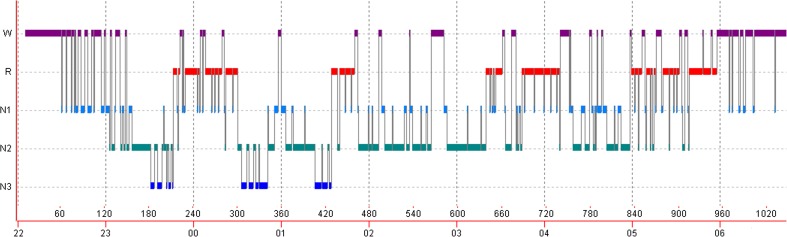
PURPOSE OF REVIEW: The aim of this review article was to summarize recent publications on effects of antidepressants on sleep and to show that these effects not only depend on the kind of antidepressant drugs but are also related to the dose, the time of drug administration, and the duration of the treatment. RECENT FINDINGS: Complaints of disrupted sleep are very common in patients suffering from depression, and they are listed among diagnostic criteria for this disorder. Moreover, midnocturnal insomnia is the most frequent residual symptom of depression. Thus, all antidepressants should normalize sleep. However, at least in short-term treatment, many antidepressants with so-called activating effects (e.g. fluoxetine, venlafaxine) may disrupt sleep, while others with sedative properties (e.g., doxepin, mirtazapine, trazodone) rapidly improve sleep, but may cause problems in long-term treatment due to oversedation.For sleep-promoting action, the best effects can frequently be achieved with a very low dose, administered early enough before bedtime and importantly, always as a part of more complex interventions based on the cognitive-behavioral protocol to treat insomnia (CBT-I). For successful treatment of depression, it is necessary to understand the effects of antidepressants on sleep. Each physician should also be aware that some antidepressants may worsen or induce primary sleep disorders like restless legs syndrome, sleep bruxism, REM sleep behavior disorder, nightmares, and sleep apnea, which may result from an antidepressant-induced weight gain.
Overview
AI snapshot
Written from the paper’s full text.
TL;DR
This narrative review summarizes how antidepressants affect sleep, emphasizing that effects depend on drug class, dose, timing of administration, and treatment duration. Activating antidepressants may disrupt sleep short-term, sedating antidepressants can promote sleep but risk oversedation, and low-dose sedative antidepressants plus CBT-I may help insomnia.
Key findings
- Sleep disturbance is common in depression: insomnia complaints are present in 60–90% of patients with major depression; in bipolar depressive episodes, 60% have insomnia and 20–30% have hypersomnia. In STAR*D, midnocturnal insomnia remained the most common residual symptom, present in 79% of patients who responded but did not remit after up to 12 weeks of citalopram.
- Antidepressant classes differ in acute sleep effects: SSRI, SNRI, NRI, MAOI, and activating TCA tend to increase REM latency, suppress REM sleep, and may impair sleep continuity; sedating antidepressants such as mirtazapine, trazodone, and sedating TCA decrease sleep latency, improve sleep efficiency, increase slow wave sleep, and usually have little or no effect on REM sleep.
- From FDA study-register data, average treatment-emergent insomnia with SSRI was 17% vs 9% placebo, and somnolence was 16% vs 8% placebo; with SNRI, insomnia was 13% vs 7% and somnolence 10% vs 5%. With sedating antidepressants, treatment-emergent insomnia was below 2%, but somnolence was 54% for mirtazapine vs 18% placebo and 46% for trazodone vs 19% placebo.
- For insomnia treatment, only doxepin is FDA-approved among antidepressants for sleep maintenance insomnia; suggested low doses are doxepin 3–6 mg or trazodone 25–50 mg, taken at least 2 hours before sleep and combined with CBT-I. Agomelatine improved sleep latency after 2 and 24 weeks compared with escitalopram, and vortioxetine at 20 and 40 mg suppressed REM sleep similarly to paroxetine 20 mg in healthy male volunteers.
Methods
- Narrative review summarizing recent literature on antidepressant effects on sleep, intended as an addition to prior reviews and including the authors’ personal view on antidepressant use for insomnia.
- Evidence synthesized includes polysomnographic studies, FDA study-register data, clinical trials, meta-analyses, and treatment guidelines; the article states it contains no studies with human or animal subjects performed by the authors.
- Main analysis is qualitative, organized by drug class and sleep parameters such as sleep continuity, slow wave sleep, REM latency, and REM sleep, with summary tables.
Limitations
- The paper does not state a formal limitations section; it reports that no human or animal studies were performed by the authors and discloses that Adam Wichniak received speaker honoraria and congress travel grants from Angelini, Janssen-Cilag, Lundbeck, Sanofi, and Servier.
- Evident from the text: this is a narrative review without a described systematic search strategy, risk-of-bias assessment, or meta-analytic pooling.
- Evident from the text: several recommendations and observations rely on the authors’ clinical experience, published case reports, or personal opinion rather than randomized trial evidence, such as the low risk of phase shift with low-dose sedative antidepressants and morning low-dose citalopram for insomnia.
Model-written summary. Check it against the paper before relying on it.
Integrity signals
Registry
Cites
Statistics
Figures
Verification
Claims the paper makes
29 Sources not found · 28 No full text of the sources · 12 Own interpretation · 6 Supported · 6 Partly supported · 2 Couldn’t confirm · accuracy not yet measured
The cited sources support only part of this claim — read each source’s verdict below.
In the paper
“midnocturnal insomnia is the most frequent residual symptom of depression.”
- Also stated in: § Polysomnographic Sleep Studies in Depression · p. 2 · plain
“found that midnocturnal insomnia was the most commonly observed residual symptom of depression, as it was still present in 79% patients [13].”
§ The Author(s) 2017. This article is an open access publication > Abstract · p. 1
What the sources say
- Partly supportedcites [13] McClintock SM, Husain MM, Wisniewski SR, Nierenberg AA, Stewart JW, Trivedi MH, et al. Residual symptoms in depressed outpatients who respond by 50% but do not remit to antidepressant medication. J Clin Psychopharmacol. 2011;31:180–6. sourceExperimental — accuracy not yet measured
The Abstract (page not supplied) identifies midnocturnal insomnia as the most common individual residual symptom, at 79.0%. But the study concerns outpatients who responded to citalopram without remitting; it does not establish that this is the most frequent residual symptom of depression generally. (LLM, conf=0.85)
plain- Asserted: passes — The authors put it forward as true.
- Checkable: passes — It can be checked against evidence.
- Load-bearing: passes — The paper’s conclusions depend on it.
- Based: passes — The paper gives a reason why it holds.
- Also stated in: § Polysomnographic Sleep Studies in Depression · p. 2 · plain
Every source the paper cites for this claim was checked and supports it.
In the paper
“The Sequenced Treatment Alternatives to Relieve Depression (STAR*D) study, which included a large sample of outpatients with non-psychotic MDD who responded without remitting after up to 12 weeks treatment with citalopram, found that midnocturnal insomnia was the most commonly observed residual symptom of depression, as it was still present in 79% patients [13].”
§ The Author(s) 2017. This article is an open access publication > Polysomnographic Sleep Studies in Depression · p. 2
What the sources say
- Supportedcites [13] McClintock SM, Husain MM, Wisniewski SR, Nierenberg AA, Stewart JW, Trivedi MH, et al. Residual symptoms in depressed outpatients who respond by 50% but do not remit to antidepressant medication. J Clin Psychopharmacol. 2011;31:180–6. source
The Abstract describes STAR*D outpatients with nonpsychotic MDD who responded without remitting after up to 12 weeks of citalopram. It identifies midnocturnal insomnia as the most common individual residual symptom, present in 79.0% of these patients. (LLM, conf=0.95)
plain- Asserted: passes — The authors put it forward as true.
- Checkable: passes — It can be checked against evidence.
- Load-bearing: unclear — It is unclear whether the paper’s conclusions depend on it.
- Based: passes — The paper gives a reason why it holds.
- Supported
The cited sources support only part of this claim — read each source’s verdict below.
In the paper
“The complaints of insomnia are present in 60 -90%ofpatients with major depression, depending on the episode ' s severity.”
§ The Author(s) 2017. This article is an open access publication > Polysomnographic Sleep Studies in Depression · p. 2
What the sources say
- Partly supportedcites [11] Abad VC, Guilleminault C. Sleep and psychiatry. Dialogues Clin Neurosci. 2005;7:291–303. sourceExperimental — accuracy not yet measured
The Mood (affective) disorders section says approximately two-thirds of depressed patients complain of insomnia, supporting the general prevalence claim. It does not give a 60–90% range or link complaint rates to episode severity. The 90% figure in the Major depressive disorder section refers instead to polysomnographic abnormalities in inpatients. (LLM, conf=0.87)
- Not checked — no full text of the sourcecites [12] Kaplan KA, Harvey AG. Hypersomnia across mood disorders: a review and synthesis. Sleep Med Rev. 2009;13:275–85. source
plaincorrelational- Asserted: passes — The authors put it forward as true.
- Checkable: passes — It can be checked against evidence.
- Load-bearing: unclear — It is unclear whether the paper’s conclusions depend on it.
- Based: passes — The paper gives a reason why it holds.
- Partly supported
The cited sources support only part of this claim — read each source’s verdict below.
In the paper
“When it comes to bipolar disorder, insomnia is present during a depressive episode in 60% of patients”
§ The Author(s) 2017. This article is an open access publication > Polysomnographic Sleep Studies in Depression · p. 2
What the sources say
- Partly supportedcites [11] Abad VC, Guilleminault C. Sleep and psychiatry. Dialogues Clin Neurosci. 2005;7:291–303. sourceExperimental — accuracy not yet measured
The Mood (affective) disorders section says approximately two-thirds of depressed patients complain of insomnia. The Bipolar disorder subsection says sleep-study findings in bipolar depression resemble those in major depressive disorder, but it gives no insomnia prevalence for bipolar depressive episodes; the claimed 60% is not established. (LLM, conf=0.84)
- Not checked — no full text of the sourcecites [12] Kaplan KA, Harvey AG. Hypersomnia across mood disorders: a review and synthesis. Sleep Med Rev. 2009;13:275–85. source
plaincorrelational- Asserted: passes — The authors put it forward as true.
- Checkable: passes — It can be checked against evidence.
- Load-bearing: unclear — It is unclear whether the paper’s conclusions depend on it.
- Based: passes — The paper gives a reason why it holds.
- Partly supported
The cited sources support only part of this claim — read each source’s verdict below.
In the paper
“These negative effects of vortioxetine on sleep continuity are significant only for the higher dose [28 · ].”
§ The Author(s) 2017. This article is an open access publication > Effects on Antidepressants on Sleep · p. 5
What the sources say
- Partly supportedcites [28] • Wilson S, Hojer AM, Buchberg J, Areberg J, Nutt DJ. Differentiated effects of the multimodal antidepressant vortioxetine on sleep architecture: part 1, a pharmacokinetic/pharmacodynamic comparison with paroxetine in healthy men. J Psychopharmacol. 2015;29:1085–91. This is the first polysomnographic study presenting effects of vortioxetine on sleep architecture in comparison to placebo and paroxetine. sourceExperimental — accuracy not yet measured
The Results (Sleep architecture, Table 1; page not specified in our copy) show that reduced total sleep time and increased wake after sleep onset were significant only at the higher, 40 mg dose. But increased stage 1 sleep—a sleep-continuity effect discussed by the authors—was significant at both 20 mg and 40 mg, so the claim is too broad. (LLM, conf=0.90)
plaindirectn = 24- Asserted: passes — The authors put it forward as true.
- Checkable: passes — It can be checked against evidence.
- Load-bearing: unclear — It is unclear whether the paper’s conclusions depend on it.
- Based: passes — The paper gives a reason why it holds.
- Partly supported
Every source the paper cites for this claim was checked and supports it.
In the paper
“In a study which has compared the effects of vortioxetine and paroxetine to the placebo in a group of 24 healthy male volunteers, it has been shown that the vortioxetine dose of 20 and 40 mg similarly to the paroxetine dose of 20 mg suppresses REM sleep by increasing REM sleep latency and diminishing duration of REM sleep.”
§ The Author(s) 2017. This article is an open access publication > Effects on Antidepressants on Sleep · p. 5
What the sources say
- Supportedcites [28] • Wilson S, Hojer AM, Buchberg J, Areberg J, Nutt DJ. Differentiated effects of the multimodal antidepressant vortioxetine on sleep architecture: part 1, a pharmacokinetic/pharmacodynamic comparison with paroxetine in healthy men. J Psychopharmacol. 2015;29:1085–91. This is the first polysomnographic study presenting effects of vortioxetine on sleep architecture in comparison to placebo and paroxetine. source
The Abstract reports a placebo-controlled study in 24 healthy young men given vortioxetine 20 or 40 mg, paroxetine 20 mg, or placebo. It states that all three active treatments significantly increased REM onset latency and decreased time spent in REM sleep. (LLM, conf=0.94)
boosteddirectn = 24- Asserted: passes — The authors put it forward as true.
- Checkable: passes — It can be checked against evidence.
- Load-bearing: passes — The paper’s conclusions depend on it.
- Based: passes — The paper gives a reason why it holds.
- Supported
The cited sources that could be checked couldn’t confirm or dispute this claim.
In the paper
“Treatment-emergent RLS has also been described for SSRI and venlafaxine [30].”
§ The Author(s) 2017. This article is an open access publication > Effects on Antidepressants on Sleep · p. 5
What the sources say
- Could not verifycites [30] Narowska D, Bozek M, Krysiak K, Antczak J, Holka-Pokorska J, Jernajczyk W, et al. Frequent difficulties in the treatment of restless legs syndrome—case report and literature review. Psychiatr Pol. 2015;49:921–30. sourceExperimental — accuracy not yet measured
The available case-description passage says that some antidepressants, specifically mirtazapine, mianserin, and tricyclic antidepressants, can increase the severity of existing RLS. Searches for SSRIs, venlafaxine, and treatment-emergent RLS found no passage in our copy addressing the claimed drugs or new-onset RLS. The indexed passages have no section or page labels. (LLM, conf=0.72)
plaincorrelational- Asserted: passes — The authors put it forward as true.
- Checkable: passes — It can be checked against evidence.
- Load-bearing: unclear — It is unclear whether the paper’s conclusions depend on it.
- Based: passes — The paper gives a reason why it holds.
- Could not verify
The cited sources support only part of this claim — read each source’s verdict below.
In the paper
“Persistent insomnia symptoms may also result in unfavorable clinical outcome, e.g., increased suicide risk [14].”
§ The Author(s) 2017. This article is an open access publication > Polysomnographic Sleep Studies in Depression · p. 2
What the sources say
- Partly supportedcites [14] Kay DB, Dombrovski AY, Buysse DJ, Reynolds CF, Begley A, Szanto K. Insomnia is associated with suicide attempt in middle-aged and older adults with depression. Int Psychogeriatr. 2016;28:613–9. sourceExperimental — accuracy not yet measured
The Discussion reports an association between insomnia severity and suicide attempts in middle-aged and older adults with depression. However, it says chronicity was not assessed and the cross-sectional study cannot establish whether insomnia precedes or causes suicidal behavior. The source therefore supports increased risk as a possibility, but not the claim specifically about persistent symptoms resulting in that outcome. (LLM, conf=0.88)
hedgedconditional- Asserted: passes — The authors put it forward as true.
- Checkable: passes — It can be checked against evidence.
- Load-bearing: passes — The paper’s conclusions depend on it.
- Based: passes — The paper gives a reason why it holds.
- Partly supported
The cited sources that could be checked couldn’t confirm or dispute this claim.
In the paper
“while 20 -30% suffer from prolonged sleep (hypersomnia) and increased daytime sleepiness [11, 12].”
§ The Author(s) 2017. This article is an open access publication > Polysomnographic Sleep Studies in Depression · p. 2
What the sources say
- Could not verifycites [11] Abad VC, Guilleminault C. Sleep and psychiatry. Dialogues Clin Neurosci. 2005;7:291–303. sourceExperimental — accuracy not yet measured
The Bipolar disorder section describes reduced need for sleep during mania and sleep findings in bipolar depression, but gives no prevalence of hypersomnia or daytime sleepiness. A separate Mood (affective) disorders passage says 15% of depressed patients report hypersomnia; it does not establish the claimed 20–30% figure for bipolar disorder. Searches for that figure and for prolonged sleep with daytime sleepiness found no supporting passage in our copy. (LLM, conf=0.75)
- Not checked — no full text of the sourcecites [12] Kaplan KA, Harvey AG. Hypersomnia across mood disorders: a review and synthesis. Sleep Med Rev. 2009;13:275–85. source
plain- Asserted: passes — The authors put it forward as true.
- Checkable: passes — It can be checked against evidence.
- Load-bearing: unclear — It is unclear whether the paper’s conclusions depend on it.
- Based: passes — The paper gives a reason why it holds.
- Could not verify
Every source the paper cites for this claim was checked and supports it.
In the paper
“However in many patients, difficulties with sleep persist.”
§ The Author(s) 2017. This article is an open access publication > Polysomnographic Sleep Studies in Depression · p. 2
What the sources say
- Supportedcites [13] McClintock SM, Husain MM, Wisniewski SR, Nierenberg AA, Stewart JW, Trivedi MH, et al. Residual symptoms in depressed outpatients who respond by 50% but do not remit to antidepressant medication. J Clin Psychopharmacol. 2011;31:180–6. source
The Results section, under “Residual Depressive Symptoms That Persisted From Baseline to Exit,” reports that midnocturnal insomnia persisted in 81.6% of the studied patients. This supports the claim that sleep difficulties persist in many patients, specifically depressed outpatients who responded to citalopram but did not remit. (LLM, conf=0.94)
plain- Asserted: passes — The authors put it forward as true.
- Checkable: passes — It can be checked against evidence.
- Load-bearing: unclear — It is unclear whether the paper’s conclusions depend on it.
- Based: passes — The paper gives a reason why it holds.
- Supported
- It may state two separate claims as one. 19
- Probably not a substantial claim. 5
Every source the paper cites for this claim was checked and supports it.
In the paper
“Both drugs also decrease total sleep time and increase duration of sleep stage N1.”
§ The Author(s) 2017. This article is an open access publication > Effects on Antidepressants on Sleep · p. 5
What the sources say
- Supportedcites [28] • Wilson S, Hojer AM, Buchberg J, Areberg J, Nutt DJ. Differentiated effects of the multimodal antidepressant vortioxetine on sleep architecture: part 1, a pharmacokinetic/pharmacodynamic comparison with paroxetine in healthy men. J Psychopharmacol. 2015;29:1085–91. This is the first polysomnographic study presenting effects of vortioxetine on sleep architecture in comparison to placebo and paroxetine. source
The Discussion reports increased stage 1 sleep and decreased total sleep time with all active treatments, including vortioxetine and paroxetine. The Results table also shows increased stage 1 sleep and lower total sleep time after treatment in the healthy men studied. (LLM, conf=0.94)
plaindirectn = 24- Asserted: passes — The authors put it forward as true.
- Checkable: passes — It can be checked against evidence.
- Load-bearing: passes — The paper’s conclusions depend on it.
- Based: passes — The paper gives a reason why it holds.
It may state two separate claims as one.
- Supported
The cited sources support only part of this claim — read each source’s verdict below.
In the paper
“Furthermore, recent recommendations discourage the use of other drugs from this class than doxepin for the insomnia treatment [37 ·· ].”
§ The Author(s) 2017. This article is an open access publication > Treatment of Insomnia Disorder with Low-Dose Antidepressants · p. 5
What the sources say
- Partly supportedcites [37] •• Sateia MJ, Buysse DJ, Krystal AD, Neubauer DN, Heald JL. Clinical practice guideline for the pharmacologic treatment of chronic insomnia in adults: an American Academy of sleep medicine clinical practice guideline. J Clin Sleep Med. 2017;13:307–49. This publication contains recent recommendations for clinicians in choosing a specific pharmacological agent for treatment of chronic insomnia in adults. sourceExperimental — accuracy not yet measured
The Clinical Practice Recommendations suggest using low-dose doxepin for sleep-maintenance insomnia and suggest not using trazodone for sleep-onset or sleep-maintenance insomnia (page not provided). They do not discourage every other sedating antidepressant, so the claim extends the trazodone recommendation to the class as a whole. (LLM, conf=0.86)
plain- Asserted: passes — The authors put it forward as true.
- Checkable: passes — It can be checked against evidence.
- Load-bearing: passes — The paper’s conclusions depend on it.
- Based: passes — The paper gives a reason why it holds.
Probably not a substantial claim.
- Partly supported
Every source the paper cites for this claim was checked and supports it.
In the paper
“Finally, antidepressants inducing weight gain are contraindicated in patients with sleep apnea, that is an overlooked but frequent sleep disorder in people suffering from mental illness [32].”
§ The Author(s) 2017. This article is an open access publication > Effects on Antidepressants on Sleep · p. 5
What the sources say
- Supportedcites [32] Szaulińska K, Pływaczewski R, Sikorska O, Holka-Pokorska J, Wierzbicka A, Wichniak A, et al. Obstructive sleep apnea in severe mental disorders. Psychiatr Pol. 2015;49:883–95. source
The paper’s abstract reports higher obstructive sleep apnea prevalence in people with severe mental disorders than in the general population, including rates of 11–48% across the disorders reviewed. It also describes the consequences of a lack of diagnosis in people with mental illnesses, supporting the characterization of apnea as overlooked. (LLM, conf=0.92)
plaincorrelational- Asserted: passes — The authors put it forward as true.
- Checkable: passes — It can be checked against evidence.
- Load-bearing: unclear — It is unclear whether the paper’s conclusions depend on it.
- Based: passes — The paper gives a reason why it holds.
It may state two separate claims as one.
- Supported
In the paper
“Current treatment guidelines [36 ·· ] strongly recommend the use of cognitive-behavioral therapy (CBT-I) as the initial treatment for chronic insomnia disorder and only short-term use of the sleep-promoting drugs in patients with insufficient response to CBI-I.”
§ The Author(s) 2017. This article is an open access publication > Treatment of Insomnia Disorder with Low-Dose Antidepressants · p. 5
What the sources say
- Not checked — no full text of the sourcecites [36] •• Qaseem A, Kansagara D, Forciea MA, Cooke M, Denberg TD. Management of chronic insomnia disorder in adults: a clinical practice guideline from the American College of Physicians. Ann Intern Med. 2016;165:125–33. This publication presents guidelines for chronic insomnia treatment indicating that cognitive-behavioral therapy should be used as a first line treatment. source
boosted- Asserted: passes — The authors put it forward as true.
- Checkable: passes — It can be checked against evidence.
- Load-bearing: passes — The paper’s conclusions depend on it.
- Based: passes — The paper gives a reason why it holds.
Probably not a substantial claim. It may state two separate claims as one.
In the paper
“It is important to note that acute effects of antidepressants on sleep are reflected not only in the patients ' subjective complaints but they can also be demonstrated in studies with PSG (Table 2).”
§ The Author(s) 2017. This article is an open access publication > Effects on Antidepressants on Sleep · p. 3
What the sources say
- Not matchedcites Table 2
Couldn’t be matched to a paper in Crossref, so it can’t be checked.
plaincorrelational- Asserted: passes — The authors put it forward as true.
- Checkable: passes — It can be checked against evidence.
- Load-bearing: passes — The paper’s conclusions depend on it.
- Based: passes — The paper gives a reason why it holds.
It may state two separate claims as one.
- Not matched
In the paper
“MAOI (e.g., tranylcypromine, moclobemide) | ↓ /0 | ? | ↑ | ↓ | inhibition of monoamine oxidase enzyme”
§ The Author(s) 2017. This article is an open access publication > Effects on Antidepressants on Sleep · p. 4
What the sources say
- Not matchedcites Table 2
Couldn’t be matched to a paper in Crossref, so it can’t be checked.
plainconditional- Asserted: passes — The authors put it forward as true.
- Checkable: passes — It can be checked against evidence.
- Load-bearing: passes — The paper’s conclusions depend on it.
- Based: passes — The paper gives a reason why it holds.
It may state two separate claims as one.
- Not matched
In the paper
“In the second week, agomelatine slightly improves sleep continuity (increased total sleep time and sleep efficiency) and escitalopram worsens it [25].”
§ The Author(s) 2017. This article is an open access publication > Effects on Antidepressants on Sleep · p. 5
What the sources say
- Not checked — no full text of the sourcecites [25] Quera-Salva MA, Hajak G, Philip P, Montplaisir J, Keufer-Le GS, Laredo J, et al. Comparison of agomelatine and escitalopram on nighttime sleep and daytime condition and efficacy in major depressive disorder patients. Int Clin Psychopharmacol. 2011;26:252–62. source
plaindirect- Asserted: passes — The authors put it forward as true.
- Checkable: passes — It can be checked against evidence.
- Load-bearing: passes — The paper’s conclusions depend on it.
- Based: passes — The paper gives a reason why it holds.
It may state two separate claims as one.
A conclusion the paper draws from its own results — it cites no other source for it, so there is none to check. The quote shows it is in the paper.
In the paper
“Such pharmacodynamic profile is related to sleep-promoting action without the risk of sedation and weight gain.”
§ The Author(s) 2017. This article is an open access publication > Effects on Antidepressants on Sleep · p. 5
plaindirect- Asserted: passes — The authors put it forward as true.
- Checkable: passes — It can be checked against evidence.
- Load-bearing: passes — The paper’s conclusions depend on it.
- Based: passes — The paper gives a reason why it holds.
It may state two separate claims as one.
In the paper
“Agomelatine is a non-sedative antidepressant drug exerting agonistic action at melatonergic M1 and M2 receptors, and antagonistic action at serotonergic 5HT2creceptors [24].”
§ The Author(s) 2017. This article is an open access publication > Effects on Antidepressants on Sleep · p. 5
What the sources say
- Not checked — no full text of the sourcecites [24] Hickie IB, Rogers NL. Novel melatonin-based therapies: potential advances in the treatment of major depression. Lancet. 2011;378:621–31. source
plaindirect- Asserted: passes — The authors put it forward as true.
- Checkable: passes — It can be checked against evidence.
- Load-bearing: passes — The paper’s conclusions depend on it.
- Based: passes — The paper gives a reason why it holds.
It may state two separate claims as one.
In the paper
“Some of them alleviate sleep disturbances, but other may disrupt sleep”
§ The Author(s) 2017. This article is an open access publication > Polysomnographic Sleep Studies in Depression · p. 2
What the sources say
- Not matchedcites [3, 6, 7, 17 ·· ]
Couldn’t be matched to a paper in Crossref, so it can’t be checked.
hedgedconditional- Asserted: passes — The authors put it forward as true.
- Checkable: passes — It can be checked against evidence.
- Load-bearing: passes — The paper’s conclusions depend on it.
- Based: passes — The paper gives a reason why it holds.
It may state two separate claims as one.
- Not matched
In the paper
“Sedative TCA (e.g., amitriptyline, doxepin, trimipramine) | ↑ | ↑ | ↑ | ↓ | antihistaminergic effect, inhibition of serotonin, and norepinephrine reuptake”
§ The Author(s) 2017. This article is an open access publication > Effects on Antidepressants on Sleep · p. 4
What the sources say
- Not matchedcites Table 2
Couldn’t be matched to a paper in Crossref, so it can’t be checked.
plaindirect- Asserted: passes — The authors put it forward as true.
- Checkable: passes — It can be checked against evidence.
- Load-bearing: passes — The paper’s conclusions depend on it.
- Based: passes — The paper gives a reason why it holds.
It may state two separate claims as one.
- Not matched
In the paper
“The sedative antidepressants may also induce a weight gain, what is particularly shown for mirtazapine but not for trazodone [23].”
§ The Author(s) 2017. This article is an open access publication > Effects on Antidepressants on Sleep · p. 3
What the sources say
- Not checked — no full text of the sourcecites [23] Serretti A, Mandelli L. Antidepressants and body weight: a comprehensive review and meta-analysis. J Clin Psychiatry. 2010;71:1259–72. source
hedgedconditional- Asserted: passes — The authors put it forward as true.
- Checkable: passes — It can be checked against evidence.
- Load-bearing: unclear — It is unclear whether the paper’s conclusions depend on it.
- Based: passes — The paper gives a reason why it holds.
It may state two separate claims as one.
In the paper
“Activating TCA (e.g., imipramine, desipramine) | ↓ | ↓ | ↑ | ↓ | inhibition of serotonin and norepinephrine reuptake”
§ The Author(s) 2017. This article is an open access publication > Effects on Antidepressants on Sleep · p. 4
What the sources say
- Not matchedcites Table 2
Couldn’t be matched to a paper in Crossref, so it can’t be checked.
plaindirect- Asserted: passes — The authors put it forward as true.
- Checkable: passes — It can be checked against evidence.
- Load-bearing: passes — The paper’s conclusions depend on it.
- Based: passes — The paper gives a reason why it holds.
It may state two separate claims as one.
- Not matched
In the paper
“SSRI (e.g., fluoxetine, escitalopram, | ↓ /0 | 0/ ↑ | ↑ | ↓ | selective inhibition of serotonin reuptake”
§ The Author(s) 2017. This article is an open access publication > Effects on Antidepressants on Sleep · p. 4
What the sources say
- Not matchedcites Table 2
Couldn’t be matched to a paper in Crossref, so it can’t be checked.
plainconditional- Asserted: passes — The authors put it forward as true.
- Checkable: passes — It can be checked against evidence.
- Load-bearing: passes — The paper’s conclusions depend on it.
- Based: passes — The paper gives a reason why it holds.
It may state two separate claims as one.
- Not matched
In the paper
“While SSRI, SNRI, and activating TCA increase REM latency, suppress REM sleep, and may impair sleep continuity”
§ The Author(s) 2017. This article is an open access publication > Effects on Antidepressants on Sleep · p. 3
What the sources say
- Not matchedcites [3, 6, 7, 17 ·· ]
Couldn’t be matched to a paper in Crossref, so it can’t be checked.
hedgeddirect- Asserted: passes — The authors put it forward as true.
- Checkable: passes — It can be checked against evidence.
- Load-bearing: passes — The paper’s conclusions depend on it.
- Based: passes — The paper gives a reason why it holds.
It may state two separate claims as one.
- Not matched
In the paper
“sedating antidepressants decrease sleep latency, improve sleep efficiency, increase SWS, and usually have little or no effect on REM sleep [3, 6, 7, 17 ·· ].”
§ The Author(s) 2017. This article is an open access publication > Effects on Antidepressants on Sleep · p. 3
What the sources say
- Not matchedcites [3, 6, 7, 17 ·· ]
Couldn’t be matched to a paper in Crossref, so it can’t be checked.
plaindirect- Asserted: passes — The authors put it forward as true.
- Checkable: passes — It can be checked against evidence.
- Load-bearing: passes — The paper’s conclusions depend on it.
- Based: passes — The paper gives a reason why it holds.
It may state two separate claims as one.
- Not matched
In the paper
“in some patients they may persist, aggravating insomnia complaints or causing daytime somnolence [18].”
§ The Author(s) 2017. This article is an open access publication > Effects on Antidepressants on Sleep · p. 3
What the sources say
- Not matchedcites [18] Fava M. Daytime sleepiness and insomnia as correlates of depression. J Clin Psychiatry. 2004;65(Suppl 16):27–32.
Couldn’t be matched to a paper in Crossref, so it can’t be checked.
hedgedconditional- Asserted: passes — The authors put it forward as true.
- Checkable: passes — It can be checked against evidence.
- Load-bearing: passes — The paper’s conclusions depend on it.
- Based: passes — The paper gives a reason why it holds.
It may state two separate claims as one.
- Not matched
In the paper
“SNRI and NRI (e.g., venlafaxine, duloxetine, reboxetine) | ↓ | 0// ↑ | ↑ | ↓ | inhibition of serotonin and norepinephrine reuptake”
§ The Author(s) 2017. This article is an open access publication > Effects on Antidepressants on Sleep · p. 4
What the sources say
- Not matchedcites Table 2
Couldn’t be matched to a paper in Crossref, so it can’t be checked.
plainconditional- Asserted: passes — The authors put it forward as true.
- Checkable: passes — It can be checked against evidence.
- Load-bearing: passes — The paper’s conclusions depend on it.
- Based: passes — The paper gives a reason why it holds.
It may state two separate claims as one.
- Not matched
A conclusion the paper draws from its own results — it cites no other source for it, so there is none to check. The quote shows it is in the paper.
In the paper
“However, in the short term, while some of them may impair sleep due to the activating effects, other may improve sleep due to the sedative properties.”
§ The Author(s) 2017. This article is an open access publication > Conclusions · p. 6
hedgedconditional- Asserted: passes — The authors put it forward as true.
- Checkable: passes — It can be checked against evidence.
- Load-bearing: passes — The paper’s conclusions depend on it.
- Based: passes — The paper gives a reason why it holds.
It may state two separate claims as one.
A conclusion the paper draws from its own results — it cites no other source for it, so there is none to check. The quote shows it is in the paper.
In the paper
“It is particularly noteworthy that for sleep-promoting effect, it is sufficient to use a sedative antidepressant in a low dose.”
§ The Author(s) 2017. This article is an open access publication > Conclusions · p. 6
plaindirect- Asserted: passes — The authors put it forward as true.
- Checkable: passes — It can be checked against evidence.
- Load-bearing: passes — The paper’s conclusions depend on it.
- Based: fails — The paper may give no reason why it holds.
Probably not a substantial claim. The paper may give no reason why it holds.
A conclusion the paper draws from its own results — it cites no other source for it, so there is none to check. The quote shows it is in the paper.
In the paper
“Disturbed sleep is a core symptom of depression and its normalization is necessary to achieve remission from the illness.”
§ The Author(s) 2017. This article is an open access publication > Conclusions · p. 6
plaindirect- Asserted: passes — The authors put it forward as true.
- Checkable: passes — It can be checked against evidence.
- Load-bearing: passes — The paper’s conclusions depend on it.
- Based: fails — The paper may give no reason why it holds.
Probably not a substantial claim. The paper may give no reason why it holds. It may state two separate claims as one.
A conclusion the paper draws from its own results — it cites no other source for it, so there is none to check. The quote shows it is in the paper.
In the paper
“In such dose, these drugs can be also combined with other antidepressants as an alternative to hypnotic drugs, especially if there is a clinical necessity to promote sleep for longer than 2 -4 weeks with a frequency higher than 3 -4 times per week.”
§ The Author(s) 2017. This article is an open access publication > Conclusions · p. 6
plainconditional- Asserted: passes — The authors put it forward as true.
- Checkable: passes — It can be checked against evidence.
- Load-bearing: passes — The paper’s conclusions depend on it.
- Based: passes — The paper gives a reason why it holds.
Probably not a substantial claim.
The paper relies on this without support.
The sedating effect of sedative antidepressants becomes an increasing problem in long-term maintenance treatment, frequently requiring dose reduction.
“The sedating effect of those antidepressants is usually an increasing problem in long-term maintenance treatment, frequently resulting in a need to reduce the drug dose.”
The paper relies on this without support.
Combination treatment with benzodiazepines and SSRI/SNRI is often necessary to reduce anxiety and insomnia as early as the first week of treatment.
“Such an approach, combination treatment with benzodiazepines and SSRI/SNRI is often necessary to reduce anxiety and insomnia as early as in the first week of treatment.”
The paper relies on this without support.
Some antidepressants may worsen or induce primary sleep disorders like restless legs syndrome, sleep bruxism, REM sleep behavior disorder, nightmares, and sleep apnea.
“some antidepressants may worsen or induce primary sleep disorders like restless legs syndrome, sleep bruxism, REM sleep behavior disorder, nightmares, and sleep apnea”
The paper relies on this without support.
Antidepressant-induced weight gain may cause sleep apnea.
“which may result from an antidepressant-induced weight gain.”
The paper relies on this without support.
In daily clinical practice, the use of pharmacotherapy for insomnia is very common.
“However, in daily clinical practice, the use of pharmacotherapy for insomnia is very common.”
The paper relies on this without support.
The most frequently used drugs to treat insomnia aside from benzodiazepines and non-benzodiazepine hypnotics are sedative antidepressants.
“The most frequently used drugs to treat insomnia aside from benzodiazepines and non-benzodiazepine (eszopiclone/ zopiclone, zaleplon, zolpidem) hypnotics are sedative antidepressants.”
The paper relies on this without support.
Patients with comorbid mood or anxiety disorder are at increased risk of developing hypnotic dependency.
“The use of sedative antidepressants should be also considered when there is a comorbid mood or anxiety disorder because such patients are at increased risk of developing hypnotic dependency.”
The paper relies on this without support.
When a patient restricts time in bed and uses stimulus control technique, even low-dosage pharmacological treatment starts to work.
“When a patient restricts time in bed and uses stimulus control technique, even lowdosage pharmacological treatment starts to work.”
The paper relies on this without support.
Insomnia shares many features with depression.
“Although insomnia is not regarded as a severe mental disorder, it shares many features with depression.”
Self-check
Percentages, sums and reported differences re-computed from the paper’s own numbers.
Each contradiction between two passages listed here was confirmed by an independent check.
Rated minor: it would not touch a result — a value no result rests on, a p-value that stays on the same side of the significance level, or a conflict that is clerical, resolved elsewhere in the paper, or outside its own findings.
In the paper
§ The Author(s) 2017. This article is an open access publication > Effects on Antidepressants on Sleep · p. 2
“Based on data from the US Food and Drug Administration (FDA) study register [16], the average prevalence of treatment-emergent insomnia in clinical trials with SSRI was 17% as compared to 9% out of patients randomized to the placebo arm.”
§ The Author(s) 2017. This article is an open access publication > References · p. 7
“16. Thompson C. Onset of action of antidepressants: results of different analyses. Hum Psychopharmacol. 2002;17(Suppl 1):S27 -32.”
Citations
Cites
Depression, chronic diseases, and decrements in health: results from the World Health Surveys
Moussavi, S., Chatterji, S., Verdes, E., Tandon, A., Patel, V., & Ustun, B. (2007) · The Lancet · doi:10.1016/s0140-6736(07)61415-9 · Cited by 4,070
The size and burden of mental disorders and other disorders of the brain in Europe 2010
Wittchen, H. U., Jacobi, F., Rehm, J., Gustavsson, A., Svensson, M., Jönsson, B., Olesen, J., Allgulander, C., Alonso, J., Faravelli, C., et al. (2011) · European Neuropsychopharmacology · doi:10.1016/j.euroneuro.2011.07.018 · Cited by 3,754
Epidemiology of insomnia: what we know and what we still need to learn
Ohayon, M. M. (2002) · Sleep Medicine Reviews · doi:10.1053/smrv.2002.0186 · Cited by 3,743
Qaseem, A., Kansagara, D., Forciea, M. A., Cooke, M., Denberg, T. D., & for the Clinical Guidelines Committee of the American College of Physicians* (2016) · Annals of Internal Medicine · doi:10.7326/m15-2175 · Cited by 1,965
The hyperarousal model of insomnia: A review of the concept and its evidence
Riemann, D., Spiegelhalder, K., Feige, B., Voderholzer, U., Berger, M., Perlis, M., & Nissen, C. (2010) · Sleep Medicine Reviews · doi:10.1016/j.smrv.2009.04.002 · Cited by 1,789
Sateia, M. J., Buysse, D. J., Krystal, A. D., Neubauer, D. N., & Heald, J. L. (2017) · Journal of Clinical Sleep Medicine · doi:10.5664/jcsm.6470 · Cited by 1,519
Sleep and mental disorders: a meta-analysis of polysomnographic research
Baglioni, C., Nanovska, S., Regen, W., Spiegelhalder, K., Feige, B., Nissen, C., Reynolds, C. F., & Riemann, D. (2016) · Psychological Bulletin · doi:10.1037/bul0000053 · Cited by 1,074
Hyperarousal and insomnia: state of the science
Bonnet, M. H., & Arand, D. L. (2010) · Sleep Medicine Reviews · doi:10.1016/j.smrv.2009.05.002 · Cited by 914
Wilson, S., Nutt, D., Alford, C., Argyropoulos, S., Baldwin, D., Bateson, A., Britton, T., Crowe, C., Dijk, D.-J., Espie, C., et al. (2010) · Journal of Psychopharmacology · doi:10.1177/0269881110379307 · Cited by 634
Antidepressants and Body Weight: A Comprehensive Review and Meta-Analysis
Serretti, A., & Mandelli, L. (2010) · The Journal of Clinical Psychiatry · doi:10.4088/jcp.09r05346blu · Cited by 621
Research works printed but not linked: 1
- Jernajczyk W, Sobańska A, Wierzbicka A, Wichniak A, Szatkowska E. The therapy of primary insomnia with citalopram. J Sleep Res. 2006;15(Suppl. 1):154.
Cited by
Sorted by citations
Items 501–563 of 563
Avaliação dos distúrbios de sono em indivíduos com doença de Parkinson submetidos à polissonografia
Cruz, A. C. D. S. (2023) · LA Referencia (Red Federada de Repositorios Institucionales de Publicaciones Científicas)
Kuznetsova, E. A., & Kuznetsova, E. A. (2024) · University of Thessaly Institutional Repository (University of Thessaly)
The Mouth After Midnight: Nocturnal Wakefulness and Eating Behavior
Kennedy, K. E. R., & Kennedy, K. E. R. (2024) · UA Campus Repository (The University of Arizona)
Rhythmicity And Instability of Mood-Related Symptoms in Major Depressive Disorder
Nexha, A. (2024) · MacSphere (McMaster University) · doi:10.71548/18993
The Relationship between Mental and Sleep Disorders: A Literature Review
Sakalauskaitë-Juodeikienë, E., & Jaraminas, A. (2025) · Neurologijos seminarai · doi:10.15388/ns.2024.28.102.8
The effects of cannabinoids on sleep quality in patients with chronic pain
Σαουλίδης, Σ.-Ν. Χ., & Σαουλίδης, Σ.-Ν. Χ. (2025) · University of Thessaly Institutional Repository (University of Thessaly)
Torales, J. (2025) · Revista Científica de Psicología Eureka · doi:10.63707/eureka.v22n2a25art1
Vargas, J. J. N., Inca‐Barriga, O., Narrea-Vargas, J., & Castillo-Paredes, A. (2026) · Retos · doi:10.47197/retos.v75.114539
Qian, L., Xu, Z., Ye, Q., Jiang, T., Wu, W., Liu, X., & Liu, L. (2026) · Drug Metabolism and Disposition · doi:10.1016/j.dmd.2026.100232
Thomas, D. C., Gupta, S., Prabhakar, S., & Ravi, A. (2026) · Medical Clinics of North America · doi:10.1016/j.mcna.2025.11.015
Relação entre bruxismo do sono e inibidores seletivos da recaptação de serotonina
da SILVA, A. K. F. N., Seraidarian, P. I., & 2024-03-05 (2024) · LA Referencia (Red Federada de Repositorios Institucionales de Publicaciones Científicas)
Brainstem Raphe Echogenicity and Insomnia in Type 2 Diabetes: An Exploratory Cross-Sectional Study
Randväli, M., Mädamürk, K., Šteinmiller, J., & Toomsoo, T. (2026) · Life · doi:10.3390/life16020298
Jabbari, M., Poursalehi, D., Moradmand, Z., Rashki, A., Shahdadian, F., Rouhani, P., & Saneei, P. (2026) · Food & Function · doi:10.1039/d5fo04053a
An Examination of the Genetics of Sleep Disturbances in Depression
Beaupre, L. M. (2022) · TSpace (University of Toronto)
Bourtin, I. G., Calvillo, D. J., Badawi, J. C., Schmitz, J. M., Lane, S. D., Yoon, J. H., & Webber, H. E. (2026) · Drug and Alcohol Dependence · doi:10.1016/j.drugalcdep.2026.113125
Schlafstörungen unter freiheitsentziehenden Bedingungen
Groß, G., & Stübner, S. (2026) · Forensische Psychiatrie Psychologie Kriminologie · doi:10.1007/s11757-026-00926-6
Treatment Options for Sleep Disturbances in Dementia: A Systematic Review
Pham, D. V., & Quante, A. (2026) · Journal of Geriatric Psychiatry and Neurology · doi:10.1177/08919887261436696
Electroconvulsive Therapy and the Longitudinal Modulation of Sleep Architecture
Kafashan, M., Lebovitz, L., Zhou, Z., Subramanian, S., Labonte, A. K., Greenspan, R., Lin, N., Ju, Y. S., Palanca, B. J. A., Farber, N. B., et al. (2026) · Journal of Ect · doi:10.1097/yct.0000000000001265
Schlafgesundheit in der Lifestyle-Psychiatrie
Vorster, A. P. A. (2026) · Nervenheilkunde · doi:10.1055/a-2682-7066
Kaler, J. S., Chakrabarti, B., Craig, S. E., & Steier, J. S. (2026) · Sleep And Breathing · doi:10.1007/s11325-026-03655-6
Rousseau, P. (2018) · theses.fr (ABES) · doi:10.70675/0e977ac2z4714z4c14zabaez066dfd929516
The Sentinel Sleep Theory: Unweaving the biological function of REM sleep
Spinassi, R. (2026) · Sleep Medicine X · doi:10.1016/j.sleepx.2026.100186
Somno AI: Personalised Sleep Recovery Modelling Using CNNs and Semi-Markov Chains
Taparia (2026) · International Conference on Artificial Intelligence, Computer, Data Sciences and Applications (ACDSA) · doi:10.1109/acdsa67686.2026.11467797
Zhou, J., Zhu, K., Wang, Y., Wang, X., Shen, H., Ren, L., & Zhang, Q. (2026) · Journal of Affective Disorders · doi:10.1016/j.jad.2026.121841
Karakaya, A., & Şimşek, N. (2026) · Sleep And Breathing · doi:10.1007/s11325-026-03693-0
Fani-Molky, P., Talbot, D., Cao, F., Ahmadi, M. N., Stamatakis, E., Foord, R., Johnston, D., Casties, A., Barnes, C. W., Kotzé, B., et al. (2026) · Research Square · doi:10.21203/rs.3.rs-9397165/v1
The relation between sleep and affect in youth during remission from anxiety and depression
Kooiman, B., Vuuregge, A. H., Robberegt, S. J., Wilts, N., Stikkelbroek, Y. A. J., Bockting, C., Schrantee, A., Mul, J. D., Lucassen, P. J., Albers, C. J., et al. (2026) · Journal of Affective Disorders · doi:10.1016/j.jad.2026.121878
Luo, S., Zhu, Y., Luo, C., Luo, S., Li, Y., Cao, Y., & Zhang, G. (2026) · International Journal of Sport and Exercise Psychology · doi:10.1080/1612197x.2026.2665669
Maruoka, J., Egami, R., Akita, Y., Kozuka, K., Kakumoto, Y., Kikuchi, T., & Kume, K. (2026) · Pharmacology Research & Perspectives · doi:10.1002/prp2.70246
Prediction of Adverse Side Effects of Antidepressants Using an Expert System
Becerra-Vivanco, P., Pastrana, L. I. C., & Rosas-Romero, R. (2026) · Communications in computer and information science · doi:10.1007/978-3-032-14893-3_18
Exercise, cognition, and affective disorders
Tapia-de-Jesús, A., Buenrostro-Jáuregui, M. H., Ayala-Guzmán, C. I., & Mata-Luévanos, J. (2026) · Frontiers in Sports and Active Living · doi:10.3389/fspor.2026.1801197
What is healthy sleep, and why do we need it?
Baselgia, S., & Vorster, A. P. A. (2026) · Elsevier eBooks · doi:10.1016/b978-0-443-33651-5.00009-4
Fyfield, L. J., O’Driscoll, D. M., Ogeil, R. P., & Young, A. C. (2026) · International Journal of Behavioral Medicine · doi:10.1007/s12529-026-10463-5
Depression Associated with Other Medical Conditions
Sunzeri, F., & Sunzeri, E. (2026) · Springer eBooks · doi:10.1007/978-3-032-14465-2_12
Confounding and Circularity in Actigraphy Prediction
Xiao, Y. (2026) · JAMA Psychiatry · doi:10.1001/jamapsychiatry.2026.1290
Sleep physiology and critical illness: A narrative review
Welbourne, J. (2026) · Journal of the Intensive Care Society · doi:10.1177/17511437261450009
REM sleep fragmentation is associated with impaired configural threat learning
Cuccurazzu, B., Vizeli, P., Natale, E., Napan, C., Drummond, S. P. A., & Stout, D. M. (2026) · Neurobiology of Learning and Memory · doi:10.1016/j.nlm.2026.108183
Jiang, D., Chen, W., Qin, N., Li, L., Wang, S. W., Zhang, N., Huang, J., He, J., & Wang, C. (2026) · Frontiers in Psychology · doi:10.3389/fpsyg.2026.1833260
The impact of insomnia on the development of arterial hypertension
Gliniecka, Z., Rafalski, J., Rafalski, J., Woźniak, W., Jagacka, A., Chlewicki, K., Rymsza-Szymczak, M., Rachel, M., Sikora, W., & Michalik, G. (2026) · Humanities & Social Sciences Reviews · doi:10.18510/hssr.2026.14127
Neurofeedback Sebagai Terapi Insomnia
Vanadian, H., & Pratiti, B. (2026) · Prominentia Medical Journal · doi:10.37715/pmj.v7i1.6421
Fowler, C., Kaelber, D. C., Bliwise, D. L., & Greer, M. (2026) · Neurological Sciences · doi:10.1007/s10072-026-09202-1
Xiao, Y., Wang, Y., Hu, L., Qiu, J., Tan, X., Zhu, Y., Li, F., & Long, W. (2026) · Vessel Plus · doi:10.20517/2574-1209.2026.29
Sanan, M., Yao, S., Wareesawetsuwan, N., Zhang, P., & Song, X. (2026) · World Journal of Psychiatry · doi:10.5498/wjp.v16.i8.118042
Lai, N., Wang, J., Lou, J., Miao, L., Zhou, R., Fan, X., Wang, Y., & Zhang, X. (2026) · Neuropharmacology · doi:10.1016/j.neuropharm.2026.111127
Branson, C. O. (2026) · CONTINUUM Lifelong Learning in Neurology · doi:10.1212/cont.0000000000001734
Hans-Jürgen, M., Ion-George, A., Volz, H., Seifritz, E., Sandra, S., & Kasper, S. F. (2026) · The International Journal of Neuropsychopharmacology · doi:10.1093/ijnp/pyag041
The clinical application of pharmacogenetics in understanding drug response
Kee, P. (2023) · Otago University Research Archive (University of Otago)
Mirtazapine and Slow-Wave Sleep: A Focused Narrative Review of Human Polysomnographic Evidence
MS, B. P. D. M. (2026) · Cureus · doi:10.7759/cureus.114784
Baldini, V., Pasquino, F., Iannucci, F., Venezia, N., Ronchi, D. D., Plazzi, G., Pelizza, L., & Menchetti, M. (2026) · Bipolar Disorders · doi:10.1111/bdi.70179
Xiao, W. (2025) · Brock University Digital Repository (Brock University)
Zhang, Y., Zhang, H., Tang, J., Wang, Y., & Wu, L. (2026) · Frontiers in Psychiatry · doi:10.3389/fpsyt.2026.1928430
Meng, L., Ji, J., Zhang, H., Cui, Z., & Yang, Y. (2026) · Frontiers in Psychiatry · doi:10.3389/fpsyt.2026.1889208
MS, B. P. D. M., & Siddiq, S. (2026) · Cureus · doi:10.7759/cureus.116174
Iwanaka, Y., Ikeda, H., Watanabe, T., Ono, T., Watanabe, Y., & Izumizaki, M. (2026) · Sleep and Biological Rhythms · doi:10.1007/s41105-026-00689-x
Sleep, Circadian Rhythms, and Major Depressive Disorder
Pedramfard, P. (2026) · IGI Global eBooks · doi:10.4018/979-8-2600-4270-0.ch008
Tao, Y., Liu, S., Ren, Y., Xie, F., Sun, H., Bao, S., & Chen, Y. (2026) · Cambridge Prisms Global Mental Health · doi:10.1017/gmh.2026.10287
Voided REM Sleep (V-REM)Preprint
Ndiaye, M. O. (2026) · doi:10.14293/pr2199.004576.v1
Zhuo, C., Zhang, Q., Song, H., Zou, J., Li, R., Ma, X., Xi-ming, C., Li, Y., Yang, L., Wang, L., et al. (2026) · Depression and Anxiety · doi:10.1155/da/6981320
Ma, J., Liang, S., Wang, M., & Yang, C. (2026) · Scientific Reports · doi:10.1038/s41598-026-75314-5
Psychedelics and Sleep: Preclinical and Human Studies—A Systematic Review
Supit, K., Rossi, G. N., Reis, J. A. S., Dursun, L. H., Dursun, S. M., Hallak, J. E. C., & SANTOS, R. G. D. (2026) · Psychiatry and Clinical Psychopharmacology · doi:10.65801/pcp.3606
Rios, M. A., Lopes, I. G., Nascimento, C. L. S., Pereira, L. S. E., Zanetti, M. V. L., & Magno, L. A. V. (2026) · Mental Illness · doi:10.1155/mij/4792471
Metadata
- Authors
- Wichniak, A., Wierzbicka, A., Walęcka, M., & Jernajczyk, W.
- Affiliations
- Institute of Psychiatry and Neurology (PL)
- Corresponding author
- Wichniak, Adam
- Venue
- Current Psychiatry Reports
- Published
- 2017-08-09
- Volume
- 19
- Issue
- 9
- Pages
- 63-63
- ISSN
- 1523-3812 (ISSN-L)
- 1535-1645
- PMC
- PMC5548844
- OpenAlex
- W2742814779
- Semantic Scholar
- 96a615c9109d6c7d744cd7ceebfb776593cdf0f4
- Cited by
- 557
- References
- 47
- Citations by year
- 2026: 71 · 2025: 87 · 2024: 62 · 2023: 66 · 2022: 72 · 2021: 74 · 2020: 47 · 2019: 50 · 2018: 20 · 2017: 4
- FWCI
- 4.24
- Type
- journal article
- Language
- en
- Open access
- hybrid
- doi.org
- Locations
- Current Psychiatry Reports (publishedVersion, cc-by)
- PubMed Central (publishedVersion, cc-by)
- PubMed (publishedVersion)
- Topics
- Social Sciences › Psychology › Experimental and Cognitive Psychology › Sleep and related disorders
- Health Sciences › Medicine › Pharmacology (medical) › Treatment of Major Depression
- Life Sciences › Neuroscience › Endocrine and Autonomic Systems › Circadian rhythm and melatonin
- Keywords
- antidepressants, sleep, insomnia, depression, fluoxetine, venlafaxine, doxepin, mirtazapine, trazodone, cognitive behavioral therapy for insomnia, oversedation, restless legs syndrome, sleep bruxism, REM sleep behavior disorder, nightmares, sleep apnea, antidepressant-induced weight gain
- MeSH terms
- Antidepressive Agents, Depressive Disorder, Dose-Response Relationship, Drug, Drug Administration Schedule, Humans, Sleep, Sleep Wake Disorders, Time Factors
About these checks
Registry, retraction, Cites and statistics results are computed, not judged, with one exception: a printed reference that no index lists is read once by a model before it counts as a citation error. Claims are extracted by a model and kept only when their quote appears verbatim in the text; each cited source is then checked, with a model’s help, for whether it says what the claim relies on. Those verdicts can be wrong — read the claim’s quote and the cited source before relying on one.
A language model drew the claims from the paper on 2026-11-07, under version 3 of the claim definition (model deepseek-v4.1-flash, prompt extract-v3).
A second model labelled each claim on 2026-11-07 (model jev-1.13-20260917, definition revision gold-guideline-v0.2).
Cited sources are checked with a language model’s help (gpt-6-sol).
Statistics and arithmetic are recomputed, not judged.
Confidence bands are shown only for fields calibrated on our annotated test set. None is calibrated yet, so no band is shown.
What counts as a claim ›How we measure confidence ›How we check this ›
Are you an author, or do you see a problem with this page? Request a review
