

The DOI matches its Crossref record; 282 of the 282 references it cites were found in a registry or an index.
Oxidative Stress in Neurodegenerative Diseases
Open accessAbstract
The pathophysiologies of neurodegenerative diseases, including amyotrophic lateral sclerosis (ALS), Parkinson's disease (PD), and Alzheimer's disease (AD), are far from being fully explained. Oxidative stress (OS) has been proposed as one factor that plays a potential role in the pathogenesis of neurodegenerative disorders. Clinical and preclinical studies indicate that neurodegenerative diseases are characterized by higher levels of OS biomarkers and by lower levels of antioxidant defense biomarkers in the brain and peripheral tissues. In this article, we review the current knowledge regarding the involvement of OS in neurodegenerative diseases, based on clinical trials and animal studies. In addition, we analyze the effects of the drug-induced modulation of oxidative balance, and we explore pharmacotherapeutic strategies for OS reduction.
Overview
The claims and statistics of this paper haven’t been checked yet.
Run the check — free, no account needed. It reads the open-access text and checks the sources it cites.
Integrity signals
Registry
Cites
Statistics
Figures
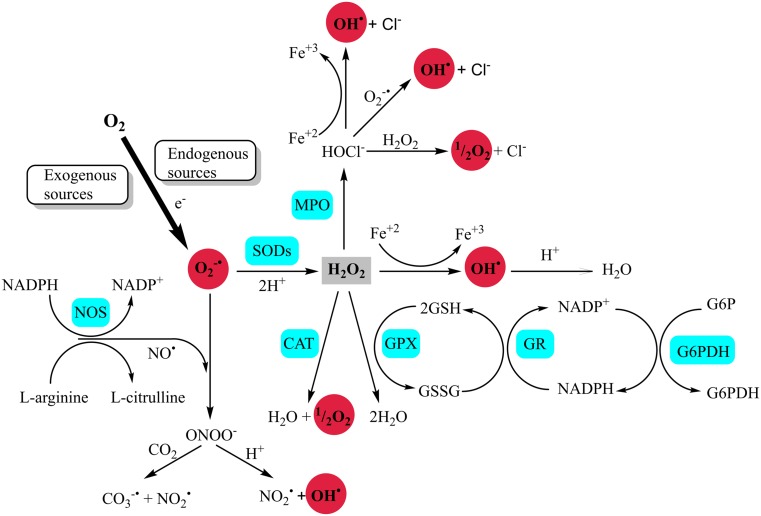
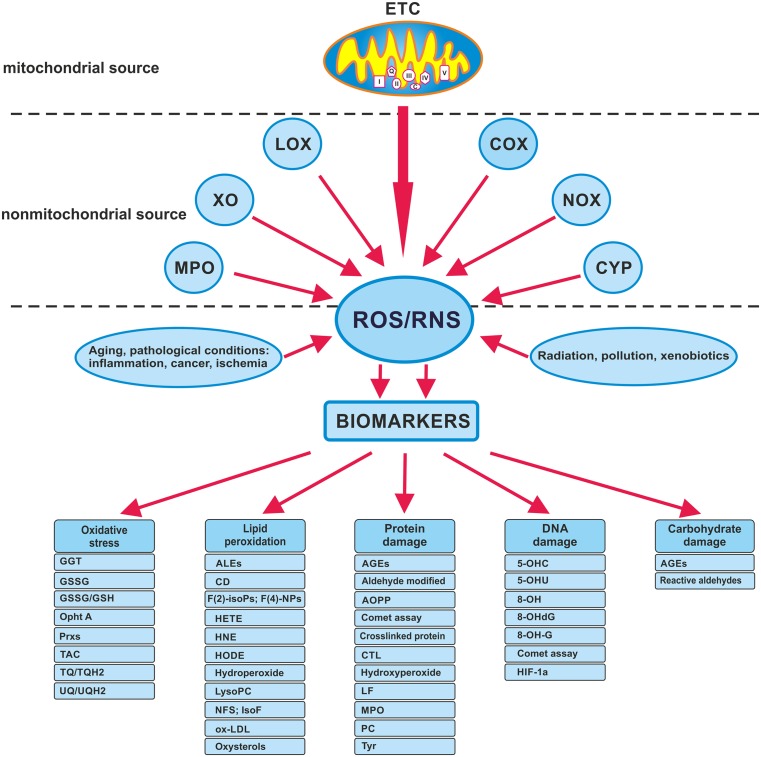
Verification
Claims the paper makes
The claims and statistics of this paper haven’t been checked yet.
Run the check — free, no account needed. It reads the open-access text and checks the sources it cites.
Claims other papers make about this one
Each is checked against this paper’s own text: does it say what the citing paper says it does?
In the citing paper
“ROS have been postulated to be the main cause of neurological deterioration, triggering pathologies such as AD, Parkinson’s disease (PD), and Huntington’s disease (HD) [72,116,124].”
From Multi-Target Mechanisms of Phytochemicals in Alzheimer’s Disease: Effects on Oxidative Stress, Neuroinflammation and Protein Aggregation (2022) · cites this paper as [124]
Self-check
Percentages, sums and reported differences re-computed from the paper’s own numbers.
The self-check needs the paper’s full text.
Citations
Cites
2 retracted
Song, L., Chen, L., Zhang, X., Li, J., & Le, W. (2014) · BioMed Research International · doi:10.1155/2014/483501 · Cited by 73
RetractedInternational, B. R. (2019) · BioMed Research International · doi:10.1155/2019/4729651 · Cited by 8
RetractedThe Ferric Reducing Ability of Plasma (FRAP) as a Measure of “Antioxidant Power”: The FRAP Assay
Benzie, I. F. F., & Strain, J. (1996) · Analytical Biochemistry · doi:10.1006/abio.1996.0292 · Cited by 23,027
The NOX Family of ROS-Generating NADPH Oxidases: Physiology and Pathophysiology
Bedard, K., & Krause, K.-H. (2007) · Physiological Reviews · doi:10.1152/physrev.00044.2005 · Cited by 6,989
Nitric oxide synthases: regulation and function
Forstermann, U., & Sessa, W. C. (2012) · European Heart Journal · doi:10.1093/eurheartj/ehr304 · Cited by 4,409
Chronic systemic pesticide exposure reproduces features of Parkinson's disease
Betarbet, R. S., Sherer, T., MacKenzie, G. M., Garcia‐Osuna, M., Panov, A. V., & Greenamyre, J. T. (2000) · Nature Neuroscience · doi:10.1038/81834 · Cited by 3,770
Frequency Dependence of Signal Power and Spatial Reach of the Local Field Potential
Leski, S., Lindén, H., Tetzlaff, T., Pettersen, K. H., & Einevoll, G. T. (2013) · PubMed · doi:10.18154/rwth-conv-084442 · Cited by 3,667
Advances in metal-induced oxidative stress and human disease
Jomová, K., & Valko, M. (2011) · Toxicology · doi:10.1016/j.tox.2011.03.001 · Cited by 3,280
Ungerstedt, U. (1971) · Acta Physiologica Scandinavica · doi:10.1111/j.1365-201x.1971.tb11000.x · Cited by 1,920
Oxidative Stress, Prooxidants, and Antioxidants: The Interplay
Rahal, A., Kumar, A., Singh, V., Yadav, B., Tiwari, R., Chakraborty, S., & Dhama, K. (2014) · BioMed Research International · doi:10.1155/2014/761264 · Cited by 1,806
Research works printed but not linked: 3
- Hirayama M, Goto S, Nakamura T, Mizutani Y, Suzuki J, Watanabe H, Sobue G (2014) Oxdative stress maker (urinary 8-hydroxy-2′-deoxyguanosine) was modified by treatment of various Parkinson’s drug. Mov Disord 29:S140
- Kaya Y, Ozsoy O, Onullut E, Aslan M, Yildirim FB, Anullar A (2013) Beneficial effect of melatonin treatment on substantia nigra in an experimental model of Parkinson’s disease. J Neurol Sci 30:142
- Snalina N, Alessenko A, Gavrilova S, Gurianova S, Prochorov A, Kononova E, Fedorova Y (2014) Memantine changes lipids spectrum and lipid peroxidation in animal brain and plasma of patients with Alzheimer’s disease. FEBS J 281:86
Cited by
Sorted by citations
Sharifi-Rad, M., Anil Kumar, N. V., Zucca, P., Varoni, E. M., Dini, L., Panzarini, E., Rajkovic, J., Tsouh Fokou, P. V., Azzini, E., Peluso, I., et al. (2020) · Frontiers in Physiology · doi:10.3389/fphys.2020.00694 · Cited by 1,971
Bhatti, J. S., Bhatti, G. K., & Reddy, P. H. (2017) · Biochimica et Biophysica Acta (BBA) - Molecular Basis of Disease · doi:10.1016/j.bbadis.2016.11.010 · Cited by 1,655
Nrf2 and Oxidative Stress: A General Overview of Mechanisms and Implications in Human Disease
Ngo, V., & Duennwald, M. L. (2022) · Antioxidants · doi:10.3390/antiox11122345 · Cited by 1,130
Ageing, age-related diseases and oxidative stress: What to do next?
Luo, J., Mills, K., le Cessie, S., Noordam, R., & van Heemst, D. (2020) · Ageing Research Reviews · doi:10.1016/j.arr.2019.100982 · Cited by 581
“This can be evidenced by the fact that increased levels of oxidative stress biomarkers and decreased levels of antioxidative biomarkers were observed in pharmacologically induced or transgenic animal models with AD or PD (Niedzielska et al., 2016).”
BackgroundALS clinical trials review: 20 years of failure. Are we any closer to registering a new treatment?
Petrov, D., Mansfield, C., Moussy, A., & Hermine, O. (2017) · Frontiers in Aging Neuroscience · doi:10.3389/fnagi.2017.00068 · Cited by 451
Metadata
- Authors
- Niedzielska, E., Smaga, I., Gawlik, M., Moniczewski, A., Stankowicz, P., Pera, J., & Filip, M.
- Affiliations
- Jagiellonian University (PL)
- Corresponding author
- Filip, Małgorzata
- Venue
- Molecular Neurobiology
- Published
- 2015-07-22
- Volume
- 53
- Issue
- 6
- Pages
- 4094-4125
- ISSN
- 0893-7648 (ISSN-L)
- 1559-1182
- PMC
- PMC4937091
- OpenAlex
- W1032629512
- Cited by
- 800
- References
- 282
- Citations by year
- 2026: 40 · 2025: 90 · 2024: 103 · 2023: 80 · 2022: 88 · 2021: 103 · 2020: 92 · 2019: 78 · 2018: 60 · 2017: 39 · 2016: 19 · 2015: 4
- FWCI
- 4.33
- Type
- journal article
- Language
- en
- Open access
- hybrid
- doi.org
- Locations
- Molecular Neurobiology (publishedVersion, cc-by)
- PubMed Central (publishedVersion, cc-by)
- PubMed (publishedVersion)
- Homo Politicus (Academy of Humanities and Economics in Lodz) (submittedVersion, cc-by-nc-nd)
- Jagiellonian University Repository (Jagiellonian University) (submittedVersion, cc-by-nc-nd)
- Homo Politicus (Academy of Humanities and Economics in Lodz) (submittedVersion)
- Topics
- Health Sciences › Medicine › Biochemistry (medical) › Antioxidant Activity and Oxidative Stress
- Life Sciences › Biochemistry, Genetics and Molecular Biology › Molecular Biology › Redox biology and oxidative stress
- Health Sciences › Medicine › Clinical Neurology › Parkinson's Disease Mechanisms and Treatments
- Keywords
- oxidative stress, neurodegenerative diseases, amyotrophic lateral sclerosis, Parkinson's disease, Alzheimer's disease, antioxidant defense, oxidative stress biomarkers
- MeSH terms
- Animals, Antioxidants, Clinical Trials as Topic, Humans, Biomarkers, Oxidative Stress, Neurodegenerative Diseases
About these checks
Registry, retraction, Cites and statistics results are computed, not judged, with one exception: a printed reference that no index lists is read once by a model before it counts as a citation error. Claims are extracted by a model and kept only when their quote appears verbatim in the text; each cited source is then checked, with a model’s help, for whether it says what the claim relies on. Those verdicts can be wrong — read the claim’s quote and the cited source before relying on one.
Statistics and arithmetic are recomputed, not judged.
Confidence bands are shown only for fields calibrated on our annotated test set. None is calibrated yet, so no band is shown.
What counts as a claim ›How we measure confidence ›How we check this ›
Are you an author, or do you see a problem with this page? Request a review
