

Feasibility of Spectroscopic Characterization of Algal Lipids: Chemometric Correlation of NIR and FTIR Spectra with Exogenous Lipids in Algal Biomass
Open accessThe DOI matches its Crossref record; 29 of the 29 references it cites were found in a registry or an index.
Abstract
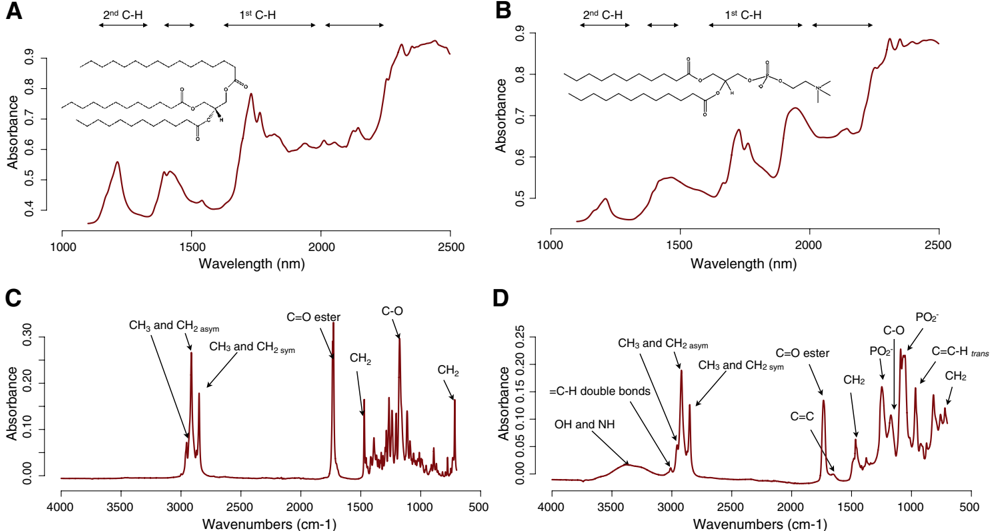
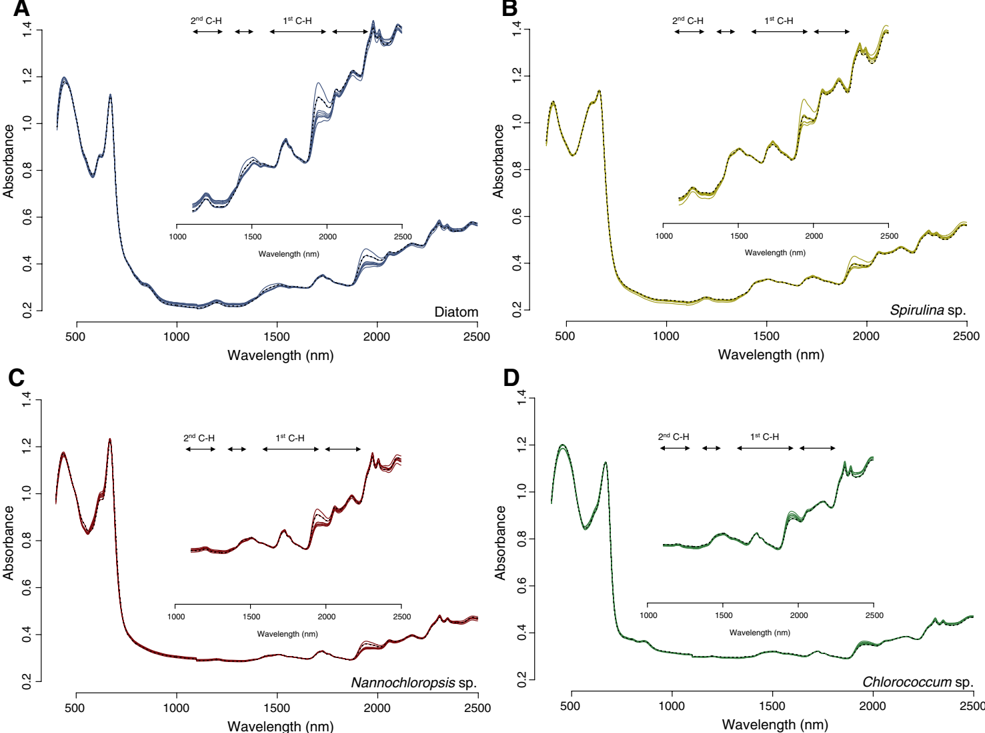
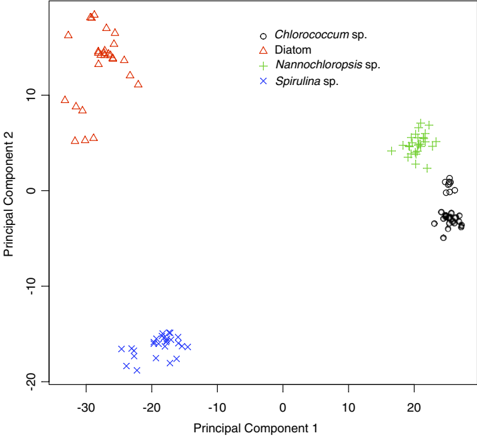
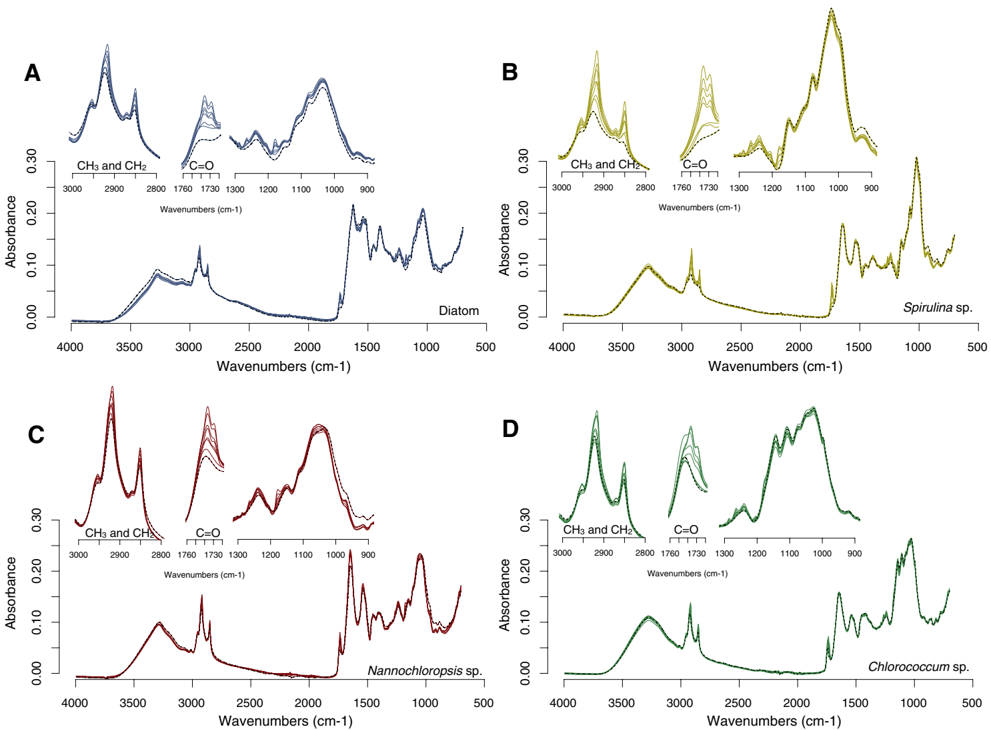
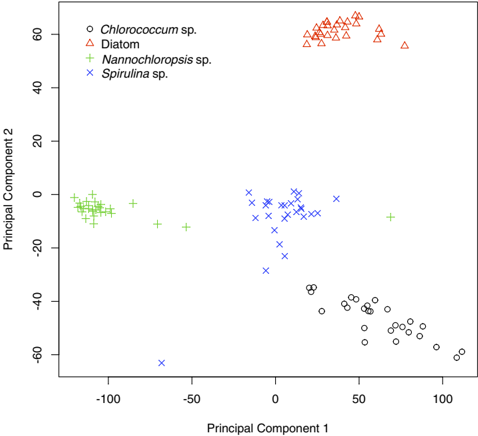
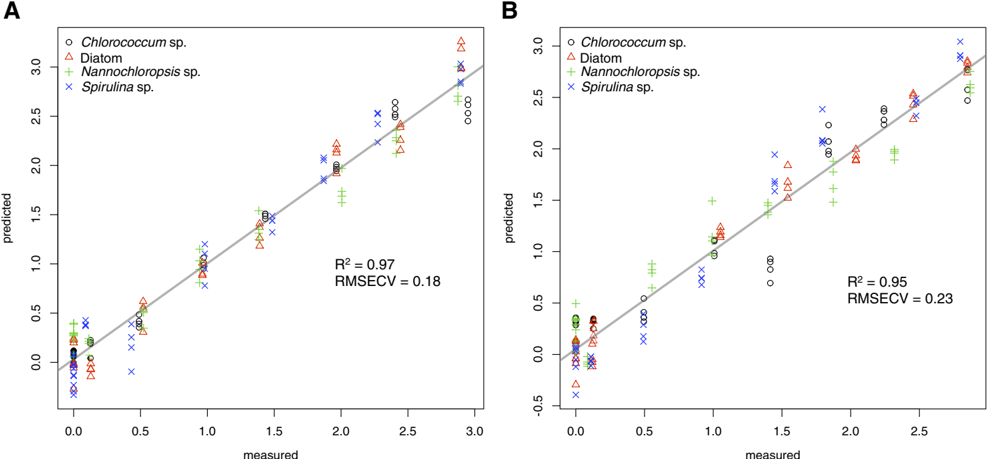
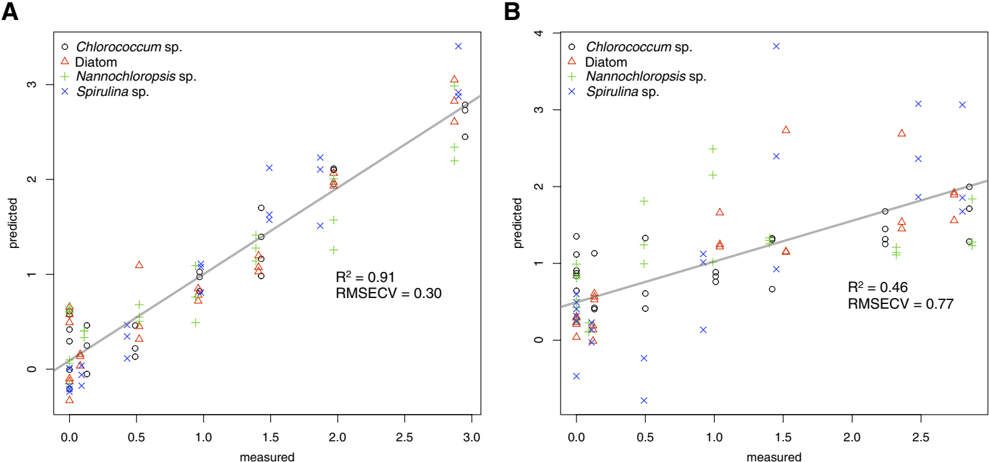
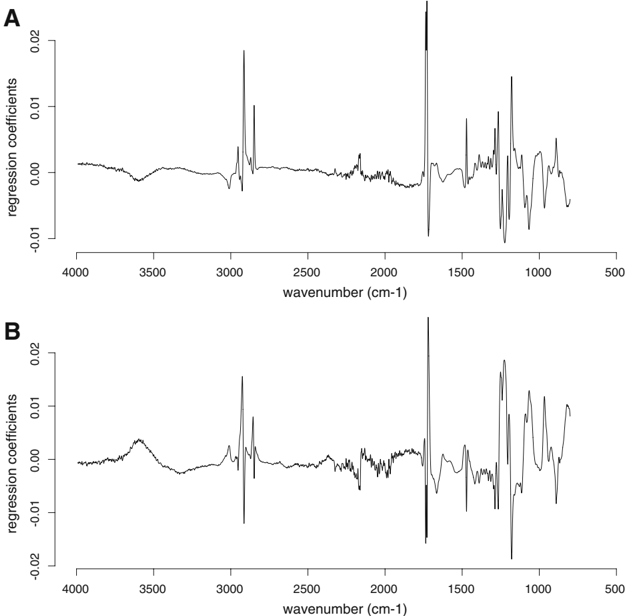
A large number of algal biofuels projects rely on a lipid screening technique for selecting a particular algal strain with which to work. We have developed a multivariate calibration model for predicting the levels of spiked neutral and polar lipids in microalgae, based on infrared (both near-infrared (NIR) and Fourier transform infrared (FTIR)) spectroscopy. The advantage of an infrared spectroscopic technique over traditional chemical methods is the direct, fast, and non-destructive nature of the screening method. This calibration model provides a fast and high-throughput method for determining lipid content, providing an alternative to laborious traditional wet chemical methods. We present data of a study based on nine levels of exogenous lipid spikes (between 1% and 3% (w/w)) of trilaurin as a triglyceride and phosphatidylcholine as a phospholipid model compound in lyophilized algal biomass. We used a chemometric approach to corrrelate the main spectral changes upon increasing phospholipid and triglyceride content in algal biomass collected from single species. A multivariate partial least squares (PLS) calibration model was built and improved upon with the addition of multiple species to the dataset. Our results show that NIR and FTIR spectra of biomass from four species can be used to accurately predict the levels of exogenously added lipids. It appears that the cross-species verification of the predictions is more accurate with the NIR models (R 2 = 0.969 and 0.951 and RMECV = 0.182 and 0.227% for trilaurin and phosphatidylcholine spike respectively), compared with FTIR (R 2 = 0.907 and 0.464 and RMECV = 0.302 and 0.767% for trilaurin and phosphatidylcholine spike, respectively). A fast high-throughput spectroscopic lipid fingerprinting method can be applied in a multitude of screening efforts that are ongoing in the microalgal research community.
Overview
The claims and statistics of this paper haven’t been checked yet.
Free: it reads the open-access text and checks the first 5 claims that cite a source we can check. Create a free account to check every claim.
Integrity signals
Registry
Cites
Statistics
Figures

Verification
Claims the paper makes
The claims and statistics of this paper haven’t been checked yet.
Free: it reads the open-access text and checks the first 5 claims that cite a source we can check. Create a free account to check every claim.
Claims other papers make about this one
Each is checked against this paper’s own text: does it say what the citing paper says it does?
The cited source says what the claim attributes to it.
In the citing paper
“However, the disadvantage of the assays is that they are affected by uneven dye uptake due to the variability of different algal strains and cell wall composition that affected by the growth conditions [21].”
From Review of Methods Used for Microalgal Lipid-Content Analysis (2011) · cites this paper as [21]
The cited source says what the claim attributes to it.
In the citing paper
“Similarly, HPLC (high-performance liquid chromatography), TLC (Thin-layer chromatography) and MS are also powerful techniques for lipid analysis [21].”
From Review of Methods Used for Microalgal Lipid-Content Analysis (2011) · cites this paper as [21]
The check wasn’t confident either way, so it gives no verdict — never disputed.
In the citing paper
“Heraud et al . [64] demonstrated that FTIR spectra for proteins and lipids could be obtained with a micro-FTIR fixed on the large (~200 micron) microalgae Micrasterias hardyi observed in a flow-through cell. In the flow-through cell, the microalgae cell was alive and viable, while changes in proteins and lipids were monitored as nutrient amended media flowed by the microalga.”
From Microalgal process-monitoring based on high-selectivity spectroscopy tools: status and future perspectives (2018) · cites this paper as [64]
Experimental — accuracy not yet measured
Self-check
Percentages, sums and reported differences re-computed from the paper’s own numbers.
The self-check needs the paper’s full text.
Citations
Cites
Microalgal triacylglycerols as feedstocks for biofuel production: perspectives and advances
Hu, Q., Sommerfeld, M., Jarvis, E., Ghirardi, M., Posewitz, M., Seibert, M., & Darzins, A. (2008) · The Plant Journal · doi:10.1111/j.1365-313x.2008.03492.x · Cited by 3,745 · cited 1×
“These four divisions contain good candidates for the potential large-scale algal culture for biofuels production thanks to their inherent high-lipid content and fast growth rates [12].”
BackgroundSteele, D. (1990) · Spectrochimica Acta Part A: Molecular Spectroscopy · doi:10.1016/0584-8539(90)80069-b · Cited by 2,240
Sheehan, J., Dunahay, T., Benemann, J., & Roessler, P. (1998) · doi:10.2172/15003040 · Cited by 1,753
Handbook of Near-Infrared Analysis
Burns, D. A., & Ciurczak, E. W. (2001) · CRC Press eBooks · doi:10.1201/9781003042204 · Cited by 1,466 · cited 1×
“Infrared spectroscopy combined with multivariate calibration methods are widely used in analytical chemistry disciplines [1, 10, 15].”
MethodA user-friendly guide to Multivariate Calibration and Classification
Næs, T., Isaksson, T., Fearn, T., & Davies, T. (2017) · doi:10.1255/978-1-906715-25-0 · Cited by 1,401
Placing microalgae on the biofuels priority list: a review of the technological challenges
Greenwell, H. C., Laurens, L. M. L., Shields, R. J., Lovitt, R. W., & Flynn, K. J. (2010) · Journal of The Royal Society Interface · doi:10.1098/rsif.2009.0322 · Cited by 876
Self-citationMultivariate Analysis of Quality. An Introduction
Martens, H. M. A. M. (2001) · Measurement Science and Technology · doi:10.1088/0957-0233/12/10/708 · Cited by 734
A high throughput Nile red method for quantitative measurement of neutral lipids in microalgae
Chen, W., Zhang, C., Song, L., Sommerfeld, M., & Hu, Q. (2009) · Journal of Microbiological Methods · doi:10.1016/j.mimet.2009.01.001 · Cited by 681 · cited 2×
“However, it is known that this fluorometric method is affected by uneven dye uptake and staining and has been known to cause variability between species and between growth conditions due to differences in cell wall composition, limiting the application of this method [3, 6].”
BackgroundMethodThe promise and challenges of microalgal‐derived biofuels
Pienkos, P. T., & Darzins, A. (2009) · Biofuels, Bioproducts and Biorefining · doi:10.1002/bbb.159 · Cited by 602
Dean, A. P., Sigee, D. C., Estrada, B., & Pittman, J. K. (2010) · Bioresource Technology · doi:10.1016/j.biortech.2010.01.065 · Cited by 523 · cited 1×
“The use of Fourier transform infrared (FTIR) spectroscopy in algal biomass analysis has been useful in monitoring biochemical changes [5, 11, 19].”
Method
Research works printed but not linked: 1
- 7. Esbensen KH (2002) Multivariate data analysis-in practice: an introduction to mutlivariate data analysis and experimental design. CAMO Process AS, Oslo
Cited by
Items 101–160 of 160
Raju, N., Sae‐leaw, T., Osako, K., & Benjakul, S. (2021) · Journal of Food Science and Technology · doi:10.1007/s13197-021-05238-7 · Cited by 12
Liu, J., Song, L., & Huang, Q. (2015) · Letters in Applied Microbiology · doi:10.1111/lam.12531 · Cited by 12
“While near-infrared spectroscopy (NIRS) can provide rich information on proteins, lipids, nucleic acids and carbohydrates in biological systems, and it has the advantage in simple, inexpensive, fast, noninvasive and multiplex measurements, so NIRS shows the great potential for multicomponent analysis application (Laur…”
BackgroundLee, G., Midorikawa, Y., Kuda, T., Harada, M., Fujita, S., Takahashi, H., & Kimura, B. (2022) · Journal of Applied Phycology · doi:10.1007/s10811-022-02756-5 · Cited by 11
“The absorbance peaks between 2850 and 3000 cm−1 indicate the presence of lipid, and peaks between 1650 and 1760 cm−1 indicate the C = O group stretching vibration in carbonyl compounds such as carboxylic acids, esters, ketones, and aldehydes in the ShEt and UpEt spectra (Laurens and Wolfrum 2011; Nunes et al. 2019).”
BackgroundNepper-Davidsen, J., Magnusson, M. E., Lawton, R. J., Fletcher, D., Holmes, G., & Glasson, C. R. K. (2023) · Algal Research · doi:10.1016/j.algal.2023.103352 · Cited by 15
Adrar, N., Bahadorı, F., Ceylan, F. D., Topçu, G., Bedjou, F., & Çapanoğlu, E. (2021) · Journal of Chemical Technology & Biotechnology · doi:10.1002/jctb.6793 · Cited by 12
Sweiss, M. A., Assi, S. A., Barhoumi, L. M., Al‐Jumeily, D., Watson, M., Wilson, M., Arnot, T., & Scott, R. J. (2023) · Journal of Chemical Technology & Biotechnology · doi:10.1002/jctb.7512 · Cited by 17
Blažina, M., Haberle, I., Hrustić, ⎜., Budiša, A., Petrić, I. S., Konjević, L., Šilović, T., Djakovac, T., & Geček, S. (2019) · Journal of Marine Science and Engineering · doi:10.3390/jmse7060164 · Cited by 11
“Although two regions, methyl and methylene at 2800–3000 cm−1, are commonly used to determine lipid content by FTIR [32,33], in this study we used the vibrational stretching of ester bond C=O at 1740 cm−1 because it is considered to be exclusively related to ester bonds of fatty acids and avoids overlapping with functi…”
MethodInfluentialRaju, N., & Benjakul, S. (2020) · European Journal of Lipid Science and Technology · doi:10.1002/ejlt.202000078 · Cited by 10
Moholkar, D. N., Sadalage, P. S., Havaldar, D. V., & Pawar, K. D. (2021) · Materials Science and Engineering C · doi:10.1016/j.msec.2021.111979 · Cited by 11
Hyperspectral Three-Dimensional Absorption Imaging Using Snapshot Optical Tomography
Juntunen, C., Abramczyk, A. R., Woller, I. M., & Sung, Y. (2022) · Physical Review Applied · doi:10.1103/physrevapplied.18.034055 · Cited by 10
Lenzuni, M., Demichelis, F., Basbus, J., Barbucci, A., Savorani, F., Tommasi, T., & Casazza, A. A. (2025) · Sustainable materials and technologies · doi:10.1016/j.susmat.2025.e01338 · Cited by 11
“The smaller peaks at 923 and 864 cm (cid:0) 1 may represent out-of-plane bending vibrations of aromatic rings [56,57].”
Madurapperumage, A., Johnson, N., Thavarajah, P., Tang, L. P., & Thavarajah, D. (2023) · ACS Food Science & Technology · doi:10.1021/acsfoodscitech.3c00239 · Cited by 10
Mouga, T., de Almeida, M. M., Pitacas, F. I. D. O., Rodrigues, A. M. M. N., Vitória, C., & Anjos, O. (2025) · Applied Sciences · doi:10.3390/app15084212 · Cited by 12
Cardoso, L. G., Andrade, B. B., Silva, J. S. D. J., da Silva, J. B. A., Assis, D. D. J., Carvalho, N. S., da Silva, J. C., de Souza, C. O., & Lombardi, A. T. (2023) · Journal of Applied Phycology · doi:10.1007/s10811-023-02964-7 · Cited by 8
“) in microalgae materials and also sensitive to detecting the structure of polysaccharides in plants and microalgae (Pereira et al. 2009; Laurens and Wolfrum 2011; Jebsen et al. 2012; Goo et al. 2013; Costa et al. 2018).”
BackgroundCaprio, F. D., Pedram, N., Brugnoli, B., Francolini, I., Altimari, P., & Pagnanelli, F. (2024) · Bioresource Technology · doi:10.1016/j.biortech.2024.131516 · Cited by 8
Rapid Compositional Analysis of Microalgae by NIR Spectroscopy
Laurens, L. M. L., & Wolfrum, E. J. (2012) · NIR news · doi:10.1255/nirn.1292 · Cited by 9
Self-citationSalinas-Whittaker, S., Gómez-Gutiérrez, C. M., Cordero-Esquivel, B., Luque, P. A., & Guerra‐Rivas, G. (2020) · Environmental Science and Pollution Research · doi:10.1007/s11356-020-09796-9 · Cited by 10
Near-Infrared Spectroscopy for Growth Estimation of Spirulina platensis Cultures
Malletzidou, L., Kyratzopoulou, E., Kyzaki, N., Nerantzis, E., & Kazakis, N. A. (2024) · Methods and Protocols · doi:10.3390/mps7060091 · Cited by 6
“So far, it has been used in the field of microalgae monitoring, in terms of composition analysis [39], especially in the case of dry biomass, to avoid diffuse reflectance phenomena [14,42,48–52].”
Youssef, H. M., Mohamed, F., Elhameed, M. S. A., & Elsayed, K. N. M. (2025) · RSC Advances · doi:10.1039/d5ra06679d · Cited by 7
Gupta, N., Khare, P., & Singh, D. P. (2019) · Energy Ecology and Environment · doi:10.1007/s40974-019-00124-7 · Cited by 7
Recovery of Residual Crude Palm Oil (RCPO) from Oil Palm Decanter Cake (OPDC) Using D-Limonene
Sahad, N., Som, A. M., Baharuddin, A. S., Mokhtar, M. N., Busu, Z., & Sulaiman, A. (2015) · Advanced materials research · doi:10.4028/www.scientific.net/amr.1113.405 · Cited by 6
Metric and Spectral Insight into Bee-Pollen-to-Bee-Bread Transformation Process
Svečnjak, L., Bošković, K., Prđun, S., Fuka, M. M., & Tanuwidjaja, I. (2023) · Foods · doi:10.3390/foods12224149 · Cited by 5
Laurens, L. M. L., Knoshaug, E. P., Rohrer, H., Wychen, S. V., Dowe, N., & Zhang, M. (2019) · Analytical Methods · doi:10.1039/c8ay02416b · Cited by 6
Self-citationAnand, V., Kashyap, M., Ghosh, A., & Bala, K. (2020) · Bioresource Technology Reports · doi:10.1016/j.biteb.2020.100593 · Cited by 6
Complex System Engineering: A Case Study for an Unsequenced Microalga
Guarnieri, M. T., Laurens, L. M. L., Knoshaug, E. P., Chou, Y., Donohoe, B. S., & Pienkos, P. T. (2012) · Wiley eBooks · doi:10.1002/9781118433034.ch8 · Cited by 7
Self-citationPushpa, S. R., Awoyale, A. A., Lokhat, D., Sukumaran, R. K., & Savithri, S. (2023) · Bioresource Technology Reports · doi:10.1016/j.biteb.2023.101747 · Cited by 8
Wulandari, R., Dharma, A., & Syafrizayanti, S. (2019) · Jurnal Riset Kimia · doi:10.25077/jrk.v10i2.316 · Cited by 6
Localization of Cereal Grain Components by Vibrational Microscopy and Chemometric Analysis
Jääskeläinen, A., Rojas, L. G., & Bertinetto, C. G. (2016) · Food engineering series · doi:10.1007/978-3-319-24735-9_2 · Cited by 4
Mubarak, M., Shaija, A., & Vasu, S. T. (2024) · Heliyon · doi:10.1016/j.heliyon.2024.e30681 · Cited by 3
“Biofuels produced from microalgae and aquatic weeds like Salvinia molesta are promising due to high areal productivity, renewability, and high lipid content [15,16].”
BackgroundComprehensive Screening of Micro-and Macroalgal Species for Bioenergy
Dasgupta, C. N., & Nayaka, S. (2017) · Springer eBooks · doi:10.1007/978-3-319-51010-1_2 · Cited by 4
“A ¼ εlc A ¼ absorbance; ε ¼ absorptivity; l ¼ pathlength; c ¼ concentrationð Þ ð1Þ Laurens and Wolfrum (2011) showed the use of NIR and FTIR spectroscopic fingerprinting of algal biomass to predict lipid content and composition.”
BackgroundHarwati, T. U. (2013) · Digitale Bibliothek Braunschweig (Verbundzentrale Göttingen (VZG)) · doi:10.24355/dbbs.084-201311291129-0 · Cited by 4
Sterchi, R., Maeda, N., Keller, S., Zehnder, B. H., & Meier, D. M. (2023) · Industrial & Engineering Chemistry Research · doi:10.1021/acs.iecr.2c03558 · Cited by 2
Multi‐Scale Spectroscopy to Map Intertidal Microbial Biofilm Community and Trait Diversity
Byrd, K. B., Palacios, S. L., Taylor, N. C., Woo, I., Moskal, S. M., Kokaly, R. F., Hoefen, T. M., Chapman, J. W., & Cruz, S. E. W. D. L. (2025) · Journal of Geophysical Research Biogeosciences · doi:10.1029/2024jg008520 · Cited by 3
Recent Advances in Improving Ecophysiology of Microalgae for Biofuels
Bajhaiya, A. K., Mandotra, S. K., Ansolia, A., & Barsana, A. (2017) · Springer eBooks · doi:10.1007/978-3-319-51010-1_8 · Cited by 3
Effect of plant hormones on the production of biomass and lipid in microalgae
Allaf, M. M. (2013) · Scholarship@Western (Western University) · Cited by 4
The fatter the better : selecting microalgae cells for outdoor lipid production
Teles, I. D. (2016) · doi:10.18174/387306 · Cited by 3
Physico-chemical Characterization of Agricultural and Forest Biomass
Mukherjee, S., Chander, T., Pradhan, S., Prasad, L., & Mehariya, S. (2025) · Royal Society of Chemistry eBooks · doi:10.1039/9781837676071-00027 · Cited by 3
Potential of Lipids from Polymer-Based Dewatered Sewage Sludge as Feedstock for Biodiesel Production
Khalil, N. A., Banjar, M. F., Abedin, F. N. J., Fizal, A. N. S., Ahmad, N., Zulkifli, M., Taweepreda, W., Hossain, M. S., & Yahaya, A. N. A. (2025) · Sustainability · doi:10.3390/su17072991 · Cited by 2
“The peak at 967 cm − 1 a tt ributable to the trans-C-H out-of-plane bending (C=C-H trans , 970– 960 cm − 1 ) indicated the possible existence of the unsaturated ester in the lipid [69].”
Strain Selection for Biodiesel Production
Karthikeyan, S. (2013) · CRC Press eBooks · doi:10.1201/b14920-4 · Cited by 2
Evaluation of in-situ transient simultaneous cell disruption and transesterification of microalgae
González-Delgado, Á. D., Barajas-Solano, A. F., & Peralta-Ruiz, Y. Y. (2017) · Contemporary Engineering Sciences · doi:10.12988/ces.2017.710143 · Cited by 1
Kumar, S. D., Devi, K. N., Krishnaveni, N., Gowthami, A., Gunabal, S., Sathiyaraj, G., Sinduja, S., Sridhar, P., Santhanam, P., Perumal, P., et al. (2022) · Biomass Conversion and Biorefinery · doi:10.1007/s13399-022-03227-0 · Cited by 1
“…and Pre-malatha [60], who have studied the Scenedesmus sp. FTIR spectroscopy was earlier used to assess the lipid and biofuel efficiency of algae, and this is the most viable method to choose algal cells for lipid-based application like biofuel production and animal feed preparations [61, 62].”
Morgan, S. A. (2015) · Cited by 1
Metabolic engineering and systems biology for increasing biofuel production in microalgae
Jinkerson, R. E. (2007) · Digital Collections of Colorado (Colorado State University) · Cited by 1
Carlo, R., Bechtel, O., & Allen, T. W. (2017) · Digital Commons (Liberty University)
UNCORRECTED PROOFS 3 Basic Culturing and Analytical Measurement Techniques
Lee, Y. K., Chen, W., Shen, H., Han, D., Li, Y., Jones, H. D. T., Timlin, J. A., Hu, Q. X., & Lin, L. J. (2013)
Flores, C. A. S. (2016) · ERA: Education and Research Archive (University of Alberta) · doi:10.7939/r3mg7g63v · Cited by 1
CHARACTERIZATION OF OIL AND CAKE FROM Spirogyra porticallis
Gaiya, D. D. (2021) · Biotechnologia Acta · doi:10.15407/biotech14.03.054
“Most of their essential nutrients can be supplied by waste water and CO2 from the atmosphere; leading to high productivity and an associated high lipid content making them a very attractive option [3, 4].”
BackgroundAlgal Biofuels; Algal Biofuels R&D at NREL (Brochure)
Available, N. (2010) · OSTI OAI (U.S. Department of Energy Office of Scientific and Technical Information) · doi:10.2172/988607 · Cited by 1
Gupta, N., Yadav, N., Singh, D. P., Pathak, V. V., & Ahmad, S. (2022) · Research Square · doi:10.21203/rs.3.rs-2271527/v1
Liu, Y., Wong, T. T. W., Shi, J., He, Y., Nie, L., & Wang, L. V. (2023) · bioRxiv (Cold Spring Harbor Laboratory) · doi:10.1101/2023.02.27.530195
“…the axon in the nervous system 32 , exhibited strong absorption at 1690 nm. Compared with other absorbers (collagen 33 , human fat 34 , triglyceride 35 , and cholesterol 33 ), only phospholipids exhibit strong absorption at this particular wavelength, which further highlights the capability of…”
Mahendran, S., Sethuraman, M., Wilson, J. J., Muniasamy, S., Sivakumar, T., & Ponmanickam, P. (2023) · Environmental Quality Management · doi:10.1002/tqem.22102
Biochemical and spectral characterization of micro- and macroalgae
Niemi, C. (2024) · Acta universitatis agriculturae Sueciae · doi:10.54612/a.2ng7m0c7vn · Cited by 1
加藤, 祐., & 高見澤, 淳. (2021) · The Review of Laser Engineering · doi:10.2184/lsj.49.9_506
Vandana, Garima, Singh, R. P., & Prasad, R. (2025) · Sustainable landscape planning and natural resources management · doi:10.1007/978-3-031-82186-8_10
Blood in Capsules: Multi-Technique Forensic Investigation of Suspicious Food Supplement
Rudnicki-Velasquez, P. B., Popławska, M., Pioruńska-Sędłak, K., Łaszcz, M., Milczarek, M., Pogorzelska, A., Karyński, M., & Błażewicz, A. (2025) · Molecules · doi:10.3390/molecules30234600 · Cited by 1
“The ATR-FTIR spectrum of the capsule contents showed clear absorption bands that are typical of glycerol esters of fatty acids [21].”
Sterchi, R., Maeda, N., Keller, S., Zehnder, B. H., & Meier, D. M. (2023) · Zürcher Hochschule für Angewandte Wissenschaften digital collection (Zurich University of Applied Sciences) · doi:10.21256/zhaw-27034
Xie, X., Xie, L., Li, X., Su, W., Huang, C., Li, Q., Gao, Y., Gao, J., & Yu, X. (2026) · Food Chemistry · doi:10.1016/j.foodchem.2026.150921
Biswas, S., Rai, K. A., Iyer, S. R., & Moorthy, I. G. (2026) · Frontiers in Microbiology · doi:10.3389/fmicb.2026.1980036
“…made it possible to predict lipid content in microalgae which spiked across nine concentration levels up to 3% (w/w), indicating that this approach can detect minor variations in lipid composition using only small biomass quantities (Laurens and Wolfrum, 2010; Pasieczna-Patkowska et al., 2025).”
Metadata
- Authors
- Laurens, L. M. L., & Wolfrum, E. J.
- Affiliations
- National Laboratory of the Rockies (US)
- Corresponding author
- Wolfrum, Edward J.
- Venue
- BioEnergy Research
- Published
- 2010-07-27
- Volume
- 4
- Issue
- 1
- Pages
- 22-35
- ISSN
- 1939-1234 (ISSN-L)
- 1939-1242
- OpenAlex
- W2040286588
- Cited by
- 159
- References
- 29
- Citations by year
- 2026: 3 · 2025: 10 · 2024: 6 · 2023: 14 · 2022: 11 · 2021: 14 · 2020: 10 · 2019: 12 · 2018: 12 · 2017: 7 · 2016: 8 · 2015: 11 · 2014: 8 · 2013: 19 · 2012: 7
- FWCI
- 10.16
- Type
- journal article
- Language
- en
- Open access
- hybrid
- doi.org
- Licence
- cc-by-nc
- creativecommons.org/licenses/by-nc/2.0 (tdm)
- Locations
- BioEnergy Research (publishedVersion, cc-by-nc)
- Funders
- U.S. Department of Energy (DE -AC36-08GO28308, DE-AC36-08, DE-AC36, Contract No. DE-AC36-08GO28308, AC36‐08GO28308)
- Laboratory Directed Research and Development (DE-AC36-08GO28308)
- National Renewable Energy Laboratory (Contract No. DE-AC36-08GO28308, DE-AC36-08-GO28308, DE-AC36-08)
- Topics
- Physical Sciences › Chemistry › Analytical Chemistry › Spectroscopy and Chemometric Analyses
- Life Sciences › Biochemistry, Genetics and Molecular Biology › Biophysics › Spectroscopy Techniques in Biomedical and Chemical Research
- Physical Sciences › Energy › Renewable Energy, Sustainability and the Environment › Algal biology and biofuel production
- Keywords
- microalgae, algal lipids, lipid screening, near-infrared spectroscopy, FTIR spectroscopy, multivariate calibration, partial least squares, trilaurin, phosphatidylcholine, neutral lipids, polar lipids, algal biomass, algal biofuels, cross-species validation, lipid fingerprinting
About these checks
Registry, retraction, Cites and statistics results are computed, not judged, with one exception: a printed reference that no index lists is read once by a model before it counts as a citation error. Claims are extracted by a model and kept only when their quote appears verbatim in the text; each cited source is then checked, with a model’s help, for whether it says what the claim relies on. Those verdicts can be wrong — read the claim’s quote and the cited source before relying on one.
Statistics and arithmetic are recomputed, not judged.
Confidence bands are shown only for fields calibrated on our annotated test set. None is calibrated yet, so no band is shown.
What counts as a claim ›How we measure confidence ›How we check this ›
Are you an author, or do you see a problem with this page? Request a review
Data sources
Bibliographic data: Semantic Scholar, OpenAlex, Crossref.
Contains information from the Semantic Scholar Academic Graph Datasets, made available under the ODC Attribution License (ODC-BY 1.0).
Semantic Scholar’s data is described in: Kinney, R., et al. (2023). The Semantic Scholar Open Data Platform. arXiv:2301.10140.
