

Feasibility of Spectroscopic Characterization of Algal Lipids: Chemometric Correlation of NIR and FTIR Spectra with Exogenous Lipids in Algal Biomass
Open accessThe DOI matches its Crossref record; 29 of the 29 references it cites were found in a registry or an index.
Abstract
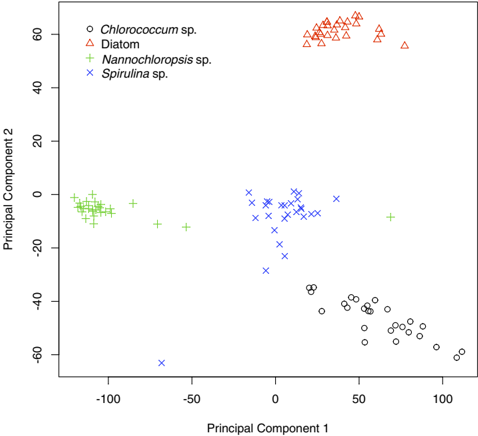
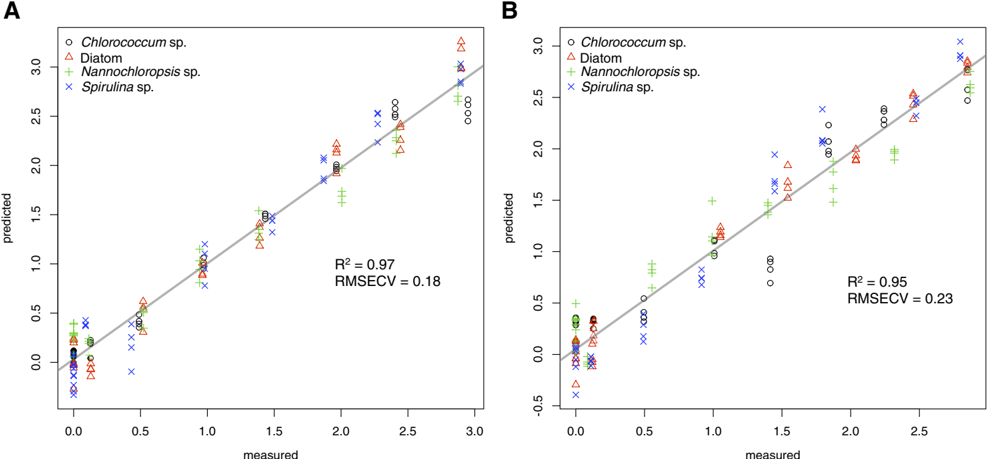
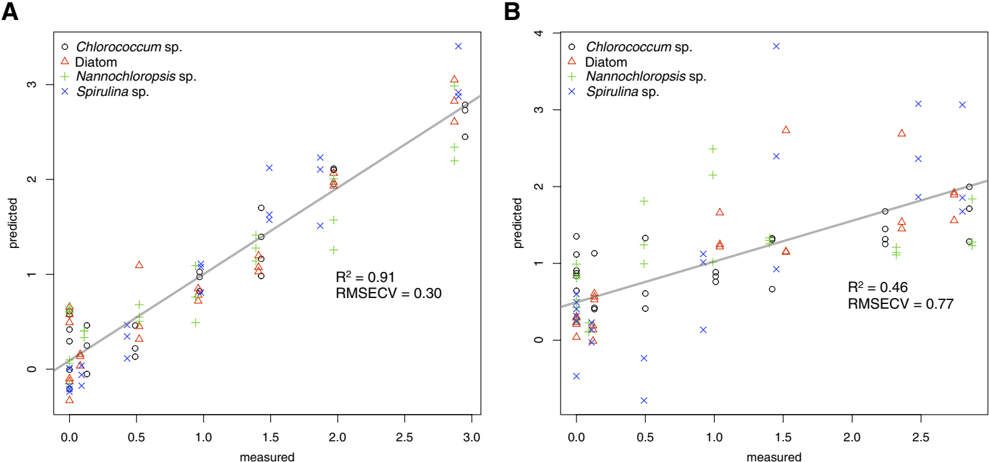
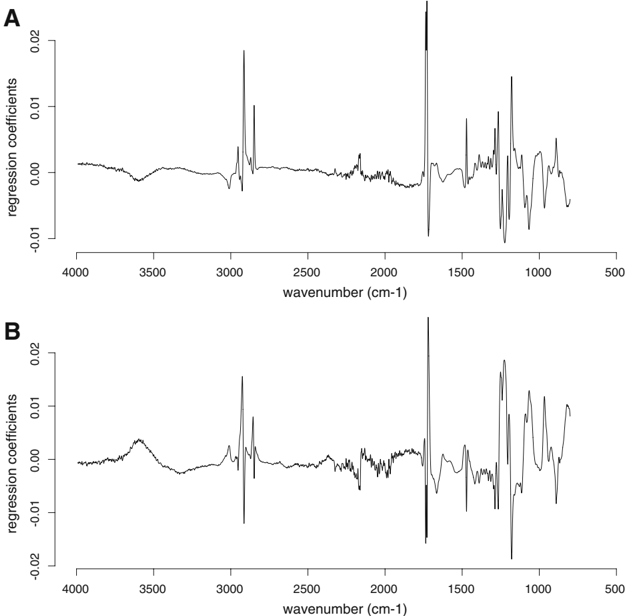
A large number of algal biofuels projects rely on a lipid screening technique for selecting a particular algal strain with which to work. We have developed a multivariate calibration model for predicting the levels of spiked neutral and polar lipids in microalgae, based on infrared (both near-infrared (NIR) and Fourier transform infrared (FTIR)) spectroscopy. The advantage of an infrared spectroscopic technique over traditional chemical methods is the direct, fast, and non-destructive nature of the screening method. This calibration model provides a fast and high-throughput method for determining lipid content, providing an alternative to laborious traditional wet chemical methods. We present data of a study based on nine levels of exogenous lipid spikes (between 1% and 3% (w/w)) of trilaurin as a triglyceride and phosphatidylcholine as a phospholipid model compound in lyophilized algal biomass. We used a chemometric approach to corrrelate the main spectral changes upon increasing phospholipid and triglyceride content in algal biomass collected from single species. A multivariate partial least squares (PLS) calibration model was built and improved upon with the addition of multiple species to the dataset. Our results show that NIR and FTIR spectra of biomass from four species can be used to accurately predict the levels of exogenously added lipids. It appears that the cross-species verification of the predictions is more accurate with the NIR models (R 2 = 0.969 and 0.951 and RMECV = 0.182 and 0.227% for trilaurin and phosphatidylcholine spike respectively), compared with FTIR (R 2 = 0.907 and 0.464 and RMECV = 0.302 and 0.767% for trilaurin and phosphatidylcholine spike, respectively). A fast high-throughput spectroscopic lipid fingerprinting method can be applied in a multitude of screening efforts that are ongoing in the microalgal research community.
Overview
The claims and statistics of this paper haven’t been checked yet.
Free: it reads the open-access text and checks the first 5 claims that cite a source we can check. Create a free account to check every claim.
Integrity signals
Registry
Cites
Statistics
Figures

Verification
Claims the paper makes
The claims and statistics of this paper haven’t been checked yet.
Free: it reads the open-access text and checks the first 5 claims that cite a source we can check. Create a free account to check every claim.
Claims other papers make about this one
Each is checked against this paper’s own text: does it say what the citing paper says it does?
The cited source says what the claim attributes to it.
In the citing paper
“However, the disadvantage of the assays is that they are affected by uneven dye uptake due to the variability of different algal strains and cell wall composition that affected by the growth conditions [21].”
From Review of Methods Used for Microalgal Lipid-Content Analysis (2011) · cites this paper as [21]
The cited source says what the claim attributes to it.
In the citing paper
“Similarly, HPLC (high-performance liquid chromatography), TLC (Thin-layer chromatography) and MS are also powerful techniques for lipid analysis [21].”
From Review of Methods Used for Microalgal Lipid-Content Analysis (2011) · cites this paper as [21]
The check wasn’t confident either way, so it gives no verdict — never disputed.
In the citing paper
“Heraud et al . [64] demonstrated that FTIR spectra for proteins and lipids could be obtained with a micro-FTIR fixed on the large (~200 micron) microalgae Micrasterias hardyi observed in a flow-through cell. In the flow-through cell, the microalgae cell was alive and viable, while changes in proteins and lipids were monitored as nutrient amended media flowed by the microalga.”
From Microalgal process-monitoring based on high-selectivity spectroscopy tools: status and future perspectives (2018) · cites this paper as [64]
Experimental — accuracy not yet measured
Self-check
Percentages, sums and reported differences re-computed from the paper’s own numbers.
The self-check needs the paper’s full text.
Citations
Cites
Microalgal triacylglycerols as feedstocks for biofuel production: perspectives and advances
Hu, Q., Sommerfeld, M., Jarvis, E., Ghirardi, M., Posewitz, M., Seibert, M., & Darzins, A. (2008) · The Plant Journal · doi:10.1111/j.1365-313x.2008.03492.x · Cited by 3,745 · cited 1×
“These four divisions contain good candidates for the potential large-scale algal culture for biofuels production thanks to their inherent high-lipid content and fast growth rates [12].”
BackgroundSteele, D. (1990) · Spectrochimica Acta Part A: Molecular Spectroscopy · doi:10.1016/0584-8539(90)80069-b · Cited by 2,240
Sheehan, J., Dunahay, T., Benemann, J., & Roessler, P. (1998) · doi:10.2172/15003040 · Cited by 1,753
Handbook of Near-Infrared Analysis
Burns, D. A., & Ciurczak, E. W. (2001) · CRC Press eBooks · doi:10.1201/9781003042204 · Cited by 1,466 · cited 1×
“Infrared spectroscopy combined with multivariate calibration methods are widely used in analytical chemistry disciplines [1, 10, 15].”
MethodA user-friendly guide to Multivariate Calibration and Classification
Næs, T., Isaksson, T., Fearn, T., & Davies, T. (2017) · doi:10.1255/978-1-906715-25-0 · Cited by 1,401
Placing microalgae on the biofuels priority list: a review of the technological challenges
Greenwell, H. C., Laurens, L. M. L., Shields, R. J., Lovitt, R. W., & Flynn, K. J. (2010) · Journal of The Royal Society Interface · doi:10.1098/rsif.2009.0322 · Cited by 876
Self-citationMultivariate Analysis of Quality. An Introduction
Martens, H. M. A. M. (2001) · Measurement Science and Technology · doi:10.1088/0957-0233/12/10/708 · Cited by 734
A high throughput Nile red method for quantitative measurement of neutral lipids in microalgae
Chen, W., Zhang, C., Song, L., Sommerfeld, M., & Hu, Q. (2009) · Journal of Microbiological Methods · doi:10.1016/j.mimet.2009.01.001 · Cited by 681 · cited 2×
“However, it is known that this fluorometric method is affected by uneven dye uptake and staining and has been known to cause variability between species and between growth conditions due to differences in cell wall composition, limiting the application of this method [3, 6].”
BackgroundMethodThe promise and challenges of microalgal‐derived biofuels
Pienkos, P. T., & Darzins, A. (2009) · Biofuels, Bioproducts and Biorefining · doi:10.1002/bbb.159 · Cited by 602
Dean, A. P., Sigee, D. C., Estrada, B., & Pittman, J. K. (2010) · Bioresource Technology · doi:10.1016/j.biortech.2010.01.065 · Cited by 523 · cited 1×
“The use of Fourier transform infrared (FTIR) spectroscopy in algal biomass analysis has been useful in monitoring biochemical changes [5, 11, 19].”
Method
Research works printed but not linked: 1
- 7. Esbensen KH (2002) Multivariate data analysis-in practice: an introduction to mutlivariate data analysis and experimental design. CAMO Process AS, Oslo
Cited by
Cuellar‐Bermudez, S. P., Aguilar‐Hernandez, I., Cardenas‐Chavez, D. L., Ornelas‐Soto, N., Romero‐Ogawa, M. A., & Parra‐Saldivar, R. (2015) · Microbial Biotechnology · doi:10.1111/1751-7915.12167 · Cited by 486
“However, some other techniques are currently used: fluorometry, colourimetry, Raman spectroscopy, gas chromatography with mass spectrometric detector, high performance liquid chromatography (HPLC) with pulsed amperometric detection, reverse phase HPLC, UV detection at 205 nm, evaporative light scattering detection, at…”
MethodBiomass for thermochemical conversion: targets and challenges
Tanger, P., Field, J. L., Jahn, C. E., DeFoort, M. W., & Leach, J. E. (2013) · Frontiers in Plant Science · doi:10.3389/fpls.2013.00218 · Cited by 283
An Overview of Algae Biofuel Production and Potential Environmental Impact
Menetrez, M. Y. (2012) · Environmental Science & Technology · doi:10.1021/es300917r · Cited by 276
Govender, T., Ramanna, L., Rawat, I., & Bux, F. (2012) · Bioresource Technology · doi:10.1016/j.biortech.2012.03.024 · Cited by 246
Ansari, F. A., Ravindran, B., Gupta, S. K., Nasr, M., Rawat, I., & Bux, F. (2019) · Journal of Environmental Management · doi:10.1016/j.jenvman.2019.03.123 · Cited by 181
Mayers, J. J., Flynn, K. J., & Shields, R. J. (2013) · Bioresource Technology · doi:10.1016/j.biortech.2013.08.133 · Cited by 179
“Two regions are commonly used for the assessment of lipid content by FTIR in the literature (Pistorius et al., 2009; Laurens and Wolfrum, 2011), the methyl and methylene groups at 2800– 3000 cm 1 and the vibrational stretching of ester bonds at 1740 cm (1).”
BackgroundMethodMeng, Y., Yao, C., Xue, S., & Yang, H. (2014) · Bioresource Technology · doi:10.1016/j.biortech.2013.10.064 · Cited by 174
Algal lipids, fatty acids and sterols
Kumari, P., Kumar, M., Reddy, C. R. K., & Jha, B. (2013) · Functional Ingredients from Algae for Foods and Nutraceuticals · doi:10.1533/9780857098689.1.87 · Cited by 163
Goo, B. G., Baek, G., Choi, D. J., Park, Y. I., Synytsya, A., Bleha, R., Seong, D. H., Lee, C., & Park, J. K. (2012) · Bioresource Technology · doi:10.1016/j.biortech.2012.11.077 · Cited by 149
On-Line Monitoring of Large Cultivations of Microalgae and Cyanobacteria
Havlik, I., Lindner, P., Scheper, T., & Reardon, K. F. (2013) · Trends in Biotechnology · doi:10.1016/j.tibtech.2013.04.005 · Cited by 131
Sultana, N., Hossain, S. M. Z., Mohammed, M. E., Irfan, M. F., Haq, B., Faruque, M. O., Razzak, S. A., & Hossain, M. M. (2020) · Scientific Reports · doi:10.1038/s41598-020-72236-8 · Cited by 119
Kumar, P. K., Vijaya Krishna, S., Verma, K., Pooja, K., Bhagawan, D., & Himabindu, V. (2018) · South African Journal of Chemical Engineering · doi:10.1016/j.sajce.2018.04.006 · Cited by 106
Grace, C. E. E., Lakshmi, P. K., Meenakshi, S., Vaidyanathan, S., Srisudha, S., & Mary, M. B. (2020) · Spectrochimica Acta Part A: Molecular and Biomolecular Spectroscopy · doi:10.1016/j.saa.2019.117382 · Cited by 104
Sudhakar, K., & Premalatha, M. (2015) · Energy Sources, Part A: Recovery, Utilization, and Environmental Effects · doi:10.1080/15567036.2013.825661 · Cited by 99
Pohndorf, R. S., CAMARA, A. S., LARROSA, A. P. Q., Pinheiro, C. P., Strieder, M. M., & Pinto, L. A. D. A. (2016) · Biomass and Bioenergy · doi:10.1016/j.biombioe.2016.06.020 · Cited by 112
Kumar, P. K., Krishna, S. V., Naidu, S. S., Verma, K., Dheravath, B., & Himabindu, V. (2019) · Carbon Resources Conversion · doi:10.1016/j.crcon.2019.06.002 · Cited by 98
Wang, Y., Yang, M., Gao, W. N., Hu, R., Luo, Z., & Li, G. (2013) · Sensors and Actuators B Chemical · doi:10.1016/j.snb.2013.12.028 · Cited by 80
Ido, A. L., de Luna, M. D. G., Capareda, S. C., Maglinao, A. L., & Nam, H. (2018) · Energy · doi:10.1016/j.energy.2018.04.171 · Cited by 70
Basic Culturing and Analytical Measurement Techniques
Lee, Y., Chen, W., Shen, H., Han, D., Li, Y., Jones, H. D. T., Timlin, J. A., & Hu, Q. (2013) · Handbook of Microalgal Culture · doi:10.1002/9781118567166.ch3 · Cited by 66
Kumar, P. K., Krishna, S. V., Verma, K., Pooja, K., Dheravath, B., Srilatha, K., & Himabindu, V. (2018) · Journal of Microbiological Methods · doi:10.1016/j.mimet.2018.09.014 · Cited by 77
Patel, A., Antonopoulou, I., Enman, J., Rova, U., Christakopoulos, P., & Μάτσακας, Λ. (2019) · BMC Chemical Engineering · doi:10.1186/s42480-019-0013-9 · Cited by 80
“exogenous spiked neutral (trilaurin as a TAG) and polar lipids (phosphatidylcholine as phospholipid) in four different microalgae on the basis of near-infrared (NIR) and FTIR spectroscopy [117].”
BackgroundInfluentialReview of Methods Used for Microalgal Lipid-Content Analysis
Han, Y., Wen, Q., Chen, Z., & Li, P. (2011) · Energy Procedia · doi:10.1016/j.egypro.2011.10.124 · Cited by 65
Algal biofuel: bountiful lipid from Chlorococcum sp. proliferating in municipal wastewater
Mahapatra, D. M., & Ramachandra, T. V. (2013) · NOT FOUND REPOSITORY (Indian Institute of Science Bangalore) · Cited by 79
A review on microalgal biomass and biodiesel production through Co-cultivation strategy
Azarpour, A., Zendehboudi, S., Mohammadzadeh, O., Rajabzadeh, A. R., & Chatzis, I. (2022) · Energy Conversion and Management · doi:10.1016/j.enconman.2022.115757 · Cited by 67
Algal Biomass Analysis by Laser-Based Analytical Techniques—A Review
Pořízka, P., Prochazková, P., Prochazka, D., Sládková, L., Novotný, J., Petrilak, M., Brada, M., Samek, O., Pilát, Z., Zemánek, P., et al. (2014) · Sensors · doi:10.3390/s140917725 · Cited by 61
“Laurens and Wolfrum [130] used the NIR and FTIR spectra of biomass from four species to predict accurately the levels of exogenously added lipids.”
BackgroundMethodRecent application of spectroscopy for the detection of microalgae life information: A review
Liu, J.-Y., Zeng, L.-H., & Ren, Z.-H. (2020) · Applied Spectroscopy Reviews · doi:10.1080/05704928.2018.1509345 · Cited by 59
Kowthaman, C. N., Kumar, P. S., Selvan, V. A. M., & Duraisamy, G. (2021) · Fuel · doi:10.1016/j.fuel.2021.122320 · Cited by 63
Mechanisms of soft tissue and protein preservation in Tyrannosaurus rex
Boatman, E. M., Goodwin, M. B., Holman, H.-Y. N., Fakra, S., Zheng, W., Gronsky, R., & Schweitzer, M. H. (2019) · Scientific Reports · doi:10.1038/s41598-019-51680-1 · Cited by 45
Plant and algal lipidomes: Analysis, composition, and their societal significance
Jouhet, J., Alves, E., Boutté, Y., Darnet, S. H., Domergue, F., Durand, T., Fischer, P. J., Fouillen, L., Grūbe, M., Joubès, J., et al. (2024) · Progress in Lipid Research · doi:10.1016/j.plipres.2024.101290 · Cited by 57
Using Algae for Biofuel Production: A Review
Jabłońska‐Trypuć, A., Wołejko, E., Ernazarovna, M. D., Głowacka, A., Sokołowska, G., & Wydro, U. (2023) · Energies · doi:10.3390/en16041758 · Cited by 65
“The speed and intensity of lipid synthesis in cells also depend on their growth phase [34–36].”
BackgroundLaurens, L. M. L., & Wolfrum, E. J. (2013) · Journal of Agricultural and Food Chemistry · doi:10.1021/jf403086f · Cited by 51
Self-citationBataller, B. G., & Capareda, S. C. (2018) · Algal Research · doi:10.1016/j.algal.2018.04.023 · Cited by 51
Borowitzka, M. A. (2013) · Algae for Biofuels and Energy · doi:10.1007/978-94-007-5479-9_4 · Cited by 50
Monitoring of Microalgal Processes
Havlik, I., Scheper, T., & Reardon, K. F. (2015) · Advances in Biochemical Engineering/Biotechnology · doi:10.1007/10_2015_328 · Cited by 15
“Lipid concentration could be predicted by a regression model using NIR and FTIR spectra of four microalgal species [183].”
BackgroundMethodKinetics of Peptides and Arginine Production from Microalgae ( Scenedesmus sp .) by Flash Hydrolysis
Garcia-Moscoso, J. L., Teymouri, A., & Kumar, S. (2015) · Industrial & Engineering Chemistry Research · doi:10.1021/ie5047279 · Cited by 62
Bajhaiya, A. K., Dean, A. P., Driver, T., Trivedi, D. K., Rattray, N. J. W., Allwood, J. W., Goodacre, R., & Pittman, J. K. (2016) · Metabolomics · doi:10.1007/s11306-015-0878-4 · Cited by 49
Phycoremediation of municipal wastewater by microalgae to produce biofuel
Singh, A. K., Sharma, N., Farooqi, H., Abdin, M. Z., Möck, T., & Kumar, S. B. (2017) · International Journal of Phytoremediation · doi:10.1080/15226514.2017.1284758 · Cited by 52
Mubarak, M., Shaija, A., & Vasu, S. T. (2016) · Environmental Science and Pollution Research · doi:10.1007/s11356-016-6343-8 · Cited by 43
Tsaousis, P. C., Sarafidou, M., Βeobide, A. S., Mathioudakis, G. N., Filippi, K., Bartzialis, D., Andrikopoulos, K. S., Giannoulis, K. D., DANALATOS, N. G., Koutinas, A., et al. (2025) · Biomass Conversion and Biorefinery · doi:10.1007/s13399-025-06858-1 · Cited by 42
“…cm −1 ) is primarily associated to the fats and lipids content (may also contain waxes and cutin), with peaks at 2950, 2919 and 2849 cm −1 corresponding to CH 3 and CH 2 stretching vibrations, while the peak at 3010 cm −1 peak is attributed to = C-H from unsaturated fatty acid derivatives [46].”
Microalgae triacylglycerols content by FT-IR spectroscopy
Miglio, R., Palmery, S., Salvalaggio, M., Carnelli, L., Capuano, F., & Borrelli, R. (2013) · Journal of Applied Phycology · doi:10.1007/s10811-013-0007-6 · Cited by 41
“Recently, NREL researchers (Laurens and Wolfrum 2011) have demonstrated the application of FTIR attenuated total reflectance spectroscopy for algal lipid quantification in dried biomass.”
BackgroundMicroalgae for lipid production: Cultivation, extraction & detection
Russell, C., Rodríguez, C., & Yaseen, M. (2022) · Algal Research · doi:10.1016/j.algal.2022.102765 · Cited by 52
Modiri, S., Hajfarajollah, H., Zahiri, H. S., Sharafi, H., Noghabi, K. A., Zamanzadeh, Z., Haghighi, O., Vali, H., Alidoust, L., & Azarivand, A. (2015) · Microbiology · doi:10.1099/mic.0.000025 · Cited by 45
“Laurens & Wolfrum (2011) examined the FTIR spectra of the pure lipid compounds.”
BackgroundDavey, P. T., Hiscox, W. C., Lucker, B. F., O’Fallon, J. V., Chen, S., & Helms, G. L. (2012) · Algal Research · doi:10.1016/j.algal.2012.07.003 · Cited by 48
“Both near infrared and fourier transform infrared spectroscopy have been reported as potential methods of triacylglyceride determination [11].”
Wang, J., Guo, X., Li, L., Qiu, H., Zhang, Z., Wang, Y., & Sun, G. (2018) · Molecules · doi:10.3390/molecules23071594 · Cited by 45
“In addition, the disadvantages of Nile red also include limited permeation capacity, inconvenient preservation, low fluorescence stability, and susceptibility to chlorophyll interference [25].”
BackgroundBehera, B., Patra, S., & Balasubramanian, P. (2020) · Journal of Environmental Management · doi:10.1016/j.jenvman.2020.110111 · Cited by 36
Boleydei, H., Mirghaffari, N., & Farhadian, O. (2018) · Environmental Science and Pollution Research · doi:10.1007/s11356-018-2281-y · Cited by 38
Review of microalgae growth in palm oil mill effluent for lipid production
Resdi, R., Lim, J. S., Kamyab, H., Lee, C. T., Hashim, H. B., Mohamad, N., & Ho, W. S. (2016) · Clean Technologies and Environmental Policy · doi:10.1007/s10098-016-1204-1 · Cited by 37
“The accumulation of lipid content or fatty acid in microalgae biomass is correlated with the growth stage of microalgae (Laurens and Wolfrum 2011).”
BackgroundPodevin, M., Fotidis, I. A., & Angelidaki, I. (2018) · Critical Reviews in Biotechnology · doi:10.1080/07388551.2017.1398132 · Cited by 34
Microalgae Biorefinery: Optimization of Starch Recovery for Bioplastic Production
Caprio, F. D., Amenta, S., Francolini, I., Altimari, P., & Pagnanelli, F. (2023) · ACS Sustainable Chemistry & Engineering · doi:10.1021/acssuschemeng.3c04133 · Cited by 36
Current developments in high‐throughput analysis for microalgae cellular contents
Lee, T., Chang, J., & Wang, H. (2013) · Biotechnology Journal · doi:10.1002/biot.201200391 · Cited by 33
“[37] Laurens, L. M. L., Wolfrum, E. J., Feasibility of spectroscopic characterization of algal lipids: Chemometric correlation of NIR and FTIR spectra with exogenous lipids in algal biomass.”
BackgroundPurkayastha, M. D., Kalita, D., Das, V. K., Mahanta, C. L., Thakur, A. J., & Chaudhuri, M. K. (2012) · Innovative Food Science & Emerging Technologies · doi:10.1016/j.ifset.2011.11.004 · Cited by 30
Perspectives of fluorescence spectroscopy for online monitoring in microalgae industry
Sá, M., Ferrer‐Ledo, N., Gao, F., Bertinetto, C. G., Jansen, J., Crespo, J. G., Wijffels, R. H., Barbosa, M., & Galinha, C. F. (2022) · Microbial Biotechnology · doi:10.1111/1751-7915.14013 · Cited by 29
Rapid method to screen and sort lipid accumulating microalgae
Cabanelas, I. T. D., van der Zwart, M., Kleinegris, D. M. M., Barbosa, M. J., & Wijffels, R. H. (2014) · Bioresource Technology · doi:10.1016/j.biortech.2014.10.057 · Cited by 31
Advances in techniques for assessment of microalgal lipids
Challagulla, V., Nayar, S., Walsh, K., & Fabbro, L. (2017) · Critical Reviews in Biotechnology · doi:10.1080/07388551.2016.1206058 · Cited by 27
Strategies for Bioprospecting Microalgae for Potential Commercial Applications
Barclay, W., & Apt, K. E. (2013) · Wiley eBooks · doi:10.1002/9781118567166.ch4 · Cited by 32
Li, X., Chen, K., & He, Y. (2020) · Algal Research · doi:10.1016/j.algal.2019.101680 · Cited by 26
Rapid Characterization of Fatty Acids in Oleaginous Microalgae by Near-Infrared Spectroscopy
Liu, B., Liu, J., Chen, T., Yang, B., Jiang, Y., Wei, D., & Chen, F. (2015) · International Journal of Molecular Sciences · doi:10.3390/ijms16047045 · Cited by 25
“vulgaris, the content range of the fatty acid in calibration and validation set should be as wide as possible [41].”
BackgroundMeasurement of the amorphous fraction of olanzapine incorporated in a co-amorphous formulation
da Costa, N. F., Fernandes, A. I., & Pinto, J. F. (2020) · International Journal of Pharmaceutics · doi:10.1016/j.ijpharm.2020.119716 · Cited by 25
Singh, D. V., & Singh, R. P. (2021) · The Science of The Total Environment · doi:10.1016/j.scitotenv.2021.151928 · Cited by 25
Brown, M. R., Frampton, D. M. F., Dunstan, G. A., & Blackburn, S. I. (2013) · Journal of Applied Phycology · doi:10.1007/s10811-013-0120-6 · Cited by 25
Coat, R., Montalescot, V., León, E. S., Kucma, D., Perrier, C., Jubeau, S., Thouand, G., Legrand, J., Pruvost, J., & Gonçalves, O. (2014) · Bioprocess and Biosystems Engineering · doi:10.1007/s00449-014-1194-5 · Cited by 25
“*1 day—[14, 15, 20] and those settled directly on fresh cells—i.”
BackgroundKrzemińska, I., Nawrocka, A., Piasecka, A., Jagielski, P., & Tys, J. (2015) · Engineering in Life Sciences · doi:10.1002/elsc.201400174 · Cited by 28
“Triacylglycerols obtained from microalgal cells constitute a suitable substrate for biodiesel production, whereas carbohydrates can be converted into bioethanol, biohydrogen, or biobutanol [8, 9].”
BackgroundDrożdż, A., Kamińska, A., Surman, M., Gonet-Surówka, A., Jach, R., Huras, H. K., Przybyło, M., & Stępień, E. Ł. (2020) · Pharmaceutics · doi:10.3390/pharmaceutics12090872 · Cited by 29
Improving biofuel production in phototrophic microorganisms with systems biology
Jinkerson, R. E., Subramanian, V., & Posewitz, M. C. (2011) · Biofuels · doi:10.4155/bfs.11.7 · Cited by 28
Physicochemical Characterization of Oil Palm Decanter Cake (OPDC) for Residual Oil Recovery
Sahad, N., Som, A. M., Baharuddin, A. S., Mokhtar, N., Busu, Z., & Sulaiman, A. (2014) · BioResources · doi:10.15376/biores.9.4.6361-6372 · Cited by 23
Zhang, D., Li, Q., Yan, C., & Cong, W. (2021) · Journal of Applied Phycology · doi:10.1007/s10811-021-02607-9 · Cited by 25
Sandmann, M., Schafberg, M., Lippold, M., & Rohn, S. (2018) · Scientific Reports · doi:10.1038/s41598-018-24638-y · Cited by 25
Esther Elizabeth Grace, C., Briget Mary, M., Vaidyanathan, S., & Srisudha, S. (2022) · Spectrochimica Acta Part A: Molecular and Biomolecular Spectroscopy · doi:10.1016/j.saa.2021.120830 · Cited by 21
Microalgal competence in urban wastewater management: phycoremediation and lipid production
Singh, D. V., Upadhyay, A. K., Singh, R., & Singh, D. P. (2021) · International Journal of Phytoremediation · doi:10.1080/15226514.2021.1979463 · Cited by 22
Tunalı, M., & Yenigün, O. (2021) · Journal of Material Cycles and Waste Management · doi:10.1007/s10163-020-01168-2 · Cited by 22
Nitrogen-dependent metabolic regulation of lipid production in microalga Scenedesmus vacuolatus
Gupta, N., Khare, P., & Singh, D. P. (2019) · Ecotoxicology and Environmental Safety · doi:10.1016/j.ecoenv.2019.03.035 · Cited by 21
Pimentel-Almeida, W., Itokazu, A. G., Bazani, H. A. G., Maraschin, M., Rodrigues, O. H. C., Corrêa, R. G., Lopes, S., Almerindo, G. I., & Moresco, R. (2021) · Environmental Technology · doi:10.1080/09593330.2021.1989058 · Cited by 25
Wicker, R. J., Daneshvar, E., Gupta, A. K., Song, H., Khan, E., & Bhatnagar, A. (2023) · Chemical Engineering Journal · doi:10.1016/j.cej.2023.144585 · Cited by 19
Merkley, N., & Syvitski, R. T. (2011) · Journal of Applied Phycology · doi:10.1007/s10811-011-9731-y · Cited by 19
“Recently it was also proposed that the total FA content of microalgal samples could be determined using near-infrared and Fourier transform infrared spectroscopy (Laurens and Wolfrum 2011).”
BackgroundSharma, D. K., Gautam, K., Jüppner, J., Giavalisco, P., Rihko‐Struckmann, L., Pareek, A., & Sundmacher, K. (2014) · Journal of Applied Phycology · doi:10.1007/s10811-014-0407-2 · Cited by 16
Patel, A., Pruthi, V., & Pruthi, P. A. (2018) · Renewable Energy · doi:10.1016/j.renene.2018.12.078 · Cited by 20
Talukdar, J., Kalita, M. C., Goswami, B. C., Hong, D. D., & Das, H. C. (2014) · Energy & Fuels · doi:10.1021/ef402298r · Cited by 18
Satpati, G. G., Gorain, P. C., Paul, I., & Pal, R. (2016) · RSC Advances · doi:10.1039/c6ra23933a · Cited by 21
Calcium Phosphate-Coated Lipid Nanoparticles as a Potential Tool in Bone Diseases Therapy
Sapino, S., Chindamo, G., Chirio, D., Manzoli, M., Peira, E., Riganti, C., & Gallarate, M. (2021) · Nanomaterials · doi:10.3390/nano11112983 · Cited by 18
“On the other hand, the spectra of NPs displays intense and narrow peaks in the 3000–2750 cm−1 range bands due to aliphatic stretching mode of C–H bond, strong band at 1732 cm−1 assigned to the stretching vibration of the C=O ester, at 1466 cm−1 due to CH2 scissoring [25], at 1260 and 956 cm−1 related to the OH bending…”
BackgroundBiagioni, D., Astling, D. P., Graf, P. A., & Davis, M. F. (2011) · Journal of Chemometrics · doi:10.1002/cem.1398 · Cited by 18
Mechanisms of detoxification of high copper concentrations by the microalga Chlorella sorokiniana
Vojvodić, S., Stanić, M., Zechmann, B., Dučić, T., Žižić, M. V., Dimitrijević, M., Luković, J. D., Milenković, M. R., Pittman, J. K., & Spasojević, I. (2020) · Biochemical Journal · doi:10.1042/bcj20200600 · Cited by 17
Surveillance of C-Allocation in Microalgal Cells
Wagner, H., Jungandreas, A., Fanesi, A., & Wilhelm, C. (2014) · Metabolites · doi:10.3390/metabo4020453 · Cited by 16
Challagulla, V., Walsh, K. B., & Subedi, P. (2014) · BioEnergy Research · doi:10.1007/s12155-013-9373-9 · Cited by 16
“For example, Laurens and Wolfrum [12] reported use of a ‘full’ cross-validation procedure.”
BackgroundMethodResultInfluentialParra-Lobato, M. C., Paredes, M. A., Labrador, J., García, M. S., Gavilanes‐Ruíz, M., & Gomez-Jimenez, M. C. (2017) · Frontiers in Plant Science · doi:10.3389/fpls.2017.01138 · Cited by 17
“The Nile red for plant intracellular lipid detection should be used with caution because this dye reportedly interferes with chlorophyll (Laurens and Wolfrum, 2010) and has low poor penetration into the cell wall and thus Frontiers in Plant Science | www.frontiersin.org 3 June 2017 | Volume 8 |…”
BackgroundBiochemical signatures of acclimation by Chlamydomonas reinhardtii to different ionic stresses
Charles, E. D., Muhamadali, H., Goodacre, R., & Pittman, J. K. (2018) · Algal Research · doi:10.1016/j.algal.2018.11.006 · Cited by 17
Process control strategies applied to microalgae-based biofuel production
Nwoba, E. G., Chuka-ogwude, D., Vadiveloo, A., & Ogbonna, J. C. (2022) · Elsevier eBooks · doi:10.1016/b978-0-323-90971-6.00031-0 · Cited by 19
Pushpa, S. R., Sankar, M., Sukumaran, R. K., & Savithri, S. (2022) · Biomass Conversion and Biorefinery · doi:10.1007/s13399-022-03508-8 · Cited by 14
“The spectra obtained from the NIR method exploit overtones and combination bands (ranges from 12,500 to 4000 cm −1 ) [9], while FTIR absorption monitors the fundamental vibrations in the mid-infrared region from 4000 to 400 cm −1 [10].”
Biological Carbon Capture, Growth Kinetics and Biomass Composition of Novel Microalgal Species
Khan, T. A., Liaquat, R., Zeshan, Khoja, A. H., & Bano, A. (2021) · Bioresource Technology Reports · doi:10.1016/j.biteb.2022.100982 · Cited by 19
Sajdak, M., & Kotyczka-Morańska, M. (2018) · Biomass and Bioenergy · doi:10.1016/j.biombioe.2018.02.019 · Cited by 14
Alvebratt, C., Dening, T. J., Åhlén, M., Cheung, O. Y. H., Strømme, M., Gogoll, A., Prestidge, C. A., & Bergström, C. A. S. (2020) · Pharmaceutics · doi:10.3390/pharmaceutics12050426 · Cited by 13
“Bands (a,c,e,f,g) can be attributed to molecular groups within the triglycerides in the Captex as follows: (a,e) CH2, (c) C-O, (f) C=O ester, and (g) CH2/CH3 [34].”
BackgroundMicroalgal fatty acid composition: rapid assessment using near-infrared spectroscopy
Challagulla, V., Walsh, K. B., & Subedi, P. (2016) · Journal of Applied Phycology · doi:10.1007/s10811-015-0533-5 · Cited by 12
“In another work by Laurens and Wolfrum (2013), NIRS was applied to assessment of biochemical composition (biomass, lipid, carbohydrate and protein) of three algal species (Chlorella, Scenedesmus and Nannochloropsis spp.). Brown et al. (2014) examined the potential of NIRS to predict biomass and lipid classes (saturate…”
BackgroundMethodInfluentialSreenikethanam, A., Raj, S., Banu, J. R., Gugulothu, P., Varjani, S., & Bajhaiya, A. K. (2022) · Phytochemistry Reviews · doi:10.1007/s11101-022-09824-1 · Cited by 13
Shetty, K., & Krishnakumar, G. (2023) · Fuel · doi:10.1016/j.fuel.2023.128240 · Cited by 14
Ansari, F. A., Hassan, H., Ramanna, L., Gani, K. M., Singh, K., Rawat, I., Gupta, S. K., Kumari, S., & Bux, F. (2024) · Journal of Environmental Management · doi:10.1016/j.jenvman.2023.119917 · Cited by 13
Scope for biodiesel and bioactive compounds production in the diatom Nitzschia punctata
Saranya, G., & Ramachandra, T. V. (2021) · Fuel · doi:10.1016/j.fuel.2021.120985 · Cited by 14
Rapid method for lipid determination in Chlorella sp. based on Nile Red fluorescence
Zheng, X., Yin, L., Qiang, S., Li, S., & Chen, Y. (2022) · Bioresource Technology Reports · doi:10.1016/j.biteb.2022.101077 · Cited by 17
Pandey, P. O., Mishra, G., & Mishra, H. N. (2018) · Journal of Food Measurement & Characterization · doi:10.1007/s11694-018-9870-9 · Cited by 12
“The results of the study were supported by the verification by [15] for wheat flour and [14] for algal lipids.”
BackgroundResultBain, K. F., Vergés, A., & Poore, A. G. B. (2013) · Aquatic Botany · doi:10.1016/j.aquabot.2013.05.012 · Cited by 13
Zheng, R., & Kamruzzaman, M. (2025) · Algal Research · doi:10.1016/j.algal.2025.104074 · Cited by 11
Qualitative and quantitative estimation of algal lipids for biofuel production
Arathi, S. M., Jayakumar, T., Jothibasu, K., Karthikeyan, S., & Suchitra, R. (2020) · International Journal of Chemical Studies · doi:10.22271/chemi.2020.v8.i4ab.10003 · Cited by 12
Metadata
- Authors
- Laurens, L. M. L., & Wolfrum, E. J.
- Affiliations
- National Laboratory of the Rockies (US)
- Corresponding author
- Wolfrum, Edward J.
- Venue
- BioEnergy Research
- Published
- 2010-07-27
- Volume
- 4
- Issue
- 1
- Pages
- 22-35
- ISSN
- 1939-1234 (ISSN-L)
- 1939-1242
- OpenAlex
- W2040286588
- Cited by
- 159
- References
- 29
- Citations by year
- 2026: 3 · 2025: 10 · 2024: 6 · 2023: 14 · 2022: 11 · 2021: 14 · 2020: 10 · 2019: 12 · 2018: 12 · 2017: 7 · 2016: 8 · 2015: 11 · 2014: 8 · 2013: 19 · 2012: 7
- FWCI
- 10.16
- Type
- journal article
- Language
- en
- Open access
- hybrid
- doi.org
- Licence
- cc-by-nc
- creativecommons.org/licenses/by-nc/2.0 (tdm)
- Locations
- BioEnergy Research (publishedVersion, cc-by-nc)
- Funders
- U.S. Department of Energy (DE -AC36-08GO28308, DE-AC36-08, DE-AC36, Contract No. DE-AC36-08GO28308, AC36‐08GO28308)
- Laboratory Directed Research and Development (DE-AC36-08GO28308)
- National Renewable Energy Laboratory (Contract No. DE-AC36-08GO28308, DE-AC36-08-GO28308, DE-AC36-08)
- Topics
- Physical Sciences › Chemistry › Analytical Chemistry › Spectroscopy and Chemometric Analyses
- Life Sciences › Biochemistry, Genetics and Molecular Biology › Biophysics › Spectroscopy Techniques in Biomedical and Chemical Research
- Physical Sciences › Energy › Renewable Energy, Sustainability and the Environment › Algal biology and biofuel production
- Keywords
- microalgae, algal lipids, lipid screening, near-infrared spectroscopy, FTIR spectroscopy, multivariate calibration, partial least squares, trilaurin, phosphatidylcholine, neutral lipids, polar lipids, algal biomass, algal biofuels, cross-species validation, lipid fingerprinting
About these checks
Registry, retraction, Cites and statistics results are computed, not judged, with one exception: a printed reference that no index lists is read once by a model before it counts as a citation error. Claims are extracted by a model and kept only when their quote appears verbatim in the text; each cited source is then checked, with a model’s help, for whether it says what the claim relies on. Those verdicts can be wrong — read the claim’s quote and the cited source before relying on one.
Statistics and arithmetic are recomputed, not judged.
Confidence bands are shown only for fields calibrated on our annotated test set. None is calibrated yet, so no band is shown.
What counts as a claim ›How we measure confidence ›How we check this ›
Are you an author, or do you see a problem with this page? Request a review
Data sources
Bibliographic data: Semantic Scholar, OpenAlex, Crossref.
Contains information from the Semantic Scholar Academic Graph Datasets, made available under the ODC Attribution License (ODC-BY 1.0).
Semantic Scholar’s data is described in: Kinney, R., et al. (2023). The Semantic Scholar Open Data Platform. arXiv:2301.10140.
