

Cellular Senescence as a Therapeutic Target for Age-Related Diseases: A Review
Open accessThe DOI matches its Crossref record; 123 of the 125 references it cites were found in a registry or an index.
Abstract
Life expectancy has increased substantially over the last few decades, leading to a worldwide increase in the prevalence and burden of aging-associated diseases. Recent evidence has proven that cellular senescence contributes substantially to the development of these disorders. Cellular senescence is a state of cell cycle arrest with suppressed apoptosis and concomitant secretion of multiple bioactive factors (the senescence-associated secretory phenotype—SASP) that plays a physiological role in embryonic development and healing processes. However, DNA damage and oxidative stress that occur during aging cause the accumulation of senescent cells, which through their SASP bring about deleterious effects on multiple organ and systemic functions. Ablation of senescent cells through genetic or pharmacological means leads to improved life span and health span in animal models, and preliminary evidence suggests it may also have a positive impact on human health. Thus, strategies to reduce or eliminate the burden of senescent cells or their products have the potential to impact multiple clinical outcomes with a single intervention. In this review, we touch upon the basics of cell senescence and summarize the current state of development of therapies against cell senescence for human use.
Overview
The claims and statistics of this paper haven’t been checked yet.
Free: it reads the open-access text and checks the first 5 claims that cite a source we can check. Create a free account to check every claim.
Integrity signals
Registry
Cites
Statistics
Figures
Verification
Claims the paper makes
The claims and statistics of this paper haven’t been checked yet.
Free: it reads the open-access text and checks the first 5 claims that cite a source we can check. Create a free account to check every claim.
Claims other papers make about this one
Each is checked against this paper’s own text: does it say what the citing paper says it does?
The source backs part of the claim, not all of it — or backs it for a different population, condition or comparison.
In the citing paper
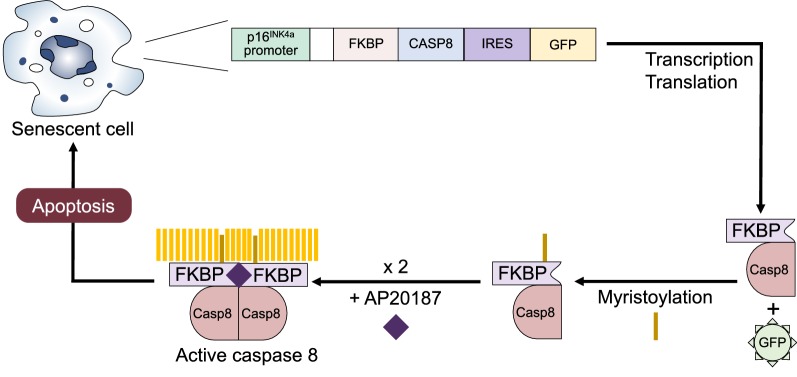
“However, the use of a suicide gene is not directly translatable into humans, and other senolytics such as BCL2-inhibitors or the combination of Dasatinib and quercetin have toxicities which can limit their use (Amaya-Montoya et al., 2020; Zhu et al., 2015).”
From Inhibiting USP16 rescues stem cell aging and memory in an Alzheimer’s model (2022) · cites this paper as Amaya-Montoya et al., 2020
Experimental — accuracy not yet measuredThe cited source says what the claim attributes to it.
In the citing paper
“as senescence prevents cells from proceeding to the S or M phases41,61,67.”
From A new gene set identifies senescent cells and predicts senescence-associated pathways across tissues (2022) · cites this paper as [67]
Self-check
Percentages, sums and reported differences re-computed from the paper’s own numbers.
The self-check needs the paper’s full text.
Citations
Cites
López-Otín, C., Blasco, M. A., Partridge, L., Serrano, M., & Kroemer, G. (2013) · Cell · doi:10.1016/j.cell.2013.05.039 · Cited by 14,982
The serial cultivation of human diploid cell strains
Hayflick, L., & Moorhead, P. S. (1961) · Experimental Cell Research · doi:10.1016/0014-4827(61)90192-6 · Cited by 8,508
The DNA-damage response in human biology and disease
Jackson, S. P., & Bartek, J. (2009) · Nature · doi:10.1038/nature08467 · Cited by 6,092
Inflamm‐aging: An Evolutionary Perspective on Immunosenescence
FRANCESCHI, C., BONAFÈ, M., VALENSIN, S., OLIVIERI, F., DE LUCA, M., OTTAVIANI, E., & DE BENEDICTIS, G. (2000) · Annals of the New York Academy of Sciences · doi:10.1111/j.1749-6632.2000.tb06651.x · Cited by 5,358
Oncogenic ras provokes premature cell senescence associated with accumulation of p53 and p16INK4a
Serrano, M., Lin, A. W., McCurrach, M. E., Beach, D., & Lowe, S. W. (1997) · Cell · doi:10.1016/s0092-8674(00)81902-9 · Cited by 5,218
The senescence-associated secretory phenotype: the dark side of tumor suppression
Coppé, J.-P., Desprez, P.-Y., Krtolica, A., & Campisi, J. (2010) · Annual Review of Pathology: Mechanisms of Disease · doi:10.1146/annurev-pathol-121808-102144 · Cited by 5,206
Remodelling the extracellular matrix in development and disease
Bonnans, C., Chou, J., & Werb, Z. (2014) · Nature Reviews Molecular Cell Biology · doi:10.1038/nrm3904 · Cited by 4,367
Zlotnik, A., & Yoshie, O. (2000) · Immunity · doi:10.1016/s1074-7613(00)80165-x · Cited by 3,859
Clearance of p16Ink4a-positive senescent cells delays ageing-associated disorders
Baker, D. J., Wijshake, T., Tchkonia, T., LeBrasseur, N. K., Childs, B. G., van de Sluis, B., Kirkland, J. L., & van Deursen, J. M. (2011) · Nature · doi:10.1038/nature10600 · Cited by 3,670
Naturally occurring p16Ink4a-positive cells shorten healthy lifespan
Baker, D. J., Childs, B. G., Durik, M., Wijers, M. E., Sieben, C. J., Zhong, J., A. Saltness, R., Jeganathan, K. B., Verzosa, G. C., Pezeshki, A., et al. (2016) · Nature · doi:10.1038/nature16932 · Cited by 2,876
Research works printed but not linked: 1
- Shenghui H Sharpless N Senescence in health and disease Cell 2017 169 1000 1011 28575665 PMC5643029 · DOI · Paper page
Cited by
A new gene set identifies senescent cells and predicts senescence-associated pathways across tissues
Saul, D., Kosinsky, R. L., Atkinson, E. J., Doolittle, M. L., Zhang, X., LeBrasseur, N. K., Pignolo, R. J., Robbins, P. D., Niedernhofer, L. J., Ikeno, Y., et al. (2022) · Nature Communications · doi:10.1038/s41467-022-32552-1 · Cited by 1,022
Reactive Oxygen Species: Drivers of Physiological and Pathological Processes
Checa, J., & Aran, J. M. (2020) · Journal of Inflammation Research · doi:10.2147/jir.s275595 · Cited by 984
Lagoumtzi, S. M., & Chondrogianni, N. (2021) · Free Radical Biology and Medicine · doi:10.1016/j.freeradbiomed.2021.05.003 · Cited by 279
AGE/RAGE in diabetic kidney disease and ageing kidney
Wu, X.-Q., Zhang, D.-D., Wang, Y.-N., Tan, Y.-Q., Yu, X.-Y., & Zhao, Y.-Y. (2021) · Free Radical Biology and Medicine · doi:10.1016/j.freeradbiomed.2021.05.025 · Cited by 228
Cellular Senescence: From Mechanisms to Current Biomarkers and Senotherapies
Lucas, V., Cavadas, C., & Aveleira, C. A. (2023) · Pharmacological Reviews · doi:10.1124/pharmrev.122.000622 · Cited by 160
SARS-CoV-2 Mediated Endothelial Dysfunction: The Potential Role of Chronic Oxidative Stress
Chang, R. P., Mamun, A., Dominic, A., & Le, N. (2021) · Frontiers in Physiology · doi:10.3389/fphys.2020.605908 · Cited by 148
Novel insights into ferroptosis: Implications for age-related diseases
Zhou, R., Chen, Y., Wei, X., Yu, B., Xiong, Z., Lu, C., & Hu, W. M. (2020) · Theranostics · doi:10.7150/thno.50663 · Cited by 141
Alqahtani, S., Alqahtani, T., Venkatesan, K., Sivadasan, D., Ahmed, R., Sirag, N., Elfadil, H., Mohamed, H. A., A, H., Ahmed, R. E., et al. (2025) · Cells · doi:10.3390/cells14080608 · Cited by 112
Hallmarks and Biomarkers of Skin Senescence: An Updated Review of Skin Senotherapeutics
Bulbiankova, D., Díaz‐Puertas, R., Álvarez‐Martínez, F. J., Herranz‐López, M., Barrajón‐Catalán, E., & Micol, V. (2023) · Antioxidants · doi:10.3390/antiox12020444 · Cited by 75
Zhang, Y., Yang, B., Wang, J., Cheng, F., Shi, K., Ying, L., Wang, C., Xia, K., Huang, X., Gong, Z., et al. (2020) · Oxidative Medicine and Cellular Longevity · doi:10.1155/2020/9503562 · Cited by 82
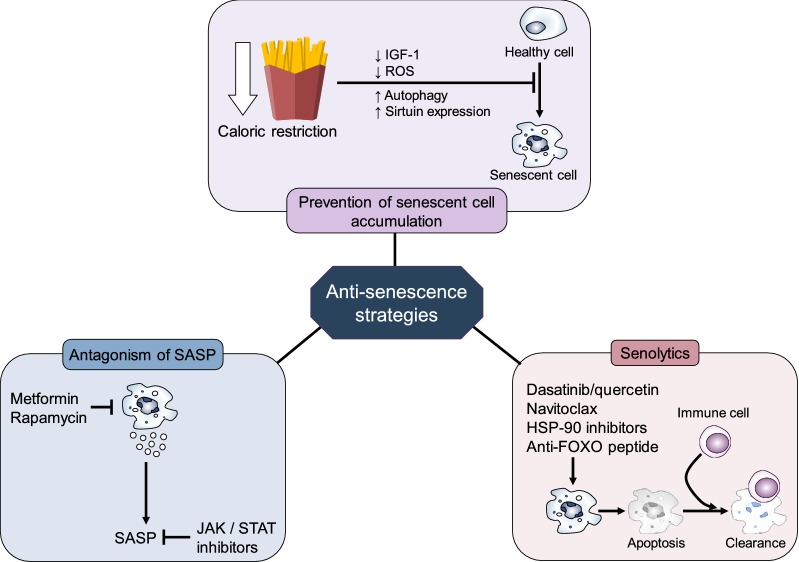
“Another promising strategy is targeting the SASP for blocking the adverse e ff ects of speci fi c components like pro-in fl ammatory factors and matrix catabolic enzymes, without changing the inner antioncogenic pathways and cell cycle in senescent cells [108, 116].”
Metformin's Mechanisms in Attenuating Hallmarks of Aging and Age-Related Disease
Cheng, F., Liu, Y.-L., Du, J., & Lin, J. (2022) · Aging and Disease · doi:10.14336/ad.2021.1213 · Cited by 87
Kovács, Z., Brunner, B., & Ari, C. (2021) · Nutrients · doi:10.3390/nu13072197 · Cited by 78
Targeting AMPK signaling by polyphenols: a novel strategy for tackling aging
Xu, W., Luo, Y., Yin, J., Huang, M., & Luo, F. (2023) · Food & Function · doi:10.1039/d2fo02688k · Cited by 81
The Jekyll and Hyde of Cellular Senescence in Cancer
Demirci, D., Dayanc, B., Mazi, F. A., & Şentürk, Ş. (2021) · Cells · doi:10.3390/cells10020208 · Cited by 69
A New Gene Set Identifies Senescent Cells and Predicts Senescence-Associated Pathways Across Tissues
(2021) · doi:10.1101/2021.12.10.472095 · Cited by 58
Zheng, L., He, S., Wang, H., Li, J., Liu, Y., & Liu, S. (2024) · Aging and Disease · doi:10.14336/ad.2024.0206 · Cited by 83
“The content of SASP varies according to cell type, external stimuli, and environmental background [49, 50].”
Cellular senescence in liver fibrosis: Implications for age-related chronic liver diseases
Udomsinprasert, W., Sobhonslidsuk, A., Jittikoon, J., Honsawek, S., & Chaikledkaew, U. (2021) · Expert Opinion on Therapeutic Targets · doi:10.1080/14728222.2021.1992385 · Cited by 40
“Furthermore, inflammatory responses elicited by the SASP-related factors have been linked to a variety of diseases such as atherosclerosis, diabetic fat, and cancer [34].”
BackgroundSenescence, NK cells, and cancer: navigating the crossroads of aging and disease
Gergues, M., Bari, R., Koppisetti, S., Gosiewska, A., Kang, L., & HARIRI, R. J. (2025) · Frontiers in Immunology · doi:10.3389/fimmu.2025.1565278 · Cited by 52
Senescence-mediated anticancer effects of quercetin
Özsoy, S., Becer, E., & Vatansever, H. S. (2022) · Nutrition Research · doi:10.1016/j.nutres.2022.04.007 · Cited by 46
Sienkiewicz, M., Sroka, K., Binienda, A., Jurk, D., & Fichna, J. (2023) · Ageing Research Reviews · doi:10.1016/j.arr.2023.102083 · Cited by 40
Molecular Mechanisms of Cellular Senescence in Neurodegenerative Diseases
Lee, H.-J., Yoon, Y.-S., & Lee, S.-J. (2023) · Journal of Molecular Biology · doi:10.1016/j.jmb.2023.168114 · Cited by 36
Age-Related Disease Burden in China, 1997–2017: Findings From the Global Burden of Disease Study
Hu, D., Yan, W. S., Zhu, J., Zhu, Y., & Chen, J. (2021) · Frontiers in Public Health · doi:10.3389/fpubh.2021.638704 · Cited by 39
Xu, Z., Huang, J., Gao, M., Guo, G., Zeng, S., Chen, X., Wang, X., Gong, Z., & Yan, Y. (2020) · GeroScience · doi:10.1007/s11357-020-00209-w · Cited by 35
“If oxidative stress exists persistently over time, cellular senescence is a likely consequence and a valuable landmark of aging (Amaya-Montoya et al. 2020; Calcinotto et al. 2019).”
BackgroundThe roles of HMGB1 ‐produced DNA gaps in DNA protection and aging biomarker reversal
Yasom, S., Watcharanurak, P., Bhummaphan, N., Thongsroy, J., Puttipanyalears, C., Settayanon, S., Chalertpet, K., Khumsri, W., Kongkaew, A., Patchsung, M., et al. (2022) · FASEB BioAdvances · doi:10.1096/fba.2021-00131 · Cited by 34
Lu, K.-J., Sheu, J., Teng, R.-D., Jayakumar, T., Chung, C., & Hsieh, C. (2023) · International Journal of Biological Sciences · doi:10.7150/ijbs.84060 · Cited by 31
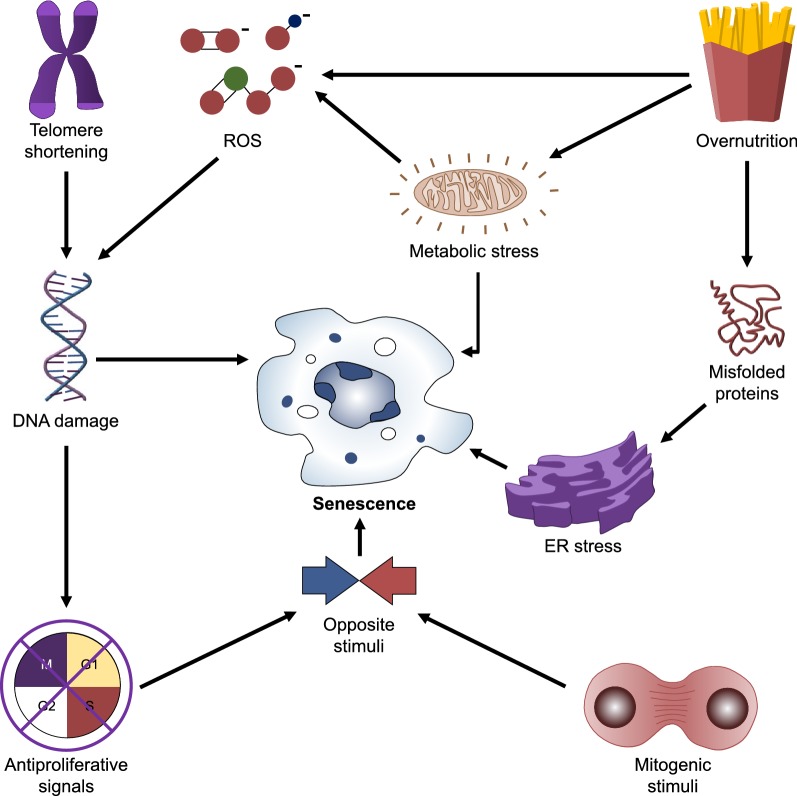
“[30] Cellular senescence has negative repercussions, many of which are caused by SASP, [31] and is accelerated by oxidative stress-mediated mitochondrial malfunction, which disrupts cellular signaling cascades.”
Revolutionizing Diabetic Foot Ulcer Care: The Senotherapeutic Approach
Zhang, G., Samarawickrama, P. N., Gui, L., Ma, Y., Cao, M., Zhu, H., Li, W., Yang, H., Li, K., Yang, Y., et al. (2024) · Aging and Disease · doi:10.14336/ad.2024.0065 · Cited by 32
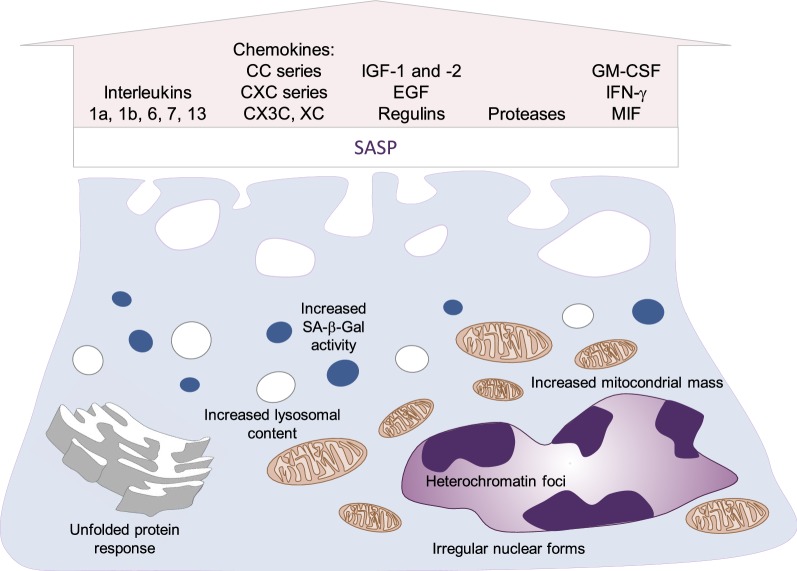
“Additional hallmarks of cellular senescence include enlarged cell size [54], diminished expression of lamin-B1 [55], formation of senescence-associated heterochromatin foci (SAHF) [56], metabolic disturbances, endoplasmic reticulum (ER) stress, mitochondrial and lysosomal dysfunction, etc. [57]…”
Biology of aging: Oxidative stress and RNA oxidation
Hemagirri, M., & Sasidharan, S. (2022) · Molecular Biology Reports · doi:10.1007/s11033-022-07219-1 · Cited by 31
“Cellular senescence, which is thought to be caused by oxidative stress, could be a valuable biomarker of aging [2, 15].”
BackgroundSenescent AECⅡ and the implication for idiopathic pulmonary fibrosis treatment
Zhang, T., Zhang, J., Lv, C., Li, H., & Song, X. (2022) · Frontiers in Pharmacology · doi:10.3389/fphar.2022.1059434 · Cited by 29
“Secretion of IL-1α and signaling cascade of the p38 mitogen-activated protein kinase (p38MAPK) can active NF-κB, thereby promoting SASP expression (Orjalo et al., 2009; Amaya-Montoya et al., 2020).”
BackgroundCellular Aging and Senescence in Cancer: A Holistic Review of Cellular Fate Determinants
Tufail, M., Huang, Y., Hu, J.-J., Liang, J., He, C., Wan, W., Jiang, C., Wu, H., & Li, N. (2024) · Aging and Disease · doi:10.14336/ad.2024.0421 · Cited by 49
“It inhibits cell proliferation and stimulates an immune response against cancer cells [44].”
Scheper, J., Hildebrand, L. S., Faulhaber, E.-M., Deloch, L., Gaipl, U. S., Symank, J., Fietkau, R., Distel, L. V., Hecht, M., & Jost, T. (2022) · Strahlentherapie und Onkologie · doi:10.1007/s00066-022-02009-x · Cited by 24
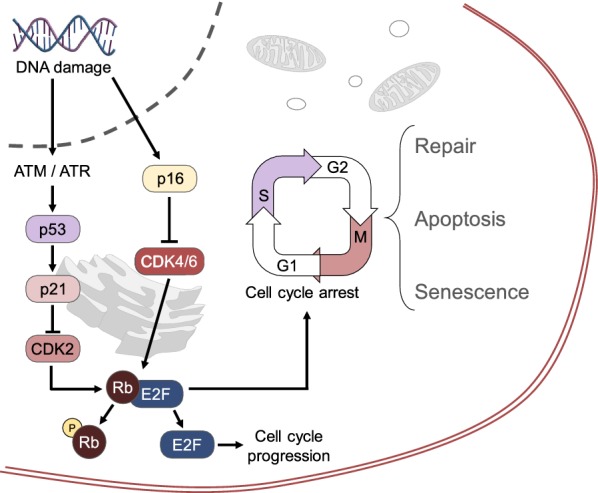
“DSBs activate different cellular processes including cell cycle arrest, repair mechanisms, cell death, or senescence [39].”
BackgroundThe actions of resveratrol in decidualizing endometrium: acceleration or inhibition?†
Kuroda, K., Ochiai, A., & Brosens, J. J. (2020) · Biology of Reproduction · doi:10.1093/biolre/ioaa172 · Cited by 24
“Conversely, exposure of primary cultures at the start of decidualization to drugs that either prevent the emergence of senescent cells, or selectively target and eliminate them (so called senolytic drugs) [22], such as the tyrosine kinase inhibitor dasatinib, the mTOR inhibitor rapamycin, or resveratrol, inhibits infl…”
BackgroundHypophosphorylated pRb knock‐in mice exhibit hallmarks of aging and vitamin C‐preventable diabetes
Jiang, Z., Li, H., Schroer, S. A., Voisin, V., Ju, Y., Pacal, M., Erdmann, N., Shi, W., Chung, P. E. D., Deng, T., et al. (2022) · The EMBO Journal · doi:10.15252/embj.2020106825 · Cited by 19
Heat shock proteins and cellular senescence in humans: A systematic review
Hebishy, M., Shintouo, C. M., Dufait, I., Debacq‐Chainiaux, F., Bautmans, I., & Njemini, R. (2023) · Archives of Gerontology and Geriatrics · doi:10.1016/j.archger.2023.105057 · Cited by 20
García-Trejo, S. S., Gómez‐Sierra, T., Eugenio-Pérez, D., Medina‐Campos, O. N., & Pedraza‐Chaverrí, J. (2024) · Antioxidants · doi:10.3390/antiox13040415 · Cited by 23
“This finding is related to another unique phenotype of senescent cells, the formation of senescence-associated heterochromatin foci (SAHF), specialized regions of facultative heterochromatin that decrease the expression of proliferative senescence-promoting genes [66,67].”
BackgroundZhang, Y., & Zhou, Y. (2024) · Biomedicine & Pharmacotherapy · doi:10.1016/j.biopha.2024.117314 · Cited by 24
Sharma, R., & Bala, E. (2024) · Phytomedicine Plus · doi:10.1016/j.phyplu.2024.100579 · Cited by 21
Mas‐Bargues, C., Alique, M., Barrús, M. T., Borrás, C., & Rodrigues‐Díez, R. (2021) · Antioxidants · doi:10.3390/antiox11010078 · Cited by 22
Inhibiting USP16 rescues stem cell aging and memory in an Alzheimer’s model
Reinitz, F., Chen, E. Y., Nicolis di Robilant, B., Chuluun, B., Antony, J., Jones, R. C., Gubbi, N., Lee, K., Ho, W. H. D., Kolluru, S. S., et al. (2022) · eLife · doi:10.7554/elife.66037 · Cited by 18
Young at Gut—Turning Back the Clock with the Gut Microbiome
Narasimhan, H., Ren, C. C., Deshpande, S., & Sylvia, K. E. (2021) · Microorganisms · doi:10.3390/microorganisms9030555 · Cited by 17
MicroRNAs-associated with FOXO3 in cellular senescence and other stress responses
Khor, Y.-S., & Wong, P. (2023) · Biogerontology · doi:10.1007/s10522-023-10059-6 · Cited by 16
“Many studies have demonstrated that cellular senescence accelerates the progression of age-related pathologies, whereas the elimination of senescent cells can restore or improve tissue functions and prevent the progression of age-related diseases (Amaya-Montoya et al. 2020; Childs et al. 2015).”
Marine phycocompound screening reveals a potential source of novel senotherapeutics
Salekeen, R., Barua, J., Shaha, P. R., Islam, K. M. D., Islam, M. E., Billah, M. M., & Rahman, S. M. M. (2021) · Journal of Biomolecular Structure and Dynamics · doi:10.1080/07391102.2021.1877822 · Cited by 12
“Among these, the B-cell lymphoma extra-large (Bcl-xL) protein has been identified as one of the most important mitochondrial regulators of apoptosis, energy metabolism and ageing (Amaya-Montoya et al., 2020; Childs et al., 2015; Yosef et al., 2016; Zlotorynski, 2020).”
BackgroundTranslation of Cellular Senescence to Novel Therapeutics: Insights From Alternative Tools and Models
Inci, N., Kamali, D., Akyildiz, E. O., Tahir Turanli, E., & Bozaykut, P. (2022) · Frontiers in Aging · doi:10.3389/fragi.2022.828058 · Cited by 13
Wang, J., Huang, H., Tao, K., Guo, L., Xincheng, H., & Chang, H. (2024) · Journal of Cosmetic Dermatology · doi:10.1111/jocd.16531 · Cited by 14
Mao, X., Li, L., Lee, G., Agborbesong, E., Zhou, J. X., Calvet, J. P., & Li, X. (2025) · Kidney International · doi:10.1016/j.kint.2025.05.027 · Cited by 14
Chen, X., Walton, K. L., Brodaty, H., & Chalton, K. (2024) · Journal of Alzheimer s Disease · doi:10.3233/jad-231222 · Cited by 13
“Ratherthaninterventionstoeliminatesenescent cellsthataredynamicandheterogeneous[184],mul-tiplesenotherapeuticapproachesthatinhibitSASP activitymaybepromisinginpreventingAD[45].”
A Cellular Senescence-Centric Integrated Approach to Understanding Organismal Aging
Sharma, R., & Diwan, B. (2022) · Current Aging Science · doi:10.2174/1874609815666220914104548 · Cited by 9
Ahmed, I. A., Zamakshshari, N. H., Mikail, M. A., Bello, I., & Hossain, M. S. (2024) · Fitoterapia · doi:10.1016/j.fitote.2024.106282 · Cited by 10
Jiang, A., Liu, Y., Zhu, B., Fang, Y., Qu, L., Yang, Q., Luo, P., Cai, C., & Wang, L. (2024) · Clinical Genitourinary Cancer · doi:10.1016/j.clgc.2024.01.005 · Cited by 9
Flores-Torres, R. P., Salas-Venegas, V., Santín-Márquez, R., la Vega-Tinajar, M. D., Carreto, R. J. R., Librado‐Osorio, R., Luna‐López, A., Alarcón‐Aguilar, A., López‐Díazguerrero, N. E., Morán‐Ramos, S., et al. (2025) · Experimental Neurology · doi:10.1016/j.expneurol.2025.115331 · Cited by 9
“…is an appealing therapeutic target, different strategies have been developed to reverse or avoid its harmful effects (Palmer et al., 2022; Amaya-Montoya et al., 2020), such as the use of senolytics that selectively eliminate senescent cells (Zhu et al., 2017), or senomorphics that…”
Yousef, A., Fang, L., Heidari, M., Kranrod, J. W., & Seubert, J. M. (2024) · Frontiers in Pharmacology · doi:10.3389/fphar.2024.1486717 · Cited by 10
Deng, W., Jun-ichiro, J. O., Morikuni, H., SASAYAMA, S., Hashimoto, Y., Matsumoto, N., & Honda, Y. (2023) · Dental Materials Journal · doi:10.4012/dmj.2022-242 · Cited by 9
Red Ginseng Attenuates the Hepatic Cellular Senescence in Aged Mice
Lee, D., Arndt, J., O’Connell, J. F., Egan, J. M., & Kim, Y. (2024) · Biology · doi:10.3390/biology13010036 · Cited by 7
West, C. E., Karim, M. A., Falaguera, M. J., Speidel, L., Green, C., Logie, L., Schwartzentruber, J., Ochoa, D., Lord, J. M., Ferguson, M. A. J., et al. (2023) · Scientific Data · doi:10.1038/s41597-023-02513-4 · Cited by 9
Astragaloside IV confronts amyloid-beta-induced astrocyte senescence via hsp90aa1
Xia, Y., Zeng, R., & Cao, Y. (2024) · Journal of Applied Biomedicine · doi:10.32725/jab.2024.015 · Cited by 6
The role of senescence-associated secretory phenotype (SASP) in cellular senescene
Lime, F. V. I. D., & Hardiany, N. S. (2021) · Acta Biochimica Indonesiana · doi:10.32889/actabioina.33 · Cited by 7
“Activation of both pathways prevents cancer-induced apoptosis and tumor cell proliferation by inducing cell cycle arrest [8,13].”
BackgroundVerma, B., Sinha, P., & Ganesh, S. (2022) · Journal of Ayurveda and Integrative Medicine · doi:10.1016/j.jaim.2022.100636 · Cited by 8
A New Gene Set Identifies Senescent Cells and Predicts Senescence-Associated Pathways Across Tissues
(2021) · doi:10.21203/rs.3.rs-1034608/v1 · Cited by 6
Seshadri, V., Chng, C., Tyler, J., Adikerta, C., Baghaei, K., Wang, Y., Gueven, N., Ricardo, S. D., & Azimi, I. (2025) · Aging Cell · doi:10.1111/acel.70209 · Cited by 9
Cao, S., Pang, Y., Wei, Y., Wang, D., Xiong, A., Yan, J., & Zeng, H. (2025) · Pathology - Research and Practice · doi:10.1016/j.prp.2025.155949 · Cited by 5
Li, C., Liu, Z., & Shi, R. (2023) · Frontiers in Medicine · doi:10.3389/fmed.2023.1072359 · Cited by 8
Senolytic drugs: implications for clinical practice
Константиновна, И. А., Matchekhina, L. V., Ткачева, О. Н., Владимировна, Б. А., Melnitskaia, A. A., Churov, A. V., & Strazhesko, I. D. (2023) · Problems of Geroscience · doi:10.37586/2949-4745-1-2023-7-14 · Cited by 6
Blockade of ZMIZ1‐GATA4 Axis Regulation Restores Youthfulness to Aged Cartilage
Nam, J., Woo, H., Yang, J.-H., Kim, S. J., Lee, K. P., Yu, J. H., Park, T. J., Eyun, S., & Yang, S. (2025) · Advanced Science · doi:10.1002/advs.202404311 · Cited by 5
Kuru, G., Üner, G., & Bedіr, E. (2022) · Phytochemistry Reviews · doi:10.1007/s11101-022-09829-w · Cited by 5
“…of senescent cells in tissues with age due to the disruption in senescent cell clearance mechanisms causes degenerative diseases, and degeneration spreads progressively to surrounding tissue as a result of the senescence-associated secretory phenotype factors (Amaya-Montoya et al. 2020).”
BackgroundWatcharanurak, P., & Mutirangura, A. (2023) · Medical Research Archives · doi:10.18103/mra.v11i12.4952 · Cited by 5
de Lima, M. L., de Oliveira, A. A., Carneiro, M. A. S., Silva, S. H. A., Freitas, A. C. D. Q., de Souza, L. R. M. F., Nomelini, R. S., Souza, M. V. C., Assumpção, C. D. O., & Orsatti, F. L. (2024) · Supportive Care in Cancer · doi:10.1007/s00520-024-08595-z · Cited by 5
“In this context, radiotherapy and chemotherapy procedures have been linked to both morphological and functional muscle changes, including reductions in muscle mass and power, as well as increased intramuscular adipose tissue (IMAT) [26].”
Nutrition senolytics - illusion or reality for cognitive ageing?
Chen, X., Brodaty, H., & O’Leary, F. (2021) · Current Opinion in Clinical Nutrition & Metabolic Care · doi:10.1097/mco.0000000000000796 · Cited by 5
Healthspan Extension through Innovative Genetic Medicines
Garcia, H., Brown, D. W., Scholz, M., & Lewis, J. D. (2021) · Plastic & Reconstructive Surgery · doi:10.1097/prs.0000000000009674 · Cited by 6
Wang, F., Hui, S. T. Y., Stappenbeck, F., Kamińska, D., Lusis, A. J., & Parhami, F. (2025) · Cells · doi:10.3390/cells14151191 · Cited by 4
“Cellular senescence is now recognized as a significant contributor to the development of MASLD/MASH and other fibrotic diseases that are often age-related, as well as age-related diseases more generally [4].”
Teawcharoensopa, C., & Srisuwan, T. (2023) · Clinical Oral Investigations · doi:10.1007/s00784-023-05455-8 · Cited by 5
“It also appears to have the ability to counteract inflammatory cytokines, which are considered one of the senescence-associated secretory phenotypes (SASPs) [22, 32], potentially contributing to the subsiding of the senescent condition.”
Morphometric analysis of the human endoneurial extracellular matrix components during aging
Kundalić, B., Ugrenović, S., Jovanovic, I. D., Petrovič, V., Petrović, A., Stojanović, V. R., Antović, A., Kundalić, J., & Graovac, I. (2021) · Archives of Biological Sciences · doi:10.2298/abs201214006k · Cited by 2
“Certain ECM components remodel in senescent cells, and thus, by being involved in the development of age-related diseases [13], they could impair axonal regeneration [14,15].”
BackgroundPijewski, R. S., Sutter, P. A., Duszak, V. A., Singh, N., Yan, R., Smith, P. P., & Crocker, S. J. (2021) · Neuroscience Letters · doi:10.1016/j.neulet.2022.136480 · Cited by 1
Senolytic Drugs: Implications for Clinical Practice
Константиновна, И. А., Matchekhina, L. V., Tkacheva, O. N., Владимировна, Б. А., Melnitskaia, A. A., Churov, A. V., & Strazhesko, I. D. (2023) · Advances in Gerontology · doi:10.1134/s2079057024600186 · Cited by 1
“Aging and the development of age-associated diseases are largely associated with the accumulation of senescent cells in tissues [11, 12].”
An Overview of the Role of Senescence in Cancer
Al-Janabi, I. I. (2022) · Al-Rafidain Journal of Medical Sciences · doi:10.54133/ajms.v3i.77
“3) employing drugs to reduce the number of senescent cells [163].”
BackgroundWest, C. E., Karim, M. A., Falaguera, M. J., Speidel, L., Green, C., Logie, L., Schwartzentruber, J., Ochoa, D., Lord, J. M., Ferguson, M. A. J., et al. (2022) · medRxiv · doi:10.1101/2022.11.11.22282236
Resolving Geroplasticity to the Balance of Rejuvenins and Geriatrins
TABIBZADEH, S. S. (2022) · Aging and Disease · doi:10.14336/ad.2022.0414
Wani, S. N., Zahoor, I., Tantray, J., Venkateshwarlu, G., Tiwari, P., Eqbal, S., Faiyazuddin, M., & Syed, A. A. (2025) · Springer eBooks · doi:10.1007/978-3-031-91790-5_6
Cellular Senescence in Alzheimer’s Disease (AD)
Syed, R. U., Afsar, S., & Pillo, F. D. (2025) · Springer eBooks · doi:10.1007/978-981-96-8873-9_6
Microglial senescence and senolytic drugs
Ben-Azu, B., Sabbah, S., Awogbindin, I. O., Chidebe, E. O., Oritsemuelebi, B., Patel, D., Frenkel, D., & Tremblay, M. (2026) · Elsevier eBooks · doi:10.1016/b978-0-443-27340-7.00010-3
Ramos, G. S. M. (2026) · Esprint Investigación · doi:10.61347/ei.v5i1.263
Insulin-stimulated glucose uptake is impaired in senescent human adipocytes
Alexandersson, I., Palmgren, H., Uhrbom, M., Oscarsson, J., & Boucher, J. (2026) · Frontiers in Endocrinology · doi:10.3389/fendo.2026.1795654
“Other factors that were increased, including caspase 8 (CASP8), ADA, CST5, STAMBP and FLT3LG, have, to the best of our knowledge, not been appointed as SASP previously.”
InfluentialOverview of hallmarks of aging
Sangeeth, A., Subramanian, M., Singh, A., & Singh, A. (2026) · Elsevier eBooks · doi:10.1016/b978-0-443-33159-6.00004-7
Campagnoli, L. I. M., Marchesi, N., Barbieri, A., Galeotti, N., & Pascale, A. (2026) · Experimental Gerontology · doi:10.1016/j.exger.2026.113257
Metadata
- Authors
- Amaya-Montoya, M., Pérez-Londoño, A., Guatibonza-García, V., Vargas-Villanueva, A., & Mendivil, C. O.
- Affiliations
- Universidad de Los Andes (CO)
- Corresponding author
- Mendivil, Carlos O.
- Venue
- Advances in Therapy
- Published
- 2020-03-17
- Volume
- 37
- Issue
- 4
- Pages
- 1407-1424
- ISSN
- 0741-238X (ISSN-L)
- 1865-8652
- PMC
- PMC7140757
- OpenAlex
- W3012054349
- Cited by
- 82
- References
- 125
- Citations by year
- 2026: 5 · 2025: 10 · 2024: 14 · 2023: 14 · 2022: 17 · 2021: 17 · 2020: 5
- FWCI
- 1.69
- Type
- journal article
- Language
- en
- Open access
- hybrid
- doi.org
- Licence
- cc-by
- creativecommons.org/licenses/by/4.0 (tdm)
- creativecommons.org/licenses/by/4.0 (vor)
- Locations
- Advances in Therapy (publishedVersion, cc-by)
- PubMed Central (publishedVersion, cc-by)
- PubMed (publishedVersion)
- Topics
- Life Sciences › Biochemistry, Genetics and Molecular Biology › Cell Biology › Telomeres, Telomerase, and Senescence
- Life Sciences › Biochemistry, Genetics and Molecular Biology › Aging › Genetics, Aging, and Longevity in Model Organisms
- Health Sciences › Medicine › Geriatrics and Gerontology › Sirtuins and Resveratrol in Medicine
- Keywords
- cellular senescence, senescence-associated secretory phenotype, age-related diseases, senolytics, senolytic therapy, cell cycle arrest, DNA damage, oxidative stress, healthspan, lifespan, anti-aging therapeutics
- MeSH terms
- Aging, Animals, DNA Damage, Humans, Cellular Senescence, Oxidative Stress
About these checks
Registry, retraction, Cites and statistics results are computed, not judged, with one exception: a printed reference that no index lists is read once by a model before it counts as a citation error. Claims are extracted by a model and kept only when their quote appears verbatim in the text; each cited source is then checked, with a model’s help, for whether it says what the claim relies on. Those verdicts can be wrong — read the claim’s quote and the cited source before relying on one.
Statistics and arithmetic are recomputed, not judged.
Confidence bands are shown only for fields calibrated on our annotated test set. None is calibrated yet, so no band is shown.
What counts as a claim ›How we measure confidence ›How we check this ›
Are you an author, or do you see a problem with this page? Request a review
Data sources
Bibliographic data: Semantic Scholar, OpenAlex, Crossref.
Contains information from the Semantic Scholar Academic Graph Datasets, made available under the ODC Attribution License (ODC-BY 1.0).
Semantic Scholar’s data is described in: Kinney, R., et al. (2023). The Semantic Scholar Open Data Platform. arXiv:2301.10140.
