

Cellular Senescence as a Therapeutic Target for Age-Related Diseases: A Review
Open accessThe DOI matches its Crossref record; 123 of the 125 references it cites were found in a registry or an index.
Abstract
Life expectancy has increased substantially over the last few decades, leading to a worldwide increase in the prevalence and burden of aging-associated diseases. Recent evidence has proven that cellular senescence contributes substantially to the development of these disorders. Cellular senescence is a state of cell cycle arrest with suppressed apoptosis and concomitant secretion of multiple bioactive factors (the senescence-associated secretory phenotype—SASP) that plays a physiological role in embryonic development and healing processes. However, DNA damage and oxidative stress that occur during aging cause the accumulation of senescent cells, which through their SASP bring about deleterious effects on multiple organ and systemic functions. Ablation of senescent cells through genetic or pharmacological means leads to improved life span and health span in animal models, and preliminary evidence suggests it may also have a positive impact on human health. Thus, strategies to reduce or eliminate the burden of senescent cells or their products have the potential to impact multiple clinical outcomes with a single intervention. In this review, we touch upon the basics of cell senescence and summarize the current state of development of therapies against cell senescence for human use.
Overview
The claims and statistics of this paper haven’t been checked yet.
Free: it reads the open-access text and checks the first 5 claims that cite a source we can check. Create a free account to check every claim.
Integrity signals
Registry
Cites
Statistics
Figures
Verification
Claims the paper makes
The claims and statistics of this paper haven’t been checked yet.
Free: it reads the open-access text and checks the first 5 claims that cite a source we can check. Create a free account to check every claim.
Claims other papers make about this one
Each is checked against this paper’s own text: does it say what the citing paper says it does?
The source backs part of the claim, not all of it — or backs it for a different population, condition or comparison.
In the citing paper
“However, the use of a suicide gene is not directly translatable into humans, and other senolytics such as BCL2-inhibitors or the combination of Dasatinib and quercetin have toxicities which can limit their use (Amaya-Montoya et al., 2020; Zhu et al., 2015).”
From Inhibiting USP16 rescues stem cell aging and memory in an Alzheimer’s model (2022) · cites this paper as Amaya-Montoya et al., 2020
Experimental — accuracy not yet measuredThe cited source says what the claim attributes to it.
In the citing paper
“as senescence prevents cells from proceeding to the S or M phases41,61,67.”
From A new gene set identifies senescent cells and predicts senescence-associated pathways across tissues (2022) · cites this paper as [67]
Self-check
Percentages, sums and reported differences re-computed from the paper’s own numbers.
The self-check needs the paper’s full text.
Citations
Cites
López-Otín, C., Blasco, M. A., Partridge, L., Serrano, M., & Kroemer, G. (2013) · Cell · doi:10.1016/j.cell.2013.05.039 · Cited by 14,982
The serial cultivation of human diploid cell strains
Hayflick, L., & Moorhead, P. S. (1961) · Experimental Cell Research · doi:10.1016/0014-4827(61)90192-6 · Cited by 8,508
The DNA-damage response in human biology and disease
Jackson, S. P., & Bartek, J. (2009) · Nature · doi:10.1038/nature08467 · Cited by 6,092
Inflamm‐aging: An Evolutionary Perspective on Immunosenescence
FRANCESCHI, C., BONAFÈ, M., VALENSIN, S., OLIVIERI, F., DE LUCA, M., OTTAVIANI, E., & DE BENEDICTIS, G. (2000) · Annals of the New York Academy of Sciences · doi:10.1111/j.1749-6632.2000.tb06651.x · Cited by 5,358
Oncogenic ras provokes premature cell senescence associated with accumulation of p53 and p16INK4a
Serrano, M., Lin, A. W., McCurrach, M. E., Beach, D., & Lowe, S. W. (1997) · Cell · doi:10.1016/s0092-8674(00)81902-9 · Cited by 5,218
The senescence-associated secretory phenotype: the dark side of tumor suppression
Coppé, J.-P., Desprez, P.-Y., Krtolica, A., & Campisi, J. (2010) · Annual Review of Pathology: Mechanisms of Disease · doi:10.1146/annurev-pathol-121808-102144 · Cited by 5,206
Remodelling the extracellular matrix in development and disease
Bonnans, C., Chou, J., & Werb, Z. (2014) · Nature Reviews Molecular Cell Biology · doi:10.1038/nrm3904 · Cited by 4,367
Zlotnik, A., & Yoshie, O. (2000) · Immunity · doi:10.1016/s1074-7613(00)80165-x · Cited by 3,859
Clearance of p16Ink4a-positive senescent cells delays ageing-associated disorders
Baker, D. J., Wijshake, T., Tchkonia, T., LeBrasseur, N. K., Childs, B. G., van de Sluis, B., Kirkland, J. L., & van Deursen, J. M. (2011) · Nature · doi:10.1038/nature10600 · Cited by 3,670
Naturally occurring p16Ink4a-positive cells shorten healthy lifespan
Baker, D. J., Childs, B. G., Durik, M., Wijers, M. E., Sieben, C. J., Zhong, J., A. Saltness, R., Jeganathan, K. B., Verzosa, G. C., Pezeshki, A., et al. (2016) · Nature · doi:10.1038/nature16932 · Cited by 2,876
Cellular senescence: from physiology to pathology
Muñoz-Espín, D., & Serrano, M. (2014) · Nature Reviews Molecular Cell Biology · doi:10.1038/nrm3823 · Cited by 2,818
The role of senescent cells in ageing
van Deursen, J. M. (2014) · Nature · doi:10.1038/nature13193 · Cited by 2,623
Hallmarks of Cellular Senescence
Hernandez-Segura, A., Nehme, J., & Demaria, M. (2018) · Trends in Cell Biology · doi:10.1016/j.tcb.2018.02.001 · Cited by 2,605
The Achilles' heel of senescent cells: from transcriptome to senolytic drugs
Zhu, Y., Tchkonia, T., Pirtskhalava, T., Gower, A. C., Ding, H., Giorgadze, N., Palmer, A. K., Ikeno, Y., Hubbard, G. B., Lenburg, M., et al. (2015) · Aging Cell · doi:10.1111/acel.12344 · Cited by 2,584
Megabase Chromatin Domains Involved in DNA Double-Strand Breaks in Vivo
Rogakou, E. P., Boon, C., Redon, C., & Bonner, W. M. (1999) · The Journal of Cell Biology · doi:10.1083/jcb.146.5.905 · Cited by 2,422
Senolytics improve physical function and increase lifespan in old age
Xu, M., Pirtskhalava, T., Farr, J. N., Weigand, B. M., Palmer, A. K., Weivoda, M. M., Inman, C. L., Ogrodnik, M. B., Hachfeld, C. M., Fraser, D. G., et al. (2018) · Nature Medicine · doi:10.1038/s41591-018-0092-9 · Cited by 2,287
A complex secretory program orchestrated by the inflammasome controls paracrine senescence
Acosta, J. C., Banito, A., Wuestefeld, T., Georgilis, A., Janich, P., Morton, J. P., Athineos, D., Kang, T.-W., Lasitschka, F., Andrulis, M., et al. (2013) · Nature Cell Biology · doi:10.1038/ncb2784 · Cited by 2,278
Oncogene-Induced Senescence Relayed by an Interleukin-Dependent Inflammatory Network
Kuilman, T., Michaloglou, C., Vredeveld, L. C. W., Douma, S., van Doorn, R., Desmet, C. J., Aarden, L. A., Mooi, W. J., & Peeper, D. S. (2008) · Cell · doi:10.1016/j.cell.2008.03.039 · Cited by 2,086
Insulin and insulin-like growth factor signalling in neoplasia
Pollak, M. (2008) · Nature Reviews Cancer · doi:10.1038/nrc2536 · Cited by 2,059
An Essential Role for Senescent Cells in Optimal Wound Healing through Secretion of PDGF-AA
Demaria, M., Ohtani, N., Youssef, S. A., Rodier, F., Toussaint, W., Mitchell, J. R., Laberge, R.-M., Vijg, J., Van Steeg, H., Dollé, M. E. T., et al. (2014) · Developmental Cell · doi:10.1016/j.devcel.2014.11.012 · Cited by 2,045
Clearance of senescent cells by ABT263 rejuvenates aged hematopoietic stem cells in mice
Chang, J., Wang, Y., Shao, L., Laberge, R.-M., Demaria, M., Campisi, J., Janakiraman, K., Sharpless, N. E., Ding, S., Feng, W., et al. (2016) · Nature Medicine · doi:10.1038/nm.4010 · Cited by 1,819
Chemokine signaling via the CXCR2 receptor reinforces senescence
Acosta, J. C., O'Loghlen, A., Banito, A., Guijarro, M. V., Augert, A., Raguz, S., Fumagalli, M., Da Costa, M., Brown, C., Popov, N., et al. (2008) · Cell · doi:10.1016/j.cell.2008.03.038 · Cited by 1,801
Senescence in Health and Disease
He, S., & Sharpless, N. E. (2017) · Cell · doi:10.1016/j.cell.2017.05.015 · Cited by 1,766
Baar, M. P., Brandt, R. M. C., Putavet, D. A., Klein, J. D. D., Derks, K. W. J., Bourgeois, B. R. M., Stryeck, S., Rijksen, Y., van Willigenburg, H., Feijtel, D. A., et al. (2017) · Cell · doi:10.1016/j.cell.2017.02.031 · Cited by 1,454
Programmed cell senescence during mammalian embryonic development
Muñoz-Espín, D., Cañamero, M., Maraver, A., Gómez-López, G., Contreras, J., Murillo-Cuesta, S., Rodríguez-Baeza, A., Varela-Nieto, I., Ruberte, J., Collado, M., et al. (2013) · Cell · doi:10.1016/j.cell.2013.10.019 · Cited by 1,428
From discoveries in ageing research to therapeutics for healthy ageing
Campisi, J., Kapahi, P., Lithgow, G. J., Melov, S., Newman, J. C., & Verdin, E. (2019) · Nature · doi:10.1038/s41586-019-1365-2 · Cited by 1,389
Hickson, L. J., Langhi Prata, L. G. P., Bobart, S. A., Evans, T. K., Giorgadze, N., Hashmi, S. K., Herrmann, S. M., Jensen, M. D., Jia, Q., Jordan, K. L., et al. (2019) · EBioMedicine · doi:10.1016/j.ebiom.2019.08.069 · Cited by 1,383
Cellular senescence promotes adverse effects of chemotherapy and cancer relapse
Demaria, M., O'Leary, M. N., Chang, J., Shao, L., Liu, S., Alimirah, F., Koenig, K., Le, C., Mitin, N., Deal, A. M., et al. (2017) · Cancer Discovery · doi:10.1158/2159-8290.cd-16-0241 · Cited by 1,338
Lowe, S. W., Cepero, E., & Evan, G. (2004) · Nature · doi:10.1038/nature03098 · Cited by 1,309
Senescent cells: an emerging target for diseases of ageing
Childs, B. G., Gluscevic, M., Baker, D. J., Laberge, R.-M., Marquess, D., Dananberg, J., & van Deursen, J. M. (2017) · Nature Reviews Drug Discovery · doi:10.1038/nrd.2017.116 · Cited by 1,284
Cellular Senescence: Aging, Cancer, and Injury
Calcinotto, A., Kohli, J., Zagato, E., Pellegrini, L., Demaria, M., & Alimonti, A. (2019) · Physiological Reviews · doi:10.1152/physrev.00020.2018 · Cited by 1,270
Mechanisms and functions of cellular senescence
Herranz, N., & Gil, J. (2018) · Journal of Clinical Investigation · doi:10.1172/jci95148 · Cited by 1,232
Di Leonardo, A., Linke, S. P., Clarkin, K., & Wahl, G. M. (1994) · Genes & Development · doi:10.1101/gad.8.21.2540 · Cited by 1,215
Senescent intimal foam cells are deleterious at all stages of atherosclerosis
Childs, B. G., Baker, D. J., Wijshake, T., Conover, C. A., Campisi, J., & van Deursen, J. M. (2016) · Science · doi:10.1126/science.aaf6659 · Cited by 1,195
Senescence is a developmental mechanism that contributes to embryonic growth and patterning
Storer, M., Mas, A., Robert-Moreno, A., Pecoraro, M., Ortells, M. C., Di Giacomo, V., Yosef, R., Pilpel, N., Krizhanovsky, V., Sharpe, J., et al. (2013) · Cell · doi:10.1016/j.cell.2013.10.041 · Cited by 1,186
Zhu, Y., Tchkonia, T., Fuhrmann‐Stroissnigg, H., Dai, H. M., Ling, Y. Y., Stout, M. B., Pirtskhalava, T., Giorgadze, N., Johnson, K. O., Giles, C. B., et al. (2016) · Aging Cell · doi:10.1111/acel.12445 · Cited by 1,148
Senescence-associated reprogramming promotes cancer stemness
Milanovic, M., Fan, D. N. Y., Belenki, D., Däbritz, J. H. M., Zhao, Z., Yu, Y., Dörr, J. R., Dimitrova, L., Lenze, D., Monteiro Barbosa, I. A., et al. (2018) · Nature · doi:10.1038/nature25167 · Cited by 1,131
Multiple functions of p21 in cell cycle, apoptosis and transcriptional regulation after DNA damage.
Karimian, A., Ahmadi, Y., & Yousefi, B. (2016) · DNA Repair · doi:10.1016/j.dnarep.2016.04.008 · Cited by 1,110
Findings from the Global Burden of Disease Study 2021
Murray, C. J. L. (2024) · The Lancet · doi:10.1016/s0140-6736(24)00769-4 · Cited by 1,057
Cellular senescence drives age-dependent hepatic steatosis
Ogrodnik, M., Miwa, S., Tchkonia, T., Tiniakos, D., Wilson, C. L., Lahat, A., Day, C. P., Burt, A., Palmer, A., Anstee, Q. M., et al. (2017) · Nature Communications · doi:10.1038/ncomms15691 · Cited by 1,044
Fisetin is a senotherapeutic that extends health and lifespan
Yousefzadeh, M. J., Zhu, Y., McGowan, S. J., Angelini, L., Fuhrmann-Stroissnigg, H., Xu, M., Ling, Y. Y., Melos, K. I., Pirtskhalava, T., Inman, C. L., et al. (2018) · EBioMedicine · doi:10.1016/j.ebiom.2018.09.015 · Cited by 1,032
Cellular senescence: a translational perspective
Kirkland, J. L., & Tchkonia, T. (2017) · EBioMedicine · doi:10.1016/j.ebiom.2017.04.013 · Cited by 1,013
Jun, J.-I., & Lau, L. F. (2010) · Nature Cell Biology · doi:10.1038/ncb2070 · Cited by 998
Xu, M., Tchkonia, T., Ding, H., Ogrodnik, M., Lubbers, E. R., Pirtskhalava, T., White, T. A., Johnson, K. O., Stout, M. B., Mezera, V., et al. (2015) · Proceedings of the National Academy of Sciences · doi:10.1073/pnas.1515386112 · Cited by 915
Senescence and apoptosis: dueling or complementary cell fates?
Childs, B. G., Baker, D. J., Kirkland, J. L., Campisi, J., & van Deursen, J. M. (2014) · The EMBO Reports · doi:10.15252/embr.201439245 · Cited by 915
Kurz, D. J., Decary, S., Hong, Y., & Erusalimsky, J. D. (2000) · Journal of Cell Science · doi:10.1242/jcs.113.20.3613 · Cited by 899
A crucial role for adipose tissue p53 in the regulation of insulin resistance
Minamino, T., Orimo, M., Shimizu, I., Kunieda, T., Yokoyama, M., Ito, T., Nojima, A., Nabetani, A., Oike, Y., Matsubara, H., et al. (2009) · Nature Medicine · doi:10.1038/nm.2014 · Cited by 891
Stein, G. H., Drullinger, L. F., Soulard, A., & Dulić, V. (1999) · Molecular and Cellular Biology · doi:10.1128/mcb.19.3.2109 · Cited by 868
Unmasking senescence: context-dependent effects of SASP in cancer
Faget, D. V., Ren, Q., & Stewart, S. A. (2019) · Nature Reviews Cancer · doi:10.1038/s41568-019-0156-2 · Cited by 863
Cellular senescence and tumor suppressor gene p16
Rayess, H., Wang, M. B., & Srivatsan, E. S. (2012) · International Journal of Cancer · doi:10.1002/ijc.27316 · Cited by 825
Interleukin-6 Family Cytokines
Rose-John, S. (2018) · Cold Spring Harbor Perspectives in Biology · doi:10.1101/cshperspect.a028415 · Cited by 799
Senescing human cells and ageing mice accumulate DNA lesions with unrepairable double-strand breaks
Sedelnikova, O. A., Horikawa, I., Zimonjic, D. B., Popescu, N. C., Bonner, W. M., & Barrett, J. C. (2004) · Nature Cell Biology · doi:10.1038/ncb1095 · Cited by 790
Hayflick, his limit, and cellular ageing
Shay, J. W., & Wright, W. E. (2000) · Nature Reviews Molecular Cell Biology · doi:10.1038/35036093 · Cited by 764
Oxidative DNA damage and senescence of human diploid fibroblast cells.
Chen, Q., Fischer, A., Reagan, J. D., Yan, L. J., & Ames, B. N. (1995) · Proceedings of the National Academy of Sciences · doi:10.1073/pnas.92.10.4337 · Cited by 720
Identification of HSP90 inhibitors as a novel class of senolytics
Fuhrmann-Stroissnigg, H., Ling, Y. Y., Zhao, J., McGowan, S. J., Zhu, Y., Brooks, R. W., Grassi, D., Gregg, S. Q., Stripay, J. L., Dorronsoro, A., et al. (2017) · Nature Communications · doi:10.1038/s41467-017-00314-z · Cited by 701
Therapeutic strategies for the clinical blockade of IL-6/gp130 signaling
Jones, S. A., Scheller, J., & Rose-John, S. (2011) · Journal of Clinical Investigation · doi:10.1172/jci57158 · Cited by 683
Targeting senescent cells alleviates obesity-induced metabolic dysfunction
Palmer, A. K., Xu, M., Zhu, Y., Pirtskhalava, T., Weivoda, M. M., Hachfeld, C. M., Prata, L. G., van Dijk, T. H., Verkade, E., Casaclang‐Verzosa, G., et al. (2019) · Aging Cell · doi:10.1111/acel.12950 · Cited by 658
Orjalo, A. V., Bhaumik, D., Gengler, B. K., Scott, G. K., & Campisi, J. (2009) · Proceedings of the National Academy of Sciences · doi:10.1073/pnas.0905299106 · Cited by 654
Moiseeva, O., Deschênes‐Simard, X., St‐Germain, E., Igelmann, S., Huot, G., Cadar, A. E., Bourdeau, V., Pollak, M. N., & Ferbeyre, G. (2013) · Aging Cell · doi:10.1111/acel.12075 · Cited by 654
Parrinello, S., Coppe, J.-P., Krtolica, A., & Campisi, J. (2005) · Journal of Cell Science · doi:10.1242/jcs.01635 · Cited by 631
McQuibban, G. A., Gong, J.-H., Wong, J. P., Wallace, J. L., Clark-Lewis, I., & Overall, C. M. (2002) · Blood · doi:10.1182/blood.v100.4.1160.h81602001160_1160_1167 · Cited by 611
The senescence-associated secretory phenotype and its regulation
Lopes-Paciencia, S., Saint-Germain, E., Rowell, M.-C., Ruiz, A. F., Kalegari, P., & Ferbeyre, G. (2019) · Cytokine · doi:10.1016/j.cyto.2019.01.013 · Cited by 601
Jurk, D., Wang, C., Miwa, S., Maddick, M., Korolchuk, V., Tsolou, A., Gonos, E. S., Thrasivoulou, C., Jill Saffrey, M., Cameron, K., et al. (2012) · Aging Cell · doi:10.1111/j.1474-9726.2012.00870.x · Cited by 598
Tissue damage and senescence provide critical signals for cellular reprogramming in vivo
Mosteiro, L., Pantoja, C., Alcazar, N., Marión, R. M., Chondronasiou, D., Rovira, M., Fernandez-Marcos, P. J., Muñoz-Martin, M., Blanco-Aparicio, C., Pastor, J., et al. (2016) · Science · doi:10.1126/science.aaf4445 · Cited by 589
Astrocyte Senescence as a Component of Alzheimer’s Disease
Bhat, R., Crowe, E. P., Bitto, A., Moh, M., Katsetos, C. D., Garcia, F. U., Johnson, F. B., Trojanowski, J. Q., Sell, C., & Torres, C. (2012) · PLoS ONE · doi:10.1371/journal.pone.0045069 · Cited by 586
Redesigning an FKBP–ligand interface to generate chemical dimerizers with novel specificity
Clackson, T., Yang, W., Rozamus, L. W., Hatada, M., Amara, J. F., Rollins, C. T., Stevenson, L. F., Magari, S. R., Wood, S. A., Courage, N. L., et al. (1998) · Proceedings of the National Academy of Sciences · doi:10.1073/pnas.95.18.10437 · Cited by 558
Chinta, S. J., Woods, G., Demaria, M., Rane, A., Zou, Y., McQuade, A., Rajagopalan, S., Limbad, C., Madden, D. T., Campisi, J., et al. (2018) · Cell Reports · doi:10.1016/j.celrep.2017.12.092 · Cited by 530
Senescent cell clearance by the immune system: Emerging therapeutic opportunities
Prata, L. G. P. L., Ovsyannikova, I. G., Tchkonia, T., & Kirkland, J. L. (2018) · Seminars in Immunology · doi:10.1016/j.smim.2019.04.003 · Cited by 497
Campbell, J. M., Bellman, S. M., Stephenson, M. D., & Lisy., K. (2017) · Ageing Research Reviews · doi:10.1016/j.arr.2017.08.003 · Cited by 455
Many roads lead to oncogene-induced senescence
Courtois-Cox, S., Jones, S. L., & Cichowski, K. (2008) · Oncogene · doi:10.1038/sj.onc.1210950 · Cited by 397
Growth stimulation leads to cellular senescence when the cell cycle is blocked
Demidenko, Z. N., & Blagosklonny, M. V. (2008) · Cell Cycle · doi:10.4161/cc.7.21.6919 · Cited by 377
Alimonti, A., Nardella, C., Chen, Z., Clohessy, J. G., Carracedo, A., Trotman, L. C., Cheng, K., Varmeh, S., Kozma, S. C., Thomas, G., et al. (2010) · Journal of Clinical Investigation · doi:10.1172/jci40535 · Cited by 374
Janus kinase (JAK) inhibitors in the treatment of inflammatory and neoplastic diseases
Roskoski, R. (2016) · Pharmacological Research · doi:10.1016/j.phrs.2016.07.038 · Cited by 373
Fractalkine and CX3CR1 regulate hippocampal neurogenesis in adult and aged rats
Bachstetter, A. D., Morganti, J. M., Jernberg, J., Schlunk, A., Mitchell, S. H., Brewster, K. W., Hudson, C. E., Cole, M. J., Harrison, J. K., Bickford, P. C., et al. (2011) · Neurobiology of Aging · doi:10.1016/j.neurobiolaging.2009.11.022 · Cited by 364
Rapamycin inhibits the secretory phenotype of senescent cells by a Nrf2-independent mechanism
Wang, R., Yu, Z., Sunchu, B., Shoaf, J., Dang, I., Zhao, S., Caples, K., Bradley, L., Beaver, L. M., Ho, E., et al. (2017) · Aging Cell · doi:10.1111/acel.12587 · Cited by 360
Hallmarks of senescence and aging
Dodig, S., Čepelak, I., & Pavić, I. (2019) · Biochemia medica · doi:10.11613/bm.2019.030501 · Cited by 344
Pluquet, O., Pourtier, A., & Abbadie, C. (2015) · American Journal of Physiology-Cell Physiology · doi:10.1152/ajpcell.00334.2014 · Cited by 305
Özcan, S., Alessio, N., Acar, M. B., Mert, E., Omerli, F., Peluso, G., & Galderisi, U. (2016) · Aging · doi:10.18632/aging.100971 · Cited by 295
Ogryzko, V. V., Hirai, T. H., Russanova, V. R., Barbie, D. A., & Howard, B. H. (1996) · Molecular and Cellular Biology · doi:10.1128/mcb.16.9.5210 · Cited by 268
Microglia and aging: the role of the TREM2-DAP12 and CX3CL1-CX3CR1 axes
Mecca, C., Giambanco, I., Donato, R., & Arcuri, C. (2018) · International Journal of Molecular Sciences · doi:10.3390/ijms19010318 · Cited by 258
West, M. D., Pereira-Smith, O. M., & Smith, J. R. (1989) · Experimental Cell Research · doi:10.1016/0014-4827(89)90372-8 · Cited by 241
Millis, A. J. T., Hoyle, M., McCue, H. M., & Martini, H. (1992) · Experimental Cell Research · doi:10.1016/0014-4827(92)90286-h · Cited by 239
Higuchi, M., Dusting, G. J., Peshavariya, H., Jiang, F., Hsiao, S. T.-F., Chan, E. C., & Liu, G.-S. (2013) · Stem Cells and Development · doi:10.1089/scd.2012.0306 · Cited by 227
The cell fate: senescence or quiescence
Terzi, M. Y., Izmirli, M., & Gogebakan, B. (2016) · Molecular Biology Reports · doi:10.1007/s11033-016-4065-0 · Cited by 208
Anti-senescence compounds: A potential nutraceutical approach to healthy aging
Gurău, F., Baldoni, S., Prattichizzo, F., Espinosa, E., Amenta, F., Procopio, A. D., Albertini, M. C., Bonafè, M., & Olivieri, F. (2018) · Ageing Research Reviews · doi:10.1016/j.arr.2018.05.001 · Cited by 179
Obesity and type-2 diabetes as inducers of premature cellular senescence and ageing
Burton, D. G. A., & Faragher, R. G. A. (2018) · Biogerontology · doi:10.1007/s10522-018-9763-7 · Cited by 173
Fontana, L., Villareal, D. T., Das, S. K., Smith, S. R., Meydani, S. N., Pittas, A. G., Klein, S., Bhapkar, M., Rochon, J., Ravussin, E., et al. (2016) · Aging Cell · doi:10.1111/acel.12400 · Cited by 168
Cellular senescence induced by CD158d reprograms natural killer cells to promote vascular remodeling
Rajagopalan, S., & Long, E. O. (2012) · Proceedings of the National Academy of Sciences · doi:10.1073/pnas.1208248109 · Cited by 168
Insulin‐like growth factor‐1 regulates the SIRT 1‐p53 pathway in cellular senescence
Tran, D., Bergholz, J., Zhang, H., He, H., Wang, Y., Zhang, Y., Li, Q., Kirkland, J. L., & Xiao, Z. (2014) · Aging Cell · doi:10.1111/acel.12219 · Cited by 161
Senescence and senotherapeutics: a new field in cancer therapy
Myrianthopoulos, V., Evangelou, K., Vasileiou, P. V. S., Cooks, T., Vassilakopoulos, T. P., Pangalis, G. A., Kouloukoussa, M., Kittas, C., Georgakilas, A. G., & Gorgoulis, V. G. (2019) · Pharmacology & Therapeutics · doi:10.1016/j.pharmthera.2018.08.006 · Cited by 160
Chang, Q., Jorgensen, C., Pawson, T., & Hedley, D. W. (2008) · British Journal of Cancer · doi:10.1038/sj.bjc.6604676 · Cited by 158
Cellular senescence impact on immune cell fate and function
Vicente, R., Mausset-Bonnefont, A.-L., Jorgensen, C., Louis-Plence, P., & Brondello, J.-M. (2016) · Aging Cell · doi:10.1111/acel.12455 · Cited by 151
Hassona, Y., Cirillo, N., Heesom, K., Parkinson, E. K., & Prime, S. S. (2014) · British Journal of Cancer · doi:10.1038/bjc.2014.438 · Cited by 144
Adult-onset, short-term dietary restriction reduces cell senescence in mice
Wang, C., Maddick, M., Miwa, S., Jurk, D., Czapiewski, R., Saretzki, G., Langie, S. A. S., Godschalk, R. W. L., Cameron, K., & von Zglinicki, T. (2010) · Aging · doi:10.18632/aging.100196 · Cited by 142
Derepression of hTERT gene expression promotes escape from oncogene-induced cellular senescence
Patel, P. L., Suram, A., Mirani, N., Bischof, O., & Herbig, U. (2016) · Proceedings of the National Academy of Sciences · doi:10.1073/pnas.1602379113 · Cited by 142
Kumar, S., Millis, A. J., & Baglioni, C. (1992) · Proceedings of the National Academy of Sciences · doi:10.1073/pnas.89.10.4683 · Cited by 138
Inhibiting Cellular Senescence: A New Therapeutic Paradigm for Age-Related Osteoporosis
Khosla, S., Farr, J. N., & Kirkland, J. L. (2018) · The Journal of Clinical Endocrinology & Metabolism · doi:10.1210/jc.2017-02694 · Cited by 130
Kang, C. (2019) · PubMed · doi:10.14348/molcells.2019.0298 · Cited by 121 · cited 1×
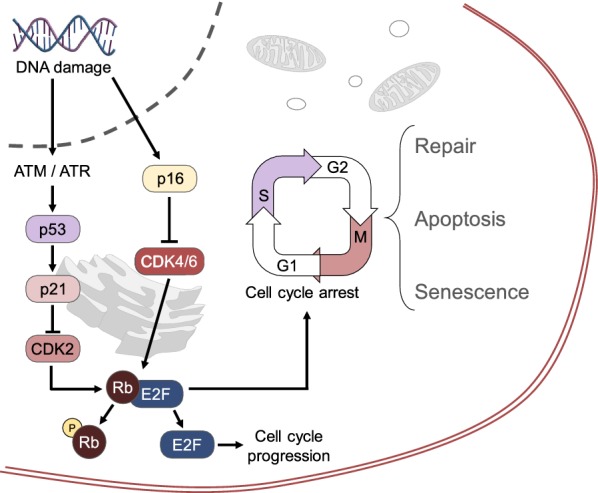
“Broadly speaking, the most important effectors of cell senescence are the p53/p21 and p16/Rb pathways [12, 13], mostly through their regulation of the G1 phase of the cell cycle [14, 15].”
BackgroundRegulation of cellular senescence via the FOXO 4‐p53 axis
Bourgeois, B., & Madl, T. (2018) · FEBS Letters · doi:10.1002/1873-3468.13057 · Cited by 119
Quercetin inhibits a large panel of kinases implicated in cancer cell biology
Kiss (2010) · International Journal of Oncology · doi:10.3892/ijo.2010.890 · Cited by 116
Nishio, K., Inoue, A., Qiao, S., Kondo, H., & Mimura, A. (2001) · Histochemistry and Cell Biology · doi:10.1007/s004180100325 · Cited by 115
HLA-G-mediated NK cell senescence promotes vascular remodeling: implications for reproduction
Rajagopalan, S. (2014) · Cellular and Molecular Immunology · doi:10.1038/cmi.2014.53 · Cited by 109
Caloric restriction and cellular senescence
Fontana, L., Nehme, J., & Demaria, M. (2018) · Mechanisms of Ageing and Development · doi:10.1016/j.mad.2018.10.005 · Cited by 104
Expansion and Cell-Cycle Arrest: Common Denominators of Cellular Senescence
Ogrodnik, M., Salmonowicz, H., Jurk, D., & Passos, J. F. (2019) · Trends in Biochemical Sciences · doi:10.1016/j.tibs.2019.06.011 · Cited by 104
Regulation of senescence and the SASP by the transcription factor C/EBPβ
Salotti, J., & Johnson, P. F. (2019) · Experimental Gerontology · doi:10.1016/j.exger.2019.110752 · Cited by 103
Constitutive HER2 Signaling Promotes Breast Cancer Metastasis through Cellular Senescence
Angelini, P. D., Fluck, M. F. Z., Pedersen, K., Parra-Palau, J. L., Guiu, M., Bernadó Morales, C., Vicario, R., Luque-García, A., Navalpotro, N. P., Giralt, J., et al. (2013) · Cancer Research · doi:10.1158/0008-5472.can-12-2301 · Cited by 100
Increased organization of cytoskeleton accompanying the aging of human fibroblasts in vitro*1
Wang, E., & Gundersen, D. (1984) · Experimental Cell Research · doi:10.1016/0014-4827(84)90679-7 · Cited by 94
Fontana, L., Mitchell, S. E., Wang, B., Tosti, V., van Vliet, T., Veronese, N., Bertozzi, B., Early, D. S., Maissan, P., Speakman, J. R., et al. (2018) · Aging Cell · doi:10.1111/acel.12746 · Cited by 81
Galbiati, A., Beauséjour, C., & d'Adda di Fagagna, F. (2017) · Aging Cell · doi:10.1111/acel.12573 · Cited by 79
Sasaki, M., Miyakoshi, M., Sato, Y., & Nakanuma, Y. (2013) · Digestive Diseases and Sciences · doi:10.1007/s10620-013-2920-6 · Cited by 76
Chen, W., Kang, J., Xia, J., li, Y., Yang, B., Chen, B., Sun, W., Song, X., Xiang, W., Wang, X., et al. (2008) · International Journal of Molecular Medicine · doi:10.3892/ijmm.21.5.645 · Cited by 76
Cellular senescence: a view throughout organismal life
von Kobbe, C. (2018) · Cellular and Molecular Life Sciences · doi:10.1007/s00018-018-2879-8 · Cited by 76
Pal, A., Potjer, T. P., Thomsen, S. K., Ng, H. J., Barrett, A., Scharfmann, R., James, T. J., Bishop, D. T., Karpe, F., Godsland, I. F., et al. (2015) · Diabetes · doi:10.2337/db15-0602 · Cited by 66
Wang, W., Wu, J., Zhang, Z., & Tong, T. (2001) · Journal of Biological Chemistry · doi:10.1074/jbc.m108278200 · Cited by 66
Targeting normal and cancer senescent cells as a strategy of senotherapy
Sikora, E., Bielak-Zmijewska, A., & Mosieniak, G. (2019) · Ageing Research Reviews · doi:10.1016/j.arr.2019.100941 · Cited by 56
Quillard, T., Araújo, H. A., Franck, G., Tesmenitsky, Y., & Libby, P. (2014) · Arteriosclerosis, Thrombosis, and Vascular Biology · doi:10.1161/atvbaha.114.303326 · Cited by 54
Zeng, G., & Millis, A. J. T. (1996) · Experimental Cell Research · doi:10.1006/excr.1996.0019 · Cited by 51
Aging Is Associated With Increased T-Cell Chemokine Expression in C57Bl/6 Mice
Chen, J., Mo, R., Lescure, P., Misek, D. E., Hanash, S., Rochford, R. A., Hobbs, M. V., & Yung, R. L. (2003) · The Journals of Gerontology Series A · doi:10.1093/gerona/58.11.b975 · Cited by 44
The development of cell senescence.
Da Silva-Álvarez, S., Picallos-Rabina, P., Antelo-Iglesias, L., Triana-Martínez, F., Barreiro-Iglesias, A., Sánchez, L., & Collado, M. (2019) · Experimental Gerontology · doi:10.1016/j.exger.2019.110742 · Cited by 42
Cellular senescence and senescence‐associated T cells as a potential therapeutic target
Nakagami, H. (2020) · Geriatrics & Gerontology International · doi:10.1111/ggi.13851 · Cited by 35
González‐Navarro, H., Vinué, Á., Sanz, M. J., Delgado, M., Pozo, M. A., Serrano, M., Burks, D. J., & Andrés, V. (2013) · Aging Cell · doi:10.1111/acel.12023 · Cited by 33
Trujillo, M. E., Pajvani, U. B., & Scherer, P. E. (2005) · Cell Cycle · doi:10.4161/cc.4.9.2030 · Cited by 30
The Potential Role of Senescence As a Modulator of Platelets and Tumorigenesis
Valenzuela, C. A., Quintanilla, R., Moore‐Carrasco, R., & Brown, N. E. (2017) · Frontiers in Oncology · doi:10.3389/fonc.2017.00188 · Cited by 18
Research works printed but not linked: 1
- Shenghui H Sharpless N Senescence in health and disease Cell 2017 169 1000 1011 28575665 PMC5643029 · DOI · Paper page
Cited by
A new gene set identifies senescent cells and predicts senescence-associated pathways across tissues
Saul, D., Kosinsky, R. L., Atkinson, E. J., Doolittle, M. L., Zhang, X., LeBrasseur, N. K., Pignolo, R. J., Robbins, P. D., Niedernhofer, L. J., Ikeno, Y., et al. (2022) · Nature Communications · doi:10.1038/s41467-022-32552-1 · Cited by 1,022
Reactive Oxygen Species: Drivers of Physiological and Pathological Processes
Checa, J., & Aran, J. M. (2020) · Journal of Inflammation Research · doi:10.2147/jir.s275595 · Cited by 984
Lagoumtzi, S. M., & Chondrogianni, N. (2021) · Free Radical Biology and Medicine · doi:10.1016/j.freeradbiomed.2021.05.003 · Cited by 279
AGE/RAGE in diabetic kidney disease and ageing kidney
Wu, X.-Q., Zhang, D.-D., Wang, Y.-N., Tan, Y.-Q., Yu, X.-Y., & Zhao, Y.-Y. (2021) · Free Radical Biology and Medicine · doi:10.1016/j.freeradbiomed.2021.05.025 · Cited by 228
Cellular Senescence: From Mechanisms to Current Biomarkers and Senotherapies
Lucas, V., Cavadas, C., & Aveleira, C. A. (2023) · Pharmacological Reviews · doi:10.1124/pharmrev.122.000622 · Cited by 160
Metadata
- Authors
- Amaya-Montoya, M., Pérez-Londoño, A., Guatibonza-García, V., Vargas-Villanueva, A., & Mendivil, C. O.
- Affiliations
- Universidad de Los Andes (CO)
- Corresponding author
- Mendivil, Carlos O.
- Venue
- Advances in Therapy
- Published
- 2020-03-17
- Volume
- 37
- Issue
- 4
- Pages
- 1407-1424
- ISSN
- 0741-238X (ISSN-L)
- 1865-8652
- PMC
- PMC7140757
- OpenAlex
- W3012054349
- Cited by
- 82
- References
- 125
- Citations by year
- 2026: 5 · 2025: 10 · 2024: 14 · 2023: 14 · 2022: 17 · 2021: 17 · 2020: 5
- FWCI
- 1.69
- Type
- journal article
- Language
- en
- Open access
- hybrid
- doi.org
- Licence
- cc-by
- creativecommons.org/licenses/by/4.0 (tdm)
- creativecommons.org/licenses/by/4.0 (vor)
- Locations
- Advances in Therapy (publishedVersion, cc-by)
- PubMed Central (publishedVersion, cc-by)
- PubMed (publishedVersion)
- Topics
- Life Sciences › Biochemistry, Genetics and Molecular Biology › Cell Biology › Telomeres, Telomerase, and Senescence
- Life Sciences › Biochemistry, Genetics and Molecular Biology › Aging › Genetics, Aging, and Longevity in Model Organisms
- Health Sciences › Medicine › Geriatrics and Gerontology › Sirtuins and Resveratrol in Medicine
- Keywords
- cellular senescence, senescence-associated secretory phenotype, age-related diseases, senolytics, senolytic therapy, cell cycle arrest, DNA damage, oxidative stress, healthspan, lifespan, anti-aging therapeutics
- MeSH terms
- Aging, Animals, DNA Damage, Humans, Cellular Senescence, Oxidative Stress
About these checks
Registry, retraction, Cites and statistics results are computed, not judged, with one exception: a printed reference that no index lists is read once by a model before it counts as a citation error. Claims are extracted by a model and kept only when their quote appears verbatim in the text; each cited source is then checked, with a model’s help, for whether it says what the claim relies on. Those verdicts can be wrong — read the claim’s quote and the cited source before relying on one.
Statistics and arithmetic are recomputed, not judged.
Confidence bands are shown only for fields calibrated on our annotated test set. None is calibrated yet, so no band is shown.
What counts as a claim ›How we measure confidence ›How we check this ›
Are you an author, or do you see a problem with this page? Request a review
Data sources
Bibliographic data: Semantic Scholar, OpenAlex, Crossref.
Contains information from the Semantic Scholar Academic Graph Datasets, made available under the ODC Attribution License (ODC-BY 1.0).
Semantic Scholar’s data is described in: Kinney, R., et al. (2023). The Semantic Scholar Open Data Platform. arXiv:2301.10140.
