

Effects of leucine-rich protein supplements on anthropometric parameter and muscle strength in the elderly: A systematic review and meta-analysis
Open accessThe DOI matches its Crossref record; 66 of the 66 references it cites were found in a registry or an index.
Abstract
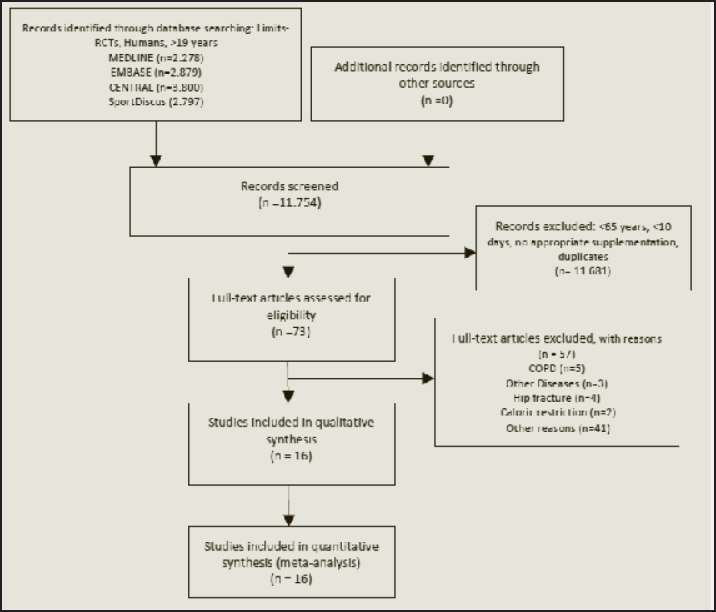
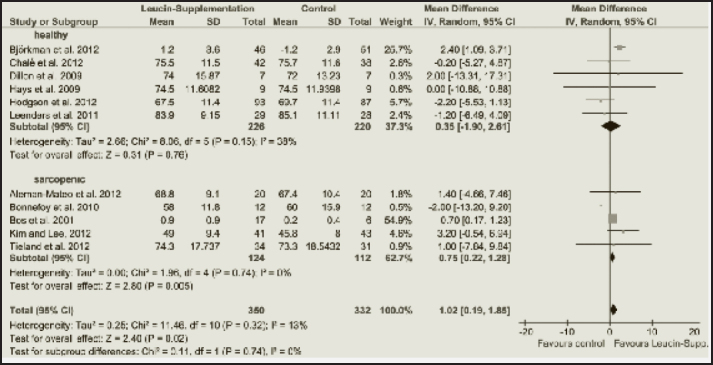
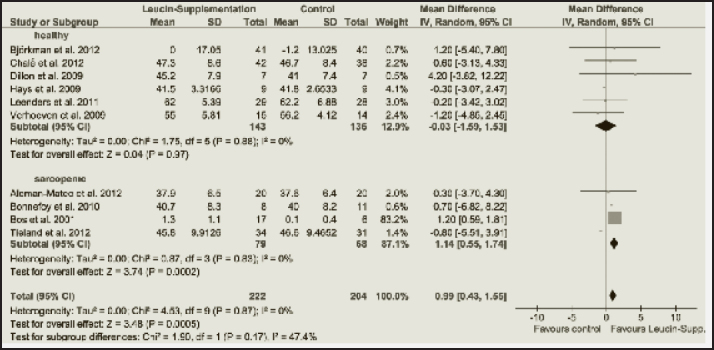
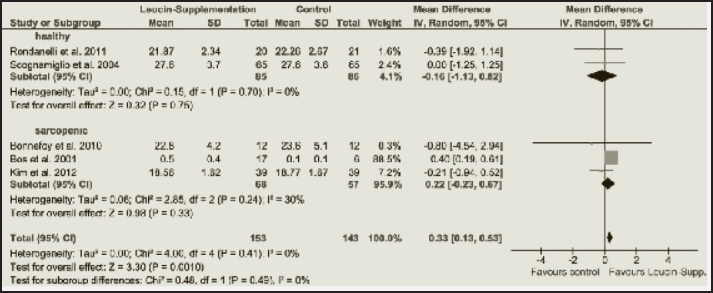
OBJECTIVE: The primary objective of the present systematic review and meta-analysis was to synthesize the available literature relating to leucine supplementation in the elderly with respect to its effects on anthropometrical parameters and muscle strength. The secondary aim was to perform a selective subgroup analysis when possible differentiating between healthy and sarcopenic subjects. METHODS: Literature search was performed using the electronic databases MEDLINE, EMBASE, SportDiscus, and the Cochrane Central Register of trials with restrictions to randomized controlled trials or studies following a cross-over design. Parameters taken into account were body weight, body mass index, lean body mass, fat mass, percentage of body fat, hand grip strength, and knee extension strength. Moreover, biomarkers of glucose metabolism (fasting glucose, fasting insulin, albumin, and HOMA index) were extracted when possible. For each outcome measure of interest, a meta-analysis was performed in order to determine the pooled effect of the intervention in terms of weighted mean differences between the post-intervention (or differences in means) values of the leucine and the respective control groups. Data analysis was performed using the Review Manager 5.2.4. software. RESULTS: A total of 16 studies enrolling 999 subjects met the inclusion criteria. Compared with control groups, leucine supplementation significantly increased gain in body weight [mean differences 1.02 kg, 95%-CI (0.19, 1.85), p=0.02], lean body mass [mean differences 0.99 kg, 95%-CI (0.43, 1.55), p=0.0005], and body mass index [mean differences 0.33 kg/m2, 95%-CI (0.13, 0.53), p=0.001], when compared to the respective control groups. With respect to body weight and lean body mass, leucine supplementation turned out to be more effective in the subgroup of study participants with manifested sarcopenia. All other parameters under investigation were not affected by leucine supplementation in a fashion significantly different from controls. CONCLUSIONS: It is concluded that leucine supplementation was found to exert beneficial effects on body weight, body mass index, and lean body mass in older persons in those subjects already prone to sarcopenia, but not muscle strength. However, due to the heterogeneity between the trials included in this systematic review, further studies adopting a homogenous design with respect to participant characteristics duration as well as the kind and amount of daily supplement in use are required.
Overview
The claims and statistics of this paper haven’t been checked yet.
Free: it reads the open-access text and checks the first 5 claims that cite a source we can check. Create a free account to check every claim.
Integrity signals
Registry
Cites
Statistics
Figures
Verification
Claims the paper makes
The claims and statistics of this paper haven’t been checked yet.
Free: it reads the open-access text and checks the first 5 claims that cite a source we can check. Create a free account to check every claim.
Claims other papers make about this one
Each is checked against this paper’s own text: does it say what the citing paper says it does?
The source backs part of the claim, not all of it — or backs it for a different population, condition or comparison.
In the citing paper
“However, the ability to enhance muscle mass and/or function with the chronic consumption of protein/amino acid-based supplements is somewhat equivocal in otherwise healthy adults,67–69”
From Reduced physical activity in young and older adults: Metabolic and musculoskeletal implications (2019) · cites this paper as [67]
Experimental — accuracy not yet measured
Self-check
Percentages, sums and reported differences re-computed from the paper’s own numbers.
The self-check needs the paper’s full text.
Citations
Cites
Preferred Reporting Items for Systematic Reviews and Meta-Analyses: the PRISMA statement
Moher, D., Liberati, A., Tetzlaff, J., Altman, D. G., & for the PRISMA Group (2009) · BMJ · doi:10.1136/bmj.b2535 · Cited by 83,823
Preferred Reporting Items for Systematic Reviews and Meta-Analyses: The PRISMA Statement
Moher, D., Liberati, A., Tetzlaff, J., Altman, D. G., & The PRISMA Group (2009) · PLoS Medicine · doi:10.1371/journal.pmed.1000097 · Cited by 64,042 · cited 1×
“This systematic review was planned, conducted, and reported in adherence to standards of quality for reporting meta-analyses (26).”
Measuring inconsistency in meta-analyses
Higgins, J. P. T., Thompson, S. G., Deeks, J. J., & Altman, D. G. (2003) · BMJ · doi:10.1136/bmj.327.7414.557 · Cited by 63,139 · cited 1×
“A value for I2 > 50% was considered to represent substantial heterogeneity (31).”
Preferred reporting items for systematic reviews and meta-analyses: the PRISMA Statement.
(2009) · PubMed Central · Cited by 44,859
The Cochrane Collaboration's tool for assessing risk of bias in randomised trials
Higgins, J. P. T., Altman, D. G., Gotzsche, P. C., Juni, P., Moher, D., Oxman, A. D., Savovic, J., Schulz, K. F., Weeks, L., Sterne, J. A. C., et al. (2011) · BMJ · doi:10.1136/bmj.d5928 · Cited by 33,817
Dermyshi, E., Wang, Y., Yan, C., Hong, W., Qiu, G., Gong, X., & Zhang, T. (2017) · Neonatology · doi:10.1159/000454668 · Cited by 24,451
Wang, G., Ma, R., Qiao, G., Wada, K., Aizawa, Y., & Satoh, T. (2015) · Integrative Medicine International · doi:10.1159/000368408 · Cited by 18,657
Estimating the mean and variance from the median, range, and the size of a sample
Hozo, S. P., Djulbegovic, B., & Hozo, I. (2005) · BMC Medical Research Methodology · doi:10.1186/1471-2288-5-13 · Cited by 9,062
mTOR Signaling in Growth Control and Disease
Laplante, M., & Sabatini, D. M. (2012) · Cell · doi:10.1016/j.cell.2012.03.017 · Cited by 8,509 · cited 2×
“At least some of the anabolic effects of leucine are supposed to be mediated via the mammalian target of rapamycin complex 1 (mTORC1) known to be up-regulated in certain kinds of tumours (59).”
Bauer, J., Biolo, G., Cederholm, T., Cesari, M., Cruz-Jentoft, A. J., Morley, J. E., Phillips, S., Sieber, C., Stehle, P., Teta, D., et al. (2013) · Journal of the American Medical Directors Association · doi:10.1016/j.jamda.2013.05.021 · Cited by 2,553 · cited 1×
“Therefore, these data support the current discussion for an evidence-based adaptation of the recommendations for dietary protein intake in the elderly (62).”
Research works printed but not linked: 1
- Higgins JP Green S V 51 u M Cochrane Handbook of systematic reviews 2011
Cited by
Items 101–173 of 173
van den Heuvel, E., Murphy, J. L., & Appleton, K. M. (2018) · Nutrients · doi:10.3390/nu10101409 · Cited by 15
Alves, P. K. N., Schauer, A., Augstein, A., Jarabo, M. P., Männel, A., Barthel, P., Vahle, B., Moriscot, A. S., Linke, A. H.-P., & Adams, V. (2024) · Cells · doi:10.3390/cells13060502 · Cited by 12
“Beneficial effects of leucine supplementation on sarcopenia and muscle strength especially in elderly people have been reported (for review see [48,49]), but positive effects were also seen in middle-aged adults during prolonged bed rest [29].”
BackgroundZhang, J., Xu, W., Han, H., Zhang, L., & Wang, T. (2019) · Animals · doi:10.3390/ani9121138 · Cited by 13
“In obese rats, chronic leucine supplementation altered the expression of hepatic insulin receptor substrate (IRS) and protein kinase B (Akt) in liver, which were two key genes responsible for insulin sensitivity [12].”
BackgroundSunsandee, N., Thimachai, P., Satirapoj, B., & Supasyndh, O. (2025) · International Urology and Nephrology · doi:10.1007/s11255-025-04560-9 · Cited by 11
“In a systemic review, leucine-enriched protein supplementation was found to exert beneficial effects on lean body mass but not muscle strength among older individuals [35].”
Kurmaev, D. P., Bulgakova, S. V., Treneva, E. V., Сергеевна, Ч. И., Kosareva, O. V., Sharonova, L. A., & Dolgikh, Y. A. (2023) · Бюллетень Восточно-Сибирского научного центра Сибирского отделения Российской академии медицинских наук · doi:10.29413/abs.2023-8.3.11 · Cited by 13
Is branched-chain amino acid nutritional supplementation beneficial or detrimental in heart failure?
Narita, K., & Amiya, E. (2021) · World Journal of Cardiology · doi:10.4330/wjc.v13.i6.163 · Cited by 10
van den Heuvel, E., Murphy, J., & Appleton, K. M. (2020) · Public Health Nutrition · doi:10.1017/s1368980020002712 · Cited by 10
García‐Peña, C., & Pérez‐Zepeda, M. U. (2016) · The journal of nutrition health & aging · doi:10.1007/s12603-016-0761-7 · Cited by 11
Yoshida, S., Shiraishi, R., Nakayama, Y., & Taira, Y. (2023) · Preprints.org · doi:10.20944/preprints202306.2095.v1 · Cited by 9
Serum branched-chain amino acids are mainly associated with body mass index and waist circumference
Liu, K., Borreggine, R., Gallart‐Ayala, H., Ivanišević, J., & Marques-Vidal, P. M. (2025) · Nutrition Metabolism and Cardiovascular Diseases · doi:10.1016/j.numecd.2025.103880 · Cited by 8
Wunderle, C., Ciobanu, C., Ritz, J., Tribolet, P., Neyer, P. J., Bernasconi, L., Stanga, Z. G., Müeller, B., & Schüetz, P. (2024) · European Journal of Clinical Nutrition · doi:10.1038/s41430-024-01507-8 · Cited by 10
“Therefore, fi ndings of this secondary analysis should be considered exploratory and hypothesis-generating, necessitating veri fi cation by larger-scale studies.”
Moyen, A., Fleurent-Grégoire, C., Gillis, C., Zaks, R., Carli, F., Scheede‐Bergdahl, C., Spicer, J. D., Cools‐Lartigue, J., Najmeh, S., Morais, J. A., et al. (2025) · BMJ Open Respiratory Research · doi:10.1136/bmjresp-2024-002884 · Cited by 8
“23 Yet, leucine, 24 omega-3 fatty acids 25 and vitamin D 26 may also contribute to improving muscle health and functional capacity.”
Verney, J., Martin, V., Ratel, S., Chavanelle, V., Bargetto, M., Etienne, M., Chaplais, E., Ruyet, P. L., Bonhomme, C., Combaret, L., et al. (2016) · The journal of nutrition health & aging · doi:10.1007/s12603-016-0855-2 · Cited by 8
“Indeed, this remained questionable as a recent systematic review and meta-analysis concluded that leucine rich protein supplementation was found to exert beneficial effects on lean body mass in sarcopenic older persons but not on muscle strength (35).”
Sarcopenic obesity, pathogenesis, and treatment with a focus on exercise and protein intake
Karaağaç, Y. (2023) · Journal of Mind and Medical Sciences · doi:10.22543/2392-7674.1419 · Cited by 5
“A meta-analysis study evaluating the effects of leucine supplementation on body composition reported that leucine promotes an increase in lean body mass and this effect of leucine is particularly pronounced in the elderly with sarcopenia [74].”
BackgroundJacob, K. J., Hajj‐Boutros, G., Sonjak, V., Leduc‐Gaudet, J., Broering, F. E., Flynn, C. R., Chevalier, S., Lamarche, M., Hussain, S. N. A., & Morais, J. A. (2025) · GeroScience · doi:10.1007/s11357-025-01877-2 · Cited by 8
“There is strong evidence that chronic leucine supplementation is beneficial in elevating the synthesis of myofibrillar protein [12], however, the effects of leucine supplementation on muscle mass and strength have yielded conflicting results [13].”
Blachier, F. (2026) · Nutrients · doi:10.3390/nu18020296 · Cited by 5
Nutraceuticals: Health effects and clinical applications
Chen, O., & Mah, E. (2022) · Elsevier eBooks · doi:10.1016/b978-0-12-821848-8.00043-3 · Cited by 5
Морозова, Л., Morozova, L., Миколайчик, И. Н., Mikolaychik, I. N., Ильтяков, А., Iltyakov, A. V., & Duskaev, G. K. (2019) · Agrarian Bulletin of the · doi:10.32417/article_5db430cb30bca8.95126056 · Cited by 4
Chinese Expert Consensus on Home Nutrition Administration for Older Patients (2024)
Gong, J., Li, X., Shi, L., Jing, X., Liao, X., Ma, Y., & Hu, W. (2025) · Journal of Evidence-Based Medicine · doi:10.1111/jebm.70025 · Cited by 5
Atualidades sobre o tratamento da Sarcopenia revisão de literatura
Gago, L. C., & Gago, F. C. P. (2016) · International Journal of Nutrology · doi:10.1055/s-0040-1705640 · Cited by 12
Andrade, M. F., de Castro, G. S., Gomes, S. P., de Carvalho, M., de Resende, J. C. F., Pires, I. S. O., Faiad, J. Z., Barrére, A. P. N., Venturini, A. L. C., de Souza, R. M., et al. (2026) · Clinical Nutrition ESPEN · doi:10.1016/j.clnesp.2026.103100 · Cited by 2
Dilesh, N. R., Khatri, D., Shrivastava, R., & Kushwaha, S. (2026) · Cell Biochemistry and Function · doi:10.1002/cbf.70194 · Cited by 2
Traylor, D. A., Nunes, E. A., Lees, M. J., Plucinski, M. J., Vondrasek, M., & Phillips, S. M. (2024) · Archives of Gerontology and Geriatrics Plus · doi:10.1016/j.aggp.2024.100058 · Cited by 2
Nutrition Interventions to Manage Sarcopenia: An Appraisal of the Existing Evidence
(2018) · Research and Reports of Medicine · doi:10.31829/2637-367x/rrm2018-1(1)-105 · Cited by 2
de Camargo, J. B. B. (2023) · Journal of Aging and Physical Activity · doi:10.1123/japa.2022-0275 · Cited by 2
Bell, K. E., Snijders, T., Zulyniak, M. A., Kumbhare, D. A., Parise, G., Chabowski, A., & Phillips, S. M. (2020) · PLoS ONE · doi:10.1371/journal.pone.0243876 · Cited by 2
Makida, Y., He, F., Mohania, D., Kumar, N., Naito, Y., Lorenzetti, A. M., Takadanohara, H., Marotta, C., Cervi, J., & Marotta, F. (2018) · Journal of Postgenomics Drug & Biomarker Development · doi:10.4172/2153-0769.1000198 · Cited by 1
Zhang, F., Sun, H.-L., Zhang, Z.-M., Xu, B.-D., Wu, G., & Hong, W. (2026) · Nutrición Hospitalaria · doi:10.20960/nh.06151 · Cited by 1
Exercise-Induced Autophagy in the Prevention and Treatment of Sarcopenia
Fan, J., Mo, X., Zou, K., & Chen, N. (2021) · Springer eBooks · doi:10.1007/978-981-16-4525-9_10 · Cited by 2
A Dietary Holy Grail for Healthy Aging?
Tanaka, T., Simonsick, E. M., & Ferrucci, L. (2023) · The Journals of Gerontology Series A · doi:10.1093/gerona/glac219 · Cited by 1
Efeitos da leucina no catabolismo proteico-muscular em pacientes críticos: uma revisão integrativa
dos Anjos, K. D. G., Olinto, E. O. D. S., Feitosa, G. A. M., Cabral, C. S., Cavalcanti, I. C. D. S. P., Barbosa, J. M., Barroso, F. N. D. L., & de Araújo, P. P. A. (2024) · Brazilian Journal of Health Review · doi:10.34119/bjhrv7n3-252 · Cited by 1
Patel, H. P., Laskou, F., & Dennison, E. M. (2025) · OBM Geriatrics · doi:10.21926/obm.geriatr.2501296 · Cited by 2
“For example, a systematic review and meta-analysis of 16 studies comprising 999 participants [44] explored the effect of leucine supplementation compared to control groups who did not receive leucine.”
Nakamura, Y., Yokoe, T., Ouchi, K., Funamoto, T., Kimura, H., Hamada, K., Arakawa, H., Chosa, E., & Kamei, N. (2025) · BMC Geriatrics · doi:10.1186/s12877-025-06177-0 · Cited by 1
Plasma membrane localization of paralogous leucine permeases Bap2 and Bap3 is regulated by Bul1Preprint
Maheswaran, S., & Bhat, P. J. (2020) · bioRxiv (Cold Spring Harbor Laboratory) · doi:10.1101/2020.07.01.181636 · Cited by 1
“Sarcopenia, the loss of muscle mass and strength in old age is treated by leucine supplementation, which promotes protein synthesis and inhibits protein breakdown (Komar et al., 2015; Martinez et al., 2019).”
BackgroundYoshida, S., Shiraishi, R., Nakayama, Y., & Taira, Y. (2023) · Preprints.org · doi:10.20944/preprints202306.2123.v1 · Cited by 1
The Potential Role of Dairy Foods in Fracture Prevention in Elderly in Aged-Care
Iuliano, S. (2016) · Springer eBooks · doi:10.1007/978-3-319-32417-3_23
Der Einfluss von Protein auf die Prävention von Fragilitätsfrakturen bei älteren Erwachsenen
Lanz, P., & Bischoff-Ferrari, H. A. (2018) · Praxis · doi:10.1024/1661-8157/a003037
Die Rolle von Nahrungsproteinen für die Knochen- und Muskelgesundheit
Meyer, U., Kistler-Fischbacher, M., & Bischoff-Ferrari, H. A. (2018) · Osteologie/Osteology · doi:10.1055/s-0038-1656920
“Die Meta-Analyse beinhaltete 6 Studien bei älteren Erwachsenen (n = 215) über 15± 4 Wochen Krafttraining.”
BackgroundInfluentialTaniguchi, H., Akiyama, N., & Ishihara, K. (2018) · Bioscience Biotechnology and Biochemistry · doi:10.1080/09168451.2018.1559026
Yamada, M. (2020) · Nihon Kikan Shokudoka Gakkai Kaiho · doi:10.2468/jbes.71.372
Bukhari, S. S. I. (2020) · Nottingham ePrints (University of Nottingham)
β-hydroxy-β-methylbutyrate: role and prospects applications in gerontology
Никитина, Е. А., Орлова, С. В., Pigareva, Y. A., & Magomedova, K. A. (2021) · Medical alphabet · doi:10.33667/2078-5631-2021-21-94-100
Implication of Exercise for Healthy Longevity in Older People
Yamada, M., & Arai, H. (2022) · Topics in Geriatric Rehabilitation · doi:10.1097/tgr.0000000000000350
Protein Malnutrition, Falls, and Fractures in Older Trauma Patients
Lanz, P., & Bischoff-Ferrari, H. A. (2022) · Springer eBooks · doi:10.1007/978-3-030-91483-7_6
実, 山. (2017) · 体力科學 · doi:10.7600/jspfsm.66.34
Clinical Practice Guidelines for Sarcopenia
実, 山. (2019) · Nippon Ronen Igakkai Zasshi Japanese Journal of Geriatrics · doi:10.3143/geriatrics.56.217
Marques, D., Gomes, C., & Santos, R. V. (2022) · Gazeta Médica · doi:10.29315/gm.v9i2.552
“Similarly, to Martínez-Arnau et al systematic review, since leucine was mainly given with other additional elements, it’s hard to establish the benefits of this amino acid alone.(12)”
MethodSarcopenia: Current Topics and Future Perspective
Yamada, M., Kinoshita, K., Satake, S., Matsui, Y., & Arai, H. (2022) · Springer eBooks · doi:10.1007/978-981-16-7977-3_12 · Cited by 1
Richard Hoffman PhD RNutr, F. R. S. A. (2022) · Wiley eBooks · doi:10.1002/9781119826743.ch5
Sarcopenia and Physical Performance in Patients with Cancer
Tanaka, S., & Tatematsu, N. (2022) · Springer eBooks · doi:10.1007/978-981-19-6710-8_23
Santos, M. F. A. (2022) · Digital Library of Theses and Dissertations (Universidade de São Paulo) · doi:10.11606/d.42.2022.tde-21082023-153413
Research Progress on the Correlation between Sarcopenia and Hypertension in Elderly People
Wu, X. (2024) · International Journal of Frontiers in Medicine · doi:10.25236/ijfm.2024.060504
“In addition, the use of nutrients such as omega-3 fatty acids and vitamin D has the potential to enhance protein anabolism, hence improving muscle development and function in older adults [54, 55].”
BackgroundTanaka, S., Suzuki, M., Kimura, Y., Koyama, S., Masuda, H., Kojima, I., Suzukawa, K., Takasugi, K., & Yamada, M. (2024) · Brain Impairment · doi:10.1071/ib24035
Liu, H., Zhang, Q., Hao, Q., Li, Q., Yang, L., Yang, X., Wang, K., Teng, J., Gong, Z., & Jia, Y. (2024) · Figshare · doi:10.6084/m9.figshare.26082628
Pomen uživanja verižno razvejanih aminokislin za uravnavanje mišične mase
Košir, J. (2024) · Repository of the University of Primorsk (University of Primorska)
Dexheimer, G. M., de Borba, F. F., Gnoatto, J. P. C., & Ostolin, T. L. V. D. P. (2024) · LA Referencia (Red Federada de Repositorios Institucionales de Publicaciones Científicas)
Jeong, Y., Son, S.-W., Kim, S., & Kim, H. (2026) · The journal of nutrition health & aging · doi:10.1016/j.jnha.2026.100802
“…whom age-related muscle decline and insufficient protein intake are common [27 – 29], while other studies have reported no positive association between protein intake and muscle strength in different research contexts, including intervention-based studies or disease-specific populations [30 – 32].”
The role of protein in the elderly patients nutrition
Олеговна, Е. С., Павловна, М. А., & Drapkina, O. M. (2026) · Russian Journal of Preventive Medicine · doi:10.17116/profmed20262902190
Tang, H.-Y., Lo, C.-J., Ho, H. T., Yang, C.-H., Chang, C.-Y., Ho, Y., Fang, J.-T., Lin, C.-M., & Cheng, M. D. M.-H. (2026) · npj Aging · doi:10.1038/s41514-026-00375-9
Ogawa, S., Wakabayashi, H., Suzuki, N., Jinno, M., Inoue, T., Maeda, K., Yamamoto, K., Rakugi, H., Akishita, M., & Arai, H. (2026) · Geriatrics and gerontology international/Geriatrics & gerontology international · doi:10.1111/ggi.70296
Effets de l'âge et de l'activité physique sur la santé musculaire et mitochondriale chez l'humain
Marcangeli, V. (2026) · Archipel (Université du Québec à Montréal)
Plant Versus Animal-Based Foods for the Management of Obesity in Ageing
Naik, A. S., Santos-Hernández, M., & Lele, S. S. (2026) · Healthy ageing and longevity · doi:10.1007/978-3-032-24097-2_16
Pang, B. W. J., Yang, Y., & Cheon, B. K. (2026) · Nutrients · doi:10.3390/nu18193255
“As pointed out by the authors of previous systematic reviews [51,58], there is a likelihood that the benefits associated with leucine supplementation may only truly stand out in populations with significant physical and/or physiological decline, such as the older old ( ≥ 75 y), malnourished, or…”
Iwahashi, M., Matsumoto, T., Mori, Y., Wada, C., Tajima, F., Kurakami, H., Yamada, T., & Nanjo, K. (2026) · Progress in Rehabilitation Medicine · doi:10.2490/prm.20260054
β-гидрокси-β-метилбутират: роль и перспективы применения в геронтологии
Никитина, Е. А., Владимировна, О. С., Анатольевна, П. Ю., & Абдулхаликовна, М. Х. (2021) · Medical alphabet
Metadata
- Authors
- Komar, B., Schwingshackl, L., & Hoffmann, G.
- Affiliations
- University of Vienna (AT)
- Corresponding author
- Hoffmann, Georg
- Venue
- The Journal of nutrition, health and aging
- Publisher
- Elsevier BV
- Published
- 2015-04
- Volume
- 19
- Issue
- 4
- Pages
- 437-446
- ISSN
- 1279-7707 (ISSN-L)
- PMC
- PMC12877541
- OpenAlex
- W1984535102
- Cited by
- 161
- References
- 66
- Citations by year
- 2026: 9 · 2025: 9 · 2024: 12 · 2023: 15 · 2022: 21 · 2021: 17 · 2020: 12 · 2019: 16 · 2018: 20 · 2017: 15 · 2016: 12 · 2015: 3
- FWCI
- 1.00
- Type
- journal article
- Language
- en
- Open access
- hybrid
- doi.org
- Licence
- cc-by-nc-nd
- www.elsevier.com/tdm/userlicense/1.0/ (tdm)
- www.elsevier.com/legal/tdmrep-license (tdm)
- creativecommons.org/licenses/by-nc-nd/4.0/ (vor, 3178 d)
- Locations
- The journal of nutrition health & aging (publishedVersion, cc-by-nc-nd)
- Europe PMC (PubMed Central) (publishedVersion, cc-by-nc-nd)
- PubMed (publishedVersion)
- PubMed Central (publishedVersion, cc-by-nc-nd)
- Topics
- Health Sciences › Nursing › Nutrition and Dietetics › Muscle metabolism and nutrition
- Health Sciences › Medicine › Physiology (medical) › Nutrition and Health in Aging
- Life Sciences › Biochemistry, Genetics and Molecular Biology › Molecular Biology › Muscle Physiology and Disorders
- Keywords
- leucine supplementation, older adults, sarcopenia, muscle strength, lean body mass, body mass index, anthropometric parameters, grip strength, quadriceps strength, glucose metabolism, insulin, dietary supplementation, weight gain, fat mass, HOMA index, albumin, fasting blood glucose, fasting insulin
- MeSH terms
- Aged, Anthropometry, Humans, Leucine, Weight Gain, Body Mass Index, Hand Strength, Dietary Supplements, Muscle Strength, Sarcopenia
About these checks
Registry, retraction, Cites and statistics results are computed, not judged, with one exception: a printed reference that no index lists is read once by a model before it counts as a citation error. Claims are extracted by a model and kept only when their quote appears verbatim in the text; each cited source is then checked, with a model’s help, for whether it says what the claim relies on. Those verdicts can be wrong — read the claim’s quote and the cited source before relying on one.
Statistics and arithmetic are recomputed, not judged.
Confidence bands are shown only for fields calibrated on our annotated test set. None is calibrated yet, so no band is shown.
What counts as a claim ›How we measure confidence ›How we check this ›
Are you an author, or do you see a problem with this page? Request a review
Data sources
Bibliographic data: Semantic Scholar, OpenAlex, Crossref.
Contains information from the Semantic Scholar Academic Graph Datasets, made available under the ODC Attribution License (ODC-BY 1.0).
Semantic Scholar’s data is described in: Kinney, R., et al. (2023). The Semantic Scholar Open Data Platform. arXiv:2301.10140.
