

Effects of leucine-rich protein supplements on anthropometric parameter and muscle strength in the elderly: A systematic review and meta-analysis
Open accessThe DOI matches its Crossref record; 66 of the 66 references it cites were found in a registry or an index.
Abstract
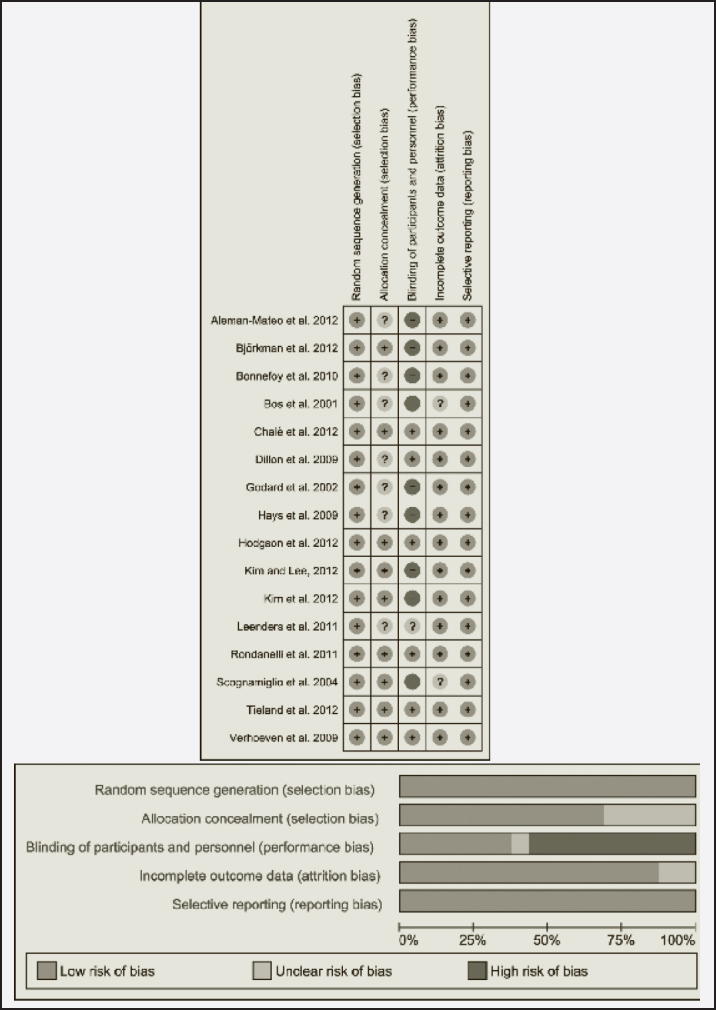
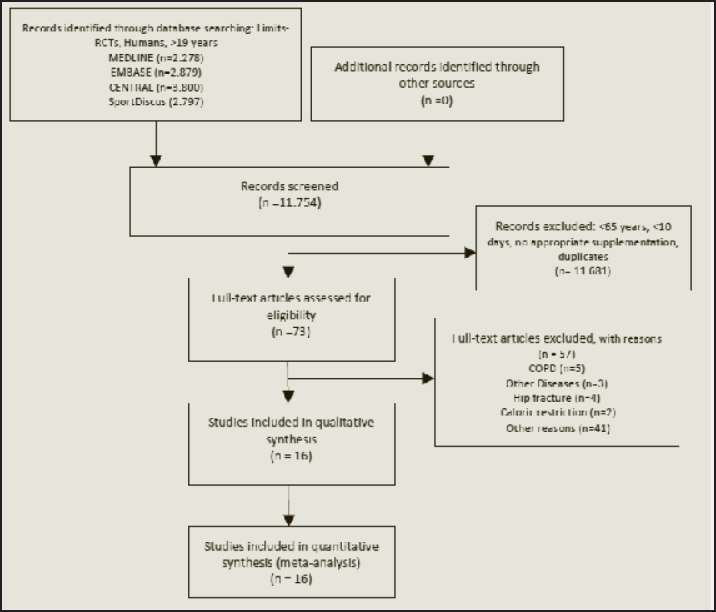
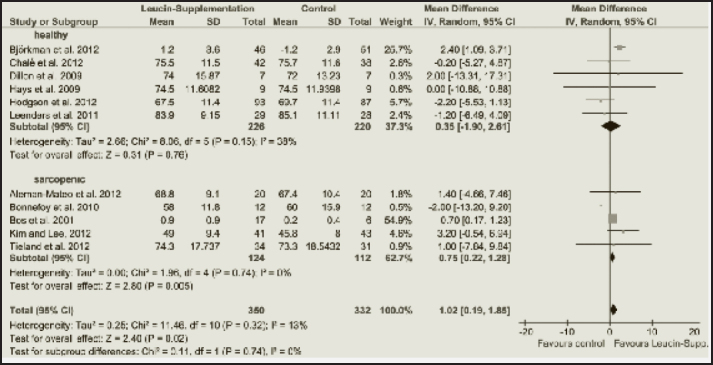
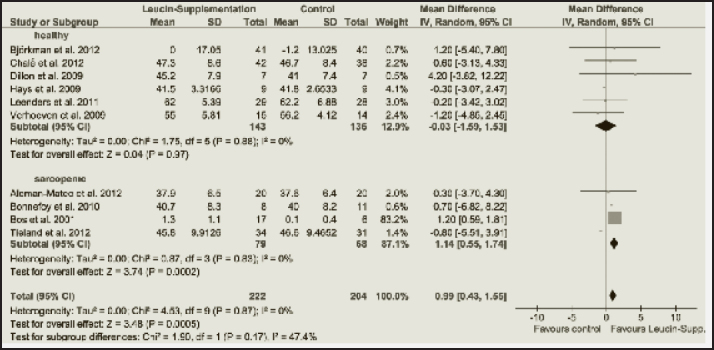
OBJECTIVE: The primary objective of the present systematic review and meta-analysis was to synthesize the available literature relating to leucine supplementation in the elderly with respect to its effects on anthropometrical parameters and muscle strength. The secondary aim was to perform a selective subgroup analysis when possible differentiating between healthy and sarcopenic subjects. METHODS: Literature search was performed using the electronic databases MEDLINE, EMBASE, SportDiscus, and the Cochrane Central Register of trials with restrictions to randomized controlled trials or studies following a cross-over design. Parameters taken into account were body weight, body mass index, lean body mass, fat mass, percentage of body fat, hand grip strength, and knee extension strength. Moreover, biomarkers of glucose metabolism (fasting glucose, fasting insulin, albumin, and HOMA index) were extracted when possible. For each outcome measure of interest, a meta-analysis was performed in order to determine the pooled effect of the intervention in terms of weighted mean differences between the post-intervention (or differences in means) values of the leucine and the respective control groups. Data analysis was performed using the Review Manager 5.2.4. software. RESULTS: A total of 16 studies enrolling 999 subjects met the inclusion criteria. Compared with control groups, leucine supplementation significantly increased gain in body weight [mean differences 1.02 kg, 95%-CI (0.19, 1.85), p=0.02], lean body mass [mean differences 0.99 kg, 95%-CI (0.43, 1.55), p=0.0005], and body mass index [mean differences 0.33 kg/m2, 95%-CI (0.13, 0.53), p=0.001], when compared to the respective control groups. With respect to body weight and lean body mass, leucine supplementation turned out to be more effective in the subgroup of study participants with manifested sarcopenia. All other parameters under investigation were not affected by leucine supplementation in a fashion significantly different from controls. CONCLUSIONS: It is concluded that leucine supplementation was found to exert beneficial effects on body weight, body mass index, and lean body mass in older persons in those subjects already prone to sarcopenia, but not muscle strength. However, due to the heterogeneity between the trials included in this systematic review, further studies adopting a homogenous design with respect to participant characteristics duration as well as the kind and amount of daily supplement in use are required.
Overview
The claims and statistics of this paper haven’t been checked yet.
Free: it reads the open-access text and checks the first 5 claims that cite a source we can check. Create a free account to check every claim.
Integrity signals
Registry
Cites
Statistics
Figures
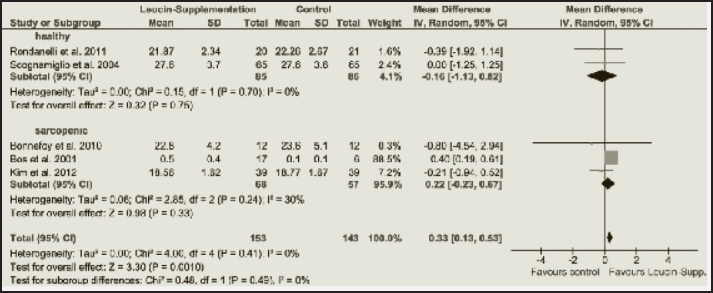
Verification
Claims the paper makes
The claims and statistics of this paper haven’t been checked yet.
Free: it reads the open-access text and checks the first 5 claims that cite a source we can check. Create a free account to check every claim.
Claims other papers make about this one
Each is checked against this paper’s own text: does it say what the citing paper says it does?
The source backs part of the claim, not all of it — or backs it for a different population, condition or comparison.
In the citing paper
“However, the ability to enhance muscle mass and/or function with the chronic consumption of protein/amino acid-based supplements is somewhat equivocal in otherwise healthy adults,67–69”
From Reduced physical activity in young and older adults: Metabolic and musculoskeletal implications (2019) · cites this paper as [67]
Experimental — accuracy not yet measured
Self-check
Percentages, sums and reported differences re-computed from the paper’s own numbers.
The self-check needs the paper’s full text.
Citations
Cites
Preferred Reporting Items for Systematic Reviews and Meta-Analyses: the PRISMA statement
Moher, D., Liberati, A., Tetzlaff, J., Altman, D. G., & for the PRISMA Group (2009) · BMJ · doi:10.1136/bmj.b2535 · Cited by 83,823
Preferred Reporting Items for Systematic Reviews and Meta-Analyses: The PRISMA Statement
Moher, D., Liberati, A., Tetzlaff, J., Altman, D. G., & The PRISMA Group (2009) · PLoS Medicine · doi:10.1371/journal.pmed.1000097 · Cited by 64,042 · cited 1×
“This systematic review was planned, conducted, and reported in adherence to standards of quality for reporting meta-analyses (26).”
Measuring inconsistency in meta-analyses
Higgins, J. P. T., Thompson, S. G., Deeks, J. J., & Altman, D. G. (2003) · BMJ · doi:10.1136/bmj.327.7414.557 · Cited by 63,139 · cited 1×
“A value for I2 > 50% was considered to represent substantial heterogeneity (31).”
Preferred reporting items for systematic reviews and meta-analyses: the PRISMA Statement.
(2009) · PubMed Central · Cited by 44,859
The Cochrane Collaboration's tool for assessing risk of bias in randomised trials
Higgins, J. P. T., Altman, D. G., Gotzsche, P. C., Juni, P., Moher, D., Oxman, A. D., Savovic, J., Schulz, K. F., Weeks, L., Sterne, J. A. C., et al. (2011) · BMJ · doi:10.1136/bmj.d5928 · Cited by 33,817
Dermyshi, E., Wang, Y., Yan, C., Hong, W., Qiu, G., Gong, X., & Zhang, T. (2017) · Neonatology · doi:10.1159/000454668 · Cited by 24,451
Wang, G., Ma, R., Qiao, G., Wada, K., Aizawa, Y., & Satoh, T. (2015) · Integrative Medicine International · doi:10.1159/000368408 · Cited by 18,657
Estimating the mean and variance from the median, range, and the size of a sample
Hozo, S. P., Djulbegovic, B., & Hozo, I. (2005) · BMC Medical Research Methodology · doi:10.1186/1471-2288-5-13 · Cited by 9,062
mTOR Signaling in Growth Control and Disease
Laplante, M., & Sabatini, D. M. (2012) · Cell · doi:10.1016/j.cell.2012.03.017 · Cited by 8,509 · cited 2×
“At least some of the anabolic effects of leucine are supposed to be mediated via the mammalian target of rapamycin complex 1 (mTORC1) known to be up-regulated in certain kinds of tumours (59).”
Bauer, J., Biolo, G., Cederholm, T., Cesari, M., Cruz-Jentoft, A. J., Morley, J. E., Phillips, S., Sieber, C., Stehle, P., Teta, D., et al. (2013) · Journal of the American Medical Directors Association · doi:10.1016/j.jamda.2013.05.021 · Cited by 2,553 · cited 1×
“Therefore, these data support the current discussion for an evidence-based adaptation of the recommendations for dietary protein intake in the elderly (62).”
Research works printed but not linked: 1
- Higgins JP Green S V 51 u M Cochrane Handbook of systematic reviews 2011
Cited by
Sieber, C. C. (2019) · Aging Clinical and Experimental Research · doi:10.1007/s40520-019-01170-1 · Cited by 355
“A meta-analysis in 2015 included 16 studies incorporating also frail, sarcopenic and institutionalized persons [48].”
Yoshimura, Y., Wakabayashi, H., Yamada, M., Kim, H., Harada, A., & Arai, H. (2017) · Journal of the American Medical Directors Association · doi:10.1016/j.jamda.2017.03.019 · Cited by 365
Reduced physical activity in young and older adults: Metabolic and musculoskeletal implications
Bowden Davies, K. A., Pickles, S., Sprung, V. S., Kemp, G. J., Alam, U., Moore, D. R., Tahrani, A. A., & Cuthbertson, D. J. (2019) · Therapeutic Advances in Endocrinology and Metabolism · doi:10.1177/2042018819888824 · Cited by 278
Gielen, E., Beckwée, D., Delaere, A., De Breucker, S., Vandewoude, M., Bautmans, I., the Sarcopenia Guidelines Development Group of the Belgian Society of Gerontology and Geriatrics (BSGG), Bautmans, I., Beaudart, C., Beckwée, D., et al. (2021) · Nutrition Reviews · doi:10.1093/nutrit/nuaa011 · Cited by 269
Advances in muscle health and nutrition: A toolkit for healthcare professionals
Prado, C. M., Landi, F., Chew, S. T. H., Atherton, P. J., Molinger, J., Ruck, T., & Gonzalez, M. C. (2022) · Clinical Nutrition · doi:10.1016/j.clnu.2022.07.041 · Cited by 237
“Furthermore, results of a meta-analysis indicated that leucine supplementation was effective in increasing measures of muscle mass (assessed as lean soft tissue and fat-free mass) in older adults [179].”
ResultMuscle loss: The new malnutrition challenge in clinical practice
Landi, F., Camprubi-Robles, M., Bear, D. E., Cederholm, T., Malafarina, V., Welch, A. A., & Cruz-Jentoft, A. J. (2019) · Clinical Nutrition · doi:10.1016/j.clnu.2018.11.021 · Cited by 235
Yoshimura, Y., Bise, T., Shimazu, S., Tanoue, M., Tomioka, Y., Araki, M., Nishino, T., Kuzuhara, A., & Takatsuki, F. (2019) · Nutrition · doi:10.1016/j.nut.2018.05.028 · Cited by 191
Rheumatoid sarcopenia: loss of skeletal muscle strength and mass in rheumatoid arthritis
Bennett, J. L., Pratt, A. G., Dodds, R., Sayer, A. A., & Isaacs, J. D. (2023) · Nature Reviews Rheumatology · doi:10.1038/s41584-023-00921-9 · Cited by 161
Freiberger, E., Goisser, S., Porzel, S., Volkert, D., Kemmler, W., Sieber, C., & Bollheimer, C. (2015) · Clinical Interventions in Aging · doi:10.2147/cia.s82454 · Cited by 162
“outcomes, and thus protein and/or AA supplementation should have the potential to slow sarcopenic muscle loss, interventional studies using such supplements (mainly in the form of whey or casein protein or mixed/individual AA) up to now have only provided heterogeneous results.(46,47,49,60,65,74,86,88,110) AA suppleme…”
ten Haaf, D. S. M., Nuijten, M. A. H., Maessen, M. F. H., Horstman, A. M. H., Eijsvogels, T. M. H., & Hopman, M. T. (2018) · The American Journal of Clinical Nutrition · doi:10.1093/ajcn/nqy192 · Cited by 152
Dietary Protein, Metabolism, and Aging
Soultoukis, G. A., & Partridge, L. (2016) · Annual Review of Biochemistry · doi:10.1146/annurev-biochem-060815-014422 · Cited by 147
Yamada, M., Kimura, Y., Ishiyama, D., Nishio, N., Otobe, Y., Tanaka, T., Ohji, S., Koyama, S., Sato, A., Suzuki, M., et al. (2019) · Geriatrics & Gerontology International · doi:10.1111/ggi.13643 · Cited by 138
Current Concepts and Unresolved Questions in Dietary Protein Requirements and Supplements in Adults
Phillips, S. M. (2017) · Frontiers in Nutrition · doi:10.3389/fnut.2017.00013 · Cited by 145
“A meta-analysis examining the impact of leucine-based supplements concluded that sarcopenic patients taking leucine-based supplements gained LBM, but did not show gains in either grip or leg strength (48).”
BackgroundCruz-Jentoft, A. J., Dawson Hughes, B., Scott, D., Sanders, K. M., & Rizzoli, R. (2020) · Maturitas · doi:10.1016/j.maturitas.2019.11.007 · Cited by 144
Tessier, A.-J., & Chevalier, S. (2018) · Nutrients · doi:10.3390/nu10081099 · Cited by 132
“(2015) included 16 studies testing leucine-rich supplements in a wider variety of participants, who were also frail, sarcopenic, and institutionalized [55].”
BackgroundKemmler, W., Kohl, M., Fröhlich, M., Jakob, F., Engelke, K., von Stengel, S., & Schoene, D. (2020) · Journal of Bone and Mineral Research · doi:10.1002/jbmr.4027 · Cited by 139
“Further, although the relevance of adequate vitamin D, Ca, and protein/EAA intake for muscle and/or bone mass is obvious,((18,66,67)) the combined effect of exercise and vitamin D or protein/essential amino acids (EAA) is less evident.”
BackgroundBeneficial Effects of Leucine Supplementation on Criteria for Sarcopenia: A Systematic Review
Martínez-Arnau, F. M., Fonfría-Vivas, R., & Cauli, O. (2019) · Nutrients · doi:10.3390/nu11102504 · Cited by 129
Kemmler, W., Weissenfels, A., Teschler, M., Willert, S., Bebenek, M., Shojaa, M., Kohl, M., Freiberger, E., Sieber, C., & von Stengel, S. (2017) · Clinical Interventions in Aging · doi:10.2147/cia.s137987 · Cited by 123
“ering the negligible-to-low effects of protein supplements on strength parameters in healthy adults.(38,40,43)”
BackgroundLozano-Montoya, I., Correa-Pérez, A., Abraha, I., Soiza, R. L., Cherubini, A., O'Mahony, D., & Cruz-Jentoft, A. J. (2017) · Clinical Interventions in Aging · doi:10.2147/cia.s132496 · Cited by 130
Human Protein and Amino Acid Requirements
Hoffer, L. J. (2016) · Journal of Parenteral and Enteral Nutrition · doi:10.1177/0148607115624084 · Cited by 107
Tieland, M., Franssen, R., Dullemeijer, C., van Dronkelaar, C., Kim, H. K., Ispoglou, T., Zhu, K., Prince, R. L., van Loon, L. J. C., & de Groot, L. C. P. G. M. (2017) · The Journal of nutrition, health and aging · doi:10.1007/s12603-017-0896-1 · Cited by 123
Schwingshackl, L., Hoffmann, G., Schwedhelm, C., Kalle-Uhlmann, T., Missbach, B., Knüppel, S., & Boeing, H. (2016) · PLOS ONE · doi:10.1371/journal.pone.0157461 · Cited by 118
Self-citationEffects of Leucine Administration in Sarcopenia: A Randomized and Placebo-controlled Clinical Trial
Martínez-Arnau, F. M., Fonfría-Vivas, R., Buigues, C., Castillo, Y., Molina, P., Hoogland, A. J., van Doesburg, F., Pruimboom, L., Fernández-Garrido, J., & Cauli, O. (2020) · Nutrients · doi:10.3390/nu12040932 · Cited by 120
“Furthermore, globally, only 40% of older adults meet the recommended daily protein intake and 10% of older women do not even meet the estimated minimal average requirement [14,15].”
BackgroundBell, K. E., Snijders, T., Zulyniak, M., Kumbhare, D., Parise, G., Chabowski, A., & Phillips, S. M. (2017) · PLOS ONE · doi:10.1371/journal.pone.0181387 · Cited by 99
Association between Mediterranean diet and hand grip strength in older adult women
Barrea, L., Muscogiuri, G., Di Somma, C., Tramontano, G., De Luca, V., Illario, M., Colao, A., & Savastano, S. (2019) · Clinical Nutrition · doi:10.1016/j.clnu.2018.03.012 · Cited by 114
Lichtenberg, T., von Stengel, S., Sieber, C. C., & KEMMLER, W. K. (2019) · Clinical Interventions in Aging · doi:10.2147/cia.s225618 · Cited by 119
Takeuchi, I., Yoshimura, Y., Shimazu, S., Jeong, S., Yamaga, M., & Koga, H. (2019) · Geriatrics & Gerontology International · doi:10.1111/ggi.13547 · Cited by 91
Advances in nutritional supplementation for sarcopenia management
Liu, S., Zhang, L., & Li, S. (2023) · Frontiers in Nutrition · doi:10.3389/fnut.2023.1189522 · Cited by 75
“Leucine supplementation has been reported to have beneficial effects on body weight, body mass index, and lean body mass in older adults with a tendency toward sarcopenia, although the effects on muscle strength are inconclusive (61).”
BackgroundSupplements with purported effects on muscle mass and strength
Valenzuela, P. L., Morales, J. S., Emanuele, E., Pareja-Galeano, H., & Lucia, A. (2019) · European Journal of Nutrition · doi:10.1007/s00394-018-1882-z · Cited by 92
Therapeutic approaches to osteosarcopenia: insights for the clinician
Fatima, M., Brennan-Olsen, S. L., & Duque, G. (2019) · Therapeutic Advances in Musculoskeletal Disease · doi:10.1177/1759720x19867009 · Cited by 89
Harada, K., Suzuki, S., Ishii, H., Aoki, T., Hirayama, K., Shibata, Y., Negishi, Y., Sumi, T., Kawashima, K., Kunimura, A., et al. (2017) · The American Journal of Cardiology · doi:10.1016/j.amjcard.2017.01.003 · Cited by 90
Yoshimura, Y., Uchida, K., Jeong, S., & Yamaga, M. (2016) · The Journal of nutrition, health and aging · doi:10.1007/s12603-015-0570-4 · Cited by 82
“Although many studies have investigated the beneficial effects of nutritional support to treat or prevent sarcopenia in healthy elderly persons (12–20), the evidence in the setting of rehabilitation in elderly persons with impairments is limited (21, 22).”
Iolascon, G., Gimigliano, R., Bianco, M., de Sire, A., Moretti, A., Giusti, A., Malavolta, N., Migliaccio, S., Migliore, A., Napoli, N., et al. (2017) · The Journal of nutrition, health and aging · doi:10.1007/s12603-016-0823-x · Cited by 78
“Baseline data of a recent prospective cohort study, including 73,684 postmenopausal women, showed that who consumed > 422.5 mg Mg/day had 3% higher hip BMD values (p 0.001) and 2% higher whole body BMD values (p < 0.001) than women who consumed <206.5 mg Mg/day (35).”
InfluentialPlotkin, D. L., Delcastillo, K., Van Every, D. W., Tipton, K. D., Aragon, A. A., & Schoenfeld, B. J. (2021) · International Journal of Sport Nutrition and Exercise Metabolism · doi:10.1123/ijsnem.2020-0356 · Cited by 80
“The aforementioned meta-analysis by Komar et al. (2015) found body composition benefits to various protein products containing 2 g of leucine but did not show a positive effect for enhancing muscle strength.”
BackgroundBai, G.-H., Tsai, M.-C., Tsai, H.-W., Chang, C., & Hou, W. (2021) · European Journal of Nutrition · doi:10.1007/s00394-021-02710-0 · Cited by 84
Fish oil-derived n-3 polyunsaturated fatty acids for the prevention and treatment of sarcopenia
Gray, S. R., & Mittendorfer, B. (2018) · Current Opinion in Clinical Nutrition & Metabolic Care · doi:10.1097/mco.0000000000000441 · Cited by 66
Effects of enriched branched-chain amino acid supplementation on sarcopenia
Ko, C.-H., Wu, S., Wang, S., Chang, Y., Chang, C., Kuan, T., Chuang, H.-Y., Chang, C., Chou, W., & Wu, C. (2020) · Aging · doi:10.18632/aging.103576 · Cited by 78
Phillips, S. M., & Martinson, W. (2018) · Nutrition Reviews · doi:10.1093/nutrit/nuy062 · Cited by 59
Korat, A. V. A., Shea, M. K., Jacques, P. F., Sebastiani, P., Wang, M., Eliassen, A. H., Willett, W. C., & Sun, Q. (2024) · American Journal of Clinical Nutrition · doi:10.1016/j.ajcnut.2023.11.010 · Cited by 73
“Animal protein supplementation studies in older adults have been implicated in lean mass gains [64], which were potentially related to its amino acid composition.”
BackgroundKemmler, W., Kohl, M., Freiberger, E., Sieber, C., & von Stengel, S. (2018) · BMC Geriatrics · doi:10.1186/s12877-018-0759-6 · Cited by 66
Uremic Sarcopenia: Clinical Evidence and Basic Experimental Approach
Nishi, H., Takemura, K., Higashihara, T., & Inagi, R. (2020) · Nutrients · doi:10.3390/nu12061814 · Cited by 67
Optimizing Adult Protein Intake During Catabolic Health Conditions
Phillips, S. M., Paddon-Jones, D., & Layman, D. K. (2020) · Advances in Nutrition · doi:10.1093/advances/nmaa047 · Cited by 65
“The full meal response range for dietary protein to stimulate MPS is ∼25 to 45 g (24, 111).”
BackgroundRed meat consumption and risk of frailty in older women
Struijk, E. A., Fung, T. T., Sotos‐Prieto, M., Rodríguez‐Artalejo, F., Willett, W. C., Hu, F. B., & López‐García, E. (2021) · Journal of Cachexia Sarcopenia and Muscle · doi:10.1002/jcsm.12852 · Cited by 66
“Animal protein is high in leucine, an essential amino acid that plays an important role in muscle protein synthesis, and high in creatinine, which is synthesized from the amino acids glycine and arginine, and might also increase muscle mass, strength and functioning.(31,32) Nonetheless, the protein content of meat can…”
BackgroundProtein intake and risk of frailty among older women in the Nurses' Health Study
Struijk, E. A., Fung, T. T., Rodríguez‐Artalejo, F., Bischoff-Ferrari, H. A., Hu, F. B., Willett, W. C., & López‐García, E. (2022) · Journal of Cachexia Sarcopenia and Muscle · doi:10.1002/jcsm.12972 · Cited by 67
“ple, animal protein is high in leucine concentration, an essential amino acid thought to play an important role in muscle protein synthesis.(36) Animal protein is also rich in creatine, which is synthesized from the amino acids glycine and arginine, and is suggested to increase muscle mass, strength, and functioning.”
BackgroundRondanelli, M., Nichetti, M., Peroni, G., Faliva, M. A., Naso, M., Gasparri, C., Perna, S., Oberto, L., Di Paolo, E., Riva, A., et al. (2021) · Frontiers in Nutrition · doi:10.3389/fnut.2020.622391 · Cited by 54
Band, M. M., Sumukadas, D., Struthers, A. D., Avenell, A., Donnan, P. T., Kemp, P. R., Smith, K. T., Hume, C. L., Hapca, A., & Witham, M. D. (2018) · Trials · doi:10.1186/s13063-017-2390-9 · Cited by 53
“Leucine-enriched amino acid supplements have been shown to improve muscle strength and function in healthy older people, although one study of leucine alone failed to replicate this effect [18, 19].”
Poscia, A., Milovanovic, S., Milia, D. I. L., Duplaga, M., Grysztar, M., Landi, F., Moscato, U., Magnavita, N., Collamati, A., & Ricciardi, W. (2017) · European Journal of Public Health · doi:10.1093/eurpub/ckx199 · Cited by 65
Markofski, M. M., Jennings, K., Timmerman, K. L., Dickinson, J. M., Fry, C. S., Borack, M. S., Reidy, P. T., Deer, R. R., Randolph, A., Rasmussen, B. B., et al. (2019) · The Journals of Gerontology: Series A · doi:10.1093/gerona/gly109 · Cited by 52
“Overall, chronic amino acid supplementation in healthy older adults may not increase lean mass, even when the muscle protein synthetic response is enhanced (32,33), possibly due to proteostasis (34,35).”
BackgroundMaykish, A., & Sikalidis, A. K. (2020) · Journal of Personalized Medicine · doi:10.3390/jpm10010019 · Cited by 58
“anabolism and loss of muscle mass, according to a systematic review and meta-analysis of 16 studies, [49] supplemental Leu may result in aging muscle protein synthesis normalization or improvement, with no significant benefits regarding muscle strength.”
Landi, F., Calvani, R., Tosato, M., Martone, A. M., Picca, A., Ortolani, E., Savera, G., Salini, S., Ramaschi, M., Bernabei, R., et al. (2017) · The journal of nutrition health & aging · doi:10.1007/s12603-017-0974-4 · Cited by 57
“As acknowledged by health authorities, the method used to establish the RDA for protein does not consider any physiological or functional outcome (4).”
Ishikawa‐Takata, K., & Takimoto, H. (2018) · Geriatrics and gerontology international/Geriatrics & gerontology international · doi:10.1111/ggi.13239 · Cited by 56
Yoshida, S., Shiraishi, R., Nakayama, Y., & Taira, Y. (2023) · Nutrients · doi:10.3390/nu15132991 · Cited by 57
Acute Sarcopenia: Mechanisms and Management
Damanti, S., Senini, E., LORENZO, R. D., Merolla, A., Santoro, S., Festorazzi, C., Messina, M., Vitali, G., Sciorati, C., & Rovere, P. Q. (2024) · Nutrients · doi:10.3390/nu16203428 · Cited by 61
Guo, Y., Fu, X., Hu, Q., Chen, L., & Zuo, H. (2022) · Frontiers in Nutrition · doi:10.3389/fnut.2022.929891 · Cited by 62
Oktaviana, J., Zanker, J., Vogrin, S., & Duque, G. (2019) · Archives of Gerontology and Geriatrics · doi:10.1016/j.archger.2019.103938 · Cited by 51
Omura, T., & Araki, A. (2022) · Geriatrics & Gerontology International · doi:10.1111/ggi.14339 · Cited by 47
Bouillanne, O., Melchior, J., Faure, C., Paul, M., Canouï‐Poitrine, F., Boirie, Y., Chevenne, D., Forasassi, C., Guery, E., Herbaud, S., et al. (2018) · Clinical Nutrition · doi:10.1016/j.clnu.2018.02.017 · Cited by 48
Lv, X., Zhou, C., Yan, Q., Tan, Z., Kang, J., & Tang, S. (2022) · Nutrition · doi:10.1016/j.nut.2022.111797 · Cited by 47
Gold, S. L., Raman, M., Sands, B. E., Ungaro, R. C., & Sabino, J. (2023) · Alimentary Pharmacology & Therapeutics · doi:10.1111/apt.17498 · Cited by 48
Liao, C., Liao, Y., Liou, T., Hsieh, C.-Y., Kuo, Y., & Chen, H. (2021) · Nutrients · doi:10.3390/nu13082487 · Cited by 50
Yang, Y., Zhang, Q., Chen, J., He, C., Deng, D., Lu, W., & Wang, Y. (2022) · PeerJ · doi:10.7717/peerj.13678 · Cited by 49
Tey, S. L., Chew, S. T. H., How, C. H., Yalawar, M., Baggs, G. E., Chow, W. L., Cheong, M., Ong, R. H. S., Husain, F. S., Kwan, S. C., et al. (2019) · PLoS ONE · doi:10.1371/journal.pone.0223222 · Cited by 42
Hengeveld, L. M., de Goede, J., Afman, L. A., Bakker, S. J. L., Beulens, J. W. J., Blaak, E. E., Boersma, E. H., Geleijnse, J. M., van Goudoever, J. B., Hopman, M. T. E., et al. (2021) · Advances in Nutrition · doi:10.1093/advances/nmab140 · Cited by 42
Dewansingh, P., Melse‐Boonstra, A., Krijnen, W. P., van der Schans, C. P., Jager‐Wittenaar, H., & van den Heuvel, E. G. H. M. (2017) · Nutrition Research · doi:10.1016/j.nutres.2017.08.004 · Cited by 42
Gade, J., Beck, A. M., Andersen, H. E., Christensen, B., Rønholt, F., Klausen, T. W., Vinther, A., & Astrup, A. (2019) · British Journal of Nutrition · doi:10.1017/s0007114519001831 · Cited by 33
Implication of diet and exercise on the management of age‐related sarcopenic obesity in Asians
Kim, Y. J., Moon, S., Yu, J. M., & Chung, H. S. (2022) · Geriatrics and gerontology international/Geriatrics & gerontology international · doi:10.1111/ggi.14442 · Cited by 39
Beasley, J. M., Deierlein, A. L., Morland, K. B., Granieri, E. C., & Spark, A. (2016) · The Journal of nutrition, health and aging · doi:10.1007/s12603-015-0707-5 · Cited by 33
“Trials administering protein supplements enriched in specific amino acids, such as leucine (25) and cysteine (26), suggest focusing on the protein quality as well as quantity may be important in future work.”
Backgroundvan Wijngaarden, J. P., Wojzischke, J., van den Berg, C., Cetinyurek‐Yavuz, A., Diekmann, R., Luiking, Y. C., & Bauer, J. M. (2020) · Journal of the American Medical Directors Association · doi:10.1016/j.jamda.2020.04.012 · Cited by 37
Chew, S. T. H., Kayambu, G., Lew, C. C. H., Ng, T. P., Ong, F., Tan, J. J., Tan, N. C., & Tham, S.-L. (2021) · BMC Geriatrics · doi:10.1186/s12877-021-02240-8 · Cited by 36
“In contrast, a meta-analysis demonstrated that leucine supplementation significantly increases LBM and not muscle strength in patients with sarcopenia [119].”
ResultDelaire, L., Courtay, A., Humblot, J., Aubertin‐Leheudre, M., Mourey, F., Racine, A. N., Gilbert, T., Niasse‐Sy, Z., & Bonnefoy, M. (2023) · Nutrients · doi:10.3390/nu15194100 · Cited by 37
“According to a meta-analysis, leucine increases muscle mass, but this effect was only observed in older adults with sarcopenia [293].”
MethodMoradell, A., Casajús, J. A., Moreno, L. A., & Vicente‐Rodríguez, G. (2025) · Nutrients · doi:10.3390/nu17030596 · Cited by 35
“Different types of supplementations commonly used and worth mentioning include whey protein [51,52], β -hidroxi- β -metilbutirate (HMB) [52,53], essential amino acids (EAAs) [54], leucine [55], and multi-ingredient shakes [56].”
Determination of the safety of leucine supplementation in healthy elderly men
Rasmussen, B., Gilbert, E., Turki, A., Madden, K. M., & Elango, R. (2016) · Amino Acids · doi:10.1007/s00726-016-2241-0 · Cited by 32
Park, S., Chae, M., Park, H., & Park, K. (2021) · Nutrients · doi:10.3390/nu13051522 · Cited by 35
Kim, D., Morikawa, S., Miyawaki, M., Nakagawa, T., Ogawa, S., & Kase, Y. (2025) · Osteoporosis and Sarcopenia · doi:10.1016/j.afos.2025.05.005 · Cited by 32
“Conversely, Komar et al. [33] conducted a systematic review and meta-analysis involving 999 older individuals and found that leucine supplementation significantly increased lean body mass (MD = 0.99 kg, P = 0.0005), body weight (MD = 1.02 kg, P = 0.02), and body mass index (BMI) (MD = 0.33 kg/m 2 ,…”
InfluentialClinical practice for sarcopenia in Asia: Online survey by the Asian Working Group for Sarcopenia
Yamada, M., Lee, W., Akishita, M., Yang, M. J., Kang, L., Kim, S. Y., Lim, J.-P., Lim, W. S., Merchant, R. A., Ong, T. I. W., et al. (2023) · Archives of Gerontology and Geriatrics · doi:10.1016/j.archger.2023.105132 · Cited by 30
Thomas, A., Boobyer, C., Borgonha, Z., van den Heuvel, E., & Appleton, K. M. (2021) · Foods · doi:10.3390/foods10112828 · Cited by 31
Abiri, B., Hosseinpanah, F., Seifi, Z., Amini, S., & Valizadeh, M. (2023) · The journal of nutrition health & aging · doi:10.1007/s12603-023-1986-x · Cited by 31
“Unlike the aforementioned meta-analyses, Komar et al. (41) performed a meta-analysis comprising 16 studies that specifically examined the impact of leucine supplementation (at a minimum dosage of 2 g/day) on individuals aged ≥ 65 years.”
Li, C., Kang, B., Zhang, T., Gu, H., Song, P., Chen, J., Wang, X., Xu, B., Zhao, W., & Zhang, J. (2020) · Nutrients · doi:10.3390/nu12123689 · Cited by 28
“14 kg increase of lean body mass in the participants with manifested sarcopenia [46].”
BackgroundLi, H., Zhang, Q., Hao, Q., Li, Q., Yang, L., Yang, X., Wang, K., Teng, J., Gong, Z., & Jia, Y. (2024) · BMC Geriatrics · doi:10.1186/s12877-024-05144-5 · Cited by 27
“However, this contradicts the findings of other meta-analyses that reported no significant differences between BCAA levels and handgrip strength in individuals aged > 60 years [20, 21] and non-frail older individuals [22].”
ResultSafety and Tolerability of Leucine Supplementation in Elderly Men
Elango, R., Rasmussen, B., & Madden, K. M. (2016) · Journal of Nutrition · doi:10.3945/jn.116.234930 · Cited by 29
KEMMLER, W. K., Schoene, D., Kohl, M., & von Stengel, S. (2021) · Clinical Interventions in Aging · doi:10.2147/cia.s299867 · Cited by 29
Tokarz, J., Möller, G., Artati, A., Huber, S., Zeigerer, A., Blaauw, B., Adamski, J., & Dyar, K. A. (2021) · International Journal of Molecular Sciences · doi:10.3390/ijms22157958 · Cited by 25
Ebrahimi-Mousavi, S., Hashemi, R., Bagheri, A., Heshmat, R., Motlagh, A. D., & Esmaillzadeh, A. (2022) · Scientific Reports · doi:10.1038/s41598-022-07605-6 · Cited by 22
Boutry, C., El‐Kadi, S. W., Suryawan, A., Steinhoff‐Wagner, J., Stoll, B., Orellana, R. A., Nguyen, H. V., Kimball, S. R., Fiorotto, M. L., & Davis, T. A. (2016) · American Journal of Physiology-Endocrinology and Metabolism · doi:10.1152/ajpendo.00479.2015 · Cited by 22
“A recent meta-analysis concluded that leucine supplementation exerts beneficial effects on body weight and lean body mass in older persons already prone to sarcopenia (49).”
BackgroundA role for nutritional intervention in addressing the aging neuromuscular junction
Kougias, D. G., Das, T., Perez, A. B., & Pereira, S. L. (2018) · Nutrition Research · doi:10.1016/j.nutres.2018.02.006 · Cited by 24
Ispoglou, T., Deighton, K., King, R. F., White, H., & Lees, M. (2017) · Nutrition Journal · doi:10.1186/s12937-017-0298-6 · Cited by 21
Rabassa-Blanco, J., & Linares, I. P. (2017) · Revista Española de Nutrición Humana y Dietética · doi:10.14306/renhyd.21.1.220 · Cited by 34
Sarcopenia and Adverse Post-Surgical Outcomes in Geriatric Patients: A Scoping Review
Hossain, M., Yu, D., Bikdeli, B., & Yu, S. (2021) · The Journal of Frailty & Aging · doi:10.14283/jfa.2020.27 · Cited by 24
Rational Use of Protein Supplements in the Elderly—Relevance of Gastrointestinal Mechanisms
Chapman, I. M., Oberoi, A., Giezenaar, C., & Soenen, S. (2021) · Nutrients · doi:10.3390/nu13041227 · Cited by 22
Springstroh, K. A., Gal, N. J., Ford, A., Whiting, S. J., & Dahl, W. J. (2016) · Journal of Nutrition in Gerontology and Geriatrics · doi:10.1080/21551197.2016.1209146 · Cited by 21
“Reversal of weight and muscle loss (4) and rebuilding of strength are challenging (5), thus early identification of declining nutritional status and intervening to prevent further decline is critical to the prevention of malnutrition in older adults.”
BackgroundMorley, J. E., & Sanford, A. M. (2019) · The journal of nutrition health & aging · doi:10.1007/s12603-019-1259-x · Cited by 22
Laméris, T. J., Li, K., & Post, B. (2023) · Language and Speech · doi:10.1177/00238309221143719 · Cited by 24
Fountotos, R., Lauck, S., Piazza, N., Martucci, G. J., Arora, R. C., Asgar, A., Forcillo, J., Kouz, R., Labinaz, M. X., Lamy, A. L., et al. (2023) · Canadian Journal of Cardiology · doi:10.1016/j.cjca.2023.11.037 · Cited by 28
Madini, N., Vincenti, A., Beretta, A., Santero, S., Viroli, G., & Cena, H. (2024) · Nutrients · doi:10.3390/nu16234141 · Cited by 18
“Systematic reviews [124,125] and one umbrella review [39] further suggest that consuming 2–3 g of leucine daily significantly improves muscle mass. Additionally, β -HMB supplementation at an average dose of 3 g/day has been shown to enhance muscle strength [40] and muscle mass [39,40,126] in older…”
Nutritional Considerations in Preventing Muscle Atrophy
Creţoiu, S. M., & Zugravu, C. (2018) · Advances in experimental medicine and biology · doi:10.1007/978-981-13-1435-3_23 · Cited by 19
Hanbali, S., & Avgerinou, C. (2024) · Maturitas · doi:10.1016/j.maturitas.2024.107923 · Cited by 15
“…been studied in relation to frailty, with mixed evidence where some randomised controlled trials (RCTs) have demonstrated improvements in functional performance with protein supplementation, while other studies only showed anthropometric measurement improvements with amino acid supplements [9].”
Wu, H., Wei, M., Zhang, Q., Du, H., Xia, Y., Liu, L., Wang, C., Shi, H., Guo, X., Liu, X., et al. (2015) · The journal of nutrition health & aging · doi:10.1007/s12603-015-0628-3 · Cited by 15
“Multiple studies have demonstrated that various nutrients play key roles in the maintenance of muscle strength (13, 14).”
Soares, J. D. P., Siqueira, J. M., Oliveira, I. C. L., Laviano, A., & Pimentel, G. D. (2019) · Nutrition · doi:10.1016/j.nut.2019.110698 · Cited by 15
Leucine Intake and Risk of Impaired Physical Function and Frailty in Older Adults
Vega-Cabello, V., Caballero, F. F., Rodríguez‐Artalejo, F., López‐García, E., & Struijk, E. A. (2022) · The Journals of Gerontology Series A · doi:10.1093/gerona/glac191 · Cited by 15
Genton, L., Teta, D., Pruijm, M. T., Stoermann, C., Marangon, N., Mareschal, J., Bassi, I., Wurzner‐Ghajarzadeh, A., Lazarević, V., Cynober, L., et al. (2021) · Journal of Cachexia Sarcopenia and Muscle · doi:10.1002/jcsm.12780 · Cited by 15
Metadata
- Authors
- Komar, B., Schwingshackl, L., & Hoffmann, G.
- Affiliations
- University of Vienna (AT)
- Corresponding author
- Hoffmann, Georg
- Venue
- The Journal of nutrition, health and aging
- Publisher
- Elsevier BV
- Published
- 2015-04
- Volume
- 19
- Issue
- 4
- Pages
- 437-446
- ISSN
- 1279-7707 (ISSN-L)
- PMC
- PMC12877541
- OpenAlex
- W1984535102
- Cited by
- 161
- References
- 66
- Citations by year
- 2026: 9 · 2025: 9 · 2024: 12 · 2023: 15 · 2022: 21 · 2021: 17 · 2020: 12 · 2019: 16 · 2018: 20 · 2017: 15 · 2016: 12 · 2015: 3
- FWCI
- 1.00
- Type
- journal article
- Language
- en
- Open access
- hybrid
- doi.org
- Licence
- cc-by-nc-nd
- www.elsevier.com/tdm/userlicense/1.0/ (tdm)
- www.elsevier.com/legal/tdmrep-license (tdm)
- creativecommons.org/licenses/by-nc-nd/4.0/ (vor, 3178 d)
- Locations
- The journal of nutrition health & aging (publishedVersion, cc-by-nc-nd)
- Europe PMC (PubMed Central) (publishedVersion, cc-by-nc-nd)
- PubMed (publishedVersion)
- PubMed Central (publishedVersion, cc-by-nc-nd)
- Topics
- Health Sciences › Nursing › Nutrition and Dietetics › Muscle metabolism and nutrition
- Health Sciences › Medicine › Physiology (medical) › Nutrition and Health in Aging
- Life Sciences › Biochemistry, Genetics and Molecular Biology › Molecular Biology › Muscle Physiology and Disorders
- Keywords
- leucine supplementation, older adults, sarcopenia, muscle strength, lean body mass, body mass index, anthropometric parameters, grip strength, quadriceps strength, glucose metabolism, insulin, dietary supplementation, weight gain, fat mass, HOMA index, albumin, fasting blood glucose, fasting insulin
- MeSH terms
- Aged, Anthropometry, Humans, Leucine, Weight Gain, Body Mass Index, Hand Strength, Dietary Supplements, Muscle Strength, Sarcopenia
About these checks
Registry, retraction, Cites and statistics results are computed, not judged, with one exception: a printed reference that no index lists is read once by a model before it counts as a citation error. Claims are extracted by a model and kept only when their quote appears verbatim in the text; each cited source is then checked, with a model’s help, for whether it says what the claim relies on. Those verdicts can be wrong — read the claim’s quote and the cited source before relying on one.
Statistics and arithmetic are recomputed, not judged.
Confidence bands are shown only for fields calibrated on our annotated test set. None is calibrated yet, so no band is shown.
What counts as a claim ›How we measure confidence ›How we check this ›
Are you an author, or do you see a problem with this page? Request a review
Data sources
Bibliographic data: Semantic Scholar, OpenAlex, Crossref.
Contains information from the Semantic Scholar Academic Graph Datasets, made available under the ODC Attribution License (ODC-BY 1.0).
Semantic Scholar’s data is described in: Kinney, R., et al. (2023). The Semantic Scholar Open Data Platform. arXiv:2301.10140.
