

Effects of leucine-rich protein supplements on anthropometric parameter and muscle strength in the elderly: A systematic review and meta-analysis
Open accessThe DOI matches its Crossref record; 66 of the 66 references it cites were found in a registry or an index.
Abstract
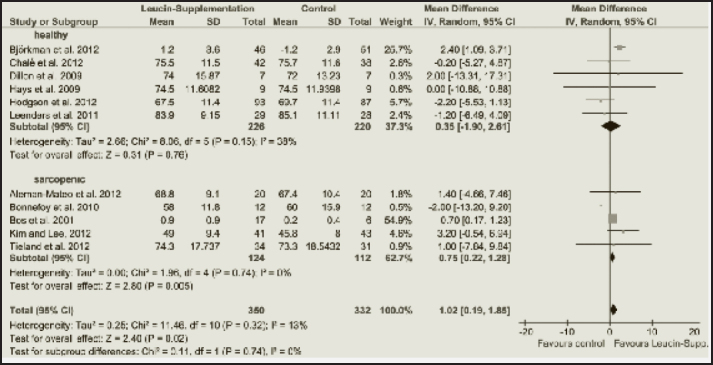
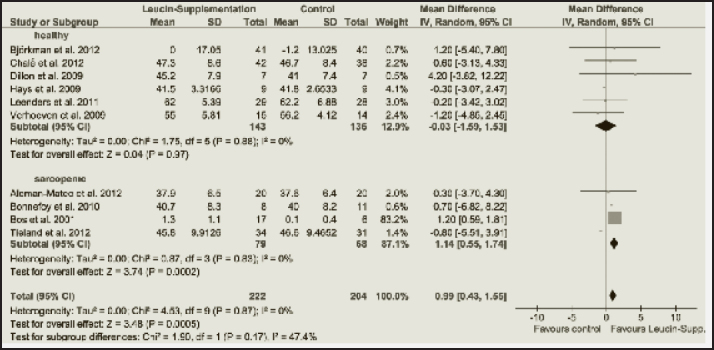
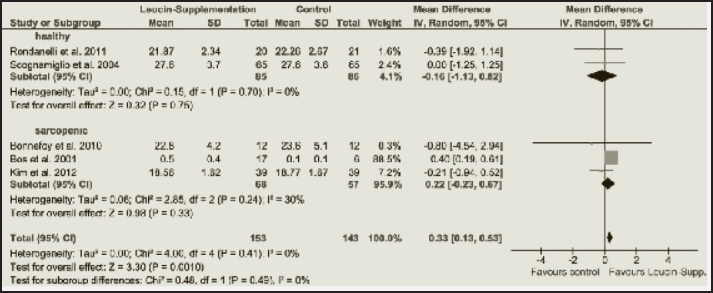
OBJECTIVE: The primary objective of the present systematic review and meta-analysis was to synthesize the available literature relating to leucine supplementation in the elderly with respect to its effects on anthropometrical parameters and muscle strength. The secondary aim was to perform a selective subgroup analysis when possible differentiating between healthy and sarcopenic subjects. METHODS: Literature search was performed using the electronic databases MEDLINE, EMBASE, SportDiscus, and the Cochrane Central Register of trials with restrictions to randomized controlled trials or studies following a cross-over design. Parameters taken into account were body weight, body mass index, lean body mass, fat mass, percentage of body fat, hand grip strength, and knee extension strength. Moreover, biomarkers of glucose metabolism (fasting glucose, fasting insulin, albumin, and HOMA index) were extracted when possible. For each outcome measure of interest, a meta-analysis was performed in order to determine the pooled effect of the intervention in terms of weighted mean differences between the post-intervention (or differences in means) values of the leucine and the respective control groups. Data analysis was performed using the Review Manager 5.2.4. software. RESULTS: A total of 16 studies enrolling 999 subjects met the inclusion criteria. Compared with control groups, leucine supplementation significantly increased gain in body weight [mean differences 1.02 kg, 95%-CI (0.19, 1.85), p=0.02], lean body mass [mean differences 0.99 kg, 95%-CI (0.43, 1.55), p=0.0005], and body mass index [mean differences 0.33 kg/m2, 95%-CI (0.13, 0.53), p=0.001], when compared to the respective control groups. With respect to body weight and lean body mass, leucine supplementation turned out to be more effective in the subgroup of study participants with manifested sarcopenia. All other parameters under investigation were not affected by leucine supplementation in a fashion significantly different from controls. CONCLUSIONS: It is concluded that leucine supplementation was found to exert beneficial effects on body weight, body mass index, and lean body mass in older persons in those subjects already prone to sarcopenia, but not muscle strength. However, due to the heterogeneity between the trials included in this systematic review, further studies adopting a homogenous design with respect to participant characteristics duration as well as the kind and amount of daily supplement in use are required.
Overview
The claims and statistics of this paper haven’t been checked yet.
Free: it reads the open-access text and checks the first 5 claims that cite a source we can check. Create a free account to check every claim.
Integrity signals
Registry
Cites
Statistics
Figures
Verification
Claims the paper makes
The claims and statistics of this paper haven’t been checked yet.
Free: it reads the open-access text and checks the first 5 claims that cite a source we can check. Create a free account to check every claim.
Claims other papers make about this one
Each is checked against this paper’s own text: does it say what the citing paper says it does?
The source backs part of the claim, not all of it — or backs it for a different population, condition or comparison.
In the citing paper
“However, the ability to enhance muscle mass and/or function with the chronic consumption of protein/amino acid-based supplements is somewhat equivocal in otherwise healthy adults,67–69”
From Reduced physical activity in young and older adults: Metabolic and musculoskeletal implications (2019) · cites this paper as [67]
Experimental — accuracy not yet measured
Self-check
Percentages, sums and reported differences re-computed from the paper’s own numbers.
The self-check needs the paper’s full text.
Citations
Cites
Preferred Reporting Items for Systematic Reviews and Meta-Analyses: the PRISMA statement
Moher, D., Liberati, A., Tetzlaff, J., Altman, D. G., & for the PRISMA Group (2009) · BMJ · doi:10.1136/bmj.b2535 · Cited by 83,823
Preferred Reporting Items for Systematic Reviews and Meta-Analyses: The PRISMA Statement
Moher, D., Liberati, A., Tetzlaff, J., Altman, D. G., & The PRISMA Group (2009) · PLoS Medicine · doi:10.1371/journal.pmed.1000097 · Cited by 64,042 · cited 1×
“This systematic review was planned, conducted, and reported in adherence to standards of quality for reporting meta-analyses (26).”
Measuring inconsistency in meta-analyses
Higgins, J. P. T., Thompson, S. G., Deeks, J. J., & Altman, D. G. (2003) · BMJ · doi:10.1136/bmj.327.7414.557 · Cited by 63,139 · cited 1×
“A value for I2 > 50% was considered to represent substantial heterogeneity (31).”
Preferred reporting items for systematic reviews and meta-analyses: the PRISMA Statement.
(2009) · PubMed Central · Cited by 44,859
The Cochrane Collaboration's tool for assessing risk of bias in randomised trials
Higgins, J. P. T., Altman, D. G., Gotzsche, P. C., Juni, P., Moher, D., Oxman, A. D., Savovic, J., Schulz, K. F., Weeks, L., Sterne, J. A. C., et al. (2011) · BMJ · doi:10.1136/bmj.d5928 · Cited by 33,817
Dermyshi, E., Wang, Y., Yan, C., Hong, W., Qiu, G., Gong, X., & Zhang, T. (2017) · Neonatology · doi:10.1159/000454668 · Cited by 24,451
Wang, G., Ma, R., Qiao, G., Wada, K., Aizawa, Y., & Satoh, T. (2015) · Integrative Medicine International · doi:10.1159/000368408 · Cited by 18,657
Estimating the mean and variance from the median, range, and the size of a sample
Hozo, S. P., Djulbegovic, B., & Hozo, I. (2005) · BMC Medical Research Methodology · doi:10.1186/1471-2288-5-13 · Cited by 9,062
mTOR Signaling in Growth Control and Disease
Laplante, M., & Sabatini, D. M. (2012) · Cell · doi:10.1016/j.cell.2012.03.017 · Cited by 8,509 · cited 2×
“At least some of the anabolic effects of leucine are supposed to be mediated via the mammalian target of rapamycin complex 1 (mTORC1) known to be up-regulated in certain kinds of tumours (59).”
Bauer, J., Biolo, G., Cederholm, T., Cesari, M., Cruz-Jentoft, A. J., Morley, J. E., Phillips, S., Sieber, C., Stehle, P., Teta, D., et al. (2013) · Journal of the American Medical Directors Association · doi:10.1016/j.jamda.2013.05.021 · Cited by 2,553 · cited 1×
“Therefore, these data support the current discussion for an evidence-based adaptation of the recommendations for dietary protein intake in the elderly (62).”
Body mass index as a predictor of fracture risk: A meta-analysis
De Laet, C., Kanis, J. A., Odén, A., Johanson, H., Johnell, O., Delmas, P., Eisman, J. A., Kroger, H., Fujiwara, S., Garnero, P., et al. (2005) · Osteoporosis International · doi:10.1007/s00198-005-1863-y · Cited by 1,622 · cited 1×
“(51), BMI was associated with a reduced risk of hip fracture.”
Anabolic signaling deficits underlie amino acid resistance of wasting, aging muscle
Cuthbertson, D., Smith, K., Babraj, J., Leese, G., Waddell, T., Atherton, P., Wackerhage, H., Taylor, P. M., & Rennie, M. J. (2005) · The FASEB Journal · doi:10.1096/fj.04-2640fje · Cited by 1,211 · cited 1×
“However, the magnitude of muscle protein synthesis induced by dietary amino acids is restricted in the elderly (8, 9).”
Katsanos, C. S., Kobayashi, H., Sheffield-Moore, M., Aarsland, A., & Wolfe, R. R. (2006) · American Journal of Physiology-Endocrinology and Metabolism · doi:10.1152/ajpendo.00488.2005 · Cited by 923 · cited 2×
“…aged 65 years or older; (4) supplementation with leucine of at least 2 g/day in accordance with data proposed by the pertinent literature (9, 12, 27); (5) assessment of anthropometric parameters: body weight (BW) or body mass index (BMI) or lean body mass (LBM) or fat mass (FM) or…”
Volpi, E., Kobayashi, H., Sheffield-Moore, M., Mittendorfer, B., & Wolfe, R. R. (2003) · The American Journal of Clinical Nutrition · doi:10.1093/ajcn/78.2.250 · Cited by 846 · cited 1×
“experiments applying amino acid formulas per os (21-23).”
Cermak, N. M., Res, P. T., de Groot, L. C., Saris, W. H., & van Loon, L. J. (2012) · The American Journal of Clinical Nutrition · doi:10.3945/ajcn.112.037556 · Cited by 827 · cited 2×
“LBM was assessed in the study by Cermak et al. (49).”
Leucine. A possible regulator of protein turnover in muscle.
Buse, M. G., & Reid, S. S. (1975) · Journal of Clinical Investigation · doi:10.1172/jci108201 · Cited by 743 · cited 1×
“In a number of in vitro studies, BCAA as well as leucine were shown to have anabolic effects on skeletal muscle tissue (13, 14), and ensuing animal experiments could confirm these findings (15, 16).”
Evans, W. J. (1995) · The Journals of Gerontology Series A: Biological Sciences and Medical Sciences · doi:10.1093/gerona/50a.special_issue.5 · Cited by 606 · cited 2×
“This process is characterized by a progressive loss of muscle mass and muscle strength (1).”
Kim, H. K., Suzuki, T., Saito, K., Yoshida, H., Kobayashi, H., Kato, H., & Katayama, M. (2012) · Journal of the American Geriatrics Society · doi:10.1111/j.1532-5415.2011.03776.x · Cited by 551 · cited 1×
“754 articles met the inclusion criteria and were enclosed for meta-analyses (25, 32, 34-47).”
Katsanos, C. S., Kobayashi, H., Sheffield-Moore, M., Aarsland, A., & Wolfe, R. R. (2005) · The American Journal of Clinical Nutrition · doi:10.1093/ajcn/82.5.1065 · Cited by 504 · cited 2×
“…aged 65 years or older; (4) supplementation with leucine of at least 2 g/day in accordance with data proposed by the pertinent literature (9, 12, 27); (5) assessment of anthropometric parameters: body weight (BW) or body mass index (BMI) or lean body mass (LBM) or fat mass (FM) or…”
Yang, Y., Breen, L., Burd, N. A., Hector, A. J., Churchward-Venne, T. A., Josse, A. R., Tarnopolsky, M. A., & Phillips, S. M. (2012) · British Journal of Nutrition · doi:10.1017/s0007114511007422 · Cited by 480 · cited 1×
“…aged 65 years or older; (4) supplementation with leucine of at least 2 g/day in accordance with data proposed by the pertinent literature (9, 12, 27); (5) assessment of anthropometric parameters: body weight (BW) or body mass index (BMI) or lean body mass (LBM) or fat mass (FM) or percentage of…”
Age and aerobic exercise training effects on whole body and muscle protein metabolism
Short, K. R., Vittone, J. L., Bigelow, M. L., Proctor, D. N., & Nair, K. S. (2004) · American Journal of Physiology-Endocrinology and Metabolism · doi:10.1152/ajpendo.00366.2003 · Cited by 470 · cited 1×
“While lean body mass (LBM) contributes to approximately 50% of total body weight in younger adults, the respective value decreases to some 25% by the age of 75 years (2).”
Amino acid ingestion improves muscle protein synthesis in the young and elderly
Paddon-Jones, D., Sheffield-Moore, M., Zhang, X.-J., Volpi, E., Wolf, S. E., Aarsland, A., Ferrando, A. A., & Wolfe, R. R. (2004) · American Journal of Physiology-Endocrinology and Metabolism · doi:10.1152/ajpendo.00368.2003 · Cited by 467 · cited 1×
“Comparable benefits could be observed in experiments applying amino acid formulas per os (21-23).”
Tieland, M., van de Rest, O., Dirks, M. L., van der Zwaluw, N., Mensink, M., van Loon, L. J. C., & de Groot, L. C. P. G. M. (2012) · Journal of the American Medical Directors Association · doi:10.1016/j.jamda.2012.07.005 · Cited by 446 · cited 1×
“754 articles met the inclusion criteria and were enclosed for meta-analyses (25, 32, 34-47).”
Reduced or modified dietary fat for preventing cardiovascular disease
Hooper, L., Summerbell, C. D., Thompson, R., Sills, D., Roberts, F. G., Moore, H. J., & Davey Smith, G. (2012) · Cochrane Database of Systematic Reviews · doi:10.1002/14651858.cd002137.pub3 · Cited by 379
Systematic review and meta-analysis of the effects of high protein oral nutritional supplements
Cawood, A. L., Elia, M., & Stratton, R. J. (2012) · Ageing Research Reviews · doi:10.1016/j.arr.2011.12.008 · Cited by 376 · cited 1×
“This seems to be in contrast to other systematic reviews reporting an increase in hand grip strength (48) or in maximal leg press weight (49) following an additional EFFECTS OF LEUCINE SUPPLEMENTATION IN THE ELDERLY J Nutr Health Aging”
Meta-Analysis: Protein and Energy Supplementation in Older People
Milne, A. C., Avenell, A., & Potter, J. (2006) · Annals of Internal Medicine · doi:10.7326/0003-4819-144-1-200601030-00008 · Cited by 344 · cited 2×
“Increases in BW due to a supplementation with protein-energy formulas were reported for chronically ill and hospitalized persons aged 65 years or older in a meta-analysis by Milne and co-workers (50).”
Pennings, B., Koopman, R., Beelen, M., Senden, J. M., Saris, W. H., & van Loon, L. J. (2011) · The American Journal of Clinical Nutrition · doi:10.3945/ajcn.2010.29649 · Cited by 311 · cited 1×
“Speed and extent of digestion and absorption of dietary protein do not seem to differ between young and older adults (6, 7).”
Regulation of Muscle Protein by Amino Acids
Wolfe, R. R. (2002) · The Journal of Nutrition · doi:10.1093/jn/131.10.3219s · Cited by 288 · cited 1×
“Special emphasis is placed on branched-chain amino acids (BCAA) such as leucine (3-5).”
Garlick, P. J., & Grant, I. (1988) · Biochemical Journal · doi:10.1042/bj2540579 · Cited by 285 · cited 1×
“In a number of in vitro studies, BCAA as well as leucine were shown to have anabolic effects on skeletal muscle tissue (13, 14), and ensuing animal experiments could confirm these findings (15, 16).”
Effect of amino acid supplementation on muscle mass, strength and physical function in elderly
Børsheim, E., Bui, Q.-U. T., Tissier, S., Kobayashi, H., Ferrando, A. A., & Wolfe, R. R. (2008) · Clinical Nutrition · doi:10.1016/j.clnu.2008.01.001 · Cited by 282 · cited 1×
“Thus, Borsheim et al. (24) observed an increase in muscle strength in seniors due to a 16-week supplementation with essential amino acids (corresponding to an additional uptake 5.6 g/d leucine).”
InfluentialDillon, E. L., Sheffield-Moore, M., Paddon-Jones, D., Gilkison, C., Sanford, A. P., Casperson, S. L., Jiang, J., Chinkes, D. L., & Urban, R. J. (2009) · The Journal of Clinical Endocrinology & Metabolism · doi:10.1210/jc.2008-1564 · Cited by 276 · cited 1×
“754 articles met the inclusion criteria and were enclosed for meta-analyses (25, 32, 34-47).”
Long-term leucine supplementation does not increase muscle mass or strength in healthy elderly men
Verhoeven, S., Vanschoonbeek, K., Verdijk, L. B., Koopman, R., Wodzig, W. K., Dendale, P., & van Loon, L. J. (2009) · The American Journal of Clinical Nutrition · doi:10.3945/ajcn.2008.26668 · Cited by 266 · cited 2×
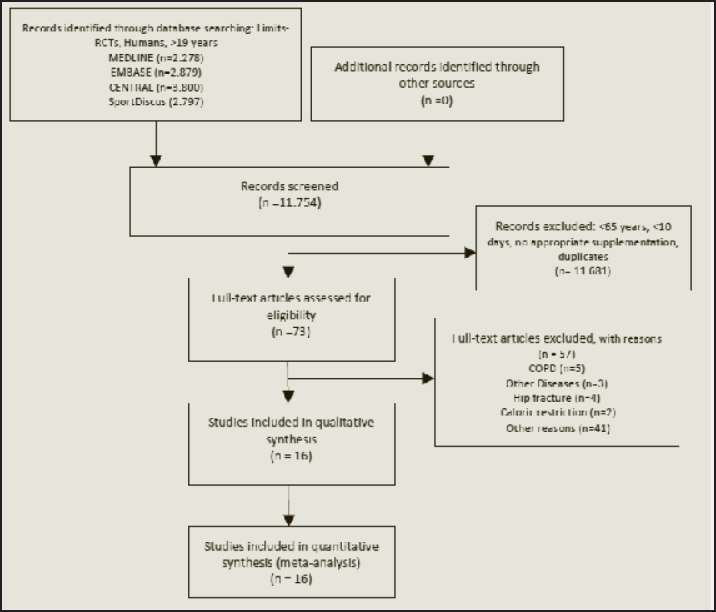
“A total of 16 studies enrolling 999 subjects extracted from 11.754 articles met the inclusion criteria and were enclosed for meta-analyses (25, 32, 34-47).”
InfluentialLeucine as a regulator of whole body and skeletal muscle protein metabolism in humans
Nair, K. S., Schwartz, R. G., & Welle, S. (1992) · American Journal of Physiology-Endocrinology and Metabolism · doi:10.1152/ajpendo.1992.263.5.e928 · Cited by 225 · cited 1×
“Following an intravenous application of the amino acid, both an increase in muscle protein synthesis (17, 18) and an attenuation of muscle protein breakdown were reported (19, 20).”
InfluentialBennet, W. M., Connacher, A. A., Scrimgeour, C. M., Smith, K., & Rennie, M. J. (1989) · Clinical Science · doi:10.1042/cs0760447 · Cited by 214 · cited 1×
“Following an intravenous application of the amino acid, both an increase in muscle protein synthesis (17, 18) and an attenuation of muscle protein breakdown were reported (19, 20).”
InfluentialChalé, A., Cloutier, G. J., Hau, C., Phillips, E. M., Dallal, G. E., & Fielding, R. A. (2013) · The Journals of Gerontology: Series A · doi:10.1093/gerona/gls221 · Cited by 208 · cited 1×
“In the study by Chale et al. (37), six of 80 volunteers complained about gastrointestinal discomfort, however, this could not be attributed to the supplement.”
Koopman, R., Verdijk, L., Manders, R. J., Gijsen, A. P., Gorselink, M., Pijpers, E., Wagenmakers, A. J., & van Loon, L. J. (2006) · The American Journal of Clinical Nutrition · doi:10.1093/ajcn/84.3.623 · Cited by 202 · cited 1×
“Comparable benefits could be observed in experiments applying amino acid formulas per os (21-23).”
Branched-chain amino acids, mitochondrial biogenesis, and healthspan: an evolutionary perspective
Valerio, A., D'Antona, G., & Nisoli, E. (2011) · Aging · doi:10.18632/aging.100322 · Cited by 196 · cited 2×
“Special emphasis is placed on branched-chain amino acids (BCAA) such as leucine (3-5).”
Effects of flooding amino acids on incorporation of labeled amino acids into human muscle protein
Smith, K., Reynolds, N., Downie, S., Patel, A., & Rennie, M. J. (1998) · American Journal of Physiology-Endocrinology and Metabolism · doi:10.1152/ajpendo.1998.275.1.e73 · Cited by 196 · cited 1×
“Following an intravenous application of the amino acid, both an increase in muscle protein synthesis (17, 18) and an attenuation of muscle protein breakdown were reported (19, 20).”
InfluentialKim, C.-O., & Lee, K.-R. (2013) · The Journals of Gerontology Series A: Biological Sciences and Medical Sciences · doi:10.1093/gerona/gls167 · Cited by 184
Koopman, R., Walrand, S., Beelen, M., Gijsen, A. P., Kies, A. K., Boirie, Y., Saris, W. H. M., & van Loon, L. J. C. (2009) · The Journal of Nutrition · doi:10.3945/jn.109.109173 · Cited by 167 · cited 1×
“Speed and extent of digestion and absorption of dietary protein do not seem to differ between young and older adults (6, 7).”
Leenders, M., Verdijk, L. B., van der Hoeven, L., van Kranenburg, J., Hartgens, F., Wodzig, W. K. W. H., Saris, W. H. M., & van Loon, L. J. C. (2011) · The Journal of Nutrition · doi:10.3945/jn.111.138495 · Cited by 159 · cited 1×
“754 articles met the inclusion criteria and were enclosed for meta-analyses (25, 32, 34-47).”
Effect of Infused Branched-Chain Amino Acids on Muscle and Whole-Body Amino Acid Metabolism in Man
Louard, R. J., Barrett, E. J., & Gelfand, R. A. (1990) · Clinical Science · doi:10.1042/cs0790457 · Cited by 157 · cited 1×
“Following an intravenous application of the amino acid, both an increase in muscle protein synthesis (17, 18) and an attenuation of muscle protein breakdown were reported (19, 20).”
InfluentialRieu, I., Sornet, C., Bayle, G., Prugnaud, J., Pouyet, C., Balage, M., Papet, I., Grizard, J., & Dardevet, D. P. (2003) · Journal of Nutrition · doi:10.1093/jn/133.4.1198 · Cited by 127 · cited 1×
“In a number of in vitro studies, BCAA as well as leucine were shown to have anabolic effects on skeletal muscle tissue (13, 14), and ensuing animal experiments could confirm these findings (15, 16).”
Reduced or modified dietary fat for preventing cardiovascular disease
Hooper, L., Summerbell, C. D., Thompson, R., Sills, D., Roberts, F. G., Moore, H., & Davey Smith, G. (2011) · Cochrane Database of Systematic Reviews · doi:10.1002/14651858.cd002137.pub2 · Cited by 127 · cited 1×
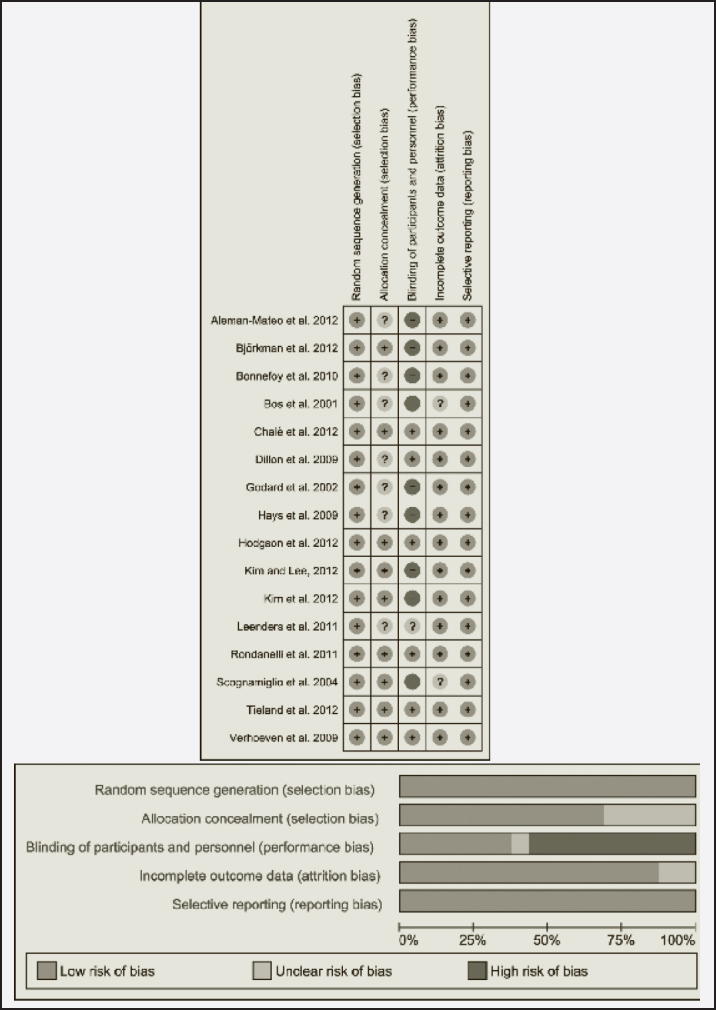
“The following sources of bias were detected: selection bias, performance/ detection bias attrition bias, reporting bias and other bias (28, 29) (Figure 1).”
Mortality Risk in Older Men Associated with Changes in Weight, Lean Mass, and Fat Mass
Lee, C. G., Boyko, E. J., Nielson, C. M., Stefanick, M. L., Bauer, D. C., Hoffman, A. R., Dam, T. L., Lapidus, J. A., Cawthon, P. M., Ensrud, K. E., et al. (2011) · Journal of the American Geriatrics Society · doi:10.1111/j.1532-5415.2010.03245.x · Cited by 125 · cited 2×
“Moreover, in a longitudinal study by Lee et al. (56) performed at 6 clinical centres in the US and enrolling a total of 4.331 men aged 65 to 93 years, there was a correlation between a decline in LBM of more than 5% with respect to the initial values and all-cause mortality [HR=1.78 95%-CI (1.”
InfluentialLeucine as a pharmaconutrient in health and disease
van Loon, L. J. C. (2012) · Current Opinion in Clinical Nutrition and Metabolic Care · doi:10.1097/mco.0b013e32834d617a · Cited by 119 · cited 1×
“Thus, it seemed reasonable to speculate that anabolic resistance might be compensated via an increased uptake of dietary leucine (10-12).”
Rondanelli, M., Opizzi, A., Antoniello, N., Boschi, F., Iadarola, P., Pasini, E., Aquilani, R., & Dioguardi, F. S. (2011) · Clinical Nutrition · doi:10.1016/j.clnu.2011.04.005 · Cited by 114 · cited 1×
“754 articles met the inclusion criteria and were enclosed for meta-analyses (25, 32, 34-47).”
Muscle Strength and Body Composition Are Clinical Indicators of Osteoporosis
Rikkonen, T., Sirola, J. P., Salovaara, K., Tuppurainen, M. T., Jurvelin, J. S., Honkanen, R., & Kröger, H. (2012) · Calcified Tissue International · doi:10.1007/s00223-012-9618-1 · Cited by 113 · cited 1×
“A number of studies have pointed out the usability of LBM or related measures such as Lean Mass Index (LBM/m 2 ) as predictors of osteoporosis and fracture risk in post-menopausal women (53, 54).”
Leenders, M., & van Loon, L. J. (2011) · Nutrition Reviews · doi:10.1111/j.1753-4887.2011.00443.x · Cited by 112 · cited 1×
“Thus, it seemed reasonable to speculate that anabolic resistance might be compensated via an increased uptake of dietary leucine (10-12).”
Aleman-Mateo, H., Macias, L., Esparza-Romero, J., Astiazaran-Garcia, H., & Blancas, A. L. (2012) · Clinical Interventions in Aging · doi:10.2147/cia.s32356 · Cited by 91 · cited 1×
“A total of 16 studies enrolling 999 subjects extracted from 11.754 articles met the inclusion criteria and were enclosed for meta-analyses (25, 32, 34-47).”
InfluentialOral amino-acid provision does not affect muscle strength or size gains in older men
GODARD, M. P., WILLIAMSON, D. L., & TRAPPE, S. W. (2002) · Medicine & Science in Sports & Exercise · doi:10.1097/00005768-200207000-00012 · Cited by 76 · cited 1×
“754 articles met the inclusion criteria and were enclosed for meta-analyses (25, 32, 34-47).”
Bos, C., Benamouzig, R., Bruhat, A., Roux, C., Valensi, P. E., Ferrière, F., & Tomé, D. (2001) · Clinical Nutrition · doi:10.1054/clnu.2000.0387 · Cited by 72 · cited 1×
“An increase in energy intake during the course of the trial assessed in the supplemental group only, but not in controls, was reported by Bos et al. (36).”
Determination of the Tolerable upper Intake Level of leucine in Acute men
Pencharz, P. B., Elango, R., & Ball, R. O. (2012) · Journal of Nutrition · doi:10.3945/jn.112.160259 · Cited by 65 · cited 1×
“BCAA was tolerated without complications or side-effects in amounts of 14.4 g/d for 30 days (57), and in another study (58), leucine did not cause any acute health problems following applications up to 550 mg/kg BW (equal to approximately 40 g/d).”
InfluentialRole of leucine and other amino acids in regulating protein metabolism in vivo
Frexes-Steed, M., Lacy, D. B., Collins, J., & Abumrad, N. N. (1992) · American Journal of Physiology-Endocrinology and Metabolism · doi:10.1152/ajpendo.1992.262.6.e925 · Cited by 58 · cited 1×
“Special emphasis is placed on branched-chain amino acids (BCAA) such as leucine (3-5).”
Hays, N. P., Kim, H., Wells, A. M., Kajkenova, O., & Evans, W. J. (2009) · Journal of the American Dietetic Association · doi:10.1016/j.jada.2009.03.003 · Cited by 56 · cited 1×
“754 articles met the inclusion criteria and were enclosed for meta-analyses (25, 32, 34-47).”
Batsis, J. A., Singh, S., & Lopez-Jimenez, F. (2014) · The Journal of nutrition, health and aging · doi:10.1007/s12603-013-0366-3 · Cited by 54 · cited 1×
“Recently, Batsis and co-workers (61) observed reduced hazard ratios for cardiovascular mortality in older adults with elevated BMI (> 28.2. kg /m²).”
InfluentialIn vitro effect of branched chain amino acids on the ribosomal cycle in muscles of fasted rats.
Buse, M. G., Atwell, R., & Mancusi, V. J. (1979) · PubMed · Cited by 52
Brady, A. O., Straight, C. R., Schmidt, M. D., & Evans, E. M. (2013) · The journal of nutrition health & aging · doi:10.1007/s12603-013-0421-0 · Cited by 48
Whey protein supplementation in nursing home residents. A randomized controlled trial
Bjorkman, M. P., Finne‐Soveri, H., & Tilvis, R. S. (2012) · European Geriatric Medicine · doi:10.1016/j.eurger.2012.03.010 · Cited by 42 · cited 2×
“In one case (32), no data were provided and the median was assumed to be identical to the mean value while SD was calculated using the formula range/6 described by Hozo et al.”
McNurlan, M. A., Heys, S., Park, K. G. M., Broom, J. I., Brown, D. S., Eremin, O., & Garlick, P. J. (1994) · Clinical Science · doi:10.1042/cs0860339 · Cited by 31 · cited 1×
“Following infusions with amino acids in patients with colorectal cancer, protein synthesis was increased both in skeletal muscle and in the tumour tissue (60).”
Long-term effects of a protein-enriched diet on blood pressure in older women
Hodgson, J. M., Zhu, K., Lewis, J. R., Kerr, D. A., Meng, X., Solah, V. A., Devine, A., Binns, C. W., Woodman, R. J., & Prince, R. L. (2011) · British Journal Of Nutrition · doi:10.1017/s0007114511004740 · Cited by 30 · cited 1×
“754 articles met the inclusion criteria and were enclosed for meta-analyses (25, 32, 34-47).”
Effect of acute and chronic branched-chain amino acids on energy metabolism and muscle performance.
LORENZO, A. D., Petroni, M. L., Masala, S. A., Melchiorri, G., Pietrantuono, M., Perriello, G., & Andréoli, A. (2003) · PubMed · Cited by 23
Zhang, Z., Shen, X., Zhang, H., Li, S., Zhou, H., Wu, X., Sheng, Z., & Liao, E. (2012) · Clinical Endocrinology · doi:10.1111/j.1365-2265.2012.04399.x · Cited by 22 · cited 1×
“A number of studies have pointed out the usability of LBM or related measures such as Lean Mass Index (LBM/m 2 ) as predictors of osteoporosis and fracture risk in post-menopausal women (53, 54).”
Scognamiglio, R., Negut, C., Piccolotto, R., Dioguardi, F. S., Tiengo, A., & Avogaro, A. (2004) · American Heart Journal · doi:10.1016/j.ahj.2003.12.003 · Cited by 21 · cited 1×
“754 articles met the inclusion criteria and were enclosed for meta-analyses (25, 32, 34-47).”
Lean Mass Predicts Hip Geometry in Men and Women With Non–Insulin-Requiring Type 2 Diabetes Mellitus
Moseley, K. F., Dobrosielski, D. A., Stewart, K. J., Sellmeyer, D. E., & de Beur, S. M. J. (2011) · Journal of Clinical Densitometry · doi:10.1016/j.jocd.2011.04.007 · Cited by 19 · cited 1×
“With manifested type 2 diabetes, LBM might be suitable as a prognostic marker for fracture incidents in a younger population of men and women as well (55).”
Effects of branched amino acids supplementation in malnourished elderly with catabolic status
Bonnefoy, M., Laville, M., Écochard, R., Jusot, J. F., Normand, S., Maillot, S., Lebreton, B., & Jauffret, M. (2010) · The journal of nutrition health & aging · doi:10.1007/s12603-010-0090-1 · Cited by 19 · cited 1×
“754 articles met the inclusion criteria and were enclosed for meta-analyses (25, 32, 34-47).”
Research works printed but not linked: 1
- Higgins JP Green S V 51 u M Cochrane Handbook of systematic reviews 2011
Cited by
Sieber, C. C. (2019) · Aging Clinical and Experimental Research · doi:10.1007/s40520-019-01170-1 · Cited by 355
“A meta-analysis in 2015 included 16 studies incorporating also frail, sarcopenic and institutionalized persons [48].”
Yoshimura, Y., Wakabayashi, H., Yamada, M., Kim, H., Harada, A., & Arai, H. (2017) · Journal of the American Medical Directors Association · doi:10.1016/j.jamda.2017.03.019 · Cited by 365
Reduced physical activity in young and older adults: Metabolic and musculoskeletal implications
Bowden Davies, K. A., Pickles, S., Sprung, V. S., Kemp, G. J., Alam, U., Moore, D. R., Tahrani, A. A., & Cuthbertson, D. J. (2019) · Therapeutic Advances in Endocrinology and Metabolism · doi:10.1177/2042018819888824 · Cited by 278
Gielen, E., Beckwée, D., Delaere, A., De Breucker, S., Vandewoude, M., Bautmans, I., the Sarcopenia Guidelines Development Group of the Belgian Society of Gerontology and Geriatrics (BSGG), Bautmans, I., Beaudart, C., Beckwée, D., et al. (2021) · Nutrition Reviews · doi:10.1093/nutrit/nuaa011 · Cited by 269
Advances in muscle health and nutrition: A toolkit for healthcare professionals
Prado, C. M., Landi, F., Chew, S. T. H., Atherton, P. J., Molinger, J., Ruck, T., & Gonzalez, M. C. (2022) · Clinical Nutrition · doi:10.1016/j.clnu.2022.07.041 · Cited by 237
“Furthermore, results of a meta-analysis indicated that leucine supplementation was effective in increasing measures of muscle mass (assessed as lean soft tissue and fat-free mass) in older adults [179].”
Result
Metadata
- Authors
- Komar, B., Schwingshackl, L., & Hoffmann, G.
- Affiliations
- University of Vienna (AT)
- Corresponding author
- Hoffmann, Georg
- Venue
- The Journal of nutrition, health and aging
- Publisher
- Elsevier BV
- Published
- 2015-04
- Volume
- 19
- Issue
- 4
- Pages
- 437-446
- ISSN
- 1279-7707 (ISSN-L)
- PMC
- PMC12877541
- OpenAlex
- W1984535102
- Cited by
- 161
- References
- 66
- Citations by year
- 2026: 9 · 2025: 9 · 2024: 12 · 2023: 15 · 2022: 21 · 2021: 17 · 2020: 12 · 2019: 16 · 2018: 20 · 2017: 15 · 2016: 12 · 2015: 3
- FWCI
- 1.00
- Type
- journal article
- Language
- en
- Open access
- hybrid
- doi.org
- Licence
- cc-by-nc-nd
- www.elsevier.com/tdm/userlicense/1.0/ (tdm)
- www.elsevier.com/legal/tdmrep-license (tdm)
- creativecommons.org/licenses/by-nc-nd/4.0/ (vor, 3178 d)
- Locations
- The journal of nutrition health & aging (publishedVersion, cc-by-nc-nd)
- Europe PMC (PubMed Central) (publishedVersion, cc-by-nc-nd)
- PubMed (publishedVersion)
- PubMed Central (publishedVersion, cc-by-nc-nd)
- Topics
- Health Sciences › Nursing › Nutrition and Dietetics › Muscle metabolism and nutrition
- Health Sciences › Medicine › Physiology (medical) › Nutrition and Health in Aging
- Life Sciences › Biochemistry, Genetics and Molecular Biology › Molecular Biology › Muscle Physiology and Disorders
- Keywords
- leucine supplementation, older adults, sarcopenia, muscle strength, lean body mass, body mass index, anthropometric parameters, grip strength, quadriceps strength, glucose metabolism, insulin, dietary supplementation, weight gain, fat mass, HOMA index, albumin, fasting blood glucose, fasting insulin
- MeSH terms
- Aged, Anthropometry, Humans, Leucine, Weight Gain, Body Mass Index, Hand Strength, Dietary Supplements, Muscle Strength, Sarcopenia
About these checks
Registry, retraction, Cites and statistics results are computed, not judged, with one exception: a printed reference that no index lists is read once by a model before it counts as a citation error. Claims are extracted by a model and kept only when their quote appears verbatim in the text; each cited source is then checked, with a model’s help, for whether it says what the claim relies on. Those verdicts can be wrong — read the claim’s quote and the cited source before relying on one.
Statistics and arithmetic are recomputed, not judged.
Confidence bands are shown only for fields calibrated on our annotated test set. None is calibrated yet, so no band is shown.
What counts as a claim ›How we measure confidence ›How we check this ›
Are you an author, or do you see a problem with this page? Request a review
Data sources
Bibliographic data: Semantic Scholar, OpenAlex, Crossref.
Contains information from the Semantic Scholar Academic Graph Datasets, made available under the ODC Attribution License (ODC-BY 1.0).
Semantic Scholar’s data is described in: Kinney, R., et al. (2023). The Semantic Scholar Open Data Platform. arXiv:2301.10140.
