

Early nutritional follow-up after discharge prevents deterioration of ADL functions in malnourished, independent, geriatric patients who live alone–A randomized clinical trial
Open accessThe DOI matches its Crossref record; 56 of the 56 references it cites were found in a registry or an index.
Abstract
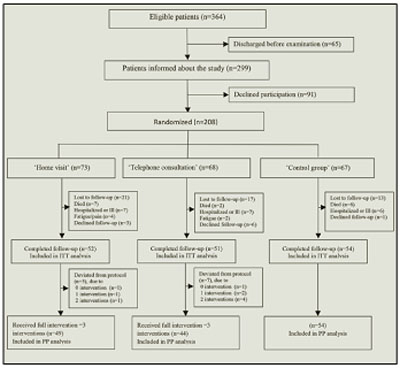
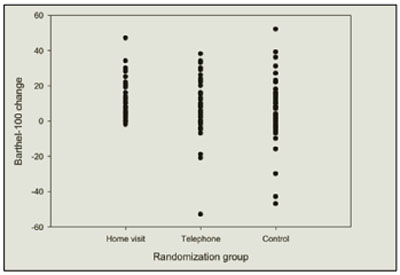
OBJECTIVES: To compare the effects of two nutritional follow-up interventions with regard to preventing short-term deterioration in ADL, and to compare their effects on physical function, emotional health, and health-related quality of life. DESIGN: Randomized clinical trial with two intervention groups and one control group, and a follow-up period of eight weeks. SETTING: Intervention in the participants' homes after discharge from hospital. PARTICIPANTS: Inclusion: Malnourished geriatric patients and patients at risk of malnutrition (MNA<24), aged 75 years and older, living at home and alone. Exclusion: Nursing home residents and patients with terminal illnesses or cognitive impairment. Randomization: At discharge, the patients were assigned to one of three groups: 'home visit', 'telephone consultation', or 'control' group. INTERVENTION: Individually tailored nutritional counselling of the patient and the patient's daily home carer by a clinical dietician one, two, and four weeks after discharge from hospital. The counselling was either in-person at the patients' homes, or by telephone. The control group received no follow-up after discharge. MEASUREMENTS: Primary outcome: Change in ADL (Barthel-100 score) at discharge and eight weeks later. SECONDARY OUTCOMES: Change in physical performance (handgrip strength, 30-sec. chair stand test, CAS), quality of life and depression measurements (SF-36, Depression List, Geriatric Depression Score), and Avlund mobility-tiredness score (Mob-T). RESULTS: Two-hundred and eight participants were randomized, 73 to home visits and 68 to telephone consultations. The control group comprised 67 patients. The mean age of the participants was 86.1 years. At eight weeks after discharge, 157 completed the follow-up (home visit 52, telephone consultation 51, and control group 54). The mean age of these patients was 85.8 years. More patients in the home visit group improved or maintained their ADL (96%), compared to the telephone (75%) and control groups (72%), p<0.01. No difference was detected among the groups with regard to physical measurements, health-related quality of life, and emotional health. CONCLUSION: Early nutritional follow-up after discharge, performed as home visits, prevents deterioration of ADL in malnourished, independent, geriatric patients who live alone and thereby preserves their independence.
Overview
The claims and statistics of this paper haven’t been checked yet.
Free: it reads the open-access text and checks the first 5 claims that cite a source we can check. Create a free account to check every claim.
Integrity signals
Registry
Cites
Statistics
Figures
Verification
Claims the paper makes
The claims and statistics of this paper haven’t been checked yet.
Free: it reads the open-access text and checks the first 5 claims that cite a source we can check. Create a free account to check every claim.
Claims other papers make about this one
Each is checked against this paper’s own text: does it say what the citing paper says it does?
The source backs part of the claim, not all of it — or backs it for a different population, condition or comparison.
In the citing paper
“Only one intervention, reported across four publications by Neelemaat et al [34, 37-39], provided all participants with oral nutritional supplements; whereas five other studies provided them on a case-by-case basis to align with an individualised plan [27, 30, 32, 33, 35, 36].”
From Is telehealth effective in managing malnutrition in community-dwelling older adults? A systematic review and meta-analysis. (2018) · cites this paper as [33]
Experimental — accuracy not yet measuredThe source backs part of the claim, not all of it — or backs it for a different population, condition or comparison.
In the citing paper
“Four of the six studies which reported quality of life using the EQ-5D, SF-36 or EORTC found improvements in the intervention group [27, 28, 30, 31, 33, 35].”
From Is telehealth effective in managing malnutrition in community-dwelling older adults? A systematic review and meta-analysis. (2018) · cites this paper as [33]
Experimental — accuracy not yet measuredThe cited source says what the claim attributes to it.
In the citing paper
“The remaining seven interventions were delivered to patients with mixed morbidities following discharge from an inpatient facility [27, 28, 31-35].”
From Is telehealth effective in managing malnutrition in community-dwelling older adults? A systematic review and meta-analysis. (2018) · cites this paper as [33]
The cited source says what the claim attributes to it.
In the citing paper
“Regarding physical function, only one of the three studies which measured physical function via an assessment tool reported significant improvements [27, 33, 34].”
From Is telehealth effective in managing malnutrition in community-dwelling older adults? A systematic review and meta-analysis. (2018) · cites this paper as [33]
The cited source says what the claim attributes to it.
In the citing paper
“All five studies with nutrition status outcomes reported improvements in the intervention group from baseline or compared to the control [27, 29, 30, 33, 35].”
From Is telehealth effective in managing malnutrition in community-dwelling older adults? A systematic review and meta-analysis. (2018) · cites this paper as [33]
5 more claims about this paper
Create a free account to see every claim other papers make about this one.
Self-check
Percentages, sums and reported differences re-computed from the paper’s own numbers.
The self-check needs the paper’s full text.
Citations
Cites
(1992) · PubMed · Cited by 33,716
The MOS 36-ltem Short-Form Health Survey (SF-36): I. Conceptual Framework and Item Selection
Ware, J. E., & Sherbourne, C. D. (1992) · Medical Care · doi:10.1097/00005650-199206000-00002 · Cited by 30,033
Quality criteria were proposed for measurement properties of health status questionnaires
Terwee, C. B., Bot, S. D. M., de Boer, M. R., van der Windt, D. A. W. M., Knol, D. L., Dekker, J., Bouter, L. M., & de Vet, H. C. W. (2007) · Journal of Clinical Epidemiology · doi:10.1016/j.jclinepi.2006.03.012 · Cited by 10,764 · cited 2×
“In the case of floor or ceiling effects, participants with the lowest or highest possible scores cannot be distinguished from each other, and changes cannot be measured in these patients (46).”
Sheikh (1986) · doi:10.1300/j018v05n01_09 · Cited by 7,236 · cited 2×
“…30-second chair stand test (33), handgrip strength, Cumulated Ambulation Score (CAS) (34), health-related quality of life (SF-36) (35), Depression List (DL) (36, 37), Geriatric Depression Score (GDS) (38), Avlund mobility-tiredness scale (Mob-T) (39), and Mini Nutritional Assessment (MNA) (40, 41).”
A 30-s chair-stand test as a measure of lower body strength in community-residing older adults.
Jones, C. J., Rikli, R. E., & Beam, W. C. (1999) · Research Quarterly for Exercise and Sport · doi:10.1080/02701367.1999.10608028 · Cited by 2,921 · cited 1×
“J Nutr Health Aging Volume 20, Number 8, 2016 Other measurements were the 30-second chair stand test (33), handgrip strength, Cumulated Ambulation Score (CAS) (34), health-related quality of life (SF-36) (35), Depression List (DL) (36, 37), Geriatric Depression Score (GDS) (38), Avlund…”
Improving the sensitivity of the Barthel Index for stroke rehabilitation
Shah, S., Vanclay, F., & Cooper, B. (1989) · Journal of Clinical Epidemiology · doi:10.1016/0895-4356(89)90065-6 · Cited by 2,527 · cited 1×
“The scores range from 0-100, with a higher score indicating greater independence (32).”
Vellas, B., Guigoz, Y., Garry, P. J., Nourhashemi, F., Bennahum, D., Lauque, S., & Albarede, J.-L. (1999) · Nutrition · doi:10.1016/s0899-9007(98)00171-3 · Cited by 2,161 · cited 1×
“…30-second chair stand test (33), handgrip strength, Cumulated Ambulation Score (CAS) (34), health-related quality of life (SF-36) (35), Depression List (DL) (36, 37), Geriatric Depression Score (GDS) (38), Avlund mobility-tiredness scale (Mob-T) (39), and Mini Nutritional Assessment (MNA) (40, 41).”
Clinical Gerontology; A Guide to Assessment and Intervention
Essa, M. (1987) · American Journal of Psychotherapy · doi:10.1176/appi.psychotherapy.1987.41.3.478 · Cited by 1,060
Kaiser, M. J., Bauer, J. M., Rämsch, C., Uter, W., Guigoz, Y., Cederholm, T., Thomas, D. R., Anthony, P. S., Charlton, K. E., Maggio, M., et al. (2010) · Journal of the American Geriatrics Society · doi:10.1111/j.1532-5415.2010.03016.x · Cited by 1,007 · cited 1×
“The prevalence and the risk of developing malnutrition during hospitalization and geriatric rehabilitation is 85 to 90% (1, 2).”
Identifying the elderly at risk for malnutrition
Guigoz, Y., Lauque, S., & Vellas, B. J. (2002) · Clinics in Geriatric Medicine · doi:10.1016/s0749-0690(02)00059-9 · Cited by 969 · cited 3×
“This central computer program used permuted block-sizes and stratified the randomization according to nutritional status (Mini Nutritional Assessment (MNA) 17 or 17 MNA 24), which assigned the participants to the ‘home visit’, ‘telephone consultation’, or ‘control’ group.”
Cited by
A scoping review of interventions for older adults transitioning from hospital to home
Liebzeit, D., Rutkowski, R. A., Arbaje, A. I., Fields, B., & Werner, N. E. (2021) · Journal of the American Geriatrics Society · doi:10.1111/jgs.17323 · Cited by 113
Marx, W., Kelly, J. T., Crichton, M., Craven, D., Collins, J., Mackay, H., Isenring, E., & Marshall, S. (2018) · Maturitas · doi:10.1016/j.maturitas.2018.02.012 · Cited by 91
Baldwin, C., de van der Schueren, M. A., Kruizenga, H. M., & Weekes, C. E. (2021) · Cochrane Database of Systematic Reviews · doi:10.1002/14651858.cd002008.pub5 · Cited by 54
Welch, V. A., Mathew, C. M., Babelmorad, P., Li, Y., Ghogomu, E. T., Borg, J., Conde, M., Kristjansson, E., Lyddiatt, A., Marcus, S., et al. (2021) · Campbell Systematic Reviews · doi:10.1002/cl2.1175 · Cited by 58
Munk, T., Svendsen, J. A., Knudsen, A. W., Østergaard, T. B., Thomsen, T., Olesen, S. S., Rasmussen, H. H., & Beck, A. M. (2021) · Clinical Nutrition · doi:10.1016/j.clnu.2021.09.029 · Cited by 42
Nishioka, S., & Wakabayashi, H. (2022) · Nutrition Reviews · doi:10.1093/nutrit/nuac047 · Cited by 39
Rea, J., Walters, K., & Avgerinou, C. (2019) · European Geriatric Medicine · doi:10.1007/s41999-019-00172-6 · Cited by 27
“Nutritional risk measured by MNA as a secondary outcome in the Pedersen 2016 study (n=208) was not significantly different for people who received home visits or telephone consultations after discharge from hospital compared to control [36].”
Backgroundten Cate, D., Ettema, R. G. A., Waal, G. H., Bell, J., Verbrugge, R., Schoonhoven, L., Schuurmans, M. J., & the Basic Care Revisited Group (BCR) (2020) · Journal of Clinical Nursing · doi:10.1111/jocn.15153 · Cited by 58
Riddle, E., Munoz, N., Clark, K., Collins, N., Coltman, A., Nasrallah, L., Nishioka, S., Scollard, T., Simon, J. R., & Moloney, L. (2024) · Journal of the Academy of Nutrition and Dietetics · doi:10.1016/j.jand.2024.03.013 · Cited by 33
Ingstad, K., Uhrenfeldt, L., Kymre, I. G., Skrubbeltrang, C., & Pedersen, P. U. (2020) · BMJ Open · doi:10.1136/bmjopen-2020-040439 · Cited by 32
Self-citationMoloney, L., & Jarrett, B. (2021) · Journal of the Academy of Nutrition and Dietetics · doi:10.1016/j.jand.2020.09.026 · Cited by 21
Andersen, A. L., Houlind, M. B., Nielsen, R. L., Jørgensen, L. M., Treldal, C., Damgaard, M., Bengaard, A. K., Juul‐Larsen, H. G., Laursen, L. B., Iversen, E., et al. (2021) · Trials · doi:10.1186/s13063-021-05456-6 · Cited by 28
Nomura, Y., Kakuta, E., Okada, A., Otsuka, R., Shimada, M., Tomizawa, Y., Taguchi, C., Arikawa, K., Daikoku, H., Sato, T., et al. (2020) · Nutrients · doi:10.3390/nu12113315 · Cited by 22
Tzoumas, A., Kokkinidis, D. G., Giannopoulos, S., Giannakoulas, G. A., Palaiodimos, L., Avgerinos, D. V., Kampaktsis, P. Ν., & FAILLACE, R. T. (2021) · PubMed Central · doi:10.11909/j.issn.1671-5411.2021.06.002 · Cited by 31
“Additionally, nutritional supplementation and follow-up after discharge in malnourished independent, geriatric patients significantly benefits QoL.([43,44]) To maximize benefits, frailty and disability can be successfully treated using an interdisciplinary multifaceted treatment strategy addressing simultaneously mult…”
BackgroundMunk, T., Svendsen, J. A., Knudsen, A. W., Østergaard, T. B., & Beck, A. M. (2020) · Trials · doi:10.1186/s13063-020-04301-6 · Cited by 15
S3-Leitlinie Klinische Ernährung und Hydrierung im Alter
Volkert, D., Bauer, J. M., Benzinger, P., Eglseer, D., Frühwald, T., Gehrke, I., Kiesswetter, E., Lenzen-Großimlinghaus, R., Wirth, R., & (DGG), I. Z. M. D. F. W. F. A. K. E. (. F. K. E. D. S. (. G. F. G. E. V. (2025) · Aktuelle Ernährungsmedizin · doi:10.1055/a-2548-7209 · Cited by 13
Visser, M., Mendonça, N., Avgerinou, C., Cederholm, T., Cruz-Jentoft, A. J., Goisser, S., Kiesswetter, E., Siebentritt, H. M., Volkert, D., & Torbahn, G. (2022) · European Geriatric Medicine · doi:10.1007/s41999-022-00617-5 · Cited by 12
Trotta, R. L., Rao, A., Hermann, R. M., & Boltz, M. P. (2018) · Journal of Gerontological Nursing · doi:10.3928/00989134-20181109-03 · Cited by 13
Szklarzewska, S., Mottale, R., Engelman, E. E., Breucker, S. D., & Preiser, J. (2023) · Clinical Nutrition · doi:10.1016/j.clnu.2023.01.013 · Cited by 10
Subjective and objective nutritional assessment: nurses’ role and the effect of cultural differences
Gbareen, M., Barnoy, S., & Theilla, M. (2021) · BMC Nursing · doi:10.1186/s12912-021-00683-3 · Cited by 9
Health management of malnourished elderly in primary health care: a scoping review
Taveira, A., Sousa, B., Costa, P., & Macedo, A. P. (2022) · BMC Family Practice · doi:10.1186/s12875-022-01883-9 · Cited by 12
“5%) [18, 33], followed by, Saudi Arabia [19], Spain [20], Slovenia [23], India [24], Italy [25], Denmark [26], Australia [27], Mexico [28], the Netherlands [29], Sweden [30] and Lithuania (respectively with 0.”
BackgroundMethodResultInfluentialGong, F., Lei, Z., Min, H., Yu, Y., Huang, Z., Liu, J., Wu, W., Tang, J., Sun, X., & Wu, Y. (2022) · Frontiers in Psychology · doi:10.3389/fpsyg.2022.1019335 · Cited by 7
Chareh, N., Rappl, A., Rimmele, M., Wingenfeld, K., Freiberger, E., Sieber, C. C., & Volkert, D. (2021) · Nutrients · doi:10.3390/nu13093023 · Cited by 7
Anada, S., Matsumoto, T., Nakano, M., & Yamada, S. (2019) · Medicine · doi:10.1097/md.0000000000016290 · Cited by 4
“Pedersen et al[27] reported that early nutritional follow-up by visiting home discharged patients at the risk of malnutrition effectively maintained ADL level 8 weeks after hospitalization than nutritional counseling by phone.”
BackgroundIngstad, K., Uhrenfeldt, L., Kymre, I. G., Skrubbeltrang, C., & Pedersen, P. U. (2019) · BMJ Open · doi:10.1136/bmjopen-2019-032615 · Cited by 2
Self-citationPatient-Reported Fatigue Is Associated with Poor Energy Intake and Readmission to Hospital
Pedersen, J. L., Pedersen, P. U., & Damsgaard, E. M. S. (2020) · Health · doi:10.4236/health.2020.123021 · Cited by 3
“The original RCT study showed that nutritional follow-up performed as home visit prevent deterioration of ADL function and readmission to hospital [20] [21].”
BackgroundSelf-citationKlassen, P. N., Shao, H., Thorlakson, J. J. D., Gramlich, L. M., & Chan, C. B. (2026) · Clinical Nutrition · doi:10.1016/j.clnu.2026.106630 · Cited by 1
A Dietician’s Bedside Supervision in a Geriatric Ward Is Effective
Jensen, M. E. J., Pedersen, J. L., & Gregersen, M. (2018) · Health · doi:10.4236/health.2018.109094 · Cited by 1
“Nutritional follow-up after discharge can increase nutritional and functional status of geriatric patients [29], prevent deterioration of ADL function [30] and prevent hospital readmission [31].”
BackgroundSelf-citationNagata, T., Adachi, Y., Taniguchi, A., Kimura, Y., Iitaka, D., Iwata, G., & Yamaoka, N. (2021) · Nutrition and Cancer · doi:10.1080/01635581.2021.1952625 · Cited by 4
“Furthermore, another study reported that aggravation of ADL in malnourished geriatric patients could be prevented by early nutritional follow-up (through home visits) after discharge (8).”
BackgroundSuzuki, T., Maeda, K., & Wakabayashi, H. (2016) · The journal of nutrition health & aging · doi:10.1007/s12603-016-0718-x · Cited by 1
“In a recent study published in the Journal of Nutrition Health and Aging, Pedersen et al. (1) reported that an early nutritional follow-up after discharge prevents the deterioration of activities of daily living (ADL) in malnourished, independent, geriatric patients who live alone.”
Elderly´s Malnutrition, Processes/health Outcomes in Primary Health Care: A Scoping ReviewPreprint
Taveira, A. S. V., Sousa, B., Costa, P., & Macedo, A. P. (2021) · Research Square · doi:10.21203/rs.3.rs-1019196/v1 · Cited by 1
“…2019), Spain (Galiot et al., 2015), Slovenia (Klemenc-Ketis et al., 2020), India (Krishnamoorthy et al., 2017), Italy (Mastronuzzi et al., 2015), Denmark (Pedersen et al., 2016), Australia (Preston et al., 2018), Mexico (Rodriguez-Tadeo et al., 2012), Netherlands (Schilp et al., 2014),…”
BackgroundResultInfluentialPromoting nurses’ behaviour change in nutritional care
ten Cate, D. (2023) · Utrecht University Repository (Utrecht University) · doi:10.33540/1610 · Cited by 1
Taveira, A. S. V., Costa, P., Lamego, A., Ferreira, M., & Macedo, A. P. (2024) · Research Square · doi:10.21203/rs.3.rs-4008432/v1
Taveira, A. S. V., Macedo, A. P., Ribeiro, J. E. M., Lamego, A., Ferreira, M., & Costa, P. (2024) · Research Square · doi:10.2139/ssrn.4857861
Hansen, M. C., Uhrenfeldt, L., Ingstad, K., & Pedersen, P. U. (2025) · Pilot and Feasibility Studies · doi:10.1186/s40814-025-01745-y · Cited by 3
“In Pedersen, Pedersen, and Damsgaard’s [12] randomised clinical trial on nutritional follow-up after discharge from the hospital, 91 of 299 informed patients declined to participate.”
Self-citationMunk, T., Svendsen, J. A., Knudsen, A. W., Østergaard, T. B., & Beck, A. M. (2020) · Figshare · doi:10.6084/m9.figshare.12211484
Andersen, A. L., Houlind, M. B., Nielsen, R. L., Jørgensen, L. M., Treldal, C., Damgaard, M., Bengaard, A. K., Juul‐Larsen, H. G., Laursen, L. B., Iversen, E., et al. (2021) · Figshare · doi:10.6084/m9.figshare.16620787
Xieyi, W., & Wang, H. (2026) · Frontiers in Nutrition · doi:10.3389/fnut.2026.1980311
Metadata
- Authors
- Pedersen, J. L., Pedersen, P. U., & Damsgaard, E. M.
- Affiliations
- Aarhus University Hospital (DK)
- Aalborg University (DK)
- Corresponding author
- Pedersen, Jette Lindegaard
- Pedersen, P.U.
- Venue
- The Journal of nutrition, health and aging
- Publisher
- Elsevier BV
- Published
- 2016-08
- Volume
- 20
- Issue
- 8
- Pages
- 845-853
- ISSN
- 1279-7707 (ISSN-L)
- PMC
- PMC12879152
- OpenAlex
- W2195107637
- Cited by
- 40
- References
- 55
- Citations by year
- 2026: 2 · 2025: 2 · 2024: 3 · 2023: 2 · 2022: 4 · 2021: 13 · 2020: 6 · 2019: 4 · 2018: 3 · 2016: 1
- FWCI
- 0.98
- Type
- journal article
- Language
- en
- Open access
- hybrid
- doi.org
- Licence
- cc-by-nc-nd
- www.elsevier.com/tdm/userlicense/1.0/ (tdm)
- www.elsevier.com/legal/tdmrep-license (tdm)
- creativecommons.org/licenses/by-nc-nd/4.0/ (vor, 2683 d)
- Locations
- The journal of nutrition health & aging (publishedVersion, cc-by-nc-nd)
- Europe PMC (PubMed Central) (publishedVersion, cc-by-nc-nd)
- PubMed (publishedVersion)
- PubMed Central (publishedVersion, cc-by-nc-nd)
- VBN Forskningsportal (Aalborg Universitet) (submittedVersion)
- Topics
- Health Sciences › Medicine › Physiology (medical) › Nutrition and Health in Aging
- Health Sciences › Health Professions › Speech and Hearing › Dysphagia Assessment and Management
- Health Sciences › Nursing › Nutrition and Dietetics › Clinical Nutrition and Gastroenterology
- Keywords
- malnutrition, older adults, activities of daily living, home visits, functional independence, physical performance, health-related quality of life, depression, elderly nutrition, Barthel Index, grip strength, chair stand test
- MeSH terms
- Activities of Daily Living, Aged, 80 and over, Female, Follow-Up Studies, Home Care Services, Humans, Male, Patient Discharge, Quality of Life, Treatment Outcome, Nutrition Therapy
About these checks
Registry, retraction, Cites and statistics results are computed, not judged, with one exception: a printed reference that no index lists is read once by a model before it counts as a citation error. Claims are extracted by a model and kept only when their quote appears verbatim in the text; each cited source is then checked, with a model’s help, for whether it says what the claim relies on. Those verdicts can be wrong — read the claim’s quote and the cited source before relying on one.
Statistics and arithmetic are recomputed, not judged.
Confidence bands are shown only for fields calibrated on our annotated test set. None is calibrated yet, so no band is shown.
What counts as a claim ›How we measure confidence ›How we check this ›
Are you an author, or do you see a problem with this page? Request a review
Data sources
Bibliographic data: Semantic Scholar, OpenAlex, Crossref.
Contains information from the Semantic Scholar Academic Graph Datasets, made available under the ODC Attribution License (ODC-BY 1.0).
Semantic Scholar’s data is described in: Kinney, R., et al. (2023). The Semantic Scholar Open Data Platform. arXiv:2301.10140.
