

The impact of dietary protein or amino acid supplementation on muscle mass and strength in elderly people: Individual participant data and meta-analysis of RCT's
Open accessThe DOI matches its Crossref record; 44 of the 44 references it cites were found in a registry or an index.
Abstract
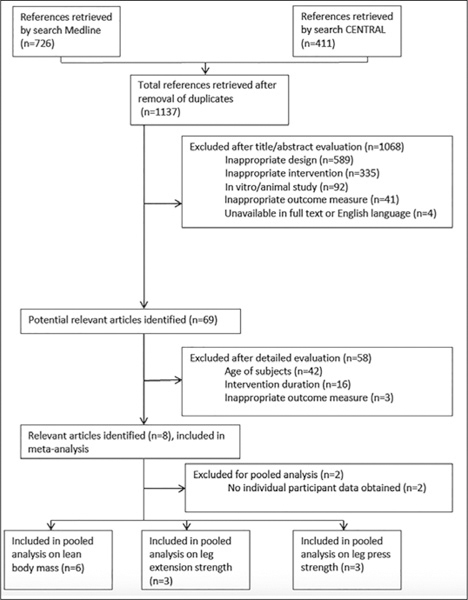
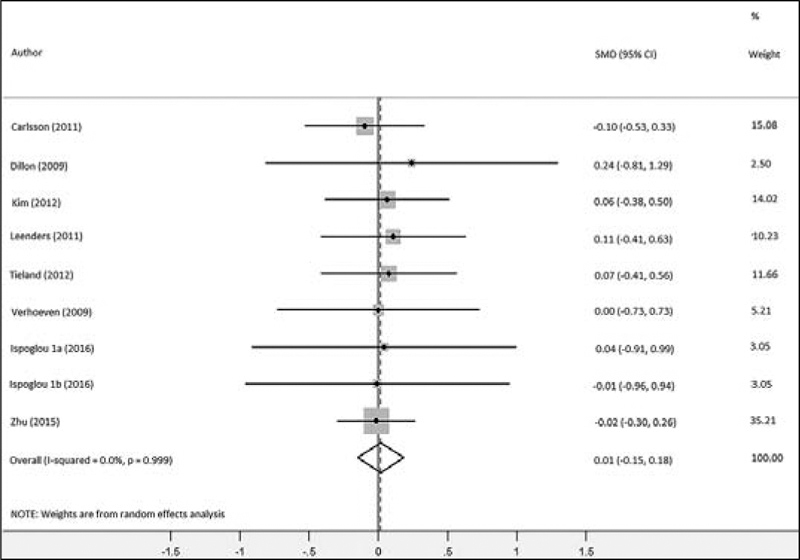
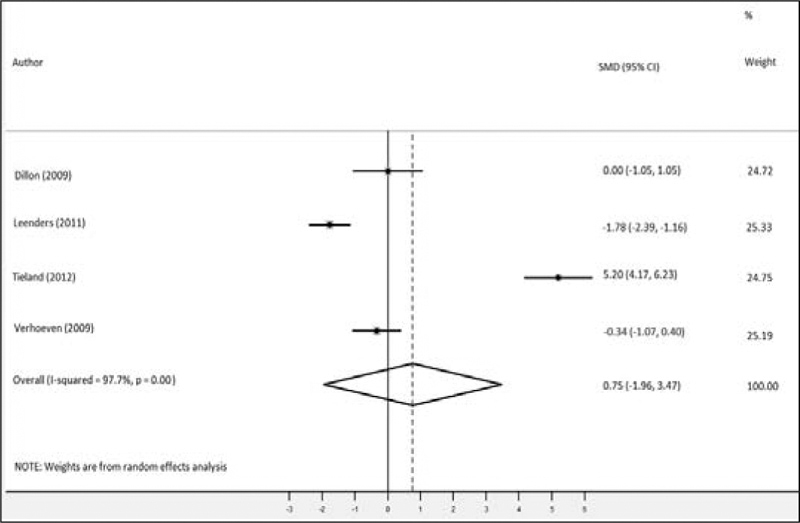
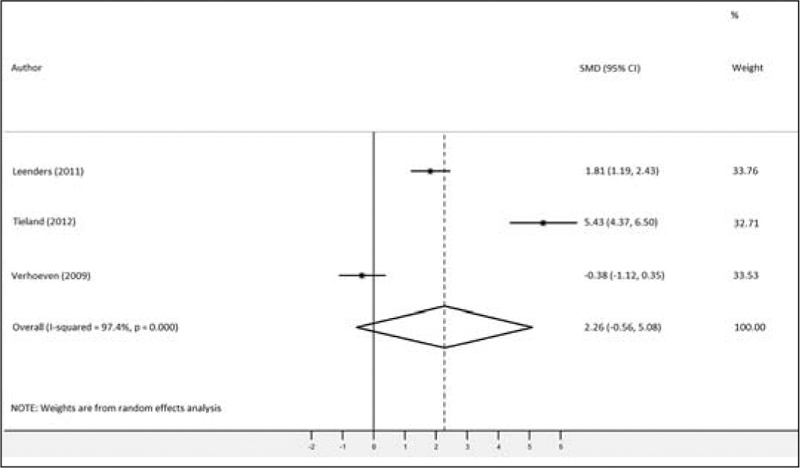
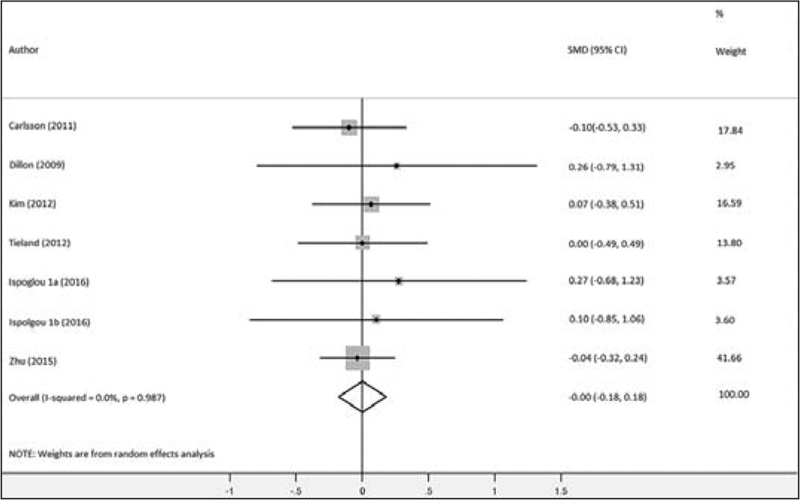
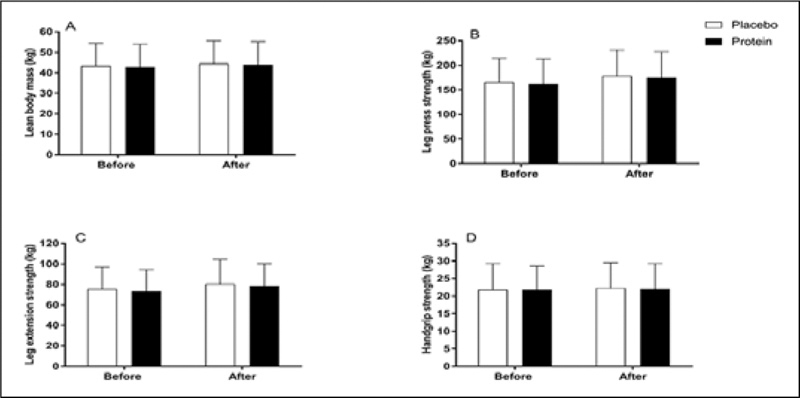
OBJECTIVES: Increasing protein or amino acid intake has been promoted as a promising strategy to increase muscle mass and strength in elderly people, however, long-term intervention studies show inconsistent findings. Therefore, we aim to determine the impact of protein or amino acid supplementation compared to placebo on muscle mass and strength in older adults by combining the results from published trials in a meta-analysis and pooled individual participant data analysis. DESIGN: We searched Medline and Cochrane databases and performed a meta-analysis on eight available trials on the effect of protein or amino acid supplementation on muscle mass and strength in older adults. Furthermore, we pooled individual data of six of these randomized double-blind placebo-controlled trials. The main outcomes were change in lean body mass and change in muscle strength for both the meta-analysis and the pooled analysis. RESULTS: The meta-analysis of eight studies (n=557) showed no significant positive effects of protein or amino acid supplementation on lean body mass (mean difference: 0.014 kg: 95% CI -0.152; 0.18), leg press strength (mean difference: 2.26 kg: 95% CI -0.56; 5.08), leg extension strength (mean difference: 0.75 kg: 95% CI: -1.96, 3.47) or handgrip strength (mean difference: -0.002 kg: 95% CI -0.182; 0.179). Likewise, the pooled analysis showed no significant difference between protein and placebo treatment on lean body mass (n=412: p=0.78), leg press strength (n=121: p=0.50), leg extension strength (n=121: p=0.16) and handgrip strength (n=318: p=0.37). CONCLUSIONS: There is currently no evidence to suggest that protein or amino acid supplementation without concomitant nutritional or exercise interventions increases muscle mass or strength in predominantly healthy elderly people.
Overview
The claims and statistics of this paper haven’t been checked yet.
Free: it reads the open-access text and checks the first 5 claims that cite a source we can check. Create a free account to check every claim.
Integrity signals
Registry
Cites
Statistics
Figures
Verification
Claims the paper makes
The claims and statistics of this paper haven’t been checked yet.
Free: it reads the open-access text and checks the first 5 claims that cite a source we can check. Create a free account to check every claim.
Claims other papers make about this one
Each is checked against this paper’s own text: does it say what the citing paper says it does?
The source backs part of the claim, not all of it — or backs it for a different population, condition or comparison.
In the citing paper
“However, the ability to enhance muscle mass and/or function with the chronic consumption of protein/amino acid-based supplements is somewhat equivocal in otherwise healthy adults,67–69”
From Reduced physical activity in young and older adults: Metabolic and musculoskeletal implications (2019) · cites this paper as [69]
Experimental — accuracy not yet measured
Self-check
Percentages, sums and reported differences re-computed from the paper’s own numbers.
The self-check needs the paper’s full text.
Citations
Cites
Liberati, A., Altman, D. G., Tetzlaff, J., Mulrow, C., Gøtzsche, P. C., Ioannidis, J. P. A., Clarke, M., Devereaux, P. J., Kleijnen, J., & Moher, D. (2009) · PLoS Medicine · doi:10.1371/journal.pmed.1000100 · Cited by 28,164 · cited 3×
“The Preferred Reporting Items for Systematic Reviews and Meta-Analyses (PRISMA) statement was followed in the reporting of this systematic review (19).”
InfluentialDermyshi, E., Wang, Y., Yan, C., Hong, W., Qiu, G., Gong, X., & Zhang, T. (2017) · Neonatology · doi:10.1159/000454668 · Cited by 24,451
Sarcopenia: European consensus on definition and diagnosis
Cruz-Jentoft, A. J., Baeyens, J. P., Bauer, J. M., Boirie, Y., Cederholm, T., Landi, F., Martin, F. C., Michel, J.-P., Rolland, Y., Schneider, S. M., et al. (2010) · Age and Ageing · doi:10.1093/ageing/afq034 · Cited by 11,601 · cited 1×
“3 INTRODUCTION Aging is associated with the loss of muscle mass and muscle strength, also referred to as sarcopenia [1].”
Liberati, A., Altman, D. G., Tetzlaff, J., Mulrow, C., Gøtzsche, P. C., Ioannidis, J. P. A., Clarke, M., Devereaux, P. J., Kleijnen, J., & Moher, D. (2009) · Journal of Clinical Epidemiology · doi:10.1016/j.jclinepi.2009.06.006 · Cited by 10,578
Fielding, R. A., Vellas, B., Evans, W. J., Bhasin, S., Morley, J. E., Newman, A. B., Abellan van Kan, G., Andrieu, S., Bauer, J., Breuille, D., et al. (2011) · Journal of the American Medical Directors Association · doi:10.1016/j.jamda.2011.01.003 · Cited by 3,256 · cited 1×
“The difference in efficacy of protein supplementation to augment muscle mass might be attributed to differences in amount of muscle mass, inflammatory status, hormone levels, insulin resistance, the level of habitual physical activity, as well as habitual dietary protein intake (4, 41).”
Goodpaster, B. H., Park, S. W., Harris, T. B., Kritchevsky, S. B., Nevitt, M., Schwartz, A. V., Simonsick, E. M., Tylavsky, F. A., Visser, M., Newman, A. B., et al. (2006) · The Journals of Gerontology Series A: Biological Sciences and Medical Sciences · doi:10.1093/gerona/61.10.1059 · Cited by 3,083 · cited 1×
“In people aged 65 years and older, the yearly loss of muscle mass is estimated to be ~0.2 kg (39, 40).”
InfluentialAging of skeletal muscle: a 12-yr longitudinal study
Frontera, W. R., Hughes, V. A., Fielding, R. A., Fiatarone, M. A., Evans, W. J., & Roubenoff, R. (2000) · Journal of Applied Physiology · doi:10.1152/jappl.2000.88.4.1321 · Cited by 1,443 · cited 1×
“In people aged 65 years and older, the yearly loss of muscle mass is estimated to be ~0.2 kg (39, 40).”
InfluentialHouston, D. K., Nicklas, B. J., Ding, J., Harris, T. B., Tylavsky, F. A., Newman, A. B., Lee, J. S., Sahyoun, N. R., Visser, M., & Kritchevsky, S. B. (2008) · The American Journal of Clinical Nutrition · doi:10.1093/ajcn/87.1.150 · Cited by 1,214 · cited 3×
“Development and progression of sarcopenia are triggered by multiple factors, such as a sedentary lifestyle and inadequate dietary protein intake (6, 7).”
Anabolic signaling deficits underlie amino acid resistance of wasting, aging muscle
Cuthbertson, D., Smith, K., Babraj, J., Leese, G., Waddell, T., Atherton, P., Wackerhage, H., Taylor, P. M., & Rennie, M. J. (2005) · The FASEB Journal · doi:10.1096/fj.04-2640fje · Cited by 1,211
Sarcopenia with limited mobility: an international consensus
Morley, J. E., Abbatecola, A. M., Argiles, J. M., Baracos, V., Bauer, J., Bhasin, S., Cederholm, T., Stewart Coats, A. J., Cummings, S. R., Evans, W. J., et al. (2011) · Journal of the American Medical Directors Association · doi:10.1016/j.jamda.2011.04.014 · Cited by 1,125 · cited 1×
“This condition is associated with a decline in physical functioning leading to a higher risk of falls, fractures, and physical disability [2-4].”
Research works printed but not linked: 3
- Fam Pract. 29 1 2012
- Journal of the American Medical Directors Association [Internet]. 16 9 2015
- European journal of clinicla nutrition [Internet]. 70 2 2016
Cited by
Dietary Protein and Amino Acids in Vegetarian Diets—A Review
Mariotti, F., & Gardner, C. D. (2019) · Nutrients · doi:10.3390/nu11112661 · Cited by 411
“protein intake from vegetarian diets may influence long term markers of muscle mass and function, fitness and ultimately the risk of sarcopenia, and how those processes might interact with other nutritional and lifestyle factors [87,88].”
BackgroundReduced physical activity in young and older adults: Metabolic and musculoskeletal implications
Bowden Davies, K. A., Pickles, S., Sprung, V. S., Kemp, G. J., Alam, U., Moore, D. R., Tahrani, A. A., & Cuthbertson, D. J. (2019) · Therapeutic Advances in Endocrinology and Metabolism · doi:10.1177/2042018819888824 · Cited by 278
Sarcopenia in the Older Adult With Cancer
Williams, G. R., Dunne, R. F., Giri, S., Shachar, S. S., & Caan, B. J. (2021) · Journal of Clinical Oncology · doi:10.1200/jco.21.00102 · Cited by 248
Tamura, Y., Omura, T., Toyoshima, K., & Araki, A. (2020) · Nutrients · doi:10.3390/nu12113367 · Cited by 224
“Although a meta-analysis of randomized controlled trials (RCTs) of healthy older individuals revealed that protein or amino acid supplementation could not improve muscle mass or strength [125], another meta-analysis found that protein supplementation increased muscle mass in middle-old adults with and without sarcopen…”
BackgroundStrategies to Prevent Sarcopenia in the Aging Process: Role of Protein Intake and Exercise
Rogeri, P. S., Zanella, R., Martins, G. L., Garcia, M. D. A., Leite, G., Lugaresi, R., Gasparini, S. O., Sperandio, G. A., Ferreira, L. H. B., Souza-Junior, T. P., et al. (2021) · Nutrients · doi:10.3390/nu14010052 · Cited by 181
“Additionally, two meta-analyses corroborate the findings of these two studies, suggesting that protein supplementation alone may not be enough to promote positive changes in skeletal muscle mass in older adults [130,131].”
Result
Metadata
- Authors
- Tieland, M., Franssen, R., Dullemeijer, C., van Dronkelaar, C., Kim, H. K., Ispoglou, T., Zhu, K., Prince, R. L., van Loon, L. J. C., & de Groot, L. C. P. G. M.
- Affiliations
- Wageningen University & Research (NL)
- Maastricht University Medical Centre (NL)
- Tokyo Metropolitan Institute of Gerontology (JP)
- Leeds Beckett University (GB)
- The University of Western Australia (AU)
- Venue
- The Journal of nutrition, health and aging
- Publisher
- Elsevier BV
- Published
- 2017-11
- Volume
- 21
- Issue
- 9
- Pages
- 994-1001
- ISSN
- 1279-7707 (ISSN-L)
- PMC
- PMC12879879
- OpenAlex
- W2591962037
- Cited by
- 123
- References
- 44
- Citations by year
- 2026: 4 · 2025: 5 · 2024: 9 · 2023: 10 · 2022: 11 · 2021: 22 · 2020: 27 · 2019: 16 · 2018: 17 · 2017: 2
- FWCI
- 2.08
- Type
- journal article
- Language
- en
- Open access
- hybrid
- doi.org
- Licence
- cc-by-nc-nd
- www.elsevier.com/tdm/userlicense/1.0/ (tdm)
- www.elsevier.com/legal/tdmrep-license (tdm)
- creativecommons.org/licenses/by-nc-nd/4.0/ (vor, 2220 d)
- Locations
- The journal of nutrition health & aging (publishedVersion, cc-by-nc-nd)
- Europe PMC (PubMed Central) (publishedVersion, cc-by-nc-nd)
- PubMed (publishedVersion)
- Research Publications (Maastricht University) (publishedVersion, cc-by-nc-nd)
- PubMed Central (publishedVersion, cc-by-nc-nd)
- Socio-Environmental Systems Modeling (acceptedVersion)
- Leeds Beckett Repository (Leeds Beckett University) (submittedVersion, other-oa)
- UWA Profiles and Research Repository (UWA) (submittedVersion)
- Research Bank (Australian Catholic University) (submittedVersion)
- Data Archiving and Networked Services (DANS) (submittedVersion)
- Figshare (submittedVersion, cc-by)
- Pure Amsterdam UMC (submittedVersion, other-oa)
- VUBIR (Vrije Universiteit Brussel) (submittedVersion)
- Research Publications (Maastricht University) (submittedVersion)
- Funders
- Japan Society for the Promotion of Science (17H02187, 26282201)
- Topics
- Health Sciences › Medicine › Physiology (medical) › Nutrition and Health in Aging
- Health Sciences › Nursing › Nutrition and Dietetics › Muscle metabolism and nutrition
- Life Sciences › Biochemistry, Genetics and Molecular Biology › Molecular Biology › Muscle Physiology and Disorders
- Keywords
- protein supplementation, amino acid supplementation, muscle mass, muscle strength, lean body mass, older adults, sarcopenia, grip strength, leg strength, individual patient data
- MeSH terms
- Aged, Aged, 80 and over, Amino Acids, Dietary Proteins, Humans, Male, Nutritional Status, Body Mass Index, Muscle, Skeletal, Dietary Supplements, Muscle Strength, Sarcopenia
About these checks
Registry, retraction, Cites and statistics results are computed, not judged, with one exception: a printed reference that no index lists is read once by a model before it counts as a citation error. Claims are extracted by a model and kept only when their quote appears verbatim in the text; each cited source is then checked, with a model’s help, for whether it says what the claim relies on. Those verdicts can be wrong — read the claim’s quote and the cited source before relying on one.
Statistics and arithmetic are recomputed, not judged.
Confidence bands are shown only for fields calibrated on our annotated test set. None is calibrated yet, so no band is shown.
What counts as a claim ›How we measure confidence ›How we check this ›
Are you an author, or do you see a problem with this page? Request a review
How to cite
Cite CoChat for the checks on this page, and the paper for its own findings.
- This page
- CoChat. (2026). Citation check: The impact of dietary protein or amino acid supplementation on muscle mass and strength in elderly people: Individual participant data and meta-analysis of RCT's. https://app.cochat.ai/papers/10.1007/s12603-017-0896-1
- The paper
- Tieland, M., Franssen, R., Dullemeijer, C., van Dronkelaar, C., Kim, H. K., Ispoglou, T., Zhu, K., Prince, R. L., van Loon, L. J. C., & de Groot, L. C. P. G. M. (2017). The impact of dietary protein or amino acid supplementation on muscle mass and strength in elderly people: Individual participant data and meta-analysis of RCT's. The Journal of nutrition, health and aging. https://doi.org/10.1007/s12603-017-0896-1
Data sources
Bibliographic data: Semantic Scholar, OpenAlex, Crossref.
Contains information from the Semantic Scholar Academic Graph Datasets, made available under the ODC Attribution License (ODC-BY 1.0).
Semantic Scholar’s data is described in: Kinney, R., et al. (2023). The Semantic Scholar Open Data Platform. arXiv:2301.10140.
