

Episodic Real-Time CGM Use in Adults with Type 2 Diabetes: Results of a Pilot Randomized Controlled Trial
Open accessThe DOI matches its Crossref record; 36 of the 38 references it cites were found in a registry or an index.
Abstract
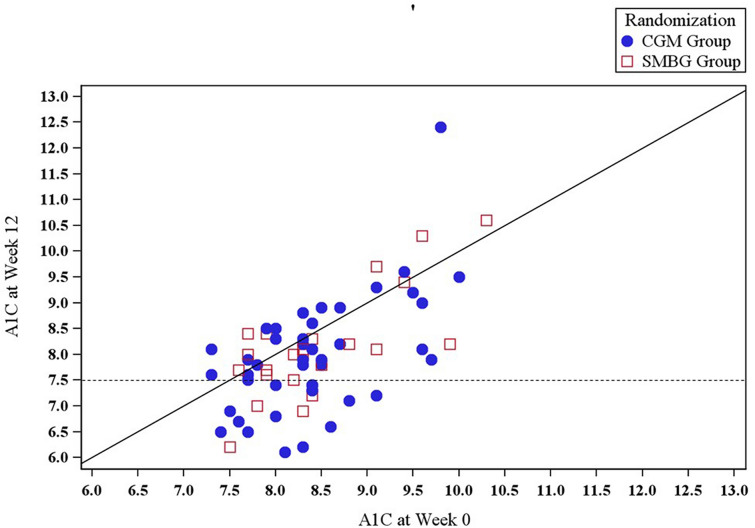
INTRODUCTION: Resistance to initiating insulin therapy is common for people with type 2 diabetes (T2D) using multiple oral agents, resulting in sustained poor glycemic control. We explored a non-pharmacologic option and examined whether adults with T2D and elevated hemoglobin A1c (HbA1c) who were using multiple, non-insulin antihyperglycemics could obtain glycemic benefit from limited, episodic use of real-time continuous glucose monitoring (rtCGM). METHODS: A randomized, pilot trial enrolled patients with T2D who were using two or more non-insulin therapies and had HbA1c values of 7.8-10.5%. Following a baseline, 10-day, blinded CGM session, participants were randomized 2:1, rtCGM or self-monitoring of blood glucose (SMBG). Medication changes were not made during the 12-week study unless required for safety; benefits would result from lifestyle changes. The rtCGM group used unblinded rtCGM for three sessions at weeks 0, 4, and 8, and the control group managed diabetes with SMBG and wore blinded rtCGM at week 8. Glycemic endpoints were assessed. RESULTS: Seventy participants were enrolled from eight North American sites and data were available from 68 (n = 45 rtCGM; n = 23 SMBG). Median (IQR) baseline HbA1c was 8.4 (0.8)% and 8.3 (1.2)% and median (IQR) change in HbA1c at week 12 was - 0.5 (1.3)% and - 0.2 (1.1)% for the rtCGM and SMBG groups, respectively (between-group difference p = 0.74). More than one-third (34.1%) of the rtCGM group vs 17.4% of the SMBG group reached the HbA1c goal of less than 7.5% at week 12 (between-group difference p = 0.12). Compared to run-in, mean (SD) time in range (TIR 70-180 mg/dL) at week 8 increased for the rtCGM group (56.3 [24.5]% vs 63.1 [25.5]%) while it decreased for the SMBG group (68.4 [21.5]% vs 55.1 [30.3]%). HbA1c reductions were not sustained at month 9. CONCLUSION: In this pilot study, limited episodic rtCGM use in people failing multiple non-insulin therapies resulted in modest, short-term glycemic benefits.
Overview
The claims and statistics of this paper haven’t been checked yet.
Free: it reads the open-access text and checks the first 5 claims that cite a source we can check. Create a free account to check every claim.
Integrity signals
Registry
Cites
Statistics
Figures
Verification
Claims the paper makes
The claims and statistics of this paper haven’t been checked yet.
Free: it reads the open-access text and checks the first 5 claims that cite a source we can check. Create a free account to check every claim.
Claims other papers make about this one
Each is checked against this paper’s own text: does it say what the citing paper says it does?
In the citing paper
“RCT data on rtCGM use in individuals with type 2 diabetes on MDI (59), mixed therapies (10, 60), and basal insulin (61,62) have consistently shown reductions in A1C levels and increases in TIR (70-180 mg/dL [3.9-10 mmol/L]) but not a reduction in rates of hypoglycemia (63).”
From 7. Diabetes Technology: Standards of Care in Diabetes—2025 (2025) · cites this paper as [62]
Self-check
Percentages, sums and reported differences re-computed from the paper’s own numbers.
The self-check needs the paper’s full text.
Citations
Cites
A systematic review of adherence with medications for diabetes
Cramer, J. A. (2004) · Diabetes Care · doi:10.2337/diacare.27.5.1218 · Cited by 1,203
9. Pharmacologic Approaches to Glycemic Treatment: Standards of Medical Care in Diabetes—2020
American Diabetes Association (2020) · Diabetes Care · doi:10.2337/dc20-s009 · Cited by 914
Beck, R. W., Riddlesworth, T. D., Ruedy, K., Ahmann, A., Haller, S., Kruger, D., McGill, J. B., Polonsky, W., Price, D., Aronoff, S., et al. (2017) · Annals of Internal Medicine · doi:10.7326/m16-2855 · Cited by 635
Self-citationKarter, A. J., Ferrara, A., Darbinian, J. A., Ackerson, L. M., & Selby, J. V. (2000) · Diabetes Care · doi:10.2337/diacare.23.4.477 · Cited by 487 · cited 1×
“Many insurers provide limited coverage for test strips for most non-insulin users and, even with coverage, few patients with T2D perform SMBG at the recommended frequency [25].”
BackgroundImprovement in Glycemic Excursions With a Transcutaneous, Real-Time Continuous Glucose Sensor
Garg, S., Zisser, H., Schwartz, S., Bailey, T., Kaplan, R., Ellis, S., & Jovanovic, L. (2006) · Diabetes Care · doi:10.2337/diacare.29.01.06.dc05-1686 · Cited by 433
Vigersky, R. A., Fonda, S. J., Chellappa, M., Walker, M. S., & Ehrhardt, N. M. (2012) · Diabetes Care · doi:10.2337/dc11-1438 · Cited by 301
Meal-Related Structured Self-Monitoring of Blood Glucose
Schwedes, U., Siebolds, M., Mertes, G., & For the SMBG Study Group (2002) · Diabetes Care · doi:10.2337/diacare.25.11.1928 · Cited by 300
Montvida, O., Shaw, J., Atherton, J. J., Stringer, F., & Paul, S. K. (2018) · Diabetes Care · doi:10.2337/dc17-1414 · Cited by 250 · cited 1×
“most patients require a second-line antidiabetic drug [4].”
BackgroundClinical inertia to insulin initiation and intensification in the UK: A focused literature review
Khunti, K., & Millar-Jones, D. (2017) · Primary Care Diabetes · doi:10.1016/j.pcd.2016.09.003 · Cited by 235
Ehrhardt, N. M., Chellappa, M., Walker, M. S., Fonda, S. J., & Vigersky, R. A. (2011) · Journal of Diabetes Science and Technology · doi:10.1177/193229681100500320 · Cited by 199 · cited 3×
“Unlike the Vigersky study [27, 28], the observed HbA1c reduction diminished after rtCGM was withdrawn.”
BackgroundMethodResult
Cited by
7. Diabetes Technology: Standards of Medical Care in Diabetes—2022
American Diabetes Association Professional Practice Committee (2022) · Diabetes Care · doi:10.2337/dc22-s007 · Cited by 358
“RCT data on rtCGM use in individuals with type 2 diabetes on MDI (58), mixed therapies (59,60), and basal insulin (61,62) have consistently shown reductions in A1C but not a reduction in rates of hypoglycemia.”
Method7. Diabetes Technology: Standards of Care in Diabetes—2025
American Diabetes Association Professional Practice Committee, ElSayed, N. A., McCoy, R. G., Aleppo, G., Balapattabi, K., Beverly, E. A., Briggs Early, K., Bruemmer, D., Echouffo-Tcheugui, J. B., Ekhlaspour, L., et al. (2025) · Diabetes Care · doi:10.2337/dc25-s007 · Cited by 348
7. Diabetes Technology: Standards of Care in Diabetes — 2023
ElSayed, N. A., Aleppo, G., Aroda, V. R., Bannuru, R. R., Brown, F. M., Bruemmer, D., Collins, B. S., Hilliard, M. E., Isaacs, D., Johnson, E. L., et al. (2023) · Diabetes Care · doi:10.2337/dc23-s007 · Cited by 301
7. Diabetes Technology: Standards of Care in Diabetes—2024
American Diabetes Association Professional Practice Committee, ElSayed, N. A., Aleppo, G., Bannuru, R. R., Bruemmer, D., Collins, B. S., Ekhlaspour, L., Hilliard, M. E., Johnson, E. L., Khunti, K., et al. (2024) · Diabetes Care · doi:10.2337/dc24-s007 · Cited by 281
9. pharmacologic approaches to glycemic treatment: standards of care in diabetes—2026
American Diabetes Association Professional Practice Committee for Diabetes*, Bajaj, M., McCoy, R. G., Balapattabi, K., Bannuru, R. R., Bellini, N. J., Bennett, A. K., Beverly, E. A., Briggs Early, K., ChallaSivaKanaka, S., et al. (2026) · Diabetes Care · doi:10.2337/dc26-s009 · Cited by 263
Continuous glucose monitoring in adults with type 2 diabetes: a systematic review and meta-analysis
Jancev, M., Vissers, T. A. C. M., Visseren, F. L. J., van Bon, A. C., Serné, E. H., DeVries, J. H., de Valk, H. W., & van Sloten, T. T. (2024) · Diabetologia · doi:10.1007/s00125-024-06107-6 · Cited by 191
7. Diabetes Technology: Standards of Care in Diabetes—2026
Bajaj, M. S., McCoy, R. G., Balapattabi, K., Bannuru, R. R., Bellini, N. J., Bennett, A. K., Beverly, E. A., Early, K. B., ChallaSivaKanaka, S., Echouffo-Tcheugui, J. B., et al. (2025) · Diabetes Care · doi:10.2337/dc26-s007 · Cited by 293
Seidu, S., Kunutsor, S. K., Ajjan, R. A., & Choudhary, P. (2024) · Diabetes Care · doi:10.2337/dc23-1520 · Cited by 124
Aronson, R., Brown, R. E., Chu, L., Bajaj, H. S., Khandwala, H., Abitbol, A., Malakieh, N., & Goldenberg, R. (2023) · Diabetes, Obesity and Metabolism · doi:10.1111/dom.14949 · Cited by 118
“However, among individuals using only non-insulin therapies for type 2 diabetes, rtCGM use, in periodic exposures, did not show an improvement in HbA1c versus controls.(5) Intermittently scanned continuous glucose monitoring (isCGM) has been associated with improved HbA1c in observational reports at diabetes centres i…”
BackgroundContinuous glucose monitoring for the routine care of type 2 diabetes mellitus
Ajjan, R. A., Battelino, T., Cos, X., Del Prato, S., Philips, J.-C., Meyer, L., Seufert, J., & Seidu, S. (2024) · Nature Reviews Endocrinology · doi:10.1038/s41574-024-00973-1 · Cited by 117
Ferreira, R. O. M., Trevisan, T., Pasqualotto, E., Chavez, M. P., Marques, B. F., Lamounier, R. N., & van de Sande-Lee, S. (2024) · Diabetes Technology & Therapeutics · doi:10.1089/dia.2023.0390 · Cited by 92
“Among the six included studies, four compared rt-CGM with structured SMBG, 14,20–22 while the remaining two studies compared is-GCM with structured SMBG. 23,24 Regarding glucose monitoring regimen, four studies used continuous use of CGM, 14,20,23,24 and two studies used periodic use of CGM. 21,22 In periodic use of C…”
InfluentialHandelsman, Y., Anderson, J. E., Bakris, G. L., Ballantyne, C. M., Bhatt, D. L., Bloomgarden, Z. T., Bozkurt, B., Budoff, M. J., Butler, J., Cherney, D. Z. I., et al. (2024) · Metabolism · doi:10.1016/j.metabol.2024.155931 · Cited by 103
Uhl, S., Choure, A., Rouse, B., Loblack, A., & Reaven, P. (2024) · The Journal of Clinical Endocrinology & Metabolism · doi:10.1210/clinem/dgad652 · Cited by 76
Moon, S. J., Kim, K., Lee, W. J., Lee, M. Y., Vigersky, R., & Park, C. (2023) · Diabetes, Obesity and Metabolism · doi:10.1111/dom.14852 · Cited by 69
“The reason for different results from the previous similar study may be a result of using SMBG during RT-CGM in our study.(18) Also, despite the non-significant effects of SMBG in the previous non-insulin–treated patient studies, there have been several studies that revealed the effect of structured SMBG among those p…”
BackgroundMethodResultInfluentialRecent Updates to Clinical Practice Guidelines for Diabetes Mellitus
Yu, J., Lee, S.-H., & Kim, M. K. (2022) · Endocrinology and Metabolism · doi:10.3803/enm.2022.105 · Cited by 65
“In previous guidelines, CGM devices were only recommended for patients requiring multiple daily injections or continuous subcutaneous insulin infusion, but this year’s recommendation extends to long-acting insulin (basal insulin) users [43,44].”
BackgroundAdvances in Continuous Glucose Monitoring: Clinical Applications
Kwon, S. Y., & Moon, J. S. (2025) · Endocrinology and Metabolism · doi:10.3803/enm.2025.2370 · Cited by 94
“Two recent RCTs of non-insulin-treated T2D indicate that even intermittent CGM improves glycemic control over SMBG [29,30].”
InfluentialExpanding the Role of Continuous Glucose Monitoring in Modern Diabetes Care Beyond Type 1 Disease
Klupa, T., Czupryniak, L., Dzida, G. J., Fichna, P., Jarosz-Chobot, P. A., Gumprecht, J., Myśliwiec, M., Szadkowska, A., Bomba-Opon, D. A., Czajkowski, K., et al. (2023) · Diabetes Therapy · doi:10.1007/s13300-023-01431-3 · Cited by 97
Handelsman, Y., Anderson, J. E., Bakris, G. L., Ballantyne, C. M., Beckman, J. A., Bhatt, D. L., Bloomgarden, Z. T., Bozkurt, B., Budoff, M. J., Butler, J., et al. (2022) · Journal of Diabetes and its Complications · doi:10.1016/j.jdiacomp.2021.108101 · Cited by 64
“14,15 Many popular diets work—and recommendations may be individualized based on patient preference—but it is important to emphasize that healthy eating is for the long term.”
Richardson, K. M., Jospe, M. R., Bohlen, L. C., Crawshaw, J., Saleh, A. A., & Schembre, S. M. (2024) · International Journal of Behavioral Nutrition and Physical Activity · doi:10.1186/s12966-024-01692-6 · Cited by 61
Aggarwal, A., Pathak, S., & Goyal, R. (2022) · Diabetes Research and Clinical Practice · doi:10.1016/j.diabres.2022.109825 · Cited by 55
Lu, J., Ying, Z., Wang, P., Fu, M., Han, C., & Zhang, M. (2024) · Diabetes, Obesity and Metabolism · doi:10.1111/dom.15328 · Cited by 39
Kong, S.-Y., & Cho, M.-K. (2024) · Healthcare · doi:10.3390/healthcare12050571 · Cited by 36
Lau, D., Manca, D. P., Singh, P., Perry, T., Olu-Jordan, I., Ryan Zhang, J., Rahim, G., Hagen, E. M., & Yeung, R. O. (2024) · Diabetes Research and Clinical Practice · doi:10.1016/j.diabres.2024.111899 · Cited by 32
Davis, G. M., Bailey, R. J., Calhoun, P. M., Price, D. A., & Beck, R. W. (2021) · Diabetes Technology & Therapeutics · doi:10.1089/dia.2021.0489 · Cited by 37
“that modifications in diet, physical activity, and medication adherence motivated by ongoing CGM feedback are important factors in improving glycemic control in this population that may help reduce the need for intensification of treatment regimens.(7,8,11) The primary results of the MOBILE trial confirmed the utility…”
BackgroundResultSelf-citationTan, Y. Y., Suan, E., Koh, G. C. H., Suhairi, S. B., & Tyagi, S. (2024) · Archives of Public Health · doi:10.1186/s13690-024-01459-2 · Cited by 35
Leveraging continuous glucose monitoring as a catalyst for behaviour change: a scoping review
Jospe, M. R., Richardson, K. M., Saleh, A. A., Bohlen, L. C., Crawshaw, J., Liao, Y., Konnyu, K. J., & Schembre, S. M. (2024) · International Journal of Behavioral Nutrition and Physical Activity · doi:10.1186/s12966-024-01622-6 · Cited by 34
Aronson, R., Abitbol, A., Bajaj, H. S., Cheng, A. Y. Y., Christopoulos, S., Harris, S. B., Jain, A. B., & Goldenberg, R. M. (2025) · Diabetes, Obesity and Metabolism · doi:10.1111/dom.70008 · Cited by 33
“Our updated meta-analysis included 541 participants from a total of 8 RCTs, 43 – 45,47 – 51 among whom 297 (55”
Martens, T. W., Willis, H. J., Bergenstal, R. M., Kruger, D. F., French, E. K., & Steenkamp, D. (2025) · Diabetes Technology & Therapeutics · doi:10.1089/dia.2024.0579 · Cited by 25
Zou, Y. L., Zhao, S., Li, G., & Zhang, C. (2022) · Journal of General Internal Medicine · doi:10.1007/s11606-022-07864-z · Cited by 27
The use of technology in type 2 diabetes and prediabetes: a narrative review
Liarakos, A. L., Lim, J. Z. M., Leelarathna, L., & Wilmot, E. G. (2024) · Diabetologia · doi:10.1007/s00125-024-06203-7 · Cited by 27
“…programme with episodic rtCGM use in a non-insulin-treated type 2 diabetes population demonstrated no significant HbA 1c improvement compared with SMBG [28], while an RCT of intermittent short-term use of rtCGM compared with SMBG found a 0.64 pp (6 mmol/mol) HbA 1c reduction ( p =0.014) [29].”
MethodInfluentialRizos, E. C., Markozannes, G., Charitakis, N., Filis, P., Stoimeni, A. E., Nørgaard, K., Ntzani, E. E., & Tsilidis, K. K. (2025) · Diabetes Technology & Therapeutics · doi:10.1089/dia.2024.0599 · Cited by 21
Agarwal, S., Varghese, R. T., SAVIAN, R. E. N. A. T. O. R. E. Z. E. N. D. E., Wang, C. C. L., & Galindo, R. J. (2025) · Endocrine Practice · doi:10.1016/j.eprac.2025.05.749 · Cited by 15
Bannuru, R. R., Bellini, N. J., Bergenstal, R. M., Beverly, E. A., Christofides, E. A., Cox, D. J., Ehrhardt, N. M., Fazioli, K., Fischl, A. H., Kerr, D. E., et al. (2025) · Journal of Diabetes Science and Technology · doi:10.1177/19322968251384318 · Cited by 20
Rama Chandran, S., Rahman, N., Gandhi, M., Tan, N. C., Phoon, I. K. Y., Seah, D. E. J., Cheah, M. H., Sek, K., & Gardner, D. S.-L. (2024) · Diabetes Research and Clinical Practice · doi:10.1016/j.diabres.2024.111678 · Cited by 10
Nemlekar, P. M., Hannah, K. L., & Norman, G. J. (2023) · Clinical Diabetes · doi:10.2337/cd22-0080 · Cited by 10
“A clinically meaningful 10% increase in average TIR within the first week of use suggested that patients were able to make lifestyle changes based on real-time p-CGM data (36).”
BackgroundPolonsky, W. H., Soriano, E. C., Levrat‐Guillen, F., CHICHMARENKO, M., Sandoval, H., BASTIAN, A., Fortmann, A. L., Kwist, A., & Vallis, M. (2025) · Journal of Diabetes Science and Technology · doi:10.1177/19322968251361031 · Cited by 12
Pangrace, M., Dolan, S., Grace, T., Greene, E., Long, E., McClelland, S., Moore, J., Morgan, D. E., Mullins, H., & Wescott, S. (2024) · Journal of Managed Care & Specialty Pharmacy · doi:10.18553/jmcp.2024.30.1-a.s1 · Cited by 9
Ko, J., Moon, S., Ajjan, R. A., Lee, M. Y., Lee, H., Choi, B., Park, J., Lee, S., Kang, J., & Park, C. (2025) · Diabetes, Obesity and Metabolism · doi:10.1111/dom.16304 · Cited by 7
Hayek, A. A., Klonoff, D. C., Zahrani, W. M. A., Saeed, A. H. A., & Dawish, M. A. A. (2025) · Diabetes Research and Clinical Practice · doi:10.1016/j.diabres.2025.112458 · Cited by 8
Ssemmondo, E., Shah, N., Newham, M., Rigby, A., Buckland, R., Deshmukh, H., & Sathyapalan, T. (2025) · Diabetes, Obesity and Metabolism · doi:10.1111/dom.16116 · Cited by 6
“21 The current study has however shown no significant reduction in the average glucose levels following isCGM use despite the increase in TIR.”
Jung, D. H., Han, J. W., Shin, H., & Lim, H. (2024) · Nutrients · doi:10.3390/nu16081190 · Cited by 8
“Several studies have reported that the employment of CGM devices leads to enhanced control over blood glucose levels and a reduction in the occurrence of hypoglycemic events [7,8].”
BackgroundConlin, P. R., Burke, B. V., Hobbs, C., Hurren, K. M., Lang, A. E., Morrison, J. W., Spacek, L., Steil, E. N., Watts, S. A., Weinreb, J. E., et al. (2024) · Mayo Clinic Proceedings · doi:10.1016/j.mayocp.2024.04.014 · Cited by 8
Aihara, M., Yano, K., Irie, T., Nishi, M., Yachiku, K., Minoura, I., Sekimizu, K., Sakurai, Y., Kadowaki, T., Yamauchi, T., et al. (2024) · Diabetes Research and Clinical Practice · doi:10.1016/j.diabres.2024.111903 · Cited by 5
Son, H., Moon, S. J., & Cho, Y. M. (2025) · Diabetes Therapy · doi:10.1007/s13300-025-01830-8 · Cited by 7
“CGM provides clinical benefits even in patients not using insulin, where it has been shown to improve HbA1c and reduce glycemic variability across multiple RCTs [9, 32–34].”
Clinical Impact of Continuous Glucose Monitoring in Noninsulin Treated Type 2 Diabetes: A Review
Aleppo, G., Carlson, A. L., McGill, J. B., Alshannaq, H. A., Galindo, R. J., Kruger, D. F., Levy, C. J., Matuoka, J. Y., Ilham, S., Umpierrez, G. E., et al. (2026) · Diabetes Technology & Therapeutics · doi:10.1177/15209156251414980 · Cited by 6
“Between-group differences in change in TIR did not seem to depend on length of follow-up, with effects ranging from 3.1% to 20.2% at 12 weeks, 32,35,36 6.5% to 9.9% at 16 weeks, 28,30 and 0.54% to 9.8% at 20 – 24 weeks.”
InfluentialEnhancing Type 2 Diabetes Care With CGM Integration: Insights From an Italian Expert Group
Irace, C., Avogaro, A., Bertuzzi, F., Buzzetti, R., Candido, R., Prato, S. D., Bartolo, P. D., Fiorina, P., Giorda, C. B., & Giorgino, F. (2025) · Diabetes/Metabolism Research and Reviews · doi:10.1002/dmrr.70059 · Cited by 7
“Two other trials in T2D patients failing multiple non‐insulin therapies confirmed that limited episodic rtCGM use was an effective method for glucose control [71, 72].”
Nemlekar, P. M., Hannah, K. L., Green, C. R., & Norman, G. J. (2025) · Endocrinology Diabetes & Metabolism · doi:10.1002/edm2.70089 · Cited by 4
Courtney, A., Smith, D., & Forde, H. E. (2023) · Irish Journal of Medical Science (1971 -) · doi:10.1007/s11845-023-03322-9 · Cited by 4
“There is also evidence to suggest that CGM can be used successfully in people with poorly controlled type 2 diabetes mellitus (T2DM), not on insulin therapy, to facilitate improved lifestyle choices and medication adherence [8, 9].”
BackgroundOriot, P., Bui, L., kurz, N. K. D., Gavriliu, M. M., Negrea, M.-C., & Hermans, M. P. (2025) · Acta Clinica Belgica · doi:10.1080/17843286.2025.2528030 · Cited by 3
Larson, R., Philbrick, A. M., Carlin, C., & Harris, I. M. (2023) · Journal of Pharmacy Technology · doi:10.1177/87551225231194027 · Cited by 4
Continuous Glucose Monitoring in Non-Insulin Type 2 Diabetes
Kesavadev, J., Saboo, B., Makkar, B. M., Agarwal, S., Chawla, M. S., Chandran, V., Shankar, A., & Basanth, A. (2023) · International Journal of Diabetes and Technology · doi:10.4103/ijdt.ijdt_26_23 · Cited by 3
Jinnouchi, H., Yoshida, A., Taniguchi, M., Yamauchi, E., Kurosawa, D., Yachiku, K., Minoura, I., Kadowaki, T., Yamauchi, T., Aihara, M., et al. (2024) · Diabetes Therapy · doi:10.1007/s13300-024-01599-2 · Cited by 3
Ettestad, T. M., Willis, H. J., Johnson, E. M., Green, C. R., & Bergenstal, R. M. (2025) · Clinical Diabetes · doi:10.2337/cd24-0106 · Cited by 4
“Some individuals may achieve modest glycemic benefits with episodic rtCGM use (13,14); however, additional research is needed to identify best practices for intermittent CGM use.”
Rädel, C., Wienke, A., & Pliquett, R. U. (2025) · Diabetology & Metabolic Syndrome · doi:10.1186/s13098-025-01976-2 · Cited by 2
Bohlen, L. C., Crawshaw, J., Jospe, M. R., Richardson, K. M., Konnyu, K. J., & Schembre, S. M. (2025) · International Journal of Behavioral Nutrition and Physical Activity · doi:10.1186/s12966-025-01833-5 · Cited by 4
Sebastian, S. A., Padda, I., Bimal, T., Varma, S., Collins, J. S. P., Ahmad, Z., & Safarova, M. S. (2025) · Disease-a-Month · doi:10.1016/j.disamonth.2025.102043 · Cited by 3
Tiwari, D., Loh, W. J., & Aw, T. C. (2026) · LabMed · doi:10.3390/labmed3020010 · Cited by 2
“The evidence supporting CGM benefits—including improved time in range (TIR) and reduction in time spent in hypoglycemia—in non-insulin T2D users has now cemented this recommendation, promoting patient agency and empowering therapy adjustments based on real-time data [7–9].”
Giaccari, A., Gliozzo, G., Ciccarelli, G., Giuseppe, G. D., Castellano, C., Cum, S., Monache, L. D., Gallo, M., Lastretti, M., Medea, G., et al. (2026) · Acta Diabetologica · doi:10.1007/s00592-026-02693-6 · Cited by 2
Cebada, A. B., Silva, J. B. Q., Escobar-Morreale, H. F., & Chávez, L. N. (2024) · Medicine - Programa de Formación Médica Continuada Acreditado · doi:10.1016/j.med.2024.10.010 · Cited by 5
Lian, X., Cheng, L. J., Teo, C. J. Y., Tan, J., Lim, H., Shen, L., Chew, H. S. J., Wang, W., & Dalan, R. (2026) · Frontiers in Endocrinology · doi:10.3389/fendo.2025.1761579 · Cited by 1
Pal, A. W., Chong, W. L., Huri, H. Z., & Ratnasingam, J. (2026) · Diabetic Medicine · doi:10.1111/dme.70360 · Cited by 1
“RCTs' sample sizes ranged from 40 to 404 participants, with follow-up from 6 weeks to 18 months.”
InfluentialTrends in Time in Range–Related Publications and Clinical Trials: A Bibliometric Review
Patel, P. M., Abaniel, R. M., Dogra, N., Lo, C. B., Frazzitta, M. A., & Virdi, N. S. (2023) · doi:10.2337/figshare.22714573.v1
Trends in Time in Range–Related Publications and Clinical Trials: A Bibliometric Review
Patel, P. M., Abaniel, R. M., Dogra, N., Lo, C. B., Frazzitta, M. A., & Virdi, N. S. (2023) · doi:10.2337/figshare.22714573
Seidu, S., Kunutsor, S. K., Ajjan, R., & Choudhary, P. (2023) · doi:10.2337/figshare.24291334.v1
Glucose meters and sensors for type 2 diabetes (part 3)
Stolk, M., & Slee, P. H. T. J. (2024) · Geneesmiddelenbulletin · doi:10.35351/gebu.2024.5.7 · Cited by 1
Badawi, S. A. A., Alhajri, A. H. M., Altayb, N. M. O., Mohmmed, E., Hassabelrasoul, R. K. E., Mohammed, S. A. S., Mohammed, W. H. A., & Ghali, J. A. E. (2025) · Cureus · doi:10.7759/cureus.89534 · Cited by 3
“However, the lack of sustained HbA1c benefits in some studies, such as Price et al. [9], where improvements waned by nine months, raises questions about long-term adherence and the need for ongoing CGM integration into care routines.”
InfluentialTurner, L. V., Chen, C., Gao, P., Beck, S. E., Johnson, M. L., & Riddell, M. C. (2025) · Diabetes Technology and Obesity Medicine · doi:10.1177/29986702251393163
Self-citationSihota, A., Jain, A., CHIN, A., Chow, W., Jin, S., Molberg, T., PATIL, S., Siemens, R. L., Sivapalan, S., Smith, T., et al. (2026) · Canadian Journal of Diabetes · doi:10.1016/j.jcjd.2026.01.005
Liu, B., Hannah, K. L., Nemlekar, P. M., Green, C. R., & Norman, G. J. (2026) · Diabetes Metabolic Syndrome and Obesity · doi:10.2147/dmso.s574769
Chico, A. I., Aguilera, E., Albareda, M., Moreno-Fernández, J., Beato-Víbora, P. I., Fernández-Rubio, E., Cuesta, M., Rodrigo, A. B., Ampudia‐Blasco, F. J., Bandrés, O., et al. (2026) · Acta Diabetologica · doi:10.1007/s00592-026-02682-9 · Cited by 2
Gilbert, J., Reichert, S. M., Cadieux, T., & Senior, P. A. (2026) · Canadian Journal of Diabetes · doi:10.1016/j.jcjd.2026.04.007
Diabetes Technology: Continuous Glucose Monitoring and Insulin Delivery
MacLeod, J., Willis, H. J., Sulik, B., & Chomko, M. (2026) · American Diabetes Association eBooks · doi:10.2337/9781580408493-ch08 · Cited by 1
Balaji, R. S., Vinith, V., Kannan, R., Ramadurai, M., & Murugan, P. (2026) · Obesity Medicine · doi:10.1016/j.obmed.2026.100724 · Cited by 1
Aihara, M., & Kubota, N. (2026) · Journal of Diabetes Investigation · doi:10.1111/jdi.70447 · Cited by 1
“CGM re fl ects these behaviors in real time and improves glycemia control in people with type 2 diabetes 93,94,148 , but its usefulness is limited by the cost, burden, and/or access 96 ; self-monitoring of blood glucose requires frequent fi nger pricks 149 .”
Freckmann, G., König, I. R., Grube, H. C. B., Vens, M., Witt, O., Kappelmeier, V., Pethahn, K. L., Sina, C., Moser, O., & Schröder, T. (2026) · Diabetologia · doi:10.1007/s00125-026-06880-6
Hayek, A. A., Zahrani, W. M. A., Alotaibi, H. F., Jammal, M. E., & Dawish, M. A. A. (2026) · Journal of Diabetes Science and Technology · doi:10.1177/19322968261489265
Metadata
- Authors
- Price, D. A., Deng, Q., Kipnes, M., & Beck, S. E.
- Affiliations
- Dexcom (United States) (US)
- Diabetes & Glandular Disease Clinic (US)
- Corresponding author
- Price, David A.
- ORCID
- Price, David A.
- Venue
- Diabetes Therapy
- Published
- 2021-06-04
- Volume
- 12
- Issue
- 7
- Pages
- 2089-2099
- ISSN
- 1869-6953 (ISSN-L)
- 1869-6961
- PMC
- PMC8177263
- OpenAlex
- W3164960050
- Cited by
- 77
- References
- 38
- Citations by year
- 2026: 14 · 2025: 21 · 2024: 19 · 2023: 14 · 2022: 6 · 2021: 3
- FWCI
- 7.84
- Type
- journal article
- Language
- en
- Open access
- gold
- doi.org
- Licence
- cc-by-nc
- creativecommons.org/licenses/by-nc/4.0 (tdm)
- creativecommons.org/licenses/by-nc/4.0 (vor)
- Locations
- Diabetes Therapy (publishedVersion, cc-by-nc)
- PubMed Central (publishedVersion, cc-by-nc)
- PubMed (publishedVersion)
- Funders
- Dexcom
- Topics
- Health Sciences › Medicine › Endocrinology, Diabetes and Metabolism › Diabetes Management and Research
- Health Sciences › Medicine › Endocrinology, Diabetes and Metabolism › Diabetes Treatment and Management
- Health Sciences › Medicine › Endocrinology, Diabetes and Metabolism › Diabetes Management and Education
- Keywords
- type 2 diabetes, real-time continuous glucose monitoring, self-monitoring of blood glucose, glycemic control, HbA1c, time in range, lifestyle intervention, adults with diabetes, HbA1c reduction
About these checks
Registry, retraction, Cites and statistics results are computed, not judged, with one exception: a printed reference that no index lists is read once by a model before it counts as a citation error. Claims are extracted by a model and kept only when their quote appears verbatim in the text; each cited source is then checked, with a model’s help, for whether it says what the claim relies on. Those verdicts can be wrong — read the claim’s quote and the cited source before relying on one.
Statistics and arithmetic are recomputed, not judged.
Confidence bands are shown only for fields calibrated on our annotated test set. None is calibrated yet, so no band is shown.
What counts as a claim ›How we measure confidence ›How we check this ›
Are you an author, or do you see a problem with this page? Request a review
Data sources
Bibliographic data: Semantic Scholar, OpenAlex, Crossref.
Contains information from the Semantic Scholar Academic Graph Datasets, made available under the ODC Attribution License (ODC-BY 1.0).
Semantic Scholar’s data is described in: Kinney, R., et al. (2023). The Semantic Scholar Open Data Platform. arXiv:2301.10140.
