

Cost-effectiveness analysis of initiating type 2 diabetes therapy with a sodium-glucose cotransporter 2 inhibitor versus conventional therapy in Japan
Open accessThe DOI matches its Crossref record; 57 of the 57 references it cites were found in a registry or an index.
Abstract
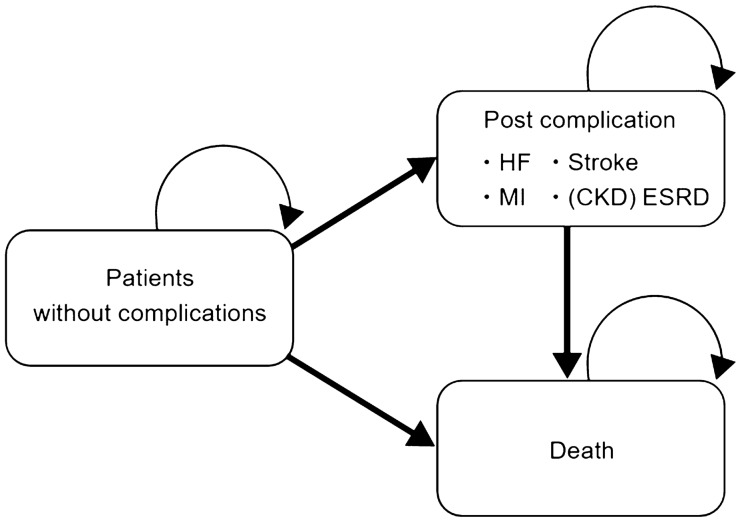
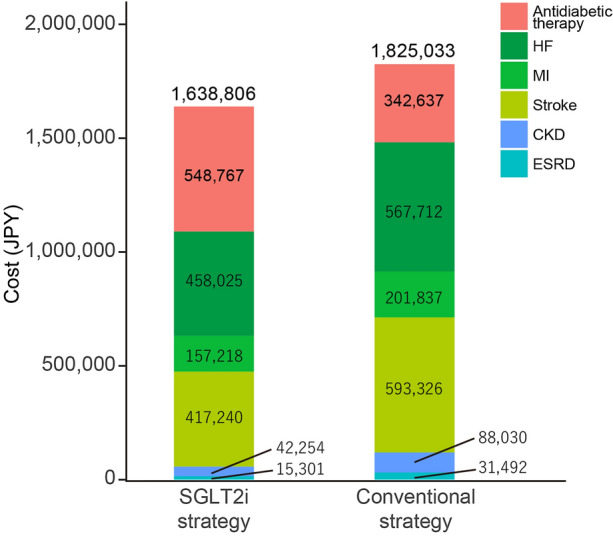
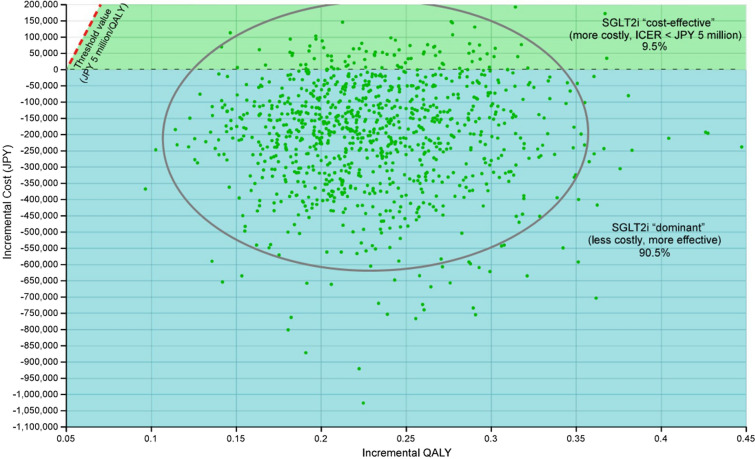
INTRODUCTION: Many patients with type 2 diabetes mellitus (T2DM) suffer from complications that impose substantial burdens on prognosis and medical costs. Accumulating evidence has demonstrated the clinical benefit of sodium-glucose cotransporter 2 inhibitors (SGLT2i) on cardiovascular and renal complications. However, the health economic impact of SGLT2i remains unclear. The aim of this study was to evaluate the cost-effectiveness of initiating antidiabetic therapy with an SGLT2i using Japanese real-world data. METHODS: We constructed a natural history model incorporating heart failure (HF), myocardial infarction, stroke, chronic kidney disease, and end-stage renal disease (ESRD) as complications. The target population comprised patients with T2DM who newly initiated their first oral glucose-lowering drugs. By using a population-based microsimulation, we estimated the 10-year medical costs in Japanese yen (JPY) and outcomes (hospitalization for/development of complications and quality-adjusted life years [QALY]) for patients who initiated antidiabetic therapy with an SGLT2i or conventional therapy. Sensitivity analyses included a probabilistic sensitivity analysis (PSA) with 1,000,000 iterations. RESULTS: In the base-case analysis, the total medical cost per person was JPY 1,638,806 versus JPY 1,825,033 and the QALYs were 8.732 versus 8.513 for the SGLT2i strategy versus the conventional strategy, respectively. Thus, initiating treatment with an SGLT2i was dominant, more effective (QALY gain), and lower cost. When treating 10,000 patients, the SGLT2i strategy would reduce all-cause deaths by 410 (552 vs 962), HF events by 201 (897 vs 1098), and ESRD events by 16 (16 vs 32) versus the conventional strategy. The PSA revealed that the probability of dominance for initiating SGLT2i therapy was 90.5%, demonstrating the robustness of the results. CONCLUSION: Our results suggest that initiating T2DM treatment with SGLT2i, aimed at managing cardiovascular and renal complications from the early stages of diabetes, can improve the clinical outcome and reduce cost burden of T2DM.
Overview
The claims and statistics of this paper haven’t been checked yet.
Free: it reads the open-access text and checks the first 5 claims that cite a source we can check. Create a free account to check every claim.
Integrity signals
Registry
Cites
Statistics
Figures
Verification
Claims the paper makes
The claims and statistics of this paper haven’t been checked yet.
Free: it reads the open-access text and checks the first 5 claims that cite a source we can check. Create a free account to check every claim.
Claims other papers make about this one
Each is checked against this paper’s own text: does it say what the citing paper says it does?
The cited source says what the claim attributes to it.
In the citing paper
“Avoiding or delaying costly kidney replacement therapy may make it cost-effective to implement the new therapies, [41][42][43] but more data are needed to support this possibility.”
Self-check
Percentages, sums and reported differences re-computed from the paper’s own numbers.
The self-check needs the paper’s full text.
Citations
Cites
Empagliflozin, Cardiovascular Outcomes, and Mortality in Type 2 Diabetes
Zinman, B., Wanner, C., Lachin, J. M., Fitchett, D., Bluhmki, E., Hantel, S., Mattheus, M., Devins, T., Johansen, O. E., Woerle, H. J., et al. (2015) · New England Journal of Medicine · doi:10.1056/nejmoa1504720 · Cited by 12,315
Saeedi, P., Petersohn, I., Salpea, P., Malanda, B., Karuranga, S., Unwin, N., Colagiuri, S., Guariguata, L., Motala, A. A., Ogurtsova, K., et al. (2019) · Diabetes Research and Clinical Practice · doi:10.1016/j.diabres.2019.107843 · Cited by 10,792
Canagliflozin and Cardiovascular and Renal Events in Type 2 Diabetes
Neal, B., Perkovic, V., Mahaffey, K. W., de Zeeuw, D., Fulcher, G., Erondu, N., Shaw, W., Law, G., Desai, M., & Matthews, D. R. (2017) · New England Journal of Medicine · doi:10.1056/nejmoa1611925 · Cited by 7,830
Dapagliflozin in Patients with Heart Failure and Reduced Ejection Fraction
McMurray, J. J. V., Solomon, S. D., Inzucchi, S. E., Køber, L., Kosiborod, M. N., Martinez, F. A., Ponikowski, P., Sabatine, M. S., Anand, I. S., Bělohlávek, J., et al. (2019) · New England Journal of Medicine · doi:10.1056/nejmoa1911303 · Cited by 7,140
IDF Diabetes Atlas: Global estimates for the prevalence of diabetes for 2015 and 2040
Ogurtsova, K., da Rocha Fernandes, J. D., Huang, Y., Linnenkamp, U., Guariguata, L., Cho, N. H., Cavan, D., Shaw, J. E., & Makaroff, L. E. (2017) · Diabetes Research and Clinical Practice · doi:10.1016/j.diabres.2017.03.024 · Cited by 6,966
2021 ESC Guidelines on cardiovascular disease prevention in clinical practice
Visseren, F. L. J., Mach, F., Smulders, Y. M., Carballo, D., Koskinas, K. C., Bäck, M., Benetos, A., Biffi, A., Boavida, J.-M., Capodanno, D., et al. (2021) · European Heart Journal · doi:10.1093/eurheartj/ehab484 · Cited by 6,485
Dapagliflozin and Cardiovascular Outcomes in Type 2 Diabetes
Wiviott, S. D., Raz, I., Bonaca, M. P., Mosenzon, O., Kato, E. T., Cahn, A., Silverman, M. G., Zelniker, T. A., Kuder, J. F., Murphy, S. A., et al. (2019) · New England Journal of Medicine · doi:10.1056/nejmoa1812389 · Cited by 6,382 · cited 1×
“2% of patients with T2DM were prescribed SGLT2i as an initial GLD even though they met the inclusion criteria of the EMPA-REG outcome or DECLARE-TIMI 58 studies [7, 9].”
Canagliflozin and Renal Outcomes in Type 2 Diabetes and Nephropathy
Perkovic, V., Jardine, M. J., Neal, B., Bompoint, S., Heerspink, H. J. L., Charytan, D. M., Edwards, R., Agarwal, R., Bakris, G., Bull, S., et al. (2019) · New England Journal of Medicine · doi:10.1056/nejmoa1811744 · Cited by 6,189
Dapagliflozin in Patients with Chronic Kidney Disease
Heerspink, H. J. L., Stefánsson, B. V., Correa-Rotter, R., Chertow, G. M., Greene, T., Hou, F.-F., Mann, J. F. E., McMurray, J. J. V., Lindberg, M., Rossing, P., et al. (2020) · New England Journal of Medicine · doi:10.1056/nejmoa2024816 · Cited by 5,618
Cardiovascular and renal outcomes with empagliflozin in heart failure
Packer, M., Anker, S. D., Butler, J., Filippatos, G., Pocock, S. J., Carson, P., Januzzi, J., Verma, S., Tsutsui, H., Brueckmann, M., et al. (2020) · New England Journal of Medicine · doi:10.1056/nejmoa2022190 · Cited by 5,206
Cosentino, F., Grant, P. J., Aboyans, V., Bailey, C. J., Ceriello, A., Delgado, V., Federici, M., Filippatos, G., Grobbee, D. E., Hansen, T. B., et al. (2020) · European Heart Journal · doi:10.1093/eurheartj/ehz486 · Cited by 4,763
Effect of a multifactorial intervention on mortality in type 2 diabetes
Gæde, P., Lund-Andersen, H., Parving, H.-H., & Pedersen, O. (2008) · New England Journal of Medicine · doi:10.1056/nejmoa0706245 · Cited by 3,465 · cited 1×
“Although multifactorial interventions successfully reduce the risk of atherosclerotic cardiovascular diseases in patients with T2DM [51, 52], the incidence of HF remains high even after controlling for risk factors, including blood pressure and lipids within their target ranges [53].”
BackgroundDecision Modelling For Health Economic Evaluation
Briggs, A., Claxton, K., & Sculpher, M. (2006) · doi:10.1093/oso/9780198526629.001.0001 · Cited by 3,153
Epidemic obesity and type 2 diabetes in Asia
Yoon, K.-H., Lee, J.-H., Kim, J.-W., Cho, J. H., Choi, Y.-H., Ko, S.-H., Zimmet, P., & Son, H.-Y. (2006) · The Lancet · doi:10.1016/s0140-6736(06)69703-1 · Cited by 1,580
Risk factors, mortality, and cardiovascular outcomes in patients with type 2 diabetes
Rawshani, A., Rawshani, A., Franzén, S., Sattar, N., Eliasson, B., Svensson, A.-M., Zethelius, B., Miftaraj, M., McGuire, D. K., Rosengren, A., et al. (2018) · New England Journal of Medicine · doi:10.1056/nejmoa1800256 · Cited by 1,475 · cited 1×
“Although multifactorial interventions successfully reduce the risk of atherosclerotic cardiovascular diseases in patients with T2DM [51, 52], the incidence of HF remains high even after controlling for risk factors, including blood pressure and lipids within their target ranges [53].”
Background9. Pharmacologic Approaches to Glycemic Treatment: Standards of Medical Care in Diabetes—2021
American Diabetes Association (2021) · Diabetes Care · doi:10.2337/dc21-s009 · Cited by 972
Wang, J., Thornton, J., Russell, M., Burastero, S., Heymsfield, S., & Pierson, R. (1994) · The American Journal of Clinical Nutrition · doi:10.1093/ajcn/60.1.23 · Cited by 832
Ma, R. C. W., & Chan, J. C. N. (2013) · Annals of the New York Academy of Sciences · doi:10.1111/nyas.12098 · Cited by 827
Clarke, P. M., Gray, A. M., Briggs, A., Farmer, A. J., Fenn, P., Stevens, R. J., Matthews, D. R., Stratton, I. M., Holman, R. R., & on behalf of the UK Prospective Diabetes Study (UKPDS) Group (2004) · Diabetologia · doi:10.1007/s00125-004-1527-z · Cited by 615
Estimating Utility Values for Health States of Type 2 Diabetic Patients Using the EQ-5D (UKPDS 62)
Clarke, P., Gray, A., & Holman, R. (2002) · Medical Decision Making · doi:10.1177/027298902400448902 · Cited by 515
10. Cardiovascular Disease and Risk Management: Standards of Medical Care in Diabetes—2021
American Diabetes Association (2021) · Diabetes Care · doi:10.2337/dc21-s010 · Cited by 495
Heerspink, H. J. L., Karasik, A., Thuresson, M., Melzer-Cohen, C., Chodick, G., Khunti, K., Wilding, J. P. H., Garcia Rodriguez, L. A., Cea-Soriano, L., Kohsaka, S., et al. (2020) · The Lancet Diabetes & Endocrinology · doi:10.1016/s2213-8587(19)30384-5 · Cited by 317 · cited 1×
“Recent real-world studies have demonstrated that the use of SGLT2i is associated with a slower decline in renal function [54] and lower incidence of cardiovascular events [17].”
BackgroundSelf-citationUeki, K., Sasako, T., Okazaki, Y., Kato, M., Okahata, S., Katsuyama, H., Haraguchi, M., Morita, A., Ohashi, K., Hara, K., et al. (2017) · The Lancet Diabetes & Endocrinology · doi:10.1016/s2213-8587(17)30327-3 · Cited by 313 · cited 1×
“Although multifactorial interventions successfully reduce the risk of atherosclerotic cardiovascular diseases in patients with T2DM [51, 52], the incidence of HF remains high even after controlling for risk factors, including blood pressure and lipids within their target ranges [53].”
BackgroundIntroduction: Standards of Medical Care in Diabetes—2021
(2021) · Diabetes Care · doi:10.2337/dc21-sint · Cited by 265
Validation of the IMS CORE Diabetes Model
McEwan, P., Foos, V., Palmer, J. L., Lamotte, M., Lloyd, A., & Grant, D. (2014) · Value in Health · doi:10.1016/j.jval.2014.07.007 · Cited by 235
Birkeland, K. I., Bodegard, J., Eriksson, J. W., Norhammar, A., Haller, H., Linssen, G. C. M., Banerjee, A., Thuresson, M., Okami, S., Garal‐Pantaler, E., et al. (2020) · Diabetes, Obesity and Metabolism · doi:10.1111/dom.14074 · Cited by 223
Self-citationDiabetes with early kidney involvement may shorten life expectancy by 16 years
Wen, C. P., Ch, C., Tsai, M. K., Lee, J. H., Lu, P. J., Tsai, S. P., Chen, C., Chen, C. H., Kao, C. W., Tsao, C. K., et al. (2017) · Kidney International · doi:10.1016/j.kint.2017.01.030 · Cited by 170
Clarke, P. M., Glasziou, P., Patel, A., Chalmers, J., Woodward, M., Harrap, S. B., Salomon, J. A., & on behalf of the ADVANCE Collaborative Group (2010) · PLoS Medicine · doi:10.1371/journal.pmed.1000236 · Cited by 159
Measurement of HRQL Using EQ-5D in Patients with Type 2 Diabetes Mellitus in Japan
Sakamaki, H., Ikeda, S., Ikegami, N., Uchigata, Y., Iwamoto, Y., Origasa, H., Otani, T., & Otani, Y. (2006) · Value in Health · doi:10.1111/j.1524-4733.2006.00080.x · Cited by 132
Chronic Kidney Disease as a Predictor of Cardiovascular Disease (from the Framingham Heart Study)
Parikh, N. I., Hwang, S., Larson, M. G., Levy, D. A., & Fox, C. S. (2008) · The American Journal of Cardiology · doi:10.1016/j.amjcard.2008.02.095 · Cited by 122
Nishimura, R., Kato, H., Kisanuki, K., Oh, A., Hiroi, S., Onishi, Y., Guelfucci, F., & Shimasaki, Y. (2019) · BMJ Open · doi:10.1136/bmjopen-2018-025806 · Cited by 104
Cost-effectiveness of chronic kidney disease mass screening test in Japan
Kondo, M., Yamagata, K., Hoshi, S., Saito, C., Asahi, K., Moriyama, T., Tsuruya, K., Yoshida, H., Iseki, K., & Watanabe, T. (2011) · Clinical and Experimental Nephrology · doi:10.1007/s10157-011-0567-1 · Cited by 88
Arnold, S. V., Kosiborod, M., Wang, J., Fenici, P., Gannedahl, G., & LoCasale, R. J. (2018) · Diabetes Obesity and Metabolism · doi:10.1111/dom.13303 · Cited by 74
Dapagliflozin in Patients with Heart Failure and Reduced Ejection Fraction
Borghi, C., & Cicero, A. F. G. (2020) · New England Journal of Medicine · doi:10.1056/nejmc1917241 · Cited by 65
Validation of the UKPDS 82 risk equations within the Cardiff Diabetes Model
McEwan, P., Ward, T., Bennett, H., & Bergenheim, K. (2015) · Cost Effectiveness and Resource Allocation · doi:10.1186/s12962-015-0038-8 · Cited by 50
Takahara, M., Katakami, N., Shiraiwa, T., Abe, K., Ayame, H., Ishimaru, Y., Iwamoto, M., Shimizu, M., Tomonaga, O., Yokoyama, H., et al. (2018) · Acta Diabetologica · doi:10.1007/s00592-018-1244-6 · Cited by 44
Global Dialysis Perspective: Japan
Hanafusa, N., & Fukagawa, M. (2020) · Kidney360 · doi:10.34067/kid.0000162020 · Cited by 40
Medical Care for Chronic-Phase Stroke in Japan
Hattori, N., Hirayama, T., & Katayama, Y. (2012) · Neurologia medico-chirurgica · doi:10.2176/nmc.52.175 · Cited by 37
Kamae, I., Hashimoto, Y., Koretsune, Y., Tanahashi, N., Murata, T., Phatak, H. M., Liu, L. Z., Tang, A. C., Wang, P. F., & Okumura, K. (2015) · Clinical Therapeutics · doi:10.1016/j.clinthera.2015.10.007 · Cited by 35
Arnold, S. V., Inzucchi, S. E., McGuire, D. K., Mehta, S. N., Goyal, A., Sperling, L. S., Maddox, T. M., Einhorn, D., Wong, N. D., Ratner, R. E., et al. (2016) · Diabetes Care · doi:10.2337/dc16-0585 · Cited by 34
Mizuno, A., Iguchi, H., Sawada, Y., Hurley, M. P., Nomura, H., Hayashi, K., Tokuda, Y., Watanabe, S., & Yoshikawa, A. (2017) · International Journal of Cardiology · doi:10.1016/j.ijcard.2017.04.078 · Cited by 31
Saito, I., Kobayashi, M., MATSUSHITA, Y., Mori, A., Kawasugi, K., & Saruta, T. (2008) · Hypertension Research · doi:10.1291/hypres.31.1373 · Cited by 30
Tsuji, S., Ishikawa, T., Morii, Y., Zhang, H., Suzuki, T., Tanikawa, T., Nakaya, J., & Ogasawara, K. (2020) · Journal of Medical Internet Research · doi:10.2196/16053 · Cited by 29
Tanihata, S., Nishigaki, K., Kawasaki, M., Takemura, G., Minatoguchi, S., & Fujiwara, H. (2006) · Circulation Journal · doi:10.1253/circj.70.365 · Cited by 28
Higashiyama, A., Okamura, T., Watanabe, M., Murakami, Y., Otsuki, H., Adachi, N., Kaneko, C., Uehara, E., Okayama, A., & Ueshima, H. (2009) · Hypertension Research · doi:10.1038/hr.2009.51 · Cited by 26
Kadowaki, T., Komuro, I., Morita, N., Akiyama, H., Kidani, Y., & Yajima, T. (2022) · Diabetes Therapy · doi:10.1007/s13300-021-01191-y · Cited by 22
Self-citationAsakura, R., Miyatake, N., Mochimasu, K. D., Kurato, R., & Kuwana, S. (2016) · Environmental Health and Preventive Medicine · doi:10.1007/s12199-016-0537-z · Cited by 21
Komuro, I., Kadowaki, T., Bodegård, J., Thuresson, M., Okami, S., & Yajima, T. (2021) · Diabetes Obesity and Metabolism · doi:10.1111/dom.14119 · Cited by 20
Self-citationKohsaka, S., Kumamaru, H., Nishimura, S., Shoji, S., Nakatani, E., Ichihara, N., Yamamoto, H., Miyachi, Y., & Miyata, H. (2020) · Journal of Diabetes Investigation · doi:10.1111/jdi.13485 · Cited by 19
Self-citationSasaki, N., Kunisawa, S., Ikai, H., & Imanaka, Y. (2017) · BMJ Open · doi:10.1136/bmjopen-2016-013753 · Cited by 16
Fukuma, S., Ikenoue, T., Shimizu, S., Norton, E. C., Saran, R., Yanagita, M., Kato, G., Nakayama, T., & Fukuhara, S. (2020) · Medical Care · doi:10.1097/mlr.0000000000001301 · Cited by 14
Kohsaka, S., TAKEDA, M., Bodegård, J., Thuresson, M., Kosiborod, M., Yajima, T., Wittbrodt, E. T., & Fenici, P. (2020) · Journal of Diabetes Investigation · doi:10.1111/jdi.13321 · Cited by 12
Self-citationKatakami, N., Mita, T., Takahara, M., Yajima, T., Wada, F., Kawashima, M., Shimomura, I., Watada, H., & J-DISCOVER Study Group (2020) · Diabetes Therapy · doi:10.1007/s13300-020-00846-6 · Cited by 11
Self-citationKhunti, K., Heerspink, H. J. L., Lam, C. S. P., Nicolucci, A., Ramirez, L., Surmont, F., Fenici, P., & Kosiborod, M. (2021) · Journal of Diabetes and its Complications · doi:10.1016/j.jdiacomp.2021.108077 · Cited by 10
Kohsaka, S., Takeda, M., Kidani, Y., & Yajima, T. (2021) · Diabetes Obesity and Metabolism · doi:10.1111/dom.14289 · Cited by 6
Self-citation[Infusion therapy at outpatient clinic in chronic end-stage heart failure].
Nishi, K., Sato, Y., Miyamoto, T., Taniguchi, R., Matsuoka, T., Kuwabara, Y., Isoda, K., Yamane, K., Hatakenaka, T., Fujinaga, K., et al. (2007) · PubMed · Cited by 4
Research works printed but not linked: 1
- Toyonaga T Factors affecting the sot for medical care and rehabilitation in stroke patients Jpn Soc Occup Med Traumatol 2006 54 175 182
Cited by
Rossing, P., Caramori, M. L., Chan, J. C. N., Heerspink, H. J. L., Hurst, C., Khunti, K., Liew, A., Michos, E. D., Navaneethan, S. D., Olowu, W. A., et al. (2022) · Kidney International · doi:10.1016/j.kint.2022.06.013 · Cited by 274
Navaneethan, S. D., Zoungas, S., Caramori, M. L., Chan, J. C. N., Heerspink, H. J. L., Hurst, C., Liew, A., Michos, E. D., Olowu, W. A., Sadusky, T., et al. (2023) · Annals of Internal Medicine · doi:10.7326/m22-2904 · Cited by 248
Applications of SGLT2 inhibitors beyond glycaemic control
O’Hara, D. V., Lam, C. S. P., McMurray, J. J. V., Yi, T. W., HOCKING, S. L., Dawson, J., Raichand, S., Januszewski, A. S., & Jardine, M. (2024) · Nature Reviews Nephrology · doi:10.1038/s41581-024-00836-y · Cited by 131
Rodriguez‐Valadez, J. M., Tahsin, M., Fleischmann, K. E., Masharani, U. B., Yeboah, J., Park, M., Li, L., Weber, E. S., Li, Y., Berkalieva, A., et al. (2023) · Diabetes Care · doi:10.2337/dc22-0772 · Cited by 49
Mottl, A. K., & Nicholas, S. B. (2023) · American Journal of Kidney Diseases · doi:10.1053/j.ajkd.2023.09.003 · Cited by 33
Metadata
- Authors
- Igarashi, A., Maruyama-Sakurai, K., Kubota, A., Akiyama, H., Yajima, T., Kohsaka, S., & Miyata, H.
- Affiliations
- Keio University (JP)
- AstraZeneca (Japan) (JP)
- Corresponding author
- Igarashi, Ataru
- Venue
- Diabetes Therapy
- Published
- 2022-06-16
- Volume
- 13
- Issue
- 7
- Pages
- 1367-1381
- ISSN
- 1869-6953 (ISSN-L)
- 1869-6961
- PMC
- PMC9240120
- OpenAlex
- W4282977603
- Cited by
- 17
- References
- 57
- Citations by year
- 2025: 5 · 2024: 4 · 2023: 7 · 2022: 1
- FWCI
- 3.15
- Type
- journal article
- Language
- en
- Open access
- gold
- doi.org
- Licence
- cc-by-nc
- creativecommons.org/licenses/by-nc/4.0 (tdm)
- creativecommons.org/licenses/by-nc/4.0 (vor)
- Locations
- Diabetes Therapy (publishedVersion, cc-by-nc)
- PubMed Central (publishedVersion, cc-by-nc)
- PubMed (publishedVersion)
- Funders
- AstraZeneca
- Japan Science and Technology Corporation (JPMJOP1842)
- Topics
- Health Sciences › Medicine › Endocrinology, Diabetes and Metabolism › Diabetes Treatment and Management
- Social Sciences › Economics, Econometrics and Finance › Economics and Econometrics › Health Systems, Economic Evaluations, Quality of Life
- Health Sciences › Medicine › Cardiology and Cardiovascular Medicine › Heart Failure Treatment and Management
- Keywords
- type 2 diabetes, SGLT2 inhibitors, cost-effectiveness, cardiovascular complications, renal complications, heart failure, end-stage renal disease, chronic kidney disease, quality-adjusted life years, health care costs, natural history model, microsimulation, Japan
About these checks
Registry, retraction, Cites and statistics results are computed, not judged, with one exception: a printed reference that no index lists is read once by a model before it counts as a citation error. Claims are extracted by a model and kept only when their quote appears verbatim in the text; each cited source is then checked, with a model’s help, for whether it says what the claim relies on. Those verdicts can be wrong — read the claim’s quote and the cited source before relying on one.
Statistics and arithmetic are recomputed, not judged.
Confidence bands are shown only for fields calibrated on our annotated test set. None is calibrated yet, so no band is shown.
What counts as a claim ›How we measure confidence ›How we check this ›
Are you an author, or do you see a problem with this page? Request a review
Data sources
Bibliographic data: Semantic Scholar, OpenAlex, Crossref.
Contains information from the Semantic Scholar Academic Graph Datasets, made available under the ODC Attribution License (ODC-BY 1.0).
Semantic Scholar’s data is described in: Kinney, R., et al. (2023). The Semantic Scholar Open Data Platform. arXiv:2301.10140.
